






































Article Contents:
- What is Interior Molding and How It Differs from Simple Decoration
- Why Interior Molding is Now Chosen from Polyurethane
- Full Arsenal: What Elements Are Included in Interior Molding
- Moldings
- Cornices
- Baseboards
- Ceiling Rosettes
- Molding for Walls
- Molding for Ceilings
- Corbels, Capitals, Trim
- How to Match Interior Molding to Style: From Classic to Minimalism
- For Modern Interiors
- For neoclassical style
- For classic interiors
- For restrained minimalist solutions
- How to choose molding for different interior zones
- Molding for Walls
- Ceiling molding
- Doorway molding
- Accent zone molding
- Molding for transitions between rooms
- How to avoid overloading interiors with molding: practical rules
- How to assemble a unified system from molding elements
- Moldings plus cornices
- Cornices plus rosettes
- Baseboards plus wall decor
- Molding on walls and ceiling in a unified rhythm
- Molding for different types of spaces and projects
- For Apartments
- For Country Houses
- For commercial spaces
- For projects with budget constraints
- For projects focused on wow-effect
- Modern interior molding: myths and reality
- Common mistakes when choosing interior molding
- Where to view the assortment of polyurethane interior molding
- FAQ: answers to popular questions about interior molding

There are things that transform a space not gradually, but instantly. With one stroke. One cornice line, one molding frame, one ceiling medallion in the center — and the bare box of a room suddenly gains character, scale, history. This is what interior molding does: it elevates the finish to another level — an architectural one.
Conversations about molding often begin with visual delight—'beautiful, expensive, classic.' But if we set aesthetics aside and look at the question rationally, it becomes clear:Polyurethane Interior Moldings—it's not about luxury per se. It's about a system. About how a set of elements comes together to form a cohesive, expressive, well-thought-out space that cannot be achieved by any other means—not by color, furniture, or lighting.
This article provides a detailed practical breakdown: what constitutes interior molding, how to select it correctly, what mistakes can ruin even strong projects, and why polyurethane is now chosen not only by budget-class designers but also by creators of expensive, high-status interiors.



What is interior molding and how does it differ from mere decoration?
The word 'decor' has long become too broad. It refers to a vase on a table, an engraving on a wall, fabric cushions, and a throw on a sofa. But interior molding is something entirely different. It is architectural decor. It doesn't adorn a finished interior on top of the main solution—it is part of the solution itself, its structural layer.
What does molding do in a space? It works with three fundamental things, without which an interior remains merely a finish.
Rhythm. Moldings that evenly divide a wall into vertical sections, or a horizontal profile drawn at two-thirds of the wall's height—this is rhythm. It organizes space, creates a sense of order and architectural intentionality.
Scale. An empty wall without a single element loses scale—we cannot understand its height, width, or relationship to the human figure. Add a molding panel or a cornice with several profiles, and the wall immediately begins to read as part of an architectural whole.
Transition. The junction of a wall with the ceiling, a corner, a door or window opening—these are zones where space literally 'ends' and 'begins' again. Molding works precisely here: it makes transitions smooth, meaningful, and complete.
Exactly thereforemolding in interiorcannot simply be added at the end of a project as a final touch. It must be integrated into the system from the very beginning—otherwise, it will appear random.




Why interior molding is now chosen from polyurethane
There is no advertising subtext here — there is an honest comparison of materials. Before the advent of polyurethane, molding was predominantly made of plaster. Plaster is a wonderful material with a long history, but it has limitations that in real practice become serious obstacles.
Plaster molding is heavy. This is a problem for ceiling solutions: complex ceiling decor made of plaster requires reinforced fastening, special surface preparation, and professional installers. Polyurethane is many times lighter — and this is not just a convenience during transportation, it is a practical advantage during installation in any conditions.
Plaster is fragile on corners. Thin details of the ornament, sharp edges of profiles — during transportation, installation, or accidental impact, plaster chips. Polyurethane is impact-resistant by nature, which makes it a real solution for commercial spaces with high traffic.
Plaster does not tolerate humidity well. Bathrooms, kitchens, rooms with swimming pools — for all of these, plaster molding is inconvenient or simply unsuitable.Polyurethane molding for interioris moisture-resistant initially, without additional treatment.
But the main advantage of polyurethane as a material for interior molding is the breadth of assortment with stable geometry. Products are manufactured by casting, which ensures accurate reproduction of forms — from a laconic straight-line profile to a complex ornamental relief with floral garlands and acanthus leaves. At the same time, each product in the series is identical to the previous one — which is especially important when installing long cornices and moldings, where any deviation in geometry is immediately noticeable.
Add to this the possibility of painting in any color, compatibility with most types of glue and finishing compounds, absence of deformations during fluctuations in temperature and humidity — and the picture becomes complete. The professional choice today isstucco decor for the interior from polyurethane.
Our factory also produces:




Full arsenal: what elements are included in interior molding
Understanding what to choose is impossible without a clear understanding of what the modern interior molding market offers in general. There are many elements, each with its own role and place in the system.
Get Consultation
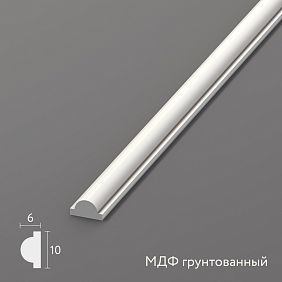
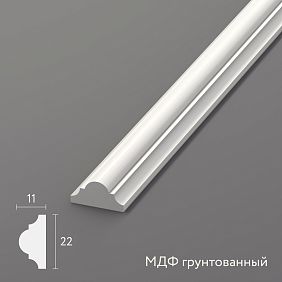
Moldings are linear profiles used to create framed compositions, zone walls, and frame openings. They come in various widths (from 20 to 150 mm) and relief complexity — from smooth to richly decorated.
Molding is a linear decorative profile. Its basic function is to divide a surface. It can be horizontal or vertical, straight or with slight relief, narrow or wide. Moldings are used for:
-
creating wall panels (molding frames);
-
dividing a wall horizontally into lower and upper zones with different textures or colors;
-
framing door and window openings;
-
creating rhythmic verticals that imitate pilasters or architectural divisions.
Molding is the most versatile element of interior molding. It can be used in any style, in any room, with any ceiling height. The only question is the correct choice of profile and scale.
Crown mouldings
Cornice is a horizontal profile installed at the junction of the wall and ceiling. This is one of the most important elements of interior design because it is precisely the transition from wall to ceiling that determines the perception of height and the completeness of the space.
A well-chosen cornice:
-
visually raises the ceiling with the correct profile shape;
-
hides technical imperfections of the upper corner;
-
creates an opportunity for hidden LED lighting;
-
sets the "tone" of the interior — from solemn classicism to restrained academicism.
In the catalogfor polyurethane ceiling decorSTAVROS cornices are presented in a wide range of profiles — from minimal 3–4 centimeter runs for modern interiors to massive multi-tiered cornices with ornamental bands for classical and neoclassical spaces.
Baseboards
The baseboard completes the vertical of the wall from below and connects it to the floor. It seems like an insignificant element — but try removing it from a well-designed interior, and a sense of incompleteness immediately appears. The eye cannot find the "bottom point" of the wall, the space seems cut off.
For a design project, the baseboard is not a functional minimum, but a decorative accent. A baseboard 12–15 cm high in a classic interior with cornices and moldings is part of the system. A baseboard 5 cm high in the same space is a disproportion that everyone feels but cannot always name.
Ceiling Rosettes
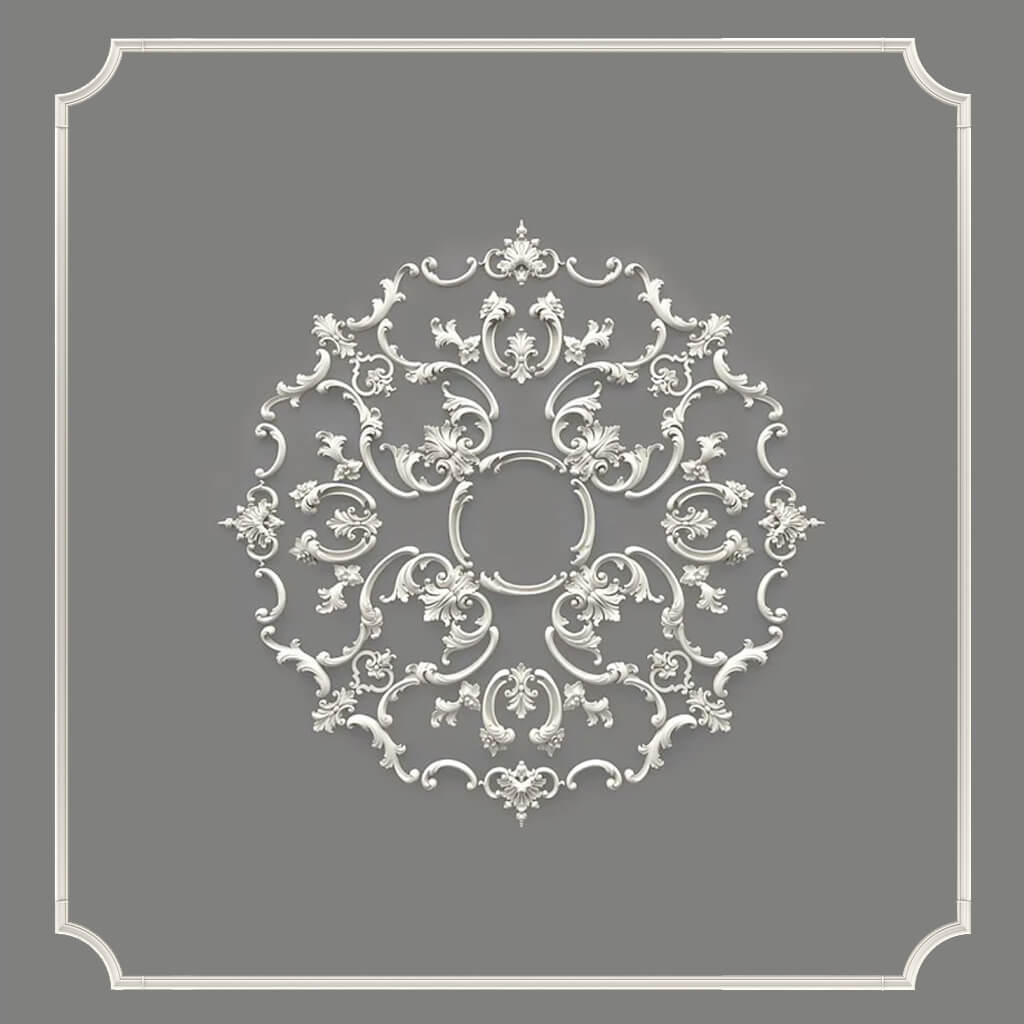
The ceiling rosette is the central decorative element of the ceiling plane. Traditionally installed under a chandelier, forming a visual "center of gravity" of the ceiling. In modern interiors, the rosette does not necessarily carry a functional load: it can work as a purely decorative medallion, creating a focal point for the gaze.
Rosettes in the STAVROS assortment cover diameters from small laconic discs to large ornamental medallions with elaborate acanthus patterns — for different room scales and different styles.
Wall molding
Wall decor is a broad category that includes decorative overlays, ornamental elements, medallions, corner inserts, pilasters, brackets, and capitals. This is everything that allows you to work with a wall not only as a plane divided by moldings but also as a three-dimensional surface carrying its own decorative layer.
Polyurethane wall decorEspecially appropriate in accent zones: behind the headboard in the bedroom, in a niche with a mirror, in the wall space between windows, in the fireplace area.
Ceiling molding
Ceiling decor goes beyond cornices and rosettes. In complex interior solutions, the ceiling receives a full decorative system: borders along the perimeter, moldings, a coffered grid of moldings, corner inserts. The result is a ceiling that is not just the upper boundary of the space but a full participant in the interior composition.
Brackets, capitals, trim
Individual elements—brackets, consoles, capitals—are used as accent points in stylistically rich projects. They can support shelves, mimic architectural details, create three-dimensional accents on furniture facades or in wall spaces.
How to choose interior molding to match the style: from classic to minimalism
The question of style when choosing molding is often perceived as the main one. In fact, it is second after the question 'what should the molding do with the space.' But it cannot be ignored: molding chosen not to match the style looks alien, no matter how high-quality it is.
For a modern interior
Modern interior—minimalism, clean lines, absence of ornamentation. Does this mean that molding is inappropriate in it? Absolutely not. It means that the molding must be different.
For a contemporary interior, the following work:
-
straight moldings with minimal profile depth—literally 8–12 mm;
-
cornices without ornaments, with clear geometry of straight and flat steps;
-
baseboards with a sharp straight edge instead of a curved profile.
Such molding in a contemporary interior doesn't 'shout'—it refines. It adds layering, creates shadows, structures the surface. Modern design performs this function by other means—but with molding, it does so more precisely and expressively.
For neoclassical style
Neoclassicism is a dialogue with tradition, not a copy of it. Here, decorative elements can be more expressive than in minimalism but retain restraint and a sense of proportion.
The optimal choice for neoclassicism:
-
moldings with a soft profile curve, without complex ornamentation;
-
cornices with one decorative band—egg-and-dart, meander, light ionics;
-
ceiling rosettes with a delicate pattern;
-
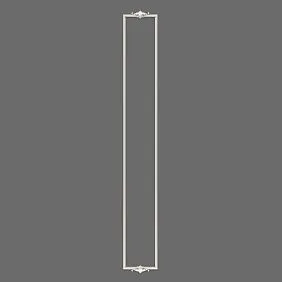
Wall panels made of molding frames with corner elements.
Decorative molding in interior designIn a neoclassical solution, it works through suggestion, not literalism. Classical forms—but in a lighter scale.
For a classic interior
Classicism gives molding full space for expression. Here, rich ornamental cornices with multiple bands, ceiling rosettes with elaborate patterns, wall panels with decorative medallions, pilasters, and brackets are appropriate.
The key principle of classicism: system. You cannot choose a luxurious cornice and skimp on the baseboard, you cannot install a complex rosette and not support it at the wall level. A classic interior is an ensemble where every voice is coordinated with the others.
For restrained minimalist solutions
A special case is a project where molding is needed in exactly one place: as the sole accent. A frame behind the bed in an absolutely 'empty' bedroom. A horizontal profile along the perimeter of the ceiling plane in an interior without other decor. A single bracket above the fireplace.
This approach requires precision. A single molding element carries the entire weight of the decorative solution—and if it is chosen incorrectly in scale or profile, it is immediately noticeable. But when chosen correctly—it works with tremendous power.
How to choose molding for different areas of the interior
Style is one coordinate. Application area is another. Molding in the living room, bedroom, on the ceiling, in the doorway — these are different tasks and different solutions.
Wall molding
Working with wall molding is based on rhythm and proportion. Molding frames create 'architectural' panels — and here it's important: frames must be proportionate to the wall, their proportions should be pleasing to the eye, and the spacing between them should be coordinated.
Horizontal molding on the wall works as a 'horizon' — dividing the wall into zones with different visual loads: the lower part is usually 'heavier' (darker, more textured), the upper part is lighter. This is a classic technique that works in any stylistic context.
Ceiling molding
The ceiling is the most 'free' surface in the interior in the sense that it has no furniture to set the rhythm. Everything that happens on the ceiling is created by the designer themselves.
Minimum — a cornice around the perimeter. It already changes the perception of space. Medium complexity — cornice plus a rosette. Complex solution — cornice, border with an offset, coffered grid, or central medallion.
An important professional nuance: the border on the ceiling doesn't have to be flush with the cornice. A 15–20 cm offset creates a 'light pocket' — perfect for hidden LED lighting, which is now one of the main tools in working with ceiling decor.
Doorway molding
A doorway is a transition point between rooms. Decorative treatment of the opening works to create a feeling of 'gates' — a boundary that's interesting to cross. Molding trim, archivolt, corner blocks, cartouche above the opening — all these are tools that turn an ordinary doorway into an architectural event.
Molding for accent zones
The TV wall, fireplace area, headboard, and the wall space between windows with a mirror are points where decor works as a frame for the main 'exhibit'. Here, molding can be richer than in the rest of the space—because the accent zone catches the eye and carries the decorative load.
Molding for transitions between rooms
The transition between the living room and hallway, between the kitchen and dining room—these are zones where the interior must maintain stylistic consistency. If there is molding in the living room, in the hallway it should either continue in the same logic or softly transform. A sharp break is a stylistic loss.
How not to overload an interior with molding: practical rules
Overloading with molding is one of the most common mistakes. And it arises not from ignorance of what molding is, but from a lack of moderation. Several principles that really work.
One 'loud' element—the others quieter. If the ceiling gets a rich ornamental cornice—the walls are better left calm, without complex molding solutions. If a wall takes on a decorative accent—the ceiling can make do with a thin profile.
The scale of elements is proportional to the scale of the room. A cornice 25 cm high in a room with a 2.6 m ceiling is heavy and oppressive. The same cornice in a hall with a 4 m ceiling is organic and appropriate. Always correlate the size of the element with the size of the space.
In small rooms—minimal relief. Deep relief of molding or cornice creates shadow and visual 'weight'. In a small room, this compresses the space. For rooms up to 15–18 sq. m, thin profiles with shallow depth are preferable.
When just molding is enough. In a low room with a restrained style, one horizontal molding on the wall is already a sufficient decorative step. It creates rhythm and layering without the risk of overload.
When just a cornice is enough. A tall room with clean walls—a cornice around the perimeter of the ceiling fulfills all decorative needs. The walls remain 'breathing', and the space gains completeness.
How to assemble a unified system from molding elements
A system is a word that distinguishes a professional approach from an amateur one. Beautiful elements individually are not a system. A system emerges when all elements are connected by a unified logic of profile, scale, and style.
Moldings plus cornices
The profile of the molding on the wall and the profile of the cornice on the ceiling should belong to the same 'language'. They do not have to be identical—but they should be harmonious. If the cornice contains a curve in the shape of a quarter circle, a molding with the same curve on a smaller scale will be coordinated with it. If the cornice is strictly geometric, a molding with smooth curves will create dissonance.
Cornices plus rosettes
The ceiling rosette should be proportionate to the cornice and the room. The rule of proportionality: the diameter of the rosette should not exceed one-fifth of the minimum room dimension. In a room 4 by 5 meters, a rosette with a diameter of 80–90 cm will look harmonious. In the same room, a rosette with a diameter of 150 cm will look heavy.
Baseboards plus wall decor
The baseboard and moldings on the wall are the lower and middle horizontals of the interior. They should be coordinated in terms of 'heaviness': a tall, massive baseboard organically combines with wide molding frames. A thin baseboard with a minimal profile—with narrow linear moldings.
Molding on walls and ceiling in a unified rhythm
The strongest option is when the rhythm of the wall continues onto the ceiling. Vertical moldings on the wall visually 'rise' and find correspondence in the division of the ceiling plane with borders or moldings. This creates a sense of a single architectural object, not a set of finished surfaces.
Molding for different types of spaces and projects
For apartments
Apartments with ceilings up to 3 meters are the most common scenario for using molding. Moderation is key here: cornices 6–10 cm high, moldings 2–4 cm wide, baseboards 8–12 cm. One accent element — a frame behind the bed or a panel in the living room — and a concise perimeter decor for the other rooms.
Decorative molding in interior designMolding in an apartment works best when it doesn't compete with furniture but structures the background on which that furniture exists.
For a country house
A country house offers greater freedom: high ceilings (3.5–5 m), large rooms, the ability to work with large-scale decor without the risk of overload. Here, wide cornices with ornamental bands, large rosettes, full wall panels, decorative consoles, and brackets are appropriate.
For commercial spaces
Restaurant, hotel, boutique, bank — spaces where molding serves an image function. It shapes the atmosphere of the place, creates a sense of quality and status. For commercial projects, the strength and durability of the decor are especially important — and this is where the impact resistance of polyurethane becomes not just a technical bonus but a practical necessity.
For restaurants and hotels — classic or neoclassical with rich detailing. For offices — strict academicism with an emphasis on proportions and geometry. For showrooms or boutiques — light neoclassical, which creates a sense of value without overload.
For a project with budget constraints
Molding in a project with a limited budget is about placing accents. The most economical yet visually effective technique: a molding frame behind the headboard in the bedroom. Minimum material — maximum visual impact. Second place — a tall baseboard instead of a standard one: a small investment but a sharp increase in the perceived quality of the space.
For a project focused on the wow effect
If the goal is to create a space that is memorable, evokes delight, and makes an impression from the threshold — the molding should be bold. Multi-level ceiling decor, rich cornices, full wall panels with ornamental accents, decorative arches over openings. The wow effect is created not by the quantity of elements but by precise scale and thoughtful placement of accents — so that each element enhances the other, not competes with it.
Modern interior molding: myths and reality
There are several persistent misconceptions about molding that prevent designers and clients from making the right decision.
Myth one: molding is only for classic styles. This is fundamentally incorrect. Modern polyurethane molding covers the entire stylistic range—from strict minimalism to lavish baroque. A thin, straight molding in a modern interior is also molding.
Myth two: molding makes an interior old-fashioned. It does—only with the wrong choice of profile and scale. Properly selected molding in a modern interior is a sign of a high project level, not conservatism.
Myth three: molding is difficult to install. Polyurethane products are much easier to install than plaster ones: they are lightweight, cut well with ordinary tools, and securely attach with adhesive.
Myth four: molding requires a professional installer. More complex elements are indeed better entrusted to a specialist. But basic polyurethane cornices, moldings, and baseboards are accessible for self-installation with basic skills.
Common mistakes when choosing interior molding
Analyzing mistakes is more useful than advice—because it describes real situations from which practical lessons can be learned.
Mistake one: disproportionate scale. A cornice chosen 'by eye' without reference to the room's proportions is the most common problem. Always consider ceiling height and room area when selecting profile size.
Mistake two: mixing styles without logic. A baroque rosette and a minimalist cornice in the same room is not eclecticism, it's chaos. Eclecticism is built on conscious mixing with internal logic, not a random assortment of elements from different eras.
Mistake three: complex relief in a small space. A room of 12 sq. m with a 2.5 m ceiling and a rich ornamental cornice will be perceived as cramped and overloaded. Proportionality is key.
Mistake four: ignoring systematicity. Choosing molding separately from the cornice, and the cornice separately from the baseboard means getting a set of unrelated elements. Interior stucco works only as a system.
Mistake five: stucco without reference to the room's architecture. Molding frames that do not relate in any way to doorways, furniture placement, or windows are decoration for decoration's sake. Good stucco always 'converses' with the architecture of the space.
Where to view the assortment of polyurethane interior stucco
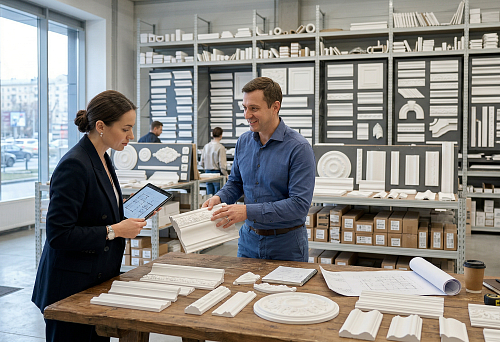
Theory is valuable, but at some point, you need to move to specific solutions. The full catalog ofpolyurethane moldings, cornices, and rosettesis available on the STAVROS website — with breakdown by category, product photos, and technical specifications.
The catalog structure covers all main groups of interior stucco:
-
Moldings — linear profiles for wall division and creating framed panels;
-
Cornices — for decorating the ceiling transition;
-
Baseboards — the lower decorative horizontal line of the interior;
-
Ceiling rosettes — central elements of the ceiling plane;
-
Wall decor — overlays, ornaments, medallions, pilasters;
-
Ceiling decor — borders, moldings, corner inserts;
-
Corbels and capitals — accent volumetric elements;
-
Trims — an extended line of profile products.
Range of interior moldingsSTAVROS includes both minimalist modern profiles and richly detailed classical products — for any stylistic task and any project scale.
FAQ: answers to popular questions about interior moldings
What is included in interior moldings?
Interior molding includes all architectural decorative elements that are mounted on walls and ceilings: moldings, cornices, baseboards, ceiling rosettes, decorative overlays, pilasters, brackets, borders. These are not accessories or object decor—they are architectural elements that shape the structure of space.
What type of molding is suitable for a modern interior?
For a modern interior, straight-line moldings with minimal relief, cornices without ornaments and with clear geometry, and baseboards with sharp edges are suitable. The key principle is conciseness of form with precise geometry.
Is polyurethane molding suitable for an apartment?
Yes, and it is one of the most convenient options for living spaces. Polyurethane products are lightweight, easy to cut, attach well, do not require special preparatory work, and are compatible with any finish.
What to choose for walls: moldings or decorative overlays?
It depends on the task. Moldings are for creating linear rhythm, frames, horizontal or vertical division. Decorative overlays are for creating point accents in specific areas: behind the bed, above the fireplace, in a niche.
When to use ceiling rosettes?
A ceiling rosette is appropriate whenever there is a central light source on the ceiling—a chandelier or a large pendant light. In modern interiors, the rosette can also be used as a decorative medallion without a functional purpose.
How to choose a cornice according to the ceiling height?
General guideline: cornice profile height is 1/40–1/50 of the ceiling height. For a 3 m ceiling — cornice 6–7 cm. For a 4 m ceiling — 8–10 cm. For a 5 m ceiling and above — from 12–15 cm. The scale is not absolute, but provides the correct starting point.
Can molding be combined with a minimalist interior?
Yes. Molding in minimalism works as a single accent or as a subtle structural line. One molding, one cornice, one rosette — with the right profile choice, this enhances the minimalist solution rather than contradicting it.
How to avoid overloading a room with molding?
Rule of one 'loud' element: choose one level of decorative load — either the ceiling or the walls — and keep the other in a more subdued tone. Maintain proportionality of profiles to the room height.
What makes polyurethane molding more convenient than plaster?
Polyurethane is lighter, stronger at corners, moisture-resistant, does not deform with temperature and humidity fluctuations. Installation is simpler, transportation is safer. At the same time, the range of profiles and ornaments is comparable to plaster in diversity.
Where to view the assortment of interior molding?
Full catalog categorized by —molding elements for walls and ceilings— available on the STAVROS website. You can also get a consultation on selection for a specific project.