












































































Article Contents:
- Polyurethane moldings: versatility and affordability
- Types of polyurethane moldings by function
- Advantages and limitations of polyurethane
- Wooden moldings: authenticity and materiality
- Application of wooden moldings
- Advantages and limitations of wood
- How to choose molding based on ceiling height
- How to choose molding based on interior style
- Calculating the required linear footage of moldings
- Where to buy moldings: STAVROS
- How to buy: ordering algorithm
- Molding installation: DIY or professional
- Frequently asked questions about moldings

A wall is not just a vertical plane that limits space, but a canvas on which an architect draws with lines, volumes, and chiaroscuro. A bare painted or wallpapered wall is neutral, faceless, anonymous—a background, nothing more. A wall divided by horizontalwall moldings, framed by vertical pilasters, crowned with a cornice under the ceiling, transforms into an architectural element that structures space, sets rhythm, proportions, and style.Wall molding for decoration—is not mere ornamentation but architectural grammar, a language spoken by neoclassical, classical, Empire, and Baroque interiors, turning a standard apartment into a space that reads as a cultural statement.
? The former are lightweight, inexpensive, diverse in profile, and easy to install with adhesive. The latter are heavy, expensive, limited in form (turning or milling processing), and require precise installation with fasteners. The former imitate stucco, wood, stone—versatile chameleons. The latter are authentic, tactilely honest, patinate nobly—material authenticity. The choice between them is not random but determined by budget, style, application location, and the priority of aesthetics or practicality.Wooden moldings? Construction hypermarkets offer a standard range of polyurethane moldings—20-30 profiles, white, requiring painting. Specialized stucco salons—hundreds of profiles, but prices are 30-50 percent higher, with markups for showrooms, consultants, and branding. Direct manufacturers—optimal balance of assortment, price, quality, consultation availability, linear footage calculation, and delivery. The company STAVROS—a St. Petersburg manufacturer with twenty years of experience—offers
where to buy moldingstwo types: polyurethane for walls, ceilings, facades; wooden from solid oak, beech for furniture, panels, portals. Direct sales from a warehouse in St. Petersburg, delivery to Moscow, regions, online linear footage calculation, technical support at all stages.Moldings for DecorationPolyurethane moldings: versatility and affordability

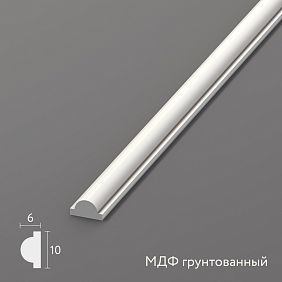
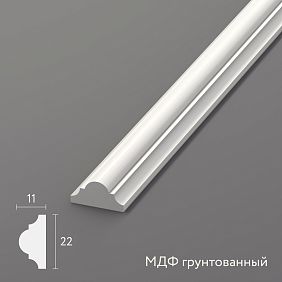

Polyurethane—a synthetic polymer obtained from the reaction of polyols and isocyanates, molded by casting into silicone molds—is a material that revolutionized decorative interior design in the 1990s-2000s. Before polyurethane, stucco was made from gypsum—a heavy, fragile, labor-intensive material to install, requiring experienced plasterers and stucco workers. Polyurethane moldings are lightweight (density 250-350 kg/m³ vs. 1200-1400 for gypsum), durable (do not break when dropped), moisture-resistant (do not soak in bathrooms, kitchens), and easily installed with adhesive without special qualifications. The cost per linear meter of polyurethane molding is 200-800 rubles depending on width and profile complexity—3-5 times cheaper than gypsum counterparts, 5-10 times cheaper than wooden ones.
The variety of polyurethane molding profiles is enormous—from simple rectangular strips 20 millimeters wide to complex multi-step cornices 200 millimeters wide with ornaments, scrolls, and rosettes. The forms are copied from historical prototypes—antique, Renaissance, Baroque, Empire—by casting into silicone molds taken from originals or CNC-milled from 3D models. The result—mass accessibility of historical forms previously available only to the aristocracy, who could hire stucco workers.
are supplied white, primed, ready for painting with water-based or acrylic paint in any color. White—universal, suitable for most interiors where moldings should be neutral, structuring the wall without color accent. Painting to match the wall color—moldings are perceived only by relief, chiaroscuro, not contrast—characteristic of minimalist, restrained interiors. Contrast painting—white moldings on a colored wall or vice versa—emphasizes architecture, creates graphic quality, clarity. Patination with gold, silver, bronze—applying metallic paint with a brush into ornament recesses followed by polishing protruding parts—adds luxury, suitable for Baroque, Empire, glamorous interiors.
PolyurethaneMoldings for wallsTypes of polyurethane moldings by function




Ceiling cornice—a wide molding 70-200 millimeters wide, installed at the wall-ceiling junction, concealing the corner, creating a transition, visually increasing room height. The cornice can be smooth—a simple profile with one or two steps—for modern, neoclassical interiors. Or ornamented—with plant motifs, geometric patterns, meanders—for classic, Baroque, Empire styles. Cornice width is selected based on ceiling height: for standard 2.7-2.8 meters, optimum is 70-100 millimeters; for high 3.0-3.5—100-150; for very high 3.5+—150-200. Too narrow a cornice on a high ceiling gets lost; too wide on a low ceiling overwhelms, visually reduces height.
Wall molding—a narrow strip 30-80 millimeters wide, installed horizontally on a wall to create panels, separate wallpapers of different colors, frame paintings, mirrors. Classic installation height for horizontal molding—one-third of wall height from the floor (80-100 centimeters for 2.7-meter ceilings)—creates a panel zone protecting the lower part of the wall from mechanical damage, visually structuring space. Molding can also be installed at two-thirds height (180-200 centimeters)—divides the wall into two tiers, suitable for high rooms where one lower panel is insufficient.
Wall molding is a narrow strip, 30-80 millimeters wide, installed horizontally on a wall to create panels, separate wallpapers of different colors, or frame pictures and mirrors. The classic installation height for horizontal molding is one-third of the wall height from the floor (80-100 centimeters for 2.7-meter ceilings) — it creates a panel zone that protects the lower part of the wall from mechanical damage and visually structures the space. Molding can also be installed at two-thirds of the wall height (180-200 centimeters) — dividing the wall into two tiers, suitable for high-ceilinged rooms where a single lower panel is insufficient.
Vertical pilaster molding — an imitation of a column, installed vertically from floor to ceiling or from panel molding to cornice, creating vertical wall articulation. Pilasters flank doorways, fireplaces, built-in cabinets, and zone long walls. Pilaster width is 50-120 millimeters; the profile can be a simple rectangle or complex with flutes (vertical grooves), capitals (expansions at the top), and bases (at the bottom).
Corner element — a decorative overlay installed at the corners of molding frames, concealing the joint and adding ornamentation. Corners can be simple — rounded or beveled at 45 degrees — or complex — carved rosettes, cartouches, volutes. Corners are sold separately or come as part of a molding set.
Our factory also produces:


Advantages and limitations of polyurethane
Advantages of polyurethaneof wall decor moldingsare obvious: lightness (does not load the wall, mounted with adhesive without dowels or screws), moisture resistance (suitable for bathrooms, kitchens, facades), variety of profiles (hundreds of options from simple to highly complex), affordability (200-800 rubles per linear meter), ease of installation (can be installed independently without special tools or experience). Durability — 20-30 years with proper use (absence of direct mechanical impacts, extreme temperatures above 80 degrees).
Limitations also exist: synthetic nature — polyurethane is not wood, not plaster, but plastic, which is felt tactilely (cold, smooth), visually (lacks natural texture). In historical interiors where authenticity is important, polyurethane may be perceived as an imitation, a surrogate, even if visually indistinguishable from plaster. Flammability — polyurethane belongs to groups G2-G3 (moderately flammable), melts in a fire, releases toxic gases, requiring caution in evacuation routes and public buildings. Limited paintability — polyurethane poorly holds oil-based paints and varnishes with organic solvents, requiring water-based compositions.
Polyurethane is optimal for modern, neoclassical, eclectic interiors where visual effect, budget, installation speed, and moisture resistance are important. For authentic classical, Baroque, Empire interiors where material authenticity is valued, plaster or wood is better, despite the price and labor intensity.
Get Consultation
Wooden moldings: authenticity and materiality
Wooden moldingsmade from solid oak, beech, ash — a traditional material for architectural decoration, used in European interiors since the Renaissance. Wooden molding is manufactured by milling or planing on a four-sided planer — a blank block is passed through a set of rotating cutters or knives that form the profile. The result is a linear product with a constant cross-section along its entire length, a smooth or textured surface, and the natural texture of wood — annual rings, rays, color variations.
Wooden molding is tactilely warm, visually rich, acoustically soft (wood absorbs sound, unlike resonating polyurethane), aromatically pleasant (freshly processed wood smells, especially coniferous species, although oak and beech are almost odorless). Wood is alive — it changes over time, develops a patina, darkens or lightens under the influence of light and humidity, acquiring a noble antiquity, which inert polyurethane lacks.
Profiles of wooden moldings are limited by milling technology — straight, rounded, concave elements, flutes, and simple ornaments are possible. Complex Baroque stucco with deep relief, scrolls, and mascaron in wood is done by hand carving — labor-intensive, expensive, and piecework. Therefore, wooden moldings are more often used in neoclassical, English, Scandinavian interiors where restraint of profile and naturalness of material are valued, not opulence of forms.
Application of wooden moldings
Furniture moldings — narrow strips 10-30 millimeters wide, installed on the fronts of cabinets, dressers, doors to create frame-like borders, imitation of panels. Furniture moldings are glued with PVA, reinforced with small finishing nails, tinted to match the furniture color, and coated with varnish. This is a classic way to enhance smooth fronts made of MDF, plywood, turning them into stylized, panel-like surfaces.
Wall panels — wooden moldings form frames on walls, inside which wallpaper, fabric, or painted panels of contrasting color are inserted. Traditional English wall paneling with wooden panels 90-120 centimeters high from the floor with moldings around the perimeter — the pinnacle of classical finishing, creating warmth, acoustic comfort, and visual solidity. Wooden panels are heavier than polyurethane ones, require fastening with screws and dowels, but are more durable and repairable (scratches and dents can be sanded and re-toned).
Fireplace and door portals — wooden moldings frame fireplace inserts and door openings, creating an architectural frame that attracts attention and emphasizes the element's significance. The portal is formed from vertical pilaster posts and a horizontal architrave beam, connected into a rectangle or arch. Moldings are wide, 80-150 millimeters, with a classic profile featuring flutes and capitals. Wood — oak, walnut — is tinted in dark tones and coated with matte varnish.
Decorative ceiling beams — imitation of load-bearing beams, essentially wooden blocks of rectangular cross-section 100x100, 150x150 millimeters, attached to the ceiling, creating rhythm, structure, and a reference to rustic, Mediterranean, or loft interiors. Beams can be natural color (light beech for Scandinavian style) or dark (wenge, black for contrast with a white ceiling). The ceiling between beams is painted white or wallpapered.
Advantages and limitations of wood
Advantagesof wooden moldings: authenticity — wood is wood, not an imitation, which is critical for historical, classical interiors. Tactility — warm, pleasant to the touch, inviting contact. Durability — with proper treatment (drying, antiseptic treatment, varnishing), wood lasts for centuries, see historical interiors of palaces and mansions. Repairability — scratches can be sanded, dents filled, and tinting refreshed. Eco-friendliness — a natural material, safe for health, not releasing toxins.
Limitations: price — wooden moldings are 5-10 times more expensive than polyurethane ones (800-3000 rubles per linear meter depending on wood species, width, profile complexity). Weight — 3-4 times heavier than polyurethane, requiring reliable fastening with screws and dowels; mounting with adhesive on weak substrates (drywall without reinforcement) is impossible. Hygroscopicity — wood absorbs moisture, swells, and shrinks with humidity fluctuations, requiring a stable microclimate (humidity 40-60%, temperature 18-24°C). Flammability — group G4 (highly flammable), requires treatment with fire retardants in premises with fire safety requirements.
Wooden moldings are optimal for premium classical, neoclassical, English, country interiors where the budget allows, material authenticity, durability, and readiness for maintenance are important. For mass-market, budget, or wet rooms, polyurethane is preferable.
How to choose molding according to ceiling height
Ceiling height — a key parameter determining the size of moldings, cornices, and baseboards. Classic formula: cornice height = ceiling height / 20. For a standard 2.7-meter ceiling: 2700 / 20 = 135 millimeters — the optimal cornice width. Rounding, we get 120-150 millimeters — the range where the cornice is visually proportionate to the room, neither lost nor overwhelming.
For low ceilings 2.5-2.6 meters, the formula gives 125-130 millimeters, but it can be reduced to 80-100 — a narrow cornice visually raises the ceiling, creating lightness. A wide cornice on a low ceiling visually lowers it, creating pressure. The cornice profile for low ceilings should be simple, without multi-step projections or ornaments — the simpler, the higher the ceiling appears.
For high ceilings 3.0-3.5 meters, the formula gives 150-175 millimeters — here, wide monumental cornices with ornaments and multi-step profiles can be used. A wide cornice on a high ceiling does not overwhelm but emphasizes the height, creating solemnity. For very high ceilings 3.5-4.5 meters (Stalin-era buildings, pre-revolutionary buildings, country houses), the cornice can reach 200-250 millimeters — monumental, with deep relief, proportionate to the room's scale.
Baseboard is selected similarly: for standard 2.7-meter ceilings, the optimum is 100-140 millimeters; for low ceilings, 80-100; for high ceilings, 140-180. Wall moldings are narrower: for panels, 40-80 millimeters regardless of ceiling height — their function is to divide the wall, not relate to the ceiling.
How to choose molding according to interior style
Neoclassicism of 2026 prefers restrained moldings of medium width (cornice 80-120, moldings 50-70 millimeters), simple profiles — a rectangle with one bevel, slight rounding, a simple ogee without ornaments. Color — white or matching the wall; light color accents (light gray, cream) are acceptable. Material — polyurethane painted with matte paint. Relief is minimal; ornaments are absent or laconic geometric.
Classicism, Empire require more massive moldings (cornice 120-180, moldings 70-100), profiles with ornaments — meanders, palmettes, rosettes, laurel wreaths. Color — white with gilding in the recesses of the ornament or contrasting (white cornice on a colored wall). Material — polyurethane for mass use or plaster, wood for authenticity. Relief is deep, creating dramatic shadows.
Baroque, Rococo — the most complex, ornamented moldings (cornice 150-250, many steps, scrolls, acanthus leaves, cartouches, mascaron). Color — white with gilding or fully gilded. Material — plaster for authenticity, polyurethane for budget projects. Relief is very deep, sculptural.
Minimalism, Scandinavian style — rejection of moldings or minimal simple slats (cornice 40-70 mm, rectangular without decoration). Color — white, gray, matching the wall. Material — polyurethane, light wood (beech, ash). Goal — not decoration, but concealing joints, minimal architectural structure.
Calculation of required molding footage
Calculation of footage for ceiling cornice: room perimeter + 10% allowance for corner trimming, errors. Room 4x5 meters: perimeter (4+5)×2 = 18 meters, with allowance 18×1.1 = 19.8 ≈ 20 meters. Moldings are sold in sticks 2-2.4 meters long, so 20 / 2 = 10 sticks are needed. Cost of a polyurethane cornice stick 100 millimeters wide, 2 meters long — 800-1200 rubles, total 10×1000 = 10,000 rubles.
Calculation for wall moldings is more complex — depends on the panel scheme. Classic scheme: horizontal molding around the perimeter at a height of 100 centimeters + vertical moldings every 80-100 centimeters from floor to cornice. Room 4x5 meters: horizontal molding perimeter 18 meters. Vertical: long walls 5 meters divided by step 1 meter = 5 verticals per wall, 2 walls = 10 verticals. Short walls 4 meters = 4 verticals per wall, 2 walls = 8 verticals. Total 18 verticals with height (ceiling height 2.7 - panel height 1.0 - cornice height 0.1) = 1.6 meters. Vertical footage: 18×1.6 = 28.8 meters. Total footage: 18+28.8 = 46.8 ≈ 50 meters with allowance. Cost of a molding stick 50 millimeters wide, 2 meters long — 400-600 rubles, 50 / 2 = 25 sticks, 25×500 = 12,500 rubles.
Total for a 4x5 room with cornice and wall panels: 10,000 + 12,500 = 22,500 rubles for moldings only. Plus glue (polyurethane or liquid nails) 500-1000 rubles, paint 1000-2000, master's work (if not DIY) 10,000-20,000. Total estimate 35,000-50,000 rubles.
Where to buy moldings: STAVROS
Company STAVROS — a St. Petersburg manufacturer of architectural decor since 2003 — offersMoldings for Decorationtwo types at its own warehouse with an area of 2000 square meters in St. Petersburg with constant availability of 90% of catalog items. PolyurethaneMoldings for walls— 60+ cornice profiles 40-200 millimeters wide, 40+ wall molding profiles 30-100, corner elements, rosettes, pilasters. Production — European raw materials (polyurethane compounds German, Italian), casting in silicone molds, priming with white paint, packaging in shrink film. Price 200-1200 rubles per linear meter depending on width, complexity.
Wooden moldingsfrom solid oak, beech — 20+ profiles 30-150 millimeters wide, stick length 2-3 meters. Production — wood with FSC certification, kiln drying to 8-10% moisture, milling on a four-sided planer of German production, sanding P180-P220, finish — untreated (for self-staining), with natural oil (6 shades), with matte varnish. Price 800-3500 rubles per linear meter.
How to buy: ordering algorithm
Online catalog on the website stavros.ru — photos of profiles, dimensions (width, height, stick length), price per linear meter, warehouse availability updated daily. The client selects the needed profiles, adds to cart, specifies the footage. The system automatically calculates the number of sticks (rounds up), cost, suggests related products (glue, corners, primer). Order placement — filling out a form with delivery address, phone, email, choosing payment method (online, by invoice, cash on delivery).
Manager consultation — if footage is unknown, the client sends a room plan (can be hand-drawn, photographed), the manager calculates the footage, suggests optimal profiles for the style, ceiling height, budget. Call the hotline +7 (812) 640-xxxx, WhatsApp, Telegram, email[email protected]— response within an hour during business hours.
Delivery: within St. Petersburg and Leningrad region by own transport 1000-3000 rubles depending on distance, volume. To Moscow and Moscow region by partner logistics 2-3 days, 2000-5000 rubles. To Russian regions by transport companies (PEK, Delovye Linii, SDEK) 5-14 days, cost calculated online on the TC website. Packaging — moldings placed in cardboard boxes 2.5 meters long, wrapped in stretch film, marked "Fragile", "Do not throw". For large orders (100+ linear meters) packaging in wooden crates, palletizing is possible.
Pickup from the warehouse in St. Petersburg is free — address: industrial zone Parnas, ul. Lomonosova 83, warehouse open Mon-Fri 9:00-18:00, Sat 10:00-16:00. The client arrives by car or truck (moldings 2-2.4 meters long won't fit in a car, need a Gazelle or trailer), pays on site, loads with the help of warehouse workers.
Molding installation: DIY or master
Polyurethane moldings are installed with glue — polyurethane (Titan, Moment Crystal) or liquid nails. The wall, ceiling surface must be level (deviation no more than 2 millimeters per meter), clean, degreased, primed. The molding is trimmed with a miter saw or fine-toothed saw at a 45-degree angle in corners (for joining two moldings perpendicularly). Glue is applied to the back of the molding in a zigzag, the molding is pressed against the wall, held for 1-2 minutes until the glue sets. Excess glue is removed with a damp cloth. Joints between sticks are filled with acrylic putty, sanded after drying. The molding is painted with water-based paint in two coats.
Difficulty — precise trimming of corners at 45 degrees. An error of 1-2 degrees is noticeable — a gap in the joint. Professionals use a miter box — a device for precise trimming at a given angle. Beginners are recommended corner elements — ready-made overlays that cover the joint, not requiring precise trimming.
Wooden moldings are installed with screws, finishing nails. The molding is placed against the wall, holes are drilled through it every 40-60 centimeters, dowels are installed (for concrete, brick) or screws are screwed directly (for wood, drywall with reinforcement). Screw heads are countersunk 2-3 millimeters, holes are filled with a wax pencil matching the wood. Joints between sticks are made at a 90-degree angle (end cut perpendicular), seam is minimal.
DIY installation is possible with tools (miter saw, screwdriver, level), care, patience. Time for a 20 square meter room — 8-12 hours including preparation, trimming, installation, puttying, painting. Hiring a master costs 300-800 rubles per linear meter depending on complexity (simple cornice cheaper, multi-level panels more expensive).
Frequently asked questions about moldings
How do polyurethane moldings differ from polystyrene (foam) ones?
Foam moldings (from extruded polystyrene) are 2-3 times cheaper than polyurethane, but less durable — break when bent, crumble when trimmed, cannot withstand mechanical impact. Polyurethane is flexible, durable, dense (porous structure not visible). Foam is suitable for temporary, budget decor. Polyurethane — for long-lasting.
Can polyurethane moldings be used on the facade?
Yes, polyurethane is resistant to moisture, frost (-50 to +80 degrees), ultraviolet (does not fade). Facade moldings are installed with polyurethane glue, additionally with dowels, painted with facade paint. Service life 20-30 years.
How long does glue for moldings take to dry?
Initial setting — 1-2 minutes (can release molding, it holds). Full curing — 24 hours (can putty, paint). Final strength — 72 hours.
Can polyurethane moldings be bent along a radius?
Standard moldings are straight, but flexible (flex-moldings) exist from special polyurethane, bendable along a radius from 50 centimeters. Cost 2-3 times more than straight ones. For arches, round columns, bay windows.
Do moldings need to be primed before painting?
Polyurethane moldings from STAVROS are supplied primed, ready for painting. Additional priming is not needed, paint applies immediately. If the molding is without primer (cheap Chinese), priming with acrylic primer is mandatory, otherwise the paint will not apply evenly.
Where to Buy Moldings for Wall Decoration? STAVROS Company offers a full range of polyurethane andof wooden moldings, direct sales from warehouse, consultations on profile selection for ceiling height, interior style, online footage calculation, delivery to Moscow, St. Petersburg, regions, technical installation support.Moldings for walls— not a luxury, but an affordable tool for transforming standard space into architecturally thoughtful, stylistically cohesive, visually rich. Create interiors,where to buy moldingsis not a problem, but the beginning of transforming your home into a space worthy of magazines, museums, admiring glances.


