Article Contents:
- The Nature of Perfection: What Is a Crown Molding and Why MDF Became a Revolution in Decorative Finishing
- Technical Specifications and Competitive Advantages of MDF Crown Moldings in Modern Construction
- Variety of Forms and Styles: Classification and Design Solutions for MDF Crown Moldings
- The Art of Installation: Mounting Technology and Professional Secrets
- Durability and Beauty: Rules for Maintenance and Use of MDF Crown Moldings
- Design Possibilities and Stylistic Combinations in Modern Interior Design
- Company STAVROS: The Benchmark of Quality and Innovation in the Production of Decorative Elements
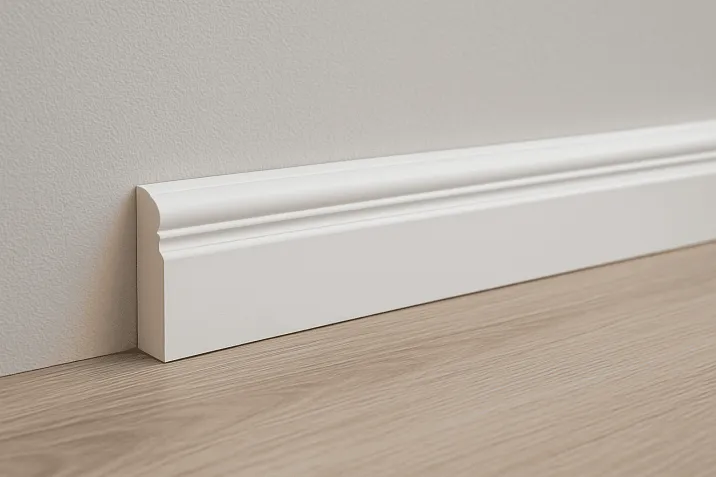
Modern interior is a symphony of lines, forms, and textures, where each element plays its unique melody. In this orchestra of decorative solutions, a special place is occupied by MDF crown molding — an elegant architectural element capable of transforming the space from floor to ceiling. It seems that there is nothing simpler than a small decorative strip? However, behind this apparent simplicity lies a whole world of possibilities for creating a harmonious and stylish interior.
Crown molding is not just a functional element masking joints and transitions between different surfaces. It is a designer’s tool, allowing the creation of visual accents, highlighting architectural features of the room, and forming a unique character of the space. The choice of material for manufacturing crown moldings is a decision that affects not only the aesthetic component, but also the practicality, durability, and economic feasibility of the entire project.
MDF as a material for producing crown moldings has gained recognition among professional designers and ordinary consumers due to its unique combination of technical characteristics, aesthetic possibilities, and affordable cost. This composite material opens up boundless horizons for creativity, allowing to realize the most daring design concepts without compromising on quality and durability.


The Nature of Perfection: What Is a Crown Molding and Why MDF Became a Revolution in Decorative Finishing
The term 'crown molding' comes from architectural terminology and denotes a concave semicircular surface serving for a smooth transition between two intersecting planes. In modern construction and interior design, crown molding represents a decorative profiled element installed at junctions of different surfaces — walls with ceilings, walls with floors, at internal angles of rooms.
The history of using crown moldings goes back to classical architecture, where such elements performed not only decorative but also structural functions, ensuring reliable connections and protection against moisture. Modern MDF crown molding inherits these traditions, but thanks to progressive manufacturing technologies, it acquires new qualities and application possibilities.
MDF (Medium Density Fibreboard) is a material of medium density, manufactured by hot pressing wood fibers with the use of binding agents. This process allows obtaining a plate homogeneous in structure, free of natural wood defects — knots, cracks, uneven density. The density of MDF ranges from 600 to 800 kg/m³, ensuring excellent mechanical strength while maintaining relatively low weight of finished products.
The uniqueness of MDF as a material for crown moldings lies in its ability to undergo high-precision mechanical processing. The material is easily machined, allowing to create complex profiles with clear geometric shapes and smooth transitions. At the same time, the cut surface is smooth and uniform, requiring no additional sanding, which significantly simplifies the production process and reduces the cost of finished products.
The ecological safety of MDF is another important factor determining the popularity of this material. Modern manufacturing technologies involve the use of formaldehyde resins in minimal amounts, and the E1 emission class guarantees compliance with the strictest European ecological safety standards. This means that MDF crown moldings can be safely used in residential spaces, including children's rooms and bedrooms.
The structural homogeneity of MDF ensures dimensional stability of finished products over time. Unlike natural wood, which may deform under changes in humidity and temperature, MDF crown moldings retain their original shape throughout their service life. The linear expansion coefficient of MDF is minimal, which prevents gaps at joints and ensures a flawless appearance of decorative finishes.




Technical Specifications and Competitive Advantages of MDF Crown Moldings in Modern Construction
Technical Parameters MDF crown moldings determine its application scope and operational characteristics. The material density in the range of 650-750 kg/m³ ensures an optimal balance of strength and weight, which is especially important when installing ceiling crown moldings. High density guarantees resistance to mechanical damage, scratches, and chips that may occur during transportation, installation, or use.
The moisture resistance of MDF is achieved through special treatment of wood fibers and the use of water-repellent additives during production. Standard MDF boards have a moisture resistance level of 15-20%, which is sufficient for use in residential spaces with normal humidity levels. For rooms with increased humidity — bathrooms, kitchens, saunas — manufacturers offer special moisture-resistant grades of MDF with water absorption rates below 10%.
The temperature stability of MDF allows using crown moldings in a wide temperature range — from -30°C to +60°C without changes in the material's physical properties. This quality is especially valuable during installation in unheated rooms, attic floors, winter gardens, where temperature fluctuations may be significant.
The acoustic properties of MDF deserve special attention. The material has the ability to absorb sound waves, which contributes to improving acoustic comfort in the room. The sound absorption coefficient of MDF is 0.3-0.4, comparable to that of natural wood. Installing MDF crown moldings around the perimeter of a room creates an additional sound insulation layer, reducing the transmission of structural noise.
The fire resistance of MDF corresponds to class G4 according to Russian classification, meaning normal flammability. To enhance fire resistance, flame retardants — special substances that slow down combustion and reduce smoke formation — can be added to the material composition. MDF crown moldings treated with flame retardants achieve fire resistance class G2-G3, expanding their application scope.
The mechanical strength of MDF is characterized by the following indicators: bending strength — 22-35 MPa, bending modulus of elasticity — 2500-4000 MPa, compressive strength — 20-30 MPa. These characteristics ensure reliable mounting of moldings and their ability to withstand operational loads without deformation.
The processability of MDF opens up unlimited possibilities for creating moldings of complex shapes. The material is easily cut, milled, and drilled using standard woodworking tools. When milling profiles, edges are sharp and free of chips or scratches. The ability to create deep reliefs and thin decorative elements makes MDF an ideal material for producing designer moldings in classical and modern styles.
Our factory also produces:


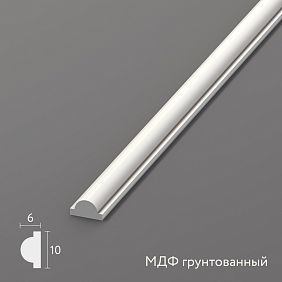
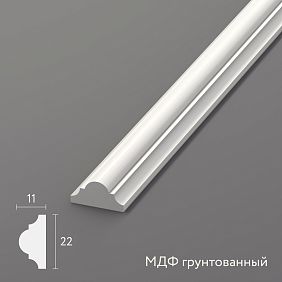
Variety of forms and styles: classification and design solutions for MDF moldings
The modern market offers an impressive assortment of MDF moldings, differing in profile shape, dimensions, surface type, and stylistic design. Classification MDF crown moldings By geometric shape, it includes several main categories, each with its own area of application and aesthetic purpose.
Simple rectangular and semi-circular section moldings represent basic elements intended for solving functional tasks — concealing joints, protecting corners, creating smooth transitions between surfaces. Despite their apparent simplicity, these items feature a variety of sizes: width can vary from 10 to 100 mm, height — from 8 to 80 mm. Wall thickness is 6-12 mm, ensuring the necessary structural rigidity.
Profiled moldings of complex shapes are true masterpieces of decorative art. Multi-level profiles with alternating convex and concave elements, geometric ornaments, and plant motifs — all of this becomes possible due to the high processability of MDF. Complex profiles may include up to 5-7 different elements in one item, creating a rich play of light and shadow on the surface.
Corner moldings solve a specific task of decorating interior and exterior corners of rooms. These elements have a Г-shaped cross-section and allow creating ideal transitions in corner zones without the need to trim or fit straight moldings. Corner elements are produced in standard sizes and may have either simple or complex profiled shapes.
Flexible MDF moldings — a relatively new solution on the market of decorative materials. Special processing technology allows imparting a certain flexibility to rigid MDF, sufficient for replicating smooth curves of curved surfaces. The bending radius of flexible moldings can range from 300 to 1500 mm depending on thickness and profile construction.
The stylistic diversity of MDF moldings covers the entire spectrum of modern interior design styles. Classical profiles with traditional elements — grooves, ovals, beads — are ideally suited for interiors in baroque, empire, and classical styles. Complex multi-element profiles create a sense of luxury and grandeur characteristic of palace interiors.
Minimalist moldings with simple geometric shapes meet the requirements of modern styles — high-tech, modern, Scandinavian. Clear lines, absence of decorative elements, emphasis on functionality — these principles are embodied in concise profiles with rectangular and trapezoidal cross-sections.
Avant-garde solutions include asymmetric profiles, unusual geometric shapes, combined elements of different thicknesses and heights. Such moldings become independent decorative objects, attracting attention and creating dynamics in the interior.
The size range of MDF moldings covers a spectrum from miniature 10-mm elements to large profiles up to 150 mm in height. Standard item length is 2400-2700 mm, corresponding to the height of most residential rooms and minimizing the number of joints during installation.
Get Consultation
Art of installation: mounting technology and professional secrets
Quality installation MDF crown moldings requires not only technical knowledge but also understanding of the material, tool, and substrate characteristics. Proper installation determines not only the aesthetic result but also the longevity of the entire decorative system.
The preparatory stage includes careful assessment of the substrate to which the molding will be attached. The surface must be flat, clean, dry, and strong. Irregularities exceeding 2-3 mm require leveling with putty or other suitable materials. The substrate humidity must not exceed 8-10%, otherwise MDF may deform during operation.
Marking is a critically important stage determining the quality of the final result. Using a laser or water level ensures perfectly horizontal or vertical installation lines. When installing ceiling moldings, special attention is paid to room corners — this is where geometric problems most often arise.
Mounting methods for MDF moldings depend on profile size, substrate type, and operating conditions. For small moldings up to 50 mm wide, optimal mounting is adhesive using polyurethane or acrylic adhesives. These compositions provide strong bonding with most construction materials and minimal shrinkage upon drying.
Mechanical mounting is used for large moldings or when enhanced connection reliability is required. Wood screws 25-40 mm long with concealed heads are used. Holes for screws are pre-drilled with a 2-3 mm diameter drill bit, preventing MDF cracking. After installation, screw heads are masked with special caps matching the molding color or filled with putty and subsequently painted.
Combined mounting combines the advantages of adhesive and mechanical methods. The molding is initially fixed with adhesive, then additionally secured with screws or finishing nails. This method ensures maximum reliability and is used when installing under increased loads or vibration.
Angle processing is the most complex aspect of installation, requiring high skill from the installer. Internal angles are processed by cutting moldings at a 45-degree angle using a miter box or circular saw. Cutting accuracy is critical — even minor errors result in noticeable gaps. For optimal results, factory-made special angle elements are recommended.
External angles require a special approach, as here molding ends meet at a right angle. The "on the edge" technique with 45-degree cuts or using special external angle elements is applied. When properly executed, the external angle appears as a single element without visible joints.
Temperature gaps are necessary when installing long sections of moldings. MDF has a linear expansion coefficient, and temperature changes in the room may cause minor dimensional changes. A 1-2 mm gap per 3 meters of length compensates for these changes and prevents molding warping.
Final finishing includes filling joints, sanding irregularities, and preparing for final finishing. Acrylic wood putties are used, which after drying are easily sanded with fine-grit sandpaper. Well-executed joints become practically invisible after final finishing.
Longevity and beauty: care and usage rules for MDF moldings
Proper care of molding MDF ensures preservation of the original appearance and extends the service life of decorative elements for decades. Material characteristics determine specific requirements for operating conditions and maintenance methods.
Temperature and humidity regime plays a decisive role in the longevity of MDF products. Optimal temperature is 18-24°C at relative humidity of 40-60%. Sharp fluctuations in these parameters may cause material deformation, cracking, or coating delamination. In rooms with unstable microclimate, climate control systems are recommended.
Regular surface cleaning prevents dust and dirt accumulation, which over time may cause color and texture changes of the coating. Daily care requires only dry or slightly damp soft cloth. Use of abrasive materials — stiff brushes, scrubbers, cleaning powders — is strictly prohibited, as it may damage the protective coating.
Wet cleaning requires special care. Neutral cleaning agents diluted in water at minimal concentration are used to clean MDF surfaces. It is important to avoid water entering joints and fastening areas, where moisture may penetrate the material structure and cause swelling. After wet cleaning, the surface must be wiped dry with a cloth.
Protection against mechanical damage is especially important for floor moldings, which are exposed to damage during furniture rearrangement, cleaning, and children's play. Using felt pads under furniture legs, handling vacuum cleaners and other household appliances carefully helps avoid scratches and chips.
The chemical resistance of MDF is limited, so it is necessary to avoid contact with aggressive substances — solvents, acids, alkalis. In case of chemical substances coming into contact with the molding surface, they must be immediately removed with a damp cloth and the surface thoroughly dried.
Repair of minor defects is possible at home using special restorative agents. Minor scratches are removed with wax pencils in the finish color; more serious damage requires partial replacement of the damaged area.
Preventive measures include regular inspection of fasteners, checking the tightness of molding attachment to the base, identifying initial signs of deformation or coating delamination. Timely detection of problems allows for repair with minimal costs.
Seasonal maintenance includes more thorough cleaning of surfaces, checking the condition of joints, and tightening fasteners if necessary. In rooms with large windows, it is recommended to use UV-protective coatings to prevent fading due to sunlight exposure.
The service life of properly installed MDF moldings, when operating according to guidelines, is 15-20 years for interior use and 10-15 years in conditions of increased humidity or temperature fluctuations. If necessary, the coating can be restored using special lacquer and paint materials.
Design possibilities and stylistic combinations in modern interior design
Usage MDF crown moldings In interior design, moldings open up boundless possibilities for creating unique spatial solutions. Modern designers consider moldings not merely as functional elements, but as a powerful tool for shaping the character of a space, controlling visual perception, and creating emotional accents.
Classic interiors require moldings with rich profiles, complex decorative elements, and noble finishes. In the Baroque style, wide moldings up to 120-150 mm high with multi-step profiles are used, including classical architectural elements — ovals, Ionic, fluting, acanthus leaves. Gilding, patination, and artificial aging give the items a luxurious appearance matching the spirit of the era.
The Empire style dictates the use of strict, solemn profiles with clear geometric elements. Characterized by wide flat surfaces with contrasting borders, laurel wreaths, and military motifs. The color palette leans toward noble tones — white, gold, dark green, burgundy.
English classic style implies a more restrained use of decorative elements. Moldings have medium sizes, elegant but not overly ornate profiles. Characterized by warm wood tones — oak, walnut, mahogany. Matte and semi-matte finishes create a sense of noble naturalness.
Modern interior styles require a fundamentally different approach to selecting moldings. Minimalism dictates the use of simple geometric forms, clear lines, monochromatic color palettes. Moldings in the minimalist style often have rectangular cross-sections, small sizes, and are painted white or gray. Ideal geometry and surface quality are essential.
High-tech style allows for the use of moldings with unusual shapes, asymmetrical profiles, and metallic tones. Characterized by silver, chrome, anthracite finishes, imitating steel, aluminum, and other modern materials. LED lighting integrated into the molding structure is also possible.
Scandinavian style leans toward natural materials and light tones. Moldings are painted white, cream, light gray, or have the natural texture of light wood species — pine, birch, beech. Profiles are simple, functional, and lack excessive decoration.
Loft style implies deliberate roughness in finish, industrial motifs, and combinations of various materials. Moldings may imitate metal, concrete, brick. Characterized by dark tones, matte surfaces, and deliberately simple forms.
Color solutions for MDF moldings cover the entire spectrum of possible shades thanks to modern coloring and laminating technologies. White remains a classic choice, providing neutrality and versatility. Shades of white — milk, bone, pearl — allow creating a warmer atmosphere.
Wood imitation achieves photographic quality thanks to high-precision printing and embossing. Popular shades include oak, walnut, cherry, wenge, white oak, and aged wood. Each texture has its own character and emotional tone.
Colored moldings allow creating bright accents in interior design. Deep saturated colors — emerald, sapphire, burgundy — are suitable for luxurious interiors. Pastel shades — pink, mint, lavender — are used in romantic and children's interiors.
Combined solutions involve using moldings of different sizes, profiles, or colors within a single room. Contrasting combinations create dynamism, tonal transitions — harmony and smooth perception of space.
Company STAVROS: the benchmark of quality and innovation in the production of decorative elements
For many years, STAVROS has established itself as a leading manufacturer of high-quality decorative elements made from natural wood and MDF. The company’s philosophy is built on strict adherence to craftsmanship traditions combined with advanced production technologies, enabling the creation of products meeting the most demanding requirements of professional designers and discerning consumers.
STAVROS’s production facilities are equipped with modern, high-tech equipment from leading European manufacturers, ensuring exceptional processing accuracy and consistent quality of finished products. A multi-stage quality control system at every stage of the production process ensures that all products meet strict technical requirements and international standards.
The range of MDF moldings from STAVROS includes hundreds of different profiles, from classic traditional forms to avant-garde designer solutions. The company’s in-house design office continuously develops new profiles that respond to current trends in interior design. The ability to manufacture custom-made items according to the client’s drawings makes STAVROS a reliable partner for implementing the most ambitious design projects.
Environmental responsibility is one of the foundational principles of STAVROS’s operations. The company uses only certified raw materials from suppliers guaranteeing sustainable forestry practices. Modern processing and finishing technologies minimize environmental impact, and all finished products carry environmental safety certificates.
STAVROS’s logistics network covers the entire country, ensuring rapid delivery of products to any region. The company’s own warehouse complexes guarantee sufficient availability of popular items, while an extensive dealer network provides customers with qualified consultation and technical support.
STAVROS’s innovative activities are aimed at continuously improving the consumer properties of its products. Developing new coating types, enhancing water resistance and mechanical strength, creating antibacterial and self-cleaning surfaces — these research directions ensure the company’s technological leadership in the decorative materials market.
STAVROS’s customer service includes technical consultation on product selection, developing customized solutions, training installation crews, warranty and post-warranty service. The company’s team of technical specialists is ready to provide professional assistance at any stage of project implementation — from conceptual planning to final quality control.
STAVROS’s reputation is confirmed by numerous awards at professional exhibitions, positive customer reviews, and long-term partnership relationships with leading construction and design companies. Choosing STAVROS products means you are not only getting high-quality decorative elements, but also confidence in the reliability, longevity, and aesthetic perfection of your interior.