Article Contents:
- What is usually searched for by the query 'furniture fittings Smolensk'
- Buy individual components for replacement
- Select fittings for new furniture
- Replace handles and legs to update furniture
- Order a set for custom furniture
- Find an option with delivery to Smolensk
- What types of furniture fittings are most often needed
- Furniture handles made of solid wood
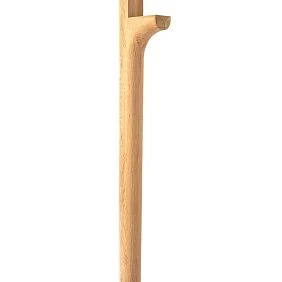
- Furniture legs and supports
- Fittings for furniture legs: mounting base
- Materials for installation and finishing
- Decorative elements
- How to choose solid wood furniture handles in Smolensk
- Kitchen handles: wood plus proper protection
- Cabinet handles: style defines everything
- Dresser handles: a place for character
- Handles with or without coating: when to choose what
- How to properly select handle size and shape
- Why interaxial distance is a critical parameter
- When is it better to take one episode for the entire project
- Legs, supports and hardware for furniture legs in Smolensk
- Cabinet legs: height dictates function
- Dresser legs: beauty and calculation simultaneously
- Bed legs: load and clearance
- Table legs: load dynamics
- Solid wood furniture legs: the principle of species affinity
- How to check stability, height, and mounting
- Materials for installation and finishing: when it really matters
- For neat installation: tools and marking accuracy
- For durability: the right fasteners for the cabinet material
- For Precise Fitting: Adjustable Elements
- How to avoid play, misalignment, and unnecessary rework
- How to choose furniture hardware for specific furniture
- Kitchen hardware: a unified system
- Wardrobe hardware: invisible perfection or accent
- Chest of drawers hardware: let the details shine
- Custom furniture hardware: plan ahead
- For classic and modern interiors
- What to check before buying furniture hardware
- Mistakes when choosing furniture hardware
- Which STAVROS sections to look at first
- How to order furniture fittings with delivery to Smolensk
- How to assemble a project kit
- What to clarify before ordering
- Who finds this especially convenient
- FAQ: answers to popular questions about furniture fittings in Smolensk
- Where to buy furniture fittings in Smolensk?
- How to choose handles for kitchen and cabinet?
- Which legs are better for a chest of drawers and a cabinet?
- What is included in furniture hardware?
- Is it possible to order furniture fittings with delivery to Smolensk?
- What's better for furniture: handles with coating or without?
- How to choose fittings for custom furniture?
- What to look at first: price, size or material?
- STAVROS: manufacturing that delivers results

There are things that everyone notices — but almost no one chooses. A furniture handle. A leg under a chest of drawers. The support on which the hallway cabinet stands. Every day you grasp them with your hands, look at them with your eyes, lean on them with your full weight — and yet, when buying furniture, these details receive the least attention.
The query 'furniture fittings Smolensk' is a very specific, pragmatic search. Behind it lie real tasks: a kitchen without handles, a chest of drawers without legs, a custom wardrobe waiting for components. Both the person looking to replace one broken support and the one outfitting an entire turnkey furniture project want to buy furniture fittings in Smolensk.
The problem is one: most people choose fittings from a photo. The picture in the catalog doesn't show the actual size of the handle. It doesn't convey how comfortable the grip is. It doesn't make it clear whether the center-to-center distance will match the already drilled holes on the facade. This is precisely why furniture fittings in Smolensk with delivery get returned, remade, and purchased a second time around.
This article is a breakdown from a practitioner. No history or theory: only specific criteria, broken down by tasks and furniture types. If you already know what you need — go straight to the catalog of solid wood furniture handlesorcatalog of furniture legs STAVROS. If you're still in the selection process — read on.


What people usually search for with the query 'furniture fittings Smolensk'
One query — several completely different situations. It's important to understand which one you are in: this determines both the selection strategy and what exactly you need to look for in the catalog.




Buy individual components for replacement
The most precise scenario. The handle has become so loose that it's easier to replace than to repair. One leg under the cabinet cracked. The decorative overlay on the dresser came off. The task is to find an exact analog: the same size, the same center-to-center distance, the same style, and the same wood species.
This is precisely where the main pitfall of one-time purchases of non-series hardware lies: a year later, you won't find that handle again. A series catalog is your insurance against future headaches.
Our factory also produces:
Select fittings for new furniture
The furniture arrived without hardware—this often happens when ordering carcasses from a craftsman or buying 'white' furniture. Here, the choice is wider, but so is the responsibility: you need to determine the style, shape, wood species, center-to-center distance for handles, and the type of mounting for legs. All of this must be done before the drill touches the facade.
Get Consultation
Replace handles and legs to update furniture
The kitchen is still physically sturdy but looks outdated. A dresser from the nineties stands against the wall like an exhibit. Replacing furniture handles and supports is one of the most budget-friendly ways to update an interior without renovation or buying new furniture. The main condition: matching the existing mounting dimensions or the possibility of a slight modification to the facades.
Order a set for custom-made furniture
Furniture workshop, private carpenter, interior designer—they need a system. One manufacturer, one series, stable article numbers that can be reordered in six months in the same form. This is exactly the kind of workflow supported by the STAVROS catalog: serial items, precise specifications, constant availability.
Find an option with delivery to Smolensk
Local search results for Smolensk clearly show: users are looking for delivery. A physical store in the city is not a mandatory condition. A reliable online catalog plus a transport company is a working and convenient model that both private buyers and professionals have long mastered.
What types of furniture hardware are needed most often
Furniture hardware is not a homogeneous category. It's several different functional groups, each solving its own task. Understanding this structure means navigating the catalog quickly.
Solid wood furniture handles
The handle is the first point of contact between a person and furniture. It greets the hand every time a drawer or door is opened. An uncomfortable handle causes daily irritation. A handle that doesn't match the furniture's style ruins the entire interior image.
STAVROS manufactures handles exclusively from solid wood — oak, beech, ash, birch. This is a fundamental principle of the manufacturer: natural wood is warm to the touch, visually integrates organically into any interior with natural materials, and with proper care, lasts for decades.
The catalog features two main directions:
-
Handles with Finish— protective varnish or oil-wax, which make the product more resistant to moisture and dirt
-
handles without coating— for independent tinting, painting, or waxing to match the furniture color
Legs and supports for furniture
Legs set the height, bear the load, and contribute to the formation of the product's visual image. This is not a technical part with a neutral role — it is an architectural element of furniture. A conical turned beech leg makes a chest of drawers look light. A carved leg with a figured base made of oak makes it look solid and classic. A straight square support without decoration makes it look strict and modern.
STAVROS produces legs from solid hardwood, with over 130 models. In the catalog:
-
Unpainted Legs— for independent coating in any color
-
Legs with Finish— ready for installation, with a finishing varnish or tint
Furniture leg hardware: mounting base
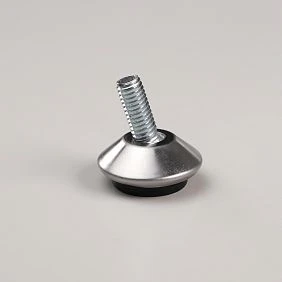
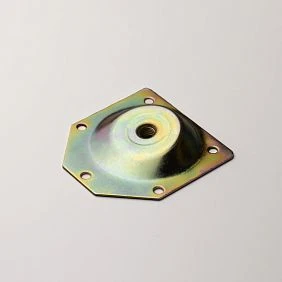
Euro screws, mounting plates, height adjusters, threaded inserts, foot pads — all these are part of the fastening group, without which a beautiful leg will stand unreliably. This group is especially critical when working with sheet materials: chipboard and MDF do not hold ordinary screws as reliably as solid wood. Properly selected fasteners are the difference between stable furniture and furniture that starts to wobble after a few months.
Materials for installation and finishing
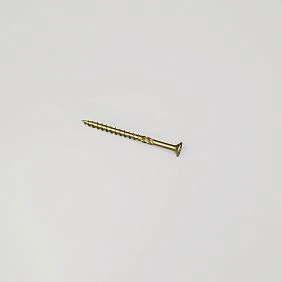
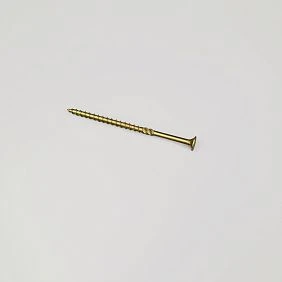
Fasteners, furniture screws, confirmat screws, caps, decorative joint elements — the mounting group. They are not visible in the finished product, but they determine how long all other hardware will last. Mounting materials are an independent category in the STAVROS catalog, not a secondary addition.
Decorative elements
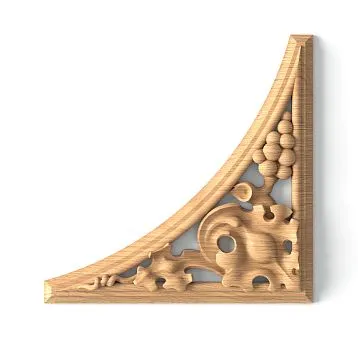
Moldings, corner overlays, cornice profiles, decorative rosettes — details that create the final 'expensive' feel. Especially important in classic furniture: it is the decorative hardware that turns a mass-produced cabinet into a unique piece.
How to choose solid wood furniture handles in Smolensk
Choosing a wooden handle is both a technical calculation and an aesthetic decision. Technical parameters — size, center-to-center distance, mounting type. Aesthetics — shape, wood species, finish, compatibility with furniture style and interior.
Kitchen handles: wood plus proper protection
In the kitchen — constant humidity, grease, steam, cleaning chemicals, and hundreds of touches a day. A wooden handle in the kitchen is not a compromise, it's a conscious choice, provided it's made correctly.
Choose hardwoods: oak, beech, ash. They are denser, less hygroscopic, and retain their shape much longer under fluctuating humidity conditions. Softwoods — pine, spruce — absorb moisture faster in the kitchen and deform.
Handles with FinishSTAVROS for the kitchen is the optimal choice: a protective varnish or oil finish creates a barrier between the wood and the aggressive kitchen environment. If you want to apply a finish in the color of the cabinet fronts yourself — choosehandles without coatingand treat with a compatible compound before installation.
Shape for the kitchen: brackets with a center-to-center distance of 96–160 mm are more convenient than knobs with frequent use. Knobs are good where opening is less frequent: top cabinets, closed decorative sections.
Cabinet Handles: Style Defines Everything
The cabinet occupies a wall. It is constantly visible. The handles on it are either an accent or part of the background—there are no other options. For a built-in cabinet, minimalism is appropriate: small wooden knobs, flat brackets with minimal projection. For a freestanding one, the choice is wider: shaped wooden handles, long brackets, contrasting finishes.
There is one rule: all handles on one cabinet must be from the same series. Any mismatch in shape or shade is clearly visible under side lighting.
Drawer Handles: A Place for Character
A chest of drawers is a piece of furniture where hardware can 'work to its full potential.' Here, it is appropriate to choose expressively: wooden knobs with textured relief, long shaped brackets made of dark walnut, turned handles with a rounded form. For lower drawers, brackets or ring models are preferable: they are convenient to grasp from top to bottom when opening.
Handles with or without a finish: when to choose what
Handles with Finish— a ready-made solution. The finish is already applied, the hardware is ready for installation immediately upon receipt. Suitable when there is no time or opportunity for self-finishing.
handles without coating— for those who want precise color matching. Interior designers and furniture makers often choose this option: they apply a stain or oil-wax in the same shade as the furniture body, achieving a unified color solution without 'eyeballing' the match.
How to correctly choose the size and shape of a handle
The size of the handle should be proportional to the front panel. A small 30 mm diameter knob on a wide 600 mm kitchen front looks lost. A long 320 mm bracket on a narrow cabinet door overloads it. A practical guideline: the handle occupies from one-fifth to one-third of the front panel's width. This is not a strict rule, but it works in most cases.
Why center-to-center distance is a critical parameter
Center-to-center distance is the distance between the centers of two mounting holes. Standard values: 32, 64, 96, 128, 160, 192, 224 mm. If you are replacing handles on already drilled fronts — the new handle must have exactly the same center-to-center distance as the old one. A deviation of 2 mm means: either fill the old holes and repaint the front, or return the product and order the correct size. Measure three times — order once.
When is it better to use one series for the entire project
Always when furniture is placed in a unified space. A kitchen set with a bar counter and a tall cabinet is a single ensemble. A wardrobe and a chest of drawers in a bedroom are also a single ensemble. Different handles in one room disrupt the integrity of the image, even if each one is beautiful on its own.
Furniture legs, supports, and leg hardware in Smolensk
Legs are the architecture of furniture. They define its character, bear the load, and participate in shaping the proportions of the piece. That is why they are chosen not only for beauty but also for engineering parameters.
Legs for a cabinet: height dictates function
TV stand, bedside table, shoe cabinet by the entrance — each has its own functional height. A bedside table should be accessible from a lying position: the optimal work surface height is 50–65 cm (matching mattress level). A shoe cabinet — 30–40 cm. TV stand: height is calculated from the floor to the desired screen axis — and here it's better to calculate, not guess.
Adjustable glides for cabinets are not an option but a necessity in homes with old floors: they compensate for unevenness up to 10–15 mm.
Legs for a chest of drawers: beauty and calculation simultaneously
A fully loaded dresser weighs 50–80 kg. This is a significant load, and its legs must be specifically designed for it. Hardwoods—oak, beech, ash—handle such loads without problems, provided they are properly attached. A threaded insert (M8 or M10 euro screw) is mandatory when installing legs into MDF and particleboard.
For style selection:Legs with FinishSTAVROS — ready to install, with finishes to match various wood species and shades.Unpainted Legs— for those who want an exact color match to the cabinet or use non-standard finishes.
Bed legs: load and clearance
A bed carries a load of 150–300 kg. Its legs are an engineering task with a clear priority: reliability is primary, decor is secondary. The leg height affects the storage space under the bed: at a height of 150–200 mm, flat boxes fit easily—this is important for small rooms.
Table legs: dynamic load
A table receives not only static load but also dynamic loads: lateral forces when leaning, impact forces during movement, vibration during use. Table legs must provide rigidity in the horizontal plane. For solid wood tables, legs made from the same or a similarly dense wood species are best.
Legs for solid wood furniture: the principle of species compatibility
Different wood species react differently to changes in humidity and temperature. Combining species with significantly different deformation coefficients in one piece means building instability into the structure. The rule is simple: an oak cabinet—oak legs; an ash cabinet—ash or a compatible density species (beech, hornbeam).
How to check stability, height, and mounting
Before ordering legs, check four parameters:
-
Height: from the bottom edge of the body to the desired work surface level, minus the thickness of the foot pad.
-
Mounting: for chipboard and MDF — a Euro screw with a reinforcing insert; for solid wood — a straight screw or Euro screw without an insert.
-
Load capacity: (weight of furniture with contents / number of legs) × 1.5 = minimum load capacity of one leg with a safety margin.
-
Foot pad: for parquet and laminate — soft felt or rubber pads; for tile and concrete — hard plastic ones.
Materials for installation and finishing: when it really matters
The installation group is the least 'glamorous' part of the purchase, yet it affects the final result more than anything else.
For neat installation: tools and marking accuracy
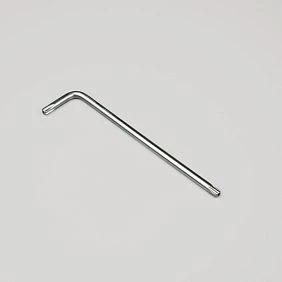
A jig for drilling handles is a tool that costs a few hundred rubles and eliminates marking errors. Without it — attempts with a ruler and pencil, which give an error of 2–5 mm, perfectly visible on the finished product.
The handle bolt must thread into the hole to its full working depth—at least 4–5 turns. A standard M4 × 25 mm bolt is suitable for an 18 mm thick front panel. A 22 mm thick front requires an M4 × 30 mm bolt. It seems like a minor detail—until the handle starts to wobble a month after installation.
For durability: use the correct fastener for the cabinet material.
A regular screw driven into particleboard without pre-drilling will delaminate the material and immediately lose its holding strength. A confirmat screw (Euro screw) is specifically designed for sheet materials: its coarse thread holds in particleboard fundamentally more reliably. In solid wood, the correct pre-drill diameter is crucial—10–15% narrower than the thread diameter.
For precise fitting: adjustable elements
Adjustable leveling feet allow compensating for floor unevenness up to 10–15 mm without resorting to cardboard shims and other improvisations. In older homes with uneven floor levels, they are a critically important element.
How to avoid wobble, misalignment, and unnecessary rework
Misalignment—only a jig or very careful marking with double-checking using a level.
Wobble—a bolt of insufficient length or stripped threads in the handle from overtightening. Tightening torque: 'hand-tight, plus a quarter turn with a tool'—no more.
Rapid joint wear—mismatch between the fastener type and the cabinet material. Investing in the correct fastener costs many times less than redoing the work.
How to select furniture hardware for specific furniture
A systematic approach to selecting hardware—look not at an individual item, but at a compatible set. Style, material, series—consistent for the entire project.
Kitchen hardware: a unified system
A kitchen set consists of dozens of fronts, drawers, and modules. Its hardware must be systematic: one series of wooden handles from the same wood species with the same finish—and not a single 'almost identical' item from another batch. A haphazard selection always results in mismatched shades in daylight, which is clearly visible and constantly irritating.
For a kitchen in Scandinavian or eco-style—Handles with Finish—made of beech with an oil finish. For a kitchen in rustic or classic style—handles without coating—for custom tinting to match the color of the fronts.
Wardrobe hardware: invisible perfection or an accent
Built-in wardrobe: the hardware should be almost invisible but impeccably convenient. Small wooden knobs or flat brackets with minimal projection are the ideal solution.
Freestanding wardrobe—sideboard, wardrobe, closet: here, the handle contributes to creating the image. Shaped wooden brackets, long profile handles, ring models—all are appropriate in the corresponding style. The only condition is one series for all doors.
Chest of drawers hardware: let the details shine
A chest of drawers in the bedroom or living room is the best place for expressive hardware. Wooden knobs with textured surfaces, long brackets with relief, turned handles of rounded shape—here, the hardware works as part of the design, not just as a functional detail. Tip: choose hardware for the chest of drawers after deciding on the room's textiles and decor—they set the tone.
Custom furniture hardware: plan ahead
Custom furniture is created for a specific interior, and hardware is incorporated into the project at the design stage. The thickness of the front, the type of opening, the wood species of the body — all of this influences the choice. A good craftsman discusses hardware with the customer before production begins.
For classic and contemporary interiors
| Interior style | Wooden handles | Legs |
|---|---|---|
| Classic, neoclassic | Shaped with decor, dark tint | Carved, with shaped base |
| Scandinavian, japanandi | Straight, light wood species, oil-wax | Tapered, minimalist, beech |
| Provence, rustic | Textured, with patina, tinted | Twisted, shaped, aged look |
| Modern, eco | Concise brackets, natural wood | Straight or tapered, no decor |
| Eclectic | Mixed shapes, accent series | Any in a single series |
What to check before buying furniture hardware
Eight parameters — mandatory checklist before placing an order:
-
Material — wood species and its suitability for specific conditions: kitchen humidity, load on legs.
-
Finish — with or without coating? If without — what composition will you apply yourself?
-
Dimensions — overall length and width of the handle, its visual weight on the facade.
-
Mounting distances — center-to-center distance for brackets: does it match existing holes or markings?
-
Mounting type — bolt-on, pin-type, groove-type — for different constructions.
-
Load-bearing capacity of legs — calculation with a safety factor of 1.5.
-
Fastener compatibility — type of threaded connection for the cabinet material.
-
Reorder possibility — is it a serial item, can the same handle be purchased in a year?
Mistakes when choosing furniture hardware
Here are six mistakes that are repeated over and over again. Don't repeat them.
They choose based on photos, ignoring dimensions. Photos don't convey the actual scale. Always read the specifications—especially the overall dimensions, not just the center-to-center distance.
They don't verify the center-to-center distance. The most costly mistake in online shopping. Measure twice, make sure both measurements match—and only then place your order.
They don't consider the operating conditions. An untreated wooden handle in the kitchen absorbs moisture and warps in one season. For the kitchen—only handles with a protective coating or handles treated before installation.
They don't check the compatibility of the fasteners with the cabinet material. A Euro screw without a reinforcing insert in particleboard is a temporary solution. After a few months of load, the leg will start to loosen.
They buy items individually, not as a set. Handles today, legs in a week, mounting materials 'later'—result: three different shades of 'natural wood' in one interior.
They don't think about installation in advance. Handles are purchased, but the bolts don't fit in length. Legs arrived, but there are no mounting inserts. Mounting materials are a mandatory part of the kit, not optional.
Which STAVROS sections to look at first
Direct path to the needed catalog sections:
-
wooden handles from solid wood— general catalog of wooden handles for a quick introduction to the assortment
-
Handles with Finish— ready for installation, with a finishing varnish or oil coating
-
handles without coating— for independent tinting and finishing to match furniture color
-
Solid wood furniture legs— over 130 models from hardwoods for any furniture type
-
Unpainted Legs— for custom coating
-
Legs with Finish— ready for installation with finished finish
How to order furniture fittings with delivery to Smolensk
Furniture components in Smolensk with delivery via STAVROS — this is a fully online process. Smolensk is included in the delivery zone via SDEK, Business Lines and other company transport partners.
How to assemble a kit for a project
Professional rule: the entire kit — in one order. Handles, legs, mounting hardware, installation materials — all at once. This eliminates series mismatches and reduces the number of deliveries.
What to clarify before ordering
-
The thickness of the fronts on which handles are mounted
-
Center-to-center distances for bracket handles
-
Furniture body material (for leg fastener type)
-
Do you need hardware with a finish or do you take it without coating?
-
Do you plan to purchase more of the same series later?
Who finds this especially convenient?
For the private buyer: clear specifications, photos, delivery to door or pickup point.
For the carpenter and furniture maker: precise technical data, serial items, reliable assortment.
For the interior designer: wide stylistic range, ability to match any project—from minimalist to classic.
For manufacturing: stable availability, coordinated series, reliable logistics.
FAQ: answers to popular questions about furniture hardware in Smolensk
Where to buy furniture hardware in Smolensk?
Buy furniture fittings with delivery to Smolensk conveniently through the STAVROS online catalog. Start with furniture handles catalogorthe catalog of legs. Delivery — via SDEK and Business Lines.
How to choose handles for the kitchen and cabinet?
For the kitchen: hardwoods (oak, beech), mandatory coating, bracket shape for easy grip. For the cabinet: matching the style, a single series. In both cases — check the center-to-center distance before ordering. See Handles with Finishandhandles without coating.
Which legs are best for a chest of drawers and a cabinet?
For the chest of drawers: oak or beech, threaded insert when installing in particleboard, load capacity with a 50% margin. For the cabinet: height according to function, adjustable glides. Full selection in the catalog table legs.
What is included in furniture hardware?
Furniture handles, legs and supports, fastening elements for legs (Euro screws, plates, adjusters), mounting materials and decorative finishing elements.
Is it possible to order furniture fittings with delivery to Smolensk?
Yes. STAVROS delivers throughout Russia, Smolensk is within the coverage area of the company's transport partners.
What is better for furniture: handles with or without coating?
Depends on the task. With coating — a ready-made solution for immediate installation, protection from moisture. Without coating — for precise color matching when finishing independently. Both options — in the catalog furniture handles.
How to select hardware for custom-made furniture?
Plan hardware at the design stage. Determine: door thickness, center-to-center distance, wood species. Choose a series. Order the complete set at once — handles, legs, fasteners.
What to look at first: price, size, or material?
The correct order: first compatibility and size (technically unsuitable hardware has no price at all), then material (determines durability), then price. Saving on the first two parameters results in higher costs for rework.
STAVROS: manufacturing backed by results
When choosing furniture hardware, you are not just choosing a part number — you are choosing a manufacturer, their approach to quality, series stability, and the ability to reorder the same item a year later.
STAVROS has been operating since 2002. Production is located in St. Petersburg and equipped with modern CNC lathes and milling machines. This ensures geometric precision, batch-to-batch consistency, and constant availability of series items. All products are made from solid hardwoods: oak, beech, ash, birch. No softwoods, no imitation veneer, no material compromises.
The catalog features over 130 models of furniture legs and a wide selection of wooden handles in two finishes: coated and uncoated. Contact us to confirm shipping to your destination. and CIS, including Smolensk. Working with private customers, craftsmen, designers, and furniture manufacturers.
Hotline: 8 (800) 555-46-75.
STAVROS is a manufacturer that understands furniture from the inside out. From the first sketch to the final handle.