












































































Article Contents:
- Anatomy of Molding Composition
- Laws of Compositional Unity
- Technology of Perfect Joints
- Combining Elements: Practical Schemes
- Choosing Adhesive: Critical Factor for Longevity
- Final Finishing: From Installation to Perfection
- Mistakes That Destroy Composition
- Conclusion

Molding decoration transforms space, turning ordinary walls and ceilings into architectural compositions with character and depth. But between the idea of 'I want a classic interior with molding' and its realization lies a chasm of misunderstanding — which elements to choose, how to combine them, how to achieve compositional unity rather than a chaotic collection of details.
Many make a typical mistake — they buy beautiful elements, install them, and the result disappoints. The cornice doesn't match the moldings in style. The rosette is too large or too small relative to the room. Joints between elements are noticeable due to gaps and unevenness. The overall composition looks random, not thought out.
Properly combining molding elements is a system of compositional, proportional, and stylistic consistency rules. It is understanding the technology of joints, knowledge of adhesive compositions, mastery of joint concealment techniques. It is envisioning the complete picture before installation, the ability to visualize the result and adjust the plan at the selection stage.
In this article, we will reveal professional techniques for combiningof stucco elements. You will learn to select elements within a unified style, calculate proportions, create complex compositions from simple details. You will learn the technology of perfect joints, rules for using corner elements, secrets of working with adhesive and putty. After reading, you will be able to plan molding decoration as a professional designer and install it as an experienced craftsman.


Anatomy of Molding Composition
Before combining elements, you need to understand their nature — what each element does, what role it plays in the composition, what it pairs with. Molding is not a set of random ornaments, but an architectural system with its own logic.
Cornices are horizontal elements where the wall meets the ceiling. Their main function is to finish the wall at the top, creating a transition between vertical and horizontal planes.Polyurethane Crown MoldingThey visually raise the ceiling, structure the space, hide imperfections at the corner. The width of the cornice sets the scale of the entire composition — a narrow cornice requires proportionally narrow moldings, while a wide cornice allows for bulky elements.
The cornice profile determines the style. A simple beveled profile suits modern interiors. Multi-tiered with scrolls — for neoclassicism. Ornately decorated with floral motifs — for classicism and baroque. The cornice is the main element, from which the rest of the composition is built.
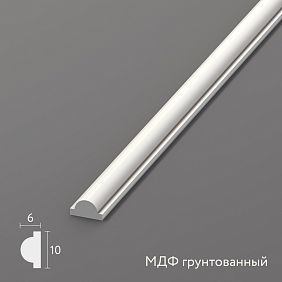
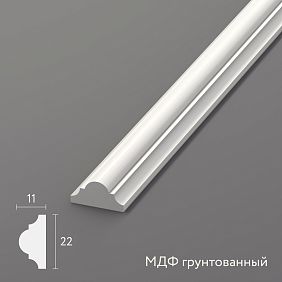
Moldings are universal linear elements of varying widths. While cornices work at the boundary of planes, moldings create divisions within a plane.Polyurethane moldingsThey form frames for wall panels, horizontal bands, door and window casings, vertical accents. They are the most versatile in application — you can create countless compositions using moldings of different widths.
The width of the molding is chosen relative to the size of the panel being framed. A 600×900 mm panel — 40-60 mm molding. A 1200×1800 mm panel — 80-120 mm molding. A too thin molding on a large panel disappears. A too thick molding on a small panel looks crude. Rule: the molding width is 5-8% of the smaller side of the framed panel.
Baseboards are floor cornices that finish the wall at the bottom.Polyurethane BaseboardsThey must match the ceiling cornice in style, but do not necessarily replicate its profile exactly. General logic — baseboard is 30-50% narrower than cornice if ceilings are standard 2.7 m. For high ceilings 3.5-4 m, baseboard may be equal in width to the cornice.
Stylistic correspondence between baseboard and cornice is critical. If the cornice is classical with ornamentation, the baseboard must also have a classical profile. If the cornice is modern and minimalist, the baseboard should follow the same logic. Dissonance between baseboard and cornice destroys the composition’s integrity.
Rosettes are round or oval accents with relief ornamentation. Traditionally placed on the ceiling around chandeliers, but also applicable on walls — as a central wall panel accent, above a door, or as a frame for wall sconces.ceiling rosettesThey must be proportional to the room. For rooms 15-20 m², optimal rosette diameters are 400-600 mm. For halls 40-60 m² — 800-1200 mm.
The rosette ornament sets the detail level of the entire composition. If the rosette has a fine, intricate ornament, other elements must also be detailed. If the rosette is minimalist with a simple pattern, cornices and moldings follow the same degree of simplification. The rosette is the compositional center, and all elements harmonize with it.
Corner elements are pre-made details for joining cornices and moldings. Corner elements solve the main installation problem — precise 45° trimming. They have ornamentation matching straight strips, creating perfect joints without gaps. Using corner elements simplifies installation, speeds up work, and guarantees an aesthetic result.
Decorative panels are large pre-made elements with relief.Wall PanelsThey replace assembled moldings. They are fast to install but less flexible — size and ornament are fixed. Panels are suitable for standard solutions when you need to quickly decorate a large area. For unique compositions, it's better to assemble frames from moldings.
Moldings — decorative elements of various shapes for accentuation. These can be corner scrolls, central cartouches, vertical panels with ornament. Moldings are used as an addition to framed compositions — placed in corners of molding frames, centers of panels, at junctions of elements. They add detail and complicate the composition.




Laws of compositional unity
A beautiful molded composition follows certain laws. Violating these laws creates visual dissonance, even if it's hard to explain exactly what's wrong.
Stylistic unity — the first law. All elements must belong to one style or compatible styles. Classicism combines with Empire (common basis — antiquity). Baroque combines with Rococo (common basis — opulence). But Classicism does not combine with Baroque — the first requires symmetry and restraint, the second — asymmetry and excess.
How to determine the style of an element? By profile and ornament. Classical elements have a clear geometric profile with moderate moldings and scrolls. Ornament — strict acanthus leaves, Ionic, beads. Baroque — complex curved profile, lush vegetal ornament, Rocaille, scrolls. Modern — minimalist profile without ornament or with minimal geometry.
When purchasing elements, stick to one manufacturer's collection. Collections are developed by designers as cohesive systems — all elements are coordinated in style, profile, ornament. Mixing elements from different collections is risky — they may conflict in details.
Proportionality — the second law. Element sizes must correspond to room dimensions and to each other. Large molding in a small room overwhelms and consumes space. Small molding in a large hall disappears and looks incomplete. Elements should be noticeable but not dominate the space.
Cornice proportion rule: width is 3-5% of ceiling height. For a 2.7 m ceiling — cornice 80-135 mm. For 3.5 m — 105-175 mm. This ensures visual balance. Too narrow a cornice is unreadable. Too wide a cornice presses down visually, lowering the ceiling.
Wall moldings must be proportional to the cornice. If the cornice is 100 mm, wall panel moldings — 60-80 mm (20-40% narrower). This creates hierarchy — cornice is primary, moldings secondary. If moldings equal or wider than the cornice — hierarchy is broken, elements compete for attention.
Rhythm — the third law. Repeating elements must be placed with equal intervals, creating a predictable rhythm. Three panels on a wall — intervals between them are equal. Five pilasters along a wall — distances are equal. Uneven intervals are perceived as an error or chaos.
Exception — intentional asymmetry in modern interiors. But this is a complex technique requiring developed compositional sense. Asymmetry must be balanced — if two panels on the left, one on the right but larger. Random asymmetry without balancing logic — compositional error.
Symmetry — the fourth law for classical styles. Classicism requires mirror symmetry relative to the central axis. If a molding composition is on the wall, it must be symmetrical. If pilasters — in pairs at equal distance from the center. Breaking symmetry in a classical interior is considered an oversight.
Modern styles allow asymmetry but require balance. Balance — visual weight equality. A large element on the left is balanced by a group of small elements on the right. A dark accent above — balanced by light below. Achieving balance is harder than symmetry, but the result looks more dynamic.
Element hierarchy — the fifth law. A composition must have primary, secondary, and tertiary elements. Primary — largest, most detailed, located in the compositional center. Secondary — smaller, surrounding the primary. Tertiary — smallest, filling gaps.
For example, on a wall: primary element — large rosette in the center of the composition. Secondary — molding frames around the rosette. Tertiary — small appliqués in the corners of the frames. If all elements are equally significant — no hierarchy, composition is flat and boring.
Color unity — the sixth law. Molding can be white, contrasting with the wall, or colored. But all molding elements must be the same color (or color scheme). A white cornice, gray moldings, gold rosette on one wall — visual chaos. All elements white, or all gray, or all with the same patina type.
Exception — intentional color emphasis on the primary element. For example, all elements white, but rosette gilded. This highlights it as the compositional center. But such emphasis should be singular. Two or three elements of different colors — already excessive.
Our factory also produces:


Technology of perfect joints
The beauty of molded composition is destroyed by poor joints. Gaps, misalignments, mismatched ornament are obvious, creating a sense of carelessness. Professional installation yields joints that are hard to spot — practically invisible.
Trimming elements — critical stage. For joining two elements at an angle, use 45° trimming. The accuracy of the angle determines the quality of the joint. Even a 1° deviation creates a gap that widens as you move away from the corner. On a 2-meter cornice, a 1° deviation creates a 3-4 mm gap at the far end — an obvious defect.
Trimming tool — a miter saw with precise angle setting. Hand saw with a guide gives less precision but is acceptable for small elements. Important: the element must be positioned as it will be on the wall. Cornice is cut at an angle simulating the wall-ceiling angle. Molding — flat or on edge, depending on installation.
Checking the joint before installation is mandatory. Cut two elements, dry-fit them without glue. The joint must be tight, without gaps. Ornament must match — molding to molding, leaf to leaf. If there is a gap or mismatch — adjust the angle, trim again. It's better to spend 10 minutes on re-trimming than to live with a gap for years.
Corner elements eliminate trimming problems. A pre-made corner element is installed in the corner, and straight panels with 90° trimming are fitted to it. The joint between corner and straight panel is minimal, and a gap is unlikely. This justifies the cost of corner elements — they save time, nerves, and guarantee results.
Use of corner elements is recommended for complex cornices with rich ornament. The more complex the profile and ornament, the harder it is to precisely join two elements at 45° with matching patterns. A corner element solves this problem radically. For simple moldings, corner elements are optional — 45° trimming is not so difficult.
Joint adhesive — special joint adhesive based on polyurethane. It differs from mounting adhesive used to attach molding to walls. Joint adhesive is applied in a thin layer to the ends of elements, melts surfaces upon joining, creating a molecular bond. Result — monolithic joint, as if elements were cut from a single piece.
Joint adhesive technique: apply joint adhesive to both ends in a thin, even layer of 1-2 mm. Wait 30-60 seconds (adhesive slightly thickens). Join elements, press tightly, hold for 1-2 minutes. Adhesive sets quickly — after 5 minutes the joint holds. Immediately wipe away any excess adhesive with a damp cloth. After 30 minutes, adhesive fully polymerizes, and the joint gains strength.
Mounting adhesive for wall attachment — thick acrylic compound. Applied to the back of the element in a zigzag or stripe pattern. When pressed against the wall, it spreads, creating contact. Mounting adhesive holds the element to the wall, but does not join elements together — for that, joint adhesive is needed.
Mounting order for joints: apply mounting adhesive to both elements. Apply joint adhesive to the joining ends. Attach the first element to the wall, press down. Attach the second element, align the joint, press it against the first element and the wall simultaneously. Hold the joint for 1-2 minutes until the joint adhesive sets. Then you can release — the joint holds, and mounting adhesive continues to set under the weight of the element.
Joint spackling is used if a minimal gap of 0.5-1 mm remains. Acrylic spackling is applied with a spatula into the gap, smoothed, and excess is wiped away with a damp sponge. After drying (2-4 hours), sand with fine abrasive paper P220-P320. Spackling must be flush with the surface, without a bump.
For gaps larger than 2 mm, putty is unsuitable — it shrinks, and the gap will reappear. Use acrylic sealant — it is elastic and does not shrink. Apply sealant into the gap and smooth it with a wet finger. Sealant is not sanded, remove excess immediately. After polymerization (24 hours), the joint is ready for painting.
Painting joints is done after the putty or sealant is fully dry. If the molding is already painted, touch up the joints with the same paint using a brush. If the molding is white, the joint after putty may not require painting — the putty is also white and blends with the polyurethane. However, for an ideal result, it is better to paint the entire molding after installation — this will hide any joint marks.
Get Consultation
Combining elements: practical schemes
Theory is important, but specific schemes provide clarity. Let’s consider proven compositions for different tasks.
Classic wall paneling — the most common scheme. The wall is divided into rectangular panels by moldings. Options for division: three vertical panels (central one 1.3–1.5 times wider than side ones), two horizontal zones (upper 40%, lower 60%), a grid of 6–9 equal-sized panels.
Installation order: mark the position of all moldings on the wall, taking symmetry into account. First, install vertical moldings — from floor to ceiling or from cornice to baseboard. Then install horizontal moldings — between vertical ones. Joints between vertical and horizontal moldings are at 90°, and decorative rosettes or overlays can be placed at the joints.
Molding width for 600×900 mm panels — 50–70 mm. For 1000×1500 mm panels — 80–100 mm. For 1500×2000 mm panels — 100–150 mm. Molding setback from wall boundaries (corners, cornice, baseboard) — 100–200 mm, creating space and preventing a cramped feeling.
Doorway framing — another common task. The door is framed by vertical moldings (stiles) on the sides and horizontal (frieze) at the top. Framing width 100–150 mm. Frieze height can equal stile width or be 20–30% larger for emphasis.
Advanced option — framing with a broken frieze and central element installation. The frieze is not a continuous strip but divided into three parts — two side parts and a central one. Decorative overlays or rosettes are mounted between them. This creates rhythm and makes the framing more interesting.
Corner framing elements — special parts mounted at the junctions of vertical stiles and horizontal frieze. They have an L-shaped form with ornament matching the moldings. Corner elements simplify framing installation, create accents in corners, and enhance architectural character.
Accent wall decoration combining cornice, panels, and rosettes. Cornice at the top of the wall (if it’s not a ceiling wall but a partition). Baseboard at the bottom. Between them — panels made of moldings, with a rosette in the center of the main panel. Such a wall becomes the compositional center of the room.
Proportions for an accent wall 3 meters high and 4 meters wide: cornice 100–120 mm, baseboard 80–100 mm, three vertical panels 1200 mm wide each (accounting for setbacks and moldings), moldings 80 mm, central rosette 500–600 mm diameter. Panel setback from cornice and baseboard — 150 mm, from side boundaries — 200 mm.
Creating a ceiling coffer — an inset square or rectangle on the ceiling. The coffer is formed by a cornice around the perimeter and moldings forming an inner frame. Visually creates an effect of depth, although all elements are surface-mounted.
Coffer technique: main cornice around the ceiling perimeter, 100–150 mm wide. Inner frame made of moldings 60–80 mm wide, 300–500 mm from the cornice, forming a square or rectangle. Center of the frame — rosette 400–800 mm diameter. Coloring: cornice and frame white, space between them 1–2 tones darker, creating shadow and enhancing the effect of depth.
Combinationmoldingof different widths creates layering. Instead of one wide molding, use two narrow ones parallel with a 20–40 mm gap. This adds detail and visually complicates the composition. Option: wide molding 80 mm + narrow 30 mm parallel, 30 mm apart — creates a frame with two lines.
Vertical accents with pilasters — imitation of flat columns on the wall. Pilasters are placed in pairs symmetrically, framing significant elements — fireplace, mirror, door. A pilaster consists of a base (bottom), shaft (center), and capital (top). Can be assembled from parts or use ready-made pilasters.
Pilaster height is usually equal to wall height from baseboard to cornice minus 100–200 mm setbacks. Width 100–200 mm. Distance between paired pilasters depends on the framed object — for a door 1200–1500 mm, for a mirror 1000–1200 mm, for a fireplace 1500–2000 mm.
Adhesive selection: critical factor for longevity
Quality of installation is 50% determined by adhesive. Wrong adhesive — element delamination, cracks at joints, deformation. Correct adhesive — flawless service for decades.
Installation adhesive for attaching elements to surface — thick acrylic compound in tubes for installation gun. Key properties: high initial adhesion (sets in 5–10 minutes, holds element without additional fixation), elasticity after polymerization (compensates for thermal expansion), white color (does not show through thin elements).
Recommended brands: Orac Decofix FDP500, FDP550 — professional European brand adhesives, highest quality. DecoMaster DM-0801 — Russian equivalent of good quality. Tytan Professional for molding — affordable medium-quality option. Avoid universal construction adhesives — they are not optimized for polyurethane.
Installation adhesive consumption: forcornicewidth 100 mm, length 2 meters — 50–80 ml (one snake-like strip). For wide cornice 150–200 mm — 100–150 ml (two strips along edges). Tube 310 ml — for 15–20 linear meters of medium cornice or 30–40 linear meters of molding.
Joint adhesive for connecting elements together — polyurethane compound working as cold welding. Applied as thin layer on ends, melts surfaces at molecular level upon compression. After polymerization, joint is monolithic and stronger than material itself.
Recommended joint adhesives: Orac Decofix FX200 — quality standard, fast setting 60 seconds. Perfect Ultra Fix — excellent price-quality balance. DecoMaster DM-0802 — budget option, requires 2–3 minutes holding. Joint adhesive consumption is minimal — tube 80 ml for 30–50 linear meters of joint.
Adhesive application technique: apply installation adhesive to dry, clean back side of element. Snake pattern for narrow elements, two strips along edges for wide ones. Do not overapply — excess adhesive will need to be cleaned. Joint adhesive — thin, even 1–2 mm layer on both ends, wait 30–60 seconds, press firmly.
Setting time: installation adhesive sets in 5–10 minutes (initial fixation), full polymerization 24 hours. Joint adhesive — sets in 60–120 seconds, full strength after 30 minutes. Do not apply load, paint, or wash joints until full polymerization.
Adhesive application conditions: temperature 15–25°C, humidity 40–70%. At low temperature, adhesive thickens and sets slower. At high humidity, polymerization slows. Optimal conditions — normal residential room. Installation not recommended on cold storage or damp basement.
Adhesive storage: tubes stored vertically, nozzle up, at temperature 5–25°C. Shelf life 12–18 months from production date. Use fresh adhesive — old adhesive loses properties, sets slower, holds worse. Check date on tube when purchasing.
Finishing: from installation to perfection
Installed molding is a semi-finished product. One step to perfection — finishing joints, painting, integration into the interior.
Joint filling — the first operation after full polymerization of the adhesive (after 24 hours). Inspect all joints. Even with perfect trimming, there may be minimal gaps of 0.5–1 mm — they must be filled. Use acrylic finishing putty — it does not shrink, sands well, and is paintable.
Puttying technique: load putty onto a narrow trowel (40–60 mm). Fill the gap, pressing the putty inward. Level it with the surface. Wipe off excess with a damp sponge. Let dry for 2–4 hours. Sand with fine abrasive paper P220–P320, removing irregularities. The joint should be invisible — neither visually nor by touch.
Joint sealing is used for joints where micro-movements are possible — e.g., cornice and wall joints if the wall is not perfectly flat. Acrylic sealant is elastic and compensates for movement without cracking. Extrude sealant in a thin bead along the joint, smooth with a wet finger. Wipe off excess immediately. The sealant forms a soft, non-cracking seam.
Priming before painting equalizes absorption. Polyurethane has a dense surface, putty is porous. Without primer, paint will lay unevenly — it will absorb on putty and remain glossy on polyurethane. Primer equalizes, paint lays evenly. Use acrylic primer, apply in a thin layer with a roller or brush. Drying time 2–4 hours.
Painting molding — final operation. Paint must be water-based — acrylic or latex. Solvents (acetone, white spirit) dissolve polyurethane. First layer — primer, thin. Second — covering, main. Between layers 3–4 hours. Two thin layers are better than one thick — no streaks, even coverage.
Color choice determines the molding’s role. White molding on white walls — relief is visible only through light and shadow, elegant solution. White on colored walls — classic contrast, molding acts as an accent. Colored molding in wall tone — modern solution, molding creates texture but does not distract. Dark molding on light walls — bold solution, molding is graphic.
Patina creates an aged effect, emphasizing relief. Technique: base layer light (white, cream, bone). After drying, apply patina — diluted dark paint (brown, gray, black) with a brush into ornament recesses. After 1–2 minutes, wipe raised areas with a dry cloth, leaving patina in recesses. Result — relief emphasized by dark shadows.
Protecting molding after painting — final lacquer layer (optional). Matte acrylic lacquer protects paint from abrasion, moisture, and simplifies cleaning. Apply in a thin layer with a soft brush or spray. Lacquering is recommended for molding in humid areas (bathrooms, kitchens), in high-traffic zones where contact is possible.
Protection of molding after painting — final lacquer layer (optional). Matte acrylic lacquer protects paint from abrasion, moisture, and makes cleaning easier. Apply in a thin layer using a soft brush or spray. Lacquering is recommended for molding in humid areas (bathrooms, kitchens), in high-traffic zones where contact is possible.
Errors that destroy composition
Learning from others’ mistakes is cheaper than from your own. Let’s examine typical errors and how to avoid them.
Mixing styles — main error. Baroque ornate cornice + minimalist thin moldings = visual conflict. Cornice screams luxury, moldings whisper restraint. Result — composition is unreadable, looks random. Stick to one style or compatible ones (classicism + empire, baroque + rococo).
Incorrect proportions — second error. Wide cornice 200 mm on 2.5 m ceiling suppresses, visually lowers height. Or narrow cornice 50 mm on 4 m ceiling disappears, looks short. Skirting wider than cornice breaks hierarchy — base is more important than top, illogical. Follow rule: cornice 3–5% of ceiling height, skirting 30–50% narrower.
Asymmetric compositions in classical style — third error. Classicism demands mirror symmetry. Two panels left, one right — error. Pilaster left, none right — error. In classicism, asymmetry reads as unfinished work, disrupts harmony. If you choose classic style — be consistent with symmetry.
Poor joints — fourth error, technical. Gaps at cornice corners, ornament misalignment, height discrepancies kill even a correct composition’s impression. Viewer focuses on defects, not beauty. Use precise trimming, joint adhesive, corner elements. Better to spend time on perfect joints than live with visual irritants.
Over-decorating — fifth error. Molding on all walls, ceiling, doors, windows creates visual noise. Eyes don’t rest, get tired. Molding should structure space, not overwhelm it. Rule: maximum 60% of surfaces decorated, 40% remain clean. Or accent wall in molding, others smooth.
Insufficient decoration — reverse error. One thin cornice in classical interior looks orphaned, insufficient. Classicism demands certain decoration density — cornice + skirting + wall panels or frames. Minimalist decoration suits modern styles, not classical.
Wrong adhesive — seventh error, technical. Universal construction adhesive, PVA, silicone not suitable for polyurethane. They either don’t hold (delamination after months) or dissolve material (silicone may react with polyurethane). Use specialized adhesive for polyurethane molding — mounting for attachment, joint adhesive for seams.
Mounting on unprepared surface — eighth error. Dust, grease, peeling paint reduce adhesive bond. Element holds for a week, a month, then detaches. Preparation is mandatory: cleaning, degreasing, priming. Preparation takes 30 minutes, but guarantees decades of service.
Painting before mounting — controversial error. Pre-painted elements are easier to mount — no need to paint on walls. But joints still require puttying and repainting after mounting. Risk — paint damage during mounting, protruding adhesive leaves marks. Better to mount white molding, process joints, then paint everything together — cleaner result.
Ignoring thermal expansion — rare but serious error. Polyurethane has expansion coefficient, changes size with temperature fluctuations. On a 2-meter segment, expansion is 2–3 mm for 20°C temperature swing. If element is tightly fitted (mounted flush), expansion creates stress, possible delamination or deformation.
Solution — leave minimal 1–2 mm gap at corners and long-element joints. Gap filled with elastic sealant, compensating for expansion. Critical for unheated spaces with large temperature swings (cottage homes, verandas).
Conclusion
Combining molding elements — an art requiring understanding of composition, proportions, and technique. But this art is accessible to anyone willing to study the rules, apply them consciously, and act methodically.
Successful molding composition begins with planning. Do not buy elements spontaneously. Sketch a layout — placement of cornices, moldings, rosettes. Check proportions, symmetry, stylistic unity on paper. Adjust until composition is harmonious. Only then purchase.
STAVROS offerspolyurethane moldinghigh-density with clear relief, ideal geometry. Collections are designed by designers as cohesive systems — all elements coordinated. Buying STAVROS collection guarantees stylistic unity.
Mounting technology determines longevity. Use specialized adhesives — mounting for attachment, joint adhesive for seams. Do not economize on adhesive — price difference is minimal, result difference is huge. Quality adhesive ensures decades of service without delamination.
Joint processing turns mounting into art. Perfect trimming, joint adhesive, puttying, sanding — each stage matters. Joint must be invisible. If you see a joint from 1 meter away — work is substandard. Professional joint requires close inspection.
Finishing touches complete the transformation. Painting not only protects but integrates molding into the interior. The choice of color, contrast level, patina or gilding application determines the composition's character. Experiment on samples before painting the installed pieces.
Avoid typical mistakes — mixing styles, incorrect proportions, poor joints, over-decorating. Each error can be corrected, but it requires time, money, and nerves. Better to do it right from the start, following proven rules.
Molding decoration is an investment in beauty that pays off for years of joy from admiring it. Properly designed and quality-installed molding lasts for decades without losing relevance. It transforms ordinary housing into a space with character, history, and soul.
Start small — decorate one room. Apply the knowledge gained. Evaluate the result. With experience comes confidence, speed, and sense of composition. Then move on to more complex projects — combinations of multiple elements, original compositions.
STAVROS Company supports you at every stage. Consultants will help you select elements, calculate quantities, and choose adhesives. Product quality guarantees the result. Delivery ensures timely receipt. Everything needed for success is in your hands.
Create an interior that will delight you and your guests. An interior where details matter, where quality is visible, where beauty is intentional.— everything must correspond to the chosen era.from STAVROS — your tools for creating this interior. Combine them masterfully, and the result will exceed expectations.


