Article Contents:
- Scientific Basis of Superiority: Microstructure of New-Generation Material
- Molecular Features of Structure
- Chemical Composition and Ecological Safety
- Manufacturing Technologies: Precision of Swiss Watches
- Preparation operations
- High-Precision Mechanical Processing
- Finishing Technologies
- Functional Superiority: Practical Advantages in Application
- Stability of Operational Characteristics
- Processability and Assembly Technology
- Decorative Finishing Possibilities
- Design Solutions: Unlimited Creative Possibilities
- Color and Texture Solutions
- Geometric Possibilities
- Industry Applications: Universality of Solutions
- Cabinet Furniture
- Built-In Furniture and Interior Solutions
- Specialized Applications
- Technical specifications and quality standards
- Physical and Mechanical Properties
- Geometric Parameters and Tolerances
- Environmental Standards
- Economic Efficiency: Optimization of Costs at All Stages
- Manufacturing Economics
- Logistical Advantages
- Operational Benefits
- Innovative Developments: Looking to the Future
- Nanotechnological Solutions
- Biomaterial Composite Technologies
- Smart materials
- Regional Adaptation: Consideration of Climatic Features
- Arctic and Subarctic Regions
- Tropical and Subtropical Zones
- Quality control and certification
- Raw Material Incoming Inspection
- Operational Control
- Final Testing
- Popular Questions and Expert Answers
- Conclusion: The Choice That Determines Quality of Life

The furniture industry is undergoing a true revolution, and at the heart of these changes are MDF furniture details — an innovative solution that has fundamentally changed approaches to the design and production of modern furniture. This composite material has become a true breakthrough, combining the best qualities of natural wood with the advantages of modern technologies.
In the era of rapid development of interior design, consumers demand not only beauty but also functionality, durability, and ecological safety from furniture. It is precisely these qualities that fully embody MDF furniture details, representing an ideal balance between traditional woodworking and innovative manufacturing solutions. But what makes this material so popular among furniture manufacturers and interior designers around the world?


Scientific Basis of Superiority: Microstructure of New-Generation Material
Understanding the unique properties of MDF is impossible without a deep analysis of its internal structure. Unlike traditional wood materials, MDF (Medium Density Fibreboard) is created by pressing wood fibers under high pressure and temperature using environmentally safe binders.




Molecular Features of Structure
Uniform distribution of fibers ensures isotropic properties of the material — equal strength in all directions. This fundamentally distinguishes MDF furniture details from natural wood, where strength along and across the grain may differ by orders of magnitude.
Density of the structure in the range of 600–900 kg/m³ ensures an optimal ratio of strength and weight. At this density, the material is easily processed with standard woodworking tools, yet it possesses high mechanical strength.
Absence of internal stresses prevents cracking and deformation of finished products. Unlike solid wood, where internal stresses may manifest over years of use, MDF maintains stable geometric dimensions throughout its entire service life.
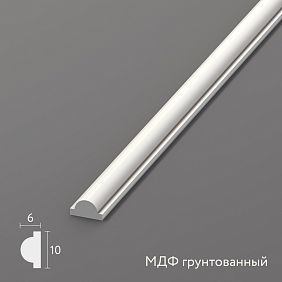
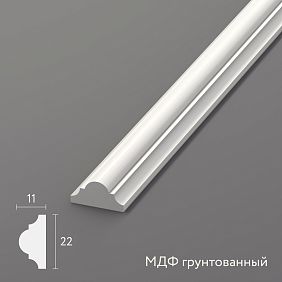
Our factory also produces:


Chemical Composition and Ecological Safety
Modern MDF moldings are produced using formaldehyde resins of class E1 and E0, guaranteeing minimal emission of harmful substances. Formaldehyde content in the finished product does not exceed the natural background level present in the surrounding environment.
Biological resistance of MDF is ensured by special additives that prevent the development of fungal and bacterial damage. This is especially important for furniture used in conditions of high humidity.
Fire safety is achieved by introducing flame-retardant additives that prevent ignition and spread of fire. Modern MDF grades meet the highest fire safety classes.
Get Consultation
Manufacturing Technologies: Precision of Swiss Watches
Manufacturing high-quality MDF furniture details requires the application of the most advanced technological solutions and high-precision equipment. Each stage of the production process is critically important for obtaining the highest quality product.
Preparation operations
Raw material acclimatization — the first and one of the most important stages of production. MDF panels are stored in production facilities for at least 48 hours to stabilize humidity and temperature. This process prevents deformation of finished products after manufacturing.
Blank calibration is performed on precision equipment with accuracy ±0.1 mm. Such precision is critically important for MDF skirting boards, where even minor deviations from nominal dimensions may lead to problems during installation.
Raw material quality control includes checking density, humidity, bending strength, and other critically important parameters. Only material fully meeting technical requirements is allowed for further processing.
High-Precision Mechanical Processing
Profile milling is performed on modern CNC machining centers. Specialized hardmetal cutters ensure a surface finish of Ra 3.2, meeting requirements for products of the highest quality class.
Multi-spindle milling machines allow performing comprehensive processing of blanks in a single pass, guaranteeing ideal profile geometry and eliminating accumulated errors during repositioning.
Contour processing of complex profiles is performed on five-axis machining centers capable of creating parts of any complexity. Modern CAM systems automatically generate control programs, optimizing tool movement trajectories.
Finishing Technologies
Gradual sanding is performed using abrasive belts of different grits — from P120 for preliminary processing to P320 for final surface preparation. Each sanding stage removes traces of the previous one, ensuring a mirror-smooth surface.
Dust removal and degreasing are performed in special chambers with controlled atmosphere. This is critically important for high-quality coating application — any contamination on the surface will result in defects in the paint layer.
Functional Superiority: Practical Advantages in Application
Usage MDF furniture details in modern furniture manufacturing provide a range of practical advantages that are highly valued by both professionals and end users.
Stability of Operational Characteristics
Absence of seasonal deformation — a key advantage of MDF over natural wood. While solid wood may change its dimensions by 3–5% depending on ambient humidity, MDF maintains stable geometric parameters within a humidity range of 30% to 80%.
This is especially important for long elements — cornices, skirting boards, moldings, where even minor changes in size can lead to gaps at joints or deformation of the entire structure.
MDF's thermal stability exceeds that of most other materials. The coefficient of linear expansion is only 8×10⁻⁶ 1/°C, which is 2-3 times less than that of plastics and metals.
Processability and installation technology
MDF's excellent machinability allows performing the most complex profiles without chipping or scratching edges. The homogeneous structure of the material ensures consistently high-quality processing throughout the entire length of the workpiece.
The ability to fine-tune directly on-site makes installation MDF cornices simple and convenient. The material is easily cut, milled, and sanded with standard woodworking tools.
Adhesion with various types of adhesives expands the possibilities for joining parts. MDF bonds well with PVA, polyurethane, epoxy, and other types of adhesives, ensuring strong and durable connections.
Decorative finishing possibilities
Universality for various finishes — one of the key advantages of MDF. The material accepts paints, varnishes, veneer, laminate, PVC film, and other decorative finishes equally well.
MDF's perfectly smooth surface does not require additional leveling before applying finishes, significantly simplifying the technological process and reducing material consumption.
The ability to create complex textures through milling, laser engraving, or embossing allows mimicking any natural materials — from precious wood to natural stone.
Design solutions: unlimited creative possibilities
Working with MDF opens unprecedented opportunities for designers and furniture manufacturers to realize the most daring creative ideas. The material's technological properties allow creating items that would be impossible or economically unfeasible to produce from other materials.
Color and texture solutions
Unlimited color palette is achieved due to MDF's excellent compatibility with modern paint and varnish systems. The ability to color in any colors from RAL, NCS, Pantone catalogs makes the material universal for any design concepts.
Modern technologies allow creating complex color transitions, gradients, metallic effects on MDF surfaces. Using special pigments ensures high lightfastness of coatings.
Imitation of natural materials achieves photographic accuracy. Modern printing and lamination technologies allow reproducing not only the visual texture of wood, stone, metal, but also their tactile properties.
Geometric possibilities
Creating complex curved forms became possible due to the homogeneity of MDF's structure. The material easily bends to a radius of up to 50 cm without damaging its internal structure.
For creating elements with even smaller bending radii, the kerfing technology is used — applying cross cuts that become invisible after bending.
Milling deep relief allows creating three-dimensional decorative elements with detail down to 0.1 mm. Modern milling centers can perform processing with variable cutting depth, creating realistic wood carving imitations.
Industry application: universality of solutions
MDF furniture details are used in the most diverse industries — from producing cabinet furniture to creating exclusive interior solutions. Each application area imposes specific requirements on the material and its processing technologies.
Cabinet Furniture
MDF furniture facades have become a standard of quality in modern furniture production. The ability to create perfectly smooth surfaces or complex milled profiles makes MDF indispensable for producing high-end kitchen furniture.
Moisture-resistant MDF is specially developed for use in kitchens and bathrooms. Special impregnations and coatings provide long-term protection against moisture and steam.
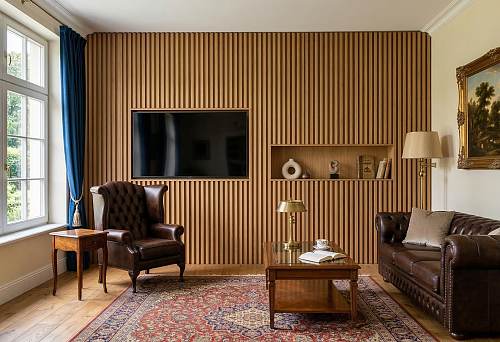
Decorative appliqués and moldings allow creating furniture in any stylistic direction — from strict classicism to modern minimalism. Wooden trim MDF ensures perfect element alignment and flawless appearance.
Built-in furniture and interior solutions
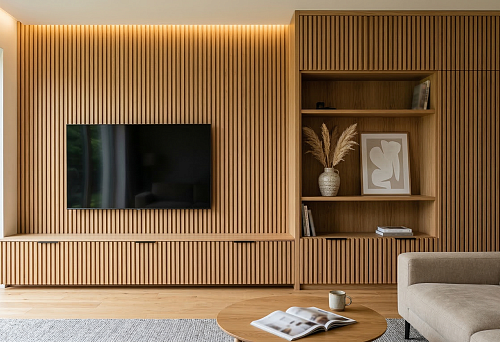
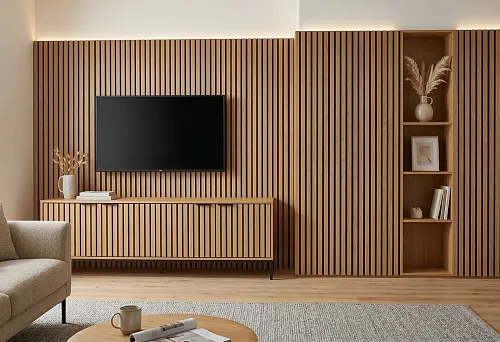
MDF wall panels allow creating seamless interior surfaces of any configuration. The ability to manufacture elements to custom sizes eliminates the need for on-site fitting.
Lightweight MDF ceiling structures enable creating complex multi-level ceilings with built-in lighting. The material's lightness reduces load on building's load-bearing structures.
Specialized Applications
Acoustic systems use high-density MDF to manufacture speaker cabinets. The damping properties of the material ensure excellent acoustic performance, preventing parasitic resonances.
Retail equipment — displays, shelves, counters — is made from MDF due to the ability to create complex shapes and high surface quality, requiring no additional finishing.
Technical Specifications and Quality Standards
Modern MDF furniture details Produced strictly in accordance with international quality standards and technical regulations, ensuring the stability of characteristics and longevity of finished products.
Physical and mechanical properties
Material density varies from 720 to 850 kg/m³ depending on the application. For decorative elements, medium-density MDF (750–780 kg/m³) is used, providing an optimal balance of strength and workability.
Bending strength is at least 25 MPa for 19 mm thick MDF, exceeding the requirements of most furniture applications. High strength allows creating extended elements without intermediate supports.
Elastic modulus of 2500–3000 MPa provides sufficient rigidity of structures at minimal weight. This is especially important for wall-mounted furniture elements, where weight is a critical parameter.
Quality of planed strips is determined not only by wood species and processing technology, but also by the accuracy of geometric parameters. Modern standards set strict requirements for deviations from nominal dimensions, straightness, and surface quality.
Panel thickness is controlled with precision ±0.2 mm, ensuring perfect element alignment during furniture assembly. High geometric accuracy is achieved using precision calibration equipment.
Surface flatness does not exceed 0.3 mm over 1000 mm length, guaranteeing high-quality coating application without additional leveling. Flatness is controlled using laser measurement systems.
Edge straightness is ensured by high-precision cutting and format equipment. Deviations from straightness do not exceed 0.2 mm over 1000 mm length.
Environmental standards
Formaldehyde emission class E1 and E0 is confirmed by regular tests in accredited laboratories. Products comply with the strictest European ecological safety standards.
FSC certification guarantees that wood raw material originates from forests managed according to sustainable forestry principles. This confirms the manufacturer’s ecological responsibility.
Economic efficiency: optimization of costs at all stages
Using MDF furniture parts ensures significant economic efficiency at all stages of the product’s life cycle — from production to disposal.
Production Economy
High material utilization rate is achieved due to the uniform structure of MDF and absence of defects. When cutting panels, material utilization can reach 97–98%, significantly exceeding natural wood performance.
Defect-free MDF ensures a 60–80% reduction in scrap compared to natural wood. Absence of knots, cracks, and grain irregularities eliminates production defects caused by raw material flaws.
Automation of production processes becomes possible due to the predictability of MDF properties. Stable material characteristics allow using robotic lines without constant operator supervision.
Logistical advantages
Standardized MDF panel sizes simplify production planning and inventory management. The ability to order material precisely to project specifications minimizes leftovers and warehouse costs.
Compact packaging due to correct panel geometry allows optimizing transportation costs. A container can hold 15–20% more MDF compared to equivalent volume of lumber.
Operational benefits
MDF products have a service life of 15–25 years under proper use, comparable to premium-grade natural wood products. At the same time, MDF cost is significantly lower.
Ease of repair and refurbishment allows extending furniture service life. Damaged areas can be easily restored with putty and repainting, which is economically more advantageous than replacing the entire item.
Innovative developments: looking toward the future
The MDF manufacturing industry does not stop developing. New technologies are continuously introduced, materials with improved characteristics are developed, and new application areas are explored.
Nanotechnology solutions
Nanomodification of binders significantly improves the physical-mechanical properties of MDF without increasing formaldehyde content. Adding silicon dioxide nanoparticles increases strength by 20–25%.
Antibacterial coatings based on silver nanoparticles make MDF suitable for use in medical facilities and food industry enterprises. The antibacterial effect lasts throughout the product’s service life.
Self-extinguishing compositions increase fire safety of MDF products. Special nanostructured flame retardants are evenly distributed throughout the material volume, providing effective fire protection.
Biotocomposite technologies
Use of renewable raw materials is a priority direction for MDF production development. Partial replacement of wood fibers with flax, hemp, or bamboo fibers reduces pressure on forest resources.
Biodegradable binders based on natural polymers make MDF a fully eco-friendly material. After the end of their service life, such products can be composted without harming the environment.
Smart Materials
Thermochromic additives allow creating MDF that changes color depending on temperature. This opens new possibilities for interior design and creating interactive furniture elements.
Integrated humidity and temperature sensors within the MDF structure provide microclimate control in rooms. Data is transmitted to smartphones or smart home systems via wireless technologies.
Regional adaptation: accounting for climatic characteristics
Application MDF furniture details Adaptation to different climatic zones requires consideration of local features and adjustment of technological solutions.
Arctic and subarctic regions
Extremely low temperatures require the use of special frost-resistant binders and coatings. Standard compositions may become brittle at temperatures below -30°C.
Large daily temperature fluctuations create additional requirements for dimensional stability. MDF grades with reduced thermal expansion coefficients are used.
Low air humidity in heated rooms requires additional protection of end surfaces from drying out. Special sealing compounds are applied.
Tropical and subtropical zones
High humidity requires the use of moisture-resistant MDF grades with increased content of water-repellent additives. All end surfaces must be thoroughly sealed.
Intense UV radiation requires the use of coatings with UV filters to prevent destruction of the polymer matrix of the material. Special UV stabilizers are used.
Biological damage — termites, mold, bacteria — requires additional bioprotection. Special long-lasting biocides are added to the binders.
Quality control and certification
Ensuring consistently high quality MDF furniture details requires a comprehensive quality control system at all production stages.
Incoming Raw Material Control
Density is checked using non-destructive methods with ultrasonic thickness gauges. Deviations in density exceeding ±3% from nominal value are not permitted.
Humidity control is performed using high-frequency hygrometers at multiple points on each sheet. Humidity must be within the 6-8% range to ensure dimensional stability of finished products.
Strength tests are conducted on samples from each material batch. Flexural strength, internal bonding, and screw pull-out resistance are checked.
Operational Control
Geometric parameters are controlled using laser measurement systems in real-time. Any deviations from specified dimensions are immediately corrected.
Surface quality monitoring is performed using optical inspection systems capable of detecting defects as small as 0.1 mm. Defective areas are automatically rejected.
Surface roughness is measured using contact and non-contact profilometers. The Ra parameter must not exceed 3.2 micrometers for surfaces intended for painting.
Final Testing
Climate tests simulate various operating conditions — wet-dry cycles, temperature effects, UV exposure. Products must retain their properties under all operational conditions.
Durability tests include cyclic loading simulating long-term use. Accelerated tests allow predicting the service life of products.
Popular questions and expert answers
How does MDF differ from particleboard, and which material is better to choose?
MDF is made from wood fibers, while particleboard is made from wood chips. This provides MDF with a more uniform structure, higher strength, and better workability. MDF has no large voids and holds fasteners better. For furniture requiring profile milling, MDF is preferable.
Can regular MDF be used in rooms with high humidity?
Regular MDF is not recommended for continuous exposure to moisture. For bathrooms and kitchens, use moisture-resistant MDF with special additives. With proper end sealing and quality coating, such material can last for decades.
Which coatings are best suited for MDF?
MDF is compatible with most coatings. For painting, polyurethane enamels are best, providing high strength and durability. For natural texture, veneering or laminating is used. Proper surface preparation is essential — sand and prime.
How long do MDF products last, and how to maintain them?
Quality MDF products, with proper use, last 20-30 years. Maintenance is simple — regular cleaning with soft, damp cleaning agents. Avoid abrasive cleaners and excessive moisture. The coating can be renewed if needed.
Is MDF safe for children's furniture?
Quality MDF of class E1 or E0 is absolutely safe for children. Formaldehyde emissions do not exceed natural background levels. All certified products undergo mandatory tests for compliance with sanitary norms. When selecting, request compliance certificates.
Can MDF furniture be repaired by oneself?
Minor MDF repairs are quite accessible for DIY. Scratches and chips are filled with wood putty, then sanded and painted. For serious damage, it is better to consult professionals. MDF is well-suited for processing with standard tools.
Represent the embodiment of modern technologies in materials science and manufacturing. This material successfully combines the best qualities of natural wood with the advantages of industrial technologies, opening up limitless possibilities for creating high-quality furniture.
MDF furniture details Ecological safety, technological processability, and stable operational characteristics make MDF the preferred material for furniture manufacturers striving for perfection. The ability to create items of any complexity and configuration allows designers to realize the most daring creative ideas.
Economic efficiency of MDF usage is evident at all stages — from reducing production costs to extending the service life of finished products. This makes investments in high-quality MDF furniture profitable for both manufacturers and consumers.
Continuous development of MDF production and processing technologies ensures further improvement of the material. Nanotechnologies, biocomposites, and smart materials are already being applied in the production of next-generation products.
STAVROS — a recognized leader in the production of high-quality MDF products. Years of experience working with this material, deep understanding of its properties and capabilities allow STAVROS to create products that set new quality standards in the industry.
STAVROS uses only the best grades of MDF from leading European manufacturers, ensuring ecological safety and superior operational characteristics of all products. Modern production equipment and strict quality control at every stage of production guarantee world-class product quality.
STAVROS’ team of highly qualified specialists continuously works to improve technological processes and develop new solutions. Investments in research and development enable the company to remain at the forefront of technological progress.
By choosing STAVROS, clients receive not just high-quality MDF products, but comprehensive solutions for creating premium furniture and interiors. Individual approach to each project, professional consultations, and quality after-sales service — all of this makes STAVROS a reliable partner for the most demanding clients.
STAVROS — the guarantee of quality, innovation, and reliability in the world of modern materials and technologies.
MDF furniture details: a technological breakthrough in modern furniture manufacturing | STAVROS Company