Article Contents:
- What is a wooden ball with a hole for
- Decorative stand: when the ball becomes part of the vertical
- Rod or vertical bar: why the hole is more important than the shape
- Furniture support and decorative unit: where the ball is appropriate
- Baluster or repeating decorative rhythm
- What constructor elements can be combined
- Balls and balls with hole
- Bushings and washers: small parts that bring order
- Cubes and geometric elements
- Disks, cones, and transition parts
- How to choose the mounting hole
- How to choose the size and scale of the element
- Material and finish: what to consider before ordering
- How to assemble a commercial cart
- What to buy together with a wooden ball
- How not to confuse a wooden ball with similar products
- Practical selection for different situations
- Need to assemble a decorative stand
- Need to arrange a vertical rod
- Need to make a furniture decorative node
- Need to select a part for restoration
- Need to assemble a repeatable decorative row
- Need to replace a random blank with a finished element
- Where to buy a wooden ball with a hole for a stand or rod?
- How is a wooden ball with a hole different from a regular bead?
- What to check before buying a wooden ball?
- Can the ball be combined with a bushing and washer?
- What to buy together with a wooden ball?
- How is a ball with a hole different from a furniture leg?
- Can a cube be used instead of a ball?
- How to determine the required hole diameter?
- Are such elements suitable for furniture restoration?
- Can wooden elements be painted or stained?
- What to do if elements are needed for several identical stands?
- Can a rod be assembled only from balls?
- Why you shouldn't drill a hole yourself
- When it's better to choose a ready-made furniture leg rather than a construction kit
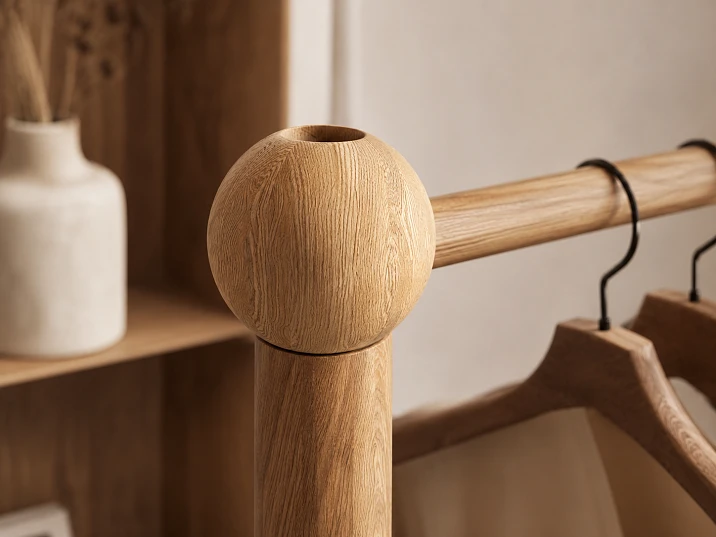
A wooden ball with a hole is usually purchased not for the shape itself, but for assembling a specific unit: a stand, a rod, a decorative support, a baluster, a partition, a furniture part, or a custom interior element. Such a ball is not like a regular bead for crafts. It works as part of a construction kit: it is placed on a rod, combined with bushings, washers, discs, cubes, and other wooden elements, helps create a repeating rhythm, and makes the detail intentional rather than random.
In a furniture or interior project, a small detail often matters more than it seems. An ordinary vertical stand can look technical if left bare. But add a ball with a hole, separate elements with bushings, place a geometric accent, or assemble a series of repeating parts — and the rod starts to be perceived as part of the design. This is how decorative units work in stands, partitions, balusters, supports, furniture inserts, display cases, screens, railings, and custom pieces.
The main mistake when buying such elements is choosing only by appearance. For a construction kit, not only the shape matters, but also the hole: its diameter, compatibility with the rod, fit, neighboring elements, future finishing, and the purpose of the unit. If the ball is beautiful but doesn't match the hole, it cannot be neatly placed on the rod. If the bushing and washer have a different mounting size, the rhythm won't come together. If you buy one part without understanding the set, it's hard to match the rest later.
At STAVROS you can buy STAVROS wooden construction kit elements for assembling stands, supports, rods, and decorative furniture units. It's important to approach the selection like a craftsman or designer: first define the task, then choose the central element, then the separators, repeating parts, finishing materials, and only after that check the cart before ordering.
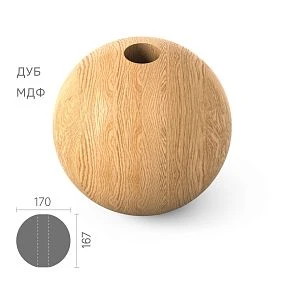
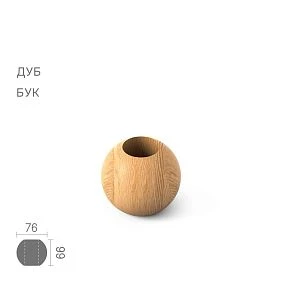
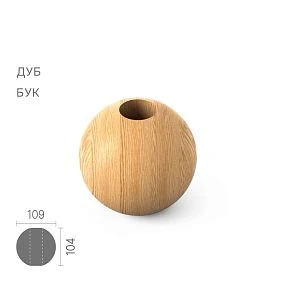
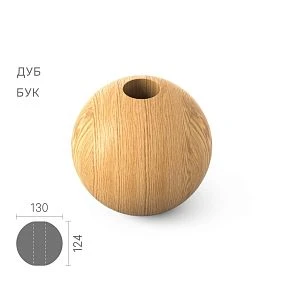
What is a wooden ball with a hole used for
A wooden ball with a hole is needed where a simple post, rod, or vertical shaft needs decorative volume. It is placed onto the base, becomes part of the rhythm, and helps turn a straight line into a cohesive furniture or interior element. Unlike a regular wooden ball without a hole, this part is designed for integration into a structure.
By itself, the ball provides a soft, rounded shape. It visually softens a rigid rod, makes the vertical more expressive, and helps create repetition. Alternating balls with bushings, washers, or discs results not just in a set of parts, but a decorative sequence. This technique works well in posts, partitions, decorative supports, balusters, furniture inserts, and custom projects requiring manual assembly from ready-made elements.
A wooden ball with a hole can be a central accent or part of a repeating series. In the first case, it is placed at a prominent point: in the center of a post, at the transition between elements, at the top of a support, or in a decorative node. In the second case, several identical balls are repeated at equal intervals, with bushings, washers, discs, or cubes used between them.
For the buyer, the main question is not "do I like the shape," but "what problem does it solve?" If you need to soften a vertical rod, a ball is suitable. If you need a geometric accent, consider a cube or cone. If you need to separate elements, bushings, washers, or discs are needed. If you need a ready-made furniture support, it's better to look not at a construction kit, but at STAVROS furniture legs for ready-made supports.




Decorative post: when a ball becomes part of a vertical
A decorative post is one of the most straightforward scenarios for a wooden ball with a hole. There is a vertical rod or shaft onto which elements are placed. The ball becomes a noticeable part of this vertical: it adds volume, divides the height, helps create a pattern, and makes the post not just technical, but an interior element.
Such a post can be used in furniture, decorative partitions, display cases, screens, interior structures, and custom pieces. It can be a standalone detail or part of a larger object. In one project, the ball is needed as a central decorative node; in another, as a repeating element alternating with bushings and washers.
In a post, the fit is especially important. The ball must match the rod in terms of the hole. If the hole is too small, the element won't fit without modification. If it's too large, the fit will be sloppy, there will be play, and centering will be compromised. Therefore, before purchasing, you need to know the diameter of the base and compare it with the element's specifications in the product card.
Another important topic is rhythm. One ball can look like an accent, but several balls in one node require order. You need to decide at what distance they repeat, what separates them, where the composition ends, and which details cover the transitions. Bushings, washers, and discs help make the post neater because they act as separators between larger elements.
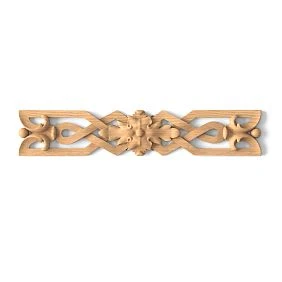
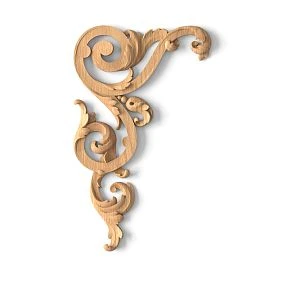
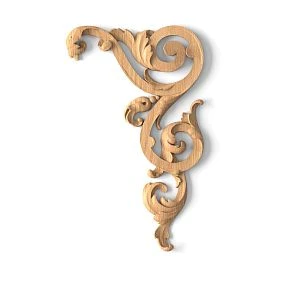
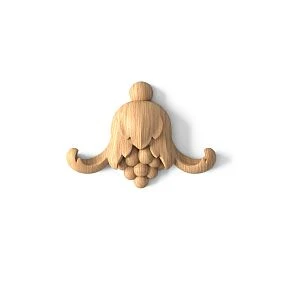
Our factory also produces:
Rod or vertical bar: why the hole matters more than the shape
When a wooden ball is used on a rod, the hole becomes the main parameter. The shape may be appealing, the material may be suitable, but without compatibility with the rod, the part will not fulfill its function. That is why the query 'buy wooden ball with hole' cannot be satisfied with just a beautiful product image. The buyer needs to understand the mounting size.
A rod can be part of furniture, a decorative partition, a support, a baluster, or an interior assembly. Elements of a construction set are placed onto it, which must match not only each other but also the base itself. If a ball, bushing, and washer are designed for different diameters, you won't be able to assemble a neat row. Externally, the parts may look compatible, but in practice, one will wobble, another won't fit on, and a third will sit crooked.
When selecting elements for a rod, you need to think about the sequence. For example, a ball can be the central element, bushings can be transitions, washers can be flat separators, and discs can be accents between large shapes. A cube or cone adds geometry if the round shape of the ball seems too soft.
It is better not to mix elements with different holes without checking. Even a small discrepancy can ruin the assembly. If the project is being made for a client, the mistake is especially unpleasant: the kit has already been purchased, deadlines are approaching, and the craftsman has to manually modify parts or change the scheme. Therefore, before ordering, you need to open the product cards, compare the parameters, and make sure all elements fit one rod.
Get Consultation
Furniture support and decorative assembly: where the ball is appropriate
A wooden ball with a hole can be part of a furniture support, but it is important not to confuse it with a ready-made leg. The ball is an assembly element. It can be part of a decorative stand, insert, baluster-like assembly, support, or custom design. But it does not replace a ready-made furniture leg if the task requires a full-fledged support with a clear attachment and purpose.
In a decorative furniture assembly, the ball helps create shape. For example, a vertical part can consist of several elements: bushing, ball, washer, cube, disc, bushing again. This sequence adds volume and makes the part resemble a specially designed furniture fragment. This is useful for craftsmen who assemble non-standard items, restore furniture, or create decorative elements for a project.
If you need to make a ready-made support for a table, cabinet, bench, or other furniture, first you should understand whether the construction set is suitable for this task. Sometimes it is better to choose a ready-made leg and use elements with holes as decorative parts or additions. Therefore, in the article it is important to distinguish: a ball with a hole is not a universal leg, but a part of a prefabricated assembly.
For designers, such a detail is interesting because it helps create a custom character without full manual carving. You can take ready-made construction set elements, alternate shapes, choose a finish, and assemble an assembly that will look unique. But uniqueness here arises not from randomness, but from the right combination: shape, hole, rod diameter, repetition, finish, and neighboring parts.
Baluster or repeating decorative rhythm
In balusters, posts, and vertical decorative rows, repetition is important. One element looks like a detail, while several identical elements create a rhythm. A wooden ball with a hole is well-suited for such solutions because its shape is easily recognizable, and its roundness softens the vertical line.
The rhythm can be calm: ball, bushing, ball, bushing. It can be made more complex: washer, ball, disc, bushing, cube, bushing again. But the more complex the row, the more carefully compatibility needs to be checked. All elements must fit the base and not conflict in scale.
In furniture production and woodworking shops, such parts are useful for repeating assemblies. For example, you need to assemble several identical posts for a partition or decorative railing. Using ready-made elements makes it easier to maintain a consistent appearance than turning each shape by hand every time.
But repetition requires precision. If one ball differs in size, if the bushings have a different mounting diameter, if some elements are purchased separately and not checked, the entire row will look uneven. Therefore, for repeating assemblies, it is better to calculate the number of parts in advance and buy them as a set with a margin based on the project logic, rather than on the principle of 'we'll add more later.'
Which constructor elements can be combined
The constructor section is convenient because the buyer can assemble not just one part, but a whole assembly. In such an assembly, a ball rarely remains the only element. It can be accompanied by bushings, washers, discs, cubes, cones, and other shapes with a hole. Each part plays its role.
The ball provides soft volume and a decorative center. The bushing acts as a transition, extender, or separator. The washer and disc help separate one shape from another, create a flat pause, or cover a visual joint. The cube adds geometry and makes the composition more modern or contrasting. The cone can serve as a transitional shape if you need to change the direction of visual volume.
The buyer often starts with one element: 'I want to buy a wooden ball with a hole.' But for a real project, it's better to think in terms of a basket right away. What will come before the ball? What will come after it? Is a separator needed? Should the ball be repeated? Will there be spacing between elements? Do all parts fit on the same rod? Is a finish required?
For such a task, it makes sense to open a category where you can buy STAVROS wooden construction kit elementsand look not only at the shape, but also at compatibility. The category helps to assemble a set, rather than searching for random wooden blanks in different places.
Balls and small balls with a hole
A ball and a small ball with a hole differ not only in size, but also in their role in the assembly. A larger ball is often perceived as an accent. It can be located in the center of a stand, at the top of a decorative part, at a transition point, or in a repeating row with a noticeable interval. A small ball can work more lightly: as part of a rhythm, a small decorative element, or an intermediate shape.
When purchasing, it is important to consider the scale. On a large stand, a small ball will get lost. On a thin rod, a ball that is too large will look heavy and may disrupt the proportions. If the part is needed for furniture, you need to consider not only the ball itself, but also the size of the product: cabinet, table, partition, stand, display case, railing.
The second parameter is the hole. It must match the rod. Do not assume that a wooden part can always be easily modified by hand. Any modification can disrupt the center, damage the shape, or ruin the fit. It is better to select an element with the required hole in advance.
The third parameter is the adjacent elements. A ball looks neater when there are separators nearby. A bushing, washer, or disc helps separate the rounded shape from the next element and makes the row more cohesive. Without separators, the ball may look simply threaded onto the rod, rather than included in a well-thought-out composition.
Bushings and washers: small parts that bring order to the assembly
A bushing and a washer may seem secondary, but in an assembly they often determine the overall neatness. A bushing can work as a transition element, a separator, a short cylindrical part between balls or cubes. A washer and a disc provide a flat pause, fix the visual edge, and help make the composition clearer.
When a buyer searches for "buy wooden bushing" or "wooden bushing for sale," they usually already understand that one large element is not enough. They need to separate shapes, close transitions, create a rhythm, or make the assembly neater. The bushing does not necessarily have to be the main decoration. Its value lies in helping other parts look better.
A washer is useful where a flat separator is needed. For example, a ball can be bounded by two washers so that it looks like a central element. A cube can be separated by discs to make the geometry read more clearly. Several identical washers help set a regular step.
It is a mistake to consider bushings and washers optional. In a simple assembly, you can sometimes do without them, but if the project needs to look professional, separators are often necessary. They make the assembly cleaner, help avoid visual clutter, and allow you to connect elements of different shapes.
Cubes and geometric elements
A cube with a hole gives a different character than a sphere. If a sphere softens the line, a cube makes it more graphic. It is suitable for projects that need a geometric accent, a modern detail, contrast to rounded shapes, or a more strict decorative assembly.
You can see it in STAVROS geometric shape KN-011 with a hole и geometric shape KN-013 with a hole. Such elements should be evaluated not only by their shape, but also by their compatibility with other parts of the construction set: the hole, scale, position in the assembly, and future finishing.
A cube works well as a central point in a furniture assembly. It can replace a sphere if the rounded shape seems too soft. It can also alternate with spheres, but then you need to carefully manage the rhythm. Too many different shapes in one row makes the detail overloaded.
When choosing a cube, you need to look at how it will be positioned on the rod, which sides will be visible, and whether it will visually conflict with neighboring elements. If round spheres, discs, and bushings are used nearby, the cube becomes the main geometric accent. If you add cones and complex transitions, the composition may become too fragmented.
Discs, cones, and transition parts
The disc and washer help separate. The cone helps create a transition. These elements are not always needed, but in complex assemblies they make the build more expressive. For example, a sphere may look soft, but if placed between two discs, it gets clear boundaries. A cube may look sharp, but next to a bushing and disc, it becomes part of the rhythm.
Transitional parts are especially useful when connecting different shapes. A sphere and cube next to each other may look abrupt. A bushing or disc can be placed between them. A cone can soften the transition from a wide part to a narrower one. As a result, the assembly looks not like a random set of elements, but like a coherent sequence.
For the buyer, it is important not to get carried away with quantity. The more shapes in one assembly, the higher the risk of error. It is better to start with a simple scheme: a central element, separators, repetition. If that is not enough, a geometric accent can be added. Complex combinations should be drawn, calculated, and checked for dimensions in advance.
Discs and cones also help in a commercial cart. When a craftsman or designer purchases elements for a project, they can immediately select the main parts and separators. This is more convenient than having to go back for small elements that turned out to be needed during assembly.
How to choose the mounting hole
The mounting hole is the main technical parameter for a wooden sphere, bushing, washer, cube, or disc. The external shape is responsible for the design, while the hole is responsible for the ability to assemble. If it does not fit, the project stops.
First, you need to know the diameter of the rod, shaft, or base. Not approximate, but exact. An error of even a few millimeters can be critical. If the hole is smaller than the rod, the element will not fit. If it is larger, there will be a gap, play, misalignment, or the need for additional fixation.
Then, you need to compare the hole in the element. The parameters should be checked in the product card. If the information raises questions, it is better to clarify it with a STAVROS manager before ordering. This is especially important if you are buying not just one sphere, but a whole set: bushings, washers, cubes, discs, and several repeatable parts.
The tightness of the fit depends on the task. For a decorative row, accuracy and centering are needed. For an assembly that will experience load or movement, an even more careful check of the structure, fastening, and purpose is required. A decorative element cannot automatically be considered load-bearing.
Do not mix parts with different holes without checking. Even if they look similar externally, the difference will become noticeable during assembly. All elements must work with one base or be pre-separated into different assemblies.
How to choose the size and scale of an element
The size of a wooden ball or cube should match the scale of the product. A small element on a large stand will get lost. A large ball on a thin rod will look heavy. This is especially noticeable in a furniture assembly because the part is close to a person: it is visible from a short distance, and sometimes touched by hands.
For a stand or partition, the scale is chosen based on the height of the structure. The taller the vertical, the larger the central element can be. For a small furniture assembly, it is better to use more restrained sizes. For a decorative rod, you can create a rhythm from several identical elements rather than making one overly large accent.
Not only the external size is important, but also the proportion to neighboring elements. The ball, bushing, and washer should look like parts of one system. If the bushing is too thin, it will not separate large elements. If the washer is too massive, it will start competing with the ball. If the cube is too large, it will become dominant and change the character of the entire assembly.
It is better for the buyer to lay out the future sequence in advance. For example: bushing — washer — ball — washer — bushing. Or disc — cube — disc — ball — bushing. Even a simple diagram helps to understand how many parts need to be purchased and what sizes to check.
Material and finish: what to consider before ordering
Wooden construction kit elements are valuable because they can be included in furniture and interior projects where natural texture, the possibility of finishing, and compatibility with other wooden parts are important. But the exact options for material, finish, and preparation need to be checked in the specific product cards.
If elements are purchased without a final coating or for further processing, you need to think in advance about what they will be coated with. This may require materials for finishing wooden elements. Before purchasing finishing materials, it is important to consider the wood species, desired color, usage conditions, and compatibility with the project.
The finish affects not only the color but also the perception of the shape. A smooth ball in a light finish looks softer and lighter. A dark finish makes it more noticeable and substantial. A geometric cube in a contrasting color can become a strong accent. Bushings and washers painted in the same tone as the ball bring the assembly together as a whole.
You should not buy elements from different batches and postpone the decision on finishing until the last moment if the project is meant to be cohesive. It is better to decide in advance whether all parts will be the same color, whether contrast is needed, which elements should be the main ones, and which should be background. This is especially important for custom furniture, restoration, and decorative stands where every detail is visible.
How to assemble a commercial basket
Buying a wooden ball with a hole should rarely end with just one item. More often, the buyer needs a set. It is better to assemble the basket based on the task.
If you need to assemble a decorative stand, the central element can be a ball. It is worth selecting bushings and washers for it to separate the shapes and make the assembly neat. If the stand is tall, repeating elements will be needed. If the stand should look stricter, a cube can be used instead of or together with the ball.
If you need to make a furniture assembly, the central element can be geometric shape KN-011 with a hole or geometric shape KN-013 with a hole. It is worth selecting separating elements with the same mounting diameter for them. It is important not to mix elements without checking.
If you need to design a vertical rod, alternation works well: ball, bushing, disc, ball. But the sequence should be chosen based on height, purpose, and style. For a classic assembly, a softer rhythm can be used. For a modern one, more geometry and pauses.
If the elements are intended for final finishing, it is worth adding finishing materials to the basket. This way, the craftsman will not end up in a situation where the parts are purchased, the assembly is ready, but there is no suitable coating.
| Buyer's task | What to offer | Why this works | What to Check |
|---|---|---|---|
| Assemble a decorative stand | Ball with hole, bushings, washers | Ball provides accent, bushings and washers gather rhythm | Rod and hole diameter |
| Make a furniture joint | Cube KN-011 or KN-013, dividers | Geometry creates an expressive center | Hole compatibility and scale |
| Design a vertical rod | Alternation of balls, bushings and disks | Vertical ceases to be empty | Number of elements and repeat step |
| Get geometric accent | Cube or cone with hole | The node looks stricter and more modern | Combination with round parts |
| Assemble a repeating rhythm | Several identical construction elements | Repetition makes the stand neat | Same parameters and fit |
| Don't make a mistake with the purchase | Check diameter, material, purpose | An error in one parameter breaks the entire assembly | Product card and consultation |
What to buy together with a wooden ball
A wooden ball with a hole opens up better when compatible parts are nearby. Without them, it may look like a separate bead on a rod. With bushings, washers, discs, and cubes, it becomes part of an assembly.
If the project's base is a ball, you should select bushings and washers for separation. If the base is a bushing, you can use a ball, disc, or cube nearby. If a geometric accent is needed, cubes with a hole are suitable. If parts are purchased without coating, you need to think about finishing in advance.
| Main element | What to buy together | Why this is needed | Which scenario it suits |
|---|---|---|---|
| Wooden ball with hole | Bushings and washers | To separate elements and create a neat rhythm | Rack, rod, baluster, decorative support |
| Wooden bushing | Ball, disc or cube with hole | So that the bushing works as an adapter, not a random part | Repeatable vertical nodes |
| Geometric shape KN-011 | Other construction kit elements with the same mounting diameter | To make the cube part of the assembly | Furniture unit, custom rack |
| Geometric shape KN-013 | Bushings, discs, balls | To create a repeatable composition | Decorative rod, stand, partition |
| Set of elements without coating | Finishing materials | To get all details in one visual solution | Furniture for painting, restoration, custom project |
| Several identical balls | Identical separators | To make the repeat look even and professional | Balusters, stands, decorative rows |
| Cube or cone | Washers or discs | So that the geometric accent has boundaries | Modern or mixed style |
When assembling a basket, it is useful to mentally go through the entire node from top to bottom or left to right. Which part opens the row? What comes after it? Where is the central accent? How is it separated? How does the sequence end? This approach helps to buy what is needed, not extra.
How not to confuse a wooden ball with similar products
A wooden ball with a hole is easily confused with a bead, a craft blank, a furniture leg, or a decorative ball without a hole. The mistake occurs because the shapes look similar externally. But their purpose is different.
A wooden ball with a hole is an element for assembling a node. It is placed on a rod, shaft, or base. It must have a suitable hole and match the adjacent parts. An ordinary toy bead or hobby blank may not fit in size, material, precision of processing, and purpose.
A bushing is not the main decorative ball. It works as a separator, transition, or part of the rhythm. If you use a bushing instead of an accent, the node may look too simple. If you use a ball instead of a bushing, the row will become heavy and overloaded.
A washer or disc is a flat separator. They should not be confused with a cube or cone. They do not provide such volume, but help make the boundaries between elements cleaner.
A cube with a hole is a geometric accent. It does not replace a ball, but provides a different aesthetic. The ball is softer, the cube is stricter. They can be combined, but only if the composition is thought out in advance.
A furniture leg is a ready-made support for another task. It can be beautiful, wooden, decorative, but it cannot be automatically replaced by a construction ball. If a ready-made support is needed, look at legs. If a composite node on a rod is needed, look at the construction set.
| Element | What it is for | Do not confuse with | Main check |
|---|---|---|---|
| Wooden ball with hole | Emphasis on the post, bar, or node | Toy bead or craft blank | Hole diameter |
| Bushing | Separator and transition | Main decorative ball | Compatibility with adjacent parts |
| Washer or disc | Flat pause between shapes | Cube or cone | Thickness, hole, position in rhythm |
| Cube with hole | Geometric accent | Ball or bushing | Scale and orientation |
| Furniture leg | Finished support | Construction element | Purpose and mounting |
| Construction set | Parts for assembly | Children's toy or hobby set | Material, hole, compatibility |
Practical selection for different situations
Need to assemble a decorative stand
Start with the central element. If the stand should be soft and classic in mood, a sphere will work. If strict geometry is needed, you can choose a cube. Then add separators: bushings, washers, or discs. They will help make the sequence neat.
The main thing is to check the diameter of the rod and holes. Do not buy elements based only on external shape. In a stand, the fit is immediately visible: misalignment, gap, or play will ruin the entire assembly.
Need to design a vertical rod
Rhythm is important for a rod. One sphere may look random, but repetition at equal intervals already creates a decorative system. To keep the row from being heavy, you can place bushings or discs between the spheres.
If the rod is long, calculate the number of elements in advance. It is better to buy the required number of identical parts at once than to try to find a match later.
Need to make a furniture decorative assembly
In a furniture assembly, you can use a sphere, cube, bushing, and washer. Scale is especially important here. The part is located next to the facade, leg, frame, stand, or other furniture component. If the sphere is too large, it will look out of place. If too small, it will get lost.
For a stricter look, you can use KN-011 or KN-013 cubes. For a soft decorative assembly, use a sphere and bushings. For neat separation, use washers and discs.
Need to select a part for restoration
In restoration, it's important not just to find a similar shape, but to match the scale and fit. An old rod or bar may have its own diameter, so first you need to measure the base. Then choose an element with a suitable hole.
Don't buy the first similar ball you see. If it doesn't fit properly, modifications can ruin the look. It's better to check the product card and, if necessary, clarify the parameters before ordering.
Need to assemble a repeatable decorative row
Repetition requires discipline. All elements must be identical or differ in advance according to a clear scheme. For example, three identical balls, identical bushings between them, and washers on top and bottom. Then the row looks professional.
A mistake is to buy parts one by one and hope they will match later. For a repeatable unit, it's better to calculate the quantity right away and check the compatibility of the entire set.
Need to replace a random blank with a ready-made element
Sometimes a craftsman starts with a regular wooden blank but quickly realizes the shape is too simple, the hole is inaccurate, and processing takes time. A ready-made construction element helps reduce manual work and achieve a neater result.
This is especially important if the product is sold to a client. In an author's project, a handmade inaccuracy may be perceived not as handcraft but as a mistake.
What not to make from scratch if there are ready-made STAVROS elements
If the task sounds like "how to assemble a rod from wooden elements" or "what to buy for assembling a decorative stand," you don't have to make every shape by hand. There are stages that are better left to ready-made parts.
There is no need to manually turn a sphere if you need a neat element with a hole. The spherical shape requires precision, and the hole must go straight. The slightest misalignment will be noticeable when assembling on a rod.
There is no need to make bushings and washers from random scraps. The spacers must be identical, otherwise the rhythm will fall apart. If one washer is thicker than another, if the bushings differ in height, the assembly looks sloppy.
It is not worth manually drilling a hole in a finished decorative form without confidence in the result. Drilling must be centered. If the hole goes to the side, the element will sit crookedly.
There is no need to select parts from different sources without checking. Even if they are all wooden and similar in style, the holes, sizes, and quality of processing may differ. It is better to assemble a set from a single construction kit logic.
Ready-made elements give the master freedom not in chaos, but in assembly. You can choose the shape, repetition, rhythm, finish, combination of sphere and cube, add bushings and discs, and then focus on neat installation and final processing.
Preparation for finishing and assembly
Before finishing, you need to lay out all the elements in the future sequence. This is a simple technique that immediately shows errors. It may turn out that the sphere is too large, there are not enough bushings, the cube clashes with the discs, and the row looks overloaded. It is better to see this on the table than after installation.
Then you need to check the holes and the rod. The elements should fit without excessive force and without noticeable play. If the fit is questionable, do not continue assembly blindly. It is better to clarify the parameters or reconsider the set.
Finishing should be thought out before final assembly. Some elements are more convenient to coat separately, especially if they have a complex shape. But if it is important to get a uniform color, you need to test the material and coating for compatibility. For a project under paint, oil, stain, or other coating, choose only those materials that are suitable for the specific wood and conditions of use.
Do not forget about the ends and contact points. Even if the element looks small, after assembly part of the surface may remain visible from the sides. Careful processing of all visible sides makes the assembly professional.
Mistakes when buying wooden elements with holes
The first mistake is choosing only by shape. You may like a sphere, a cube may look interesting, a bushing may seem suitable, but without checking the hole, it's all meaningless. The mounting diameter is the first parameter for assembly.
The second mistake is not knowing the rod diameter. The buyer sometimes selects elements in advance and then looks for a base for them. Sometimes this works, but more often it leads to unnecessary modifications. It's better to know the base first or immediately select the entire system.
The third mistake is mixing different elements without rhythm. A sphere, cube, bushing, disc, and cone can be combined, but not in a random order. A sequence is needed. Otherwise, the assembly will look like a set of leftovers.
The fourth mistake is not buying separators. Without bushings, washers, and discs, large elements can look rough. Separators help create a pause, emphasize the shape, and make the row neater.
The fifth mistake is confusing a construction set with a ready-made furniture support. If you need a leg, choose a leg. If you need a composite decorative assembly, choose construction set elements. These tasks are not the same.
The sixth mistake is forgetting about finishing. Wood needs to be tied to the rest of the furniture or interior. If the elements remain without a well-thought-out coating, they may not match the color, texture, or style of the product.
The seventh mistake is buying too few parts for a repeating row. If the project has several posts, it's better to immediately calculate the number of spheres, bushings, and washers. Buying more later can delay the work and complicate matching parameters.
The eighth mistake is not clarifying the element's purpose. A decorative part is not always suitable for load, fastening, or support. Before ordering, you need to understand where and how it will be used.
Who wooden construction set elements are suitable for
Such elements are suitable for carpentry workshops that assemble furniture parts, racks, decorative rods, partitions, supports, and custom units. Ready-made forms save time and help achieve a neater result.
For designers, construction kit elements are useful as a tool for custom solutions. You can assemble a stand, a decorative rhythm, a geometric accent, an unusual support, or a part that supports the furniture style. The main thing is not to draw an abstract shape, but to immediately understand which elements can be purchased and how they connect.
For furniture manufacturers, such parts are suitable for serial or small-batch products where repetition is needed. If an element is repeated in several items, a ready-made construction kit helps maintain a consistent appearance.
For restorers, wooden balls, bushings, and washers can be useful when restoring old assemblies, if you need to select a shape close in character and fit it onto an existing rod. Dimensions and the hole are especially important here.
For craftsmen working with decorative partitions, balusters, stands, and rods, such elements help assemble expressive verticals without full manual lathe work.
They are not suitable for those looking for a ready-made toy, beads for crafts, metal pipes, a universal furniture leg, or a part without checking the mounting diameter. This is not a hobby kit or a ready-made support, but elements for deliberate assembly.
How to buy on STAVROS and check your cart before ordering
Start with the construction kit section and the task you need to solve. Do not choose an element just because it looks nice. First, determine: a stand, a rod, a furniture unit, a decorative support, a baluster, a partition, or a restoration.
Then select the central element. For a soft volume — a ball. For a geometric accent — a cube or another shape. For transitions and separation — bushings, washers, discs. If you need a ready-made furniture support, look at legs separately, as this is a different type of product.
After that, check the rod diameter and hole sizes. All elements that will work in one assembly must be compatible. Do not rely on visual similarity. Look at product cards and verify parameters before ordering.
Next, think through the finishing. If elements need to be painted, tinted, or treated, select suitable materials in advance. You can look at this materials for finishing wooden elements and decide how all parts will look after the final treatment.
Before placing an order, check the cart as a set: central elements, separators, repeatable parts, quantity allowance, finishing, compatibility with the base. This approach helps avoid a situation where one beautiful part is purchased, but it's impossible to assemble a unit from it.
FAQ
Where to buy a wooden ball with a hole for a post or rod?
Such elements should be looked for in the STAVROS constructor section, which contains wooden parts with holes for assembling posts, rods, supports, and decorative units. Before ordering, check the hole diameter and compatibility with the rod.
How is a wooden ball with a hole different from a regular bead?
A regular bead is more often related to handicrafts or decorative crafts. A wooden ball with a hole for a constructor is needed for furniture and interior units where fit, size, material, and compatibility with other parts are important.
What to check before buying a wooden ball?
Check the hole diameter, outer size, purpose, material, future finishing, and adjacent elements. If the ball will be placed on a rod, you first need to know the diameter of the base.
Can a ball be combined with a bushing and a washer?
Yes, if they match the mounting diameter and work with a single rod. Bushings and washers help separate shapes, make the rhythm neater, and emphasize the ball as a decorative accent.
What to buy together with a wooden ball?
Most often, bushings, washers, discs, cubes, or other construction kit elements are purchased together with the ball. For a finishing project, materials for final processing may also be needed.
How is a ball with a hole different from a furniture leg?
A ball is a component for assembling a unit on a rod or shaft. A furniture leg is a ready-made support for furniture. If you need a full-fledged support, it is better to look at the furniture legs section rather than replacing it with a ball.
Can a cube be used instead of a ball?
Yes, if a geometric accent is needed. A cube looks stricter and more graphic, while a ball is softer and more classic. They can be combined in one unit, but only after checking the size, hole, and visual rhythm.
How to determine the required hole diameter?
First, measure the rod, shaft, or base onto which the element will be placed. Then compare this size with the hole in the product card. If in doubt, it is better to clarify the parameters before ordering.
Are such elements suitable for furniture restoration?
Yes, if they match the size, shape, hole, and character of the restored node. In restoration, it is especially important not to buy a "roughly similar" part without checking the fit.
Can wooden elements be painted or tinted?
In many projects, wooden elements are selected to match the future finish, but exact recommendations depend on the material and product card. Before processing, you need to check the compatibility of the coating with the wood and the product's purpose.
What to do if elements are needed for several identical posts?
First, calculate one post completely: how many balls, sleeves, washers, discs, or cubes are needed. Then multiply the set by the number of posts and check the stock. This makes it easier to maintain a consistent rhythm.
Can a rod be assembled only from balls?
Technically, a composition can consist of repeating balls, but it often looks neater with separators. Sleeves, washers, and discs provide pauses and help each ball stand out individually.
Why is it not recommended to drill a hole yourself?
Drilling yourself may deviate from the center and ruin the fit. As a result, the element will sit crookedly or look untidy. It is better to immediately select a part with a suitable hole.
When is it better to choose a ready-made furniture leg rather than a construction set?
If you need a ready-made support for a table, cabinet, bench, or other furniture, it's better to look at furniture legs. The construction set is suitable for assembled decorative units, posts, rods, and elements that require a combination of parts.
Bottom line: a wooden ball with a hole — a small part for a large furniture unit
A wooden ball with a hole may seem like a simple part, but in a furniture project, it helps assemble a post, rod, decorative support, baluster, or expressive unit. Its value is not only in its round shape. The main thing is compatibility with the base, the correct hole, adjacent elements, rhythm, and finish.
It's better to buy such a part not separately, but as part of a set. The ball requires bushings, washers, discs, or cubes if you need a neat sequence. Geometric elements help make the unit more strict. Finishing materials allow you to tie all parts together with the furniture and interior.
STAVROS allows you to approach such a task as a construction set for an adult furniture project: select elements, check fit, assemble a set, and move from idea to a real product. Before ordering, it's worth carefully checking product cards, hole diameters, size, purpose, and finish. Then the wooden ball with a hole will become not a random blank, but a precise part from which a neat decorative unit begins.