























Article Contents:
- Anatomy of a step: what it consists of and why
- Tread — what you step on
- Riser — the vertical wall between steps
- Step nosing — the front overhang
- Stair flight — a series of steps
- When you need to buy wooden steps separately
- Treads and risers: with or without them
- Staircase with risers — a closed structure
- Staircase without risers — open design
- When risers are mandatory
- When no risers is the right choice
- How to choose the thickness of a wooden step: not by eye, but by the book
- Dependence of thickness on design
- Visual thickness of the step
- Oak, beech, or pine: an honest comparison of wood species
- Oak — a species for those building for the long haul
- Beech — strength with an even texture
- Pine — economical, but with limitations
- Comparison table of treads for steps
- Stairs to the second floor: specifics of the main flight
- Step comfort first
- Anti-slip measures
- Alignment with the second floor
- Wooden treads for concrete stairs: finishing over the base
- Principle of laying wooden treads on concrete
- Precise dimensions first
- Finishing of ends and joints
- Treads on a metal frame: warmth against steel
- How to attach wooden treads to metal
- Wood species for a metal frame staircase
- How to assemble a staircase kit: from steps to finial
- Step 1: Steps — the foundation of the system
- Step 2: Posts
- Step 3: Balusters
- Step 4: Handrail
- Step 5: Finial
- Steps and railing: color logic
- Wooden step coating: protection that determines service life
- Varnish for steps
- Oil — a living coating for wood
- Tinting + varnish or tinting + oil
- Enamel
- Mistakes when choosing wooden steps: an honest analysis
- Acoustics of a wooden staircase: why steps creak
- FAQ: answers to the most popular questions about wooden steps
- Which wooden steps are best for a staircase in a house?
- What is a tread and how is it different from a step?
- Are risers needed for a staircase?
- How thick should wooden steps be?
- Is it possible to replace only the steps without completely dismantling the staircase?
- What should I coat wooden steps with?
- Why do wooden steps creak?
- How to choose steps to match the handrail and balusters?
- About the Company STAVROS
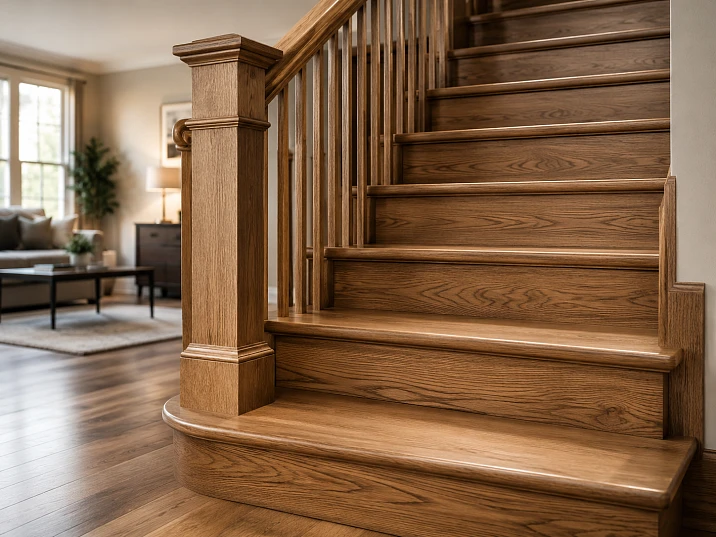
A staircase is not just architecture. It is a daily route: morning ascent, evening descent, children, guests, movement back and forth dozens of times a day. And the steps on this route are the most loaded part. Not the handrail, not the balusters, not the newel post with a finial. It is the steps that bear all the weight, all the wear, all the moisture, all the carelessness of everyday life.
That is why choosing wooden steps for a staircase is not a question of "which ones look prettier," but a question of "which ones will last twenty years and remain worthy." Material, thickness, width, wood species, coating, compatibility with risers, handrails, and balusters — these are not details, but full-fledged decisions on which both the safety, beauty, and durability of the staircase depend.
Wooden steps for a staircase are chosen based on the size of the flight, tread thickness, wood species, load, and future coating. For a staircase in a private home, it is important to consider not only the beauty of the wood, but also the comfort of the step, wear resistance, compatibility with risers, handrails, balusters, and newel posts.
View wooden staircase components STAVROS →
Anatomy of a step: what it consists of and why
Before discussing the choice, it's worth understanding the terminology. This will eliminate confusion when ordering and help you speak the same language with manufacturers and installers.
Tread — what you step on
A wooden tread is the horizontal part of the step that directly bears the load. It forms the surface of the flight, where the foot steps, where a child's bicycle rolls, and where a dog's paw slides. The tread is the main element, and its quality determines everything: the feel underfoot, the durability of the staircase, and its appearance.
Tread dimensions: width (horizontal size along the direction of travel) — usually from 270 to 320 mm, length (across the flight) — according to the width of the staircase, thickness — from 28 to 50 mm and above depending on the design.
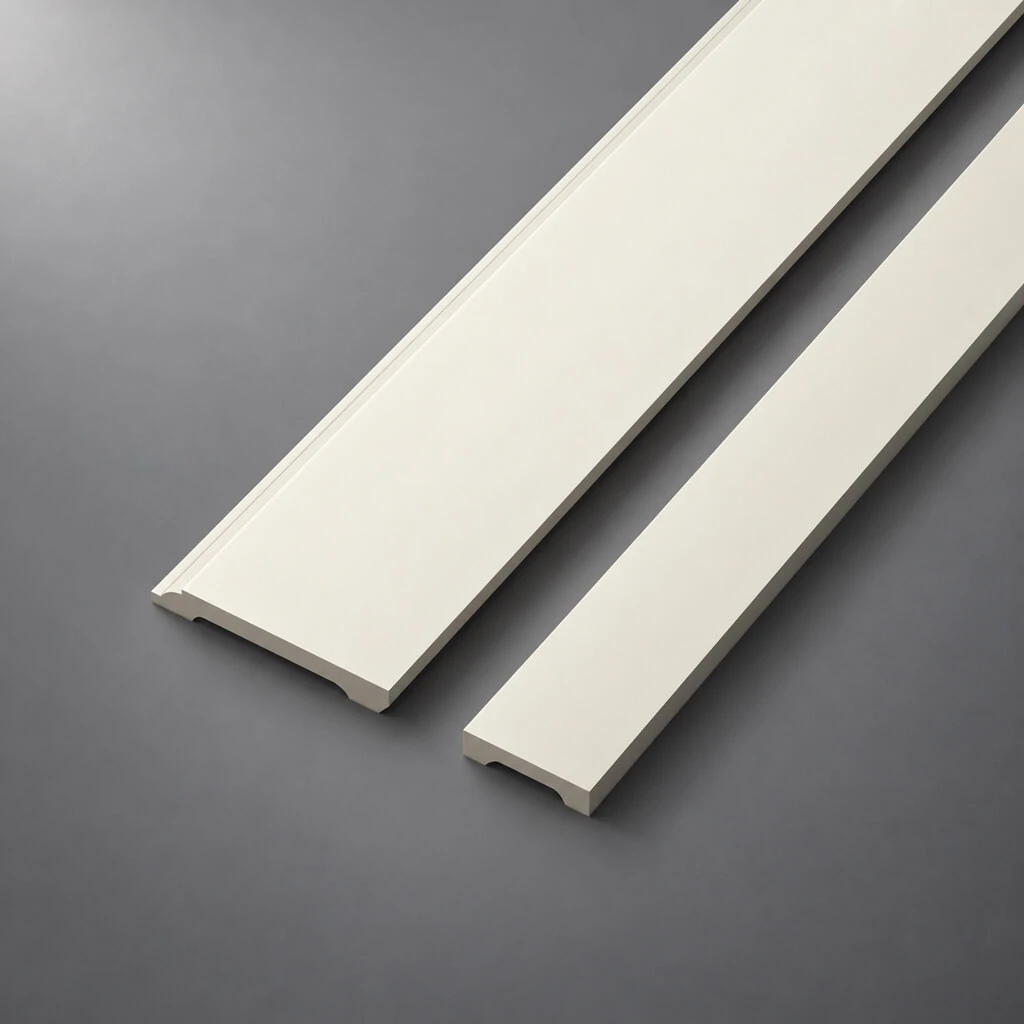
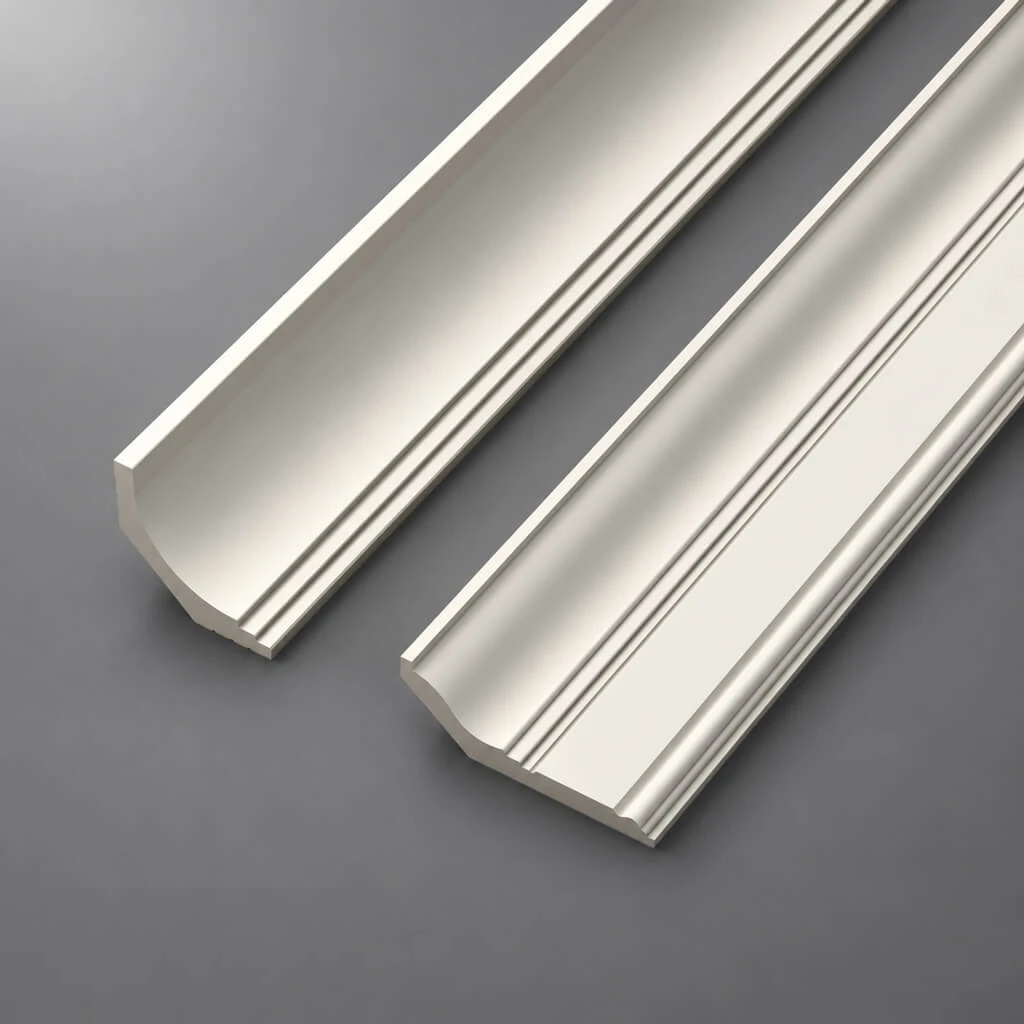
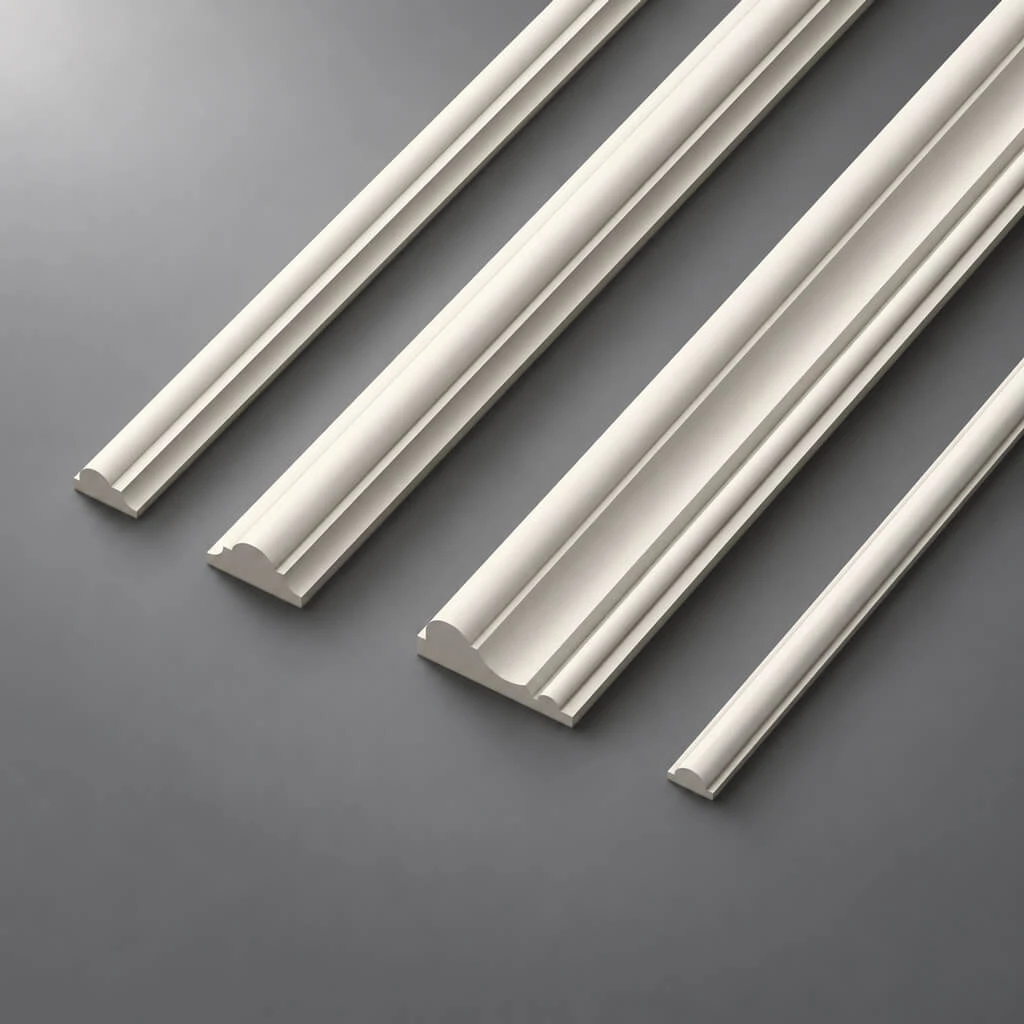
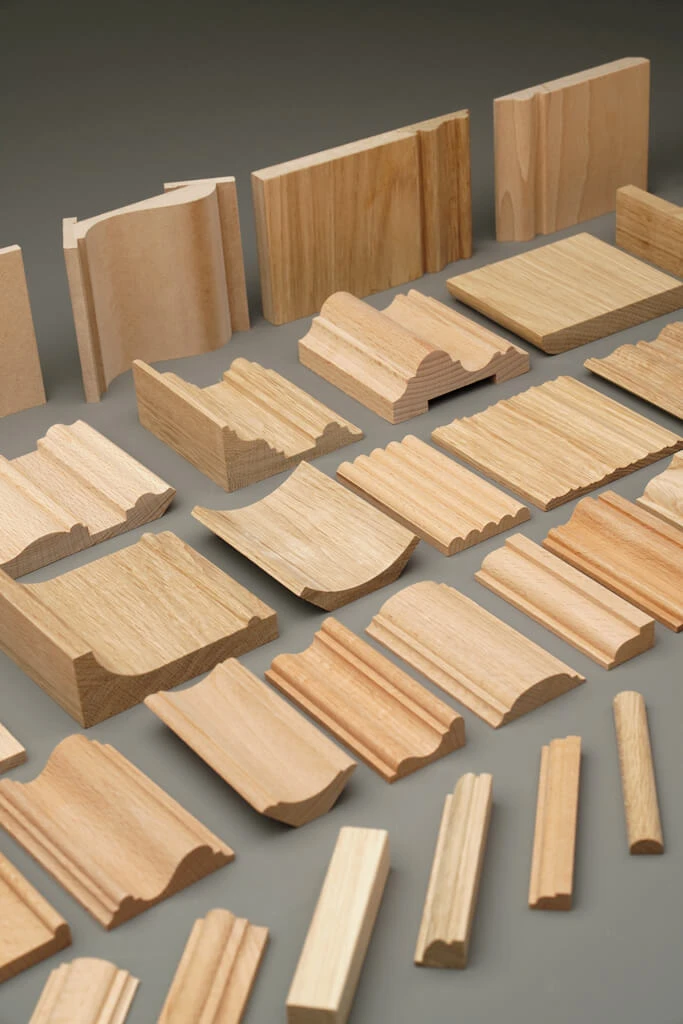
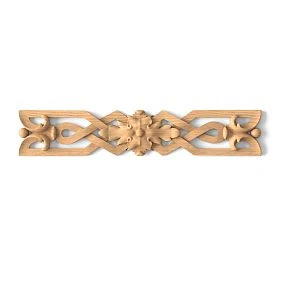
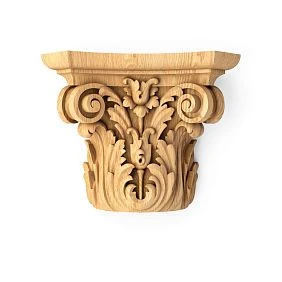
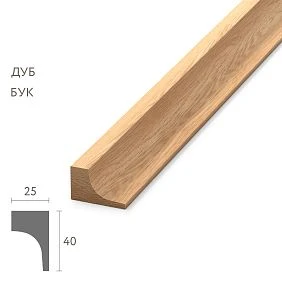
Our factory also produces:
Riser — the vertical wall between steps
A wooden riser is a vertical panel that covers the space between adjacent treads. It does not bear direct load when walking, but is important structurally and decoratively: it closes the internal space of the staircase, gives it a finished look, and creates a "closed" design.
Riser thickness: typically 18–22 mm. Height is actually the step rise height, usually 150–185 mm.
Get Consultation
Nosing — the front overhang
The nosing is the front part of the tread that protrudes beyond the plane of the riser. Standard nosing overhang: 20–30 mm. The nosing is rounded or profiled — this is not only aesthetic but also safety: a sharp corner on the nosing is dangerous when descending.
Stair flight — a series of steps
A flight is a continuous series of steps between floors or landings. A single-flight staircase is a single span from the first to the second floor. A double-flight staircase has an intermediate landing. When calculating the number of steps, the floor height and the rise height of one step are always taken into account.
When you need to buy wooden steps separately
This is an important question — because situations vary, and for each one the task looks different.
A new staircase is being built. The most obvious case. Steps are selected as a set with balusters, handrails и posts as a single set. The wood species, color, surface character — everything is coordinated.
Old steps are creaking or worn out. Steps made of softwood (pine, spruce) lose their shape after 10–15 years of intensive use: the nosing gets crushed, the surface wears down to the fiber, gaps appear — and creaking begins. Replacing the steps while preserving the rest of the structure is a realistic and cost-effective scenario.
Need to cover a concrete staircase with wood. A very common request: the concrete load-bearing structure is poured, now it needs to be finished with wooden treads. Wooden steps are laid on top of the concrete steps with glue and/or dowels — and the concrete staircase visually turns into a wooden one.
Staircase on a metal frame. An industrial metal frame needs warm wooden finishing. Wooden treads on metal stringers are a common solution, combining the structural strength of metal with the aesthetics and warmth of wood.
Need to update the look of the staircase without complete dismantling. The old staircase is generally functional but looks outdated. Replacing only the steps and risers while preserving the load-bearing structure completely changes the staircase's appearance — with reasonable labor costs.
Steps are selected to match already chosen balusters and handrail. Sometimes the railing is chosen first — and then steps are selected to match. This is a normal sequence: the handrail sets the color tone, and steps are matched to it by wood species and shade.
Treads and risers: with or without them
This is not a technical question — it's an architectural one. It is precisely the choice between an open and closed staircase design that determines its character and feel in the space.
Staircase with risers — closed design
Wooden staircase with risers — a classic option. It looks monolithic, heavy in a good sense, architecturally complete. Such a staircase is appropriate in classic, neoclassical, traditional interiors — where wood is the dominant material.
Risers close the space between steps — this is important from a safety perspective if there are children or elderly people in the house. They also hide internal structural elements: stringers, carriages, fastening units.
Aesthetically: a staircase with risers reads as a solid plane — when you look at it from the side or at an angle, you see a rhythmic interplay of horizontal treads and vertical risers that create an architectural pattern.
Staircase without risers — open design
An open staircase without risers is air, light, and lightness. It visually does not block the space, lets light through, creates a feeling of weightlessness — especially if the railing is also light (metal, glass, thin balusters). In modern and minimalist interiors, an open staircase is often an architectural statement.
Wooden treads without risers are laid on metal stringers or wooden bowstrings — and look like a series of floating wooden platforms. This is beautiful, but requires special attention to the quality of the treads themselves: they are completely visible, including the ends.
When risers are mandatory
-
In families with children under 6–7 years old (open spans are dangerous)
-
In classic and traditional interiors
-
When the staircase carries a railing with carved or turned balusters
-
When you need to hide the internal structure or utilities
When going without risers is the right choice
-
In modern, minimalist, and Scandinavian interiors
-
When the staircase is narrow and you need to 'not compress' the space
-
When the base is a metal frame with open stringers
-
When visual lightness of the structure is important
How to choose the thickness of a wooden step: not "by eye", but properly
The thickness of the tread is not only about aesthetics, but also structural strength. A thin step bends under load — and this is not only uncomfortable underfoot, but also leads to loosening and squeaking over time.
Dependence of thickness on the structure
On wooden stringers or stringers with a support spacing of up to 800 mm: the optimal tread thickness is 35–40 mm. This is the working standard for most wooden stairs in private homes.
On a metal frame with a support spacing of up to 600 mm: treads of 28–35 mm can be used. Metal is stiffer than wood, the support spacing is smaller — so deflection is minimal.
On a concrete base: the wooden tread here serves only a finishing function. 20–28 mm is sufficient — the concrete fully bears the load.
For wide flights (more than 1200 mm): with a large flight width, the bending load on the tread is higher. Here it is better to use 40–50 mm or reinforce the structure with an intermediate stringer.
Visual thickness of the step
There is another aspect not related to calculations — how the thickness of the step looks. A thin step of 28 mm on a massive timber stringer looks light and almost weightless. This can be beautiful — or inappropriate, depending on the style.
For a classic wooden staircase with carved balusters and wide handrails, a step of 40–50 mm looks organic — it matches the overall heaviness and richness of the structure. A thin step of 28 mm here will be dissonant: the other elements are massive, while the step is fragile.
The rule is simple: the thickness of the step should be proportional to the total weight and scale of the staircase.
Oak, beech, or pine: an honest comparison of wood species
Choosing the wood species for steps is not a matter of taste. It is an engineering decision with long-term consequences. A staircase is built for decades, and the material of the steps must be chosen with real-world use in mind.
Oak is a species for those who build for the long haul
Oak is dense, hard, wears slowly, does not dent under load, and tolerates humidity changes well. The texture of oak is expressive, with large pores and a characteristic pattern — it is one of the most beautiful species for visible wooden surfaces.
Steps from oak — this is the choice for staircases that will last 30–50 years without replacement. Oak accepts both varnish and oil well. Under oil, it acquires a warm golden-honey tone; under dark staining, a noble almost-black shade with expressive texture.
The only downside of oak is the price. It is noticeably more expensive than pine or beech. But for steps that are used daily, this is a justified investment.
Beech — strength with an even texture
Beech is harder than pine but softer than oak. Its main advantage is a uniform, dense texture with almost no pores. This makes beech ideal for painting: the surface after sanding and priming becomes impeccably smooth, without 'sinking' into pores.
Beech steps — a good choice for white staircases, for steps under enamel, for classic interiors with white handrails and balusters. Under transparent coatings, beech is also beautiful — a warm pinkish-beige tone.
The downside of beech is that it is more hygroscopic than oak: with strong humidity fluctuations (which happens in homes with forced heating), beech can show more noticeable movements. This is compensated by acclimatizing the material before installation and a high-quality coating.
Pine — economical but with limitations
Pine is the most affordable option. It is easy to work with, takes paint well, and feels pleasant to the touch in its raw state. But for steps that are used daily, pine is a compromise with consequences.
Pine is soft: it dents quickly, especially in the nosing areas. After 5–7 years of active use, dents, scratches, and marks from heels and furniture appear on pine steps. This is not critical in a country house or on a rarely used staircase — but it is unacceptable for the main staircase in a permanently occupied home.
If the budget is limited and the staircase is the main one — it's better to choose beech over pine. The price difference is not as great as the difference in service life.
Comparison table of wood species for steps
| Characteristic | Oak | Beech | Pine |
|---|---|---|---|
| Hardness | High | Medium | Low |
| Wear resistance | Good | Good | Satisfactory |
| Texture | Expressive | Smooth | Soft, knotty |
| Under varnish/oil | Excellent | Good | Good |
| For painting | Good | Excellent | Good |
| Price | High | Medium | Low |
| Service life under active use | 30–50 years | 15–25 years | 7–15 years |
Stair steps to the second floor: specifics of the main flight
The staircase to the second floor in a private house is the most heavily loaded structure among all possible internal staircases. Everyone uses it every day, with belongings, with children, with furniture during moves. This is the main route in the house — and the requirements for it are maximum.
Step comfort above all
A comfortable step is the correct ratio of riser height and tread width. The classic formula for a comfortable step: 2h + b = 600–640 mm, where h is the step height, b is the tread width. With a step height of 170 mm, the tread width should be 260–300 mm. With a height of 160 mm — 280–320 mm.
A tread that is too narrow (less than 250 mm) is uncomfortable when descending: the foot does not fit completely. A tread that is too wide (more than 330 mm) breaks the step rhythm, especially for short people.
Anti-slip measures
Polished or varnished wooden steps are slippery — especially when descending. For the main staircase to the second floor, this is a safety issue. Solutions:
-
Anti-slip strips made of rubber or metal, mounted on the step nosing
-
Matte finish — oil or matte varnish reduces slipping
-
Ribbed nose profile — a special molding with a relief on the front edge
-
Carpet overlays — a classic solution for wooden stairs that also reduces sound conductivity
Alignment with the second floor floor
The top step of the staircase is the transition between the flight and the landing floor. If the second floor floor is wooden, it is better to make the steps from the same wood species and in the same shade. This creates continuity: the staircase "flows" into the floor rather than ending abruptly on it.
If the floor is tiled or other — the steps set the tone for the staircase area, and their color is better coordinated with wooden trim, trims and doors on the floor.
Wooden steps for a concrete staircase: finishing over the base
This is one of the most common requests in private construction. A concrete load-bearing structure is strong, durable, and cheap at the pouring stage. But living with bare concrete is impossible, and decorative finishing of a concrete staircase with wood is the right choice.
Principle of laying wooden treads on concrete
Wooden treads for a concrete staircase work as overlays. They are laid on top of concrete steps on:
-
special construction adhesive for wood and stone
-
screw anchors into pre-drilled holes
-
a combination of adhesive and anchors is optimal
Before installation, the concrete surface is primed, and the level of each step is checked — even a slight slope or unevenness will become noticeable after the wooden tread is installed.
Accurate measurements are the first requirement
For finishing a concrete staircase with wooden steps, precise measurement is critically important. Concrete staircases often have deviations: steps may vary slightly in height or width. Each step is measured individually — this is important, especially for ordering the treads.
Finishing of ends and joints
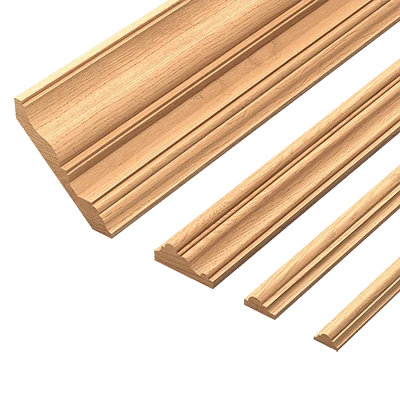
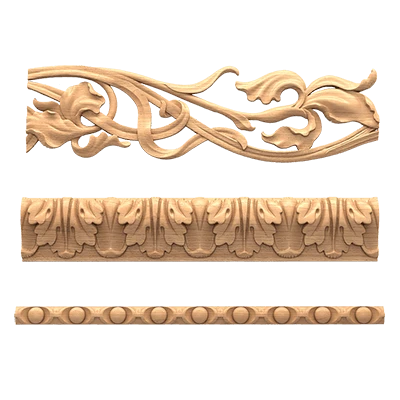
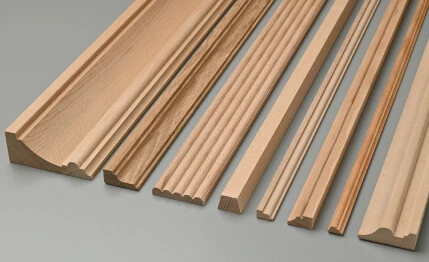
After installing the wooden treads, the ends and joints remain exposed: the junction of the tread with the wall, the gap between the tread and the riser or concrete vertical wall, the gap at the baseboard. All these joints are covered wooden trim — with cover strips, corner profiles, or baseboard inserts.
This operation is important not only aesthetically: open gaps are places where dust accumulates, and with unstable humidity, they are places where wood moves and possible squeaking occurs.
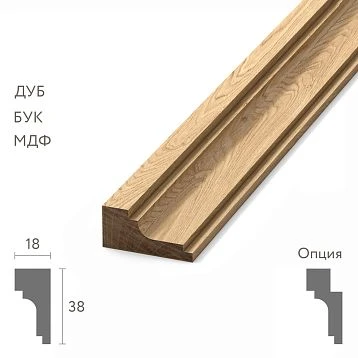
The article details how to properly seal joints when finishing with wood. wooden trim strip for finishing joints.
Steps on a metal frame: warmth versus steel
Metal frame stairs are a favorite choice of architects and designers working in loft, modern classic, or industrial styles. Metal provides structural freedom: the staircase can be spiral, cantilevered, U-shaped, with any step pitch. But living with bare metal is cold in every sense.
Wooden treads on a metal frame are an architectural duo that works perfectly: strength and freedom of form from metal, warmth and character from wood.
How wooden treads are attached to metal
Standard method: holes are drilled in the metal platforms (horizontal plates of the stringers) for concealed bolts or self-tapping screws. The wooden tread is placed on top and fastened from below through the metal — the fastener heads are completely hidden.
A damping gasket — rubber or vibration-dampening — is placed between the metal and the wood. This eliminates sound resonance (metal transmits vibration well) and also compensates for minor irregularities.
Wood species for a metal frame staircase
Oak and ash are especially popular for metal frame stairs — their expressive texture creates a good contrast with dark or black metal. Dark oak steps on a black metal frame is a strong and stylish solution that works well in modern interiors.
How to assemble a staircase as a kit: from steps to finial
A staircase is a system. And only when all its elements are harmoniously matched does it look like a single piece, not a collection of parts from different sets.
Step 1: Steps — the foundation of the system
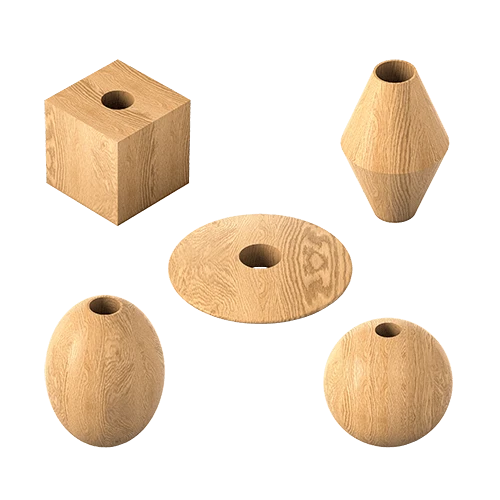
The color and type of wood of the steps set the tone for the entire staircase. It is the steps that are the largest wooden element by area: a flight of 14–16 steps is several square meters of visible wooden surface. Everything else is selected to match them.
Step 2: Posts
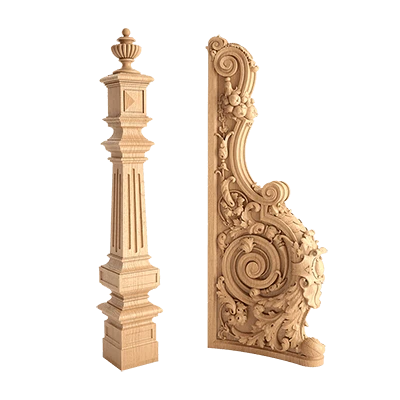
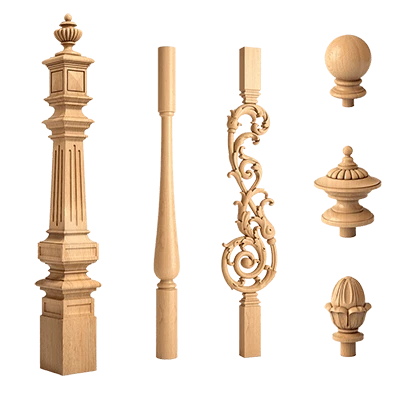
Wooden posts for the staircase — load-bearing vertical railing elements. They are installed at the beginning and end of the flight, on the landing, at turns. Posts made of the same type of wood as the steps are a mandatory condition for a unified set. Their cross-section — usually 80×80 or 100×100 mm — should be proportional to the height of the flight.
Step 3: Balusters
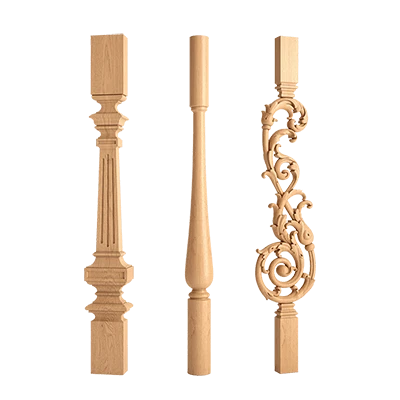
Balusters for staircase — railing posts that hold the handrail. Their shape (turned, carved, square with chamfers) determines the style of the staircase. Turned balusters are classic and neoclassical. Square with grooves are a modern version of the classic. Flat milled are minimalism.
Important: the distance between balusters according to standards should not exceed 120–150 mm (for child passage width). The number of balusters is calculated based on this distance and the length of the handrail.
More about modern methods of attaching balusters in the article How to install wooden balusters.
Step 4: Handrail
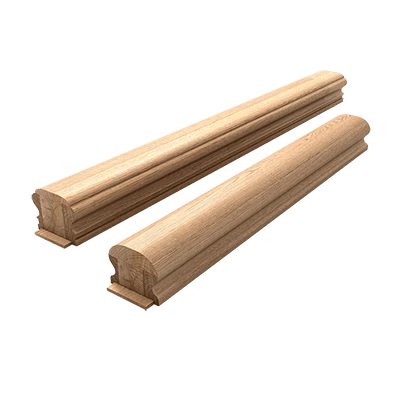
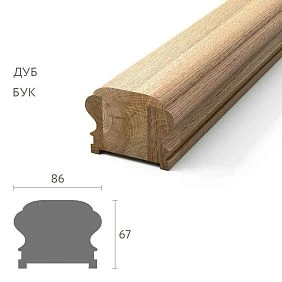
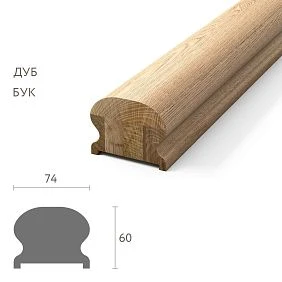
the handrails for the staircase — a horizontal element that completes the railing from above. The handrail profile defines the staircase's character: a wide "rectangle" with rounded corners for classic and neoclassical styles, a round cross-section of 40–50 mm for modern style. The handrail should be comfortable for the hand: a cross-section of 40–55 mm is the optimal range for most adults.
Step 5: Finial
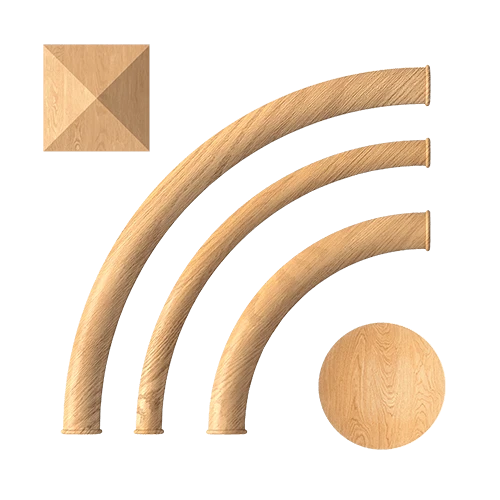
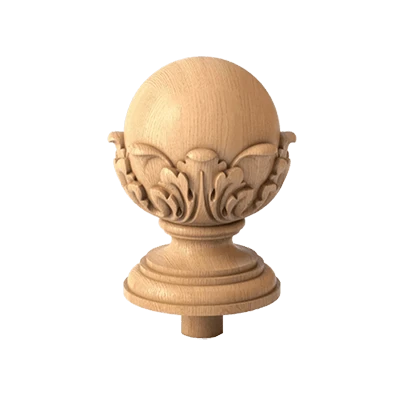
The final element — wooden finials for posts. A ball, cap, turned top — they complete the posts from above and put the finishing touch on the staircase's architectural story. More details on their selection can be found in a separate guide on the website.
Steps and railing: color logic
Steps set the main tone. The handrail can be in the same shade or slightly darker — this enhances the visual "weight" of the horizontal line and makes the staircase more expressive. Balusters and posts are typically in the same tone as the steps. Risers can be of the same wood species as the steps or contrasting (e.g., white risers with dark oak steps — a classic solution for a two-tone staircase).
Wooden step coating: protection that determines service life
Choosing a coating is not a finishing touch, but a strategic decision. It determines how long the steps will retain their original appearance and when they will need repair.
Varnish for steps
Varnish creates a hard transparent film on the wood surface. It is a popular coating — it looks good, is easy to clean, and provides good protection against moisture.
For steps, a special wear-resistant parquet varnish is needed — not furniture varnish. It is harder and better withstands abrasion underfoot. It is applied in 3–4 layers with intermediate sanding.
The main drawback of varnish: when it wears off (after 5–10 years of active use), it must be completely removed and reapplied. Partial repair of a varnish coating is difficult: a new layer of varnish on a worn area will be visible.
Oil is a living coating for wood
Oil penetrates the wood structure without creating a film. This provides several advantages: the surface looks natural (not "plastic" like under varnish), oil is easily refreshed on individual areas without complete removal of the coating, and the matte surface is less slippery than glossy varnish.
The downside of oil: it is less resistant to moisture than varnish and needs to be refreshed more often — once every 1–3 years depending on usage intensity. However, refreshing is a simple operation: sanding and applying a new layer.
Oil is an ideal choice for oak steps: it highlights the texture and gives a warm natural tone.
Tinting + varnish or tinting + oil
If a specific color (dark, gray, stained) is needed, tinting is used — a special compound with coloring pigments. After tinting, a finish coating is applied: varnish or oil. This allows achieving almost any shade while preserving the wood texture.
Enamel
For beech steps that are painted white or another opaque color, floor enamel or parquet varnish over primer is used. This provides a uniform colored surface. White steps with white risers are one of the most popular solutions for light classic staircases.
Mistakes when choosing wooden steps: an honest breakdown
These mistakes are repeated over and over — and almost every one of them ends up costing more than it should.
Buying steps without precise measurements. Concrete and metal staircases have individual dimensions. Steps of an "approximate" size won't fit — you'll either have to trim them or return them.
Not accounting for the thickness of the coating. When calculating the step height, you need to consider the thickness of the coating underneath (glue, underlayment) and on top (varnish, oil). If you don't, the final step height may differ — and the staircase will become uncomfortable.
Choosing wood species only by price. Pine is cheaper than oak, but on a main staircase it will last two to three times less. The difference in initial price is incomparable to the difference in service life.
Forgetting about risers. People buy treads — and only then remember the risers. And they may not match in batch and wood tone. It's better to order them as a set.
Not coordinating steps with handrails and balusters. Different stylistic series, different wood species, different shades — in the end, the staircase looks like it's assembled from random parts.
Choosing wood that is too soft for a high-traffic staircase. Pine is for a country house or guest staircase. For the main staircase — beech or oak.
Not planning for wear protection. A staircase without anti-slip measures on the step nosing is a potential injury hazard when descending, especially in socks or house slippers.
Leaving the ends unfinished. Open ends of treads absorb moisture and dust. They need to be covered wooden trim or process separately.
Buying elements from different batches without checking the shade. Even the same type of wood from different batches can have a noticeably different shade with the same coating. It is better to order the entire set in one batch.
Acoustics of a wooden staircase: why steps creak
Creaking is one of the most common reasons for contacting craftsmen. And it almost always has specific causes, rather than being an inevitable property of wood.
Reason 1: Wood movement. Wood lives — it expands and contracts with changes in humidity. If the step is fixed rigidly, without an expansion gap, it starts to creak when moving. Solution: during installation, leave a small gap (1–2 mm) near the wall and use sealant adhesive in the joints.
Reason 2: Fastener wear. A step attached with nails begins to move over time — the nails become loose. Solution: fasten the steps with screws, preferably with additional glue at the point of contact with the stringer.
Reason 3: Dry friction. If the tread rests on a wooden stringer without a gasket, dry friction begins at the contact points over time. Solution: felt or rubber gaskets at the support points.
Reason 4: Step too thin. The tread bends under load and creaks at the support points. Solution: properly selected thickness considering the support spacing (more on this above in the article).
FAQ: answers to the most popular questions about wooden steps
Which wooden steps are best for a staircase in a house?
For the main staircase in a house, the best choice is steps made of solid oak or beech. Oak is stronger and more durable, good for oil finishing. Beech has a more even texture, ideal for painting. Pine is suitable for country houses or rarely used staircases.
What is a tread and how does it differ from a step?
A tread is the horizontal part of a step, the surface you step on. In everyday language, "step" and "tread" are often used interchangeably, but strictly speaking, a step is the entire structural element (tread + riser), while a tread is only the horizontal part.
Are risers necessary for a staircase?
This depends on the style and function of the staircase. A staircase with risers is closed, classic, and safer for children. A staircase without risers is light, airy, and modern. For a concrete base, risers are almost always installed — they cover the concrete vertical wall.
What thickness should wooden steps be?
The standard for wooden stringers with a support spacing of up to 800 mm is 35–40 mm. On a metal frame with a spacing of up to 600 mm — 28–35 mm. On a concrete base (finishing function) — 20–28 mm. For wide flights (more than 1200 mm) — 40–50 mm or an intermediate stringer.
Can only the steps be replaced without completely dismantling the staircase?
Yes, provided that the supporting structure (stringers, carriages, or concrete) is in good condition. Before ordering, you need to accurately measure each step — the dimensions often differ. This is a realistic and cost-effective way to update a staircase.
What should wooden steps be coated with?
For an active staircase: wear-resistant parquet varnish (3–4 coats) or penetrating oil. Oil is easier to renew locally, varnish provides more distinct protection. For white staircases: floor enamel. It is important to use coatings specifically for floor surfaces, not furniture ones.
Why do wooden steps creak?
Causes: wood movement due to humidity changes, loose fasteners, dry friction at support points, too thin tread. Creaking is a solvable problem, not an inevitable property of wood.
How to match steps to the handrail and balusters?
Focus on the wood species and tone. Ideally, all elements should be from the same species. The handrail can be in the same tone or slightly darker. Balusters should match the tone of the steps. The entire set should belong to one stylistic series.
About the company STAVROS
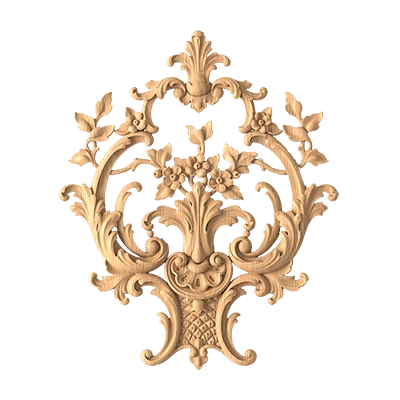
STAVROS is a Russian manufacturer of wooden elements for staircases and interior decor. The company's catalog includes a complete set for a wooden staircase: steps and components for staircases, balusters, handrails, posts, Newel posts, Wooden trim for finishing joints and ends.
STAVROS products are made from solid oak, beech, and other wood species. All elements are designed to be system-compatible — steps, balusters, handrails, and posts are coordinated in shape, size, and style, allowing you to order a complete staircase set in one place. The entire range of solid wood products is available in the STAVROS catalog.