






































Article Contents:
- Why echo appears in a room and how it relates to finishing
- How wooden slats work in interior design: an unexpected effect
- Slats create rhythm and depth
- Natural wood and its properties
- Air gap between slats and wall
- Where to use slats in a room for acoustic effect
- Wall behind the TV
- Wall behind the sofa
- Office and work area
- Home Theater
- Bedroom at the headboard
- Hall with high ceilings
- Meeting room and office
- Restaurant, cafe, reception area
- How to combine wooden slats with stucco decor: principles and schemes
- Scheme: slats in the center — moldings around the perimeter
- Scheme: stucco frame around the slatted area
- Scheme: moldings on adjacent walls, slats on the accent wall
- Scheme: polyurethane decor in wall color + slats in natural shade
- Scheme: slats at the bottom, stucco decor above
- Stucco decor for the ceiling: how to connect a slatted wall with the upper plane
- Why do you need a cornice if you have slats
- Polyurethane ceiling decor: for modern solutions
- Molding as a light finish without architectural heaviness
- Slats on the ceiling: when it is appropriate
- How to choose a baseboard for a wall with wooden slats
- Wooden baseboard for natural slats
- MDF baseboard: practicality without losing style
- How to choose: MDF or wood
- Moldings, corners and bars: neatness as a sign of professionalism
- Wooden corner: protection and aesthetics
- Wooden batten: horizontal for completion
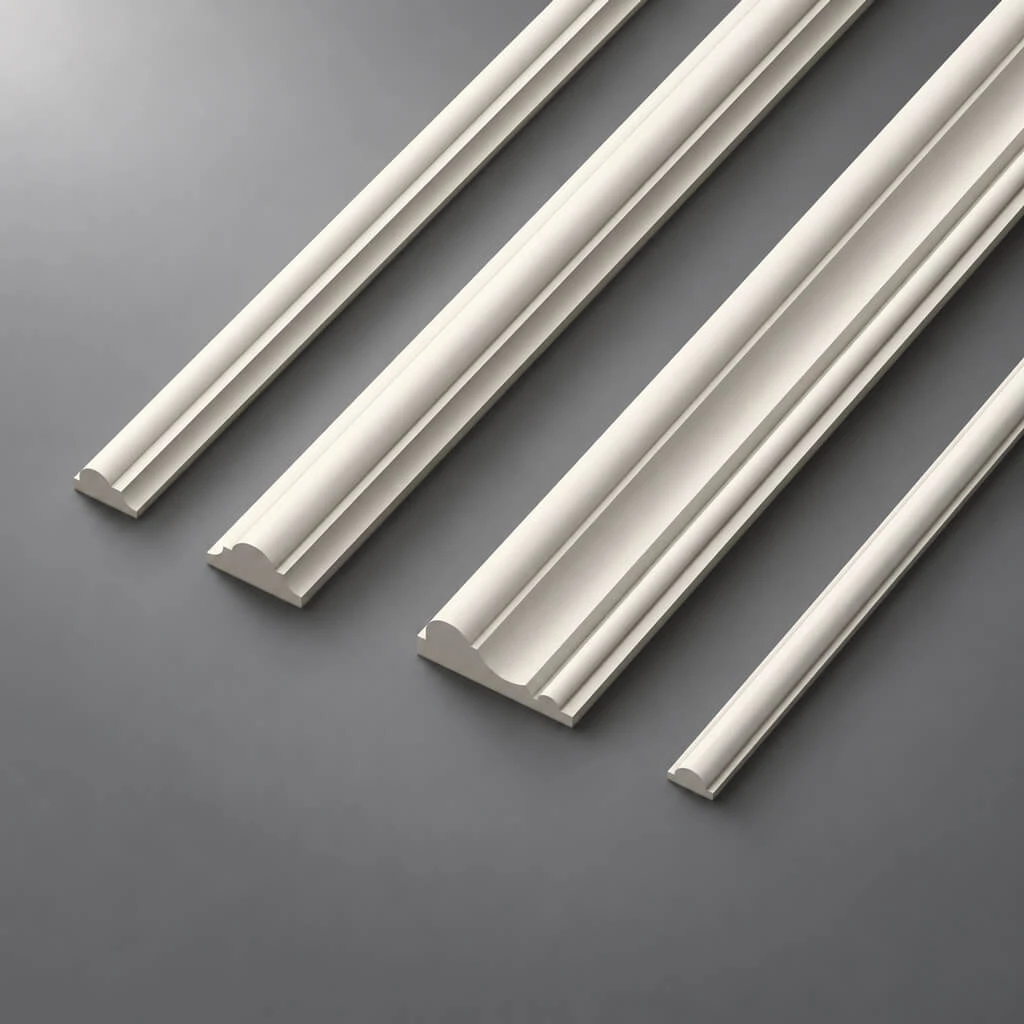
- Decorative moldings and profiles
- Ready-made scenarios: how it works in different rooms
- Living room with TV
- Office
- Bedroom
- Meeting room
- Restaurant and cafe
- Technical aspects: spacing, profile, installation
- Batten spacing: a key parameter
- Height of the batten zone
- Installation with a gap
- Final finishing
- Mistakes that ruin both acoustics and design
- Battens on all walls without breaks
- Too frequent step in a small room
- Large stucco near an active slatted wall
- Uncovered ends of slats
- Cornice that conflicts with the slats
- Different wood shades without logic
- Lighting that doesn't account for texture
- Additional keys and what lies behind them
- About the Company STAVROS
- Frequently Asked Questions (FAQ)
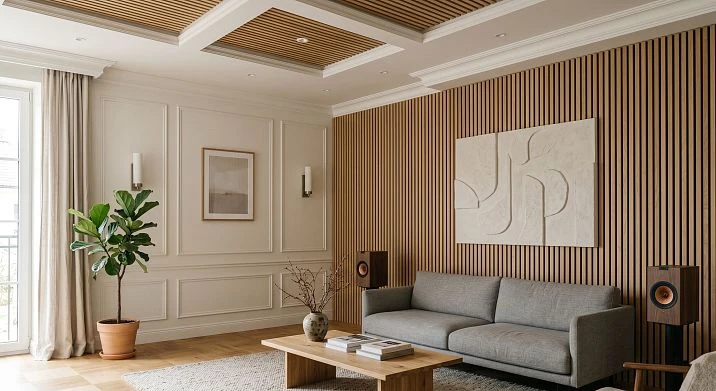
This is not fantasy or exaggeration. It's physics. And that's why the topic of acoustic comfort in a residential interior is not a professional exoticism, but a pressing need for anyone who has done a renovation and suddenly discovered that living in this beauty is uncomfortable to the ear.wooden planks on the wall, stucco decor, moldings, trim — all of this is not just decor. When used correctly, it is a system that simultaneously decorates the interior and makes it sound softer, livelier, and more comfortable.

Why echo appears in a room and how it relates to the finish
Let's be honest: decorative slats and moldings are not acoustic panels in the professional sense. They don't absorb sound like specialized acoustic foam or fiberglass does. However, they create something fundamentally important — a surface relief that breaks up the reflection of sound waves and scatters them around the room.
After renovation in a typical apartment, an ideal environment for acoustic problems emerges. Four flat painted walls, a smooth ceiling, laminate or porcelain tile, large windows — this is a set of five to six hard reflective surfaces. Sound from a source — TV, speakers, voices — hits the wall, bounces to the opposite one, and returns back. This is that very ringing, emptiness, "echo in the apartment" after renovation.
What changes the situation? Texture. Any volumetric obstacle in the path of a sound wave scatters it — deflects it in different directions, breaks it into smaller waves of lower amplitude. That's why a room with furniture, bookshelves, textiles, and wooden slats sounds softer than an empty one.
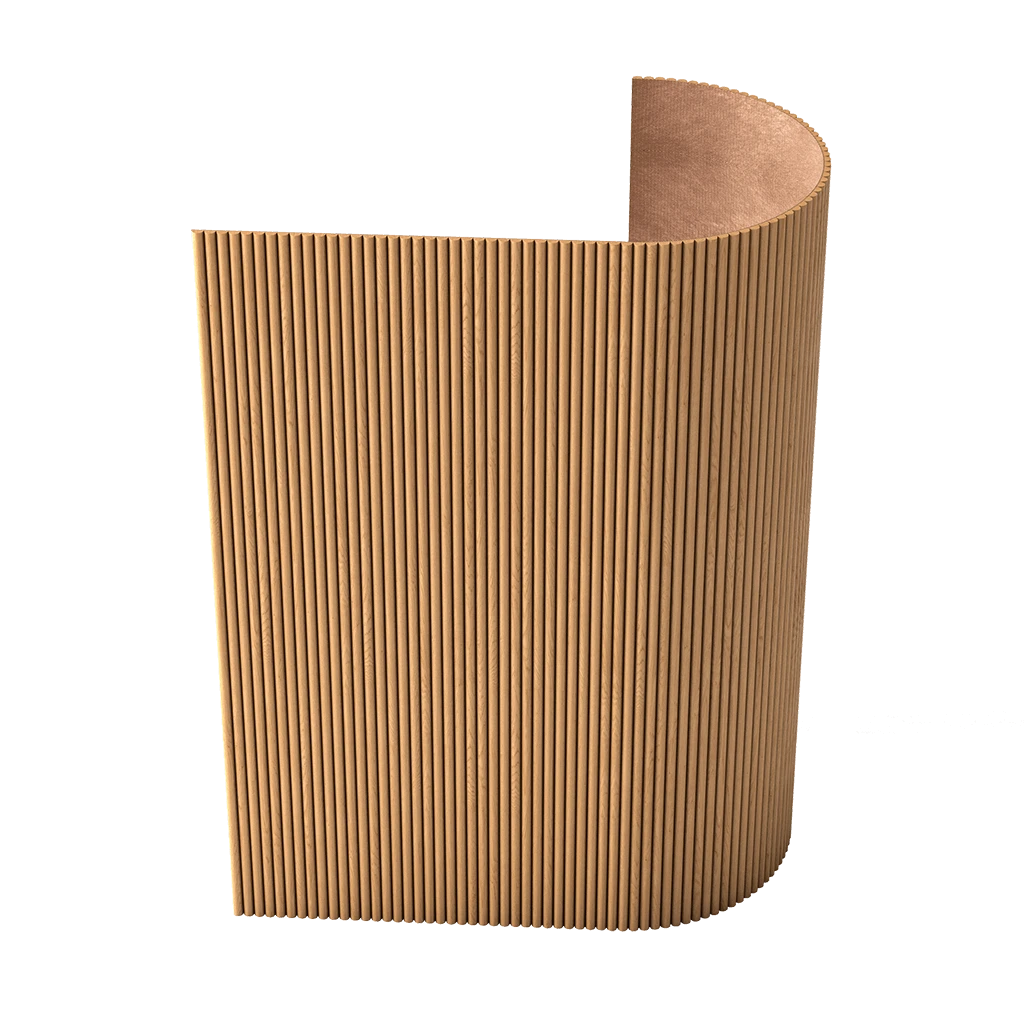
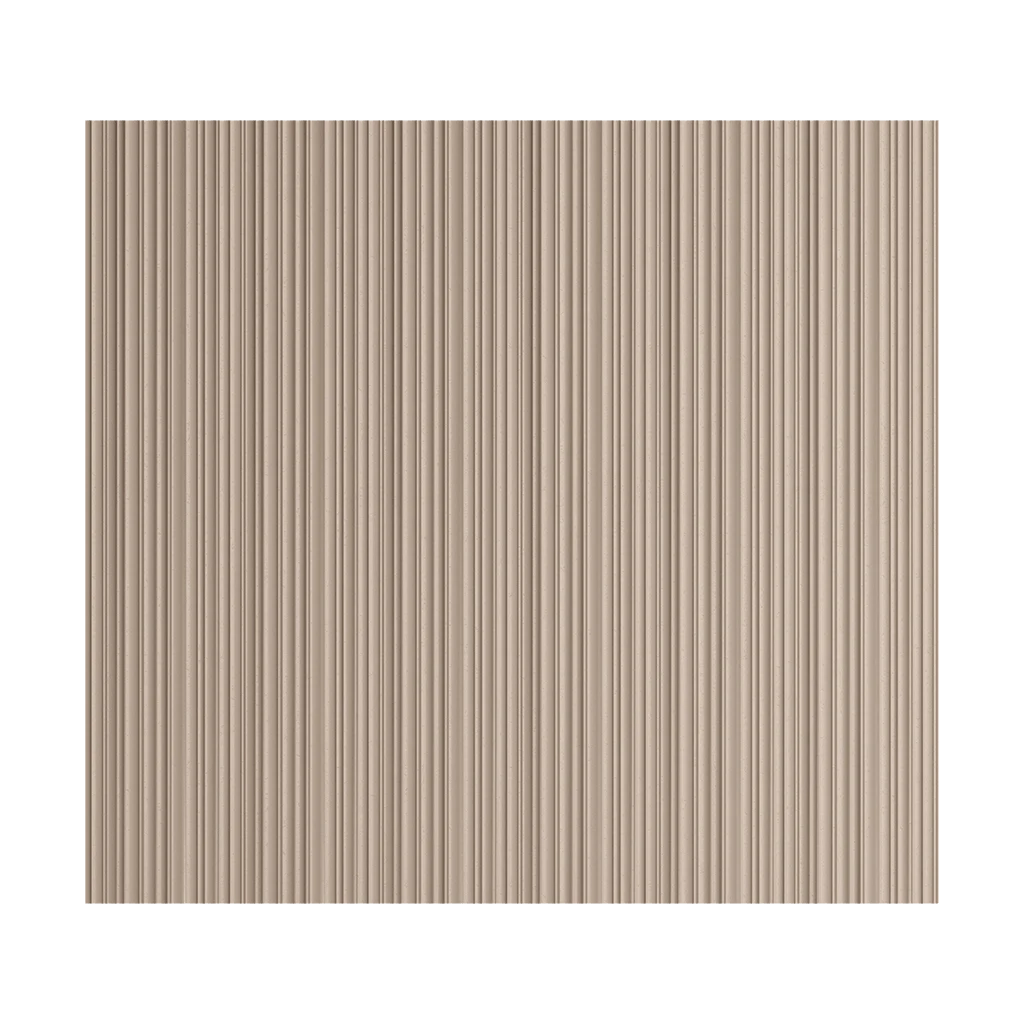
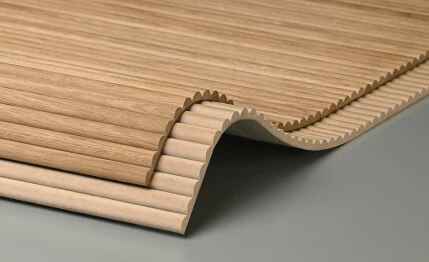
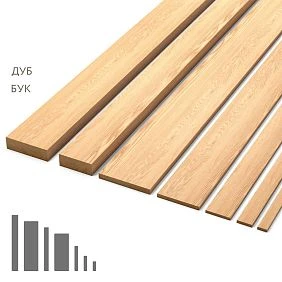
wooden slats for wall finishingcreate a rhythmic unevenness of the surface. Each slat is a small protrusion that changes the angle of wave reflection. The cumulative effect of several dozen vertical slats on the wall behind the sofa or TV is a noticeable reduction in the room's "ringing." Not complete acoustic correction, but a real improvement in comfort.
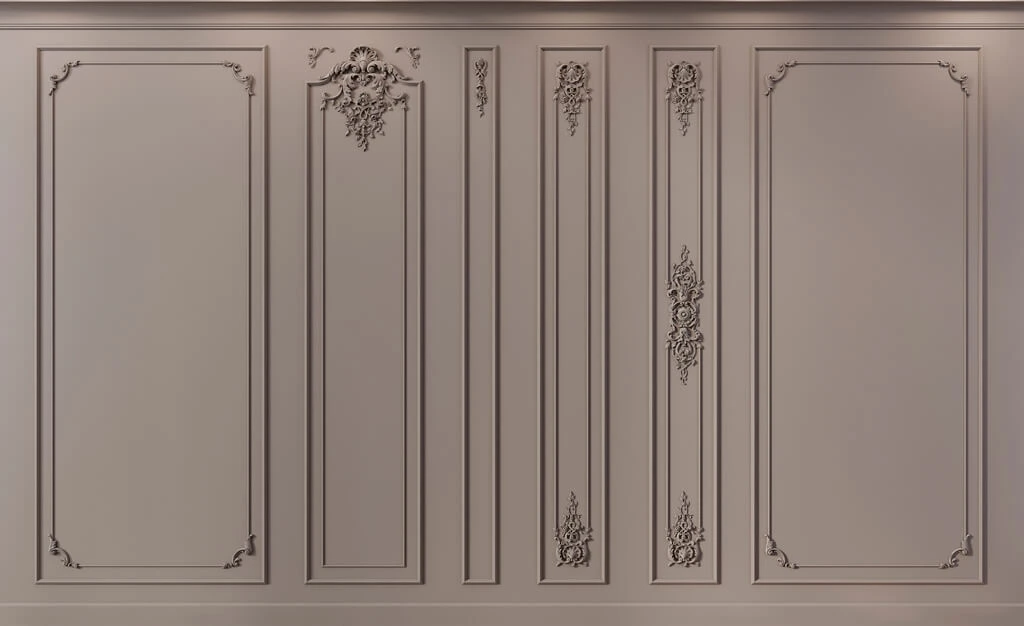
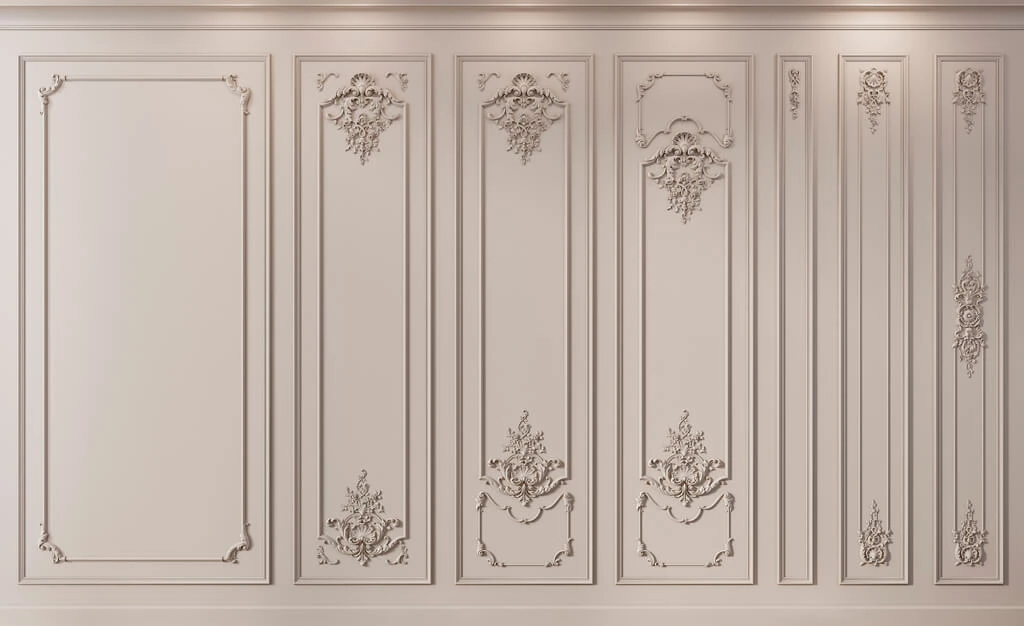
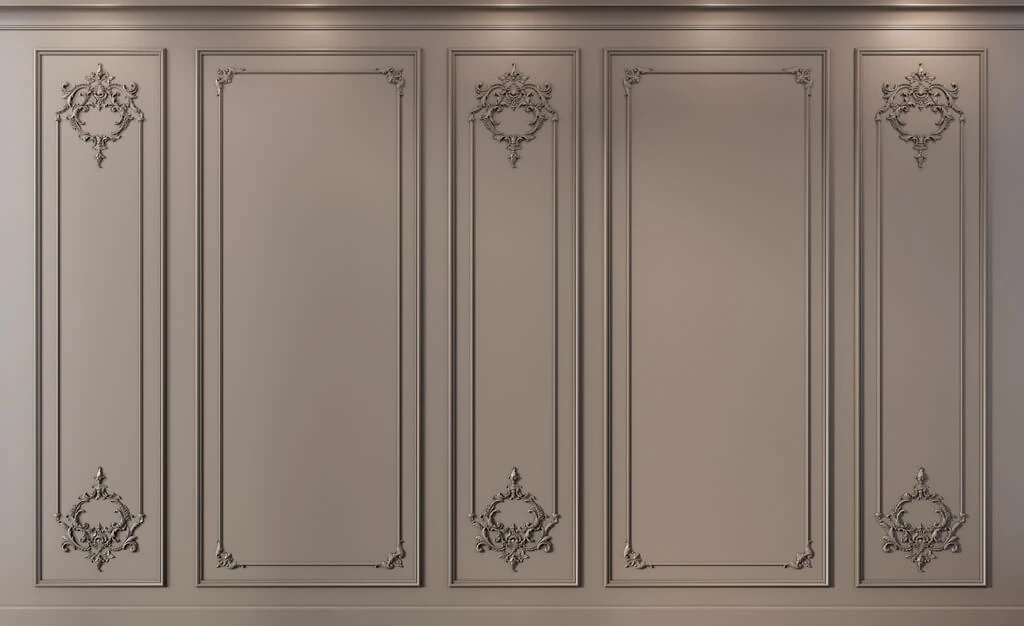
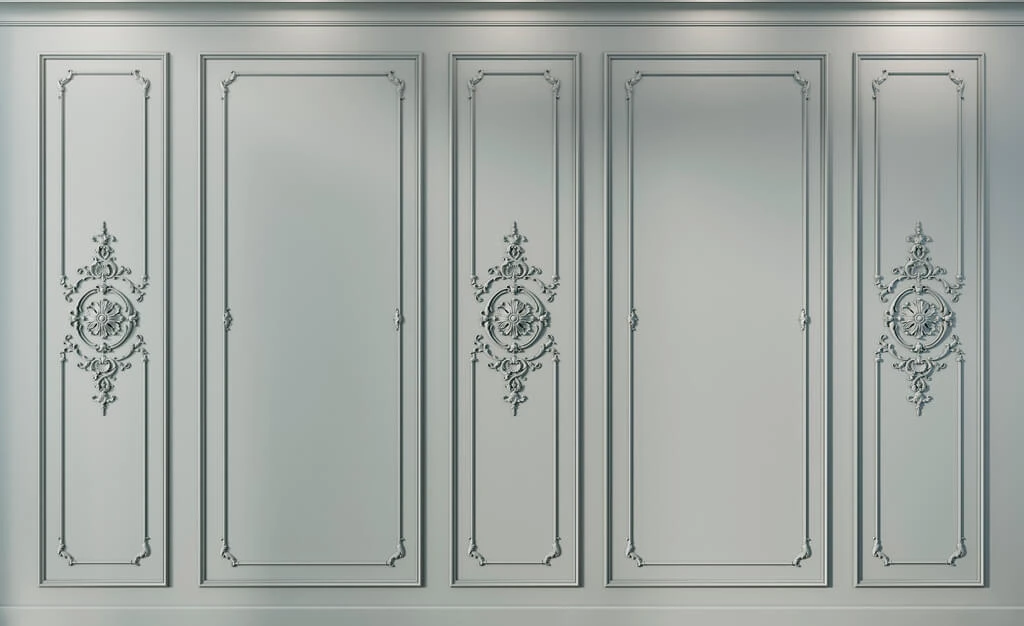
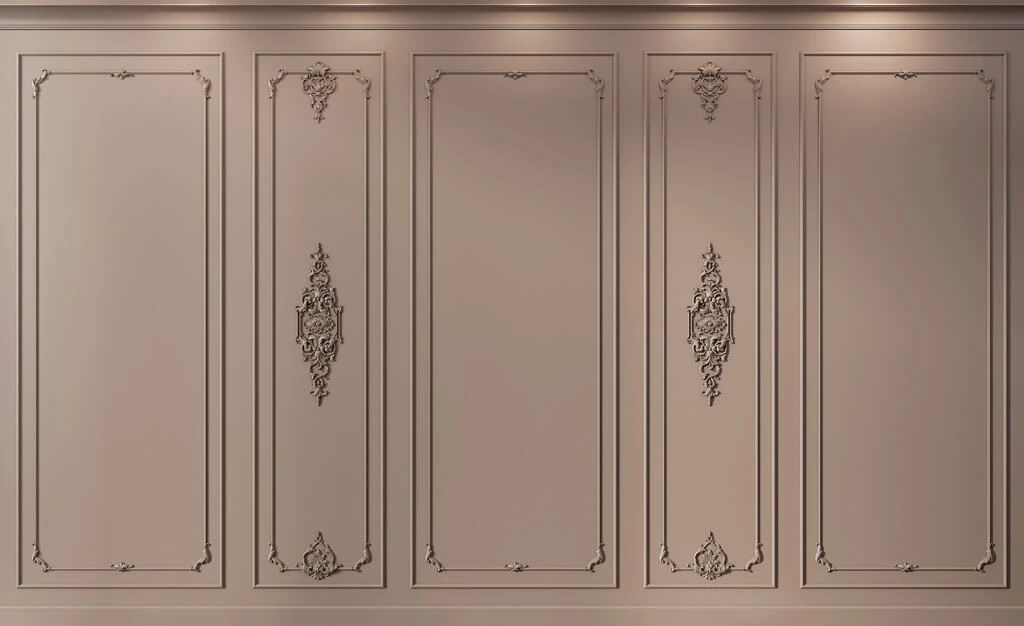
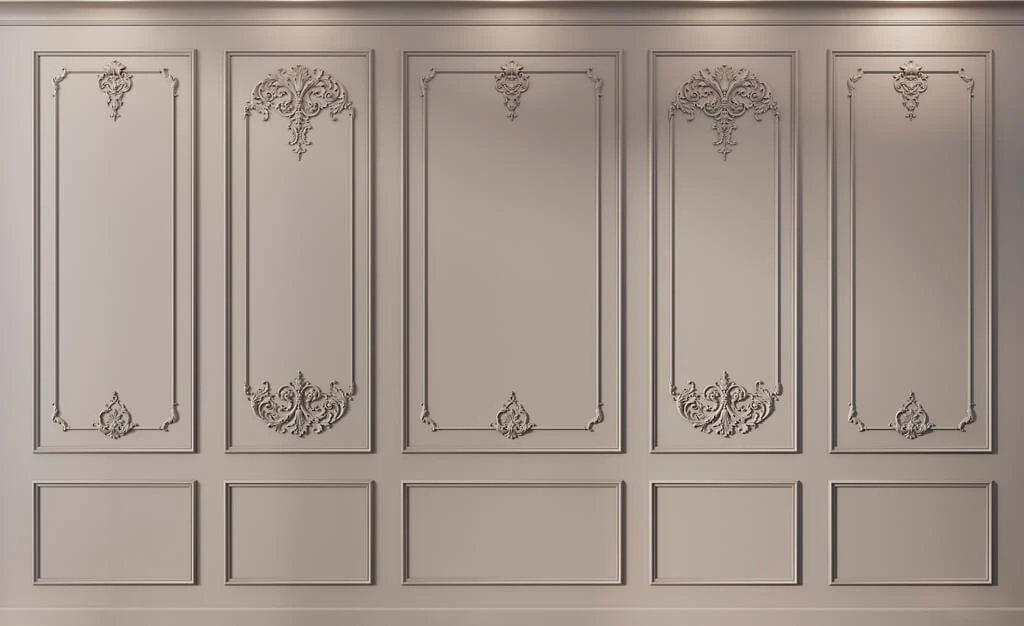
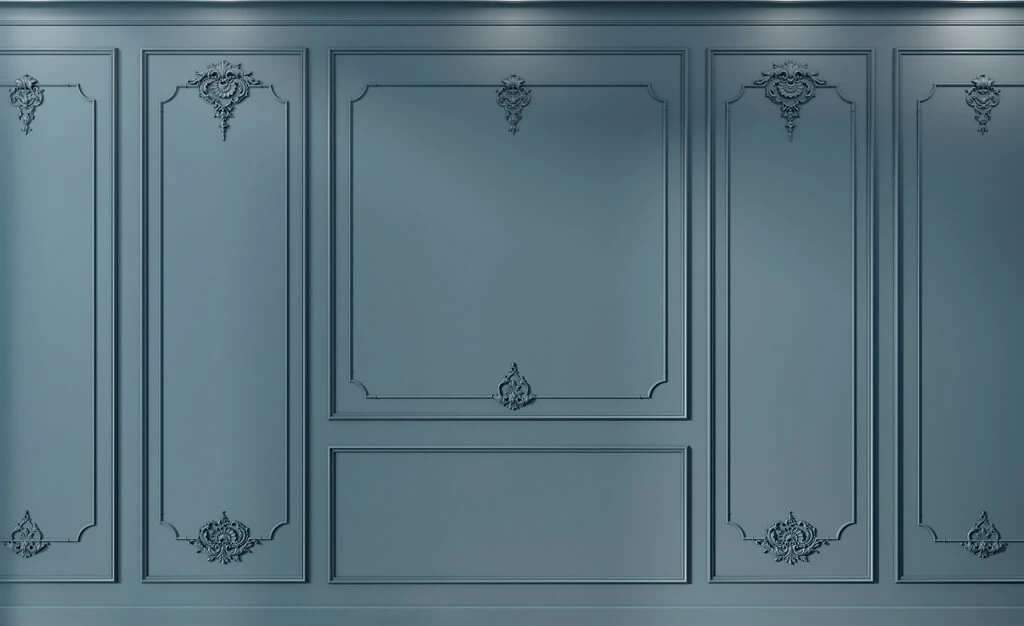
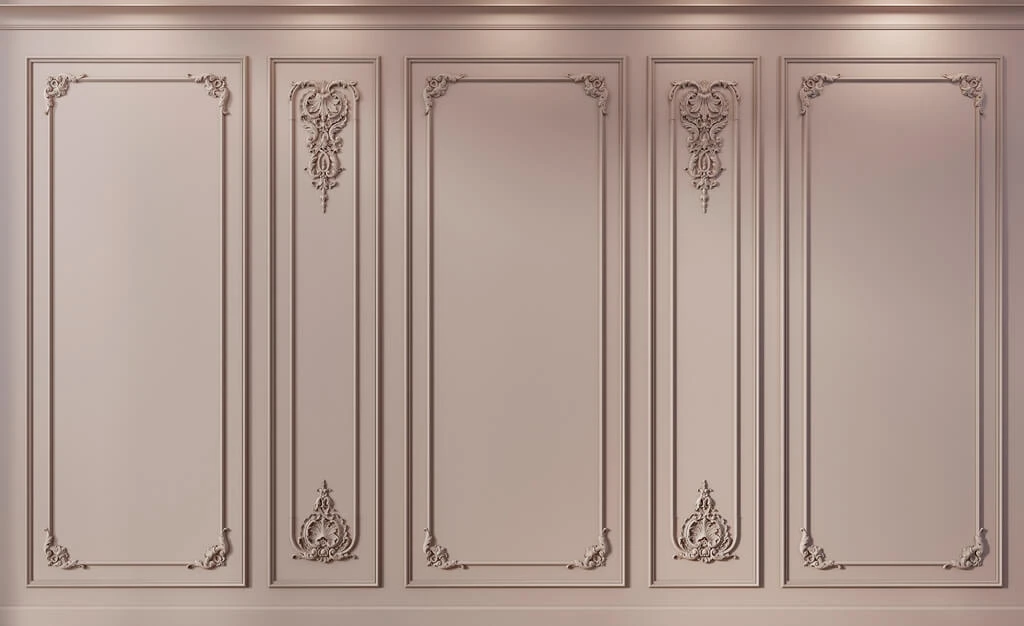
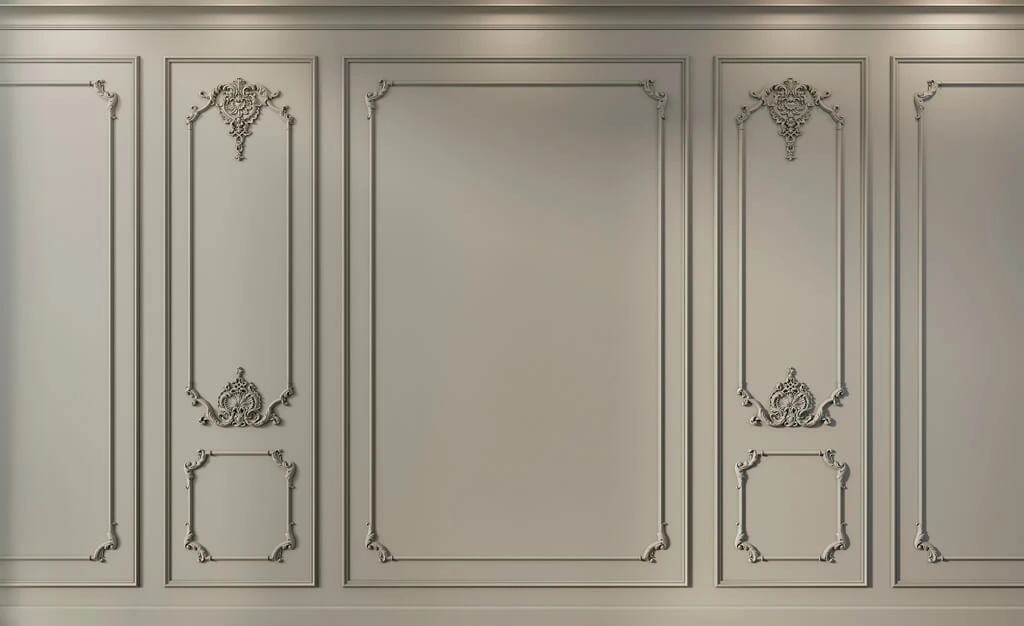
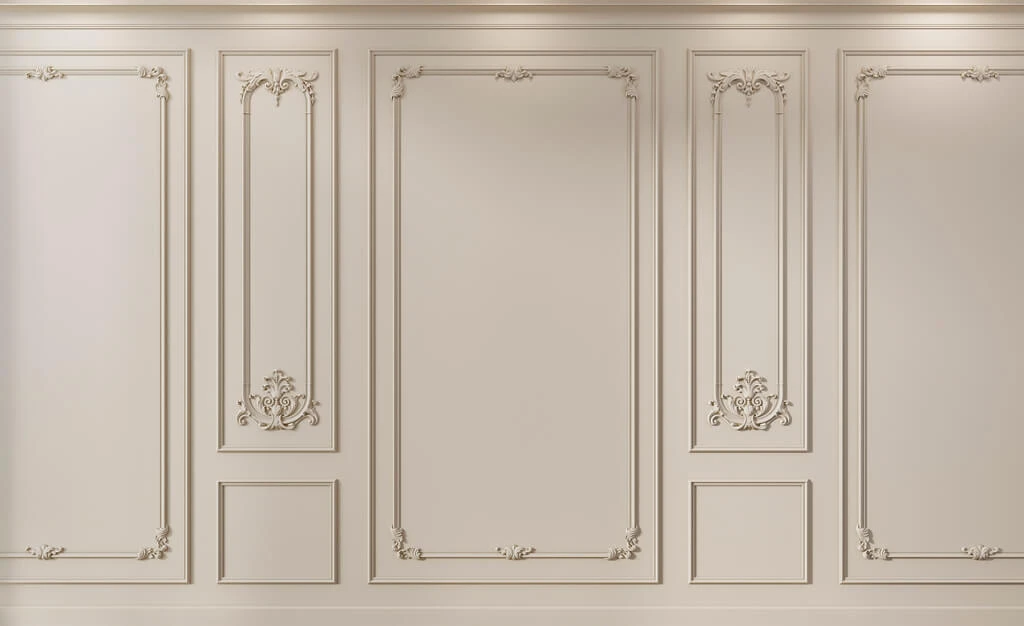
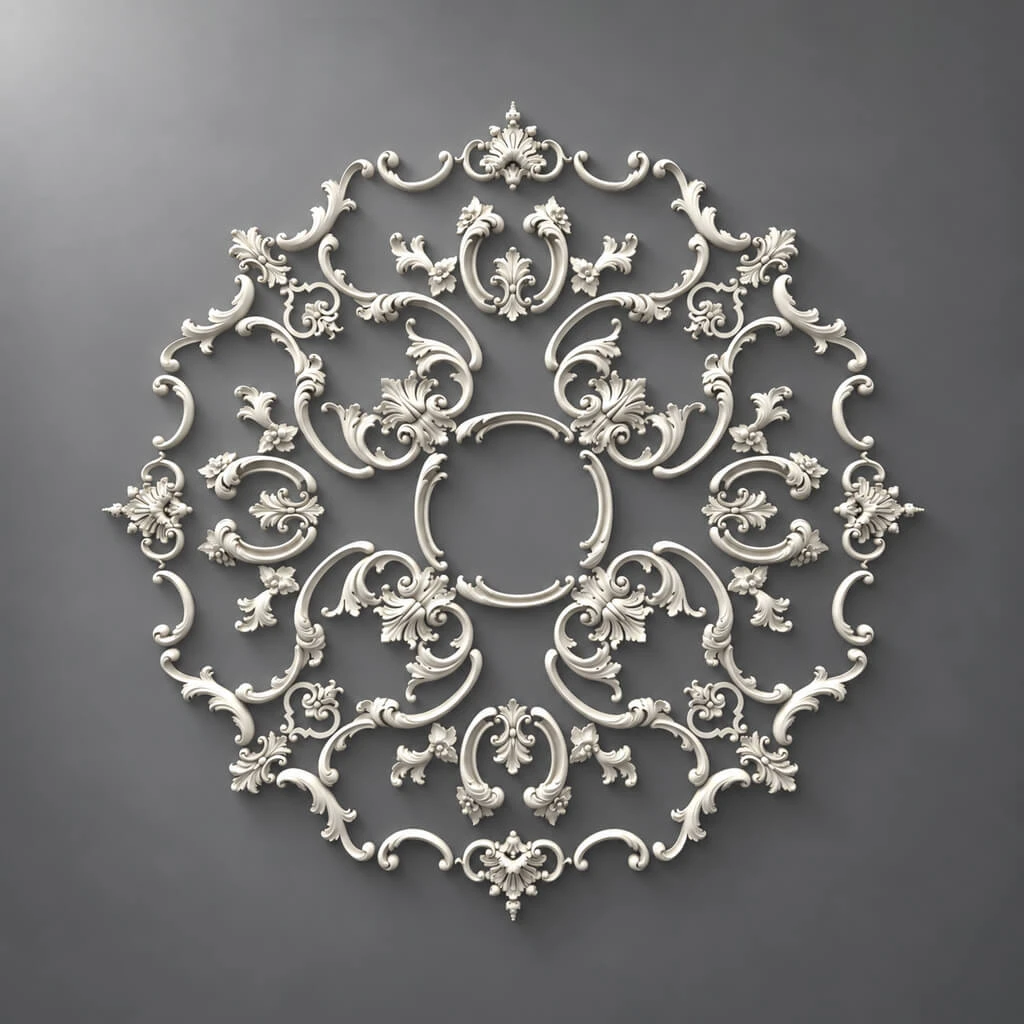
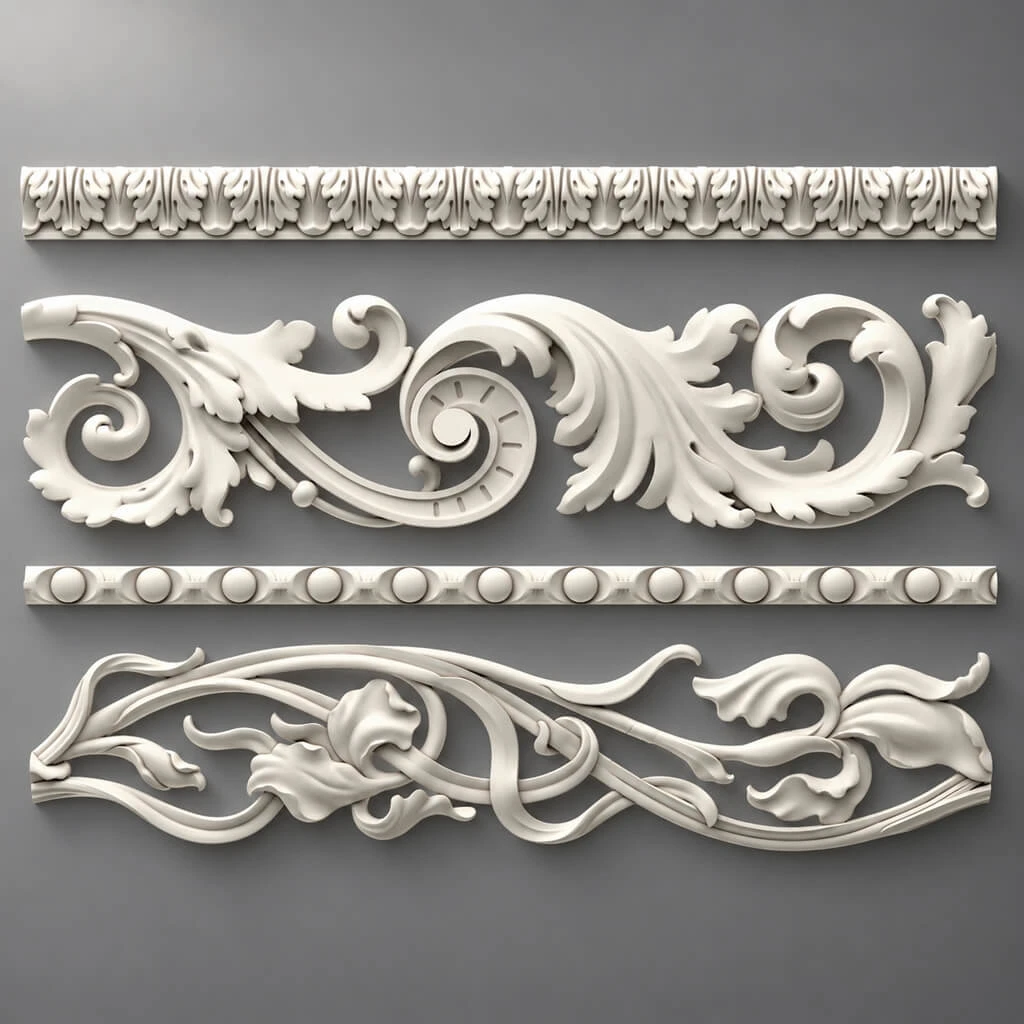
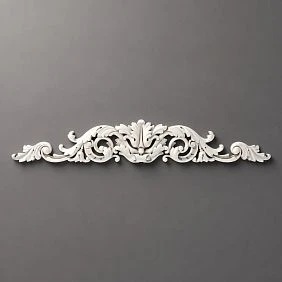
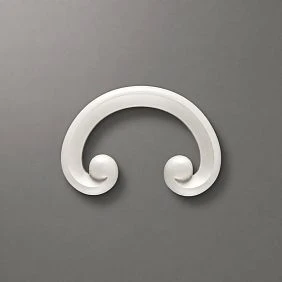
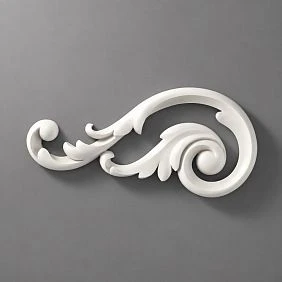
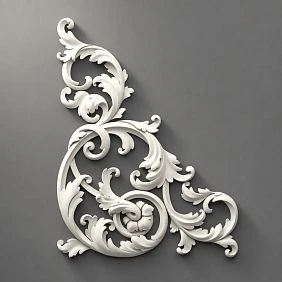
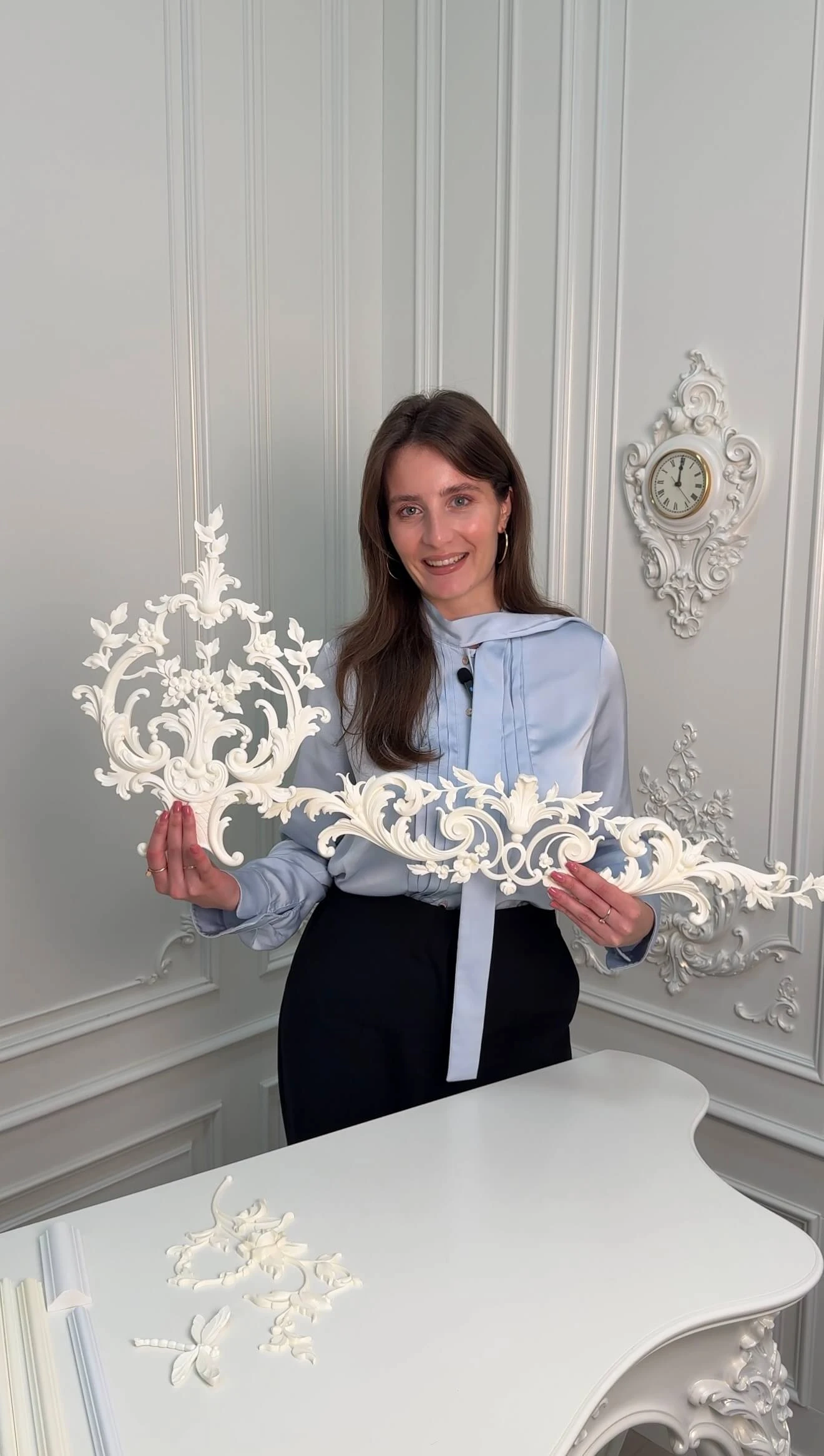
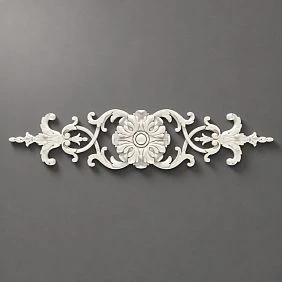
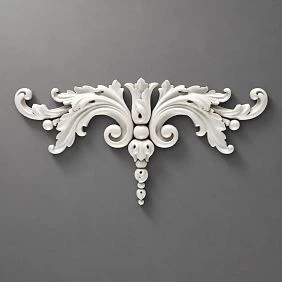
Stucco decor — moldings, frames, friezes — works in a similar way.Polyurethane wall decorwith a relief profile creates point protrusions on the plane that scatter reflection. This is not a replacement for acoustic treatment, but a quite conscious choice in favor of an interior that both looks richer and sounds softer.


How wooden slats work in the interior: an unexpected effect
Most people chooseWooden rails for decorationbecause it's beautiful. And that's absolutely fair — a slatted wall is indeed one of the most expressive finishing ideas of recent years. But behind the purely aesthetic value, there are several functional properties worth knowing about.
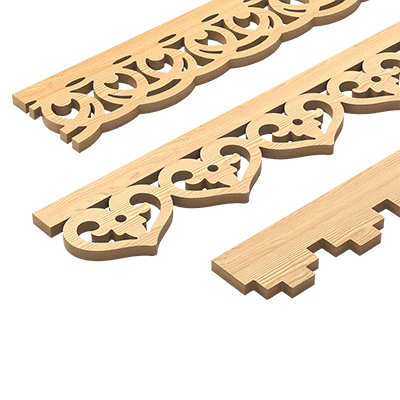
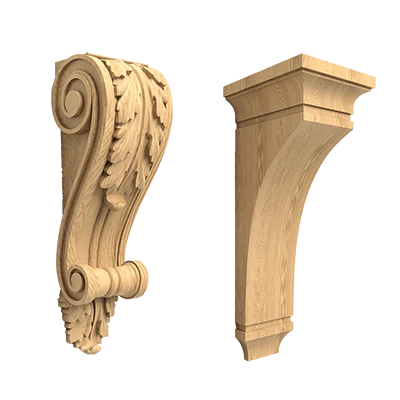
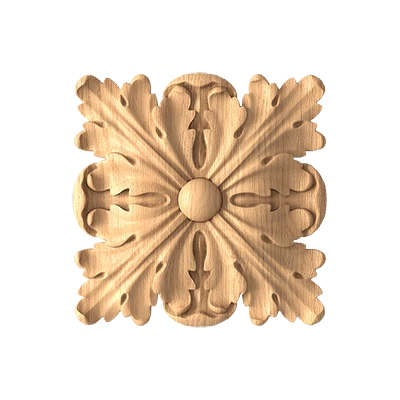
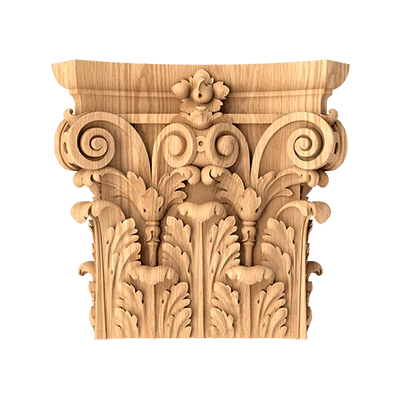
Our factory also produces:


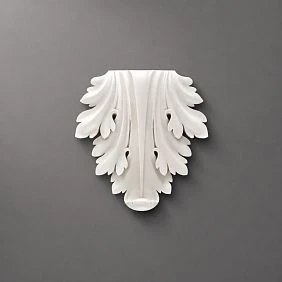
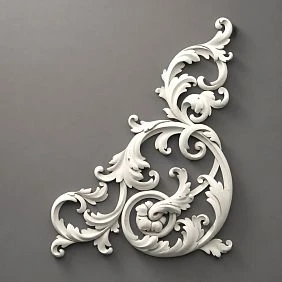
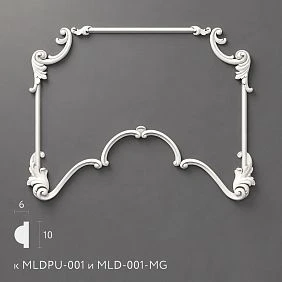
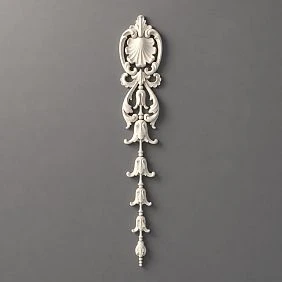
Slats create rhythm and depth
vertical wooden slatson the wall is not just a pattern. It is a rhythmically organized surface where protrusions and shadows alternate. It is this play of light and shadow that makes the wall alive: it is not the same in morning and evening light, not the same in light from a window and from a directed spotlight.
From an acoustic point of view, the rhythm of the slats means regularly repeating reflective surfaces at different angles — and therefore, diffusion rather than focused reflection of sound.
Get Consultation
Natural wood and its properties
Wood is a porous, fibrous material. Unlike concrete and drywall, it slightly absorbs sound energy due to its structure. This property is insignificant for a single slat, but collectively across the entire slatted wall it makes a noticeable contribution to reducing reverberation.
Exactly thereforeWooden plankmade of solid oak or beech is not just a fashionable decorative element. It is a material with physical properties that work for the comfort of the space.
Air gap between the slats and the wall
If the slats are mounted with a small gap from the wall — on a substrate or lathing — then the resulting air cavity further improves sound diffusion. The air in the narrow gap acts as a kind of damper. For a home theater or study, this is significant. For a living room with a TV, it is a noticeable bonus.
Where in the room to use slats for acoustic effect
Not every wall requires slatted finishing. Proper application means choosing the exact area where the slats will provide maximum effect — both visual and acoustic.
Wall behind the TV
Classic. The TV zone is the main source of acoustic problems in the living room. Sound from the TV speakers hits the nearby wall, reflects, and creates an unpleasant echo.wooden planks on the wallbehind the TV is a double win: a beautiful accent and a sound diffuser right at the point of maximum reflection.
For the TV zone, slats from floor to ceiling with even spacing work well. Under the TV, you can installRafter panels— they provide a ready-made modular result with minimal installation effort.
Wall behind the sofa
A large sofa is placed against the wall — and this wall receives direct sound reflection from opposite sources. Slats here reduce "mirror" reflection and simultaneously create a beautiful background accent for the relaxation area.
Office and work area
In a study, acoustics are critical for concentration and video call quality. Empty walls in a study create the feeling of negotiations in a conference room without acoustic treatment — every word sounds with a reverb tail.Wooden batten wall panelson one or two walls of the study is an elegant solution that emphasizes the status of the workspace and simultaneously makes the sound environment softer.
Home theater
This is a room where acoustic correction directly affects viewing quality. Slats here are not just decoration, but a deliberate choice of finishing. On the side walls of a home theater,Wall decoration with wooden slatsreduces side reflections and improves the spatial perception of stereo sound.
Bedroom at the headboard
In the bedroom, acoustics affect sleep quality. City sounds, conversations, a working TV — all of this is amplified in an acoustically "hard" room. A slatted panel at the head of the bed is one of the best techniques: it is both beautiful and creates a soft texture right where sound reflection is most annoying.
Hall with high ceilings
In the hall of a private house or spacious apartment with high ceilings, echo is especially noticeable. A tall space with smooth walls is an ideal acoustic resonator.wooden rakes for zoningon one or two walls of the hall break up this resonance and simultaneously create a visual scale for the tall space.
Meeting room and office
Workspaces with hard surfaces suffer from high reverberation levels. In a meeting room, this reduces speech intelligibility during meetings. A slatted wall is a professional and aesthetically refined solution for corporate interiors, improving both acoustics and the business image of the space.
Restaurant, cafe, reception area
In public interiors, the noise level is especially high.Slatted panels for interioron the walls of a restaurant or cafe is both a design technique and a practical reduction of acoustic chaos. Slats scatter sound from multiple sources — voices, dishes, music — and make the atmosphere more comfortable.
How to combine wooden slats with stucco decor: principles and schemes
The question "can acoustic slats and stucco decor be combined" is asked often. The answer is not only possible, but necessary. The right combination creates an interior where slats serve a textural, acoustic, and decorative function, while stucco decor serves an architectural and stylistic one.
The main principle: slats are an active element with a pronounced texture. Stucco next to them should be supportive, not competing.
Scheme: slats in the center — moldings around the perimeter
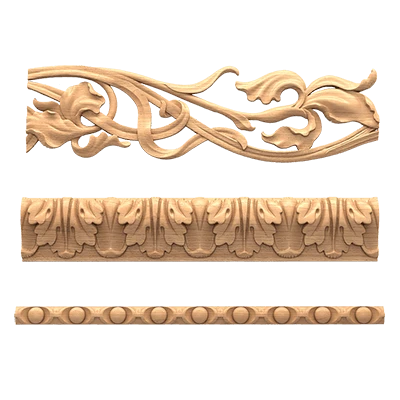
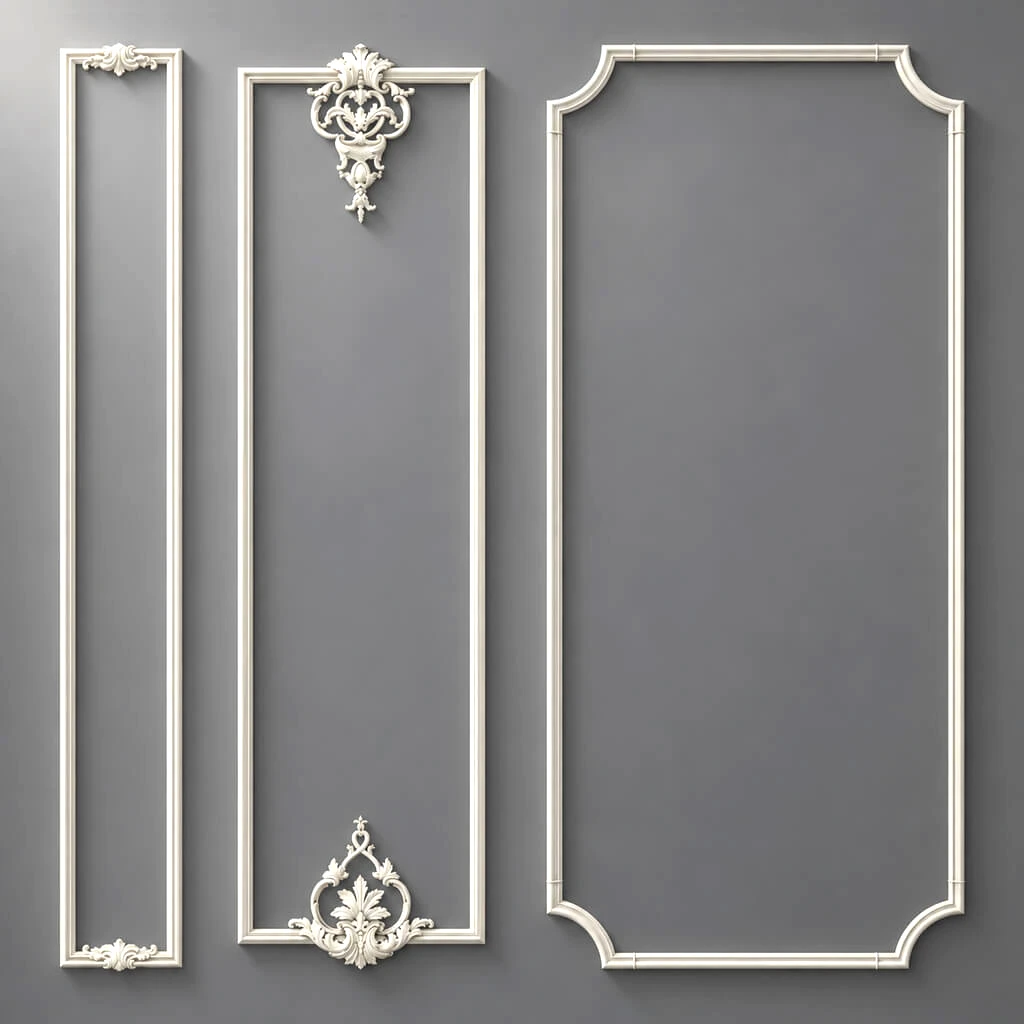
The slatted panel occupies the central part of the wall. Around its perimeter —Decorative wooden moldingsorMoldings made of polyurethane, forming a frame. This scheme turns the slatted area into an architecturally designed wall element — not just "slats," but a real decorative panel with clear boundaries.
In this case, it is recommended to choose moldings with a profile proportionate to the slats: if the slats are thin and laconic, the molding should also be restrained. A rich profile next to delicate slats is a visual dissonance.
Scheme: stucco frame around the slatted area
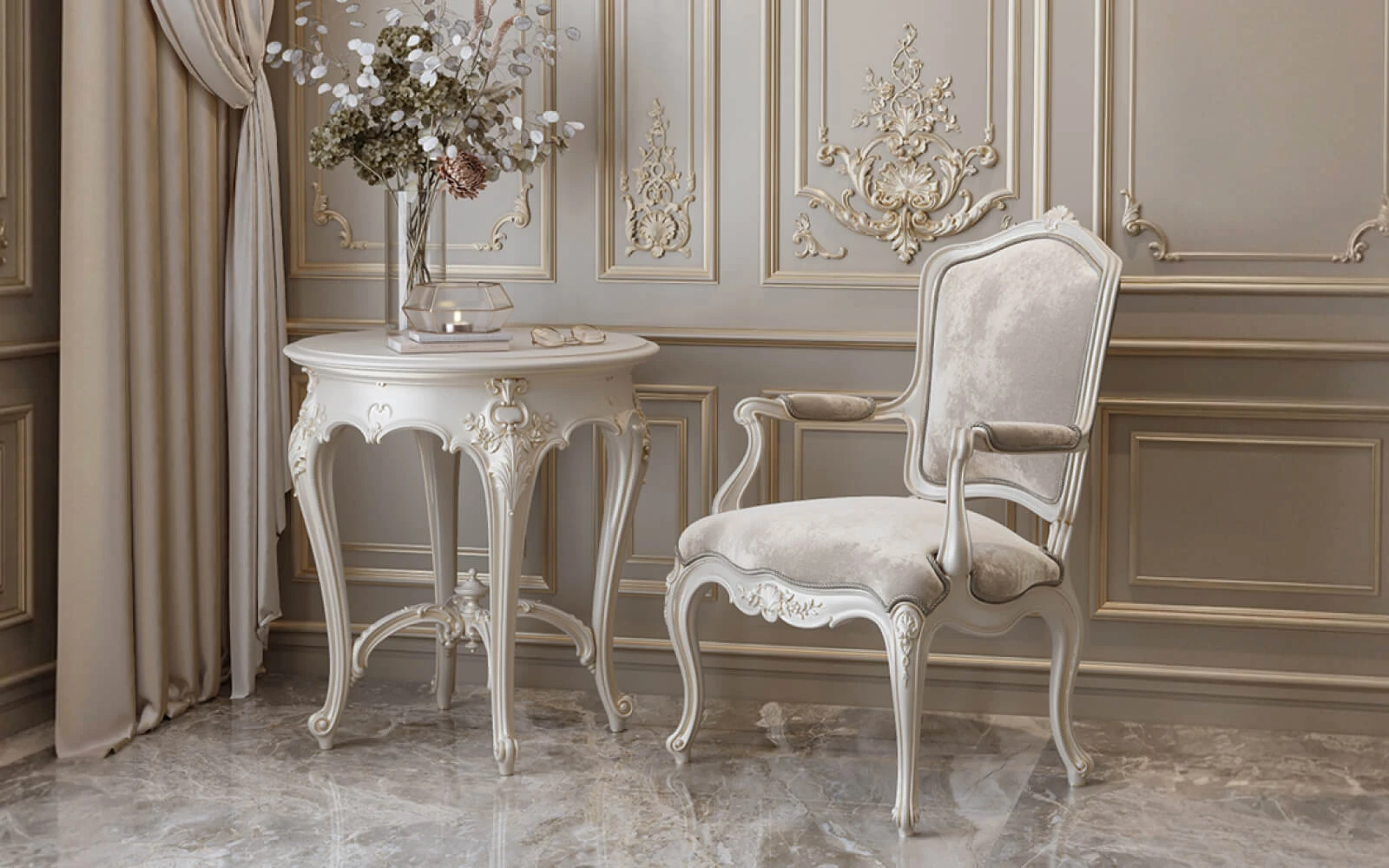
Polyurethane wall decorin the form of a frame around the slatted panel is a classic technique that works in neoclassicism, art deco, and modern eclecticism. The frame visually "hangs" the slatted area on the wall as a work of art — this is an important psychological effect. The space is perceived as designed with intent, not by chance.
Important: the frame is mounted either in the tone of the slats (single color) or in the tone of the wall (relief without color contrast). A contrasting frame + contrasting slats = overload.
Scheme: moldings on adjacent walls, slats on the accent wall
Accent wall — slats. Other walls — Moldings for walls and ceiling in a frame layout, painted in the wall color. Slats are the only bright element, stucco is the architectural background. This is the most common scheme for a living room and study, and it is also one of the best in terms of the ratio of result to implementation complexity.
Scheme: polyurethane decor in wall color + slats in natural shade
Polyurethane Items painted in the same color as the wall — for example, warm gray-white or pistachio. Slats — in natural oak. Stucco creates relief without color, slats bring color and texture. The scheme is elegant, not overloaded, and works well in modern interiors with a soft color palette.
Scheme: slats at the bottom, stucco decor above
The lower part of the wall is a slatted panel 100–140 cm high. The upper part is a smooth wall with moldings or a frieze. This technique is especially relevant for high ceilings, where a continuous slatted wall would look heavy. The dividing line between the slats and the upper part is decorated with a wooden beam or a molding — this creates a clear horizontal line.
Stucco decor for the ceiling: how to connect a slatted wall with the upper plane
When a wall receives expressive slatted or molding trim, the ceiling cannot be left isolated. The transition from wall to ceiling is an architectural seam that must be resolved. This is where the ceiling cornice comes into play.
Why do you need a cornice if there are slats
A slatted wall creates a vertical rhythm. This rhythm needs to be "closed" from above — given an architectural finishing point. Without a cornice, the slats visually "fall out" into the ceiling plane, the boundary becomes blurred, and the feeling of completeness is lost.
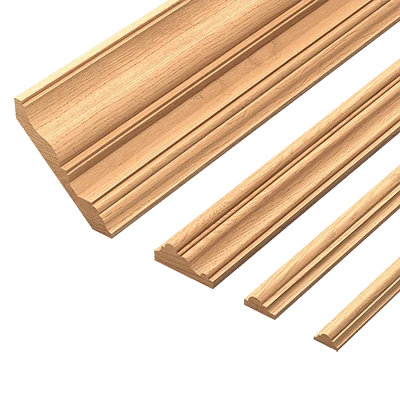
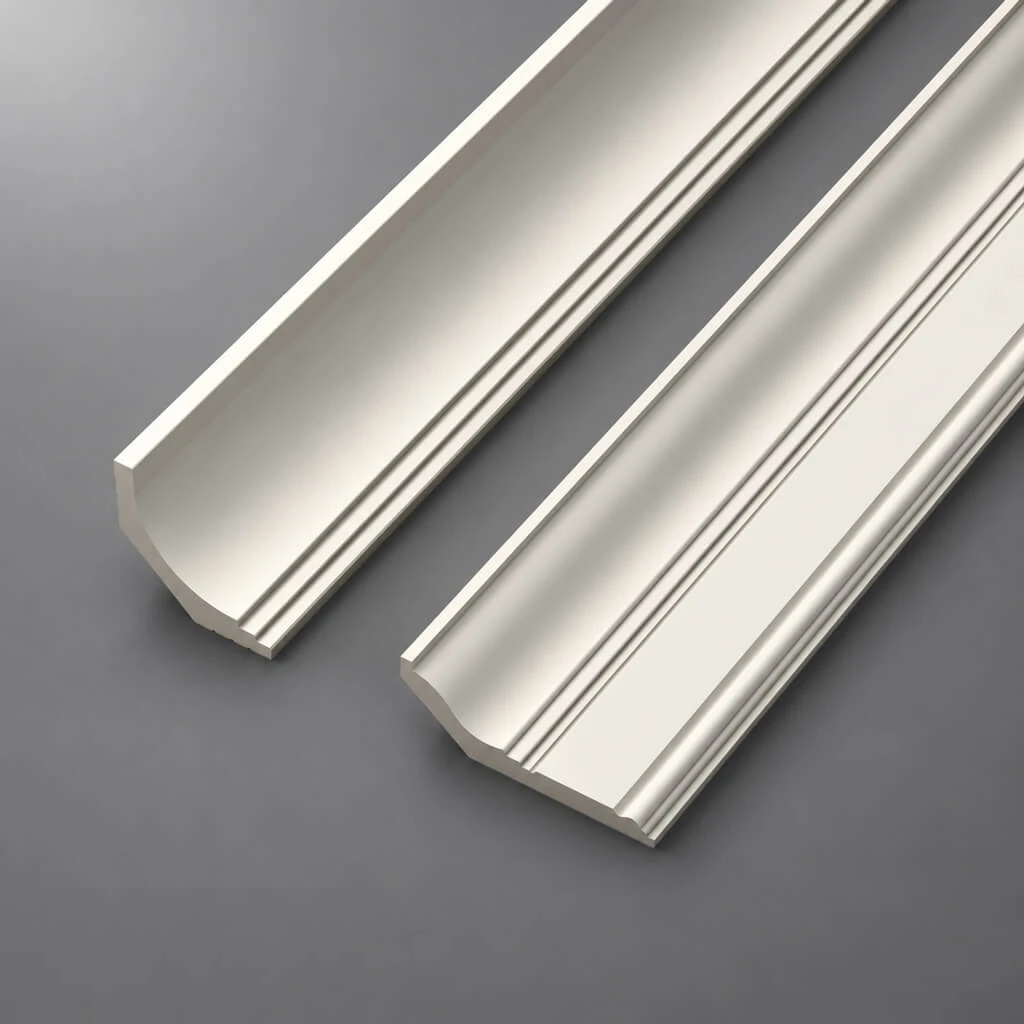
Wooden ceiling cornicemade of solid oak — the perfect finish for interiors with natural wooden slats. It creates a unified material line: slats — cornice — and a single wooden story of the space.Wooden beamsare available in different profiles — from a laconic straight one to an expressive classic one, selected to match the style and scale of the room.
Polyurethane ceiling decor: for modern solutions
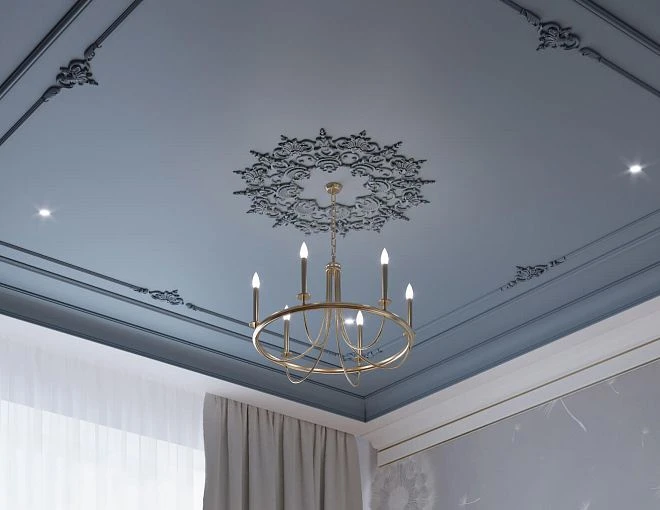
If the interior is designed in a modern style and the slats are painted or have a neutral color,polyurethane ceiling decoroffers a wide selection of profiles. The polyurethane cornice can be painted in any color — to match the wall, ceiling, or slats. It does not deform from humidity, is easy to install, and provides a precise relief without defects.
For a room with an acoustic slatted wall, the ceilingpolyurethane ceiling decoralso contributes to the scattering of sound waves: a relief ceiling cornice is another uneven surface in the space.
Molding as a light finish without architectural heaviness
In small rooms or with low ceilings, a massive cornice is excessive. Here, a thin one works optimally.Polyurethane molding— a narrow profile 3–5 cm wide that marks the boundary between wall and ceiling without creating visual heaviness. This is a minimalist, almost architectural solution.
Slats on the ceiling: when it is appropriate
In a number of scenarios — a home theater, an office with high ceilings, a restaurant — wooden slats are mounted directly on the ceiling. This is the most effective acoustic solution within decorative finishing: a ceiling made of relief wooden slats scatters reflection from the upper plane. At the same time,Slatted panels for interioron the ceiling is one of the most technologically advanced and aesthetically flawless options. They provide a ready-made module that does not require complex marking and adjustment on site.
How to choose a baseboard for a wall with wooden slats
A baseboard in an interior with a slatted wall is a detail that either completes the concept or ruins it. The lower line of the space should be as thoughtful as the upper one.
Wooden baseboard for natural slats
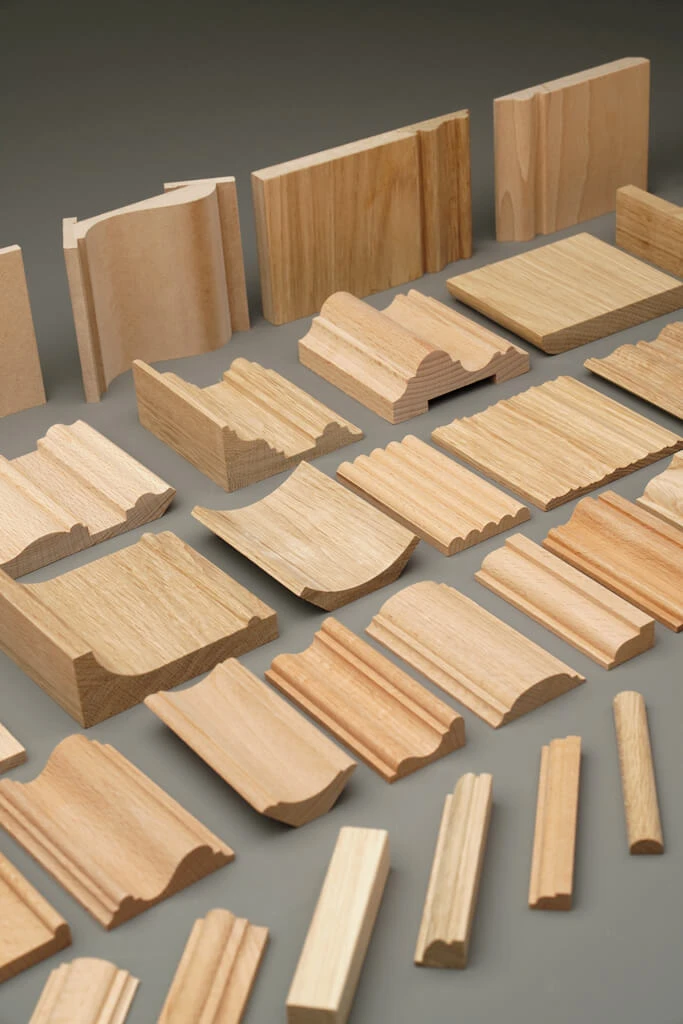
Where slats are made of solid oak or beech,Wooden baseboardfrom the same species closes the lower line as a final chord. A single wood species, a single shade, a single texture — this is what professionals call the 'material history of the interior'.
with a classic profile creates a sense of solidity, reliability.made of oak is resistant to mechanical loads and easy to process — if necessary, it can be repainted, re-sanded, and coated with oil or varnish. The durability of natural wood is a strong argument for high-traffic areas.
Wide wooden baseboard (from 80 mm and above) — for studies, living rooms, and halls of a country house. It creates a sense of architectural solidity, visually "anchors" the slatted wall from below, and adds status to the interior.
MDF baseboard: practicality without losing style
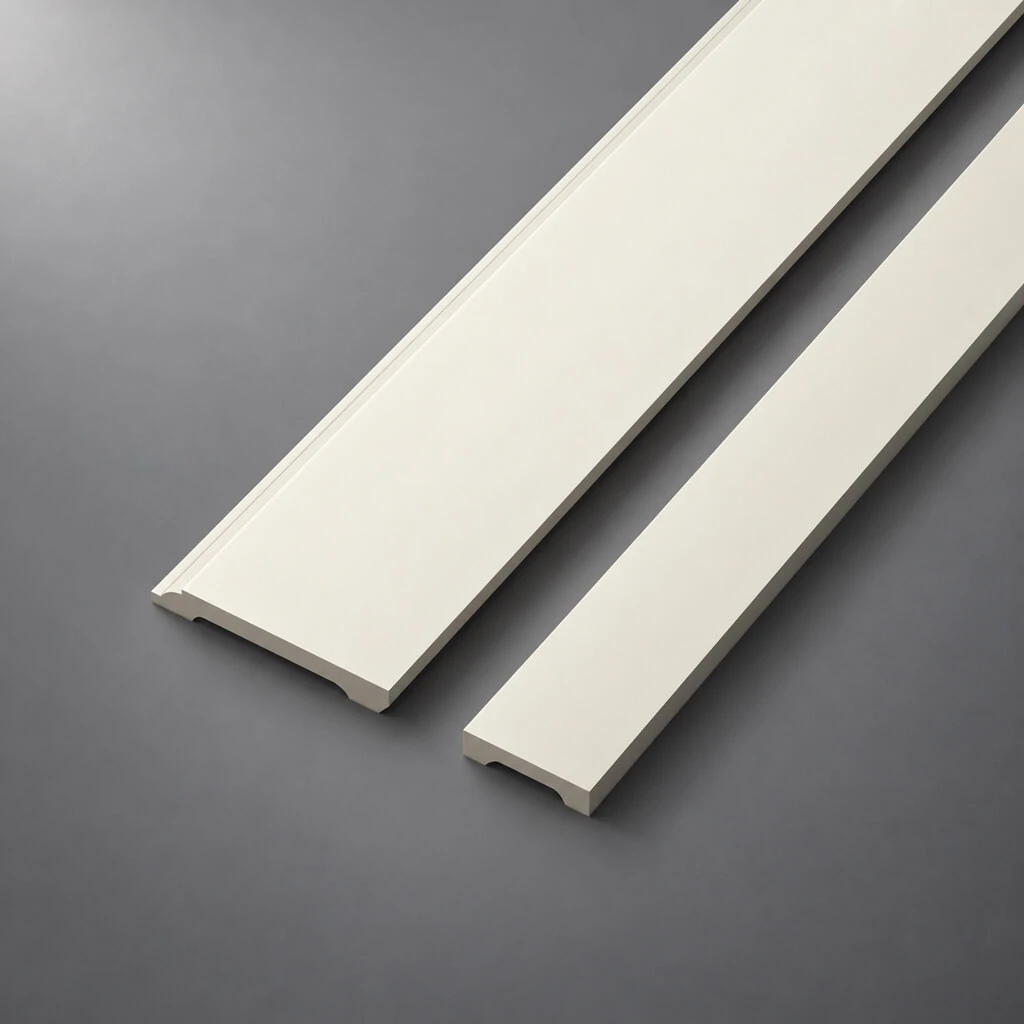
MDF Skirting Board— a choice for modern interiors where slats are painted or designed in a minimalist key. MDF baseboard provides a perfectly smooth surface, stable geometry, and excellent paintability.
MDF baseboard for painting — one of the best options for an interior where you want a unified color field. A baseboard in the color of the wall visually disappears, making the room feel more spacious. For small rooms with a slatted wall, this is a very powerful technique.
White MDF baseboard — a universal solution for light interiors with slats of any shade. White clearly defines the lower contour, creates cleanliness, and does not compete with any decorative element.
How to choose: MDF or wood
The question is simple. If the interior has wooden doors, wooden architraves, or solid parquet — choose a wooden baseboard from the same species. If the slats are white, painted, or in the color of the wall — MDF for painting. If you want neutrality — a white MDF baseboard will cover any scenario.
Moldings, corners, and strips: precision as a sign of professionalism
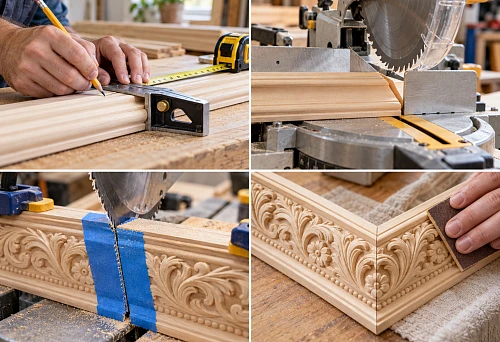
A slatted wall without neat ends and junctions looks unfinished. This is wherewood trim itemsplay a role that is hard to overestimate.
Wooden corner: protection and aesthetics
Wooden angle— a solution for external corners where the slatted panel transitions over the edge of the wall. It covers the ends of the slats, protects the corner from mechanical damage, and creates a clear vertical line. A solid wood corner matching the slats provides a detailed, neat finish. A contrasting color corner creates a deliberate architectural accent.
In interiors with slatted acoustic walls, external corners are especially vulnerable: they are points of high mechanical load. The wooden corner here serves both decorative and protective functions simultaneously.
Wooden strip: horizontal for finishing
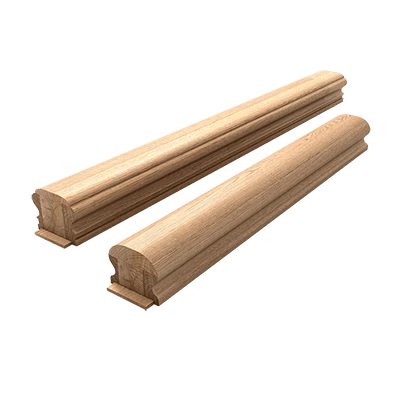
Wooden blockis used as a limiting horizontal strip — at the top and bottom of the slatted area. It covers the ends of the vertical slats and creates a clear frame for the panel. Without it, the ends remain exposed, which looks untidy when viewed along the wall.
The strip is also used as a vertical divider — between the slatted area and the smooth wall area. This is especially relevant when the slats occupy part of the wall, and the remaining space is finished differently.
Decorative moldings and profiles
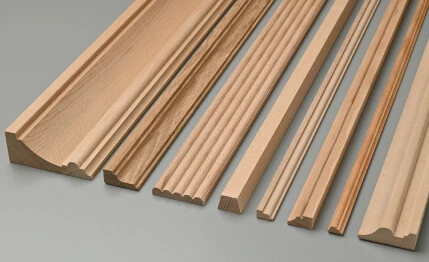
Trimming Items— this is a system. Baseboard + cornice + molding + corner + strip, all made from the same material — oak, beech — create an interior where every detail is in its place. In acoustically oriented interiors, this system gains special value: the more wooden textured surfaces, the softer the acoustics.
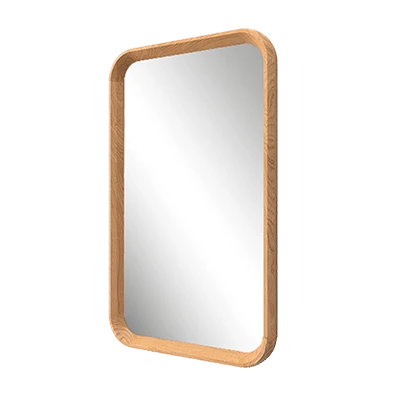
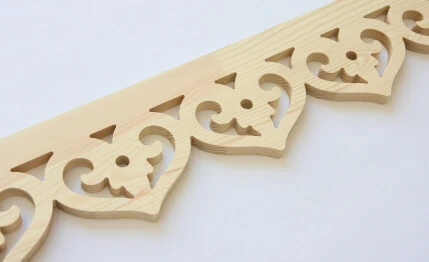
Wooden batten — a thin profile for side finishing of the slatted area, framing a mirror, architectural zoning. In modern interiors, wooden batten is used as a replacement for traditional molding — lighter, less bulky, but equally precise in function.
Ready-made scenarios: how it works in different rooms
Moving from principles to specifics. What does a finished solution look like for different types of rooms?
Living room with TV
Task: reduce echo from the TV and speakers, create an expressive accent behind the TV area.
Solution:wooden planks on the wallfrom floor to ceiling in the TV area. Step — 5–7 cm, slat — 2–3 cm. On adjacent walls —Moldings for walls and ceilingin a frame layout, painted to match the wall.MDF Skirting Boardaround the perimeter.polyurethane ceiling decor— a thin cornice along the ceiling perimeter. The ends of the slatted area —Wooden blockat the top and bottom.
Result: a visually rich living room with soft sound.
Office
Task: create a business-like, prestigious interior with comfortable acoustics for work and negotiations.
Solution:Slatted panels for interioron the wall behind the desk.Decorative wooden moldingsin a frame layout on the other walls.Wooden baseboardwide, matching the slats and furniture.wooden corniceon the ceiling transition. Color scheme — natural oak or wenge-toned wood.
Result: an office that is pleasant to work in and easy to conduct negotiations.
Bedroom
Task: create a quiet, cozy acoustic climate in the bedroom. Reduce reflection from the wall at the headboard.
Solution: a slatted panel at the headboard, up to the cornice line or ceiling.Polyurethane wall decor— light moldings on the side walls matching the wall color.— is a horizontal element that frames the room at the bottom of the walls where the wall meets the floor. Skirting boards perform several functions: they hide the technological gap between the wall and floor covering (necessary for thermal expansion), protect the lower part of the wall from mechanical damage, create visual completion, and may conceal wiring.matching the wall color — a disappearing lower contour. Thin polyurethane cornice along the ceiling. Slats — light oak or white.
Result: a bedroom with a quiet, cozy atmosphere and a distinct style.
Meeting room
Task: reduce reverberation in the meeting room, create a business professional image.
Solution: slatted accent wall behind the negotiation table.wood trim itemsfor finishing ends and junctions. A calm ceiling profile without excessive decor. MDF baseboard. Color scheme — neutral: gray, white, natural oak.
Result: professional meeting room with comfortable acoustics and a representative appearance.
Restaurant and cafe
Task: reduce acoustic chaos at high occupancy, create a cozy atmosphere.
Solution:Rafter panelson the main walls of the hall.Sculptural wall decorationon columns, at the entrance, in the bar area.Wooden baseboardwide — protection of the lower area from furniture impacts. Heavy cornice in areas with high ceilings — creates additional relief in the upper part.
Result: restaurant with a rich interior and a muted acoustic background.
Technical aspects: pitch, profile, installation
For a slat wall to deliver the expected acoustic and visual result, you need to understand several technical principles.
Slat spacing: a key parameter
The smaller the spacing, the more "closed" and heavy the wall looks. The larger the spacing, the lighter and airier it appears. For acoustic diffusion, the optimal spacing is 3 to 8 cm. With a spacing of less than 2 cm, the slats form an almost solid surface — the acoustic diffusion effect is lost.
For the visual effect, it is important that the spacing is greater than the width of the slat itself: the classic ratio is gap : slat = 1:1 or 1.5:1. For example, a 20 mm slat — a gap of 25–30 mm.
Height of the slat zone
Slats from floor to ceiling provide maximum acoustic and visual effect. A slat panel on half the wall is a softer, less dominant solution. For acoustics, it is more important to cover the direct reflection zone: if the sound source is in the center of the room, the most critical walls are at a height of 0.8–2.2 m from the floor.
Installation with a gap
To enhance the acoustic effect, slats are mounted not flush against the wall, but on a backing — a wooden lathing or special mounting profiles. An air cavity of 1–3 cm behind the slats significantly improves the diffusion of low-frequency sound components.
Final finishing
Natural wood is recommended to be coated with oil or wax — this preserves the material's porosity and its acoustic properties. Film-based varnishes on polyurethane or acrylic bases create a hard surface that reduces absorption. For acoustically oriented interiors — oil or beeswax. For decorative ones — varnish, paint, tinting.
Mistakes that ruin both acoustics and design
Even with good material, you can get unsatisfactory results if you make typical mistakes.
Slats on all walls without breaks
If you cover all four walls plus the ceiling with slats, the room will start to resemble a wooden box. Visually — overload. Acoustically — a closed resonator effect, where diffusion turns into reflection. Always leave at least one smooth wall.
Too frequent spacing in a small room
In a room up to 15 sq. m, dense slat layout with a spacing of 1–2 cm creates a "cage" feeling and visually reduces the space. For small rooms — a wider spacing or slat panel on only one wall.
Large stucco molding next to an active slat wall
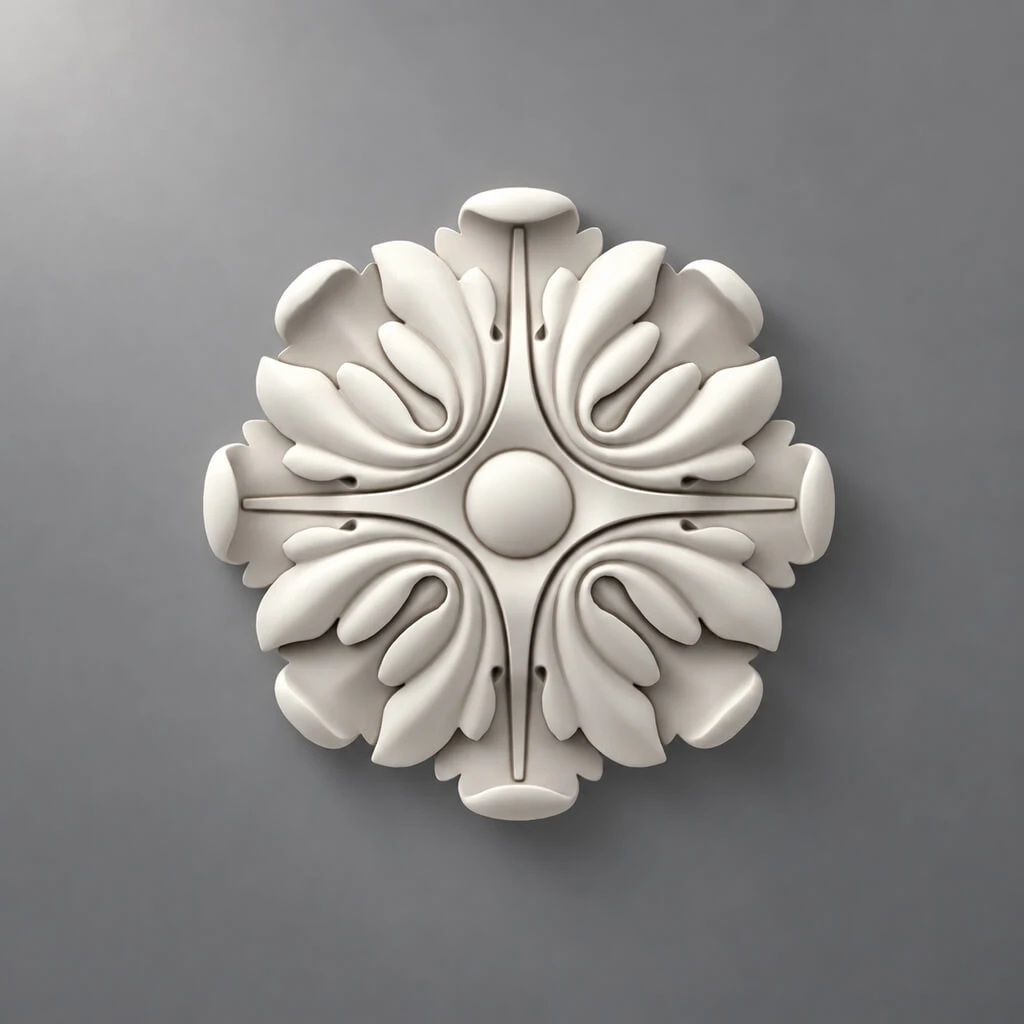
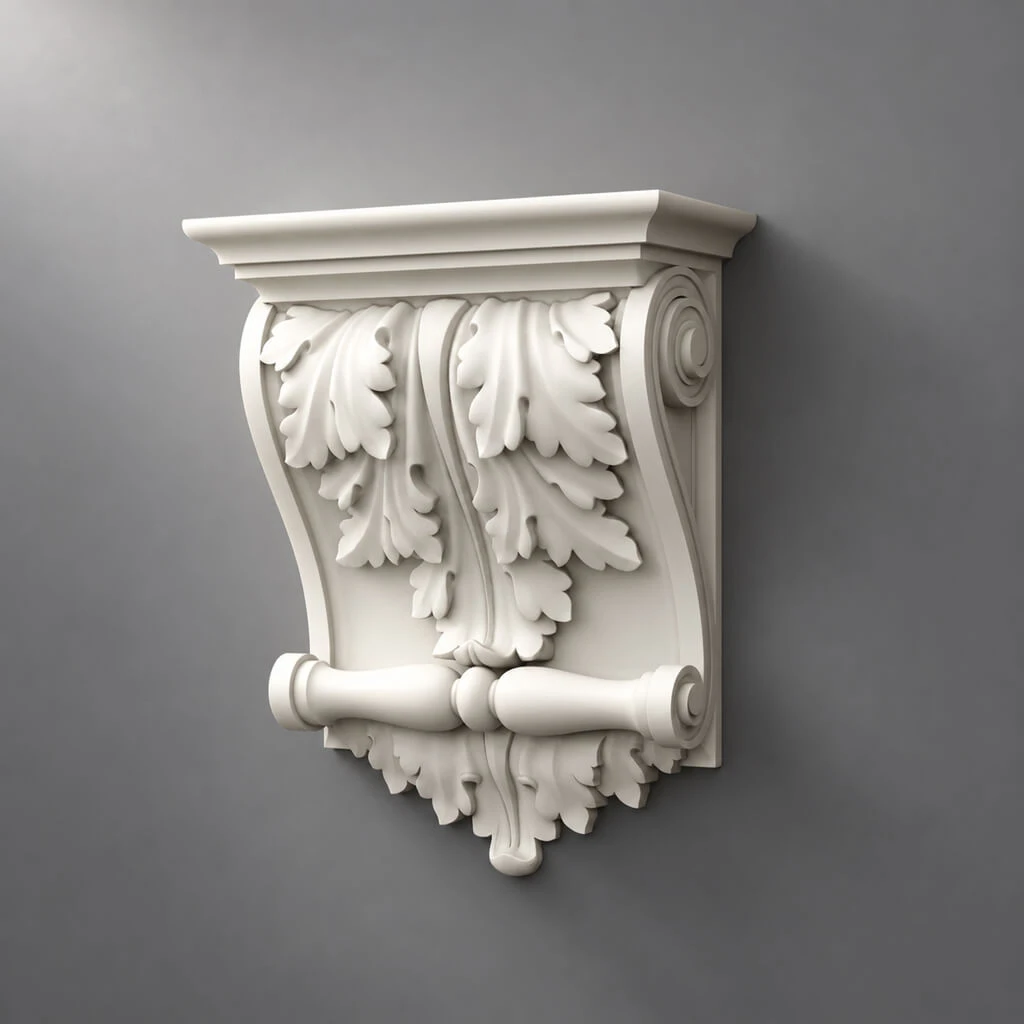
Rich reliefPolyurethane wall decor with large rosettes and consoles next to a dense slat wall — visual overload. Two active textures compete for attention. If slats are the main element, stucco should be restrained: thin moldings, frames without excessive relief.
Uncovered ends of slats
Open cuts on the upper and lower ends of slats are a sign of careless installation, noticeable from any viewing angle. Always use horizontal covering strips —Wooden block or molding.
A cornice that conflicts with the slats
A heavy cornice with a rich profile paired with thin, minimalist slats — a mismatch in scale. Light slats require a light cornice. The scale of all decorative elements in the room must be coordinated.
Different wood shades without logic
Slats made of light oak, a baseboard made of dark walnut, a cornice made of pine painted to look like birch — this is not 'diversity,' it's chaos. A single wood species and a single shade for all wooden elements is a must. Or painting all wood in one color.
Lighting that doesn't account for texture
A slatted wall reveals itself with directional lighting. If the light falls frontally and evenly, the slats lose their volume and become a flat pattern. Use spotlights at an angle to the wall or hidden lighting along the top edge of the slatted area.
Additional keys and what lies behind them
When talking about an acoustic decorative wall, you can't ignore several additional elements that naturally fit into the system.
Wall panels wooden slats — Rafter panelsin the form of a ready-made module. These are not individual slats that need to be marked, cut, and installed manually, but a finished panel with a fixed slat spacing on a base. Installation is many times faster, geometry is perfect, result is predictable.
Slat wall panels are a solution for those who want a professional result without a professional installer.Slatted panels for interiorSolid oak panels are mounted with glue or hidden fasteners onto a prepared base.
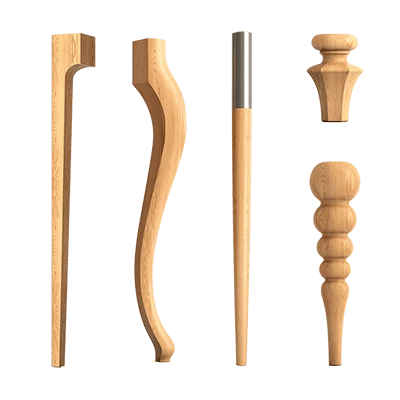
Wooden interior elements are a broad concept covering the full range: slats, moldings, cornices, baseboards, corner pieces, strips, and linear profiles. When all these elements are made from the same material in one catalog, creating an interior becomes not a quest but systematic work.
About the company STAVROS
For all the tasks described in this article — whether it'swooden planks on the wallin the living room,Rafter panelsin a home theater,Wooden baseboardin an office, orpolyurethane ceiling decorin a lobby — STAVROS offers a complete solution in a single catalog.
STAVROS produces wooden slats from solid oak and beech, slat panels on a rigid base, MDF and solid wood baseboards, wooden and polyurethane cornices, decorative moldings, linear profiles, corner pieces, strips, and a full range of decorative molding for walls and ceilings. All elements are designed in a coordinated system of sizes and profiles — allowing you to select a set for a specific room without searching for matches from different manufacturers.
For acoustically oriented projects, STAVROS also guarantees natural material: only oak and beech with certified treatment, no synthetic substitutes.Buy wooden skirting boardItems from the catalog can be delivered across Russia, with the option to choose the desired profile, size, and quantity for a specific project.
installing polyurethane moldingdescribed in detail in a separate article on the STAVROS website — with analysis of corners, joints, and painting. This is an indispensable material for those who install stucco decor with their own hands.
Frequently Asked Questions (FAQ)
Do wooden slats really improve acoustics?
Yes, but not like professional acoustic panels. Slats create a textured surface that scatters sound waves and reduces the effect of direct reflection. The result is a noticeable reduction in "ringing" and reverberation in the room. For residential spaces, this is a complete solution.
What slat spacing is best for acoustics?
The optimal spacing is 4–8 cm with a slat width of 2–3 cm. A denser layout reduces the scattering effect, turning the wall into an almost solid reflective surface. A sparser layout provides less surface area for scattering but looks good.
Can you combine a slatted wall and stucco decor?
Yes. The main rule: if the slats are an active element, the moldings should be restrained. Polyurethane frames around the slatted area, moldings on adjacent walls in the wall color, a thin ceiling cornice — all of this works in harmony with the slats.
Which baseboard to choose for a slatted wall?
If the slats are natural wood — a wooden baseboard of the same species. If the slats are white or painted — an MDF baseboard for painting in the wall color or a white MDF baseboard. The key principle: the baseboard should not be a random element — it closes the bottom line of the entire system.
Is an air gap needed behind the slats for acoustics?
It is advisable. A gap of 1–3 cm between the slats and the wall creates an air cavity that improves low-frequency absorption. For a home theater and office, this is an important nuance. For a living room or bedroom, it is a pleasant bonus.
What is better: individual slats or slatted panels?
Slatted panels are more convenient to install: the geometry is fixed, the spacing is set during production, and installation is faster. Individual slats offer more flexibility — you can change the spacing, profile, and height. For large areas and standard projects, use panels. For non-standard solutions, use individual slats.
Which cornice to choose for a room with a slatted wall?
For natural wooden slats, choose a wooden cornice in the same wood species. For painted slats, choose a polyurethane cornice in the color of the wall or frame. The scale of the cornice should be proportionate to the slats: light slats — a light cornice, massive slats — a more expressive profile.
How not to overload a room with slats and stucco?
The 'one accent' rule: one slatted wall. Stucco should support, not compete. No more than two active decorative zones per room. Color unity of all elements is mandatory. If in doubt about scale, choose smaller.