Article Contents:
- Classification of Wall Panels by Material
- Solid Wood Panels
- MDF panels for universal use
- Panels Made of Natural Veneer
- Budget PVC Panels
- Gypsum Panels for Relief Surfaces
- Polyurethane Panels of Modern Production
- Metal Panels with Industrial Aesthetic
- Classification by Construction and Dimensions
- Panel Systems with Recessed Profiles
- Large-Format Sheet Panels
- Modular Systems with Profiles
- Mosaic and Small-Format Elements
- Functional Types of Panels
- Acoustic Panels for Sound Absorption
- Thermal Insulation Panels
- Fire-Resistant and Moisture-Resistant Panels
- Panels with Integrated Lighting
- Stylistic solutions
- Classic Panels with Carving and Patina
- Modern Minimalist Panels
- Loft Panels with Industrial Character
- Eco Style with Natural Materials
- Methods of Installing Wall Panels
- Frame Method on Studs
- Adhesive Mounting Directly to Wall
- Combined mounting
- Practical Aspects of Selection and Use
- Choosing Panels for Different Rooms
- Care for Different Types of Panels
- Repair and restoration
- Cost and Budgeting
- Frequently Asked Questions
- Can Panels Be Installed by Yourself?
- How Do Panels Affect Room Area?
- Are Panels Suitable for Uneven Walls?
- How do panels behave during house settling?
- Can Panels Be Repainted?
- Are MDF panels eco-friendly?
- How long do different panels last?
Wall panels have evolved from a utilitarian method of quick finishing into a full-fledged design tool. They conceal wall defects, create volume, zone space, add texture and character to interiors. Panels are installed faster than plastering and painting, do not create construction mess, and are easily replaceable during interior updates.
The modern market offers panels made from dozens of materials in hundreds of designs. Solid wood and veneer, MDF and PVC, gypsum and polyurethane, metal and composites — each material has unique properties. The right choice depends on the room's purpose, budget, stylistic preferences, and usage conditions. This article systematizes knowledge about decorative panels, helping to make an informed decision.


Classification of wall panels by material




Solid wood panels
Natural wood remains the benchmark of quality and prestige in finishing.Wooden Wall PanelsThey create an atmosphere of warmth, respectability, and connection to nature. Solid oak, ash, walnut, and exotic species have a unique wood grain pattern that cannot be perfectly replicated.
Frame-and-veneer constructions consist of a solid wood frame with a central insert. The frame carries the load, while the veneer fills the space. Such a construction compensates for wood's thermal expansion, preventing deformation.Boiserie— a classic example of French school frame-and-veneer panels.
Panelled panels consist of narrow strips joined into a single sheet. Strips can be arranged vertically, horizontally, or diagonally, creating various visual effects. The tongue-and-groove joint ensures structural strength.
Solid panels are cut from a furniture-grade plywood — glued wooden strips. Plywood is more stable than solid wood, less prone to deformation from humidity. A relief is milled into the panel, creating a three-dimensional pattern.
The advantages of wooden panels are obvious. Eco-friendliness — the material breathes, regulates humidity, and does not emit harmful substances. Longevity — with proper care, they last for decades. Repairability — scratches can be sanded, chips restored. Prestige — wood demonstrates the owner's status.
Disadvantages are also significant. High cost — solid wood of expensive species costs tens of thousands of rubles per square meter. Sensitivity to humidity — wood swells and shrinks with changes. Flammability — requires treatment with fire retardants. Need for maintenance — periodic reapplication of oil or wax.
Our factory also produces:
MDF panels for universal use
MDF — medium-density fiberboard, pressed from ground wood. The material is more stable than solid wood, does not warp from humidity, and is significantly cheaper.MDF panels for paintingallow implementing any color concept.
MDF surfaces can be finished in various ways. Laminating film imitates wood, stone, fabric. The film protects against moisture and simplifies maintenance. Natural veneer creates the effect of solid wood at a lower cost. Painting with enamel provides a perfectly smooth surface of any color.
Relief on MDF is created by milling. CNC machines cut complex patterns with millimeter precision. Geometric patterns, floral ornaments, abstract compositions — possibilities are limited only by the designer's imagination.
MDF Plank Panels— a popular trend in modern interiors. Thin strips are mounted with gaps, creating a rhythmic pattern. Vertical strips visually raise ceilings, horizontal strips expand space.
The advantages of MDF panels are significant. Affordable price — several times cheaper than solid wood. Dimensional stability — does not deform from temperature fluctuations. Variety of finishes — hundreds of color and texture options. Ease of installation — panels are mounted on a frame or with adhesive.
Disadvantages should be considered. Lower eco-friendliness — binding resins may emit formaldehyde. Fear of water — standard MDF swells from direct contact with moisture. Lower prestige — the material is not comparable to expensive solid wood. Hollow structure — poorly holds heavy hanging fixtures.
Get Consultation
Panels made from natural veneer
Veneered panels combine the beauty of natural wood with the practicality of sheet materials. A thin slice of wood is glued onto a base of MDF, plywood, or particleboard. This results in a surface with a solid wood pattern at a lower price and greater stability.
Veneer is produced in two ways. Sawn veneer is cut from logs with a saw, preserving the natural wood grain pattern. Peeling veneer is unrolled in a spiral, creating a more uniform texture. Sawn veneer is more expensive and beautiful, while peeling veneer is cheaper and used in budget panels.
Valuable species — walnut, wenge, zebrawood, macassar — are available in veneer at a price inaccessible for solid wood. Exotic wood gives interiors a unique character.Wall panels for interiorsMade from rare species, they create memorable spaces.
Veneer is stained with dyes, creating unusual shades. Whitewashed oak, tinted ash, painted maple expand the palette of natural wood. Patination adds an effect of aging and antiquity.
The advantages of veneered panels are attractive. Beauty of natural wood at an affordable price. Stability — the MDF base does not warp. Variety of species — exotic options are available. Restorability — veneer can be sanded and re-coated with varnish.
Disadvantages should be understood. Thin veneer — deep scratches damage the base. Fear of water — veneer peels off in case of leaks. Fading — some species change color under ultraviolet light. Lower prestige — experts can distinguish veneer from solid wood.
Budget PVC panels
PVC plastic panels are the most affordable solution for quick finishing. The material is completely moisture-resistant and does not fear direct contact with water. It is primarily used in technical rooms, bathrooms, and balconies.
The construction consists of two plastic sheets connected by internal ribs for rigidity. This results in a lightweight hollow panel that is mounted on a plastic or metal frame. The tongue-and-groove joint ensures quick assembly.
PVC panel designs are diverse. Single-tone glossy panels expand small rooms by reflecting light. Matte panels create a calm atmosphere. Panels with printed patterns imitate tiles, marble, wood, and brick. High-quality printing is indistinguishable from the original from a distance.
Panels are produced in various widths. Narrow 10 cm panels mimic wooden planks. Wide 25-50 cm panels cover larger areas with fewer joints. Standard length is 3 meters, allowing walls to be covered from floor to ceiling without horizontal seams.
The advantages of PVC panels are practical. Low cost — cheaper than all alternatives. Absolute moisture resistance — ideal for bathrooms and showers. Fast installation — rooms are finished in one day. Easy maintenance — can be cleaned with any cleaning agents. Simple removal — panels can be removed without damage.
Significant disadvantages exist. Cheap appearance — the material reveals its origin. Brittleness — panels break under impact. UV degradation — plastic yellows in sunlight. Toxicity when burning — PVC releases hazardous gases. Low eco-friendliness — plastic does not breathe and creates a greenhouse effect.
Gypsum panels for relief surfaces
Gypsum — a classic material for creating volumetric decorative elements.Gypsum panelsare cast in molds, taking any configuration. The depth of relief reaches several centimeters, creating expressive play of light and shadow.
Reliefs with floral or geometric ornaments decorate classic interiors.3D gypsum panelswith abstract patterns are suitable for modern spaces. Waves, geometry, organic forms create dynamic compositions.
The material is mounted using gypsum adhesive and additionally secured with mechanical fasteners. Joints between panels are filled with gypsum plaster, sanded. The surface is primed and painted with water-emulsion paint or left white.
Gypsum allows creating unique elements. Masters handcraft panels, embodying original sketches. This is custom work, each element is unique.Sculptural decorationsGypsum panels demonstrate high craftsmanship.
The advantages of gypsum panels are significant. Eco-friendliness — natural mineral material. Fire resistance — does not burn, does not emit toxins. Sound insulation — porous structure absorbs sound. Deep relief — allows complex three-dimensional forms. Repairability — chips can be restored with gypsum plaster.
Limitations restrict application. Heavy weight — requires strong mounting. Brittleness — gypsum cracks under impact. Fear of moisture — requires special moisture-resistant compounds. High cost of handcrafted work — exclusive panels are expensive.
Polyurethane panels of modern production
Polyurethane— synthetic material combining plastic lightness with strength. Panels are formed industrially under pressure, ensuring ideal geometry and repeatability.Polyurethane Itemsimitate gypsum molding at lower weight and cost.
The material is completely moisture-resistant and does not fear direct contact with water. Panels are used in bathrooms, showers, and pools without risk of deformation. They do not swell, do not mold, and do not require special protection.
Polyurethane is stronger than gypsum. It does not crack under impact, bends without breaking, withstands mechanical loads. Service life is practically unlimited — the material does not age, does not crumble, does not crack.
3D panels made of polyurethanecreate volumetric compositions on walls. Geometric patterns, waves, abstractions are formed industrially. Panels are glued with special adhesive, joints are filled or left visible depending on design.
The advantages of polyurethane panels are convincing. Lightness — weigh significantly less than gypsum panels. Moisture resistance — suitable for any room. Strength — do not fear impacts and loads. Longevity — serve for decades without changes. Affordable price — cheaper than gypsum alternatives.
Disadvantages are minimal. Lesser relief depth — technology does not allow creating very deep forms. Synthetic origin — material is not natural. However, for most applications, these limitations are insignificant.
Metallic panels of industrial aesthetics
Metal in interior design creates an industrial, technological atmosphere. Panels made of stainless steel, aluminum, copper, brass are used in loft spaces, high-tech interiors, commercial spaces. The material is cold, rigid, and brutal.
Metal surfaces are treated in various ways. Polished surfaces mirror and visually expand space. Matte surfaces create a noble sheen without glare. Brushed surfaces with scratches and wear imitate aged metal. Patinated surfaces are covered with a noble oxide film.
Perforation turns metal panels into acoustic elements. Holes of various diameters and patterns create a visual pattern and allow sound to pass to the sound-absorbing material behind the panel. This results in decorative sound insulation.
Corten steel panels are covered with controlled rust. The reddish-brown surface with uneven coloring creates an effect of aged metal. The rust stabilizes, does not progress, forming a protective layer.
The advantages of metal panels are specific. Durability — metal lasts for decades. Strength — withstands any mechanical impact. Fire resistance — does not burn or melt. Unique appearance — metal is recognizable and expressive.
Disadvantages limit application. High cost — stainless steel and copper are expensive. Coldness — metal is unpleasant to touch. Acoustics — hard surfaces reflect sound, creating echoes. Installation complexity — requires special fasteners.
Classification by construction and dimensions
Slotted panel systems
Wooden planksThin strips, mounted with gaps — create a light airy composition. Slats do not overload the interior, allow light and air to pass, zone space without solid partitions.
Slats thickness varies from 10 to 50 mm, width from 20 to 100 mm. Narrow slats create a frequent rhythm, wide ones — a more calm one. The gap between slats is usually equal to the slat width or slightly less. The slat-to-gap ratio determines the visual density of the composition.
Wall cladding with louvered panelsSlats perform several functions. Decorative — creates a rhythmic pattern. Zoning — separates functional zones. Concealing — hides communications and wall defects. Acoustic — when sound-absorbing material is installed behind the slats.
Slats are mounted to a hidden frame. Metal or wooden guides are mounted horizontally to the wall. Slats are attached perpendicularly to the guides using hidden clips or through fasteners. The spacing between slats is maintained with millimeter precision.
The advantages of slotted systems are significant. Modern look — slats respond to current trends. Visual lightness — do not clutter space. Zoning — divide zones without solid walls. Concealment of communications — wires and pipes are placed behind slats. Possibility of backlighting — LED strips create a floating effect.
Disadvantages also exist. Dust accumulation — gaps collect dirt. Cleaning complexity — each slat must be wiped individually. Area reduction — slats with frames take 5–7 cm from the wall.
Large-format sheet panels
Large panels measuring 120x240 cm cover significant areas with minimal joints. The wall appears monolithic, seams are almost invisible. Such panels are made of MDF, gypsum board with decorative finish, composite materials.
Installing large-format panels requires a strong frame. The weight of one panel reaches 30–40 kg, creating load on fasteners. A metal profile frame with frequent post spacing ensures necessary strength.
Seams between panels are treated differently. Spackling and sanding create a seamless surface for painting. Decorative strips cover seams, emphasizing the modular construction. Open bevels turn seams into design elements.
Large-format wall panelsCreate architectural expressiveness. Vertical panels visually raise ceilings. Horizontal panels — expand space. Asymmetric placement adds dynamism.
Modular systems with profiles
Modular panels connect via special profiles, forming a single surface. The system allows easy replacement of individual elements upon damage or design update.Cladding panelsWith profiled mounting, convenient for use.
Omega-profile — a metal strip with an omega-shaped cross-section — is mounted to the frame. The panel is inserted into the profile from above, securing without visible fasteners. Disassembly is performed in reverse motion.
Decorative profiles cover seams between panels. T-shaped profiles join panels flush. P-shaped profiles cover ends. F-shaped profiles finish external corners. L-shaped profiles — internal. Profiles are painted in panel color or contrast.
The advantages of modular systems are practical. Fast installation — panels snap into place within minutes. Repairability — a damaged panel is replaced without dismantling neighbors. Demountability — the system can be disassembled and relocated. Concealment of communications — wires and pipes are placed behind panels.
Mosaic and small-format elements
Small panels measuring 10x10 or 20x20 cm are assembled into compositions, creating complex patterns. Alternating colors, textures, and relief form a unique design.Wall panelsSmall elements transform the wall into a mosaic.
Wooden squares of various species create abstract compositions. Light maple neighbors dark wenge, reddish oak — with gray ash. The grain pattern of each square is unique, the overall picture is one-of-a-kind.
Ceramic tiles with relief surfaces are laid like a mosaic. Convex and concave elements alternate, creating a three-dimensional pattern. The play of light on the relief changes throughout the day, the wall comes alive.
Small mirror panels are assembled into a panel. Faceted edges create light refraction, facets sparkle. Mirrors visually double the space and add shine.
Functional panel types
Acoustic panels for sound absorption
Special panels improve room acoustics. Porous materials — fiberboard, felt, polyester fiber, mineral wool — absorb sound waves. The room becomes quieter, echo disappears, speech is clearer.
Perforated wooden panels combine decorative and acoustic functions. Holes allow sound to reach the absorbing material behind the panel. The perforation pattern creates a visual design. Hole size and frequency are calculated for optimal sound absorption.
Fabric panels are stretched over frames with fillers. Fabric is decorative and permeable to sound. Fillers — mineral wool, syntepon, acoustic foam — dampen sound waves. Panels are manufactured in any size and shape.
Application of acoustic panels is widespread. Home theaters — for clear sound without echo. Music studios — for acoustic control. Open spaces — for noise reduction. Conference rooms — for clear speech. Restaurants — for comfortable conversation.
Thermal insulation panels
Panels with insulation inside simultaneously decorate and insulate walls. Especially relevant in panel houses with cold exterior walls. Decorative cladding, insulation layer, vapor barrier are installed as a single unit.
Sandwich panels consist of two sheets with insulation between them. Outer layer — decorative material, inner layer — plywood or OSB, between them — polystyrene or mineral wool. Insulation thickness is 20–100 mm depending on requirements.
Thermal panels for interior finishing are mounted to the wall, creating an air gap. Ventilated facade prevents condensation. Insulation is placed in the frame, panel is mounted on top.
Advantages of thermal insulation panels are obvious. Combining finishing and insulation saves time. Walls become warm to the touch. Heat losses decrease, heating bills reduce. Frosting of corners and condensation disappear.
Fire-resistant and moisture-resistant panels
Special compositions and treatments give panels resistance to extreme conditions. Fire-resistant panels are impregnated with flame retardants that slow burning. In case of fire, the material chars but does not support flame, does not emit toxic gases.
Moisture-resistant panels are made from materials that do not fear water. Moisture-resistant MDF with increased hydrophobic additive content does not swell. Plastic, metal, stone are absolutely moisture-resistant. Special coatings protect wood from moisture.
Application of fire-resistant panels is regulated by building codes. Evacuation routes, corridors, stairwells require materials with fire resistance class no lower than G1. Moisture-resistant panels are used in bathrooms, showers, saunas, pools, kitchens.
Panels with integrated lighting
Modern technologies allow embedding lighting directly into panels. LED strips are placed in grooves, behind translucent inserts, along the perimeter. The panel becomes a light source, creating unique effects.
Edge lighting outlines panel boundaries, creating a floating effect. LEDs are placed behind the panel along the perimeter, light spreads between the panel and the wall. A glowing outline is created.
Internal lighting is created behind translucent materials. Acrylic, glass, composite panels allow light to pass through. LEDs behind them create even illumination of the entire surface. Color is controlled by an RGB controller.
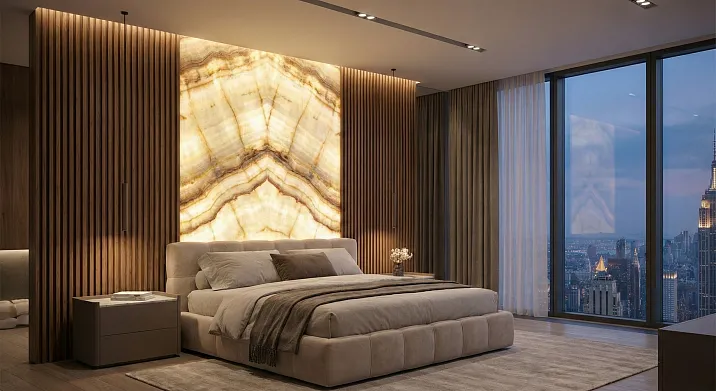
Light panels with backlighting become the main interior element. Geometric compositions, abstract patterns, window views — possibilities are limitless. Lighting replaces paintings and decor.
Stylistic solutions
Classic panels with carving and patina
Bouillons in classic stylecreate an atmosphere of palace luxury. Frame-and-panel constructions with carved elements, gilding, and patina recreate interiors of past eras. Baroque, Rococo, Empire require appropriate wall decor.
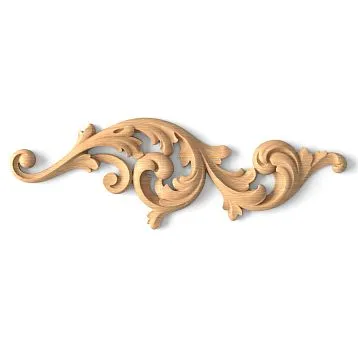
Carved elements are created by hand or mechanical carving. Vegetal ornaments — acanthus leaves, grapevines, floral garlands — decorate panel frames. Carving depth reaches several centimeters, creating an expressive relief.
Patina gives an antique effect. Dark patina accumulates in carving recesses, emphasizing relief. Gold patina adds luxury. White with gold creates an elegant contrast. Patina technique requires skill, result is unique.
Symmetry is the basis of classic compositions. Panels are arranged mirror-symmetrically relative to the room's axis. Pilasters frame panel groups, creating vertical rhythm. Cornices complete the composition from above.
Modern minimalist panels
Minimalism requires simplicity of forms and restraint in decoration. Smooth panels without ornamentation, clean lines, geometric strictness.Wall panels for interiorsMinimalist style panels emphasize space, not themselves.
Monochromaticity enhances minimalism. White panels on white walls create white-on-white. Gray tones add depth. Black panels in a black interior — a radical solution for bold statements.
Monochromaticity enhances minimalism. White panels on white walls create white-on-white. Gray tones add depth. Black panels in a black interior — a radical solution for bold statements.
Large formats match minimalist aesthetics. Fewer seams — greater continuity. Panels from floor to ceiling without horizontal divisions create a vertical rhythm. Horizontal panels spanning the full wall length expand the space.
Loft-style industrial panels
Loft requires rough, brutal textures. Imitation of concrete, brickwork, untreated wood, rusted metal.Decorative cladding panelsIn loft style, they emphasize the industrial origin of the space.
Panels made from rough-sawn boards with knots and cracks create an authentic look. Boards of varying widths are arranged chaotically or with a specific rhythm. The surface is brushed to highlight the wood grain texture. Staining emphasizes the wood.
Metal panels with signs of corrosion, scratches, dents imitate old industrial objects. Corten steel with controlled rust creates a reddish-brown texture. Brushed aluminum with longitudinal scratches resembles industrial equipment.
Concrete panels or their imitation using microcement create an effect of unfinished walls. Formwork marks, imperfections, and uneven color highlight the materiality of concrete. The surface is rough, matte, and cool.
Eco-style with natural materials
Eco-style prefers natural materials with minimal processing.Wooden wallsMade from solid wood, cork panels, natural stone cladding. Textures are natural, colors are earthy, shapes are organic.
Slabs — longitudinal cuts of tree trunks preserving the natural shape and bark — create unique murals. Each slab is unique in its growth ring pattern, texture, and color. The bark edge highlights natural authenticity.
Panels made from untrimmed boards retain natural edges. Different board widths, wavy edges, and knot marks create a lively texture. Minimal processing with oil or wax preserves the natural appearance.
Vertical greening integrates into wall panels. Plant pockets, built-in planters, and automatic irrigation systems transform the wall into a living green surface. Stabilized moss creates murals requiring no maintenance.
Ways of installing wall panels
Frame method on a lathing
Frame installation — a universal method for mounting panels. A lathing made of wooden beams or metal profiles is attached to the wall. Panels are mounted onto the lathing, forming a ventilated structure.
Wooden lathing is made from 40x40 or 50x50 mm beams. The beam is secured to the wall with anchors spaced 40-60 cm apart. Verticality and horizontality are controlled with a level. Wall irregularities are compensated with shims.
Metal lathing made from drywall profiles is stronger than wooden. It is moisture-resistant, does not deform, and lasts for decades. Guide profiles are attached around the perimeter, vertical studs are installed vertically with 40-60 cm spacing.
Panels are attached to the lathing in various ways. Screws through the panel — simple but visible fastening. Clip systems — hidden fastening through panel grooves. Adhesive — for lightweight panels on flat lathing. Special profiles — for modular systems.
Advantages of frame installation are significant. Concealing wall irregularities without leveling. Ventilation gap prevents condensation. Insulation possibility — insulation is placed within the frame. Concealing utilities — wires and pipes are hidden behind panels. Easy removal — panels are removed without damaging the wall.
Adhesive mounting directly to the wall
Lightweight panels are glued directly to the wall using specialized adhesives. The method is fast, requires no frame, and does not reduce room area. However, the wall must be flat, strong, and dry.
Wall preparation is critical. Surface is cleaned of dust, dirt, and peeling coatings. Irregularities over 5 mm are spackled. Wall is primed to improve adhesion. Humidity must not exceed 4%.
Adhesive is selected based on panel material and substrate. Polyurethane adhesive is universal and suitable for most materials. Construction foam for lightweight panels on flat walls. Liquid nails for small elements. Special adhesives for heavy gypsum panels.
Adhesive is applied in spots or strips along the perimeter and center of the panel. Panel is pressed against the wall and tapped to evenly distribute adhesive. Position is adjusted within 10-15 minutes. Final setting occurs after 24 hours.
Advantages of adhesive mounting are attractive. Speed — room is finished in one day. Space-saving — panels take up only a few millimeters. Simplicity — no frame or complex tools required. Strength — adhesive joints are more reliable than mechanical ones.
Drawbacks limit application. Requirements for wall flatness — the adhesive does not compensate for unevenness. Difficulty of dismantling — panels detach with damage. Inability to conceal utilities. No ventilation gap — risk of condensation on cold walls.
Combined mounting
Combination of frame and adhesive methods is used for complex structures. Main area is mounted on frame, decorative elements are glued. Heavy panels are mechanically fastened, light panels — with adhesive.
Frame creates a basic plane, panels are aligned to it. Additional adhesive fixation prevents sagging of large panels. Decorative overlays and moldings are glued over main panels.
Three-dimensional compositions with protruding elements require combined mounting. Base panels on frame, volumetric elements are glued with additional mechanical fixation. Results in a multi-level structure.
Practical aspects of selection and operation
Selection of panels for different rooms
Living room allows using any materials.decorative wall panelsFrom solid wood, veneer, MDF, create an impressive look. Accent wall behind sofa or TV becomes the interior’s focal point.
Bedroom requires eco-friendly materials. Wood, cork, textile panels create a cozy atmosphere. Sound-absorbing properties improve sleep quality. Soft panels at headboard add comfort.
Kitchen requires practical materials. Moisture-resistant MDF panels with laminate, plastic, metal are easy to clean. Ceramic panel backsplash withstands splashes and temperature. Light colors visually expand space.
Bathroom requires absolute moisture resistance. Polyurethane, plastic panels, moisture-resistant gypsum board for painting. Ceramic and ceramic tiles are traditional. Wooden panels only with careful waterproofing.
Children’s room requires safe, eco-friendly materials. Wood, E0 class MDF with minimal formaldehyde emission. Soft panels protect from impacts. Bright colors or murals create a cheerful atmosphere.
Hallway is subjected to intensive use. Durable materials — solid wood, MDF with wear-resistant coating. Dark colors hide dirt. Panels up to 120-150 cm protect walls from damage.
Care for different types of panels
Wooden panels require regular care. Dust is removed with dry or slightly damp cloth. Oil finish is renewed every 1-2 years. Lacquered panels are polished with special agents. Scratches on solid wood are sanded and re-coated.
Laminated MDF panels are cleaned with damp cloth and mild detergents. Avoid abrasives — they scratch the film. Spilled water is wiped immediately — prolonged contact deforms MDF. Painted panels are periodically repainted.
Plastic panels are the most maintenance-free. Cleaned with any cleaner, not afraid of water. Dirt in relief is removed with brush. Yellowing from time is not removable — only panel replacement.
Gypsum and polyurethane panels accumulate dust. Dust is removed with vacuum cleaner with soft attachment or dry cloth. Painted surface is wiped with damp cloth. White panels yellow over time — repainted.
Textile panels accumulate dust and odors. Regular vacuuming. Stains are removed with dry cleaning or special foams. Removable textile covers are washed. Non-removable upholstery is professionally cleaned.
Repair and Restoration
Scratches on wooden panels are restored. Minor scratches are filled with matching color wax pencil. Deep scratches are sanded with sandpaper, area is re-coated with oil or lacquer. Full restoration includes removal of old finish, sanding, and application of new finish.
Chips on MDF panels are filled with acrylic wood putty. After drying, area is sanded, primed, and painted. Color matching is critical — difference will be noticeable. Chips on laminated panels are harder to mask — better to replace panel.
Cracks in gypsum panels are filled with gypsum plaster, sanded, and painted. If panel is painted, matching shade is hard to find — entire wall must be repainted. Detached parts are glued with gypsum adhesive.
Damaged panels in modular systems are replaced. Panel is removed from profiles, new one inserted. It’s important to have spare panels from same batch — shade may differ.
Cost and Budgeting
Price range for panels is vast. Plastic panels — from 200 rubles per sq. m. Laminated MDF — 500–1500 rubles. Paintable MDF — 1000–2000 rubles. Veneered MDF — 2000–5000 rubles. Solid pine — 3000–7000 rubles. Solid oak, ash — 8000–15000 rubles. Exotic species — from 20000 rubles.
Handcrafted exclusive panels with carving, inlay, patina cost from 30000 rubles per sq. m.Custom-made bouillonsMade individually, price depends on complexity and materials.
Installation adds to cost. Adhesive mounting of simple panels — 300–500 rubles per sq. m. Framed mounting with lathing — 800–1200 rubles. Complex structures with lighting — 2000–3000 rubles. Bouillon mounting — from 3000 rubles.
Budget for finishing 20 sq. m. walls is calculated. Economy option (PVC or simple MDF) — 30000–50000 rubles with installation. Mid-range (paintable MDF or veneer) — 70000–120000 rubles. Premium (solid oak, bouillon) — from 250000 rubles.
Set aside a reserve of 15-20% for unexpected expenses. Wall preparation, additional materials, and project changes increase the budget. It's better to allocate more than to stop renovation due to lack of funds.
Frequently asked questions
Can panels be installed by oneself?
Simple panels with locking joints can be installed by oneself with basic skills. PVC panels, simple MDF panels, and lath structures are accessible for DIYers. Required tools — screwdriver, level, tape measure, saw. Follow the manufacturer's instructions and work carefully.
Complex structures — bay windows, panels with grooves, lighting systems — require professional expertise. Mistakes are costly — damaged material cannot be returned. Unevenly installed panels ruin the entire appearance. It's better to hire specialists.
How do panels affect room area?
Frame mounting takes 5-8 cm from each wall. In small rooms, this loss is noticeable. Adhesive mounting takes only a few millimeters — practically no effect on area. Panel thickness is 10-25 mm depending on material.
In a 3x4 meter room, frame mounting takes about 1 sq. m of area. Visually, the loss is greater — the room appears more cramped. In larger spaces, the loss is insignificant. Use adhesive mounting in small rooms.
Are panels suitable for uneven walls?
Frame mounting is ideal for uneven walls. The frame is set level, compensating for height differences up to 5 cm. Panels are mounted on a flat frame, resulting in a perfect surface. No preliminary plastering is required.
Adhesive mounting requires flat walls. Height differences over 3-5 mm create gaps under panels. The panel replicates wall irregularities. Preliminary spackling is mandatory.
How do panels behave during house settling?
Solid wood panels are sensitive to settling. In new homes, use constructions with compensating gaps. Frame-and-panel panels compensate for movement — the panel moves within the frame. Solid panels may crack under significant settling.
MDF and plastic panels are more stable. They are mounted to the frame with a small gap, allowing movement. Check fastening in the first year or two, and tighten if needed.
Can panels be repainted?
MDF panels can be repainted multiple times. Surface is cleaned, degreased, and primed. Apply 2-3 layers of paint with intermediate drying. Color changes completely.
Wooden panels with oil finish can be repainted after removing the old layer. Surface is sanded, dusted, and covered with new oil or paint. Lacquered panels require lacquer removal by sanding.
Laminated panels cannot be repainted. Film does not hold paint. You can cover them with self-adhesive film of another color, but this is a temporary solution.
Are MDF panels eco-friendly?
MDF contains binding resins that may emit formaldehyde. Quality MDF class E0 or E1 is safe — formaldehyde emission is minimal and does not exceed norms. Cheap MDF from Asia may not meet standards.
Require certificates. European and quality Russian MDF is safe. After installation, ventilate the room for several days — initial substance emission passes.
For maximum eco-friendliness, choose solid wood, cork, or gypsum. These materials are completely natural.
How long do different panels last?
Solid wood lasts 50-100 years with proper care. MDF panels — 15-25 years. Plastic panels — 10-15 years, then yellow. Gypsum — decades, but brittle. Polyurethane — practically eternal.
Service life depends on usage conditions. In humid rooms without ventilation, any material degrades faster. Under heavy mechanical load, even strong panels get damaged.