












































































Article Contents:
- History of origin and evolution of decorative planks
- Technical characteristics and advantages of MDF material
- Varieties of MDF decorative planks
- By cross-section profile
- By method of final finish
- Application in various interior styles
- Scandinavian Style
- Modern minimalism
- Classic Interiors
- Installation and mounting technology
- Preparation stage
- Marking and Planning
- Mounting methods
- Creating complex compositions and ornaments
- Geometric Patterns
- Radial and curved compositions
- Color Solutions and Finishing
- Natural wood tones
- Monochromatic solutions
- Colored and creative solutions
- Combining with other finishing materials
- Combining with wallpaper
- Integration with stone and brick surfaces
- Combining with metallic elements
- Using planks for space zoning
- Separating living room and kitchen
- Highlighting work area
- Creating private zones in bedroom
- Acoustic properties and sound absorption
- Sound diffusion
- Combining with sound-absorbing materials
- Ecological Aspects and Safety
- Formaldehyde emission class
- Moisture resistance and antibacterial properties
- Maintenance and operation
- Regular Cleaning
- Protection against damage
- Economic Aspects of Usage
- Material cost and installation
- Long-Term Savings
- Trends and prospects for development
- Technological Innovations
- Ecological innovations
- Integration with "smart" technologies
- Practical tips for choosing and purchasing
- Determining required quantity
- Checking material quality
- Compatibility with other materials
- Conclusion
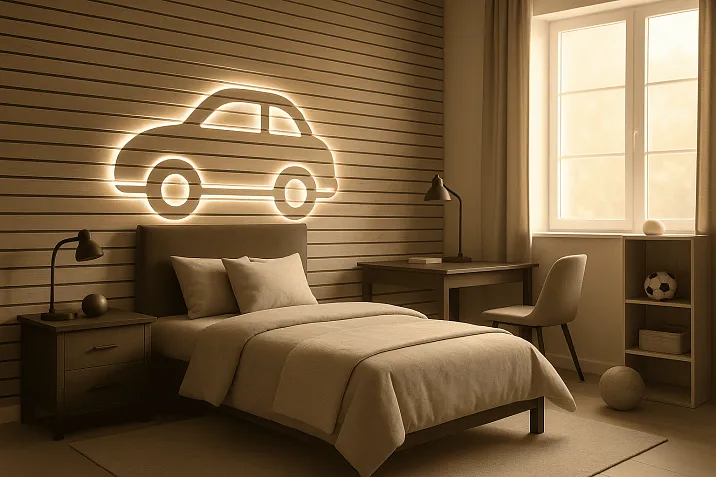
Modern interior design requires special attention to details capable of transforming ordinary space into cozy and stylish areas. Among many finishing materials, special attention is given to Decorative MDF rails — a universal element capable of radically changing the perception of any space.
What are these mysterious planks increasingly appearing in projects by leading designers? They are not merely decorative elements, but a full-fledged tool for creating a unique atmosphere, capable of solving numerous tasks — from zoning space to creating accent walls.


History of the emergence and evolution of decorative planks
The use of planks in interior design dates back to ancient times. In medieval castles, wooden planks were used not only as a structural element, but also as a means of decorating walls. However, modern MDF production technologies have enabled the creation of a fundamentally new product that combines the aesthetics of natural wood with the practicality of modern composite materials.
A revolution in the production of medium-density fiberboard occurred in the mid-20th century, when engineers learned to create a material with a uniform structure, free of natural wood defects. This discovery spurred the development of an entire industry of decorative elements, among which decorative planks occupied a special place.




Technical characteristics and advantages of MDF material
MDF (Medium Density Fibreboard) is a medium-density fiberboard made by pressing wood fibers at high temperatures using binding resins. This technological process imparts the material with a series of unique properties, making it ideal for producing decorative elements.
The density of quality MDF ranges from 600 to 800 kg/m³, ensuring an optimal balance of strength and workability. The moisture content of the finished material does not exceed 10%, guaranteeing dimensional stability during use.
One of the key advantages is the ability to create a perfectly smooth surface, easily adaptable to any type of finishing treatment. MDF planks can be painted, laminated, veneered, or covered with any decorative coatings.
Our factory also produces:


Varieties of decorative MDF planks
The modern market offers an impressive variety of decorative planks, each designed to solve specific design tasks. Classification of these elements can be performed according to several criteria.
Get Consultation
By cross-section profile
Rectangular planks are the most universal solution. Their strict geometry allows creating both minimalist compositions and complex architectural solutions. Standard sizes range from 10×20 mm to 40×80 mm, offering broad opportunities for creative experimentation.
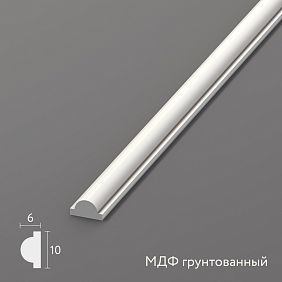
Semi-circular profiles create a soft, streamlined silhouette, especially effective in interiors in the modern or art deco styles. Such planks are often used to create smooth transitions between different surfaces.
Complex profiles with milling represent true works of art. They can imitate classical moldings, contain decorative grooves or protrusions that create play of light and shadow.
By finishing method
Planks for painting are blanks with a perfectly smooth surface, ready for any lacquer or paint application. This is the most economical option, allowing to create a unique color solution tailored to a specific interior.
Laminated planks are covered with a thin film imitating the texture of various wood species or other materials. Modern technologies allow creating coatings visually indistinguishable from natural wood, yet significantly more resistant to external influences.
Veneered variants represent an elite segment of the product. A thin layer of natural veneer creates a unique texture and gives planks a noble appearance.
Application in various interior styles
Versatility of decorative MDF planks allows their use in virtually any stylistic direction, from strict minimalism to luxurious classicism.
Scandinavian Style
In Scandinavian interiors, planks play a special role, creating the characteristic atmosphere of coziness and natural harmony for this style. Light-colored planks, often white or natural wood tone, are used to create accent walls, zone spaces, or decorate furniture.
Vertical compositions made of narrow planks look especially effective, visually increasing the height of the room and creating a sense of lightness. Horizontal placement, on the contrary, makes the space more intimate and cozy.
Modern minimalism
Minimalist interiors require special precision in selecting decorative elements. Here, MDF planks become a tool for creating geometrically correct compositions, emphasizing the purity of lines and forms.
Monochromatic solutions — black planks on white walls or white on dark surfaces — create a striking contrast that becomes the main decorative accent of the room. It is important to maintain precision in the spacing between elements, since geometric accuracy is the foundation of minimalist aesthetics.
Classical interiors
In classic interiors, MDF planks can successfully imitate traditional moldings and cornices, significantly reducing the overall cost of finishing while maintaining a high aesthetic result. Complex profiles with milling allow creating compositions indistinguishable from historical analogs.
Compositions where planks are used to create panels at the lower part of walls — a classic technique — look especially effective, giving the room an aristocratic charm.
Technology of installation and mounting
Correct installation of decorative planks is the guarantee of durability and aesthetic appeal of the final result. The installation process requires careful preparation and adherence to a specific sequence of operations.
Preparation stage
The wall surface must be perfectly flat and clean. Any irregularities exceeding 2 mm per meter of length must be removed by spackling or sanding. Special attention should be paid to room corners — they must be strictly vertical.
Before installation, all rails must be laid out and checked for compliance with dimensions and surface finish quality. The material must acclimate in the room for 24–48 hours to stabilize humidity.
Marking and Planning
Accurate marking is the foundation of quality installation. Start by defining the base line, from which all subsequent elements will be installed. Using a laser level significantly simplifies this process and ensures high precision.
When planning the composition, it is important to consider not only aesthetic but also practical considerations. Rails should not interfere with door operation, furniture placement, or the use of utility systems.
Methods of mounting
There are several ways to mount rails to the wall, the choice depending on the wall material, rail dimensions, and usage conditions.
The most reliable method is mounting using screws through pre-drilled holes. This method ensures maximum connection strength but requires subsequent covering of mounting points.
Adhesive mounting is suitable for lightweight, small-sized rails. Modern polyurethane adhesives provide sufficient strength for most applications. The advantage of this method is the absence of visible mounting elements.
The combined method, combining adhesive mounting with mechanical fastening, ensures maximum reliability and allows handling any usage conditions.
Creating complex compositions and ornaments
Creative possibilities of decorative MDF planks are practically limitless. By combining rails of different sizes and profiles, one can create complex geometric compositions that become full-fledged works of decorative art.
Geometric patterns
Simple geometric shapes — squares, rectangles, rhombuses — can serve as the basis for creating complex repeating patterns. Varying cell sizes and distances between rails allows creating dynamic compositions that attract attention and become the main decorative element of the interior.
Compositions with varying element depths look especially striking. Using rails of different thicknesses or creating multi-level structures can achieve an impressive three-dimensional effect.
Radial and curved compositions
Although MDF rails are originally straight elements, under certain conditions they can be bent to create curved compositions. Thin rails (up to 10 mm thick) can be bent without prior treatment, opening additional creative possibilities.
Radial compositions, where rails radiate from a single point, create a dynamic visual effect and can be used to accentuate specific areas of the interior.
Color solutions and final finishing
Choosing a color solution for decorative rails is one of the key factors determining the overall perception of the interior. Modern technologies allow creating virtually any shades and textures, from natural wood tones to bright accent colors.
Natural wood tones
Traditional wood tones remain the most popular choice for most interiors. Light woods — birch, maple, beech — create a sense of lightness and visually enlarge the space. Dark tones — walnut, wenge, mahogany — give the interior a sense of solidity and elegance.
Rails with pronounced wood grain texture are especially attractive. Modern embossing technologies allow creating a surface virtually indistinguishable from natural wood by touch.
Monochromatic solutions
White rails are versatile and suitable for any interior. They do not visually clutter the space but still create the necessary decorative effect. White rails look especially striking against colored walls, creating a striking contrast.
Black rails — a choice for bold and modern interiors. They create a graphic effect and can be used to create accent zones or space zoning.
Colorful and creative solutions
Bright colored rails allow creating unique interior solutions. Gradient compositions, where color smoothly transitions from one shade to another, look especially striking.
Metallic finishes — gold, silver, copper — give the interior a luxurious look and are especially suitable for classic or glamorous styles.
Combining with other finishing materials
True designer skill is demonstrated in the ability to harmoniously combine different materials. Decorative MDF rails combine beautifully with most modern finishing materials, creating multi-layered and richly textured compositions.
Combination with wallpaper
Rails can be used to create frames around wallpaper inserts, allowing expensive designer wallpaper to be used selectively, reducing the overall cost of finishing. This technique is especially effective in classic interiors, where panels with contrasting textures are created.
Vertical rails can visually extend stripes on wallpaper, creating a unified composition that visually increases the height of the room.
Integration with stone and brick surfaces
The contrast between smooth rails and textured stone or brick surfaces creates a striking visual effect. Rails can be used to frame stone inserts or to create transitions between zones with different textures.
Compositions where rails seem to 'grow' out of stone masonry create an organic connection between different materials, which look especially interesting.
Combining with metallic elements
The combination of warm wooden tones of MDF rails with the cool sheen of metal creates a modern and technological interior look. Metallic inserts can be used as functional elements (fasteners, guides) or purely decorative details.
Compositions using matte black metal look especially effective, as it harmonizes with almost any shade of wood.
Using rails for space zoning
One of the most practical functions of decorative rails is space zoning. Unlike solid partitions, lattice structures made of rails preserve the feeling of a single space, while clearly defining functional zones.
Living room and kitchen division
In modern studio apartments, space zoning is especially critical. A lattice of vertical rails can effectively separate the kitchen zone from the living room without obstructing air and light circulation. Such a partition can be either fixed or mobile, providing additional flexibility in space usage.
Horizontal rails create a more intimate atmosphere and can be used to create special 'windows' between zones, adding dynamism and interesting visual effects to the interior.
Creating a work zone
In home offices or children's rooms, rails help create a psychologically separated work zone. The height of such a partition can vary — from symbolic 1.2 meters to full 2.5 meters, depending on the degree of privacy required.
Creating private zones in the bedroom
In large bedrooms, rails can be used to create a cozy reading or meditation nook. The semi-transparent structure of the lattice creates a sense of seclusion without fully isolating the zone from the rest of the space.
Acoustic properties and sound absorption
In addition to decorative functions, Decorative MDF rails they can influence the acoustic characteristics of a room. Lattice structures with properly chosen proportions can significantly improve acoustics, which is especially important in large rooms or rooms with high ceilings.
Sound diffusion
The uneven surface created by rails helps diffuse sound waves, preventing echo and standing waves. This is especially relevant in rooms with many hard reflective surfaces.
The optimal distance between rails for maximum acoustic effect is 1/4 of the wavelength of dominant frequencies. For the speech range, this corresponds to approximately 20-30 cm.
Combining with sound-absorbing materials
The space between rails can be filled with sound-absorbing materials — mineral wool, acoustic foam, or specialized acoustic panels. Such a solution allows creating an effective sound-absorbing system that also serves a decorative function.
Such systems are especially effective in home theaters, music studios, or conference rooms, where acoustic quality is a critically important factor.
Ecological Aspects and Safety
Questions of ecological safety of finishing materials are becoming increasingly relevant for modern consumers. High-quality MDF rails meet the strictest ecological standards and can be safely used even in children's rooms.
Formaldehyde emission class
Quality MDF panels have a formaldehyde emission class of E1 or even E0.5, meaning extremely low levels of free formaldehyde. Modern binding resins provide material strength while having minimal impact on indoor air quality.
It is especially important to choose products from reputable manufacturers who provide certificates of quality and environmental safety for their products.
Moisture resistance and antibacterial properties
Special types of MDF with enhanced moisture resistance can be used even in rooms with high humidity. Some manufacturers additionally treat the surface with antibacterial agents, making the planks suitable for use in medical facilities or children's rooms.
Maintenance and operation
Proper care of decorative planks ensures their longevity and maintains their attractive appearance for many years. Ease of maintenance is one of the key advantages of this finishing material.
Regular cleaning
The smooth surface of MDF planks easily cleans off dust and dirt. For regular cleaning, it is sufficient to use a slightly damp soft cloth without abrasive cleaning agents. Special attention should be paid to hard-to-reach areas in lattice structures, where dust may accumulate.
For more thorough cleaning, you can use specialized care products for MDF furniture, which not only clean the surface but also create a protective film that repels dust.
Protection from Damage
Although MDF is a fairly strong material, it requires careful handling. Sharp objects can leave scratches on the surface, and excessive humidity may cause the material to swell.
In case of local repair, damaged areas can be filled with special wood putty, followed by restoration of the finish coating.
Economic aspects of use
Analysis of the economic efficiency of using decorative MDF planks shows their significant advantages compared to alternative finishing materials.
Cost of material and installation
Compared to natural wooden moldings, MDF planks offer savings of 40 to 60% with comparable visual effect. Ease of processing and installation also reduces labor costs, further lowering the overall project cost.
Standardized dimensions and high-quality processing minimize material waste, which also positively affects economic indicators.
Long-term savings
Resistance to deformation and dimensional changes ensures a long service life without the need for repair or replacement. With proper installation and maintenance, decorative planks can serve for decades while retaining their original appearance.
The ability to repaint allows easily updating the interior without fully replacing decorative elements, providing additional savings during renovation.
Trends and prospects for development
The market for decorative MDF planks is constantly evolving, offering new solutions for modern interiors. Analysis of current trends allows forecasting the development directions of this segment of finishing materials.
Technological Innovations
Advancements in surface processing technologies open new opportunities for creating unique textures and effects. 3D milling allows creating complex three-dimensional patterns that were previously only available with natural wood.
Digital printing on MDF surfaces allows creating planks with any images or patterns, offering unlimited possibilities for interior customization.
Ecological Innovations
Development of eco-friendly binders and waste recycling technologies makes MDF planks even more attractive from an environmental responsibility standpoint. The emergence of fully biodegradable binders may revolutionize the industry in the coming years.
Integration with "Smart" Technologies
A promising direction is integrating decorative MDF planks with "smart home" systems. Built-in LED lighting, motion sensors, or even displays can transform ordinary decorative elements into functional components of modern interiors.
Practical tips for choosing and purchasing
Choosing decorative planks correctly requires considering multiple factors — from room size to stylistic preferences and budget constraints.
Determining the required quantity
Accurate calculation of material quantity allows avoiding both shortages and unnecessary expenses. When calculating, it is necessary to consider not only the main coverage area but also allowances for trimming, possible defects, and future repairs.
It is recommended to order material with a 10-15% surplus from the calculated amount, especially if planning to create complex compositions with a large number of joints and cuts.
Checking material quality
When receiving the material, carefully check each plank for compliance with stated characteristics. The surface should be smooth, without chips, cracks, or other defects. Geometric dimensions must match the stated values with an accuracy of ±0.5 mm.
Special attention should be paid to the material's moisture content — it should not exceed 10%. Excessive moisture may cause deformation after installation.
Compatibility with other materials
When planning comprehensive finishing, it is important to consider compatibility of MDF planks with other materials used. The coefficients of thermal expansion of different materials should be similar to avoid deformation at joints.
Conclusion
MDF decorative planks are a unique finishing material that combines aesthetic appeal, functionality, and economic efficiency. Their versatility allows this material to be used in interiors of any style—from strict minimalism to luxurious classic.
The technical characteristics of modern MDF planks ensure durability and stability during use, while the variety of sizes, profiles, and finishing options offer unlimited opportunities for creative experimentation. The ease of installation and maintenance makes this material accessible not only to professional designers but also to hobbyists who wish to transform their homes themselves.
The acoustic properties of MDF planks not only allow decorating the interior, but also improve its functional characteristics. The ability to zone space without losing its integrity is especially relevant for modern open layouts.
The ecological safety of high-quality MDF planks meets the strictest modern standards, making them suitable for use even in children's rooms and medical facilities.
The continuous development of production and processing technologies promises even more advanced solutions in the near future. Integration with "smart" technologies may transform decorative planks into fully-fledged elements of modern high-tech interiors.
STAVROS Company has been a reliable supplier of high-quality decorative MDF planks for many years, offering a wide range of products for various applications. Strict quality control at all production stages and continuous implementation of innovative technologies enable STAVROS Company to remain a leader in its industry, offering clients not just materials, but comprehensive solutions for creating unique interiors.


