Article Contents:
- What are decorative elements for the home
- Facade decor: elements for beautiful exterior home design
- What is decorated on the facade
- Style and scale: two principles that must not be broken
- Polyurethane stucco molding: versatile decor for facade and interior
- Facade stucco
- Stucco molding for walls and ceilings in interior design
- Why polyurethane is the best material for decorative details
- Moldings: decorative lines for walls, ceilings, and facades
- Wall moldings
- Ceiling molding
- Facade moldings
- Wooden moldings: their own area of application
- Architectural details: pilasters, capitals, brackets and cornices
- Pilaster: vertical and order
- Capital: completion and dignity
- Brackets: console as rhythm and shadow
- Wooden decorative elements for the home
- Wooden patterns and house carving
- Carved wooden overlays and rosettes
- How to choose decorative elements to match your home's style
- Classic house
- Modern classic (neoclassical)
- Wooden house: carving and tradition
- Mistakes When Choosing Decorative Elements
- Where to buy decorative elements for the home
- Frequently Asked Questions
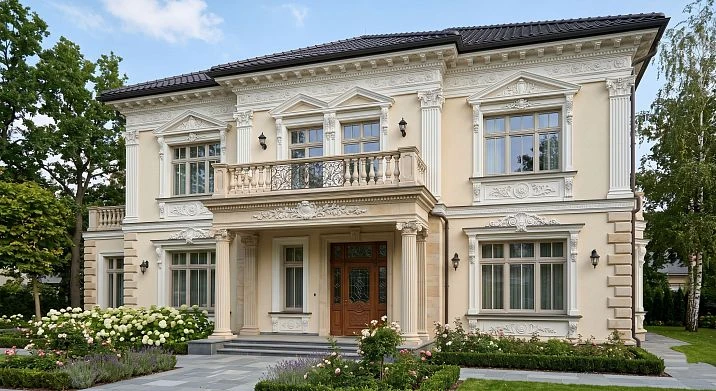
There are houses that are memorable. Not because they are big. Not because they are expensive. But because you can feel the hand — the intent behind every detail.decorative elements — this is not small decor for the sake of decor. It is a way to assemble a house into an image: to give it proportion, rhythm, character. Without them, walls remain just walls.
Choosing the rightdecorative elements for home — means understanding whereFacade Decoration, whereMoldings, where a molding is enough, and where without architectural details — pilasters, capitals, brackets — the house will lose both scale and dignity. In this article, we will break down all categories: with logic, with application examples, with an understanding of what exactly goes where.
What are decorative elements for the home
Before choosing, you need to understand the terminology. The word "decor" is too broad. What exactly is included in the concept of decorative elements for the home?
To be precise, these are all architectural and finishing products that add volume, relief, style, or surface structure — to walls, ceilings, facades, doors, windows, and entrance groups. They do not bear structural load, but they do bear an aesthetic load. And this load is no less serious.
Here is a complete list of what falls into this category:
-
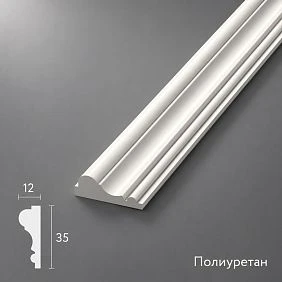
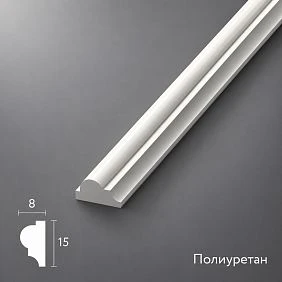
Polyurethane Items — stucco molding, moldings, cornices, brackets, linear elements, ceiling rosettes, overlay elements for facades and interiors;
-
Wooden items — carved overlays, wooden moldings, pilasters, capitals, architraves, house carving, rosettes, wooden patterns;
-
decorative polyurethane elements — ornamental overlays, relief panels, medallions, keystones, corner blocks, friezes;
-
moldings — profile strips for walls, ceilings, and facades;
-
cornices — horizontal profile elements for finishing a wall;
-
pilasters — vertical flat elements that replicate the shape of a column;
-
capitals — the crowning element of a pilaster or column;
-
brackets — decorative consoles under cornices and canopies;
-
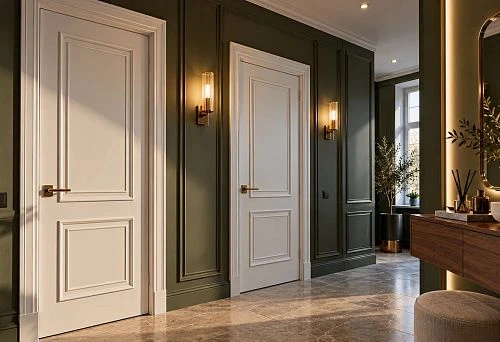
door and window decor — architraves, frames, sandriks;
-
house carving — traditional wooden decor for exterior use.
decorative polyurethane elementsand woodenSolid Wood Items — two main material categories. Each has its own area of application, its own advantages, its own place in the interior and on the facade. Polyurethane — where moisture resistance, precise relief, and light weight are needed. Wood — where natural texture, traditionality, and the tactile sensation of living material are important.
Once you understand the system, you can move on to specific tasks — let's start with the facade.




Facade decor: elements for beautiful exterior home design
The facade is the first thing everyone sees. And it is here that decorative solutions work with maximum impact. Changes on the facade are visible from tens of meters away; they shape the impression of the house before the guest crosses the threshold. Therefore, Facade Decoration — this is not an addition to the finish, but its core.
What tasks do facade decorative elements solve? The main one is to create a visual structure of the plane. A bare wall, even perfectly leveled and painted, is "nothing." Decorative horizontal belts divide it into tiers. Vertical elements create rhythm. Window frames focus attention. The cornice line completes it. All together — architecture.
Our factory also produces:
What is designed on the facade
Each facade zone has its own decorative toolkit:
Window openings. These are the most expressive points of the facade.Facade decoration made of polyurethanefor windows — side frames, upper pediment (straight or triangular), window sill shelf, keystone above the arched opening. Proper window design turns an ordinary opening into an architectural accent.
Entrance group. The portal of the entrance door is the main place on the entire facade. Here the concentration of decor is maximum: pilasters on the sides, rich framing above the door, stucco cartouche or medallion in the tympanum, brackets under the canopy.facade decoration made of polyurethanein the entrance group creates a ceremonial image and sets the tone for the entire design.
Cornice line. The transition from the wall to the roof overhang is a zone without which the facade looks "cut off".Polyurethane facade decoration for the housein the cornice zone: profiled cornice with projection, bracket-consoles under it, frieze with ornament or dentils. The cornice belt system is a sign of a well-designed facade.
Interfloor belt. On two-story houses, a horizontal molding at the floor level divides the facade into two tiers — and this instantly adds scale, a sense of elaboration, and classical order.
Building corners. Corner rusticated blocks or vertical molding pilasters accentuate the boundaries of the volume and create clarity of silhouette.
Pediment. A triangular or semicircular completion of an end wall — a traditional place for a central decorative accent: a medallion, an ornamental panel, a relief composition.
Polyurethane molding allows creating a stylish and presentable exterior of a house, while the material retains its qualities in any weather conditions. — is not just beautiful. It is a technologically justified choice for outdoor use. The closed cellular structure of polyurethane means zero water absorption. Polyurethane does not crack when freezing, does not crumble, and does not require annual repairs.Facade molding for a house made of polyurethane, with proper installation and final painting, lasts 20–30 years without losing its shape.
Stucco on the Facade in the STAVROS catalog is a complete range of elements for exterior decoration. Cornices with various profiles and overhangs, applied ornamental elements, brackets, molding belts, linear profiles for corners and transitions. Everything is designed for outdoor conditions.
Get Consultation
Style and scale: two principles that must not be violated
Choosingfacade decorative elements, you need to keep two key principles in mind.
The first is scale. The decor must be proportionate to the building. A molding 40 mm high on a two-story house is simply not readable from a viewing distance. A cornice for a house 7 m high must have an overhang of at least 175 mm. Ornamental overlays in a 1.5 m wide pier must be at least 300–400 mm wide. Small decor on a large facade is the most common mistake.
The second is unity of style. Baroque ornaments cannot be mixed with laconic Art Deco profiles. Classical capitals are incompatible with modernist straight cornices. The style must be maintained in one direction — from the cornice to the window framing.
Polyurethane stucco molding: universal decor for facade and interior
The word "stucco molding" for many still is associated exclusively with plaster on the ceiling of the 19th century. This is an outdated image. Modern Decorative stucco— it is primarily polyurethane. And it is used not only on the ceiling, but also on walls, facades, doors, and interior niches. The range of application is as wide as possible.
Why does stucco remain in demand? Because it solves a problem that nothing else can: creating relief on a flat surface. Neither paint nor textured plaster provides what a three-dimensional detail with shadow does. It is the shadow from the relief that creates a sense of depth and architectural richness.
Molding for facade
molded decoration made of polyurethaneon external walls — these are primarily ornamental overlay elements: keystones above windows, relief cartouches on piers, corner decorative blocks, frieze ornamental strips, medallions and rosettes on pediments. Their task is to create relief that is readable from a distance of 10–15 meters under side lighting.
A critically important detail for facade application: relief depth. For facade stucco, a depth of at least 25–40 mm is needed — this depth ensures a good shadow under lighting. Flat overlays on the facade do not work: they get lost from a distance.
Stucco for walls and ceiling in the interior
Inside the houseRelief Decorationworks differently: the viewing distance is shorter, so detailing is more important. Ceiling rosettes for chandeliers, corner rosettes at the junction of wall and ceiling, overlay frames for decorative panels, relief medallions on walls — all these are categories of interior stucco.
Buy Molded Decorationpolyurethane for the interior at STAVROS means getting finished products with precise relief that accept any paint or gilding. Polyurethane is not afraid of moisture even in bathrooms. Its light weight allows installation on the ceiling without anchors — only glue.
You can buy ready-made stucco matching the Baroque style. Calculate the quantity: linear meters of cornices and moldings, number of rosettes, pilasters, consoles, corner elements. Add a ten to fifteen percent allowance for trimming.— it means going to the STAVROS catalog and choosing from the assortment of overlays, ornamental elements, friezes, rosettes, and cornice profiles. Part of the assortment is only for interiors, part is specifically for outdoor use with enhanced moisture and frost resistance. Clarify the purpose before purchase.
Why polyurethane is the best material for decorative details
Polyurethane moldingshas a number of technical advantages that determine its wide application:
-
Precision of detailing. Polyurethane is cast into rigid molds under pressure — the relief is reproduced accurately from piece to piece, without blurred contours;
-
Lightness. The weight of a typical ceiling rosette 300×300 mm is 200–300 g, a cornice 2 m long is 400–700 g. Installation without brackets, without metal structures;
-
Moisture resistance. The closed-cell structure of polyurethane eliminates water absorption. Relevant for both bathrooms and facades;
-
Workability. Cut with a regular hacksaw or jigsaw, joints can be adjusted manually, bonding with standard assembly adhesive;
-
Painting. Accepts any water-dispersion, acrylic, and alkyd paints, gilding, patination;
-
Serial production. Any product from the catalog can be purchased in the required quantity — the pattern and proportions will be identical.
Moldings: decorative lines for walls, ceiling, and facade
Molding is perhaps the most versatile decorative element. It can be found on the facade, ceiling, walls, and door framing. Simply put: molding is a profiled strip that creates a line. And lines are what structure any space.
Wall moldings
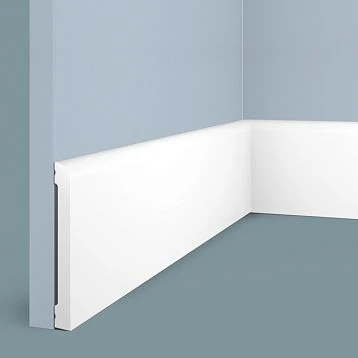
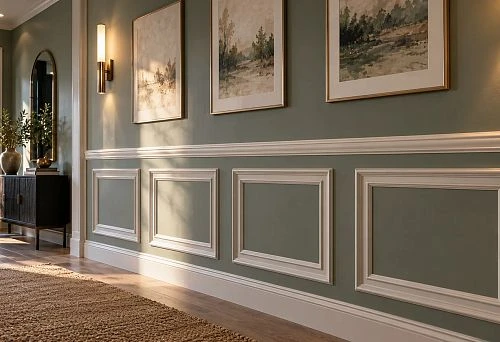
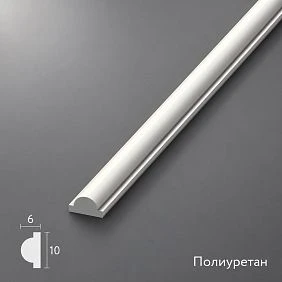
A wall without divisions seems monotonous regardless of color and texture.polyurethane wall moldings solve this problem: a horizontal strip at a height of 90–100 cm creates a division into a lower panel part and an upper above-panel part. This is a classic technique used in European interiors for several centuries.
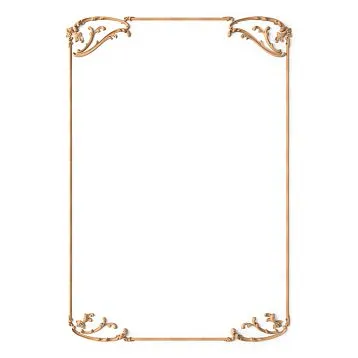
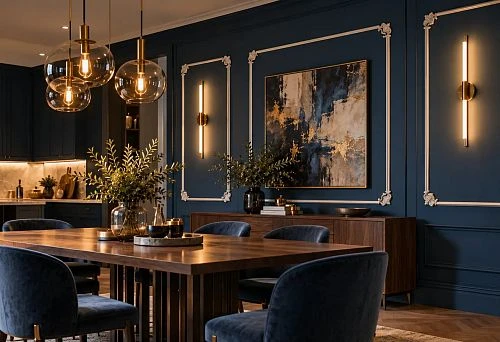
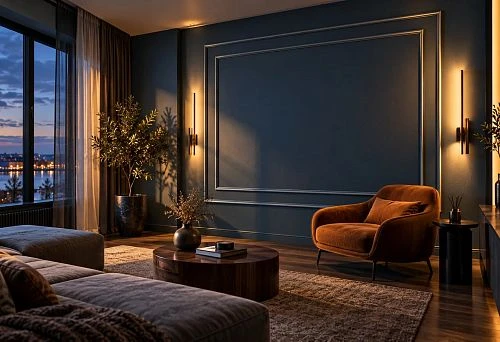
Another use is frames made from moldings. Several profiles assembled into a rectangle on the wall create an imitation of paneling. This technique is especially popular in modern classic and neoclassical styles: the wall is divided into cells of molding frames, inside which there may be painting in a different tone or decorative plaster.
Ceiling molding
Ceiling molding made of polyurethane is an element that decorates the transition from the wall to the ceiling. Its purpose is to soften the right angle, create a visual frame for the ceiling plane, and add height through optical illusion.
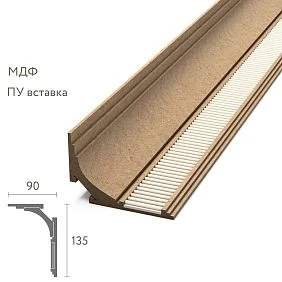
The height of the ceiling molding is selected according to the room height: for standard 2.7 m — a profile of 70–100 mm, for high ceilings of 3.5 m and above — 120–180 mm. A profile that is too thin on a high ceiling disappears. One that is too massive on a low ceiling feels oppressive.
Moldings for the facade
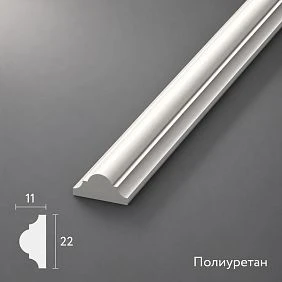
Polyurethane facade moldings are primarily interfloor belts and horizontal rods that divide the facade plane into functional tiers. For a two-story house, an interfloor molding belt is a mandatory element: without it, the facade is perceived as a single monotonous wall regardless of its finish.
polyurethane decorative moldings in outdoor use require a final coat of facade paint with UV protection. Without this, polyurethane degrades under ultraviolet light within 1–2 seasons. With proper coating, it lasts 20+ years.
Buy polyurethane molding in STAVROS means choosing from a large assortment of profiles with different heights, different cross-sections, and different stylistic characters: from laconic straight rods for modern classic to complex multi-level profiles for rich historical stylization.
Wooden moldings: their own area of application
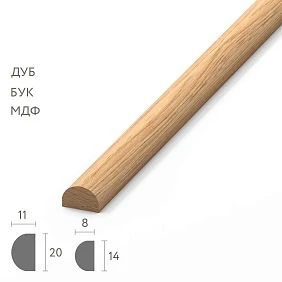
Wooden molding is a separate category with a different scope of application. Not walls for painting, but wooden interiors, kitchen sets, built-in furniture, wooden doors, panel walls made of natural boards. Where the surface is wooden, a wooden molding is needed because it is tinted and varnished to match the main material.
Wooden moldingsSTAVROS products are made from solid oak and beech — species with high hardness and stability. The profile is cut on a CNC with high precision, and the surface is prepared for sanding and varnishing. Application: decoration of door frames, kitchen cabinet fronts, paneled walls in classic interiors, decorative framing of mirrors and paintings.
Architectural details: pilasters, capitals, brackets, and cornices
There is a category of decorative elements commonly called "architectural details." These are not just profiles and overlays — they are items with a specific architectural name and a specific place in the order system. Pilaster, capital, bracket, frieze — this is the vocabulary of classical architecture. And a house where these elements are applied correctly is inevitably perceived as something more than just a "decorated facade."
Pilaster: verticality and order
Pilasteris a flat protruding wall detail that reproduces the shape of a column. It consists of three parts: the base (lower support element), the shaft (main vertical part), and the capital. On the facade, pilasters are placed at the corners of the building and in the piers, creating a vertical rhythm that contrasts with the horizontals of moldings and cornices.
Wooden pilasterSTAVROS product made from solid oak or beech with the possibility of an individual profile. Used in interiors of libraries, studies, living rooms, banquet halls, in the decoration of fireplace portals, bookshelves, and built-in wardrobes in a classic style.
On the facade, the pilaster is made of polyurethane: its light weight allows installation with glue without metal fasteners.Polyurethane architectural decorationpilasters, half-columns, corner blocks — available at STAVROS in a full order set.
Capital: completion and dignity
WithoutCapitalsA pilaster or column is unfinished. It is the capital that creates the transition from the vertical shaft to the horizontal cornice or architrave. By style, three classical orders are distinguished: Doric (strict, without ornament), Ionic (with volutes — spiral scrolls), and Corinthian (with lush acanthus leaves).
buy a capitalChoosing wooden in STAVROS means getting a product made of hardwood, manufactured on a CNC machine with manual finishing.wooden capitalFor interior pilasters and columns, it is lacquered or tinted to match the color of the main material. Used in classic interiors, country houses, restaurants, hotels, and fireplace areas.
Choosing the style of the capital is not a matter of taste, but a matter of appropriateness. Doric — for strict, restrained interiors and neoclassical facades. Ionic — a universal option for most classical projects. Corinthian — for rich, formal spaces where detailed ornamentation is appropriate.
Brackets: console as rhythm and shadow
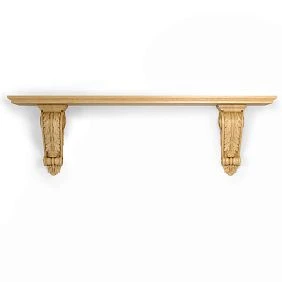
Polyurethane brackets— decorative consoles placed under the cornice with a uniform spacing of 60–80 cm. Their function is twofold: they visually 'support' the cornice overhang (creating the illusion of structural support) and create a pronounced vertical shadow on the wall beneath the cornice band.
Polyurethane bracketSTAVROS — a product with a detailed relief: an acanthus leaf, volute, or geometric ornament on the front side. Installed with glue plus one fastener at the base. The lightness of polyurethane makes the installation of a console element a simple operation without special tools.
Brackets under the canopy of the entrance group — a special case. Here they are not just decorative but create a sense of a grand ceremonial awning. Two or four brackets under a small canopy above the front door — that is the difference between 'just an entrance' and 'an entrance to a home.'
Wooden decorative elements for the home
Wood in architectural decor is a different story, and it should not be confused with polyurethane. Where polyurethane provides precise, reproducible relief and resistance to external conditions,Wooden itemsprovide a living texture, the uniqueness of each product, and the possibility of natural finishing — varnishing, tinting, patination, waxing.
Wooden decor is appropriate where surfaces are wooden: furniture, doors, wooden walls, wooden facades. Also where the naturalness of the material is important: in interiors in country, rustic, Scandinavian classic, and traditional Russian styles.
Wooden patterns and house carving
wooden patternson the facade of a wooden house is a living architectural tradition that has existed in Russian architecture for several centuries. Saw-cut, volumetric, geometric carving on window casings, gable boards, friezes under the cornice — this is a special decorative language in which each region of Russia had its own ornamental tradition.
Wooden patterns on housesis not only archaic. Modern wooden houses made of timber and logs organically accept carved decor: it emphasizes the material, creates a warm image, and distinguishes the house from neighboring buildings.
wooden lace— this is what they call openwork saw-cut carving with a fine ornament, creating the effect of a lace framing of windows and porch. It is performed on a CNC machine according to original or traditional designs. STAVROS offersPatterns wooden window casingswith the ability to choose the motif, size, and type of wood.
wooden ornament— this is a broader concept: geometric motifs, plant patterns, solar signs characteristic of traditional house decor. Such ornament is found not only on window casings but also on gable boards, towels under the roof ridge, and porch pillars.
Wooden patterns on windows— a functional and decorative element at the same time: the window frame protects the joint from blowing, and the ornament gives the facade a traditional character.
Carved wooden overlays and rosettes
In the interior, wooden decor is used differently:Decorative Wooden Patternson furniture facades, carved overlays on doors, wooden rosettes on the ceiling, frame overlays on walls of wooden interiors. This is a category of decor for wood on wood.
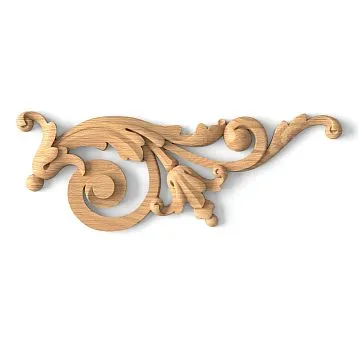
Buy carved wood decorin STAVROS means choosing from an assortment of wooden rosettes, relief overlays, ornamental elements for furniture and interiors. Products made of oak and beech, with precise relief and sanded surface, ready for varnishing or tinting.
decorative elements for furnitureare overlays for facades of kitchen sets, cabinets, and chests of drawers. This is a category of furniture decor that allows you to update or personalize furniture without replacement: glue new overlays, paint or change the tone — and the furniture looks different.
How to choose decorative elements to match the style of the house
The most common question when choosing decor: "How do I know what suits my home?" The answer is built on the principle — from style to details. Style defines the set of allowed techniques. Details are chosen within this set.
Classic house
Full classic — Baroque, Empire, Renaissance Revival — allows maximum saturation with details. Everything is appropriate here: richMoldings, complex cornice with brackets and frieze, pilasters with capitals at corners and entrance, developed window frames with pediments, ornamental medallions on the pediment.
decorative elementsin a classic house should form a full order system: vertical (pilaster + capital) + horizontal (cornice + molding belt) + accent (stucco above windows, medallion, brackets). Decor is not added piece by piece — it is designed as a single whole.
Capitalfor classic — Corinthian or Ionic, depending on the richness of the style.Pilaster— on every significant vertical division.Facade Decoration— rich, with high relief, with shadow.
Modern classic (neoclassical)
Neoclassical is classic filtered through minimalism. Less ornament, cleaner lines, more space between elements. Here the main tool isMoldings made of polyurethanewith a simple profile.
A wide horizontal molding in the interfloor belt. A laconic window frame made of a straight profile. A cornice with a minimal profile and without brackets (or with a pair of brackets only at the corners). The color of the decor is close to the color of the wall, with minimal lightening. One strong accent at the entrance — an entrance frame with pilasters and a capital.
Polyurethane architectural decorationfor neoclassical is selected on the principle of "everything necessary, nothing extra".decorative polyurethane elements— laconic overlays, straight rods, symmetrical frames without complex ornament.
Wooden house: carving and tradition
A wooden house is its own world. HerePolyurethane Decorlimited only to stone or plastered parts (e.g., the lower brick floor). The wooden volume requires wooden decor.
Wooden patterns on houses— platbands with carved ornamentation, an openwork frieze under the cornice, a carved porch, and gable boards with a geometric pattern. This is a complex that creates a holistic image of a traditional wooden house.Wooden patterns on windows— the key accent in such a set.
House Carvingin STAVROS — a complete set of wooden platbands and facade elements made from solid wood, produced on CNC machines according to traditional and original designs. Wood species: pine, larch, oak. All products are ready for installation and finishing.
Mistakes when choosing decorative elements
Practice shows: mistakes in choosing and installing decor are repeated. Knowing them, you can avoid them.
Mixing incompatible styles. Baroque brackets with Art Nouveau elements on one facade. An Ionic capital with a geometric Art Deco molding.Facade decoration made of polyurethanein two different style directions — this is a conflict that catches the eye. One style is chosen — all details within it.
Disproportionate elements.Polyurethane Decoron too small a scale on a large facade — a common mistake. The cornice should be chosen relative to the height of the building, not because it 'looks nice in the catalog.' A thin molding on a large wall disappears. Start your choice with scale, then with the profile.
InteriorPolyurethane moldingson the exterior wall. Interior polyurethane does not have UV stabilizers. In the sun, it yellows and becomes brittle within 1–2 seasons. For exterior use, only products marked "for facade" are suitable.
Skipped surface preparation. Installation on a dusty, damp, or loose surface is a cause of peeling.installation of polyurethane moldingrequires a dry, clean, primed base. This step cannot be skipped.
Lack of joint sealing. An unsealed joint between the element and the wall is a capillary channel for water. Acrylic sealant on all joints is mandatory. Not mounting foam, but specifically acrylic: it can be painted and remains elastic with temperature changes.
Different shades of white. It seems that "white is white." But a cornice with warm white and trim with cool white create a noticeable color dissonance. All elements should be painted from the same batch with the same paint.
Buying parts separately, without a system. Molding from one manufacturer, bracket from another, cornice from a third. Each is beautiful individually, but incompatible together.Moldings made of polyurethanebrackets, cornices, and overlay elements should be selected from one catalog within a unified style system.
For details on the correct installation of molding profiles, see the STAVROS article aboutinstalling polyurethane molding. A comparison of materials for stucco molding is in the detailed article aboutstucco molding made of gypsum and polyurethane.
Where to buy decorative elements for the home
STAVROS — manufacturer of architectural decor from polyurethane and wood since 2002. The catalog covers a full range of decorative elements for facade and interior in one place.
decorative elementsfrom solid wood — wooden carved overlays, rosettes, ornamental inserts for furniture and interior surfaces. Oak, beech, manual and CNC processing, surface for varnishing.
Facade Decoration— a complete section with categories for exterior home decoration: cornices, moldings, brackets, overlay elements, linear profiles for corners and transitions. The entire assortment is made of polyurethane for exterior use.
Polyurethane Items— the main catalog of polyurethane products: stucco, moldings, cornices, brackets, linear profiles, ceiling rosettes, decorative overlays. Broken down by category and application.
Buy Molded Decoration— a section of ornamental overlay elements: medallions, keystones, relief panels, frieze bands. For facade and interior, with indication of purpose.
Moldings made of polyurethane— a full selection of profile rods: cornices, baseboards, interfloor belts, frame profiles for walls. Different heights, different profiles, different style directions.
Wooden items— the entire range of wooden decor: overlays, rosettes, pilasters, capitals, moldings, architraves, house carving, carved ornamental elements from solid oak and beech.
polyurethane products— if you need a systematic selection of decor for a project, start with this section: here everything that STAVROS produces from polyurethane is collected, with the ability to filter by product type and application.
Frequently asked questions
What are decorative elements for the home?
These are all overlay architectural and finishing elements that create relief, structure, and style on house surfaces — facade, walls, ceiling, doors, windows. They include stucco molding, moldings, cornices, brackets, pilasters, capitals, decorative overlays, and wood carving.
How does polyurethane decor differ from wood decor?
Polyurethane — for facades, interior surfaces for painting, and wet rooms. Precise relief, lightweight, moisture resistant. Wood — for wooden surfaces, furniture, traditional Russian style, where natural texture and wood staining are important.
How long does polyurethane decor last on a facade?
With proper installation and final painting with facade paint with UV filter — 20–30 years. Paint is renewed every 7–10 years.
How to choose the right size molding?
For ceiling: profile height at least 1/30 of room height. For facade belt: at least 1/60 of floor height. The larger the space, the larger the molding should be.
Can I install polyurethane decor myself?
Yes. Polyurethane is cut with a regular hacksaw and mounted with special glue. The main thing is proper surface preparation (dry, clean, primed) and sealing all joints with acrylic. Detailed instructions are in the guide on installing polyurethane molding STAVROS.
Which capital to choose — Doric, Ionic, or Corinthian?
Doric — for strict, laconic projects. Ionic — a universal choice for most classical interiors and facades. Corinthian — for rich, formal spaces with intricate detailing.
Do I need to paint polyurethane decor on the facade?
Absolutely. Without paint, UV radiation destroys the surface within 1–2 seasons. You need a facade paint with a UV filter, applied over a primer. First layer — primer, then 2 layers of paint.
Where can I see the full range of STAVROS decorative elements?
The entire catalog is divided into sections:Polyurethane Items, Wooden items, Facade Decoration. Inside each section, there is navigation by product type.