










































































Article Contents:
- Buy decorative wooden beams
- What are decorative wooden beams and why are they needed
- What is a false beam and how is it different from a solid wood beam
- Decorative beams: types, materials and surfaces
- Solid wood beams
- False beams from boards
- Antique beams: rustic and aging imitation
- Beams for painting
- Where to use decorative wooden beams
- Ceiling wooden beams: principles of working with the plane
- Decorative beams for the living room
- Beams for a kitchen-living room and space zoning
- Wooden beams in chalet and rustic style
- Wooden beams in a classic interior
- How to choose the size of a decorative beam
- Ceiling height and minimum cross-section
- Length and number of beams
- Beam width and visual scale
- Beam color: matching the interior
- Lighting and wooden beams: integrating fixtures
- Installing decorative wooden beams: step by step
- Installing a faux beam
- Installing a solid wood beam
- What affects the price of decorative wooden beams
- Mistakes when buying decorative wooden beams
- Wooden beams in a wooden interior system
- FAQ: answers to popular questions about decorative wooden beams


Buy decorative wooden beams
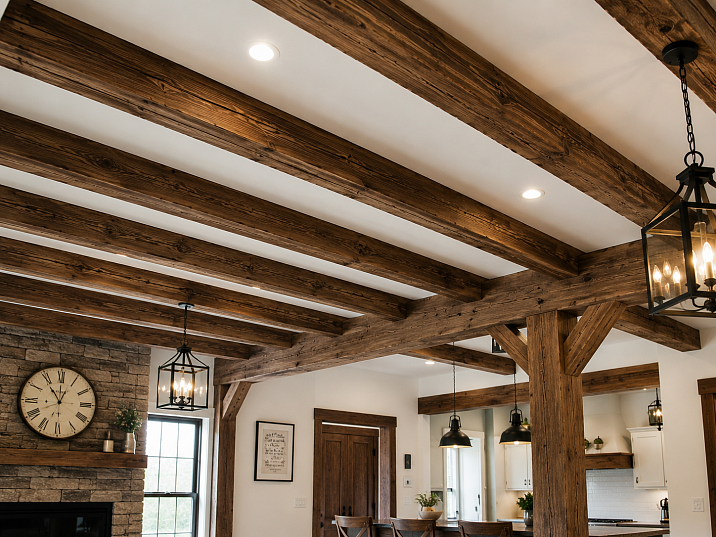
The ceiling is the fifth facade of the interior. It is most often ignored, yet it sets the scale of the space, shapes the room's mood, and determines whether the interior will feel alive or faceless. Decorative wooden beams are one of the few ways to transform a ceiling from a neutral plane into an architectural statement.
Buying decorative wooden beams today is a choice that will change the perception of the entire room. Not just the ceiling. Beams create a vertical rhythm, define zones, hold the gaze, and add the warmth of natural wood where it is usually absent. A living room with wooden beams is one space. The same room without them is something completely different.
But beams are not just "nailed on and looks nice." Behind them lies a choice: material, size, cross-section, color, style, method of attachment, interaction with lighting, furniture, doors, and wooden molding. A mistake in any of these parameters — and instead of coziness, you get overload. Or, on the contrary, an element that gets lost in the space and doesn't work.
This article is for those who want to understand wooden decorative beams before purchasing: what they are, how a faux beam differs from a solid wood beam, how to choose size and style, where they work best, how to calculate the quantity, and what affects the price.




What are decorative wooden beams and why are they needed
Buying decorative wooden beams means acquiring an interior element that performs three functions simultaneously: decorative, architectural, and zoning.
Decorative function. A beam is volume on the ceiling. It adds texture, the warmth of wood, and visual richness to a plane that usually remains empty. A dark beam on a white ceiling is a contrasting accent. A beam matching the ceiling color is a soft rhythmic pattern.
Architectural function. Beams shape the space. Transverse beams in a long room "cut" the space into sections, making it proportionate to a person. Longitudinal beams in a low room visually elongate it.
Zoning function. Beams above a kitchen island or above a dining table define a zone — without walls, without partitions, without lowering the ceiling.
And behind all this is living material. Buying decorative wooden beams means bringing natural texture into the interior, which no synthetic material can convincingly imitate.
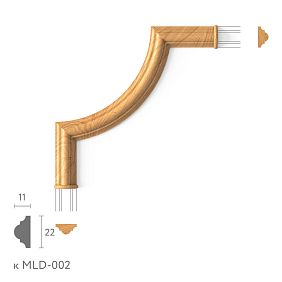
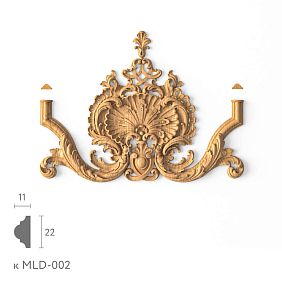
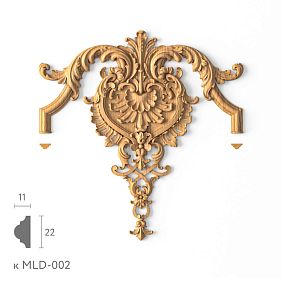
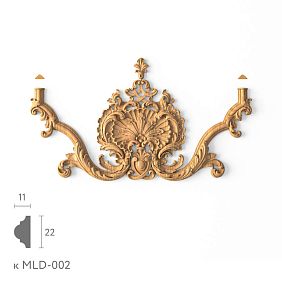
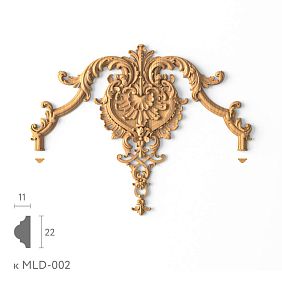
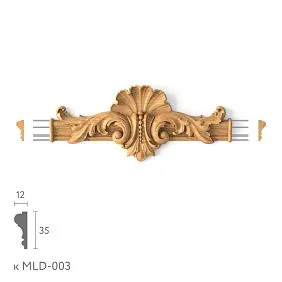
Our factory also produces:

What is a false beam and how does it differ from a solid wood beam
The term "false beam" is often used but not always correctly understood. Let's figure it out.
A solid wood beam is a solid wooden bar of rectangular or square cross-section. Heavy, dense, with real wood texture. It supports itself and requires a suitable base for fastening.
A false beam (imitation beam) is a three-sided wooden box: three faces (visible from below and from two sides) without the top face. It is attached to the ceiling through a metal base or a wooden block. It is significantly lighter than a solid bar with the same visible cross-section.
Decorative beam is a general term that includes both options. Both the false beam and the solid wood beam are "decorative" since they do not carry a structural load in the interior.
| Type | Construction | Weight | Installation | Application |
|---|---|---|---|---|
| Solid wood beam | Solid bar | Heavy | Requires a solid base | Houses with wooden ceilings, high ceilings |
| False beam (box) | Three edges from a board | Lightweight | On metal anchors or a block | Apartments, houses with plasterboard ceilings |
| Antique-style beam | Solid wood or box with 'aged wood' finish | Medium/heavy | Same as type | Chalet, rustic, country |
| Beam for painting | Array or box made of pine/MDF | Medium | Same as type | Classic, Provence, Scandinavian style |
Buying wooden faux beams is often a smart solution for a city apartment: they provide the same visual effect as massive beams but weigh 5–8 times less.
Get Consultation
Decorative beams: types, materials, and finishes
Solid wood beams
Solid wood ceiling beams are a premium option with real wood texture. They are used in houses with wooden beam ceilings where the beams are visible from below and bear real load — or as decorative additions to an existing structure.
Wood species for solid beams:
-
Pine — affordable, easy to work with. Yellowish or warm beige tone. Takes stain well. Optimal for interiors intended for painting.
-
Oak — dense, durable, with expressive texture. The first choice for chalet, rustic, classic styles. Heavy: an oak beam 100×150×3000 mm weighs about 40 kg.
-
Larch — dense, with a beautiful pinkish-brown tone. Resistant to moisture. Preferred for kitchens and high-humidity rooms.
-
Cedar is rare and expensive. Pleasant aroma, expressive texture. For special interiors.
A solid timber beam requires proper fastening: anchors into a concrete ceiling or screws into wooden floor beams. Load — from 15 to 80 kg depending on cross-section and length.
False beams from boards
A false beam from a board consists of three elements: a bottom plank (wide horizontal) and two side panels, assembled into a U-shaped box. It is mounted on a wooden base bar attached to the ceiling.
Standard cross-sections of false beams: 100×60 mm, 120×80 mm, 150×100 mm, 180×120 mm. Length: 2–6 meters (in composite sections).
Advantages of a false beam:
-
5–8 times lighter than solid timber of the same visible cross-section
-
Electrical cables can be run inside the box (for recessed lights built into the beam)
-
Easier to install: does not require a reinforced base
-
Cheaper than a solid timber beam with the same visual result
Aged beams: rustic and imitation aging
One of the most popular decorative effects is aged beams, imitating weathered, wind-worn wood.
Aging techniques:
-
Brushing — a metal brush removes soft fibers, leaving hard ones. The surface acquires a characteristic relief texture with emphasized annual rings.
-
Staining — impregnation with stain to deepen the color and imitate the material's aged look.
-
Patination — applying patina (dark wax, special compounds) into the texture's recesses. Creates an effect of long-term use.
-
Heat treatment — wood is subjected to high temperature, changes color to dark brown or almost black, acquires a characteristic burnt pattern. Unique texture, completely natural.
Aged beams — for chalet, rustic, country interiors, hunting lodges, old-style restaurants, country houses with a fireplace. Such beams should be large in cross-section: a small beam with imitation aging looks unconvincing.
Beams for painting
Beams for painting are pine beams without a finish coating or with primer. The surface is prepared for applying paint or enamel.
For which interiors: Provence (white or cream beams on a white ceiling), Scandinavian style (white or gray beams), classic (beams matching the color of cornices and moldings), children's rooms.
White wooden beams on the ceiling are one of the most exquisite techniques in modern interiors. They add texture and volume without overwhelming the space with color.
Where to use decorative wooden beams
Ceiling wooden beams: principles of working with the plane
Ceiling wooden beams are the main area of application. It is on the ceiling that they provide maximum effect with minimal material consumption.
Several principles that determine the result:
Beam orientation. Transverse beams in a long room make it "shorter" and cozier. Longitudinal beams "stretch" the space in depth. A grid of beams (transverse + longitudinal) is for very high ceilings, for restaurants, for formal spaces.
Number of beams. One central beam is an accent without rhythm. Three beams are the beginning of rhythm. Five or more is a full rhythmic system. For a standard living room of 4×6 meters, three to five transverse beams with a spacing of 80–120 cm.
Distance between beams. Uniform spacing creates a regular rhythm. Uneven spacing (with a highlighted central zone) creates an accent composition.
Beam color. Dark beams on a light ceiling are a contrasting accent, expressive and warm. Beams matching the ceiling color are a soft relief without contrast, adding texture without changing the perception of height. Medium tone is tinting to match the color of furniture or doors.
Decorative beams for the living room
The living room is the main space of the house, and it is here that beams work most expressively.
In the living room, beams:
-
create coziness in a large space (scale the room to human size)
-
define the sofa zone / TV zone without physical partitions
-
create a dialogue with wooden elements: furniture, doors, wooden cornices for curtains
For a living room with a fireplace — beams of dark oak or antique-style beams logically continue the image of a "hunting lodge" or "chalet": fireplace + beams + wooden floor create a unified theme.
For a classic-style living room — beams can be not dark timbers, but white lacquered elements combined with wooden moldings around the perimeter of the ceiling. In this case, the beams become part of the classic ceiling architecture.
Beams for kitchen-living room and space zoning
Open-plan kitchen-living room is one of the most popular today. And one of the most difficult in terms of zoning: you need to divide the space, but you cannot put up walls.
Decorative beams above the kitchen island or above the kitchen → living room transition — clean and elegant zoning. Three beams above the kitchen area create a "ceiling arch" that feels like a boundary without physically being one.
Additional technique: inside the beams above the kitchen island, you can place recessed lights or an LED strip. A beam with lighting — both zoning and functional lighting for the work surface at the same time.
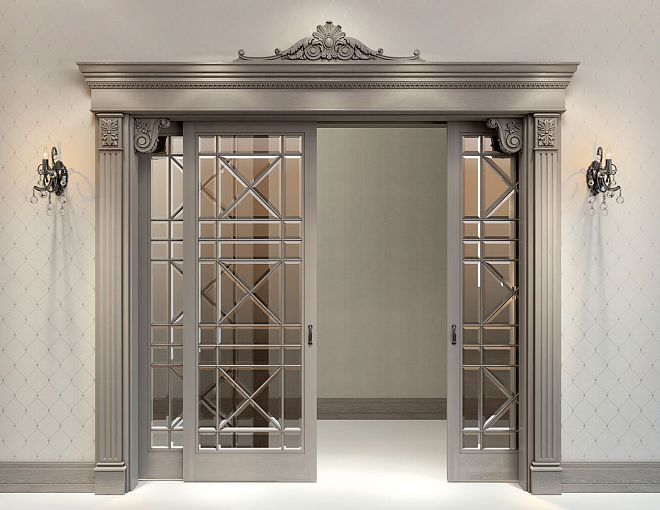
Wooden trim — baseboards, trims, moldings — should pick up the theme of the beams. If the beams are made of dark oak, then the Wooden casings create a frame around the opening, visually highlighting it from the wall plane. A classic casing has a profiled section that corresponds to the profiles of baseboards and moldings. baseboards should also be made of the same material or in the same tint.
Wooden beams in chalet and rustic style
Chalet is an alpine wooden house with open ceiling beams, a fireplace, rough masonry, and warm textures. A chalet interior without beams is not a chalet.
For chalet style:
-
Large-section beams: 150×150 mm, 180×180 mm, 200×120 mm
-
Dark color: stained oak, thermowood, dark patina
-
Brushed texture: relief surface with pronounced fibers
-
Placement: transverse, with a pitch of 60–90 cm (often imitating load-bearing ceiling beams)
Rustic is a broader style encompassing rural, farmhouse, and country aesthetics. Rustic-style beams are more diverse in shape: they can imitate roughly hewn timber, have uneven edges, or feature characteristic notches.
For rustic style, beams made of solid pine or spruce with brushing or minimal processing. Natural light wood tone with an emphasis on texture. Or thermowood with a dark burnt pattern.
Wooden beams in rustic style pair well with furniture decor made of solid wood: overlay elements on kitchen facades or cabinets in the same texture as the beams on the ceiling.
Wooden beams in a classic interior
A classic interior is not the most obvious scenario for wooden beams, but one of the most refined.
For classic style, beams are not rough timber but profiled elements with chamfers, a lacquered surface, and wooden ornamentation on the ends or in the central part.
Beams in a classic interior are organic when combined with classic furniture, carved wooden decor on cornices and moldings, with a coffered ceiling.
A coffered ceiling is one of the pinnacles of classic ceiling architecture. It is a system of beams (longitudinal and transverse) creating rectangular or square coffers. Each coffer is a separate plane, sometimes with decoration. Wooden Picture Frame frames the perimeter of each coffer. A wooden coffered ceiling represents a high level of interior design.
How to choose the size of a decorative beam
Size is a key parameter. A beam that is too thin on a high ceiling looks random. A beam that is too massive in a low room overwhelms. Choosing the size is a calculation, not intuition.
Ceiling height and minimum cross-section
Basic rule of correspondence:
| Ceiling Height | Recommended beam cross-section |
|---|---|
| Up to 2.5 m | Not recommended (beams feel oppressive) |
| 2.5–2.7 m | 60×80 mm, 60×100 mm — minimum |
| 2.7–3.0 m | 80×100 mm, 100×120 mm |
| 3.0–3.5 m | 100×150 mm, 120×150 mm |
| 3.5–4.0 m | 150×150 mm, 180×120 mm |
| Above 4.0 m | 180×180 mm, 200×150 mm and larger |
For apartments with a ceiling height of 2.5–2.7 m, dark wood beams of large cross-section are a risky choice. They will visually lower the ceiling. Solution: beams of small cross-section in the color of the ceiling or slightly darker — relief without a feeling of heaviness.
Length and number of beams
Beam length = span length from wall to wall (or from wall to floor beam). For a standard room of 4–6 meters, beams are supplied in sections of 3 meters with an overlap joint or on a decorative overlay.
Number of beams: for a standard living room of 4×6 m with a spacing of 100 cm — 3–4 transverse beams. With a spacing of 80 cm — 4–5. With a spacing of 60 cm — 5–6 (dense rhythm characteristic of chalet style).
Beam width and visual scale
Width (horizontal size of the visible bottom edge) determines the "density" of the railing. Narrow beams 60–80 mm are light, openwork. Wide beams 150–200 mm are monumental, heavy.
For a residential interior, the optimal width is 80–120 mm. For restaurants, country houses, and tall spaces — 120–200 mm.
Beam color: coordination with the interior
The color of wooden beams should be coordinated with three elements: the floor, furniture, and wooden molding.
Three color coordination scenarios:
Monochromatic. Beams, floor, doors, Wooden casing and baseboards in the same tint. A single wood tone. Restrained, cohesive, professional.
Contrasting. Light ceiling + dark beams. Or white beams + dark floor. Expressive, active, creates an accent.
Analogous. Beams two shades darker or lighter than the main wood. A soft, unobtrusive option for those who value delicacy.
If the interior features wooden molding around the perimeter of the ceiling — its tint should match the tint of the beams. Otherwise, a stylistic disconnect occurs.
Lighting and wooden beams: integrating fixtures
One of the most effective techniques is built-in lighting in decorative beams. This solves two tasks at once: task lighting for the area and a decorative accent for the beams.
Lighting options:
-
Recessed spotlights on the bottom face of the false beam. Directional light downwards. For kitchen zones, dining tables, work surfaces.
-
LED strip along the side face of the beam. Diffused side light. For decorative accent, for mood lighting.
-
Pendant lights between beams. In this case, the beams form the ceiling's "corridors," and the pendants create accent lighting for zones.
For integrating lighting — only false beams (box): there is space inside for running cable. In a solid wood beam, integration can only be done by cutting a groove along the bottom face.
Installation of decorative wooden beams: step by step
Installing a false beam
Step 1. Marking. Mark the beam lines on the ceiling. Ensure they are parallel (laser level or chalk line). Mark the attachment points for the base block.
Step 2. Attaching the block. A wooden block 40×40 mm or 50×50 mm is fixed to the ceiling with anchors in concrete (spacing 400–600 mm) or self-tapping screws into wooden floor beams (spacing 300–400 mm). The block must be strictly level.
Step 3. Installing the side panels. The side boards of the false beam are attached to the block with self-tapping screws from the side. The screw heads are countersunk, recessed, and puttied.
Step 4. Installing the bottom plank. The bottom wide board is attached to the side panels from the inside (hidden fastening) or from the outside with countersinking.
Step 5. Joining sections. Long beams are assembled from sections. Joints are offset (not in a single line), covered with decorative overlays.
Step 6. Coating. The final coating is applied after installation (if the beams are installed without coating) or before installation (if the coating is applied at the factory). Ends and joints are treated separately.
Installation of a solid wood beam
A solid wood beam requires a strong base. For a concrete ceiling — anchor bolts M10–M12, embedment depth 80–100 mm, spacing 500–600 mm. Preliminary load calculation: an oak beam 150×150×4000 mm weighs about 50–60 kg.
A solid wood beam is attached using metal brackets (hidden installation) or through screws with decorative caps.
For wooden ceilings — screws 120–150 mm into the load-bearing floor beam. This is the most reliable option.
What affects the price of decorative wooden beams
The price of decorative wooden beams ranges from 800–1,200 rubles per linear meter for a pine false beam to 8,000–15,000 rubles per linear meter for a solid oak beam with brushing and patina.
Material. Pine — base price. Oak — 3–4 times more expensive. Larch — 1.5–2 times more expensive than pine. Thermowood — surcharge for processing.
Beam length. A long beam (4–6 m) costs more than a short one not just proportionally: it requires higher quality material without defects along the entire length.
Cross-section. 60×80 mm and 150×150 mm — significantly different material consumption. For solid beams, the price difference between small and large cross-sections is twofold or more.
Type of processing. Without processing ('white wood') — cheaper. Brushing — surcharge. Patination — surcharge. Heat treatment — significant surcharge. Hand-applied aging imitation — maximum cost.
Coating. Without coating, with antiseptic, with oil, with varnish — increasing cost.
Quantity of items. When ordering 10+ beams, the price per meter decreases. When ordering a full set for a room (5–15 beams), a serial order is more profitable than a single one.
Custom sizes. Non-standard length, non-standard cross-section, non-standard shape (trapezoid, with chamfers) — a custom order with a surcharge.
Installation complexity. High ceilings, complex geometry, built-in lighting — increase the cost of installation work.
Delivery. Long-length products (3–6 m) are transported by special vehicles or in bundles. For remote regions — transport companies, cost according to tariff.
Mistakes when buying decorative wooden beams
Seven mistakes, each of which is worth redoing.
1. Ceiling height is not taken into account. Beams 150×150 mm on a 2.6 m ceiling in a city apartment — this is heavy, oppressive, uncomfortable. Ceiling height is the first parameter from which the beam size is calculated.
2. Visual scale is not calculated. In a narrow long room, longitudinal beams will stretch it even more. Transverse ones will cut it into proportionate sections. The orientation of the beams depends on the geometry of the room, not just preferences.
3. Choose too heavy an element for the base. A solid beam 180×180 mm weighs 60–80 kg per 4 meters. If the ceiling is a thin plasterboard structure, such an element simply will not hold. Check the type of ceiling before choosing the type of beam.
4. Color is not coordinated. Dark beams and light doors, white Wooden cornices for curtains and natural beams — all this is a style gap. The color scheme — from beams to the floor and back — should be unified.
5. Mixing styles without a concept. Rustic beams + classic profile moldings + Scandinavian furniture — three different traditions without a connecting element. Decide on a style before purchasing.
6. Installation is not thought through. Especially relevant for solid beams in an apartment. Load on the ceiling, type of fasteners, routing cables for lighting — all this needs to be thought through before ordering.
7. They do not account for lighting between beams. Dark beams "absorb" light. If ceiling lighting is located between beams, it will be partially blocked. Plan lighting together with beams, not after.
Wooden beams in a wooden interior system
Beams work most effectively not as a single element, but as part of a room's wooden decor system.
solid wood millwork — baseboards, trims, cornices — must be coordinated with the beams in tone and wood species. Dark oak beams + light pine baseboards — a style conflict. Dark oak beams + oak Wooden molding around the ceiling perimeter + oak trims — a unified language.
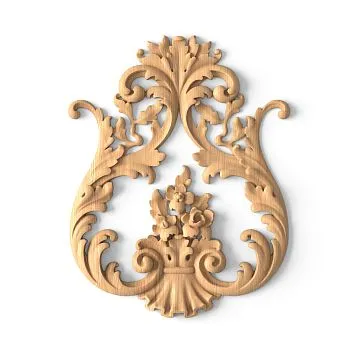
Carved wooden decoration — sockets at beam intersections, applied ornamental elements on ends — adds detail and a handcrafted character.
Classical furniture made of wood — in coordinated tinting with the beams — creates a cohesive wooden interior where no element is accidental.
wooden ornament — if beams are decorated with carvings or ornamental overlays — the ornamental program of beams and walls should belong to the same tradition.
FAQ: answers to popular questions about decorative wooden beams
Which decorative wooden beams to buy for the ceiling?
The choice depends on ceiling height, room area, interior style, and floor type. For apartments — false beams (lightweight, no load on the floor). For country houses, chalets, rustic — solid timber beams of large cross-section with brushing.
How is a decorative beam different from a false beam?
A decorative wooden beam is a general term. A false beam is a U-shaped lightweight box made of board, imitating a solid beam. It weighs 5–8 times less, is easier to install, and allows for built-in lighting.
How to choose the size of a wooden beam?
Consider ceiling height: up to 2.7 m — cross-section 60–80 mm, 2.7–3.0 m — 80–120 mm, 3.0–3.5 m — 100–150 mm, above 3.5 m — 150 mm and larger. Coordinate with room width and number of beams.
Can decorative wooden beams be painted?
Yes. Uncoated pine beams accept paint, enamel, and tinting well. It is important to match the color of the beams with wooden molding, doors, and furniture.
Can lighting be built into wooden beams?
Yes — into false beams. A cable is laid inside the U-shaped box, and holes for recessed lights are cut in the bottom face. In solid timber beams — only with a pre-made groove.
What affects the price of decorative wooden beams?
Material (pine, oak, larch), cross-section, length, type of treatment (brushing, patina, heat treatment), coating, number of items, custom sizes, installation and delivery.