Article Contents:
- Venetian Plaster: Luxury of Marble Depths
- Decorative Stone: Primordial Power in Modern Processing
- Wood Panels: Warmth of Nature in Framed Composition
- Lath Construction: Rhythm of Parallel Lines
- 3D Panels: Architectural Sculpture
- Moldings: Frames Structuring Space
- Wallpapers: From Simplicity to Luxury
- Decorative Plaster: Textures to Any Taste
- Large-Format Ceramic Tile: Monumental Luxury
- Paint: Unlimited Color and Techniques
- Mirror Surfaces: Illusion of Infinity
- Fabric on Walls: Softness and Acoustics
- Living Green: Vertical Gardens
- Combined Finishing: Textural Mix
- Color as the Main Tool
- Conclusion: Your Wall — Your Canvas


There is something captivating about the moment when a blank wall transforms into a work of art. When a flat surface acquires depth, texture, character. When light begins to play on the relief, creating a constantly changing picture of shadows and highlights.decorative wall finishing— it is the language through which space speaks. It is a way to tell a story without words, to create an atmosphere without music, to express individuality without manifestos.
In a world where thousands of apartments resemble each other like twins, where standard layouts dictate identical solutions,beautiful wallsbecome a manifesto of uniqueness. They transform a standard dwelling into a home with soul, into a space that reflects your personality, taste, lifestyle. Photographs of interiors with professional decorative finishing are not just beautiful — they inspire, they show limitless possibilities for transformation.


Venetian Plaster: Luxury of Marble Depths
When you look at a wall finished with Venetian plaster, you feel as if you are not looking at plaster at all, but at polished marble of a rare variety. The multi-layered structure creates an effect of internal illumination: light penetrates several millimeters deep, reflects off microscopic particles of marble dust, returns refracted, enriched, and alive.
Venetian Plasteris applied in the thinnest layers — from three to seven, each no more than one millimeter thick. The master works with a special trowel, creating chaotic strokes that, after polishing, become marble veins. Then the surface is polished to a mirror finish and coated with wax. The result — deep color shifts, play of light and shadow, the nobility of natural stone without its weight or price.
In photographs of living rooms with Venetian plaster, you can see how this material changes the perception of space. Classic beige creates warm, palace-like elegance. Pearl-gray adds modern sophistication. Deep emerald or sapphire turns the wall into a jewel. Bronze, gold, and copper tones create luxury that never goes out of style.
Venetian plaster is ideal for classical and neoclassical interiors, where nobility and restrained luxury are valued. It highlights architectural elements —Moldingscornices,Sculptural decorationsVenetian plaster in a single tone works as a flawless backdrop for furniture and art in modern minimalist interiors.




Decorative stone: primal power in modern processing
Stone is a material of millennia, witness to civilizations, the foundation of pyramids and castles.Wall decoration with stoneIt brings a primal energy, a sense of reliability, a connection to eternity. But modern decorative stone is not heavy, unmanageable blocks, but thin, lightweight tiles imitating natural masonry.
Photos of interiors with stone cladding demonstrate incredible variety. Rough slate with uneven edges creates a brutal loft atmosphere. Smooth marble with white veins adds classic elegance. Warm-toned sandstone brings Mediterranean coziness. Brickwork is a nod to industrial aesthetics.
Stone is rarely used on all walls — it visually feels heavy and oppressive. Usually, it highlights one accent wall: in the living room — with a fireplace or TV, in the bedroom — behind the headboard, in the hallway — opposite the entrance door. The remaining walls are made neutral — painted or plastered. The contrast of textures creates visual drama.
Stone combines especially effectively with wood.Wooden wall claddingAt the upper part of the room, stone at the lower part — natural harmony, where warm wood softens the coldness of stone. Wood + stone + live greenery = the formula for the ideal eco-interior.
Modern lighting transforms a stone wall. LED strips installed above or below create a flowing light that highlights every irregularity, every crack, every protrusion. Stone comes alive, becomes three-dimensional, almost sculptural.
Our factory also produces:


Wooden panels: nature's warmth in framed composition
When one thinks of a classic interior, one imagines a library with wooden panels from floor to ceiling.Boiserie— this is the traditional French wall decoration with wooden panels featuring wainscoting and moldings. On photographs of historic mansions and modern neoclassical interiors, this technique creates a sense of aristocratic refinement.
Modern boiserie is more minimalist. Instead of intricate carving — clear geometric frames made of moldings. Instead of dark oak — light beech, whitewashed pine, wood painted in pastel tones. Panels may cover the entire wall or only the lower third (up to the height of a chair back — hence the name 'chair rail').
Decorative wall finishing with woodIt creates tactile comfort. Touching natural wood is pleasant, it feels warm, it breathes, regulates humidity. In the bedroom, wooden panels behind the headboard create a cozy, protective cocoon. In the office — professional seriousness and status.
Photos show various layouts. Classic rectangular frames — symmetrical, calm, predictable. Vertical narrow panels — dynamic, elongating space. Square modules — graphic, modern. Asymmetric layout — for those who are not afraid of experimentation.
The color of wood determines the character of the interior. Dark walnut, wenge, stained oak create the respectability of a classic office or library. Light beech, birch, whitewashed oak — freshness of Scandinavian or modern interiors. Panels painted white, gray, pastel tones — a universal background for any decor.
Get Consultation
Louvered constructions: rhythm of parallel lines
Wall cladding with louvered panels— one of the most current trends of recent years. Photos of interiors in design magazines are filled with vertical and horizontal parallel lines, creating an enchanting rhythm.
The beauty of louvered cladding lies in its visual lightness. Louvers create structure but do not overload. They zone space but do not divide with solid barriers. Light passes through gaps, creating a play of light and shadow.Decorative louvered panels on the walltransform a flat surface into a volumetric architectural element.
Photos show various interpretations. Vertical louvered panels with even spacing — classic minimalism and Scandinavian style. Horizontal louvered panels — a nod to traditional tongue-and-groove, but modernized. Louvers with variable spacing — controlled chaos, natural organic quality. Diagonal louvered panels — bold dynamism, breaking conventional coordinates.
Especially effective arelouvered constructions with lightingLED strips hidden between the louvered panels create a floating glow. The wall becomes a light fixture, a source of soft diffused light. At night, such lighting can function as a nightlight, creating an intimate cozy atmosphere.
Color solutions are diverse. Natural wood with preserved texture — for eco-style and Scandinavian interiors. White louvered panels on white or gray backgrounds — monochromatic elegance. Black louvered panels on white backgrounds — graphic drama. Colored louvered panels — terracotta, blue, green — bold accents for daring interiors.
3D Panels: Architectural Sculpture
3D panels — are volumetric relief elements that transform a wall into a sculptural object. Geometric patterns, waves, honeycombs, abstract forms — the variety is impressive. Photos show how the textured surface changes the perception of space entirely.Light is the main ally of 3D panels. Side lighting emphasizes every protrusion and indentation, creating a dramatic interplay of light and shadow. Throughout the day, as the angle of sunlight changes, the wall constantly transforms. In the morning, it appears one way, and in the evening — completely different.
The materials of 3D panels are diverse. Gypsum — a classic option, heavy but creating deep relief.
3D-panel materials are diverse. Gypsum — a classic option, heavy but creating a deep relief.Polyurethane 3D panels— lightweight, moisture-resistant, easy to install. MDF — can be painted in any color. Plastic — budget option for technical rooms.
Photos show that 3D panels are rarely used on entire walls — this visually overloads. Usually, they highlight accent zones: behind a bed headboard, behind a sofa in the living room, in a niche, on part of the wall. The remaining surface remains smooth, creating a contrast of textures.
Color solution affects the perception of relief. White panels on a white background — volume is revealed only through shadows, creating subtle elegance. Contrasting panels (dark on light background or vice versa) — clear graphics, maximum expressiveness. Metallic panels — futuristic high-tech aesthetics.
Moldings: frames that structure space
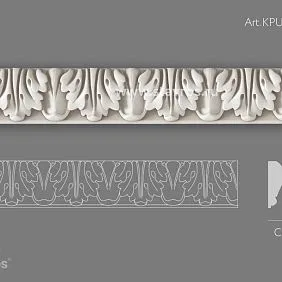
Moldings— are thin convex strips that are mounted on walls, creating relief and structure. Classic application — framed compositions: moldings form rectangles or squares, inside which contrasting paint, patterned wallpaper, or fabric can be placed.
Photos of classical and neoclassical interiors demonstrate the power of this simple technique. Moldings transform a plain wall into an architectural element with clear geometry. Symmetrical frames create order, predictability, harmony. Vertical elongated frames visually raise ceilings. Horizontal frames expand narrow spaces.
— lighter than gypsum, do not crumble, do not fear moisture, easily mounted with adhesive. They can be painted in any color: white for classic elegance, gold for palace luxury, black for modern graphic style, or in wall color for subtle relief effect.
Polyurethane moldingsLighter than gypsum, do not crumble, do not fear moisture, easily mounted with adhesive. They can be painted in any color: white for classic elegance, gold for palace luxury, black for modern graphic style, or in wall color for subtle relief effect.
Modern interpretation of moldings — minimalist. Thin, inconspicuous strips create a delicate structure that is visible but does not shout. In Scandinavian interiors, white moldings on white walls create volume exclusively through shadows. In monochromatic interiors, moldings in wall tone add textural complexity without color contrast.
Wallpaper: from simplicity to luxury
Wallpaper — the most common finishing material, but modern technologies have turned it from a budget solution into a designer tool. Photos of interiors with designer wallpaper show how the right pattern transforms space.
Geometric patterns — stripes, diamonds, chevrons, grids — create graphic effect and rhythm. Vertical stripes visually raise ceilings. Horizontal stripes expand narrow walls. Large geometry works well in large spaces, small geometry — in compact ones.
Plant motifs — flowers, leaves, branches — introduce natural organic elements. Large tropical leaves on a dark background create a dramatic colonial-style accent. Small floral print in pastel tones — classic Provence and shabby chic.
Photo wallpaper transforms a wall into a panoramic window. Cityscapes, nature views, abstract compositions — countless options. Realistic photo wallpaper creates an illusion of space continuation, visually pushing walls apart. Abstract designs work as art objects, pieces of modern art.
Textile wallpaper — silk, velvet, linen on paper base — creates tactile richness and luxury. Photos show how their perception changes depending on lighting: daylight highlights fabric texture, evening light creates soft shimmering.
Decorative plaster: textures to any taste
Decorative plaster— is a huge category of materials united by the ability to create textured surfaces. Photos of interiors demonstrate incredible variety of effects.
Termite — a grooved surface resembling wood eaten by a termite. Chaotic grooves create natural organic texture. Suitable for eco-style, Mediterranean interiors, facades of country houses (but also used indoors).
Bark — fine-grained rough surface resembling sheepskin. Creates cozy warm texture. Well hides minor defects of the base. Popular in Scandinavian interiors, where tactile quality is valued.
Travertine — imitation of rough porous travertine stone. Uneven surface with indentations, craters, and shells creates an effect of ancient stone. Especially convincing in warm beige, sandy, terracotta shades.
Marseille wax — smooth polished surface with subtle color shifts. Similar to Venetian plaster, but easier to apply and cheaper. Creates noble elegance without palace pomp.
Concrete plaster — imitation of rough industrial concrete. Cold gray tone, slight roughness, industrial brutality. Ideal for loft, minimalism, urban interiors.
Photos show that the same plaster looks different depending on lighting and color. Warm light softens cold gray tones. Cool light emphasizes relief. Colored plaster — deep emerald, sapphire, terracotta — creates dramatic accents.
Large-format ceramic granite: monumental luxury
Modern large-format ceramic tile up to 3 meters long creates almost seamless surfaces. In interior photos, such walls appear monolithic, like single pieces of marble or onyx.
Ceramic tile with natural stone imitation achieves photographic realism. Modern digital printing reproduces not only vein patterns but also the micro-relief of the surface. Touching it, you will feel the irregularities characteristic of real marble.
Ceramic tile imitating wood — an alternative to natural wood in humid areas. The tile conveys the texture of fibers, knots, and natural color variation. Yet it is water-resistant, does not rot, and does not require protective treatment.
Ceramic tile imitating concrete — ideal for industrial interiors. Cool gray with light streaks, characteristic of poured concrete, creates an urban aesthetic without the drawbacks of real concrete (dust, staining).
In photos of bathrooms clad with large-format ceramic tile, you can see how even a minimum number of joints creates visual monolithism. The wall appears as a single stone slab. Modern rectified tiles (with perfectly straight edges) are laid with a micro-joint of 1-2 mm, which becomes almost invisible after grouting.
Paint: limitless color and techniques
Painting may seem a simple solution, but modern techniques turn painting into art. Photos of interiors demonstrate how a creative approach to painting creates unique effects.
Ombre (gradient) — a smooth transition from one color to another or from a saturated tone to a light one. Vertical gradient (from dark floor to light ceiling) visually lifts the space. Horizontal gradient creates the feeling of dawn or sunset.
Geometric blocks — the wall is divided into colored segments with clear lines. This can be horizontal division (dark lower half, light upper half), vertical stripes, diagonal triangles, asymmetrical blocks. Painter’s tape ensures perfectly straight boundaries.
Accent wall — one wall is painted in a saturated color, the others remain neutral. Deep emerald, sapphire, terracotta, graphite create a dramatic focal point. Photos show how a well-chosen accent changes the entire perception of the space.
Textured painting — using special rollers, sponges, brushes to create a textured surface. Patterned rollers leave a repeating pattern. Sponge creates a mottled texture. Broad brush strokes — artistic carelessness.
Metallic paints — with added metallic pigments, create a shimmering surface. Gold, silver, copper, bronze paint reflects light, creating a luxurious glow. Especially effective in classic interiors combined withmoldings.
Mirror surfaces: illusion of infinity
Mirror — not just a functional item, but a powerful design tool. A mirrored wall visually doubles the space, creating an illusion of infinity. Photos of small rooms with mirrored walls show how the room appears twice as large.
Mirror panels can cover the entire wall or part of it. A mirror from floor to ceiling in a narrow corridor visually doubles its width. A mirrored insert betweenwooden plankscreates an interesting play of reflections.
Mirror opposite a window multiplies natural light, making the room brighter. Mirror opposite a beautiful view reflects it, as if creating a second window. Mirror opposite an artificial light source multiplies illumination.
Antique mirrors with patina, scratches, and darkening create a vintage aesthetic. Tinted mirrors — bronze, gray, brown — add a color tone to reflections. Mirrored mosaic made of small tiles creates a sparkling fragmented surface.
Fabric on walls: softness and acoustics
Fabric wall covering — a rare but very effective solution. Photos of boudoirs, bedrooms, home theaters with fabric walls show how the material changes the acoustics and aesthetics of the space.
Fabric is stretched over frames or directly adhered to the wall with special adhesive. Dense decorative fabrics are used: velvet, satin, jacquard, silk, linen. Fabric can be solid color or patterned. Vertical fabric stripes create draping, folds, and volume.
Fabric walls improve acoustics by absorbing sound. This is critical for home theaters, music rooms, where clean sound without echo is essential. Fabric creates a warm tactile comfort: the wall is pleasant to touch, warm, and soft.
Color solutions are diverse. Elegant gray velvet creates refined restraint. Deep emerald or sapphire satin — luxurious drama. Natural beige linen — organic authenticity. Silk with gold or silver pattern — palace grandeur.
Living green: vertical gardens
Vertical greening — when a wall becomes a living garden — the dream of anyone longing for nature in urban jungles. Photos of interiors with living walls show how plants transform space, filling it with life.
There are ready-made modular systems for vertical greening: plastic or metal panels with pockets for plants, with an integrated watering system. Plants are planted in a special substrate and watered automatically via drip irrigation.
Plant selection depends on lighting. For sunny walls, suitable are succulents, cacti, sedums. For shaded areas — ferns, ivy, fittonia, moss. You can create a monoculture wall (only moss or only succulents) or a mixed wall with different species.
Living wall is not only beautiful but also functional. Plants purify air, produce oxygen, absorb carbon dioxide. They regulate humidity, moistening dry air. They create psychological comfort: green color calms, reduces stress, improves mood.
Living wall combined with wooden planksA popular solution. Racks form a geometric structure, with plants placed between them. This creates a composition where architecture and nature coexist in harmony.
Combined finish: texture mix
The most interesting interiors in photos are those where different materials are boldly combined.wall decorationIt becomes richer when contrasting textures are combined.
Wood + stone — natural harmony, where warm wood softens cold stone. Wood + plaster — contrast between smooth and textured surfaces. Wood + paint — classic combination, with wooden panels at the lower part and painted walls at the upper part.
Stone + plaster — rough and smooth in one space. Stone + wallpaper — natural and man-made. Stone + mirror — massive and weightless, creating visual paradoxes.
Moldings + wallpaper — classic combination, where moldings form frames, within which patterned wallpaper is placed. Moldings + contrasting paint — modern interpretation of classic design. Moldings + 3D panels — combination of linear and volumetric relief.
Racks + smooth wall — airy and dense. Racks + mirror — wood multiplied by reflections. Racks + stone — linear and formless. Each combination creates a unique visual effect.
Color as the main tool
On all professional interior photos, it is evident that color determines perception.Designer finishIt begins with the correct choice of color palette.
Neutral tones — white, gray, beige — create a universal background for any decor. They expand space, fill it with light, and create calmness. But without color accents, a neutral interior may seem dull.
Saturated deep colors — emerald, sapphire, terracotta, burgundy — create dramatic accents. One wall in a deep color changes the entire perception of the room, making it memorable and distinctive.
Pastel shades — pale pink, mint, lavender, peach — create delicacy, romance, and relaxation. They are especially suitable for bedrooms and children’s rooms, where a calming atmosphere is important.
Dark colors — graphite, black, dark blue — require boldness but create incredible depth and sophistication. Dark walls combined withwhite moldingsor light furniture — a trend of recent years.
Conclusion: your wall — your canvas
Beautiful walls photoInspire, show possibilities, open horizons. But most importantly — understand that every wall in your home can become a work of art if you approach finishing with creativity.
decorative wall finishingIt is not just applying material to a surface. It is creating an atmosphere, mood, character of the space. It is a way to express yourself, tell your story, create an environment that supports your lifestyle.
STAVROS company offers a full range of materials for creating striking interiors.Sculptural decorations, Moldings, Wooden planks, PanelsEverything for realizing design ideas.
Each element undergoes strict quality control. Polyurethane products are lightweight, moisture-resistant, and easy to install. Wooden elements made from selected species with perfect calibration. Professional consultations will help you choose the optimal solution for your project.
Fast delivery, competitive prices, individual approach — STAVROS makes creating a beautiful interior accessible. We work with private clients, designers, and construction companies.
Entrust the creation of your ideal interior to STAVROS professionals. Your walls deserve more than just paint. They deserve to become art.