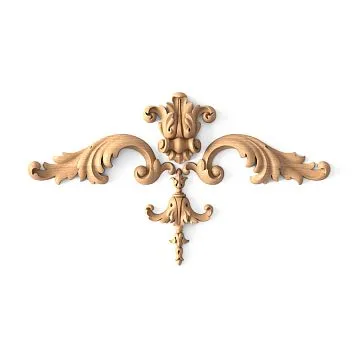
Article Contents:
- What is Decorative Polyurethane Molding: Composition and Properties
- Chemistry Without Fear: What is Polyurethane
- Key Technical Characteristics
- Why 'European' is Not Just a Word
- Product Types: Complete Catalog of Polyurethane Molding
- Trims: Linear Profiles for Walls and Ceilings
- Rosettes: Accents Above the Ceiling Center
- Wall Molding: Frames, Panels, Zoning
- Corbels: Supporting Rhythm Under the Cornice
- Capitals and Columns: Architectural Accents
- Medallions and Decorative Overlays
- Comparison: Polyurethane, Plaster, and Polystyrene
- Plaster: Advantages and Limitations
- Polystyrene (EPS): Budget and Its Price
- Final Comparison
- How to Properly Buy Polyurethane Molding: Practical Guide
- Step 1: Define the Task
- Step 2: Measure and Calculate
- Step 3: Check Material Characteristics
- Step 4: Choose a Profile Matching the Room Height
- Step 5: Buy Polyurethane Molding from a Verified Supplier
- Decorative Molding Installation: Error-Free Technology
- Tools and consumables
- Surface Preparation
- Cutting Corners
- Adhesive and Fixation
- Joint Filling
- Priming and Painting
- Polyurethane Product Care: How to Preserve for Decades
- Regular Cleaning
- Periodic Coating Renewal
- Repairing damage
- FAQ: Answering Key Questions
- STAVROS: Decorative Molding and Complete Interior Catalog

In the world of interiors, there exists a concept that's difficult to explain in technical terms but instantly understood when looking at a finished space: 'completeness.' It's when transitions are refined, accents are placed, and every element is in its rightful place. Polyurethane molding is one of the most effective ways to achieve this completeness. Not the loudest, not the most expensive, but one of the most 'functional.'
Decorative polyurethane molding— This is not nostalgia for palace interiors or an attempt to make it 'like before.' It is a modern material with clear technical characteristics and the widest range of applications: from a ceiling cornice in a small apartment to multi-tiered facade decoration for a country mansion. This article provides a complete breakdown: the composition and properties of the material, types of products, comparison with competitors, a purchasing guide, installation, and maintenance. Everything you need to know to make an informed decision.


What is polyurethane decorative molding: composition and properties
Before discussing what it looks like and how, it's necessary to understand what it's made of and why this particular material has taken a leading position in the decorative market.




Chemistry without fear: what is polyurethane
Polyurethane is a broad class of polymers obtained from the reaction of polyols with diisocyanates. For the production of decorative molding, rigid closed-cell polyurethane foam is used. 'Closed-cell' is a key term: the pores in the material's structure are not interconnected, which means zero capillary water absorption.
In practical terms, this means the following: water does not penetrate the material. Not when wet, not during prolonged contact with moisture, not during condensation. This is a fundamental difference from plaster and a key advantage over open-cell polymer materials.
The production of polyurethane decorative molding involves pressure casting into precise metal molds. This ensures the reproducibility of relief details with an accuracy of fractions of a millimeter: every cast baluster, every cornice, every rosette is an exact copy of the master model.
Our factory also produces:
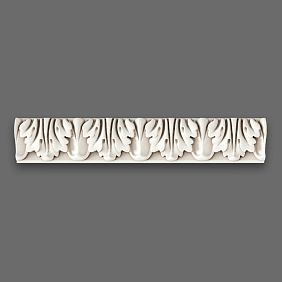


Key technical characteristics
For a professional understanding of the product — characteristics of European technical polyurethane, from which STAVROS molding is produced:
| Parameter | Value |
|---|---|
| Density | 250–350 kg/m³ |
| Water absorption | < 1% by mass |
| Operating temperature range | from −60°C to +80°C |
| Hardness | elastic, with shape recovery upon impact |
| Flammability | self-extinguishing (flammability class G2–G3) |
| Adhesion to dyes | high, without primer |
| Service life in interior | 30–50 years |
| Service life on facade | 25–40 years with proper painting |
Elasticity is particularly noteworthy. Polyurethane is not brittle, unlike plaster. Upon impact, it slightly deforms and returns to its original shape — it does not chip or crumble. This means durability in real operating conditions, where furniture sometimes bumps against the baseboard and children are not always careful.
Get Consultation
Why 'European' is not just a word
Polyurethane moldingsSTAVROS is made from European-produced polyurethane. This is not a marketing ploy: raw materials from European chemical conglomerates have a stable composition, controlled characteristics from batch to batch, and certification confirming the stated properties.
Counterfeit and cheap Chinese PU decor is often made from open-cell polyurethane foam with a density of 80–120 kg/m³. It absorbs water, deforms when heated, and deteriorates within 3–5 years. Visually distinguishing them when purchasing is difficult — that's why certificates and data on material density are important when buying.
Types of products: complete catalog of polyurethane molding
Marketpolyurethane productsis divided into several clear categories. Each category solves its own task in the interior.
Trims: linear profiles for walls and ceilings
Trims are linear (longitudinal) elements sold by the meter or in fixed lengths. This is the group with the widest assortment.
In the STAVROS catalog, the 'Trims' category features over 30 items with prices ranging from 840 rub. to 20,590 rub. per item. The price range corresponds to the complexity of the profile: simple smooth moldings are cheaper, multi-level cornices with rich relief are more expensive.
Main items:
-
KPU-125 — from 840 rub. — a simple flat molding for a laconic interior
-
KPU-105 — from 860 RUB — decorative profile for wall-to-ceiling transitions
-
KPU-034 — from 2,040 RUB — multi-step cornice with relief profile
-
KPU-020 — from 2,730 RUB — classic medium-sized cornice
-
KPU-077 — 6,520 RUB — cornice with rich relief for rooms with ceiling heights of 2.8–3 m
-
KPU-001 — from 6,190 RUB — classic cornice with dentils
-
KPU-080 — 7,380 RUB — extended cornice for high ceilings
-
KPU-074 — 13,500 RUB — large cornice for ceremonial halls with ceiling heights from 3.5 m
-
KPU-012 — 20,590 RUB — large-scale architectural cornice with the highest level of detail
-
KPU-094L / KPU-094R — 6,880 RUB — paired corner elements (left and right versions)
-
KPU-006 — 3,060 RUB — decorative molding with ornament
Principle for selecting cornice width: ceiling height 2.5–2.7 m — cornice width 80–120 mm; 2.7–3.0 m — 120–160 mm; 3.0–3.5 m — 160–200 mm; above 3.5 m — from 200 mm.
Ceiling rosettes: accents above the center of the ceiling
Polyurethane ceiling rosettes— decorative round or oval elements mounted in the center of the ceiling.
Dual function: decorative — creates a focal point; technical — conceals the light fixture connection point and possible cracks in the chandelier mounting area.
In the STAVROS catalog — rosettes with diameters from 200 to 900 mm, with profiles ranging from minimalist-geometric to richly ornamented with acanthus leaves.
Rule for selecting size: rosette diameter ≈ 1/7–1/8 of the shortest room side. Room 4×5 m: optimal rosette — diameter 500–570 mm. This ratio creates proper scale without excess.
Wall moldings: frames, panels, zoning
DecorativeMoldings for walls— horizontal and vertical linear elements used for:
-
Creating decorative panels (framed wall zoning)
-
Inter-floor belts in classic interiors
-
Framing door openings
-
Separating zones with different finishing materials
Framed zoning — a special technique: moldings form rectangular or square 'pictures' on walls, creating a paneling effect without actual panels. This is exactly how walls look in classic English clubs and St. Petersburg palaces — and this effect can be reproduced in one day with a few linear meters.polyurethane molding.
Corbels: supporting rhythm under the cornice
Polyurethane brackets— decorative supporting elements installed below the cornice at regular intervals. Create rhythm and give the cornice 'weight,' visually justifying its placement on the wall.
Sizes — from 120 to 300 mm in height. Spacing interval — 60–120 cm depending on corbel size and wall length.
Capitals and columns: architectural accents
Capitalsfor pilasters and half-columns — crowning elements of a vertical architectural structure. Polyurethane produces precise reproductions of order capitals: Doric (geometric abacus without ornament), Ionic (volutes), Corinthian (acanthus leaves).
Polyurethane columns and pilasters in interiors — for framing arches, portals, built-in structures.
Medallions and decorative overlays
Medallions are flat decorative elements with ornamentation, used as independent accents on walls and ceilings, and as corner elements in frame decoration.
Decorative overlays are flat ornamental elements for finishing furniture, doors, and fireplace portals.Polyurethane moldingsIn this format, it is a universal tool for finishing any flat surfaces.
Comparison: polyurethane, gypsum, and expanded polystyrene
Direct comparison of the three main materials for decorative molding — without bias, based on real parameters.
Gypsum: advantages and limitations
Gypsum is the historical material of molding. High decorative value: gypsum accepts the most complex relief with the finest detailing. Possibility of restoration: chips are repaired with gypsum putty with minimal traces.
Gypsum limitations:
-
Weight: a gypsum cornice 200 mm wide weighs 8–15 kg per linear meter. Requires reliable mechanical fastening to the ceiling.
-
Fragility: upon impact, it chips irreversibly
-
Hygroscopicity: absorbs water, leading to crack formation upon freezing
-
Installation: only with professional equipment and special skills
-
Price: gypsum products with complex profiles are significantly more expensive than polyurethane analogs
Expanded polystyrene (EPS): budget and its price
Expanded polystyrene is the cheapest and most common material for ceiling decor in the lower price segment.
Advantages: minimal price, ultra-light weight, simplest installation.
Limitations:
-
Open-cell structure: absorbs moisture and odors
-
Mechanical fragility: chips upon minimal contact with a sharp object
-
Limited detailing: fine relief does not hold on expanded polystyrene
-
Degradation under UV: without constant protective coating, yellows within 1–2 years
-
Low 'upper limit' of quality: in the lower price segment, details are blurred, casting accuracy is low
Expanded polystyrene is an acceptable choice for temporary housing, rental premises, and objects with a limited service life.
Final Comparison
| Parameter | Polyurethane | Gypsum | Expanded polystyrene |
|---|---|---|---|
| Weight per linear meter (cornice 200 mm) | 0.8–1.2 kg | 8–15 kg | 0.3–0.6 kg |
| Water absorption | < 1% | 20–30% | 3–5% |
| Impact Resistance | High | Low | Very low |
| Relief detail | High | Very High | Medium |
| Service life | 30–50 years | 10–30 years | 5–15 years |
| Installation | Independently | Professional | Independently |
| Application in bathroom/kitchen | Yes | Limited | No |
| Price (medium profile) | Medium | High | Low |
The conclusion is obvious:polyurethane moldingsoccupies the optimal position in terms of the combination of parameters for most interior tasks.
How to properly buy polyurethane molding: a practical guide
Choosing decorative molding is not an impulse purchase. It is a project decision that requires several steps. Let's break down each one.
Step 1: define the task
A ceiling cornice around the perimeter is one task. Frame zoning of walls is another. Facade decor is a third. Each task requires its own category of products.
An honest question to ask yourself before buying: what exactly do I want to change in the space? Mask a seam? Create an accent? Give the room height? Add a classic character? The answer to this question will narrow the choice from hundreds of items to dozens.
Step 2: measure and calculate
For linear products (cornices, moldings, baseboards):
-
Measure the perimeter of the room
-
Add 15% for corner cutting and reserve
-
This is the footage to order
For piece products (rosettes, medallions, brackets):
-
Determine the quantity and installation locations
-
Check the proportions of the element size relative to the wall/ceiling area
Step 3: check the material characteristics
When purchasingmoldings from polyurethanefrom any supplier — check:
-
Material density: should be 250–350 kg/m³. Below 200 is low-quality open-cell polyurethane foam.
-
Availability of a certificate of conformity
-
Product surface type: should be slightly rough, matte — not glossy slippery (a sign of poor component mixing)
-
Detail accuracy: on a quality product, the relief is clear, without blurred edges and unpainted areas
Step 4: choose a profile that matches the room height
A typical mistake: a too thin cornice in a high room (looks like a 'thread') or a too wide cornice with a low ceiling ('presses'). STAVROS provides a specialist consultation on selecting a profile for specific room parameters.
Step 5: buy polyurethane molding from a trusted supplier
You can buy ready-made stucco matching the Baroque style. Calculate the quantity: linear meters of cornices and moldings, number of rosettes, pilasters, consoles, corner elements. Add a ten to fifteen percent allowance for trimming.at STAVROS — means getting a product made from verified European raw materials, with controlled characteristics and a guarantee. The catalog covers all main positions: from the budget molding KPU-125 (840 rub.) to the representative architectural cornice KPU-012 (20,590 rub.).
Installation of decorative molding: error-free technology
Installing polyurethane molding is a task that can be solved independently in one day. You need to understand the sequence of actions and not rush.
Tools and consumables
-
Tape measure and pencil
-
Laser self-leveling level
-
Miter saw or miter box with hacksaw for metal
-
Painter's tape 50 mm
-
Adhesive: acrylic mounting adhesive or liquid nails
-
Acrylic sealant (for joints)
-
Acrylic primer
-
Acrylic paint
-
Wide flat brush and narrow brush for relief
Surface preparation
Mounting surface: dry, sturdy, cleaned of dust. Acrylic primer is mandatory. Without primer, the adhesive bonds not with the base, but with the surface layer of dust—and the entire structure will simply detach within a year.
Wall or ceiling moisture content—no more than 4%. New plaster gains strength for at least 14–28 days.
Cutting corners
Miter box angle is 45°. But the actual room corner is rarely exactly 90°. Measure the actual angle with a protractor and adjust the cutting.
For external corners (on pilasters, protrusions)—the cutting angle is mirrored relative to the internal one.
Tip: first cut and assemble all elements 'dry,' check the joints, and take a photo. Only then—apply adhesive.
Adhesive and fixation
Apply adhesive in a 'snake' pattern on the back surface of the element. Press against the surface for 30–60 seconds. Immediately secure with painter's tape—it removes after 24 hours without leaving marks.
Excess adhesive on the front surface and on the wall surface—remove immediately with a damp cloth. Hardened adhesive is significantly more difficult to remove.
Sealing joints
Joints between elements and adjacencies to walls and ceiling—use acrylic sealant. Apply, smooth with a finger moistened with water, remove excess with a sponge. Do not use putty on joints: it cracks due to building movements.
Priming and painting
Primer—apply one thin layer with a brush, thoroughly into the relief. After drying—two layers of acrylic paint. A brush is preferable to a spray gun for relief elements: the brush drives paint into all recesses, while a spray gun does not.
Painting 'to match the ceiling color'—soft, restrained effect. Contrast painting—expressive graphic accent. Gilding—baroque and classic.
Care for polyurethane products: how to preserve for decades
Care forwith polyurethane itemsis minimal—this is one of their key practical advantages.
Regular cleaning
Dust in the relief is the main enemy of aesthetics. Removed with a soft flat brush with natural bristles. Frequency—as it accumulates. In rooms with active ventilation—once every 1–3 months. In bedrooms—less often.
Wet cleaning: slightly damp microfiber cloth as needed. No abrasives, no solvents, no chlorine.
Periodic coating renewal
Acrylic coating on interior decor maintains appearance for 7–10 years. After this period—if desired—light sanding with 320-grit sandpaper and application of a new layer of paint. The material itself remains in excellent condition—only the finish layer is renewed.
Damage Repair
Small chip or scratch: acrylic putty, sanding, local painting. All of this can be done independently without dismantling the product.
FAQ: answering the main questions
How does STAVROS polyurethane decor differ from cheap alternatives?
Raw materials, density, casting precision. STAVROS products are made from European rigid polyurethane foam with a density of 250–350 kg/m³. Cheap alternatives are made from open-cell PU with a density of 80–120 kg/m³ and water absorption up to 15%. Despite external similarity—fundamentally different performance characteristics.
Can polyurethane molding be installed in a bathroom?
Yes — this is one of its main advantages. Humidity does not damage the material, and mold does not develop. For wet conditions, use acrylic sealant or special moisture-resistant mounting adhesive.
How to choose a cornice based on ceiling height?
Guideline: cornice width = ceiling height (in mm) / 20–25. For example, for a 2700 mm ceiling: cornice width of 108–135 mm. Round to the nearest standard catalog item.
Can polyurethane decor be painted in a dark color?
Yes, for interiors — without restrictions. For facade decor with dark colors on southern exposures with intense sunlight — use caution: the material heats up, and deformation is possible if it exceeds +80°C.
How many elements are needed for a 20 m² room?
Cornice: perimeter + 15% margin. For a 4×5 m room: perimeter 18 m + margin ≈ 20–21 linear meters. Ceiling rosette — 1 piece with a diameter of 500–600 mm. For full decor — brackets spaced 80 cm apart = 22 pieces.
How to calculate the budget for ceiling decor in a 20 m² room?
Cornice KPU-020 (2,730 rub./piece): 10–11 pieces = 27,300–30,030 rub. Medium-sized rosette — about 3,000–6,000 rub. Brackets 22 pieces × 1,500 rub. = 33,000 rub. Total materials — approximately 60,000–70,000 rub. For self-installation — only adhesive and paint.
How to distinguish open-cell PU from closed-cell PU without documentation?
Take a piece of the product and immerse it in water for 24 hours. Weigh it before and after. A mass increase of more than 3% — open pores. Less than 1% — closed-cell material.
STAVROS: decorative molding and a full interior catalog
When it comes topurchasing decorative polyurethane molding, choosing a supplier is the choice between 'bought and forgot' and 'bought and dealt with issues for several months.' STAVROS is the first.
In the STAVROS catalog — over 30 items in the 'Trim' category alone, plusOutlets, Brackets, Capitals, facade elementsand the full range of ceiling and wall decorative products. The material is certified European technical polyurethane.
For comprehensive projects where polyurethane decor needs to be combined with wooden elements, STAVROS offers a parallel catalog of solid wood products:Wooden moldings and cornices, balusters and stair components, decorative oak overlaysandchurch decor. One manufacturer — a complete product line for interiors from floor to ceiling.
An interior where every line, every transition, and every accent is meticulously crafted — is not a luxury. It is the result of the right decisions. STAVROS helps make them.