Article Contents:
- What old furniture can be updated with wooden decor
- Methodology of measurement works
- What furniture is most often updated
- What elements are used for decorating old furniture
- Wooden carved overlays
- Wooden moldings for furniture facades
- Furniture handles
- Wooden furniture legs
- Decorative overlays for furniture: how to choose and how to install
- Floral ornament
- Geometric ornament
- Central overlay: installation rules
- Corner overlays: principles of placement
- How to prepare the surface for installing an overlay
- Moldings for furniture fronts: how frame decor works
- How molding creates a frame on the front
- How to highlight the central part of a door
- Moldings for dresser drawers
- How not to overload a small front
- Handles as a quick way to update furniture
- Which handles are suitable for updating furniture
- Types of handles and where they are appropriate
- Mounting standards: what's important to know
- Legs and supports: how to change the silhouette of old furniture
- Why legs matter
- Tall legs: visual lightness
- Low supports: stability and solidity
- Carved legs for classic furniture
- How to replace legs on old furniture
- Decorating old furniture for different styles
- Classic style
- Baroque
- Neoclassicism
- Modern classicism
- Country style and Russian motif
- For painting: a universal approach
- Complete decorative program: scenarios by furniture type
- How to update a wardrobe
- How to update a dresser
- How to update a cabinet
- How to update kitchen fronts
- How to combine handles, legs, and overlays: rules of systematic decor
- Rule of stylistic unity
- Rule of Color Unity
- Rule of scale correspondence
- Rule of consistency with the interior
- Mistakes when updating old furniture: learn from others' experience
- Choosing too large decor for a small front
- Mix different patterns
- Not checking the base condition
- Glue decor without surface preparation
- Not coordinating handles, legs, and overlays
- Paint without primer
- Choose low-quality paint
- Step-by-step plan for decorative furniture transformation
- Frequently Asked Questions
- What can you use to update old furniture?
- Which overlays are suitable for an old cabinet?
- Can you decorate an old chest of drawers with wooden decor?
- What is better to replace first: handles or legs?
- Do I need to remove furniture from hinges for installing decor?
- Can I glue overlays on MDF with film?
- Where to buy wooden decor for furniture restoration?
- STAVROS: everything for decor and updating old furniture in one catalog
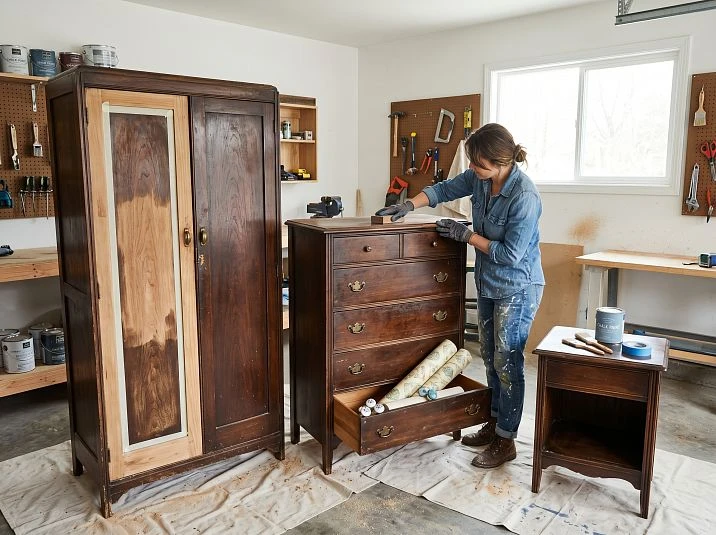
Throw away or keep. A familiar dilemma, isn't it? An old cabinet stands in the corner of the bedroom — sturdy, spacious, well-made — but looks like it came from another era. Peeling paint, boring flat fronts, plastic handles that are already hard to open. Replace? It's a shame. Leave as is? Impossible.
And between these two extremes lies a whole world of possibilities. Decorating old furniture with wooden overlays, moldings, new handles and legs — this is not a compromise or a forced measure. It is a conscious choice of people who understand the value of a good base and know how decorative transformation works.
Furniture Decoration from Wood — carved overlays, moldings, ornaments, handles, legs — allows turning a faceless cabinet into a classic piece with character, and a boring chest of drawers into a real accent element of the interior. Without full replacement, without large expenses, with a specific and predictable result.
This article is a step-by-step practical guide. Read, choose, act.

What old furniture can be updated with wooden decor
First of all, determine whether your furniture is suitable for decorative renewal. Not every old item is equally suitable.




Requirements for the base
Furniture is suitable for decorative renewal if:
-
The body is sturdy — not loose, not cracked, not deformed. The decor is installed on a working base, not masking structural damage.
-
The surface of the facades is smooth — without deep dents, significant chips, or delaminations. Minor defects are puttied before installing the decor.
-
The facades are made of suitable material — solid wood, MDF, chipboard with a smooth coating. Decorative elements with glue adhere well to all these materials.
If the furniture is made of chipboard with PVC film, you need to first check the adhesion of the glue to this coating. Sometimes additional preparation is required: sanding, degreasing, priming with a special compound.
Our factory also produces:
Which furniture is most often renewed
Wardrobe. A wardrobe with flat facades is a classic candidate for renewal. Adding moldings that create frame divisions on the facade, installing central decorative overlays, replacing handles — and the wardrobe transforms beyond recognition.
Chest of drawers. A chest of drawers is one of the most rewarding items for decorative renewal. Each drawer is an independent field for decor. New handles, overlays on drawer fronts, moldings around the perimeter — and the chest of drawers from Soviet-era furniture becomes a piece of classic interior.
Nightstand. A bedside table, TV stand, hallway cabinet — small items that are quickly and inexpensively renewed by replacing handles and adding applied decor.
Sideboard and display cabinet. Large items with a large decorative surface. Here, extensive decorative programs are possible: molding frames, central overlays, corner elements.
Kitchen fronts. In old apartments, the kitchen often retains durable wooden fronts with a morally outdated design. New handles + molding frames on the fronts + painting = a complete transformation of the kitchen without replacing the set.
Writing desk. A desk with unexpressive supports and a flat tabletop can receive new decorative legs and added moldings along the edge of the tabletop.
Furniture panels. Interior furniture panels, partitions, built-in elements — all of these can also be decoratively updated.
Get Consultation
What elements are used for decorating old furniture
The decorative arsenal for updating furniture is rich. Let's look at each type of element from a practical application perspective.
Wooden carved overlays
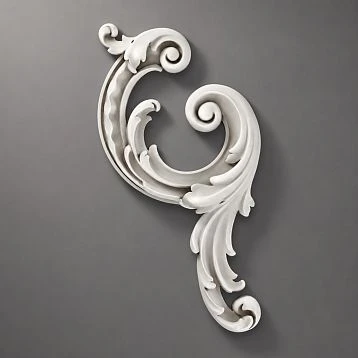
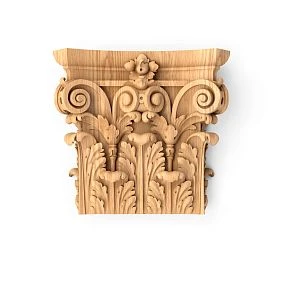
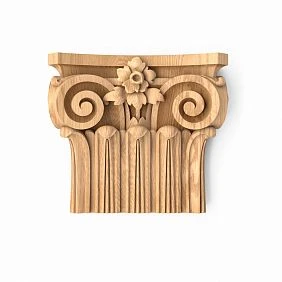
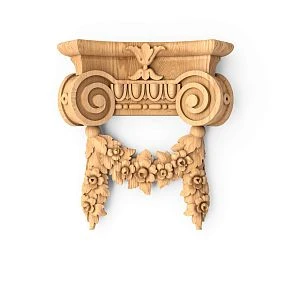
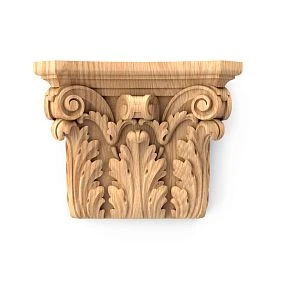
Carved furniture decor — overlay elements made of solid wood with an ornament, which are mounted directly onto the front. This is the most expressive type of decor: it is the overlay that creates the 'statement' — the central decorative accent of the piece.
Types of pads:
-
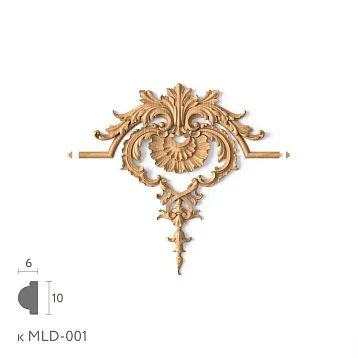
Central — one overlay in the center of a door or drawer front. Creates the main decorative accent.
-
Corner — four overlays at the corners of the front. Create completeness in the corner areas, framing the field.
-
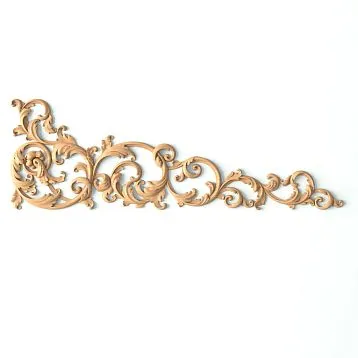
Perimeter inserts — elements along the perimeter in the form of a garland, ribbon, or ornamental frieze.
-
Ornamental ribbons — elongated overlays for horizontal or vertical accentuation.
Overlays are mounted using wood glue or PVA with pressure and subsequent painting. After installation, the facade is painted in a single color together with the overlay, and the ornament's relief comes to life through shadows from side lighting.
Wooden moldings for furniture facades
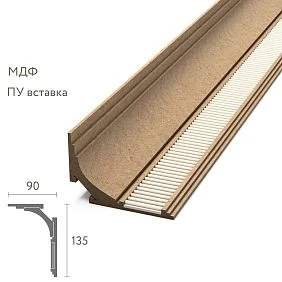
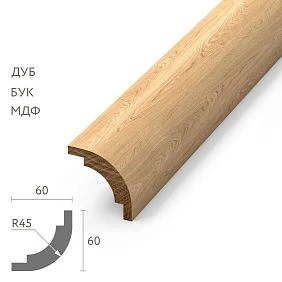
Wooden moldings — profiled strips that create geometric divisions on the facade: frame sections, belts, horizontal and vertical lines.
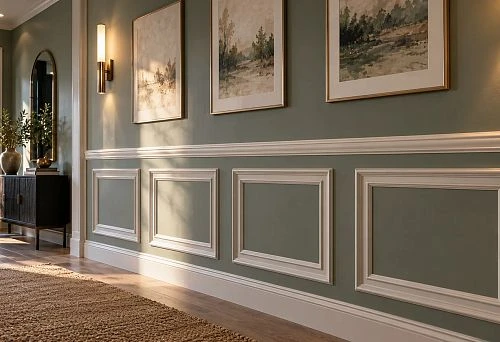
Molding is a tool for architectural organization of a flat facade. Without moldings, a cabinet is just a rectangle. With moldings, it becomes an architecturally meaningful object with internal structure.
Rule of molding design: moldings create frame 'fields' inside which you can install an overlay or leave empty space (and it will work as an artistic pause).
Furniture handles
Replacing handles is the fastest and most affordable way to update furniture. A new handle, even with the same facade surface, instantly changes the perception of the item.
wooden furniture handles for updating furniture:
-
Handles without coating — for further painting to match the facade color. Universal: accept any color, any treatment.
-
Handles with coating — ready for installation without additional operations. White, dark, with patina, with varnish.
-
Knob handles — compact, for drawers. Single center mount.
-
Pull handles — horizontal, two mounts. Classic type for drawers and doors.
-
Long handles — for tall cabinet fronts and display cases.
The most important principle when choosing a handle for furniture renovation: the handle should be proportionate to the front and consistent in style with other decorative elements.
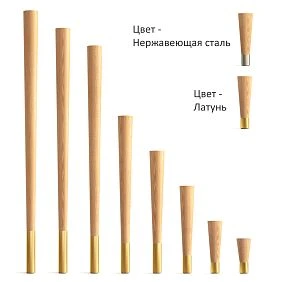
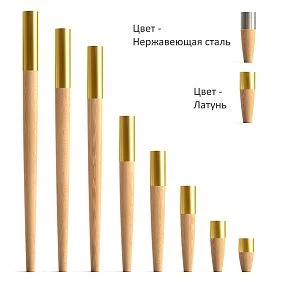
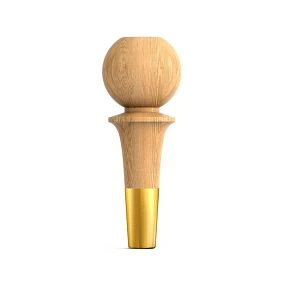
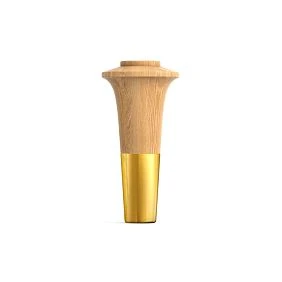
Wooden furniture legs
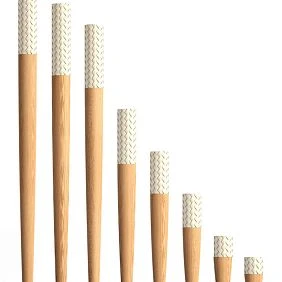
Furniture legs when replaced, they change not only the function — they change the silhouette of the piece, its "posture", its scale in the space.
A chest of drawers standing directly on the floor looks squat and heavy. The same chest of drawers on 100 mm high legs — a completely different image: light, "suspended", modern or classic depending on the shape of the legs.
For furniture renovation, legs are often an underestimated tool. But in vain.
Decorative furniture overlays: how to choose and how to install
This is the most extensive and most important block for those who want a serious decorative result.
Floral ornament
Wooden ornament of plant type — leaves, branches, flowers, berries, vines — the most sought-after type for furniture in classical and baroque styles. It is perceived warmly, organically, vividly. For the living room, bedroom, study — a universal choice.
A plant overlay in the center of a cabinet facade is instantly recognizable as "classic furniture." Without complex design solutions, without expensive purchase of new furniture.
Geometric ornament
Geometric overlays — diamonds, rosettes, stars, weaves — for a stricter, more orderly decor. They work well in neoclassicism, modern classic, Russian style. They provide a clear, distinct form without excessive "naturalness."
Central overlay: installation rules
The central overlay on a drawer or door facade is installed according to the following principles:
-
Geometric center. Find the geometric center of the facade — horizontal and vertical axes. The overlay is centered at the intersection of these axes.
-
Vertical correction. Sometimes the optical center is lower than the geometric center. If the overlay looks "too high" when geometrically centered — shift it slightly downward.
-
Proportion. The overlay should not occupy more than 1/3 of the facade area. For a facade 400×700 mm — an overlay up to 130×230 mm.
Corner overlays: placement principles
Corner overlays are installed in the four corner zones of the facade, creating a frame. The distance from the edge of the facade to the overlay is usually 20–40 mm, depending on the size of the overlay.
Important: all four corner overlays must be identical and installed with the same indents from the edges. A mismatch — even by 2–3 mm — is noticeable.
How to prepare the surface for installing the overlay
-
Clean the facade from dust and grease.
-
If there is an old coating, sand it to a smooth surface or apply primer.
-
Mark the position of the overlay with a pencil.
-
Apply glue (PVA, wood glue) to the back side of the overlay.
-
Install, press, secure with tape or clamp until dry.
-
After drying — if necessary, additionally secure with thin countersunk screws.
-
We putty the joints and screw heads.
-
We prime the entire surface of the facade.
-
We paint in 2 coats.
Moldings for furniture facades: how frame decor works
Moldings are a thin but powerful tool. By mastering the principle of molding design, you can transform any boring facade.
How molding creates a frame on the facade
The molding is glued along the perimeter of the facade with an indent — creating a "frame field": an inner space outlined by a profile strip. This is the simplest technique that gives an immediate classic effect.
The standard indent of the molding from the edge of the facade is 20–40 mm. The larger the facade, the larger the indent can be. But the rule: the molding field should be smaller than the entire facade. Molding right at the edge without an indent looks inappropriate.
How to highlight the central part of the door
Another technique is a double frame: an outer molding along the perimeter with an indent of 25 mm and an inner molding with an additional indent of 15 mm. A double frame field is created. In the central zone, a decorative overlay is optionally installed.
Moldings for dresser drawers
Each drawer is a separate facade. Molding design of each drawer in the same pattern creates a rhythmic, orderly decorative system.
For a drawer 400 mm wide and 150 mm high, a molding frame with a 15 mm offset from the edge creates an inner field of 370×120 mm. Inside, you can add a small central overlay or leave it empty.
How not to overload a small facade
For a small nightstand or bedside table — one molding around the perimeter and a small central overlay. This is the maximum for a small facade. Double frame + overlay + corner elements for a small facade is overload.
The principle of scale matching: the smaller the facade, the smaller and simpler the decor should be.
Handles as a quick way to update furniture
There is no faster way to change the character of furniture than replacing the handles. It is literally a one-hour job — remove the old ones, install new ones. But the result is striking.
Which handles are suitable for updating furniture
uncoated wooden handles — for those who paint furniture themselves. They are installed on the furniture, then painted together with the facade in a single color. They perfectly match the facade in tone — no mismatch.
Wooden handles with coating — ready for installation. They are selected by color to match existing furniture or the planned color.
Types of handles and where they are appropriate
Knob handles. A compact convex handle for small drawers: drawer height up to 150 mm, width up to 400 mm. Single center mount. A simple and minimalist option.
Bail handles. A bracket with two mounting points. A classic type for medium drawers, cabinets, and chests. Distance between mounting centers — 32, 64, 96, 128 mm (standard steps). When replacing handles, ensure the new handles have the same center-to-center distance as the old ones.
Long handles. An elongated handle for tall cabinet doors and display cases. One or two mounts. Creates a vertical accent on a tall facade.
Ornamental handles. A handle with a pattern — for furniture in classic, baroque, or neoclassical style. Matched in pattern with decorative overlays.
Mounting standards: what you need to know
Most furniture handles are attached with an M4 or M5 threaded bolt. The standard bolt length is 35 mm — suitable for facades up to 20 mm thick. For thicker facades (25–35 mm), bolts of the appropriate length are needed — confirm when ordering.
When replacing handles, measure the distance between the mounting holes on the facade. If the new handles have a different center-to-center distance, you will need to drill new holes and mask the old ones with putty.
Legs and supports: how to change the silhouette of old furniture
Changing legs is not just a functional operation. It is an architectural solution that changes the proportions, character, and scale of an object.
Why legs matter
Legs are the first thing the eye sees when looking at furniture from below. It is the legs that determine the "posture" of an object: heavy and grounded or light and elevated, classic or modern, decorative or functional.
Old Soviet-era furniture often has either no legs at all or short, straight supports made of chipboard. Replacing them with wooden legs with a profile is a radical transformation.
High legs: visual lightness
High wooden furniture legs (100–160 mm) lift the body off the floor, creating "air" under the furniture. The object looks light, "floating." Good for cabinets, chests of drawers, small wardrobes.
Low supports: stability and solidity
Supports 40–80 mm — for heavy objects. Create a feeling of groundedness, massiveness. Good for sideboards, large wardrobes.
Carved legs for classic furniture
For a wardrobe or chest of drawers in a classic style — turned legs with an expressive profile. They align with the molding design of the facade and decorative overlays, creating a unified decorative system for the object.
How to replace legs on old furniture
Most old Soviet cabinets and dressers don't have mounting spots for individual legs — the body simply sits on the bottom. To replace the legs:
-
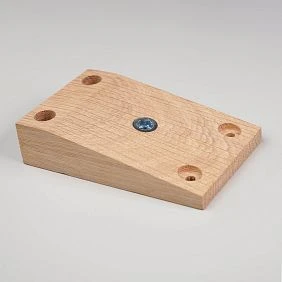
Screw a mounting plate to the bottom of the body.
-
Install the legs onto the plate with a bolted connection.
Or a simpler option: screw threaded bolts into the bottom of the body (if the body is solid wood or thick MDF) and screw on the legs.
Decorating old furniture in different styles
Decorative transformation of furniture is not just about "adding beauty." It's about choosing a specific style that the updated piece will follow.
Classic style
Molding frames on the fronts, central overlays with floral patterns, corner rosettes, medium-sized profile handles. Color — white, cream, ivory. Legs — turned, matching the front.
Classic decor for old furniture is the most popular scenario. This kind of transformation completely changes the perception of the piece: from "Soviet" to "European classic."
Baroque
Rich carved overlays with patterns, corner decorative elements with curls, wooden handles with carved decor, legs with shaped profiles or curves. Partial gilding of overlays — creates a baroque look.
Important: Baroque on a small nightstand is a different baroque than baroque on a large cabinet. The scale of the decor adapts to the size of the item.
Neoclassicism
A more restrained version of classic style. Molding is straight, without complex profiles. There is one small, neat overlay. Handles have a moderate profile, without excessive ornamentation. Color: white, gray, natural wood.
Modern classic
Straight molding, no ornamental overload, neat handles with a minimal profile. Color: white. Legs are simple conical or straight. This is the "safest" option for those who don't want to take risks with decor.
Country style and Russian motif
Overlays with folk geometric or floral ornament. Handles are wooden, lacquered. Natural wood color, oil or wax as a finish. Legs are turned, of moderate height. Atmosphere: warm, "homey".
For painting: a universal approach
Old furniture for full painting is an ideal case for decorative renewal. All decorative elements (overlays, molding, legs, handles without coating) are mounted on the facades, after which the entire furniture is painted in a single color with 2 coats of acrylic enamel. The result is solid, uniform, professional.
For painting, choose uncoated wooden handles — they are painted together with the facade, creating a perfect color match.
Full decorative program: scenarios by furniture type
How to update a wardrobe
A wardrobe is a large item with a large decorative area. For it:
-
Molding design of doors: frame fields in the upper and lower part of each door.
-
Central overlay in the upper field of each door.
-
Long vertical handles.
-
Legs — if technically possible to install.
-
Final painting in the chosen color.
Result: a wardrobe that looks like an item from a classic interior.
How to update a dresser
A dresser is a rewarding item. Each drawer is a separate decorative object.
-
Molding frame on each drawer.
-
Small central overlay inside the frame — on each drawer.
-
Handles — in a unified style for all drawers.
-
Replacing legs with turned ones.
-
Full painting, including legs and handles (if unfinished).
Result: a dresser that looks like a standalone designer piece.
How to update a chest
A chest is a small piece requiring restrained decor.
-
One molding along the perimeter of the front.
-
Small central overlay or corner elements.
-
Button handle or small pull handle.
-
Legs — if height needs to be adjusted.
-
Painting.
How to update kitchen fronts
The kitchen is the most complex case, as there are many fronts and they all must have the same decor.
-
Choose a standard molding pattern for all fronts: a frame with one offset.
-
Install moldings sequentially on all fronts.
-
Without decorative overlays — clean frame fields: the kitchen requires simplicity.
-
Replace all handles with identical ones.
-
Paint all fronts in a single color.
This is a labor-intensive job, but the result is a kitchen that looks like a full-fledged classic set.
How to combine handles, legs, and overlays: rules of systematic decor
The most common mistake when updating furniture is choosing elements individually, without a systematic view of the piece as a whole.
Rule of stylistic unity
All decorative elements of a single piece of furniture must belong to the same style. A handle with a baroque curl and a straight minimalist molding is a stylistic break. A classic overlay with a floral pattern and a modern profile handle is the same.
Choose the style of the piece before selecting the elements, not the other way around.
Rule of color unity
Handles, legs, overlays, and moldings are painted in a single color together with the main facade — this is a basic rule. Or a deliberate color accent is created: for example, gilded overlays on a white facade. But a "random" color — handles in one tone, legs in another, overlays in a third — is unacceptable.
Rule of scale correspondence
The size of the decorative element is proportional to the size of the piece. For a large cabinet — larger overlays and a wide molding. For a small nightstand — minimal decor on a small scale.
An overlay covering 60% of the facade area is too large. A molding 2 mm thick on a huge facade is too thin — it will get lost.
Rule of consistency with the interior
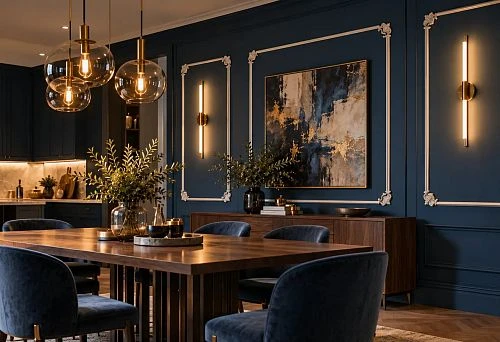
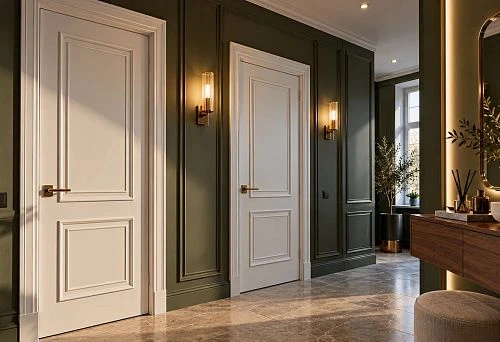
Updated furniture exists in an interior — not in a vacuum. Its decor must be consistent with the room's decor: door trims, baseboards, wall frames. Classic overlays on furniture and a simple straight baseboard without profile — a mismatch. Rich carving on a chest of drawers and cheap door handles in the hallway — the same.
Mistakes when updating old furniture: learn from others' experience
Choosing too large decor for a small facade
A large overlay on a small nightstand 300×400 mm is overload. The overlay occupies the entire facade field, leaving no space around. The overlay for a small facade should not exceed 1/4 of its area.
Mixing different ornaments
Floral ornament on one drawer, geometric on another, zoomorphic on the cabinet door next to it. This is a collection of samples, not a decorative system. For all furniture or all elements of one item — one ornamental type.
Not checking the condition of the base
Starting installation of overlays on a facade with delaminations or cracks. After painting, defects will appear and ruin the entire result. Before installation — thorough surface inspection, puttying defects.
Gluing decor without surface preparation
Sticking an overlay on a greasy or dusty facade — the overlay will fall off in a month. Degreasing is a mandatory step before installing any adhesive element.
Not coordinating handles, legs, and overlays
Select elements separately, without a systemic view. The result is an object that looks "assembled from everything in a row."
Paint without primer
Paint without primer does not adhere to some surfaces — especially on MDF with laminate or on old glossy paint coatings. Priming is a mandatory step before final painting.
Choose low-quality paint
For furniture — only furniture acrylic enamel or special furniture paint. Regular wall paint on furniture wears off and scratches very quickly.
Step-by-step plan for decorative furniture transformation
For those who want a specific algorithm.
| Stage | Action | Materials |
|---|---|---|
| 1 | Furniture condition inspection | — |
| 2 | Disassembly: remove doors, drawers, old handles | Screwdriver |
| 3 | Sanding surfaces | Sandpaper P120–P180 |
| 4 | Puttying defects | Wood putty |
| 5 | Marking the location of decorative elements | Pencil, ruler |
| 6 | Installation of moldings with glue | Wood glue, fixing tape |
| 7 | Installation of overlays | PVA or acrylic glue, clamps |
| 8 | Drilling holes for new handles | Drill |
| 9 | Installation of legs | Mounting plates, bolts |
| 10 | Puttying joints and screw heads | Putty |
| 11 | Priming | Furniture primer |
| 12 | Final painting in 2 coats | Acrylic enamel |
| 13 | Installing handles | Bolts, screwdriver |
| 14 | Assembly and installation | — |
Frequently asked questions
How can you update old furniture?
Old furniture is updated with wooden overlays with ornaments, moldings, new handles, legs and supports followed by painting. A comprehensive approach gives the best result.
Which overlays are suitable for an old wardrobe?
For a wardrobe with tall fronts — medium-sized central overlays with floral ornaments, molding frames, corner elements. The choice depends on the style in which the update is planned.
Can an old chest of drawers be decorated with wooden decor?
Yes, and this is one of the best scenarios. New handles + molding frames on drawers + small central overlays + replacement of legs + painting = a completely updated item.
What should be replaced first: handles or legs?
If you need a quick visual effect without disassembling furniture, start with the handles. This is the simplest step. If you need to change the proportions of an item and make it visually lighter, replace the legs.
Do I need to remove furniture from its hinges to install decor?
For moldings and overlays on doors, it is advisable to remove the door: a horizontal surface makes the work easier and allows you to press the element better until the glue dries.
Can overlays be glued to MDF with film?
Yes, but with preliminary preparation: the film needs to be lightly sanded in the gluing area and degreased. For reliability, additionally secure the overlay with thin countersunk screws.
Where to buy wooden decor for furniture restoration?
The STAVROS catalog has a full range of wooden decor for furniture: carved overlays, moldings, handles, legs, and ornaments. Contact us to confirm shipping to your destination.
STAVROS: everything for decor and updating old furniture in one catalog
STAVROS company produces wooden decor for furniture and interiors. The catalog includes Decorative wooden inlays several ornamental series, wooden ornament with floral motifs, Carved furniture decor, Wooden moldings several profiles, uncoated furniture handles и with a finish, wooden furniture legs several shapes and heights.
For those updating furniture, STAVROS offers a key advantage: all elements from one catalog, in one style, from one material. You don't look for an overlay in one place, a handle in another, legs in a third. You get everything from STAVROS — and everything will match in terms of execution level, surface quality, and style.
Full range wooden products for furniture decor and renovation, order placement, Contact us to confirm shipping to your destination. — on the STAVROS website.