Article Contents:
- What is furniture facade decor and why is it a separate discipline
- What elements are used for decorating furniture facades
- Carved Inlays
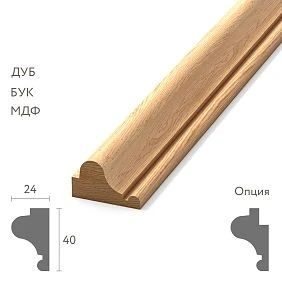
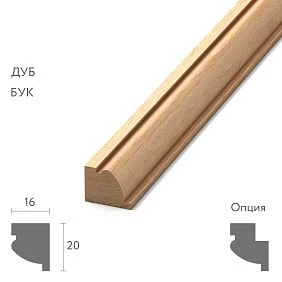
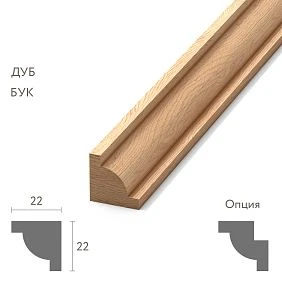
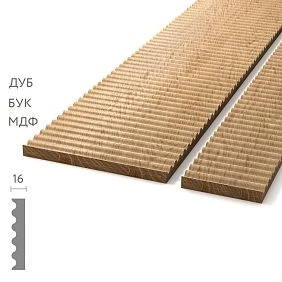
- Wooden moldings for furniture
- Decorative elements for facades
- Pilasters and columns for furniture
- Wooden furniture handles
- Frame profiles, moldings, and wooden baguettes
- Materials: wood, MDF, and polyurethane — what's the real difference
- Furniture decor made of wood
- MDF furniture decor
- Polyurethane furniture decor
- Kitchen facade decor: from classic to neoclassical
- Classic kitchen
- Neoclassicism and Modern Classicism
- Art Deco and modern furniture decor
- Wardrobe facade decor: how to turn a cabinet into architecture
- Moldings around the perimeter of wardrobe facades
- Vertical pilasters for a wardrobe
- Accent overlays on central doors
- Decorative wardrobe handles
- Decor for chest of drawers and nightstand: proportions, rhythm, accents
- Drawer front overlays for a chest of drawers
- Molding frame for a chest of drawers front
- Handles as part of a chest of drawers decorative system
- How to choose furniture front decor according to interior style
- Classical and Empire
- Neoclassicism
- Art Deco
- Russian style
- Modern Neoclassicism
- How to calculate the number of moldings and overlays for a furniture front
- Step 1: Measuring the front
- Step 2: Determining the decoration area
- Step 3: Calculating the molding length
- Step 4: Placing the overlay
- Step 5: Checking symmetry
- Errors in decorating furniture facades
- Where to buy STAVROS furniture decor: catalog and categories
- Frequently Asked Questions
- About the Company STAVROS
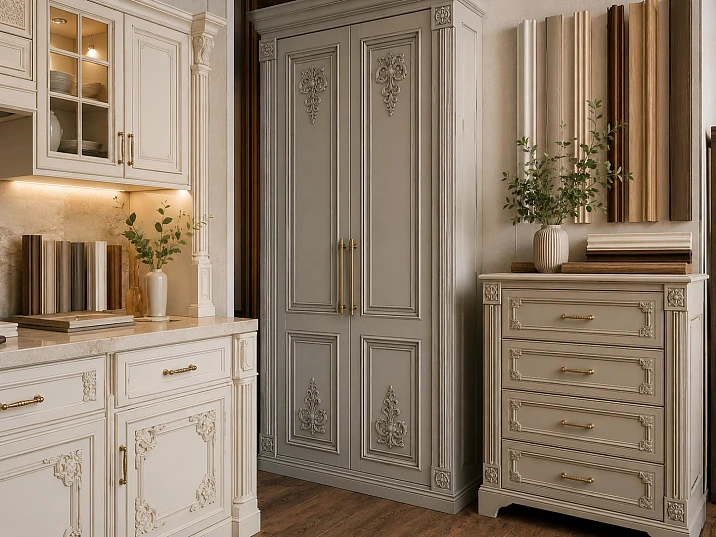
A furniture facade is the face of an item. Not the structure, not the mechanics, not the contents of drawers. It is the facade that determines whether a cabinet will look like an architectural object or just a "box for things." And it is here that STAVROS furniture decor changes everything: one correctly chosen element turns a plane into a statement.
If you are now looking for how exactly to design the facades of a kitchen, wardrobe, or dresser — you have come to the right place. This is not an overview of styles "in general." This is a practical guide to selecting, calculating, and applying decor for furniture facades with specific categories, real examples, and a logic for selection. Go straight to where your task is: Carved decorative inserts for furniture, Wooden moldings and trim, Pilasters and columns for furniture, Wooden furniture handles.
What is furniture facade decor and why it is a separate discipline
Most people, when thinking about updating furniture, imagine either repainting or a complete replacement. Few immediately think of a third path — decorating facades. And it is this path that often turns out to be both the most expressive and the most economical.
Furniture facade decor is a professional technique for changing the visual character of furniture using applied architectural elements: moldings, overlays, pilasters, decorative handles, frame profiles, rosettes. This is not a household upgrade with stickers and film. This is what furniture manufacturers, interior designers, and restorers use when a result above the average level is needed.
The fundamental difference from mere "decorations" is that Furniture facade decoration it works according to architectural logic: division of the plane, rhythm, proportions, visual weight. A properly selected molding creates the illusion of a framed facade on a smooth MDF panel. A correctly installed pilaster vertically structures the cabinet and gives it classical monumentality. An overlay on the central facade of a kitchen door turns a mass-produced kitchen into a custom piece.
That is why buy furniture facade decor is not an impulse purchase, but a design solution. And it requires understanding what elements exist, what they are made of, how they are selected by style, and how they are calculated by quantity.




What elements are used for decorating furniture facades
There is no single correct answer here. The choice of element depends on the task, style, facade size, and desired result. But knowing the entire toolkit is necessary — only then can you make an informed choice.
Our factory also produces:
Carved Appliqués
An overlay is the most direct and fastest way to change the character of a facade. A ready-made element with an already formed pattern is attached to the surface — and the facade takes on a completely different look. No structural reworking, no complex joinery. Only installation and finishing.
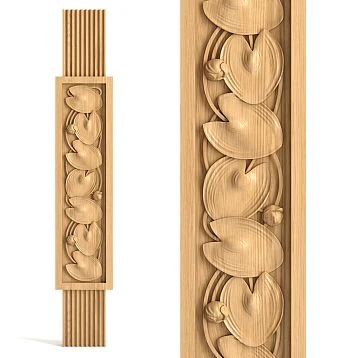
Carved decorative inserts for furniture In STAVROS, these are solid wood products, milled with precision that allows them to be immediately installed for painting or tinting. The overlay can be central (placed along the facade axis as an accent), corner (forming a frame system at the corners), horizontal, or vertical. The size range is wide: from small elements for bedside table drawers to large relief motifs for cabinet doors.
Overlays are especially effective where you need to create the effect of "expensive furniture" without replacing the body. A kitchen facade made of smooth MDF with a central overlay and moldings around the perimeter looks different from a factory one. Differently. Better.
Get Consultation
Wooden moldings for furniture
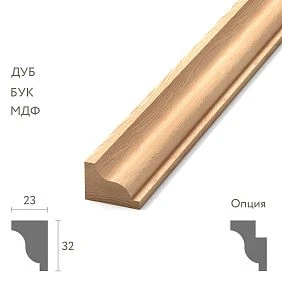
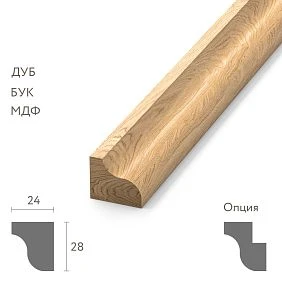
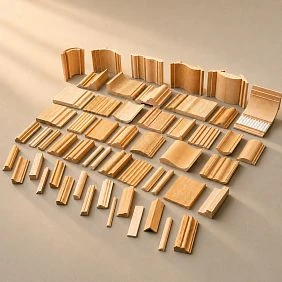
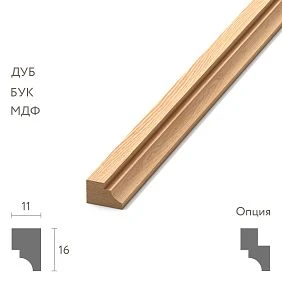
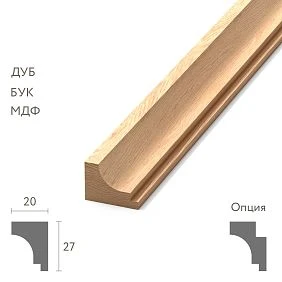
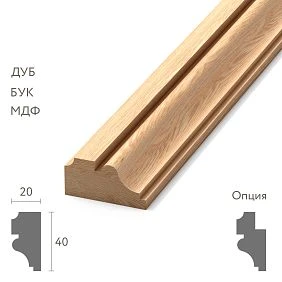
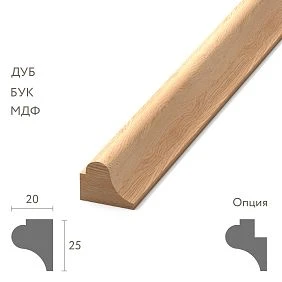
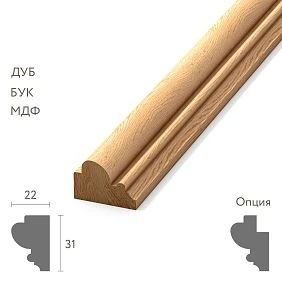
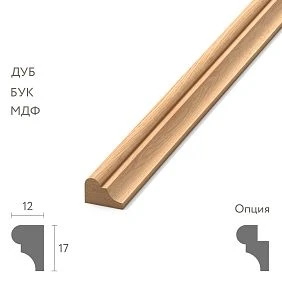
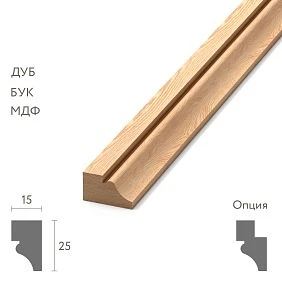
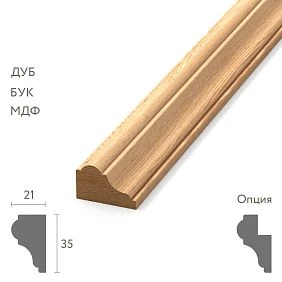
Moldings are profiled strips that form a frame system on the facade. They create a division of the plane, imitate a frame facade, and set the rhythm and depth of the surface. Buy wooden moldings for furniture In STAVROS, they are available in different profiles: classic cabochons, oval, pear-shaped profile, rustic, flat frame strips.
The molding works as a system: four strips form a rectangular frame that visually divides the facade into fields. Inside the frame, you can leave an empty field, add an overlay, or place a rosette in the corners. This is a classic technique that is at least two hundred years old — and it still works flawlessly.
For a kitchen facade, moldings for painting give the effect of a frame door without its manufacture. For a cabinet, moldings create vertical and horizontal divisions that make the body "lighter" and architecturally more competent. Moldings for furniture decoration — is one of the most sought-after tools among furniture designers precisely because they provide maximum visual effect at minimal cost.
Decorative elements for facades
Decorative elements for furniture and interiors — a broad category that includes rosettes, corner inserts, rocaille cartouches, leaves, garlands, shells, and geometric ornaments. These are all elements that are not moldings or overlays in the strict sense, but are actively used as part of decorative systems.
Corner rosettes are placed in the corners of molding frames, hiding joints and adding an accent. Central cartouches act as a focal point on a large facade. Leaf motifs are used as transitional elements in Baroque and classical systems. Each of these elements is small, but its presence or absence fundamentally changes the overall impression of the furniture.
Pilasters and columns for furniture
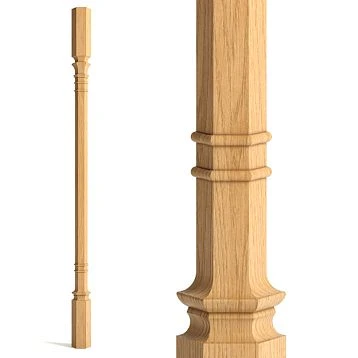
If overlays and moldings work on the scale of an individual facade, then Pilasters and columns for furniture work on the scale of the entire piece of furniture or furniture group. A pilaster is a flat decorative column that is placed along the vertical axis of a cabinet, divides facades, and creates the feeling of an architectural portico.
In a kitchen set, pilasters are used as end and corner elements, as well as for vertical division of tall cabinets and high cabinets. In sliding wardrobes, a pilaster in the center creates a visual axis and turns a long facade from a monotonous plane into a structured object. In a classic-style wardrobe system, pilasters set the rhythm of the entire row.
For those working with classic, Baroque, or Empire interiors, pilasters are not an option but a necessity. They are what create that "furniture palace" that cannot be achieved with moldings and overlays alone.
Wooden furniture handles
Wooden furniture handles — this is not just a functional element; it is the final touch that either completes the look or ruins it. A wooden handle made of solid beech or oak, matched in color and shape with the rest of the facade decor, creates the feeling of a unified designer solution.
Unlike metal handles, wooden ones continue the texture and tone of the entire piece of furniture. They do not compete with the decor but support it. This is especially important in classic and neoclassical interiors, where metal is only appropriate in historically correct forms — and often a wooden handle proves to be preferable.
STAVROS handles are turned and carved solid wood products that fit both modern neoclassicism and baroque solutions. They are mounted in a standard way with screws and are compatible with most furniture formats.
Frame profiles, moldings, and wooden baguette
Pogonazh iz massiva и wooden baguette and frame profiles — this is the basis for creating frame systems on furniture facades. If moldings are profiled strips with a complex cross-section, then moldings and baguettes are more straight profiles used as edging, binding, and inserts in door panels.
Baguette is especially appropriate in cases where you need to create a light frame without complex relief: minimalist neoclassicism, Scandinavian classic, modern version of shaker style. The profile is simple, reads clearly, and does not overload the facade. This is the option chosen by designers who want to "add structure" without turning the kitchen into a baroque iconostasis.
Materials: wood, MDF, and polyurethane — what's the real difference
The question of material when choosing furniture decor is one of the most practical. And at the same time, one of the most underestimated. People often choose based on a picture, and then discover that the material does not suit the planned finish or does not hold on the facade. Let's break down three main options.
Furniture decor made of wood
Wood is the standard. Solid beech and oak have a natural texture that cannot be replicated by any artificial material. Wooden furniture decor accepts any finish: clear varnish, staining, tinting, painting. When staining, the living texture of the wood is visible — this is what wood provides and only wood.
Wooden Furniture Decor — this is the choice for a premium result. It is heavier than polyurethane, so large elements require high-quality glue or additional fasteners. It is more expensive than MDF, but its lifespan is decades. A wooden overlay does not deform with changes in humidity the way MDF does in the high-humidity conditions of a kitchen.
Furniture decor made of MDF
MDF is a good solution for paintable surfaces. Medium-density board is easy to process, has a uniform structure without pores or knots, so the surface after milling is clean and ready for painting. MDF furniture decor is used where a clear geometric pattern under enamel is needed — without visible texture, in a perfectly smooth white or colored coating.
The limitation of MDF is moisture resistance. In kitchen or bathroom conditions, MDF requires proper priming and a sealed topcoat. Unprotected edges absorb moisture and swell. Therefore, MDF decor for the kitchen is a matter of proper coating application technology, not just material selection.
Furniture decor made of polyurethane
Polyurethane elements are a lightweight, moisture-resistant material that holds paint well. Polyurethane Items are not afraid of moisture, do not react to temperature changes, have a smooth surface that is ideal for paint. They are significantly lighter than wooden counterparts, which simplifies installation.
The limitation of polyurethane is that it does not provide a natural texture. If you need a finish with stain or clear varnish with visible wood grain, polyurethane is not suitable. It only works under opaque paint. Buy polyurethane furniture decor is worth it when the project involves a single-color finish, the facades are installed in high-humidity conditions, and the weight of the elements is critical for installation.
| Parameter | Wood | MDF | Polyurethane |
|---|---|---|---|
| Natural texture | Yes | No | No |
| Under clear lacquer | Yes | No | No |
| For enamel painting | Yes | Yes | Yes |
| Moisture resistance | Medium | Low | High |
| Weight | High | Medium | Low |
| Durability | High | Medium | Medium |
| Cost | Higher | Medium | Medium |
Kitchen facade decor: from classic to neoclassical
The kitchen is the most demanding space in the house in terms of decor. Here, facades experience temperature changes, grease, steam, and intensive use. And it is here that decor must be not only beautiful but also technically sound.
Classic kitchen
A classic kitchen features moldings, overlays, pilasters, and carved handles in a unified ornamental key. Here, the facade is an architectural object: frame doors with profiled molding, central overlays with a floral motif, pilasters on the ends of cabinets with capitals on top.
Kitchen decor in the classic style is a system where each element is connected to another. The molding must match the profile of the molding on the cornice. The overlay must repeat the ornament used on the handles or hinge overlays. The pilaster must have the same width as the facade frame.
The material for a classic kitchen is solid beech or oak with tinting or painting. It is wood that gives the surface depth that cannot be achieved with film or plastic.
Neoclassicism and modern classicism
Neoclassicism uses the same tools as classicism, but in smaller proportions and a more restrained rhythm. Facades are smooth, molding is thin, one rectangle per door, no complex profiles. The overlay — if present — is small and laconic: a simple leaf, a restrained geometric motif.
It works well here wooden baguette and frame profiles with minimal relief. No baroque cabochon, no complex molding — only a clean rectangular frame, carved from wood, with a minimal bevel.
Color in neoclassicism is often white or light gray. Wooden decor for such a kitchen is painted the same color as the body. Thanks to the relief of the molding, shadows add depth, even if everything is covered with a single enamel.
Art Deco and modern furniture decor
Art Deco is geometry, symmetry, ornament with clear contours. There are no leaves or flowers — there are diamonds, rays, fans, zigzags. For an Art Deco kitchen, overlays with geometric patterns, moldings with a straight profile, metal handles with characteristic Art Deco shapes, or wooden handles with an angular cross-section are suitable.
This is a rarer request, but it is precisely this kind of interior that is memorable. For Art Deco in STAVROS, you should turn to decorative elements for furniture and interiors with a geometric character of the pattern.
Decorating cabinet facades: how to turn a body into architecture
A cabinet is a large vertical plane that often dominates a room. If this plane is not structured, it feels oppressive. If it is properly decorated, it becomes part of the interior composition.
Moldings around the perimeter of cabinet facades
The simplest and most effective technique is a frame system of moldings on each door. Four slats joined at a 45-degree angle form a rectangle that visually divides the facade into an "inner field" and an "outer frame." This technique makes the cabinet lighter, gives it rhythm, and eliminates the feeling of a monolithic slab.
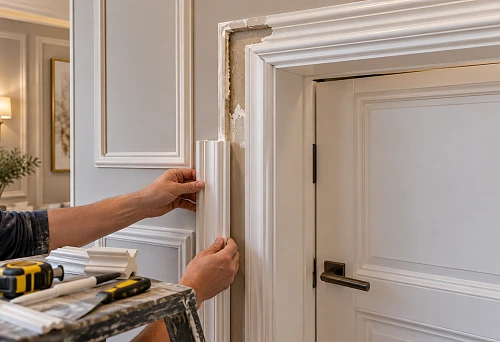
Cabinet decoration using moldings is a technically simple task. The slats are cut at 45 degrees with a miter box, glued with PVA or construction adhesive, and pressed until dry. After painting, the seam is almost invisible.
For a two-door cabinet, a system of two rectangles on each door works well — the upper one smaller, the lower one larger. This is classic panel logic that reads as a "real cabinet" rather than cheap flat doors.
Vertical pilasters for a cabinet
If the cabinet is long (more than 150 cm in width), a vertical pilaster in the center creates visual division. Without it, a long cabinet looks like a wall. With a pilaster, it looks like two combined bodies, which is visually more correct.
Pilasters and columns for furniture in STAVROS are made in different styles: fluted for classic, smooth for neoclassical, with ornament for baroque solutions. The height of the pilaster is selected according to the height of the facade, the width is proportional to the overall width of the cabinet.
Rule: the width of the pilaster should not exceed 1/8 of the width of one facade module. If the cabinet is two-door with a width of 120 cm (60 cm per door), a pilaster 7–8 cm wide will look organic.
Accent overlays on central doors
For a wardrobe in the bedroom or dressing room, an accent overlay on the central doors is a way to create a focal point. Symmetrical overlays on the two central doors, identical in pattern and size, form a mirror composition that organizes the entire wardrobe.
Carved furniture decor in a classic style — a cartouche with rocaille, a laurel garland, a floral motif — here gives maximum effect with a minimum number of elements. Two overlays are enough for the wardrobe to stop being 'neutral' and become part of a stylistic statement.
Decorative wardrobe handles
The handle is the final touch, and it cannot be chosen in isolation from the rest of the decor. If the wardrobe has wooden moldings and overlays made of solid beech, a metal handle in a minimalist style will create dissonance. Wooden furniture handles in the same tint as the overlays, create the feeling of a single author's piece.
Decor of a chest of drawers and bedside table: proportions, rhythm, accents
A chest of drawers and a bedside table are items of a smaller scale than a wardrobe or kitchen. Different proportions and a different density of decor apply here. Overloading a small chest of drawers facade with a large ornament is a typical mistake. Precision and restraint are needed here.
Overlays for chest of drawers drawer fronts
A chest of drawers drawer is a small rectangle, often 50–80 cm wide and 15–20 cm high. For this format, small horizontal overlays are suitable: a central motif 15–25 cm wide, rosettes in the corners of a frame made of thin molding.
Decorative elements for furniture and interiors in the format of small horizontal motifs — leaves, volutes, garlands — they fit perfectly into the drawers of a classic or neoclassical style chest. The main thing is to maintain rhythm: all drawers must be decorated identically, otherwise a feeling of incompleteness arises.
Molding frame for a chest of drawers facade
If the chest has large facades — for example, lower drawers 25–30 cm high — a molding frame inside the facade works well. A rectangle of of wooden moldings and millwork inside the drawer visually structures the surface and gives it a "framed" character.
For the top drawer, if the chest is three-section, the frame can be made double: outer and inner. This is a classic "double panel" technique, widely used in 18th–19th century furniture and still relevant in classic interiors.
Handles as part of the chest's decorative system
On a chest, handles are not just a function, they are an ornamental series. Three drawers — three handles. They must be identical, positioned strictly along the axis of each drawer, and their shape must match the overall style.
Chests and cabinets in the interior in classic design require wooden handles with soft profiles, without angular geometry. In the Empire style, handles in the form of a horizontal cylinder or a turned ball on a neck are appropriate. All these formats are available in the STAVROS catalog of wooden handles.
How to choose furniture facade decor according to interior style
Decorative style is not just aesthetics, it is a language. Baroque ornament in a Scandinavian interior will look like a mistake. Geometric Art Deco in a Russian classical interior will look like a misunderstanding. The decorative style and the interior style must speak the same language.
Classic and Empire
This is the most decor-rich style. Complex moldings, carved overlays with floral patterns, fluted pilasters, and capitals in the Ionic or Corinthian order are appropriate here. The decor is large, dense, and symmetrical.
For classic, choose Pilasters and columns for furniture with a detailed order profile and overlays with rocailles, acanthus leaves, or laurel garlands from the carved decor section.
Neoclassicism
Restrained classic: thin molding, small overlay, smooth pilasters or with minimal relief. Color is predominantly white, light gray, or ivory. wooden baguette and frame profiles is the main tool of this style.
Art Deco
Geometry, symmetry, contrast. Decor with corner and fan motifs, overlays with a diamond structure, moldings with a straight profile. Handles are corner or cylindrical. Contrast of dark wood and light facade is often used.
Russian Style
Ornamentation with folk motifs: braiding, diamonds, birds, leaves in characteristic "plank" carving. The decor is voluminous, relief, clearly "handmade". Buy carved furniture decor for the Russian style means looking for overlays with characteristic floral or geometric Slavic ornamentation.
Modern neoclassicism
The most popular request today. Clean lines, but with classic details. A thin frame molding, one small overlay or no overlay at all, a wooden handle, and trim with a minimal profile. Everything works to emphasize the surface's purity, with decor as an accent, not a system.
How to calculate the number of moldings and overlays for a furniture facade
Calculation is what distinguishes a professional result from an amateur one. Without precise calculation, you'll either run out of material, have too much, or the symmetry will be off.
Step 1: Measuring the facade
Measure with a tape measure: the width of the door, the height of the door. Write down both dimensions. If there are multiple facades, measure each one separately, especially if they are different sizes (e.g., upper and lower kitchen cabinets).
Step 2: Determining the decoration area
The molding is not placed at the very edge of the facade, but with a technological indent. The standard indent from the edge is 3–5 cm on each side. This is necessary so that the molding frame does not "press" against the edge and looks like an integrated element, not a glued-on strip.
Subtract the indents from the overall dimensions: if the facade is 60×80 cm and the indent is 4 cm on each side, the internal frame size will be 52×72 cm. The moldings are cut precisely to these dimensions.
Perimeter of the rectangle: (52 + 72) × 2 = 248 cm. Add 10–15% for waste when cutting at a 45-degree angle. Total: about 280–290 cm of molding per facade.
Perimeter of the rectangle: (52 + 72) × 2 = 248 cm. Add 10–15% for waste when cutting at a 45-degree angle. Total: about 280–290 cm of molding per front.
If there are 10 facades, multiply by 10 to get 280–290 linear meters. Add a 15% margin for defects and matching. The final number is your order.
Step 4: Placing the overlay
The overlay is placed strictly along the axis of the facade or along the axis of the field inside the molding frame. Find the central horizontal and vertical axis. Place the overlay on the unattached facade, center it, mark with a pencil — and only then glue it.
Step 5: Checking symmetry
Before installation, always lay out the elements on the floor in the order they will be placed on the furniture. This allows you to visually assess symmetry, rhythm, and scale before applying glue.
Mistakes when decorating furniture facades
They are made even by experienced craftsmen. Knowing these mistakes is insurance against disappointment.
Too large decor on a small facade. An overlay measuring 25×30 cm on a cabinet door 45 cm wide will overload the surface. The scale of the decor should be no more than 30–40% of the facade field area.
Mixing incompatible ornaments. A baroque overlay next to a geometric Art Deco molding is a stylistic conflict. All elements must belong to the same ornamental family.
Violation of symmetry. If the facade requires symmetry, even 2–3 mm of offset relative to the axis will be noticeable. Use a level and ruler, not "by eye".
The material is incompatible with the finish. A polyurethane element for tinting will give an even color without texture — and will look different than adjacent wooden parts for tinting with visible texture. This is not a mistake if you understood it in advance, and a disaster if you did not.
The thickness of the element is not taken into account. A molding 8 mm thick glued to the facade creates a protrusion. If the door opens next to another door or drawer, you need to check the gap: whether 8 mm is enough for the door to open freely.
The decor interferes with opening. An overlay placed too close to the handle or hinge will functionally get in the way. Always check the distance to hinges, opening gaps, and drawer travel before installing decor.
No connection with the interior. Furniture decor that is not coordinated with the decor of walls, ceiling, and floor looks like a random decision. Ornamentation should be part of the overall stylistic narrative of the space.
Where to buy STAVROS furniture decor: catalog and categories
Buy furniture decor from STAVROS means gaining access to one of the most complete catalogs of carved wooden decor in Russia. Everything described above — overlays, moldings, pilasters, handles, trims, polyurethane elements — are real categories available for ordering.
Main catalog sections for working with furniture facades:
-
Carved decorative inserts for furniture — central, corner, horizontal, vertical
-
Wooden moldings and trim — for frame systems on facades
-
Decorative elements for furniture and interiors — corner inserts, rosettes, cartouches
-
Pilasters and columns for furniture — for structuring cabinet and kitchen facades
-
Wooden furniture handles — turned and carved, solid wood
-
wooden baguette and frame profiles — for lightweight frame solutions
-
Pogonazh iz massiva — profiled strips for strapping and edging
-
Decor for Molding — corner inserts and joining elements
-
Polyurethane Items — lightweight elements for painting
For solutions for specific furniture items: Kitchen decor, Cabinet decoration, Chests and cabinets in the interior, furniture solutions.
Frequently asked questions
Which decor to choose for kitchen furniture fronts?
For a kitchen in a classic or neoclassical style — moldings for the frame system and carved overlays from solid wood. For a kitchen to be painted white — moldings from MDF or polyurethane elements. The choice depends on the planned finish and style.
What is the difference between wooden overlays, MDF decor, and polyurethane elements?
Wood — natural texture, suitable for any finish including tinting. MDF — for painting, uniform surface. Polyurethane — lightweight, moisture-resistant, only for opaque paint. More details in the materials section above.
Can moldings be used to decorate a cabinet or dresser?
Yes, this is a standard technique. Buy wooden moldings for furniture in the desired profile and cut to frame each facade. This is one of the most affordable ways to radically change the appearance of furniture.
How to choose decor for a classic or modern interior?
Classic — complex moldings, overlays with floral ornaments, pilasters. Modern neoclassicism — thin molding, minimal overlay. Art Deco — geometry. Scandinavian classic — flat baguette, no ornament. The main thing is that the decor style matches the interior style.
What is better: carved overlay, molding, pilaster, or handle?
These are not competing options, but elements of one system. Molding creates the facade structure, overlay creates an accent, pilaster creates vertical division, handle completes the look. A good result is when all four elements work together.
Can furniture decor be painted after installation?
Yes, provided proper priming. Wooden elements are primed with acrylic primer, puttied at joints, sanded, and then painted with enamel or tinted. Polyurethane elements are primed with special compounds for polyurethane.
How to calculate the amount of moldings for kitchen facades?
Measure the width and height of each facade. Subtract the indents (3–5 cm on each side). Calculate the perimeter of the frame. Multiply by the number of facades. Add 15% for waste and matching. The final figure is the length of the molding in linear meters.
What mistakes are most often made when decorating furniture facades?
Mismatch of decor scale and facade, mixing different ornamental styles, symmetry violation, choosing material without considering the finish, installation without checking gaps when opening. More details in the errors section above.
About the company STAVROS
Decorating furniture facades is a discipline where details make all the difference. And a professional result starts with professional material.
STAVROS is a Russian manufacturer of wooden carved decor, working with solid beech and oak at its own production facility. The company produces a full range of products for decorating furniture facades: overlays, moldings, pilasters, handles, linear elements, decorative items, and polyurethane products. Production and warehouses are in Moscow and St. Petersburg, ensuring accessibility for both private buyers and furniture manufacturers and design studios.
The STAVROS catalog covers all major styles — from classic and Empire to modern neoclassicism and Art Deco. Products are manufactured in series, ensuring repeatability for large projects. Order a single element for restoration or a complete set for a kitchen set — STAVROS works with both formats.