




























Article Contents:
- The buyer assembles not four legs, but a whole table
- Four identical MN-226
- Tabletop
- Rigid connection
- What can increase the height
- What can reduce the visible or actual addition
- First measure the actual thickness
- Height 752 mm
- Height 757 mm
- Height 767 mm
- Height 777 mm
- Paper mockup instead of guessing
- Visual proportion
- Mounting zone
- Deflection
- Weight
- Edge
- Too close to the edge
- Too far from the edge
- Check geometry 120 × 45 mm
- Desk
- Kitchen table
- Dining table
- Height of the work surface
- Depth
- Cable management system
- Front apron
- Cabinet
- Lateral stability
- Frequent movement
- Moisture and dirt
- Room size
- Seating at the ends
- Cleaning
- Surface length
- Width
- Weight of dishes and items
- Sliding mechanism
- Direct mounting to tabletop
- Tsargovaya or frame construction
- Ready-made underframe
- When to consult a structural engineer
- What the decision depends on
- Central leg
- Central beam
- Two additional supports
- Why stability cannot be promised by quantity
- What does "for enamel" mean
- When beech is especially logical
- Not just white enamel
- Match with countertop
- What 'under tinting' means
- When oak is justified
- Selection of four legs
- Match with oak countertop
- Countertop for enamel
- Countertop with oak texture
- Contrasting top
- What to check in the countertop card
- Small countertop
- Medium rectangular countertop
- Long surface
- Round tabletop
- Square tabletop
- 1. Determine extreme loads
- 2. Place chairs
- 3. Draw the MN-226 outline
- 4. Place the fasteners
- 5. Add aprons
- 6. Check overhangs
- 7. Make front and side views
- Screw directly
- Mounting plate
- Threaded Stud
- Wooden frame
- Why a card doesn't replace a designer
- Signs of insufficient rigidity
- A foot pad doesn't fix a weak frame
- Adjustment does not fix the geometry
- For which situations it is interesting
- What is included in the preparation
- Paint before assembly
- Paint after assembly
- Practical route
- What is sometimes forgotten to include
- Leg cost
- Tabletop price
- Glides
- Fasteners
- Finishing
- Delivery
- Beech for enamel
- Oak for tinting
- Contrast table
- Different heights
- Different geometry
- Different orientation
- Different mounting hardware
- Different finishes
- Different project purposes
- Need a writing desk with a thin tabletop
- Need a kitchen table with a 30 mm top
- Need a massive oak table
- Tabletop already purchased
- Chairs are already available
- Floor is parquet
- The table will be moved frequently
- Table is longer than usual
- Need the color of kitchen facades
- Visible wood is required
- Mistake 1. Calculating the height only by the leg
- Mistake 2. Buying one MN-226 instead of four
- Mistake 3. Choosing the countertop after the legs without calculation
- Mistake 4. Considering 25 and 50 mm almost the same
- Mistake 5. Ignoring the support foot
- Mistake 6. Mixing FUR-022 and FUR-028
- Mistake 7. Choosing fasteners by photo
- Mistake 8. Not downloading the MN-226 drawing
- Mistake 9. Not considering the apron
- Mistake 10. Attaching legs to a thin slab without reinforcement
- Mistake 11. Assuming four legs are sufficient for any length
- Mistake 12. Ordering beech and expecting the look of oak
- Mistake 13. Choosing "under enamel" and expecting a painted product
- Mistake 14. Choosing "under tinting" and expecting a uniform shade
- Mistake 15. Not doing a test paint
- Mistake 16. Turning the legs in different directions
- Mistake 17. Placing supports too close to the edges
- Mistake 18. Moving them too far inward
- Error 19. Not leaving room for a chair
- Error 20. Not accounting for the weight of the tabletop
- Error 21. Buying finishing materials by name only
- Error 22. Assembling the table before the coating is fully dry
- Error 23. Not checking the floor
- Error 24. Trying to fix a weak frame with leveling feet
- Error 25. Not include delivery in budget
- 1. Define the purpose
- 2. Choose the tabletop
- 3. Calculate height
- 4. Check four MN-226
- 5. Draw layout
- 6. Design stiffness
- 7. Select fasteners
- 8. Choose thrust bearing
- 9. Calculate finishing
- 10. Compile cost
- 11. Check availability and lead times
- 12. Arrange delivery
- What is the height of MN-226?
- What height will result with a 25 mm tabletop?
- What height with a 30 mm tabletop?
- What height with a 40 mm tabletop?
- What height with a 50 mm tabletop?
- Is the foot included in these calculations?
- Can I get a table exactly 750 mm?
- Can MN-226 be reduced?
- How many MN-226 should I order?
- Is the tabletop included with MN-226?
- Which tabletop should I choose?
- Will MN-226 work for a writing desk?
- Will the leg work for a kitchen table?
- Can it be used for a dining table?
- Are four legs always enough?
- Are stretchers needed?
- Can the legs be attached directly to the tabletop?
- What mounting hardware is needed?
- Which floor glides are recommended?
- How is FUR-022 different from FUR-028?
- What to choose for parquet?
- What to choose if the table is moved?
- How many glides to order?
- Can two types of glides be mixed?
- What is MN-226 made of?
- What is better under enamel?
- What is better under tinting?
- Does 'under enamel' mean ready-to-paint?
- Does "for tinting" mean a ready color?
- Can I order oak legs and a beech tabletop?
- How to achieve the same color?
- Do I need to paint the lower part of the leg?
- When to apply the coating?
- How to calculate the price of four legs?
- Why is the price not specified in the article?
- What else is included in the cost of the table?
- Can I order all items together?
- Is there Contact us to confirm shipping to your destination.?
- What should I check when receiving the legs?
- Do I need to unpack the tabletop immediately?
- How to know that the table will not wobble?
- Can FUR-028 eliminate the wobbling?
- Is a fifth leg needed?
- Where to place the fifth leg?
- Can a sliding table be assembled on MN-226?
- Is the model suitable for commercial premises?
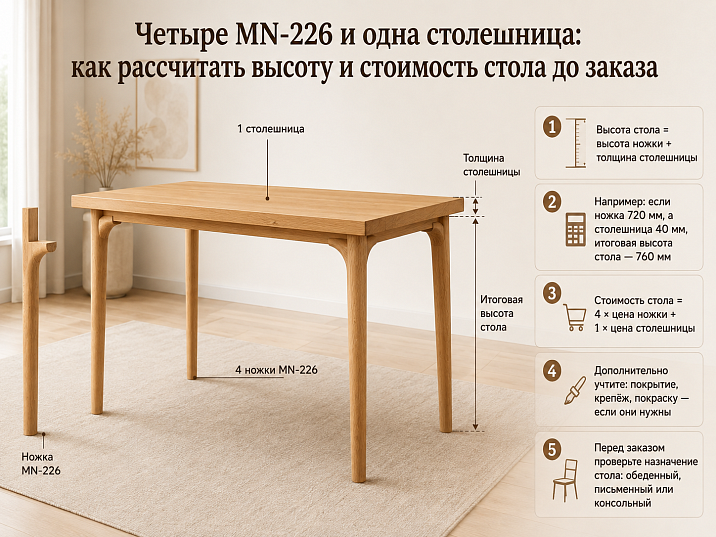
Buying table legs is only the beginning of the configuration. Even if a specific model MN-226 with a height of 727 mm is chosen, there is no finished table in the cart yet. Four identical supports, a suitable tabletop, a structure for rigid connection of parts, fasteners, floor glides, and finishing materials are needed. Each component affects either the height of the furniture, its stability, or the final cost of the order.
The main mistake occurs already in the first calculation. The buyer sees the leg height of 727 mm and decides that the finished table will be 727 mm high. But the tabletop is located above the legs, so its thickness is added to the size of the supports. With a tabletop of 25 mm, the total height without other structural additions will be 752 mm. With a thickness of 40 mm, it will already be 767 mm. If a mounting frame, a backing piece, a separate underframe, or another structure appears between the legs and the tabletop, simple addition of two numbers is no longer sufficient.
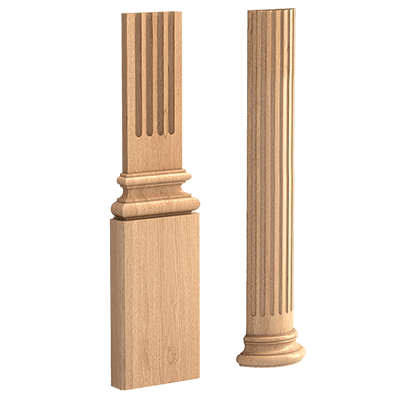
MN-226 is interesting precisely as the basis for a specific project. It is a tall modern furniture leg measuring 727 × 120 × 45 mm, available in beech and oak. In the product card, you can choose preparation for enamel or tinting, add the item to the cart, or place a quick order. Along with the leg, a round floor glide FUR-022 and a felt one FUR-028 are recommended. But neither the tabletop, nor the fastening unit, nor the four floor glides automatically become part of the set just because the buyer selected one leg.
The article answers a practical question: how to calculate a table from four MN-226 legs before placing an order, select the thickness and size of the tabletop, understand the role of the underframe or aprons, compare beech with oak, choose floor glides, calculate the full cost, and not discover after delivery that one item is missing.
If the dimensions are already matched to the project, you can buy four MN-226 legs. However, before adding the quantity "4" to the cart, you need to make sure that the tabletop, the mounting scheme, and the placement of the supports are indeed calculated for this model.

The customer assembles not four legs, but a whole table
A table seems like simple furniture: a flat surface on top, four supports below. In reality, a structural connection must appear between these parts, capable of holding the tabletop, resisting wobbling, and maintaining the relative position of the legs.
Therefore, the self-assembly kit includes not two, but several groups of parts:
-
four furniture legs MN-226;
-
a tabletop of the chosen shape, length, width, and thickness;
-
a mounting or frame structure;
-
fasteners;
-
floor protectors;
-
materials for preparing and finishing the wood;
-
if necessary, aprons, underframe, or additional reinforcing parts;
-
packaging and delivery of the entire order.
Skipping any element changes the result. The tabletop cannot be evaluated only by color. The legs cannot be chosen only by height. Fasteners cannot be added on the principle of "let's take regular screws." Floor glides cannot be considered an optional trifle if the furniture will stand on parquet or be moved frequently.
Four identical MN-226
For a symmetrical table, four identical supports are usually considered. They must match:
-
article number;
-
height;
-
material;
-
surface preparation quality;
-
re-gluing option;
-
future finishing;
-
mounting method;
-
type of foot pad.
You cannot order two legs made of beech for enamel and two made of oak for tinting, and then expect a visually and structurally uniform set. Even after opaque painting, the species differ in wood structure. With a semi-transparent coating, the difference will become even more noticeable.
Our factory also produces:


Tabletop
The tabletop determines:
-
final height;
-
furniture dimensions;
-
number of seats.
-
load on the frame;
-
distance between legs;
-
position of the supports relative to the edge;
-
need for aprons or underframe;
-
cost and dimensions of delivery.
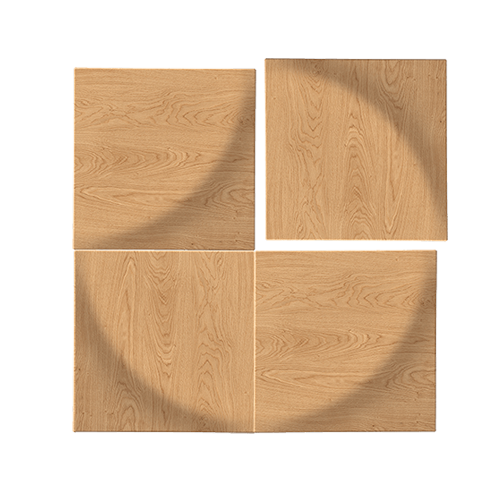
For a buyer who wants Buy a tabletop for a table, you need to look not only at the shape and material. For compatibility with MN-226, the thickness, bottom structure, dimensions of mounting zones, and how the load is transferred to the four supports are important.
Get Consultation
Rigid connection
The leg holds vertical load, but the table also experiences lateral forces. A person leans on the edge, moves the furniture, accidentally bumps it with a knee. If four tall legs are simply screwed to a thin surface without a well-thought-out connection, the structure may wobble.
Rigidity is created not by a promise in the leg's product card, but by the table design. Depending on the tabletop dimensions, the following may be needed:
-
apron belt;
-
mounting frame;
-
full underframe;
-
reinforcing bars;
-
metal plates;
-
corner joints;
-
additional central support.
None of these options can be universally assigned without the dimensions and material of the tabletop.
MN-226: which characteristics are confirmed
| Parameter | Value | Practical significance for the order |
|---|---|---|
| Article number | MN-226 | All four supports must be ordered under a single article number |
| Name | Modern furniture leg | The model is designed for a modern visual solution |
| Dimension A × B × C | 727 × 120 × 45 mm | 727 mm is the leg height, 120 and 45 mm need to be checked against the drawing |
| Material | Beech or oak | The wood species affects the finish, appearance, and cost |
| Sanding quality | Prestige | The surface is prepared at the level specified in the product card |
| Preparation | For enamel or tinting | The choice depends on the future coating |
| Quantity for a basic table | Usually 4 pcs. | For a long tabletop, four supports may not be enough |
| Recommended footrest | FUR-022 | Round support part D30 mm |
| Recommended soft floor protector | FUR-028 | Felt foot pad d=28 mm |
| Purchase | Cart or quick order | Quantity and characteristics are selected before checkout |
| Delivery | Across Russia | Cost depends on composition, size, and order address |
| Drawing | Available on the product page | It needs to be matched with the tabletop and fastener design |
The table does not replace the project. Dimensions 120 and 45 mm cannot be arbitrarily called the width of the top platform or the thickness of the mounting part without studying the drawing. For accurate marking, you should check the furniture leg drawings and use the actual geometry of MN-226.
Why a 727 mm leg does not mean a table height of 727 mm
The 727 mm dimension refers to the MN-226 itself. The work surface is located higher. If the leg directly adjoins the underside of the tabletop, the basic formula is as follows:
Leg height + tabletop thickness = table height.
For MN-226:
727 mm + tabletop thickness = base height of the finished table.
| Tabletop thickness | Calculation | Base table height |
|---|---|---|
| 25 мм | 727 + 25 | 752 мм |
| 30 мм | 727 + 30 | 757 мм |
| 40 мм | 727 + 40 | 767 мм |
| 50 мм | 727 + 50 | 777 мм |
This table shows only direct addition. It does not account for structural additions and height losses.
What can increase the height
-
protruding mounting plate;
-
separate frame between legs and tabletop;
-
overlay underframe;
-
intermediate beam;
-
additional decorative panel;
-
thrust bearing protruding below the end face;
-
adjusting element;
-
top overlay, if it is not included in the declared thickness of the tabletop.
What can reduce the visible or actual addition
-
recessed mounting plate;
-
recess on the underside of the tabletop;
-
partial insertion of the leg into the frame;
-
seating the upper part of the support inside the underframe;
-
trimming the mating part according to the design.
Trimming the MN-226 itself to achieve the required height should not be done without a separate technical solution. Reducing the length may change the shape, the bottom platform, the proportions, and the ability to install the recommended thrust bearing.
Formula for full height calculation
For an accurate project, it is more useful to use the extended formula:
**727 mm
-
actual tabletop thickness
-
protruding mounting elements
-
foot height
− recessed seating depth
= finished table height.**
Example:
-
leg — 727 mm;
-
tabletop — 30 mm;
-
The foot protrudes by 5 mm;
-
The top of the leg is recessed into the frame by 8 mm.
We get:
727 + 30 + 5 − 8 = 754 mm.
If the buyer used the simplified formula, they would expect 757 mm. The difference is only 3 mm, but in a project with adjacent furniture, a windowsill extension, or a precisely specified working height, even that can matter.
First, measure the actual thickness
A nominal countertop of "40 mm" does not always mean that any point of the part is exactly 40 mm. A shaped edge, a backing frame, or a complex structure can give a different size at the leg installation point.
Therefore, for the calculation, they use not the advertised thickness name, but:
-
a drawing;
-
cross-section;
-
actual thickness in the mounting area;
-
the size after coating application, if that is critical.
Table height 752, 757, 767, or 777 mm: which option to choose
It is impossible to name a single height that suits every person and every chair. Comfort depends on height, seat height, apron thickness, furniture purpose, and habitual seating position.
Height 752 mm
This is achieved with a 25 mm tabletop and direct mounting without additional protruding parts. This option is close to the common height of dining and writing tables, but being close to the usual range does not yet confirm the comfort of a specific project.
Need to check:
-
chair height;
-
elbow position;
-
knee space;
-
lower edge of the apron;
-
user's footwear and seating posture;
-
tabletop thickness at the edge.
Height 757 mm
A 30 mm tabletop adds visual mass and slightly raises the work surface. For one person, the difference from 752 mm is almost imperceptible; for another, it is important, especially during long work at a writing desk.
Height 767 mm
With a thickness of 40 mm, the table looks more substantial. But the work surface rises by 15 mm compared to the option with a 25-mm tabletop. If an apron appears underneath, the legroom may decrease even further.
Height 777 mm
A 50 mm tabletop creates a massive top. Combined with tall, slender supports, it can provide a striking contrast. However, ergonomics need to be checked especially carefully. A height of 777 mm may prove excessive for a standard chair or a shorter user.
Paper mockup instead of guessing
Before purchasing, you can do a simple check:
-
Mark the intended tabletop height on the wall.
-
Place the chosen chair.
-
Temporarily position a horizontal panel or rail at that mark.
-
Sit in a working posture.
-
Check the position of elbows, knees, and feet.
-
Repeat the test for two possible tabletop thicknesses.
Such a mockup does not test stability, but it helps avoid mistakes with height.
Tabletop thickness changes not only the height
The buyer sometimes chooses thickness only by the formula: "I want a table 757 mm, so I need a 30 mm tabletop." But thickness is related to the construction and appearance.
Visual proportion
MN-226 has an elongated modern proportion. A very thin tabletop can emphasize lightness. A thick one will create a heavier horizontal line.
Perception also depends on the size of the surface. A 25 mm tabletop on a small desk may look convincing, but on a long dining table it may look too thin. But this is a design observation, not an engineering calculation. Rigidity depends on the material and construction.
Mounting zone
Fasteners must be placed in sufficient material thickness or in a separate frame. You cannot use a screw that is almost equal to the tabletop thickness: it may come out on the visible surface.
Deflection
A long surface can bend between the legs. Thickness affects rigidity, but does not allow assigning a maximum span without calculation. Material, internal structure, and placement of reinforcing parts are no less important.
Weight
A thicker tabletop can be heavier. The load on fasteners, legs, and floor increases, as does the difficulty of lifting and delivery.
Edge
A shaped edge can visually create a thickness different from the actual mounting part. To calculate the height, you need to look at the cross-section.
Four legs must match the size of the tabletop
Buying legs for a tabletop is not enough — you need to position them correctly under the surface. Indents from the edges determine stability, free space for those sitting, and appearance.
Too close to the edge
Advantages:
-
the distance between supports increases;
-
the cantilever overhang of the tabletop decreases;
-
the load distribution may improve.
Risks:
-
the fastener ends up at the edge;
-
the leg obstructs the person sitting at the end;
-
the side profile MN-226 protrudes into the aisle;
-
the tabletop edge receives insufficient material around the fastener.
Too far from the edge
Advantages:
-
the legs obstruct the person less;
-
the fastener moves away from the vulnerable edge;
-
an expressive overhang appears.
Risks:
-
the tabletop overhangs more;
-
the base of supports decreases;
-
the edge more easily tips the structure under load;
-
a long span requires reinforcement.
Check the geometry 120 × 45 mm
For MN-226, besides the height, dimensions of 120 and 45 mm are specified. Their position relative to the facade and side plane should be taken from the drawing. When marking, the full contour of the leg must be considered, not just the mounting point.
On the underside of the tabletop, it is useful to draw:
-
the outer contour of each support;
-
the holes or mounting area;
-
the line of the aprons;
-
the boundaries of the chairs;
-
zones of the legs of seated persons;
-
position of possible central support.
Distance between legs and space for a person
The table may be stable but uncomfortable. A common reason is that the legs are positioned so that a person hits them with their knees or cannot place a chair.
Desk
For one workstation, check:
-
free width between the front legs;
-
depth of space for knees;
-
position of the cabinet or cable block;
-
presence of an apron under the front edge;
-
possibility to pull the chair closer;
-
access to sockets;
-
movement of armrests.
Kitchen table
Check:
-
number of seats.
-
width of chairs;
-
possibility to place a person at the end;
-
passage around furniture;
-
opening of kitchen fronts;
-
position of the table relative to the radiator;
-
cleaning under the legs.
Dining table
For a long tabletop, the outer supports can interfere with two people sitting side by side. Sometimes they are moved closer to the ends, but then the fasteners and stability need to be checked. There is no universal offset.
MN-226 for a writing desk
The query "buy desk legs" sounds simple, but a workstation has more requirements than a decorative console.
Work surface height
With MN-226 and a tabletop of 25–30 mm, the base height is 752–757 mm. It should be matched with the chair and the user's height.
Depth
A desk that is too narrow is inconvenient for a monitor and keyboard. However, increasing the depth changes the distance between the front and rear legs and raises stiffness requirements.
Cable management system
Fasteners, aprons, and reinforcing strips must not block cable holes. Their placement is planned simultaneously.
Front apron
A tall apron can interfere with knees. If the underside of the tabletop is at 727 mm, an apron of, say, 100 mm height lowers the free boundary to 627 mm without accounting for other elements. This is a conditional example illustrating the principle. The specific apron size is determined by the designer.
Cabinet
If there is a mobile or built-in cabinet under the desk, its height must fit under the lower structure. You cannot order legs first and then try to integrate an existing cabinet.
Lateral stability
A writing desk regularly experiences lateral forces: the user leans on the edge, moves the chair, reaches for objects. Four tall legs must be connected by a structure.
MN-226 for a kitchen table
A buyer who wants to purchase legs for a kitchen table needs to consider the conditions of daily use.
Frequent movement
A kitchen table is sometimes moved for cleaning or hosting guests. The foot pad affects how easily the furniture moves and how it interacts with the floor.
Moisture and dirt
MN-226 is sold as a prepared wooden part, not as an element fully protected from kitchen conditions. The chosen coating must treat all necessary surfaces, including the bottom part and areas near the floor.
Room size
Even a beautiful table is inconvenient if there is little space left around it. You need to consider not only the tabletop but also the chairs in the pulled-out position.
Seating at the ends
With four legs, the supports can restrict the end seats. Marking is done taking into account the actual contour of MN-226.
Cleaning
A height of 727 mm leaves open space under the table, but the direction and width of the leg affect the passage of cleaning equipment. The full drawing should be checked, not just the distance between mounting points.
MN-226 for a dining table
For a large dining table, four legs look familiar, but their sufficiency depends on the tabletop.
Surface length
The farther the supports are from each other, the longer the span. If the tabletop is long, an underframe or central reinforcement may be needed.
Width
A wide tabletop increases the load arm relative to the legs. A person may lean on the longitudinal edge, so the position of the supports in depth is important.
Weight of dishes and items
The permissible load for MN-226 cannot be assigned without a confirmed calculation. For the project, the weight of the tabletop, dishes, equipment, and possible dynamic impacts are taken into account.
Extendable design
If the table must be extendable, four stationary supports and a regular tabletop do not form a ready-made extension mechanism. A separate structure synchronized with the position of the legs will be needed.
Direct mounting or full underframe
There is a fundamental difference between the two projects.
Direct mounting to the tabletop
The legs are connected to the underside of the surface through a provided system. This option is visually lighter and leaves more free space.
But it cannot be automatically considered sufficiently rigid. You need to check:
-
tabletop material;
-
thickness;
-
size of the mounting plate;
-
length of the fasteners;
-
stability of the connection against lateral forces;
-
distance to the edge;
-
possibility of re-tightening.
Apron or frame construction
A belt appears between the legs, binding them into a single frame. It helps resist rocking and can support the tabletop.
Disadvantages:
-
leg room is reduced;
-
the structure becomes visually heavier;
-
cost is added;
-
finishing becomes more complicated;
-
the final height sometimes changes;
-
precise assembly of corners is required.
Ready-made underframe
Instead of calculating individual aprons yourself, you can consider a ready-made system. However, then MN-226 must be compatible with the selected underframe in terms of geometry and mounting. You cannot arbitrarily replace the standard supports of a ready-made frame.
When a designer consultation is needed
-
the tabletop is long or heavy;
-
the furniture is intended for a commercial space;
-
the table will be moved regularly;
-
a sliding mechanism is planned;
-
supports are installed at an angle;
-
a central support is needed;
-
a thin tabletop is used;
-
the fastening zone is close to the edge;
-
the table must support equipment.
Four legs or an additional support
The formula "one tabletop — four legs" is not an engineering rule. For a small surface, four supports may be sufficient. For a long or composite structure, it is not.
What the decision depends on
-
tabletop length;
-
width;
-
thickness;
-
material;
-
internal structure;
-
mass;
-
location of four MN-226;
-
presence of crossbars;
-
fastening rigidity;
-
expected load;
-
presence of pull-out parts;
-
frequency of movement.
Central leg
The fifth support can reduce the span, but creates a new limitation: it interferes with legs and chairs. Its height must exactly match the outer supports, taking into account the foot and mounting.
Central beam
Sometimes, instead of a fifth leg, longitudinal reinforcement is used. It does not rest on the floor but supports the tabletop and ties the frame together.
Two additional supports
A very long table may have six legs. In this case, you need to check even contact with the floor: the slightest difference in height can cause rocking.
Why stability cannot be promised based on quantity
Even six legs won't help if the fasteners are weak or the tabletop is warped. Conversely, a properly designed underframe can work reliably on four supports. The decision is made based on the design, not the number of parts in the cart.
Beech under enamel: a calm base for a uniform color
Beech MN-226 is available in a version prepared for enamel. This choice suits a buyer who plans opaque painting.
What does 'under enamel' mean
The blank is prepared for a coating that hides the natural color and a significant portion of texture differences. This does not mean the finished leg is already painted.
Before use, you will need:
-
dust removal;
-
priming according to the selected system;
-
interlayer preparation;
-
application of enamel;
-
drying;
-
protection of the coating during assembly.
When beech is especially logical
-
the table and legs are painted in one color;
-
the wood texture should not be the main accent;
-
the interior is based on matte or semi-matte enamel;
-
the tabletop is also prepared for an opaque coating;
-
you need to coordinate the furniture with the kitchen facades;
-
The budget is compared with oak execution.
Not only white enamel
The expression "under enamel" does not limit the project to white color. Different shades are possible within the chosen finishing system. However, the exact color, gloss level, and technology are not automatically included in the purchase of an unpainted leg.
Match with the tabletop
If the tabletop is made of a different material, the same enamel can visually unify the parts. But MDF and beech surfaces absorb primer differently and react to treatment. A test coat is needed for identical results.
Oak for tinting: when the texture should remain visible
Oak MN-226 is available for tinting. This option is chosen when the natural wood grain should be part of the design.
What "under tinting" means
When re-gluing, color and texture matching is considered so that the blank is suitable for translucent finishing. Natural variations are still possible.
When oak is justified
-
the tabletop has oak veneer or oak parts;
-
the legs must retain the wood grain;
-
stain, oil, or clear coating is planned;
-
the interior contains oak baseboard, doors, or panels;
-
a more pronounced texture is required;
-
the customer accepts natural variation.
Selecting four legs
Before staining, the set is laid out side by side and compared:
-
drawing;
-
color;
-
direction of fibers;
-
prominence of areas;
-
reaction to the test composition.
Differences cannot be completely eliminated with a single coat of stain. Toning changes the color but does not turn natural wood into a printed imitation with an identical pattern.
Matching the oak tabletop
Even if both parts are called oak, the shade after finishing depends on the tabletop construction, veneer, solid wood, primer, composition, and application method. Approval is done through samples.
Can I order oak under enamel
The card allows you to select the material and surface preparation options. The specific combination needs to be checked in the available characteristics before adding to the cart.
From a project perspective, oak can be painted with opaque compounds, but the buyer must understand the economics of such a solution: the expressive texture of the species will be hidden. The choice may be justified by the design, the presence of an oak countertop, or requirements for a uniform material, but it cannot be considered mandatory.
Beech or oak: comparison for ordering a table
| Criterion | Beech | Oak |
|---|---|---|
| Main Scenario | Opaque enamel | Toning and visible texture |
| Visual character | More calm | More pronounced natural grain |
| Combination with tabletop | Works well in a uniform color | Works well with oak texture |
| Preparation | Choose the option based on future finishing | Choose the option based on future finishing |
| Price | Compared according to the current card | Compared according to the current card |
| What to check | Test stain and color matching | Selection of texture and test tinting |
| Mistake | Expect ready enamel | Expect identical pattern on all parts |
A customer who hasn't decided on a model yet can buy wooden legs for furniture after comparing height, shape, material, and future finish. But if the height of 727 mm and geometry MN-226 fit, it's better to count the full set specifically for it, without mixing characteristics of different SKUs.
How to choose a countertop by material
Legs and countertop don't have to be made of the same construction, but their finish must be coordinated.
Countertop for enamel
Suitable if:
-
beech legs chosen for enamel;
-
a single color is required;
-
texture is not part of the design;
-
the furniture must match the kitchen fronts;
-
professional preparation of all surfaces is provided.
Countertop with oak texture
Suitable if:
-
MN-226 is ordered from oak for tinting;
-
the top and supports should look like a wooden set;
-
the shade is checked with test swatches;
-
visible surfaces are sorted;
-
the edge profile supports the modern shape of the legs.
Contrasting top
You can combine painted legs with a wooden countertop or oak supports with a solid-color surface. The contrast should be built into the design, not arise because the required material was not in the order.
presence of a lower frame;
-
length;
-
width;
-
thickness;
-
material;
-
construction;
-
the shape of the edge;
-
finish options;
-
mounting points;
-
actual mass;
-
lead time and availability;
-
possibility of delivery together with legs.
-
Possibility of delivery together with legs.
How the tabletop size affects the appearance of MN-226
A high leg can look different under different surfaces.
Small tabletop
Under a compact desk or kitchen table, the legs will be a noticeable part of the composition. A size of 120 × 45 mm can be perceived as quite expressive. Too much inward offset will reduce the base and make the table visually unstable.
Medium rectangular tabletop
Four MN-226 can create a sleek, modern silhouette. The main task is to preserve space for seated people and connect the legs with a rigid structure.
Long surface
The legs visually move apart from each other. A large span arises. Even if the composition looks light, an underframe or additional reinforcement may be required.
Round tabletop
Four legs under a circle are positioned differently than under a rectangle. Need to check:
-
distance to the edge diagonally;
-
position of chairs;
-
symmetry;
-
intersection of support contours;
-
sufficient area of mounting zones.
Square tabletop
Symmetry simplifies marking, but the legs should not interfere with four seated people. The full contour of MN-226 is applied to the underside.
Where exactly to place four legs
There is no universal offset in millimeters. But there is a sequence.
1. Determine extreme loads
The tabletop may be loaded at the center, along the edge, and in the corners. The position of the legs must ensure stability.
2. Place chairs
On the plan, mark the width of each chair and the position of the person.
3. Draw the MN-226 contour
Use dimensions and the drawing, not a conditional square.
4. Place fasteners
Check the distance to the edge and the internal structure of the tabletop.
5. Add aprons
If they are needed, evaluate the legroom.
6. Check the overhangs
Left, right, front, and rear overhangs must match the design and stability.
7. Create front and side views
The top view does not show the final proportion.
Fasteners: why you can't buy them at the last minute
The buyer often considers fasteners the simplest part. In reality, they determine whether the legs will hold without play.
In this section you can buy fasteners for furniture legs, but the specific position for MN-226 should be chosen after checking:
-
the leg drawing;
-
upper mounting zone;
-
countertop material;
-
thicknesses;
-
presence of underframe;
-
leg direction;
-
expected load;
-
screw length;
-
diameter of threaded elements.
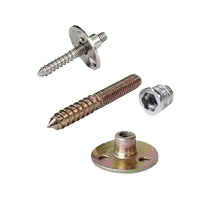
Screw directly
This method is not possible for every structure. The fastener must be securely held and not protrude onto the front side of the countertop.
Mounting plate
The plate distributes the connection over the area but requires space. It may be visible from below and add thickness.
Threaded stud
A prepared seat is needed in the leg and the mating part. Diameter and length are not chosen by eye.
Wooden frame
The legs are connected to aprons or mounting blocks. This is a more complex assembly that requires woodworking precision.
Why the card does not replace the designer
The MN-226 card has a hardware selection block, but responsibility for compatibility with the tabletop remains part of the project. The same leg can be attached to different structures in different ways.
Table rigidity: attachment and frame are not the same thing
Even a strong connection of each leg to the tabletop does not always prevent the entire piece of furniture from rocking.
Imagine a tall rectangle: the tabletop shifts sideways, and the legs try to tilt. The fasteners experience stress. Aprons or a frame reduce this movement by tying the supports together.
Signs of insufficient rigidity
-
the table rocks with a light push;
-
surface angles shift relative to each other;
-
fasteners gradually loosen;
-
sounds appear;
-
legs spread apart;
-
the table wobbles not because of the floor, but because of the frame.
A floor glide does not fix a weak frame
A soft or sliding support interacts with the floor. It does not replace the stretcher and does not strengthen the connection of the legs to the tabletop.
Adjustment does not fix geometry
If one leg is shorter due to an assembly error, an adjustable support can eliminate the wobble. But it will not correct a skewed frame or weak fastening.
FUR-022: round floor glide for moving the table
The MN-226 card recommends a round foot FUR-022 with a diameter of 30 mm. It is installed using the included screw and has a sliding working surface.
For a buyer who plans to occasionally move the table, it is useful to consider round glide FUR-022.
For which situations it is relevant
-
the kitchen table is moved during cleaning;
-
furniture needs to be moved without lifting;
Finishing of legs and tabletop
Unpainted parts require a separate stage. For this, you can buy materials for wood finishing, but the system must match the material and purpose of the table.
What is included in the preparation
- inspection;
- dust removal;
- local preparation;
- priming;
- interlayer sanding;
- finish coating;
- holding before assembly;
- protection during installation.
Paint before assembly
Advantages:
- access to all sides is open;
- easier to paint internal areas;
- less risk of leaving untreated wood.
Disadvantages:
- fasteners can damage the coating;
- seating areas need to be protected;
- parts are harder to hold during installation.
Paint after assembly
Advantages:
- color is applied to a single item;
- easier to hide small traces of joints.
Disadvantages:
- harder to work under the countertop;
- unpainted areas may occur;
- the table takes up more space in the finishing room;
- It is harder to achieve uniformity on the inner sides.
Practical route
- Dry fitting.
- Preparing the holes.
- Marking the position of the legs.
- Disassembly.
- Main finishing.
- Complete drying.
- Assembly with surface protection.
- Local adjustment if necessary.
A unified color of the table and the interior
The table does not exist separately from the room. If the legs, tabletop, and floor trim must have a consistent texture, together with furniture components you can buy wooden skirting board from a suitable wood species or prepare items under a single enamel.
This does not mean that an oak leg will automatically match an oak baseboard. For unity you will need:
- wood samples;
- one tinting system;
- the same degree of gloss;
- comparison under room lighting;
- accounting for differences between solid wood and veneer;
- coordinating the color with the tabletop.
How to calculate the cost of a full order
Prices and availability change, so the amount cannot be fixed in the article. The buyer needs a formula:
**4 × current price of MN-226
- cost of tabletop
- Fasteners
+ 4 support feet - Materials for finishing
- possible underframe or aprons
- Delivery
= cost of the table set.**
What is sometimes forgotten to include
- soil;
- enamel, oil, or varnish;
- sanding consumables;
- tabletop fasteners;
- corner connectors;
- central reinforcement;
- packaging;
- lifting;
- carpenter's work;
- test paint samples;
- stock of materials.
Cost of legs
In the card, one MN-226 is selected. For a regular four-legged table, the price of the selected version is multiplied by four.
Tabletop price
Depends on:
- model;
- material;
- dimensions;
- thicknesses;
- finishes;
- availability;
- individual works.
Support plates
Four identical items are needed. If a fifth leg is added, there should also be five support plates.
Fastening
The total is determined not by the number of legs, but by the scheme. Each support may require a plate, a stud, screws, or wooden frame elements.
Finishing
Consumption is calculated based on the area of the parts and the recommendations of the selected system.
Delivery
Depends on size, weight, composition, and address. The tabletop often determines the shipment dimensions more than the legs.
Three budget scenarios
Beech for enamel
The order includes:
- four beech MN-226 for enamel;
- tabletop for opaque painting;
- fastening system;
- four support feet;
- primer and enamel;
- delivery.
Advantage — the ability to achieve a unified color. Additional cost item — full finishing.
Oak for tinting
The order includes:
- four oak MN-226 for tinting;
- tabletop with agreed oak texture;
- fasteners;
- support feet;
- test tinting compound;
- finish coating;
- delivery.
Here, sorting and test swatches are more important.
Contrast table
For example:
- beech legs for colored enamel;
- tabletop with open oak texture;
- fasteners;
- support feet;
- two finishing systems;
- delivery.
The contrast looks expressive but increases the number of materials and operations.
What to buy together: table set
Position Quantity Why it's needed What to check MN-226 4 pcs. Main supports Material, preparation, dimensions Tabletop 1 pc. Work surface Length, width, thickness, material FUR-022 or FUR-028 glides 4 pcs. Contact with the floor Covering type and diameter Fastening As per project Leg and top connection Tabletop material and drawing Aprons or underframe By calculation Rigidity Legroom Finishing materials By consumption Protection and color Compatibility with beech or oak Central support If necessary Support for long span Position and exact height Packaging and delivery 1 service Receiving the set Address and cargo dimensions How not to confuse MN-226 with a leg "about 70 cm"
When searching, the buyer sees many models with heights of 700, 720, 730, or 740 mm and perceives them as interchangeable. This is a mistake.
Different heights
Even 10 mm changes the final table size.
Different geometry
MN-226 has dimensions of 727 × 120 × 45 mm. Another leg of the same height may take up more or less space under the tabletop.
Different orientation
A modern support may have a distinct front and side. Four parts need to be rotated consistently.
Different mounting hardware
Compatible elements and mounting area may differ.
Different finishes
One model is available only for enamel, another for tinting, and a third with a ready-made coating.
Different project purpose
A high leg may fit a table, but not every tabletop. You need to compare the set, not a single number.
For alternative selection, you can buy legs for a table after filtering by height and shape. At the same time, the article remains dedicated to the specific calculation MN-226, not a general catalog overview.
Practical situations
Need a writing desk with a thin tabletop
Take a thickness of 25 mm:
727 + 25 = 752 mm.
Then check:
- seat height;
- mounting in a thin surface;
- need for a frame;
- knee space;
- cables.
Need a kitchen table with a 30 mm top
Base height:
757 mm.
They check four seating positions, aisles, floor type, and stability during movement.
A massive oak table is needed
A tabletop of 40–50 mm gives a height of 767–777 mm. Such furniture requires checking ergonomics and the frame. Oak legs for tinting are linked to the top's texture through samples.
Tabletop already purchased
First, its mounting thickness is measured and the position of supports is marked. Then, it is checked whether the fasteners fit and whether a frame is needed.
The chairs are already available
The table height is checked relative to the specific seat. One cannot rely only on standard values.
The floor is parquet
FUR-028 is considered, but the felt is cleaned regularly.
The table will be moved frequently
FUR-022 is considered after checking compatibility with the flooring.
The table is longer than usual
They design the underframe or additional support. Four legs are not assigned automatically.
Need the color of kitchen facades
They choose preparation for enamel, make a test paint-out on beech and tabletop material.
Need visible wood
They choose oak for tinting, agree on the pattern and finishing compound.
Mistakes that prevent the set from coming together
Mistake 1. Calculating the height only by the leg
727 mm is not the height of the finished table.
Mistake 2. Buying one MN-226 instead of four
The card contains a separate product item. The quantity is set in the cart.
Error 3. Choosing a countertop after legs without calculation
The thickness will change the final height.
Error 4. Considering 25 and 50 mm almost the same
The difference in final height will be 25 mm.
Error 5. Ignoring the floor support
It affects contact with the floor and can add millimeters.
Error 6. Mixing FUR-022 and FUR-028
The table may stand unevenly and move unpredictably.
Error 7. Choosing fasteners by photo
You need to know the countertop construction.
Error 8. Cannot download drawing MN-226
Dimensions of 727 × 120 × 45 mm are insufficient for precise marking without a template.
Error 9. Not accounting for the apron
It reduces legroom.
Error 10. Attaching legs to a thin board without reinforcement
The fastening may not withstand lateral loads.
Error 11. Considering four legs sufficient for any length
A long tabletop may require additional support.
Error 12. Ordering beech and expecting oak appearance
Wood species differ.
Error 13. Choose "under enamel" and wait for the painted product
This is a primer, not a final color.
Error 14. Choose "for tinting" and expect an identical shade
The finish still needs to be applied.
Error 15. Not doing a test paint
The legs and tabletop may differ.
Error 16. Turning the legs differently
Modern geometry will lose symmetry.
Error 17. Placing the supports too close to the edges
The fasteners will end up in a weak zone.
Error 18. Moving them too far inward
Stability will decrease and overhang will increase.
Error 19. Not leaving room for a chair
The legs will interfere with the person sitting.
Error 20. Not accounting for the weight of the tabletop
It affects fasteners and delivery.
Error 21. Buying finishing materials by name alone
Primer, enamel, or oil must form a compatible system.
Error 22. Assembling the table before the coating is fully dry
Fasteners and packaging will damage the surface.
Error 23. Not checking the floor
On an uneven surface, the table will wobble.
Error 24. Trying to fix a weak frame with leveling feet
They do not provide lateral rigidity.
Error 25. Not including delivery in the budget
The tabletop can significantly affect the shipping cost.
Who the MN-226 kit is suitable for
- for a buyer who needs a modern tall leg;
- for a project with a calculated height of 752–777 mm or another value according to the extended formula;
- for a writing desk after ergonomics check;
- for a kitchen table after checking walkways;
- for a dining table with a calculated frame;
- for a beech set under enamel;
- for an oak set for tinting;
- for furniture where four supports can be placed symmetrically;
- for a project with separate selection of fasteners;
- for an order with four identical foot pads;
- When to choose another model
When to choose another model
MN-226 may not be suitable if:
- a ready-made table with a height of exactly 727 mm is required;
- the tabletop makes the furniture too tall;
- need a bar underframe;
- a low coffee table is required;
- geometry 120 × 45 mm does not fit;
- the mounting area is too small;
- the legs interfere with seated people;
- the project requires inclined supports;
- adjustable height is needed;
- the tabletop is very long, and no frame is planned;
- round turned legs are necessary;
- a ready-made finish without finishing work is required.
How to place an order without missing items
1. Determine the purpose
Writing, kitchen, or dining table.
2. Choose the tabletop
Record:
- length;
- width;
- thickness;
- the material;
- weight;
- construction.
3. Calculate the height
Use the extended formula.
4. Check four MN-226
Select:
- beech or oak;
- preparation for enamel or tinting;
- quantity 4 pcs.
5. Draw the layout
Apply the full contour of the legs to the underside.
6. Design the rigidity
Decide whether stretchers, a frame, or an underframe are needed.
7. Select the fasteners
Match them with the leg and the tabletop.
8. Choose the floor protector
FUR-022 or FUR-028, four identical items.
9. Calculate finishing
Consider legs, tabletop, and frame.
10. Calculate cost
Add all components and delivery.
11. Check availability and deadlines
Check current information right before payment.
12. Arrange delivery
Terms and calculation are available in the section payment and delivery.
Table specification template
Purpose: writing / kitchen / dining.
Legs: MN-226 — 4 pcs.
Leg material: beech / oak.
Preparation: for enamel / for tinting.
Leg height: 727 mm.
Other dimensions: 120 × 45 mm per drawing.
Tabletop: article ______.
Length: ______ mm.
Width: ______ mm.
Thickness: ______ mm.
Material: ______.
Base height: 727 + ______ = ______ mm.
Fastener addition: ______ mm.
Glide addition: ______ mm.
Recessed fit: ______ mm.
Final height: ______ mm.
Frame: direct attachment / aprons / frame / underframe.
Fasteners: ______.
Glides: FUR-022 / FUR-028 — 4 pcs.
Leg finish: ______.
Tabletop finish: ______.
Color or tone: ______.
Delivery address: ______.
FAQ: questions about four MN-226 and the tabletop
What is the height of MN-226?
The leg height is 727 mm. The finished table will be higher due to the tabletop and other protruding elements.
What height will be with a 25 mm tabletop?
With direct mounting, the base height will be 752 mm.
What height with a 30 mm tabletop?
The base result is 757 mm.
What height with a 40 mm tabletop?
It will be 767 mm without taking into account the support pads and mounting additions.
What is the height with a 50 mm tabletop?
The base height is 777 mm.
Is the support pad included in these calculations?
No. The table only takes into account the leg and the tabletop.
Is it possible to get a table exactly 750 mm?
With a 727 mm leg, a structure that gives a total addition of 23 mm will be required. The tabletop, fasteners, and support pad need to be taken into account.
Can the MN-226 be reduced?
The leg should not be cut without a technical project. This may damage the shape and the bottom platform.
How many MN-226 should be ordered?
For a regular four-legged table, four identical legs are ordered. A long surface may require additional supports.
Is the tabletop included in the MN-226 set?
No. The leg and tabletop are selected as separate items.
Which tabletop should I choose?
Based on purpose, dimensions, thickness, material, and mounting design.
Will MN-226 be suitable for a writing desk?
It may be suitable after checking the final height, legroom, rigidity, and fasteners.
Will the leg be suitable for a kitchen table?
Yes, if the tabletop dimensions and design are calculated for four supports.
Can it be used for a dining table?
It's possible, but for a long tabletop, you need to check the span and the underframe.
Are four legs always enough?
No. The number depends on the dimensions and design.
Are tsargs needed?
Sometimes they are needed for rigidity. The designer makes the decision.
Can legs be attached directly to the tabletop?
Only if the material, thickness, and fastening system allow it.
What fasteners are needed?
It is selected according to drawing MN-226 and the tabletop design.
Which floor glides are recommended?
FUR-022 and FUR-028.
How does FUR-022 differ from FUR-028?
FUR-022 has a sliding support surface, FUR-028 has a felt one.
What to choose for parquet?
Felt FUR-028 is more often considered, but it needs to be kept clean.
What to choose if the table is moved?
FUR-022 can be considered after checking the floor covering.
How many support pads should be ordered?
Four for four legs.
Can two types of glides be mixed?
No. It is better to use identical elements under one table.
What is MN-226 made of?
The card suggests beech and oak.
What is better under enamel?
Beech is often chosen with appropriate preparation, but the decision depends on the entire set.
What is better under stain?
Oak allows you to emphasize the pronounced texture.
Does "under enamel" mean ready-made painting?
No. This is a variant of workpiece preparation.
Does "for tinting" mean a ready color?
No. The tinting compound still needs to be applied.
Can I order oak legs and a beech tabletop?
You can create a contrasting or painted set, but the materials need to be coordinated by finish.
How to achieve the same color?
Make test stains on all materials.
Do I need to paint the bottom part of the leg?
The protective system must cover the surfaces specified by the technology, except for areas that cannot be covered due to fastening or gluing.
When should the coating be applied?
After a dry fitting and hole preparation, but before final assembly, if the technology allows it.
How to calculate the price of four legs?
Multiply the current price of the selected MN-226 by four.
Why is the price not listed in the article?
It changes depending on the material, finish, and the current product card.
What else is included in the price of the table?
Tabletop, fasteners, floor glides, frame, finishing, and delivery.
Can all items be ordered together?
Legs, tabletops, fittings, and materials are presented in the STAVROS catalog. Compatibility must be checked before payment.
Is there Contact us to confirm shipping to your destination.?
Yes. Terms and cost are calculated based on the composition and delivery address of the order.
What should be checked upon receiving the legs?
Article number, quantity, dimensions, material, surface preparation, and absence of transport damage.
Is it necessary to unpack the tabletop immediately?
The inspection is carried out upon receipt according to the carrier's and seller's rules, recording the condition of the packaging and the product.
How to understand that the table will not wobble?
A frame calculation, precise assembly, and floor check are needed. It cannot be determined by one leg model alone.
Can FUR-028 eliminate wobbling?
It does not fix a weak frame. Wobbling due to uneven floor and rocking of the structure are different problems.
Is a fifth leg needed?
For a long table — possibly. The solution depends on the span and the underframe.
Where to place the fifth leg?
Usually its position is linked to central reinforcement, but it should not interfere with those seated.
Can a sliding table be assembled on MN-226?
Only with a separately calculated mechanism and frame. Four legs by themselves do not create a sliding system.
Is the model suitable for a commercial space?
The possibility depends on load and construction. For intensive use, a professional calculation is needed.
Four legs become a table only after a full calculation
MN-226 gives the project a precise initial height — 727 mm, modern geometry, and a choice between beech and oak. But it does not define the finished furniture entirely. A tabletop 25 mm thick raises the work surface to 752 mm, 30 mm — to 757 mm, 40 mm — to 767 mm, 50 mm — to 777 mm. To these values, support feet and mounting elements may be added, or a recessed fit may be subtracted.
Before ordering, seven parts must be matched:
- Four identical MN-226.
- A tabletop of the required size and thickness.
- Placement of the legs.
- A rigid structure.
- Compatible fasteners.
- Four identical floor glides.
- Finishing materials and delivery.
Beech under enamel suits a project with an opaque, uniform color. Oak under tinting reveals the wood grain. FUR-022 is convenient where a sliding support contact is needed, FUR-028 — where soft interaction with a sensitive floor is a priority. Fasteners and the need for aprons are determined not by appearance, but by the tabletop drawing and operating conditions.
The total cost is calculated by a formula, not by the price of one leg: four MN-226 plus the tabletop, hardware, floor glides, finishing, frame, and delivery. After such a calculation, you can buy four MN-226 legs and arrange the remaining items as an agreed set.
STAVROS allows you to assemble a table not from random parts, but from verified components with cards, dimensions, material options, and accompanying hardware. The buyer only needs to do the main thing: link these components into a single project in advance. Then four MN-226 legs and one tabletop really turn into a convenient, stable, and visually cohesive table, rather than a set of parts that have to be reworked after delivery.