
































































 5-10 days
The wall is the largest surface in any room. It sets the mood, defines the style, creates a sense of space. And it's the wall that most often remains the last unresolved issue in renovation: you want something expressive, but how to choose correctly, how to coordinate, how not to overdo it?
The Neoclassic Collection STAVROS addresses this issue specifically and to the point. It's a series of ready-made kitswall decorin the neoclassical style - made of polyurethane and primed MDF, where the main work has already been done for the customer: elements are selected, proportions are coordinated, the system is designed. All you have to do is choose the level of decorative saturation that suits your space - and get a finished wall composition without a long search for compatible parts in the catalog.
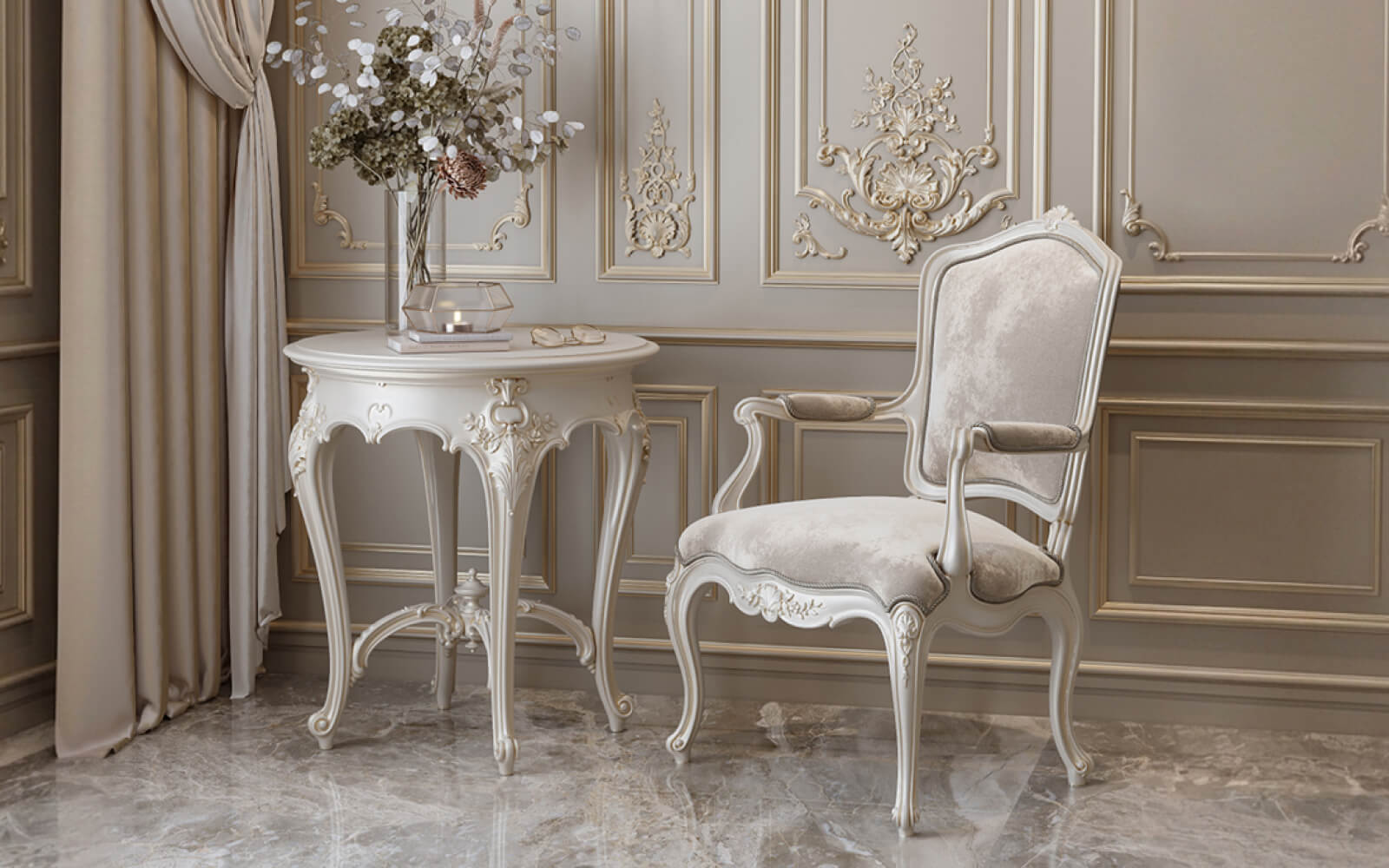
Neoclassical wall decorof this collection is designed for interiors where moderation is valued: not 'opulent for the sake of opulence,' but exactly as much relief, lines, and ornament as needed for the wall to acquire architectural character. Geometric order, delicate ornamental accent, strictness of molding lines - this is the architectural formula of Neoclassic.
The collection is based on one key principle: wall decor should be a system, not a set of random details. Chaotic mixing of ornamental elements of different scales, different stylistic origins, and different geometric 'weight categories' is one of the most common mistakes when decorating walls in a classical or neoclassical style. The result of such experiments is predictable: the wall looks 'overloaded,' 'too colorful,' or, worse, 'cheap,' no matter how expensive the individual elements are.
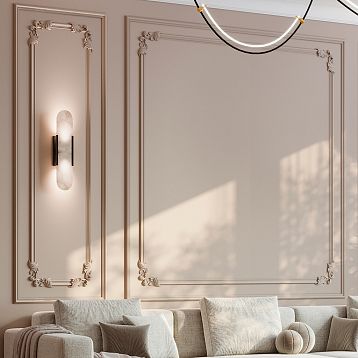
The Neoclassic Collection eliminates this problem through the format of ready-made kits. Each set is a designed wall system: polyurethane decorative elements and primed MDF moldings, selected by proportions, scale, and ornamental language so that after installation, a complete decorative panel appears on the wall. Not 'roughly this + roughly that,' but a specific visual result that is already visible in the product card photo.
What distinguishes Neoclassic from any 'just a set of moldings and stucco'?
First, architectural integrity. All elements of each kit are perceived as parts of a single decorative statement, not as separate 'details that can stand next to each other.'
Secondly, large-scale consistency. The ratio of the molding profile width to the size of the ornamental element in each set is calculated. Corner accents are proportional to the molding pitch. Vertical overlays correspond to the post height.
Thirdly, stylistic purity. All sets in the collection are executed in a unified ornamental language of neoclassicism: strict geometric contours, classic leaf and cartouche motifs, symmetry as the foundation. No mixing of Baroque opulence with minimalist restraint.
Fourthly, compatibility of sets within the series. CPU-1-1, CPU-1-2, CPU-1-3, CPU-1-4, and CPU-1-5 — all five levels of the collection are compatible with each other within a single interior. More laconicStucco Decor Set CPU-1-1— for the hallway. More saturatedStucco Decor Set CPU-1-5— for the formal living room. The unified stylistic language is not broken.
The CPU-1 set line is five steps on the scale 'from laconic to saturated'. Each subsequent level adds decorative mass: more ornamental elements, larger accents, more complex corner groups.
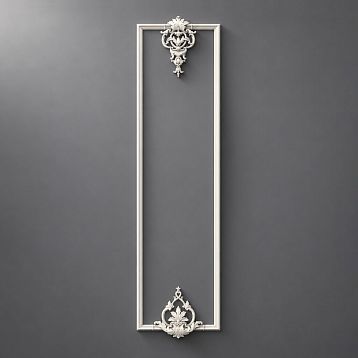
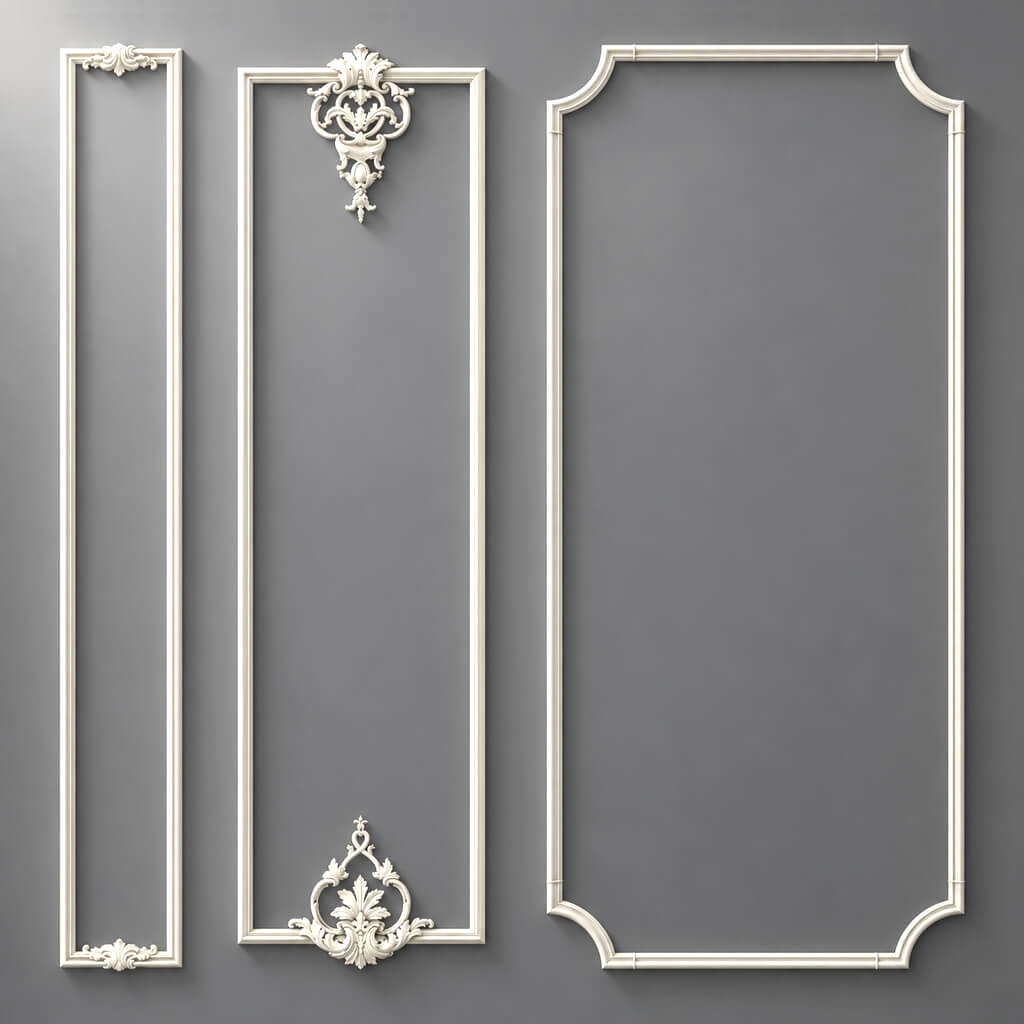
The basic format of the collection is a vertical decorative axis on the wall: a molding profile along the height + an ornamental accent at a key point. The post height is about 2300 mm, which covers almost the entire working height of the wall with standard ceilings. Width is 300 mm. This is a strict, geometrically flawless element that creates an 'architectural rhythm' on the wall — a repeating vertical accent, like pilasters on the facade of a classical building.
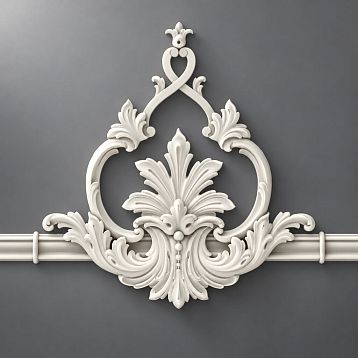
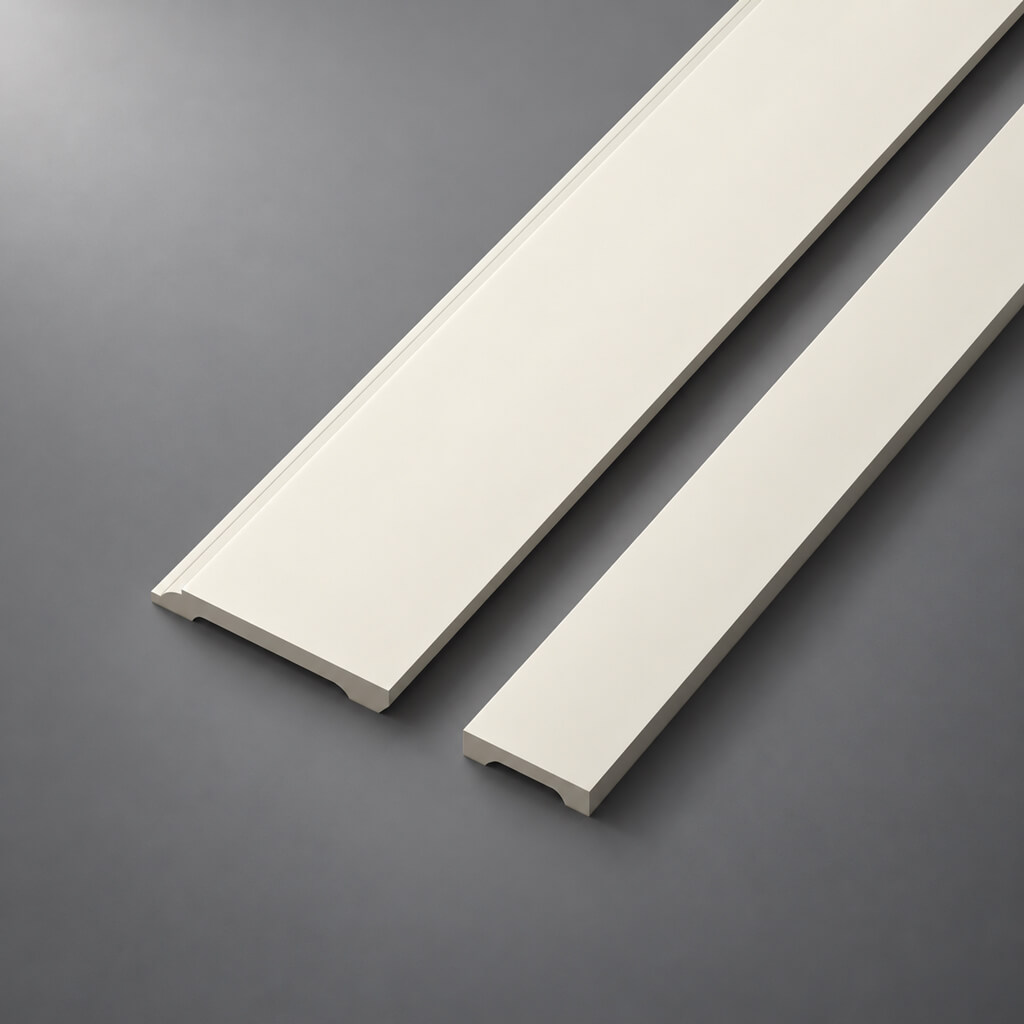
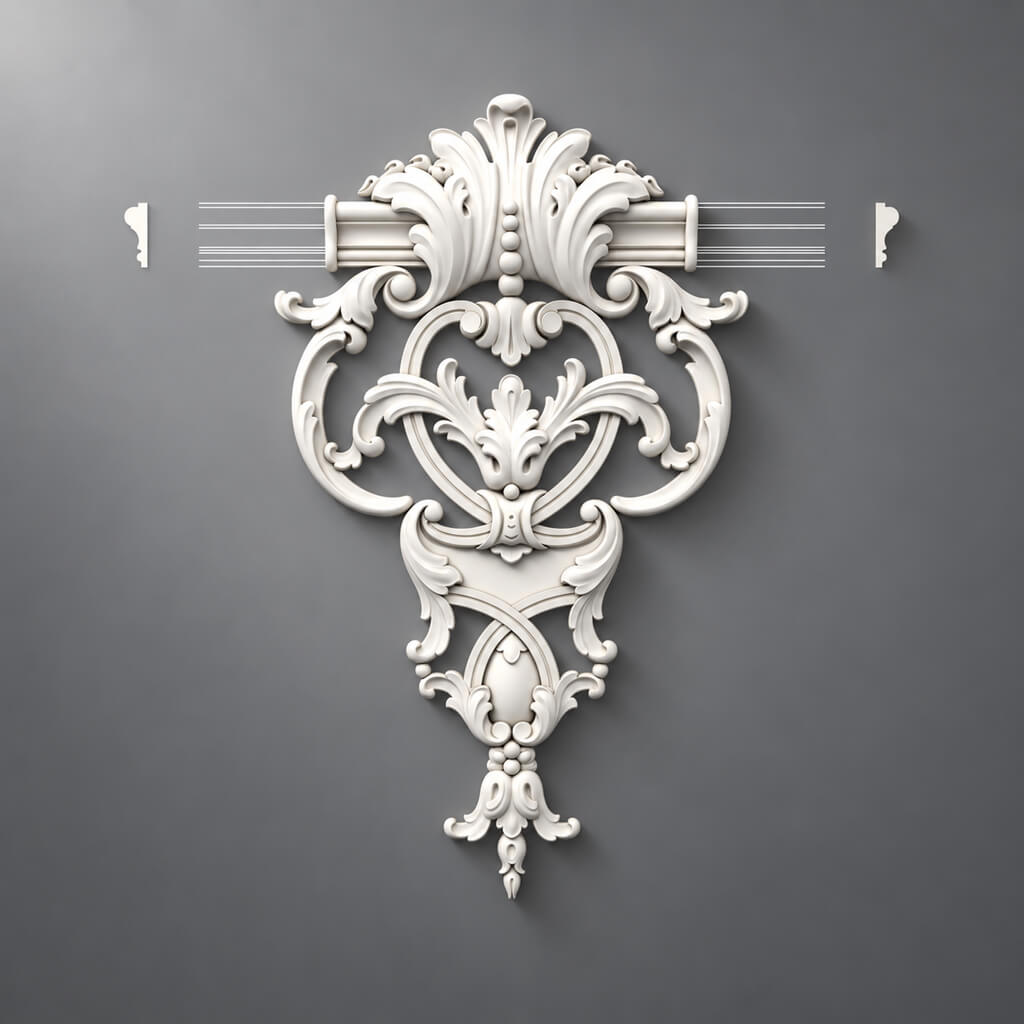
Stucco Decor Set CPU-1-1— the most laconic: one ornamental element NPU-399 (77 × 183 × 21 mm) and molding MLD-003-MG. For narrow piers, corridors, basic decorative accents in small rooms.
Stucco Decor Set CPU-1-2— a more saturated level with large ornamental elements: MLDPU-3-1 (440 × 260 × 23 mm) and MLDPU-3-2 (375 × 355 × 33 mm). Pronounced decorative mass, for accent walls in living rooms and bedrooms.
Stucco Decor Set CPU-1-3— medium saturation level with three ornamental accents along the vertical. Hierarchical vertical system: lower, central, and upper elements create an axis with a readable architectural logic.
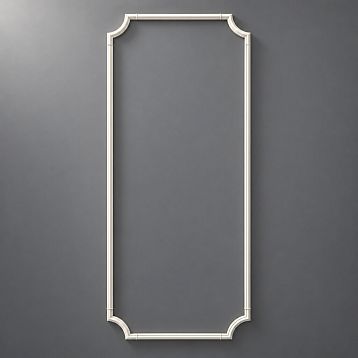
Frame format — a rectangular closed system of moldings with corner decorative accents at four points. The wall is divided into 'picture fields' — rectangular zones framed by a molding contour. This format is closest to the classic wall paneling system — an architectural technique originating from the state halls of European residences.
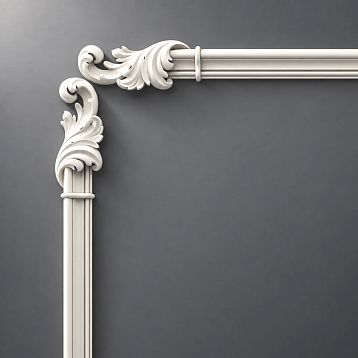
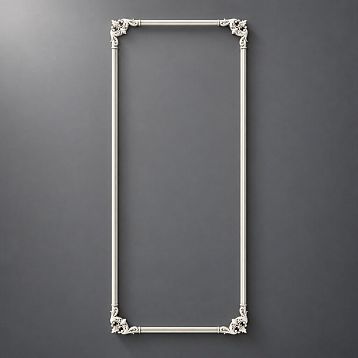
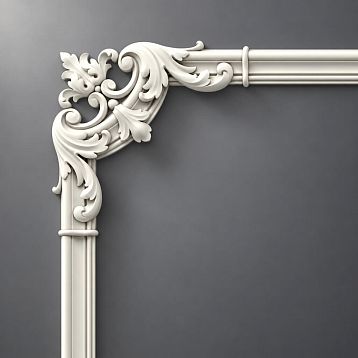
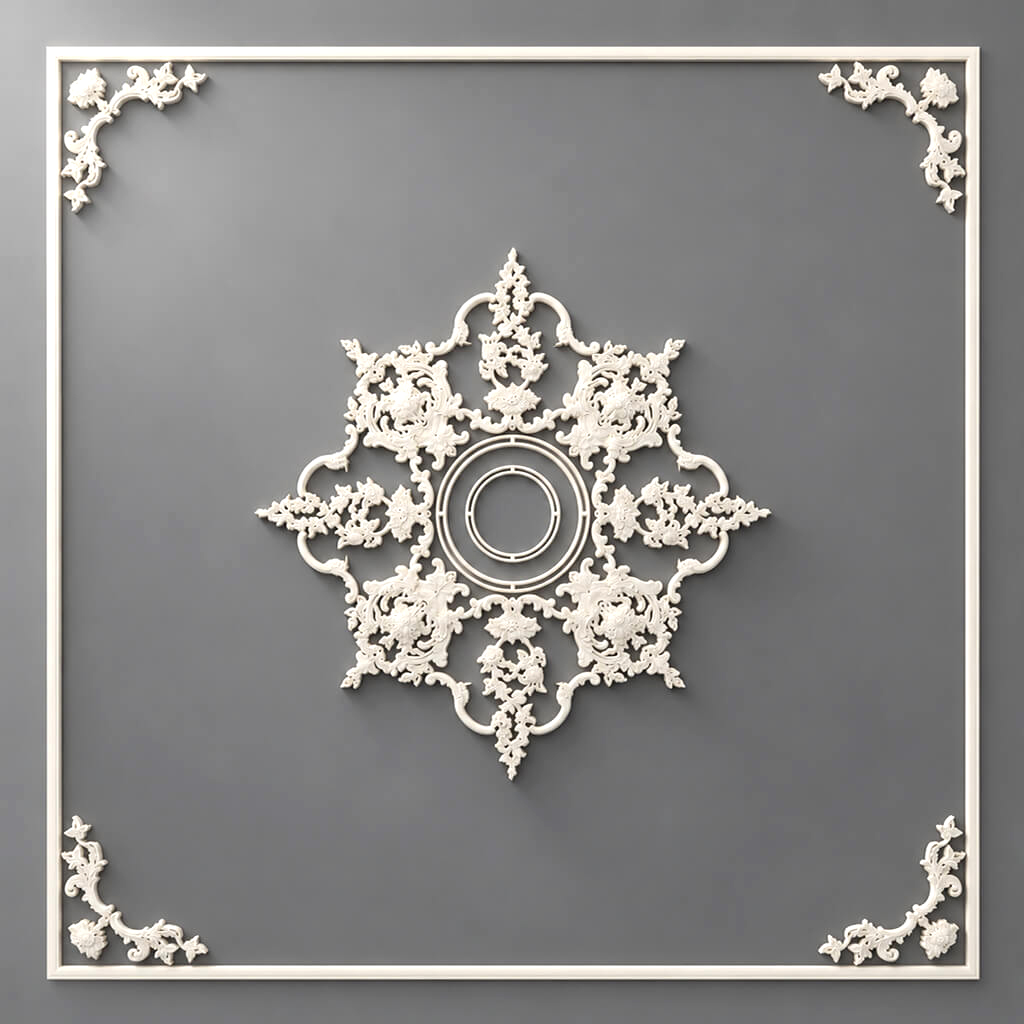
Stucco Decor Set CPU-1-4andCPU-1-5— the upper levels of the series, implementing the frame logic: four corner NPU-500 (208 × 208 × 18 mm) + molding MLD-003-MG define a rectangular decorative zone of 1000 × 2300 mm. Monumental corner accents, a sense of grandeur, architectural completeness.
The formats of ready-made CPU-1 kits cover almost the entire range of decorative tasks for walls in residential and commercial interiors:
one kit — a single accent on the wall;
two kits — a symmetrical pair on either side of a painting, mirror, or doorway;
three to five kits — a rhythmic series along a long wall, imitating a classic enfilade.
Each of these scenarios is architecturally justified and implemented in existing STAVROS projects.
The living room is the most public space in the house. This is where the decor works with the maximum 'audience': every guest evaluates the living room walls on their first visit, every owner sees them every day. At the same time, the requirements for living room decor are contradictory: it must be expressive enough to create a sense of 'designed space', and delicate enough not to become tiresome with constant contact.
Neoclassicism resolves this contradiction through the principle of 'architectural order': wall decor does not shout, but is present as a confident visual statement.Ready-made wall decorCPU-1-4 or CPU-1-5 in a living room of 25–40 m² — two or three sets per accent wall — is precisely such a statement: strict, symmetrical, convincing.
The bedroom is a space where a person spends a third of their life and sees the ceiling and walls in the quietest, most reflective moments — before sleep and immediately after waking. The wall behind the bed headboard is the most psychologically significant surface in the bedroom.
One or three CPU sets along the central axis behind the bed create an 'architectural canopy' — not physical, but visual: a decorative vertical system above the bed that gives it 'weight', completeness, and a sense of coziness. For this scenario, CPU-1-1 or CPU-1-2 are especially good — laconic, without monumental formality, with a subtle ornamental accent.
The first thing a guest sees is the hallway. The last thing they remember when leaving is also the hallway. Yet, the hallway is often the smallest and most 'complex' space in the house: narrow, windowless, with an abundance of doors and passages.
Verticalwall decor in neoclassical stylein the hallway works on optics: vertical molding posts 2300 mm high 'stretch' the walls, making the ceiling subjectively higher. One or two sets of CPU-1-1 or CPU-1-2 on the side walls of the hallway transform a functional transit corridor into an architecturally meaningful entrance with the character of a classical enfilade.
In the hall of a private house with ceilings of 3.0 m or more — several CPU sets with horizontalmoldingsalong the wall belt and cornices along the ceiling perimeter: a full-fledged, representative-level decorative program for a formal entrance.
An accent wall is a modern designer technique: one wall in a room is highlighted by color, material, or decor, while the other three remain neutral. In the context of neoclassicism, the 'accent wall' takes on additional meaning: it is not just a wall of a different color, but a wall with architectural decor — molding frames, ornamental accents, a rhythmic system of vertical panels.
Decorative wall setCPU-1-5 on an accent wall in the bedroom or living room — three frames 1000 × 2300 mm with corner NPU-500 — is a decorative program that reads as 'professionally designed interior.' Whether it was done by a designer or by the apartment owner themselves.
A TV wall is one of the most frequent requests when working with a living room. A TV 'hanging on a bare wall' is perceived as a temporary solution — even in the most expensive furnishings. Molding frames on the sides and above the TV create an 'architectural framing' for the media zone: the screen stops being 'just electronics on the wall' and becomes part of a well-thought-out decorative composition.
In a study or library, molding frames between book sections are a traditional element of 'scholarly space.' In meeting rooms, banking halls, reception areas, and executive offices — a tool for creating an atmosphere of respectability. In all these contexts, the sets from the 'Neoclassic' collection work equally convincingly.
This question is fundamental — not only as a marketing argument but as a practical statement about the nature of interior decor.
When a person comes to a wall decor catalog for the first time, they see: cornices, moldings, corner overlays, central elements, ornamental inserts — dozens, if not hundreds of items. How to choose them? By what principles? What is the correct scale for a corner overlay for a molding with a 35 mm profile? How many ornamental accents are needed on a vertical post 2300 mm high for it to look harmonious? How to ensure that the style of NPU-399 is compatible with the style of MLD-003-MG?
A professional designer or experienced finisher knows the answers. But most buyers are not professional designers. And it is precisely for them that a ready-made set is not a simplification, but a professional tool created by specialists.
Specific advantages of a ready-made set:
1. Unified style. All elements of the set belong to the same ornamental language. There is no risk of 'mixing' classical acanthus with modern geometry.
2. Harmonized Proportions. The ratio of molding width to decorative element scale has been verified. The system looks 'correct' without additional calculations.
3. Ready Visual Result. The card photo is exactly what will appear on your wall. Not 'approximately like this,' but exactly like this.
4. Single Production Batch. All elements of one set are manufactured in one cycle. Polyurethane color, surface texture, material density — identical for all parts.
5. Easier to Kit the Project. For a designer or contractor, the kit is one line in the specification. Not five items with different delivery times.
6. Easier to Budget. Fixed set — fixed cost. Without 'what if we run out of corners' and 'seems like we need one more molding.'
Neoclassicism is a style that lives through details. Not through monumental sculptural groups (that's Baroque) and not through the complete absence of ornament (that's minimalism), but through precise, meticulous work with line and relief: molding contour, ornamental accent, symmetry, empty space between accents as an active element.
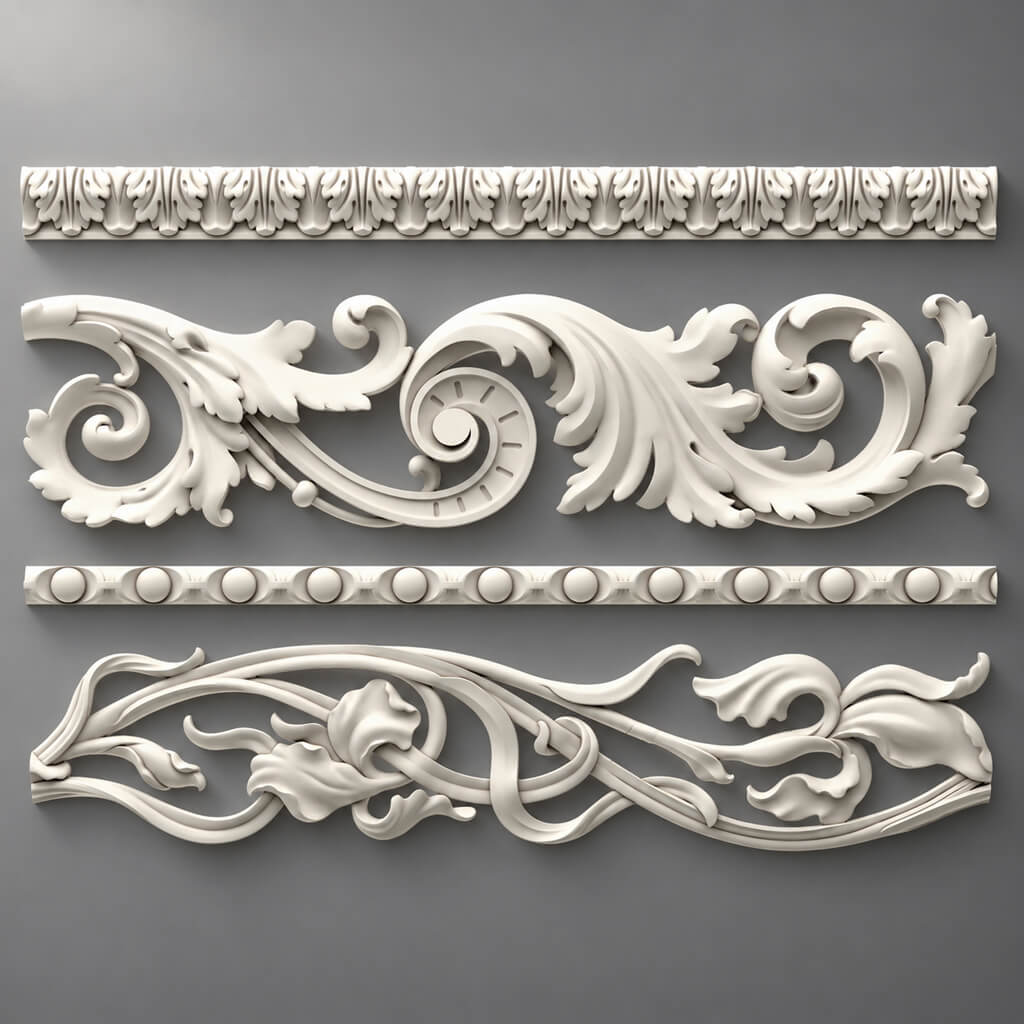
Exactly thereforePolyurethane moldingsand molding profiles are the perfect toolkit for a neoclassical interior. Polyurethane reproduces precise relief without loss of detail, accepts any paint, and withstands long-term use. MDF molding maintains a geometrically flawless line over a 2.5 m length without sagging — this is crucial for panel systems, where even a slight bend 'destroys' the entire decorative logic.
Rectangular frames made from molding MLD-003-MG with corner accents NPU-500 — a classic 'first step' in neoclassical wall design. The system creates 'picture fields' on the wall: each rectangle is a decorative 'frame' that encloses a mirror, painting, or simply a painted surface. With monochrome painting matching the wall color — the decor works exclusively through relief shadows: subtly, luxuriously, 'quiet luxury.'
A series of vertical posts with equal spacing along a long wall — the architectural rhythm of a 'pilaster facade'. This technique works in living rooms, corridors, halls, and dining rooms: the wall gains structure, depth, and a sense of being 'designed'.
For Neoclassicism, the contrast between a 'quiet' smooth surface and a 'speaking' decorative accent is fundamental. Three walls are neutral, one has decorative CPU frames. This is the principle of an 'architectural event': decoration is present where it is most visible and significant, and absent where its presence would be excessive.
Monochromatic painting in the wall color — 'quiet' classicism: the relief creates a play of light and shadow but does not 'shout' with contrast. White decor on a colored background (gray, blue, green, anthracite) — a classic 'Swedish' technique. Dark decor on a light wall — graphic Neoclassicism, a modern reinterpretation of classical forms. Metallic finishes on ornamental elements with white molding — a jewel-like accent at the corner points of the frame.
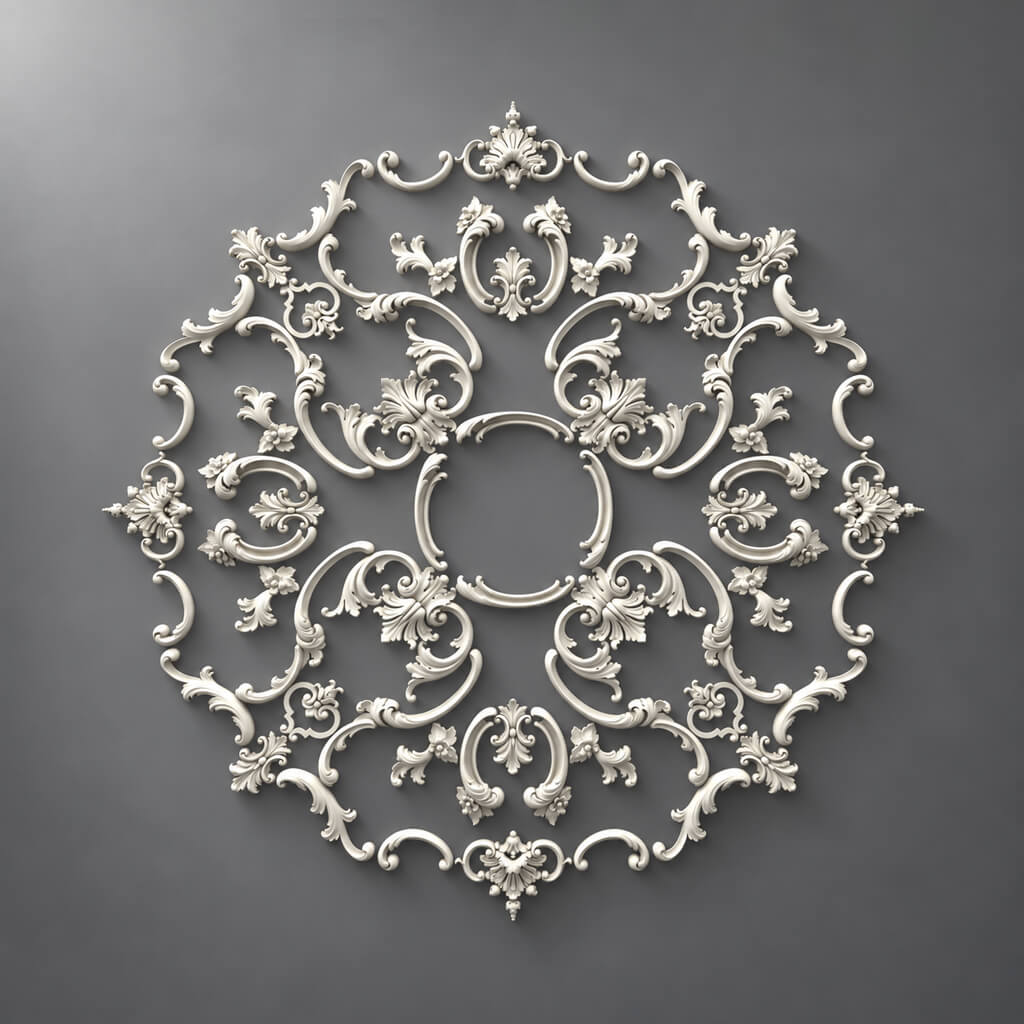
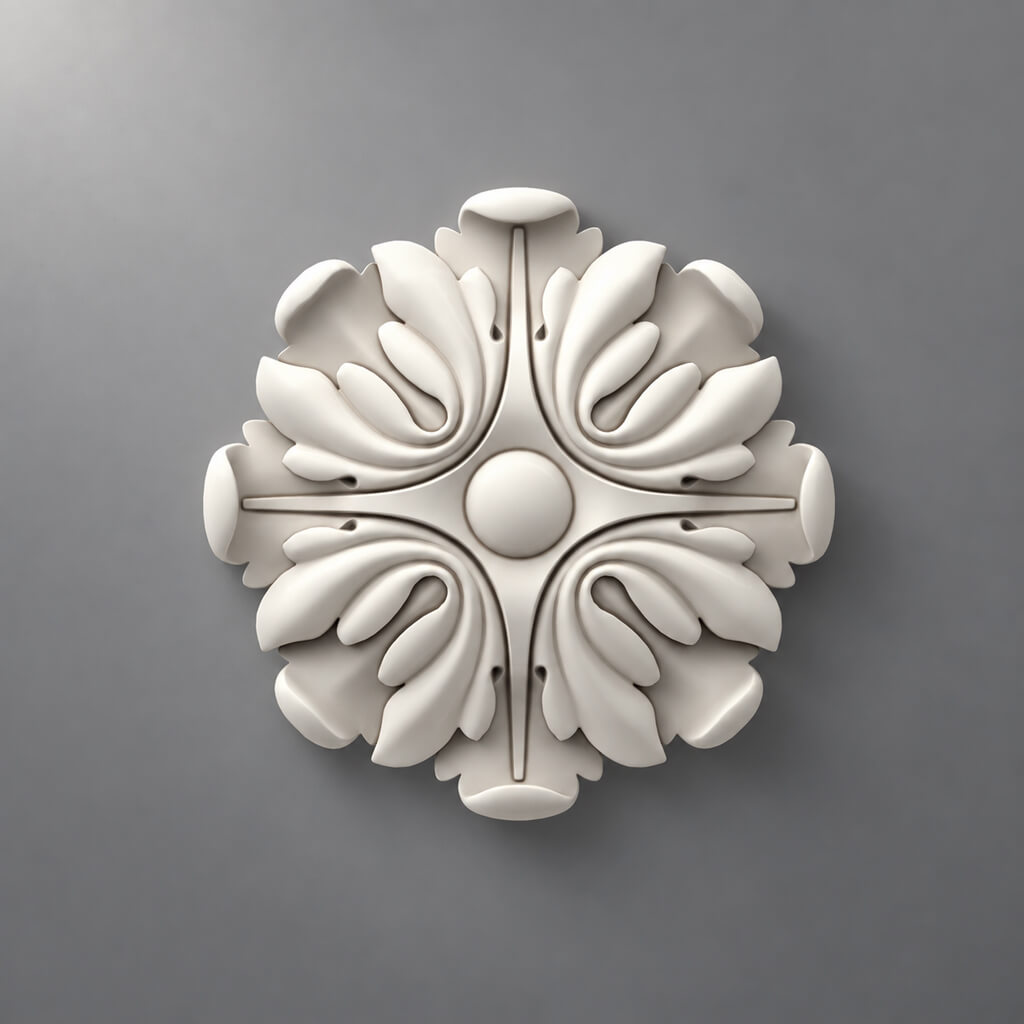
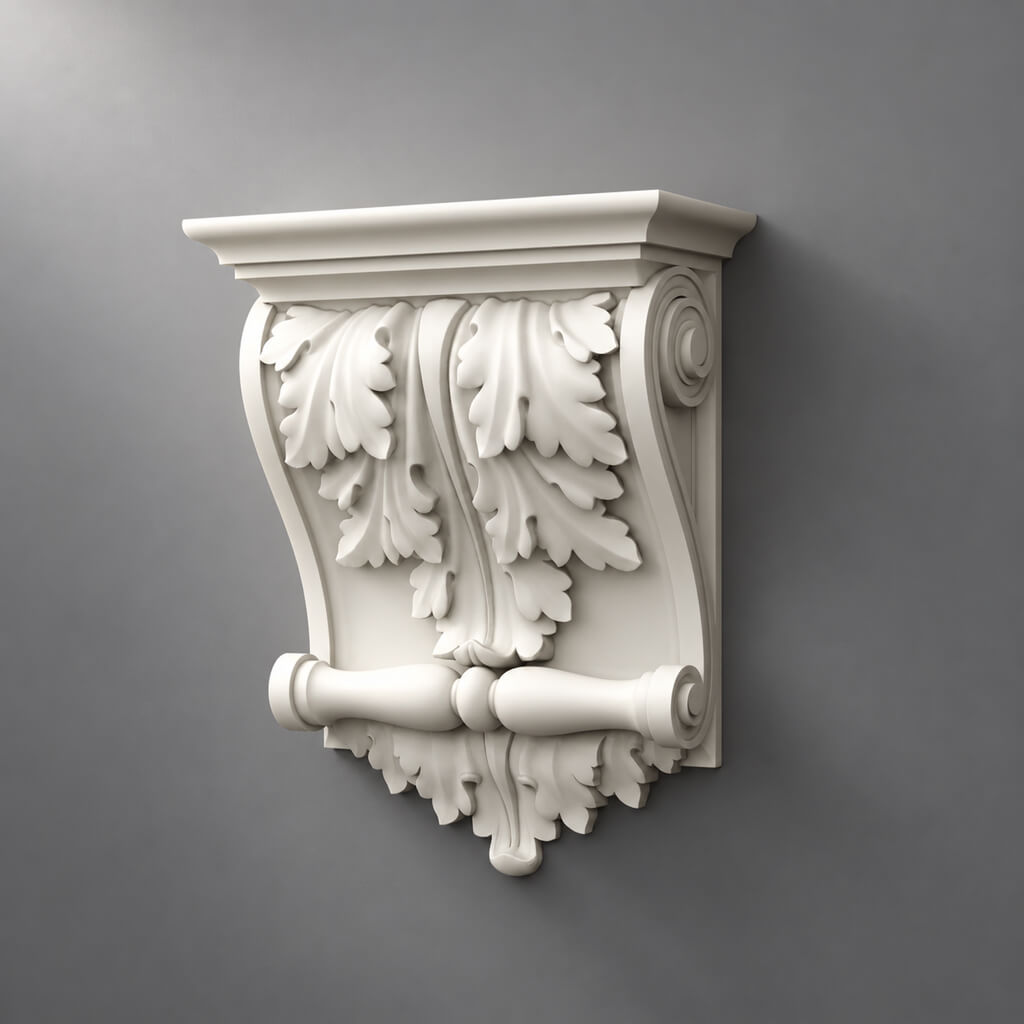
Decor for MoldingSTAVROS — additional corner and intermediate elements to enrich molding systems: new decorative 'voices' within the basic frame architecture.
STAVROS offers two related collections for Neoclassical wall design. Understanding their differences helps you choose the right format precisely.
Neoclassic Light collection— sets that are lighter in decorative 'weight class'. Smaller size of ornamental elements, more delicate relief, a more 'airy' feel from the wall system. Organic in small spaces (up to 20–25 m²), with low ceilings (2.5 m), in Scandinavian classicism and 'quiet luxury' with minimal decor.
The 'Neoclassic' collection features more substantial sets. Ornamental accents are larger, relief is more pronounced, and the overall 'mass' of the system is more significant. Suitable for medium and large rooms (20–50 m²), with ceilings 2.7 m and higher, in traditional neoclassicism and modern classicism with an elaborate decorative program.
Both collections use the MLD-003-MG molding as a common linear element—meaning they can be combined within a single space without a stylistic break.
The 'Neoclassic' collection is a standalone solution that simultaneously forms part of the larger STAVROS decorative system. Opportunities for program expansion include:
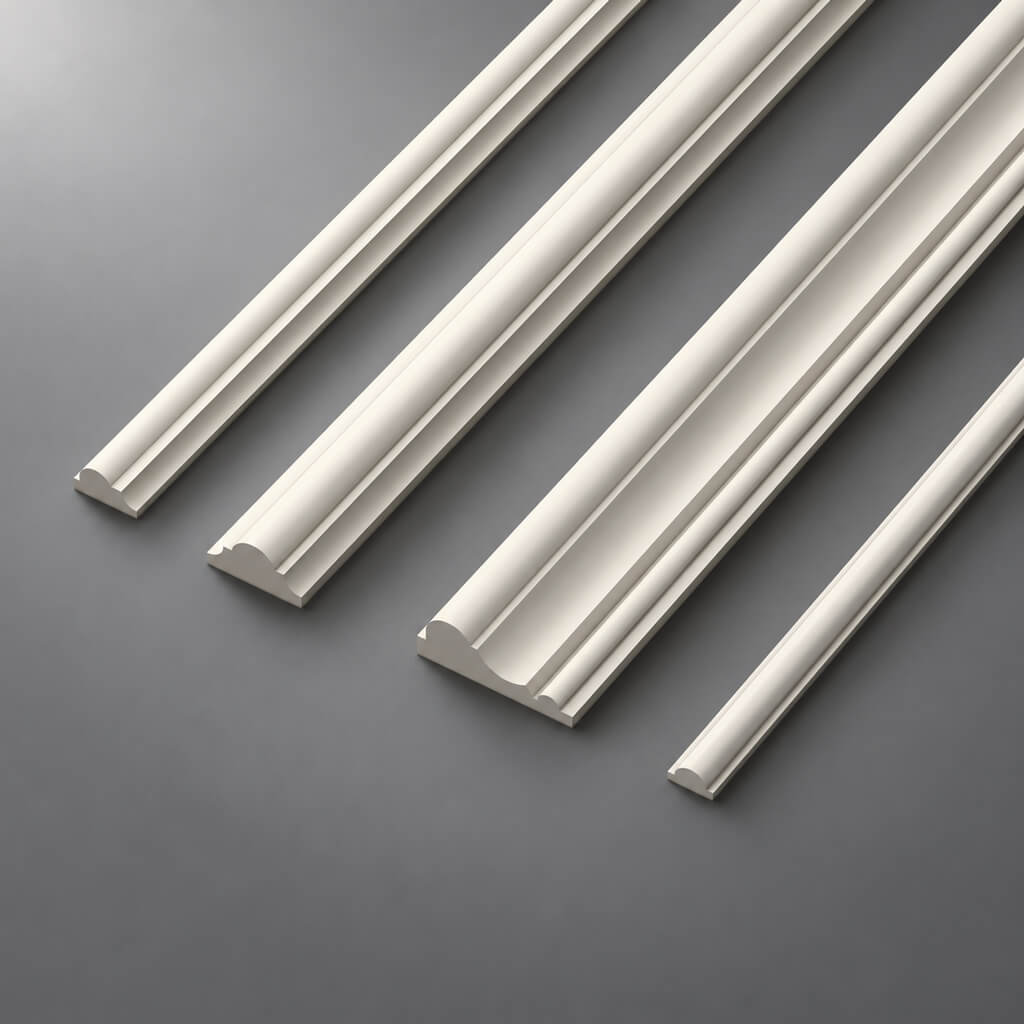
Moldings for horizontal elements.MoldingsSTAVROS in assortment—for creating horizontal 'rails' between vertical posts or frames, wall belts, cornice transitions. A horizontal molding at 900–1000 mm from the floor divides the wall into a lower panel zone and an upper one—a classic paneling technique.
Polyurethane stucco for additional accents.Polyurethane moldings— additional ornamental overlays to enrich walls beyond molding frames: medallions, rosettes, corner groups, central cartouches. For formal spaces where the basic CPU system is insufficient.
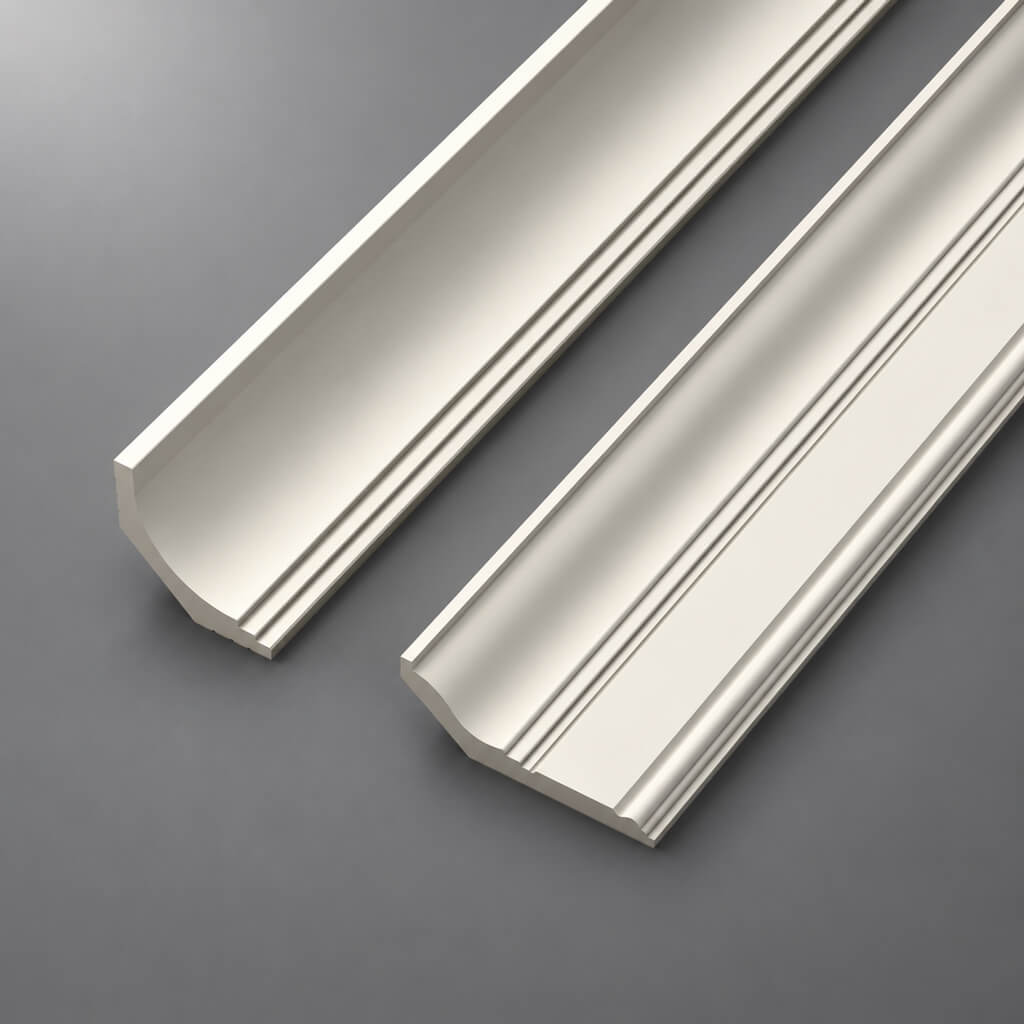
Decor for moldings.Decor for Molding— specialized corner and central elements for connection points in molding grids. When creating a horizontal-vertical system, decorative corner inserts at intersection points complete the architectural logic of the frame 'grid'.
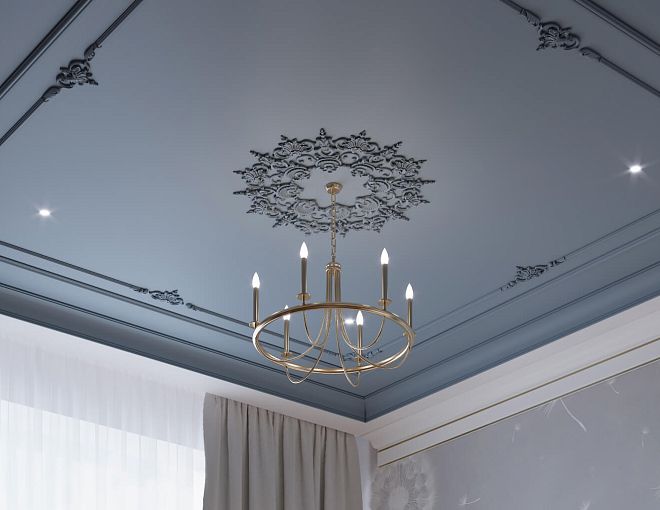
Ceiling decor as a vertical extension.ceiling decorSTAVROS — for creating a vertical link between wall and ceiling decor. A wall CPU set + ceiling system — a unified decorative environment where walls and ceilings 'speak' the same architectural language.
The level of decorative intensity is determined by four parameters.
Room area. Small rooms (up to 15 m²) — CPU-1-1 or CPU-1-2: a delicate accent without 'cluttering' a small space. Medium (15–30 m²) — CPU-1-2, CPU-1-3: a rich but not monumental system. Large (30–50 m² and more) — CPU-1-4, CPU-1-5: an expressive framing system, proportional to a large space.
Ceiling height. For ceilings 2.5 m — CPU-1-1 or CPU-1-2: the frame fills almost the entire wall height, without excessive 'empty' zones at the top. For ceilings 2.7–3.0 m — CPU-1-3, CPU-1-4: the set height of 2300 mm creates a decorative panel with a visible gap to the cornice — a 'floating' vertical system, light and architecturally correct. For ceilings from 3.0 m — CPU-1-5: a monumental framing system, organic in a high space.
Interior style. 'Quiet luxury' and Scandinavian classic — CPU-1-1, CPU-1-2: concise, geometric. Traditional neoclassicism — CPU-1-3, CPU-1-4. Formal classicism — CPU-1-5.
Room function. Hallway, entrance hall — CPU-1-1. Bedroom, study — CPU-1-1, CPU-1-2. Medium-sized living room — CPU-1-2, CPU-1-3. Formal living room, hall, dining room — CPU-1-4, CPU-1-5.
The assortment of the 'Neoclassic' collection is available in the product cards of the section. Each card contains the set composition, exact dimensions, and a photo of the result. To order — use the 'Add to Cart' or 'Pre-order' button on the product page. Contact us to confirm shipping to your destination.: SDEK, transport companies. Pickup from showrooms.
To select several sets for a specific project — use the feedback form on the website or contact STAVROS managers directly.
AllWall DecorIn the catalog — not only "Neoclassic," but also other collections for different styles and tasks. If you haven't decided on a style yet — start by browsing the full section.
How does "Neoclassic" differ from "Neoclassic Light"?
"Neoclassic" — sets with larger ornamental elements and more pronounced relief. Suitable for rooms from 20 m² with ceilings 2.7 m and higher."Neoclassic Light""Neoclassic Light" — a more delicate, "light" line for small spaces and interiors with minimal decor. Both collections use molding MLD-003-MG and are compatible when used together.
How many sets are needed for one wall?
Depends on the wall width and chosen rhythm. A 3 m wall — 2–3 sets. A 4–5 m wall — 3–5 sets. Exact calculation — based on set width (CPU-1-1: 300 mm, CPU-1-5: 1000 mm) and desired spacing between frames.
Can different CPU-1 levels be combined in one interior?
Yes. All five levels (CPU-1-1 — CPU-1-5) are executed in a unified ornamental language and are compatible. For example: CPU-1-1 in the hallway, CPU-1-3 in the bedroom, CPU-1-5 in the living room — a unified style with varying decorative intensity.
Is a designer needed to apply the kits?
No. That's exactly why the ready-made kit format was developed: the composition is coordinated, proportions are verified, and the result is visible in the product card photo. For installation, an experienced finishing specialist or a careful DIYer is sufficient.
Is the collection suitable for commercial properties?
Yes. Meeting rooms, reception areas, executive offices, medical clinics, banking halls — these are typical scenarios for using CPU kits in commercial interiors.
How are the kit elements attached?
Polyurethane elements and MLD-003-MG moldings are attached with mounting acrylic adhesive without dowels. Molding joints are at 45° (miter saw or miter box). Painting is done after filling the joints with acrylic finishing putty.
What complementary elements can expand the system?
The situation is similar withmoldingsfor horizontal 'rails',decor for moldingsfor corner points of the system,with polyurethane moldingsfor additional accents andceiling decorSTAVROS for creating a unified wall-ceiling decorative program.
Have questions about our products or your project? Leave your contact details and our team will get back to you.
Our manager will contact you within 5 minutes