Article Contents:
- Why table base height matters more than it seems
- What is a table base and what role does it play in a finished table
- Quick specification table: what to check before buying
- How to calculate the table height including the tabletop
- Height of the dining table base
- Table base height for a kitchen table
- Table base height for a desk
- Table base height for a coffee table
- Table base height for a bar and semi-bar table
- Height-adjustable table base: when it's really needed
- How to choose table base dimensions relative to the tabletop
- Table base height selection chart by table type
- How to choose a table base for different customer scenarios
- For DIY table assembly
- For a new dining area
- For a small kitchen
- For a living room and coffee table
- For a bar area
- For commercial premises
- What should be the height of the table base for a dining table?
- How to calculate the height of the table together with the tabletop?
- What is more important: the height of the table base or the height of the finished table?
- What height of the table base is needed for a kitchen table?
- Which table base to choose for a coffee table?
- What is a 60 cm high table base suitable for?
- Is an 80 cm high table base suitable for a dining table?
- What height is needed for a bar table base?
- When is a height-adjustable table base needed?
- What table base sizes are needed for a round table?
- Do I need to consider the thickness of the tabletop?
- Where to choose a table base by height and size?

The height of a table base matters more than it seems at first glance. A buyer often chooses a base by design: they like the shape, the material fits, it looks beautiful with a wooden tabletop. But at the finished table, a person sits, works, eats, moves the chair, places their hands on the surface, uses dishes, a laptop, or decor. If the height is calculated incorrectly, even beautiful furniture will be uncomfortable.
The main mistake is to look only at the height of the table base and forget about the tabletop. The final table height consists of two values: the height of the base and the thickness of the tabletop. A 70 cm base with a thin tabletop and a 70 cm base with a massive 6 cm slab will give a different seating feel. A difference of 3–5 cm is already noticeable: elbows are too high, the chair doesn't fit, knees hit, the coffee table seems bulky, and the bar table is uncomfortable.
Therefore, the question 'what should be the height of the table base' cannot be solved separately from the table's purpose. For a dining and kitchen table, one logic is needed, for a coffee table another, for a desk a third, for a bar table a fourth. Besides height, the width of the base, stability, load, tabletop shape, installation location, and seating comfort are important.
If you need not to guess, but to choose a base for a specific tabletop, you can in advance select a table base by height and size in the STAVROS table bases section. And before buying, it's worth understanding how the height of the finished table is calculated and which sizes are suitable for different scenarios.
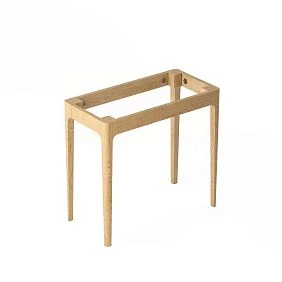
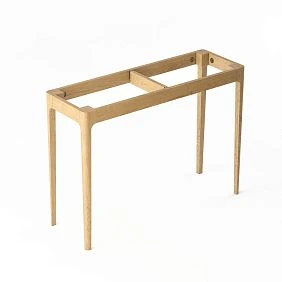
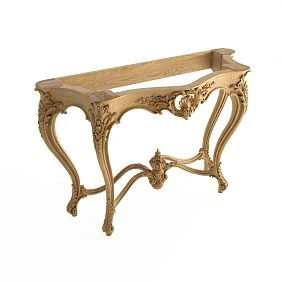


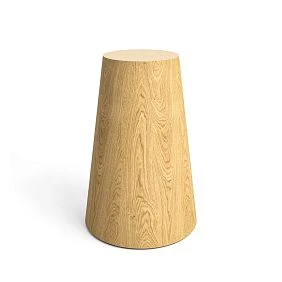
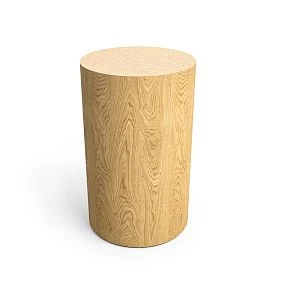
Why table base height matters more than it seems
A table is perceived as a single item, but its comfort is made up of several details. The base holds the tabletop, sets the height, affects seating, and determines how freely a person feels at the table. Even if the tabletop is perfectly chosen in material and shape, the wrong table base height can ruin the entire result.
For a dining table, a seat that is too high forces you to raise your shoulders and hold your arms unnaturally. Too low forces you to slouch. In the kitchen, the mistake is felt even more strongly because the table is used every day. A coffee table with the wrong height starts to interfere with the sofa area: it's uncomfortable to reach for, or it blocks the visual line of the seat. A bar table with incorrect calculation doesn't match the chairs, and the seating becomes random.
The height of table bases is especially important when the tabletop is non-standard. Solid wood, thick furniture board, stone slab, porcelain stoneware, or a slab add not only weight but also centimeters to the final height. A buyer might choose a beautiful 75 cm base, place a 5 cm tabletop on it, and get an 80 cm table. For a regular dining seating, that's already too much.
Another point is visual scale. A low base under a thick tabletop can look heavy, while a high base under a thin one can look unstable. Proportion affects not only comfort but also the interior. The table should look cohesive: the tabletop and base should not conflict in height, thickness, material, and style.
Therefore, table base height is not a dry number on a product card. It's a practical parameter that determines whether the table will be comfortable to use. A good choice starts not with the question 'which base is prettier', but with the question 'what final height is needed specifically for this tabletop and this room'.




What is a table base and what role does it play in a finished table
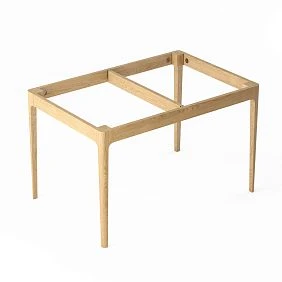
A table base is the load-bearing foundation to which the tabletop is attached. It can be wooden, metal, combined, minimalist, decorative, central, frame-based, with side supports, or a more complex structure. But in any case, it has several tasks: to bear weight, maintain stability, set the height, and support the table's style.
Unlike individual legs, a table base is often perceived as a more integral structure. It can connect support points, provide greater rigidity, and work better with heavy or large tabletops. For the buyer, this is convenient: you can choose a ready-made base for a specific task, rather than assembling a structure from random parts.
The table base affects three levels at once. The first is technical: whether the base will support the tabletop, whether it will wobble, and whether there is enough space for fastening. The second is ergonomic: whether it is comfortable to sit, whether the chairs fit, and whether there is enough legroom. The third is interior: whether the base matches the room's style and whether it looks too heavy or too weak.
When it comes to a table made from a separate tabletop and base, the table base becomes the main connecting element. It transforms a beautiful slab of wood, stone, MDF, glass, or other material into a full-fledged piece of furniture. Therefore, purchasing a base should not be a last random step, but part of an overall calculation.
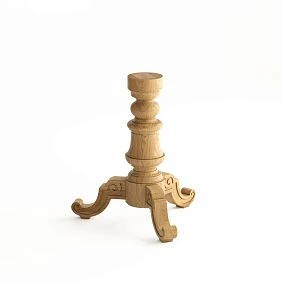
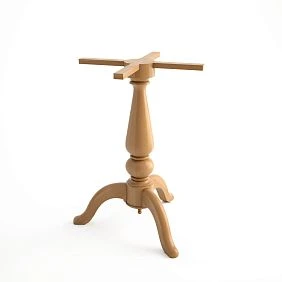
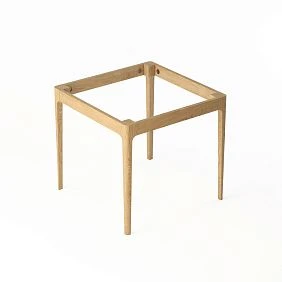
If you need to compare different options for a table, it is more convenient to look not at the general catalog, but specifically at table bases, where the buyer can evaluate the shape, height, material, and purpose of the base.
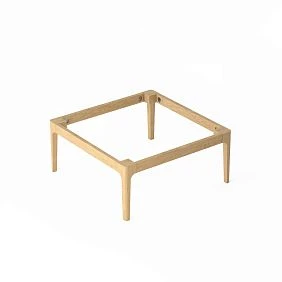
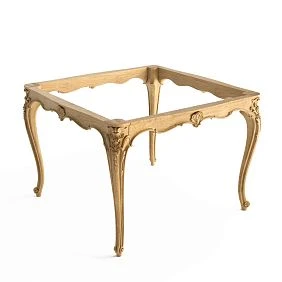
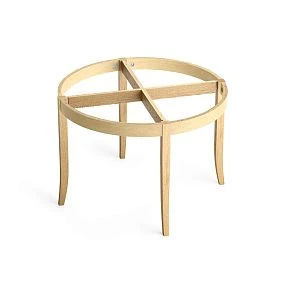
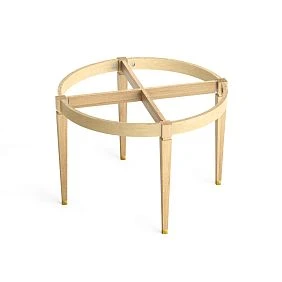
Our factory also produces:

Quick specification table: what to check before buying
Before ordering a table base, it is useful to gather initial data. This is not a complex calculation, but normal preparation for a purchase. The more accurately the buyer understands the tabletop and usage scenario, the lower the risk of making a mistake with the height.
| Parameter | What does it mean | Why this is important |
|---|---|---|
| Undercarriage height | Distance from floor to top of base without tabletop | The tabletop thickness is added to this value |
| Tabletop thickness | Actual height of the surface that will rest on the base | A thick tabletop can raise the finished table above a comfortable level |
| Final table height | Undercarriage height plus tabletop thickness | This is the height a person feels when sitting down |
| Table Purpose | Dining, kitchen, work, coffee, bar | Each type requires its own height |
| Tabletop shape | Round, rectangular, square, oval, custom | Affects stability and leg placement |
| Tabletop weight | Load that the base supports | Especially important for solid wood, slab, stone, marble, and porcelain stoneware |
| Base Width | Size of the underframe relative to the tabletop | A too narrow support can make the table unstable |
| Installation location | Kitchen, dining room, living room, study, cafe, bar | Different rooms have different loads and seating requirements |
| Chairs | Seat height and seat depth | The table and chairs must work together |
| Base material | Wood, metal, or other confirmed material | Affects style, durability, and maintenance |
| Product card | Source of precise parameters | Dimensions, material, finish, and configuration must be verified before ordering. |
This table helps quickly determine if the base is suitable for the task. If some data is missing, it's better not to guess. Current dimensions, material, finish, and mounting features should be checked in the product card or clarified with a STAVROS manager.
Get Consultation
How to calculate the table height including the tabletop
The simplest formula is:
Final table height = base height + tabletop thickness.
It is the final height that matters for seating. The base alone does not provide a complete answer because the tabletop always sits on top. For a thin surface, the addition will be small; for a massive one, it will be noticeable.
For example, if the base is 70 cm high and the tabletop is 4 cm, the finished table will be 74 cm. This is a convenient reference for a dining or kitchen table. If the base is 72 cm and the tabletop is 3 cm, the final height will be 75 cm. If the base is 40 cm high and the tabletop is 4 cm, the coffee table will be 44 cm.
| Base height | Tabletop thickness | Final table height | Where it might be suitable |
|---|---|---|---|
| 40 см | 3–4 cm | 43–44 cm | Coffee table next to sofa |
| 45 см | 3–4 cm | 48–49 cm | Higher coffee or side table |
| 50 см | 3–4 cm | 53–54 cm | Low side table, decorative area |
| 60 см | 3–4 cm | 63–64 cm | Non-standard low work or children's scenario, seating check required |
| 70 см | 3–4 cm | 73–74 cm | Dining, kitchen, work table |
| 72 см | 3–4 cm | 75–76 cm | Dining or work table with regular chairs |
| 80 см | 3–4 cm | 83–84 cm | Non-standard high table, needs to be matched with chairs |
| 90 см | 3–4 cm | 93–94 cm | Semi-bar scenario |
| 100 см | 3–4 cm | 103–104 cm | Bar area with suitable chairs |
| 110 см | 3–4 cm | 113–114 cm | High bar scenario, requires precise seat selection |
The dimensions of the table base relative to the tabletop should be considered not only in height. The base must match in width, length, stability, and load. But height is the first filter. If it is incorrect, the other advantages of the base will not save the furniture.
Thick tabletops need to be calculated especially carefully. A surface of 5–6 cm can look impressive, but it noticeably raises the table. If a buyer takes a standard-height base and adds a massive slab, the finished table may end up higher than a comfortable level.
A thin tabletop, on the other hand, sometimes requires a slightly higher base. This is important for neat modern tables, where visual lightness should not turn into a low seating position. Therefore, you should always calculate not 'approximately,' but based on the actual thickness.
Height of the table base for a dining table
A dining table should be comfortable for prolonged seating. People not only quickly drink coffee at it but also have dinner, talk, entertain guests, and sometimes work with a laptop or documents. Therefore, the height of the base for a dining table should be chosen especially carefully.
Typically, the comfortable final height of a dining table is roughly in the range of 74–76 cm. If the tabletop has a thickness of 3–4 cm, the base is often chosen around 70–72 cm. But this is not a rigid rule for all cases. The result depends on the thickness of the tabletop, the height of the chairs, the users' height, and the overall design.
If the tabletop is thin, a base of 70 cm may give a final height of about 72–73 cm. For some people, this is comfortable; for others, it may seem too low. If the tabletop is thick, the same base will already give 75–76 cm. Therefore, the same base height can work differently.
For a dining table, not only the height is important, but also the legroom. If the base has a wide top frame, decorative crossbars, or a massive structure, the actual seating may differ from the calculated one. A person sits down not to a number on a card, but to a real table. If knees hit the apron or crossbar, the correct height no longer helps.
The length of the table also affects the choice. The base for a dining table must support the tabletop without any feeling of sagging or wobbling. For a large rectangular surface, longitudinal rigidity is important. For a round one, stability under edge load is key. For heavy solid wood, reliable fastening and support area are crucial.
If a buyer is assembling a table for a dining room, kitchen-living room, or a large family area, it is better to check in advance Base for Dining Tables and compare the height of the base with the thickness of the future tabletop. Such a calculation helps avoid a situation where a beautiful table turns out to be uncomfortable for everyday seating.
Height of the kitchen table base
The kitchen table is often used more actively than the dining table. People have breakfast at it, cook, place dishes, talk, and sometimes store groceries, appliances, or children's items. Therefore, the kitchen table base should be not only beautiful but also practical.
In terms of height, the kitchen table is usually close to the dining table. A final height of about 74–76 cm is often comfortable for standard chairs. If the tabletop is 3–4 cm, a base of about 70–72 cm can provide a comfortable seating position. However, the kitchen scenario requires additional checks.
First, it is important to consider the installation location. A table against a wall, in a corner, by a window, or in the center of the kitchen has different seating arrangements. If one side is close to the wall, the base should not interfere with pushing chairs in. If the table is small, a too-massive base will visually overload the kitchen. If the kitchen is spacious, a too-thin base under a large tabletop may look weak.
Second, movement around the table must be considered. In the kitchen, people constantly pass by, open cabinets, get dishes, approach the sink, refrigerator, and stove. The base should not create unnecessary obstacles. The height of the base may be correct, but wide supports or poor geometry will make the table uncomfortable.
Third, the kitchen table should match the kitchen set. A wooden tabletop on an unsuitable base may look out of place next to the facades. If the interior already has wooden details, it is useful to evaluate the adjacent Solid Wood Items and select furniture elements in a unified logic.
For a small kitchen, it is better to choose a base that does not take up space and does not interfere with legs. For a kitchen-living room, a more expressive base can be considered: the table often becomes the central piece of the area. In both cases, the calculation starts the same way: the height of the base plus the thickness of the tabletop.
Height of the desk base
The desk is close to the dining table in final height, but differs in load. A person spends more time in one posture at it. Incorrect height causes discomfort faster: shoulders rise, arms rest uncomfortably, the back gets tired, and the chair has to be constantly adjusted.
For a desk, the final height is often targeted around 74–76 cm, but much depends on the user's height, chair, tabletop thickness, and tasks. Writing, laptop, monitor, drawings, or handicrafts may require different seating sensations. Therefore, the base should be chosen not only by standard but also by the actual scenario.
If the tabletop is thick, a 70 cm base may be sufficient. If the surface is thin, a slightly higher base may be needed. If the table will be used with an adjustable chair, the margin of error is slightly wider, but that doesn't mean you can skip calculating the height.
Stability is important for a desk. Even slight wobbling is annoying when writing or working with a keyboard. Therefore, the dimensions of the base relative to the tabletop should be checked in width and depth. A too-narrow support under a long work surface will cause vibration and a feeling of temporary furniture.
You also need to consider the space under the table. A cabinet, chair, cables, system unit, footrest — all of this can conflict with the base. A frame that is good for a dining table is not always convenient for a workspace.
If a desk is assembled from a separate tabletop, especially wooden or solid, it's better to look not only at the height but also at the base construction. In the section furniture frames you can evaluate frame options and understand which shape best suits a specific project.
Height of the base for a coffee table
A coffee table follows different rules. It should not match the height of a dining table. Its task is to be comfortable next to a sofa, armchair, soft seating area, rug, pouf, or TV group. Therefore, the base for a coffee table is usually lower.
The final height of a coffee table is often in the range of 40–50 cm. The specific choice depends on the sofa height and how the table will be used. If it's only for books, a vase, and a remote, you can choose a lower option. If it's occasionally used for tea, a laptop, or as a side surface, the height may be closer to the upper limit.
A 40 cm high base with a thin tabletop will result in a low coffee table. With a 4 cm surface, the final height will be about 44 cm. A 45 cm high base with a 3–4 cm tabletop will give 48–49 cm. A 50 cm high base already makes the table noticeably taller, and it needs to be matched with the sofa.
An error in a coffee table is often related to a massive tabletop. The buyer chooses a beautiful thick wooden slab, places it on a medium-height base, and ends up with a piece that visually conflicts with the sofa. The coffee table should not overlap the seating area or look like a scaled-down dining table.
Stability is especially important for a round coffee table. People often approach it from different sides, place items on the edge, and move it around the sofa. The base should be wide enough but not interfere with legs or walkways.
If you need a low table for the living room, it's worth separately looking Base for Coffee Tables and immediately calculating the final height with the chosen tabletop. This will help avoid the feeling that the table is too tall, heavy, or uncomfortable for the seating area.
Height of the base for bar and counter-height tables
Bar and counter-height tables require particularly precise calculation. You cannot rely on standard dining height here. The bar table base height can be 90 cm, 100 cm, 110 cm, or higher, but each number must match the chair height and the zone's purpose.
A counter-height table often has a final height of about 90–95 cm. If the tabletop is 3–4 cm, the base can be about 86–91 cm. A bar table is usually taller: the final height can be about 105–110 cm, and the base is selected considering the surface thickness.
A base height of 90 cm with a 4 cm tabletop gives about 94 cm. This may suit a counter-height zone but not regular chairs. A base height of 100 cm with a 4 cm tabletop gives 104 cm. A base height of 110 cm with the same tabletop gives 114 cm, and this requires appropriate bar stools.
The main risk of a tall structure is stability. The taller the table, the more noticeable the lateral load. If a person leans on the edge, moves a chair, or accidentally bumps the table, the base must hold the structure securely. Therefore, for bar tables, not only height but also support width, tabletop weight, fastening, and installation location are important.
A bar area in the kitchen, a separate high table in the living room, a counter in a cafe, and a table for a showroom are different tasks. In a home kitchen, compactness and ease of passage are often important. In a commercial space, stability and durability matter. In an interior design project, visual expressiveness is also key.
Before purchasing, you must check the height of the chairs. Bar stools, semi-bar stools, and regular chairs are not interchangeable. Even a beautiful table base with a height of 90 cm will not be comfortable if you pair it with unsuitable seats.
Table base with height adjustment: when it is really needed
A height-adjustable table base seems like a universal solution. And indeed, it is convenient for some tasks. But buying an adjustable structure just "in case" is not always necessary. It is important to understand what problem it solves.
Adjustment is useful if the table is used by different people of different heights. This is relevant for workstations, study areas, workshops, meeting rooms, coworking spaces, and commercial premises. It helps adapt the table to a specific seating position and reduces the risk of error when choosing a fixed height.
It is worth buying a height-adjustable table base when the tabletop already exists, but its exact final height raises doubts. For example, the surface has a non-standard thickness, and the buyer is unsure if it will be comfortable with a regular chair. Adjustment provides a margin, but still requires checking the load and compatibility.
For transformable interiors, adjustable height can also be useful. One table can serve as a workstation, additional surface, meeting place, or temporary table. But here it is important that the mechanism and structure match the actual load.
Do not consider adjustment a replacement for proper calculation. Even an adjustable table base must be suitable in width, depth, mounting, stability, and material. If the base is too narrow for a heavy tabletop, the ability to change height will not solve the problem.
An adjustable structure is especially sensitive to quality and purpose. Before ordering, you need to carefully check the product card: height range, permissible load, adjustment method, compatibility with the tabletop, and usage conditions. If there is insufficient data, it is better to clarify the parameters in advance.
How to choose the dimensions of the table base relative to the tabletop
Height is just the beginning. The dimensions of the table base relative to the tabletop determine stability, proportions, and convenience. The base should be wide and deep enough so that the table does not feel wobbly, but without interfering with seating.
For a rectangular tabletop, the length of the base is important. If the support is too short, the edges will have a large overhang. Visually, this may look light, but under load, the table can wobble. If the base is too long and extends close to the ends, it can interfere with those sitting at the edges.
For a round table, central stability is important. The larger the diameter of the tabletop, the wider and more stable the support should be. A small base under a large circle creates a risk of tipping when load is applied to the edge. This is especially noticeable in families with children, in cafes, and in living rooms where people often lean on the table.
For a square tabletop, balance must be maintained along two axes. The base should not be elongated in only one direction, otherwise the table may behave unstably. For oval and non-standard tabletops, it is better to calculate the maximum dimensions and see where the load zones are located.
The weight of the tabletop changes the requirements. A light surface allows for a more elegant base. Solid wood, stone, marble, porcelain stoneware, and thick wooden slabs require a more substantial support. Here, the dimensions of the underframe relative to the tabletop must consider not only aesthetics but also load-bearing capacity.
There is also a visual rule: the base should match the scale of the tabletop. A thin support under a massive slab looks weak. A too-heavy base under a light tabletop makes the table look bulky. A good choice does not shout for attention but supports the shape and material of the surface.
Table for selecting underframe height by table type
| Table type | Target final height | Suitable underframe height with a 3–4 cm tabletop | What to check additionally |
|---|---|---|---|
| Coffee table | 40–50 cm | 36–46 cm | Sofa height, tabletop thickness, clearance around the table |
| Side table | 45–60 cm | 41–56 cm | Chair height, usage scenario, stability |
| Dining table | 74–76 cm | 70–72 cm | Chairs, legroom, tabletop overhang |
| Kitchen table | 74–76 cm | 70–72 cm | Walkways, seating against the wall, active daily load |
| Work desk | 74–76 cm | 70–72 cm | Armchair, space under the table, stability when writing |
| Semi-bar table | 90–95 cm | 86–91 cm | Counter stools, stability of tall structure |
| Bar table | 105–110 cm | 101–106 cm | Bar stools, base width, edge load |
| Custom project | By task | Calculated individually | The thickness and weight of the tabletop, user height, installation location |
The table provides guidelines but does not replace checking the product card. If the tabletop is thicker or thinner than 3–4 cm, the calculation needs to be recalculated. If the underframe has adjustment, the range needs to be checked. If the base is chosen for a heavy tabletop, height calculation alone is not enough: stability and load check is required.
How to choose an underframe for different customer scenarios
For DIY table assembly
If the customer assembles the table themselves from a tabletop and base, they need to prepare the dimensions in advance. Minimum set: length, width or diameter of the tabletop, thickness, approximate weight, desired final height, and type of chairs. Without this data, the selection becomes guesswork.
For self-assembly, fastening and marking are especially important. Even a correctly chosen height will not help if the base is installed asymmetrically or does not match the tabletop material. It is better to check in advance what fasteners are needed and not to use random solutions.
For a new dining area
In the dining room, the table often becomes the main piece. Proportions, seating positions, and appearance from all sides are important here. The table base must be stable enough but not interfere with chairs. The height is calculated for comfortable seating and the thickness of the tabletop.
If the table is large, more attention should be paid to the width and length of the base. A beautiful long table will be disappointing if the edges are too wobbly.
For a small kitchen
A small kitchen requires compactness. The table base should not obstruct passage, cabinet opening, or seating against the wall. Sometimes a buyer chooses a massive base for stability but later realizes that chairs are inconvenient to push in.
Here it's better to find a balance: sufficient stability without excess bulk. The height should be selected based on standard kitchen chairs and the actual thickness of the tabletop.
For the living room and coffee table
In the living room, the connection with the sofa is important. The coffee table should not be too high. If the tabletop is thick, the base should be lower. If the sofa is high, consider an option closer to 45–50 cm final height.
Passageways also need to be considered. The coffee table often stands in the center of the seating area, so the base should not catch legs or obstruct movement.
For the bar area
A bar table requires precise selection of stools. First, determine whether it's bar or counter height. Then calculate the base considering the tabletop. A tall structure must be stable, especially if the table is not additionally secured.
For a home kitchen, it's best to avoid an excessively tall structure without need. In a cafe or bar, the requirements are higher: the load is more active, people lean on the table more often, and chairs are constantly moved.
For commercial space
In a cafe, salon, showroom, or meeting room, the underframe must withstand frequent use. Here, not only height but also stability, maintenance, and appearance from all sides are important. A seating error will be noticeable to every visitor.
A commercial interior requires stricter checks: chair height, walkways, number of seats, tabletop weight, ease of cleaning, and the overall style of the space.
Material and style: when wooden underframes are appropriate
Wooden underframes work well in interiors where warm texture, naturalness, and furniture integrity are important. They are suitable for dining rooms, living rooms, studies, country houses, and classic or neoclassical interiors. Such a base supports a wooden tabletop and helps create a cohesive look without sharp contrast.
But wood should be chosen not only for its appearance. It's important to consider the structure, cross-section, height, fastening, and compatibility with the tabletop. A wooden base can be expressive and durable, but it must match the load. This is especially true for massive tabletops.
Metal bases are often chosen for modern interiors, lofts, and minimalism. They create a more graphic line and pair well with wooden, stone, or porcelain surfaces. But if the interior is built on wood, carved decor, and soft classic forms, metal can look too cold.
The base material should be linked to the rest of the furniture. If the room already has wooden facades, panels, baseboards, frames, or decorative elements, the underframe can become part of the overall line. In this case, it's useful to look not only at the base but also at the neighboring Solid Wood Itemselements, so the project looks cohesive.
Color and finish cannot be chosen based on photos. Wood on screen may differ from the actual shade. Before ordering, it's better to check the current options in the product card or clarify with a STAVROS manager. This is especially important if the base is being matched to an existing tabletop or furniture.
What to buy with a table base
A table base is rarely bought on its own. It is usually needed for a specific table, which means other solutions appear alongside it: a tabletop, fasteners, finishing, chairs, and adjacent furniture elements. The sooner a buyer thinks about the set, the lower the risk of mismatches.
The first thing to pair with a table base is the tabletop. Its shape, thickness, and weight determine the height, stability, and mounting. The second is chairs. Dining, kitchen, work, bar, and coffee table scenarios require different seat heights. The third is finishing. The base and tabletop should look like a single piece, not two random purchases.
If the table is being assembled for an interior with wooden details, it's worth looking at wooden bases and evaluating how they will combine with other furniture. For a broader set, you can use the section Solid Wood Items, if you need to maintain a wooden style in the room.
| What to add to the purchase | Why this is needed | Which scenario it suits | What to pay attention to |
|---|---|---|---|
| Tabletop | Determines the final height, load, and style | Any table made from a separate base | Thickness, weight, shape, material |
| table bases | Allow selecting a base for a specific height | Dining, kitchen, coffee, work table | Height, width, stability |
| furniture frames | Help choose a base for furniture assembly | Tables and other furniture projects | Purpose, dimensions, compatibility |
| Chairs of suitable height | Check seating comfort | Dining, kitchen, bar, work table | Seat height and legroom |
| Fastening | Needed to connect the base and the tabletop | Self-assembly | Compatibility with material and thickness |
| Finishing products | Help visually connect the base and the tabletop | Wood projects for painting, varnish, oil | Does the coating match the material |
| Solid Wood Items | Support the overall wooden style | Interior with furniture, decor, and wood finishing | Material, texture, combination with the underframe |
This integrated approach is especially useful for projects where the table should become part of the interior, not a separate random item. The underframe, tabletop, chairs, and adjacent wooden elements should match in scale and purpose.
How not to confuse an underframe with similar products
The underframe can easily be confused with individual legs, decorative supports, furniture frames, or blanks. In photos, they may look similar, but their purposes differ.
Individual legs are not always suitable. They may work well with a small, lightweight tabletop but fail to provide the necessary rigidity for a large dining or work table. If the surface is long, heavy, or non-standard, a solid base is often more convenient.
A decorative support can be beautiful, but it is not necessarily designed to serve as a full-fledged table base. Its purpose may be related to decorating furniture, a facade, a console area, or decor. Using a decorative part as a load-bearing foundation without checking its intended purpose is risky.
A furniture frame is a broader category. It may include bases for different purposes, so you need to read the product card. If a buyer specifically needs a base for a tabletop, it is important to choose an option that matches the height, size, and load capacity.
A random blank seems rational only until assembly. In practice, you have to adjust the height, reinforce the structure, think about fastening, and fix proportions. A ready-made table base is more convenient because it is already designed as a furniture foundation.
To avoid confusing products, you need to look at five features: purpose, height, dimensions, material, and fastening. If at least one parameter does not fit or is not confirmed, it is better not to buy the base blindly.
Mistakes when choosing the height of the underframe
The most common mistake is not accounting for the thickness of the tabletop. The buyer sees a base of 75 cm and thinks they are getting a standard table height. But after installing a 4–5 cm tabletop, the final height becomes 79–80 cm. For a dining table, this can be uncomfortable.
The second mistake is confusing the height of the table base with the height of the finished table. The product card may indicate the height of the base, not the entire piece of furniture. Therefore, you always need to add the tabletop.
The third mistake is choosing based on a photo. A beautiful base in an image does not show how well it fits your tabletop. A photo does not replace dimensions, seating calculation, and load check.
The fourth mistake is taking a base that is too high for a coffee table. A coffee table area should work with a sofa, not with dining chairs. If the table turns out to be too high, it starts to interfere with the soft seating group.
The fifth mistake is buying a bar table base without checking the stools. Bar and counter-height seating differ. If the stool does not match the table height, using the furniture will be uncomfortable.
The sixth mistake is not accounting for the weight of a massive tabletop. The height may be correct, but a weak or narrow base won't handle the load. This is especially important for solid wood, slabs, stone, marble, glass, and porcelain stoneware.
The seventh mistake is forgetting about legroom. The table base may have the correct height but interfere with seating due to crossbars, a wide frame, or poor placement of supports.
The eighth mistake is not checking the base dimensions against the tabletop. A narrow underframe under a large surface creates a risk of wobbling. One that is too wide can interfere with chairs and walkways.
Who should choose a separate underframe, and who is better off with a ready-made table
A separate underframe is suitable for those who want to assemble a table to match their own tabletop, size, interior, and usage scenario. It is a good choice for wooden, round, rectangular, coffee, kitchen, work, and bar tables. This approach is especially useful when ready-made models don't fit in size or style.
An underframe should be chosen by those who have already bought a tabletop or plan a non-standard surface. For example, solid wood, slab, stone, glass, or porcelain stoneware. In this case, the base is selected based on the actual thickness, weight, and shape.
This solution is also suitable for interior design projects. In the dining room, you can assemble an expressive dining table. In the kitchen, you can choose a base for a compact or non-standard surface. In the living room, you can make a coffee table of the desired height. In the study, you can assemble a workspace for a specific seating arrangement. In a cafe or showroom, you can choose a base to match the style of the space.
But there are cases where a ready-made table is simpler. If the buyer doesn't want to calculate the height, select fasteners, or match the tabletop and base, a ready-made model may be more convenient. If the project is complex and there is no data about the tabletop, it's better to postpone buying the base until the parameters are clarified.
A separate underframe should not be bought blindly. It reveals its advantages only when the height, size, load, and style are calculated in advance.
How to buy an underframe at STAVROS
It is better to start the purchase with calculations. First, determine what kind of table you need: dining, kitchen, coffee, work, bar, or semi-bar. Then measure the tabletop: length, width, diameter, thickness, and approximate weight. After that, calculate the final height.
The next step is to choose the base. On the STAVROS website, you can select a table base by height and size, compare options and check the parameters in the product card. It's important to look not only at the height but also at the purpose, material, dimensions, and mounting features.
If you need a wider selection of bases and structures, you can check out furniture frames. If the project involves wooden furniture and finishing, it's useful to additionally evaluate Solid Wood Itemsso that the interior looks cohesive.
Before ordering, it is worth checking several questions: what will be the final height of the table, whether the chairs fit, whether there is enough legroom, whether the base will support the tabletop, whether the table base will be too narrow, whether the style matches the interior. If any parameter raises doubts, it is better to clarify it with a STAVROS manager before purchasing.
FAQ
What should be the height of the table base for a dining table?
Usually, the final table height is targeted at around 74–76 cm. If the tabletop has a thickness of 3–4 cm, the underframe is often chosen around 70–72 cm. But the final result needs to be calculated based on the actual thickness of your tabletop.
How to calculate the table height including the tabletop?
You need to add the height of the underframe and the thickness of the tabletop. For example, an underframe of 70 cm and a tabletop of 4 cm give a total height of 74 cm.
What is more important: the height of the underframe or the height of the finished table?
The final height of the finished table is more important. The base height is only part of the calculation because the tabletop is added on top.
What base height is needed for a kitchen table?
For a kitchen table, the same logic as for a dining table often applies: the final height is about 74–76 cm. The base is selected considering the tabletop thickness and chair height.
Which base to choose for a coffee table?
For a coffee table, a low base is usually chosen. The final height is often in the range of 40–50 cm. It should be matched with the height of the sofa or armchairs.
Underframe 60 cm height - what is it suitable for?
An underframe height of 60 cm may be suitable for non-standard low scenarios, but for a regular dining table it will often be too low. You need to calculate the final height with the tabletop and check the seating.
Will an underframe height of 80 cm work for a dining table?
Most often, a table base height of 80 cm together with the tabletop will result in a dining table that is too high. This option needs to be checked against specific chairs and usage scenarios.
What height is needed for a bar table base?
For a bar area, taller bases are often used: 90 cm, 100 cm, 110 cm, and higher. However, the exact choice depends on the tabletop and bar stools.
When is a height-adjustable table base needed?
Adjustability is useful for a workspace, non-standard tabletop, commercial space, or situations where people of different heights will use the table. But even an adjustable base needs to be checked for load capacity and dimensions.
What table base dimensions are needed for a round table?
For a round tabletop, central stability is important. The larger the diameter and weight of the surface, the wider and more reliable the support should be. You cannot choose a small base for a large round table just for a lightweight appearance.
Do I need to consider the thickness of the tabletop?
Yes. The thickness directly affects the final table height. Particular attention should be paid to massive wooden, stone, and porcelain stoneware tabletops.
Where can I find a base that matches the height and size?
Suitable options can be viewed in the section select a table base by height and size on the STAVROS website. Before ordering, you need to check the height, dimensions, material, purpose, and compatibility with the tabletop.
Result: the correct height turns the base into a convenient table
A base is chosen not only by sight. Its height determines the seating position, comfort, compatibility with chairs, and the final feel of the furniture. A dining and kitchen table most often requires a final height of about 74–76 cm, a coffee table about 40–50 cm, and a bar and counter-height table significantly higher. But in each case, you need to calculate the base together with the tabletop.
A good calculation starts with a simple formula: the height of the table base plus the thickness of the tabletop. Then other parameters are added: the width of the base, the weight of the surface, the shape of the table, the installation location, the material, the fastening, and the interior style. This approach helps avoid a random purchase and assemble a table that is truly comfortable to use.
On STAVROS, you can choose a table base for the desired height, check the parameters in the product card, and, if necessary, clarify compatibility before ordering. This is especially important if the tabletop is non-standard, heavy, thick, or selected for a specific interior.