






























































Article Contents:
- Grip Physiology: Why the Round Profile Prevails
- Diameter Standards: The Golden Mean of Fifty Millimeters
- Wood Species: Choosing Between Hardness and Aesthetics
- Manufacturing Process: From Log to Smooth Cylinder
- Handrail Integration with Stair Structure
- Installation Height: Standards and Comfort
- Surface Finish: Protection and Tactility
- Movement Ergonomics: How the Handrail Organizes Ascent
- Design Solutions: Handrail as Decorative Accent
- Safety: Standards and Reality
- Installation: Reliable Fastening Technology
- Maintenance and Care: Extending Service Life
- Frequently Asked Questions: Ergonomics in Detail
- Why is a Round Handrail More Comfortable Than a Rectangular One?
- What Handrail Diameter is Optimal for an Adult?
- How to Choose Wood Species for a Handrail?
- At What Height Should a Handrail Be Installed?
- Oil or Varnish — Which Coating is Better for a Handrail?
- How Often Does Handrail Coating Need Renewal?
- Can a Wooden Handrail Be Installed Outdoors?
- How to Join Handrails on Long Flights?
- Is Handrail Acclimatization Needed Before Installation?
- What Standards Regulate Handrail Installation?
- Conclusion: Tactile Connection with Safety

Have you ever wondered why your hand instinctively reaches for the handrail when climbing stairs? This isn't just a habit — it's a deep self-preservation instinct, etched into our subconscious by millions of years of evolution.Stair Handrail Ergonomics Design— is not merely a set of technical parameters, but a philosophy of interaction between the human body and architectural space. The round wooden handrail becomes a silent guide, leading us between the levels of a home, providing support, confidence, and a connection to the material world through tactile contact with warm wood.



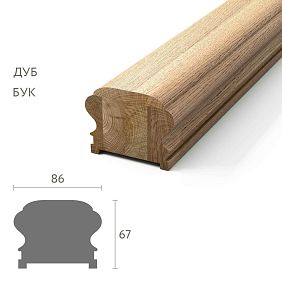


Grip Physiology: Why the Round Profile Prevails
The anatomy of the human hand determines the optimal handrail shape. The palm and fingers evolved to grasp cylindrical objects — tree branches, tools, weapon handles.the staircase handrail is round woodenperfectly matches the biomechanics of a natural grip. When grasping a cylinder, the fingers distribute evenly around the circumference, creating multiple points of contact without pressure concentration.
A rectangular handrail with sharp edges creates uneven pressure on the palm. The profile edge digs into soft tissue, causing discomfort during prolonged contact. A round profile distributes the load over a larger contact area, reducing specific pressure per square millimeter of skin. In an emergency situation—loss of balance, tripping on a step—it is the round handrail that provides instant, reliable grip without the risk of the hand slipping.
The diameter of the handrail critically affects grip comfort. The average palm circumference of an adult is one hundred eighty to two hundred twenty millimeters. With a handrail diameter of fifty millimeters, the circumference is one hundred fifty-seven millimeters—the fingers close with an overlap of ten to fifteen millimeters. This is the ideal ratio: the hand fully controls the handrail, the fingers are not overstrained, and the effort is minimal. A too-thin handrail of thirty to thirty-five millimeters requires strong squeezing, quickly tiring the hand. An excessively thick one of sixty to seventy millimeters cannot be fully grasped, and control weakens.
Wood texture adds a tactile safety component. A smoothly sanded, but not polished, wooden handrail surface provides optimal grip with the skin of the palm. An oil finish instead of glossy varnish preserves micro-roughness, preventing a wet hand from slipping. In a critical situation, these millimeters of friction between skin and wood can be the decisive factor in preventing a fall.




Diameter standards: the golden mean of fifty millimeters
Why exactly fifty millimeters became the industrial standard for round wooden handrails? This size is the result of years of ergonomic research and statistical analysis of anthropometric data. A diameter of fifty millimeters suits ninety-five percent of the adult population—from women with small hands to men with large palms. It is a universal solution that does not require individual fitting.
From a construction standpoint, a fifty-millimeter diameter provides sufficient strength. A cylindrical beam of oak or ash with such a cross-section can withstand a vertical load of up to two hundred kilograms without deformation. This is critically important: the handrail must withstand the weight of a person hanging entirely on it in an emergency without damage. A safety factor of three to four times the standard load of one hundred kilograms ensures reliability in any circumstances.
Alternative diameters are used in specific situations. A thin handrail of thirty-five to forty millimeters is suitable for children's stairs, where hand size is smaller than an adult's. An increased diameter of fifty-five to sixty millimeters is used in public buildings with high traffic, where increased strength and visual massiveness are required. For private homes, the fifty-millimeter standard is optimal in all parameters—ergonomics, strength, aesthetics, cost.
The length of the handrail is determined by the length of the flight of stairs. Standard blanks are produced in lengths of two, two and a half, three, and four meters. For long flights, handrails are spliced using a finger joint—a technology that ensures joint strength exceeding that of solid wood. A properly executed splice, after sanding and tinting, is practically unnoticeable, creating the impression of a solid element.
Our factory also produces:


Wood species: choosing between hardness and aesthetics
Wooden round handrail for balustradesis made from various species, each with unique characteristics. Oak is the classic choice for premium-class handrails. A density of six hundred fifty to seven hundred fifty kilograms per cubic meter and a hardness of three point seven units on the Brinell scale provide exceptional wear resistance. An oak handrail maintains a smooth surface for decades of intensive use, with minimal abrasion. The expressive texture with clear annual rings creates natural decorativeness.
Ash is similar to oak in mechanical properties but surpasses it in toughness—the ability to withstand impact loads without cracking. This is important for handrails that may be subjected to impacts when moving furniture or other heavy items on the stairs. Ash texture is bright, contrasting, with wide annual rings. The color ranges from light cream to olive-brown, allowing a shade to be chosen to match the overall interior color scheme.
Beech combines sufficient hardness of six tenths of a unit on the Brinell scale with a more affordable price compared to oak. A fine-pored, uniform structure creates a smooth surface that is pleasant to the touch. Beech takes stains well, allowing imitation of more expensive species or creation of non-standard color solutions. The disadvantage of beech is increased hygroscopicity, requiring a stable microclimate. Deformations are possible with humidity fluctuations, so beech handrails are not recommended for unheated rooms.
Larch is a coniferous species with unique properties. A high resin content makes the wood naturally resistant to moisture, rot, and insect infestation. Larch handrails are suitable for stairs in baths, saunas, and damp rooms where other species quickly degrade. The texture is expressive, with contrasting annual rings. The color is golden-reddish, darkening over time to a noble amber shade. Hardness is average, inferior to oak, but sufficient for residential areas with moderate load.
Get Consultation
Production process: from log to smooth cylinder
The quality of a round handrail is seventy percent determined by the correctness of the production process. It all starts with wood selection—for handrails, boards of radial cut are used, where the annual rings run parallel to the length of the blank. Such wood is maximally stable and does not warp with changes in humidity. Tangential cut with rings crossing the section gives a brighter texture but less stability—such blanks are prone to warping.
Drying in specialized chambers reduces wood moisture to eight to twelve percent—the optimal level for use in heated rooms. The drying mode is selected individually for each species: temperature, air humidity, and circulation speed are gradually changed according to a set program. Too-fast drying leads to cracking and internal stresses. After chamber drying, the wood undergoes a stabilization period—it is conditioned in the workshop for at least a week to equalize moisture throughout the volume.
Lathe processing forms the cylindrical profile. Copy lathes with CNC turn blanks according to a set program with an accuracy of zero point one millimeter. Each handrail in a batch has an absolutely identical diameter along its entire length without taper or ovality. Cutting speed and feed are selected to obtain a clean surface without fuzz and tear-outs, minimizing the volume of subsequent sanding.
Sanding is carried out in several stages with abrasives of increasing grit: P80 for rough leveling, P120 for intermediate processing, P180 for preparation for tinting, P240-P320 for final sanding before varnishing or oil coating. At each stage, traces of the previous abrasive are removed, and the surface becomes smoother. A well-sanded handrail has a silky surface, pleasant to the touch, without the slightest snags or roughness.
Integration of the handrail with the staircase structure
A round handrail does not exist in isolation—it is part of a complex staircase railing system.Wooden balusters and railingsform a single architectural ensemble where each element plays its role. Balusters—vertical posts installed on the step or stringer—create the enclosing structure and serve as support for the handrail. The distance between balusters is regulated by standards: no more than one hundred twenty millimeters clear to exclude the possibility of a child passing through.
Attaching the handrail to the balusters is done in several ways. The traditional method is installing the handrail into a groove on the top end of the baluster. The groove is milled to a depth of twenty to twenty-five millimeters and a width of fifty to fifty-two millimeters. The handrail is inserted into the grooves of sequentially installed balusters, fixed with glue and screws from below through the baluster end. The screws are countersunk, the holes are filled and sanded—the fasteners become invisible.
An alternative method is installing the handrail on a handrail bracket. A bracket with a cross-section of thirty by forty millimeters is attached to the top ends of the balusters, forming a flat platform for installing the handrail. The handrail is mounted on the bracket via hidden fasteners—metal brackets, screws installed from below. The advantage of the method is simplified installation, the possibility of demounting the handrail without damaging the balusters for repair or replacement.
wooden handrail balustersmust correspond to each other in style, wood species, and finish tone. Classic turned balusters with smooth curves harmonize with a round handrail. Rectangular modern balusters pair better with a square or rectangular handrail. Mixing styles creates visual dissonance and disrupts the integrity of the composition. Unity of material, form, and finish turns the staircase into an architectural object, not a set of disparate elements.
Installation height: standards and comfort
The installation height of the handrail is critical for ergonomics and safety. Building codes prescribe a height of nine hundred millimeters from the step level to the top of the handrail. This value is derived from average anthropometric data: at a height of nine hundred millimeters, the hand of an adult, freely lowered along the body and slightly bent at the elbow, naturally rests on the handrail without the need to raise the shoulder or lean.
For tall people, one hundred eighty-five to one hundred ninety-five centimeters, a height of nine hundred fifty to one thousand millimeters is more comfortable. For children and people of short stature below one hundred sixty centimeters, eight hundred fifty to nine hundred millimeters is more convenient. In private homes, where the user composition is known, the height can be adjusted for specific residents. In public buildings, the standard nine hundred millimeters is adhered to as an averaged compromise.
Children's stairs require the installation of an additional handrail at a height of six hundred to six hundred fifty millimeters. Preschool and elementary school-age children physically cannot reach a standard handrail at nine hundred millimeters. A second handrail of smaller diameter, thirty-five to forty millimeters, installed below the main one, ensures children's safety. A double handrail is relevant in homes with small children, children's institutions, and schools.
A wall-mounted handrail, installed parallel to the flight of stairs on the wall, is mounted at a height of nine hundred to nine hundred fifty millimeters. The distance from the wall to the center of the handrail should be fifty to sixty millimeters—sufficient space for the hand to freely grasp the handrail without the knuckles touching the wall. Brackets are installed with a spacing of eight hundred to one thousand millimeters to prevent the handrail from sagging under load.
Surface Finish: Protection and Tactility
The finish of a round handrail determines not only aesthetics but also tactile sensations, durability, and ease of use. Oil coating is the optimal choice for handrails. Oil penetrates deep into the wood structure by two to three millimeters, impregnating it and making it moisture-resistant. Unlike film-forming coatings, oil does not create a surface layer that can peel or wear away. The surface retains the natural texture and color of the wood, acquiring a silky matte finish.
Hard oils and oil-wax blends create a more durable coating compared to simple oils. The wax included in the composition, after polymerization, forms a thin protective layer on the surface, increasing wear resistance and water-repellent properties. Handrails with an oil-wax coating require renewal every two to three years depending on the intensity of use. The procedure is simple: the surface is cleaned, lightly sanded with fine P320 abrasive, coated with a new layer of oil, and excess is removed.
Varnish coating creates a hard protective film on the wood surface. Polyurethane varnishes provide maximum wear resistance and are suitable for stairs with intensive use. Water-based acrylic varnishes are eco-friendly, odorless, but less resistant to abrasion. The gloss level of varnish varies from deep matte to high gloss. For handrails, semi-matte and matte varnishes are preferable—they preserve the natural appearance of the wood, do not create glare, and provide better grip with the palm compared to glossy ones.
The drawback of varnish coatings is wear in areas of constant contact with hands. After three to five years of active use in areas of maximum load, the varnish wears away, exposing the wood. Local restoration is difficult—new varnish differs in gloss and tone from the old. Complete re-varnishing requires removal of the old coating, sanding, application of primer, and two to three layers of varnish—a labor-intensive process. Oil coatings are free from this drawback: renewal is performed locally, and the treated area blends with the rest of the surface.
Ergonomics of Movement: How a Handrail Organizes Ascent
Movement on stairs is a complex biomechanical process requiring coordination, balance, and muscle work. The handrail plays a role not only as a fall prevention measure but also as an active assistant, facilitating ascent and descent. When ascending, the hand sliding along the handrail sets the rhythm of steps and helps track the body's position in space. A slight pull on the handrail relieves part of the load from the legs, which is especially important for elderly people and those with joint problems.
When descending, the role of the handrail intensifies. Descent is biomechanically more complex than ascent—the body's center of gravity shifts forward, requiring constant balance control. The hand on the handrail creates an additional point of support, stabilizes the body, and prevents forward tipping. In case of loss of balance—tripping, foot slipping off the edge of a step—instant gripping of the handrail stops the fall. The reaction occurs at a reflex level, without conscious involvement—these are seconds that save from injury.
The round shape of the handrail ensures equal grip comfort regardless of the direction of movement. When ascending, the hand naturally grasps the handrail from below, with the thumb on top. When descending, the grip changes—the palm covers the handrail from above, with fingers below. The round cross-section is equally comfortable in both positions. A rectangular or profiled handrail is comfortable only with one grip method; in the other position, the edges press into the palm.
The temperature of the handrail affects comfort of use. A wooden handrail feels warm to the touch even in a cold room due to the low thermal conductivity of wood. A metal handrail under the same conditions is icy, the touch is unpleasant, and the grip reflexively weakens. Wood creates psychological comfort—the material is perceived as friendly, natural, and safe. These nuances are not measured by technical parameters but critically influence the perception of the staircase and the desire to use the handrail.
Design Solutions: Handrail as a Decorative Accent
A round wooden handrail does not have to be a neutral background element. Modern design turns it into an expressive accent that shapes the character of the entire staircase structure. Contrasting combinations of species—dark wenge or stained oak against light ash balusters—create a graphic composition. The reverse option—a light beech handrail on dark oak balusters—works on contrast, attracts attention, and makes the staircase a central element of the interior.
Painting the handrail in non-standard colors expands design possibilities. A deep blue, emerald green, or graphite gray handrail, while retaining a wooden base, acquires a modern sound. Opaque enamel hides the wood grain but preserves the tactile qualities of the natural material—warmth, smoothness, and natural origin are felt by touch. A colored handrail can support the overall color scheme of the interior or, conversely, contrast, becoming an accent.
Combined handrails made of wood and metal combine the warmth of natural material with the cold technological feel of industrial elements. A wooden cylinder with a diameter of fifty millimeters is attached to metal posts made of stainless steel or black matte metal. The contrast of textures, colors, and temperature sensations creates a modern look, relevant for loft interiors, minimalist spaces, and eclectic projects.
Carved elements on the ends of the handrail are a traditional technique of decorative finishing. Turned finials, shaped plugs, and carved rosettes turn a functional element into a work of joinery art. This approach is characteristic of classic interiors, where detailing and decorativeness are valued more than conciseness. Hand-carved work makes each handrail unique, turning the staircase into an art object that demonstrates the owner's craftsmanship and taste.
Safety: Standards and Reality
Regulatory requirements for stair handrails are dictated by injury statistics. The handrail must withstand a horizontal load of three hundred newtons (about thirty kilograms-force) without deformation or destruction. This is the minimum ensuring safety under standard conditions. A high-quality oak or ash handrail with a diameter of fifty millimeters on standard supports withstands loads three to four times higher than regulatory ones, creating a safety margin for extreme situations.
Surface smoothness is critical for safety. Any irregularities, burrs, or chips can injure the palm during rapid sliding of the hand along the handrail. Splinters are especially dangerous—thin wood chips separating from poorly sanded wood and embedding into the skin. High-quality sanding with P240-P320 abrasive and proper finishing completely eliminate the risk of splinters. Periodic inspection and maintenance of the handrail prevent the appearance of defects during operation.
Continuity of the handrail along the entire length of the flight is a mandatory safety requirement. Breaks, steps in height, or changes in diameter create a risk of losing hand contact with the handrail during movement. If the staircase geometry requires a change in handrail direction—a ninety-degree turn on a U-shaped staircase—special bent elements are used, ensuring a smooth transition without breaks. The bending radius for an oak handrail after steaming can reach four hundred to five hundred millimeters.
Stair lighting enhances the role of the handrail in ensuring safety. A well-lit staircase allows clear visibility of steps, the handrail, and obstacles. In darkness or insufficient lighting, the role of tactile contact with the handrail increases—the hand becomes the main source of information about position in space. Stair lighting with built-in lights in the steps or wall sconces is mandatory for stairs used at night.
Installation: Technology of Reliable Fastening
Quality installation of a round handrail ensures its durability and safety. The first stage is marking the position of supports. Balusters are marked every one hundred twenty to one hundred fifty millimeters along the axis of the steps. The end support posts are installed on the first and last step of the flight, serving as load-bearing elements that take the main load. Posts with a cross-section of eighty by eighty or one hundred by one hundred millimeters are mortised into the stringer or steps to a depth of fifty to seventy millimeters and fastened with M8-M10 studs.
Balusters are installed in pre-drilled holes with a diameter two millimeters smaller than the baluster tenon diameter. A tight fit ensures stability without play. The connection is additionally fixed with PVA wood glue or polyurethane glue. The verticality of each baluster is checked with a level in two planes—deviation is unacceptable as it will lead to unevenness of the handrail line. After installing all balusters, protruding ends are trimmed at an angle corresponding to the staircase slope.
The handrail is installed on the prepared balusters. If the groove fastening method is used, the handrail is sequentially placed onto the baluster tenons, pre-coated with glue. The handrail is tapped with a rubber mallet for a tight fit into the grooves. After the handrail is fully installed, it is additionally fixed with screws driven from below through the baluster ends at an angle. Screw heads are countersunk, holes are filled with wood-colored putty, and sanded after drying.
An alternative method is installing the handrail on metal fasteners from below. Special brackets are attached to the handrail bracket, the handrail is placed on top, and fixed with screws driven from below. This method simplifies disassembly if repair or replacement of the handrail is necessary. Joining handrails in length is done by cutting the ends at a forty-five-degree angle, the joint is glued, and additionally fixed with a wooden dowel or stud. A well-executed joint after sanding and finishing is practically invisible.
Maintenance and Care: Extending Service Life
A round wooden handrail, with proper care, lasts for decades, preserving functionality and aesthetics. Regular dry cleaning with a soft cloth or vacuum with a soft brush removes dust and dirt. The handrail is one of the most frequently contacted surfaces in a home, touched by all family members multiple times daily. Skin oils, sweat, and dirt from hands gradually accumulate on the surface, so weekly wiping with a well-wrung damp cloth is necessary.
Handrails with oil coating require periodic renewal of the protective layer. Signs of the need for renewal—appearance of matte spots in areas of frequent contact, surface roughening, reduction of water-repellent properties. Renewing an oil coating takes about an hour of work: the surface is cleaned, lightly sanded with fine P320 abrasive to remove contaminants and create roughness for adhesion of the new layer, dusted, and coated with a thin layer of oil. Excess is removed with a dry cloth after ten to fifteen minutes. After twenty-four hours, the surface is ready for use.
Local damage—scratches, dents, chips—are eliminated without dismantling the handrail. Shallow scratches are sanded with fine abrasive and re-coated with oil or varnish. Deep scratches and chips are filled with hard wax or wood putty of a suitable shade. After drying, the repair area is sanded flush with the surface, tinted if necessary, and coated with a protective compound. A well-executed repair is practically invisible.
Dents from impacts can be partially eliminated by steaming. A damp cloth is placed on the damaged area and ironed over with a hot iron. Steam penetrates the wood, softens it, and fibers compressed during impact partially restore volume. The method works for fresh dents where fibers are compressed but not destroyed. Old damage with destruction of the wood structure does not respond to steaming and requires filling with putty.
Frequently Asked Questions: Ergonomics in Detail
Why is a round handrail more convenient than a rectangular one?
The round shape perfectly matches the biomechanics of the human hand, which is evolutionarily adapted for grasping cylindrical objects. When gripping a round handrail, the fingers are distributed evenly, and pressure on the palm is uniform across the entire contact area. A rectangular handrail creates concentrated pressure on the edges of the profile, causing discomfort during prolonged contact. The round profile ensures a reliable grip regardless of hand position, which is critical in emergency situations.
What diameter handrail is optimal for an adult?
The standard diameter of fifty millimeters is suitable for ninety-five percent of the adult population. With this diameter, the fingers naturally close around the handrail with a slight overlap, providing reliable control without straining the hand muscles. A handrail that is too thin (thirty-five millimeters) requires a strong grip and quickly tires the hand. An excessively thick handrail (sixty-five to seventy millimeters) cannot be fully grasped, reducing grip reliability. Fifty millimeters is the golden mean between comfort and strength.
How to choose wood species for a handrail?
The choice depends on operating conditions and budget. Oak is optimal for heavily used stairs, providing maximum wear resistance and durability (fifty to seventy years). Ash combines the strength of oak with a more affordable price, making it well-suited for residential homes. Beech is a budget option with sufficient characteristics for moderate loads but requires a stable microclimate. Larch is ideal for damp rooms due to its natural moisture resistance.
At what height should a handrail be installed?
The standard height of nine hundred millimeters from the step level to the top of the handrail suits most adults. At this height, a freely hanging arm, slightly bent at the elbow, naturally rests on the handrail. For tall people (over one hundred eighty-five centimeters), nine hundred fifty to one thousand millimeters is more comfortable. For children, an additional handrail is necessary at a height of six hundred to six hundred fifty millimeters with a smaller diameter of thirty-five to forty millimeters.
Oil or varnish — which coating is better for a handrail?
Oil coating is preferable for handrails. Oil penetrates the wood, preserves the natural texture and tactile feel, and is easily renewed locally. The surface remains warm and slightly rough, providing good grip with the palm. Varnish creates a hard protective film that is more wear-resistant but feels cold and slippery to the touch. Worn varnish coating requires complete re-varnishing, while oil coating is renewed by simply applying a new layer to a cleaned surface.
How often does a handrail coating need to be renewed?
Frequency depends on the type of coating and intensity of use. Oil coatings require renewal every two to three years under moderate load, and every one to one and a half years under intensive use. Varnish coatings last three to five years in residential premises, and one to two years in public areas with high traffic. Visual signs indicating the need for renewal include loss of shine, appearance of matte spots in contact areas, general roughening of the surface, and reduced water-repellent properties.
Can a wooden handrail be installed outdoors?
Yes, but with limitations. It is necessary to choose species with natural moisture resistance — larch, oak, thermally modified wood. The protective coating must be specialized for outdoor use — yacht varnishes, terrace oils with UV filters. Coating renewal is required more frequently — every one to one and a half years due to exposure to precipitation, ultraviolet light, and temperature fluctuations. An alternative is a combined structure where a wooden cylinder is attached to corrosion-resistant metal supports.
How to join handrails on long flights?
Joining is performed by cutting the ends at a forty-five-degree angle followed by gluing. The ends are carefully fitted for tight contact without gaps, coated with PVA wood glue or polyurethane glue, aligned, and clamped for twelve to twenty-four hours. To reinforce the joint, a wooden dowel with a diameter of eight to ten millimeters is glued into the ends, or a metal pin is installed. After the glue dries, the joint is sanded, tinted if necessary, and coated with a finishing compound.
Is acclimatization of a handrail necessary before installation?
Absolutely. The handrail must lie in the room where it will be installed for a minimum of forty-eight hours, optimally seven to ten days. During this time, the wood's moisture content will equalize with the room's air humidity, preventing deformation after installation. Acclimatization is especially critical in winter when there is a large temperature difference between the warehouse and the heated house. Installing a non-acclimatized handrail will lead to cracks, warping, and joint separation within a few weeks.
What regulations govern handrail installation?
The main regulations are SNiP (Building Codes and Regulations) for residential building design and GOST (State Standard) for stationary support devices. Key requirements: handrail height of nine hundred millimeters from the step level, continuity along the entire flight length, ability to withstand a horizontal load of three hundred newtons, and a distance between balusters not exceeding one hundred twenty millimeters clear. In private homes, these regulations are advisory, but following them ensures safety and comfort of use.
Conclusion: Tactile Connection with Safety
Home interior decorA handrail is often perceived as something secondary, a visual decoration devoid of functional significance. A round wooden handrail disproves this misconception. Here, function and aesthetics are inseparable: the shape is determined by the biomechanics of grip, the material is chosen for tactile qualities and strength, and the finish provides both protection and pleasant touch. The handrail is a silent guardian that never attracts attention while you confidently move up the stairs, but instantly becomes a savior in the critical moment of losing balance.
The manufacturing company STAVROS specializes in producing staircase elements from solid valuable wood species. Twenty years of experience, European lathe equipment, a team of masters who understand not only wood processing technology but also ergonomics, safety, and design. Each handrail undergoes multi-stage control — from selecting radially sawn blanks to final testing of the finished product's geometry. The diameter is checked at ten points along the length with a tolerance of zero point two millimeters. The quality of sanding is checked tactilely and visually — the surface must be absolutely smooth, without the slightest irregularities.
The STAVROS catalog features round handrails with a diameter of fifty millimeters made of oak, ash, beech, and larch. Standard lengths of two, two and a half, and three meters are available for immediate shipment. Custom production of non-standard lengths, curved elements for turning sections, and handrails with increased or reduced diameter is completed within seven to fourteen days. Finishing options include natural oil, oil-wax, tinting in various shades, and polyurethane varnishes with different levels of gloss.
The STAVROS technical service provides consultations on selecting handrails for specific projects. Specialists will help determine the optimal diameter considering the user composition, select the wood species and coating type based on operating conditions, and calculate the required linear meters accounting for turning sections and trimming allowance. The company's goal is to ensure the safety, comfort, and durability of the staircase structure through quality components and professional support.
Investing in a quality round wooden handrail is an investment in family safety, in the comfort of daily staircase use, and in the structure's durability for decades. It is a choice of natural material that ages nobly, acquiring a patina of time. It is a decision in favor of ergonomics, tested by the evolution of the human hand. It is an understanding that details we don't notice in everyday life become critically important in moments of danger. STAVROS handrails guarantee that at the right moment, your hand will find reliable support — warm, smooth, strong — a connection with safety through touch to natural wood.