






































Article Contents:
- What is thin floor skirting: understanding the concept
- When to choose thin skirting instead of wide: five scenarios
- Small rooms
- Modern and minimalist interior
- Walls with slatted panels
- Furniture placed close to walls
- Rooms with low ceilings
- Materials for thin floor skirting: what to choose
- Thin MDF skirting
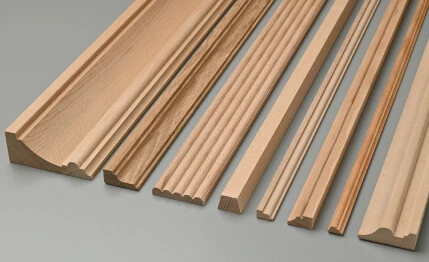
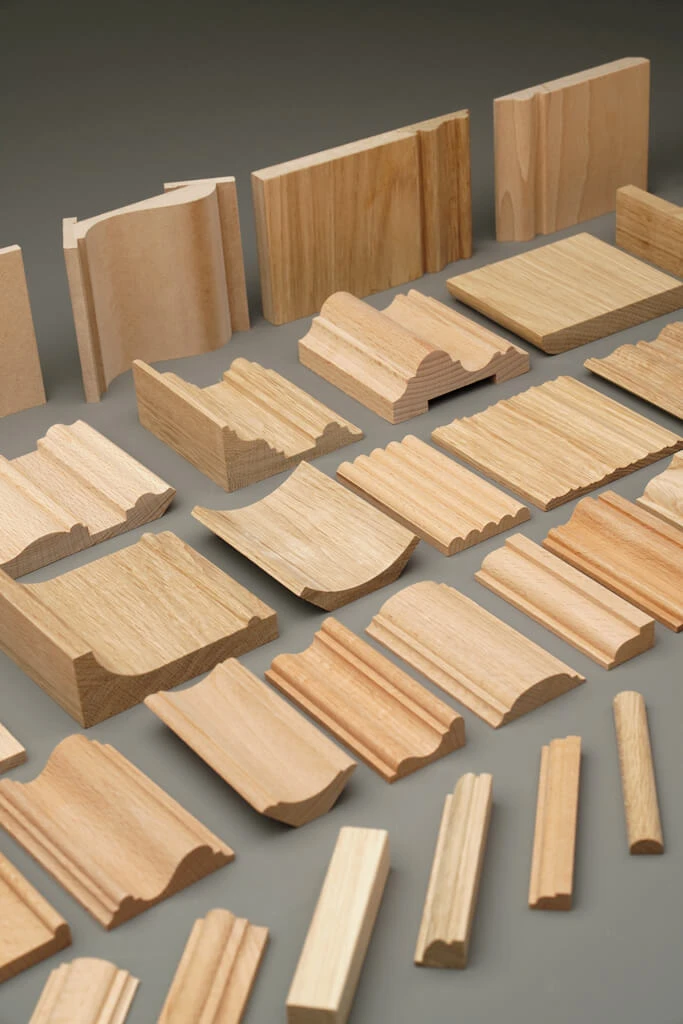
- Thin wooden skirting board
- Polystyrene and polyurethane skirting board
- Thin floor skirting board dimensions: what height to choose
- Skirting board 40–55 mm
- Skirting board 60 mm
- Skirting board 70 mm
- Skirting board 80 mm
- 100 mm and above
- Skirting board thickness
- Length
- Which profile is better: straight, flat, or with minimal relief
- Straight Profile
- Flat profile
- Profile with minimal relief
- Thin skirting board for various floor coverings
- Under laminate
- For parquet and engineered board
- For quartz vinyl
- For tile
- For engineered board in modern interior
- Color solutions for thin skirting board
- White thin skirting board
- For painting
- Wood / oak finish
- Gray and anthracite
- Painted MDF
- Thin MDF or Thin Wooden Skirting Board: A Comparative Analysis
- Comparison table
- When to Definitely Choose MDF
- When to Definitely Choose Wood
- Thin Skirting Board and Slatted Panels: The Perfect Duo
- Why Slatted Panels Require a Thin Skirting Board
- TV Area
- Entry Hall
- Bedroom
- How to Buy a Thin Skirting Board Without Mistakes: A Practical Checklist
- Thin Skirting Board in Different Rooms: Where and How to Use It
- FAQ: Answers to Real Questions About Thin Floor Skirting Boards
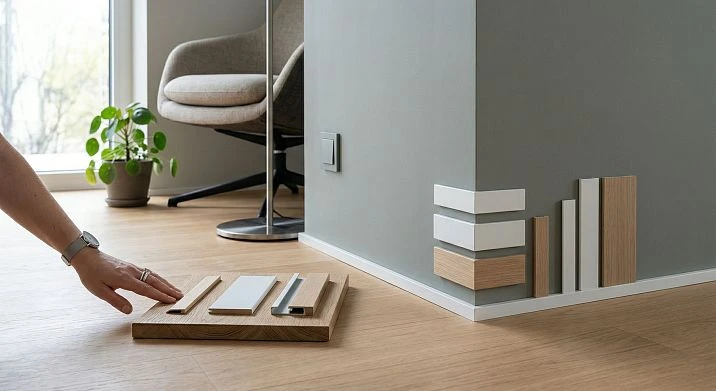
This is not a fashionable trend that will pass in a season. It is functional logic: less means more precise. A thin floor skirting board does not claim the role of a decorative dominant. It does its job — covers the gap, forms the lower horizontal line — and does not attract unnecessary attention to itself. This is its virtue.
But choosing the right narrow floor skirting board isn't easy. MDF or wood? 60 mm or 80 mm? White or paintable? Straight or with minimal relief? The questions multiply. This article is a complete commercial breakdown, where each of them gets a specific answer.
Select a thin floor skirting board in the STAVROS catalog:
-
MDF Skirting Board— narrow, straight, paintable
-
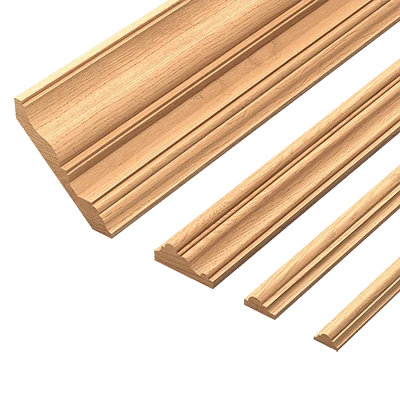
Wooden baseboard— thin profile made of solid wood
-
floor skirting boards— full range for floors
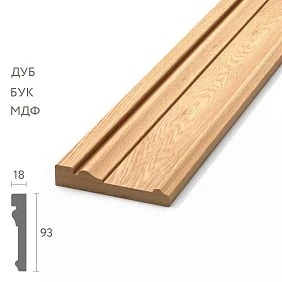
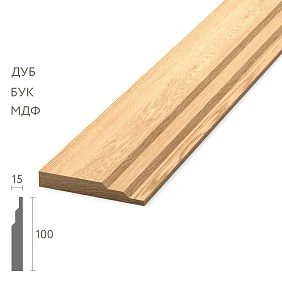
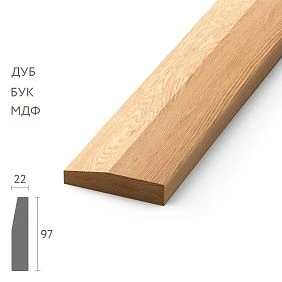
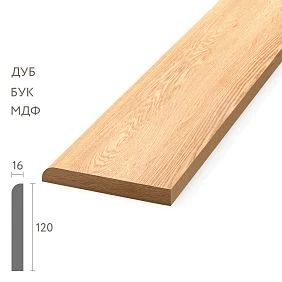
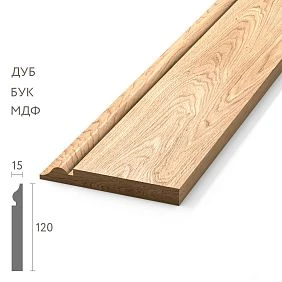
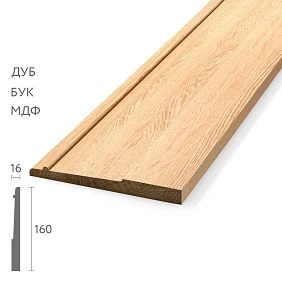
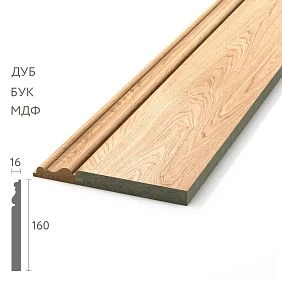
What is a thin floor skirting board: understanding the concept
Before searching the catalog, you need to understand: what exactly are you looking for? Because 'thin skirting board' is not a standard technical term with clear parameters. It's a descriptive concept behind which several different characteristics are hidden.
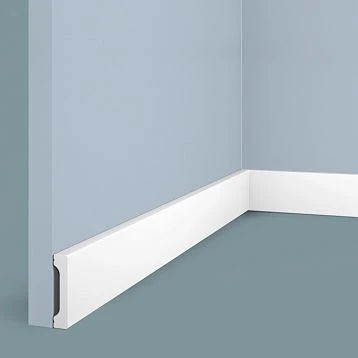
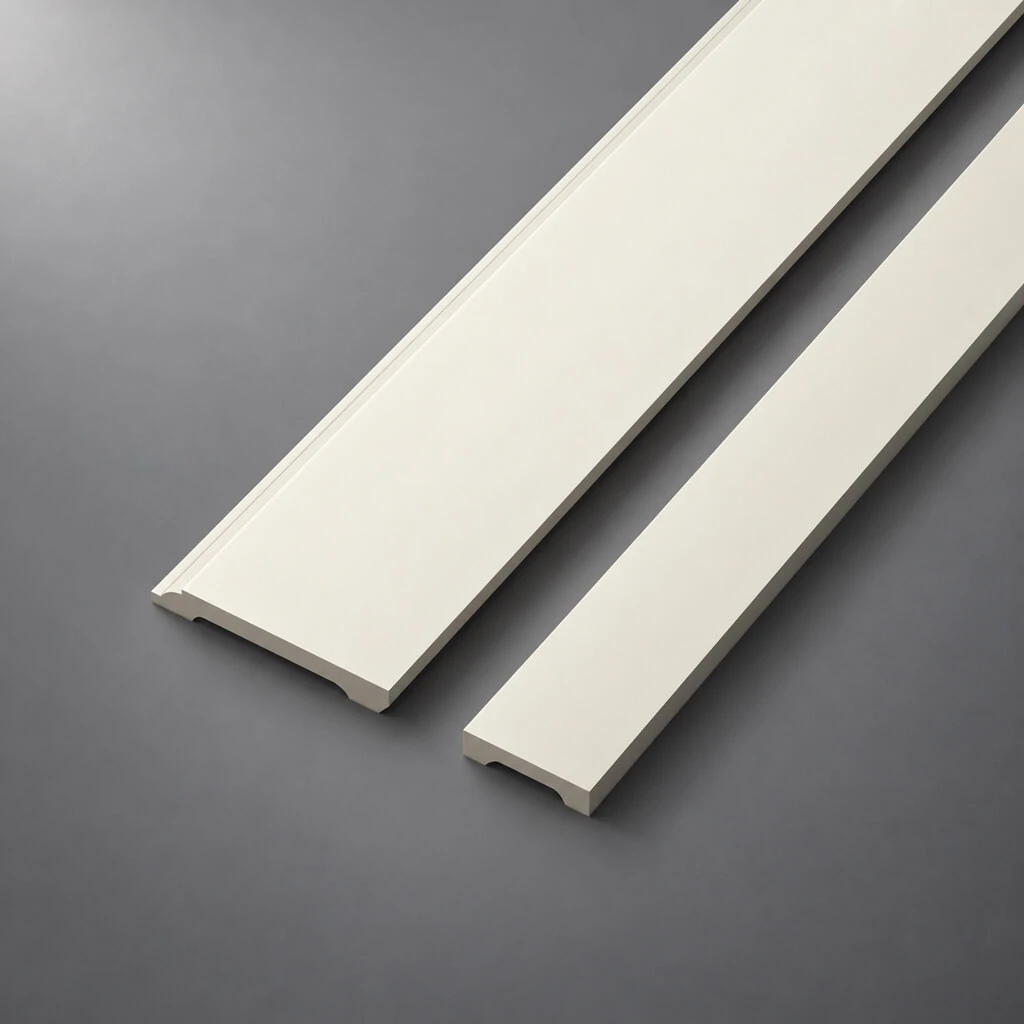
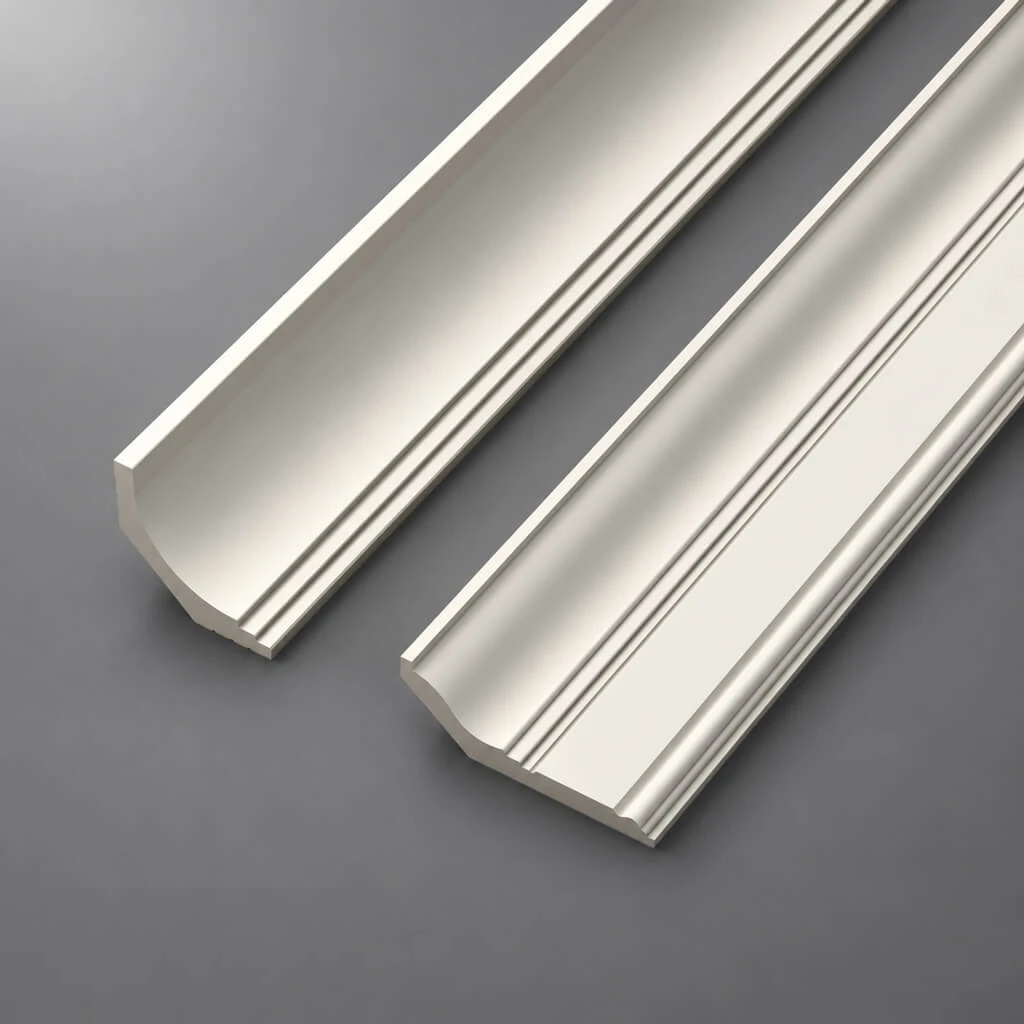
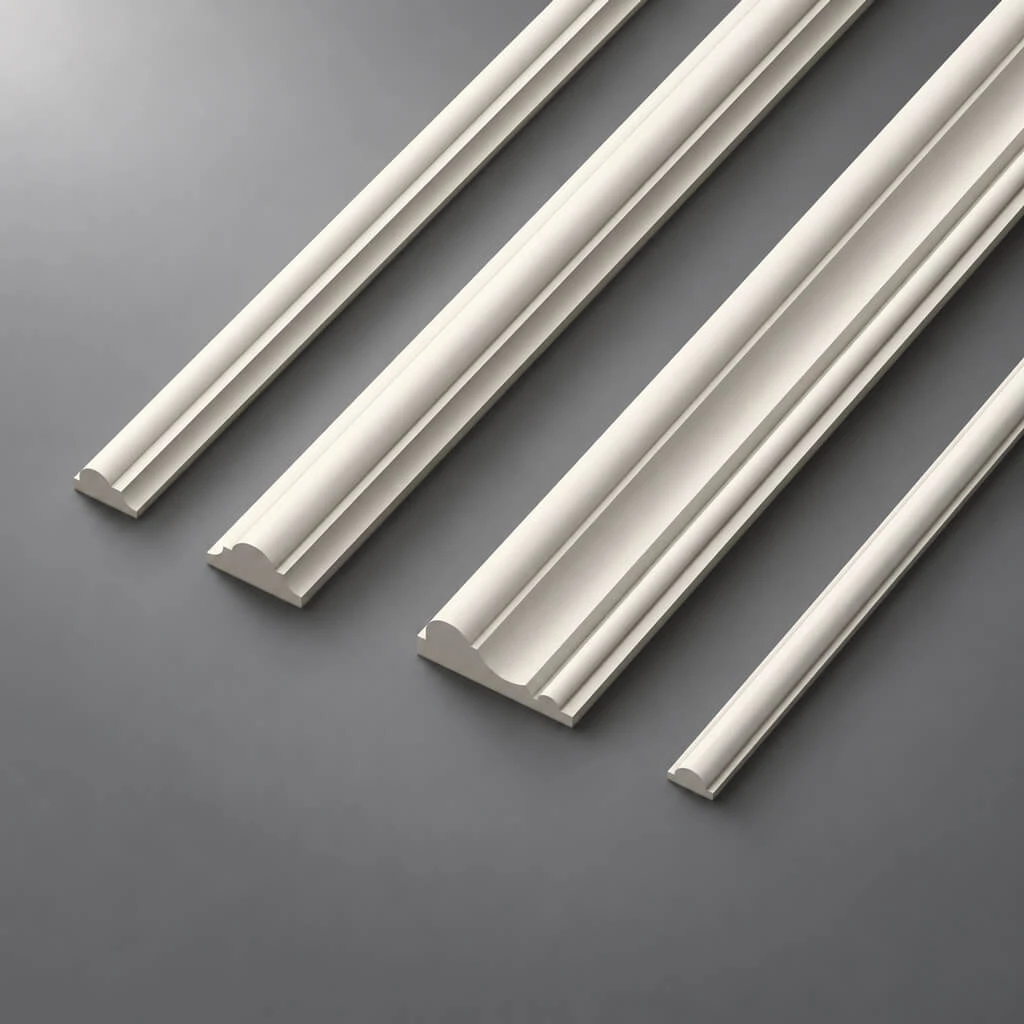
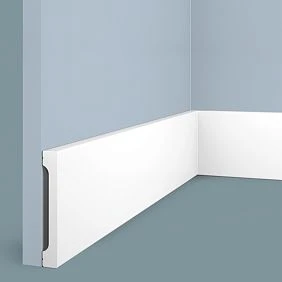
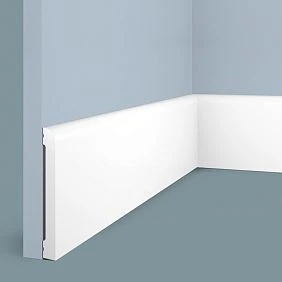
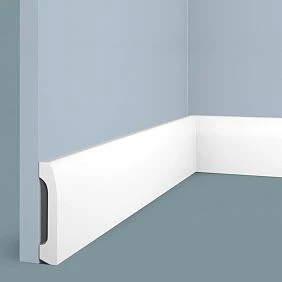
Narrow — small height of the front part. When people say 'thin floor skirting board,' they most often mean exactly this: a profile with a height of 40–80 mm, not 100–150 mm as in classic interiors.
Flat — minimal thickness of the profile body. Such a skirting board does not protrude much from the wall, fits tightly, and does not create an overhanging shadow. This is valued in rooms where furniture is placed close to the walls.
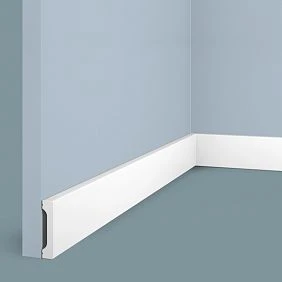
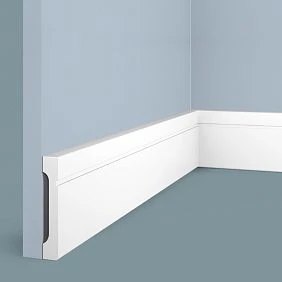
Straight — without relief, without curves, without coves. A strict rectangular profile. This is most often what is meant by 'modern' or 'minimalist' skirting board.
Low height – face height up to 70–80 mm. Does not create a massive lower band, stays in the background, does not overload the space.
Minimalistic – no relief, no decorations. A profile that works purely functionally.
That's why people formulate this query differently in search: 'narrow floor skirting board', 'low skirting board', 'flat MDF skirting board', 'straight white skirting board', 'MDF skirting board 60 mm' – all these queries lead to the same task: to find a neat, unobtrusive, modern profile.

When to choose a thin skirting board instead of a wide one: five scenarios
This is a fundamental question. A thin floor skirting board is not a universal solution. It is the right choice under specific conditions.
Our factory also produces:


Small rooms
A small room – 10–16 m² – reacts most acutely to details. A wide skirting board in a small room visually eats up the height: the lower band becomes too noticeable, the ceiling 'lowers'. A narrow floor skirting board 60–70 mm in the color of the wall practically disappears – and the room breathes.
Get Consultation
Modern and minimalist interior
In minimalism, every detail is visible. A straightMDF Skirting Board without relief is not a compromise, but a conscious choice. It does not compete with furniture, textiles, or decor. It creates a horizontal boundary and falls silent.
Walls with slatted panels
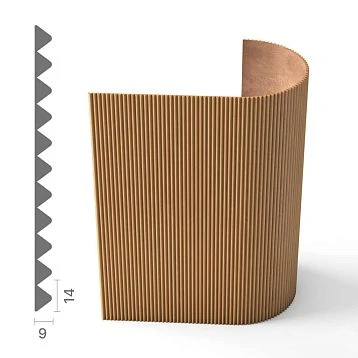
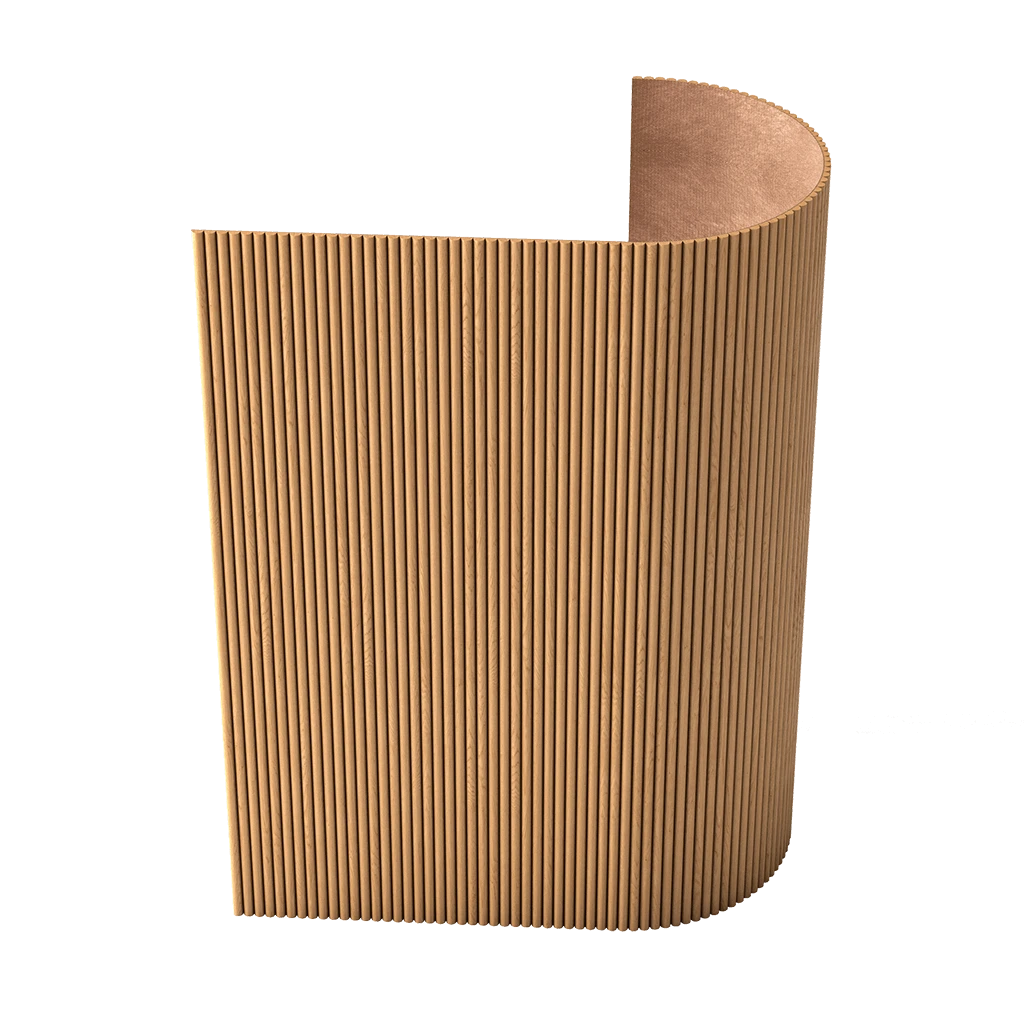
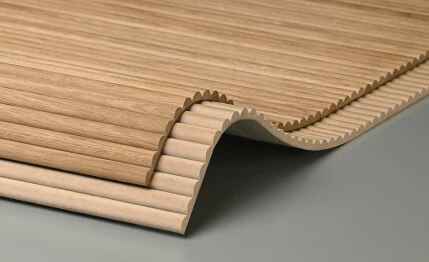
When the walls are finishedslatted wall panels, the main decorative rhythm of the space becomes the verticality of the slats. The baseboard here should not compete with this rhythm. A thin, straight profile matching the color of the slats is a neutral pause between the floor and the vertical finish.
Furniture stands close to the walls
In interiors with furniture placed flush against the wall, a flat floor baseboard is a practical necessity. If the baseboard protrudes 15–20 mm from the wall, a wardrobe or sofa simply won't sit flush. A thin profile with a small body thickness solves this problem.
Rooms with low ceilings
Ceilings of 2.4–2.6 m are a common story. Here, a tall 100–120 mm baseboard will directly reduce the perceived height. A low 60–70 mm floor baseboard, especially in the color of the wall, optically 'raises' the ceiling.
Materials for thin floor baseboards: what to choose
Three main materials, three different stories. Let's break it down without fluff.
Thin MDF baseboard
MDF Skirting Board— is the absolute leader in popularity in modern interiors, and there are several reasons for this. Firstly, MDF does not change geometry. It does not warp from humidity, does not crack at joints, and maintains a straight line in any apartment microclimate. This is especially valuable for thin profiles: a narrow baseboard with poor geometry is immediately noticeable.
Second,— is a horizontal element that frames the room at the bottom of the walls where the wall meets the floor. Skirting boards perform several functions: they hide the technological gap between the wall and floor covering (necessary for thermal expansion), protect the lower part of the wall from mechanical damage, create visual completion, and may conceal wiring.— is a surface that accepts paint perfectly. No stains, no fibers, no unevenness. Paint it the exact wall color according to RAL—and the baseboard will visually disappear. Paint it a contrasting dark tone—and you'll get a sharp graphic bottom accent.
Thirdly,buy MDF skirting board— and installing it is quick. MDF cuts well, is easy to fit in corners, and doesn't require acclimatization. Installation with glue or liquid nails using light pressure pins—done in one day in any room.
Thin wooden baseboard
with a classic profile creates a sense of solidity, reliability.— is a different class of sensation. Living texture, organic warmth, the possibility of applying transparent varnish or oil with an open wood grain—all this is unavailable with MDF.
ThinWooden baseboard— made of oak, 60–75 mm high, paired with parquet from the same oak in the same tint—creates a unified material environment from the floor to the lower line of the wall. This is not just a baseboard, but part of the 'wooden theme' of the interior.
Important: before installation, a wooden baseboard must be acclimatized in the room for 2–3 days. Solid wood lives, and without acclimatization, gaps may open at the joints after installation. With a high-quality paint coatingthe wooden floor baseboard— lasts for decades and allows for complete restoration.
Polystyrene and polyurethane baseboard
Polystyrene floor baseboard— is a budget alternative. Lightweight, cheap, not afraid of moisture. For bathrooms, technical rooms, temporary housing—a quite workable option. But for a modern interior in the high-end segment—it's a compromise. Over time, it yellows, deforms when heated, loses its geometry.
In the context of 'thin skirting for modern spaces,' polyurethane and polystyrene are backup options, not the first choice.
Thin floor skirting dimensions: what height to choose
This is the most specific question. Let's break it down by each height.
Skirting 40–55 mm
This is an ultra-minimalist format. The profile is practically unnoticeable. Used in interiors where they want to completely remove the lower horizontal line from the field of view. Functionally works only with a small expansion gap in the flooring — up to 5–8 mm. For parquet with a 15–20 mm gap — risky: the skirting may not cover the gap at maximum expansion.
Skirting 60 mm
MDF skirting board 60 mm— the golden mean for apartments with ceilings up to 2.7 m. High enough to reliably cover the floor gap. Narrow enough not to create a lower accent. The most in-demand format in modern interiors.
When painted the same color as the wall, a 60 mm skirting practically 'disappears.' When painted a contrasting dark color, it creates a thin lower frame — neat and modern.
Skirting 70 mm
MDF skirting 70 mm— for rooms with ceilings 2.7–3 m. A slightly more noticeable lower border, but still in the 'thin' category. Works well under parquet and engineered wood flooring, where a slightly larger allowance for covering the gap is needed.
Wooden 70 mm skirting board made of oak or beech — a classic choice for a neoclassical interior with a wooden floor.
80 mm skirting board
On the border between 'thin' and 'standard'.MDF skirting board 80 mm— for rooms with ceilings 3 m and higher. With a straight rectangular profile without relief — still looks neat and modern. With a shaped profile with a roundover — this is already a transition to a classic solution.
100 mm and above
This is no longer a thin skirting board in the context of a modern interior. A high skirting board of 100–150 mm is a tool of classical and neoclassical architecture. For a minimalist space — it is excessive.
Skirting board thickness
Profile body thickness: standard — 12–16 mm. Thin profiles — 8–12 mm. It is the small thickness that allows placing furniture flush against the wall without a visible gap. When choosing, always specify the thickness at the base: this is the actual 'protrusion' of the skirting board from the wall.
Length
Standard length — 2.5 m. Some manufacturers offer 3 m. During installation in a room with long runs, fewer joints = neater result. When ordering, take a 10–15% surplus for trimming.
Which profile is better: straight, flat, or with minimal relief?
This is a matter of style, not function. The function is the same for all—to cover the gap. But the character is different.
Straight profile
Strictly rectangular cross-section. No rounding, no relief.Straight white MDF skirting board—this is the language of modern interior: clean, clear, honest. Perfect for minimalism, Scandinavian style, loft, Japanese interior.
In white paint, a straight profile works in any interior from light to dark. In dark paint—it provides a lower graphic stroke.
Flat profile
Very small thickness with standard height.Flat MDF skirting boardfits against the wall as tightly as possible, does not create shadows, does not protrude into the space. Ideal where furniture is placed against the wall or where line purity is important.
Profile with minimal relief
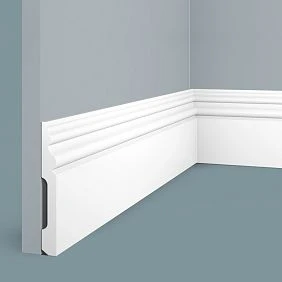
A thin bevel, a small cove, a soft rounding of the top edge — this is not classic relief, but not a strict rectangle either.Straight MDF skirting boardwith a delicate top bevel — a compromise between modernity and softness of form. Works well in 'modern classic' and 'soft neoclassical' styles.
Thin skirting board for different floor coverings
Not every narrow skirting board suits every covering. There are practical nuances.
Under laminate
Laminate 'moves' — seasonal expansion and contraction create an expansion gap at the wall of 8–15 mm. A thinMDF Skirting Board60–75 mm with a base width of at least 20 mm will reliably cover this gap in any position of the covering. Fixing — only to the wall, not to the laminate.
For parquet and engineered board
Parquet requires an expansion gap of up to 15–20 mm. For a parquet floor, a thinWooden baseboardmade from the same wood species — is not just a functional, but also a stylistic solution. A height of 70–80 mm guarantees reliable coverage. With the same species and tint — the skirting board and parquet form a unified lower band.
For quartz vinyl
Quartz vinyl is a stable flooring with minimal thermal expansion. The wall gap is 5–8 mm. Even a thin 55–60 mm skirting board works here.Baseboard MDFPainted to match the quartz vinyl — a modern solution where the floor and skirting board merge into a single plane.
For tile
Tiles have no expansion gap — the grout joint goes right up to the wall. The skirting here is decorative, not functional. A thin wooden or MDF skirting in a contrasting color creates a clear boundary between the tile and the wall. This is a bold solution: wood with tile — warmth against cold, nature against ceramic.
For engineered wood flooring in a modern interior
Engineered wood flooring — a material at the intersection of classic and contemporary.buy wooden baseboard for floorMade from the same wood species as the engineered flooring and finished in the same color — this solution always works. A height of 70–80 mm, with a straight or minimally chamfered profile — and the interior gets a finished bottom line.
Color solutions for thin skirting boards
Color is one of the main designer tools when working with skirting boards.
White thin skirting board
White MDF Skirting Board— a universal solution for 90% of cases. Works with any wall color: light, pastel, saturated, dark. In white interiors — part of a unified white perimeter. In dark ones — a clear light accent at the floor. An additional plus: white skirting never goes out of style — it's relevant in any decor of any era.
Factory white enamel or on-site finishing paint — both options deliver excellent results. On-site painting allows for precise matching to the specific white shade of the walls.
For painting
— is a horizontal element that frames the room at the bottom of the walls where the wall meets the floor. Skirting boards perform several functions: they hide the technological gap between the wall and floor covering (necessary for thermal expansion), protect the lower part of the wall from mechanical damage, create visual completion, and may conceal wiring.— the most flexible option. The surface is perfectly prepared for applying any RAL or NCS paint. Paint it to match the exact wall color — and the skirting board 'disappears'. Paint it in graphite, dark blue, olive — and the skirting board becomes a design accent. The same profile, completely different stories.
Wood / oak finish
Thinwooden floor skirting boardswith a tint matching natural oak or another wood species — for interiors with wooden floors. A unified wooden environment from the flooring to the lower line of the wall. The modern interior has fully embraced wood — and a thin wooden skirting board here is not an archaic element, but an honest material choice.
Grey and anthracite
Grey shades are one of the main trends in modern interiors. A thin, flat skirting board in dark grey or anthracite color within a light space — this is a minimalist lower stroke with character.— is a horizontal element that frames the room at the bottom of the walls where the wall meets the floor. Skirting boards perform several functions: they hide the technological gap between the wall and floor covering (necessary for thermal expansion), protect the lower part of the wall from mechanical damage, create visual completion, and may conceal wiring.can be painted in any grey shade without limitations.
Painted MDF
A separate category: skirting board matching the color of the floor covering. A light beige skirting board under quartz vinyl in 'warm sand' color — the skirting board becomes an extension of the floor, not its frame. This is a bold design choice that works specifically with thin profiles: a 60–70 mm skirting board in the floor color visually expands the plane of the covering.
Thin MDF or Thin Wooden Skirting: A Comparative Analysis
The main question for most buyers. Here is an objective picture—without lobbying for any material.
Comparison table
| Parameter | MDF skirting board | Wooden skirting board |
|---|---|---|
| Geometric Stability | High: does not warp | Medium: requires acclimatization |
| Painting | Perfect surface | Requires fiber primer |
| Transparent tinting | Impossible | Yes, open texture |
| Moisture resistance | High with closed coating | Medium: requires quality varnish |
| Service life | 15–20+ years with proper care | 20–30+ years, allows restoration |
| Feeling of 'naturalness' | No | Yes |
| Price | Below | Higher |
| Suitable for painting | Optimal | With preparation |
| Installation | Simple | Requires acclimatization |
When to definitely choose MDF
-
Laminate, quartz vinyl, LVT flooring
-
Finish for painting in a specific RAL color
-
Kitchen, hallway, rooms with variable humidity
-
Budget is limited
-
Maximum geometric precision at joints is important
Baseboard MDFTo buy means to get a predictable, stable, reliable result in any interior.
When to definitely choose wood
-
Parquet, solid wood board, engineered board on the floor
-
Interior with open wood texture
-
Toning "like wood" — transparent varnish or oil
-
Eco-interior, country house, high-end segment
-
Long-term perspective with restoration possibility
wooden skirting board purchaseSolid oak — is an investment that pays off over decades of quality.
Thin baseboard and slatted panels: the perfect duo
A separate conversation — because this combination is gaining popularity rapidly and deserves detailed analysis.
Why slatted panels require a thin baseboard
decorative slatted panelsCreate a powerful vertical rhythm. The vertical dominates. In this context, a wide baseboard with rich relief is a visual conflict: the horizontal tries to overpower the vertical.
A thin straight skirting board matching the slats or in a neutral dark color is a delicate horizontal pause at the floor. It completes the vertical rhythm without disrupting it.
TV area
A wall with slats behind the TV is a classic application. Narrowbaseboard for floor60 mm matching the slats at the bottom + nothing on top (or a thin molding) — a finished lower part of the TV composition.
Entryway
An entryway with slatted panels on one wall is a popular design solution for small spaces. A thin skirting board of 55–70 mm is essential here: the slatted panel should not end 'in mid-air' at the floor.
Bedroom
In a bedroom with a slatted headboard, a thin wooden skirting board creates a unified wooden theme: slats–skirting–parquet. One material, one tint — three levels of space in one system.
How to buy a thin skirting board without mistakes: a practical checklist
Follow this sequence — and avoid typical mistakes.
1. Determine the height of the expansion gap at the flooring. Lift the corner of the skirting board (or look under it if it's already installed), measure the gap. The skirting board must cover it with a minimum overlap of 10 mm.
2. Choose the profile height. Correlate it with the ceiling height: up to 2.7 m — 55–70 mm, 2.7–3 m — 70–80 mm, higher — 80–100 mm (but this is already at the border of 'thin').
3. Choose the material. Parquet, natural finish →Wooden baseboardLaminate, painting, variable humidity →MDF Skirting Board.
4. Determine the color. For wall color → paintable profile. White → factory enamel or primer for painting. To match the floor → select based on a sample of the flooring.
5. Specify the profile thickness. If furniture is close to the wall — minimal protrusion is important. Specify the body thickness at the base.
6. Consider joints and corners. Decide in advance how to handle internal and external corners: precise 45° cuts, using a miter box, or with connecting elements.
7. Calculate the quantity with a margin. Room perimeter + 10–15% for cuts and defects. For long runs, use connecting elements frommoldings, cornices, skirting boards.
8. Check compatibility with other elements. Thin skirting + door trims made from the same material and finish — a unified perimeter system.
Thin skirting in different rooms: where and how to use
Thin floor skirting works everywhere, but in each zone — in its own way.
Living room — the main space. Skirting 70–80 mm matching the walls or in a contrasting dark color. In an interior with slatted panels — matching the slats. In a white interior — whiteWhite MDF Skirting Boardas part of a unified white perimeter.
Bedroom — an intimate space with soft decor. Baseboard 60–70 mm, neutral. In a bedroom with wooden parquet —with a classic profile creates a sense of solidity, reliability.of the same wood species.
Kitchen — a functional zone.Baseboard MDFin the color of the walls or in the color of the cabinets — maximally neutral, easy to care for.
Hallway — a high-traffic area. ThinMDF Skirting Boardwith high-quality enamel — a practical choice. Height 70–80 mm to cover the gap at tile or quartz vinyl.
Children's room — baseboard in the color of the walls to avoid creating extra relief that could be bumped into.— is a horizontal element that frames the room at the bottom of the walls where the wall meets the floor. Skirting boards perform several functions: they hide the technological gap between the wall and floor covering (necessary for thermal expansion), protect the lower part of the wall from mechanical damage, create visual completion, and may conceal wiring.in a cheerful color of an accent wall — a designer technique.
Study — a business space. Thin wooden baseboard 70–80 mm with clear varnish or in a dark tint. Unity with wooden furniture.
FAQ: answers to real questions about thin floor baseboards
What thin skirting board is best for an apartment?
For most apartments with laminate or vinyl flooring —MDF Skirting Board60–70 mm in white or paintable. For an apartment with parquet —Wooden baseboardof the same wood species.
60 mm or 80 mm: which to choose?
For ceilings up to 2.7 m — 60–70 mm. For ceilings 2.7–3 m — 70–80 mm. For heights below 2.5 m, consider 55 mm.
MDF or wood: which looks more expensive?
Depends on the finish. A wooden skirting board with clear varnish on a live oak grain looks richer. White MDF in perfect paint looks more precise and cleaner. These are different aesthetics, not a hierarchy.
Can wooden skirting boards be painted?
Yes. A wooden skirting board is painted after sanding and priming. MDF is easier to paint: the surface is already prepared for paint without pores or fibers.
Is a thin skirting board suitable for laminate?
Yes, if the profile height covers the expansion gap with a margin.MDF skirting board 60 mmfor most laminate floors — the optimal choice.
Which thin skirting board to choose for white walls?
Straight white MDF skirting board60–70 mm. When painted to match the wall color — the skirting board 'disappears'. With factory white enamel — it creates a clear bottom line.
Is a thin skirting board needed in a small room?
Absolutely. In a small space, a thin skirting board in the wall color is one of the main tools for visually enlarging the space.
How to choose a thin skirting board for a modern interior?
Straight profile without relief, height 60–75 mm, MDF or wood, painted to match the wall color or in a contrasting tone. Additionally — to matchslatted wall panelsif they exist.
Which skirting board is easier to clean?
MDF Skirting Boardwith factory enamel — can be washed with a damp cloth without restrictions. Wooden skirting board with varnish — also not difficult. Skirting board with open texture under oil — requires careful maintenance.
Which profile is better for a rental apartment?
Baseboard MDFWhite 60–70 mm. Universal, stable, cheap to install, requires no special maintenance.
Thin or wide skirting board: how to decide what you need?
Simple test: cover the lower 60 mm of the wall near the floor with your hand. If the space looks complete—thin is enough. If it looks 'empty'—add height.
What length should I order?
Measure the perimeter of the room, add 15%. For long walls without interruptions—order 3-meter lengths: fewer joints, neater result.
What to do with external corners?
External corners are the most vulnerable spot. Precise 45° cutting on a miter box or a special corner connector. MDF corners are easier to cut: the material cuts cleanly.
Can I install a thin skirting board myself?
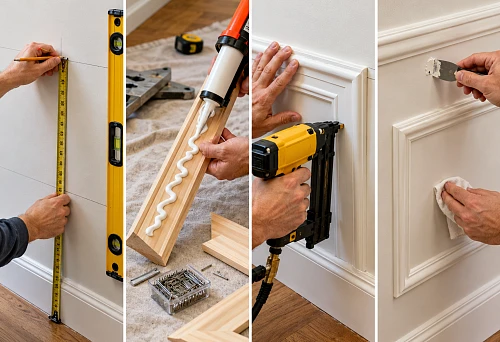
Yes. MDF skirting is mounted with liquid nails and light pins. Wooden—similarly, with acclimatization beforehand. Tools needed: miter box, saw, and construction gun.
A thin floor skirting board is not about saving on material or simplification. It is a conscious choice in favor of precision, cleanliness, and a modern design language. A narrow 60–80 mm floor skirting made of MDF or wood, with a straight or minimally-relief profile — this is a detail that either completes the interior or goes unnoticed. And the latter is also a victory.
The company STAVROS manufacturesBaseboards for floorsmade of natural wood and MDF: thin, straight, flat — for any modern interior.MDF Skirting Boardfor painting in white or any RAL color.Wooden baseboardmade of oak and beech — for varnish, oil, or enamel. The entire rangemoldings, cornices, skirting boards— from a single production, in a unified system. Select a thin skirting board for your space in the STAVROS catalog — and make the bottom line of your interior precise.