Article Contents:
- The 'One Thing Older Than Everything' Principle in a Room
- One Anchor Piece — The Focal Point of the Room
- Everything Else — Modern or Neutral
- Why You Shouldn't Gather an Antique Collection in One Room
- How to Complement an Antique Mirror with a Modern Yet Tactful Baseboard
- The Baseboard Should Not Compete with the Mirror
- Baseboard Material — Only Natural
- Baseboard Height — Classic, But Not Monumental
- Baseboard Profile — Classic, Not Ultra-Modern
- Color: Complex Shades Work Best, Not Pure White or Basic Beige
- Complex Whites — Ivory, Ecru, Alabaster
- Complex Grays — Taupe, Greige, Smoky
- Natural Wood with Toning
- What to Avoid: Bright, Pure, Screaming Colors
- Technique: New Baseboard, But with a More Classic Profile to Avoid Dissonance
- Classic Baseboard Profiles — What That Means
- How to Match the Baseboard Profile to the Mirror's Style
- New Technologies — Old Forms
- Where to Find Baseboards with Classic Profiles
- Integrating an Old Mirror into a Modern Interior Without the 'Grandma's Sideboard' Style
- Contrast of Textures and Materials
- Minimalism in Furnishings
- Modern Lighting
- Monochromatic or Restrained Color Palette
- Mirror as an Art Object
- Mistakes: Cheap Pseudo-Antique Baseboards Next to Real Antiques
- Patina Imitation on Plastic — Kitsch
- Pseudo-Carving from Polyurethane
- Excessive gilding on the new baseboard
- Scale mismatch
- Color dissonance
- Stylistic combinations: which furniture works with an antique mirror
- Modern classic — a balance of tradition and relevance
- Scandinavian style — a light background for antiques
- Loft — industrial brutality and antique elegance
- Eclecticism — a creative blending of traditions
- Practical tips for placing an antique mirror
- Choosing a wall — not every one is suitable
- Mounting height — at eye level
- Lighting — illuminate, but don't blind
- What the mirror reflects — matters
- Caring for an antique mirror and a new baseboard
- Mirror — delicacy and respect
- Baseboard — regular cleaning
- Frequently Asked Questions
- Conclusion

There are things that cannot be bought. They can only be inherited, found at an antique market, received as a gift from people who understand the value of time.An antique mirror in a frame— is one such thing. Worn gilding, patina on wood, slightly clouded glass reflecting not only your face but a hundred years of history. Such a mirror is the soul of an interior, an anchor around which everything else is built. But how to integrate it into a modern space without turning the room into a 'grandma's sideboard'? How to support antiques with new elements — for example,wooden skirting board— so that no dissonance arises, so that old and new resonate in unison? That is what our conversation is about.


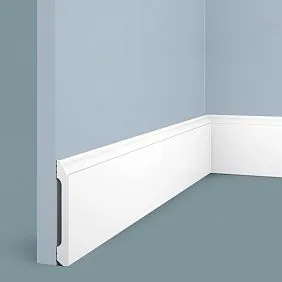
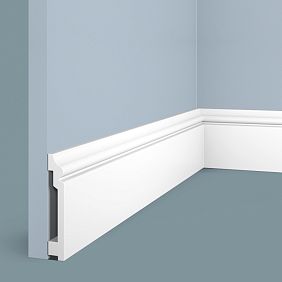
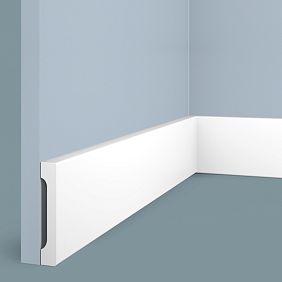
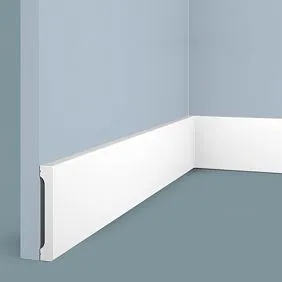
The principle of 'one thing older than all' in a room
Eclecticism — the art of mixing eras and styles — requires discipline. You cannot simply pile a Victorian chest of drawers, a Soviet armchair, a modern sofa, and a Chinese screen into one room. That would be chaos, visual noise, a lack of composition. A principle, a core, a rule is needed to organize the disparate elements.




One anchor piece — the focal point of the room
The principle is simple: in every room, there should be one thing that is older than all the others. One thing that sets the tone, becomes the center of the composition, around which everything else is built. That thing is an antique. A genuine one, not a reproduction, not pseudo-vintage, but an item with history, with the patina of time, with authenticity.
an antique mirror in a wooden frame— is the perfect candidate for the role of such an anchor piece. It hangs on the wall, attracts the eye, sets the scale, creates an atmosphere. Everything else in the room — furniture, textiles, lighting, baseboards — should support the mirror, not compete with it, not draw attention away.
Our factory also produces:


Everything else — modern or neutral
If the mirror is an antique, the rest of the furniture and finishes should be modern or neutral. A modern sofa with a laconic shape, a glass coffee table, a bookshelf with simple geometry. Walls painted in a calm color (gray, beige, taupe). Floor — parquet, laminate, porcelain tile — high-quality but without ostentation.
Baseboard — new,wooden, well-crafted, but not antique, not 'antique-style'. The baseboard should not pretend to be a hundred years old. It should be honest, modern, but tactful — not flashy, not trendy, but classical in form, neutral in color.
Get Consultation
Why you shouldn't collect a set of antiques in one room
A common mistake is to think that if one antique item is good, then ten will be even better. No. A room filled with antiques turns into an antique shop, a museum, a space where life is not felt.
Antiques are valuable in contrast with modernity. An antique mirror against a white wall, next to a modern sofa — that is a dialogue of eras, a tension between past and present. An antique mirror among antique chests, chairs, consoles — that is a monologue, a lack of progression, a museum display.
One thing is the star. The rest is support.
How to support an antique mirror with a modern, yet tactful baseboard
The baseboard is an element that many underestimate, choosing it as an afterthought, last, just to close the gap between the wall and the floor. But in a room with an antique mirror, the baseboard is an important detail that can either support the composition or ruin it.
The baseboard should not compete with the mirror
If the mirror is in a luxurious carved frame with gilding, the baseboard should not be equally luxurious. Two decorative accents on one wall are overkill. The eye won't know where to look, the composition will lose focus.
In this case, the baseboard should be restrained. Wooden, high-quality, but without carving, without gilding, without extravagance. A classic profile with several bevels, a neutral color (white, cream, gray, natural light wood). The baseboard creates a horizontal line, frames the room, but does not draw attention.
The baseboard material — only natural
A cheap plastic baseboard next to an antique mirror is a disaster. Plastic gives itself away at first glance: it is flat, cold, dead. Next to the wooden frame of a mirror that is a hundred years old, plastic looks fake, out of place, demeaning to the antique.
The baseboard should be wooden — made of solid oak, beech, ash. Or MDF, but with high-quality finishing — enamel, veneer, tinting. Wood has texture, weight, tactility. It harmonizes with the wood of the mirror frame, creates material unity.
Baseboard height — classic, but not monumental
If an antique mirror hangs in a living room or dining room with high ceilings (3 meters and above), the baseboard can be tall — 15–18 cm. This will create classic proportions, support the monumentality of the mirror.
If the mirror is in a bedroom or study with standard ceilings (2.5–2.7 m), it is better to choose a medium-height baseboard — 10–12 cm. It will be noticeable, but not overwhelming, creating completeness without heaviness.
A baseboard that is too low (6–7 cm) next to an antique mirror will look stunted, unserious, cheap. Antiques require a worthy frame.
Baseboard profile — classic, not ultra-modern
Modern baseboards often have a minimalist profile — flat, without bevels, with sharp edges. This is beautiful in ultra-modern interiors, but not next to an antique mirror.
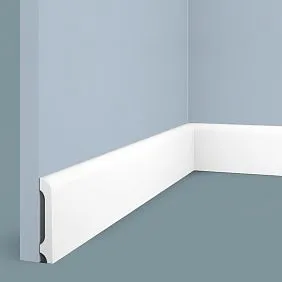
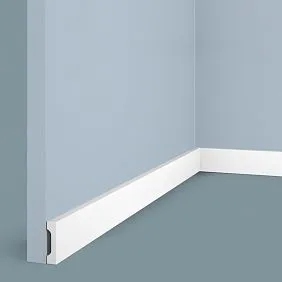
A mirror in a classic frame requires a classic baseboard. A profile with several bevels, with slight relief, with soft transitions. Not carved, not extravagant, but not flat either.A classic wooden baseboard with a pronounced profilecreates a connection between the antique mirror and the modern interior, without disturbing the balance.
Color: complex works best, not pure white or basic beige
The color of the baseboard in a room with an antique mirror is a subtle matter. Pure, bright colors do not work here. Complex, multi-layered shades are needed, which echo the patina of the mirror, the nobility of the antique.
Complex white — ivory, ecru, alabaster
Pure white (snowy, icy) next to an antique mirror looks too modern, too sterile. It does not harmonize with the warm patina of the wood, the tarnished gilding of the frame.
It is better to choose a complex white with a warm undertone. Ivory (ivory color), ecru (unbleached linen), alabaster (white with a slight yellow tint). These shades are softer, warmer, more noble. They echo the age of the mirror, create a sense of time, patina, history.
An ivory-colored baseboard next to an antique mirror in a gilded frame is a perfect combination. Soft warm white supports the gold without competing with it, creates a background on which the mirror shines.
Complex gray — taupe, greige, smoky
Gray is a color that works wonderfully with antiques, especially if it is not simple gray, but complex, with a warm or cool undertone.
Taupe (gray-brown) — warm gray with a beige undertone. It is soft, cozy, noble. A taupe-colored baseboard next to an antique mirror in a dark wooden frame creates a calm, harmonious composition.
Greige (gray-beige) — another complex shade that balances between gray and beige. It is neutral but not boring, elegant but not cold.
Smoky gray (with a slight bluish tint) — a cooler option that suits mirrors in silver or whitewashed frames. It creates a refined, sophisticated atmosphere.
Natural wood with tinting
If the baseboard is made of solid wood, you don't have to paint it; you can apply a tint that highlights the wood grain. Light oak, whitewashed oak, gray oak — these options work perfectly with antique mirrors.
Important: the tint should be subtle, not bright or contrasting. The goal is to emphasize the texture, not cover it up. The wood should remain wood — alive, warm, natural.
What to avoid: bright, pure, screaming colors.
No bright white, black, dark brown, red, or blue. Bright colors disrupt the delicate composition with an antique mirror, draw attention away, and create visual noise.
Antiques require restraint, elegance, and nobility. The baseboard should be modest, tactful, and respectful towards the mirror.
Technique: a new baseboard, but with a more classic profile to avoid dissonance.
How to make a new baseboard not look out of place next to an antique mirror? The secret is in the profile. The baseboard should be new, well-made, but in shape — classic, echoing the era of the mirror.
Classic baseboard profiles — what does that mean?
A classic baseboard profile is not a flat plank, but a complex shape with multiple levels, bevels, and roundings. The cross-section of such a baseboard resembles an architectural element — a cornice, molding, or column base.
A typical classic profile includes:
-
A lower base (flat part adjacent to the floor)
-
A cavetto (concave bevel creating a smooth transition)
-
A torus or convexity (central element of the profile)
-
Upper shelf (flat part adjacent to the wall)
Such a profile creates interplay of light and shadow, volume, and expressiveness. It is classic, timeless, noble — exactly what is needed next to an antique mirror.
How to match the baseboard profile to the mirror's style
If the mirror is Baroque (opulent carving, rich gilding, large decorative elements), the baseboard can be more expressive — with carved accents, light gilding on protruding parts, or relief ornamentation.
If the mirror is Classical (strict symmetry, restrained decor, concise frame), the baseboard should be simpler — with a clear profile, no carving, but with expressive bevels.
If the mirror is Empire (massive, solemn, with military symbolism), the baseboard can be tall, monumental, with vertical fluting (grooves).
Important: the baseboard and mirror frame should not be identical in decor. The baseboard is more modest, simpler, but harmonious in style.
New technologies — old forms
Modern technologies allow creating classic baseboard profiles with perfect precision. CNC machines cut complex shapes from solid wood or MDF, replicating historical patterns.
Such a baseboard is new in age (freshly made), but classic in form. It doesn't pretend to be an antique, doesn't imitate patina (unless that's a specific design task), but its shape echoes the era of the mirror, creating compositional unity.
Where to find baseboards with classic profiles
Regular hardware stores rarely offer baseboards with classic profiles. They sell simple planks — functional, but not architectural.
Classic profiles should be sought from manufacturers specializing in wooden decor, in interior elements in classic style.A company that understands the value of traditional forms and creates solid wood baseboards according to classic canons— that's where you should look.
Integrating an old mirror into a modern interior without the 'grandma's sideboard' style
The main fear when using antiques is turning a modern space into a museum, an antique shop, into what's called 'grandma's sideboard.' How to avoid this?
Contrast of textures and materials
An old mirror in a wooden frame is wood, carving, gilding, patina. To prevent it from creating a museum-like effect, surround it with modern materials and textures.
The wall on which the mirror hangs can be concrete (or painted to resemble concrete), matte, smooth. The contrast between the rough modern texture and the exquisite antique frame is precisely eclecticism, a dialogue of eras.
Or the wall can be upholstered with fabric—linen, velvet, leather. A soft textile surface and a hard wooden frame is also an interesting contrast.
Floor — modern: large-format porcelain tile, self-leveling floor, microcement.wooden baseboard of classic profilecreates a transition between the modern floor and the antique mirror, connecting the eras.
Minimalism in furnishings
The richer the antique mirror (carving, gilding, large size), the simpler the surrounding furnishings should be. Minimal furniture, maximum free space.
One sofa, one coffee table, one armchair. Do not clutter the room. An antique mirror requires air, space, attention. It should be visible, it should dominate.
Modern furniture of laconic forms — without carving, without decoration, without extravagance. Simple geometric shapes, neutral colors (gray, beige, white). This is the background against which the mirror shines.
Modern lighting
An antique mirror does not require an antique chandelier with pendants. On the contrary — modern lighting will emphasize the contrast of eras, create relevance.
Track lights directed at the mirror. Modern sconces of minimalist shape on the sides of the mirror. Recessed spotlights in the ceiling, creating general light. LED backlighting behind the mirror, creating a floating effect.
The light should emphasize the mirror, make it a focal point, but not be extravagant.
Monochromatic or restrained color palette
Bright colors are the enemies of antiques. They draw attention, create visual noise, destroy the nobility of old things.
Choose a monochromatic palette (white, gray, black) or a restrained one (beige, taupe, gray-blue). One accent color is permissible, but it should be deep, complex (emerald, sapphire, burgundy), not bright and flashy.
The baseboard in such a palette is neutral, matching the walls or floor. It does not create contrast, but softly completes the composition.
Mirror as an art object
Treat an antique mirror not as a functional item, but as a work of art. It hangs on the wall not because a mirror is needed there, but because it is beautiful.
You can hang the mirror so that it reflects not people, but a beautiful view — a window, a painting, a decorative composition. This turns the mirror into a decorative element, not a household item.
Mistakes: cheap pseudo-antique baseboards next to genuine antiques
The market is full of offers: baseboards 'antique-style,' 'patinated,' 'vintage.' They imitate age, but in reality, they are new, cheap fakes. Next to a genuine antique mirror, such baseboards look fake, demeaning, inappropriate.
Imitation patina on plastic — kitsch
A plastic baseboard with imitation patina, painted cracks, an 'aged' surface — that's kitsch. Real patina appears from time, from touches, from life. Painted patina is a caricature of old age.
Next to a genuine antique mirror that has lived a hundred years, a plastic baseboard 'antique-style' looks like a cheap fake next to an original. It's an insult to antiques.
Pseudo-carving from polyurethane
Polyurethane baseboards with pseudo-carving, cast in a mold — another mistake. They try to imitate hand carving, but look flat, uniform, dead.
Real carving on an antique mirror frame is alive, three-dimensional, with slight irregularities that make it valuable. Stamped polyurethane carving is mechanical, soulless, cheap.
If you want a baseboard with carving next to an antique mirror, choose a wooden one, with hand carving or quality milling. Or forgo carving altogether — a simple solid wood profile is more honest and noble.
Excessive gilding on a new baseboard
If the mirror frame is gilded (with real gold or imitation gold leaf), do not attempt to replicate this on the baseboard. New gilding next to old looks crude, bright, and fake.
Old gold is tarnished, with patina, and areas where the gilding has worn away. New gold is bright, shiny, and uniform. The contrast will ruin the composition.
The baseboard next to an antique gilded mirror is best kept neutral—white, cream, or natural wood. Let the mirror glow with gold, while the baseboard modestly supports it.
Mismatch in scale
Antique mirrors are often large and monumental. The frame is wide (10–15 cm), relief, and expressive. If you place a thin baseboard 5–6 cm high next to it, it will get lost and look stunted and unserious.
The scale of the baseboard should match the scale of the mirror. A large mirror requires a tall baseboard (12–18 cm). A small mirror requires a medium-height baseboard (8–10 cm).
Color dissonance
If the mirror frame is dark wood (walnut, wenge, mahogany) and the baseboard is bright white, the contrast will be too sharp and aggressive. It's better to choose a baseboard in a complex white (ivory) or gray (taupe), which interacts more softly with the dark wood.
If the mirror frame is light, gilded, and the baseboard is black or dark brown, the composition will become heavy and gloomy. A light baseboard that supports the mirror's lightness is better.
Stylistic combinations: what furniture works with an antique mirror
An antique mirror is a universal element that can fit into various interior styles if the rules are followed.
Modern classic — a balance of tradition and relevance
Modern classic— is a reinterpretation of classical forms in a modern context. Furniture with simple, laconic forms but made from noble materials (solid wood, genuine leather, linen). A restrained color palette (white, gray, beige, dark blue). Minimal decor.
An antique mirror in such an interior is an accent that adds depth, history, and character. The furniture is modern, the baseboard is new but with a classic profile, the walls are neutral—and the mirror glows without creating a museum-like effect.
Scandinavian style — a light background for antiques
Scandinavian interior — white walls, light floors (whitewashed oak, ash, pine), minimal furniture, lots of light. It might seem that an antique mirror is out of place here—too ornate for northern minimalism.
But it's precisely the contrast that makes the composition interesting. A luxurious antique mirror in a gilded frame against a white wall, next to a simple wooden table and a white sofa—this is an eclectic mix that works. The baseboard is white or made of whitewashed wood, laconic, without extravagance.
Loft — industrial brutality and antique elegance
Loft — exposed brickwork, concrete walls, metal structures, rough furniture. And amidst this brutality—an antique mirror in a carved gilded frame. The contrast is maximal, the effect—stunning.
The baseboard in a loft can be metal (aluminum, stainless steel) or wooden, but simple, untreated, rough. The main thing is not to try to imitate classic styles, but to create contrast.
Eclecticism — a creative blending of traditions
Eclecticism— allows combining elements of different styles if there are unifying factors—color, material, proportions. An antique mirror can coexist with a modern armchair, a vintage rug, a minimalist console.
The baseboard in an eclectic interior is neutral, with a classic profile, matching the walls or floor. It doesn't attract attention but creates the foundation on which the entire composition rests.
Practical tips for placing an antique mirror
Choosing a wall — not every one is suitable
An antique mirror looks best on an accent wall—the one that catches the eye first upon entering the room. This could be the wall opposite the entrance door, the wall behind the sofa, or the wall between windows.
Do not hang an antique mirror on a wall cluttered with furniture, shelves, or paintings. It will get lost and not receive proper attention. The mirror needs space around it.
Hanging height — at eye level
The center of the mirror should be at a height of 150–160 cm from the floor—at eye level for a standing person. This is optimal for perception and for using the mirror as intended.
If the mirror is large (150–180 cm tall), the lower edge can be 70–80 cm from the floor, and the upper edge can reach near the ceiling. In this case, the mirror becomes an architectural element that visually raises the ceiling.
Lighting — illuminate, but do not dazzle
The mirror must be illuminated so that the frame's carving, gilding, and patina are visible. However, the lighting should not be direct or harsh, creating glare on the glass.
Optimal is side lighting: two sconces on either side of the mirror, 30–50 cm from the frame. Or top lighting — a spotlight directed at the mirror at a 30–45 degree angle.
The light should be warm (2700–3000K), soft, and non-dazzling.
What the mirror reflects is important
An antique mirror reflects what is opposite it. If opposite is a beautiful window with a garden view, the mirror will double the beauty. If opposite is a bathroom door or a cluttered corner, the mirror will double the messiness.
Consider what will be reflected in the mirror. A beautiful view, flowers, a painting, a decorative composition — the mirror will make all of this part of the interior.
Care for an antique mirror and a new baseboard
Mirror — delicacy and respect
An antique mirror requires careful maintenance. The glass may be fragile, the amalgam (reflective layer) may be partially worn, and the frame may have flaking gilding or carving.
Wipe the glass with a soft, slightly damp cloth (microfiber), without aggressive chemicals. Clean the frame with a dry, soft brush (to remove dust from the carving). Do not use water, alcohol, or solvents — they can damage the gilding, patina, or the glue holding the carved elements.
If the mirror needs restoration (flaking gilding, cracks in the glass, chips on the frame), contact professional restorers. DIY repair can devalue the antique.
Baseboard — regular cleaning
Clean a wooden baseboard with a damp cloth to remove dust and dirt. Once a year, wipe the baseboard with wood wax or oil — this will refresh the color, protect it from moisture, and extend its lifespan.
If the baseboard is painted (enamel, paint), monitor the integrity of the coating. Touch up minor chips and scratches immediately to prevent the wood from absorbing moisture.
Frequently asked questions
Can an antique mirror be hung in a bathroom?
Not advisable. High humidity harms the wood, gilding, and the mirror's amalgam. Antiques are best placed in dry rooms — living room, bedroom, hallway.
Which baseboard to choose if the floor is modern (laminate, porcelain tile)?
A wooden baseboard with a classic profile. It will create a transition between the modern floor and the antique mirror, connecting the eras.
Can an antique mirror frame be painted?
Highly inadvisable. If the frame is original, with patina, painting will devalue the antique. If the frame is in poor condition, it's better to entrust restoration to a professional.
How much does an antique mirror cost?
From 20,000 to millions of rubles — depends on age, condition, rarity, and provenance. Buy from reputable antique dealers, request documents confirming authenticity.
How to distinguish a genuine antique from a reproduction?
A genuine antique shows signs of age: patina, wear, uneven carving (handmade), old glass (with slight distortions). A reproduction is too uniform, identical, without traces of time.
Should an antique mirror be insured?
If the mirror is valuable (from 100,000 rubles and above), it makes sense to insure it. Antiques are fragile, and restoration after damage is expensive.
Can an antique mirror be combined with modern IKEA furniture?
Yes, if the furniture is simple, laconic, and in neutral colors. The antique mirror will become an accent, adding character to a democratic interior.
Which baseboard style is best for a Baroque-style mirror?
A classic profile of medium height (12–15 cm), white or ivory, without carving but with pronounced bevels.
What to do if the mirror frame is dark but the interior is light?
That's normal. The contrast between a dark frame and light walls creates expressiveness. Choose a light-colored baseboard that matches the walls.
Where to buy quality wooden baseboards with classic profiles?
From manufacturers specializing in classic interior decor, working with solid wood, with experience and a portfolio.
Conclusion
Mixing eras is an art. An antique mirror in a wooden frame and a new baseboard can harmonize, creating an interior where past and present engage in dialogue rather than conflict. But this requires an understanding of proportions, a sense of measure, and respect for antiques. The baseboard should not compete with the mirror, should not pretend to be antique, and should not be cheap. It should be high-quality, classic in form, neutral in color, and tactful towards the antique.
The principle of 'one thing older than all' helps avoid a museum-like feel, creates a focal point without turning the room into an antique shop. Complex colors (ivory, taupe, greige) work better than pure ones (white, black). A classic baseboard profile creates a connection with the mirror's era without disrupting the modernity of the space. Contrast in textures and materials (concrete and carving, metal and gilding, simplicity and luxury) makes the interior lively, interesting, and multi-layered.
The mistakes are obvious: plastic next to antiques, faux patina on new items, excessive gilding, mismatched scale. Avoid these—and the antique mirror will become the soul of the interior, an anchor around which everything else is built. And a new solid wood baseboard with a classic profile will create the foundation on which this composition rests.
Eclecticism requires both boldness and discipline. Boldness—to place an antique mirror among modern furniture. Discipline—to not overdo it, not add unnecessary elements, to stop in time.Classic furniture and modern elements can coexist in one space, if there is a connecting link—a quality wooden baseboard that respects both the past and the present.
The company STAVROS has been creating interior elements for over two decades, understanding that quality has no expiration date. STAVROS wooden baseboards made from solid oak and beech are crafted according to classic profiles, tested by time and architectural practice. More than thirty options with heights from 60 to 250 mm, with bevels of varying complexity, and the possibility of custom tinting and finishing—this is an assortment that allows for solutions for any interior, from modern to classic, from Scandinavian to eclectic. Full-cycle production ensures control at every stage: wood selection, drying to 8–10% humidity, profile milling, sanding, priming, and final finishing.STAVROS moldings, cornices, and baseboardsare used in projects by designers who understand that details create an interior, that a baseboard is not a trifle but an architectural element that sets the proportions of a space. STAVROS offers not just baseboards, but solutions for interiors where an antique mirror and a new baseboard harmonize, where eras are mixed skillfully, where eclecticism becomes a style, not chaos. Showrooms in Moscow and St. Petersburg provide an opportunity to see the profiles in person, assess the quality of finishing, and select a tint to match a specific mirror. Delivery across Russia, professional consultations, quality guarantee—STAVROS takes responsibility for the result, understanding that a baseboard next to an antique mirror is not just finishing, but part of a composition that will last for decades.