Article Contents:
- The Anatomy of Ideal Proportions: Decoding 2700x16x40
- Length 2700 mm as an Architectural Constant
- Thickness 16 mm: A Compromise Between Strength and Elegance
- Width 40 mm: The Golden Ratio of Perception
- Production technologies: path to perfection
- Precision Processing of Dimensional Sizes
- Multi-stage Geometric Control
- Physical and Mechanical Properties: The Science of Strength
- Structural Strength Indicators
- Deformation Characteristics
- Design concepts and stylistic solutions
- Minimalism and Functional Aesthetics
- Scandinavian Functionalism
- Modern classicism
- Technological Aspects of Installation
- Preparation operations
- Systems for Mounting Long Elements
- Features of Working with Dimensional Elements
- Economic Analysis of Application
- Cost Structure of Materials and Work
- Comparative Analysis of Efficiency
- Quality Control and Standardization
- Quality management systems
- Certification and compliance with standards
- Innovative Development Directions
- Digital Production Technologies
- Ecological innovations
- Functional Additives and Finishes
- Regional application specifics
- Climate factors
- Construction traditions and preferences
- Conclusion
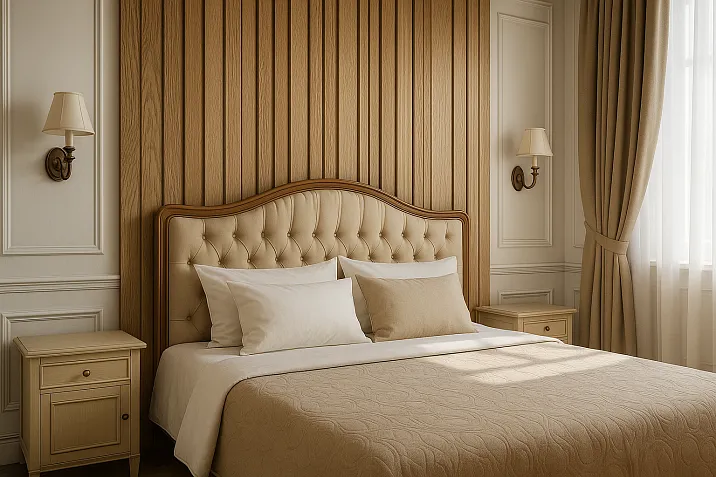
In the world of building materials, there are sizes that have become classics. MDF Rail 2700x16x40 mm This is precisely such a benchmark — a product of decades of experience of designers, engineers, and architects. Each of these parameters — length 2700, thickness 16, and width 40 millimeters — is the result of careful analysis of the needs of modern construction and interior design.
Why exactly these dimensions became the golden standard? What lies behind this mathematical formula of beauty and functionality? The answers to these questions open up a fascinating world where precision is measured in millimeters, and perfection is achieved through understanding the laws of ergonomics and aesthetics.


The Anatomy of Ideal Proportions: Decoding 2700x16x40




Length 2700 mm as an Architectural Constant
The size of 2700 millimeters did not appear randomly in specifications. This value reflects a deep understanding of modern construction standards and human needs in organizing space. The standard height of rooms in residential and commercial construction is 2700–2800 mm, taking into account finished floor and ceiling coverings.
Usage MDF material Such a length allows creating seamless vertical compositions without joint seams. Psychology of spatial perception shows that continuous vertical lines create a sense of height and grandeur, which is especially important in interiors with limited floor area.
Horizontal application of a 2700 mm rail also has its advantages. This size allows covering most standard openings and creating rhythmic compositions with minimal joints. As a result, a visually seamless surface is obtained, perceived as a monolithic structure.
Our factory also produces:


Thickness 16 mm: A Compromise Between Strength and Elegance
The choice of 16 mm thickness is based on complex engineering calculations and aesthetic considerations. Thinner profiles, especially at significant length of 2700 mm, are prone to warping and loss of geometry. Elements thinner than 12 mm do not provide sufficient rigidity to create reliable structures.
On the other hand, increasing thickness beyond 20 mm leads to heavier construction and visual 'pressure' on the space. A thickness of 16 mm creates an optimal shadow line depth of 8–12 mm under standard lighting, ensuring relief expressiveness without excessive drama.
The moment of inertia of the 16x40 mm cross-section is 21333 mm⁴, ensuring deflection of no more than 3 mm under a load of 1 kg/m over a span of 2700 mm. This guarantees geometric stability during operation.
Get Consultation
Width 40 mm: The Golden Ratio of Perception
A width of 40 millimeters corresponds to optimal parameters of human perception of architectural elements. Research in neuroarchitecture shows that elements with a width of 35–45 mm are perceived as harmonious and proportionate to the surrounding space.
Narrower slats disappear into the interior and do not create sufficient visual impact. Elements wider than 50 mm begin to dominate and may overpower other interior details. A width of 40 mm ensures an ideal balance between expressiveness and subtlety of impact.
Production technologies: the path to perfection
Precision processing of dimensional sizes
Achieving precise dimensions MDF slats 2700x16x40 mm Requires the use of high-tech equipment of the latest generation. CNC planer-grinding machines ensure thickness tolerance of ±0.1 mm throughout the entire length of the blank.
The process begins with raw material preparation. Wood fibers sized 0.1–3 mm are mixed with binders in strictly defined proportions. The moisture content of the mixture is controlled with precision ±0.5%, which is critically important for subsequent pressing.
Panel forming occurs under pressure of 25–40 MPa at a temperature of 200–230°C. Pressing time is 8–15 seconds per millimeter of thickness. Such regimes ensure complete polymerization of the binder and create a homogeneous material structure.
Multi-stage geometric control
Each stage of production MDF planks Is accompanied by careful control of geometric parameters. After cutting, blanks are measured in three sections – 200 mm from each end and at the center of the element.
Laser measuring systems scan the surface with a 1 mm step, detecting the slightest deviations from the specified shape. Automatic sorting separates the product into quality classes based on dimensional accuracy.
Finished products are packaged into special containers with spacers every 500 mm. This prevents deformation during transportation and storage. Each package is marked with data on dimensions, production date, and quality control results.
Physical and mechanical properties: science of strength
Structural strength indicators
MDF interior planks With dimensions of 2700x16x40 mm, they possess calculated characteristics allowing their use in various structural solutions. Bending strength ranges from 22–28 MPa depending on material density.
Elastic modulus of 2800–3200 MPa ensures sufficient stiffness with minimal weight. The weight per linear meter is 0.43 kg, creating a load of 1.16 kg on the full length of the element. This weight allows using standard mounting systems without reinforcing the structure.
Critical force under longitudinal bending is calculated using Euler’s formula and equals 24.8 N for a simply supported rod. Under real operating conditions with intermediate supports, this value increases 3–4 times.
Deformation characteristics
MDF creep under long-term loads is minimal due to stabilized material moisture. Relative deformation under 50% of breaking load does not exceed 0.02% per year of operation.
Thermal deformations are calculated using a linear expansion coefficient of 8–15×10⁻⁶ 1/°C. For a 2700 mm long slat with a 25°C temperature difference, elongation will be 0.54–1.01 mm. These values are considered when designing fastening systems.
Moisture-induced deformations are more significant and amount to 0.2–0.4% of linear dimensions for a 10% change in relative humidity. Factory stabilization of material moisture minimizes these deformations during operation.
Design concepts and stylistic solutions
Minimalism and functional aesthetics
Modern minimalism finds its ideal embodiment in slats of size 2700x16x40 mm. Clear geometry, absence of decorative excesses, functional beauty – all of this characterizes this material.
In minimalist interiors MDF laths for interior Used to create clean lines and organize space. Vertical compositions emphasize room height, horizontal ones create a sense of continuity.
Color solutions lean toward neutral palettes – white, gray, beige. Such shades do not distract attention from the architectural qualities of the space and serve as an ideal backdrop for furniture and decor.
Scandinavian functionalism
Scandinavian design values naturalness and practicality. Slats with imitation of light wood species – birch, pine, beech – create the atmosphere of a northern home. Matte surfaces are preferred over glossy ones, as they better convey the tactile qualities of natural wood.
In Scandinavian interiors, the distance between slats is usually 15–25 mm, creating a delicate play of light and shadow. Larger gaps disrupt the sense of surface continuity, characteristic of northern design.
Modern classicism
use Decorative MDF rails For creating a modern interpretation of traditional panels. Noble tones of oak, walnut, and redwood, combined with classic proportions, form an atmosphere of aristocratic elegance.
Panel height is calculated according to the golden ratio—usually 1/3 of the room's height. This creates harmonious proportions and emphasizes connection with historical traditions.
Technological aspects of installation
Preparation Operations
Quality installation MDF plank finishing Preparation of the substrate begins with careful cleaning. The surface must be free of dust, grease, and remnants of old finishes. Moisture content is checked with an electronic hygrometer and must not exceed 4% for mineral surfaces.
Marking is performed using a laser level and metal guides. Marking accuracy is critical—deviations exceeding 2 mm per linear meter will be noticeable in the finished structure. Base lines are marked with a chalk line and checked at multiple points.
Material acclimatization before installation lasts 48–72 hours at a temperature of 18–22°C and humidity of 45–65%. This allows the boards to adapt to operating conditions and minimizes subsequent deformation.
Systems for mounting long elements
Installation of 2700 mm long boards requires special fastening technologies. Clip systems provide concealed fastening without visible elements on the surface. Clips are routed into the board end to a depth of 8–12 mm with a tolerance of ±0.2 mm.
Guide profiles are installed at 600–800 mm intervals depending on expected load. Horizontal and vertical alignment of profiles is controlled at every installation stage. Adjustable brackets allow compensation for substrate irregularities up to ±10 mm.
Adhesive fastening is used on perfectly flat surfaces. Polyurethane adhesive is applied in a zigzag pattern with a 200–300 mm spacing. Open time is 5–10 minutes, allowing adjustment of element positions.
Features of working with oversized elements
Transportation and positioning of 2700 mm long boards require at least two workers. Elements are supported at three points to prevent sagging under their own weight. Temporary supports are installed every 900 mm.
Jointing of elements, if necessary, is performed at a 45° angle using a fine-toothed circular saw. Cut quality is checked with a metal ruler—gaps are not permitted.
Expansion joints are provided at junctions with fixed structures. Joint size is calculated based on thermal and moisture deformation and is 1–2 mm.
Economic analysis of application
Structure of material and labor costs
The cost of an MDF board 2700x16x40 mm varies from 220 to 480 rubles per linear meter depending on material quality, surface type, and manufacturer. Standardization of dimensions allows optimizing production and reducing cost by 10–15%.
Installation costs account for 50–70% of material cost when using professional crews. Clip fastening increases labor cost by 30–40%, but ensures excellent appearance and demountability.
Transportation costs for long elements are 20–25% higher than standard due to the need for specialized transport. However, this is offset by savings on the number of elements and joint work.
Comparative efficiency analysis
Using standard size 2700x16x40 mm compared to custom manufacturing reduces overall costs by 25–35%. Stock inventory ensures fast delivery and eliminates downtime.
Natural wood of similar cross-section costs 3–4 times more and requires significantly higher maintenance and care. MDF’s dimensional stability eliminates additional costs for fitting and adjustment.
Alternative materials—plastic, metal—may be cheaper initially but lag behind in aesthetics and durability. MDF lifespan in interior conditions is 15–25 years versus 8–12 years for plastic analogs.
Quality control and standardization
Quality management systems
Production of standard-size 2700x16x40 mm boards is conducted within the ISO 9001:2015 quality management system. Each technological process is documented and controlled. Operators undergo regular training and certification.
Incoming raw material inspection includes checking moisture content, density, and absence of foreign inclusions. Wood fibers are sorted by fractions using a vibratory sieve. Binders are tested for compliance with supplier specifications.
Operational control is performed at every production stage. Pressing temperature and pressure are automatically controlled. Geometric parameters are measured randomly every 100 linear meters.
Certification and compliance with standards
Finished products are certified according to GOST 32289-2013 "Dry Processed Wood Fiberboards". Physical and mechanical properties, dimensional accuracy, and formaldehyde emission are controlled.
European standard EN 622-5 sets additional requirements for moisture resistance and durability. Tests are conducted in accredited laboratories using calibrated equipment.
Ecological certification confirms material safety for human health. Emission class E1 or E0 guarantees suitability for residential use, including children’s rooms.
Innovative development directions
Digital Manufacturing Technologies
Implementation of Industry 4.0 systems revolutionizes production of standard-size boards. Internet of Things sensors monitor all process parameters in real time. Big data is analyzed to optimize technological regimes.
Machine learning predicts quality deviations before they occur. Algorithms automatically adjust equipment parameters to maintain stable quality. This reduces scrap by 40-60% and increases production efficiency.
Digital twins of production lines allow simulating various scenarios and optimizing processes without stopping production. Virtual testing reduces the time required to develop new products.
Ecological Innovations
Bio-based binders from plant proteins gradually replace synthetic resins. Soy and wheat proteins provide bonding strength comparable to formaldehyde resins, with full ecological safety.
Closed-loop production recycles all waste. Wood dust is used to produce fuel pellets. Plywood scraps are ground and returned to the production cycle. Packaging waste is recycled into new materials.
Energy-independent production uses biomass to generate steam and electricity. Modern boilers achieve an efficiency of 85-90% with minimal emissions. Solar panels cover part of the energy consumption.
Functional additives and coatings
Antibacterial silver nanoparticles are integrated into the material structure during production. Such planks suppress the growth of pathogenic microorganisms and are especially in demand in medical and children's facilities.
Flame-retardant additives increase the fire safety class to G1-G2. Intumescent systems form a heat-insulating layer upon heating, preventing the spread of fire. This expands the application range of the material.
Self-cleaning photocatalytic coatings break down organic contaminants under light. Titanium dioxide in nanoscale creates active centers on the surface capable of oxidizing contaminants into harmless substances.
Regional application specifics
Climate factors
In continental climate regions, special attention is paid to compensating for thermal deformations. Daily temperature fluctuations of up to 20-25°C require expansion joints every 3-4 meters of structure length.
In humid marine climates, moisture-resistant MDF grades with paraffin content of 0.8-1.2% are used. Additional protection of ends with hydrophobic compounds prevents swelling under high humidity.
Northern regions with long heating seasons are characterized by large humidity variations between winter and summer. This requires special attention to stabilizing the microclimate in rooms with plank finishes.
Construction traditions and preferences
Regions with established wooden architecture traditions prefer planks with imitation of local wood species. In northern areas, pine and spruce are popular; in the middle belt, oak and birch; in the south, walnut and beech.
Color preferences also depend on regional traditions. Northern regions tend toward light, almost white shades. Southern areas prefer more saturated, warm tones.
National architectural features influence the use of planks. In regions with Muslim culture, geometric ornaments are popular. Orthodox traditions prefer classical proportions and symmetry.
Conclusion
A journey into the world of precision and perfection, which is MDF Rail 2700x16x40 mmreveals to us a remarkable picture of modern production and design. Every millimeter of these dimensions carries deep meaning, based on understanding the laws of physics, aesthetics, and human perception.
The technical perfection of this product is the result of decades of evolution in production technologies and design thinking. From early experiments with wood-fiber materials to modern high-precision manufacturing — each stage was aimed at achieving the ideal balance between functionality, beauty, and economic efficiency.
Standardization of 2700x16x40 mm dimensions created the foundation for widespread use of high-quality finishing materials. Standardization simplified design, reduced production and installation costs, improved the quality of finished structures. At the same time, design possibilities have only expanded due to the variety of finishes and processing methods.
The economic efficiency of using standardized solutions is evident at all levels — from production to operation. Optimization of production processes, simplified logistics, reduced inventory create a synergistic effect of savings, which is passed on to the end consumer.
The ecological responsibility of modern production responds to the challenges of the time. Use of renewable raw materials, energy-efficient technologies, closed recycling cycles make this material a choice for ecologically conscious consumers.
Innovative development directions promise even more opportunities in the future. Integration of digital technologies, creation of smart materials, personalization of solutions — all of this is already changing perceptions about the possibilities of building materials today.
Quality and reliability remain the primary criteria for professionals. A multi-stage control system, certification to international standards, continuous technological improvement ensure consistently high product quality.
Development prospects are linked to further integration of functional properties into the base material. Antibacterial, flame-retardant, self-cleaning properties will become standard characteristics of materials of the future.
Regional product adaptation takes into account climatic features and cultural preferences of different markets. Global quality standards are combined with local needs and traditions.
STAVROS Company, with its rich experience and relentless pursuit of perfection, continues to set new standards in the production of building materials. Every STAVROS product embodies advanced technologies, ecological responsibility, and flawless quality, creating the foundation for interiors that serve for many years and delight their owners with enduring perfection of form and function.