








































Article Contents:
- When facade battens are justified: not fashion, but logic
- First situation: a monotonous facade without plasticity
- Second situation: the need for facade zoning
- Third situation: masking unsuccessful proportions
- Fourth situation: creating outdoor visual interest
- What vertical rhythm gives a house: aesthetics and surface physics
- Shadow as an architectural detail
- Wooden battens outdoors: requirements and reality
- Cladding for facade battens
- How polyurethane facade decor enhances architecture
- Why polyurethane, not plaster or concrete
- Frost resistance: an important technical nuance
- What can be decorated: specific zones of facade decor
- Window Framing: Architraves and Pediments
- Corner elements: pilasters and rustication
- Facade cornice: the upper boundary of the wall
- Entrance group: the focal point of architectural expression
- Plinth and interfloor belt
- How to combine modern facade and classical elements
- Principle of Delicate Historicity
- Principle of Geometric Classicism
- How Facade Slat Panels Combine with Classical Decor
- Errors in Proportions and Style of Facade Design
- First Error: Slats Everywhere Without System
- Second Error: Decor Inconsistent with Building Scale
- Third Error: Different Styles on One Facade
- Fourth Error: Incorrect Slat Color Choice
- Fifth Error: Decor Without Protective Coating
- Practical Solutions: Three Facade Project Scenarios
- Scenario one: modern minimalist house
- Second Scenario: Modern Classic
- Scenario three: renovation of a Soviet panel or brick house
- Care and durability: what requires maintenance and what doesn't
- Wooden facade battens
- Exterior polyurethane decor
- FAQ: answers to questions about facade finishing
- About the Company STAVROS

The facade is the first and last thing people see. First — when they approach the house. Last — when they leave. It shapes the impression of the house before a person even crosses the threshold. And yet, it is the facade that receives the least amount of careful design thinking: 'we'll paint it, lay some tiles, hang the gutters — and done.' Meanwhile, a well-designed exterior is not just a house that looks beautiful from the outside. It is architecture that works with proportions, rhythm, and details.
It is hereslatted panels for facadesandPolyurethane house decorationhave taken their rightful place in the arsenal of modern construction and renovation. Exterior wooden battens are not the dacha siding from the last century. This is an architectural solution used in houses of the highest level. Polyurethane cornices, window surrounds, corner pilasters — these are not 'decoration,' but an architectural structure that defines the character of a house for decades.
Let's break this down honestly and specifically: when facade battens are justified, how exterior polyurethane decor works, where the most painful mistakes happen, and how to assemble a facade you're not ashamed to show.



When facade battens are justified: not a trend, but logic
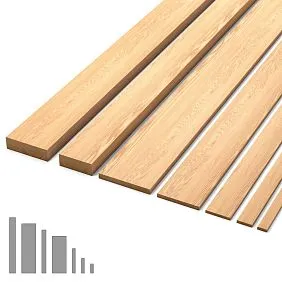
Before choosing a material, it's worth answering the question: what exactly should this material do?slatted panels for facades— not a universal answer to any architectural question. They work in specific situations and specific architectural contexts.




First situation: a monotonous facade without plasticity
If a house is faced with plaster, clinker, or fiber cement panels and looks like a smooth, uniform surface without a single architectural detail — battens give it what it lacks: a vertical or horizontal rhythm that turns a plane into an architectural object. This is especially relevant for houses in the style of modern minimalism, where there is no decor by concept, but the facade should not be faceless.
Our factory also produces:


Second situation: the need for facade zoning
Large facade planes without division look monolithic and heavy. Battens allow you to highlight individual zones: accentuate the entrance group, separate the garage module, highlight the plinth zone. This is a tool for working with large surfaces — breaking them down into readable parts without constructing additional structural elements.
Get Consultation
Third situation: masking unsuccessful proportions
Vertical battens visually stretch the house upward — this is a well-known optical effect. If the house box is squat and wide, vertical facade battens on key planes compensate for this proportional problem. Horizontal battens do the opposite — ground a tall house, making it more solid and 'horizontal'.
Fourth situation: creating outdoor visual interest
A house in a row of similar houses is an architectural task requiring a subtle distinction. Not loud, not garish, but noticeable.Facade slat panelon the entrance group or on the accent part of the facade makes the house recognizable — without disrupting the overall street environment.
What vertical rhythm gives a house: aesthetics and surface physics
Rhythm is repetition. In architecture, rhythm is the repetition of elements at a certain interval: columns, pilasters, windows, slats. It creates order, predictability, and simultaneously — dynamics: the eye moves along the rhythmic surface, reading it as alive, not static.
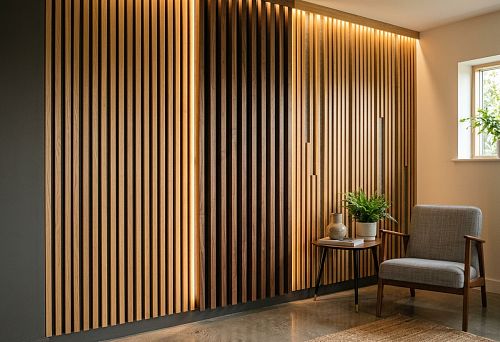
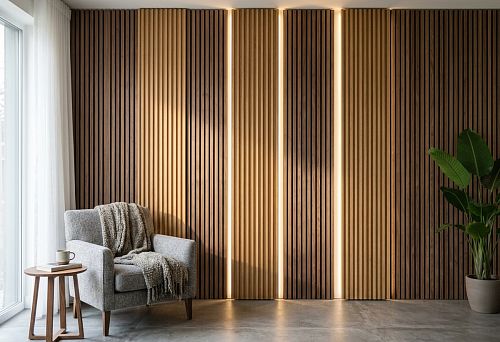
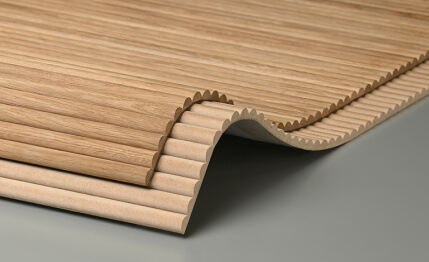
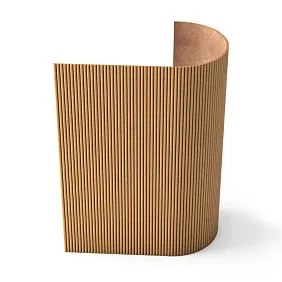
Verticalfacade slat panelscreate exactly this effect. Parallel verticals with gaps between them — this is an architectural rhythm that works at different scales of perception: from a distance, the surface reads as a unified texture; up close — as a set of individual elements with a clear profile.
Shadow as an architectural detail
Slats on the facade work with chiaroscuro. A protruding slat casts a shadow on the side surface of the gap — and this shadow changes throughout the day: sharp and long in the morning, almost disappearing at noon, returning again in the evening. A facade with slats lives in time. This is a radical difference from a monolithic plastered surface, which looks the same at any angle of the sun.
Wooden slats outdoors: requirements and reality
Not every wood is suitable for facade application. Outdoor conditions are fundamentally different loads compared to the interior: temperature fluctuations from -30 to +40 degrees, atmospheric moisture, ultraviolet radiation, biological impact (fungus, insects).
Suitable for facade battens:
-
Larch is one of the best species for outdoor use. High density (about 660 kg/m³), low hygroscopicity, natural resinousness that protects against biological degradation. Larch is used in the construction of structures operating in wet environments: bridges, piers, terraces — and that says it all.
-
Thermowood is wood that has undergone heat treatment at high temperature without the use of chemicals. The heat treatment process changes the structure of the wood: reduces its hygroscopicity to a minimum, destroys the organic matter that feeds fungus and insects, and increases dimensional stability. Thermowood does not require periodic treatment with chemical protective compounds — this is its main operational advantage.
-
Oak is an expensive but exceptionally durable option for facade applications. Density 700–750 kg/m³, high resistance to biological impact. Oak facade battens, with proper treatment, last 30–50 years.
-
Spruce and pine are affordable options for a budget facade. They require mandatory treatment with antiseptic compounds and regular (every 3–5 years) renewal of the protective coating.
Coatings for facade battens
The choice of coating for facade wooden battens is critically important. This is not an aesthetic, but a functional issue.
Oil for exterior work — a penetrating coating that does not form a film but impregnates the wood from the inside. Does not peel, does not crack, easily restored by local application. Requires renewal every 2–4 years depending on the side of the facade (the south side requires more frequent renewal).
Varnish for exterior work — a film-forming coating. Creates a rigid protective layer, more resistant to mechanical impact. If the integrity of the film is compromised, active degradation of the wood begins underneath it — therefore, varnish requires more careful monitoring of its condition.
Facade paints — for those who want a colored wooden surface on the outside. High-quality acrylic or alkyd facade paints provide reliable protection provided the surface is properly prepared and applied.
Stains and dyes change the color of wood while preserving the visibility of the grain. They are applied under the final oil or varnish.
How polyurethane facade decor enhances architecture
If slatted panels give the facade rhythm and texture, thenPolyurethane facade decoration for the housegives it architectural details. These are two different tools with different tasks — and it is precisely their combined application that creates an exterior that looks designed, not randomly assembled.
Why polyurethane, not plaster or concrete
Traditional facade decor was made from plaster, natural stone, or cement mixtures. All these materials have significant weight, require serious skills to work with, are afraid of cyclic freezing and thawing, and become dangerous if the fastening is compromised or cracks appear — heavy elements can fall.
Facade decoration for exterior polyurethane claddingis free from all these drawbacks. High-density expanded polyurethane weighs 8–12 times less than plaster with the same level of surface detail. It does not absorb water, does not deteriorate when frozen, and does not react to most atmospheric influences. Special coatings for exterior use protect it from ultraviolet radiation and mechanical wear.
Installing polyurethane facade decor is a task that doesn't require a specialized construction education: adhesive, dowels, joint filler, painting with facade paint. Dismantling and replacing an individual element — if necessary — does not require disassembling adjacent structures.
Frost resistance: an important technical nuance
A key requirement for any facade material in the Russian climate is frost resistance. Polyurethane for exterior use does not have significant water absorption, meaning it is not threatened by destruction from water expansion during freezing — a mechanism that destroys plaster, low-quality concrete, and untreated wood.
Polyurethane retains elasticity across a wide temperature range, allowing it to withstand thermal deformations of load-bearing structures without cracking—another critical advantage over rigid materials.
What can be designed: specific areas of facade decor.
Facade decor is not about 'sticking it everywhere it looks nice.' It is a system where each element occupies its functional place in the architectural hierarchy.
Window framing: architraves and pediments
A window without framing is just an opening in a wall. A window with architraves and a pediment is an architectural element. The difference is not in cost, but in mindset.
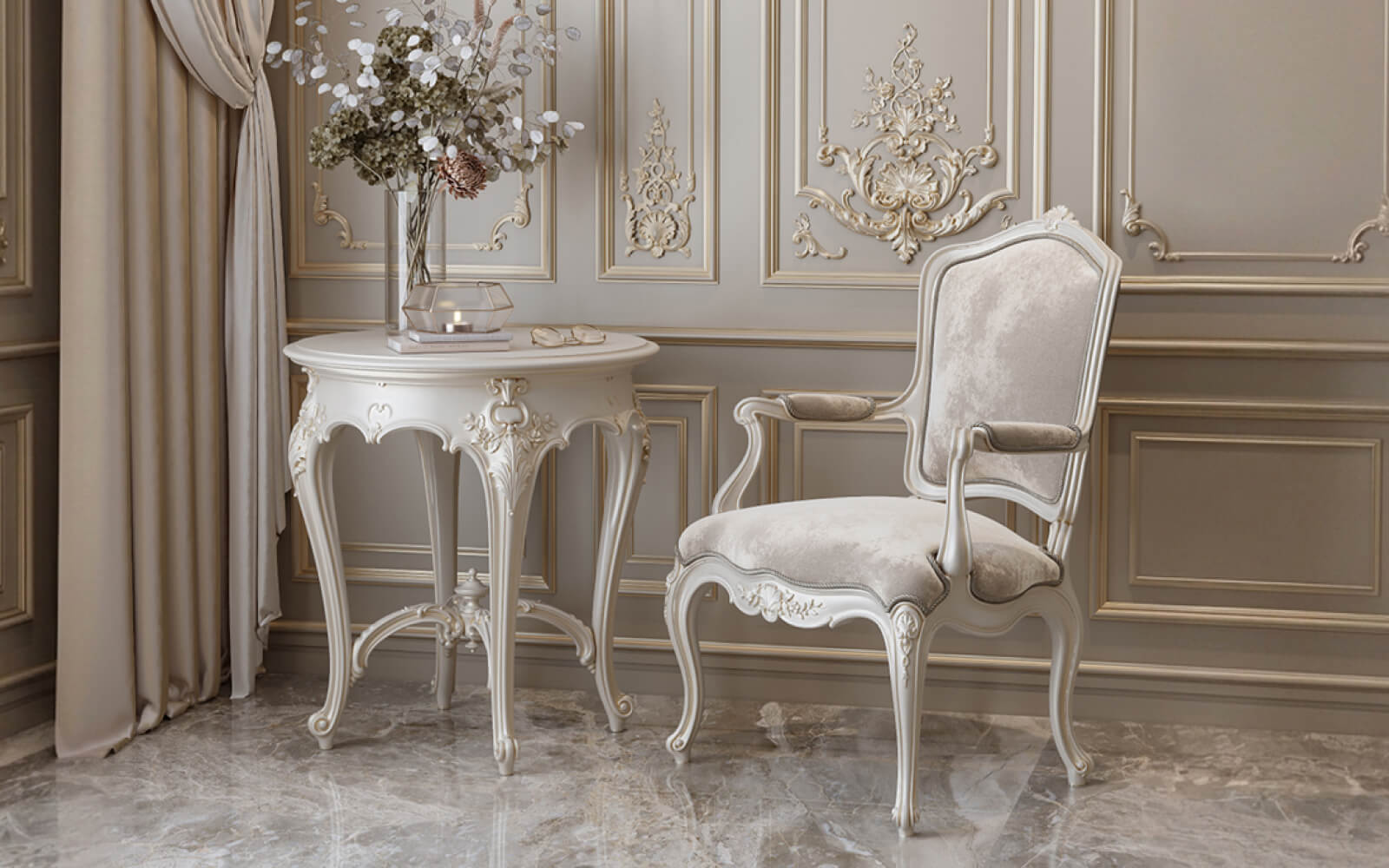
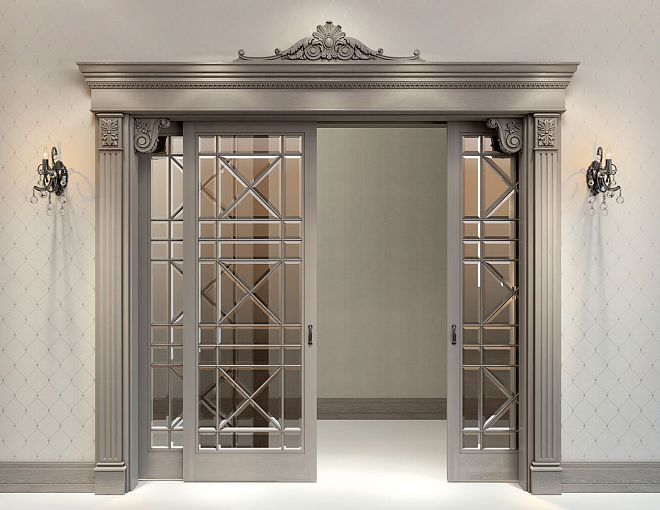
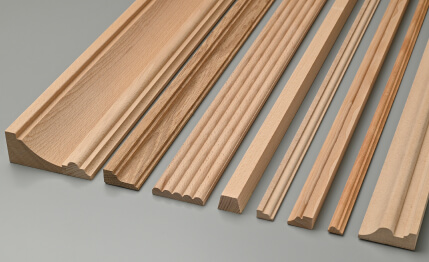
Polyurethane architraves are available in a range from simple straight slats 50–80 mm wide to complex profiled framings with corner elements, keystones, and cornice shelves above the window. Simple architraves suit modern homes in minimalist and Scandinavian architectural styles. Complex profiled framings are for classical and neoclassical houses.
A pediment is a decorative canopy above a window, a cornice slab that references historical architectural prototypes. Even a small pediment over first-floor windows combined with simple architraves radically changes the 'weight' of the facade: the house stops looking temporary and gains solidity.
Corner elements: pilasters and rustication.
House corners are where two facade planes meet. The design of corners determines whether the house reads as a unified volume or as a set of glued-together walls.
Polyurethane corner pilasters are vertical elements with repeating horizontal rustications or a smooth profile that 'close' the corner while simultaneously creating a sense of a load-bearing vertical. In classical architecture, corner pilasters are a mandatory element, fixing the boundaries of the facade.
Corner rustication is an imitation of stone masonry on the corner zones of a wall. These are horizontal strips with imitation seams between stones that visually 'ground' the corner and create a sense of fundamentality. The combination of a smooth plastered facade with rusticated corners is especially effective—a classic technique rooted in the Italian Renaissance.
Facade cornice: the upper boundary of the wall
A cornice along the top edge of the wall is what separates the wall from the roof. Without a cornice, the wall simply ends where the roofing begins—and this looks like unfinished construction. The cornice creates a horizontal line that 'closes' the facade from above and gives the house a sense of completeness.
Polyurethane facade cornices withstand external environmental conditions—provided a protective coating is applied. They are produced with projections from 80 to 200 mm, with various profiles: from a smooth cove to a complex classical profile with dentils, egg-and-dart motifs, or acanthus elements.
Entrance group: the focal point of architectural expression
The entrance group is the face of the house. The door portal, porch, canopy over the entrance—all of this is a place where architectural emphasis is not just permissible but necessary. This is precisely where a concentration of decoration is justified: a cornice above the door portal, columns or half-columns on the sides, decorative bracket-corbels under the canopy, arched elements.
Framing the entrance group using polyurethane house decor creates a focal point on the facade—a place where the eye is drawn first and returns to again. It is architectural punctuation: all other facade elements 'lead' to the entrance.
Plinth and interfloor belt
The plinth—the lower part of the building—visually carries the entire house. A properly designed plinth creates a sense of solidity: the house stands on a solid foundation, not 'hovering' above the ground. A rusticated plinth made of polyurethane panels imitating stone or brick is one of the most effective solutions for private houses.
Interfloor belt — a horizontal element at the level of the floor slab between stories. It does several things at once: divides the facade horizontally, creating a sense of 'layering' of the volume; creates a horizontal shadow that works on proportions; and references historical prototypes — the Italian piano nobile, the Russian merchant's house.
How to combine a modern facade and classical elements
This is one of the most pressing questions in contemporary suburban architecture. On one hand, classical details are desirable — they add solidity and character. On the other hand, inappropriate classicism turns a modern house into a stage prop.
The principle of delicate historicity
A working rule: classical elements should be 'diluted' with a modern language by at least half. If you take classical architraves with a rich profile — the facade should be maximally calm: no additional ornaments, no rustication, no Baroque details. One rich detail on a neutral background — that's modern. Five rich details together — that's overload.
Principle of geometric classic
Geometric details — architraves with a simple straight profile, a cornice with a clear rectilinear projection, an interfloor belt without ornament — are a 'bridge' between classicism and modernity. They carry architectural structure without ornamental load. It is precisely such decor that looks organic on houses in the style of modern neoclassicism, restrained retro, Scandinavian classicism.
HowFacade slat panelcombines with classical decor
Battens are a modern language. Classical cornices, architraves, pilasters — that's a historical language. Their combination requires a clear hierarchy: either the battens are the main element and the decor merely frames them (window architraves, corner elements), or the decor is primary and the battens act as a textural background for individual zones of the facade.
Successful combinations:
-
Batten panels on the main part of the facade + classic window trims and entrance portal
-
Batten panels only on the canopy or overhang + rusticated plinth + smooth walls with geometric moldings
-
Batten panels as an accent on the garage module or side wing + classic decor on the main facade
Unsuccessful combinations:
-
Battens all over the facade + Baroque trims + rusticated corners + molded cornice with acanthus leaves — this is visual chaos
-
Minimalist battens + one small ornamental element somewhere in the corner — the decoration gets lost and looks random
Errors in proportions and style of facade design
Facade errors are painful for two reasons: they are visible to everyone and expensive to fix. Let's examine the most common ones.
First error: battens everywhere without a system
facade slat panels— it's an accent, not a universal covering. When battens cover the entire facade — all walls, all levels, all planes — the house loses its surface hierarchy. Everything becomes equally important — meaning nothing is important. Battens should occupy 30–50% of the facade area at most, the rest being a neutral background: plaster, clinker, fiber cement.
Second mistake: mismatch between decor and building scale
120 mm wide window trims on a small single-story house of 80 sq. m look grotesque — they overload the facade. For a small house — delicate details: trims 50–70 mm, a thin interfloor belt, compact corner elements. For a large house — more pronounced details corresponding to the volume's scale.
Scaling rule: the height of a decorative element should not exceed 1/20 of the height of the plane on which it is placed. With a wall height of 3 meters, the maximum height of an active decorative element is 150 mm. Cornices and interfloor belts are an exception: they run the entire length of the facade and can be more pronounced.
Third mistake: different styles on one facade
Modern aluminum windows with a profile without a rebate + classic Baroque trims + Scandinavian-style slats = a stylistic disaster. Each element is good on its own, but together they create the feeling that the house was built by different people at different times without a single concept.
The facade requires stylistic unity. This does not mean that all elements must be from one historical era. It means they should speak the same architectural language: all geometric, or all natural, or all historical with a single reference.
Fourth mistake: incorrect choice of slat color
Wooden slats on the facade can be in a natural tone, tinted, or painted. The most common mistake is using a 'standard' brown tint that does not match the color of the walls, the color of the roof, or the color of the windows.
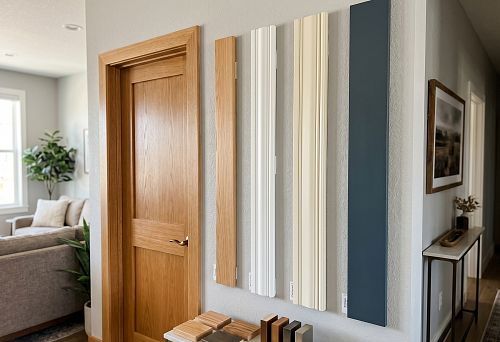
A simple rule works for choosing the color of facade slats: either the slats should be one tone darker than the main color of the facade (to create a soft contrast), or several tones darker (for a pronounced accent), or completely contrasting (black slats on a white facade — one of the most effective options). An intermediate, 'nondescript' color of slats against walls of the same tone does not work.
Fifth mistake: decor without protective coating
Polyurethane facade decor requires painting with high-quality acrylic or latex facade paint with UV protection. Unpainted or interior-painted polyurethane will begin to yellow from UV radiation in the first season. After 2–3 years without proper coating, the surface will become brittle and begin to deteriorate.
Correct order: priming with a special adhesion primer for polyurethane — applying facade acrylic paint in two coats. Renew the coating every 7–10 years.
Practical solutions: three facade project scenarios
First scenario: modern minimalist house
Architecture: flat roof or slight slope, large glazing, clean rectangular volumes, neutral color palette.
Battens: vertical, made of thermally modified wood in dark toning (gray or anthracite), on the main facade in the entrance area or on one of the wings. Batten spacing 80–100 mm, gap 20–30 mm. The supporting plane is in a dark color matching the battens.
Decor: minimal. Geometric trims without ornamentation. No classical cornices. A simple interfloor belt with a straight-line profile is possible.
Result: a laconic, modern facade with an accent wooden element. No historical references, no baroque — pure contemporary architecture with natural material.
Scenario Two: Modern Classic
Architecture: gable roof, symmetrical facade, moderate classical proportions, neutral or pastel wall color.
Battens: horizontal, made of larch in natural tone or with light lightening tint, only on the plinth part or on the side wings. The battens serve as textural variety against the background of the smooth plastered walls of the main facade.
Decor: classic architraves with a moderate profile—meander or simple ovolo. A cornice along the top edge of the wall with a projection of 100–120 mm. Rusticated corner pilasters. All elements in the wall color or one to two shades lighter.
Result: a house with character and historical references, not overloaded with decor, with an organic natural accent in the wooden part of the facade.
Scenario three: renovation of a Soviet panel or brick house
Architecture: typical, without pronounced features, possibly asymmetrical due to redevelopments or extensions.
Battens: vertical, in a dark tone, only on the entrance group or on the loggia. The task is to create an accent element that distinguishes this particular house from its neighbors.
Decor: architraves around windows—simple, straight, without ornament. A cornice above the entrance canopy. A rusticated portal of the entrance group. This is the minimal set that radically changes the perception of a standard facade.
Result: a typical house with character. A small volume of work and materials—a significant visual result.
Maintenance and durability: what requires upkeep and what does not
Wooden facade battens
Exterior wood requires regular maintenance—this must be accepted as a given. The frequency depends on the species and type of coating:
-
Thermowood with oil coating: renewal every 4–6 years, annual inspection for damage.
-
Larch with oil coating: renewal every 3–4 years.
-
Pine with protective impregnation: renewal every 2–3 years.
Signs that renewal is needed: loss of color, appearance of a grayish tone (darkening from UV), surface roughness where it was previously smooth.
Polyurethane exterior decor.
With proper initial coating — repainting renewal every 7–10 years. Seasonal inspection — check for mechanical damage (hail impact, tree branches). Minor damage is repaired by local application of primer and paint. Complete removal is only required for significant mechanical damage.
FAQ: answers to questions about facade finishing.
Can interior slatted panels be used on the facade?
No. Interior panels do not have protective coating for exterior conditions and are not designed for atmospheric exposure. For the facade, slats made from species with high natural resistance (larch, oak, thermowood) are required, with mandatory application of facade protective coating.
Is it necessary to ventilate the space behind slatted panels on the facade?
Yes, definitely. A slatted facade system is a ventilated facade: a gap of 25–40 mm must remain between the slats and the load-bearing wall or insulation for air circulation. This prevents condensation buildup and protects the insulation from getting wet.
How long will polyurethane decor last on a facade?
With proper installation and regular repainting — 20–30 years or more. Polyurethane does not deteriorate from frost and moisture; its main enemy is ultraviolet light, which is neutralized by high-quality facade paint with UV protection.
Can polyurethane decor be installed in winter?
Installation with adhesive is possible at temperatures not lower than +5 degrees Celsius. At lower temperatures, adhesive compounds lose effectiveness. During the winter period, mechanical fastening with dowels is recommended, followed by sealing the joints during the warm season.
How to choose the width of slats for a facade?
Base your choice on the height of the facade plane. For walls up to 3 meters high — slat width 60–80 mm. For walls 3–5 meters high — 80–100 mm. For higher planes — 100–120 mm. Slats that are too narrow on a tall facade get lost and fail to create the desired rhythm.
Is it necessary to paint wooden slats immediately after installation?
Yes. Uncoated wood on the exterior begins to turn gray within a few weeks under UV exposure. The sooner a protective coating is applied after installation, the better the result. It is optimal to paint the slats before installation and refresh the coating on the ends and fastening points after installation.
How to attach polyurethane decor to a brick wall?
Combined method: applying foam adhesive or special adhesive glue to the back surface of the element + mechanical fastening with through dowels through the body of the decor followed by puttying the dowel heads. Adhesive only without mechanical fastening for heavy elements is not recommended.
About the company STAVROS
The facade is a long-term investment. What you install outside today will perform (or not perform) for 20–30 years. That is why facade materials require maximum quality demands.
STAVROS company manufactures products from natural wood and polyurethane, including for facade applications. The assortment includes —slatted panels for facades— from species with high natural resistance,Polyurethane house decoration— architraves, cornices, corner pilasters, rustication, interfloor belts for exterior use.
All STAVROS polyurethane elements for exterior use are made from a special composition with increased density and resistance to atmospheric influences. Precise geometry, detailed relief, stable dimensions — characteristics that determine the quality of the finished facade.
When a house looks like architecture from the outside, not like finishing — behind this is the right choice of material. STAVROS is the choice of those who build once and for a long time.