












































































Article Contents:
- What is Polyurethane Molding: The Material of the Future with Roots in the Past
- History and Modern Application: From Imitation to Independent Value
- Advantages of Polyurethane over Plaster: Why the Choice is Obvious
- Weight: The Revolution of Lightness
- Strength and Impact Resistance
- Moisture Resistance: Complete Inertness to Water
- Temperature Stability
- Cost and Installation Speed
- Durability and Appearance Preservation
- Types of Polyurethane Products: From Miniature Overlays to Monumental Columns
- Moldings and Cornices: Linear Decor for Structuring Space
- Rosettes and Medallions: Accent Points on Ceilings and Walls
- Columns and Pilasters: Vertical Accents of Classical Architecture
- Brackets and Consoles: Decorative Supports
- Overlays and Panels: Individual Decorative Elements
- Facade Elements: Architectural Decor for Exteriors
- Areas of Application: From Intimate Interiors to Monumental Facades
- Residential Interior Spaces
- Public Interiors
- Building facades
- Furniture and interior items
- Material Characteristics: Physics and Chemistry of Cured Polymer
- Density and Structure
- Mechanical strength
- Thermal Properties
- Moisture Resistance and Vapor Permeability
- Flammability
- How to Choose Quality Molding: Expert Evaluation Criteria
- Material density
- Relief Clarity
- Surface Quality
- Geometric accuracy
- Manufacturer and Certification
- Manufacturers: Russian and European Market Leaders
- European manufacturers
- Russian Manufacturers
- DIY Installation: Step-by-Step Guide from Marking to Finish
- Tools and Materials
- Surface Preparation
- Marking
- Cutting Elements
- Adhesive Application
- Final finishing
- Painting and Decorating: From Monochrome to Luxurious Patina
- Painting in Color: Technique and Materials
- Gilding and Patination
- Modern effects
- Prices and Where to Buy: Navigating the 2026 Market
- Price benchmarks
- Where to buy
- Frequently asked questions about polyurethane moldings: expert answers
- How Does Polyurethane Moldings Differ from Gypsum?
- Can polyurethane molding be painted?
- How much does polyurethane molding weigh?
- Is polyurethane molding suitable for facades?
- How Long Does Polyurethane Stucco Last?
- Can moldings be installed on a stretch ceiling?
- What adhesive should be used for polyurethane moldings?
- Is polyurethane flammable?
- Can polyurethane moldings be bent?
- What is the installation cost?
- STAVROS Company: a quarter century of impeccable quality

When did architectural decor cease to be a privilege of palaces and mansions? The moment heavy, capricious plaster was replaced by polyurethane — a material that democratized classical aesthetics, making it accessible to anyone who strives for beauty. Polyurethane moldings changed the game: now creating an interior worthy of glossy magazine pages can be done over a weekend, without hiring a team of specialists and without a destructive budget.
What makes itpolyurethane moldinga revolutionary solution? Absolute versatility of application — from ceiling rosettes to facade columns, weight dozens of times lighter than plaster counterparts, moisture resistance at the level of plastic, and relief detailing comparable to hand-carved stone. At the same time, polyurethane can be painted any color, installed with ordinary adhesive, and lasts for decades without cracks, crumbling, or deformations. In 2026polyurethane decorexperiences a new peak of popularity: designers are rediscovering its possibilities, creating projects where modern technology meets timeless classicism.


What is polyurethane molding: the material of the future with roots in the past
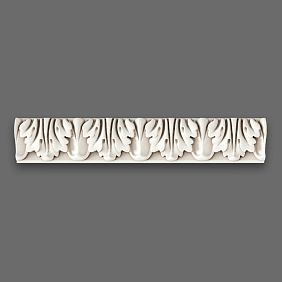
Polyurethane molding refers to decorative architectural elements (cornices, moldings, rosettes, columns, pilasters, overlays) manufactured by casting from rigid high-density polyurethane foam. Externally, they are indistinguishable from classic plaster moldings, reproducing historical ornaments with museum-like precision, yet they possess fundamentally different physical properties — lightness, strength, moisture resistance.
Polyurethane is a synthetic polymer obtained from the reaction of polyols and isocyanates. When the components are mixed, a vigorous chemical reaction begins with the release of heat and carbon dioxide. The gas foams the liquid mass, creating millions of microscopic bubbles evenly distributed throughout the volume. Within minutes, the mass polymerizes, turning into a solid material with a closed-cell structure. The density of finished polyurethane for moldings is 280-350 kilograms per cubic meter — four times lighter than wood and seven to eight times lighter than plaster.
The production of polyurethane moldings begins with creating a master model — an original sample of the element, executed with maximum detail. The master model can be hand-carved by a sculptor, milled on a CNC machine from a 3D model, or cast from a historical museum exhibit. A silicone mold — a negative — is made from the master model, replicating all details of the original down to micron-level texture irregularities.
Liquid polyurethane composition is poured into the silicone mold. The mold is closed and fixed under a press. Polymerization takes 5-15 minutes depending on the size of the product and the formulation. After opening the mold, the finished element — an exact copy of the master model — is extracted. The ends are trimmed, the surface is primed with white acrylic primer — the product is ready for shipment.
The precision of detail reproduction is astounding: silicone molds transfer relief with accuracy down to fractions of a millimeter. Every acanthus leaf, every groove of a fluting, every volute curl emerges from the mold identically. This means that when installing long elements (cornices, moldings), the ornament flows smoothly from one piece to another without visible seams or misalignments — it is enough to properly align the ends.




History and modern application: from imitation to independent value
Polyurethane molding appeared in the 1970s as a budget alternative to plaster. The first products were somewhat crude, relief detailing was inferior to plaster samples, and the material was perceived as an imitation for the mass market. Professional designers treated polyurethane condescendingly, preferring traditional plaster or even genuine stone carving.
The situation changed in the 1990s-2000s with the advent of new-generation polyurethane compositions and high-precision mold manufacturing technologies. European manufacturers (primarily German and Belgian) began producing polyurethane moldings whose quality matched that of plaster. Relief detailing reached such a level that visually distinguishing the materials became impossible. At the same time, the operational advantages of polyurethane remained — lightness, moisture resistance, impact resistance.
By the 2010sbuy polyurethane moldingwas sought not only by private developers but also by professionals in the premium segment. Polyurethane found application in yacht design (where lightness and moisture resistance are critical), in the restoration of historical buildings (where lost elements need to be recreated without loading the structures), and in facade decor (where frost resistance and resistance to atmospheric influences are important).
Today, polyurethane molding is an independent value, not an imitation of something more noble. Modern designers choose it consciously, valuing not cheapness (although it is cheaper than plaster), but a combination of properties unattainable by traditional materials. Polyurethane is used in projects of any level — from standard apartments to residences, from country cottages to public interiors of hotels, restaurants, theaters.
In 2026, the global market for architectural polyurethane decor is estimated at billions of dollars. The largest producers are in Germany, Belgium, Italy, Russia, and China. Russian companies, using European raw materials and equipment, produce products whose quality is not inferior to Western counterparts, at a price 30-40% lower.
Our factory also produces:


Advantages of polyurethane over plaster: why the choice is obvious
Comparing polyurethane and plaster as materials for moldings is like comparing a smartphone to a landline phone. Both perform the basic function, but one does it more conveniently, faster, with more additional features. Let's examine the key parameters.
Get Consultation
Weight: the revolution of lightness
A polyurethane cornice 15 centimeters wide weighs approximately 500-700 grams per linear meter. A similar plaster one weighs 4-6 kilograms, which is 7-10 times more. An 80-centimeter diameter rosette made of polyurethane weighs about 2 kilograms, while one made of plaster weighs 15-20 kilograms.
Light weight is critical for installation: polyurethane elements hold securely with special adhesive without additional mechanical fasteners. Plaster molding requires screws, anchors, and sometimes metal frames. Polyurethane installation is performed by one person, while plaster requires at least two (and for large elements, three to four).
Light weight is also important for structures: polyurethane decor can be mounted on drywall partitions, thin walls, and even on stretch ceilings (using special techniques). Plaster requires a sturdy base capable of supporting significant weight.
Strength and impact resistance
Plaster is brittle. A medium-force impact leaves a chip, and a fall from a height shatters the element into fragments. During transportation, plaster molding requires complex packaging, and the risk of damage remains high.
Polyurethane possesses resilient strength: upon impact, the material deforms, absorbing energy, then returns to its original shape. It is difficult to leave a dent on quality polyurethane—this requires a very strong, pinpoint impact. Transportation is not problematic; elements are packaged in ordinary film.
The difference is even more noticeable during operation. Plaster cornices crack from vibrations (e.g., in houses near busy roads or railways), crumble from leaks, and chip from accidental contact with furniture. Polyurethane maintains integrity for decades even under challenging conditions.
Moisture resistance: complete inertness to water
Plaster is hygroscopic—it absorbs moisture from the air. When humidity increases, it swells; when it decreases, it contracts. Swelling-shrinking cycles lead to the formation of microcracks. Direct contact with water (leakage, condensation) softens plaster, it loses strength, stains appear on the surface, and mold develops.
Polyurethane is completely inert to moisture. Its closed-cell structure does not absorb water even during prolonged immersion. Elements can be washed, wiped with a damp cloth, and installed in bathrooms, swimming pools, and on facades without the slightest risk of deformation or destruction.decorative polyurethane elementsserve equally confidently in dry and humid rooms.
Temperature stability
Plaster is sensitive to temperature fluctuations. In unheated rooms (dachas, country houses for periodic residence), plaster molding can crack in just one winter from freeze-thaw cycles of condensation in its pores.
Polyurethane withstands a range from minus 50 to plus 80 degrees Celsius without changing its properties. The frost resistance of quality facade polyurethane exceeds 300 freeze-thaw cycles. This allows the material to be used on facades in any climatic zone—from subtropics to the Far North.
Cost and installation speed
Paradox: polyurethane molding is cheaper than plaster not only in material cost but also in the final price including labor. The polyurethane itself costs approximately 20-30% less than plaster of comparable quality. But polyurethane installation is 2-3 times faster and 2-2.5 times cheaper: no reinforced fasteners are needed, one person works instead of two or three, and adhesive is cheaper than a mechanical fastening system.
A typical room 5x6 meters with a 3-meter ceiling: installing a polyurethane cornice around the perimeter and a rosette in the center takes a professional 2-3 hours and costs 8-12 thousand rubles for labor. A similar job with plaster will take 6-8 hours and cost 20-30 thousand rubles.
Durability and appearance preservation
Quality plaster molding lasts for decades but requires periodic maintenance: touch-up painting, sealing minor cracks, and mold treatment in humid rooms. Over time, plaster inevitably darkens, becomes covered in microcracks, and loses its original whiteness.
Polyurethane, with proper installation and painting, maintains a flawless appearance for 20-30 years without the slightest signs of aging. The material does not crack, yellow, or crumble. The only maintenance required is dust removal every few months with a soft brush.
Types of polyurethane products: from miniature overlays to monumental columns
The polyurethane molding catalog includes hundreds, if not thousands, of various profiles, shapes, and sizes. A functional classification helps systematize this diversity.
Moldings and cornices: linear decor for structuring space
Moldings are extended strips of constant profile for decorating walls.Moldings made of polyurethaneThey vary in width from 2 to 20 centimeters, and in profile character—from flat and smooth to richly ornamented. They are used to create framed compositions on walls, frame doors and windows, and zone rooms.
Cornices are strips for decorating the junction of wall and ceiling. Width from 5 to 30 centimeters, profiles from minimalist to Baroque. A special category iscornices with hidden lightingwhich have a shelf for placing LED strips.
Baseboards are lower moldings that cover the junction of wall and floor. Usually wider and more massive than wall moldings (width 8-20 cm), with a simpler profile. Polyurethane baseboards are more practical than wooden ones—they are not afraid of wet cleaning and do not deform.
Rosettes and medallions: accent points on ceilings and walls
Rosettes are round or oval overlays for ceilings, framing a chandelier or central light fixture. Diameter from 20 centimeters (for compact fixtures) to 150 centimeters (for luxurious chandeliers in high halls).outlets under chandeliersThey can be smooth concentric, ornamented with plant motifs, or geometric with radial symmetry.
Medallions are similar elements for walls. They are used as standalone decor or as a base for mounting wall lights, mirrors, and paintings. The shape can be not only round or oval but also rectangular, polygonal, or shaped.
Columns and pilasters: vertical accents of classical architecture
Polyurethane columns— hollow cylindrical or polyhedral elements that reproduce classical architectural orders. They consist of three parts: base (expanded foundation), shaft (body of the column, smooth or fluted), capital (upper decorative part). Diameter from 20 to 50 centimeters, height from 2 to 6 meters.
Pilasters are flat vertical projections on a wall that imitate a column. Thickness 3-8 centimeters, width 10-30 centimeters. They are used for framing door and window openings, zoning walls, creating a rhythmic vertical structure. Like columns, pilasters have a base, shaft, and capital.
Brackets and consoles: decorative supports
Corbels are triangular or curvilinear elements that visually support cornices, shelves, and beams. They are installed under protruding horizontal elements, creating an illusion of structural support. Sizes range from miniature (10x10 cm) for small shelves to large (40x50 cm) for powerful cornices.
Consoles are more massive elements with a similar function, often with rich ornamentation (acanthus leaves, volutes, rocaille). They are used in classical and baroque interiors as standalone decorative accents.
Overlays and panels: individual decorative elements
Overlays are carved elements of various shapes (square, round, oval, shaped) with ornamentation. Sizes from 5x5 to 60x60 centimeters. They are glued onto furniture fronts, doors, walls, creating decorative accents. Ornaments range from classical floral to geometric Art Nouveau.
Panels are large relief compositions, often with narrative images. They are used as standalone works of decorative art on walls. Sizes can reach several square meters.
Facade elements: architectural decor for exteriors
Polyurethane molding allows creating a stylish and presentable exterior of a house, while the material retains its qualities in any weather conditions.includes window and door casings, pediments (window crowns), keystones, rustication (imitation of stonework), pilasters, columns, balustrades. These elements are made from special high-density facade polyurethane (350-400 kg/m³) with UV stabilizers, ensuring resistance to ultraviolet light and weather conditions.
Areas of application: from intimate interiors to monumental facades
The versatility of polyurethane molding allows it to be used practically anywhere architectural decor is required.
Interiors of residential spaces
Living rooms and halls: ceiling cornices and rosettes, moldings for creating boiserie wall panels, pilasters for framing fireplaces and niches, columns for zoning open spaces.molded decoration made of polyurethanetransforms a standard room into a formal space.
Bedrooms: bed headboards are framed with molding frames, the ceiling is decorated with a cornice and a rosette for a chandelier, niches for a TV or wardrobe are decorated with pilasters. The result is a cozy space with a touch of classical elegance.
Studies: wall panels made from moldings, bookshelves with polyurethane cornices and corbels, pilasters in room corners. An atmosphere of solidity and respectability is created.
Kitchens and bathrooms: the moisture resistance of polyurethane makes it ideal for high-humidity areas. Kitchen units are adorned with overlays and cornices, bathrooms with ceiling skirting and wall moldings. The material does not deform from steam and does not develop mold.
Public interiors
Restaurants, hotels, theaters, museums actively use polyurethane molding to create a historical or luxurious atmosphere. Columns divide zones, cornices structure high ceilings, rosettes and panels serve as artistic accents. The ease of installation and affordable price allow for implementing large-scale decorative projects in short timeframes.
Offices and business centers: even in modern interiors, restrained polyurethane cornices and moldings are appropriate—they add respectability without excessive decorativeness.
Building facades
facade decoration made of polyurethanetransforms the building's exterior, turning a bland box into an architectural work. Window casings emphasize openings, cornices divide the facade horizontally, pilasters create a vertical rhythm, rustication imitates noble stonework.
Polyurethane for facades is resistant to frost (withstands temperatures down to minus 50°C), does not crack from temperature fluctuations, does not fade in the sun (with proper painting and UV protection). It is mounted on any type of wall—brick, concrete, aerated blocks, wooden frames.
Furniture and Interior Items
Furniture fronts are decorated with polyurethane overlays that imitate wood carving. Old cabinets and dressers get a second life, turning into stylish items. Mirror frames, fireplace surrounds, bed headboards, door panels—wherever relief decor is appropriate, polyurethane works flawlessly.
Material characteristics: physics and chemistry of the cured polymer
Understanding the properties of polyurethane helps in correctly selecting, installing, and operating products made from it.
Density and structure
Quality polyurethane molding has a density of 280-350 kg/m³. Lower density (200-250 kg/m³) results in a brittle material with unclear relief, prone to deformation. Higher density (400+ kg/m³) makes products heavier without significant improvement in properties.
Structure—closed cells sized 0.1-0.5 millimeters, evenly distributed throughout the volume. The closed nature of the cells is critical: it ensures moisture resistance (water cannot penetrate inside), thermal insulation, and strength.
Mechanical strength
Polyurethane possesses elastic strength: under load it deforms, then returns to its original shape. Compressive strength limit is 2-3 MPa, bending strength is 5-8 MPa. For comparison: gypsum has these indicators at 10-15 MPa and 2-3 MPa respectively. That is, polyurethane is softer under compression but stronger under bending.
The main advantage is the absence of brittleness. Gypsum, when its strength limit is exceeded, instantly fails (cracks, splits). Polyurethane deforms plastically, absorbing significant impact energy without failure.
Thermal properties
Operating temperature range: from minus 50 to plus 80°C. Within this range, the material maintains dimensional stability and mechanical properties. At temperatures above +80°C, softening begins; above +110-120°C — decomposition with the release of toxic gases (but these are temperatures unattainable under normal conditions).
The coefficient of thermal expansion of polyurethane is close to that of wood, so during temperature fluctuations, elements do not detach from the base and do not form gaps at joints.
Moisture resistance and vapor permeability
Water absorption of polyurethane is close to zero — less than 1% of volume during prolonged immersion. This means complete inertness to air humidity and direct contact with water.
Vapor permeability is also low: polyurethane practically does not allow water vapor to pass through. This must be considered when using on wooden walls — wood under polyurethane decor can accumulate moisture. The solution is creating ventilation gaps or using vapor-permeable paints and primers.
Flammability
Polyurethane is flammable, classified as G3-G4 (normally or highly flammable). When ignited, it releases toxic gases (cyanides, isocyanates). However, polyurethane does not ignite easily — direct contact with an open flame and prolonged exposure to high temperature are required.
To increase fire safety, flame retardants (additives that slow combustion) and special fire-retardant paints are used. In residential premises, the risk of molding ignition is minimal — it is located high up (ceiling cornices, rosettes) or on walls, away from open flame sources.
How to choose quality molding: expert evaluation criteria
The polyurethane molding market is heterogeneous: from cheap Chinese products of questionable quality to European premium products. How to distinguish a worthy product?
Material Density
Take the element in your hands, assess its weight. A lightweight, weightless element (a cornice 10 cm wide weighs less than 300 g/m) — a sign of low density, fragility, and unclear relief. A quality product feels dense, has noticeable weight for its compact size.
Press your finger on the surface. If an indentation remains — density is insufficient. Quality polyurethane resists elastically, the mark disappears after the load is removed.
Relief clarity
Examine the ornamented element. Edges should be sharp, depressions clear, details well-defined. Blurred, indistinct relief is a sign of a poor mold or low-quality raw material.
Check the relief depth: in quality products, it is 3-10 millimeters depending on the profile. Flat, barely noticeable relief will not create a play of light and shadow, the effect will be dull.
Surface Quality
The surface should be evenly primed, without drips, bare spots, or stains. Primer is usually white matte. The presence of pits (small craters on the surface), bubbles, chips — a sign of defect.
Examine the ends: the structure should be homogeneous, cells fine and uniform. Large, uneven cells, voids — low quality.
Geometric accuracy
Check the straightness of long elements (cornices, moldings): place the strip on a flat surface, examine against the light. Warping more than 2-3 millimeters per meter of length — a defect, such an element cannot be mounted neatly.
Check the relief match on the ends of two elements: place them together, assess how accurately the ornament aligns. Perfect alignment — a sign of precise molds and production stability.
Manufacturer and certification
Prefer products from well-known manufacturers with a long history. The presence of quality certificates, hygienic conclusions, product data sheets — a sign of a responsible approach.
Find out what raw materials are used. European compositions (BASF, Bayer, Huntsman) are more stable than Chinese ones. Russian manufacturers working with European raw materials produce products of international level at affordable prices.
Manufacturers: Russian and European market leaders
The global polyurethane molding market is represented by hundreds of brands. Let's highlight the key players.
European manufacturers
Orac Decor (Belgium) — the undisputed leader of the premium segment. History since 1970, the most extensive catalog (thousands of items), perfect quality. Prices are high (1.5-2 times above market average), but justified by the product's flawlessness.
NMC (Belgium) — the largest European manufacturer, combining premium quality and reasonable price. Wide range from classic to modern.
Decomaster (Russia-Germany) — a joint Russian-German production. German technology, European raw materials, production in Russia. Optimal price-quality ratio.
Russian manufacturers
The Russian polyurethane molding market has been actively developing over the last 15-20 years. Leading companies use European equipment and raw materials, producing products not inferior to Western ones.
STAVROS — one of the largest full-cycle Russian manufacturers. Own production in the Moscow region, European raw materials, high-precision casting equipment. The catalog includes over 500 items: from simple baseboards to complex multi-component columns. Material density 300-350 kg/m³, relief detailing at the level of European counterparts. Prices 30-40% lower than imported products with comparable quality.
Perfect (Perfekt) is a Russian manufacturer specializing in classical and neoclassical profiles. Extensive catalog of cornices, moldings, and rosettes. Stable quality, reasonable price.
Europlast is a large company with production facilities in Russia and China. Widest range (over 3000 SKUs), affordable prices. Quality varies depending on the product line (Chinese production is inferior to Russian).
DIY Installation: Step-by-step guide from marking to finish
Self-installation of polyurethane molding is accessible to anyone with basic repair skills. Requires care, measurement accuracy, and adherence to technology.
Tools and materials
Required tools: tape measure, pencil, laser or bubble level, fine-tooth saw (preferably for metal) or miter saw, miter box for angled cuts, putty knife, sponge, sandpaper P180-P220, polyurethane glue or acrylic mounting adhesive like 'liquid nails', white acrylic sealant, acrylic primer, paint (if needed).
Surface preparation
Surface must be clean, dry, relatively even, and sturdy. Peeling paint, loose plaster are removed with a putty knife. Significant unevenness (bumps, depressions over 5 mm) are leveled with filler.
Surface is primed with deep-penetration acrylic primer for strengthening and improved adhesion. Primer drying time is 2-4 hours.
Marking
Precise marking is key to success. For ceiling cornice, mark a horizontal line on the wall around the entire perimeter at a distance from the ceiling equal to the cornice width. The line must be strictly horizontal (checked with a level).
For a rosette, mark the center of the ceiling (intersection of diagonals), outline a reference circle with the rosette's diameter.
For wall moldings, mark all lines for future strips with millimeter precision, check parallelism, perpendicularity, symmetry.
Cutting elements
Elements are cut to size with a saw or miter saw. Straight 90° cuts are simple. Corner joints (for frames, trims) require cutting at 45° using a miter box or miter saw with a rotating platform.
Before gluing, all elements are laid out and dry-fitted, checking joint alignment and size accuracy.
Adhesion
Apply glue to the back of the element in a dotted line or zigzag. For cornices glued simultaneously to wall and ceiling, apply two lines: near the top edge (to ceiling) and near the bottom (to wall).
Element is placed against the marked spot, aligned, pressed firmly along its entire length. Hold time 30-60 seconds. Excess squeezed-out glue is immediately removed with a damp sponge.
Joints between adjacent elements (end-to-end) are coated with glue, pressed firmly, aligning the relief. A properly executed joint is almost invisible.
Final finishing
After glue is completely dry (24 hours), gaps between molding and surface, element joints are filled with acrylic sealant. Sealant is applied in a thin line, smoothed with a wet finger or rubber spatula.
If painting in a color other than white is planned, joints are additionally filled with finishing putty, sanded after drying. Then primer is applied, followed by two coats of paint with intermediate drying.
Painting and decorating: from monochrome to luxurious patina
Polyurethane accepts any water-soluble paints. Factory white primer is an excellent base, but final finish defines the decorative character.
Painting in color: technique and materials
Use acrylic or latex water-based paints. First coat can be slightly diluted with water (5-10%) for better penetration into the relief. Second coat — undiluted paint.
Smooth elements are painted with a roller (quick, even), ornamented ones — with a brush (paint is dabbed into recesses of the relief with short stippling motions).
Color strategy: monochrome (molding in wall/ceiling color — subtle modern effect), contrast (white molding on colored background or vice versa — classic technique), accent (bright non-standard coloring for eclectic interiors).
Gilding and patination
Traditional way to highlight relief — gilding the protrusions. Use acrylic paint with metallic pigment (gold, silver, bronze, copper). Base color of molding — white or light. After drying, metallic paint is applied to relief protrusions with a thin brush or sponge.
Patination creates an aging effect. Technique: base light painting, then dark paint (umber, sienna, gray) is applied into relief recesses, partially wiped off, remaining only in deep areas.
Modern effects
Metallic — solid painting in silver, gold, copper, bronze. Matte metallics are more noble than glossy ones.
Concrete effect — painting in gray shades with texturing, molding looks like concrete.
Ombre — smooth color transition from light to dark along the element's height. Fashionable technique for modern interiors.
Prices and Where to Buy: Navigating the 2026 Market
Prices for polyurethane molding vary widely depending on the complexity of the element, manufacturer, and region.
Price Benchmarks
Cornices and Moldings: from 300 to 3000 RUB/m. Narrow smooth ones — 300-800 RUB/m, medium profiled — 800-1800 RUB/m, wide ornamented — 1800-3000 RUB/m and above.
Rosettes: from 800 to 12,000 rubles per piece. Diameter 30-40 cm — 800-2000 RUB, 50-70 cm — 2000-5000 RUB, 80-120 cm — 5000-12000 RUB.
Columns: from 8,000 to 50,000 rubles per set (base + shaft + capital). Simple smooth ones 2.5 m high — 8000-15000 RUB, fluted — 15000-30000 RUB, with rich capital decoration — 30000-50000 RUB.
Pilasters: from 3,000 to 20,000 rubles per set. Depends on height, width, and capital complexity.
Appliques: from 150 to 3000 rubles per piece. Small simple ones — 150-500 RUB, medium ornamented — 500-1500 RUB, large complex — 1500-3000 RUB.
Where to buy
Manufacturers' online stores are the optimal choice: maximum assortment, honest prices without intermediary markups, technical support, delivery.buy polyurethane moldingBuying from the manufacturer STAVROS means getting a quality guarantee and a fair price.
Construction hypermarkets (Leroy Merlin, OBI, Castorama) — limited assortment of popular items, prices 15-30% higher, but you can see them in person and take them immediately.
Specialized molding salons — wide selection, possibility of designer consultation, but prices are maximum (retail markup 50-100%).
Marketplaces (Ozon, Wildberries) — convenient delivery, but assortment is chaotic, quality unpredictable (many cheap Chinese products).
Frequently Asked Questions about Polyurethane Molding: Expert Answers
How does polyurethane molding differ from gypsum molding?
Main differences: weight (polyurethane is 7-10 times lighter), moisture resistance (polyurethane is inert to water), impact resistance (polyurethane is elastic, plaster is brittle), installation speed (polyurethane glues quickly, plaster requires complex fastening), price (polyurethane is cheaper considering labor). Visually, quality products from both materials are indistinguishable.
Can polyurethane molding be painted?
Yes, polyurethane accepts any water-soluble paints: acrylic, latex, water-based. Factory primer is an excellent base. Alkyd enamels are also suitable but take longer to dry. Do not use nitro paints and acetone-based solvents — they destroy polyurethane.
How much does polyurethane molding weigh?
A linear meter of a cornice 10 cm wide weighs 300-500 grams. A rosette 60 cm in diameter — about 1.5 kg. A column 2.5 meters high, 30 cm in diameter — 5-8 kg. This allows mounting elements with glue without mechanical fasteners.
Is polyurethane molding suitable for facades?
Yes, for facades, special high-density polyurethane (350-400 kg/m³) with UV stabilizers is used. It withstands temperatures from minus 50 to plus 50°C, does not crack from temperature changes, does not fade. Requires painting with facade paints with UV protection.
How long does polyurethane molding last?
With proper installation and painting — 20-30 years without signs of aging. Interior molding in normal conditions is practically eternal. Facade molding lasts 15-25 years, then requires paint renewal (the polyurethane itself remains intact).
Can molding be installed on a stretch ceiling?
Directly onto the stretch fabric — no. But it can be glued to the wall slightly below the ceiling level (for cornices) or use embedded structures under the fabric (for rosettes). This is a standard, widely used technology.
What to use for gluing polyurethane molding?
Specialized polyurethane adhesives based on MS polymers (Titebond, Orac FDP500) or quality acrylic mounting adhesives like 'liquid nails'. Do not use silicone sealants — insufficient strength.
Does polyurethane burn?
Polyurethane is combustible (class G3-G4), releases toxic gases when burning. But it does not ignite easily — prolonged contact with an open flame is required. In residential premises, the risk is minimal — molding is located away from fire sources.
Can polyurethane molding be bent?
Rigid standard molding — no (or only with a large radius, narrow profiles — from 2-3 meters). For curved surfaces, special flexible moldings made of elastic polyurethane exist, which bend to a radius from 30 cm.
What is the installation cost?
Professional installation costs about the same as the material itself, or slightly less. Cornices and moldings — 300-800 RUB/m of work. Sockets — 1000-3000 RUB/pc. Columns — 5000-15000 RUB/pc. DIY installation saves this money.
STAVROS Company: a quarter century of impeccable quality
Choosing a supplier of polyurethane molding determines not only the quality of the material but also the success of the entire project. STAVROS Company is one of the largest Russian manufacturers of decorative elements made of polyurethane, MDF, and solid wood with a 24-year history of impeccable work.
The STAVROS production complex in the Moscow region is equipped with high-precision European-made casting equipment. Exclusive raw materials from leading global corporations are used: BASF and Huntsman polyurethane compounds with a density of 300-350 kg/m³, ensuring perfect relief clarity and product durability.
The catalog includes over 500 items: from simple 5-centimeter wide baseboards to monumental 30-centimeter wide cornices, from miniature overlays to six-meter columns, from smooth modern profiles to richly ornamented Baroque compositions. Each element undergoes multi-stage quality control: geometry check, material density, primer quality, absence of defects.
STAVROS offers not just catalog products, but comprehensive solutions. Planning todecorate a facade? Get a selection of coordinated elements — cornices, trims, pilasters, rustication — in a unified style. Creating a classic interior? We'll help you assemble a set of cornices, rosettes, moldings, pilasters that harmoniously complement each other.
Technical support at all stages is a special value of STAVROS. Consultants will help calculate the exact amount of material, suggest optimal profiles for a specific room, explain installation nuances, and recommend adhesives and paints. In the Moscow and St. Petersburg showrooms, you can see all samples at full size, touch the material, and assess the quality of the relief.
Production in Russia ensures short delivery times (2-7 days to any point in the country), competitive prices (30-40% lower than European counterparts with comparable quality), and the possibility of manufacturing custom elements for individual projects. Reliable packaging prevents damage during transportation even for fragile ornamented parts.
Choosing STAVROS means getting not just material, but a partner interested in the success of your project. High-quality European-level polyurethane, impeccable casting with precise detail reproduction, a well-thought-out assortment, professional support at all stages — all this makes cooperation with STAVROS comfortable, predictable, and effective. Create interiors and facades that inspire admiration, with molding you can trust.


