Article Contents:
- Definition: What Polyurethane Molding Is Materially
- Chemical Composition of Polyurethane: Molecular Architecture
- Raw Components: Polyol and Isocyanate
- Modifying Additives: Catalysts, Stabilizers, Pigments
- Differences Between Polyurethane and Polyurethane Foam: Density Decides
- Production Technology by Casting Method: From Liquid to Solid
- First Stage: Creating the Master Model and Mold
- Second Stage: Dosing and Mixing Components
- Third Stage: Pouring into the Mold and Polymerization
- Fourth Stage: Extraction, Processing, Priming
- Physical Properties of the Material: Characteristic Numbers
- Comparison with Traditional Materials: Technology Competition
- Polyurethane vs. Plaster: Lightness vs. Prestige
- Polyurethane vs. Wood: Polymer vs. Organic
- Polyurethane vs. Foam: Density vs. Cheapness
- Areas of Application in Construction: Geographic Versatility
- Eco-Friendliness and Safety: Polymer Under the Microscope
- Durability: Service Life of Thirty to Fifty Years Guaranteed
- Frequently Asked Questions: Addressing Doubts
- Conclusion: The Polymer That Changed Architecture

Molding. The word evokes associations (Baroque palaces, Versailles ceilings, plaster rosettes one to two meters in diameter, months of manual work by virtuoso masters, an unaffordable price). The twenty-first century has rewritten the rules.Polyurethane molding isa modern polymer material that has transformed decorative molding from an exclusive art into an accessible technology (weight dozens of times less than plaster, adhesive installation without frames, price four to five times lower, service life of thirty to fifty years without degradation). What is this material? What is its molecular composition? How is it produced? Why has it displaced traditional plaster and wood? Let's examine it in detail, technically and honestly.
Polyurethane appeared in interior decor in the seventies of the twentieth century (Europe, USA — the chemical industry synthesized new polymers, the construction industry adapted them for its own tasks). The first products were primitive (simple profiles, weak detailing, porous surface — technology immature, equipment imperfect), but the advantages were obvious (lightness, moisture resistance, quick installation). The nineties to two-thousands — a revolution (German and Italian high-precision pressure casting equipment, silicone molds reproducing micro-relief, dense two-component polyurethanes — detailing reached plaster level, visually indistinguishable). The twenty-twenties — polyurethane dominates (eighty percent of the molding market in Russia and Europe — plaster remains niche for restoration of unique projects, mass decor is polyurethane).


Definition: What Polyurethane Molding Is Materially
What is polyurethane moldingfrom a materials science perspective? Decorative architectural products (ceiling cornices, floor skirting boards, wall moldings, rosettes, columns, pilasters, imitation beams, facade elements) manufactured by casting from polyurethane — a synthetic polymer of the rigid elastomer class (density three hundred to three hundred fifty kilograms per cubic meter, Shore hardness sixty to eighty units, elastic modulus two to four thousand megapascals — parameters ensuring strength, relief detailing, shape stability for decades).
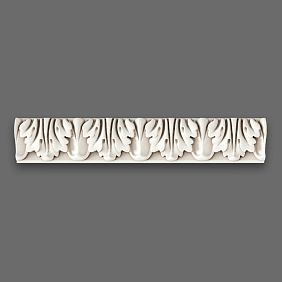
Visually, polyurethane molding is indistinguishable from high-quality plaster (color white matte, surface smooth primed, relief clear — acanthus leaves, dentils, egg-and-dart ornament, rosettes, garlands reproduced with photographic accuracy). Tactile differences exist (polyurethane feels warmer to the touch than plaster — lower thermal conductivity, material is an organic polymer, plaster is mineral and cold), density is felt (plaster sounds ceramic and ringing when tapped, polyurethane sounds dull and plastic — molecular structure different, acoustics different). Functionally identical (decorate interiors and facades, create volume and chiaroscuro, form classical, neoclassical, Baroque style — goal the same, material different).




Chemical Composition of Polyurethane: Molecular Architecture
Polyurethane is a thermosetting polymer (after polymerization, there are no reversible chemical bonds; it solidifies irreversibly — does not remelt, unlike thermoplastics such as polyethylene or polypropylene). The generalized chemical formula is [−R−NH−CO−O−R′−O−]n[−R−NH−CO−O−R′
−O−]n
where R and R′
are hydrocarbon radicals, n is the degree of polymerization, ranging from hundreds to thousands of units (molecular weight tens to hundreds of thousands of daltons, long macromolecules forming an interwoven three-dimensional network).
Our factory also produces:


Raw components: polyol and isocyanate
Polyurethane is synthesized by the reaction of two components (Component A: polyol — a polyhydric alcohol with a molecular weight of two to ten thousand daltons, high viscosity; Component B: isocyanate — contains highly reactive −NCO groups, toxic in liquid state requiring protection). Mixing the components initiates a polyaddition reaction (hydroxyl groups −OH of the polyol react with isocyanate groups −NCO, forming strong, stable urethane bonds −NH−CO−O− — polymerization is exothermic, heat is released, the mass heats up to sixty to eighty degrees, solidifies in minutes to hours depending on the catalyst).
Types of polyols. Polyester (synthesized from petroleum products — ethylene glycol, propylene glycol, adipic acid, molecular weight is controlled, polyurethane properties such as rigidity, elasticity, strength are adjustable), polyesters (from vegetable oils like soybean or castor — eco-friendly biopolyurethanes with a lower carbon footprint, properties comparable to petroleum-based), simple polyethers (flexible, elastic — for foams, soft elastomers, not for moldings where rigidity is needed).
Types of isocyanates. Toluene diisocyanate TDI (bifunctional, high reactivity, significant toxicity — requires production ventilation, protective equipment), methylene diphenyl diisocyanate MDI (less toxic, polymers are stronger — preferred for rigid polyurethane moldings), polymeric MDI (mixture of isomers, increased functionality — denser three-dimensional network, higher mechanical strength).
Get Consultation
Modifying additives: catalysts, stabilizers, pigments
Catalysts (tertiary amines, organic tin salts — accelerate the reaction hundreds of times; without a catalyst, polymerization takes hours to days; with a catalyst, minutes to hours; dosage is tenths to hundredths of a percent by mass), UV stabilizers (benzotriazoles, benzophenones — protect against ultraviolet light, prevent yellowing and surface degradation, critical for facade decor), flame retardants (organophosphorus compounds, chlorinated paraffins — reduce flammability, achieving fire hazard class G2 low-combustible), pigments (titanium dioxide for whiteness, iron oxides for colored elements — mass coloring or factory surface coloring).
Differences between polyurethane and polyurethane foam: density is key
Terminological confusion is common. Polyurethane foam PU foam (foam rubber, spray foam, insulation — density twenty to eighty kilograms per cubic meter, cellular porous structure, ninety to ninety-eight percent of volume is air, low mechanical strength, unsuitable for decor). Rigid cast polyurethane (density three hundred to three hundred fifty kilograms per cubic meter, monolithic, virtually non-porous structure, high mechanical strength — only this type is used for moldings). Chemical composition is identical (polyol plus isocyanate), difference is in technology (PU foam is foamed by gas blowing agent injection, cast polyurethane is poured into molds without foaming — density three to five times higher, properties radically different).
Visual differences. PU foam is porous (spongy surface, cells visible to the naked eye, paint adheres poorly and is absorbed, relief detailing is impossible — material for insulation, not decor), cast polyurethane is smooth (dense, uniform surface, relief reproduced with micron precision, paint and primer adhere perfectly — decorative, functional material).
Production technology by casting: from liquid to solid
Production of polyurethane moldings is a high-tech, controlled process (German and Italian equipment costing hundreds of thousands of euros, expensive, wear-resistant silicone molds, automated parameter control — temperature, pressure, mixing time, output quality is stable and reproducible).
Step one: creating a master model and mold
Master model (prototype of the future product — hand-carved by a sculptor for original designs, or a copy of antique plaster moldings for reproducing classics; material: plasticine, plaster, wood, polymer clay — micron precision, maximum detailing; quality of the master model determines the quality of all subsequent products, thousands to tens of thousands of castings). Silicone mold (liquid silicone rubber is poured onto the master model, polymerizes for one to two days, removed — resulting in a negative mold, inner surface reproduces the master model's relief mirror-perfectly with absolute precision; silicone is elastic — extraction of casting without damage; mold durability: thousands of castings until wear). Metal molds (aluminum, steel — for mass production of simple profiles, cornices, baseboards; durability: tens of thousands of castings; mold cost five to ten times higher, recouped by volume).
Step two: dosing and mixing components
Automatic dosing station (Component A polyol is fed by pump doser, Component B isocyanate similarly; mass ratio controlled by electronics — accuracy plus/minus one percent, deviations are unacceptable; excess isocyanate makes polymer brittle, excess polyol makes it sticky and weak). Mixing (components are fed into a mixing head, stirred by high-speed blades at three to five thousand revolutions per minute, mixing time two to five seconds — uniformity is critical, unmixed areas are defective; automation ensures stability). Temperature (components are preheated to forty to sixty degrees — viscosity decreases, mixing is more uniform, reaction faster, quality higher).
Step three: pouring into mold and polymerization
Mold preparation (inner surface coated with release agent — wax, silicone spray; polyurethane does not stick to silicone but additional lubrication facilitates extraction, prolongs mold life), pouring (liquid component mixture is poured into the mold from the mixing head, completely fills the cavity, air escapes through microscopic vent channels — air bubbles are unacceptable, cause defects and porosity; automation controls pouring speed and pressure). Polymerization (reaction starts instantly after mixing, mass heats up exothermically to sixty to eighty degrees, solidifies in five to fifteen minutes depending on product thickness and catalyst; full strength achieved in one to two days — molecular bonds form completely, zero shrinkage, dimensions stable).
Step four: extraction, processing, priming
Extraction (mold is opened, product removed — silicone is elastic, removal without force; complex elements with undercuts are extracted thanks to mold flexibility; metal molds require a split design), processing (flash and burrs are removed with a knife or sanding — at mold parting lines, sprue channels; surface is perfected; visual and instrumental inspection — dimensions checked with calipers, deviations over one millimeter are defective), priming (element is coated with acrylic water-based primer by spraying or dipping — micron-thick layer ensures paint adhesion for the customer, whiteness, UV protection; primer dries in one to two hours; product ready for packaging and shipping).
Physical properties of the material: characteristic numbers
Density (three hundred to three hundred fifty kilograms per cubic meter — three times lighter than gypsum at one thousand to one thousand two hundred, six times lighter than concrete, heavier than pine wood at five hundred to five hundred fifty but stronger and more moisture-resistant; optimal balance of weight and strength). Shore hardness (sixty to eighty units on scale D — scratches with effort, dents from impact do not remain if thickness over one centimeter, relief detailing preserved for decades without wear). Flexural strength (thirty to fifty megapascals — a cornice fifteen centimeters wide, three centimeters thick withstands loads of tens of kilograms without deformation, does not break during transport or falls from one to one and a half meters onto concrete).
Thermal conductivity (0.02–0.03 watts per meter-kelvin — weak insulator but better than gypsum or minerals; tactilely warm and comfortable, not cold to the touch like stone), operating temperature (minus fifty to plus eighty degrees Celsius without degradation — safe for facade use, absolute frost resistance, heat does not soften, shape stable), water absorption (less than one percent by mass after twenty-four hours of full immersion — highest moisture resistance; suitable for bathrooms, kitchens, facades in rain; does not swell or deform; for comparison, gypsum absorbs five to ten percent and deteriorates).
Flammability (class G2 low-combustible according to GOST 30244 — burns only in direct contact with flame, does not sustain independent combustion, extinguishes within seconds to tens of seconds after removal of ignition source; toxicity of combustion products moderate class T2, smoke generation D3 high — not the main problem in a fire; furniture, textiles, wooden structures burn first). UV stability (with stabilizer additives — does not yellow or degrade for decades under direct sun; facade decor remains white for thirty to forty years; without stabilizers, yellowing begins in five to ten years — quality manufacturers always add them).
Comparison with traditional materials: technology competition
Polyurethane vs. gypsum: lightness vs. prestige
Gypsum (classical material millennia-old — ancient Greece, Rome, Renaissance, Baroque, entire history of European architecture, unquestionable prestige, absolute eco-friendliness as a natural mineral, unique handcrafted detailing). Disadvantages (triple the weight of polyurethane — a gypsum cornice weighs twenty kilograms, polyurethane seven; installation more complex requiring frames and anchors; brittleness — impact chips fragments; transport risky; moisture sensitivity — contraindicated for bathrooms, kitchens, facades; soaks and deteriorates; price three to four times higher — hand molding by a plasterer costs tens of thousands of rubles per element, polyurethane factory-made thousands).
Polyurethane (lightness — adhesive installation without frames, one person can handle; moisture resistance — any rooms, facades; impact strength — does not chip from accidental impacts; democratic price — cornice per meter three hundred to seven hundred rubles, gypsum one thousand five hundred to three thousand; mass availability). Relative disadvantages (lower prestige — polyurethane is a mass material, not exclusive; visually indistinguishable but experts can tell; flammability — gypsum is absolutely non-combustible, polyurethane G2 burns weakly; eco-friendliness — synthetic vs. natural mineral, although there are strict safety certificates).Polyurethane for molding: what is itClosed question: a modern alternative to gypsum that is functionally superior, aesthetically comparable, and accessible.
Polyurethane vs. wood: polymer vs. organic material
Wood (carved platbands, oak pilasters, beech moldings — beauty of natural texture, warm tactility, 100% eco-friendliness, prestige of a living organic material). Cons (moisture sensitivity — swells, warps, rots in damp rooms, requires regular antiseptic impregnation, high flammability class G4 highly flammable, exorbitant price of solid wood — oak baseboard one and a half to three thousand per meter, polyurethane four hundred to eight hundred, exclusive hand-carved elements tens to hundreds of thousands per piece). Polyurethane imitates wood texture (painting, patination — visually convincing from a distance of one to two meters, up close the material is distinguishable but from afar the effect of carved wooden beams and pilasters is achieved, price five to ten times lower, absolute moisture resistance).
Polyurethane vs. foam: density vs. cheapness
Foam polystyrene (density fifteen to thirty-five kilograms per cubic meter — lightest, minimal price per meter of cornice one to two hundred rubles, mass prevalence everywhere in construction markets). Catastrophic cons (fragility — crumbles at touch, zero detailing — relief simplified and coarse, flammability class G3-G4 — burns intensely releasing deadly toxins styrene, prohibited in evacuation routes and children's institutions, dubious durability — yellows from UV in five to ten years, disintegrates and crumbles). Polyurethane is two to three times more expensive (cornice per meter three hundred to five hundred vs. one hundred fifty for foam) but quality is incomparable (strength ten times higher, photographic detailing, flammability G2 acceptable, durability thirty to fifty years). Foam is a forced choice for minimal budget (temporary repair of a rental apartment, summer cottage where no one lives in winter), polyurethane is a reasonable long-term choice (own home, commercial interiors, facades — investment pays off over decades of service).
Areas of application in construction: geographical versatility
Interior decor (ceiling cornices, floor baseboards, wall moldings, rosettes, pilasters, columns, decorative beams, boiserie panels, 3D relief panels — any elements of classical, neoclassical, baroque, empire, art deco styles). Facade decor (inter-floor cornices, crowning cornices, window and door surrounds, pilasters, columns, keystones, pediments, balustrades, corner rustication, consoles, brackets — exteriors of cottages, apartment buildings, offices, public buildings). Commercial interiors (restaurants and cafes requiring a classical atmosphere, boutique hotels, representative banks and offices, premium beauty salons, brand stores — anywhere where image, status, and decor work for business reputation).
Restoration (replacement of lost fragments of molding on historical buildings — polyurethane reproduces lost profiles based on measurements and photographs, installs quickly without wet processes damaging historical plaster, visually indistinguishable from genuine gypsum after painting, restorers use it legally in agreement with monument protection authorities). Theatrical scenery (columns, balustrades, architectural elements for stage — lightness is critical, scenery is moved manually, polyurethane weighs kilograms not tens, strength sufficient for intensive use during rehearsals, performances, tours). Exhibition stands (pavilion design — classical portals, colonnades, arches create an atmosphere of solidity and luxury, quick assembly and disassembly multiple times, elements reused for dozens of exhibitions).
Eco-friendliness and safety: polymer under the microscope
Operational toxicity zero (after complete polymerization polyurethane is chemically inert — does not release volatile substances formaldehyde, phenol, styrene at operational temperatures minus fifty to plus eighty degrees Celsius, hygienic certificates from Rospotrebnadzor confirm safety for living spaces, children's rooms, bedrooms, allergenicity zero — does not cause contact dermatitis unlike some epoxy or polyester resins). Production (isocyanate component toxic in liquid state — requires ventilation, personnel protective equipment, controlled waste disposal, factories certified to environmental standards ISO 14001, emissions minimized by purification systems, modern production is eco-friendly and socially responsible).
Bio-resistance (polyurethane does not contain nutrients for microorganisms — mold and fungus do not grow on the surface even in damp rooms, bathrooms, basements, unlike wood, gypsum, organic materials where mold colonies form at humidity above seventy percent, antiseptics not required — saving on chemical treatment, higher eco-friendliness). Radiation safety (polyurethane synthesized from petroleum products — does not contain radionuclides unlike some granite minerals, natural radiation background, dosimeter check shows background identical to the environment).
Disposal (worn-out elements are crushed, incinerated at waste-to-energy plants with energy recovery — high calorific value twenty to twenty-five megajoules per kilogram, comparable to brown coal, burning releases carbon dioxide, water, nitrogen oxides — no more toxic than burning wood, dioxins do not form at temperatures above one thousand degrees, modern plants control temperature, filter emissions). Recycling (chemical — hydrolysis, glycolysis break down polyurethane into original components polyols, isocyanates, reused, technology developing, currently not economically viable, future lies in closed-loop cycle).
Durability: service life thirty to fifty years guaranteed
Dimensional stability (polyurethane after polymerization does not shrink or deform — dimensions stable for years and decades, thermal expansion minimal linear expansion coefficient eight to ten multiplied by ten to the minus fifth per degree Celsius, with a fifty-degree temperature change a two-meter element expands/contracts one millimeter — unnoticeably compensated by adhesive elasticity). Resistance to freeze-thaw cycles (tests show strength retention after one hundred cycles minus twenty to plus twenty degrees Celsius — facade decor in continental Russian climate survives dozens of winters without degradation, water not absorbed, does not freeze inside and rupture structure like low-grade gypsum or concrete).
Resistance to UV radiation (with added stabilizers — does not yellow or become brittle from sun, white facade decor remains white for thirty to forty years, possible repainting with acrylic facade paint afterwards — element serves further decades, final service life fifty to seventy years real, confirmed by objects built in the eighties-nineties preserved excellently). Mechanical strength (does not degrade from vibrations, impacts, cyclic loads — ceiling cornice does not fall off or crack, floor baseboard does not chip from accidental hits by vacuum or furniture, facade decor withstands wind loads, hail, branch impacts — high repairability, chip filled and painted, local restoration without replacing entire element).
Manufacturer warranty (official two to five years on absence of deformation, cracking, yellowing, detachment — minimal legal formality, real service life ten times longer, manufacturers know and are confident, short warranty not due to material unreliability but due to inability to control installation and operating conditions — incorrect adhesive, unprimed ceiling, mechanical damage, uncontrollable external factors).
Frequently asked questions: addressing doubts
How does polyurethane differ visually from plastic?
Polyurethane is technically a plastic (synthetic polymer), but perception is different. Plastic is associated with cheapness, lightness, gloss (PET bottles, polypropylene containers, toys — mass-produced low-status material). Polyurethane molding is dense, heavy, matte (surface primed white indistinguishable from gypsum, relief sharp and deep, weight tangible — a two-meter element weighs five to ten kilograms not grams, feels solid). Painted white or patinated gold or bronze, polyurethane is perceived as gypsum, wood, stone (illusion of noble traditional material — goal achieved, guests do not guess it's polymer if they don't touch, tap, or scratch).
Does polyurethane molding release toxic odor?
Freshly manufactured might (residual unreacted isocyanate, volatile catalyst components — first days-weeks after production a faint chemical odor may be present, completely dissipates in one to two months, manufacturers hold products in warehouse for one to two weeks before shipping, customer receives product practically odorless). After installation and painting, no odor (fully polymerized polyurethane is inert, acrylic water-based paint has no odor after drying, room ventilated for one to two days after renovation, then air clean — safe and comfortable to live, allergy and asthma sufferers report no reactions, hygienic certificates confirm).
Does polyurethane burn intensely in a fire?
It burns (organic polymer hydrocarbons are combustible), but not intensely. Flammability class G2 low-flammable (ignites on direct contact with flame, burns slowly, extinguishes within seconds to tens of seconds upon removal of source — does not support independent flame spread unlike wood class G4 burning intensely). Smoke toxicity moderate class T2 (combustion products carbon dioxide, carbon monoxide, nitrogen oxides — no more toxic than from wood, unlike PVC releasing deadly hydrogen chloride and dioxins). In a fire, main danger is furniture, textiles, wooden structures (burn first and more intensely), polyurethane molding's contribution to fire minimal (surface area small, mass kilograms not tens, location near ceiling — flame reaches last).
Can polyurethane molding be visually distinguished from gypsum molding?
Difficult (high-quality polyurethane detailing is not inferior to gypsum — relief reproduced with micron precision, primed white matte surface identical, after painting differences zero). Tactilely distinguishable (polyurethane feels warmer — lower thermal conductivity, sounds dull and plastic when tapped, gypsum sounds ringing and ceramic, element weight three times less — two-meter polyurethane cornice seven kilograms, gypsum twenty, lifted and weighed by hand can tell). Professional can determine (experienced designer, restorer, construction installer — see nuances, polyurethane corner bevels sharper factory-made, gypsum ones rounded manual, polyurethane joints filled perfectly invisible, gypsum sometimes microscopic cracks). Layperson won't distinguish (ninety-five percent of people perceive polyurethane as gypsum, if not told or asked — aesthetic effect identical, decor task accomplished).
How much does polyurethane molding cost compared to gypsum?
Polyurethane is three to five times cheaper (ceiling cornice width ten centimeters simple profile — polyurethane three hundred fifty to five hundred rubles per meter, gypsum one thousand two hundred to two thousand, carved complex — polyurethane seven hundred to one thousand three hundred, gypsum three to six thousand, rosette diameter sixty centimeters — polyurethane two to four thousand, gypsum ten to twenty thousand). Reason for difference (polyurethane production industrial, mass, automated — low stable cost, gypsum molding manual, piecework — master's labor hours-days per element, high salary, low reproducibility, high defect rate). Installation (polyurethane glued DIY or master charges one hundred fifty to three hundred rubles per meter, gypsum requires experienced professional — three hundred to seven hundred rubles per meter, final project cost with polyurethane four to five times lower).
Conclusion: the polymer that changed architecture
Polyurethane molding democratized classicism. What for centuries was the privilege of aristocracy, palaces, mansions (gypsum ceilings with rosettes one meter in diameter, carved cornices twenty centimeters wide, pilasters, columns, boiserie — beauty, monumentality, status) became accessible to the middle class (standard apartments turn into classical interiors, budget cottages get palace facades, material cost tens of thousands not hundreds, installation DIY over a weekend or by a master in one to two days).What is polyurethane molding made fromA question of polymer chemistry: polyol, isocyanate, and catalysts create a polymer that is strong, lightweight, moisture-resistant, durable — a material of the twenty-first century combining production technology with the aesthetics of past centuries.
The advantages are undeniable (lightweight — adhesive installation is simple and fast, moisture resistance — universal application for interiors and facades without restrictions, strength — does not crumble or break, lasts for decades, price — mass affordability, detailing — factory quality reproduces classic plaster). The disadvantages are relative (flammability G2 vs. non-flammability of plaster — acceptable for housing, synthetic vs. natural mineral — environmental safety is certified and safe, lower prestige — mass production reduces exclusivity but is not functionally inferior). The choice is obvious for most projects (private apartments, cottages, commercial interiors — anywhere where the budget is reasonably limited, installation deadlines are tight, operating conditions require moisture resistance and strength).
Company STAVROS — a St. Petersburg-based manufacturer of architectural decor founded in 2003, with twenty-three years of impeccable experience — specializes in the highest quality polyurethane molding (assortment of over one thousand SKUs — ceiling cornices one hundred twenty profiles, width three to twenty-five centimeters, all styles from minimalism to Baroque, floor skirting boards eighty models, height seven to twenty centimeters, wall moldings one hundred eighty profiles, width two to fifteen centimeters, ceiling rosettes sixty models, diameter twenty to one hundred fifty centimeters, ornaments from restrained to lush, columns and pilasters forty standard sizes, height one and a half to three and a half meters, diameter fifteen to forty centimeters, decorative beams thirty models, imitation of wood with textured or smooth finish for painting, facade decor three hundred SKUs — cornices, window and door surrounds, pilasters, rustications, balustrades, consoles, pediments).
STAVROS production is of European technological level (German and Italian equipment — automated component dosing and mixing lines, dosing accuracy plus-minus zero point five percent, high-quality silicone molds reproducing details with micron precision, multi-stage quality control — visual, instrumental, laboratory, each batch is checked, defective elements are ruthlessly removed before shipment). Materials are certified (two-component rigid polyurethane from German manufacturers Bayer BASF — world leaders in the chemical industry, density three hundred to three hundred fifty kilograms per cubic meter stable and reproducible, environmental safety confirmed by Rospotrebnadzor with hygienic certificates — no emission of volatile substances, formaldehyde, phenol, styrene during operation, fire safety class G2 low flammability — approved for use in residential premises, offices, public buildings without restrictions, UV stabilizers are mandatory — facade decor does not yellow for thirty to forty years, factory-applied acrylic primer — adhesion of customer's paint is ideal, whiteness is stable).
STAVROS catalog is available online 24/7 (website with high-resolution professional studio photographs — relief of elements is visible in detail, precise millimeter dimensional drawings — height, width, thickness, weight are indicated, linear meter coverage area is calculated automatically, current prices updated daily — full transparency, automatic calculator for calculating footage, number of elements, delivery cost — enter room dimensions, the system instantly calculates materials and final price, selection is convenient, intuitive, and requires no special knowledge). Ordering is simple and fast (standard shopping cart, delivery address to any city or town in Russia via transport companies or courier to Moscow and St. Petersburg, flexible payment methods — all types of cards Visa Mastercard MIR, invoice for legal entities, organizations, individual entrepreneurs, cash upon pickup or to courier, process takes five to ten minutes, order confirmation via email instantly).
Delivery is reliable and controlled (federal transport companies are verified — PEK, Delovye Linii, SDEK, Baikal-Service, KIT, online parcel tracking with tracking number, full one hundred percent cargo insurance — damages are compensated, professional packaging — elements protected with bubble wrap and rigid cardboard, vulnerable corners reinforced with foam, predictable delivery times seven to twelve days to Siberia and Far East regions, three to five days to central Russia and Volga region, one to two days to Moscow and St. Petersburg regions). Free qualified consultations from technologists (telephone hotline, email with operational response within two to four business hours, online chat on the website, messengers WhatsApp Telegram — assistance in selecting profiles and elements to match your interior style, accurate calculation of material quantities, detailed recommendations on glue, installation, painting, twenty-three years of experience, thousands of completed projects).
Choose STAVROS molding — time-tested St. Petersburg quality, European certified safe polyurethane material, technological automated production guaranteeing stability, the widest assortment covering all needs, styles, and budgets, fair transparent prices without markups, fast delivery to any point in Russia, expert consultations helping you make the right decision. Create classic interiors worthy of admiration, individual ceremonial facades, beautiful comfortable spaces that inspire daily for years and decades — polyurethane molding is a transformation tool accessible to everyone.