Article Contents:
- Why a heavy tabletop needs a special underframe
- Which tabletops are considered heavy
- Solid wood underframe: when it is the best option
- Will a wooden underframe support a massive tabletop
- How to choose the dimensions of the underframe relative to the tabletop
- How many supports are needed for a large table
- Why the tabletop bends
- How to choose a durable underframe for a wooden tabletop
- What is better: solid wood underframe, wooden underframe, or individual supports
- Selection for different customer scenarios
- For a large wooden tabletop
- For a stone or marble tabletop
- For a dining table
- For a study or desk
- For Country Houses
- Choosing only by design
- Placing a heavy tabletop on a too light base
- Not considering the length of the tabletop
- Making a large overhang on the edges
- Not checking the attachment
- Using separate legs where a solid underframe is needed
- Forgetting about the finished table height
- Not considering lateral stability
- Which underframe to choose for a heavy tabletop?
- Will a wooden underframe support a massive tabletop?
- How many supports are needed for a large table?
- Why does the tabletop sag?
- What's better for a heavy tabletop: individual legs or an underframe?
- How to choose the dimensions of the underframe relative to the tabletop?
- Is a solid wood underframe suitable for a stone tabletop?
- Which table base to choose for a 2-meter tabletop?
- Do I need to consider the thickness of the tabletop?
- What should I check before ordering a table base?
- Where to buy a durable table base for a wooden tabletop?
- Can I make a table base for a tabletop myself?
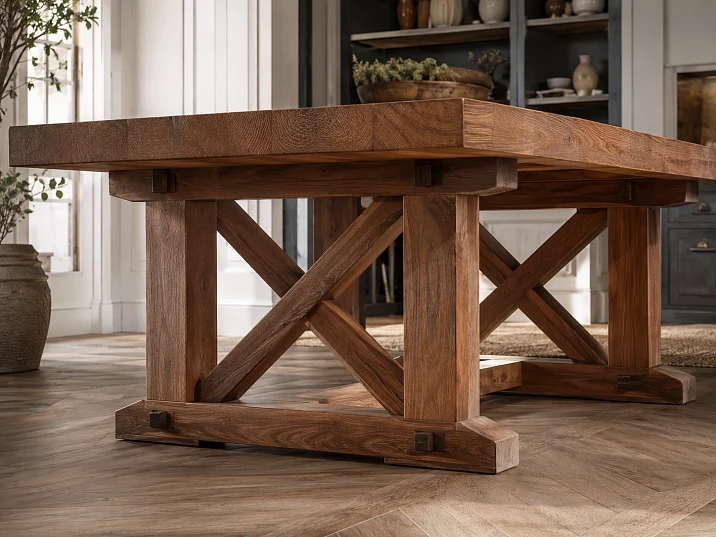
A table base for a heavy tabletop cannot be chosen solely by appearance. A large wooden, stone, marble, or massive tabletop creates a serious load on the base, fastening, supports, and the entire geometry of the table. If the lower part turns out to be weak, the table may wobble, sag, seem unstable, and quickly lose the feel of reliable furniture.
The mistake often occurs when the buyer has already chosen a beautiful tabletop and starts selecting the table base last. It seems enough to buy any suitable legs or a decorative base. But a heavy tabletop requires not just support, but a well-thought-out structure: the right size, sufficient support area, rigid connections, proportionate shape, and material that visually and structurally withstands the top.
If you need a sturdy base for a wooden or massive tabletop, you should immediately consider buying a durable table base for a wooden tabletop as a full-fledged task, not as a purchase of a random lower part. In the STAVROS furniture frames section, you can select a base according to the size, weight, shape of the tabletop, and the overall style of the future table.
In this article, we will analyze why a heavy tabletop needs a special base, which tabletops are considered heavy, when it is better to choose a solid wood table base, how many supports are needed for a large table, why the tabletop sags, and what to check before ordering. The main goal is to help choose not just a beautiful table base, but a stable foundation that will work together with the tabletop.
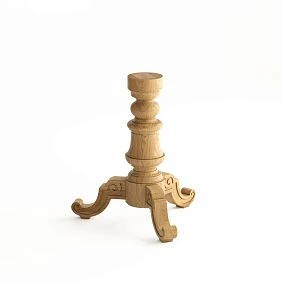

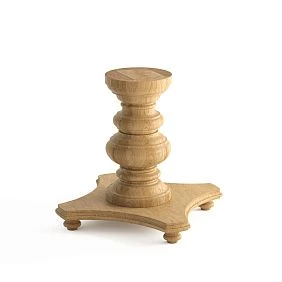
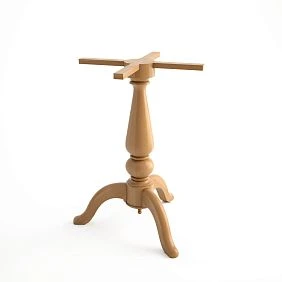
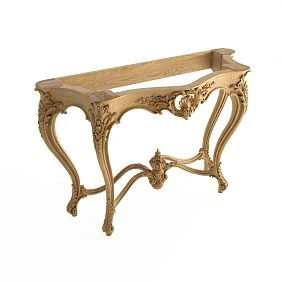

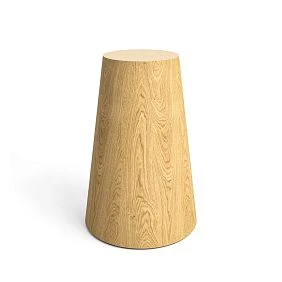
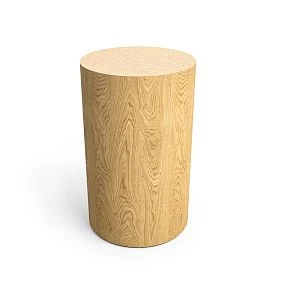
Why a heavy tabletop needs a special table base
A heavy tabletop loads the base differently than a light decorative surface. It is affected by its own weight, the load from dishes, appliances, hands, objects, and sometimes from regular table movement. The larger and heavier the top part, the more important the underframe design is.
A weak base shows itself quickly. The table starts to wobble when touched, reacts to chair movement, and gives a feeling of instability. If the tabletop is long, a sag may appear in the center. If the supports are too close together, the edges become vulnerable. If the fastening is weak, the load gradually loosens the connections.
The underframe for a tabletop must work as a system. Not only the number of legs matters, but also how they are connected to each other, what the base's support area is, how well the structure handles lateral load, how the weight is distributed, and how much overhang remains at the edges.
For a heavy tabletop, you cannot choose a base based on the principle 'it matches the style, so it will work.' A beautiful underframe may be too light, too narrow, or unsuitable in scale. It is especially risky to place a massive tabletop on thin individual supports without understanding the load.
If the tabletop is wooden, a solid wood base often looks most natural. The top and bottom are perceived as a single object. If the tabletop is stone or marble, the requirements for rigidity and stability become even higher. In any case, the underframe for a large tabletop must match its weight, length, width, and purpose.




Which tabletops are considered heavy
Not only a stone tabletop can be considered heavy. A large solid wood tabletop also creates a serious load. Especially if it is long, wide, thick, or designed for a dining table for several people.
Heavy tabletops include massive wooden surfaces, thick wooden tabletops, long options from 160–200 cm, large round and rectangular tabletops, stone and marble surfaces, artificial stone tabletops, as well as bar and kitchen tabletops with a large area.
The larger the area, the more carefully you need to choose the base. Even if the material does not seem too heavy, a large length creates a span between supports. If this span is too large, the top part may eventually sag or visually appear weak.
The underframe for a stone tabletop requires a particularly careful approach. Stone and marble are perceived as dense, heavy materials. The base must have a sufficient support area and a rigid structure. A too-light base under such a top looks unconvincing and can be dangerous for use.
The underframe for a 2-meter countertop also cannot be chosen as for a small kitchen table. The length already creates a structural challenge: you need to support the edges, the center, the fastening, and lateral stability. In this case, it is better to consider not individual random legs, but a sturdy underframe or furniture frame.
| Tabletop type | Why a sturdy base is needed | What to Check |
|---|---|---|
| Solid wood tabletop | Has weight and pronounced texture | Size, thickness, edge overhang, fastening |
| Long countertop 160–200 cm | A large span appears between supports | Support along the length and structural rigidity |
| Stone countertop | Places high load on the base | Support area, stability, fastening method |
| Marble tabletop | Requires a particularly sturdy base | Rigidity, overhang, base compatibility |
| Large round tabletop | Load may shift to the edge | Center of gravity and base width |
If the buyer is unsure whether to consider the tabletop heavy, it's better to go by practice: the larger the size, thickness, and density of the material, the stronger the base should be. It's better to choose an underframe with a margin of stability than to later deal with wobbling or sagging.
Our factory also produces:
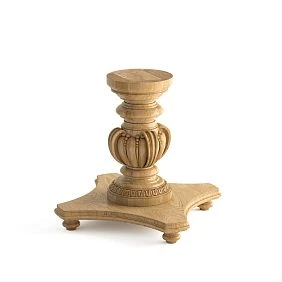
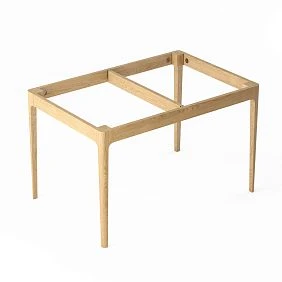
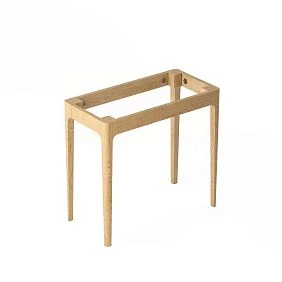

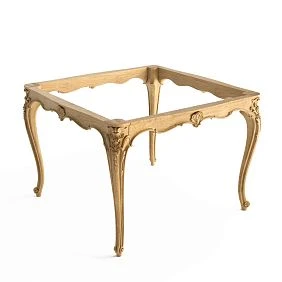
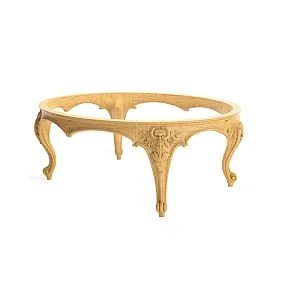
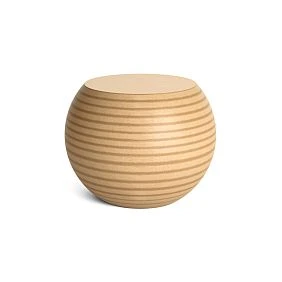
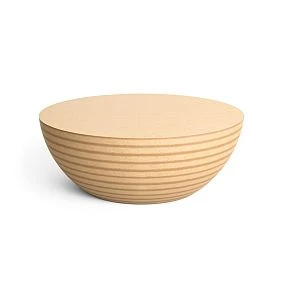
Solid wood underframe: when it's the best option
A solid wood underframe is well suited for a heavy wooden tabletop because it matches it in material, scale, and visual logic. A massive tabletop requires a base that doesn't look accidentally thin or temporary. A wooden base creates the feel of a solid table, not a top slab placed on unsuitable legs.
Solid wood is important not only visually. It provides a sense of reliability, stability, and furniture solidity. If the table is in a dining room, kitchen, study, or country house, such a base looks natural next to wooden doors, floors, sideboards, chairs, panels, shelves, and other wood products.
A solid wood base is especially appropriate in interiors where the table should look substantial. This is not necessarily heavy classic style. Wood can be modern if the form is calm and the geometry is clean. But even a laconic wooden base looks warmer than a thin metal base or random individual supports.
If you need a sturdy base for a wooden tabletop, it's worth looking made in the same manner. For protection and maintenance, use natural oils and waxes.. It's important to evaluate not only the material, but also the shape, width of the base, number of supports, method of attachment, and the relationship with the future tabletop.
A solid wood table base is suitable for dining tables, kitchen areas, studies, large work surfaces, country houses, and interiors where furniture should look convincing. If the tabletop is large, the base must not only support it but also visually match its scale.
Get Consultation
Will a wooden base support a massive tabletop
A wooden base can support a massive tabletop if the dimensions, construction, support points, and attachment are correctly chosen. The material itself does not provide the answer. What matters is how the base is designed, how stable it is, how the load is distributed, and whether there is too much overhang on the edges.
The first parameter is the area of attachment to the tabletop. The heavier the top part, the more reliable the connection to the base should be. If the attachment works only at a few small points, the load is distributed less effectively. For a heavy tabletop, a wide and clear contact area is especially important.
The second parameter is the overhang of the tabletop beyond the base. A small overhang is needed for comfortable seating. But if the edge extends significantly beyond the base, the table becomes less stable. When load is applied to the edge, a lever effect appears that rocks the entire structure.
The third parameter is the rigidity of the connections. The base must work as a single system. If the supports are not connected to each other or the structure is too light, the table may wobble even with good material. For a large tabletop, individual legs often lose out to a solid base.
The fourth parameter is the length of the tabletop. For a long rectangular table, support is important not only at the edges but also in the center. If the span between supports is too large, the tabletop may sag. In such cases, a reinforced structure or multiple support points should be considered.
The wooden table base for the tabletop should be proportionate. A base that is too thin under a massive top looks unconvincing and may be uncomfortable. Even if it formally supports the weight, the table will not be perceived as reliable furniture.
How to choose the dimensions of the table base relative to the tabletop
The dimensions of the table base relative to the tabletop are one of the main questions when choosing. A mistake here leads to two problems: the table either looks disproportionate or becomes uncomfortable and unstable. Therefore, the base should be selected not separately, but together with the top part.
The longer the tabletop, the wider and more stable the base should be. For a small table, a compact base may suffice. For a dining table for several people, more support in length and width is needed. For a tabletop about 2 meters long, it is especially important not to leave a large span without support.
The overhang at the edges should be reasonable. If the base is too close to the center, the edges of the tabletop become vulnerable. If the supports are too far out, it may be uncomfortable to sit. A balance between stability and seating comfort must be found.
For a round tabletop, the center of gravity is important. If the base is central, its base should be wide enough. If the round tabletop is large, a too narrow central support creates a risk of wobbling when load is applied to the edge.
For a rectangular tabletop, the span length between supports is important. The greater the distance, the higher the risk of sagging. If the tabletop is heavy and long, it is better to choose a table base with multiple support points or a solid structure.
The height of the table base should account for the thickness of the tabletop. The buyer sometimes only looks at the height of the base, and after assembly gets a table that is too tall. For a dining area, this is critical: an uncomfortable height is immediately felt when sitting. This issue is covered in detail in the material about underframe height for a table.
| Parameter | What to Check | Which mistake is dangerous |
|---|---|---|
| Tabletop length | Span between supports | Deflection at center |
| Tabletop width | Base width and stability | Rocking under lateral load |
| Edge overhang | Distance from base to edge | Table reacts to pressing on the edge |
| Tabletop thickness | Final table height | Uncomfortable seating |
| Shape | Center of gravity and support placement | Imbalance and wobbling |
If the dimensions of the table base relative to the tabletop raise doubts, it's better not to buy the base blindly. You need to prepare the tabletop dimensions, understand the installation location, and check compatibility with a STAVROS manager.
How many supports are needed for a large table
The number of supports depends on the shape, length, weight, and purpose of the table. For a small table, a compact base may suffice. For a large rectangular table, a system of multiple supports or a solid table base that distributes the load across the entire lower part is often needed.
Four legs at the corners don't always solve the problem. If the tabletop is long and heavy, there may be a large span between supports. In this case, the center of the tabletop receives less support. Over time, this can lead to sagging or a feeling of weakness.
For a large dining table, not only edge support is important, but also seating comfort. Supports should not interfere with legs, chairs, and movement. Sometimes a too massive base makes the table stable but uncomfortable. Therefore, a balance between strength and ergonomics must be found.
The table base support should work not separately, but as part of the entire structure. If each support stands on its own and is not connected to other elements, the table may wobble. If the supports are combined into a rigid system, the load is distributed better.
For a heavy tabletop, it is often safer to choose a solid base rather than separate legs. Especially if the tabletop is large, long, stone, marble, or solid wood. If you want to understand the role of supports in more detail, it is useful to check out the material table base support.
Why the tabletop sags
Tabletop sagging occurs not only due to weak material. More often, it is the result of an incorrect connection between the top and the base. If the table base does not support the tabletop along its length, the load starts to work against the structure.
The first reason is too large a span between supports. The longer the distance without support, the higher the risk of sagging. This is especially noticeable in long rectangular tabletops. Even a massive tabletop can look weak if placed on an unsuitable base.
The second reason is unsuitable underframe dimensions. If the base is too short or narrow, it does not support the edges and center. The table may wobble, and the tabletop may experience uneven load.
The third reason is weak fastening. Even a sturdy underframe won't help if the connection to the tabletop is poorly executed. The fastening must account for weight, material, and usage method. Specific technical parameters should be checked on the product card and coordinated with the tabletop's features.
The fourth reason is lack of central support. For long tabletops, supports only at the edges are sometimes insufficient. A structure is needed that distributes the load along the length and does not leave the center unsupported.
The fifth reason is excessive overhang of edges. If the tabletop protrudes significantly beyond the base, a lever effect occurs when load is applied to the edge. The table may rock, and the fastening receives extra stress.
The sixth reason is a mismatch between the weight of the tabletop and the base structure. A heavy stone or solid wood surface requires a more substantial base. Light decorative supports are not suitable for such a task.
How to choose a durable underframe for a wooden tabletop
Choosing a durable underframe starts with the tabletop parameters. You need to know its length, width, thickness, shape, and approximate weight. Without this data, the base is chosen at random, and with a heavy tabletop, this approach is especially risky.
Then you need to determine the table's purpose. Dining tables, kitchen surfaces, work desks, office desks, coffee tables, and commercial furniture experience different loads. A table for a cafe or restaurant must withstand more active use than a decorative table in a living room.
The next step is choosing the base material. A wooden underframe works well with a wooden tabletop. It supports the material, looks cohesive, and helps assemble furniture in a unified style. If a reinforced structure is needed, you should consider not only the material but also the shape, base width, and number of supports.
You need to match the width of the underframe to the width of the tabletop. A base that is too narrow creates a risk of wobbling. One that is too wide may interfere with seating. The proportion should be comfortable for the user and safe for the structure.
The height of the finished table also matters. You need to add the height of the underframe and the thickness of the tabletop. For a dining table, a height error quickly becomes noticeable: it's uncomfortable to sit, the chairs don't fit, and your arms are positioned incorrectly.
The number of supports and the rigidity of the structure should be evaluated together. Sometimes it's better to choose a solid underframe rather than four separate supports. Especially if the tabletop is heavy, long, or will be used daily.
If the task is — buying a durable table base for a wooden tabletop, you should look not only at the appearance but also at the structural logic. The base should be proportionate, stable, and suitable for the specific tabletop.
What is better: a solid wood underframe, a wooden underframe, or separate supports
For a heavy tabletop, separate supports are not always sufficient. Sometimes they work if the table is small and the load is clear. But for a large, long, or massive surface, it's often better to choose a solid underframe or furniture frame.
| Task | What to choose | Why |
|---|---|---|
| Heavy wooden tabletop | made in the same manner. For protection and maintenance, use natural oils and waxes. | Visually and structurally matches wood |
| Large dining table | Durable wooden underframe | Distributes load better and supports seating |
| Stone or marble tabletop | Reinforced base with sufficient support area | Rigidity, stability and precise compatibility are important |
| Small table | Compact underframe or supports | Lower load, simpler design |
| Long countertop | Underframe with multiple support points | Reduces the risk of sagging and wobbling |
| STAVROS interior | furniture frames | Help to assemble furniture in a unified wooden style |
If the tabletop is heavy, individual supports must be chosen with particular care. They must be calculated for quantity, placement, fastening, and load. If such data is not available, it is safer to look towards a ready-made underframe or furniture frame.
If the buyer does not understand what exactly is needed — an underframe, a frame or a separate support, it is useful to study the material table frame or underframe. This helps avoid confusing structural solutions before purchase.
Selection for different customer scenarios
For a large wooden tabletop
A large wooden tabletop requires a base that can support its weight and scale. A wooden underframe or solid wood underframe works well here. It supports the material, does not create a visual break, and looks natural next to wooden furniture.
Before ordering, you need to check the length, width, thickness of the tabletop and the expected overhang. If the tabletop is long, you should look at an underframe with multiple support points or a rigid frame.
For a stone or marble tabletop
A stone or marble tabletop requires a particularly strong base. Here, not only beauty but also safety is important. The base must have sufficient support area, stability, and compatibility with the material of the top part.
If a buyer is considering purchasing an underframe for a stone tabletop or an underframe for a marble tabletop, they must clarify the parameters of the specific tabletop and base. The rules for a light wooden table cannot be applied to a heavy stone top.
For a dining table
A dining table should be stable and comfortable. The base should not interfere with legs, chairs, or seating. At the same time, it must hold the tabletop and prevent wobbling. If the table is designed for a large family or guests, the strength of the base becomes especially important.
For such a task, it is useful to look Base for Dining Tables, to account for the kitchen and dining scenario before purchase.
For an office or desk
The desk should be sturdy. If the base wobbles, using the desk is unpleasant. For a heavy tabletop in an office, it's better to choose a base that looks solid and doesn't vibrate when writing, working with documents, or using equipment.
A wooden desk base in an office often looks better than random metal supports. It supports the furniture, shelves, panels, and the overall character of the workspace.
For a country house
In a country house, a massive tabletop and a wooden base look especially natural. Such furniture supports the home's atmosphere, complements wood, stone, natural materials, and classic items.
If the interior is built around wood, it's worth additionally looking at Solid Wood Items. This will help select adjacent elements in the same material direction.
What to buy together with a sturdy desk base
A sturdy desk base is almost always purchased with an understanding of the future tabletop. But besides the tabletop itself, it's worth considering adjacent elements: furniture frames, solid wood products, finishes, chairs, decorative details, and structural solutions.
If the goal is to assemble a stable desk, the first step is to look at furniture frames. This section helps choose not a random support, but a structural foundation for the furniture.
If you specifically need a wooden character, you can switch to the category Solid Wood Items. This makes it easier to understand how the underframe will combine with other wooden interior elements.
| What to add to the purchase | Why this is needed | What to pay attention to |
|---|---|---|
| Tabletop of the right size | To ensure the base matches the weight and shape | Length, width, thickness, material |
| Furniture frame | For a solid structural foundation | Compatibility with the tabletop |
| Wooden base | For a solid wood table | Shape, stability, height |
| Solid wood products | To support the wood in the interior | Material, finish, overall style |
| Size consultation | To avoid mistakes with load and overhang | Especially important for heavy countertops |
This approach helps assemble not a separate purchase, but a complete set. The underframe, countertop, height, supports, material, and style should work together.
Mistakes when choosing an underframe for a heavy countertop
Choosing only by design
A beautiful underframe may not be suitable for the load. For a heavy countertop, strength, stability, and proportionality come first. Design is important, but it does not replace the structure.
Placing a heavy countertop on a too light base
Thin supports under a massive top look unconvincing and may perform poorly in use. The base should match the tabletop in scale.
Not considering the length of the tabletop
A long tabletop requires support along its length. If the span between supports is too large, there is a risk of sagging. This is especially important for tabletops around 2 meters.
Making a large overhang on the edges
Too large an overhang creates leverage. Under load on the edge, the table may wobble, and the fastening receives extra stress. The overhang should be convenient but not excessive.
Do not check the mounting
The base and tabletop must be securely connected. If the fastening is weak or does not match the material, the table may wobble. The fastening method should be clarified in advance.
Use separate legs where a solid underframe is needed
Separate supports are not always suitable. For a heavy tabletop, a system that distributes the load is often required. A solid underframe or furniture frame is more reliable in such cases.
Forgetting about the height of the finished table
The height of the base and the thickness of the tabletop add up. If the total height is not calculated, the table may be uncomfortable. This is especially noticeable for a dining table.
Not considering lateral stability
The table experiences not only vertical load. People lean on it, bump into it, and move chairs around it. The base must withstand lateral movements without wobbling.
Who a solid wood underframe is suitable for
A durable solid wood underframe is suitable for those who are assembling a table with a heavy wooden tabletop, want to get solid wood furniture, and are not willing to risk stability. It is a good choice for a kitchen, dining room, study, country house, dining area, and a large work desk.
Such a base is especially appropriate if the tabletop is large, thick, textured, or visually heavy. A massive wooden underframe supports it not only structurally but also aesthetically. The table looks cohesive, substantial, and convincing in the interior.
A solid wood underframe is also suitable for those who want to connect the table with other wooden furniture: floor, doors, panels, shelves, sideboard, chairs, or decorative elements. In such an interior, a wooden base looks more natural than random metal legs.
When it's better to choose another option
A sturdy, massive underframe can be excessive for a small decorative table, a lightweight tabletop, or temporary furniture. If the load is small, you can consider a compact underframe or individual supports.
If the interior is built around metal, brick, concrete, and an industrial style, the buyer may consider a metal base. But for a heavy tabletop, you still need to check the strength, size, fastening, and stability.
If the tabletop is non-standard, stone, or marble, it's better not to make a choice based solely on a catalog image. You need to clarify compatibility, weight, fastening method, and possible limitations. In such cases, consultation before ordering is especially important.
Where to buy a sturdy underframe for a wooden tabletop
If you need a sturdy base for a heavy tabletop, start with the STAVROS furniture frames section. There you can select a base for your future table, evaluate wooden structures, look at underframes, and match them with the size, weight, and shape of the tabletop.
For a heavy wooden tabletop, it's better to consider solid wood, a stable shape, sufficient support area, and a rigid structure. If the task involves a large dining table, kitchen, office, or country house, random legs should not be the first option.
Before ordering, you need to prepare the tabletop dimensions, its material, thickness, shape, desired finished table height, and installation location. If in doubt, it's better to clarify the parameters with a STAVROS manager. This is especially important for heavy, long, stone, and non-standard tabletops.
To make a purchase, go to the section buying a durable table base for a wooden tabletop. If you specifically need a wooden option, additionally check out wooden table base and matching it with the future tabletop.
FAQ: common questions about underframes for heavy countertops
Which base to choose for a heavy tabletop?
For a heavy tabletop, you need to choose a base with sufficient support area, a rigid structure, and the correct ratio of base and tabletop sizes. For a wooden tabletop, a solid wood base is a good fit.
Will a wooden base support a massive tabletop?
Yes, if the base is correctly sized, has a stable structure, sufficient attachment area, and does not allow too much overhang of the tabletop on the edges.
How many supports are needed for a large table?
It depends on the shape and length of the tabletop. For a large rectangular table, a system of multiple supports or a single-piece base is often needed, not just individual legs at the corners.
Why does the countertop sag?
The tabletop may sag due to a large span between supports, a weak base, too much overhang of the edges, insufficient thickness, or lack of central support.
What is better for a heavy tabletop: separate legs or an underframe?
For a heavy tabletop, it is often safer to choose a solid underframe. It distributes the load better and reduces the risk of wobbling. Separate legs are only suitable with a known load and proper calculation.
How to choose the dimensions of the table base relative to the tabletop?
You need to consider the length, width, thickness, and shape of the tabletop. The larger the top, the more stable the base should be. You cannot have too much overhang on the edges or leave a long span without support.
Would a solid wood underframe be suitable for a stone tabletop?
It may only be suitable with the correct design, sufficient support area, and compatibility with the specific tabletop. For stone and marble, you need to be especially careful about the weight, fastening, and base requirements.
Which base should I choose for a 2-meter tabletop?
For a tabletop around 2 meters, you need a base that supports the length and reduces the risk of sagging. It is better to consider a solid base, a furniture frame, or a structure with multiple support points.
Do I need to consider the thickness of the tabletop?
Yes. The thickness affects the weight and the final height of the table. If you do not account for the thickness, the table may be uncomfortable, and the base may be insufficiently proportionate.
What to check before ordering a base?
Before ordering, you need to check the tabletop size, material, thickness, weight, shape, edge overhang, finished table height, number of supports, attachment area, and compatibility with the base.
Where can I buy a durable underframe for a wooden tabletop?
A sturdy base can be selected in the section furniture frames STAVROS. Before purchasing, it is worth checking the parameters of the tabletop and the base.
Can you make a base for a tabletop yourself?
Theoretically, yes, but for a heavy tabletop, DIY assembly requires precise calculation of dimensions, load, fastening, and stability. If you lack experience, it is safer to choose a ready-made base or furniture frame and verify compatibility before ordering.
Conclusion
A heavy tabletop requires not just any random lower part, but a sturdy table base that matches it in size, weight, material, and construction. If the base is weak, the table may wobble, sag, loosen, and look unconvincing. Therefore, choosing a table base for a massive, stone, marble, or long wooden tabletop must be done thoughtfully.
A solid wood base is well suited for a wooden tabletop because it supports it visually and structurally. It helps assemble a complete table for the kitchen, dining room, office, or country house. For a large tabletop, the dimensions of the base, number of supports, joint rigidity, fastening area, and correct finished table height are especially important.
At STAVROS you can buying a durable table base for a wooden tabletop, select a furniture frame and additionally view wooden table base for a specific task. Before ordering, it's worth checking the dimensions, material, weight of the tabletop, and installation conditions so that the future table is not only beautiful but also stable.