Article Contents:
- How a coffee table base differs from a regular table base
- What to check before buying: key features
- How to choose the height of a coffee table base
- How to choose the shape of the base for a small tabletop
- Round tabletop
- Square tabletop
- Rectangular tabletop
- Oval and non-standard tabletop
- In the living room in front of the sofa
- In the seating area with armchairs
- In a small living room
- In the study
- In the bedroom
- In commercial interiors
- Need a table in front of a large sofa
- Need a coffee table next to an armchair
- Need a table for a small living room
- Need a round coffee table
- Need a loft-style table
- Need a warm table to match wooden furniture
- Need a table for commercial space
- How to choose an underframe for a coffee table?
- What height should a coffee table base be?
- Which base to choose for a coffee table?
- What is better for a coffee table — metal or wooden base?
- Will a metal table base work for a wooden tabletop?
- How to choose a table base for a round tabletop?
- Can you make a coffee table from a separate tabletop and base?
- Which table base is best for a small living room?
- Is a loft-style base for a coffee table only suitable for a loft?
- What should you check before buying an underframe?
- What to buy together with a base for a coffee table?
- Where to buy a table base for a coffee table?
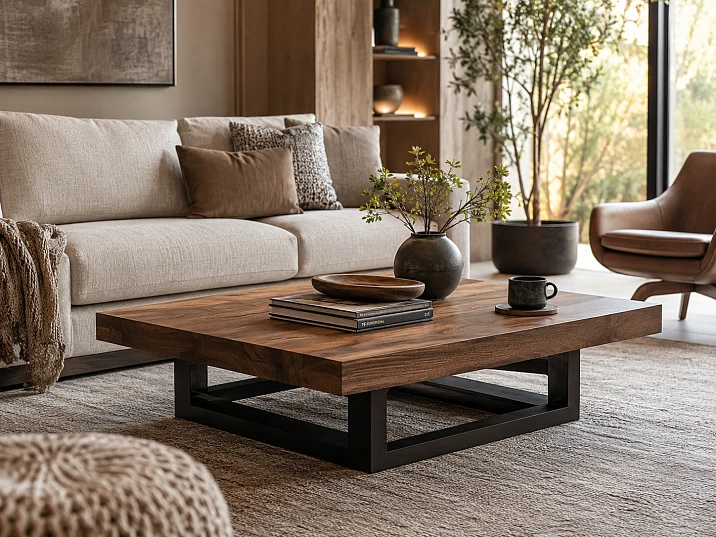
A coffee table base is chosen differently than a base for a dining or kitchen table. What matters is not seating at a chair, but convenience next to a sofa, armchair, rug, TV area, and coffee group. A coffee table sits lower, is used differently, and has a much stronger impact on the feeling of lightness in the living room. If the base is too tall, massive, or doesn't match the shape of the tabletop, the table starts to obstruct passage, visually weighs down the sofa area, and looks like random furniture.
A good coffee table should be convenient for everyday items: cups, books, remote, phone, decor, tray, vase, board game. It doesn't have to withstand the same load as a large dining table, but stability is still important. Items are often placed on the edge of a low tabletop, people approach the table from different sides, and it may be accidentally kicked or moved during cleaning. Therefore, a low table base should not only be beautiful but also correctly chosen in terms of height, shape, and size.
If you need to assemble a table for a specific tabletop, sofa area, or living room interior, you can buy a base for a coffee table in the STAVROS furniture frames section. Before purchasing, it's worth understanding what height the low base should be, how a metal base differs from a wooden one, which base to choose for a round or small tabletop, and what mistakes most often ruin a coffee table.
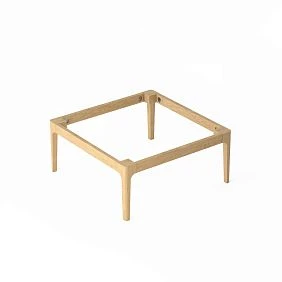
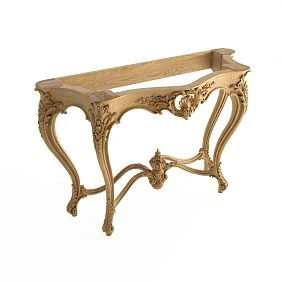


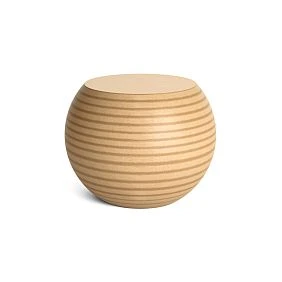
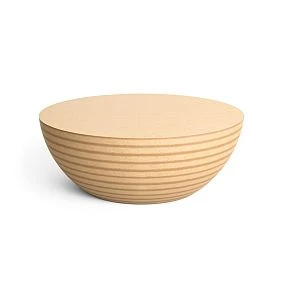
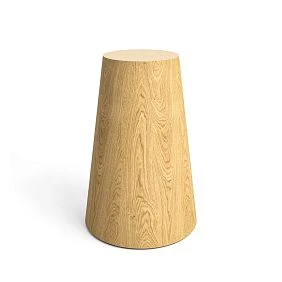
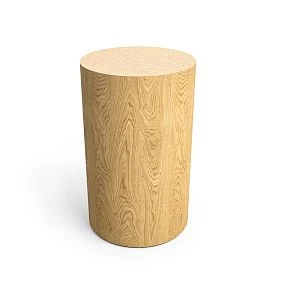
How a coffee table base differs from a regular base
A coffee table is lower than a dining, kitchen, or work table. This is the main point to start with when choosing. The base for a dining table is usually designed for chairs and seating. The base for a coffee table is designed for sofas, armchairs, the lounge area, and free movement around the furniture. Therefore, you cannot just take any small base and assume it will work.
A coffee table often stands in the center of the living room. It is seen from all sides, walked around, moved, and used not only while sitting but also while passing by. If the base is too wide, it catches legs. If too narrow, the table seems unstable. If too high, it clashes with the sofa. If too low, using the surface is uncomfortable.
A coffee table has a different visual task. It should not dominate the sofa, armchairs, and rug. Its role is to tie the lounge area together, provide a convenient surface, and add completeness to the interior. In a small living room, the coffee table should be light and compact. In a spacious room, it can be more expressive, but it still should not look like a reduced dining table.
The base influences this more than it seems. The tabletop can be beautiful, but it is the base that sets the height, silhouette, stability, and style. Metal geometry makes the table more graphic. A wooden base adds warmth and furniture-like quality. A loft-style base emphasizes a modern character. A round symmetrical support helps bring together the soft composition around the sofa.
If the buyer chooses table bases for the coffee table format, you need to look not only at the overall beauty but also at how the base will live in the living room: whether it interferes with passage, matches the sofa in height, suits the shape of the tabletop, supports its weight, and does not overload the room.




What to check before buying: key characteristics
Before ordering a low base, it is useful to gather data about the future tabletop and installation location. This is not complicated preparation, but normal purchasing logic. The more accurately you understand what kind of table you need, the lower the risk of buying a beautiful but inconvenient base.
| Parameter | What to Check | Why this is important |
|---|---|---|
| Table type | Coffee, side, decorative, console | Different scenarios require different heights and stability |
| Height of sofa or armchairs | Seat height and armrest level | A coffee table should not be too high or too low next to upholstered furniture |
| Final table height | Undercarriage height plus tabletop thickness | It is the final height that is felt in use |
| Tabletop shape | Round, square, rectangular, oval, custom | The shape determines which base will be stable and beautiful |
| Tabletop size | Diameter, length, width, thickness | A small tabletop requires careful proportions, a larger one needs more confident support |
| Tabletop weight | Especially for solid wood, stone, glass, porcelain stoneware | The low base must support the material and not wobble |
| Undertable material | Metal, wood, or other confirmed material in the product card | Material affects style, load, care, and visual weight |
| Color and finish | Current options should be checked in the product card | The finish should match the sofa, tabletop, floor, and furniture |
| Installation location | Center of the sofa area, beside the sofa, by the armchair, by the window | The shape of the base and the size of the passages depend on the location |
| Mounting | Base and tabletop compatibility | The fastening depends on the material, thickness, and design |
Exact dimensions, material, finish options, configuration, and fastening features must be checked in the product card or clarified with a STAVROS manager. You cannot choose a coffee table base just from a photo: in low furniture, even a small error in height or width is immediately noticeable.
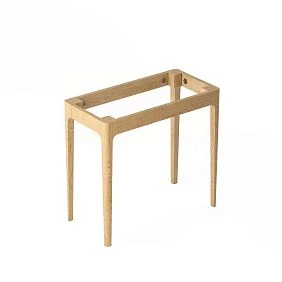
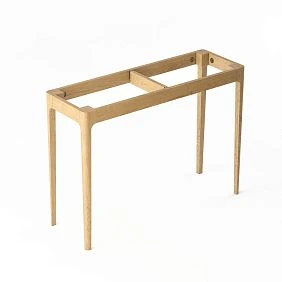
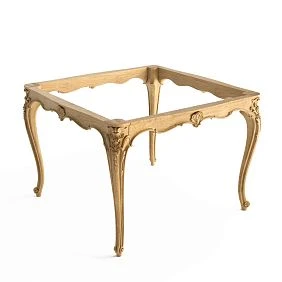
Our factory also produces:
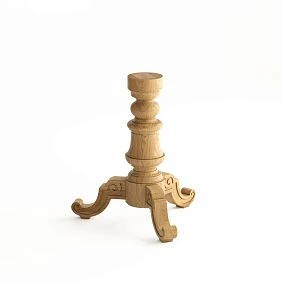

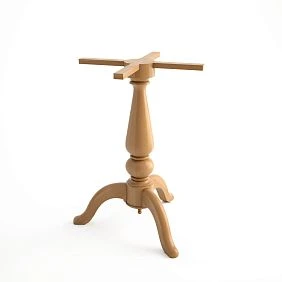
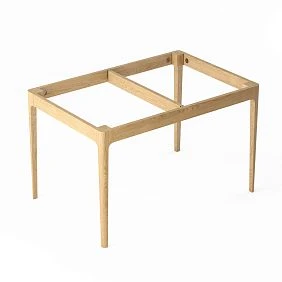

How to choose the height of the base for a coffee table
The height of a coffee table is always calculated together with the tabletop. The base alone does not provide a complete answer. If the base is low but the tabletop is thick, the finished table may end up higher than planned. If the tabletop is thin, a base that is too low will make the surface uncomfortable.
A coffee table is usually lower than a dining table. It should be comfortable next to the sofa: to place a cup, put down a book, pick up a remote, set a tray or a decorative vase. If you have to reach down too far, the table is too low. If the surface is almost level with the sofa armrests and overlaps the soft zone, the table is too high.
A simple formula is:
final coffee table height = base height + tabletop thickness.
For example, a low base of 36–40 cm with a tabletop of 3–4 cm gives a table of about 39–44 cm. This often works for a sofa area. A base of 45 cm with the same tabletop gives 48–49 cm, and such a table will be noticeably higher. For some living rooms this is convenient, especially if the sofa is high, but for low upholstered furniture it may be too much.
| Scenario | Target final height | What to consider |
|---|---|---|
| Low coffee table next to a modern sofa | Approximately 35–42 cm | Suitable for low sofas, carpet areas, minimalist interiors |
| Versatile coffee table | Approximately 40–48 cm | Convenient for a cup, book, remote, tray |
| Coffee table next to an armchair | Approximately 45–55 cm | Need to check the height of the armchair and armrests |
| Side table next to the sofa | Approximately 50–60 cm | Often works as an auxiliary surface |
| Decorative table | Depends on the task | Can be lower or higher if not used constantly |
When choosing the height, it's important to consider not only the sofa but also habits. If the coffee table is mainly for decoration, it can be made lower. If it's often used for drinking coffee, working with a laptop, playing board games, or placing snacks, a too low design will be uncomfortable.
For a coffee table, the logic is slightly different. It can be smaller in area, but its surface should remain accessible. If the table is placed next to an armchair, it can be higher than a classic coffee table. If placed in front of the sofa, it is better to keep a low profile.
A common mistake many buyers make is choosing a base based on a beautiful photo without comparing it to the sofa. In the image, the base may look proportional, but in a real living room, the height changes due to the thickness of the tabletop, rug, armrests, and the overall height of the upholstered furniture.
Get Consultation
How to choose the shape of the base for a small tabletop
A small tabletop requires particularly careful support. For a large table, the base can 'dissolve' under the surface, but for a coffee table, it is often immediately visible. If the base is too massive, the table looks heavy. If it is too thin or narrow, it gives a feeling of instability.
Round tabletop
For a round tabletop, central and symmetrical bases work well. The circle itself has no corners, so the support should hold it evenly. If the base is offset or too elongated, the table may look strange.
Base for a round coffee table You need to select based on the diameter and weight of the surface. A small circle on a too-wide base will lose its lightness. A large circle on a small support will be unstable, especially if you place a cup, vase, or book on the edge.
A round coffee table is good for a soft seating area: it has no sharp corners, it's easier to walk around, and it suits sofas, armchairs, and rugs. But precisely because of the lack of corners, the load can come from any side. The base must hold the table securely.
Square tabletop
A square tabletop requires balance in two directions. The base should not be too elongated in only one direction. If the table is small, compact geometric shapes, a central support, or a neat frame structure look good.
A square coffee table is convenient in interiors with straight sofas, modular upholstered furniture, strictly shaped rugs, and symmetrical arrangements. But it requires more attention to walkways: the corners can get in the way if the room is small.
Rectangular tabletop
A rectangular coffee table is often placed in front of a sofa. Here, support for the long side is important. If the base is too short, the edges will have a large overhang, and the table may look unstable. If the base is too long, it can interfere with legs and visually weigh down the furniture.
The rectangular shape is convenient for a long sofa. On such a surface, it's easy to place a tray, books, a vase, candles, or a remote. But the base must maintain proportion: not be too tall, not conflict with the length of the tabletop, and not block the space between the sofa and the TV area.
Oval and non-standard tabletop
An oval tabletop combines the softness of a circle and the elongation of a rectangle. For it, it's important to choose a base that doesn't look too angular. Non-standard shapes require even more checking: you need to consider the maximum length, width, weight, and center of gravity.
If the tabletop shape is complex, it is better to choose a base based on actual dimensions rather than general impression. This is especially important for slabs, asymmetrical wooden boards, and designer surfaces.
Metal base for a coffee table
A metal base for a coffee table is often chosen for modern living rooms, lofts, minimalism, interiors with graphic details, black lighting fixtures, thin furniture legs, and the contrast of wood with metal. Metal helps make the table visually lighter, even if the tabletop is quite expressive.
Such a base pairs well with a wooden tabletop. Wood provides warmth and texture, metal provides a clear silhouette. This is especially noticeable in the sofa area: the coffee table sits low, so the geometry of the base reads almost like a pattern against the rug and floor.
Metal base for a coffee table may also suit stone, glass, veneered, or other tabletops if compatibility parameters are confirmed in the product card. But it's important not to consider metal as an automatic guarantee of strength. Stability depends on the design, base width, fastening, and surface weight.
A black base for a coffee table works well in loft interiors, modern living rooms, and spaces with contrasting hardware. It can support black handles, lighting fixtures, sofa legs, and thin metal furniture details. But in a small room, a too dark and massive base may look heavy.
A metal base is convenient for compact coffee tables because the thin geometry does not overload a small tabletop. But stability is especially important here. If the table is small and tall, a narrow base can be dangerous. If the table is low, the base must maintain balance and not catch legs.
Before purchasing, you need to check the height, width, shape, attachment points, and permissible use. If the tabletop is heavy, it's better to confirm compatibility before ordering.
Wooden base for a coffee table
A wooden coffee table base is chosen when you want a warmer, more furniture-like, and calm look. It works well with classic, neoclassical, country homes, living rooms with natural materials, interiors with wooden furniture, soft shades, textured textiles, and calm finishes.
Wood makes a coffee table not just a surface on a support, but part of a furniture group. If the room already has wooden facades, doors, baseboards, frames, consoles, chairs with wooden elements, or other furniture, a wooden base helps tie the table into the interior.
Wooden coffee table base looks especially good with a wooden tabletop. But there is a risk of overloading. If the tabletop is thick and the base is massive, a small coffee table can become too heavy for the living room. Therefore, you need to watch the proportion.
For a small table, the wooden support should be neat. Too large elements will take away the lightness. For a spacious living room, you can choose a more expressive shape, especially if the table stands on a large rug and there is enough air around.
When choosing a wooden base, it is important to check the current parameters in the product card: material, dimensions, finish, and purpose. If the base is being selected for an existing tabletop, you need to evaluate the shade, texture, and future treatment in advance. For projects where wood plays a major role, it is useful to look at other Solid Wood Itemsso that the coffee table does not fall out of the overall interior line.
Loft coffee table base
A loft coffee table base is usually built on clear geometry, metal, contrast, and an open structure. Such a table looks good with a wooden tabletop, especially if the surface has a noticeable texture. A loft base does not hide the structure but makes it part of the design.
In a living room, a loft base often works as a graphic accent. It can support a metal lamp, open shelves, black furniture details, a brick wall, concrete texture, dark handles, or a minimalist TV unit. But it is important not to overdo it. The coffee table is lower than other items, and a too massive black base can visually weigh down the rug area.
For a coffee table, it's better to choose a compact loft base if the table is in a small room. In a spacious living room, you can afford a more expressive shape. But even there, the base should be comfortable for legs and passage.
A good loft composition is built on balance. If the tabletop is thick and rough, the base can be simpler. If the tabletop is thin and calm, the base can take on more expressiveness. If the room already has a lot of black metal, the coffee table should support the style, not argue with it.
A loft coffee table base is suitable not only for industrial interiors. In a modern living room, it can add composure and clarity. But for a classic, soft, or romantic room, it is better to consider a wooden or calmer base.
Designer base: when it is appropriate
A designer coffee table base is chosen when the table itself should be a noticeable element of the interior. It is not just a coaster for a cup, but part of the living room composition. This option is appropriate in a spacious seating area, showroom, salon, office, waiting area, modern apartment or house where furniture is chosen deliberately.
But a designer form requires discipline. If the base is too active, the tabletop should be calmer. If the tabletop itself is expressive—for example, massive, non-standard, with a bright texture—it is better to choose a more careful base. Two strong elements in a small table often argue with each other.
A beautiful coffee table base is not always the most complex base. Sometimes simple geometry works better if it exactly matches the sofa, rug, and tabletop. Design is shown not in the number of details, but in precise proportion.
For a small living room, a designer base should be light. In a compact room, the table is close to the sofa, armchairs, and passage. If the base is too sculptural, it will start to get in the way. In a large living room, you can choose a more expressive option because there is space around it.
When buying a designer base, it is important to check not only the look but also the practicality: stability, height, leg comfort, compatibility with the tabletop, material, and fastening. The coffee table should be beautiful, but it will still be used every day.
Base for a coffee table: what to consider separately
A coffee table is often smaller than a side table. It can be placed not in front of the sofa, but beside an armchair, near a window, next to a lounge chair, by a small seating group, or in a reading area. Therefore, the base for a coffee table is chosen slightly differently.
A coffee table should be accessible. A cup, book, phone, glasses, small lamp, vase, or plate are placed on it. If it stands beside an armchair, its height can be closer to the armrest. If in front of the sofa, it's better to stick with a low side table height.
coffee table base It should be compact but stable. A small tabletop does not forgive mistakes: if the base is too narrow, the table is easily knocked over. If it is too wide, it looks bulky and gets in the way of legs.
A coffee table is often moved. It may be shifted closer to an armchair, moved aside during cleaning, or repositioned near the sofa. Therefore, the base should not be inconvenient, catch on the carpet, or be too heavy for its intended use. At the same time, it must maintain balance.
If a buyer wants to purchase a base for a coffee table, it should be determined in advance whether this will be a separate small table or part of a set of two or three tables. Sets often use different heights and diameters. In a single option, proportion and stability are especially important.
How to make a side table from a tabletop and base
Assembling a side table from a separate tabletop and base is possible if the main parameters are thought out in advance. This approach is convenient when ready-made models do not fit in size, shape, material, or style. The buyer can choose a tabletop to match the interior and select a base for it.
The first step is to determine the location. Will the table stand in front of the sofa, beside an armchair, on a carpet, near a window, between two armchairs, or in the center of the living room? The shape and size depend on this. In front of the sofa, a rectangular or oval table is often convenient. In a small area, a round one. By an armchair, a compact coffee table.
The second step is to choose the tabletop. You need to know its shape, dimensions, thickness, and weight. Without this data, you cannot correctly select the base. A thick wooden surface will add height and visual weight. Glass will require careful fastening and suitable support. Stone or porcelain stoneware require load testing.
The third step is to calculate the final height. A low base plus a thick tabletop can result in a medium height rather than a low one. If the sofa is low, this is important. It is better to measure the seat height of the sofa in advance and imagine where the table surface will be.
The fourth step is to choose the shape of the base. For a round tabletop, symmetry is needed. For a rectangular one, support along the length. For a square one, balance along two axes. For a small tabletop, compactness without losing stability.
The fifth step is to check the fastening. You cannot assume that any base will fit any surface. The fastening depends on the material, thickness, weight, and design. If in doubt, it is better to clarify the parameters before purchasing.
The sixth step is to match the table to the living room style. If the room has wooden details, you can choose wood. If the interior is modern, metal will work. If you need graphics and contrast, you can consider a loft base.
This route helps make the coffee table not a random assembly, but a full-fledged piece of furniture: comfortable, stable, beautiful, and suitable specifically for your living room.
Where to use a coffee table with a low base
A coffee table is most often placed in the living room, but there are more scenarios. It can work in a study, bedroom, relaxation area, hall, salon, showroom, waiting room, library, coffee zone, by the fireplace, or near a panoramic window. In each case, the underframe must match not only the tabletop but also the location.
In the living room in front of the sofa
This is the most common scenario. The table stands in the center of the soft seating area and connects the sofa, armchairs, rug, and TV zone. Here, low height, convenient access, and free passage are important. The base should not catch on legs and hinder movement around the sofa.
In the sofa area with armchairs
If a room has several armchairs, a coffee table can become a central point for conversation. Round and oval tables work well for such an area because they are easy to approach from different sides. The base should be stable all around.
In a small living room
In a compact room, the coffee table should be lightweight. It's best to avoid overly massive bases, wide frames, and complex shapes that visually eat up space. A low, neat base will help preserve an airy feel.
In a study
In a study, a coffee or side table can be placed next to an armchair, a meeting sofa, or a reading area. Restraint and convenience are important here. The base should match the office furniture and not look too decorative.
In the bedroom
A small coffee table in the bedroom can be placed by an armchair, window, or in a relaxation area. Soft shapes and calm materials are preferable here. An overly active loft-style base may be unnecessary if the room is decorated in a calm palette.
In a commercial interior
In a salon, showroom, office waiting area, or cafe, the coffee table should be sturdy and neat. It will be used by different people, moved, bumped into, and have drinks and catalogs placed on it. The base must withstand active use and look good from all sides.
Metal or wood: comparison table
| Criterion | Metal table base | Wooden table base |
|---|---|---|
| Visual character | Graphic, modern, contrasting | Warm, upholstered, soft |
| Where it looks best | Loft, minimalism, modern living room | Classic, neoclassical, country house, natural interior |
| Combination with tabletop | Accentuates wood, stone, glass well | Supports a wooden tabletop well |
| In a small living room | Can look lighter with thin geometry | Requires careful scaling to avoid overwhelming |
| In the sofa area | Gives a clear silhouette against the carpet background | Makes the table calmer and warmer |
| Care and practice | Depends on the coating and design | Depends on the material and finish |
| When to choose | Need a modern accent, loft, black geometry | Need to connect the table with wooden furniture |
| What to check | Width, height, mounting, stability | Cross-section, size, finish, compatibility with the tabletop |
The choice between metal and wood should not be reduced to the phrase 'which is stronger'. Both options can work well if the design suits the tabletop. It's more important to understand what mood the room needs and which support will be more convenient in a specific area.
What to buy together
A coffee table is assembled not only from the base. You need a tabletop, suitable fasteners, sometimes finishing, and sometimes additional furniture elements so that the table does not look random. A complete approach helps avoid mismatches in style and size.
If the tabletop is wooden, it's useful to look not only at the base but also at the neighboring ones Solid Wood Items, if there are other wooden details in the interior. If you need a ready-made route for bases, it is easier to open furniture frames and choose based on the shape and height of the future table.
| What to add to the purchase | Why this is needed | Which scenario it suits | What to pay attention to |
|---|---|---|---|
| Tabletop | Determines the shape, weight, height, and style of the table | Any coffee or side table | Size, thickness, material, weight |
| furniture frames | Help select a base for the tabletop | Coffee table, side table, sofa area | Height, width, shape, purpose |
| Fastening | Connects the underframe and tabletop | Self-assembly | Compatibility with material and thickness |
| Finishing products | Help coordinate the base and tabletop | Wooden tables for painting, varnish, oil | Does the finish match the material |
| Carpet | Visually gathers the sofa area | Living room, lounge area | The table should not catch the pile or obstruct the passage |
| Tray, decor, books | Help use the surface beautifully | Coffee and magazine area | Do not overload a small tabletop |
| Solid Wood Items | Support the wooden line of the interior | Living room with wooden furniture and trim | Combination by shade and texture |
You don't always need to buy many accompanying items. But the tabletop, mount, and base should be planned together. A coffee table is small, so any mismatches are more noticeable than in large furniture.
How not to confuse a table base with similar solutions
The underframe for a coffee table is easy to confuse with legs, decorative supports, dining table bases, or random blanks. In photos they may look similar, but their purpose differs.
Legs for a coffee table are separate supports. They may work for a lightweight tabletop and simple construction. But if a more solid base is needed, it's better to choose an underframe or frame. This is especially important for round, heavy, or non-standard tabletops.
A dining table base is not automatically suitable. It is designed for a different height and seating. If you take a base that is too high, the coffee table will turn into a strange low dining table. It will interfere with the sofa area and look disproportionate.
A decorative support is not always load-bearing. If the product is intended for furniture or decor but is not confirmed as a tabletop base, using it as an underframe is risky. You need to check the purpose in the product card.
A random blank seems convenient only until assembly. Then you have to adjust the height, reinforce the mount, level the structure, and deal with finishing issues. A ready-made underframe is more convenient because the buyer immediately chooses a base for their furniture task.
| What the buyer chooses | What it can be confused with | How to distinguish |
|---|---|---|
| Coffee table base | Base for a dining table | The coffee table is lower and designed for a sofa area |
| Under-table support for a coffee table | Decorative support | The under-table support must hold the tabletop, not just decorate |
| Metal base | Any metal frame | You need to consider the purpose, height, and mounting |
| Wooden base | Wooden legs | The underframe often provides more solid support |
| Loft base | Too massive industrial structure | For a coffee table, low height and lightness are important |
Practical selection for specific situations
Need a table in front of a large sofa
For a large sofa, it's better to choose a tabletop and base that match the width of the seating area. A table that is too small will get lost. One that is too tall will be in the way. Rectangular, oval, or a pair of coffee tables of different sizes work well. The base should support the length and not catch your feet.
Need a coffee table next to an armchair
Accessibility is key here. The table can be taller than a classic coffee table, but should not exceed a comfortable level next to the armrest. It's better to choose a compact, stable, and not too wide base.
Need a table for a small living room
The main thing is visual lightness. Thin metal bases, neat wooden shapes, round or small rectangular tabletops work well. Do not overload the room with a massive base.
Need a round coffee table
For a round tabletop, symmetry is important. A central or evenly distributed base helps maintain balance. You need to check the diameter of the tabletop and stability under edge load.
Need a loft-style table
You can choose a black metal base or another graphic shape. But the loft-style underframe should not be too heavy for low furniture. The smaller the living room, the more precise the geometry should be.
Need a warm table to match wooden furniture
It's better to consider a wooden base or an option that supports the texture of the tabletop. It's important not to make the table too massive: the coffee table area should remain light.
Need a table for commercial space
In a salon, showroom, or waiting area, the base should be stable, neat, and easy to clean. People will approach the table from different sides, so the shape should not obstruct movement.
Installation, preparation and care
Before assembling a coffee table, you need to check the compatibility of the base and tabletop. A low table seems like simple furniture, but errors in fastening, height, and stability quickly become apparent here.
First, lay out the elements on the floor and imagine the finished table in the room. Does the size fit the sofa? Is the tabletop too large? Will the base catch the carpet? Is there enough clearance between the sofa and the table?
Then you need to check the center of gravity. For a round tabletop, it's best to place the base exactly in the center. For a rectangular one, the edge overhang should be even and not create a tipping risk. For a non-standard shape, additional checks may be needed.
The fasteners must match the tabletop material. You cannot assume in advance that any screw or fastener kit will work. Solid wood, glass, stone, MDF, and other materials require different approaches. If the parameters are not specified, it is better to clarify them before purchasing.
After assembly, the table should be tested in the actual area. Place it in front of the sofa, walk around it, sit down, put a cup or book on it, and lightly load the edge. If the table wobbles, gets in the way of your legs, or seems too high, the problem is found before active use.
Care depends on the material and finish. It is best to check the current recommendations in the product card. In any case, a coffee table often comes into contact with cups, books, decor, and hands, so the surface and base should be convenient for everyday maintenance.
Mistakes when choosing a base for a coffee table
The first mistake is choosing a base that is too high. A coffee table should work with the sofa, not with chairs. If the height is almost dining table height, the table will interfere with the soft seating area.
The second mistake is not considering the thickness of the tabletop. The buyer looks at the height of the base but forgets that a few more centimeters will be added on top. This is especially noticeable in low furniture.
The third mistake is choosing a massive base for a small tabletop. Such a table looks heavy and uncomfortable, even if the materials are high-quality. A small tabletop requires careful proportions.
The fourth mistake is choosing a beautiful but unstable structure. A coffee table is often bumped with legs, moved, and loaded on the edge. The base must maintain balance.
The fifth mistake is not considering the height of the sofa. The same table can be comfortable next to a high sofa and too high next to a low one.
The sixth mistake is forgetting about walkways. In the living room, it should be convenient to walk between the sofa, armchairs, table, and TV area. A wide base or sharp corners can get in the way.
The seventh mistake is not checking the fastening. If the tabletop is heavy or non-standard, a random fastening may be unsafe.
The eighth mistake is choosing a style separately from the room. The base may be beautiful on its own but not match the sofa, rug, furniture, lamps, and finishes.
The ninth mistake is not reading the product card. The size, material, finish, purpose, and configuration should be clear before purchase. If data is missing, it's better to clarify with a STAVROS manager.
Who a separate coffee table base is suitable for
A separate base is suitable for those who want to assemble a coffee table for their living room, rather than choosing a ready-made model from a limited set. This is convenient if you already have a tabletop or need a specific size, shape, height, material, and style.
This option is suitable for designer interiors, apartments, houses, country living rooms, studies, salons, showrooms, and waiting areas. It helps to assemble furniture for a specific space: a low table in front of the sofa, a compact coffee table, a round table for a soft seating group, a loft-style option with a wooden tabletop, or a calm wooden table for a classic interior.
The base is worth choosing for those who are ready to check the dimensions in advance. If the buyer knows the height of the sofa, the shape of the tabletop, the approximate weight, and the installation location, they can select the base consciously.
But a separate base is not always the best option. If there is no understanding of what the tabletop will be, what fasteners are needed, and what height is suitable, the purchase may be random. If a fully ready item without calculations is needed, it's easier to look at a ready-made table. If the tabletop is very heavy or non-standard, it's better not to order the base without consultation.
Where to buy a coffee table base
It's better to start the purchase with the task. Do you need a coffee table in front of the sofa, a side table by the armchair, a round table for the soft seating area, a loft base for a wooden tabletop, or a compact base for a small living room? After that, you need to measure the space, determine the shape of the tabletop, and calculate the final height.
on the Stavros website you can buy a base for a coffee table and choose a base for the living room, sofa area, or coffee table. In the product card, you need to check the height, dimensions, material, purpose, compatibility with the tabletop, and mounting features.
If you need to compare different bases and furniture structures, you should open furniture frames. If the project involves a wooden tabletop and an interior made of natural materials, it is useful to look at Solid Wood Items, so the table matches other details in the room.
Before ordering, ask yourself a few questions: what height should the finished table be, will it obstruct the passage, does the base match the shape of the tabletop, will it support its weight, does the material match the living room style, and will it be easy to care for the table. This approach helps you choose not a random beautiful base, but a convenient coffee table for real life.
FAQ
How to choose a table base for a coffee table?
You need to consider the height of the sofa, the size and shape of the tabletop, its weight, the living room style, and the passages around the soft seating area. For a coffee table, low seating, stability, and visual lightness are especially important.
What height should the underframe be for a coffee table?
The height of the underframe is selected taking into account the thickness of the tabletop. A finished coffee table is usually lower than a dining table and should be comfortable next to the sofa. The thicker the tabletop, the lower the base may need to be.
Which underframe to choose for a coffee table?
For a coffee table, it's better to choose a compact, stable base that doesn't overload the small tabletop and doesn't obstruct passage. If the table is next to an armchair, the height can be aligned with the armrest.
What is better for a coffee table — a metal or wooden base?
Metal suits modern, minimalist, and loft interiors. Wood works better in warm, classic, natural, and country living rooms. The choice depends on the tabletop and the overall furniture in the room.
Will a metal table base work for a wooden tabletop?
Yes, if the dimensions, mounting, and load are suitable. Metal highlights the wood texture well and creates contrast. Before ordering, check the specifications in the product card.
How to choose the shape of the base for a round tabletop?
For a round tabletop, central or symmetrical bases are often suitable. They help maintain balance and provide convenient access from all sides. The size of the base should match the diameter of the tabletop.
Can you make a coffee table from a separate tabletop and base?
Yes. You need to choose a tabletop, calculate the final height, select a base by shape and size, check the mounting and stability. This method is convenient if you need a table for a specific interior.
Which base is best for a small living room?
For a small living room, it is better to choose a low, compact, and visually light base. A too massive base will overload the sofa area and may obstruct the passage.
Is a loft underframe for a coffee table only suitable for a loft?
No. A loft base can also work for a modern living room if the interior features black metal, graphic lamps, a wooden tabletop, or contrasting details. But in a classic room, it might look too harsh.
What to check before buying a table base?
You need to check the height, width, shape, material, purpose, fastening, and compatibility with the tabletop. It's also important to assess whether the table will obstruct the passage in the sofa area.
What to buy together with a coffee table base?
Usually, you plan the tabletop, fasteners, finish, and adjacent interior elements together. If the tabletop is wooden, you can additionally look at solid wood products to support the overall style of the room.
Where to buy a coffee table base?
Suitable options can be viewed in the section buy a base for a coffee table On the STAVROS website. Before ordering, you need to check the dimensions, material, height, and compatibility with the tabletop.
Result: a low base sets the character of the entire sofa area
A coffee table may seem like a small item, but in the living room, it's always in sight. It stands next to the sofa, rug, armchairs, books, cups, decor, and daily habits. Therefore, the base for a coffee table should not just be beautiful, but properly selected in terms of height, shape, material, and stability.
For a round tabletop, symmetry is important. For a small coffee table, compactness and balance. For a loft living room, a graphic metal base. For a warm natural interior, a wooden base. For a sofa area, a low seating height and clear walkway.
On STAVROS, you can choose a base for a coffee table, side table, or soft seating area, check the parameters in the product card, and assemble furniture for a specific tabletop. This approach helps you buy not a random support, but a well-thought-out low base that makes the living room comfortable, cohesive, and expressive.