Article Contents:
- A round table starts with support: buy a wooden round table base without mistakes in size, style and stability
- Why a round table needs a special base
- No corners — no obvious support points
- The tabletop is visible from all sides
- Center of gravity and balance
- Tabletop diameter and base size: the key formula
- Tabletop diameter 80–90 cm: table for two
- Tabletop diameter 100–110 cm: table for four
- Tabletop diameter 120–140 cm: table for six people
- Tabletop diameter over 140 cm: formal dining table
- Summary table
- Central support or four legs: what to choose for a round table
- Central support: freedom for legs
- Cross base: balance of stability and aesthetics
- Four legs around the circumference
- Pedestal base: monolith and power
- Material for wooden underframe: oak, beech, and solid wood in detail
- Oak: heavy, expressive, durable
- Beech: strength and precision for painting
- Array vs MDF and glued materials
- Finish: oil, varnish, enamel, tinting
- Base for a round dining table: selection practice
- Round kitchen table for two to four people
- Round table in the dining room for six people
- Restaurant round table
- How to calculate seating places
- Base for a round coffee table
- Height: 35–50 cm
- Visual lightness: not to weigh down the space
- Diameter for coffee table
- Carved base: when the foundation itself becomes decor
- Why a carved base changes the perception of the entire table
- Examples of STAVROS carved solutions
- How to choose a base to match the interior style
- Classic
- Neoclassicism
- Provence
- Art Deco
- Modern Interior
- Restaurant interior
- Mistakes when buying a wooden base for a round table
- Mistake 1. Choosing a base that is too small
- Mistake 2. Not accounting for the weight of the tabletop
- Mistake 3. Forgetting about seating positions
- Error 4. Buying a decorative support without checking stability
- Error 5. Mixing incompatible styles
- Error 6. Not checking the height
- Error 7. Not checking the attachment to the tabletop
- Error 8. Ordering without measurements
- What to buy together with a round table base
- Tabletop
- Fasteners
- Finish Coating
- Decorative appliqués
- Wooden molding to blend with the environment
- Chairs or armchairs
- Where to buy a wooden base for a round table
- About STAVROS
- FAQ
- Which base to choose for a round table?
- How to calculate the size of a table base for a round tabletop?
- Can you place a round tabletop on four legs?
- What is better for a table base — oak or beech?
- Would a carved table base suit a modern interior?
- Where to buy a wooden table base for a round table?
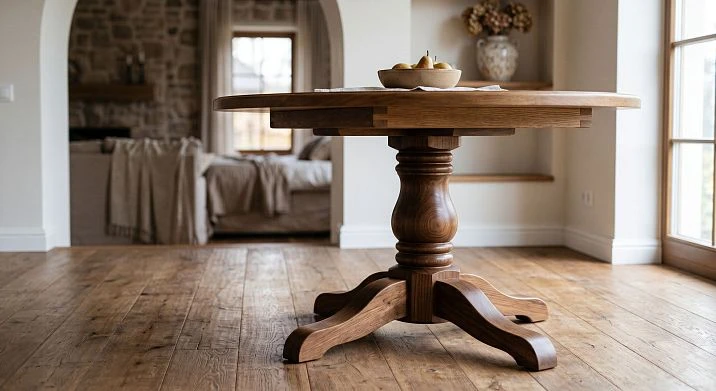
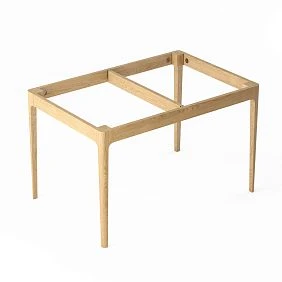
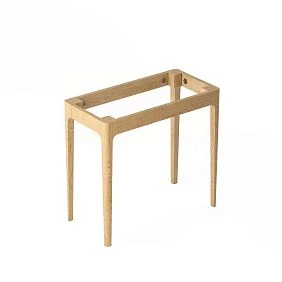
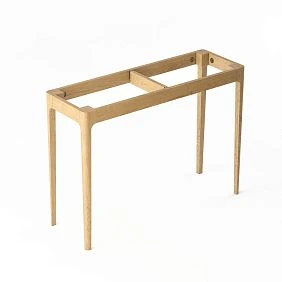
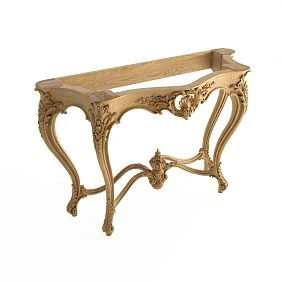
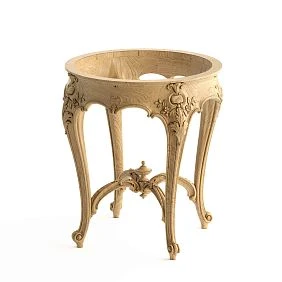

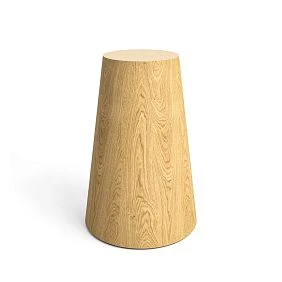
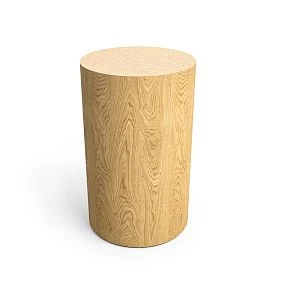
A round table starts with support: buy a wooden table base for a round table without mistakes in size, style, and stability
A round table in an interior is not just a piece of furniture. It is a geometric and social focal point of the space: it brings people together without dividing anyone into 'main' and 'secondary'. It has no corners, dictates no hierarchy, creates no dead zones. It simply gathers.
But there is one detail that is thought about last — and it determines whether the round table will stand confidently and beautifully, or start to irritate within a week. We are talking about the table base. That wooden support that holds the tabletop, distributes the load, ensures comfortable seating, and ultimately shapes the silhouette of the entire piece.
Buying a wooden table base for a round table is a task that requires not just 'finding something suitable', but precisely matching the diameter, height, base width, shape, and style. Without this understanding, even a beautiful tabletop turns into a wobbly structure or a visual imbalance.
This article is a practical guide to choosing a wooden table base specifically for a round shape. No fluff, no general discussions about furniture in general. Only specifics — on sizes, constructions, materials, and styles.
Catalog STAVROS wooden table bases — a starting point for those who already know what they are looking for. For the rest, we start with the main thing.




Why a round table needs a special base
A rectangular table forgives many mistakes: it has four corners, each of which can have a leg, and the problem is solved. The weight is distributed evenly, the tabletop does not tilt to any side, and the seating geometry is predictable.
With a round tabletop, everything is different.
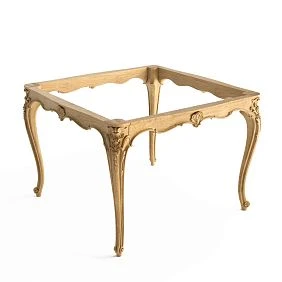
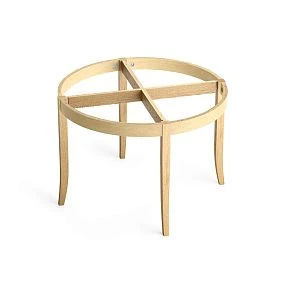
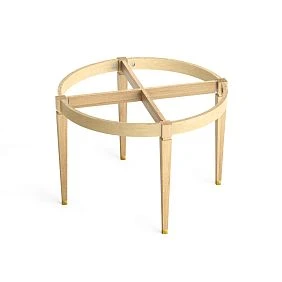
Our factory also produces:
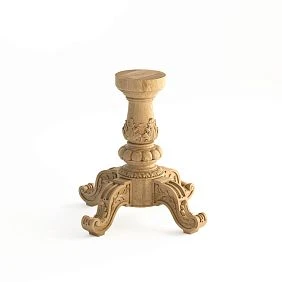
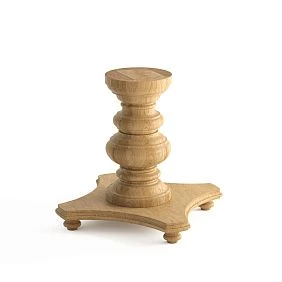
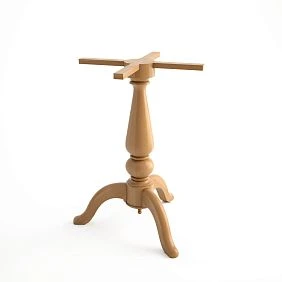
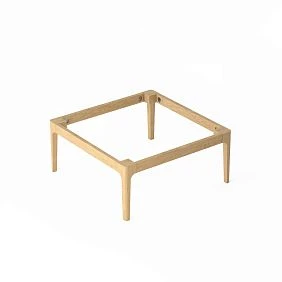
No corners — no obvious support points
When you place legs under a rectangle, they go into the corners. When you place legs under a circle — the question of their placement becomes a geometric challenge. Four legs under a circle need to be arranged so that they not only support the weight but also do not interfere with people sitting.
That is why for a round dining table, a central base or a cross-shaped base is often a better solution than four separate legs.
Get Consultation
The tabletop is visible from all sides
A rectangular table is often placed against a wall or next to a sideboard — its ends are sometimes not visible at all. A round table is almost always placed in an open space, approached from all sides. This means the base is visible from any angle. An ugly base means an ugly table. No compromises.
Center of gravity and balance
A round tabletop has a clear center of gravity — its geometric center. The main support force should be applied exactly there. If the base is shifted, if its crosspiece is asymmetrical, if the width is insufficient — the table starts to "tip over" under load on one side.
This is especially critical for heavy tabletops made of stone, ceramic, or thick solid wood. A wooden underframe for a round table must not just be "large enough," but precisely calculated for the weight and diameter.
Tabletop diameter and base size: the key formula
This is the core of the entire selection. If this calculation is done correctly — everything else (style, finish, shape) is just details. If incorrectly — no beautiful decor will save it.
Tabletop diameter 80–90 cm: table for two
This is a compact format: a coffee table or a small dining table for two people. A kitchen corner table, a bar area, a work nook in an office.
For this diameter:
-
A central support with a cross-shaped base 50–60 cm wide is optimal.
-
A round or square base with a diameter of 45–55 cm — for a single-support solution.
-
Single thick central leg (pedestal support) with a diameter of 80 mm — for a minimalist solution.
A table for two can be placed on a central support — maximizing seating space, with no crossbars to obstruct legs.
Tabletop diameter 100–110 cm: table for four people
The most popular format for a kitchen or small dining room. Four people, comfortable seating, a sense of spaciousness.
For a diameter of 100 cm:
-
Cross-shaped base with a cross width of 65–75 cm — stable, does not interfere with legs.
-
Central support with a wide base from 55 cm — provided the base has sufficient weight.
-
Four legs placed on a circle with a diameter of 70–75 cm — as an alternative.
Important: with four legs on a circle, the distance between them must be equal. Otherwise, when seated, there will always be a spot where legs hit a leg.
Tabletop diameter 120–140 cm: table for six people
This is where the zone begins where errors in base selection are most noticeable. A 120 cm tabletop weighs significantly more than a 100 cm one — especially if it's stone or thick solid wood.
For a diameter of 120 cm:
-
A cross base with a cross width of 75–90 cm is standard.
-
Double or reinforced central support — for heavy tabletops.
-
Four legs, but on a larger circumference (80–85 cm) — provided they don't interfere with seating six people.
For a diameter of 140 cm — only a wide cross base or reinforced double support. A single central post works unreliably here.
Tabletop with a diameter over 140 cm: formal dining table
Large family table, restaurant format, formal dining room. Here the requirements for the base are maximum.
-
Wide cross base from 90–100 cm.
-
Reinforced central structure with additional braces.
-
Either four to six legs in the correct arrangement.
For tabletops weighing over 50–60 kg (stone, thick solid wood) — be sure to check the permissible load on the underframe with the manufacturer.
Summary table
| Tabletop diameter | Number of seats | Base width | Support type |
|---|---|---|---|
| 80–90 cm | 2 | 45–55 cm | Central or cabinet |
| 100–110 cm | 4 | 65–75 cm | Cross or central |
| 120–130 cm | 5–6 | 75–90 cm | Cross or reinforced |
| 140–160 cm | 6–8 | 90–100 cm | Wide cross base or 4 legs |
| More than 160 cm | 8+ | 100+ cm | Reinforced construction |
Central support or four legs: what to choose for a round table
This is a choice that determines both comfort and aesthetics. And there is no universal answer. But there is logic.
Central support: freedom for legs
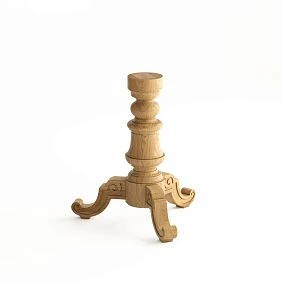
A central wooden underframe is one vertical element in the center of the table, which spreads out at the bottom into "paws" or a cross base. The main advantage: there are no legs around the perimeter under the table. Each person sits freely without thinking about where to put their legs.
This is especially important in compact spaces, when chairs are placed close to the table and space is limited.
Disadvantage: for very heavy tabletops, the central support may not be stable enough if the base is not wide enough.
Cross base: balance of stability and aesthetics
Cross base — four "rays" from the center in different directions. Stable, distributes load well, has an expressive silhouette when viewed from below and from the side.
Suitable for: most round dining tables with a diameter of 100 cm or more.
The only nuance: the "legs" of the cross base should be oriented so that they do not fall directly under the seating positions. If the cross base is turned correctly — a person sits in the "gap" between the rays. If incorrectly — legs hit the wood.
Four legs around the circumference
Classic scheme from furniture manufacturing. For a rectangular table — the absolute standard. For a round one — appropriate, but requires precise calculation of placement.
The legs are installed along a circumference with a diameter of 65–80% of the tabletop diameter. With a tabletop diameter of 100 cm — legs along a circumference with a diameter of 65–70 cm.
Alternative view: if you need four legs for a round table — consider wooden furniture legs STAVROS. This is a wide range of turned, carved, and tapered legs made of solid wood for different styles.
Pedestal base: monolith and power
A massive pedestal base — cylindrical, faceted, or shaped — gives a sense of monumentality. Such a table looks like a sculptural object. Works especially well in designer interiors, offices, restaurants.
A pedestal base is more complex to manufacture and more expensive, but it creates a unique appearance.
Material for a wooden underframe: oak, beech, and solid wood in detail
Choosing a wood species is not just about taste. Behind each material are real technical properties that determine the outcome.
Oak: heavy, expressive, durable
Oak is a dense species (700–750 kg/m³), hard, with low water absorption. For an underframe that bears real load, these are critically important characteristics.
The texture of oak is coarse, with clearly visible medullary rays and large pores. Under transparent coatings: oil, varnish, tinting — oak 'lives' and creates a prestigious, warm visual image. A carved wooden underframe made of oak is a product with a biography.
Buying an oak underframe is the right choice for classic, study, palace interiors, for high-end restaurants, and for family dining rooms with serious wooden furniture.
Beech: strength and neatness under paint
Beech has a density of 680–750 kg/m³, a closed structure, and a smooth surface. Beech holds its geometry well, does not deform with changes in humidity (within reasonable limits), and is easy to paint.
Buying a beech underframe is the right choice if painting with enamel, white color, or pastel tinting is planned. Under white enamel, beech gives an even, calm result. Oak in this case will 'show through' with its structure — this is not always desirable.
Solid wood vs MDF and glued materials
Buying a solid wood table base means buying a monolithic material with uniform mechanical properties throughout the cross-section. Solid wood does not delaminate, does not swell from point loads, and holds fasteners well.
MDF is a stable material, well-milled, an excellent base for painting. But it is heavier than solid wood for the same volume and less durable under prolonged loads. MDF is good for decorative parts, solid wood is more reliable for load-bearing ones.
Finishing: oil, varnish, enamel, tinting
-
Oil — protects wood from within, preserves tactility. The surface is matte, lively. For oak — the best choice.
-
Varnish — forms a film on the surface. Harder protection, glossy or matte finish. Easy to restore.
-
Enamel — opaque paint. For beech — ideal. For oak — only if texture is undesirable.
-
Tinting — transparent or semi-transparent coating with color. Allows you to change the shade while preserving the wood grain.
For a table base to be painted — choose beech. For a table base under oil or varnish — choose oak.
Table base for a round dining table: selection practice
The dining table is the most common task. Kitchen, dining room, living room with dining area. Let's break down specific scenarios.
Kitchen round table for two to four people
For a small kitchen — a table with a diameter of 90–100 cm with a central pedestal. The height of the work surface is 74–76 cm. The height of the pedestal with a tabletop thickness of 28–40 mm is 70–72 cm.
A wooden pedestal for a kitchen round table should be:
-
stable (base at least 55–60 cm wide);
-
easy to maintain (coated with varnish or enamel);
-
compatible with chairs — chair legs should not hit the base "feet".
Round table in the dining room for six people
Diameter 120–130 cm. Cross-shaped base with wide "rays". A wooden pedestal for a table of this class must withstand the load from a set of dishes, treats, and six actively used seats.
Important: with six seats, the distance between chairs is 55–60 cm per person. A chair takes up 45–50 cm in width. Total: for six people, the tabletop diameter must be at least 120 cm. Check that the crosspiece rays do not protrude directly under the seats.
furniture frames and under-table structures STAVROS — here all furniture bases and frames are concentrated, where you can choose the right solution considering sizes and formats.
Restaurant round table
Restaurant format — special requirements: durability, stability during repeated movement, ease of assembly, presentable appearance.
A wooden table base for a restaurant should be made of dense wood (oak or beech), with reinforced fasteners to the tabletop, with a coating that is easy to refresh.
Buying a wooden table base for a table in a cafe or restaurant is a task where size, stability, and durability are more important than decor. Although with the right choice, a carved wooden table base can become a signature design element of the establishment.
How to calculate seating places
Guidelines:
-
Diameter 80 cm — 2 seats
-
Diameter 90–100 cm — 3–4 seats
-
Diameter 110–120 cm — 4–5 seats
-
Diameter 130–140 cm — 5–6 seats
-
Diameter 150–160 cm — seats 6–8
These numbers are for comfortable seating without crowding. If necessary, the table can be "loaded" with one more seat, but without much comfort.
Underframe for a round coffee table
A coffee table is a completely different story. Different height, different load, different visual context.
Height: 35–50 cm
A coffee table typically has a height from the tabletop to the floor of 35–55 cm. This determines the underframe height: 31–50 mm less than the tabletop thickness.
For a low coffee table, the underframe should be low but stable. This is a non-trivial task for central supports: the shorter the post, the more important the base width.
Visual lightness: not to weigh down the space
A coffee table stands in a living area — it is seen constantly, people get used to it. A massive, over-decorated underframe would be out of place here. Better to have a laconic, neat one with a clean silhouette.
Coffee table base STL-036 STAVROS is an example of a solution designed specifically for this format. Correct proportions, stability, neat profile. For a round tabletop of small diameter — an optimal choice.
Diameter for coffee table
-
60–70 cm — standard for a coffee table in the living room;
-
80–90 cm — for spacious living rooms and lounge areas.
Wooden base for a round coffee table: central leg or compact crosspiece with a width of 40 to 55 cm.
Carved underframe: when the base itself becomes decor
This is where the conversation begins that distinguishes STAVROS from ordinary furniture frame suppliers. A carved underframe is not a "support for the tabletop." It is a sculpture that performs the function of a table.
Why a carved base changes the perception of the entire table
When a guest enters the dining room or living room, their gaze first glides along the horizontals — the tabletop, windowsill, cornice. But then it drops down — and there, under the beautiful tabletop, they either see an interesting support or standard wooden legs.
A carved wooden underframe is a meticulously crafted structure with relief, ornament, turned elements, which, when viewed from below, makes no less impression than the tabletop.
Examples of STAVROS carved solutions
Table base STL-015 — large, expressive, with rich carved decor. This is a solution for classic dining rooms, studies, and formal living rooms. For a round tabletop with a diameter of 120–140 cm — an impressive choice.
Table base STL-026-2 — a universal base with more restrained decor. Suitable for a wider range of tabletops and styles: from neoclassicism to modern classic.
To enhance the carved style decoratively — Decorative wooden inlays STAVROS. They can be used on side panels, aprons, or visible parts of the structure to enhance the stylistic unity of the table.
And don't forget about carved wood decor STAVROS — brackets, overlays, cornices, and moldings that help tie the table to the rest of the interior: wall panels, doors, fireplace, bookshelves.
How to choose a table base to match the interior style
Style is not just about 'beautiful or not'. It's about the consistency of the visual language of all objects in the space. A wooden table base that 'stands out' from the interior creates tension even with good quality.
Classic
Carved crosspiece with acanthus, classic ornament, turned elements. Oak with dark tint or varnish. Round tabletop made of oak or marble. Chairs with upholstered back and wooden legs in the same wood species.
Visual effect: monumentality, history, dignity.
Neoclassicism
Moderate decor, strict proportions, clean lines with turned accents. Beech under white or cream enamel. Tabletop of light marble or tinted oak. Chairs with wooden legs, upholstery in neutral tones.
Visual effect: elegance, purity, modern academicism.
Provence
Soft forms, rounded details, wear and patina. Beech under white or gray-blue enamel with slight aging. Tabletop of wood with antique tint. Wicker chairs or chairs with soft linen upholstery.
Visual effect: coziness, homeliness, lightness.
Art Deco
Geometry, vertical lines, decorative symmetry. Dark oak or lacquered wood in dark chocolate tone. Tabletop of black marble or dark wood. Chairs with geometric decor.
Visual effect: luxury, rhythm, theatricality.
Modern interior
Minimal decor or its complete absence. Pedestal base or compact cross without relief. Oak under matte oil in natural shade or beech under white enamel. Tabletop of glass, acrylic, ceramic, or light wood.
Visual effect: lightness, airiness, modernity.
Restaurant interior
Depends on the establishment's concept. For a classic restaurant — carved oak base. For a modern cafe — laconic central support. For a loft-style interior — metal + wood or raw oak under oil.
Mistakes when buying a wooden table base for a round table
This is not a theoretical list — these are real situations that happen when buying.
Mistake 1. Choosing a base that is too small
"A 55 cm cross base under a 120 cm tabletop" — visually, the table looks like it's about to fall. And physically too: when loaded at the edge, the center of gravity shifts beyond the base — a tipping moment is easily created.
Minimum rule: the width of the base should be at least 50–55% of the tabletop diameter. For a diameter of 120 cm — a cross base of at least 65–70 cm.
Mistake 2. Not accounting for the tabletop weight
A wooden tabletop 40 mm thick weighs 20–25 kg. A stone or ceramic one of the same diameter — 40–70 kg. The same wooden base for these two options means different loads. Check the permissible load.
Mistake 3. Forgetting about seating positions
A cross base oriented incorrectly creates legs right under the seating area. A guest sits, stretches their legs — and hits a "beam" of the base. Orient the cross base so that the "beams" fall between the seats.
Mistake 4. Buying a decorative support without checking stability
A beautiful carved base is not a guarantee of stability. Structural strength depends on the cross-section of the central column, the width of the base, and the quality of the joints. Always check the load-bearing capacity.
Mistake 5. Mixing incompatible styles
A baroque carved base + a minimalist glass tabletop is not 'eclecticism,' it's a conflict. Stylistic compatibility of the base and tabletop is a must.
Mistake 6. Not checking the height
The standard height of a dining table is 74–76 cm. The height of a chair is 44–46 cm. The difference is about 30 cm. If the base plus tabletop gives 80 cm, sitting will be uncomfortable. Check the final height before purchasing.
Mistake 7. Not checking the attachment to the tabletop
The base must have a mounting surface for attachment to the tabletop. The attachment method—screws from below, metal brackets, glued dowels—depends on the design. Make sure the method is suitable for your tabletop.
Mistake 8. Ordering without measurements
A photo on the internet does not convey the real scale. Always request exact dimensions: height, base width, central column diameter, mounting platform size.
What to buy together with a base for a round table
The underframe is a support. But the table is a system. Here's what you need to consider when placing a full order.
Tabletop
Round, of the required diameter and thickness. Wood, stone, ceramic, glass, acrylic — the choice depends on the task and style. The tabletop and underframe are ordered together or with compatibility check.
Fasteners
Metal brackets, wood screws, mounting foam for leveling — depending on the tabletop material. For stone and ceramic tabletops — special adhesive fixative.
Finishing coating
Oil, varnish, enamel — depending on the wood species and planned finish. Coating should be done before installing the tabletop: the ends and lower parts of the underframe are treated separately.
Decorative appliqués
Decorative wooden inlays can be installed on visible elements of the underframe to enhance the decorative look. Especially suitable for carved bases in classic interiors.
Wooden baguette for connection with the environment
Wooden Picture Frame helps visually connect the table with the interior: if the room has wooden frames, moldings, trims — a baguette from the same wood species creates a unified decorative rhythm.
Chairs or armchairs
The chair height should match the table height. Seat — 44–46 cm from the floor. Distance between the chair back and the tabletop edge when the chair is pulled out — at least 35 cm.
Where to buy a wooden underframe for a round table
Once all parameters are defined — tabletop diameter, height, style, material, base shape — all that remains is to find a reliable supplier with a real assortment and specified technical characteristics.
Buying a wooden table base for a round table in the STAVROS catalog means ordering from a structured assortment with specific sizes, wood species, finishing options, and the ability to choose the style.
In the section wooden table bases models are presented for different tasks: from laconic universal bases to expressive carved frames. Next to it is the full section frames and furniture bases for those assembling a table for a specific project.
About STAVROS
Choosing a wooden table base for a round table with the right dimensions, desired wood species, and compatible style is a task for a supplier who works with solid wood, understands furniture manufacturing, and provides real technical data.
STAVROS has been producing and supplying wooden products from solid beech and oak since 2002. The assortment includes table bases, furniture frames, legs, supports, carved decor, moldings, overlays, finials, millwork — everything needed to create a wooden table and integrate it into a classic or modern interior.
All products are made from kiln-dried solid wood with a moisture content of 8–12%. Stable geometry, correct mechanical properties, suitable for any finish coating.
Among STAVROS's projects are the Hermitage, Konstantinovsky Palace, and Alexander Palace. Rating 5.0, over 260 verified reviews. Showrooms in St. Petersburg and Moscow. Contact us to confirm shipping to your destination. via CDEK and DPD.
FAQ
Which table base to choose for a round table?
For a round tabletop, a central or cross base is optimal. It does not interfere with seating and ensures even load distribution. The base width should be at least 50–55% of the tabletop diameter.
How to calculate the size of the table base for a round tabletop?
Consider the tabletop diameter, its weight, and the number of seats. For a 100 cm tabletop — a cross base of 65–75 cm. For 120 cm — 75–90 cm. For heavy tabletops (stone, thick solid wood), choose reinforced structures.
Can a round tabletop be placed on four legs?
Yes. The legs are arranged in a circle with a diameter of 65–80% of the tabletop diameter. For seating comfort — ensure the legs do not interfere with the seats.
What is better for a table base — oak or beech?
Oak — for natural finishes (oil, varnish, tinting). Beech — for painting with enamel. Both materials are solid wood, ensuring durability and reliability.
Is a carved table base suitable for a modern interior?
It depends on the degree of decoration. A restrained carved base with moderate relief can become an accent in modern classic style. For loft or minimalism, it is better to choose a laconic base without decoration.
Where to buy a wooden table base for a round table?
In the section wooden table bases STAVROS catalog — with specific sizes, wood species, and finish options.