










































































Article Contents:
- What is Furniture Skirting and Where is it Needed
- Skirting for Furniture Fronts
- Skirting for Kitchen Sets
- Skirting for Cabinets, Dressers, Chests, Display Cases
- Skirting for Classic and Designer Furniture
- How to Choose Furniture Skirting: Parameters and Logic
- By Material: Wood, Solid Wood, For Painting
- By Profile Shape
- By Purpose: Kitchen, Cabinet, Front, Classic
- By interior style
- How to choose a furniture plinth for specific furniture and interior
- For kitchen fronts
- For cabinets and wardrobes
- For classic furniture
- For furniture with moldings and overlays
- For furniture with wooden handles and decorative elements
- Furniture plinth for different interior styles
- Classic style: facade architecture
- Neoclassical: precision without excess
- Modern classic: strength in details
- Custom interior furniture: a systematic approach
- How to choose a furniture plinth by size and proportions
- Narrow profile (up to 25–30 mm)
- Medium profile (30–50 mm)
- Wide decorative profile (from 50 mm)
- How to avoid an overloaded facade
- Where to buy furniture plinth in Moscow
- What to check before buying
- What to combine furniture plinth with: a unified decorative system
- With furniture moldings
- With decorative overlays
- With furniture handles
- With furniture legs and supports
- With cornices and decorative finishes
- Furniture skirting for cabinet solutions: a separate topic
- Common mistakes when choosing furniture skirting board
- Too complex a profile for a small front
- Mismatch with Furniture Style
- Conflict with handles, overlays, and cornices
- Choosing based only on price
- Lack of a unified logic throughout the furniture
- Prices and what determines the cost of furniture skirting
- FAQ: Popular questions about furniture skirting in Moscow
- About the company: why STAVROS

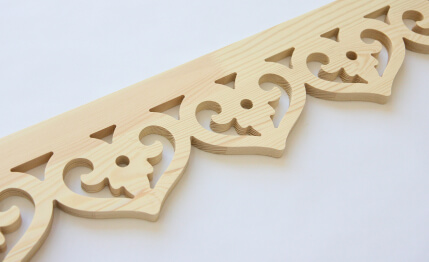
There are details that remain silent—but they are precisely what shape the final impression of furniture. Decorative skirting for furniture is one such element. It doesn't catch the eye, doesn't compete with fronts and handles, yet it defines the completeness, style, and class of the piece. Without it, even an expensive cabinet looks like a rough draft. With it—like a finished product with clear design logic.
If you're looking to buy furniture skirting in Moscow and want not just 'something similar' but a specific solution for facades, kitchen sets, or classic cabinets — this page is for you. It covers types, materials, profiles, selection logic, and direct links to the catalog.
What you'll find on this page:
-
Types of furniture skirting and their applications
-
How to choose a profile for kitchens, cabinets, and classic furniture
-
How to match decorative elements into a unified system with moldings and overlays
-
Where to buy furniture skirting in Moscow with delivery
Go directly to furniture moldingsor watchdecor for furniture — where current in-stock items are gathered.




What is furniture skirting and where is it needed
Many mistakenly narrow the concept of 'furniture skirting' to kitchen plinths or wall strips for countertops. In reality, it refers to a much broader category of decorative profiles used in furniture manufacturing, woodworking projects, and interior design.
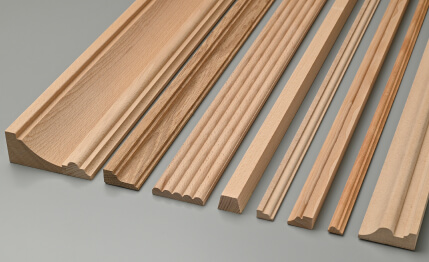
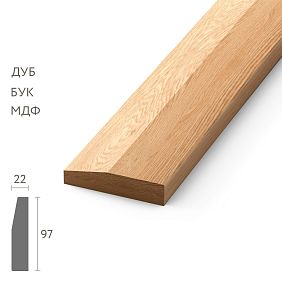
Furniture skirting— is a shaped profile made of solid wood or MDF, used for decorative finishing of furniture fronts: creating frames, finishing planes, enhancing profile plasticity, and forming a unified stylistic image of the product.




Skirting for furniture fronts
The first and most common application is finishing front planes. A wooden skirting, glued or fixed along the perimeter of a front panel, turns a flat rectangle into a frame structure. This technique is the basis of classic and neoclassical furniture: cabinets with framed fronts, chests of drawers with decorative trims, sideboards with paneled doors.
Suchdecorative skirting for furniture— is not a technical part, but an artistic tool. It sets the rhythm of the surface, creates a play of light and shadow, and gives the product depth and expressiveness.
Our factory also produces:


Skirting for a kitchen set
In the kitchen, the furniture profile works on several levels. Decorative skirting finishes the fronts of upper and lower sections, forms frames around inserts (glass, fabric, mirror), and sets the visual rhythm of the entire wall. It is also used in the cornice part of the set—as a finishing touch for upper cabinets—and in the plinth zone.
Wooden skirting for kitchen fronts is a fundamentally different solution than aluminum or plastic analogues. The natural texture of wood gives the set warmth, suitable for classic and neoclassical kitchens. Such a profile accepts paint and varnish without restrictions, allowing the kitchen to fit into any color concept.
Get Consultation
Skirting for cabinets, chests, dressers, display cases
A sliding wardrobe or built-in closet with smooth slab fronts looks functional but often cold and impersonal. Decorative molding around the perimeter of the doors or along horizontal and vertical divisions is a simple way to add expressiveness without radically reworking the structure.
For cabinets, chests of drawers, and display cases, solid wood furniture baseboard serves the same purpose: it creates a visual 'frame' for the piece, emphasizes its proportions, and highlights the horizontal and vertical axes. See examples in the section Furniture and interior items.
Baseboard for classic and designer furniture
Classic furniture is always a system of decor, where each element serves a function. Here, the furniture baseboard works in tandem with furniture moldings, overlays, carved elements, handles, and supports. It is the combination of these details that creates an image impossible to replicate in the budget segment.
In custom interior design projects, furniture baseboard is often selected or manufactured for a specific project—taking into account the profile of casings, moldings, cornices, and other decorative elements.
How to choose furniture baseboard: parameters and logic
The question 'which furniture baseboard to choose' has no universal answer. It is always resolved in context: what furniture, what interior style, what finishing material, what other decorative elements are present.
By material: wood, solid wood, paintable
For furniture decor, it's not just 'wood in general' that matters, but a specific species with the required properties.
Solid oak is hard, dense, and resistant to mechanical loads. It mills well and holds fine profiles without chipping. The grain is pronounced—with natural or oil finishes, it gives a noble effect. An excellent choice for furniture in a classic style with subsequent varnishing 'like oak' or tinting.
Solid beech is more uniform in structure, with fine fibers and a neutral pattern. Indispensable for white furniture: paint applies evenly without the grain 'showing through.' Beech is the primary material for wooden profiles to be painted with enamel.
For painting—a key category for modern classic and neoclassical styles. Beech skirting is sanded smooth, accepts primer, and any opaque RAL enamel. The result is a profile matching the cabinet fronts or in an accent color.
For varnish / for oil—for interiors where natural wood grain is important. Oil emphasizes the fiber pattern and preserves the tactile warmth of wood. Varnish provides a harder surface and richer color.
The full range of wooden products for furniture decor is in the sectionSolid Wood Items.
By profile shape
The profile shape is a stylistic decision that directly influences the perception of furniture.
| Profile type | Characteristic | Application |
|---|---|---|
| Smooth (straight) | Minimal relief, even edges | Modern classic, minimalism |
| Classic | Roundings, stepped transitions | Classic, neoclassic |
| Decorative | Relief details, fillets, grooves | Baroque, Empire, custom projects |
| Narrow | Width up to 25–30 mm | Thin frames on small fronts |
| Wide | Width from 40 mm | Accent frames on large surfaces |
Smooth profile — the most versatile option for modern interiors. Creates a clear outline without extra decor. Works with any paint.
Classic profile with soft roundings and multiple levels — a workhorse for neoclassical and soft classic styles. Has enough detail to create an image, but not so much as to overload the front.
Decorative molding with accent beads, relief transitions, carved elements — for bold classical projects where furniture is an architectural object, not just a functional item.
By purpose: kitchen, cabinet, front, classic
-
For kitchen fronts — the molding must withstand washing, contact with moisture and grease. Wood under varnish or enamel is the optimal solution with a quality coating.
-
For cabinets — geometry is important: the molding must follow the straight lines of the doors without 'wandering' diagonally.
-
For classic furniture — in combination with furniture moldings and overlays, it forms a unified decorative system.
-
For furniture to be painted — beech, fine-grained molding without coarse knots.
By interior style
Style is the main filter when choosing molding. A mistake here means an internal conflict that cannot be hidden under paint or varnish.
-
Classic — developed profile, symmetrical plasticity, deep chamfer.
-
Neoclassical — moderate relief, neat contour without baroque overload.
-
Modern classic — clean lines, subtle rounding, emphasis on texture.
-
Scandinavian style with wood — straight profile, white or natural shade.
How to choose a furniture plinth for specific furniture and interior
Selection is a process, not guessing. Let's consider specific situations.
For kitchen fronts
The kitchen is the most complex space for selecting decor due to the combination of functional requirements and stylistic load. The profile for kitchen fronts should:
-
match the style of the cabinet (classic, neoclassic, Provence);
-
withstand paint coating without deformation;
-
align geometrically with the cornice part and plinth;
-
harmonize with hardware — hinges, handles.
Forclassic furnitureWith kitchen fronts made of solid oak or painted MDF, a wooden profile with a classic or decorative cross-section will be optimal. It creates a frame around the panel and is perceived as part of a unified design.
For cabinets and wardrobes
The key here is not to overdo it. Large planes of cabinet doors require a delicate, non-overloading profile. The optimal choice is a narrow or medium smooth profile, creating a light relief without excess. If the cabinet is in a classic style, the profile is slightly wider, with soft rounding.
For classic furniture
The most saturated option in terms of decor. Classic furniture is an ensemble where the plinth, molding, overlay, handle, and support work together. Here it is important not to choose the profile in isolation, but to look at the entire system.
For this, it is convenient to viewMoldings for furnitureand select a plinth from the same line as the moldings.
For furniture with moldings and overlays
If the fronts already have moldings, the plinth should either repeat their profile (for uniformity) or be more neutral (for decorative hierarchy). A conflict of profiles—when the plinth tries to 'compete' with the molding in complexity—disrupts the visual balance of the front.
Seedecor for furnitureand select elements systematically.
For furniture with wooden handles and decorative elements
When furniture featureswooden furniture handles, it is advisable to choose a skirting profile from the same wood species and with the same finish. This creates material unity—one of the key signs of expensive, well-thought-out furniture.
Skirting for furniture in different interior styles
Classical style: facade architecture
In a classical interior, furniture is not just an item with drawers. It is part of the space, carrying an architectural image. Cabinets, sideboards, and kitchen sets in the classical style have a pronounced vertical and horizontal layout, framed facades, and decorative inserts.
Wooden skirting here is a load-bearing element of the visual structure. Its profile should be expressive enough to be readable from a distance of 3–4 meters. The cross-section—with several roundings, transitions, and beads.
Pairs well withfurniture moldings—they create frames on panels—and withdecorative inlays, which place accents in corner areas and centers of facades.
Neoclassical: Precision without Excess
Neoclassicism is a style of measure. Here, decor is present but does not dominate. A skirting board with moderate relief, one or two roundings, without aggressive bevels—is the perfect solution.
Color—matching the cabinet fronts or slightly darker, creating a subtle outline highlight. A white decorative beech skirting board in a neoclassical kitchen with gray or cream cabinet fronts looks especially precise.
Modern Classic: Strength in Details
Modern classic is when 'everything is contemporary, but with a nod to tradition.' Lines are cleaner, decor is more restrained, but structural elements are present. The skirting board here is thin, with one smooth rounding. No fillets, no stepped transitions—only a neat contour, a clear silhouette.
It is in this style that a wooden profile for painting works best: it accepts matte enamel, disappears as an independent object, and becomes part of the cabinet front plane.
Custom Interior Furniture: A Systematic Approach
In project-based furniture, the furniture skirting board is never chosen separately from everything else. The designer or joiner selects the entire system of profiles—skirting boards, moldings, cornices, trims—from one collection or one manufacturer. Only in this way is consistency of forms and proportions achieved.
If you are ordering furniture for a project—it makes sense to look atFurniture Legs and Supports, Furniture Handlesand all profile elements as a whole. This reduces selection time and eliminates stylistic conflicts.
How to choose a furniture plinth by size and proportions
Profile size is not a minor detail. An incorrect choice of plinth height or width makes the facade either overloaded or poorer than it could look.
Narrow profile (up to 25–30 mm)
Suitable for:
-
small facades (width up to 400 mm, height up to 600 mm);
-
furniture in modern classic and neoclassic styles;
-
drawers, nightstands, built-in elements;
-
situations where the facade is already saturated with other decor (handles, inserts, overlays).
A narrow plinth creates a light framing, without 'eating up' the plane of the facade.
Medium profile (30–50 mm)
The most universal range. Suitable for most classic wardrobes, kitchen sets, dressers with standard facade proportions. It reads well, does not overload, and creates a confident framing effect.
Wide decorative profile (from 50 mm)
Used on large facades: sliding wardrobes with tall doors, kitchen sections with pronounced panels, buffets with massive doors. The wide profile creates an architectural accent—it is visible, noticeable, and works as the main decorative element of the facade.
Important: if a wide plinth is used, the molding inside the frame should be more neutral. Otherwise, the facade becomes overloaded and loses hierarchy.
How to avoid an overloaded facade
The principle is simple: one main decorative element per facade. If the plinth is the main element, the molding is subordinate. If the central accent is an applied motif or insert, the plinth should be neutral. Combining several equally significant decorative elements does not create complexity—it creates noise.
Where to buy furniture plinth in Moscow
Wooden furniture plinth in Moscow can be found in several places—but not everywhere will offer the required wood species, the correct profile, and the geometric quality that is important for installation on the facade.
What to check before purchase
Material. Oak or beech—for quality products. Softwood—for auxiliary tasks, but not for furniture facades in prominent areas.
Profile quality. Clarity of lines, absence of tear-outs and fuzz after milling, smooth end without waves. On furniture, an uneven profile will be visible in every corner joint.
Compatibility with facades. The profile thickness must match the depth of seating on the facade plane. Too thick — it won't fit into the groove or will create a step; too thin — it will not hold securely.
Length and geometry. The skirting should not have warping along its length — this is critical for precise 45° miter cuts at frame corners.
Finish. Unfinished — for subsequent painting. With oil or varnish — if final treatment is already provided.
Availability. Before a large order, verify the stock balance of the required item — especially if the purchase volume is significant.
Delivery in Moscow. Clarify the terms and conditions, the possibility of delivering long items (skirting 2–3 m requires appropriate transport).
Custom order for a project. For non-standard tasks — custom profile, non-standard wood species, special size — inquire about the possibility of custom production.
Buy furniture skirting in Moscow with current assortment and delivery — in the catalog. There you'll also find moldings, overlays, handles, and everything needed to complete a furniture project.
What to combine furniture skirting with: a unified decorative system
This is perhaps the most important section for those who work with furniture seriously. Furniture skirting does not exist in a vacuum — it is part of an ensemble, and it should be selected in conjunction with the rest of the decorative elements.
With furniture moldings
Molding and furniture plinth are the closest 'relatives' in the facade decoration system. Their profiles must be coordinated: similar rounding characteristics, compatible relief scale, and uniform finish.
Seefurniture moldings— they form frames on the panels, while the plinth forms the outer contour of the facade.
With decorative overlays
decor for furniture— overlay elements (rosettes, corner ornaments, central motifs) — work within the frame created by the plinth and molding. This is a hierarchical system: plinth → molding → overlay. Violating this hierarchy leads to visual chaos on the facade.
With furniture handles
Furniture Handlesmade of wood — a direct continuation of the natural material theme. If the plinth is made of solid oak with an oil finish, an oak handle with the same finish creates absolute unity. This is a detail that immediately conveys the level of the project.
If maximum neutrality is needed —uncoated wooden handlesprovide the freedom to choose the final finish independently, matching the plinth and facade.
With furniture legs and supports
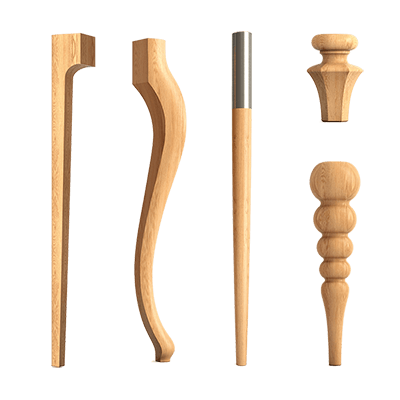
Furniture Legs and Supports— the lowest point of the product, which defines its 'stance' in space. For classic furniture with decorative plinths on the facades, the legs should be in the same style: turned, with profile bands, in the same wood species or finish. Straight square legs next to a rich classic plinth create dissonance.
With cornices and decorative finishes
Furniture with cornice finishing (cabinets, sideboards, display cases, kitchens) requires the cornice profile to be coordinated with the furniture plinth profile. One manufacturer is a guarantee of compatibility. That's why it's convenient to complete all furniture decor from one catalog:Solid Wood Items.
Furniture plinth for cabinet solutions: a separate topic
Cabinets are one of the most frequent requests when buying furniture plinth in Moscow. Built-in and freestanding cabinets with classic fronts require profile decor that creates a frame structure and gives the product a 'furniture' character.
See ready-made solutions for cabinets in the sectioncabinets and furniture solutions— there you can evaluate how the decorative profile works in real products and use these solutions as a reference when selecting.
Common mistakes when choosing furniture skirting
Knowing typical mistakes in advance makes them easy to avoid. Here is a stable list of miscalculations that occur in furniture projects.
Too complex profile for a small front
A rich decorative profile on a front 250 mm wide looks like an overloaded suit on a fragile person. For small fronts — a narrow and neutral profile. Complexity is for large planes.
Mismatched furniture style
A classic profile with fillets on a minimalist cabinet front is a conflict that cannot be 'hidden'. The style of the profile must match the style of the product without compromises.
Conflict with handles, overlays, and cornices
Each of these elements "speaks" its own decorative language. If the languages don't match, the furniture looks assembled from mismatched parts. Systematic selection is the only working method.
Choosing based on price alone
A cheap profile with poor milling will save 500 rubles but will require several hours of puttying, sanding, and re-gluing. Furniture decor is not the place to skimp on the quality of geometry.
Lack of a unified logic throughout the furniture
Different profiles in different rooms are acceptable. But in one room, on one set of furniture, the profiles should form a unified system. Otherwise, the interior is perceived as a random assembly, not as a project.
Prices and what determines the cost of furniture skirting
The price range for wooden furniture skirting in Moscow is wide. What affects the cost?
-
Wood species: oak and beech are more expensive than coniferous woods. Oak is typically 15–25% more expensive than beech.
-
Profile complexity: more transitions mean higher milling labor intensity, higher price.
-
Width and thickness: more material means proportionally higher cost.
-
Finishing availability: without coating — cheaper. With oil, varnish, or paint — more expensive.
-
Wood sorting: a profile without knots and defects made from select material costs more than standard.
-
Workpiece length: non-standard length on order — additional costs.
Current prices — in thecatalog of furniture moldings and profiles.
FAQ: Popular questions about furniture skirting in Moscow
What is furniture skirting and how does it differ from floor skirting?
Furniture skirting is a decorative profile made of solid wood, used for decorating facades, cabinets, kitchen sets, and other furniture. It creates frames, outlines, and decorative elements directly on the furniture. Floor skirting covers the joint between the floor and the wall. These are different products with different functions and profiles.
Can you glue wooden furniture skirting yourself?
Yes, if you have even facade surfaces, the skirting can be glued with wood glue PVA or special construction adhesive. It is important to precisely cut the frame corners at 45° — this requires a miter box or miter saw. Without this tool, the corners will be of poor quality.
Which profile to choose for a neoclassical style kitchen?
For a neoclassical kitchen, a profile with moderate relief is optimal—one or two roundings without aggressive fillets. Width 30–40 mm, beech for painting in the color of the fronts or one tone lighter. See furniture moldings for system configuration.
Which furniture skirting board is suitable for white furniture?
Uncoated beech—and then painting in the same white as the fronts. This gives an even, uniform color without 'showing through' the texture. An alternative is a beech profile with pre-applied white enamel to order.
How to match furniture skirting board to moldings?
The profile of the skirting board and molding should match in the 'character' of the lines: if the molding has soft roundings—the skirting board should too. The scale of the skirting board—larger than the molding (skirting board forms the outer frame, molding—the inner one). More details: Moldings for furniture.
Is there delivery of furniture skirting board in Moscow?
Yes.Furniture skirting board in Moscow can be ordered with city delivery or picked up via self-collection. Long items (2–3 m) require appropriate transport—clarify the conditions when ordering.
Should baseboards and moldings be purchased from the same manufacturer?
Highly recommended. Manufacturers build collections with coordinated profiles, thicknesses, and patterns. Different sources may provide visually similar but incompatible elements in detail—and this will be noticeable in the finished product.
Can a furniture baseboard be matched to wooden handles?
It is absolutely necessary. If the handles are oak, the baseboard should also be oak, with the same finish. Check out uncoated wooden handles—they can be matched to the tone of the baseboard and painted together with the facades.
About the company: why STAVROS
Decorative furniture baseboard is a product where precision matters: profile geometry, cleanliness of milling, uniformity of wood species, stability of finish. Finding all of this in one place, with real production and a wide range, is not as simple a task as it seems.
STAVROS is a Russian manufacturer of products made from solid oak and beech. Own production, chamber drying of raw materials, control at every stage of processing. The range includes furniture profiles, moldings, overlays, handles, legs, cornices, and a full set of elements for decorating interior furniture.
Over 4000 models, 20,000 modifications across 39 product groups. Everything in one catalog—from facade profiles to furniture legs. Orders from a single piece, delivery across Moscow and all of Russia, possibility of customizing for a specific furniture project.
If you need not just a 'baseboard,' but a solution—contact STAVROS. Here, everything will be selected: from the baseboard profile to handles and legs—in a unified style, from the same wood species, with the same finish.
Buy furniture skirting in Moscow— go to the catalog and choose a profile for your project.
Select decorative profile for furniture— overlays, moldings, and all solid wood furniture decor in one section.