Article Contents:
- Specifics of apartment walls: what you will have to deal with
- Construction materials
- Geometry and flatness
- Functional Zones
- Modern materials: what the market offers
- Paint: classic in a new interpretation
- Wallpapers: from paper to innovations
- Decorative plaster: texture and individuality
- Wooden elements: warmth of nature
- Ceramic tile and ceramic granite: top practicality
- Polyurethane decor: lightness of classic
- 3D panels: volume and dynamics
- Stylistic directions: how finishing shapes the atmosphere
- Scandinavian minimalism
- Classic and neoclassic
- Loft and Industrial Style
- Modern style and contemporary
- Room by room: specifics of finishing different zones
- Living Room: The Face of the Apartment
- Bedroom: oasis of tranquility
- Kitchen: practicality above all
- Bathroom and toilet: kingdom of moisture resistance
- Entryway: First Impression
- Children's room: safety and creativity
- Color solutions: psychology of shades in enclosed space
- White and light shades
- Dark tones: boldness and depth
- Vibrant accents: energy of color
- Natural shades: harmony and balance
- Wall preparation: foundation of quality finishing
- Demolition of Old Finishing
- Leveling
- Primer
- Installation: do it yourself or hire professionals?
- What you can do yourself
- When professionals are needed
- Budgeting: how much does wall finishing in an apartment cost
- Economical option
- Mid-range segment
- Premium
- Common Mistakes and How to Avoid Them
- Cutting Corners on Preparation
- Material does not meet operating conditions
- Ignoring proportions
- No samples available
- Underestimation of time
- Frequently Asked Questions about Apartment Renovation
- Can walls be painted without putty?
- Which wallpapers are easier to apply?
- Is vapor barrier needed under finishing?
- How Often Should Finishing Be Updated?
- Can wooden planks be installed without a subframe?
- Which tiles to choose for a small bathroom?
- Is it worth making an accent wall?
- How to combine different materials?
- STAVROS: your reliable partner in creating the perfect interior
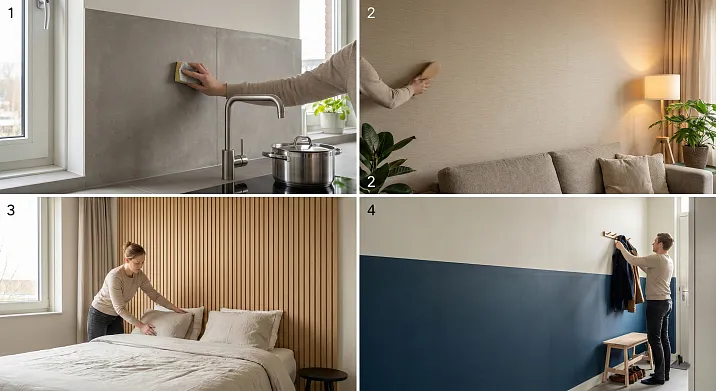
An apartment is a special universe with its own rules, limitations, and possibilities. Here, every square meter is worth gold, andWall cladding in an apartmentbecomes an art of balancing aesthetics, functionality, and budget. In standard buildings, walls are rarely perfectly flat, ceiling heights are limited, sound insulation is subpar, and humidity in bathrooms tests materials for durability. All of this requires a thoughtful approach to material and technology selection.
An apartment is not a country house where you can afford any experiments. Practicality is key here: materials must be easy to clean, not accumulate dust, and maintain their appearance for years. At the same time, you want to create an atmosphere that reflects your personality, makes the space cozy, and gives it character.Wall repair in an apartment— a complex task requiring consideration of dozens of nuances: from the technical condition of the base to the psychology of color and texture perception.


Specifics of apartment walls: what you will be working with
Before discussing beautiful finishes, you need to understand what typical urban apartment walls are like. This is not an abstract ideal surface from a design textbook, but a living structure with its own peculiarities.




Construction materials
In panel buildings, walls are reinforced concrete slabs with characteristic joints and unevenness. In brick buildings — masonry requiring serious leveling. In monolithic-frame new constructions — concrete surfaces or insulation made of aerated concrete blocks. Each type of base dictates its own approach to preparation and material selectionWall cladding in apartments.
Panel buildings are notoriously known for cold corners and thermal bridges. Additional insulation may be required before final finishing. Brick walls 'breathe,' but uneven ones require plastering. Monolithic buildings settle in the first years, which must be considered when choosing rigid finishing materials.
Our factory also produces:

Geometry and flatness
Perfectly flat walls are rare even in modern new constructions. Vertical misalignments, waves, local depressions and bumps — typical scenery. The degree of curvature determines the volume of preparatory work and influences the choice of finish material.
Materials for apartmentsare selected based on the condition of the base. Thin wallpapers will mercilessly highlight all irregularities — thorough puttying will be required. Dense vinyl or non-woven wallpapers will conceal minor defects. Decorative plaster will mask small unevenness.Wooden wall claddingon a frame does not require perfect leveling — the subframe compensates for the curvature.
Get Consultation
Functional zones
Different rooms in an apartment require different finishing standards. The kitchen — grease splashes, steam, temperature fluctuations. The bathroom — constant humidity, direct contact with water. The hallway — mechanical stress, outdoor dirt. The living room and bedroom — requirements for eco-friendliness, aesthetics, sound absorption.
Interior wall finishing in an apartmentEach room has its own specific requirements. There is no universal solution. What is ideal for a bedroom may be impractical in the kitchen. What lasts for years in a dry hallway may deteriorate within a month in a humid bathroom.
Modern materials: what the market offers
The industry of finishing materials is developing rapidly. What was exotic five years ago is now mass-produced. Let’s examine the current options for apartment finishing.
Paint: classic reinterpreted
Wall painting is experiencing a renaissance. Modern paints are not dull Soviet "oil enamels", but high-tech formulations with dozens of shades and various performance characteristics. Latex, acrylic, silicone, water-emulsion — the choice is vast.
The advantages are obvious: relative affordability, ease of application, simplicity of updating, ability to experiment with color. Painted walls are easy to clean, do not accumulate dust, are suitable for allergy sufferers. One drawback — requires a perfectly level surface, otherwise any imperfection will be visible.
The current trend — textured painting using special rollers or textured paints that create a three-dimensional surface. This adds depth, hides minor imperfections, and makes the wall visually more interesting.
Wallpapers: from paper to innovations
Wallpapers remain the most popular finishing option in Russia. The market offers incredible variety: paper, vinyl, textile, glass wallpapers for painting, liquid wallpapers, photo wallpapers.
Vinyl wallpapers — the optimal balance of price and quality for living rooms. They are dense, hide minor imperfections, are easy to apply, and can be removed without damaging the substrate. Vinyl wallpapers with silk-screen printing — a more premium option with a distinctive noble sheen and high durability.
Washable vinyl wallpapers are suitable for kitchens and hallways — they are not afraid of wet cleaning and are resistant to mechanical impacts. Textile wallpapers create a luxurious atmosphere in bedrooms and living rooms, but require delicate care. Glass wallpapers — an option for those who like to frequently change wall colors: they can be repainted multiple times.
Decorative plaster: texture and individuality
decorative wall finishingPlaster — for those who value uniqueness. Venetian plaster imitates polished marble, creating a luxurious effect. Textured plasters offer endless variety of surfaces: from rough "termite" to silky "silk" textures.
Advantages of plaster — durability, repairability (scratches are easily filled), eco-friendliness, absence of seams. It is possible to create an absolutely unique pattern that will not be repeated in any interior. Disadvantages — high cost of material and work, requirement for skilled craftsmanship, difficulty of complete removal when changing finishes.
Microcement — a market novelty gaining popularity. This decorative coating creates a concrete surface effect, perfectly fits into loft and industrial interiors, is completely moisture-resistant, and is even suitable for shower zones.
Wooden elements: warmth of nature
Wooden wall claddingIn an apartment — a way to bring natural warmth into concrete jungles. Planks, imitation beams, wooden panels, wainscoting, rails — there are many options.
Plank wall claddingA major trend for 2025. Thin wooden laths, mounted vertically or horizontally with a specific spacing, create a graphic pattern, zone space, and visually correct room proportions.wall finishing with lathsWorks excellently in living rooms, bedrooms, hallways, creating accent zones.
Wainscoting — classic wooden panels — transform a standard apartment into respectable apartments.Internal decorative wall claddingWainscoting is especially appropriate in offices, libraries, classic living rooms.
Important point: wood requires a stable microclimate. In apartments with central heating, winter air is too dry — humidifiers are needed. Otherwise, solid wood may crack and warp.
Ceramic tile and ceramic granite: ultimate practicality
For wet zones — bathrooms, toilets, kitchen backsplashes — ceramic remains the optimal choice. Modern tiles have moved far from Soviet standards: large-format (up to 120×260 cm), thin, with minimal seams, imitating marble, wood, concrete, fabric.
Ceramic granite is even stronger and more durable. It can be used not only in wet zones, but also in hallways, where maximum resistance to mechanical impacts is required. Large-format ceramic granite with minimal seams creates a monolithic surface effect.
Mosaic — a way to create artistic panels, highlight zones, add color accents. Glass mosaic in bathrooms looks luxurious, reflects light, and visually expands the space.
Polyurethane decor: light classicism
Plaster ornaments for wallsPolyurethane molding — a way to add classic elegance without extra weight or cost. Moldings, cornices, appliqués, pilasters, rosettes — the entire arsenal of classic decor is available in polyurethane form.
Wall finishing with moldingsAllows creating framed compositions, visually structuring the plane, adding depth. This works both in classic and neoclassical interiors. Moldings are glued on, painted in any color, and serve for decades.
Polyurethane wall claddingHas many advantages: lightness (does not create load on structures), moisture resistance (suitable even for bathrooms), ease of installation (a homeowner can handle it), affordable price. Visually, polyurethane is indistinguishable from plaster molding.
3D Panels: Volume and Dynamics
3D Wall FinishingPanels — a modern trend that transforms a flat wall into a sculptural object. Relief panels made of plaster, MDF, or polyurethane create a play of light and shadow, add dynamism, and become the main accent of the interior.
Relief wall finishingEspecially effective with proper lighting. Side lighting emphasizes volume and creates a dramatic effect. 3D panels are used locally — one accent wall, the area behind the bed, the wall behind the TV.
Panel material is chosen based on budget and requirements. Plaster panels — most effective, but heavy and fragile. MDF — practical, lightweight, and paintable. Polyurethane — moisture-resistant and versatile.
Stylistic directions: how finishing creates atmosphere
Wall cladding optionsThey are determined not only by practical considerations but also by the chosen interior style.
Scandinavian minimalism
Light walls — the basis of Scandinavian style. White or light-gray paint, paintable wallpaper, light wood.Racks for internal wall claddingLight oak or ash wood fits perfectly into Scandinavian aesthetics, adding natural warmth while maintaining minimalism.
Accent walls can be painted in muted shades of gray, blue, or green — this adds depth without disrupting the overall light palette. Textures are welcome: rough plaster, untreated wood, concrete.
Classicism and neoclassicism
Interior Wall Finishes PhotoClassic interiors demonstrate the use of moldings, cornices, boiserie, and symmetrical compositions. Walls are structured with molding frames, inside which are damask-patterned wallpapers, silk fabrics, or monochromatic noble tones.
Neoclassicism simplifies classical techniques, making them more airy.Plaster ornament for walls and ceilingsIt becomes more minimalist, moldings thinner, colors lighter. Elegance is preserved, but heaviness is removed.
Loft and industrial style
Concrete, brick, metal — the basis of industrial aesthetics. In apartments, this is often imitation: decorative plaster mimicking concrete, wallpaper with brick pattern, ceramic tiles mimicking metal. Microcement — the ideal material for creating authentic loft interiors.
One wall can be left in its raw state — bare concrete or brickwork, while the others are painted in neutral gray or white tones.Decorative wall finishingIn lofts, minimalism is key — emphasis on the texture of the materials themselves.
Modern style and contemporary
This is a kingdom of eclecticism and freedom.Decorative wall finishing optionsHere, boundaries are limitless: combinations of wallpaper and paint, wood and stone, smooth and textured surfaces.
A characteristic technique — accent wall. Three walls are neutral (paint, simple wallpaper), one is bright, textured, with a large print or dimensional finish.Decorative wall panelingOften used precisely as an accent element.
Room after room: specifics of finishing different zones
Living room: the face of the apartment
The living room is a place where guests are received, family gathers, and most of the time is spent. Here, the finishing should be both presentable and practical.Wall finishing photos in apartmentsAccent walls demonstrate popularity: the area behind the sofa or behind the TV is highlighted by color, texture, or decorative elements.
Options for the living room:
-
Combination of painted walls and accent walls with wallpaper or decorative plaster
-
Wall Wood FinishingIn the TV zone with built-in backlighting
-
Molding frames with wallpaper inside in classic interiors
-
3D panels behind the sofa in modern styles
-
Combination of planks and painted sections for zoning
It is important to consider lighting. In dark north-facing living rooms, it is better to use light tones. In sunlit southern rooms, you can allow more saturated colors and dark accents.
Bedroom: oasis of tranquility
The bedroom requires calm, soothing solutions. Aggressive colors, overly active patterns, and irritating textures are inappropriate here.Wall room finishingShould promote relaxation for sleeping.
Popular solutions:
-
Calming solid-color wallpaper or pastel-toned paint
-
Textured wallpaper or panels with a soft finish
-
Wooden finishing materialswarm tones
-
Accent wall behind the headboard with a more saturated color or pattern
-
Soft 3D panels with upholstery for the headboard zone
Ecological safety is a key criterion for the bedroom. Prefer natural materials: paper or vinyl wallpaper, water-based paints, solid wood. Avoid vinyl, synthetic fabrics, and materials with strong odors.
Kitchen: practicality above all
Kitchen walls are subjected to serious tests: grease, steam, splashes, temperature fluctuations.Materials for apartmentsHere, materials must be as practical as possible.
Work area (splash zone):
-
Ceramic tile — classic, proven over decades
-
Ceramica — even stronger, with minimal joints
-
Tempered glass (skinny) — modern, hygienic, easy to clean
-
Stainless steel — for industrial kitchens
Dining area and other walls:
-
Washable vinyl wallpaper
-
Paint (latex or acrylic, washable)
-
Decorative plaster with protective coating
-
Moisture-resistant MDF wall panels
Important note: on the kitchen, materials are often combined. Work area — tile, the rest — paint or wallpaper. This is practical and allows creating visual variety in a small space.
Bathroom and toilet: kingdom of moisture resistance
Here, moisture resistance is not a preference, but a requirement.Wall covering for the apartmentIn the bathroom, traditional tiling is used. Modern trends:
-
Large-format marble-effect tile with minimal joints
-
Ceramica covering the entire wall height (without traditional division into dark lower and light upper sections)
-
Mosaic for creating a feature wall or highlighting the shower area
-
Combination of tile in wet zones and moisture-resistant paint or plaster in dry zones
Polyurethane finishAlso possible in the bathroom: moisture-resistant moldings, cornices, and decorative polyurethane appliqués add elegance even to utilitarian spaces.
Microcement — a new trend gaining popularity for bathrooms. Creates a monolithic concrete surface effect, is completely waterproof when applied correctly, and looks stylish and modern.
Entryway: first impression
The hallway is the entrance to the apartment and simultaneously a high-load zone. Here, walls are exposed to mechanical impacts, outdoor dirt, and moisture from wet clothing.Decorative corridor wall finishingmust be durable and easy to clean.
Practical options:
-
Washable vinyl wallpaper with dense structure
-
Latex or acrylic paint (washable)
-
Decorative plaster with protective coating
-
MDF or PVC wall panels in the lower part of the wall
-
Ceramogranite (especially in narrow areas near the entrance door)
A popular approach — combined finishing: the lower third of the wall (up to 1–1.2 m) with a more durable material (panels, tiles), the upper part — wallpaper or paint. This is practical and visually interesting.
Decorative wall panelingWorks in hallways: vertical rails visually raise the ceiling, which is important for narrow corridors. Hidden lighting can be installed between the rails — this adds light and creates an attractive play of shadows.
Children's room: safety and creativity
The children's room is a special territory. Here, material eco-friendliness, safety (absence of sharp corners, toxic components), practicality (walls will inevitably get dirty), and simultaneously — brightness, creativity, and alignment with child psychology are important.
Materials for children's rooms:
-
Paper or non-woven wallpaper (eco-friendly, 'breathable')
-
Water-based paint (safe, easy to refresh)
-
Wallpaper suitable for painting (color can be changed as the child grows)
-
Cork panels in the play area (sound insulation, softness upon falls)
Idea: one wall can be painted with chalk or marker paint — creating a legal space for children's creativity. This removes the temptation to draw on regular walls.
Wall Finishing ElementsIn children's rooms, moldings, heavy overlays, and glass panels must be safe: no sharp edges, heavy overlays, or glass panels. If wooden rails are used — they should be well-sanded, free of splinters, and securely fastened.
Color solutions: psychology of shades in enclosed spaces
Wall color dramatically affects how the apartment is perceived and the emotional state of its residents.
White and light shades
White visually expands space — critical for standard apartments with small rooms. It reflects light, making the room brighter. White is an ideal background for bright furniture, decor, and artwork.
But pure white can feel cold and 'hospital-like'. Better to choose warm white shades with cream, beige, or pink undertones. Or cool shades with gray or blue undertones — depending on lighting and desired atmosphere.
Light gray — an alternative to white, softer on the eyes, less stark, creates a calm, elegant atmosphere.Wall cladding optionsSuitable for modern and Scandinavian interiors.
Dark tones: boldness and depth
Dark walls in an apartment — a bold choice, but with the right approach, very effective. Deep blue, graphite gray, dark green create an intimate, enveloping atmosphere. This works well in bedrooms, offices, and media zones in living rooms.
Important: dark walls require quality lighting. Multi-level lighting — ceiling lights, wall sconces, floor lamps, and under-lighting — is essential. Otherwise, the room will feel like a gloomy cave.
Approach: not all walls are painted dark — only one or two. The rest remain light. This creates contrast and drama while preserving the sense of space.
Vibrant accents: energy of color
A single vibrant color accent can transform a neutral interior.Wall finishing and decorationUsing saturated shades — terracotta, mustard, emerald, burgundy — adds character and individuality.
An accent wall can be painted in a bright color or covered with bold-patterned wallpaper. Other surfaces remain neutral. This is a classic, safe approach.
Natural tones: harmony and balance
Beige, sandy, terracotta, olive, wood tones — these colors create a sense of natural harmony, relaxing and calming.Wall finishing with wood photoDemonstrates how natural tones of wood bring warmth into the interior.
Natural tones are universal: suitable for any room, compatible with most styles, never go out of fashion. This is a risk-free option for those avoiding risks.
Wall preparation: foundation of quality finishing
Any, even the most expensive finish, will look poor on an unprepared surface.Wall repair in an apartmentIt begins with preparing the base.
Removing old finishes
Wallpaper is removed completely. If it doesn’t come off, it is soaked with water or special solutions. Old paint is assessed for adhesion: if it holds firmly, it can be left; if it flakes, it is scraped off with a putty knife or sander.
Tiles are removed with a hammer drill. Old plaster is tested by tapping: a dull sound indicates delamination — such areas are chipped down to a solid base.
Leveling
The leveling method depends on the degree of curvature and the chosen finish.
Plaster — for significant height differences (more than 3–5 cm). Applied using guides, it creates a strong, even base. It can be cement-based (durable, moisture-resistant, for wet areas) or gypsum-based (dries faster, easier to apply, for dry rooms).
Putty — for final leveling. Applied in a thin layer (1–3 mm), it fills minor irregularities and creates a smooth surface for painting or thin wallpaper.
Gypsum board — an alternative leveling method. Sheets are attached to a frame or glued to the wall. It allows hiding any irregularities, integrating insulation and soundproofing, and running wiring. The downside — it 'eats' space (5–7 cm from each side with frame method).
Primer
A mandatory step before any finish. Primer strengthens the base, reduces absorbency (saves paint or adhesive), and improves adhesion. Different primers are used for different surfaces: penetrating for loose surfaces, adhesive for dense smooth ones, antiseptic for wet areas.
Installation: do it yourself or hire professionals?
What You Can Do Yourself
DIY decorative wall finishingIt is entirely feasible for a range of materials:
-
Painting with a roller or spray gun
-
Wallpaper installation (especially vinyl, which is installed butt-to-butt)
-
Installing simple moldings and decorative trim
-
Installing paneling on a prepared frame
-
Installing wall MDF panels
For this, you need a basic toolset, care, time, and willingness to learn the technology. YouTube and specialized forums are excellent sources of educational information.
When Professionals Are Needed
Complex tasks are better left to professionals:
-
Plastering using guides (requires experience in setting levels)
-
Venetian plaster and complex decorative techniques
-
Installation of ceramic tiles (especially large-format)
-
Installation of heavy boiseries
-
Gypsum board structures with curved elements
Professionals work faster, provide guarantees, and have specialized tools. Saving on master services may result in damaged materials and the need to redo everything.
Budgeting: How much does wall finishing in an apartment cost?
Economy option
Most affordable materials:
-
Water-emulsion paint: 200-400 rub/m²
-
Paper wallpapers: 150-500 rub/roll
-
Simple vinyl wallpapers: 500-1000 rub/roll
-
PVC panels: 200-400 rub/m²
DIY work. Total: 500-1500 rub/m² with materials.
Mid-range
Quality mass-produced materials:
-
Fлизeline wallpapers: 1500-3000 rub/roll
-
High-quality paint from well-known brands: 500-1000 rub/m²
-
Decorative plaster: 800-2000 rub/m²
-
Ceramic tiles: 1000-2500 rub/m²
-
Polyurethane decor: from 300 rub/linear meter
Master’s work: 500-1500 rub/m². Total: 2000-5000 rub/m².
Premium
Exclusive materials and designer solutions:
-
Textile wallpapers: from 5000 rub/roll
-
Venetian plaster: 3000-10000 rub/m²
-
Designer tiles: from 5000 rub/m²
-
Solid wood boiseries: from 15000 rub/m²
-
Microcement: 5000-8000 rub/m²
Work by top-tier masters or design teams: 2000-5000 rub/m². Total: from 10000 rub/m².
Typical mistakes and how to avoid them
Saving on preparation
The most common mistake. Tiling curved walls or painting unprimed surfaces — guaranteed path to poor results.Wall finishing samplesThey look flawless in exhibition halls precisely because the base is prepared perfectly.
Material mismatch with operating conditions
Wallpaper in the bathroom, non-water-resistant paint in the kitchen, delicate decorative plaster in the hallway — all these are mistakes that will lead to rapid deterioration of finishes.
Ignoring proportions
Large, bold patterns in small rooms visually shrink the space. Dark walls under low ceilings feel oppressive. Small moldings in large rooms disappear.Wall cladding in an apartmentrequires consideration of scale.
Lack of samples
Choosing paint or wallpaper color based on a website image is risky. Always request samples, attach them to walls under different lighting, live with them for several days before making a final decision.
Underestimating time
Full apartment renovation is a slow process. Plaster takes a week to dry, putty — 2-3 days, paint needs 24 hours between coats. Rushing leads to defects.
Frequently Asked Questions about Apartment Renovation
Can walls be painted without putty?
It depends on the condition of the surface. If walls are smooth, without cracks or dents — yes. But even minor defects will be visible under glossy or semi-gloss paint. Requirements for matte paint are lower. Ideally, always apply at least a finishing layer of putty.
Which wallpapers are easier to install?
Fлизelined wallpapers with a meter width. They are installed butt-to-butt (no need to worry about overlapping seams), adhesive is applied to the wall (no need to pre-treat the wallpaper), they are dense and do not tear. Ideal for beginners.
Is vapor barrier needed under finishing?
In apartments with central heating — usually not. Vapor barrier is relevant for private homes with external insulation. In apartments, a primer is sufficient.
How often should finishes be renewed?
It depends on the material and quality of installation. Quality paint lasts 5-7 years, wallpaper — 7-10 years, decorative plaster — 15-20 years, ceramic tiles — decades.Materials for apartmentsHigh-quality materials last longer.
Can wooden planks be installed without a subframe?
Yes, if the wall is perfectly flat and the planks are lightweight. But a subframe provides two advantages: it compensates for wall imperfections and creates a ventilation gap, extending the lifespan of the wood.
Which tiles to choose for a small bathroom?
Large-format, light-colored tiles with minimal grout lines. This visually expands the space. Mosaic or small tiles fragment the surface, making the room appear smaller.
Should an accent wall be created?
If the space is dull and monotonous — yes, an accent wall adds interest. If the interior is already rich with bright details — no, it will become overloaded.Decorative wall finishing for interiorsrequires balance.
How to combine different materials?
Combine smooth with textured, matte with glossy, cool with warm. But no more than 2-3 types of materials in one room.Decorative wall and ceiling finishingshould be harmonious, not chaotic.
STAVROS: your reliable partner in creating the perfect interior
When it comes to realizing ideas, choosing a material supplier becomes critical. STAVROS is a company that understands the specifics of apartment finishing and offers comprehensive solutions for urban housing.
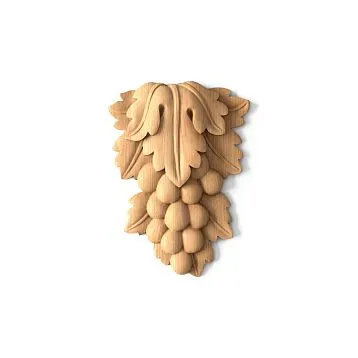
STAVROS's assortment covers everything needed: fromsculptural ornamentsto wooden planks, from moldings to boiserie, from classic decor elements to modern plank systems. The company's products are adapted to the realities of apartment renovation: lightweight materials that do not create excessive load on ceilings, compact packaging for convenient delivery, and ease of installation.
What makes STAVROS special? Deep expertise in interior decoration. The company's consultants will help you select solutions specifically tailored to your apartment, taking into account the layout, ceiling height, lighting, and style. They will calculate the required amount of materials with a reserve, recommend optimal installation methods, and suggest compatible elements.
STAVROS offers European-quality materials at reasonable prices. The wide range of products allows implementing projects of any budget — from economical to premium segments. The company works with both private clients and professional designers and construction crews.
STAVROS's service includes not only sales but also comprehensive support: consultations during selection, assistance with calculations, delivery throughout Moscow and its region, and the option for professional installation. You receive not just materials, but a turnkey solution with a guarantee of quality and durability.
For residents of Moscow planningWall repair in an apartment, STAVROS is a reliable choice. The company understands the specifics of standard housing, recognizes the limitations and possibilities of apartment renovation, and offers proven solutions that will last for decades while maintaining their original appearance.