Article Contents:
- Wholesale building materials depot in Moscow: what to check before an urgent call to the supplier
- First determine the cause of the shortage, then place the reorder
- Why you can't just repeat the quantity of the original stock
- How to calculate an urgent reorder based on the remaining part of the project
- Wooden skirting board: the linear meters are there, but there may not be enough suitable full-length pieces
- How to do a quick inventory of skirting board right on site
- Wooden moulding: why urgent reorders more often get the article number wrong
- How to confirm moulding by three characteristics
- What to do if the packaging has already been thrown away
- Wooden cornice: why an urgent shortage requires recalculating wall lengths
- Five levels of urgency for reordering
- Why "urgent" should be expressed as a specific date and time
- Wholesale building material depots in Moscow: what actual availability means
- Why having 10 planks doesn't help if you need 24
- Reserve first, then send the vehicle
- Moscow building depot: when self-pickup really saves time
- Why "it will fit in a passenger car" can't be decided by eye
- When to combine several urgent items into one trip
- And when you can't wait for the entire additional order to be assembled
- How to calculate the price of urgency
- Why the purchaser should know the cost of crew downtime
- How not to turn an urgent additional order into uncontrolled overspending
- Can you take an equivalent if the original isn't available today
- How to process an urgent replacement
- Why you can't buy an equivalent just because it's cheaper and available now
- How to accept an urgent additional order on site
- Don't hand new material to installers straight from the vehicle
- How to recalculate the remaining balance after an additional order
- Why a second urgent reorder in a row is a warning sign
- When it's time to recalculate the entire project
- How to turn an emergency reorder into data for the next project
- Final algorithm for an urgent reorder

Installation is already underway. The skirting is almost finished, but after the actual cutting, 28 meters are missing. For the molding, the installers counted another 36 meters, and part of the cornice had to be written off after damage. In this situation, the purchaser usually receives a short message: "Urgently buy more of the same profile." This is exactly where the risk of a second mistake appears — instead of the correct reorder, buying a similar SKU, the wrong finish, or an excess volume.
If you need wholesale building materials warehouse in Moscow for urgent replenishment of trim, you need to start not with calling warehouses, but with precise answers to four questions: which SKU is running out, how much material actually remains, how much work has not yet been completed, and when the new batch must arrive on site.
An urgent reorder is a separate operation. It differs from the initial purchase in that part of the material has already been installed, part has been cut, part remains as short offcuts, and the work schedule already depends on the decision. Therefore, the new volume must be calculated based on the remaining part of the project, not by mechanically repeating the original reserve percentage.
Work sequence:
inventory → cause of shortage → exact SKU → remaining work → usable remainder → new calculation → whole planks → stock confirmation → reservation → pickup or delivery → acceptance → warehouse stock update.
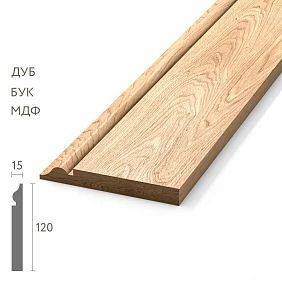
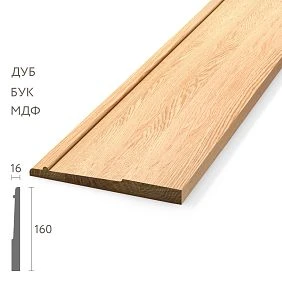
Wholesale building materials warehouse in Moscow: what to check before urgently calling the supplier
The phrase "we need the same molding" is almost useless if the supplier's manager cannot see the previous order. Before calling, you need to put together a minimal identification package.
- exact article number;
- the material;
- size and cross-section;
- length of the item in the required finish;
- required quantity;
- previous order or invoice number;
- photo of the marking;
- date and time when the material must be on site.
If some information is missing, it must be restored before the vehicle is dispatched. A few minutes of checking the SKU is cheaper than urgent transportation of the wrong profile.




First determine the cause of the shortage, then place the additional order
The same shortage of 30 meters can have different causes, and therefore require different calculations.
The shortage occurs due to:
- errors in the initial measurement;
- greater actual installation waste;
- project changes;
- additional walls or frames;
- damage to part of the material;
- mixed-up grades;
- transfer of material to another area;
- incorrect accounting of leftovers.
If the cause is a new scope of work, it must be added to the remaining requirement. If the problem is short leftovers, the total footage on the site may appear sufficient but in fact be unusable. If the material has gone to another area, you first need to check whether a shortage will appear there.
Our factory also produces:





Why you can't simply repeat the original stock quantity
Suppose the initial purchase included a 10% installation reserve. It wasn't enough. Automatically adding another 10% is incorrect.
Now the actual situation is known: part of the site has been installed, part remains, real waste has occurred, and warehouse leftovers are known. The new calculation should be based on this data.
The reorder is calculated only for the unfinished part.
Get Consultation
How to calculate an urgent reorder for the remaining part of the site
Example:
- remaining to install — 120 m of skirting board;
- usable material remaining on site — 92 m;
- an installation reserve of 10 m is needed for the remaining work.
Calculation:
120 + 10 – 92 = 38 m.
38 m is the new calculated requirement. But it's too early to order exactly 38 m: first you need to convert the linear meters into whole units and check the cutting plan.
Suppose the actual length of the selected plank is 2.4 m. Simple division gives 38 / 2.4 = 15.83, that is, a minimum of 16 whole pieces. That is already 38.4 m. But if among the remaining walls there are, for example, six sections each 2.3 m long, some of the short offcuts between them may turn out to be unusable. Then the real quantity is determined not by the total number of meters, but by the layout across specific sections.
For an urgent reorder, it is useful to make a short cut-list: the length of each unfinished section, the availability of a suitable leftover, and the number of new whole planks. Such a list takes a few minutes, but it helps avoid making a second emergency reorder because “by the overall arithmetic it should have been enough.”
If the selected skirting board is supplied in whole planks of a certain length, the quantity is rounded up. Then you check whether these planks fit the remaining walls.
Wooden skirting board: the meters are there, but there may not be enough suitable whole planks
On site, a straight wall 2.8 m long needs to be covered. There are three pieces left in the leftovers:
- 1.1 m;
- 0.9 m;
- 0.8 m.
In total, that is the same 2.8 m. But assembling one visible line from three short fragments may be impractical.
Therefore, the warehouse leftover needs to be divided into usable segments and total meterage. For a reorder, what matters is not the sum of all pieces, but which real sections they can cover.
How to do a quick skirting board inventory right on site
| Leftover type | Quantity | Can be used |
|---|---|---|
| Whole planks | … | Yes |
| Long usable offcuts | … | By cutting |
| Short remnants | … | Only on short sections |
| Damaged | … | No / after inspection |
After such an inventory, the figure "92 m on site" turns into a real picture: how many whole planks can be used and which sections are covered by remnants.
It is useful to immediately label long offcuts by length rather than putting them all in a single "offcuts" line. For example: 2.05 m — 3 pcs.; 1.45 m — 4 pcs.; 0.75 m — 7 pcs. Then the installer can match a specific remnant to a specific wall. If you leave only the total meterage of offcuts, their practical value is lost again.
A separate category is damaged planks. Sometimes the defect is local and after trimming part of the product can be used. But in an urgent calculation, you cannot automatically count the entire damaged length as usable.
Wooden moulding: why urgent reorders more often get the SKU wrong
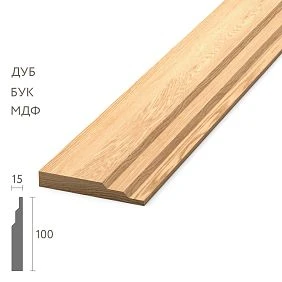
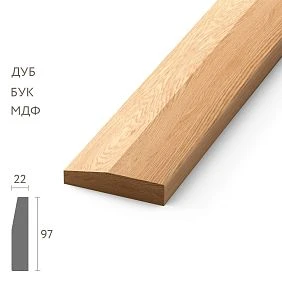
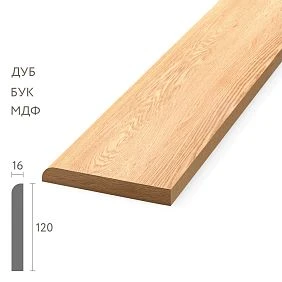
Mouldings are especially risky when bought "from memory." Similar profiles may have a close width and the same material, but differ in relief, groove depth, or edge shape.
The phrase "narrow oak moulding" is not enough.
An exact SKU is needed.
How to confirm a moulding by three attributes
Minimum check:
- SKU.
- Photo of the end cross-section.
- Actual size.
If the SKU matches, the size matches, and the end profile visually corresponds to the installed item, the risk of error is substantially lower.
For an already partially assembled frame, it is useful to additionally place a new sample or trim piece directly against the installed profile before mass cutting. This verifies not only the numbers but also the actual geometry of the joint. During an urgent purchase, this is especially important: an error with the molding is often discovered only when the two pieces are next to each other.
What to do if the packaging has already been thrown away
Sources of identification may include:
- delivery note;
- old invoice;
- the original specification;
- correspondence with the supplier;
- a photograph of the label;
- the site's working schedule;
- the history of the previous order.
For future projects, a simple rule is useful: the labeling of key SKUs must not be destroyed until installation is complete. It is enough to keep one legible label or photograph for each item code.
Wooden cornice: why an urgent shortage requires recalculating wall lengths
The phrase "we need another 16 meters of cornice" does not answer the question of how many items to order.
You need to look at:
- which walls are not yet covered;
- what is the length of each continuous section;
- where a joint is acceptable;
- which whole planks remain;
- which usable offcuts can be used.
After cutting, the purchase volume may turn out to be higher than the net deficit.
Five levels of reorder urgency
| Level | Situation | Solution |
|---|---|---|
| P1 | Installation stopped today | Emergency stock check and reserve |
| P2 | The material will last 1–2 days | Urgent reorder |
| P3 | The supply will last about a week | Standard replenishment |
| P4 | The material is needed for the next queue | Planned purchase |
| P5 | operational reserve | Purchase after completion of work |
This classification helps avoid overpaying for “urgency” where there is no real risk of downtime.
Why “urgent” should be expressed as a specific date and time
“As soon as possible” does not give the purchaser a measurable goal.
Better:
MLD-A must be on site no later than September 14 by 12:00.
After that, you can compare scenarios: pickup today, separate delivery tomorrow, scheduled delivery in two days.
It is better to specify NEED-BY with a small buffer before the actual start of work. If installation of a new batch must begin at 12:00, bringing the material exactly at 12:00 is risky: it still needs to be received, the SKU verified, counted, and distributed. For P1, this buffer can be small, but it must still exist.
Wholesale building materials depots in Moscow: what actual availability means
If considering wholesale building materials depots in Moscow, the word “available” needs to be clarified.
There are four different states:
- the item is present in the catalog;
- there are several units in stock;
- the warehouse has the entire required additional order volume;
- the required volume can be reserved right now.
For urgent installation, only the third or fourth option matters.
Besides the quantity, you need to check whether the confirmed stock is exactly the same version that is already installed on the site. The same item code with different materials or finish options cannot be combined into a single “in stock” line. The availability request must fully repeat the procurement identification.
Why having 10 planks does not help if you need 24
Do not ask: “Is MLD-A available?”
Ask:
“MLD-A, oak, 24 whole items are required in the specified version. Is this quantity available now?”
This way the manager checks your actual requirement, not merely whether the SKU exists in the warehouse.
Reserve first, then send the vehicle
The most unpleasant situation is hearing "it seems to be available," sending a vehicle, and finding out on site that the required quantity has already been given to another buyer.
For an urgent reorder, it is advisable to obtain confirmation:
SKU + variant + quantity + reservation status + reservation validity period.
Only after that should transport be planned.
In the reservation confirmation, it is useful to record its validity period. If the vehicle can only arrive in the evening, but the reservation is held until 14:00, the problem is effectively not solved. For P1, the buyer must synchronize three times: when the goods are reserved, when the transport arrives at the pickup point, and when the cargo must be at the site.
Stroybaza Moscow: when self-pickup actually saves time
If the request stroybaza moscow is tied specifically to an urgent need, self-pickup can be rational when the goods are confirmed, the volume is small, and suitable transport is already available.
Before the trip, you need to check:
- the actual length of the items;
- packaging dimensions;
- transport type;
- pickup conditions;
- pickup time;
- safety of placing long-length items.
Why “it will fit in a passenger car” cannot be decided by eye
Wooden trim is long-length material. Trying to transport it in an unsuitable vehicle can lead to bending, scratches, damage to the surface, or unsafe protrusion of the load.
First, the actual length of the packaging is measured, then the transport is selected. Urgency does not override physical limitations.
It is also necessary to consider not only the length of the vehicle body, but also the loading method. A plank may formally fit diagonally, but at the same time rest against other cargo or lack reliable support. If the items protrude beyond the dimensions of the transport, the issue already goes beyond a simple “quick trip” and requires a proper transportation plan.
When to combine several urgent items into one trip
If PLT-A, MLD-A, and KZ-A run out at the same time, all items are confirmed, and they will be needed within the next 24 hours, one coordinated trip may be more efficient than three separate ones.
But consolidation must account for the longest and most sensitive cargo. Transport is chosen not only by the number of boxes.
And when you can't wait for the entire additional order to be assembled
If the molding completely stopped installation today, but the cornice won't be needed for another week, waiting for the cornice just to make one trip may cost more than the downtime.
Urgency must be assessed for each SKU separately.
How to calculate the cost of urgency
Compare two scenarios.
Option A: fast pickup or a dedicated vehicle today.
Option B: scheduled delivery in a few days.
The calculation includes:
- transportation;
- buyer's time;
- crew waiting;
- downtime cost;
- rescheduling of related works.
If expedited shipping costs 8,000 ₽ more but prevents the loss of a crew's workday worth 25,000 ₽, the more expensive logistics may be economically more justified.
It is useful to count not only full downtime. Sometimes the crew can temporarily move to another zone. Then the real cost of the delay is lower. Therefore, before paying for an urgent vehicle, the foreman must answer: does the absence of this SKU really stop the people, or can the work be rearranged?
| Scenario | Surcharge for logistics | Losses from waiting | Solution |
|---|---|---|---|
| Pickup today | … | Minimal | compare |
| Separate delivery tomorrow | … | Up to 1 day | compare |
| Scheduled delivery | … | Several days / rescheduling of work | compare |
Why the procurement specialist should know the cost of crew downtime
If six installers cannot continue work due to a shortage of 20 meters of molding, the problem is no longer the price of those 20 meters.
Need to compare:
cost of expedited delivery
и
cost of lost working time.
Without this figure, the procurement specialist will optimize transport in isolation from the project's economics.
How not to turn an urgent reorder into uncontrolled overspending
Even with P1, it is not allowed to:
- change the SKU without approval;
- buying a random quantity "with a bigger buffer";
- automatically switching to another material;
- ignoring stock on site;
- dispatching a vehicle without confirming the reservation;
- accepting the first available alternative.
An urgent process should be faster than the usual one, but no less controlled.
A good practice is to set a limit for emergency decisions. For example, a purchaser may independently choose the delivery method within an agreed amount, but has no right to change the SKU, material, or size. This speeds up the operation without handing design decisions to someone who is only responsible for procurement.
Can an equivalent be used if the original is not available today
There is no universal answer.
Substitution is especially risky if the profile is:
- visible;
- matches the material already installed;
- fits into the moulding frame;
- continues a long architectural line;
- must match the adjacent relief.
For a standalone enclosed area, the tolerance may be higher, but the decision must be made by the project manager, not by the warehouse driver.
How to handle an urgent replacement
| Parameter | Project | Proposed |
|---|---|---|
| Article number | MLD-A | MLD-B |
| Width | … | … |
| Cross-section | … | … |
| Material | Oak | Oak |
| Zone | Corridor | Corridor |
The decision is recorded with a separate status:
APPROVED / REJECTED.
Why you can't buy an equivalent just because it's cheaper and available now
If, after installing the alternative, you have to change the frame, redo the joint, repaint the wall, or remount the adjacent elements, the "cheap" product becomes expensive.
In an urgent replacement, they compare not only the price of the profile but also the cost of the consequences.
If the profile is already installed on half the wall, the admissibility of replacement is significantly lower than in a self-contained room that has not yet been started. The tighter the new batch must join with the old one, the higher the requirement for an exact match. This makes it possible to make decisions by zones rather than by a universal rule for the entire project.
How to handle an urgent additional order on site
Because of the rush, it is especially easy to skip basic inspection.
Upon receipt, check:
- article number;
- the material;
- quantity;
- size;
- marking;
- visible damage.
Urgency does not cancel the incoming inspection.
For a P1 delivery, it is useful to assign one person to receive the material. If the driver hands the bundles directly to several installers, some of the goods may go into work before verification. One responsible person completes the checklist and only after that changes the batch status to “approved for installation.”
Do not hand new material to installers straight from the vehicle
Sequence:
verification → recording → distribution → installation.
If the packages are immediately distributed to the rooms and cutting begins, within an hour it will be difficult to reconstruct how much actually arrived and what remainder is left.
How to recalculate the remaining balance after a reorder
Before delivery, there were 92 m.
Received 40 m.
After the first day, 28 m were used.
New remaining balance:
92 + 40 – 28 = 104 m.
This figure again becomes the starting point for monitoring the remaining work.
But it is better not to track only the total remaining balance. For each item, four fields are useful: whole planks, usable offcuts, short remnants, write-off. Then, after another day, there is no illusion that 104 m of total linear meters are fully interchangeable.
Why a second urgent reorder in a row is an alarming signal
If material is again insufficient two days after replenishment, a systemic problem is likely:
- error in the original calculation;
- unaccounted overrun;
- material is going to another zone;
- actual waste is higher than expected;
- the project has changed;
- the remainder is counted only in meters without considering the usefulness of the cut pieces.
You cannot keep repeating the cycle of “not enough → bought more → not enough again.”
A repeated shortage is useful to treat as a trigger for a review. For example, if a second urgent reorder had to be placed for a single SKU, or actual consumption went far beyond the initial stock, the purchaser stops the next automatic replenishment and asks the foreman to recalculate all unfinished geometry.
When it is time to recalculate the project completely
A full review is needed if:
- the shortage repeats across several SKUs;
- actual consumption is noticeably higher than the design estimate;
- the layouts have changed;
- additional rooms have appeared;
- the remaining stock does not reconcile with the records.
In that case, another urgent order only masks the problem. The entire unfinished portion of the project needs to be recalculated.
During the review, it is useful to compare three values for each SKU: the design quantity, the actual consumption on the already completed portion, and the forecast for the remaining work. If the actual consumption coefficient is higher than expected, it can be applied to the remaining geometry instead of the old averaged reserve percentage.
For example, the first 200 m of net geometry actually required 224 m of material. The consumption coefficient is 224 / 200 = 1.12. If there are still 150 m of similar work ahead, a reasonable forecast before further verification is about 168 m, not 150 m plus the automatically selected old 10%.
How to turn an emergency reorder into data for the next project
After the work is completed, save:
- initial calculation;
- initial stock;
- actual consumption;
- actual waste percentage;
- reason for reorder;
- additional quantity;
- number of urgent shipments.
This data helps to calculate the next similar project more accurately.
Reasons for reorders should be classified. "Measurement error", "project change", "damage", "waste above project norm", "material transferred to another zone" — these are different management conclusions. If most emergency orders are related not to calculation but to unaccounted project changes, increasing stock on future projects is pointless: change management needs to be improved.
Final algorithm for urgent reorder
- Record which SKU is running out.
- Verify the exact SKU, material, and finish.
- Conduct a physical inventory of remaining stock.
- Separate full planks, usable offcuts, and unusable remnants.
- Calculate the unfinished portion of the work.
- Determine the new installation allowance.
- Calculate the actual shortfall.
- Convert meters into whole units.
- Assign the reorder a priority level from P1 to P5.
- Specify the exact NEED-BY date and time.
- Verify the actual availability of the full required quantity.
- Reserve the SKU and quantity.
- Compare pickup and delivery, factoring in downtime costs.
- Choose the right transport for long-length cargo.
- Accept the goods by SKU, material, and quantity.
- Update the stock balance after receipt.
- If the shortage recurs, recalculate the remaining part of the project in full.
An urgent reorder must not turn into a chaotic search for “something similar that’s available today.” The closer the project is to downtime, the more important it is to quickly reduce uncertainty: pinpoint the SKU, calculate the usable stock, confirm the required quantity, and reserve it before dispatch.
So wholesale building materials warehouse in Moscow becomes not just a place for urgent purchases, but part of a managed replenishment scheme: the installation team reports the actual shortage, the buyer verifies the calculation, the supplier confirms the specific SKU and quantity, and the project accepts the goods and immediately returns the new stock figure to the system.