Article Contents:
- What are table legs and why are they confused with a ready-made base
- Legs and underframe: a short comparison for the buyer
- When to choose separate table legs
- When it's better to buy a ready-made underframe
- How to make a table stable
- Which legs are suitable for a wooden tabletop
- How to choose between legs and a ready-made underframe based on the table type
- Dining table
- Kitchen table
- Coffee or side table
- Work Desk
- Bar table
- Interior table for living room or study
- Have an old tabletop, need to replace the base
- Need to assemble a new dining table
- Need a compact table for the living room
- Need to furnish an office
- Need to choose a table for a cafe or salon
- Need a decorative table or console
- Buying legs just because they are beautiful
- Not considering the weight of the wooden tabletop
- Assuming four legs are always enough
- Forgetting about the final height
- Not checking the edge overhang
- Confusing legs and ready-made under-table
- Not considering the style of the room
- Not specifying parameters before ordering
- What to choose — legs or under-table?
- When does a table need separate legs?
- When is it better to buy a ready-made under-table?
- How to make a table stable?
- Which legs are suitable for a wooden tabletop?
- Can I put a large tabletop on four wooden legs?
- How does a table base differ from a furniture leg?
- Will a ready-made table base fit a small table?
- What to check before buying legs?
- What should you check before buying an underframe?
- Can I use legs for self-assembly of a table?
- Where to buy wooden legs and a ready-made table base?
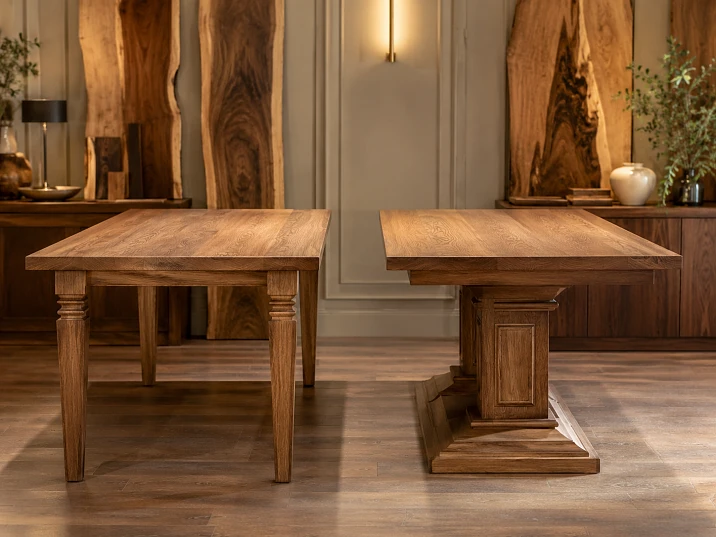
Legs for a table base are often looked for when the tabletop is already chosen or almost chosen, but the lower part of the table still raises questions. It seems like a simple task: buy beautiful wooden legs, attach them to the tabletop — and the table is ready. But in practice, it is the base that determines whether the table will be stable, comfortable, durable, and visually cohesive.
The main fork here is this: take individual legs or immediately buy a ready-made table base. Both options can be correct, but for different tasks. Individual legs give more freedom during assembly, help replace old supports, are suitable for small tables and furniture with a clear load. A ready-made table base works better where a solid structure, stability, correct geometry, and less risk when selecting a base for a wooden tabletop are needed.
For the buyer, this difference is especially important. A wooden tabletop can be heavy, wide, long, and expressive in texture. If placed on unsuitable legs, the table will wobble, visually "sink" down, or become uncomfortable to use. If the correct table base support is chosen, the lower part will not just hold the top, but form a full-fledged interior table.
If the task is to update furniture, assemble a light table, or replace individual elements, you can also look at buy wooden furniture legsIf you need a stable table base for a wooden tabletop, dining area, kitchen, office, or interior project, it's worth comparing options in advance and, if necessary buy a ready-made wooden table base.


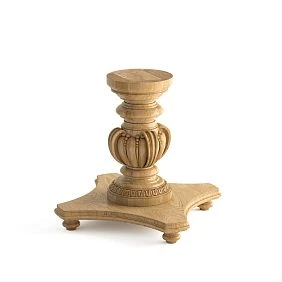
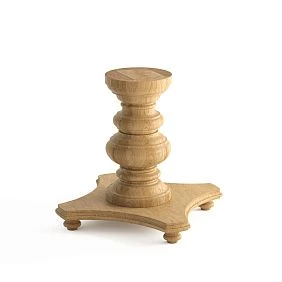
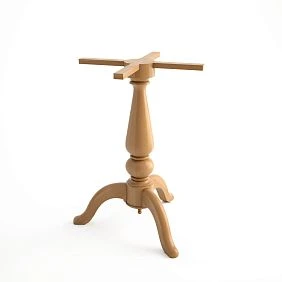

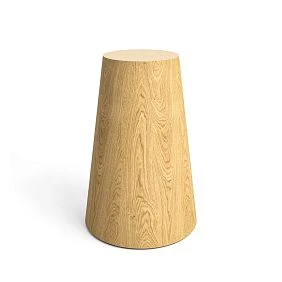
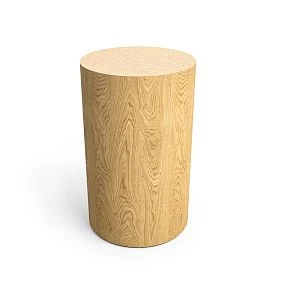
What are table base legs and why are they confused with a ready-made base
Table base legs are individual support elements that can be used as part of a table, small table, console, cabinet, or other furniture. They bear part of the load, set the height, affect the appearance, and help assemble the lower part of the product. But legs alone do not always form a complete table base.
A table base is a broader concept. It is a ready-made or assembled structure under the tabletop, which may include legs, side supports, crossbars, a frame, aprons, mounting plates, and other elements. If a leg is responsible for a single support point, the table base is responsible for the entire system: how the table stands, how it distributes the load, how it reacts to lateral pressure, and how convenient it is to use.
Because of this, buyers often use similar phrases: table base support, table base support for table, table supports table base. Behind all these formulations lies one practical question: what is best to place under the tabletop so that the table is stable and looks decent.
The confusion is especially noticeable when choosing a wooden table. Visually, individual legs can look very attractive: wood texture, expressive shape, decorative treatment, pleasant proportions. But if the tabletop is heavy or large, beauty alone is not enough. A rigid structure is needed that will hold the top and prevent the table from wobbling.
Therefore, before purchasing, you need to not just choose between "like" and "dislike." You need to understand what role the lower part will play: decorative, load-bearing, structural, or all three at once. This determines whether individual legs will work or whether it is better to move to a ready-made table base.




Legs and table base: a short comparison for the buyer
The difference between individual legs and a ready-made table base is easier to see in comparison. Both options relate to the lower part of the table, but work differently. Legs give freedom of assembly. A table base gives more predictability and stability.
| Criterion | Individual legs | Ready-made underframe |
|---|---|---|
| What is this | Individual supports for furniture or table | Solid base for tabletop |
| When convenient | For repair, replacement, light tables, custom assembly | For dining, kitchen, work, and heavy tables |
| Main advantage | Freedom of selection and decorativeness | Stability and ready-made structural logic |
| Main risk | Mistaking the quantity, height, or load | Choosing a base that doesn't match the tabletop size |
| What to check | Height, shape, material, fastening, quantity | Size, base, height, compatibility with tabletop |
If the table is small, light, and doesn't experience serious load, separate legs can be a convenient solution. They allow you to assemble furniture in the desired style, replace outdated parts, or give the product a new character. This is especially relevant for small tables, cabinets, decorative surfaces, consoles, and furniture where the load is known in advance.
If we're talking about a full-fledged wooden table that will be used daily for placing dishes, leaning on hands, working, or entertaining guests, a ready-made underframe is often safer. It is perceived not as a set of parts, but as a base that should already work together with the tabletop.
Our factory also produces:
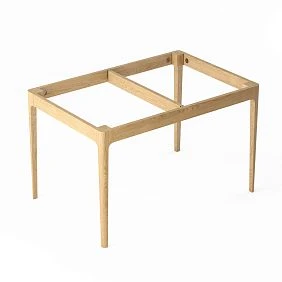
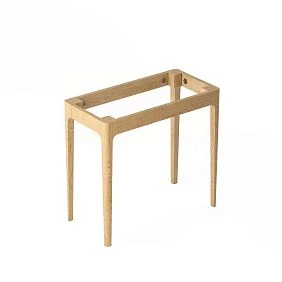
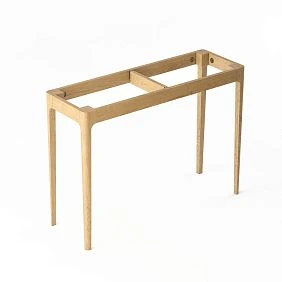
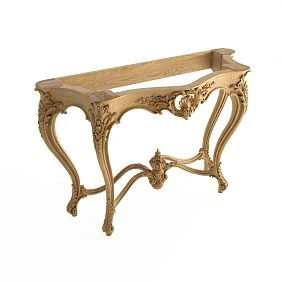


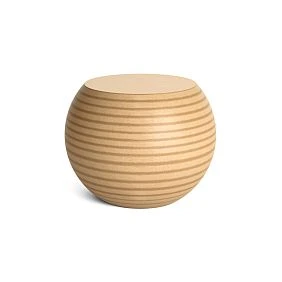
When to choose separate legs for the underframe
Separate legs are suitable not only for saving money or simple assembly. In some cases, they truly provide a better result. Especially when the buyer wants to flexibly customize the furniture's appearance, replace old supports, or assemble a small table for a specific interior.
The first scenario is repairing or updating furniture. For example, there is a tabletop, cabinet, console, or small table that fits in size, but the lower part is outdated, wobbly, or doesn't match the style. In this situation, the buyer doesn't need to replace all the furniture. You can choose new wooden legs, check the height, fit, and appearance, and then update the piece without a complete overhaul.
The second scenario is assembling a lightweight table or small table yourself. If the surface is small, the load is moderate, and the design is straightforward, individual legs offer more freedom. You can choose the shape, height, decorative style, and proportions to suit a specific room. This approach is often used for coffee tables, side tables, decorative tables, and small work desks.
The third scenario is focusing on decorativeness. Sometimes the lower part of the furniture is almost as visible as the tabletop. In a classic interior, living room, bedroom, study, or hallway, legs can become part of the overall look: supporting carved decor, wooden elements, frames, console furniture, or facades.
The fourth scenario is a non-standard design. If the buyer is assembling furniture not according to a standard scheme, a ready-made underframe may not match the task. In that case, individual legs allow for more precise distribution of supports, choosing the desired height, and adapting the piece to the installation location.
But this option has a condition: individual legs require calculation. You need to understand how many supports are needed, where they will be placed, how the tabletop will be attached, what weight each point will bear, and whether there will be lateral wobbling. Without this calculation, individual legs may end up being a beautiful but weak solution.
For such tasks, you can preview and buy wooden furniture legs, but before ordering, it's worth checking the parameters in the product card and understanding whether they fit your specific design.
Get Consultation
When it's better to buy a ready-made underframe
A ready-made underframe should be chosen when stability, structural clarity, and trouble-free use are the top priorities. This is especially important for a wooden table where the tabletop may be heavy, wide, or long. The more substantial the top part, the less you should experiment with individual legs without calculation.
A ready-made underframe is convenient because the buyer chooses not individual support points, but a complete base. Such a design helps distribute the load, maintain geometry, and make the table visually cohesive. The lower part doesn't look random: it is immediately perceived as part of the table.
For the dining area, this is especially important. People sit at the table, dishes, cutlery, and serving bowls are placed on it, and sometimes people lean on it with their hands. If the base is weak, the discomfort is felt immediately. The table may wobble, react to every movement, or create a feeling of instability. A ready-made underframe reduces this risk.
For the kitchen, not only stability is important, but also practicality. The kitchen table is used frequently, sometimes as a work surface. Here, the base must withstand regular loads and not interfere with seating. A base that is too narrow under a wide tabletop, legs that are too thin, or an incorrect overhang can quickly become a problem.
For a study and work area, rigidity is important. If the table is used for writing, a laptop, documents, or equipment, wobbling is more annoying than in a decorative area. A ready-made wooden underframe helps to assemble a calmer and more reliable structure.
For a commercial interior, a ready-made base is also often the better choice. In cafes, restaurants, salons, showrooms, or meeting rooms, tables are used more intensively than at home. It is especially important there that the furniture looks confident and does not require constant adjustment or repair.
If the task involves a full-fledged wooden table, it is logical to immediately buy a ready-made wooden table base or at least compare ready-made options with individual legs before ordering.
How to make a table stable
The stability of a table depends not only on the number of legs. Four supports alone do not guarantee reliability if they are too thin, poorly secured, placed too close to the center, or do not match the height. Conversely, a well-calculated central or side support can be stable if it matches the size of the tabletop.
The first parameter is the weight of the tabletop. The heavier the top part, the more substantial the base must be. A wooden tabletop often requires a more confident lower structure than lightweight decorative surfaces. If the weight is unknown, it should be clarified before purchasing the base.
The second parameter is size. A long tabletop requires support along its length. A wide one requires a stable base in width. A round one requires the correct center of gravity. If the base is too compact, the edge of the tabletop will extend too far beyond the support, increasing the risk of wobbling.
The third parameter is the edge overhang. A small overhang is needed for comfortable seating and a nice proportion. But too large an overhang makes the structure less stable. This is especially noticeable when a person leans on the edge of the table.
The fourth parameter is height. The higher the table, the more noticeable the lateral movement. Bar and high tables require a wider and stiffer base. For a regular dining table, you also need to calculate the final height including the tabletop, not just the leg height.
The fifth parameter is the attachment. Even strong legs won't help if they are poorly connected to the tabletop. The load must be transferred through a sufficient attachment area. If the attachment area is small or the tabletop material is not suitable for the chosen fixing method, the structure can quickly become loose.
The sixth parameter is geometry. The supports must be positioned so that the table does not tip over and does not create discomfort for the legs. Sometimes a buyer chooses massive side elements, but then realizes that sitting at the table is uncomfortable. Sometimes, on the contrary, they choose a base that is too light, which does not support the scale of the tabletop.
| What to Check | Why this is important | What the error leads to |
|---|---|---|
| Tabletop weight | The base must withstand the load | The table wobbles or overloads the attachment |
| Tabletop size | It determines the placement of supports | Edges sag or have excessive overhang |
| Height | It affects the fit and comfort | It's uncomfortable to sit at the table |
| Mounting area | Through it, the load is transferred to the base | The mount loosens quickly |
| Edge overhang | It affects the balance of the table | The table wobbles when weight is applied to the edge |
If all these parameters are clear and the table is small, individual legs may work. If at least two parameters are questionable — for example, the tabletop is heavy and large, and no precise calculation has been made — it's better to choose a ready-made underframe.
Which legs are suitable for a wooden tabletop
A wooden tabletop requires a base that matches it in scale and character. If the top is massive, textured, and visually heavy, legs that are too thin will look weak. If the tabletop is small and neat, overly powerful supports can make the table look coarse.
Legs must match in height. The final table height is the sum of the leg height and the tabletop thickness. If the thickness of the top is not taken into account, you may end up with a table that is higher than a comfortable level. This is especially noticeable in the dining area, where height is directly related to chairs and seating.
Legs must match in material. For a wooden tabletop, it is logical to choose wooden supports if the goal is to maintain a cohesive look. However, precise options for material, finish, and compatibility should be checked in the product card. If the table will be painted, tinted, or combined with existing furniture, the material and future finish need to be considered before ordering.
Legs must match in shape. A straight, simple shape works best in calm, modern interiors. More decorative wooden legs are suitable for classic furniture, accent tables, consoles, studies, and living rooms. However, the shape should not interfere with seating and attachment.
Legs must match in load capacity. For a light table, more elegant solutions can be chosen. For a large wooden tabletop, supports with sufficient structural strength are needed. If the buyer is unsure that individual legs can handle the task, it is safer to consider a table base as a single structure.
Legs must match in quantity. For a small surface, four supports may be enough. For an elongated tabletop, a more complex arrangement may be needed. For a non-standard shape, it is necessary to understand in advance where the support points will be and how they will distribute the load.
If the task is specifically to select individual elements for furniture, you can buy wooden furniture legs. But for a massive table, you need not just to choose beautiful legs, but to check the entire structure: height, weight, overhang, attachment, and purpose.
How to choose between legs and a ready-made base by table type
The type of table greatly influences the choice of base. The same leg can work perfectly in a small accent table and be a weak solution for a large dining table. Therefore, first, you should determine not the shape of the support, but the usage scenario.
Dining table
For a dining table, stability and seating comfort come first. People sit at it every day, place dishes, move objects, and lean on it with their hands. The base must easily withstand everyday loads and not interfere with legs.
If the tabletop is large or heavy, a ready-made underframe is usually more reliable. It helps distribute the load and makes the table solid. Separate legs are also possible, but only with proper calculation of quantity, height, fastening, and placement.
Kitchen table
A kitchen table works harder than decorative furniture. It is used for eating, food preparation, and household tasks. In such an area, a weak base quickly becomes annoying. Even slight wobbling becomes noticeable when the table is used several times a day.
For the kitchen, it is better to choose a stable base with clear geometry. If the buyer wants separate legs, not only the appearance but also practicality must be checked. If the tabletop is massive, a ready-made wooden underframe will be more comfortable in use.
Coffee or side table
For a small table, separate legs are often suitable. The load is lower, the size is smaller, and the requirements for the support system are more relaxed. Here, more attention can be paid to shape, decorativeness, and combination with a sofa, armchair, console, or other furniture.
But even a small table must be stable. If it is tall and narrow, it is easy to bump into. If the tabletop is heavy, thin legs may look unconvincing. Therefore, even in a small format, balance must be maintained.
Desk
A desk must be rigid. People write, work with a laptop, place documents, and sometimes set up equipment on it. If the base causes vibration or wobbling, using the desk is unpleasant.
For a desktop, you can choose individual legs if the structure is light and well-calculated. But for a massive wooden tabletop, a ready-made base that provides greater stability is often better.
Bar table
A bar table is higher than usual, meaning it reacts more strongly to lateral load. For it, the width of the base, the strength of the attachment, and the correct center of gravity are especially important. Too light legs are risky here.
If a buyer chooses a base for bar height, stability must be carefully checked. In such tasks, a ready-made underframe is often safer than a set of individual supports without calculation.
Interior table in the living room or study
In the living room and study, the table often becomes a noticeable part of the interior. Here it is important not only that it stands, but also that it looks cohesive. The base should support the style of the tabletop and not look random.
If a decorative effect is needed, individual wooden legs can be a good choice. If a solid table with a heavy tabletop is needed, it is better to consider a ready-made underframe.
How to choose by tabletop shape
The shape of the tabletop directly affects the base. Rectangular, round, square, and oval surfaces distribute load differently. You cannot choose legs for an underframe without considering the shape of the top part.
For a rectangular tabletop, length is important. If it is elongated, the supports must hold the surface so that there is no large sagging span. Four legs may work, but they need to be positioned correctly. For a long table, a ready-made underframe often provides more confidence.
For a round tabletop, the center of gravity and symmetry are important. A central support can be convenient because it doesn't interfere with seating, but its base must match the diameter. If the base is too narrow, the table will wobble when weight is applied to the edge.
For a square tabletop, the choice is usually simpler, but you cannot place supports too close to the center. The corners should feel supported. If the table is small, individual legs can be convenient. If the square tabletop is large and heavy, it's better to look at a more rigid base.
For an oval tabletop, both the length and the soft shape of the edges need to be considered. The base should not be too short, otherwise the edges will visually and structurally 'hang'. Here, it is especially important to evaluate the overhang and seating comfort.
The principle is simple: the more complex the shape and the larger the size, the more carefully you need to consider the base. Individual legs offer freedom but require calculation. A ready-made underframe reduces risk if it matches the size and purpose.
How to choose by size, height, and load
Size, height, and load are three parameters that cannot be separated. You can buy beautiful wooden legs but end up with an uncomfortable table. You can choose a massive underframe but make a mistake with seating. Therefore, the base should always be evaluated together with the tabletop.
The size of the tabletop indicates how wide the base should be. A small table allows for a more compact base. A large dining table requires more substantial support. A long tabletop must have sufficient support along its length, otherwise there is a risk of sagging or wobbling.
Height affects comfort. For a dining table, it's important that the final height matches the chairs and usual seating. For a coffee table, the surface should be convenient next to the sofa. For a bar table, the base must not only be high but also remain stable.
Load depends on the scenario. Books, a vase, or a lamp are placed on a decorative table. Dishes, groceries, and household items are placed on a kitchen table. Equipment and documents are placed on a work desk. In a commercial space, the load is even higher because furniture is used by different people and much more frequently.
If the tabletop is heavy, individual legs need to be chosen with particular care. You need to understand the load each support takes and how securely it is attached. If such data is insufficient, it's better to choose a ready-made underframe and verify compatibility before ordering.
Special attention should be paid to the overhang of the edges. The further the tabletop edge extends beyond the base, the higher the load on the fastening and the greater the risk of wobbling. A small overhang is needed to sit comfortably at the table. But too large an overhang makes the structure weaker.
How legs and underframe affect the style of a wooden table
The base is almost always visible. Even if the buyer first looks at the tabletop, the lower part quickly begins to play an equally important role. It sets the character of the table: light, massive, classic, modern, calm, decorative, or strict.
Individual wooden legs offer more possibilities for stylistic adjustment. You can choose a simpler shape for a modern interior or a more expressive one for classic furniture. Legs work well when you need to support a decorative motif: facades, carved decor, wooden frames, console furniture, interior elements.
A ready-made underframe has a stronger influence on the table's architecture. It makes the lower part integral and helps the table look complete. This option is especially good for large tables, where the base should not just 'hold' but visually match the scale of the tabletop.
In a classic interior, too simple or random legs can look poor next to a massive tabletop. In a modern interior, an overly decorative base can overload the furniture. In a premium setting, it is especially noticeable if the table is assembled from mismatched parts.
For a wooden table, the connection between material and form is important. If the tabletop is made of wood or has a wood finish, a wooden lower part helps maintain integrity. But the material and finish still need to be specified in the product card to avoid mismatches in texture, tone, or finishing method.
Style should not conflict with stability. Sometimes a buyer chooses the thinnest legs to make the table appear lighter, but ends up with a weak structure. Sometimes they choose too massive an underframe, and the table becomes visually heavy. A good choice lies between beauty and sound calculation.
What to choose for DIY assembly
DIY assembly often starts with a simple idea: there is a tabletop, and you need to find legs for it. This is a normal scenario, but it requires care. The finished table should not only look beautiful after assembly but also withstand everyday use comfortably.
For self-assembly, individual legs are convenient if the buyer understands the design. You need to determine in advance the number of supports, the distance from the edge, the method of attachment, the final height, and the load. You also need to ensure that the tabletop is suitable for the chosen attachment.
If the table is small and the load is moderate, individual legs provide freedom. You can assemble a coffee table, a side surface, a console, or a small desk. In this case, it is especially important not to make a mistake with the height and visual scale.
If the tabletop is heavy, long, or wide, self-assembly on individual legs requires more experience. You need to understand whether the top will sag, whether lateral wobbling will occur, and whether the attachment area is sufficient. An error may not appear immediately, but after several weeks of use.
A ready-made underframe simplifies the task. The buyer does not need to select each leg separately, calculate the distances between supports, or think about how to connect the structure. But you still need to check the dimensions, height, purpose, and compatibility with the tabletop.
Therefore, for self-assembly, the rule is: if the table is compact and the design is clear, you can choose individual legs. If the table is large, heavy, or will be used daily, it is more rational to buy a ready-made wooden underframe and check the parameters before ordering.
What to buy together with legs or an underframe
Purchasing the lower part of a table is rarely isolated. To make the result look cohesive, you need to think in advance about the tabletop, attachment, finish, style, and neighboring furniture elements. Even if the buyer only takes legs, they are still assembling a structure, not buying a single decorative detail.
If the task is to update furniture or assemble a light table, the first step can be buy wooden furniture legs. Before ordering, it is worth checking the height, material, shape, and compatibility with the furniture. If the task is a full-fledged wooden table, it is better to compare this option with the possibility buy a ready-made wooden table base.
For a cohesive result, you need to decide in advance how the table will look after finishing. Will the base match the tabletop in color? Is it necessary to preserve the natural texture? Is painting, tinting, varnish, or another finish planned? It is better to clarify the exact material and finish options in the product card or with a STAVROS manager.
| What to add to the purchase | Why this is needed | When it fits |
|---|---|---|
| Wooden furniture legs | For replacing supports, repairs, and self-assembly | When the structure is lightweight or well-designed |
| Ready-made wooden underframe | For a stable base under the tabletop | When the table will be large, heavy, or used daily |
| Finish under the tabletop | So the base and top look unified | For wooden, classic, and interior tables |
| Fasteners and installation method | So the load is transferred correctly | Before assembling any table |
| Compatibility consultation | To avoid mistakes with size and purpose | If the tabletop is heavy or non-standard |
This approach helps avoid buying parts individually blindly. First, you need to understand the design, then choose the lower part, then check the finish and compatibility. Then the table will look like a single product, not like a random tabletop on random supports.
How not to confuse furniture legs, underframe support, and ready-made underframe
Furniture legs, underframe support, and ready-made underframe are similar in purpose but differ in role. A mistake in terms can lead to incorrect purchase. Therefore, before ordering, it is useful to name not only the product but also the task.
A furniture leg is a separate support. It can be used for a table, cabinet, chest of drawers, console, small table, or other furniture. It is chosen by height, shape, material, decorativeness, and compatibility with the product.
Underframe support is a more structural concept. It is an element that helps hold the tabletop and participates in load distribution. A leg can be a support, but not every support is perceived only as a leg. A support can be a side post, a central base, or part of a ready-made base.
A ready-made underframe is a base for the tabletop. It may include supports, crossbars, and frame elements. The buyer chooses not a separate part, but the lower part of the future table. Therefore, a ready-made underframe is more suitable for large, heavy, and daily-use tables.
A simple check goes like this: if you need to replace or select individual elements, you can look at legs. If you need to securely install a tabletop, it's better to look at an underframe. If you need a load-bearing part for a specific table, it's important to evaluate the entire structure, not just the product name.
Practical selection for different situations
There is an old tabletop, need to replace the base
First, you need to understand why the previous base is unsatisfactory. Is it loose, doesn't match the style, too low, weak, or just outdated? If the problem was only with the appearance, you can choose new wooden legs. If the problem was with stability, it's better to consider a ready-made underframe or a more rigid structure.
Need to assemble a new dining table
For a new dining table, daily stability is important. If the tabletop is large, massive, or designed for multiple seats, a ready-made underframe is usually more reliable. Individual legs are possible, but only with proper calculation.
Need a compact table for the living room
For a coffee or side table, individual legs can be a good choice. There is less load here, more freedom for decorativeness, and it's easier to choose a shape to match the sofa area or armchair. But the height and stability still need to be checked in advance.
Need to furnish an office
In an office, the table should look confident and not wobble during work. If it's a small writing desk, individual supports are possible. If it's a massive wooden tabletop, it's better to choose a ready-made underframe that will support the scale and ensure rigidity.
Need to select a table for a cafe or salon
In commercial spaces, furniture is used frequently, so weak solutions quickly become noticeable. It's better to choose a base with a margin of stability. In such cases, a ready-made wooden underframe is often more practical than individual legs without calculation.
Need a decorative table or console
For decorative furniture, individual legs provide more expressiveness. You can choose a shape to match the interior, support a carved or classic style, and update furniture without a full replacement. But if the console or table is tall and narrow, stability still needs to be assessed in advance.
Mistakes when choosing legs and underframes
Buying legs just because they are beautiful
Appearance is important, but it doesn't replace calculation. Legs can be expressive, neat, and stylistically appropriate, but not suitable for load or height. For a wooden tabletop, it's especially important that the supports match the scale.
Not considering the weight of the wooden tabletop
A heavy tabletop requires a reliable lower part. If placed on weak legs, the table may wobble or overload the fastening. The greater the weight, the more carefully you need to look at the ready-made underframe.
Assuming that four legs are always enough
The number of supports alone does not solve the problem. The placement, base width, fastening, and tabletop size are important. Four weak or incorrectly placed legs can perform worse than one well-thought-out base.
Forgetting about the final height
The buyer can choose beautiful legs without considering the thickness of the tabletop. After assembly, the table turns out to be too high or uncomfortable. The height must be calculated in advance, together with the top part.
Not checking the edge overhang
If the tabletop extends too far beyond the base, the table becomes less stable. This is especially noticeable under load on the edge. The overhang should be comfortable for seating, but not excessive.
Confusing legs and a ready-made underframe
Legs are elements. The underframe is the base. If a structure for a heavy table is needed, individual legs may not solve the problem. If repairing light furniture, a ready-made underframe may be unnecessary.
Not considering the room style
Even a sturdy base can look out of place if it doesn't match the tabletop and interior. A wooden table is especially sensitive to scale, shape, and finish. The base should support the overall look.
Not clarifying parameters before ordering
Exact dimensions, materials, finish options, attachment features, and compatibility must be checked in the product card or clarified with a STAVROS manager. This helps avoid a purchase that doesn't fit a specific tabletop.
Who should choose individual legs, and who is better off with a ready-made table base
Individual legs are suitable for a customer who is assembling a lightweight table, updating furniture, replacing old supports, wants more decorative freedom, or is working on a non-standard project. This option is especially convenient when the load is clear, the dimensions are moderate, and the design does not require a complex support system.
Legs are also well-suited for those who want to change the character of furniture without a full replacement. An old table, console, cabinet, or small surface can look completely different after replacing the lower part. In this case, the customer gets a quick way to update the item and tie it into the interior.
A ready-made table base is suitable for those assembling a full wooden table: dining, kitchen, work, office, or commercial. It is especially appropriate with a heavy or large tabletop, daily use, and the desire to get a solid foundation without independently calculating each support point.
A ready-made table base should also be chosen if the customer is unsure about calculations. When it is unclear how many legs are needed, how to position them, whether they will support the tabletop, and whether the table will wobble, it is better to choose
Individual legs can be an unnecessary risk for a large table. A ready-made table base can be excessive for small decorative furniture. Therefore, the right choice is not that one option is always better than the other, but which option matches the size, weight, style, and purpose of the table.
How to buy legs or a table base at STAVROS
It is best to start the purchase by answering a few questions. What kind of table is being assembled? What tabletop will be on top? Where will the furniture be placed? How often will it be used? Is decorativeness needed, or is stability the priority? The answers to these questions determine whether to choose individual legs or a ready-made table base.
If you need to replace supports, update furniture, assemble a small table, or select decorative wooden elements, you can go to the section and buy wooden furniture legs. Before ordering, you need to check the height, material, shape, compatibility with furniture, and current parameters in the product card.
If the task is to place a wooden tabletop on a stable base, to assemble a dining, kitchen, work, or interior table, it is worth buy a ready-made wooden table base. In this case, the buyer receives not individual supports, but a ready-made lower part, which is easier to evaluate by size, purpose, and overall geometry.
Before ordering, it is worth preparing the dimensions of the tabletop, the desired table height, information about the installation location, and an idea of the future finish. If the tabletop already exists, it is useful to measure its length, width, thickness, and understand its approximate weight in advance. If the tabletop has not yet been chosen, it is better to select the top and base together.
If in doubt, you should clarify the parameters with a STAVROS manager. This is especially important for heavy tabletops, non-standard shapes, commercial spaces, and self-assembly. One clarifying question before ordering often saves more time than reworking an already assembled table.
FAQ: frequent questions about table legs and ready-made underframe
What to choose — legs or an underframe?
If the table is small, light, or you need to replace individual supports, you can choose legs. If the tabletop is heavy, the table will be used daily, or a more stable structure is needed, a ready-made underframe is better.
When does a table need individual legs?
Individual legs are suitable for light tables, furniture repair, replacing old supports, decorative projects, and self-assembly where the load, height, and placement of supports are clear.
When is it better to buy a ready-made underframe?
It is better to buy a ready-made underframe for dining, kitchen, work, and massive wooden tables. It helps to create a stable base and reduces the risk of errors when selecting individual parts.
How to make a table stable?
You need to consider the weight and size of the tabletop, height, edge overhang, attachment area, base width, and usage scenario. The heavier and larger the tabletop, the more substantial the base should be.
Which legs are suitable for a wooden tabletop?
Legs should match in height, material, shape, load capacity, and style. For a lightweight tabletop, individual supports can be considered; for a heavy one, a ready-made underframe is often safer.
Can a large tabletop be placed on four wooden legs?
Yes, if the legs are suitable for the load, properly positioned, and securely fastened. But for a large or heavy tabletop, it is better to compare this option with a ready-made underframe in advance.
How does an underframe support differ from a furniture leg?
A furniture leg is a separate support. An underframe support can be part of a more complex structure that holds the tabletop and distributes the load.
Will a ready-made underframe work for a small table?
Sometimes yes, if it matches in size and style. But for a small decorative table, a ready-made underframe can be too massive. In that case, individual legs are often more convenient.
What to check before buying legs?
You need to check the height, material, shape, quantity, attachment method, compatibility with the tabletop or furniture, as well as the current parameters in the product card.
What to check before buying a table base?
You need to compare the base size, height, purpose, compatibility with the tabletop, base width, ordering conditions, and design features.
Can legs be used for self-assembly of a table?
Yes, if the tabletop is not too heavy, the design is clear, and the buyer has pre-calculated the height, number of supports, placement, and attachment. For a heavy tabletop, it is better to consider a ready-made underframe.
Where to buy wooden legs and a ready-made underframe?
For replacing supports and self-assembly, you can buy wooden furniture legs. For a stable wooden table, you can buy a ready-made wooden table base.
Conclusion
Legs for an underframe and a ready-made underframe solve a similar task but are suitable for different scenarios. Individual legs provide freedom, help refresh furniture, assemble a small table, and support a decorative style. A ready-made underframe provides more stability, a clear design, and confidence when working with a heavy wooden tabletop.
If the table is small, light, and the design is clear, you can choose individual wooden legs. If the table will be a dining, kitchen, work, massive table, or designed for daily use, it is better to consider a ready-made wooden underframe. The main thing is not to choose a base based only on a photo. You need to consider the size, weight, height, overhang, attachment, material, and installation location.
At STAVROS you can buy wooden furniture legs for repair, renovation, and DIY assembly, as well as buy a ready-made wooden table base for a stable table base under the tabletop. A conscious choice of the base helps to assemble not a random structure, but a beautiful, comfortable, and reliable wooden table.