












































































Article Contents:
- Neoclassicism 2026: what has changed in the style language
- Minimization of decor while preserving structure
- Color restraint: monochrome instead of contrasts
- Wooden handles as accents of materiality
- Scenario 1: Walls with molding panels and furniture with minimalist handles
- Panel construction
- Furniture with concise handles
- Execution details
- Scenario 2: Ceiling cornice and tall vertical panels with carved handles
- Ceiling cornice: completing the vertical
- Vertical panels: rhythm and height
- Furniture with expressive handles
- Color palette
- Scenario 3: Ceiling plasterwork (rosettes, coffers) and sculptural wooden handles
- Ceiling as an accent plane
- Walls: minimum decor
- Furniture with sculptural handles
- Lighting: supporting accents
- Scenario 4: Moldings as framing for functional zones and handle-integrators
- Moldings as zone frames
- Furniture with handles supporting zoning
- Details: coordination of colors and textures
- Materials: polyurethane versus wood and their coordination
- Polyurethane moldings: practicality and clarity
- Wooden moldings: elite solution
- Combining materials
- Color scenarios: from monochrome to contrasts
- Total white: purity and light
- Monochrome gray: sophistication and depth
- Warm beige with dark accents
- Contrast neoclassicism: dark walls, light moldings
- Details that make neoclassicism contemporary
- Hidden doors in molding panels
- Integrated lighting in moldings
- Touch-sensitive elements in furniture
- Natural materials in details
- Practical implementation tips
- Start by planning molding placement
- Choose moldings by width and profile
- Select handles that match molding style
- Coordinate all elements by color before installation
- Entrust installation to professionals
- Use quality materials
- Frequently Asked Questions
- Can moldings be used in small rooms?
- Is neoclassicism suitable for studio apartments?
- How to care for wooden handles?
- Can wooden and metal handles be combined in one interior?
- Should handle color be coordinated with baseboard color?
- Should moldings be painted before or after installation?
- How to choose the height of wall molding panels?
- Can moldings be used in bathrooms and kitchens?
- How much does implementing a neoclassical interior with moldings and wooden handles cost?
- Is neoclassicism still relevant in 2026 or is it becoming outdated?
- Conclusion: creating spaces that outlast trends, with STAVROS

Neoclassicism in 2026 is not about copying 18th-century palaces. It's about reinterpreting classical canons through the lens of contemporary needs, technologies, and aesthetic principles. Moldings and plasterwork here serve as architectural frameworks that create spatial structure without excessive decorativeness. Wooden handles become sculptural accents that connect furniture with walls, creating tactile dialogue between different surfaces. How to build a neoclassical interior so it remains relevant, fresh, non-museum-like, while preserving the nobility and elegance of the style?
Today we'll examine specific usage scenariosof moldings and plasterworkcombined with wooden handles—from minimalist interpretations to more saturated solutions. We'll see how to create spaces where classical architectural logic works within modern apartment dimensions, where every element has a function, and decorativeness emerges from purity of lines and quality of execution.


Neoclassicism 2026: what has changed in the style's language
Neoclassicism has always been a dialogue between antique rigor and baroque opulence, between reason and emotion. In 2026, this dialogue shifts toward rationalism. Spaces become more restrained, lines cleaner, palettes calmer. Yet the essentials remain—architectural logic, symmetry, proportions, material quality.




Minimizing decor while preserving structure
Previously, neoclassicism implied abundant decorative elements: ceiling rosettes, wall friezes, multi-tiered cornices, pilaster capitals. Today we see purification. Only the most essential elements remain—those that create architectural structure. Plasterwork in interiors is used not for decoration but for organizing space: moldings frame panels, cornices complete walls, rosettes accentuate ceiling centers. Every element has meaning, function, and place in the composition.
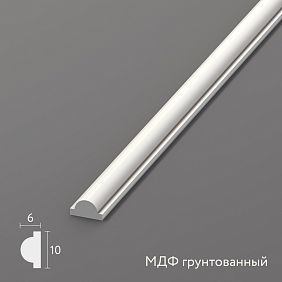
Moldings and trimbecome more concise in profile. Instead of complex multi-stage forms — simple rectangular sections with a single bevel or rounding. Instead of floral ornaments — geometric purity. But the quality of execution, clarity of edges, perfection of joints — are top-notch.
Our factory also produces:


Color restraint: monochrome instead of contrasts
Classical neoclassicism loved contrasts: white trim on colored walls, gilding on a white background. Neoclassicism 2026 gravitates towards monochrome. Walls, moldings, ceiling — in the same color palette, often in different shades of one color. Beige on beige, gray on gray, white on white. The relief is perceived not through color contrast, but through the play of light and shadow, through the quality of the surface — matte or with a slight satin sheen.
This creates complexity, depth, sophistication — but without flashy decorativeness. The space becomes a backdrop for life, not a stage for displaying decor.
Get Consultation
Wooden handles as accents of materiality
In this restrained contextWooden handleson furniture become important accents. Wood is a living material with texture, warmth, tactility. When most of the space is painted, plastered, covered with polyurethane trim — wooden elements introduce organicity, connection with nature, tangibility.
Handles can be concise — simple brackets made of light oak or beech, or more sculptural — with smooth curves, with refined ergonomics. It is important that they do not conflict with the moldings on the walls, but complement the overall logic of the space. If the moldings are simple rectangular — handles can also be geometric. If the moldings have a slight rounding — handles with soft radii.
Scenario 1: Walls with molding panels and furniture with minimalist handles
The most classic and simultaneously modern approach — using moldings to create wall panels. This is called boiserie in classical architecture, but here it is simplified to a minimum.
Panel construction
Layout is applied to the wall — rectangles, vertical or horizontal. Along the perimeter of each rectangle, aMolding— wooden or polyurethane, 40-60 mm wide, of a simple profile — is attached. The result is a frame, inside of which is a smooth painted wall, outside — also. But this frame creates volume, structure, rhythm.
Panels can be full-height or only on the lower third (the classic protective panel variant). They can be arranged symmetrically or asymmetrically, depending on the layout. The color of the moldings — matching the wall or slightly lighter/darker by half a tone, so the relief is perceived delicately.
Furniture with concise handles
In such an interior, furniture should be restrained. Smooth fronts without milling, without overlays, without carving. Color — neutral, in the palette of the walls or contrasting, but calm. And on these smooth fronts —Wooden handlesof simple geometric shape.
For example, brackets made of light oak 150-200 mm long, rectangular section with slight rounding of edges. Or T-shaped handles made of beech, where the vertical part is a narrow plank, the horizontal — rounded, ergonomic. The wood is left natural, under oil that emphasizes the texture, or painted to match the furniture, so the form is perceived but does not stand out.
Such furniture does not conflict with the panels on the walls. Moldings create architectural structure, furniture — object structure, and both structures work in parallel, not interfering with each other. Wooden handles — a point of tactile contact, where the hand meets the material.
Execution details
Clarity of molding joints is important — corners must be mitered at 45 degrees, connections — perfect, without gaps. Painting — even, without drips, with light sanding between coats. Handle installation — using hidden fasteners, so no visible screws are on the front side.
Lighting plays a key role. Side lighting reveals the relief of moldings, creates a play of light and shadow. Directed spotlights above panels, sconces with shades directing light up and down — all this works to reveal the architecture.
Scenario 2: Ceiling cornice and tall vertical panels with carved handles
A more saturated, but still restrained option — when decor is concentrated on the ceiling and partially on the walls, and furniture gets more expressive handles.
Ceiling cornice: completion of verticality
Ceiling cornice100-150 mm wide, of a simple profile — one ogee or ovolo, without excess. Attached around the perimeter of the room at the junction of wall and ceiling. Color — white or matching the ceiling, matte. Behind the cornice, an LED strip can be hidden — creating concealed lighting that gives a floating ceiling effect. This is a modern technique that organically fits into neoclassicism.
Vertical panels: rhythm and height
On the walls — vertical panels created by moldings. Narrow rectangles from floor to a height of 200-220 cm, 40-60 cm wide, placed at intervals of 80-100 cm. Molding 50-70 mm wide frames each panel. Inside the panel — painted wall, or wallpaper with a delicate texture, or evendecorative panelsmade of polyurethane with a ribbed surface.
Vertical panels visually elongate the space, make the ceiling appear higher. This is important for apartments with standard heights of 2.7-2.9 meters. The rhythm of verticals creates dynamics, movement of the gaze upward.
Furniture with expressive handles
In such an interior, furniture can be more noticeable. It doesn't have to be carved or with overlays, but with thoughtful proportions, with facades featuring a frame or panel. And on these facades —Furniture Handlesmade of wood with light carving or milling.
For example, a bracket handle with relief grooves on the sides, creating a play of light. Or a button handle with a diameter of 50 mm with concentric circles carved on the front. Wood — oak, stained or tinted in gray, graphite, dark brown. Oil treatment with light wax — the surface is silky, pleasant to the touch.
Such handles don't shout, but have character. They pick up the theme of vertical panels — they can be placed on furniture facades so that they create their own vertical rhythm, echoing the wall one.
Color palette
Walls — light gray or warm beige. Moldings — a shade lighter. Ceiling — white. Cornice — white. Furniture — gray-beige, matte facades. Handles — dark oak, contrasting but noble. The result is a complex monochrome palette with one accent — the dark wood of the handles.
Scenario 3: Ceiling molding (rosettes, coffers) and sculptural wooden handles
For those who want more decorativeness, but in a modern interpretation.
Ceiling as an accent plane
The ceiling gets the main attention. In the center —Ceiling rosettewith a diameter of 60-80 cm, of a simple geometric pattern: concentric circles, radial lines, without floral ornaments. Or several smaller rosettes, arranged symmetrically. Or coffers — recesses framed by moldings, creating a geometric pattern on the ceiling.
Coffers are made like this: a grid of moldings is attached to the ceiling — horizontal and vertical, forming squares or rectangles. Inside each square, the ceiling is painted a shade darker than the moldings, creating an illusion of depth. This works in both high and medium-height rooms if the colors are chosen delicately.
Walls: minimum decor
With an active ceiling, it's better to keep the walls calm. Smooth, painted, without panels or with minimal vertical moldings. Let the eye rest, gliding over the walls, and focus on the ceiling.
Furniture with sculptural handles
But the furniture can get expressive handles that will become sculptural accents.Wooden handlesof complex shape — curved, asymmetrical, organic. Resembling a branch, a stone, an abstract sculpture. Carved on CNC machines or by hand, they turn into miniature works of art.
Such handles attract attention, you want to touch them. They create a dialogue with the ceiling molding — both elements are decorative, but one is above, the other below, and this creates balance. Between them — calm walls, neutral furniture facades, and against this background, two bright accents work without conflict.
Handle material — light wood (ash, beech), if the ceiling molding is white. Or dark (walnut, wenge), if the interior is built on contrasts. Treatment — oil or wax, so the wood grain is visible, emphasizing the organic nature of the form.
Lighting: supporting accents
The central chandelier is attached through a ceiling rosette — this is a classic technique that works in neoclassicism 2026 as well. The chandelier can be modern — metal, with geometric shades, without crystal and pendants. Or classic, but simplified — several arms, simple shapes.
Additional lighting — built-in spotlights around the perimeter, floor lamps with fabric shades. It is important that the light is soft, not cold, with a temperature of 2700-3000 K. This creates an atmosphere of coziness, emphasizes the warmth of the wood handles.
Scenario 4: Moldings as framing for functional zones and handle-integrators
A modern approach where molding is used not decoratively, but functionally — for zoning.
Moldings as zone frames
In studio apartments or open spaces, moldings can frame functional zones. For example, around the dining area on the wall — a rectangle of moldings, inside which the wall is painted a different color or wallpapered. Around the TV zone — another rectangle. Around the desk — a third.
Moldings create visual frames that divide the space without building partitions. This is delicate zoning that works both visually and psychologically — a person understands which zone they are in thanks to the change in background.
Furniture with handles supporting zoning
In each zone — its own furniture. AndWooden handleson this furniture can be selected to support zoning. For example, in the dining area — handles made of light oak, warm, organic. In the TV zone — handles made of dark walnut, more strict. In the work area — handles made of beech, medium in tone, neutral.
This doesn't mean the handles need to be drastically different—they are from the same stylistic family, roughly the same size, but the tonal difference creates an additional layer of zoning. A subtle but effective detail.
Details: coordinating colors and textures
It's important that the color of the moldings coordinates with the color of the handles—they don't have to match exactly, but should be within the same palette. If the moldings are painted light gray, the handles could be made of oak stained gray. If the moldings are white, the handles could be made of whitewashed oak or ash.
Texture also matters. Moldings are usually smooth and painted—wooden handles can have a slight texture, a visible wood grain structure. This creates a tactile contrast: walls and moldings are visual, handles are tactile, tangible.
Materials: polyurethane versus wood and their coordination
In 2026 neoclassicism, both materials are used—both polyurethane and wood. How to coordinate them to avoid conflict?
Polyurethane moldings: practicality and precision
Moldings made of polyurethane—these offer ease of installation, moisture resistance, perfect geometry, and a low price. They are easy to cut, glue to the wall, and paint any color. For modern neoclassicism, where clean lines and flawless execution are important, polyurethane is the ideal material.
It's important to choose moldings with a clear profile, without porosity, with a dense structure. After installation—mandatory filling of joints, sanding, priming, and painting in two to three coats with intermediate sanding. Then the surface will be perfectly smooth, without visible seams.
Wooden moldings: an elite solution
Solid wood moldings—this is about prestige, tactility, the natural beauty of the material. Oak, beech, ash—these species have a pronounced texture that creates richness of surface even without painting. Wooden moldings are heavier, more expensive, more difficult to install (requiring quality headless nails or hidden fasteners), but the result is on a completely different level.
In 2026 neoclassicism, wooden moldings are used when wanting to emphasize naturalness, eco-friendliness, and a connection with nature. They are usually left unpainted—coated with oil or wax, which highlight the texture. Or they are tinted in noble shades—graphite, dark brown, gray-beige.
Combining materials
You can use polyurethane moldings on walls and ceilings (where they are visual, from a distance) and wooden elements in contact zones—wooden handles on furniture, wooden door casings, wooden baseboards at the bottom. Then the space has visual lightness (polyurethane) and tactile richness (wood in touch zones).
The key to coordination is color. Polyurethane moldings are painted in a tone close to that of the wooden elements. For example, moldings are painted light gray with a slight beige undertone, and wooden handles are made of oak stained gray. The materials are different, but the color palette unites them.
Color scenarios: from monochrome to contrasts
Color is a powerful tool in 2026 neoclassicism. Let's consider the main approaches.
Total white: purity and light
Walls white, moldings white, ceiling white, furniture light, facades—white or light gray. Against this background—Wooden handles—made of light oak or ash, coated with oil. The wood texture is the only color accent, warm, natural, alive.
Such an interior requires perfect lighting—lots of natural light, supplemented by warm artificial sources. Otherwise, white can seem cold, clinical. But with the right light, this is a space of incredible purity, airiness, and calm.
Monochromatic gray: sophistication and depth
Walls light gray, moldings a tone lighter or darker, ceiling—white or the lightest gray, furniture—gray with matte facades, handles—made of oak stained gray or graphite. The result is a multi-layered gray palette, where each surface differs in tone, but all are in the same family.
This is a complex, sophisticated solution that requires a professional approach to selecting shades. But the result is an interior of exceptional depth and nobility. Gray is not boring, but multifaceted, especially when its shades play off each other.
Warm beige with dark accents
Walls in a warm beige shade (sandy, cream, ivory), moldings—a tone lighter or the same color, ceiling—cream or white, furniture—beige or light brown, and handles—made of dark walnut or stained oak. The contrast of the warm background and dark accents creates clarity, structure, without disrupting the overall softness.
This is a universal scenario that suits most people and spaces. Beige is calm, not tiring, visually warm. Dark handles are elegant, noble, creating focal points for the eye.
Contrast neoclassicism: dark walls, light moldings
A bolder option: walls dark gray, graphite, dark blue, and moldings—white or light gray. The result is a graphic, theatrical interior with a clear pattern. Furniture can be dark to match the walls, and handles—light, made of whitewashed oak or painted white. Or vice versa: furniture light, handles dark.
Such an interior requires high ceilings (from 3 meters) and plenty of light. Otherwise, dark walls will make the space feel cramped. But under the right conditions, it's dramatic, stylish, very relevant.
Details that make neoclassicism modern
Simply installing moldings and attaching handles isn't enough. You need details that transform a classic base into a modern one.
Hidden doors in panel moldings
A door set into a wall panel so that it's almost invisible. The moldings frame both the panel and the door, creating a single plane. The door opens with a push (push-to-open system) or has a hidden handle—a slot in the edge of the door leaf. This is a modern technique that, in neoclassical style, works to minimize visible elements.
Integrated lighting in moldings
A ceiling molding has a hidden shelf on which an LED strip is placed. The light is directed upwards, onto the ceiling, creating soft, diffused illumination. Or a wall molding has a slot in which miniature LED modules are installed, lighting the panel from within. This adds a technological, modern touch without destroying the classical aesthetic.
Touch elements in furniture
Furniture with smooth fronts can have a tip-on opening system—you press, and the door opens, with no visible handles. But for drawers that are opened frequently, classic handles are more convenient. And hereWooden handlesthey perform both a function and an aesthetic role—these are points of contact where modern technology meets traditional material.
Natural materials in details
Beyond wooden handles—a stone countertop with a natural texture, linen window textiles, handcrafted ceramics as decor. These elements introduce tactility, naturalness, and liveliness into a space where most surfaces are painted or covered with stucco. The balance between artificial (polyurethane, paint) and natural (wood, stone, linen) creates harmony.
Practical implementation tips
How to implement these scenarios in practice? A few specific recommendations.
Start by planning the placement of moldings
Draw a scaled plan of the walls. Mark where the moldings will run, what size the panels will be, and how they will relate to windows, doors, and furniture. Moldings should create symmetry or deliberate asymmetry, but not randomness. The distances between elements should be multiples of something—for example, an 80 cm step between vertical moldings throughout the room.
Choose moldings by width and profile
For standard ceilings of 2.7-2.9 meters, moldings 40-70 mm wide are optimal. Wider ones (80-100 mm) are suitable for high ceilings from 3 meters. The profile should be simple: a rectangle with one bevel, or with a slight rounding, or a cavetto. Avoid complex multi-step profiles—they look outdated in the context of 2026.
Select handles to match the style of the moldings
If the moldings are strictly geometric—Furniture Handlesthe handles should also be geometric, rectangular or cylindrical. If the moldings have rounded edges—handles with soft radii. The size of the handles should be proportionate to the fronts—on large cabinet fronts, handles 150-250 mm are appropriate; on dresser drawers, 80-120 mm; on cabinet doors, 60-100 mm.
Coordinate all elements by color before installation
Order samples of moldings, samples of handles, and paint swatches. Lay everything out together under natural and artificial lighting. Ensure the colors harmonize. If something clashes—adjust it before starting work. It will be too late to change after installation.
Entrust installation to professionals
Installing moldings seems simple, but the devil is in the details. Corners must be cut perfectly, joints must be seamless, and fastening must be invisible. This requires experience, tools, and attention. Poorly installed molding will ruin the entire effect. It's better to pay professionals than to redo it yourself.
Use quality materials
Cheap polyurethane can have a porous structure, unclear relief, and unevenness.Polyurethane moldingsMolding from a trusted manufacturer costs more, but it's an investment in durability and aesthetics. The same goes for wooden handles—handles made from solid oak or beech will last for decades, won't dry out, and won't lose their shape.
Frequently asked questions
Can moldings be used in small rooms?
Yes, but with caution. Avoid overly wide moldings and a frequent rhythm—they will overwhelm the space. It's better to have one or two large rectangles on the wall than many small ones. The color of the moldings must match the wall or be lighter. Contrasting moldings in a small room will make it appear even smaller.
Is neoclassical style suitable for studio apartments?
It's perfectly suitable, especially the scenario with moldings as zone framing. This is delicate zoning that doesn't consume space with partitions but creates structure. Wooden handles in the kitchen, living room, and sleeping area (if it's designated)—a unifying element that ties different zones into a single whole.
How to care for wooden handles?
Wipe with a dry or slightly damp soft cloth. Avoid harsh detergents and abrasives. If the handles are oiled, you can refresh the coating once every year or two—apply a thin layer of oil, let it soak in, and polish. If painted, you can touch up local wear spots.
Can wooden and metal handles be combined in one interior?
Yes, if it's a deliberate choice. For example, in the kitchen—metal handles (more practical, easier to clean), in the living room on furniture—wooden handles (more aesthetic, warmer). But within a single zone, it's better to stick to one material. Mixing wood and metal on the same cabinet looks random.
Should handle color be coordinated with baseboard color?
Not necessarily, but it's desirable for them to be in the same color family. If the baseboard is painted white, handles can be made of light wood. If the baseboard is dark oak, handles should also be dark. This creates a visual rhyme between the bottom (baseboard) and the middle (handles at eye and hand level).
Should moldings be painted before or after installation?
Better after. Installation inevitably leaves marks—joints need to be filled, sanded, and minor chips may occur. After installation, moldings are filled, sanded, primed, and painted in two to three coats. This achieves a perfect surface without visible seams.
How to choose the height of wall panels made from moldings?
The classic panel height is one-third of the wall height, i.e., 80-100 cm from the floor. This is a protective zone that works both visually and functionally. But in 2026 neoclassicism, you can make panels covering the entire wall height—then they are not panels in the classic sense, but decorative frames that structure the wall.
Can moldings be used in bathrooms and kitchens?
In bathrooms—yes, if using moisture-resistant polyurethane moldings and high-quality paint. It's better to avoid areas with direct water exposure, but in dry zones (above the bathtub, opposite the shower), moldings work excellently. In kitchens—similarly, away from the stove and sink. Wooden handles on kitchen furniture are practical if coated with oil or varnish that protects against moisture.
How much does implementing a neoclassical interior with moldings and wooden handles cost?
Depends on area and material choice. Polyurethane moldings—from 300 to 1500 rubles per linear meter depending on width and manufacturer. Installation work—about the same or slightly more. Wooden handles—from 500 to 5000 rubles per piece depending on size, wood species, complexity. For a 20 sq.m room, the budget for moldings and installation is about 50-100 thousand rubles, for furniture handles—20-50 thousand. Plus painting, furniture, other items. Overall, neoclassicism is a style in the medium and above-medium price category.
Is neoclassicism relevant in 2026 or is it already an outdated trend?
Neoclassicism in the described interpretation is very relevant. It's not copying the past, but reinterpreting classical principles with a modern perspective. Demand for such interiors is growing because people are tired of cold minimalism and are seeking spaces with character, but without excess. Neoclassicism 2026 is a balance that will remain relevant for at least another five to seven years.
Conclusion: creating spaces that outlast trends, with STAVROS
Moldings and stucco combined with wooden handles are not just decor. They are the language of space, its grammar and syntax. Moldings create structure, an architectural framework, visual logic. Wooden handles bring tactility, a connection to nature, points of physical contact with the interior. Together, they transform an ordinary apartment into a thoughtful, harmonious, noble space where you want to live.
Neoclassicism 2026 is a style for those who value tradition but don't want to live in a museum. Who understand the beauty of proportions, symmetry, quality materials, but also need modern conveniences, practicality, and a fresh presentation. It's a style that connects past and present, classic and contemporary, creating a synthesis that is relevant precisely today.
For over 20 years, STAVROS has been creating elements that make such interiors possible.Polyurethane moldings and stucco— over 300 models of various profiles, widths, styles. From narrow 30 mm to wide 150 mm, from simple rectangular to classic with beads. European quality: primary high-density polyurethane 280-320 kg/m³, clear relief, stable geometry, resistance to moisture and temperature fluctuations.
Simultaneously, STAVROS produceswooden moldings, cornices, baseboardsfrom solid oak, beech, ash—for those who want natural wood on walls. Over 70 models of millwork products, possibility of custom sizing. Kiln-dried to 8-12% moisture, CNC machining, perfect geometry. Can be ordered unfinished (for oil, wax, stain) or painted in any RAL color.
wooden furniture handlesSTAVROS—over 130 models of various shapes, sizes, styles. Minimalist pulls, geometric knobs, sculptural curved handles, classic carved ones—for any neoclassical scenario. Material—solid oak, beech, ash of the highest grade. CNC machining and hand-finishing for complex shapes. Perfect ergonomics—handles are comfortable to grip, pleasant to the touch.
All STAVROS products are stylistically coordinated. You can choose moldings from the 'Neoclassicism' collection and wooden handles from the same collection—and be confident they will work together, creating a unified aesthetic. Consultants will help select elements for your specific project, calculate quantities, and suggest finishing options.
STAVROS production is equipped with modern European-level equipment. Injection molding machines for polyurethane, CNC machines for wood, programmable drying chambers, painting lines. Yet, manual control is maintained at every stage, with possibilities for custom carving and finishing. This combination of technology and craftsmanship ensures consistently high quality.
STAVROS offers not only products but also expertise. Designer consultations on element selection, material quantity calculations, recommendations for installation and finishing. Possibility to order non-standard sizes, custom fabrication from drawings. Services like patination, gilding, tinting—you receive elements ready for installation, professionally finished.
Delivery to Moscow, St. Petersburg, all of Russia and CIS. Own logistics, careful packaging, integrity guarantee. We work with retail clients, designers, architects, construction and furniture companies. Flexible pricing, volume discounts, loyalty program for regular clients.
Create neoclassical interiors that will be relevant not for a year or two, but for decades. WhereMoldings shape wall architecture, Wooden handles create tactile accents, and quality craftsmanship transforms a house into a work of art. With STAVROS, it's not just a dream — it's practice, proven by thousands of completed projects, production traditions combined with modern technologies, beauty that lasts for decades.


