Article Contents:
- What door framing provides: beauty plus logic
- Door trim: what it is and what types exist
- Door moldings: the foundation of composition
- Door casings: the portal frame
- Overlay elements: final accents
- Decorative panels: ready-made solutions
- Why update doors without replacement: usage scenarios
- Style mismatch after renovation
- Door surface wear
- Mismatched doors in an apartment
- Budget doors in new buildings
- Historical building with non-standard openings
- Materials for door decor: what to choose
- Solid Wood: Tradition and Nobility
- MDF: stability and affordability
- Individual Approach: Molding to Your Taste
- Combined Solutions: The Best from Different Worlds
- How to choose molding and casing profiles
- For classic interiors
- For neoclassical style
- For modern interiors
- For Scandinavian style
- For loft and industrial styles
- Installation: can it be done independently
- Tools and Materials
- Door preparation
- Composition marking
- Cutting and installing moldings
- Installing Mouldings
- Installing overlay elements
- Finishing
- Where to buy quality trim: selection criteria
- Manufacturer vs reseller
- Checking material quality
- Geometric precision
- Availability of certificates
- Sales and delivery conditions
- Project cost: realistic calculation
- Mistakes to avoid
- Frequently asked questions about door decor
- Conclusion: update your doors without major investment

Worn-out doors ruin any interior. Even if you've invested in an expensive renovation, an old door panel instantly reveals the age of the apartment. Replacing all doors is an expensive and troublesome endeavor. But there is another way.Moldings for interior doorsand decorative trim turn a plain smooth door slab into a stylish architectural element over a weekend and without demolition. Let's explore what solutions exist, where to find quality materials, and how to avoid turning the upgrade into bad taste.


What door framing provides: beauty plus logic
Walk into a typical apartment—what do you see? Flat, smooth doors without character, simple rectangular casings, zero architectural expression. Everything is functional but faceless. The space has no style, tells no story, creates no mood.
door framingchanges the picture dramatically. Decorative moldings on the slab form frames, create visual proportions, add relief. Shaped casings frame the opening, turning it from a technical hole into an architectural portal. Top overlays—sandrils, cornices, pediments—crown the composition, creating completeness.
A functional aspect is also present. Moldings on the slab hide scratches, scuffs, areas of damaged finish. Wide casings mask crooked slopes, cracks around the frame, traces of sloppy installation. Decorative overlays cover the installation points of additional locks, fill voids around handles.
The economic benefit is obvious. A set of moldings and casings for one door costs 3-8 thousand rubles. A new quality door with a frame and installation—from 25 thousand minimum. Savings are multiple times with a visually comparable result.




Door trim: what it is and what types exist
Trim is the general name for all elements sold by the linear meter. For doors, these are moldings, casings, planks, battens of various profiles and purposes.
Our factory also produces:


Door moldings: the foundation of the composition
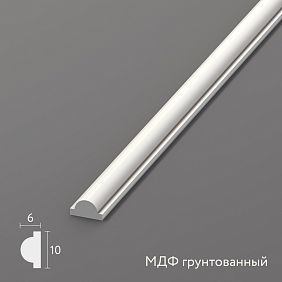
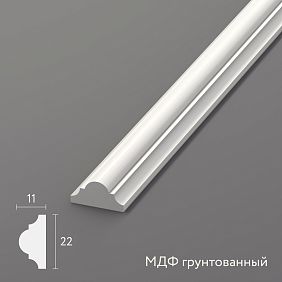
Moldings are narrow decorative strips, 15 to 80 mm wide, attached to the door slab to form frames, panels, ornamental compositions. The profile can be flat rectangular, convex semicircular, concave grooved, shaped multi-step.
Wooden moldings are made from solid oak, beech, ash. The wood density ensures profile clarity, resistance to mechanical impact. The texture is natural, with pronounced annual rings and pores. Supplied for painting or with factory tinting—from light natural to dark wenge.
MDF moldings are cheaper than wooden ones, have a perfectly smooth surface without knots or defects. Covered with a film imitating wood or painted with enamel. The profile is pressed, clear, consistent along the entire length.
Polyurethane moldings are lightweight, moisture-resistant, flexible. Suitable for doors in bathrooms, kitchens, where wooden ones may warp from humidity. Can be painted any color with water-based or acrylic paints.
Get Consultation
Casings: the portal frame
Casings are planks framing the door opening around the perimeter. Width from 50 to 150 mm, standard length 2200-2400 mm for vertical elements. The profile can be simple rectangular with rounded edges or shaped with grooves, beads, steps.
decorative door architravescreate a transition between the wall plane and the door opening. They hide installation gaps between the frame and the wall, give the opening architectural completeness, link the door with the overall interior style.
Wooden casings made from solid wood are the premium option. Oak, beech, ash provide strength, noble texture, durability for decades. Joined at a 45-degree angle, forming a neat frame without visible transitions.
MDF casings are the mass-market solution. Wide choice of decorative finishes imitating any wood species. Stable dimensions, no warping or twisting. Mounted with finishing nails or adhesive.
Polyurethane casings are for wet rooms and unity with wall stucco decor. If the entire interior is decorated with polyurethane stucco, it's logical to frame the doors with the same material.
Overlay elements: final accents
Overlays are separate decorative elements mounted on top of the slab or casings. Rosettes, cartouches, corner inserts, top sandrils create accents, add volume, complete the composition.
Carved wooden overlays are artistic elements with floral ornaments, geometric patterns, shaped compositions. Made by hand or by machine cutting. Give the door exclusivity, turn it into a piece of applied art.
Polyurethane overlays are mass-produced elements with clear relief. Wide range of shapes and sizes. Lightweight, easy to install, paintable in any color.
Decorative panels: ready-made solutions
Panels are large-format elements sized to fit a door panel, with pre-formed relief. Mounted on a smooth slab, instantly creating the effect of a classic paneled door.
MDF panels with milled relief—imitation of solid wood milling. Relief depth of 3-8 mm creates expressive play of light and shadow. Covered with film or enamel, ready for installation.
Polyurethane panels—for creating volumetric compositions. Relief depth up to 15-20 mm. Can be combined with moldings to create complex multi-level compositions.
Why update doors without replacement: usage scenarios
When does it make sense to decorate existing doors instead of buying new ones?
Style mismatch after renovation
A typical situation: you've done a renovation, changed the interior style to classic or neoclassical, but the doors remained modern and smooth. Buying new ones is expensive and time-consuming.polyurethane create a classic frame between the wall and ceiling. The profile height varies from minimalist 50 mm to ceremonial 200 mm — the choice depends on the room's height and style. In a room with 2.7 m ceilings, a 150 mm cornice will look excessive, 'pressing' from above. And in a hall with 3.5 m ceilings, a narrow 60 mm cornice will get lost, failing to visually mark the boundary.solve the problem over a weekend. You create frames on the door panel, replace simple trims with shaped ones — the door acquires a classic character that matches the new interior.
Door surface wear
Over years of use, the paint or laminate on a door wears down, scratches, chips, and scuffs appear. Repainting a smooth door risks streaks and uneven color. Moldings mask defects, creating a structure where minor imperfections are unnoticeable.
Mismatched doors in an apartment
Doors were bought at different times — resulting in five different models, colors, and styles. It looks chaotic. A unified decorative system combines different doors into a harmonious ensemble. Even if the panels are different shades, identical molding frames and trims create visual unity.
Budget doors in a new building
The developer installed cheap slab doors without decoration. They function, but are aesthetically zero. An investment in decor transforms them into worthy interior elements without the cost of full replacement.
Historical building with non-standard openings
Old buildings often have non-standard opening sizes. Ordering custom-sized doors is expensive and time-consuming. Decorating a standard door plus making wide trims that hide non-standard gaps solves the problem elegantly and economically.
Materials for door decor: what to choose
The market offers four main materials. Each has its own advantages and limitations.
Solid Wood: Tradition and Elegance
Oak, beech, ash — the classics of door decor. Oak's density of 700-750 kg/m³ ensures strength, resistance to deformation, and the ability to hold the finest carving details. The texture is expressive — large pores, pronounced annual rings, a natural play of shades.
Pogonazh iz massivarequires precise humidity of 8-10 percent. Over-dried wood cracks, under-dried wood warps. A quality manufacturer controls humidity at all stages, from raw material storage to packaging of finished products.
Processing is multi-stage. Profile milling on a four-sided machine with a tolerance of ±0.1 mm. Sanding with abrasive sequentially 120, 180, 240 grit to perfect smoothness. Staining with water- or alcohol-based stains. Final coating with varnish or oil.
Cost of wooden moldings from 300 to 1200 rubles per linear meter depending on wood species, width, and profile complexity. Trims from 500 to 2000 rubles per piece. Carved overlays from 800 to 5000 rubles per element.
MDF: stability and affordability
MDF (medium-density fiberboard) — a board made of wood fibers, pressed under pressure with binders added. Density of 720-870 kg/m³ is higher than many wood species. The structure is homogeneous, without knots, voids, or grain direction.
The main advantage of MDF is geometric stability. It doesn't warp, twist, or crack from humidity changes. The profile is milled cleanly, without chips. The surface is perfectly smooth, without pores.
Decorative coating — PVC film with wood texture or enamel paint. The film imitates oak, walnut, wenge with high accuracy — from a distance, indistinguishable from solid wood. Enamel provides a smooth glossy or matte finish in any color.
Cost of MDF moldings from 150 to 500 rubles per linear meter. Trims from 200 to 800 rubles per piece. Decorative panels from 1500 to 4000 rubles per set for one door.
Polyurethane: Lightness and Moisture Resistance
Polyurethane with a density of 280-320 kg/m³ — a lightweight material, 2-3 times lighter than wood. A 2-meter long molding weighs 200-400 grams compared to 800-1200 for a wooden one. Installation with glue without risk of detachment under its own weight.
Moisture resistance is absolute. Water absorption coefficient less than 1 percent.Decorating interior doorsmade of polyurethane can be installed in bathrooms, saunas, kitchens — the material does not deform, swell, or rot.
Relief is formed by casting in molds, allowing the creation of the most complex ornaments with filigree detail. Carved elements that would require hours of manual work in wood are mass-produced in polyurethane without loss of quality.
Painting with acrylic or water-based paints in any color. Effects can be created — patina, metallic, imitation of wood or stone.
Cost of polyurethane moldings from 200 to 800 rubles per linear meter. Trims from 300 to 1500 rubles per piece. Decorative overlays from 400 to 3000 rubles per element.
Combined solutions: the best of different worlds
Often the optimal solution is a combination of materials. The door panel is decorated with wooden moldings for texture unity. Trims — MDF to match, cheaper than solid wood but visually indistinguishable. Top overlays — polyurethane, lightweight, with detailed ornamentation.
This approach provides savings without loss of quality. Wood where it is critical for tactile and visual perception. Budget materials — on less noticeable areas.
How to choose molding and trim profiles
The profile defines the character of the door and its compatibility with the interior.
For classic interiors
Classic style requires complex, multi-stage profiles. Flutes (vertical grooves), astragals (convex semicircles), coves (concave transitions), and beads (small rounded protrusions) create a rich play of light and shadow.
Molding width for door frames: 40-70 mm. Casings: 80-120 mm with a shaped profile. Top overlays — cornice-like pediments with moldings, horizontal planks with ornamentation.
Color — white for doors in white or light interiors, dark woods (walnut, wenge) for contrasting solutions, gilding or patina for luxurious interiors.
For neoclassical style
Neoclassicism is a simplified classic. Profiles are more restrained, without excessive decorativeness. Straight astragals, simple coves, geometrically clear lines.
Molding width: 30-50 mm. Casings: 70-100 mm with a delicate profile. Overlays are minimalist — corner rosettes 50-80 mm in diameter, horizontal planks without ornamentation.
Color — light (white, beige, light gray) for an airy and light perception.
For modern interiors
Modern style does not tolerate excess. Profiles are simple — rectangular cross-section with rounded or beveled edges. No flutes or swirls.
Molding width is narrow, 20-30 mm, to form thin frames. Casings: 60-80 mm, flat or with minimal relief. Overlays are practically not used or are very laconic geometric ones.
Color — monochrome (white, black, gray) or contrast (black moldings on a white door, white casings on a gray panel).
For Scandinavian style
Scandinavia loves natural materials and simplicity of form. Wooden moldings with preserved texture, minimal processing, light tones.
Profiles are simplest — flat plank with rounded corners. Molding width: 25-40 mm. Casings: 60-90 mm without a shaped profile.
Color — natural light wood (pine, birch, whitewashed oak) or white paint with a translucent texture.
For loft and industrial styles
Loft allows for roughness, brutality, deliberate simplicity. Moldings are thick, massive, with an emphatically simple profile.
Width 40-60 mm, thickness 15-25 mm — a sense of solidity. Casings wide 100-150 mm, flat or with minimal relief.
Color — dark (graphite, chocolate, black) or metallic (bronze, aged silver).
Installation: Can it be done independently?
Decorating a door with moldings is a simple process, accessible for DIY with basic skills and tools.
Tools and materials
For the job you will need: a miter saw or miter box with a handsaw (for precise angled cuts), a tape measure and square (for marking), a pencil, wood or polyurethane glue (for mounting moldings), 20-30 mm headless finishing nails (additional fastening), a hammer or nail gun, wood filler or acrylic filler (for sealing joints), 180-240 grit sandpaper (sanding), paint or stain (finishing), brushes or a roller.
Professional tools speed up the work but are not critical. A miter saw can be replaced with a regular handsaw and miter box. A nail gun — with a hammer. The result depends on carefulness, not on the cost of the tools.
Door preparation
The door panel must be clean, degreased, and dry. If the door is painted with glossy paint or varnished — lightly sand the areas where moldings will be glued with sandpaper to improve adhesion.
If there are damages on the door — chips, scratches, dents — fill them with filler before mounting the decor. After the filler dries, sand it to a smooth surface.
If you plan to repaint the door — do it before mounting the moldings. Painting a flat door is easier than one with already glued elements.
Composition Marking
Determine the placement of the molding frames. The classic option is two vertical rectangular frames, echoing traditional panels. Or three horizontal sections. Or a large central frame plus small ones in the corners.
Use painter's tape to outline the frame contours. Assess the proportions, symmetry, and balance of the composition. The tape is easy to reposition if you don't like something.
Consider the location of the handle and keyhole. Frames should not press against hardware—leave a gap of at least 20-30 mm.
Trimming and installation of moldings
Measure the lengths of the frame sides. Trim the moldings with millimeter precision. Corners are joined at 45 degrees—use a miter box for a straight cut.
Apply glue in a thin bead to the back of the molding. Press it against the door and hold. Secure with finish nails spaced 150-200 mm apart (optional; if the glue is reliable, nails can be omitted).
Corner joints should be tight, without gaps. If a small gap forms, fill it with putty after the glue dries.
Installation of Mouldings
Carefully remove old trims to avoid damaging the wall and frame. Clean surfaces of any remaining glue, nails, and dirt.
Trim new trims: vertical elements from floor to top of the opening, horizontal—according to the width of the opening plus the thickness of two vertical trims. Join at a 45-degree angle.
Attach with finish nails spaced 250-300 mm apart. Drive nails so that the heads are recessed into the material by 1-2 mm. Fill the holes with putty or a wax corrector matching the trim color.
Installation of overlay elements
Decorative Insertsare installed after moldings and trims. Carved rosettes at frame corners, a top pediment above the door, horizontal strips between frames.
Attach with glue. For heavy wooden elements, add mechanical fastening—a screw from the back or a hidden dowel connection.
Final finishing
After the glue dries (24 hours), fill all joints and nail holes with putty. Let the putty dry, then sand with fine-grit sandpaper.
If the elements were supplied unpainted—paint them in the desired color. Two to three thin coats will provide even coverage without drips. Use a brush for moldings (to paint the relief) and a roller for flat surfaces.
Total working time per door—4-6 hours, including measuring, trimming, installation, excluding glue and paint drying time.
Where to buy quality millwork: selection criteria
The market is flooded with offers. How to find a worthy supplier?
Manufacturer vs. Reseller
Buying directly from the manufacturer gives factory prices without intermediary markups—saving 30-50 percent. Full range, including non-standard profiles and sizes. Possibility of custom orders for your project.
The manufacturer controls quality at all stages—from raw material procurement to packaging of finished products. Provides guarantees and takes responsibility for each item.
Resellers add their own markup of 40-70 percent to the purchase price. Range is limited to popular items. Quality depends on the supplier's integrity—you don't know where or how the product was made.
Checking material quality
Wooden millwork should have a moisture content of 8-10 percent. Over-dried wood cracks, under-dried wood warps. A serious manufacturer indicates moisture content in documentation and confirms it with measurements.
Texture should be natural, without artificial tinting. Knots are acceptable but must be sound, without falling out or rot. Profile should be clear, without chips or tears.
MDF should have a density of at least 720 kg/m³. Light, loose boards do not hold the profile well; milling results in fuzz and chips. Check the end—structure should be uniform, without delamination.
Quality polyurethane has a density of 280-320 kg/m³. Light, porous polyurethane is brittle, with unclear relief. Surface should be smooth, without cavities or bubbles.
Geometric accuracy
The profile should be consistent along the entire length of the strip. No variations in width, thickness, or relief depth. Check visually or with a template.
Ends should be straight and perpendicular to the strip axis. A crooked end makes precise 45-degree joining impossible—gaps will appear in frame corners.
Strip lengths should be precise, with a maximum tolerance of ±2 mm. If stated as 2400 mm but actual is 2395 or 2410—this is poor-quality production.
Availability of certificates
Wooden products should have a GOST compliance certificate confirming wood quality, moisture content, and absence of prohibited impregnations.
MDF—sanitary-epidemiological certificate confirming safety of binding resins, absence of formaldehyde exceeding permissible limits.
Polyurethane — certificate permitting use in residential premises, test reports for flammability and emission of harmful substances.
Terms of sale and delivery
Minimum order quantity — an important parameter. A good manufacturer sells by the piece or from one linear meter. A minimum purchase requirement of 50-100 linear meters is inconvenient for a private customer.
Cutting to size — a useful service. You specify the required lengths, the manufacturer cuts precisely and packages. No need to find where to cut three-meter strips.
Delivery of molding requires care — the material is long and can bend or break during improper transportation. Ensure the supplier uses special packaging and transport.
Project cost: realistic calculation
Budget depends on the number of doors, chosen materials, complexity of decor.
One door, basic decor:
-
Moldings for forming two frames on the door leaf (approximately 8 linear meters): 1200-4000 rubles
-
Casing set of three elements: 600-2500 rubles
-
Glue, putty, consumables: 300-500 rubles
-
Total materials: 2100-7000 rubles
One door, extended decor:
-
Moldings for complex composition (12-15 linear meters): 1800-7000 rubles
-
Figurative wide casings: 1500-4000 rubles
-
Overlay elements (rosettes, pediment): 1200-5000 rubles
-
Consumables: 500-800 rubles
-
Total materials: 5000-16800 rubles
Master's work (if not doing it yourself):
-
Installation of moldings on the door leaf: 1500-3000 rubles per door
-
Installation of casings: 800-1500 rubles
-
Painting: 1000-2500 rubles
-
Total work: 3300-7000 rubles
Full cost of updating one door — from 5400 rubles (basic decor, self-installation) to 23800 rubles (extended decor, professional installation).
For comparison: a new quality door with frame, hardware and installation — from 25000 rubles minimum. Decorating an existing one saves money and time.
Mistakes to avoid
Some solutions seem correct but lead to poor results.
Scale mismatch. Too wide moldings on a narrow door create overload. Too thin on a wide leaf — get lost. The width of moldings should be proportional to the door size.
Asymmetry. Frames on the door must be strictly symmetrical relative to the central axis. Even a slight shift — 5-10 mm — catches the eye, creates a sense of sloppiness.
Style conflict. Baroque curls on a door in a minimalist interior look absurd. Moldings should match the overall style of the room.
Excessive decor. More does not mean better. A door overloaded with small elements looks garish. Better two or three large frames than a dozen small ones.
Poor joint quality. Gaps in corners, loose fit, visible unevenness — signs of unprofessional installation. Joints should be perfectly tight.
Poor painting quality. Drips, missed spots in relief recesses, uneven color — ruin the entire work. Paint in thin layers, thoroughly covering all details.
Frequently Asked Questions about Door Decor
Can moldings be glued to any door?
To any solid one. Wood, MDF, laminated panels — suitable. Fragile materials like thin hardboard may not hold. Metal doors require special metal adhesive.
How long does the decor last?
With proper installation and normal operating conditions — for decades. Wooden moldings last as long as the door itself. Polyurethane ones are stable for 20-30 years.
Can moldings be removed if you get tired of them?
Yes, but it's difficult. Glued with quality adhesive, they hold fast. Removal will require effort and may damage the door surface. It's easier to repaint or add new elements than to remove them.
What glue to use?
For wood — carpenter's PVA or polyurethane adhesive. For polyurethane elements — special polyurethane adhesive or liquid nails. It's important that the adhesive is strong and elastic.
Is it necessary to remove the door for decorating?
It's more convenient to remove and lay it horizontally — easier to mark, glue, and control quality. But you can work with it hanging if you're careful.
What molding thickness is optimal?
For doors, 8-15 mm. Thinner ones look flat, thicker ones — excessively bulky. Exception — loft and industrial styles, where thick 20-25 mm strips are appropriate.
What to do if the door is already painted with glossy varnish?
Lightly sand with 180-240 grit sandpaper the areas where you will glue the moldings. This improves adhesive adhesion. Glossy surfaces hold adhesive poorly, matte ones — well.
Can self-adhesive moldings be used?
They exist, but the fastening quality is inferior to normal adhesive. They may peel off over time. Suitable for temporary decor, for permanent — adhesive is better.
Conclusion: Update doors without major investment
Interior is the sum of details. Doors occupy a significant area of vertical surfaces; they cannot be overlooked. Worn, bland, style-mismatched doors ruin the impression even of an expensive renovation.
polyurethane create a classic frame between the wall and ceiling. The profile height varies from minimalist 50 mm to ceremonial 200 mm — the choice depends on the room's height and style. In a room with 2.7 m ceilings, a 150 mm cornice will look excessive, 'pressing' from above. And in a hall with 3.5 m ceilings, a narrow 60 mm cornice will get lost, failing to visually mark the boundary.anddecorative trim for framingsolve the problem without replacing doors. A small investment — from 5 to 20 thousand per door — turns a smooth panel into a stylish architectural element.
Material choice depends on budget and requirements. Solid wood — for premium interiors emphasizing naturalness. MDF — for mass-market solutions with optimal price-quality ratio. Polyurethane — for damp rooms and unity with interior stucco decor.
DIY installation is feasible with basic skills and tools. Professional installation guarantees flawless results but increases the budget by one and a half times.
The main thing is to avoid typical mistakes: scale mismatch, asymmetry, style conflict, excessive decor. Less is sometimes more — two clear frames are better than a dozen chaotically placed strips.
STAVROS Company has been producing high-qualitytrim for interior doorsfrom solid wood, MDF, and polyurethane for over twenty years, providing professional designers and private clients with premium quality materials. Own production in the Moscow region is equipped with modern woodworking equipment, including four-sided CNC milling machines, guaranteeing profile accuracy with a tolerance of ±0.1 millimeters and perfectly even geometry of each strip. STAVROS works with selected raw materials: kiln-dried solid oak and beech with controlled moisture content of 8-10 percent, European-made MDF with a density of 750 kg/m³ without exceeding formaldehyde MPC, polyurethane with a density of 300 kg/m³ and clear relief casting. The assortment includesmoldings with over 200 profilesfrom simple rectangular to complex shaped ones with flutes and ornaments, architraves of all styles with widths from 50 to 150 millimeters, hand-carved overlays and cast polyurethane elements, decorative panels for transforming smooth doors. Each product undergoes multi-stage control: wood moisture check with a moisture meter, visual inspection for defects, geometry measurement with templates, quality control of milling and sanding. STAVROS offers a service of cutting trim to required sizes with millimeter precision, saving time and eliminating errors during DIY cutting. The company's professional consultants will help select profiles for your interior style, calculate the required material quantity, and provide recommendations on installation and finishing. Showrooms in Moscow and St. Petersburg allow you to see the trim in person, assess profile quality, feel the material texture, and get samples for home testing. STAVROS organizes delivery across Russia with careful packaging in rigid film and cardboard, protecting long items from damage during transportation. Direct sales from the manufacturer mean factory prices without trade markups, saving 30-50 percent compared to retail stores and construction markets. For interior designers, construction companies, and wholesale buyers, partnership programs are available with additional discounts up to 15 percent and priority production times. STAVROS fulfills custom orders — if the catalog doesn't have the needed profile, technologists will develop and manufacture unique trim according to your drawings or sample. The company supports projects of any scale: from decorating a single door in an apartment to comprehensive trim supply for a country house or commercial facility with dozens of doors. Choosing STAVROS, you get not just materials, but a comprehensive solution: quality proven by thousands of completed projects, professional support at all stages from selection to installation, a guarantee of a result that will serve for decades and delight with flawless appearance every day.