Article Contents:
- Furniture supports and furniture legs: what's the difference
- Which furniture needs supports and legs: breakdown by item
- Sofa and armchair
- Commode
- Cabinet
- Table
- Bed
- Wardrobe and case furniture
- Wooden furniture supports: why solid wood is better than plastic and metal
- How to choose the height of furniture legs
- Logic of height selection
- How to check the height before purchase
- How to choose the shape of furniture legs
- Straight Legs
- Turned legs (tapered, with profile)
- Carved legs
- Cabriole leg
- Tapered leg
- How to match furniture legs to interior style
- Classicism and Baroque
- Neoclassicism
- Jatoba
- Country house and Russian style
- Modern Interior
- How to choose the color and finish of furniture legs
- Main strategies
- How to update furniture by replacing legs: a practical scenario
- Scenario 1: Sofa with plastic legs
- Scenario 2: Dresser "without character"
- Scenario 3: Armchair "lost its shape"
- Integrate updated furniture with the interior
- Carved legs for classic furniture: when and how to use
- Where carved supports work
- What is needed for carved legs to "work"
- Scale matters
- Mistakes when buying furniture supports
- What to buy together with furniture supports: complete set of parts
- How to buy furniture supports without mistakes: final algorithm
- About the Company STAVROS
- FAQ: answers to popular questions about furniture supports
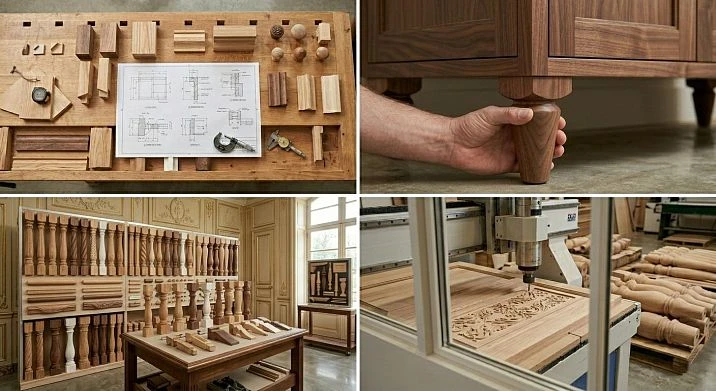
When they say furniture "stands as if poured" — it's not a metaphor. It's literally about the supports. Buying furniture supports means making a decision that determines both the stability of the item, its visual character, and how the entire room will ultimately be perceived. Sofa legs lift it off the floor and make the silhouette light or heavy. Dresser supports turn a mundane box with fronts into a classic piece of furniture. Wooden turned bed legs set the tone for the entire bedroom even before the bedding is laid out.
The problem is that furniture supports are the category people think about last. They buy a sofa, bring it home, set it up — and only then notice that short plastic legs turn a solid piece into something shapeless. Or they replace a kitchen dresser, pick beautiful fronts and handles — and leave the old supports because "it'll do." It doesn't. It never does.
This guide is for those who want to choose wooden furniture supports correctly: with an understanding of load, height, shape, style, and combination with other interior details. There are no abstract tips here — only specifics that work.
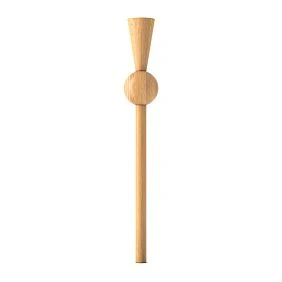
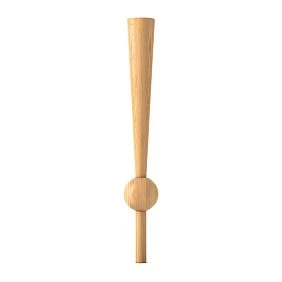
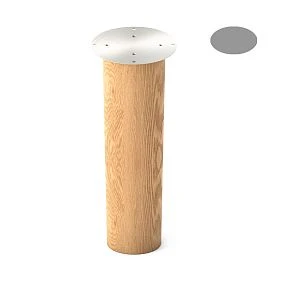
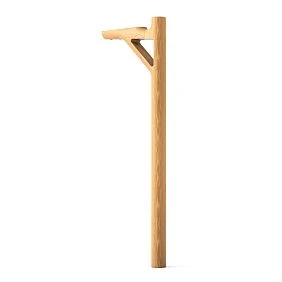
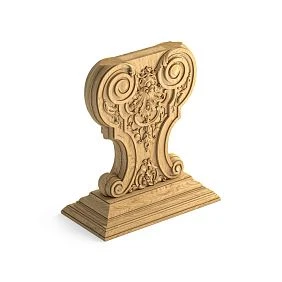
Furniture supports and furniture legs: what's the difference
These two terms are often used as synonyms, and in everyday life that's justified. But for a proper choice, it's worth understanding the nuance.
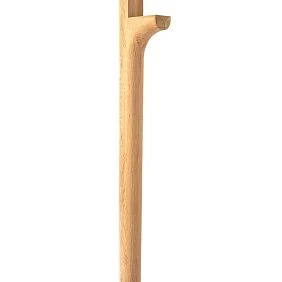
Legs are the visible, typically decorative part of a furniture support system. They protrude from under the body, are noticeable at first glance, and shape the item's silhouette. Legs work as a stylistic element on par with fronts and handles.
Supports are a broader concept. A support can be a hidden structural part (e.g., a support plate under a cabinet), or it can be a full decorative leg with profile turning. In manufacturer catalogs, "legs" and "supports" are often combined into one category — and that's logical because in practice the same part performs both functions.
For a sofa and armchair — legs bear the weight of people and the structure, a load from 80 to 400+ kg depending on size. For a dresser and nightstand — legs work primarily decoratively, the load there is moderate. For a table — height and stability are important. For a bed — the number of support points and reliability of fastening. In each case, there are different priorities.




Which furniture needs supports and legs: breakdown by item
Our factory also produces:
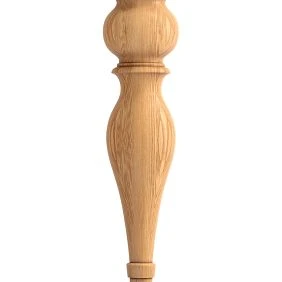
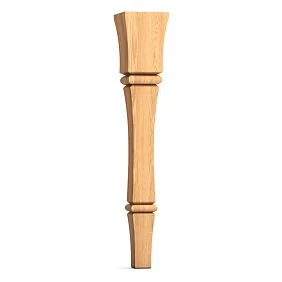
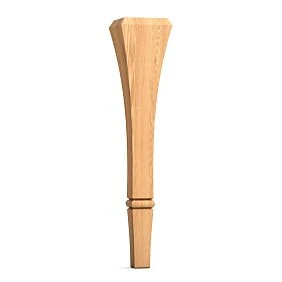
Sofa and armchair
A sofa is the most heavily used piece of upholstered furniture in the home. People sit on it, lie down on it, children jump on it, adults lean on it. Sofa legs must:
-
withstand the full weight of the structure plus the load from people (design load — at least 250–350 kg per set);
-
have a reliable fastening — a threaded bolt or a metal plate with screws;
-
be aligned in height — even minimal misalignment leads to wobbling;
-
match the style of the upholstery and the sofa's profile.
The height of sofa legs is one of the key parameters. Short legs (5–8 cm) give a feeling of massiveness and "groundedness." Legs 15–20 cm make the sofa visually light, open up the space underneath, and simplify cleaning. For a classic interior, the optimal height is 10–14 cm: enough for the furniture to "stand" rather than "lie" on the floor.
Furniture legs made of solid oak for sofas and armchairs — this is not just decor. Oak as a material has high density (about 700 kg/m³) and hardness on the Janka scale, making it optimal for load-bearing furniture elements. A solid oak leg 15 cm high with a diameter of 5–6 cm withstands a load that would cause a plastic counterpart to simply crack.
Get Consultation
Chest of drawers
For a chest of drawers, legs are primarily a stylistic solution. The load here is moderate (the body itself plus the contents of the drawers, usually 40–80 kg), so you can choose based on shape and height without much concern for strength.
Raising a chest of drawers on legs 12–15 cm is a fundamental decision. A chest of drawers "on legs" looks like furniture, not a box. This is especially important for classic interiors: it is the legs with profile turning that turn a simple chest of drawers into an item with character. furniture legs without coating allow you to independently choose the finish for a specific body tone — this is especially convenient for non-standard furniture shades.
Nightstand
Bedside tables, TV stands, hallway cabinets — compact pieces that wooden legs give "feet" and, accordingly, character. For a bedside table, the leg height is calculated based on the mattress height: the table surface should be level with the mattress or slightly higher. A standard mattress with a base is 55–65 cm from the floor, meaning a table with 8–10 cm legs and a body height of 45–50 cm falls within the desired range.
For a TV stand or hallway cabinet, style consistency is important — a small cabinet on tall turned legs in a classic style looks elegant and does not take up unnecessary visual space.
Table
For a table — desk, dining, console — height is critical. The standard height of a work table is 74–76 cm from the floor. When replacing legs or selecting supports for a tabletop, you need to accurately calculate the final height: tabletop height (2–4 cm) + support height = total table height.
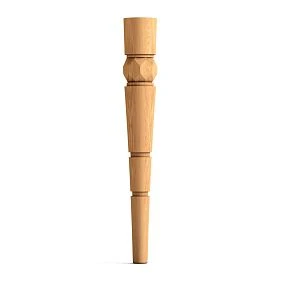
Wooden table supports — square, turned conical, or shaped — give a completely different feel. Massive square supports make a dining table solid and "farmhouse." Turned conical legs make it light and classic. Shaped carved supports make it formal and decorative.
Bed
A bed is the most critical piece in terms of load on supports. Here, it's important not only how much the structure weighs (150–250 kg for a double solid wood bed), but also how this load is distributed. The bed must have at least 4–6 support points, for large sizes — 6–8. Fastening must be with a bolt or threaded rod, no glue and no "on good faith."
The height of bed legs affects ease of use: a bed that is too low is inconvenient for people with joint problems; too high is inconvenient for children and the elderly. The optimal height from the floor to the top edge of the mattress is 52–60 cm. If the mattress is 25 cm and the base is 15 cm, the legs should provide an additional 12–20 cm.
Cabinet and case furniture
For cabinets and built-in furniture, supports often function as adjustable leveling feet or decorative baseboards. But in a classic interior, a cabinet on distinct wooden legs is a separate stylistic technique that makes the body feel 'lifted' and adds air between the floor and the furniture.
Wooden furniture supports: why solid wood is better than plastic and metal
The question is not rhetorical. The market offers supports made of plastic, metal, chrome-plated pipes, and wood. Each material has its own scenarios.
Plastic is cheap, light, and fast. But plastic legs age visually faster than anything else in the interior. They turn yellow, crack, and lose shape under load. On classic furniture, plastic supports look like a plastic cup in a silver frame — incompatible.
Metal and chrome are relevant for loft, high-tech, and industrial style. In classic, neoclassical, country house, or Russian style, metal legs are a stylistic mistake.
Wood is warmth, mass, texture, naturalness, and the ability to fully integrate into the interior. wooden furniture supports made of oak and beech withstand years of use, accept any coating — from clear varnish to dark stain and white paint — and organically fit into any classic, natural, or mixed interior concept.
A separate argument: wooden legs can be painted, repainted, sanded, and refreshed. Plastic ones can only be thrown away.
How to choose the height of furniture legs
Height is a parameter that determines not only convenience but also the proportions of the furniture and the visual feel of the entire room.
Logic of choosing height
-
Legs 5–8 cm (low) — for heavy, massive furniture with a pronounced "weight": a classic baroque-style sofa, corner sofa, large kitchen sideboard. Such legs do not make furniture light — they "ground" it.
-
Legs 10–14 cm (medium) — a universal option for most sofas, dressers, nightstands, armchairs, and consoles. Sufficient height for the furniture to "stand" and sufficient stability for daily use.
-
Legs 15–20 cm (high) — make furniture visually light and airy. They work well for armchairs, small sofas, vanity tables, and nightstands. The space under the furniture opens up — both aesthetic and convenient for cleaning.
-
Legs above 20 cm — specialized solutions: high consoles, bar stools, designer furniture. Require careful stability checks — the center of gravity must remain within safe limits.
How to check height before purchase
Measure the distance from the bottom frame of your furniture to the floor. Add the desired leg height. Get the final furniture height. Check against functional parameters: is the sofa seat height comfortable (standard — 42–48 cm), is the nightstand height comfortable, does the table height match the working position.
How to choose the shape of furniture supports
The shape of the leg is a stylistic choice. Each shape carries an architectural association, and knowing this means choosing consciously.
Straight legs
Simple vertical beam, square or rectangular in cross-section. Minimalism, modern style, Japanese design, Scandinavian aesthetic. Clear geometry without ornamentation. Not suitable for classics — too neutral. For Japandi or modern interiors with wooden accents — an optimal choice.
Turned legs (tapered, with profile)
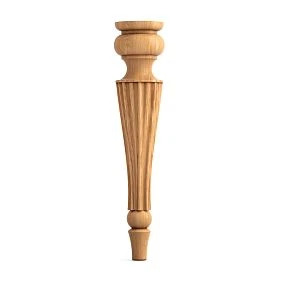
This is the foundation of the classic furniture repertoire. A turned leg with a profile — fluting, stepped transitions, smooth tapering — is a product of the lathe and craftsmanship. It is easier to read than a straight leg, giving a sense of refinement and quality. For classic, neoclassical, and Empire styles, it is an essential element.
Carved Legs
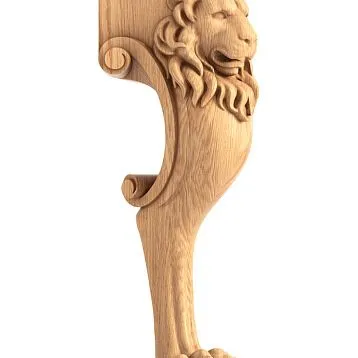
Carved wooden legs represent the highest level of complexity. They may feature acanthus leaves, twisted ropes, rocaille scrolls, or geometric ornaments. Carved decorative inserts for furniture and carved legs are two elements of the same language: if the leg is carved, the overlays on the facades must support the same level of complexity and ornamentation.
Carved legs are used for commodes, consoles, armchairs, and sofas with a high level of decoration. They require "support" from other details — handles, facades, overlays. A carved leg on an empty facade without a handle or overlays looks like a joke.
Cabriole leg
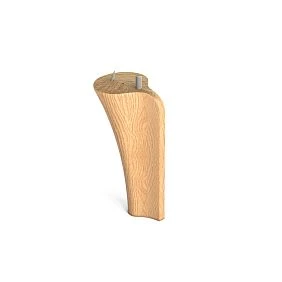
One of the most recognizable silhouettes in furniture history. A curved leg with a "knee" and a "hoof" at the bottom. Baroque, Rococo, Louis XV style. For modern interiors — no, for authentic classic — essential.
Tapered leg
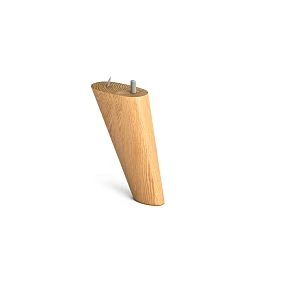
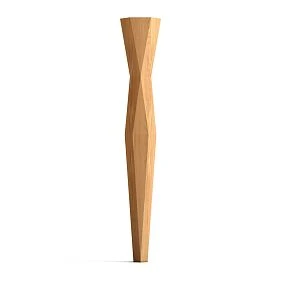
A leg that evenly tapers downward without additional ornament. Empire, Classicism, Neoclassicism. Strictness and clarity. It looks good on rectangular bodies — table, commode, cabinet.
How to choose furniture supports for your interior style
Classical and Baroque
Turned and carved wooden legs with a pronounced profile. Warm shades: oak, walnut, dark beech. Combination with wooden handles in the same tone, definitely. Legs and handles must be "of one voice" — if the leg is carved, the handle cannot be a flat metal bracket.
Neoclassicism
Calmer shapes, light shades, a concise profile without excessive ornament. Tapered turned legs in white or ivory finish. handles without coating — in the same color scheme. decor for furniture — restrained, selective.
Japandi
Concise straight or slightly tapered legs made of light oak or birch. No carving, no ornament. Natural wood texture, natural oil or clear varnish. Legs should be visually light — this is fundamental for a style where air and space matter more than filling.
Country house and Russian style
Here, greater decorative freedom is acceptable. Turned legs with a pronounced profile, light carving is possible. Color — from light to dark, natural tones. Pogonazh iz massiva — baseboards, trim, moldings — should be in the same tone as the furniture legs.
Modern interior
Simple geometry, smooth shape without ornament. Straight or tapered legs made of dark or light wood. Solid Wood Items — legs, handles, overlays — are united by natural material but lack historical forms.
How to choose the color and coating of furniture supports
The leg color is the point where the support connects with the rest of the interior or, on the contrary, conflicts with it.
Basic strategies
Matching the furniture body color — a classic, neutral solution. The leg blends with the furniture, making the piece look like a single whole. Suitable for case furniture — dressers, cabinets, nightstands.
Matching the floor color — visually dissolves the leg in the space. The furniture seems to "float." Suitable for sofas and armchairs, especially in minimalist interiors.
Matching the color of wooden handles — it's about details. If the handles are dark walnut and the legs are light beech — dissonance. Handles and legs should be the same tone or at least the same wood species. Wooden handles and wooden legs in a unified palette — this is what turns a set of items into a system.
Contrasting color — a deliberate technique. A light sofa on dark legs, a white dresser on natural oak supports. Works if it's a design decision, not an accident.
Without coating — furniture legs without painting allow you to apply any finish yourself: stain, oil, varnish, paint. An ideal option for non-standard furniture shades or if you want to exactly match the tone of a specific project.
How to update furniture by replacing supports: a practical scenario
Replacing legs is one of the most underestimated ways to update furniture. Fast, inexpensive, and the result is obvious.
Scenario 1: A sofa with plastic legs
A standard situation: you bought a good sofa, but the manufacturer saved on legs — short plastic supports. Replacing them with wooden legs 14–16 cm made of solid oak gives a sofa that looks like an expensive designer piece — literally the same sofa, the same cushions, the same upholstery. Only the legs are different.
Mounting: most sofas have threaded sockets M8 or M10 for legs. Just unscrew the old ones and screw in the new ones. Work time — 10–15 minutes.
Scenario 2: A chest of drawers "without character"
A rectangular body with flat fronts and small chrome handles — such a chest of drawers is in every second home. Replacing the handles with uncoated wooden handles the desired tone, installing turned wooden legs 12 cm, adding carved appliqués on the doors — and the chest of drawers becomes a classic piece that is not embarrassing to place in the living room.
Scenario 3: An armchair that "lost its shape"
An old chair with cracked plastic legs is not a reason to throw it away if the structure and upholstery are in good condition. New 14 cm wooden legs with a profile, painted to match the upholstery fabric, and the chair is back in service.
Connect the updated furniture with the interior
Updating the legs works to its full potential only when it is supported by details. Pogonazh iz massiva — a wooden baseboard of the same tone as the legs visually "roots" the furniture in the space. Moldings on the walls in the same style as the overlays on the facades create the feeling of a designed interior, not one assembled by chance.
Carved legs for classic furniture: when and how to use them
Carved wooden legs are a matter of decor level. They don't suit every piece of furniture, and that's exactly what makes them valuable.
Where carved supports work
-
A classic-style dresser with carved legs, a central medallion on the facade, and carved wooden handles is an ensemble;
-
A console in the hallway or living room — carved legs give the console a "ceremonial" character;
-
A chair with a high back and fabric upholstery — carved legs complete the look;
-
A sofa in Baroque or Classical style — figured carved supports hold the silhouette;
-
A bed with a carved headboard — the legs should be in the same carved style, otherwise the headboard will "scream" and the legs will be silent.
What is needed for carved legs to "work"
Carved legs require support. This means: Carved decorative inserts for furniture on the facades, decor for furniture on drawers and doors, wooden handles with a profile. A carved leg on a bare facade without a single additional detail looks random. In a system — convincing.
Scale matters
A small cabinet or compact chest of drawers cannot handle large carvings on the legs. Too voluminous an ornament will be heavier than the item itself. For small furniture — a finer pattern, for large furniture — you can afford a more expressive silhouette.
Mistakes when buying furniture supports
Each of these mistakes has cost someone money, nerves, and disappointment. To avoid repeating someone else's experience — read carefully.
Choosing only by photo. In the photo, the leg may look massive and impressive. In reality — a thin twig 8 cm high. Always look at the dimensions: height, diameter, cross-section.
Not considering the weight of the furniture. A thin turned leg 3 cm in diameter is not designed for a 150 kg sofa. Check the permissible load for the set of supports.
Buying too thin legs for a heavy sofa. This is not just an aesthetic problem. It's a safety issue. The leg cracks under excessive load, the sofa sinks, and a person falls.
Not checking the mounting. M8 or M10 bolt, plate with screws, stud socket — different mounting systems. Before buying, you need to know what mounting your furniture has and choose legs accordingly.
Choosing carved supports without connection to the furniture. A carved leg on an IKEA dresser is a curiosity, not a design. The support should match the decor level of the entire piece.
Mixing different wood shades. Dark walnut legs, light beech handles, untreated oak overlays — chaos. One tone for all wooden parts.
Forgetting about handles and facades. Legs are not an independent element. They work in a system with wooden handles, overlay panels и trim.
Not considering the seat height. A sofa with 20 cm legs and a 10 cm mattress gives a seat height of 30 cm — too low. Or the opposite: 5 cm legs and a high mattress — a person will feel like on a throne, not a sofa.
Buying without a spare. One leg may arrive defective, one may break during installation. Always get +1–2 pieces extra beyond the required quantity.
Choosing by price, not by material. A cheap leg made of soft coniferous wood deforms quickly under load. A leg made of oak or beech is reliable for decades.
What to buy together with furniture supports: a complete set of parts
Legs work in a system. To achieve a cohesive result, along with the supports, you should select:
-
Furniture legs from the array — the main category for sofas, chests of drawers, armchairs, nightstands;
-
Furniture legs without coating — for self-painting to a specific shade;
-
Wooden handles — in the same series and tone as the legs;
-
handles without coating — for finishing to the desired hue;
-
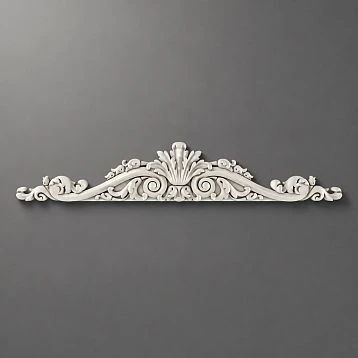
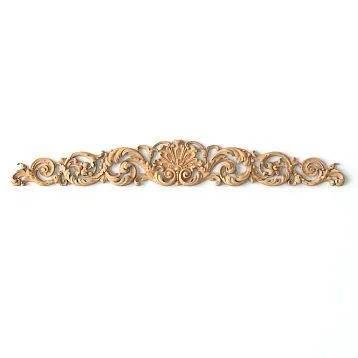
Carved decorative inserts for furniture — for facades, doors, and drawers;
-
decor for furniture — carved ornamental elements for updating facades;
-
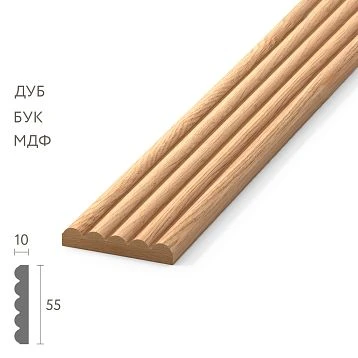
Pogonazh iz massiva — baseboards, architraves, moldings connecting furniture with the room's architecture;
-
Solid Wood Items — a complete catalog of wooden parts for furniture and interiors.
How to buy furniture supports without mistakes: the final algorithm
A sequential approach is the best way to avoid overpaying and being disappointed.
-
Determine the type of furniture: sofa, armchair, chest of drawers, table, bed, bedside table, cabinet. Each item has its own requirements for load, height, and shape.
-
Check the weight of the furniture: for sofas and beds, this is a critical parameter. For bedside tables and chests of drawers, it is less critical.
-
Choose the height of the support: taking into account ease of use and furniture proportions.
-
Select the shape: straight, tapered, turned, carved — depending on the interior style.
-
Check the fastening: what system does your furniture have — thread, plate, stud.
-
Coordinate the color: with facades, handles, floor, and baseboard.
-
Select accompanying decor: handles, overlays, moldings in the same style.
-
Go to catalog: Furniture Legs and Supports — full range of solid oak and beech for any type of furniture.
About the company STAVROS
STAVROS is a Russian manufacturer of wooden decor and furniture parts from solid oak, beech, and walnut. The company produces furniture legs and supports, wooden handles, carved overlays, moldings, and solid wood products for classic, neoclassical, and modern interiors. In-house production with manual turning and carving. STAVROS works with private clients, furniture manufacturers, designers, and architects throughout Russia. The catalog includes ready-made products and custom manufacturing.
FAQ: Answers to Common Questions About Furniture Legs
Which furniture supports are best to choose?
Depends on the furniture. For sofas and beds — durable solid oak supports with reliable bolt fastening. For dressers and nightstands — turned legs 10–14 cm in the desired tone. For classic furniture — carved or turned wooden legs in a unified series with handles.
How are wooden supports better than plastic ones?
Solid wood supports do not deform under load, do not yellow over time, accept any finish, and blend organically with other wooden parts — handles, overlays, baseboards. Plastic ones are cheaper but age quickly and visually devalue the furniture.
Can I replace the legs on old furniture?
Yes. Most sofas, armchairs, dressers, and nightstands have standard sockets for threaded legs or a plate with screws. Replacement takes 10–20 minutes and requires no special tools — just a screwdriver or power drill.
Which legs are suitable for classic furniture?
For classic style — turned conical or carved wooden oak legs. They should match the tone of handles, facade overlays, and moldings. Carved legs enhance the classic look but require support in details — handles and decor.
What to check before buying supports?
Height, diameter, material, load capacity, attachment method, color or finish. For classic furniture — match the leg shape to the style of facades and handles.
How to match the color of legs to furniture?
It's better to focus on the color of the handles and baseboard — they should be in the same tone. If the furniture is light, the legs can be slightly darker for contrast. If the furniture is dark — the legs should match or be slightly lighter. Uncoated legs allow them to be painted exactly to the desired shade.
How many legs are needed for a sofa?
A standard two-seater sofa — 4 legs. A three-seater — 4–6 legs, depending on the frame design. A corner sofa — 6–8 legs. When replacing legs, always get +1–2 extra as a spare.