Article Contents:
- Furniture support and furniture leg: what is the fundamental difference
- Leg as a decorative and structural element
- Furniture support: function comes first
- Wooden legs: a special category
- Where furniture legs and supports are used: a complete application map
- Dresser legs
- Cabinet legs
- Legs for a wardrobe
- Sofa and armchair legs
- Furniture for restoration: legs as the main tool for renewal
- How to choose the height of furniture legs: proportions decide everything
- Low supports: solidity and massiveness
- Medium height: balance
- High legs: lightness and modernity
- Table: leg height for different furniture types
- How to choose the shape of furniture legs: from straight to carved
- Straight rectangular legs
- Tapered legs
- Turned legs: classic language
- Carved legs: maximum decorativeness
- Round turned supports
- Square classic legs
- Wooden furniture legs: choosing material and finish
- Why wooden legs are better for solid furniture
- Unfinished legs: when it's the right choice
- Legs for enamel coating
- Legs for varnish or stain
- How to match the tone of wooden legs to furniture
- Furniture legs and handles in one style: from support to drawer system
- Wooden handles and wooden legs: the perfect pair
- Unfinished handles + unfinished legs
- Finished handles + finished legs
- Unified design logic for legs and handles
- Supports, baseboard, and furniture plinth: how to properly build the lower tier
- When it's better to place furniture on legs
- When a furniture plinth is needed
- How to coordinate furniture with the floor baseboard
- Furniture baseboard for case furniture
- What to pair furniture legs with: a complete system of interior connections
- Decorative overlays on facades
- Furniture moldings
- Wooden moldings for furniture
- Carved decor on classic furniture
- Classic furniture as an assembly point
- All wooden products in a single system
- Mistakes when choosing furniture legs and supports
- Where to buy furniture legs and supports
- FAQ: Answers to Popular Questions
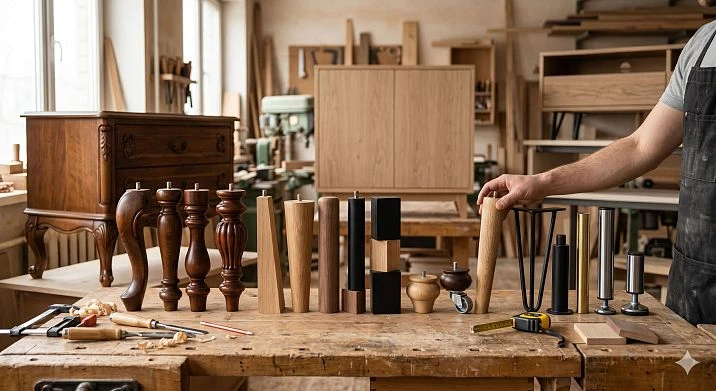
There are details that everyone notices — and no one thinks about them specifically. Furniture legs are exactly that. When they are chosen correctly, the chest stands confidently, the proportions of the cabinet are balanced, the wardrobe does not press on the floor but reads as part of the interior. When there is a mistake, the furniture looks awkward, as if something is wrong, although it is hard to say what exactly. That is the power of good furniture legs: they either work unobtrusively or catch the eye with their inappropriateness.
Furniture legs — a detail that simultaneously carries a functional and decorative load. It bears weight, sets height, shapes proportions, and creates a stylistic statement about the furniture as a whole. Therefore, a conversation about how to choose furniture supports is a conversation about form, physics, and interior logic all at once.
In this article, we will break down everything from the base to the top: what height is correct, what shape is appropriate, how wooden legs work in classic and modern interiors, how to coordinate them with handles, overlays, moldings, and furniture baseboards — and how to avoid mistakes that cost more than the furniture itself.
Furniture support and furniture leg: what is the fundamental difference
At first glance — the same thing. In reality — two different elements with different logic of application.




Leg as a decorative and structural element
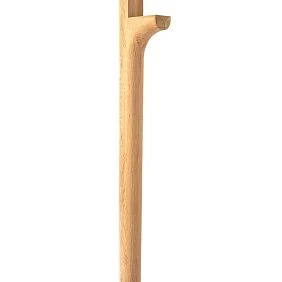
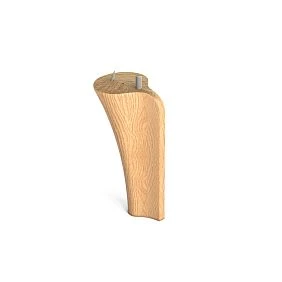
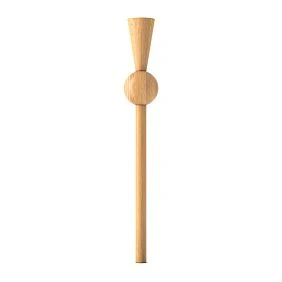
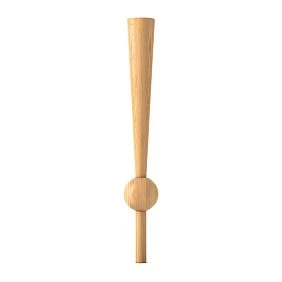
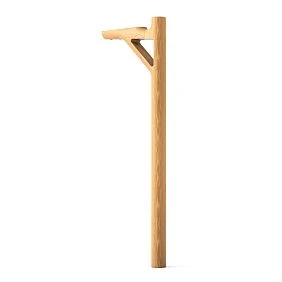
furniture legs — this is primarily a visible detail. It forms the lower silhouette of the furniture, creates a visual transition from the body to the floor, sets the style and character of the entire product. A turned leg with a relief profile on a classic-style chest is a decorative element that carries as much meaning as handles and facades. A straight square leg on a cabinet in a modern interior is a laconic structural sign that says: everything here is strict and intentional.
The leg works in plain sight. It is seen, examined, and touched during cleaning. Therefore, choosing it should be approached like choosing a handle or overlay — with attention to shape, material, tone, and finish.
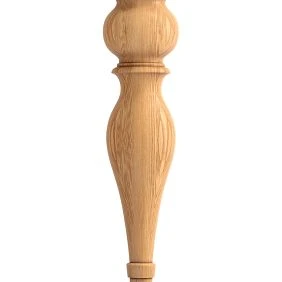
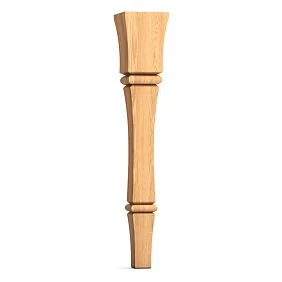
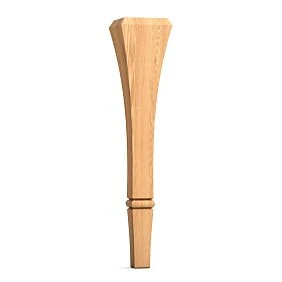
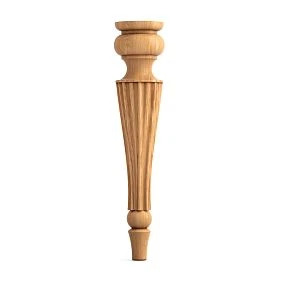
Our factory also produces:
Furniture support: function comes first
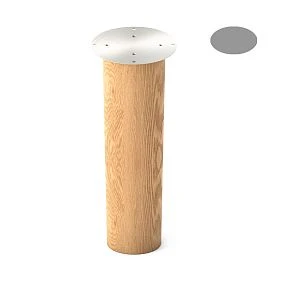
Furniture support is a broader concept. It includes both decorative legs and functional support elements for case furniture: adjustable supports for sliding wardrobes, supports for built-in furniture, plinth supports for kitchen sets. Here, aesthetics take a back seat — load capacity, height adjustment, and fastening reliability are important.
for classic furniture and freestanding items — chests of drawers, bedside tables, sideboards, consoles, armchairs — decorative legs are relevant. For built-in case furniture — adjustable technical supports, often hidden behind a furniture plinth.
Get Consultation
Wooden legs: a special category
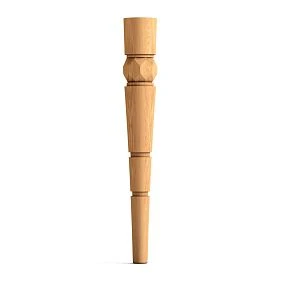
wooden furniture legs — these are elements made from solid wood, produced by turning or milling methods. Turned legs with a relief profile, carved supports with ornamentation, straight rectangular legs with a chamfer — all of this is the wooden assortment that works for solid wood furniture, classic items, and pieces intended for restoration.
Wood in legs is a continuation of the wood in the body. A chest of drawers made of oak on oak legs is a single material object. A bedside table made of walnut on walnut legs is the same story. Hence the principle: choose legs from the same species as the main furniture, or from one close in tone.
Where furniture legs and supports are used: a complete application map
Legs are needed everywhere where furniture stands on the floor and should look — not just stand. Let's break it down by furniture type.
Legs for a chest of drawers
A chest of drawers is one of the main items for which the right Legs for a dresser are of fundamental importance. The chest of drawers stands in the bedroom or living room, is visible from several sides, and people are regularly near it. Its lower part is the space between the floor and the body, which sets the lightness or solidity of the entire piece.
For a classic chest of drawers: turned legs 80–120 mm high with a relief profile — stable, proportional, decorative. For a modern chest of drawers: straight rectangular or tapered legs 60–100 mm — clean, strict, without excessive decoration.
The load on the legs of a chest of drawers is significant: solid wood plus the contents of the drawers. Therefore, the legs for a chest of drawers must be made of hardwood (oak, beech, birch) and have a reliable fastening system — bolted fasteners or a mounting plate with a threaded connection.
Legs for a cabinet
Legs for chests — a more delicate choice than for a chest of drawers: the bedside table is smaller, lower, and the legs on it appear larger relative to the body. Small turned legs 40–70 mm high for a bedside table. More expressive supports 80–100 mm for a floor cabinet in the living room or hallway.
A cabinet in the hallway on elegant wooden legs is not just storage, but an interior element. At the same time, the leg must withstand the load: heavy objects are placed on the cabinet, and people lean on it when putting on shoes. A safety margin is mandatory.
Legs for a wardrobe
Legs for a wardrobe are a different story. A freestanding wardrobe on decorative legs is a classic furniture solution that lifts the body off the floor and makes cleaning easier. For built-in wardrobes — technical adjustable supports hidden behind the furniture plinth.
Decorative legs for a freestanding wardrobe: height 80–150 mm, durable solid oak or beech, reliable bolted fasteners. Four legs under the body plus optional central supports for wardrobes wider than 80 cm.
Legs for sofa and armchair
Legs for a sofa and armchair experience dynamic load — it is different from that for case furniture. Here, knot-free solid wood with high bending strength is needed. Fastening — a threaded bolt screwed into the wooden block of the frame. Turned legs for an armchair 80–150 mm high is a classic format for upholstered furniture in a classic interior.
Furniture for restoration: legs as the main tool for renewal
Старый комод без ножек, тумба с обломанными опорами, буфет на скрипучем основании — в каждом из этих случаев новые Wooden furniture legs дают мебели вторую жизнь без полного переделывания. Это один из самых эффективных и экономичных способов обновления: заменить ножки, поменять ручки, добавить новые Decorative Inserts — и предмет выглядит иначе, лучше, новее.
Как выбрать высоту мебельных ножек: пропорции решают всё
Высота ножек — это пространство между полом и дном корпуса. Она определяет пропорции мебели, возможность уборки под ней и визуальный вес предмета в интерьере.
Низкие опоры: основательность и массивность
Ножки высотой до 50 мм — это фактически «приземлённая» мебель. Такой формат уместен для массивных предметов, которые должны выглядеть устойчиво и основательно: большие буфеты, широкие шкафы, тяжёлые комоды в классическом стиле. Низкие опоры не облегчают силуэт — они подчёркивают вес и серьёзность предмета.
Недостаток низких ножек — сложность уборки. Пространство под мебелью при высоте менее 50 мм практически недоступно для швабры или пылесоса. Это нужно учитывать заранее.
Средняя высота: баланс
Ножки 60–100 мм — самый популярный формат для комодов, тумб и шкафов в жилых интерьерах. Эта высота обеспечивает пространство для уборки, не облегчает мебель до невесомости и сохраняет пропорциональный баланс корпуса.
For a bedside table with a height of 500–550 mm, legs of 60–70 mm give a final surface height of 570–620 mm — optimal for most beds. For a floor chest of drawers with a height of 900 mm, legs of 80–100 mm create a proper proportional transition from the floor to the body.
High legs: lightness and modernity
Legs of 120–200 mm and higher — this is furniture that 'floats'. For Scandinavian style, for modern minimalism, for interiors with low ceilings (up to 2.6 m) — high legs lighten the silhouette of the furniture and visually increase the space.
Important: high legs require greater load-bearing strength and stable fastening. The higher the leg, the greater the bending moment arm under lateral load. For high legs — only hardwoods with straight grain and reliable bolt fasteners.
Table: leg height for different types of furniture
| Furniture type | Recommended leg height | Note |
|---|---|---|
| Bedside table | 40–80 mm | Level with the bed |
| Commode | 70–120 mm | Balance of proportions |
| Floor cabinet | 80–120 mm | Depends on body height |
| Freestanding cabinet | 80–150 mm | Cleaning + proportions |
| Chair | 100–160 mm | Dynamic load |
| Sofa | 80–150 mm | Seat height + cushions |
| Console | 700–850 mm (full) | Working surface height |
How to choose furniture leg shapes: from straight to carved
Leg shape is the language of style. It is instantly read and connects the furniture piece to the specific aesthetics of the space.
Straight rectangular legs
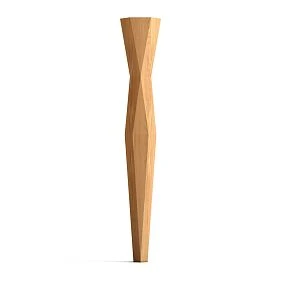
Straight rectangular leg — a minimalist form suitable for modern, Scandinavian, and laconic interiors. Without relief, without decor, possibly with a slight chamfer along the edge. Such a leg "fades into the background" — it does not distract from the shape of the body. This is an honest structural detail without pretensions to decorativeness.
Straight square legs with a cross-section of 30×30 mm or 40×40 mm are the standard for cabinets and tables in modern residential interiors. For cabinet furniture made of MDF with a solid-color film coating — straight legs in the same color or in a contrasting tone.
Conical legs
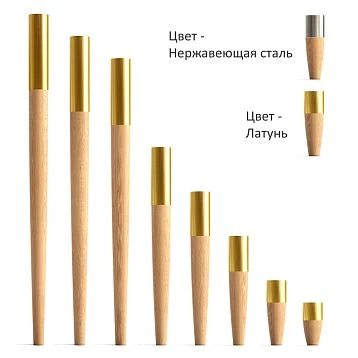
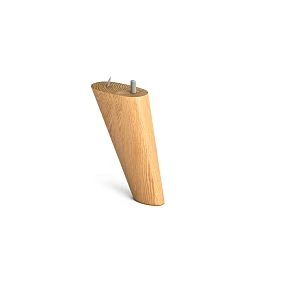
A leg tapered downward — a cone with a slight slope — creates a lightness of silhouette. This form is strongly associated with Scandinavian design of the 1950s–70s, and today it is again in demand. On a chest of drawers, cabinet, or sofa — a conical leg makes the object lively, slightly playful, and non-static.
Conical wooden legs for furniture are an excellent option for updating old furniture: they add a retro touch without radically reworking the item.
Turned legs: a classic language
Turned legs for furniture — this is the result of lathe processing: a profile turned on a machine with alternating expansions and constrictions, rollers, belts, necks. This is a classic furniture form that has been present in interiors from the Baroque era to the present day. A turned leg is a decorative element with its own aesthetic.
Turned supports for classic furniture, chests of drawers, sideboards, consoles — this is exactly the type of leg that aligns with wooden moldings, wooden handles with a relief profile and carved wooden decor.
Carved legs: maximum decorativeness
A carved wooden leg is a level of handwork or high-precision milling. A paw with animal claws, a cabriole with an S-shaped curve, a pyramidal leg with ornamentation on the facets — classic carved forms familiar from Baroque and Empire furniture.
Carved furniture legs are appropriate in classic interiors, in country houses with pronounced wooden decor, in studies with classic furniture. This is not an everyday choice — it's a style statement that needs to be supported by the rest of the interior decor.
Round turned supports
A round turned support — cylindrical, with or without slight relief — is a neutral form that works in the transitional space between classic and modern. Neutral enough not to clash with a minimalist body. Expressive enough to be perceived as a quality detail.
Square classic legs
A square leg with belts or chamfers is an intermediate form between straight modern and turned classic. It works in transitional style interiors: when the furniture is classic enough for a figured profile, but restrained enough for carving. This format is a practical choice for most interiors with wooden furniture.
Wooden furniture legs: choice of material and finish
Wood in legs is not just a tradition. It's a practical choice with clear logic.
Why wooden legs are better for solid wood furniture
Solid wood furniture has a pronounced natural texture, a lively tone, and material warmth. Placing it on metal or plastic supports creates a material gap that will be noticeable. Wooden furniture legs continue the natural character of the furniture from the body to the floor.
Additionally, wood is easy to work with for any finish: varnish, oil, stain, enamel. The legs can be matched exactly to the tone of the body — or to a contrasting one, if intended.
Uncoated legs: when it's the right choice
Furniture legs without coating are elements ready for independent finishing. This is the right choice when:
-
the furniture is painted or tinted in a non-standard color
-
you need to exactly match the shade of a specific purchased piece of furniture
-
the same oil or varnish as on the body is intended to be applied for a uniform tone
-
the furniture is being restored, and the legs must match the restored finish
Uncoated legs offer flexibility. Buying a wooden leg in a neutral state and painting it to exactly match your furniture is a professional solution that delivers the best result.
Legs for enamel
White enamel, cream, gray, black, ivory — legs for enamel work on furniture painted in solid colors. A dresser painted in matte white RAL 9016 on white enameled legs is a unified white system. uncoated wooden handles of the same tone complete the look.
For legs intended for enamel, quality preparation is important: priming, sanding, and a final hard enamel. A matte or semi-matte surface is more practical than gloss: it doesn't show dirt or fingerprints.
Legs for varnish or stain
Natural wood with clear lacquer reveals the visible fiber structure, natural tone, and living surface. Legs for lacquer or stain are appropriate when the furniture body has a pronounced wood texture. Lacquer protects the wood from wear, while stain allows shifting the wood tone in the desired direction.
Toning with stain is an effective tool when birch legs need to be matched to an oak tone or when oak needs to be slightly 'aged' to a dark walnut.
How to choose the tone of wooden legs for furniture
The most reliable principle: legs made of the same wood species as the body — with the same finish. If that's not possible — a close tone based on a sample. Warm honey oak + legs in a honey tone. Dark walnut + dark legs stained to walnut. Light birch + light legs with clear lacquer.
What to avoid: mixing warm and cool wood tones. Warm amber oak and legs made of cool gray ash create a visual conflict that prevents the furniture from being perceived as a single piece.
Furniture legs and handles in one style: a system from support to drawer
Leg and handle — two ends of one furniture story. Legs at the bottom, handles on the fronts. Between them — several tens of centimeters and a common stylistic task: to speak the same language.
Wooden handles and wooden legs: the perfect pair
wooden furniture handles and wooden legs are a system solution for solid wood furniture or for cabinet furniture finished to look like solid wood. A single material, a single natural texture, the possibility of a single finish coating.
For a classic chest of drawers with turned legs — wooden handles with a drop or bracket-shaped profile. The same oak, the same oil or varnish. The furniture looks like a designed object, not like a set of parts from different manufacturers.
Handles without coating + legs without coating
uncoated wooden handles and legs without coating — the ideal option for complete finish painting. Buy everything without coating, apply a single enamel or varnish — and the furniture gets a completely uniform finish from leg to handle. This is a way to achieve a result that is rarely achieved in finished products.
Handles with coating + legs with coating
Wooden handles with coating — in white enamel, in natural wood with varnish, in a tinted version — paired with legs of the same tone create a seamless furniture system. Buying handles and legs with the same finish is a quick solution without on-site finishing painting.
Unified logic of the shape of legs and handles
The form should speak. A turned leg with relief ridges — paired with a handle that has a similar turned profile. A straight rectangular leg — paired with a flat rectangular bracket. A carved leg — with a carved drop-shaped handle. This is not a strict rule — but it is a principle that works in most cases.
Supports, baseboard, and furniture plinth: how to properly build the lower tier
The lower part of furniture is the area where the floor, plinth, legs, and floor baseboard meet. Each of these details affects how the furniture stands in the room.
When it is better to place furniture on legs
Freestanding furniture on legs is a classic format for the bedroom, living room, study, and hallway. Legs create space under the furniture, visually lighten the piece, and allow cleaning the floor beneath it. For solid wood furniture and classic interiors — legs are preferable to a plinth.
When a furniture plinth is needed
A plinth — the lower closed perimeter of cabinet furniture — is suitable for built-in kitchen units, sliding wardrobes, and built-in storage systems. Technical adjustable supports are hidden behind the plinth. The plinth covers the space under the furniture, making it visually monolithic.
For classic freestanding furniture, the plinth works differently: a low decorative plinth can be part of the classic style — but then it must be coordinated in profile with the legs and moldings.
How to coordinate furniture with the floor baseboard
Wooden baseboard at the wall — this is the lower horizontal line of the interior. Furniture on legs does not cover the baseboard — it stands in front of it, and the baseboard is visible on both sides. The tone of the legs and the tone of the baseboard should be coordinated: the same species, the same range of tones, or a deliberate contrast.
If the legs are light oak, the baseboard should be in the same light oak tone. If the legs are dark walnut, the baseboard should be in a dark tone. This creates a horizontal wooden rhythm in the lower tier of the room: the baseboard along the perimeter of the walls, the furniture legs — vertical accents in the same material.
Furniture baseboard for case furniture
For kitchen sets and built-in wardrobes, a furniture plinth baseboard is used — a separate strip that covers the space between the floor and the lower tier. Wooden trim can serve as a furniture plinth baseboard — for solid wood furniture, this is an organic solution.
What to pair furniture legs with: a complete system of interior connections
Legs do not work in isolation. They are part of a system — and the more thoroughly this system is thought out, the more convincing each of its elements looks.
Decorative overlays on fronts
Decorative wooden inlays on the fronts of a chest of drawers or cabinet — this is wooden decor on the plane that echoes the wooden legs at the base. An overlay on the front + a turned leg below — a unified decorative language. Overlays create volume on the flat front, legs create volume at the base — the furniture acquires a sculptural character.
Furniture moldings
Wooden moldings on the horizontal edges of furniture — transitions between drawers, between sections, along the top edge of the body — create a horizontal relief rhythm that aligns with the vertical relief of the legs. Molding and leg in the same material and same tone — this is a high level of detail in a furniture piece.
Wooden millwork for furniture
Wooden trim — these are slats, profiles, trims that are used as framing elements, borders, transition details in furniture and interiors. Millwork in furniture performs the same function as moldings on walls: it creates structure, clear transitions, architectural rhythm.
Carved decor on classic furniture
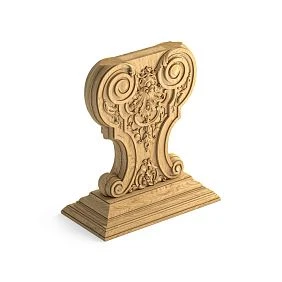
Carved wooden decoration — rosettes, corner elements, ornamental inserts — paired with carved furniture legs creates a cohesive classic look. This is furniture that looks like a work of art — not just a storage item, but an architectural accent in the interior.
Classic furniture as an assembly point
Classic Furniture — chests of drawers, sideboards, consoles, display cabinets — stand on turned or carved legs by definition. In a classic interior, legs are not an optional detail; they are a mandatory structural part that cannot be replaced with a plinth without losing style.
All wood products in a unified system
Wooden items — legs, handles, overlays, moldings, millwork, baseboards, frames, architraves — create an interior system of natural materials. Furniture legs in this system are the lower point of the wooden ensemble. They "ground" the furniture literally and metaphorically.
Mistakes when choosing furniture legs and supports
Mistakes when choosing furniture legs are of two types: technical and aesthetic. Both are equally costly — literally and figuratively.
-
Choosing legs only by appearance — a beautiful leg made of soft wood under a heavy chest of drawers will crack or deform. Load-bearing strength is the first criterion, then aesthetics
-
Not considering the load — static load from the furniture body plus contents: for a chest of drawers with items, this can be 50–80 kg. For such a load, legs made of hardwood (oak, beech, birch) with a cross-section of at least 40×40 mm or a diameter of at least 40 mm are needed
-
Placing thin legs on heavy furniture — a 20 mm diameter leg under a cabinet — is a risk of destruction. For heavy case furniture — legs with a cross-section from 50 mm with reliable bolt fastening
-
Not checking the fastening system — legs on screws without bolted connection loosen over time. Bolt M8–M10 with a mounting plate or screwed-in pin — correct fastening for legs under load
-
Mixing different wood shades — warm oak, cold ash, and dark cherry on the same furniture — is chaos. A single species or a single tone is a mandatory condition for a systematic result
-
Not matching legs with handles — wooden legs tinted to dark walnut + chrome-plated metal handles — a conflict of materials and characters
-
Forgetting about the furniture plinth or base — if built-in furniture stands on adjustable supports, the space under it must be closed with a base plinth. Visible metal supports under a kitchen set — an unfinished look
-
Buying legs without considering the coating — if the furniture will be painted, legs without coating are needed. Buying legs with varnish under natural oak, and then painting the furniture white — means getting incompatible surfaces
Where to buy furniture legs and supports
In the STAVROS catalog — a complete set for furniture decor and functional support parts:
-
Furniture legs — wooden supports of various shapes, profiles, and heights
-
Furniture legs without coating — for self-painting in any tone
-
wooden furniture handles — paired with legs for systematic furniture design
-
uncoated wooden handles — for complete final painting together with legs
-
Wooden handles with coating — ready for installation, in coordinated tones
-
Decorative wooden inlays — for fronts that should echo the leg decor
-
furniture moldings — horizontal relief rhythm paired with vertical legs
-
Wooden trim — for base profiles, trims, and transition furniture parts
-
Classic Furniture — chests, display cabinets, consoles on wooden legs
-
All wood products — complete catalog for systematic furniture and interior design
A complete approach — legs, handles, overlays, moldings from a single source — this is a guarantee that the furniture will look like a single piece. Not a set of parts. Not a compromise from different stores. But a cohesive system where every detail knows its place.
FAQ: Answers to popular questions
How to choose furniture legs?
Determine the load — choose material and cross-section with a safety margin. Determine the height based on furniture proportions. Choose a shape to match the interior style. Coordinate the tone with the body, handles, and baseboard. For classic style — turned or carved legs made of hardwood. For modern interiors — straight or tapered legs.
How is a furniture support different from a leg?
A support is a broader concept: it includes both technical adjustable elements for built-in furniture and decorative legs. A leg is a visible element with a decorative function. For freestanding classic furniture, decorative legs are used. For built-in case furniture, technical supports with a furniture plinth cover are used.
Which legs to choose for a chest of drawers?
For a classic chest of drawers — turned wooden legs made of oak or beech, 80–120 mm high, with bolt fastening. Tone — matching the body finish. Shape — coordinated with handles and overlays. For a modern chest of drawers — straight or tapered legs, 70–100 mm.
Can I buy furniture legs without coating?
Yes. Uncoated legs are the right choice for DIY final painting or tinting. They allow you to exactly match the body tone and achieve a unified system from the base to the handles.
What to pair wooden furniture legs with?
With wooden handles of the same tone, decorative overlays on facades, furniture moldings along horizontal edges of the body, and a wooden baseboard along the walls. All elements — from the same wood species or within the same tone range — create a system where the furniture looks like a piece of art, not a random item.
What is the optimal leg height for a cabinet?
For a bedside cabinet — 40–80 mm, level with the mattress of the bed. For a floor cabinet in the living room or hallway — 80–120 mm, depending on the body height and proportions of the entire piece.