












































































Article Contents:
- Nature of materials: essence beneath the surface
- Weight and density: physics in action
- Strength and mechanical resistance
- Water resistance: reaction to moisture
- Temperature Stability
- Accuracy of geometry and relief detail
- Processing and installation: technological aspects
- Painting capabilities
- Ecological safety and health
- Durability and Preservation of Appearance
- Price range: economics of choice
- Application areas: where each material is preferable
- Flexibility and ability to work on curved surfaces
- Repairability and replaceability
- Acoustic properties and influence on sound
- Fire resistance and fire safety
- Ecological production and disposal
- Stylistic preferences
- Combined Solutions
- Frequently Asked Questions
- Conclusion

Molding is not just a strip on the wall. It is the boundary between planes, an accent that highlights, separates, emphasizes. It is the finishing touch that transforms an ordinary room into a thoughtfully designed space. But which material to choose to realize your design vision? MDF or polyurethane? Wood in modern processing or high-tech polymer? This is not a trivial question, as the choice affects not only appearance but also durability, ease of installation, project cost, and comfort of use. Let’s examine this in detail, without empty words or marketing promises — only facts, figures, experience, and common sense.



Nature of materials: essence beneath the surface
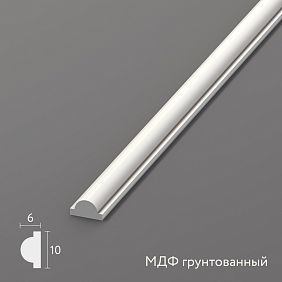
MDF ceiling moldings for paintingMDF is a product of deep wood processing. MDF stands for medium-density fiberboard, although in Russian it is commonly referred to simply as MDF, borrowing the English abbreviation. The production technology is based on grinding wood into individual fibers, treating them with binders, and pressing them under high temperature and pressure. The result is a homogeneous material with a density of 700–850 kilograms per cubic meter, devoid of natural wood defects: knots, resin pockets, structural irregularities. MDF inherits from wood its ecological nature and workability, but lacks its capriciousness and unpredictability.
Polyurethane is a synthetic polymer created by the chemical industry. It is obtained as a result of the reaction of polyols with isocyanates in the presence of catalysts and foaming agents. It forms a lightweight material with a closed porous structure, with a density of 300–400 kilograms per cubic meter.Moldings made of polyurethaneThey are produced by casting into precise molds, ensuring perfect repeatability of geometry and ornament. Polyurethane is a technologically advanced material, created to solve specific tasks: lightness, water resistance, shape stability, ease of installation.
Which material resonates more with you? Recycled wood with its warm essence or high-tech polymer with its functionality? The answer to this question will largely determine your choice.




Weight and density: physics in action
Weight is one of the key parameters determining the ease of working with the material. MDF molding with a density of 750–800 kilograms per cubic meter has significant mass. A linear meter of molding with a cross-section of 80x20 millimeters weighs approximately 120–140 grams. A cornice with a width of 100 millimeters and thickness of 25 millimeters weighs 180–200 grams per meter. This is not critical for wall elements, but noticeable when working with long ceiling structures. Installation requires secure fastening, quality adhesive, sometimes additional self-tapping screws or nails.
Polyurethane moldingIt weighs 2–3 times less for the same dimensions. The same profile of 80x20 millimeters weighs only 40–60 grams per meter, and a cornice of 100x25 millimeters — 60–80 grams. The difference is enormous, especially when decorating an entire room or several rooms. The lightness of polyurethane opens up possibilities unavailable to heavy materials: mounting on gypsum board without reinforcing the frame, installation on stretch ceilings, use in structures with limited load-bearing capacity. Adhesive bonding holds securely, additional fastening is often unnecessary.
Imagine: you are decorating a room with a perimeter of 20 meters. An MDF cornice will impose a load of 3.5–4 kilograms, while a polyurethane one — only 1.2–1.6 kilograms. The difference in transportation, lifting to the floor, holding the element during installation — is noticeable and significant.
Our factory also produces:


Strength and mechanical resistance
MDF has high strength in bending and compression. The indicators reach 25–30 MPa in bending and 15–20 MPa in compression. This ensures shape stability, absence of deformation during proper installation and use.Paintable MoldingMDF withstands accidental impacts, does not dent under pressure, retains its geometry for decades. However, the material is brittle at the break — a sharp blow to the edge may cause chipping. Edges require careful processing, sharp angles are vulnerable to mechanical damage.
Polyurethane demonstrates different characteristics. Bending strength of 15–20 MPa, compression strength of 10–12 MPa — lower than MDF. However, the material is elastic, capable of absorbing impacts without destruction. A random impact from a ball or toy will leave a dent, which will partially recover over time due to the material's elasticity. Polyurethane does not crumble, does not produce sharp chips, is safe in homes with children. However, surface hardness is lower — sharp objects or animal claws may leave scratches.
Which is more important: rigid stability of MDF or elastic flexibility of polyurethane? The answer depends on the operating conditions and expected loads.
Get Consultation
Water resistance: reaction to water
Water is the enemy of MDF. The material is hygroscopic, absorbs moisture, swells upon prolonged contact with water. The water absorption coefficient of standard MDF is 15-25% by volume within 24 hours. This means that an unprotected sheet submerged in water will increase in size, lose strength, and deform. There are water-resistant grades of MDF with water absorption of 5-10%, treated with special hydrophobic compounds, but even they are not intended for direct contact with water.MDF moldings for paintingrequire mandatory protection: priming, painting, varnishing. After treatment, water resistance increases, but does not guarantee full protection.
Polyurethane is absolutely inert to water. The water absorption coefficient approaches zero — the material does not absorb moisture, does not swell, does not deform.Polyurethane moldingscan be installed in bathrooms, showers, pools, saunas — anywhere where humidity is increased. They can be washed with water without fear of consequences. Facade application of polyurethane does not require special protection — the material withstands rain, snow, condensation without changes in structure or appearance.
If your project involves contact with moisture — the choice is obvious. In dry rooms, both materials work successfully with proper treatment.
Temperature stability
MDF maintains stability in the temperature range from minus 10 to plus 40 degrees Celsius. At lower temperatures, the material becomes brittle, and at higher temperatures, formaldehyde may be released from the binding resins. The linear expansion coefficient of MDF is 8-12×10⁻⁶ per degree Celsius — this means that a three-meter molding heated by 20 degrees will elongate by 0.5-0.7 millimeters. This is a small value, but with rigid mounting, it may lead to internal stresses.
Polyurethane demonstrates a wider range of operating temperatures: from minus 40 to plus 80 degrees Celsius. However, the linear expansion coefficient is higher: 60-80×10⁻⁶ per degree. The same three-meter molding, under the same 20 degrees, will elongate by 3.6-4.8 millimeters. This is significant and requires technological gaps during installation, elastic joint sealing. During installationof paintable wall moldingsof polyurethane, thermal deformations must be taken into account.
Near fireplaces, stoves, powerful lights, polyurethane may deform. MDF is more stable under such conditions, but requires protection from high temperatures by painting with fire-resistant compounds.
Accuracy of geometry and relief detail
MDF moldings are produced by milling — cutting tools remove material, forming the profile. Accuracy depends on equipment quality, sharpness of milling cutters, and workpiece rigidity. Modern CNC machines provide accuracy of 0.1-0.2 millimeters, which is sufficient for most applications. The homogeneous structure of MDF allows creating sharp edges, smooth surfaces, complex profiles. Detailing is limited by the capabilities of the milling cutter — the minimum radius of rounding is 1-2 millimeters, and extremely thin relief elements are difficult to realize.MDF moldingis ideal for minimalist profiles, geometrically precise forms, modern aesthetics.
Polyurethane moldings are produced by injection molding into high-precision molds. The mold is created once with maximum care, then reproduced infinitely with absolute repeatability. The molding accuracy reaches 0.05 millimeters, ensuring perfect identity of all elements in a batch. Relief detailing is limited only by the capabilities of mold manufacturing — fine lines, delicate swirls, complex ornaments can be reproduced.Ceiling moldings for paintingPolyurethane moldings with rich decoration are indistinguishable from plaster molding, but significantly lighter and more practical.
If you need classical molding with baroque swirls — polyurethane is ideal. If you prefer minimalism with sharp edges — MDF is your choice.
Processing and installation: technical aspects
MDF moldings are cut with a fine-toothed saw, a circular saw, or a jigsaw. The cut is clean and does not require extensive finishing. Edges are sanded with fine-grit sandpaper and primed before painting. Corner joints require precise 45-degree beveling — when done correctly, the seam is almost invisible. Mounting is done with construction adhesive such as 'liquid nails' or specialized MDF adhesives. For heavy elements, additional finishing nails or screws are used, with heads pressed down and filled with putty.Paintable wall moldingMDF moldings can be installed in one day by one person in a medium-sized room.
Polyurethane is cut with a sharp knife, metal hacksaw, or circular saw. The material is softer than MDF and cuts more easily, but requires sharp tools for a clean cut. The cut is smooth and usually does not require sanding. Joints are also made at 45 degrees, and gaps are filled with acrylic sealant or special adhesive. Mounting is done exclusively with adhesive — the material's lightness does not require mechanical fasteners. Adhesive is applied in zigzag or spot patterns, and the element is pressed for 30-60 seconds — and mounting is complete.Wall polyurethane moldingis installed faster and easier, requiring no special skills.
Both materials are suitable for self-installation. MDF requires more physical effort and care, while polyurethane tolerates minor errors due to its lightness and flexibility.
Painting possibilities
MDF has a smooth, dense surface, ideal for painting. The material has no pores, fibers, or irregularities — paint lays evenly, forming a smooth finish. Priming is required before painting — primer fills micro-pores, ensures adhesion, and reduces paint consumption. Acrylic, alkyd, and water-emulsion paints of any color and shade can be used. Complex effects such as patina, lacquer, metalization, and aging can be achieved.paintable wall moldingsAfter proper painting, MDF moldings are indistinguishable from solid wood, creating the impression of expensive material at an affordable price.
Polyurethane also paints beautifully, but requires a special approach. The smooth, non-porous surface may repel paint, so priming with plastic primers or universal adhesive primers is necessary. After priming, any paint lays perfectly, forming a durable finish. There are laminated polyurethane moldings with factory-applied decorative finishes — they do not require painting and are delivered ready for installation. The color range of lamination includes white, beige, wood, marble, and metal imitations.Plastic molding to be painted— a universal solution for any interior.
Both materials offer wide possibilities for color solutions. MDF is slightly easier to paint due to its natural adhesion to paint. Polyurethane requires priming, but the result is identical.
Ecological safety and health
MDF is produced using formaldehyde-based binding resins. Modern technologies allow reducing formaldehyde emissions to minimal levels, corresponding to class E1 (up to 0.124 milligrams per cubic meter of air) or even E0 (less than 0.05 milligrams). These are absolutely safe levels, having no impact on health. When purchasingMDF moldingspay attention to quality certificates confirming emission class. Quality MDF of class E1 or E0 is safe for living spaces, including children's rooms and bedrooms. The material does not cause allergies and does not emit toxic substances under normal operating conditions.
Polyurethane is chemically inert after full polymerization and does not emit harmful substances under normal conditions. Modern polyurethanes are produced without using freons or other ozone-depleting substances. However, at temperatures above 100-120 degrees Celsius, isocyanates and other volatile compounds with a sharp odor may be released. This requires caution when placing polyurethane decor near powerful heat sources. In case of fire, polyurethane burns releasing toxic gases, requiring rapid evacuation.
Both materials are safe when used properly. MDF is closer to natural materials, polyurethane is a synthetic product, but no less safe when usage conditions are observed.
Durability and preservation of appearance
MDF moldings, when properly installed and protected by painting, serve for 20-30 years without shape change or loss of functionality. The material does not shrink, does not deform, retains its geometry. The painted surface is protected from external influences, easy to clean, retains color for years. Periodic repainting is possible to maintain aesthetic appearance — paint on MDF adheres firmly, repainting is not complicated.MDF furniture molding— a long-term investment in interior beauty.
— solutions for decades.MDF Cornices for PaintingBoth materials are durable. MDF is slightly more stable in geometry, polyurethane is more resistant to mechanical impacts and moisture.
Both materials are durable. MDF is slightly more geometrically stable, while polyurethane is more resistant to mechanical impacts and moisture.
Price range: economy choice
Price is one of the key factors in decision-making. MDF moldings are usually cheaper than polyurethane ones when comparing similar profiles. A simple molding 40-50 mm wide from MDF costs 80-120 rubles per linear meter. A complex profile 80-100 mm wide costs 150-250 rubles per meter. Cornices with a large cross-section of 100-150 mm cost 300-500 rubles per linear meter. Prices are indicated for items ready for painting, without final finishing. To calculate the final cost, add expenses for primer, paint, and labor — this is approximately 50-100% of the material cost.
Polyurethane moldings are more expensive. A simple profile 40-50 mm wide costs 150-250 rubles per meter. A medium profile 80-100 mm wide — 300-500 rubles. A complex decorative cornice 100-150 mm wide — 600-1200 rubles per meter. Laminated elements are 30-50% more expensive but do not require painting. When calculating the final cost, consider that installing polyurethane is simpler and faster, saving on labor. The absence of mechanical fasteners also reduces costs.
Consider a specific example: decorating a 4x5 meter room with a cornice at the junction of wall and ceiling along the perimeter. Perimeter 18 meters. An MDF cornice 100 mm wide will cost 18×200=3600 rubles for material plus 2000-3000 rubles for primer, painting, and installation — total 5600-6600 rubles. A polyurethane cornice of similar profile costs 18×400=7200 rubles for material plus 1000-1500 rubles for painting and installation (simpler and faster) — total 8200-8700 rubles. The difference is 2600-2100 rubles or approximately 30-40%.
If the budget is limited — MDF allows saving. If simplicity of installation and moisture resistance are important — polyurethane justifies the price difference.
Application areas: where each material is preferable
MDF moldings are ideal for dry living spaces: living rooms, bedrooms, offices, children's rooms, hallways. They look great in interiors of Scandinavian style, minimalism, modern classic, where clear lines and simplicity of forms are important.buy MDF molding for painting— suitable for wall panel decoration, creating geometric compositions, framing mirrors and paintings. MDF is perfect for furniture decoration — cabinet facades, chests, bedside tables.MDF furniture cornice for painting— completes the upper part of furniture, giving it a finished and elegant look.
Polyurethane moldings are universal. They are suitable for any rooms, including wet ones: bathrooms, showers, pools, saunas. Polyurethane works excellently on facades — cornices, window and door frames, decorative bands. It is ideal for classic interiors where rich ornamentation is required: baroque, rococo, neoclassicism, classicism.Buy wall moldings for painting— made from polyurethane is suitable for creating high-decorative compositions with stucco. Polyurethane is indispensable for decorating gypsum structures — its lightness does not overload the frame.
On facades, polyurethane dominates due to its moisture and frost resistance. MDF on facades is applicable only under the condition of perfect waterproofing, which is economically unjustified.
Flexibility and ability to work on curved surfaces
MDF is a rigid material, not bendable without deformation. It can be used only on straight sections or smooth curves with very large radii (several meters). Decorating columns, arches, curved walls requires special flexible moldings made from other materials or complex technologies for manufacturing bent elements. However, rigidity is also an advantage: MDF molding does not sag or deform under its own weight over long spans, maintaining perfect straightness.
Standard polyurethane is also rigid, but flexible polyurethane moldings (flex) exist, specifically designed for curved surfaces. They contain plasticizers that increase elasticity and bend without structural damage on radii from 50-100 centimeters. Flexible moldings are 1.5-2 times more expensive than standard ones but are indispensable for working on complex surfaces. With them, you can decorate columns, arches, domes, wavy walls, create curved compositions. For straight sections, standard rigid polyurethane is used, for curves — flexible. This ensures the universality of solutions.
If your project includes curved elements — flexible polyurethane is indispensable. For straight structures, both materials work excellently.
Repairability and replaceability
MDF moldings can be locally repaired. Chips are filled with wood putty, sanded, and repainted. For severe damage, it's easier to replace the damaged section — the molding is cut, the damaged part is removed, and a new piece is installed. The joint is filled with putty, sanded, and painted — the repair becomes barely noticeable. The material's availability ensures easy replacement — you can purchase an additional meter of the same profile and perform the repair yourself.
Polyurethane moldings are repaired similarly. Minor damage is filled with acrylic putty or specialized plastic repair compounds. Large defects require replacing the element — the damaged fragment is cut out and replaced with a new one. The joint is sealed with acrylic sealant and painted. The lightness of polyurethane simplifies disassembly and installation. The key is to have spare material of the same article, as manufacturers periodically update their assortment and discontinue older models.
Both materials are repairable. MDF is slightly easier for local repairs due to better adhesion of putties. Polyurethane is easier to replace entire elements due to its lightness.
Acoustic properties and influence on sound
MDF, with its dense structure, partially absorbs sound, reducing echo levels in a room. The sound absorption coefficient is 0.1–0.15 at frequencies 500–2000 Hz. This is a small value, but noticeable in the overall acoustic balance of a room. The textured surface of moldings additionally scatters sound waves, breaking up standing waves and resonances. This improves acoustic comfort, especially in large rooms with high ceilings.
Polyurethane, with its closed porous structure, has similar properties. The sound absorption coefficient is 0.08–0.12, slightly lower than MDF, but still positively affects acoustics. The textured surface of decorative moldings also scatters sound. For the vast majority of residential spaces, the influence of moldings on acoustics is insignificant, but for home theaters or music rooms, it may have some significance.
If acoustics are critical — consider specialized acoustic materials. For ordinary rooms, both MDF and polyurethane are neutral acoustically.
Fire resistance and fire safety
MDF is a flammable material, fire hazard class G4 (highly flammable). Ignition temperature is around 250–300 degrees Celsius. When burning, it emits medium-toxic smoke containing formaldehyde and wood pyrolysis products. Special treatment with flame retardants can increase fire resistance to class G2–G3, but MDF will not become non-flammable. When using MDF moldings in rooms with high fire safety requirements, special fire-retardant treatments and non-flammable paints must be applied.
Polyurethane is also flammable, class G3–G4 depending on composition. Ignition temperature is 300–350 degrees Celsius. When burning, it emits toxic gases including isocyanates, carbon monoxide, hydrogen cyanide. Smoke is black, dense, and highly toxic. Modern polyurethanes contain flame retardants that reduce flammability and slow flame spread, but they are not completely non-flammable. In case of fire, polyurethane burns intensely, requiring rapid evacuation.
Neither material is fire-resistant. For rooms with high fire safety requirements, consider mineral materials — gypsum, cement, ceramic. For residential spaces, both MDF and polyurethane are acceptable provided building codes are followed.
Ecological production and disposal
MDF is produced from wood processing waste — sawdust, chips, shavings. This is an efficient use of secondary raw materials, reducing pressure on forest resources. The technology is energy-intensive, but modern facilities use production waste to generate heat and energy, closing the loop. MDF is recyclable — ground waste can be used as filler in composite materials or burned for energy. Biodegradation of MDF is slow due to synthetic resins, but the material contains no heavy metals and does not contaminate soil with toxins.
Polyurethane is produced from petroleum products, creating a carbon footprint. Production is energy-intensive, requiring specialized equipment and strict adherence to environmental norms. Polyurethane does not biodegrade and remains intact for centuries when buried. Secondary recycling of polyurethane is technically possible but economically unfeasible due to the difficulty of sorting and separating different polymer types. Disposal is typically done by burning at specialized facilities with gas purification systems.
From an ecological standpoint, MDF is preferable due to the use of renewable raw materials and better disposal. However, the difference is not significant enough to be a decisive factor in selection.
Stylistic preferences
MDF moldings, with their minimalist profiles and sharp edges, are ideal for modern styles: minimalism, Scandinavian, high-tech, loft, contemporary. Smooth surfaces, geometric precision, absence of excessive decoration — the philosophy of these styles.— is a horizontal element that frames the room at the bottom of the walls where the wall meets the floor. Skirting boards perform several functions: they hide the technological gap between the wall and floor covering (necessary for thermal expansion), protect the lower part of the wall from mechanical damage, create visual completion, and may conceal wiring.Harmoniously integrates into interiors where functionality and visual purity are valued. MDF can imitate wood, which is relevant for eco-style, Scandinavian design, where natural materials are prioritized.
Polyurethane moldings with rich ornamentation are designed for classic styles: Baroque, Rococo, Empire, Classicism, Neoclassicism. Complex scrolls, floral motifs, delicate moldings, multi-level cornices — all of this is achievable with polyurethane.Ceiling moldings for paintingPolyurethane with classic decoration creates an atmosphere of palace luxury. At the same time, polyurethane is also available in minimalist profiles suitable for modern interiors.
Material selection is largely determined by interior style. MDF is for modernity, polyurethane is versatile, but especially strong in classic styles.
Combined Solutions
Why choose one material when you can combine the advantages of both? In one interior, you can use MDF moldings for wall panels where strength and stability are important, and polyurethane cornices on the ceiling where lightness is critical. On facades, use polyurethane for all elements due to its moisture resistance; inside, use MDF to save budget in dry areas.
Combining allows optimizing costs, ensuring functionality of each element, and creating a visually rich and varied interior. The key is to maintain stylistic unity, properly combine profiles, and ensure a unified color solution after painting.MDF cornice for paintingAnd polyurethane decoration beautifully complements each other with a thoughtful approach.
Don't be afraid to experiment — the best solution often lies not in a categorical choice, but in a reasonable combination.
Frequently asked questions
Which material is better for a bathroom — MDF or polyurethane? Definitely polyurethane. Its absolute moisture resistance makes it the ideal choice for humid spaces. Even moisture-resistant and painted MDF risks swelling upon direct contact with water or prolonged exposure to steam.
Can polyurethane moldings be painted with regular paint? Yes, but after priming with a special plastic primer or universal adhesive primer. Without primer, paint may not adhere well and may peel off.
Which moldings are cheaper — MDF or polyurethane? MDF moldings are usually 20–40% cheaper when comparing similar profiles. However, considering the ease of polyurethane installation and the absence of need for mechanical fasteners, the final project cost may be comparable.
How long do MDF moldings last? With proper installation and protective painting, 20–30 years. Polyurethane moldings last 30–40 years. Both materials are durable and do not require frequent replacement.
Can MDF moldings be used on facades? Technically yes, but economically impractical. Requires perfect waterproofing of all surfaces, including ends, and regular maintenance. Polyurethane for facades is preferable in all aspects.
Which moldings are stronger? MDF is stronger in compression and bending, holds shape better. Polyurethane is stronger against impact, more elastic, doesn't crumble under mechanical stress. Both materials are sufficiently strong for decorative elements.
Is it necessary to prime MDF before painting? Definitely. Primer fills micropores, ensures paint adhesion, reduces paint consumption, and creates a uniform base for the final coating.
Which moldings are easier to install yourself? Polyurethane. Their lightness, ease of adhesive mounting, and lack of need for mechanical fasteners make installation accessible even for beginners. MDF requires more physical effort and care.
Conclusion
Choosing between MDF and polyurethane for moldings is not a matter of better or worse. It's a matter of material suitability for the project's tasks, operating conditions, budget, and aesthetic preferences. MDF is for those who value proximity to natural materials, strength, geometric stability, and are willing to provide moisture protection. Polyurethane is for those who value versatility, ease of installation, moisture resistance, and the ability to create highly decorative elements.
Both materials deserve attention. Both can transform an interior, giving it completeness and individuality. The key is understanding the specifics of each, correctly assessing operating conditions, and making an informed choice. Even better — don’t choose one or the other, but wisely combine them, using the strengths of each material where they are most effective.
STAVROS offers a wide range of moldings in various materials. Here you will findMDF moldings for paintingall profiles and sizes,Polyurethane Decorwith any level of detail,Wooden moldingssolid wood,Baseboards, Crown Molding, Casings, decorative elements— everything needed to create a unique interior. Professional consultants will help you choose the optimal solution, taking into account the specifics of your project, operating conditions, and budget. STAVROS — quality proven over time, a vast selection, competitive prices, and personalized service for every client. Contact us, and your space will achieve that perfect finish which distinguishes professional design from a random collection of elements.


