












































































Article Contents:
- Philosophy of Precision in Molded Decoration
- Level: Foundation of All Measurements
- Measuring Tools: From Bubble to Laser
- Marking Methodology for Base Line
- Compensation for Irregularities
- Primer: Invisible Foundation of Strength
- Types of Primers and Their Purpose
- Application technology
- Quality Control of Priming
- Adhesive: Chemistry of Reliable Bonding
- Types of Adhesives for Polyurethane Moldings
- Technique of applying adhesive
- Curing Time and Pressing
- Joint: Art of Invisible Connection
- Preparation of Element Edges
- Jointing Technique
- Joint Seam Filling
- Sanding: Path to Perfect Surface
- Tools and Materials
- Sanding Technique
- Quality Assessment
- Painting: Revealing All Defects
- Priming Before Painting
- Paint application techniques
- Special Techniques and Effects
- Lighting: Uncompromising Judge of Quality
- Influence of Light Direction on Perception
- Lighting Planning
- Quality Control Under Different Lighting
- Typical Errors and Correction Methods
- Geometric Errors
- Joint Defects
- Surface Defects
- Checklist for Error-Free Installation
- Frequently Asked Questions
- What is the maximum allowable unevenness of the ceiling for installing moldings?
- Can molding be mounted on wallpaper?
- Which adhesive is better for heavy moldings?
- After how much time after installation can molding be painted?
- How to avoid cracks at joints due to thermal deformation?
- Which paint is better for a molded ceiling?
- How to check the quality of work before final acceptance?
- Can molding be installed on a stretch ceiling?
- How to fix a detached section of molding?
- How long does properly installed polyurethane molding last?
- Conclusion
- About the Company STAVROS

The perfection of a molded ceiling is measured in millimeters. Where the eye detects the slightest deviation from the horizontal, the slightest gap at the joint, the slightest irregularity in the seam — there the illusion of decorative monolithism collapses.Plaster ceilingRequires absolute precision at every stage: from initial level marking to final painting. Control of geometry and joints — not technical formalities, but the philosophy of flawless execution, where every stage of preparing the base with primer, every millimeter of adhesive joint, every movement during sanding serves a single goal. Lighting becomes an unforgiving judge — under slanted rays, everything becomes visible: joint imperfections, geometric inaccuracies, traces of carelessness. This article is about how to avoid errors that cannot be concealed.


Philosophy of Precision in Molded Decoration
Molded ceiling does not tolerate approximations. Unlike wall decoration, which is often hidden by furniture or drapery, the ceiling is fully exposed to view. Any geometric inaccuracy, any visible joint is immediately perceived as a defect, destroying the impression of luxury and craftsmanship.
The human eye possesses remarkable sensitivity to violations of symmetry and horizontality. A deviation from the horizontal of just 2-3 mm per meter of length is perceived as a clear defect. A difference in joint width between elements of 0.5 mm creates a sense of carelessness. These psychophysical features of perception determine strict requirements for installation accuracy.
Control of geometry begins not with measurements, but with understanding the ideal. An ideal molded ceiling is a composition where each element is in an absolutely precise position relative to the basic lines of the room. Cornices are perfectly parallel to walls and floor, rosettes are precisely centered, all joints are invisible. Achieving this ideal requires a systematic approach at all stages of work.
Installation errors manifest gradually. Negligence in preparing the base leads to element detachment after several months. Inaccurate marking is detected when installing the last elements, requiring redoing the entire work. Poor joint preparation manifests after painting as cracks and shadows. Preventing errors in early stages saves time, money, and nerves.




Level: the foundation of all measurements
Controlling the horizontal — the first and most important stage in creating a molded ceiling. All measurements and geometry are built relative to an absolute horizontal plane. Any deviation of the base line multiplies into all subsequent elements, creating a cascade of errors.
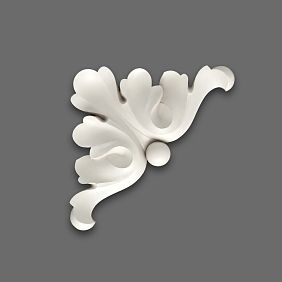
Our factory also produces:


Measuring tools: from bubble to laser
A 2-meter bubble level — a basic tool for checking local areas. The accuracy of a quality bubble level is 0.5 mm per meter, which is sufficient for most tasks. However, on large distances, the error accumulates, making the tool insufficiently accurate.
Hydrolevel — a simple and reliable device for transferring marks around the perimeter of the room. The principle of communicating vessels ensures absolute accuracy regardless of distance. The drawback — requires the participation of two people and careful removal of air bubbles from the system.
Laser level revolutionized marking. A rotational laser plane builder creates an ideally horizontal plane throughout the room. The accuracy of the best models reaches 0.1 mm per 10 meters. The ability to project multiple planes simultaneously speeds up work multiple times.Ceiling moldingMolding is installed significantly faster using laser technology.
Electronic inclinometers — precision instruments for controlling angles of inclination. The display shows deviation from the horizontal with an accuracy of 0.01°. Useful when working on complex multi-level ceilings, where creating specified angles of inclination is required.
Get Consultation
Methodology for marking the base line
Determining the zero level — the starting point of all work. In one of the room's corners, at an arbitrary height, the first mark is placed. This point is transferred to all corners using a laser level or hydrolevel. Four marks are connected by a plumb line, creating a basic horizontal line.
Checking the room's geometry is performed by measuring diagonals. A rectangular room has equal diagonals. A difference exceeding 20 mm indicates non-right angles, requiring correction of the marking. Complex rooms require constructing auxiliary lines to determine the true geometry.
The working line for installing the cornice is calculated from the zero level. The cornice height is subtracted from the distance from the base line to the ceiling. The resulting mark is transferred around the perimeter, forming a line along which the top edge of the cornice will be attached. The accuracy of transfer is critical — a 1 mm deviation creates a visible step.
Control intermediate points are placed every meter along the wall length. This allows identifying wall irregularities that require compensation during installation. A taut string is stretched between the extreme points — intermediate points must touch the string without deviation.
Compensation for irregularities
Walls are rarely perfectly straight. Deviations from vertical up to 10 mm over a height of 2.7 m are common in standard construction. A cornice installed strictly horizontally on such a wall will have a variable gap at the top, which looks untidy.
Compensation strategy depends on the magnitude of irregularities. Small deviations up to 3 mm are compensated by a variable-thickness adhesive layer. Medium deviations of 3–7 mm require inserting wedge-shaped cardboard or thin plywood shims. Large deviations over 7 mm require plastering the wall before installing the molding.
Visual correction is sometimes preferable to mathematical precision. If the ceiling has a slope, a strictly horizontal cornice will appear slanted. In such cases, the cornice is installed parallel to the ceiling, even if it deviates from true horizontal by 2–3 mm. The eye perceives parallel lines as correct.
Primer: invisible foundation of strength
Priming is a stage often underestimated, considered insignificant. Yet, the quality of priming determines 50% of the adhesive joint’s strength and the entire structure’s longevity. Skipping priming or using inappropriate primers leads to element delamination within several months.
Types of primers and their purpose
Deep-penetration primer — a basic composition for loose, porous surfaces. Acrylic copolymers penetrate up to 10 mm, binding loose particles and strengthening the base structure. Reduces and equalizes absorbency, ensuring even adhesive distribution.
Adhesion primer contains fine quartz sand, creating a rough surface. Applied to dense, slightly absorbent bases — concrete, old paint, gypsum board. Roughness increases contact area and mechanical adhesion of the adhesive to the base.
Antiseptic primer contains biocides that inhibit mold and mildew growth. Required in high-humidity areas — kitchens, bathrooms, unheated rooms. Prevents biological degradation of organic components of the adhesive and molding.
Universal primers combine several functions: strengthening, improved adhesion, antiseptic protection. Suitable for most situations during installationmolding to buywhich you plan, but in complex cases specialized compositions are more effective.
Application Technology
Surface preparation before priming includes removing dust, dirt, oily contaminants. A vacuum cleaner with a soft brush removes loose dust. Residues are wiped away with a damp cloth. Oil stains are cleaned with a solvent. Base moisture should not exceed 8% for concrete, 12% for wood.
The first primer layer is applied generously with a roller or brush. The goal — maximum penetration into the base’s pores. A roller with long bristles ensures even distribution. A brush is used in corners and hard-to-reach areas. Drips are unacceptable — excess is immediately spread.
Drying time depends on primer type, temperature, and air humidity. Typically, the first layer takes 4–6 hours to dry. Full polymerization occurs after 24 hours. Do not rush — un-dried primer will not provide the required strength.
The second layer is applied perpendicular to the first for even coverage. Material consumption in the second layer is less — the surface is already strengthened and absorbs less. Special attention is given to areas of future mounting of large elements — outlets, moldings.
Quality control of priming
Visual assessment — the first level of control. The surface should have uniform color without spots, drips, or under-coated areas. Glossy spots indicate primer accumulation; matte areas indicate insufficient coverage.
Absorption test is performed with a water droplet. On a well-primed surface, the droplet does not immediately absorb and remains on the surface for 20–30 seconds. Rapid absorption indicates insufficient priming, requiring an additional layer.
Strength test — a fingernail or putty knife should not leave a deep mark or remove base material. If the primer peels off in layers, the base was too loose or the primer was of poor quality.
Adhesive: chemistry of reliable connection
Choice of adhesive and correct application technique determine the strength of molding attachment. Poor-quality adhesive or violation of technique leads to element delamination, requiring expensive repairs. Understanding adhesive properties and nuances of working with them is critical for flawless results.
Types of adhesives for polyurethane molding
Polyurethane adhesives — specialized compositions developed for attaching polyurethane molding. Chemical affinity of polymers ensures molecular bonding between materials. Adhesion strength reaches 2 MPa, significantly exceeding mechanical loads on molding.
Open time — the period during which element position can be adjusted — is 15–20 minutes. This is sufficient for precise positioning but requires prior preparation and quick work. Full setting occurs after 2–4 hours; final strength after 24 hours.
Acrylic mounting adhesives — water-dispersed compositions based on acrylic polymers. Less strong than polyurethane (strength 1–1.5 MPa), but sufficient for lightweight elements. Advantages: odorless, easy application, ability to dilute with water for consistency adjustment.
Gypsum compositions with PVA additives are used for attaching gypsum molding or as additional fixation for polyurethane elements on complex sections. Fast setting (10–15 minutes) requires high work speed but ensures immediate fixation.
Mounting foam is used as an auxiliary means for large elements. Fills voids, provides additional fixation, compensates for irregularities. Should not be the primary fastening — foam compresses over time, losing strength.
Technique for Applying Adhesive
Element preparation includes cleaning the back surface of dust, degreasing if necessary, and checking geometry. Large elements are fitted "dry" to check the accuracy of fit. This reveals problems before applying adhesive, when correction is easier.
Adhesive is applied using a notched trowel. The notch size is selected depending on the element size: 4 mm for small parts, 6 mm for medium, 8-10 mm for large cornices and rosettes. The notched trowel ensures an even layer of specified thickness.
Trowel movement direction is an important detail. For linear elements (cornices), adhesive is applied along the element. For flat elements (rosettes, panels) — first in one direction, then perpendicular, creating cross-shaped grooves. This ensures even distribution when pressing.
Adhesive quantity — a balance between strength and practicality. Insufficient amount reduces bonding strength and leaves voids. Excessive amount squeezes out at edges, creating drips that are hard to remove. An experienced craftsman applies exactly the right amount — this comes with practice.
Dwell time and pressing
Open dwell time of adhesive — the period between application and element installation — affects bond strength. Immediate installation does not allow adhesive to "set" with air, reducing tackiness. Optimal dwell time is 2-3 minutes for polyurethane adhesives, 5-7 minutes for acrylics. This increases bond strength by 20-30%.
Element installation is performed with precise motion without repeated attempts. Place the element at the marked location, align it with the marking, press evenly across the entire surface. Shifts and repositioning damage the adhesive layer, reducing strength. If the element is installed inaccurately, it is better to remove it, clean the surface, and reapply adhesive.
Pressing must be even and sufficient. A pressure of 5-10 kg per square meter of contact area ensures excess adhesive is squeezed out and tight contact is achieved. Uneven pressing creates voids, reducing strength. For large elements, pressing rolls, boards with supports, and special clamps are used.
Pressing time depends on adhesive type. Polyurethane adhesives require pressing for 30-60 seconds for initial setting, after which the element holds itself. Acrylics require longer pressing — 3-5 minutes. Large heavy elements are secured with supports for 2-4 hours until the adhesive fully sets.
Joint: the art of invisible connection
Joint quality — the main indicator of the installer's skill. An ideal joint is invisible — elements appear monolithic, with no hint of connection. Achieving such a result requires precise fitting, correct processing technique, patience, and experience.
End preparation of elements
Element cutting is performed with a sharp tool — a miter saw, fine-toothed hacksaw, or sharp utility knife for thin elements. A dull tool crushes material, creating an uneven ragged cut that cannot be properly joined. The blade must be sharp, and the teeth must be clean of adhered material.
The cutting angle for room corners is 45° for each element. Angle accuracy is critical — a 0.5° deviation on 2-meter-long elements results in a 1-2 mm gap at the joint. A quality miter gauge or miter saw with adjustable angle ensures the required precision.
Cut perpendicularity is checked with a square. The cut must be strictly perpendicular to the element's longitudinal axis. An angled cut creates a wedge-shaped gap that cannot be closed. If non-perpendicularity is detected, the element is re-cut.
Finishing the end with fine-grit sandpaper (grit 220-320) removes burrs and smooths minor irregularities. Sanding motion must be strictly perpendicular to the cut, without bevels or rounding. Dust is removed with a soft brush or compressed air.
Jointing technique
Dry fitting — mandatory procedure. Elements are placed against each other without adhesive to assess fit quality. The gap should not exceed 0.3 mm — this is the limit that can be filled with putty unnoticed. A larger gap requires additional fitting.
Problematic joints are fitted using medium-grit sandpaper (grit 120-180) mounted on a flat block. The element's end is processed with light movements, constantly checking the result with dry fitting. Do not rush — excess material can be removed easily, but adding more is impossible.
Applying adhesive to element ends strengthens the connection. A thin layer of adhesive is brushed onto both ends before installation. When joining, elements are slightly pressed together, squeezing excess adhesive outward. This creates a strong bond resistant to thermal deformation.
Joint fixation during setting prevents element separation. Painter's tape is applied perpendicular to the joint, holding elements together. For large elements, clamps with soft pads are used. Fixation is maintained for 2-4 hours until the adhesive sets.
Joint seam filling
Putty selection depends on seam width. Micro-cracks up to 0.3 mm are filled with liquid acrylic putty. Seams 0.3-1 mm — with paste acrylic putty. Wider seams — with two-component epoxy compounds that do not shrink.
Putty application is performed with a rubber trowel that does not scratch polyurethane. Movement — across the seam with pressure, pressing material into the gap. Excess is removed by moving along the seam. Initial filling is done with slight excess — putty shrinks upon drying.
Drying time must be strictly observed. Acrylic putties dry in 2-4 hours depending on layer thickness and air humidity. Attempting to sand uncured putty causes material abrasion, creating pits and unevenness. Readiness check — light fingertip pressure: material should not indent.
Reapplication is required for significant shrinkage. The second layer is applied after the first is fully dry. The second layer is thinner — it only compensates for shrinkage. Three to four thin layers yield better results than one thick layer.
Sanding: the path to a perfect surface
Sanding — the final operation before painting, determining surface quality. Proper sanding makes joints completely invisible, creating smoothness necessary for quality paint application. Sanding errors cannot be hidden even with multi-layer painting — they will appear under oblique lighting.
Tools and materials
Sanding paper of different grits — primary abrasive material. Coarse (grit 80-120) is used for initial processing of large irregularities. Medium (grit 150-220) — for primary sanding of filled joints. Fine (grit 280-400) — for final polishing before painting.
Sanding blocks provide a flat surface, preventing wave and depression formation. A wooden or plastic block 70x150 mm is convenient for sanding flat areas. For profiled elements, sponge blocks replicating the profile shape are used.
The eccentric sander speeds up work on large flat surfaces. The circular motion with a small eccentricity prevents the formation of circular marks. Dust extraction reduces dustiness and improves visibility of the processed surface. It is used only on flat areas — relief elements are sanded by hand.
Respirator and safety goggles are mandatory protective equipment. Dust from polyurethane and acrylic putties irritates the respiratory tract and may cause allergic reactions. Fine dust penetrates deep into the lungs, so respiratory organ protection is critical.
Sanding Technique
Direction of movement — along the joint, parallel to elements. Crosswise movements create marks visible after painting. Pressure should be moderate and even — excessive pressure removes excess material, creating indentations. Movements should be long, smooth, and overlapping.
Plane control is performed by hand and visually. Run your palm over the sanded surface — it should be perfectly smooth, without steps or irregularities. Oblique lighting from a portable lamp reveals the smallest defects hidden under direct lighting.
Profiled elements require special techniques. Sandpaper is wrapped around a wooden rod matching the profile of the recess. Sanding is performed carefully to avoid removing decorative details. In deep recesses inaccessible to sanding, putty is applied as carefully as possible to avoid further processing.
Dust removal after sanding is performed carefully. Fine dust settles on the surface, reducing adhesion of primers and paints. A vacuum cleaner with a soft brush removes most of the dust. The surface is finally wiped with slightly damp, lint-free cloth. Humidity must be minimal — water must not be absorbed by the material.
Quality Assessment
Criteria for a perfectly sanded surface:
-
Absolute smoothness when run by hand
-
Absence of visible and perceptible steps at joints
-
Absence of marks and scratches
-
Absence of irregularities and waves
-
Surface cleanliness, absence of dust and contaminants
Oblique light test — final check. A portable lamp or flashlight is directed at a small angle to the surface. Any irregularities cast shadows and become visible. Detected defects are corrected with additional puttying and sanding.
Painting: revealing all defects
Painting — the moment of truth, when all errors from previous stages become apparent. Quality paint highlights relief, creates a protective coating, but mercilessly reveals geometric inaccuracies, visible joints, sanding irregularities. Proper painting technique minimizes these manifestations, creating a uniform coating.
Priming before painting
Adhesion primer ensures paint bonding to polyurethane. Polyurethane is a low-porosity material; paint without primer adheres poorly and may peel. Special polymer primers create micro-roughness, improving adhesion.
Leveling primer fills micropores, creating a uniform surface. Especially important when using glossy paints, which highlight even minor irregularities. Applied with a short-pile roller in one to two coats with intermediate drying of 2–4 hours.
Colored primer is tinted to match the finish paint. This ensures uniform coverage and reduces the number of paint coats. Particularly relevant when using dark, saturated colors requiring 3–4 coats for opacity.
Paint application technique
Tool selection depends on paint type and mold relief. A short-pile roller (5–7 mm) is suitable for smooth elements, while a long-pile roller (10–15 mm) is for profiled elements. A brush is used for painting recesses inaccessible to rollers. Spray gun provides the most uniform coverage but requires experience and produces more mist.
Paint must be thinned to the correct consistency — critical. Too thick paint lays unevenly, leaves tool marks, and does not penetrate recesses. Too thin paint runs, forms drips, and requires more coats. The manufacturer indicates the recommended thinning level — typically 5–10% water for water-dispersible paints.
First coat — primer, applied thinly, aiming to create a base for subsequent coats. Direction — first across the relief, carefully painting recesses, then along to level. Defects from the first coat — missed areas, drips — are corrected in the second coat.
Intermediate drying between coats must be strictly observed. Drying time depends on paint type, temperature, and humidity — usually 2–4 hours. Applying the next coat on an under-dried previous coat causes peeling, formation of lumps, and uneven coating.
Second and subsequent coats are applied perpendicular to the previous one. This ensures uniformity and eliminates tool marks. Each coat is thinner than the previous one. Usually, 2–3 coats of quality paint are sufficient for full opacity and uniform color.
Special techniques and effects
Matte finish hides minor surface defects and creates a classic elegant look. Matte paints do not reflect light, so irregularities are less noticeable.Wall moldingand ceiling are traditionally painted with matte finishes.
Glossy finish highlights relief and creates light play, but requires a perfectly prepared surface. Any irregularity, scratch, or roughness becomes clearly visible. Used rarely, mainly for accent elements.
Satin finish — a compromise between matte and glossy. A subtle sheen creates richness of color and hides minor defects. Practical for maintenance — dirt is easily wiped off. Optimal choice formolded ceilingmodern interiors.
Patina creates an effect of noble antiquity. A base light layer of paint is covered with a dark patina applied with a brush into the recesses of the relief. Excess is removed from protruding parts with a damp sponge. After drying, it is sealed with a protective varnish.
Gilding — classic of palace interiors. Modern technologies offer metallic paints imitating gold. Applied with a brush onto protruding parts of ornament after the base color is applied. Creates a luxurious look at significantly lower cost.
Lighting: the merciless judge of quality
Light — the main tester of work quality. Under direct central lighting, even mediocre work may look decent. But change the direction of light — and all defects become apparent: geometric irregularities, visible seams, traces of putty, grinding marks. Planning lighting and control under various lighting conditions — mandatory stages of professional work.
Influence of light direction on perception
Direct central lighting — chandelier in the center of the ceiling — is least demanding on work quality. Light falls perpendicularly, shadows are minimal, defects are hidden. This is deceptive comfort — at another time of day under natural lighting, the picture changes.
Side lighting from windows — the most merciless. Oblique rays of morning or evening sun reveal the slightest irregularities. A joint, invisible under central light, casts a shadow under side lighting. An irregularity of 0.5 mm becomes visible as a dark or light line.
Backlighting — light from the window to the end of the molding — reveals deviations from straightness. A cornice installed with a slight wave appears curved under such lighting. Quality control must include assessment under backlighting.
Spot lighting — spots directed at the ceiling — creates multiple shadows from relief. This highlights the beauty of ornamentation, but also reveals defects. Irregularities invisible under diffuse light become obvious.
Lighting planning
Integration of lighting into molding is planned before installation begins. LED strips are placed in special profiles of cornices, creating a floating ceiling effect. Wires are laid in voids behind molding and routed to the power source.
The distance of the LED strip from the cornice edge determines the width of the light band on the ceiling. The closer the strip to the edge, the narrower and brighter the band. Optimal distance: 30–50 mm from the edge for even, soft lighting. Experiment during planning by placing temporary lighting.
LED color temperature affects interior perception. Warm white light (2700–3000K) creates coziness, suitable for living spaces. Neutral white (4000–4500K) — for workspaces. Cool white (5000–6500K) — for accent lighting, highlighting the whiteness of molding.
RGB systems allow changing the backlight color, creating various moods. Control via remote or smartphone offers flexibility. But remember: colored backlighting should be subtle, not turning the interior into a disco. Pastel shades are preferable to saturated ones.
Quality control under different lighting
Daytime control is performed under natural light at different times of day. Morning and evening oblique light most reveals defects. Overcast weather with diffuse light — least revealing. Sunny day — best time for final assessment.
Evening control under artificial lighting shows how molding will look in real use. Turn on all expected light sources — central chandelier, spotlights, backlighting. Evaluate from different points in the room — perception changes depending on viewing angle.
Portable lamp — tool for detailed control. Direct the beam at a small angle to the surface, slowly move along elements. Any irregularities, steps, visible seams will cast shadows and become obvious. This is the last chance to identify and fix defects before handing over the work.
Photographic documentation under different lighting helps objective assessment. Camera captures details the eye may miss. Reviewing photos on a large screen reveals defects invisible during quick inspection. Professionals photograph work at all stages for documentation and quality control.
Typical errors and correction methods
Even experienced masters are not immune to errors. It is important to be able to identify problems early and know correction methods. Some errors are easy to fix, others require partial or complete redoing of work.
Geometric errors
Uneven cornice line — result of careless marking or compensating for uneven base. Correction: dismantle section, re-mark precisely, reinstall. If deviation is small (up to 2 mm), compensate with putty in upper or lower part of cornice.
Misaligned angles — corner elements installed with gap or overlap. Gap up to 1 mm is filled with putty. Larger gap requires re-adjusting elements: remove one element, adjust cutting angle, reinstall. Overlap is sanded with sandpaper until planes align.
Non-parallel cornices on opposite walls — result of inaccurate marking or trapezoidal room shape. If room is truly trapezoidal, cornices are installed parallel to walls; non-parallelism between them is inevitable and unnoticed. If error is in marking — reinstall one cornice.
Central rose center offset from ceiling center — visually very noticeable, especially with symmetrical chandelier placement. Correction is complex: dismantle rose, patch old mounting marks, reinstall. Prevention — careful marking of center before installation.
Joint defects
Visible seam — gap between elements over 0.5 mm, noticeable after painting. Correction: cut seam with sharp knife to 2–3 mm depth, fill with flexible putty, carefully sand. Repaint area with gradual transition to adjacent areas for repair invisibility.
Step at the joint — elements are installed not in one plane, the boundary is felt by hand. Correction is complex: grinding the higher element to the level of the adjacent one. Risk — damage to the relief. Alternative — applying a thick layer of putty on the lower element, followed by forming a transition.
Cracking of putty in the joint — result of using non-elastic materials or thermal deformations. Correction: removal of old putty, filling with elastic acrylic sealant, painting. Prevention — use of quality elastic putties, especially on wooden and drywall substrates.
Surface defects
Visible grinding marks — scratches, residues left after processing. Correction: additional grinding with fine-grit sandpaper (grit 320-400), thorough dust removal, repainting. In complex cases — application of a thin layer of finishing putty, grinding, repainting.
Uneven paint finish — spots, areas of base color showing through, color variation. Causes: insufficient number of coats, uneven application, poor paint coverage. Correction: additional coat of paint, applied evenly with a roller with overlapping strokes.
Paint drips — result of excessive application or insufficient smoothing. Fresh drips are removed with a cloth. Dried drips are cut with a sharp knife, sanded with sandpaper, and repainted. Prevention — proper paint consistency, thin layers, thorough smoothing.
Checklist for error-free installation
Before starting work:
-
All decorative elements have been verified against the project.
-
Elements inspected for manufacturing defects.
-
All necessary tools and materials have been prepared.
-
Room has been cleared, floors and furniture protected.
The ceiling must be flat, strong, and dust-free. Height variations exceeding 5 mm over the socket area are not allowed — the element will not fit tightly and gaps will remain.
-
Surface cleaned of dust, dirt, and grease.
-
Base strength verified, loose areas removed.
-
Unevenness exceeding 2 mm per meter has been leveled.
-
Two coats of primer applied with full drying between coats.
Marking:
-
Zero level determined and marked around the perimeter.
-
Room geometry verified by measuring diagonals.
-
Crown molding installation line marked with control points.
-
Ceiling center marked for socket placement.
Installation:
-
Elements dry-fitted before applying adhesive.
-
Adhesive applied evenly with a notched trowel.
-
Open time of adhesive has been respected.
-
Elements installed precisely according to markings with even pressing.
-
Joints sealed and temporarily fixed during adhesive setting.
-
Excess adhesive removed immediately.
Joint treatment:
-
Joints filled with elastic putty after the adhesive has fully dried.
-
Putty drying time respected.
-
Second layer of putty applied if necessary.
-
Sandblasting performed with gradual reduction of grit size
-
Surface cleaned of dust
Painting:
-
Adhesion primer applied for polymers
-
Full drying time of primer allowed
-
Paint applied in 2-3 thin layers with intermediate drying
-
First layer — across the relief, subsequent layers — perpendicular to the previous one
-
Drips, undercoats, and tool marks eliminated
Final inspection:
-
Geometry check — parallelism, levelness, symmetry
-
Joint inspection — absence of visible seams, steps, cracks
-
Surface check — smoothness, absence of paint defects
-
Inspection under different lighting — daylight, evening, directional
-
Tactile inspection — running hand over all elements
Frequently asked questions
What is the maximum allowable ceiling unevenness for installing moldings?
Local unevenness up to 5 mm is compensated by a variable-thickness adhesive layer. Unevenness of 5–10 mm requires gypsum board underlays. More than 10 mm — ceiling must be leveled with plaster or gypsum board before installing moldings.
Can molding be mounted on wallpaper?
Not recommended. Wallpaper is a weak base; adhesive sticks to wallpaper, not to the ceiling. After several months, peeling may occur. Correct approach — remove wallpaper in areas where moldings will be mounted, install on clean, primed surface, then adhere wallpaper tightly to the molding.
What adhesive is best for heavy molding elements?
Specialized polyurethane mounting adhesives, "liquid nails" type, for polymers. Adhesion strength 2–2.5 MPa. For particularly heavy elements (large rosettes, columns), additional mechanical fastening — wide-head anchors, driven into the molding body.
After how long can molding be painted?
Polyurethane adhesive reaches full strength in 24 hours — minimum time. Joint spackling requires additional 2–4 hours drying. Priming — another 4–6 hours. Optimal to start painting 48 hours after installation completion. Rushing leads to deformations and peeling.
How to avoid cracks in joints due to thermal deformation?
Use elastic acrylic spackles and sealants allowing minor movement without cracking. Mandatory on wooden and gypsum board bases. Follow installation technology — thorough end sealing of elements creates strong, elastic joints.
What paint is best for a molded ceiling?
Acrylic water-dispersible paints — optimal choice. Matte or satin finishes hide minor defects. For humid rooms — paints with antibacterial additives. More important than brand — surface preparation quality: even expensive paint won't hide poorly finished joints.
How to check work quality before final acceptance?
Inspect under daylight, especially morning and evening with angled rays. Run hand over all elements — surface should be smooth, joints not perceptible. Use flashlight angled at a small angle — reveals unevenness. Turn on all lighting sources, evaluate from various room points.
Can stucco be mounted on a suspended ceiling?
Crown moldings — yes, they are attached not to the suspended ceiling fabric but to the wall below the ceiling's mounting level. Central outlets — technically possible, but difficult. Lightweight polyurethane outlets are glued directly to the fabric with special adhesive. Heavy elements require mounting brackets installed before the ceiling is mounted.
How to fix a peeled section of stucco?
Carefully dismantle the detached element. Completely remove old adhesive from the element and substrate — using a scraper and sandpaper. Check and, if necessary, improve substrate preparation — reinforce and prime. Apply fresh adhesive, install the element precisely in place, and secure with supports until fully cured.
How long does properly installed polyurethane molding last?
With proper installation and normal operating conditions — 25-30 years without loss of appearance or strength. Polyurethane does not rot, crumble, or degrade, and is resistant to moisture and temperature fluctuations. Limitations include mechanical damage and the need for periodic repainting every 7-10 years to refresh the interior.
Conclusion
A flawless molded ceiling is the result of consistent control at every stage of work. Precision marking using a laser level establishes correct geometry. Quality substrate preparation with two-coat priming ensures strong adhesion. Correct selection and application of adhesive guarantee longevity. Careful fitting and joint finishing make seams invisible. Careful sanding creates a perfectly smooth surface. Proper painting reveals the relief’s beauty. Thoughtful lighting highlights architectural features and mercilessly exposes flaws.
Plaster ceilingThis is an art where technology meets aesthetics. Here, there are no small details — every millimeter, every tool movement, every master’s decision contributes to the overall result. Mistakes are costly not only financially but also in reputation loss. Error prevention through understanding processes and strict adherence to technology is the only path to perfection.
About the company STAVROS
STAVROS is a leading manufacturer and supplier of polyurethane decorative molding for creating flawless interiors. The product range includes a full spectrum of ceiling decoration elements: cornices of all sizes and profiles, central rosettes from compact to grandiose, molding for zoning, coffered panels for multi-level ceilings, decorative panels.
STAVROS products are made from premium dense polyurethane with a density of 700-900 kg/m³, ensuring strength and longevity. Element geometry accuracy is achieved through high-precision casting in precision molds — deviations do not exceed 0.1 mm. Ornament detailing reproduces the finest nuances of historical samples, creating authentic classical decor.
Each element undergoes multi-stage quality control at all production stages. Geometry, material density, surface quality, and strength are checked. Only items meeting strict standards reach the market. This guarantees that yourPlaster ceilingwill be made from flawless materials.
Customer technical support includes consultations on element selection, calculation of required quantities, installation and finishing recommendations. Company specialists help design compositions, taking into account the room’s architecture, interior style, and project budget. Installation instructions with detailed drawings and photos of each stage are provided.
STAVROS offers specialized mounting materials: polyurethane adhesives with 2 MPa bond strength, polymer-compatible primers, flexible joint putties. These materials are specifically developed for use with polyurethane molding, ensuring maximum strength and durability of the bond.
In addition to ceiling molding, the STAVROS catalog includes complementary elements for creating comprehensive decor:wall moldings, decorative panels, Columns and pilasters, floor skirting boardsThe ability to select all elements in a unified style simplifies creating a harmonious interior.
Delivery to Moscow and St. Petersburg is performed by our own logistics with maximum care. Elements are packed in protective materials preventing damage during transport. Delivery to regions is organized through verified transport companies. Large orders are palletized with secure fastening.
STAVROS product warranty is 24 months, covering manufacturing defects. Upon discovering defects, elements are replaced free of charge. Product longevity with proper installation exceeds 25 years, confirmed by completed projects and customer reviews.
Choosingpolyurethane moldingWith STAVROS, you receive not just decorative elements, but the foundation for creating a flawless ceiling, where every seam is invisible, every line is perfectly straight, and every element is in its proper place. Quality materials, precise geometry, professional support — all of this makes collaboration with STAVROS a guarantee of success for your project.


