








































































Article Contents:
- Why you need a wooden slat partition
- Where a slat partition works especially well
- A slat partition and a wall with slats are not the same thing
- How to connect a slat partition with stucco decor
- Specific combination options
- Where to place a slat partition: zone analysis
- Between the hallway and the living room
- Between the kitchen and the dining room or living room
- Behind the Sofa
- Next to the desk
- In hall and corridor
- In commercial interiors
- How to choose wooden slats for a partition
- Thickness and profile of the slat
- Spacing Between Slats
- Ceiling Height
- Color and material
- How to design the top of the partition
- Partition to the ceiling
- Partition with a gap from the ceiling
- Ceiling cornice around the perimeter of the zone
- Molding as a light top line
- How to design the bottom of the partition and choose a baseboard
- Wooden baseboard matching the slats
- MDF baseboard for painting
- White MDF baseboard for light interiors
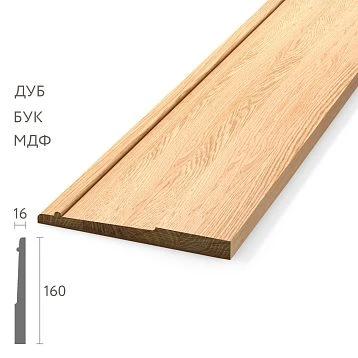
- Wide wooden baseboard for home and hall
- How the baseboard meets the vertical slats
- Molding, corners, and strips for slatted partitions
- Wooden strip as a base
- Wooden corner for ends
- Wooden frame
- Wood molding products — a comprehensive approach
- Best combinations: proven pairings
- Dark walnut slats + white polyurethane moldings
- Slatted partition + MDF baseboard for painting
- Slats matching floor color + wooden baseboard + cornice
- Partition to ceiling + lightweight ceiling cornice
- Slats in hallway + stucco decor on living room wall
- Slats in study + wooden cornice + tall baseboard
- Partition in restaurant + trim for edge protection
- Mistakes in zoning with wooden slats
- Slatted panels: when a ready-made system is needed
- Polyurethane decor: a lightweight and practical partner for slats
- Wooden elements in the interior: a trend that never goes out of style
- How to order and where to start
- Frequently Asked Questions (FAQ)
- Choose STAVROS — all moldings under one roof
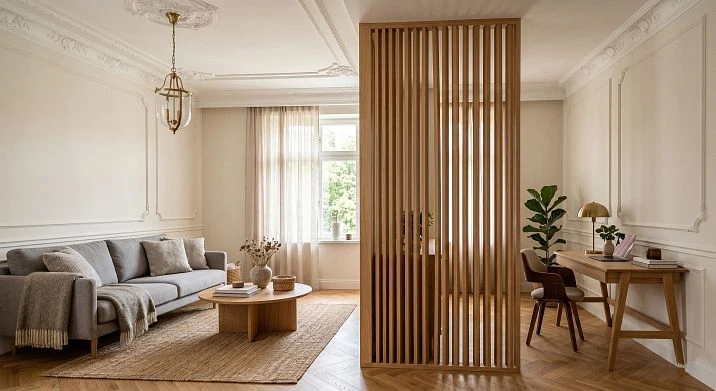
There are interior solutions that work on multiple levels at once. They divide space — and at the same time do not overwhelm. They add architecture — and at the same time do not overload. This is exactly the tool —Partition made of wooden rakesin combination with stucco decor, moldings, cornices, and baseboards. In this article, we will break down how it all works together, why slat zoning has become one of the most sought-after solutions in modern design, and how to avoid mistakes during implementation.
Why do you need a partition made of wooden slats
Let's start with the main question: why divide anything at all? The answer is obvious for those living in open-plan layouts, studios, through-type apartments, and country houses with spacious living rooms. Space without boundaries looks beautiful on paper. But in real life, it quickly turns into chaos: kitchen smells spread throughout the house, noise from the workspace disturbs those relaxing, the hallway 'looks' directly into the living room, and the sleeping area doesn't feel like a sleeping area.
A solid drywall wall is an obvious but crude answer to this problem. It cuts off light, narrows the space, and creates a feeling of tightness. This is where an alternative emerges that works subtly and beautifully: zoning with wooden slats.
wooden rakes for zoningcreate a visual boundary while allowing light and air to pass through. Psychologically, the space is divided — you clearly understand where one zone ends and another begins. But physically, the room remains a single whole, without losing volume or depth. This is not a compromise — it is a fundamentally different design mindset.




Where a slat partition works particularly well
The application scenarios are broader than they seem at first glance:
-
A kitchen-living room is the most common case. A slatted partition separates the dining area and the relaxation area without blocking the light from the kitchen window into the living room.
-
Entryway and living room — the slats create a "keyhole" at the entrance: the person entering does not immediately see the entire living room, which is correct from the perspective of both coziness and safety.
-
Bedroom and workspace — relevant for those who work from home. The slats psychologically separate the concentration zone from the relaxation zone.
-
Relaxation area and study — in country houses and studios with a large area.
-
Long hallway — the partition rhythmizes the space, eliminating the "tunnel" feeling.
-
Commercial spaces: reception in an office, showroom, cafe, restaurant — anywhere you need to separate visitor flows without blocking the view.
A slatted partition is appropriate in both private and business interiors. Its scale is easy to adjust: from an intimate partition behind the sofa to a full-scale division of a restaurant hall.
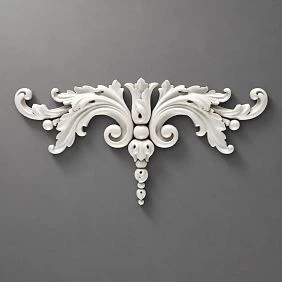
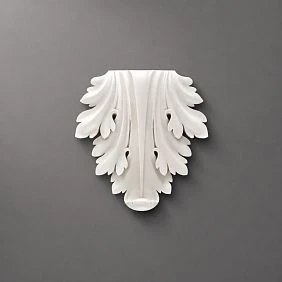
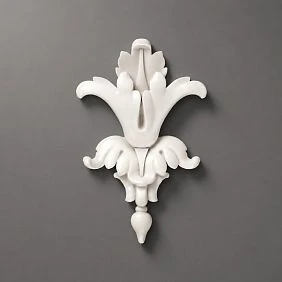
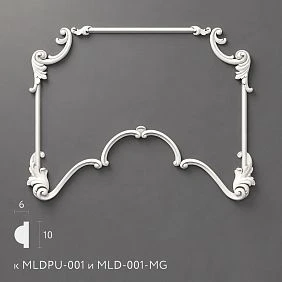
Our factory also produces:

A partition made of slats and a wall with slats are not the same thing
Before moving on, it is important to distinguish between two concepts that even experienced designers often confuse.
A slatted wall is a surface finish. You take a wall, attach slats to itwooden planks on the wall and get a textured accent. It's beautiful, popular, and functional from a decorative standpoint. But the wall remains a wall. It hasn't gone anywhere; it has simply become more expressive.
A partition made of wooden slats is a completely different story. Here, the slats are a load-bearing structural element. They stand in space. They rest on the floor and are attached to the ceiling. They have ends, corners, and sides. A baseboard adjoins them at the bottom and a cornice at the top. They work in three-dimensional space — they are visible not only from the front but also from the side and in perspective.
This fundamentally changes the approach to design and material selection. A partition requires slats with reliable ends, a rigid base or frame, fasteners to the floor and ceiling, a baseboard covering the joint with the flooring, and a cornice finishing the top edge.
That is why a partition requires a carefully thought-out selection of all the linear elements as a whole. And that is why it provides such a powerful decorative effect: it is a full-fledged architectural element, not just "slats on a wall."
Get Consultation
How to combine a slatted partition with stucco decor
This is where real design thinking begins. A slatted partition is a strong accent. If you simply place it in the middle of a room and add nothing else, it will look like a foreign object. The space around it will remain empty, unfinished, without context.
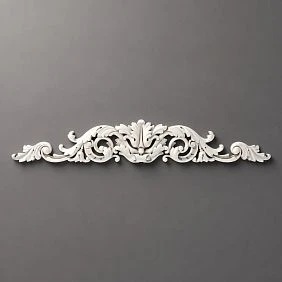
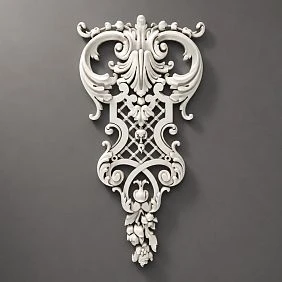
Sculptural wall decoration is that very architectural frame that gives the partition context. Moldings, framed panels, cornices, decorative elements around it — all of this transforms the partition from a separate object into part of a cohesive interior.
Specific combination options
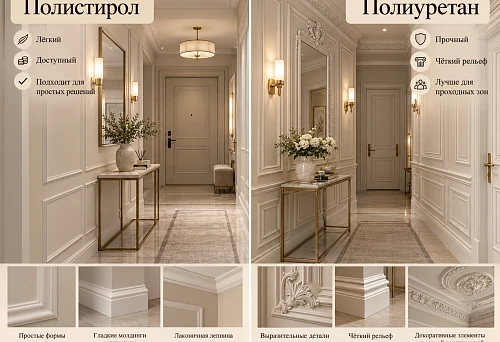
Moldings on the wall next to the partition. When a slatted partition stands in the middle of a room or against a wall, the adjacent wall with framed panels made ofof polyurethane moldingscreates a background for it. The geometry of the frames emphasizes the vertical rhythm of the slats. This works especially beautifully when the molding frames are painted the same color as the wall: the decor reads only as relief, without contrast — soft and refined.
A stucco frame around the partition. A bolder technique:Polyurethane wall decoris mounted directly around the slatted structure — like an architectural portal. The effect is significant: the partition turns into a framed opening, like an arch or door portal, but without a door and without a top lintel.
A ceiling cornice as the top finish of the zone.polyurethane ceiling decoraround the perimeter of the zone that the partition delimits creates a horizontal finishing line. The ceiling cornice marks the living room, kitchen, or workspace — even without walls. This is a subtle and very effective technique.
Polyurethane decor in the color of the walls. When you want architecture without accents — takestucco decor for walls and ceilingin the color of the main finish. The relief is there, but without color contrast it works gently, almost imperceptibly. Wooden slats against this background become the only warm material accent.
Wooden slats as texture, stucco as a frame. The main idea to remember: slats zone the space functionally, while stucco decor makes it architecturally complete. This is not competition, but a partnership of two tools.
Where to place a slatted partition: zone breakdown
Every interior is a separate case. But there are several typical scenarios that repeat most often.
Between the hallway and the living room
This is a classic and one of the most striking options. A decorative partition made of wooden slats separates the entrance area from the living area. Its height can be varied: from 120 cm (waist-high) to full ceiling height. Full height provides maximum privacy, while a lower one only visually divides the space while maintaining visibility.
Here it is important to choose the right spacing of the slats. If the hallway is dark, the spacing is made wider so that light from the living room penetrates the corridor. If it is light everywhere, the slats can be placed closer together for greater privacy.
Between the kitchen and the dining room or living room
A slatted partition in the kitchen solves the eternal conflict of an open-plan layout: the kitchen should always 'be' part of the large space — and at the same time be slightly hidden. The slats create exactly this balance. Odors dissipate a little, visibility is maintained, and the visual boundary of the zones is clear.
From the living room side, such a partition works as a decorative screen, especially if it is designed with a cornice at the top and a baseboard at the bottom in a unified system.
Behind the sofa
A partition behind the sofa is a popular technique in studios. It creates a 'back' for the seating area, separating it from the passage or from the workspace. This is not just decor — it is a psychological protection of the space, very important for a feeling of comfort.
Next to the desk
In a modern interior, a home office is a separate topic. Slats next to the workspace provide that very psychological effect of 'entering work mode'. You step behind the partition — you are at work. You step out — you are at home. It works.
In the hall and corridor
A long corridor always feels oppressive. A slatted partition placed across or at an angle breaks it into segments, removes the "tunnel" feeling, and adds architectural rhythm. It pairs well with a narrow console and decorative lighting.
In commercial interiors
Reception areas, restaurant zoning, and flow separation in showrooms — slats handle all of this easily and beautifully. In commercial spaces, both visual permeability (the client must see the space) and logistical zoning are important. A slatted partition manages both tasks.
How to choose wooden slats for a partition
The selection starts with questions: what load? What height? What spacing? What color and material?
Slat thickness and profile
For partitions up to 2.4 m high, slats with a cross-section of 20×40 mm are suitable. For tall partitions — 2.5 m and above — it is recommended to use slats with a larger cross-section, 30×60 mm or 40×40 mm. This provides the necessary rigidity without an additional frame.
Buy wooden skirting board— here it is important to choose from solid wood with correct geometry: straight edges, no warping, well-dried material. STAVROS offers beech and oak slats with guaranteed geometry quality — this is critical for a partition visible from both sides.
Spacing between battens
Spacing is what determines the "character" of the partition:
-
5–7 cm — frequent spacing, high visual density, almost opaque screen. Suitable for maximum privacy.
-
8–12 cm — optimal medium spacing for most interiors. Light passes through well, the boundary is clearly defined.
-
13–20 cm — a rare step, lightness and airiness. Good for high rooms and commercial spaces.
Ceiling height
High ceilings allow for thinner slats with a larger step — the partition will look light and elegant. For rooms with standard ceilings of 2.5–2.7 m, a denser step with medium-section slats works better.
Color and material
Wooden planks for decorationmade of beech and oak can be tinted, coated with oil, varnish, or paint. This gives enormous freedom. Dark walnut for a strict interior. Bleached oak for Scandinavian aesthetics. White paint to match the wall color — for an invisible structure. Natural honey tone — for warmth and coziness.
It is important that the color and texture of the slat match the doors, furniture, baseboard, and cornice. The partition is an element of the interior, not a separate object. It should "converse" with its surroundings.
How to design the top of the partition
The top end is the most vulnerable element of the structure from an aesthetic point of view. It is here that incompleteness is most often visible. There are several solutions, each with its own character.
Partition to the ceiling
The strictest option. The slats run from floor to ceiling, the top end is hidden in a ceiling cornice or a wooden crossbar-frame. This is maximum architectural expressiveness. Suitable for high rooms — in low ones it can feel oppressive.
For designing the top, it works greatwooden cornice— a horizontal detail that covers the ends of the slats and creates a clear top line. It is chosen to match the slats or in contrast, depending on the design intent.
Partition with a gap from the ceiling
When the partition does not reach the ceiling by 20–40 cm, the top end is open. This creates lightness and airiness. The partition looks like a furniture element, not a wall. Suitable for studios and small apartments where it is important to maintain the feeling of a single airy volume.
In this option, the top horizontal bar of the partition is selected fromwood trim— a wide flat bar that simultaneously fastens the slats and creates a decorative finish on top.
Ceiling cornice around the perimeter of the zone
Regardless of how the partition is made, the cornice on the ceiling above the zone marks its boundaries.Wooden beamsor a polyurethane cornice in the color of the ceiling — this is a horizontal architectural frame that unites the entire space of the zone into a single whole. This technique works especially well when the partition is incomplete (not reaching the ceiling).
Molding as a light top line
Thindecorative wooden moldingAlong the transition line from the partition to the ceiling — a delicate option without load. Adds clarity without overloading. Good for minimalist interiors.
How to design the bottom of the partition and choose a baseboard
The junction of a slatted partition with the floor is a technically important and aesthetically significant node. If it is not worked out, the entire interior looks unfinished.
Wooden baseboard matching the slats
The most organic solution:Wooden baseboardmade from the same material and in the same tint as the slats. Material unity creates the feeling of a solid structure. The baseboard visually "lowers" the partition to the floor and makes it part of the architecture.
For houses and apartments with wooden floors or parquet, this solution is especially appropriate: all the wood in the interior works in a single tone.
MDF baseboard for painting
Where the partition is painted — or next to it the walls are in a neutral color —— is a horizontal element that frames the room at the bottom of the walls where the wall meets the floor. Skirting boards perform several functions: they hide the technological gap between the wall and floor covering (necessary for thermal expansion), protect the lower part of the wall from mechanical damage, create visual completion, and may conceal wiring.provides a perfectly smooth surface for any paint. It is good because when changing the interior color, it can be easily repainted without dismantling.
MDF Skirting Board— a universal choice for city apartments: lightweight, smooth, without knots, with clean profile geometry.
White MDF baseboard for a light interior
WhiteBaseboard MDF— a solution that works in almost any light interior. It creates a light visual contrast with dark slats and adds clarity to the bottom line. At the same time, it does not draw attention to itself.
Wide wooden baseboard for home and hall
For country houses, halls, and spaces with high ceilings, a wide baseboard is chosenwith a classic profile creates a sense of solidity, reliability.— from 80 mm and above. It adds monumentality and pairs well with massive slats in the partition.
How the baseboard meets the vertical slats
This joint requires precision. The baseboard must fit tightly against the slats, without a gap. For this, either a milled groove in the bottom slat or a neat 90° miter cut of the baseboard is used. If necessary —Wooden angle, which covers the joint and makes the connection neat.
Moldings, corners, and strips for the slatted partition
An experienced craftsman knows: the detail decides everything. And it is the molding that is the detail that turns a neat structure into a finished work.
Wooden block as a base
Wooden block — the load-bearing element of the partition frame. The upper and lower horizontal beams to which the vertical slats are attached. It is selected with a sufficient cross-section for rigidity and is fastened to the floor and ceiling with anchors or dowels.
Wooden corner for ends
The ends of the partition are the side edges that are visible when viewed from the side. Without treatment, they look rough.Wooden angle covers the ends and creates a clear vertical line on both sides of the partition. It is selected to match the slats or in contrast — as a decorative accent.
Wooden molding
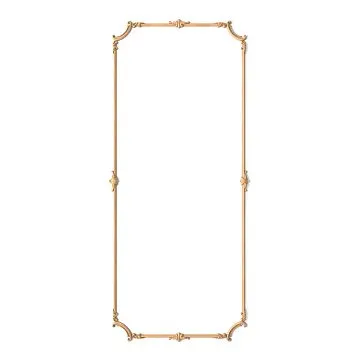
Wooden Picture Frame with a profile is used to design transitions and joints, where a decorative line is needed without the volume of a cornice. It works well as a horizontal detail at eye level.
Wooden molding products — a comprehensive approach
wood trim items — these are not just baseboards and cornices. This is the entire framing system: slats, corners, blocks, moldings, architraves, handrails, decorative cable channels — everything that creates clarity of transitions between materials, zones, and structural elements.
When all the moldings for a slatted partition are selected from one material — oak or beech — the interior gains internal unity. All details are "from the same cloth," and this is readable even where it is not specifically emphasized.
Best combinations: proven pairings
Design isn't just theory. It's specific combinations that work. Here are a few:
Dark walnut slats + white polyurethane moldings
Classic contrast of dark wood and white stucco decor. The partition is warm, textured, natural. The moldings around it are architectural, clean, light. This is European classicism in a modern interpretation.
WhiteMoldings made of polyurethaneeasy to install and not afraid of moisture, which is important for rooms with a kitchen.
Slatted partition + MDF baseboard for painting
A neutral and modern solution. A partition made of solid oak, a baseboard made of MDF for painting in the color of the walls. No visual noise. The slats are the only material accent.
buy MDF skirting boardand painting it to match the wall tone is one of the most budget-friendly and effective solutions for city apartments.
Slats matching the floor color + wooden baseboard + cornice
Monochromatic wood throughout the interior. Floor, slats, baseboard, and cornice — one species, one tint. The effect is architectural integrity, a luxurious feel. Japanese minimalism or Scandinavian strictness.
Wooden baseboardmatching the parquet, it makes the joint between the floor and wall invisible. The entire space «flows» as a single material volume.
Partition to the ceiling + lightweight ceiling cornice
The strict vertical of the slats is offset by a horizontal cornice around the perimeter of the zone. It prevents the structure from «sinking» into the ceiling and structures the space from above.
polyurethane ceiling decorin the form of a cornice — lightweight, weightless, glues without dust and allows adding architectural volume even on a low ceiling.
Slats in the hallway + stucco decor on the living room wall
The partition separates the hallway. On the living room wall opposite — frame panels made of moldings. This is not a coincidence — it is a dialogue between two zones. The guest enters and immediately sees a beautifully decorated living room behind the slats. It is this «through» design that creates a sense of thoughtfulness.
Slats in the study + wooden cornice + high baseboard
For a home office, strictness is chosen. The slats are clear, dark. The cornice is profiled, massive. The baseboard is high, from 80 mm. Everything works for the image of a «study with character».
buy wooden corniceof the required profile — this is a detail that finally «closes» the image of the partition from above.
Partition in a restaurant + trim for protecting ends
In commercial spaces, slats are subjected to mechanical loads. The corner angle and side trims made ofmolding productsare not just decor, but also protection against chips and damage. A restaurant partition must last for years.
Mistakes in zoning with wooden slats
Practice shows: even those who have worked with wood for a long time make mistakes. Here are the most common miscalculations — and how to avoid them.
Slats that are too thin for a tall partition. A 10×40 mm slat at a height of 3 m will wobble and sag. The rigidity of the structure lies in the cross-section of the slat and the quality of the frame fastening. Don't skimp on this.
Fastening not thought out before work begins. If the floor is porcelain tile and the ceiling is drywall, special fasteners are needed. If the fastening is not planned in advance, the result is a structure that wobbles. The frame made ofwooden battenmust be securely fixed.
Baseboard forgotten or not provided. The bottom end of a slat without a baseboard is an aesthetic disaster. A baseboard is a mandatory element. It covers the joint and gives the structure a finished look.
The ends are not covered. Bare ends of the partition on both sides make the structure look like a fence.Wooden angleor a side trim made of molding is a mandatory element of the finishing.
Too frequent slat spacing. If the spacing is 3–4 cm, the partition becomes deaf, dark, and impenetrable. The whole point of slat zoning is the balance between privacy and transparency. Don't kill this balance.
Several wood shades mixed together. Dark walnut slats + light beech baseboard + bleached oak cornice — this is chaos. All wooden elements must be coordinated in tone. Either one material or a clear system of contrasts — no intermediate options.
Too active stucco next to slats. If there are dense gypsum swirls and bas-reliefs on the wall next to the partition, and the partition has strict straight slats, this is a style conflict. Stucco decor next to slats should be geometric and concise: frame moldings, simple cornices, neutral profiles.
No unified architectural language. The partition exists separately — baseboard is different, cornice is different, moldings are different. This is the most common mistake in DIY renovations. All elements should belong to one 'vocabulary' — in material, color, and profile.
Slat panels: when a ready-made system is needed
Sometimes the zoning problem is solved not by individual slats, but by ready-made plank panels. This is especially relevant when a quick and technically precise solution with a guaranteed slat rhythm is needed.
A slat panel is a structure where slats are already fixed with precise spacing on a backing. It is mounted as a single module: simpler, faster, with minimal risk of spacing errors. Several panels join seamlessly — the slat rhythm continues without interruptions.
STAVROS offersRafter panels made of MDF and solid oak: rigid for flat surfaces, flexible for columns, arches, and radius structures. This is a ready-made factory solution with precise geometry — ideal for commercial projects and for those who value installation speed.
Polyurethane decor: a lightweight and practical partner for slats
Polyurethane Itemsdeserve a separate discussion. Why does polyurethane work so well alongside wooden slats?
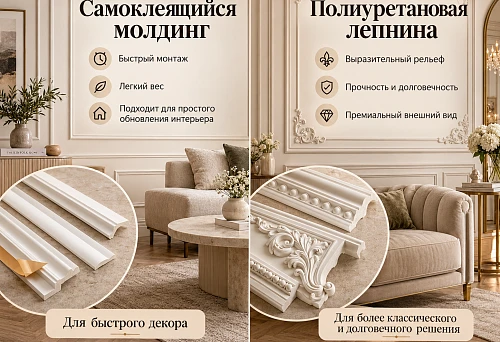
First: zero weight. A polyurethane ceiling cornice does not load the structure and does not require reinforcement of the base. It simply glues on — and stays in place.
Second: moisture resistance. Unlike plaster and wood, polyurethane is not afraid of moisture. This is critical for the kitchen and hallway — that's exactly where slatted partitions are most often installed.
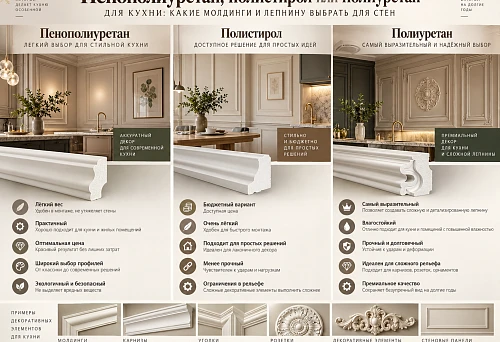
Third: shape plasticity.Moldings made of polyurethaneare available in a huge range of profiles — from a thin line to a complex classic cornice. You can always find a profile that fits organically alongside wood.
Fourth: paintability. Polyurethane decor is easily painted with any paint. You can choose the same color as the wall — and the molding will disappear, leaving only the relief. Or paint it in a contrasting color — and get an expressive accent.
For detailed instructions on how to properly install polyurethane moldings, read the guide:installing polyurethane molding— it covers corners, joints, and proper painting.
Wooden elements in the interior: a trend that never goes out of style
It is worth mentioning separately why wood in the interior is back in trend — and will stay there for a long time. After several years of dominance of concrete, metal, and glass, interior taste has returned to natural materials. This is not nostalgia — it is fatigue from cold surfaces and a demand for tactility, warmth, and living texture.
wooden elements for interiors— slats, corners, bars, moldings, millwork — create that very living texture that cannot be imitated by any laminate or film. This is a real material with history, structure, and character.
Vertical wooden slats in the interior are not just a trend. This is an archetypal image rooted in Japanese shoji architecture, European wooden lattices, and traditional garden partitions. Modern design has reinterpreted it in a minimalist key — and created a tool that works in any style.
How to order and where to start
So, you have decided to install a slatted partition. Where to start?
The first step is to determine the location and height. Draw a diagram of the room indicating where the partition will be, at what distance from the walls, and what height. This will give an understanding of the amount of material needed.
The second step is to choose the slats. Determine the cross-section, material, and tint. Keep in mind thatwooden slats for wall finishingand slats for a freestanding partition may differ in cross-section — a partition requires greater rigidity.
The third step is to select the millwork as a set. Baseboard, cornice, corner, frame bar. All from the same collection, the same material.
The fourth step is to determine the stucco decoration around it. Moldings, ceiling cornice, panel frames — depending on the style and budget.
The fifth step is to order samples and agree on the color. Never choose wooden products based on a photo from a screen. Wood is a living material. The tint of the same type can vary from batch to batch. Samples will save you from disappointment.
Frequently Asked Questions (FAQ)
Can a slatted partition be installed in a rented apartment?
Yes, if the frame is mounted without drilling into load-bearing structures. Use adjustable support posts that clamp the structure between the floor and ceiling without anchors. This is a demountable partition that can be taken with you when moving.
What slat spacing is optimal for a living room-kitchen?
8–12 cm is the standard choice for most. It provides sufficient transparency for daylight to pass through while creating a clear visual boundary between zones.
Do the ends of the slats need to be painted?
Absolutely. The ends absorb glue and paint differently than the surface. They need to be primed separately and coated with the same finish as the front sides.
How to choose a baseboard for dark slats?
There are two options: a baseboard matching the slats (material unity) or a white MDF baseboard (light contrast). Avoid medium-gray or beige baseboards — they mute the color of the slats without creating a clear accent.
Can wooden slats be used in a bathroom or a bathroom-adjacent hallway?
Solid wood in the bathroom is not the best idea. In the hallway adjacent to the bathroom, you need a slat with enhanced moisture-resistant coating. An MDF slat for painting is more practical in this case.
Polyurethane or gypsum molding — which is better next to slats?
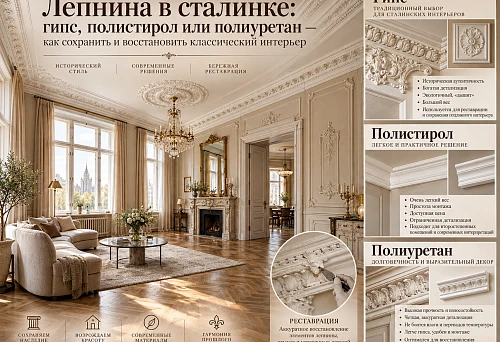
Polyurethane. It is lightweight, moisture-resistant, and does not crack under structural vibration. Next to a wooden partition, which has a small allowance for movement due to wood shrinkage, polyurethane is more reliable than gypsum.
How to correctly calculate the number of slats for a partition?
Divide the width of the partition by (slat cross-section + spacing). Round up. Add 10% for reserve. Don't forget the slats for the frame (top and bottom horizontal beams).
How do solid wood products differ from MDF analogs?
Solid wood is a living material with a unique texture. It is heavier, denser, and more expensive. MDF is uniform, stable, and perfectly smooth for painting. For visible surfaces that are painted, MDF is often more practical. For natural texture, only solid wood.
Choose STAVROS — all moldings under one roof
A slatted partition with decorative molding is not a set of separate purchases. It is a system. And the system only works when all its elements are coordinated.
That is why it makes sense to choose everything in one place:Wooden planks, wood trim items, Wooden blockfor the frame,Wooden anglefor the ends,Wooden baseboardorMDF Skirting Board— depending on the task,Wooden cornicefor the top finish andMoldings made of polyurethanefor the architectural context.
STAVROS is a Russian manufacturer of solid wood and polyurethane products. They don't resell — they produce. This means: consistent quality from batch to batch, the ability to order custom sizes, and unified tinting bases for the entire range.
In the STAVROS catalog you will find:
-
Wooden planksmade of beech and oak;
-
Rafter panelsrigid and flexible;
-
Wooden beamsof different profiles;
-
wood trim items— a complete set for any project.
Don't assemble a partition from mismatched parts. Take the system — and get a result that works.