Article Contents:
- Why soft panels and moldings work together
- Where the combination of soft panels and moldings is used
- Bedroom: headboard, side areas, soft panel
- Living room: wall behind the sofa and lounge area
- Study: soft insert behind the work area
- Hall and entryway: panels near the console, ottomans, and mirrors
- Dressing room: fitting area and mirror framed with moldings
- Basic schemes for designing a soft wall with moldings
- Scheme 1. Soft panel inside a frame of moldings
- Scheme 2. Vertical soft panels between molding profiles
- Scheme 3. Large soft panel as a headboard with molding framing
- Scheme 4. Soft inserts in the lower part of the wall
- Scheme 5. Soft central zone with side frames of moldings
- Scheme 6. Soft panels with decorative overlays and classic framing
- How to choose moldings for soft panels
- Profile width relative to panel size
- Profile type
- Calculating Quantity
- Which soft panel materials pair best with moldings
- Velvet and velour
- Eco-leather and genuine leather
- Silk and satin
- Linen, burlap, cotton
- Suede and microfiber
- Color solutions for a soft wall with moldings
- Moldings matching the soft panel
- Moldings matching the wall, soft panel as accent
- White moldings on a colored wall and insert
- Contrasting moldings
- Styles for a soft wall with moldings
- Neoclassicism
- Neoclassic Light
- Modern classicism
- Jatoba
- Art Deco
- Versailles Light
- Installation: what first — moldings or soft panels
- Correct installation sequence
- Three technical nuances that are important to know
- Typical mistakes when combining soft panels and moldings
- What to buy for designing a soft accent wall
- Frequently Asked Questions
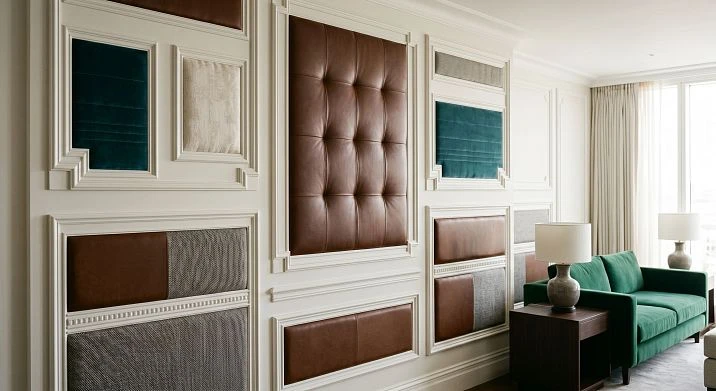
Stucco decor and soft panels — this is a duo that increasingly appears in interiors aspiring to genuine luxury. Not because the materials are complex or installation requires special skills. But because this technique works flawlessly: the soft insert gives the wall volume and tactility, the molding provides a border and architectural meaning. Together, they turn an ordinary wall into an interior object.
This article is a complete practical guide to such a combination. With diagrams, dimensions, style analyses, and answers to the most common questions.
Soft panels give the wall volume and coziness, but it is preciselyPolyurethane moldings that make such a composition complete. With their help, you can design a soft insert as a panel, headboard, or a full-fledged accent wall.
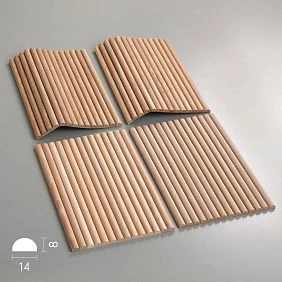
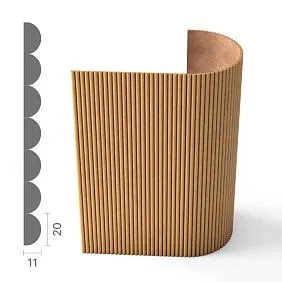
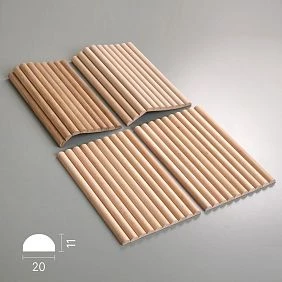
Why soft panels and moldings work together
Let's start with an honest question: what's wrong with soft panels without moldings? Nothing critical — they are beautiful, acoustically useful, and pleasant to the touch. But they have one weakness: without framing, they look like a glued-on object rather than part of the wall's architecture. The eye perceives them as furniture hung on the wall — not as a meaningful decorative element.
Moldings around soft panelssolve exactly this problem. A profile around the panel's perimeter transforms it from a "glued-on square" into an architectural panel. The frame sets the scale, fixes the boundaries, and creates depth. The shadow from the molding on fabric or leather emphasizes the relief. The wall ceases to be flat — it acquires layers.
At the same time, polyurethane as a material for moldings is perfectly compatible with soft inserts. It is lightweight — it does not deform the surface. It can be painted in any shade — you can match the fabric color or create a deliberate contrast. It is resistant to humidity — important in the bedroom and hallway.polyurethane wall decoris a complete arsenal: linear profiles, corner inserts, overlays, cornices.
Another advantage:soft panels framed in moldingslook like a unified system — even if the panels and moldings were installed at different times. The frame system unifies everything: textiles, leather, velour, suede — into a single decorative logic.Accent wall made of polyurethane— about the principles of building accent walls with decorative systems.




Where the combination of soft panels and moldings is used
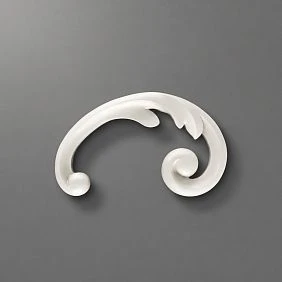
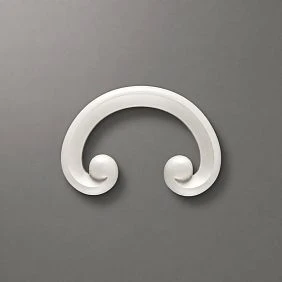
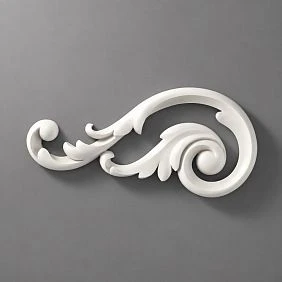
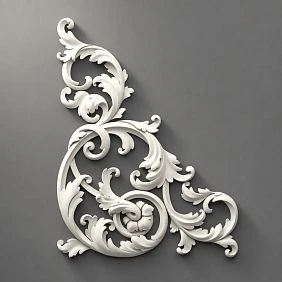
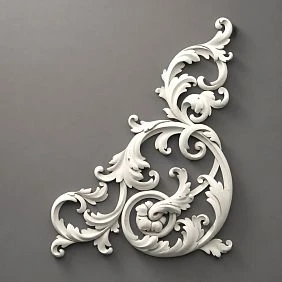
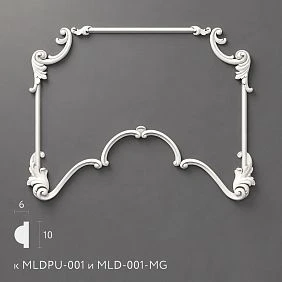
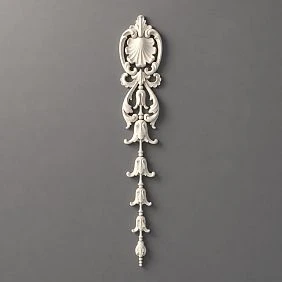
Our factory also produces:
Bedroom: headboard, side areas, soft panel
The bedroom is the main stage for this duo. The wall at the head of the bed is the most obvious place: the soft insert here works like a large panel that visually "holds" the entire sleeping area.Soft panels and moldings in the bedroomis a solution that elevates the interior from the level of "a well-furnished room" to the level of "a thoughtfully designed environment."
Three options for the bedroom:
-
A soft panel across the entire width of the wall behind the bed — with a molding frame around the perimeter and a decorative band above;
-
Two or three vertical inserts behind the bed — between them, molding profiles create a rhythm of vertical columns;
-
A soft insert as a headboard — the width of the bed, with a molding frame slightly wider than the mattress and a horizontal band at the top.
Stucco molding set for the bedroom— about selecting ready-made decor systems for sleeping areas with moldings, soft panels, and sconces.
The side walls of the bedroom are another good area. Small rectangular soft inserts in molding frames on both sides of the bed create symmetry and make the bedroom feel complete — like in a high-class hotel room.
Get Consultation
Living room: wall behind the sofa and relaxation area
In the living room, the combination of soft panels and moldings on the wall behind the sofa is one of the most striking solutions.Decorating the wall behind the sofa — about design schemes for the wall behind upholstered furniture with polyurethane moldings, frames, and decorative systems.
A large soft panel or several panels behind the sofa are perceived differently than just a wallpapered wall: they create a tactile backdrop that echoes the furniture upholstery — while the molding frames add architectural quality. A living room with such a wall reads as a thoughtfully designed space, not a random set of objects.
Key principle: the width of the soft panel and molding system should be proportionate to the width of the sofa. Extending 20–40 cm beyond its dimensions on each side is good. Being narrower than the sofa is a mistake.
Study: soft insert behind the work area
In a study, a soft wall with moldings behind the workspace is not only about aesthetics but also acoustics. A velvet or fabric panel behind the desk absorbs reflected sound — especially relevant for video calls and recording work.Soft wall with moldings in the study — a solution that combines function with premium aesthetics.
Scheme for the study: one large insert of dark velvet or natural fabric, framed with molding. On the sides — vertical profiles up to the ceiling. Above the insert — a horizontal cornice band. Next to it — a bookcase.Stucco decor for a wall with a bookcase and shelves— on combining decorative systems in study areas.
Hall and entryway: panels at the console, benches and mirrors
The entryway is a place where tactile wall decor works especially vividly: a person enters and first sees and feels the space. A soft panel near the bench or along the wall behind the console is not just beautiful, it is functional: fabric or eco-leather is easy to clean and resistant to accidental touches.
Stucco decor for a wall with a console and a chest of drawers— on the principles of designing an entryway and hall with moldings, soft inserts and mirror zones.
For the entryway, a scheme with a lower panel is especially good: a soft insert at a height of 40 to 110 cm from the floor — at bench level — and a molding belt separating the lower soft zone and the upper painted area. This is a classic English technique adapted to a modern context.
Dressing room: fitting area and mirror framed with moldings
A dressing room with a soft accent wall is an interior where you want to spend time. A velvet or silk insert on the wall opposite the mirror creates a boutique feel. A molding frame around the mirror and symmetrical inserts on the sides form a complete decorative system.wall decor with a polyurethane mirror— with specific schemes for mirror zones in dressing rooms and bedrooms.
Basic schemes for decorating a soft wall with moldings
Scheme 1. Soft panel inside a molding frame
Basic and most versatile.Moldings for soft panelsform a rectangle, inside which a soft insert is placed. Important nuance: the molding is mounted on top of the panel, overlapping its edge by 15–30 mm. This hides the technical edge of the fabric or leather and makes the transition between the panel and the wall invisible.
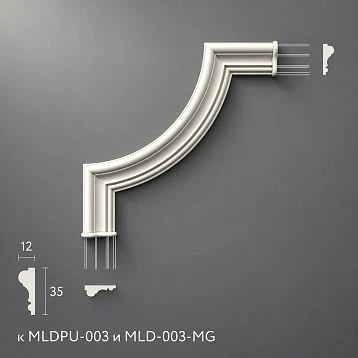
The proportions of the frame are determined by the panel format. If the panel is vertical (tall and narrow) — the frame is vertical. Horizontal panel — horizontal frame. Profile width: 25–45 mm depending on the panel size. Corner joints — at 45° or withdecor for moldingsin corners.
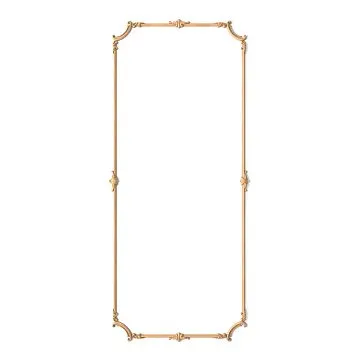
Additional technique: outside the frame — a second larger frame, matching the wall color. Double framing creates architectural depth and makes the wall multi-layered.Ready-made molding frames for the wall— with calculation for double frame systems.
Scheme 2. Vertical soft panels between molding profiles
For long walls in the living room, hallway, and narrow wall sections of the corridor. Vertical molding profiles are installed with a spacing of 50–80 cm — from the baseboard to the cornice. Between them — soft inserts made of fabric, eco-leather, or velour. The result is a strict rhythm of vertical columns with tactile filling.
This is a powerful solution for an accent wall behind a sofa or bed: the rhythm of verticals visually raises the ceiling, soft inserts provide coziness, and moldings create architectural strictness. The profile for this scheme is 28–45 mm, with clear flat edges, without complex relief.symmetric polyurethane wall decor— about the principles of rhythmic wall division with moldings.
Scheme 3. Large soft panel as a headboard with molding frame
A soft panel spanning the full width of the bed — or slightly wider — is framed by a molding border. Panel dimensions: bed width + 30–60 cm (15–30 cm on each side), height from 80 to 140 cm. The lower edge of the frame is at pillow level or slightly above the bed headboard.
Above the frame — a horizontal band. On the sides — vertical molding lines extending down to the baseboard and up to the cornice. Sconces are mounted symmetrically on the sides of the panel — at a height of 160–170 cm from the floor.Stucco decor and wall sconces— about combining moldings and light fixtures in wall systems.
Panel material for this scheme: velour, eco-leather, burlap, plush, or natural linen. Color — matching the bedding or as an accent. Moldings — matching the wall color or the panel color.
Scheme 4. Soft inserts in the lower part of the wall
A classic technique that gains new life in modern interiors. The lower zone of the wall (from the baseboard to a height of 100–130 cm) is soft: eco-leather or fabric. The upper zone is painted or finished differently. The boundary between zones is a horizontal molding band. Below — a baseboard of the same style.
For a hallway, this is an optimal solution: the lower soft zone is resistant to touches and easy to clean. The molding band at a height of 100–120 cm is both decorative and functional.Thin polyurethane moldings for walls— if a delicate profile for the dividing band is needed.
For the bedroom, the same scheme works differently: the lower soft zone creates a cocoon-like feeling and softens the space. The molding belt at a height of 90–100 cm is at the level of pillows when a person is sitting in bed. The wall literally "meets" at the right height.
Scheme 5. Soft central zone with side molding frames
The central part of the wall is a soft panel or several panels. On the sides, there are decorative molding frames, possibly with paintings, sconces, or just a painted wall inside. This scheme creates a three-part symmetry: frame — soft zone — frame.
It works especially well on wide walls (from 3.5 m): a central soft zone 140–200 cm wide, side frames 60–90 cm wide. Or — behind the sofa: the central soft zone corresponds to the width of the sofa, frames on the sides, where floor lamps or end tables stand.
Scheme 6. Soft panels with decorative overlays and classic framing
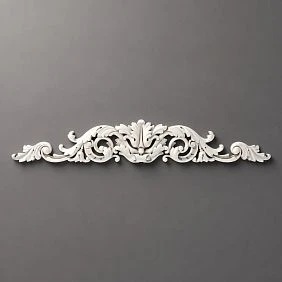
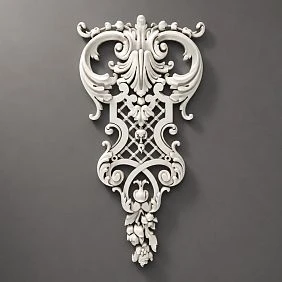
For neoclassicism, Versailles Light, classic interior. A frame made of moldings withdecorative elements for moldingsin the corners. Above the panel —PU overlayin the form of a medallion or cartouche. The soft insert is velvet or eco-leather in a pastel or rich tone.
Such a wall can occupy the entire area behind the bed or behind the sofa: several frames with soft inserts and decorative overlays above each of them create a solemn, ceremonial ensemble.Classic wall decor with soft panels— elements of the Versailles Light collection for implementing exactly this solution.
For framing soft panels, the following are suitableMoldings made of polyurethane. And if a more expressive classical composition is needed, you can addDecor for MoldingandPU overlays.
How to choose moldings for soft panels
Choosing a profile is not a decorative issue, it's a technical one. A molding that is too narrow for the panel will get lost. Too wide will overwhelm the soft insert. You need to hit the sweet spot.
Profile width relative to panel size
| Panel size | Recommended profile |
|---|---|
| Small panel 40×60 cm | 18–25 mm |
| Medium panel 60×90 or 60×120 cm | 25–35 mm |
| Large panel 100×150 cm | 32–45 mm |
| Large panel 120×200 and wider | 40–55 mm |
| Lower wall zone (dividing belt) | 22–38 mm |
Profile Type
For soft inserts, a profile with a flat or slightly rounded inner edge is recommended — the one that overlaps the panel edge. A sharp 90° angle on the inner edge holds the fabric well and creates a clear transition line.
Profiles with deep relief or ornament — for neoclassical and classical schemes. Laconic rectangular or slightly convex profiles — for modern classic, Japandi, minimalism.
Calculating Quantity
Perimeter of one frame = (width + height) × 2 + 20% allowance for cuts and trimming. For a rectangular panel 80×120 cm: perimeter = (80 + 120) × 2 = 400 cm = 4 linear meters + 20% = 4.8 linear m. Round up to whole planks with a margin.
Which soft panel materials pair best with moldings
Not all soft materials pair equally well with polyurethane molding. The choice of fabric or coating affects the final look.
Velvet and velour
The most expressive option. The pile surface creates a depth effect — especially in side lighting, when the pile casts directional shadows. Moldings on a velvet wall work as a relief contrast: the hardness of the profile against the softness of the fabric.
Good combinations: dusty pink velour — moldings in tone; deep blue velvet — white or gold moldings; emerald velour — cream or tone-on-tone moldings.
Eco-leather and natural leather
The smooth surface of the leather responds well to side lighting and creates a glossy or matte highlight. Moldings next to the leather insert should be slightly more strict: flat edges, sharp corners. For leather — a profile without ornament, pure geometry.
Color combinations: white eco-leather — moldings in dark anthracite or black; coffee leather — moldings in a warm cream tone; dark green leather — moldings in gold or olive.
Silk and satin
A dressy but demanding material. Satin looks good in formal areas — a hall, a bedroom with high ceilings. Moldings next to satin should be expressive: corner inserts,PU overlays, double frame. Satin and a modest molding are a disproportionate pair.
Linen, burlap, cotton
Natural textures for modern, Scandinavian, or Japandi interiors.Soft panels and moldings in Japandi style — thin linen with a minimalist molding 12–18 mm in the color of the wall. No contrast, no ornaments — only texture and a thin line.
Suede and microfiber
A practical choice for the hallway, children's room, or study. The surface is touch-resistant and easy to clean. Moldings next to suede — matching or with a delicate contrast. A suede wall with white moldings in the bedroom is one of the coziest options.
Color solutions for a soft wall with moldings
Color is half the result. Moldings and soft panels can be in the same tone, in a delicate nuance, or in contrast. Each option creates a different feel.
Moldings matching the soft panel
Monochromatic solution: molding and fabric are the same color or very close tones. The wall is perceived as a single volume with relief. This is very modern, very expensive. Works well with velour or velvet — the texture of the fabric and the relief of the molding create visual richness without color variety.stucco decor in the color of the wall or contrasting — about monochrome and contrast approaches.
Moldings matching the wall, soft panel as accent
The wall is neutral, moldings blend with it, and the soft insert stands out with color or texture. All the emphasis is on the panel. The moldings here are an invisible frame. For a bedroom in neutral tones with a color accent behind the bed — ideal.
White moldings on a colored wall and insert
Pure white molding creates a graphic contour that reads against any background. Dark blue fabric + white molding — nautical, strict, powerful. Pink velour + white molding — delicate and expressive. White molding is universal — it doesn't compete with the fabric color, but frames it.
Contrast moldings
Dark molding on a light wall with a soft insert in a neutral tone — for Art Deco, modern decorativism, hard glamour. Gold molding on dark velvet — for neoclassicism and Versailles Lite. The contrast should be intentional, not accidental: molding is not just a profile, it's a color statement.
Styles for a soft wall with moldings
Neoclassicism
Soft panels and stucco in neoclassicism — strict symmetry, large frames with corner inserts made ofdecorative elements for moldings, velvet or velour inside the frames, PU overlays above each frame. Calm palette: cream, pearl, dusty blue, deep emerald. Sconces along the axes of the frames. CollectionNeoclassical — system profiles for implementing such a solution.
Neoclassic Light
Light wall decor with soft panels — for modern apartments that want a classic touch without heaviness. Thin profiles 22–30 mm, simple rectangular frames, no lush ornaments. Velour or linen inside the frames. Moldings in the color of the wall. CollectionNeoclassic Light — delicate systems for such tasks.
Modern classic
Moldings matching the wall color, soft insert — accent tone or neutral. No ornamentation. Only pure geometry of the frame and fabric texture. Behind the sofa in the living room or behind the bed in the bedroom — works flawlessly.Soft wall in modern classic style — catalog profiles for implementation.
Japandi
Linen or cotton insert in a natural tone, ultra-thin profile matching the wall color. One frame — one panel. No corner inserts, no overlays. Meditative calm.Soft panels and moldings in Japandi style — Japandi collection with profiles for such solutions.
Art Deco
Geometry, contrast, shine. Gold moldings on a dark wall. Satin or embossed eco-leather inside the frames. PU overlays with geometric ornament. Strictly symmetrical, with impeccably balanced proportions.symmetric polyurethane wall decor — with examples of geometric symmetrical systems.
Versailles Light
Classic wall decor with soft panels — for formal spaces. Velvet in a rich tone, large frames with corner decor, overlays above each frame, horizontal frieze, cornice. Everything balanced, elegant, architectural. CollectionVersailles Light — a systematic approach to such decor.
Installation: what comes first — moldings or soft panels
This is a practical question, and the answer is clear: first install the soft panels, then the moldings on top of them.
Why exactly this way? Because the molding overlaps the technical edge of the fabric or leather — thereby hiding the junction line of the soft insert with the wall. If you install the moldings first and then push the fabric under the profile, it will turn out uneven, with waves and gaps.
Correct installation sequence
Step 1. Determine the position of all soft panels on the wall. Mark with a laser level.
Step 2. Prepare the wall: level it, prime it. If there is electrical wiring (sconces, backlighting), run the cables before installing the panels.
Step 3. Install the soft panels. Glue or double-sided tape — depending on the panel thickness and manufacturer's instructions. Align strictly according to the markings.
Step 4. Cut the moldings to size. Miter the corners at 45° or prepare corner inserts.
Step 5. Apply mounting glue to the molding. Press it against the wall around the perimeter of the panel, overlapping its edge by 15–25 mm. Check horizontal and vertical alignment.
Step 6. Install corner inserts and PU trims. Let the glue set.
Step 7. Fill the joints between the molding and the wall with putty, sand them. Paint the molding with acrylic paint. Do not paint the soft panel.
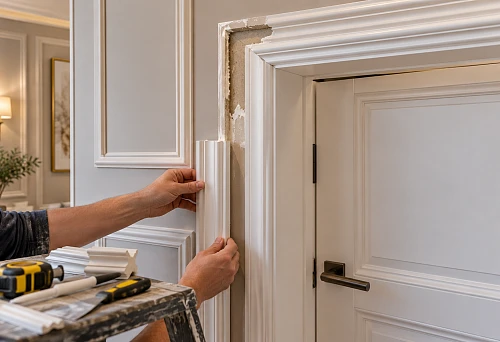
installing polyurethane molding — complete instructions for mitering corners, choosing glue, and finishing.installation of polyurethane molding— a guide for professional craftsmen.
Three technical nuances that are important to know
Nuance one: panel thickness. If the soft panel is thick (more than 30 mm), the molding must be at least 30 mm wide — otherwise it will not cover the edge of the panel. For thin panels (12–20 mm), a narrower profile will suffice.
Nuance two: the angle of the molding over the soft surface. The molding is pressed against the hard wall, not the soft insert. The inner edge of the profile should lie on the wall, not "hover" over the fabric. This is important for an even result.
Nuance three: the molding is painted after installation. The molding should be painted after it is installed and the joints are puttied. This gives a solid, even result. Moldings painted before installation have traces of glue on the surface.
Typical mistakes when combining soft panels and moldings
Molding is installed before the panel. Result: uneven fabric edge, visible gaps, waves near the profile. Always: first the panel, then the molding.
Molding too narrow for a thick panel. The edge of the fabric sticks out from under the profile. Choose a profile with a width of at least (panel thickness + 15 mm) on the inner edge.
Frame smaller than the panel in size. The molding does not cover the edges — the insert protrudes beyond the frame. The molding must always cover the edge of the panel.
Too many soft inserts of different materials. Three different fabrics on one wall is not richness, it's chaos. Maximum two materials in one area. Better — one, but expressive.
Moldings clash with the fabric color. Random contrast is not an intentional technique but a mistake. The molding color should be a deliberate decision: either tone-on-tone, precise contrast, or neutral white.
Panels are not aligned to the level. Molding amplifies any misalignment: if a panel is slightly tilted, the straight profile above it will only emphasize the curvature. Alignment must be done with a laser level, no exceptions.
Sconces are not accounted for in the scheme. If wall lights are planned, their placement must be determined before installation. A sconce protruding from a molding or the edge of a soft panel is an irreparable mistake.Stucco decor and wall sconces— about the proper placement of lights in systems with moldings.
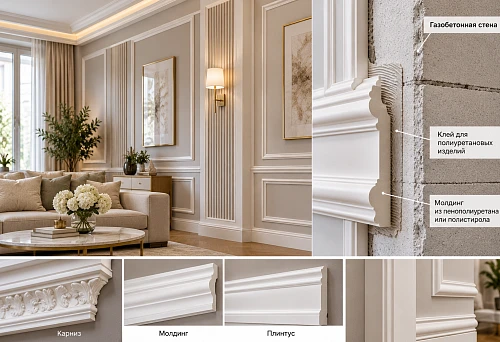
No baseboard and cornice.Polyurethane molding for interiorincludes baseboards and cornices that complete the system from bottom and top. A soft wall with moldings but without baseboard and cornice looks like an unfinished renovation.
What to buy for designing a soft accent wall
Complete list of STAVROS elements for implementing a soft wall with moldings:
-
Moldings made of polyurethane— profiles for frames around soft panels, vertical divisions, horizontal belts.
-
Polyurethane wall decor— decorative elements and systems for accent walls with soft inserts.
-
Decor for Molding— corner inserts for classic frame design.
-
PU overlays— medallions and cartouches for accent points above panels and frames.
-
Ready-made molded decor kits— for quick and accurate results without self-selection.
-
polyurethane interior items— full catalog: moldings, baseboards, cornices, decorative elements.
For a soft accent wall, use ready-made STAVROS collections:Neoclassical, Neoclassic Light, JapandiorVersailles Light— they help create a cohesive composition without random selection of elements.
Frequently asked questions
What to install first — soft panels or moldings?
Always soft panels first, then moldings on top. The molding overlaps the edge of the fabric or leather — and hides the technical seam. If you install moldings first, it is impossible to push the fabric evenly under the profile.
Which molding to choose around a soft panel?
The profile width depends on the panel size: small panels (40×60 cm) — profile 18–25 mm, large panels (100×200 cm) — profile 38–50 mm. The profile must overlap the fabric edge by at least 15 mm.Ready-made molding frames for the wall— with profile calculations for different formats.
Can I paint the molding next to a soft panel?
Yes, but carefully. Before painting the molding, cover the adjacent fabric with painter's tape. Paint the molding with a brush, not a sprayer — otherwise paint will get on the fabric. Water-based acrylic paint has no strong odor and dries quickly.
How to design a soft headboard with moldings?
Frame width — bed width + 30–60 cm. Insert height — 80–140 cm. Lower edge of the frame — 15–20 cm above the mattress. Moldings over the edge of the panel, sconces on both sides at the same height.Stucco decor and wall sconces— about the placement of sconces in headboard systems.
Which panel material is better — eco-leather or velour?
Depends on the room and style. Velour — for bedrooms, relaxation areas, elegant interiors. Eco-leather — for hallways, studies, high-traffic areas: it is resistant to touch and easy to clean. In the living room, both options are suitable, choice depends on style.
How not to overload a wall with soft panels and moldings?
Key rule: the more soft panels, the simpler the moldings — and vice versa. If the wall is rich in texture (velour, velvet, embossing), the moldings should be strict, laconic, matching in color. If the moldings are expressive (corner inserts, overlays, double frame), the fabric should be calm, solid-colored.
Is a cornice needed if the wall has soft panels with moldings?
Preferably. The cornice completes the system at the top and connects it to the ceiling. Without a cornice, the decorative wall looks like an unfinished system.STAVROS polyurethane moldingincludes cornices of all formats — from a thin 45 mm to a representative 120 mm.