

























Article Contents:
- Why stucco decor pairs well with stone
- Where to use the combination of stone and stucco decor
- Accent wall in the living room
- TV area with porcelain stoneware
- Wall behind the sofa with a marble insert
- Bed headboard with a stone accent
- Hall and Foyer
- Study: status and concentration
- What materials can be combined with polyurethane moldings
- Porcelain stoneware
- Marble panels
- Decorative stone
- Gypsum and composite stone-look panels
- Marble or stone-look wallpaper
- Basic wall design schemes with stone and moldings
- Scheme 1. Stone insert in a molding frame
- Scheme 2. Marble panel in the center, moldings on the sides
- Scheme 3. Vertical stone inserts and moldings
- Scheme 4. Porcelain tile on the lower part of the wall, moldings on the upper part
- Scheme 5. Stone insert plus polyurethane decorative elements
- Scheme 6. Ready-made stucco decor set with stone insert
- Which moldings to choose for stone and porcelain stoneware
- By Profile Width
- By Profile Type
- Moldings in the color of the wall next to the stone
- Contrasting moldings next to the stone
- Styles where the combination of stone and stucco decor works well
- Modern classicism
- Neoclassicism
- Jatoba
- Art Deco
- Versailles Light
- Minimalism
- How not to overload the wall
- What to buy for a wall with stone and stucco decor
- Mistakes when combining stone and moldings
- Frequently asked questions
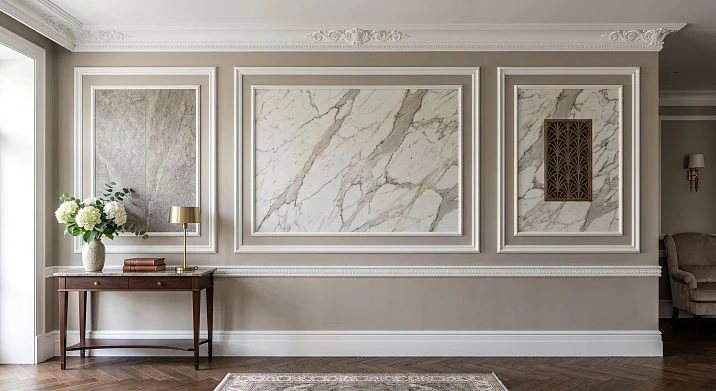
Two materials — and both are strong. Stone speaks with texture, weight, status. Polyurethane stucco decor speaks with rhythm, architecture, completeness. When they meet on one wall — you get an interior that cannot be confused with a standard renovation. This is no longer 'finishing,' this is a statement.
But the question is not whether stone and moldings go together. They do — undoubtedly. The question is how exactly. Because a poorly constructed combination can have the opposite effect: heavy, cold, overloaded. And a correct one turns an ordinary wall into an architectural object you want to examine.
This article is a detailed practical breakdown of how exactly the combination ofstucco decor and stone on a wall works: what schemes to use, in which rooms, under which style, which moldings to choose, and what mistakes to avoid. No empty words — only specifics and experience.
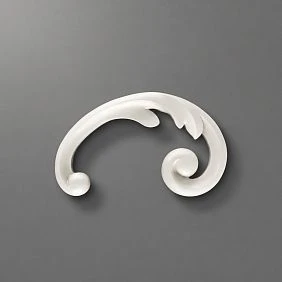
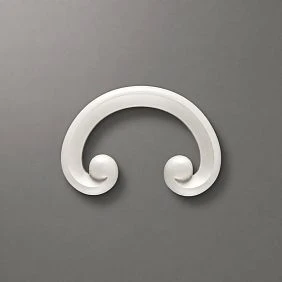
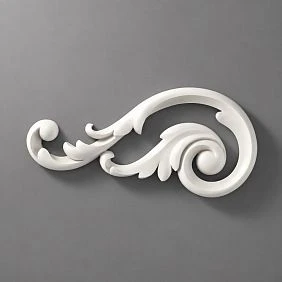
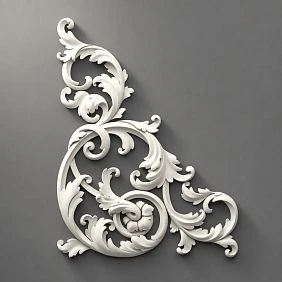
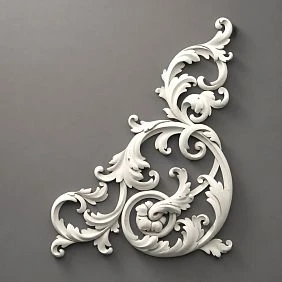
Stone, porcelain tile, or marble inserts make a wall expressive, but without framing, such an area can look heavy.Polyurethane wall decorSTAVROS helps integrate stone into the interior and make the wall truly complete.
Why stucco decor pairs well with stone
First of all — about the nature of this union. Why polyurethane moldings, and not something else?
Stone is a material with a strong character. Marble with veins, concrete-look porcelain tile, or backlit onyx — each carries a distinct texture that immediately draws attention. But it is precisely this strength of stone that creates a problem: a stone slab without context, without framing, without dialogue with the surrounding space looks like "just a slab on the wall." Heavy, monolithic, sometimes aggressive.
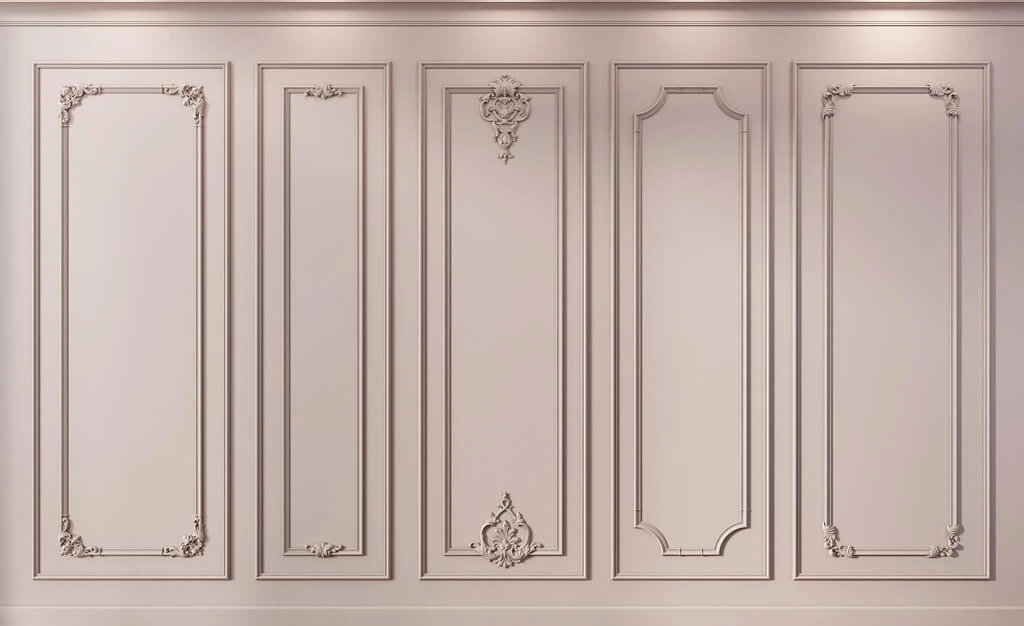
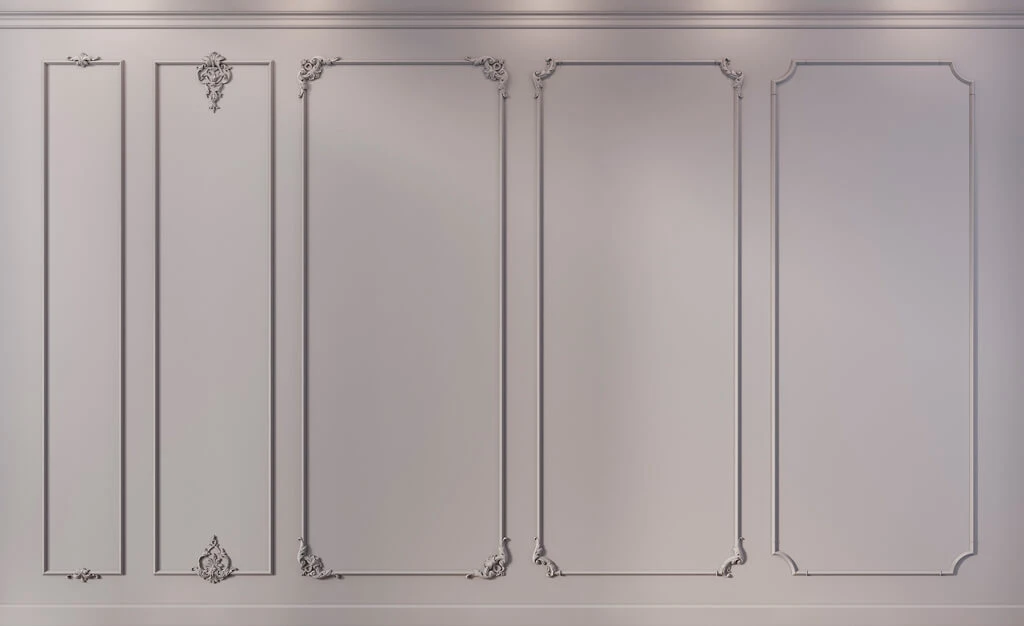
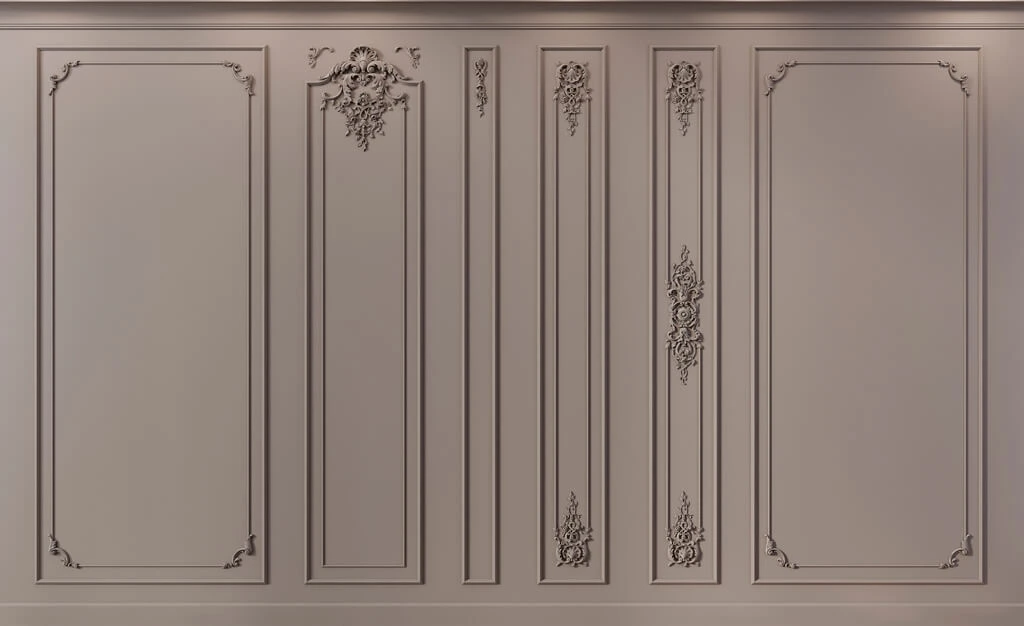
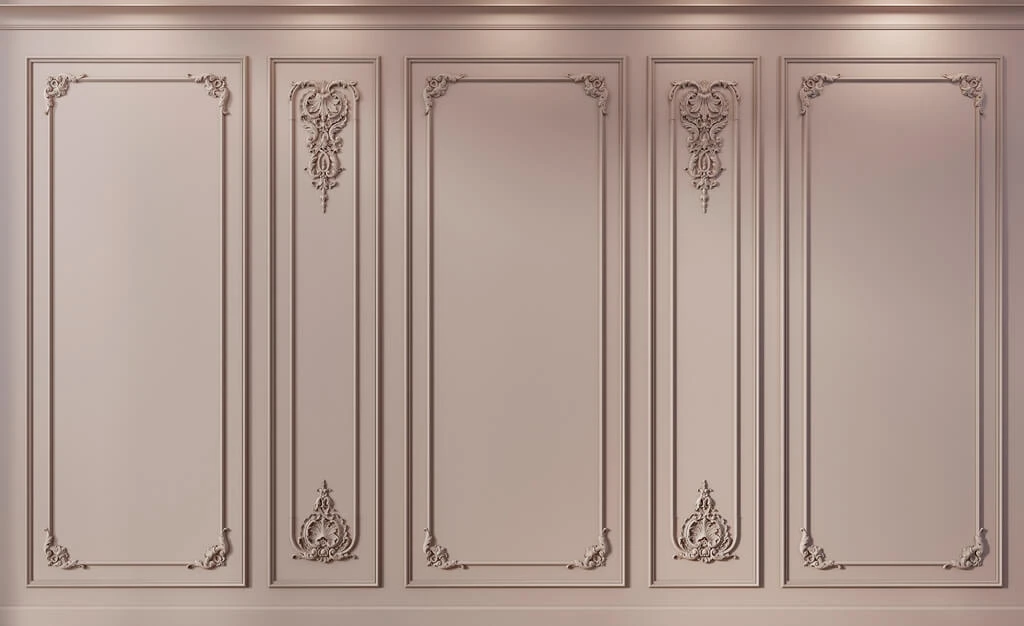
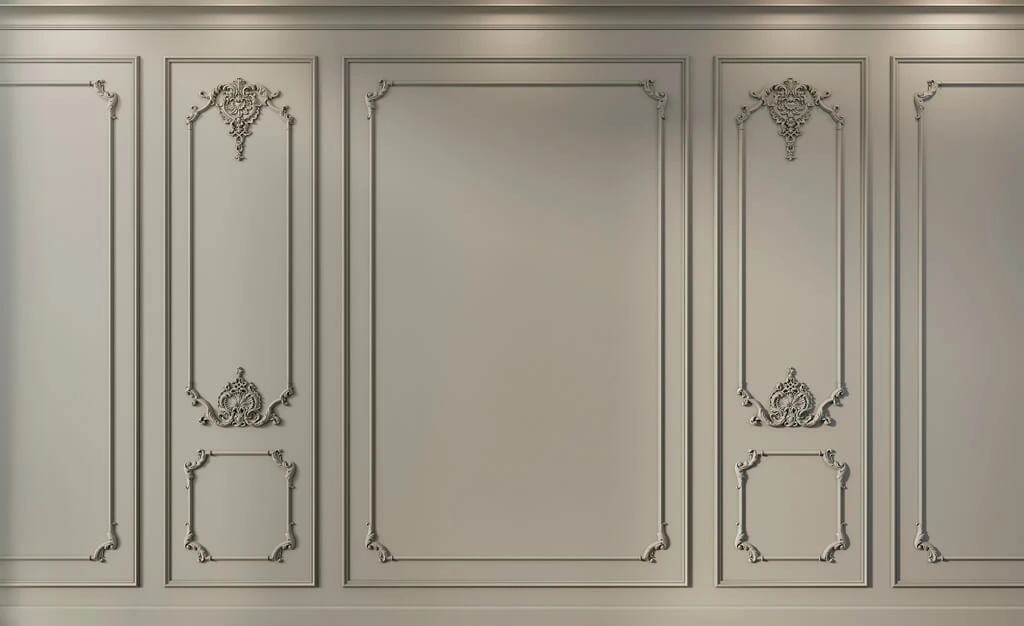
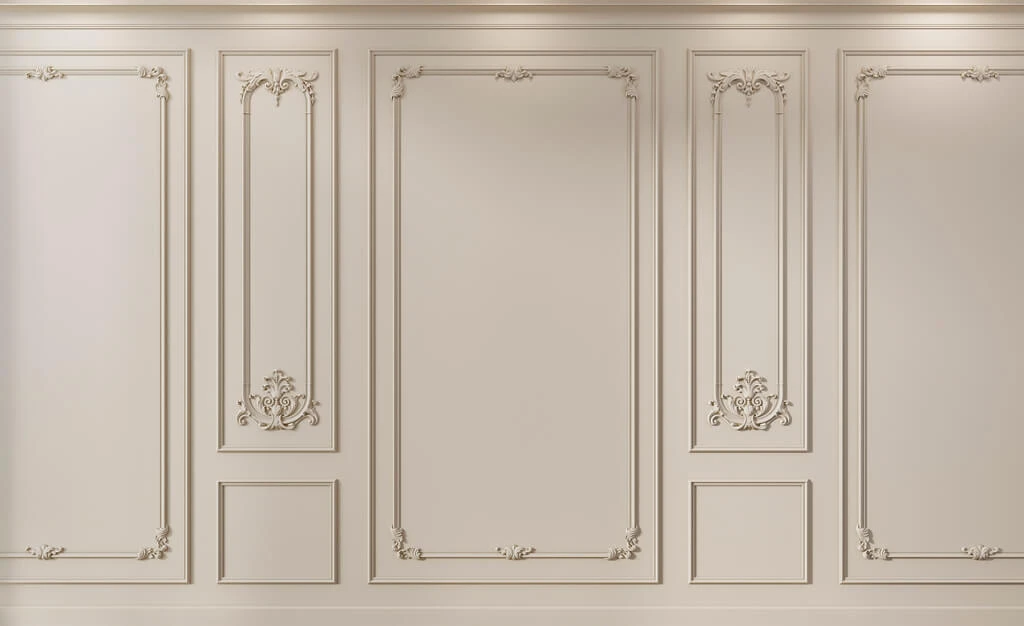
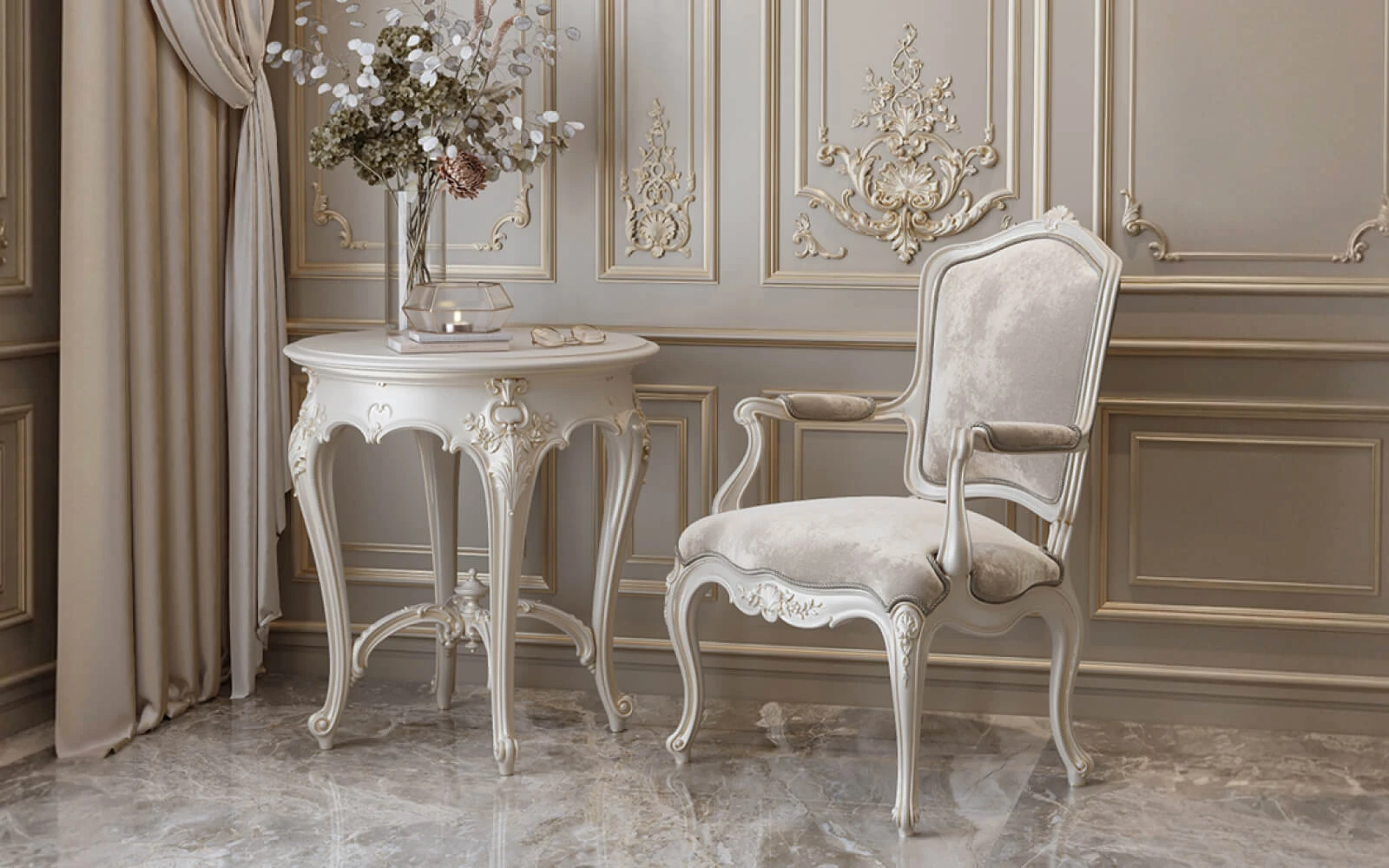
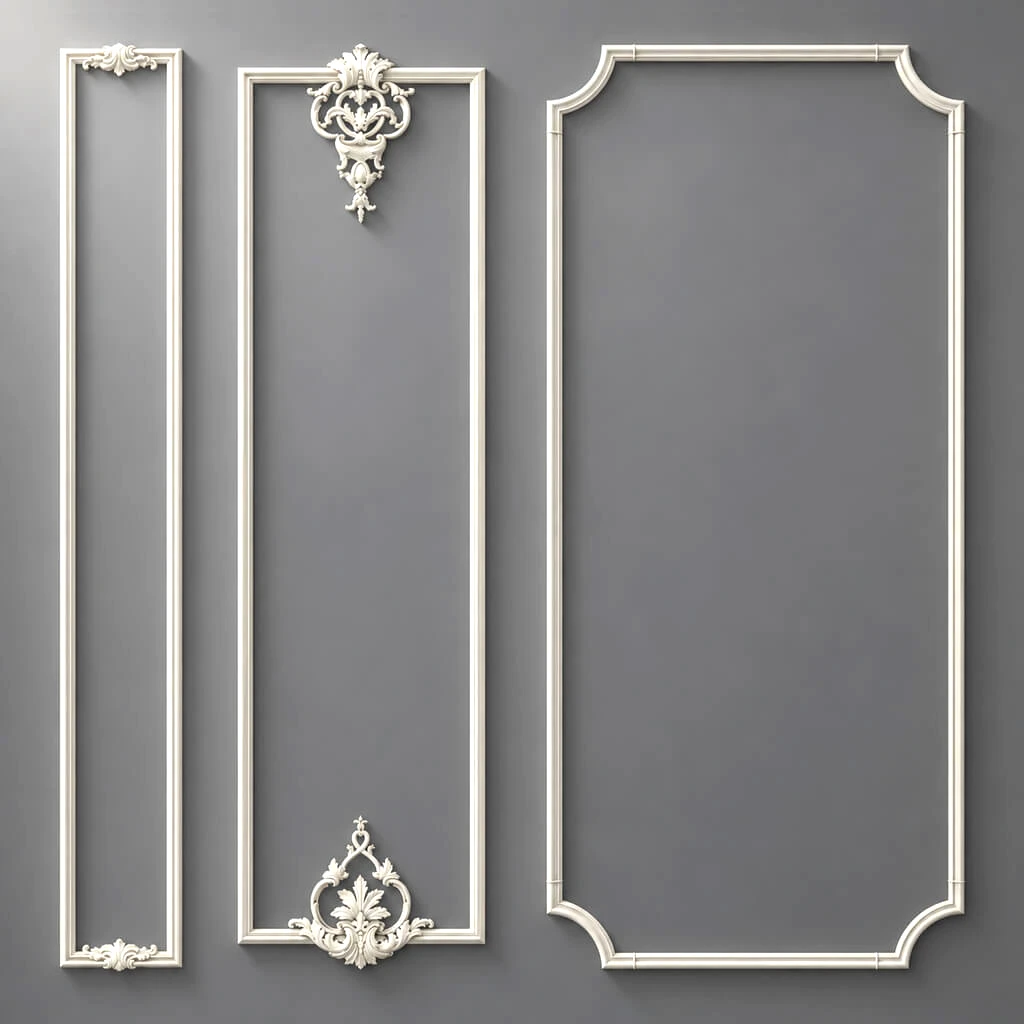
Moldings and stone on the wall— this is a fundamentally different story. A frame made of polyurethane molding around a stone insert does three things at once. First, it visually limits the stone fragment, turning it from an arbitrary piece of wall into a deliberately chosen decorative element. Second, it creates a transition between the stone texture and the clean plane of the plastered wall: the molding here works as an architectural "threshold." Third, it adds relief, which, with side lighting, creates shadows, depth, and a sense of volume.
There is also another important aspect: polyurethane visually "softens" the cold texture of stone. If marble or porcelain tile carry a feeling of hardness and cold, then a white or cream molding next to them adds warmth, interiority, and livability. The space no longer feels like a showroom and becomes a home.
Accent wall made of polyurethane— about the principles of building accent walls with decor: how stone and moldings work in a unified system.
Finally, a practical argument: polyurethane molding is mounted onto an already finished surface — with glue and, if necessary, dowels. It requires neither special preparation nor complex installation. This means decorative molding can be added to an existing stone or porcelain stoneware area — without dismantling, without dust, without renovation.
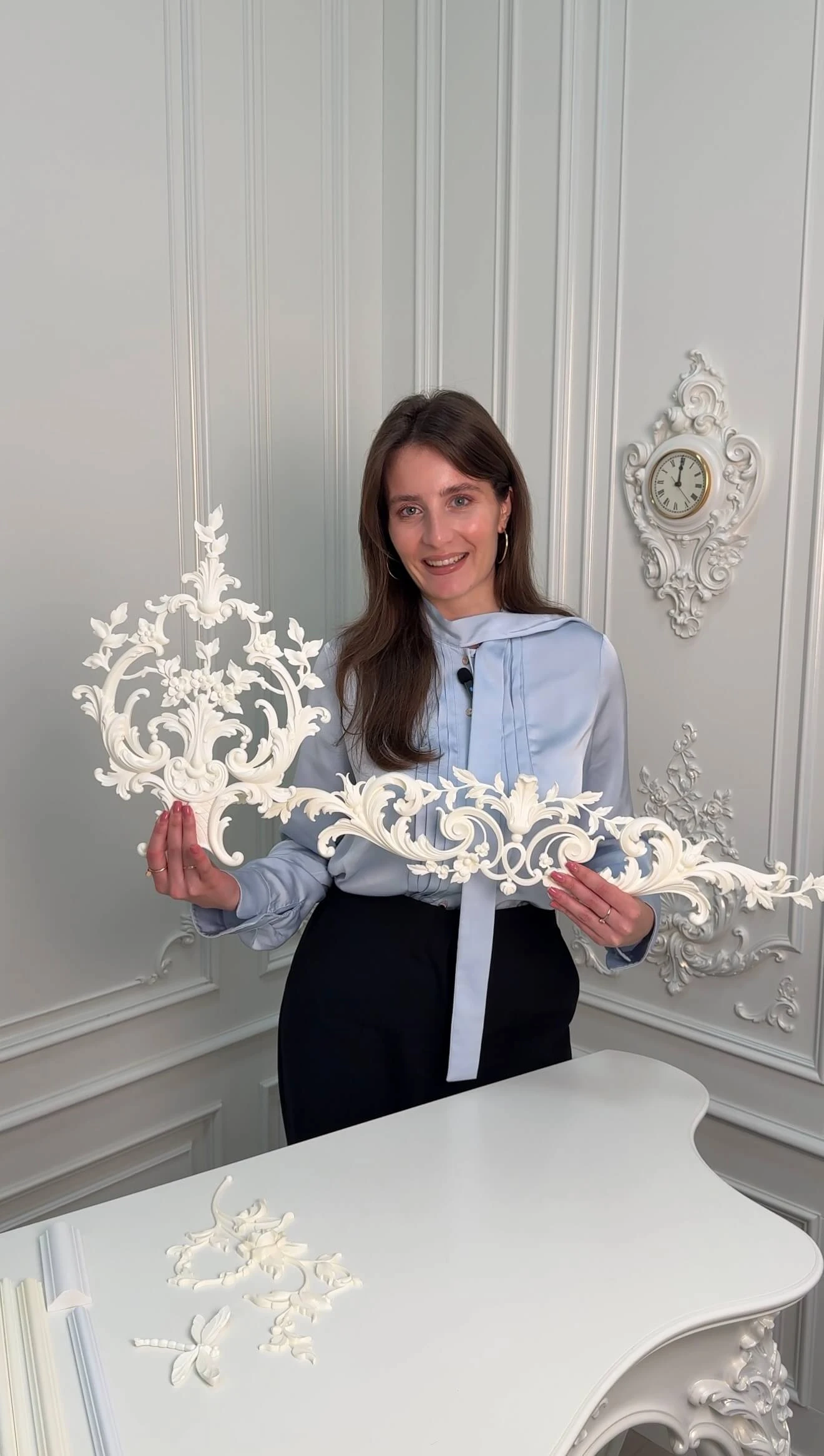
Where to use a combination of stone and decorative molding
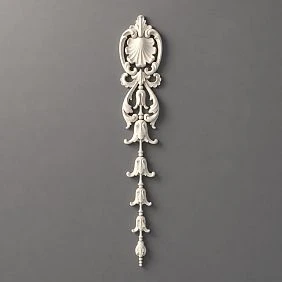
Our factory also produces:
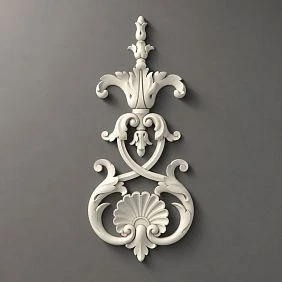
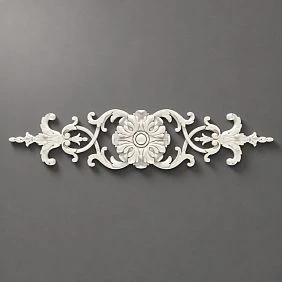
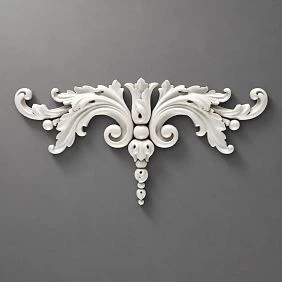
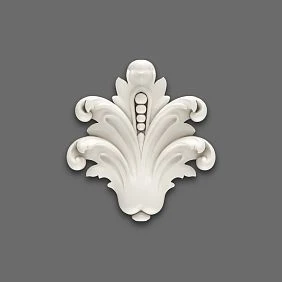
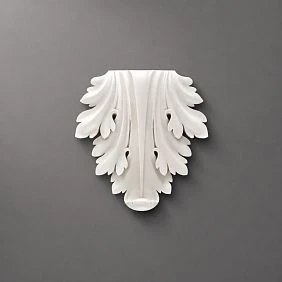
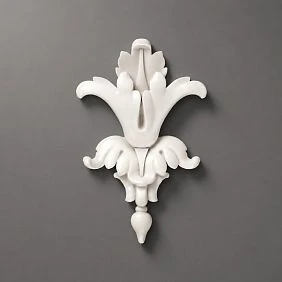
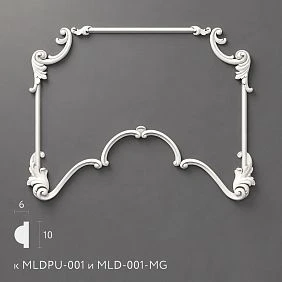
Accent Wall in Living Room
The living room is the main space for bold decorative solutions.Accent wall in the living room with stone and moldings — this is a classic scheme: the central area behind the sofa or TV point is finished with porcelain stoneware, a marble panel, or decorative stone, while the side parts of the wall are highlighted with a frame system of moldings.
This technique works with any wall width. On a 4 m wall: one stone insert in the center, symmetrical frames on the sides. On a 6 m wall: the stone insert takes up 2–2.5 m, with one or two frames of moldings on each side, possibly with corner decorative inserts. The result is a wall with rhythm, hierarchy, and material depth.
polyurethane wall decor behind the sofa — with specific proportion schemes for the sofa area.
Get Consultation
TV area with porcelain stoneware
Moldings and porcelain stoneware in the TV area — one of the most popular requests. Porcelain stoneware here serves a dual function: practical (it is not afraid of heat, does not collect dust, is easy to maintain) and decorative (creates an expressive background for the TV). But a slab of porcelain stoneware without framing is just a piece of tile on the wall. A frame of moldings around it and/or verticals on the sides of the TV panel turn the area into a full-fledged design object.
Popular scheme: porcelain stoneware from floor to ceiling, 90–140 cm wide, with symmetrical vertical moldings on both sides, and a horizontal molding belt above and below the screen. The TV is built into the system as part of it, not hanging on the wall like a foreign object.Polyurethane TV zone decor — with detailed diagrams for different TV zone formats.
Wall behind the sofa with marble insert
Marble behind the sofa is not just a design technique; it's a statement about the interior's level. But a marble panel on the wall without context can look unbalanced.Moldings around the marble create this context: a frame around the perimeter of the marble insert visually 'inserts' it into the wall, like a painting in a frame.
The combination works especially expressively: a marble insert in the center of the wall behind the sofa, a molding frame around the perimeter of the insert, and another outer frame made of a wider profile — at a distance of 15–20 cm from the first. Double framing creates the effect of an expensive installation, not just a 'slab on the wall'.
Bed headboard with stone accent
The bedroom is the most personal space in the apartment.Wall by the bed with marble and moldings — this is one of the most prestigious techniques in modern interiors. A marble or porcelain stoneware insert behind the headboard, plus a thin or medium polyurethane molding around the perimeter — and the bedroom achieves a hotel-level finish.
Important: in the bedroom, the stone should not be aggressive. For this area, soft marble patterns, calm beige or gray-white onyx, matte concrete-look porcelain stoneware in a neutral tone work better. And moldings — in the tone of the wall or with a soft contrast, but not harsh white on a bright background.
Hall and Entrance
Moldings and stone in the hallway — this is a win-win technique for the entry area. The lower part of the wall in the hallway is traditionally finished with stone or porcelain stoneware: it is practical (easy to clean), durable, and presentable. And the upper part of the wall is an ideal field for moldings: frames, a horizontal belt, decorative inserts.
A molding acting as a horizontal belt, separating the stone lower part and the plastered upper part, is a key technique. It makes the transition between materials architectural, not random.
Wall decor in the entryway and hallway made of polyurethane — with a full breakdown for hallways of different formats and styles.
Study: status and concentration
An office with a dark stone insert on the wall behind the desk and strict moldings around it is a space that speaks of solidity and professionalism.Stone and moldings in the office — a combination that works particularly expressively in the style of modern classic and art deco.
Dark marble or slate-look porcelain stoneware on the wall behind the desk, moldings in dark or gold tones around the perimeter, shelves and book blocks on the sides — this is not just an office, it is an office you want to work in.
What materials can be combined with polyurethane moldings
Porcelain stoneware
Moldings and porcelain stoneware on the wall — the most practical and common combination. Porcelain stoneware comes in stone, concrete, wood, metal finishes — and each texture has its partner in the world of moldings.
-
Porcelain stoneware in light marble → white or cream moldings in a neoclassical profile
-
Porcelain stoneware in dark concrete → moldings in the wall tone or anthracite
-
Porcelain stoneware in travertine → moldings in warm beige or cream
-
Porcelain stoneware with a metallic sheen → moldings with gold or bronze coloring
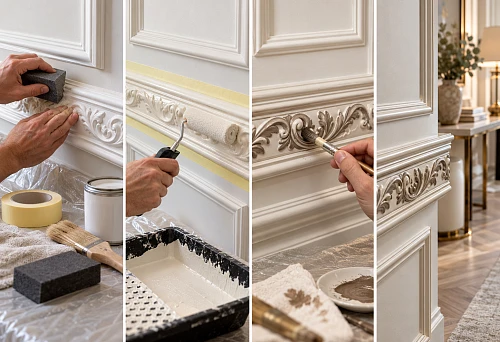
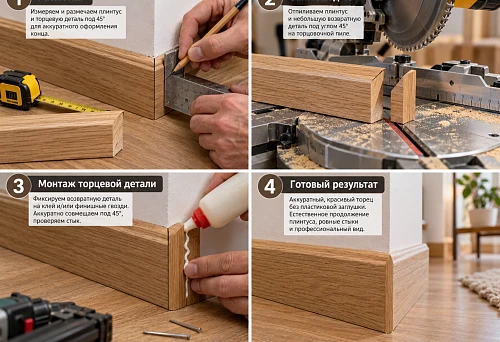
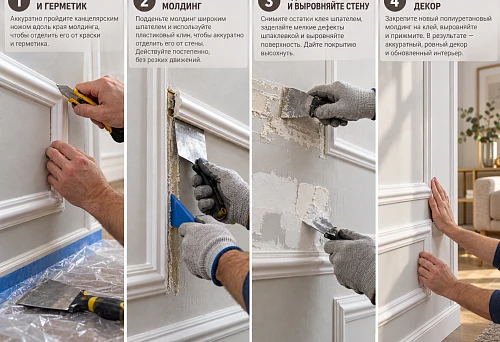
Installation of molding next to porcelain stoneware: the molding is mounted on the plastered part of the wall, flush to the edge of the tile. The joint between the molding and the tile is carefully filled with acrylic sealant and puttied before painting.installing polyurethane molding — with instructions for working with joints.
Marble panels
Moldings and marble in the interior — a duo with the greatest decorative potential. Marble is a material with a rich history and high status. The polyurethane molding next to it must be up to par: expressive profile, high-quality painting, flawless installation.
Suitable for marble inserts:
-
Profile with a soft relief 28–45 mm — for neoclassicism and modern classic
-
Double frame from two different profiles — for Versailles Light and representative spaces
-
Thin smooth profile 20–25 mm matching the marble — for minimalism and Japandi
Particularly expressive — molding with gold or bronze coloring next to white or gray marble with veins. This creates a visual sense of expensive jewelry work.
Decorative stone
Decorative stone here refers to gypsum or polyurethane panels imitating brick, slate, limestone, brushed stone. They are lighter, cheaper, and easier to install than natural stone, but provide a similar visual effect.
Stucco and stone in the interior— about combining different types of decorative stone with polyurethane moldings. For decorative brick on one section of the wall — moldings as a frame for this area, creating an accent and preventing the "stone" section from blending into the wall.
Gypsum and composite stone panels
If the budget is limited or you want a lighter solution, gypsum and composite decorative panels imitating marble or travertine are a good option. They weigh less, are easier to install, and with proper painting create a convincing effect of natural material.
polyurethane decorative wall panels— about the principles of designing panel zones and their combination with moldings.
Marble or stone wallpaper
The most affordable option is wallpaper with imitation marble or stone texture, framed by moldings. Yes, it is not a natural material. But if the wallpaper is high-quality and the moldings have the right profile and flawless painting, the result can be quite convincing.
Stucco decor and decorative plaster on the wall— about combining various finishing materials with polyurethane stucco decor.
Basic schemes for decorating a wall with stone and moldings
Scheme 1. Stone insert in a frame of moldings
Basic and most universal scheme. A wall fragment is faced with porcelain stoneware, marble, or decorative stone — a rectangle of specific dimensions. A frame made ofpolyurethane moldings for an accent wallis mounted around the perimeter of this rectangle: it visually "inserts" the stone fragment into the wall, like a painting in a frame.
Dimensions of the stone insert: for the wall behind the sofa — width equals the sofa width ± 30–50 cm, height — from 80 to 180 cm from the floor (above the sofa back). For the TV area — width 90–140 cm, height from floor to ceiling or from baseboard to cornice.
Molding width for the frame: proportional to the insert size. For an insert 100×150 cm — molding 25–35 mm. For a large insert 180×250 cm — molding 35–50 mm.
This technique works for:
-
wall behind the sofa in the living room
-
headboard of the bed in the bedroom
-
dining area of the dining room
-
hall and entryway
-
study and workspace
Scheme 2. Marble panel in the center, moldings on the sides
The central zone of the wall is marble or marble-like. On either side of it are symmetrical vertical frames made of moldings or simply vertical profiles from the baseboard to the cornice. This creates a hierarchy: the center is the main element, the side moldings provide a supporting rhythm.
This works especially well in a living room when the stone in the center is the TV area or fireplace area, and the moldings on the sides frame the space to the left and right of the center.polyurethane decor for the wall with a fireplace— with examples for fireplace walls with a marble portal.
Scheme 3. Vertical stone inserts and moldings
For high walls, piers, stair areas, and halls. Several vertical strips of porcelain stoneware or marble alternate with plastered piers framed with moldings. This creates a rhythm reminiscent of a pilaster system: material — space — material — space.
Width of stone inserts: 25–45 cm. Width of piers with moldings: 35–60 cm. Moldings on the piers — one vertical line in the center or a frame within the pier.
For a stair hall with a wall height of 4 m or more, this technique creates a true architectural gallery — expensive, majestic, professional.
Scheme 4. Porcelain stoneware on the lower part of the wall, moldings on the upper part
Horizontal division of the wall: the lower part (up to a height of 100–120 cm) is finished with porcelain stoneware or decorative stone, the upper part is plaster with frames made of moldings. Between them is a horizontal molding as a dividing belt.
This is a classic European technique, dating back to boiserie and stone plinths in old houses. The lower stone zone is practical and representative, the upper one with moldings is elegant and architectural. For an entrance hall, corridor, foyer, and dining room, it is almost an ideal solution.
Important: the dividing molding between the stone and plastered zones should be wide enough — 35–50 mm — to clearly mark the transition. A thin profile will be lost here.
Scheme 5. Stone insert plus decorative polyurethane elements
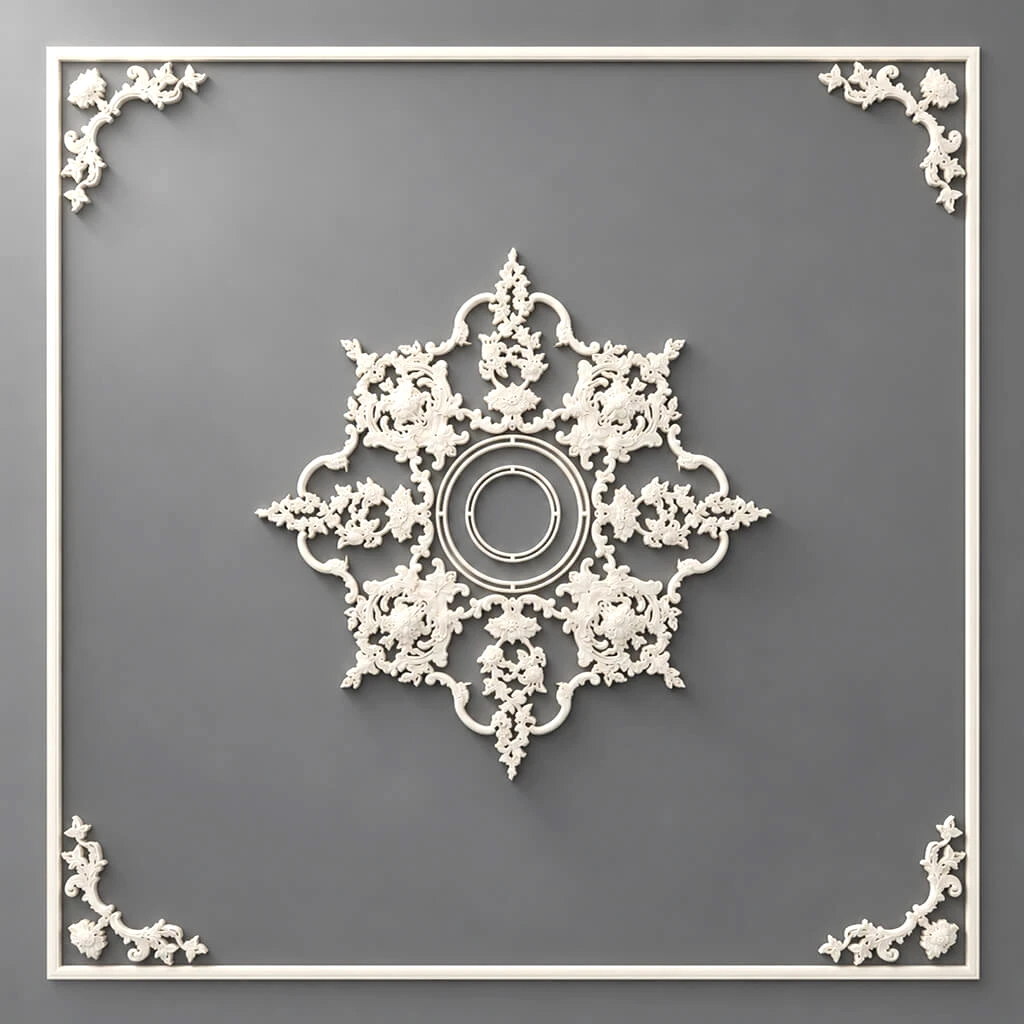
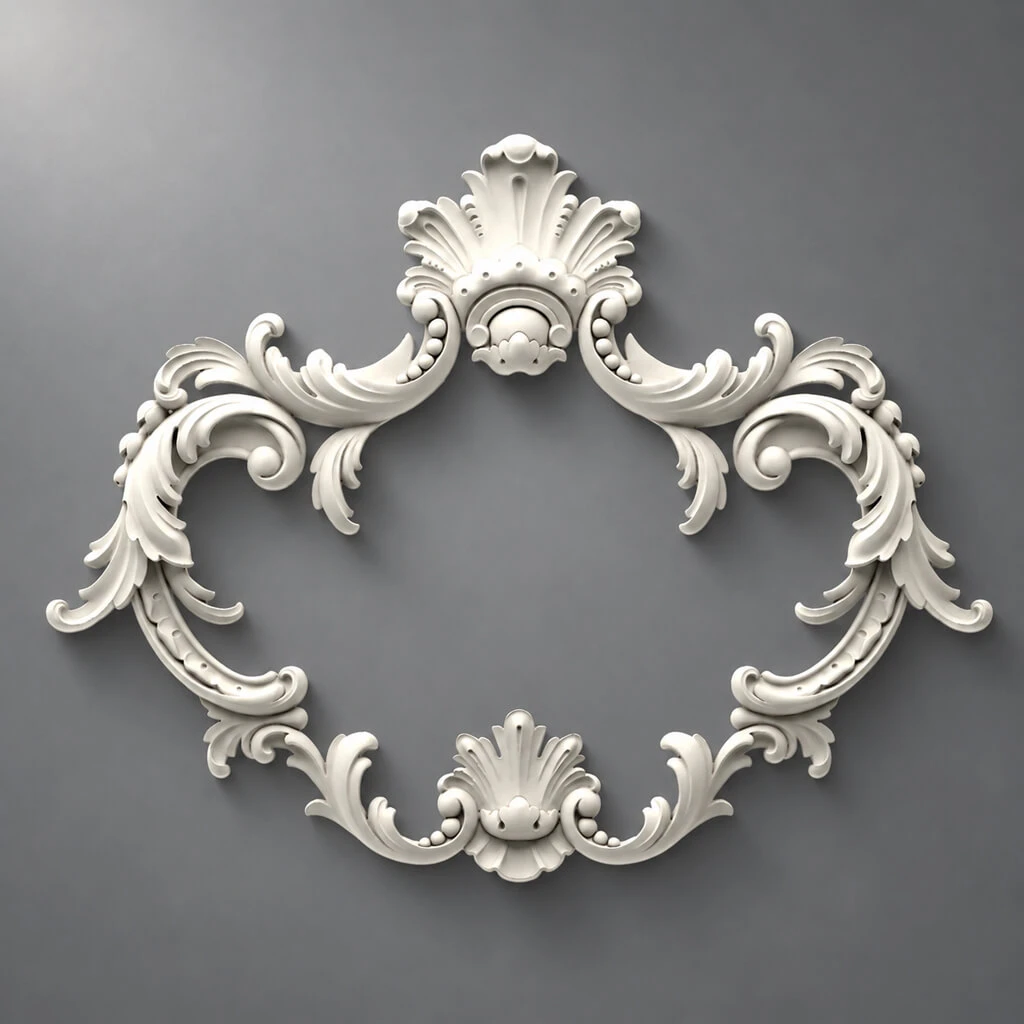
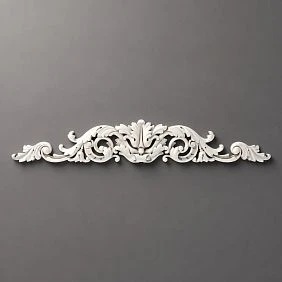
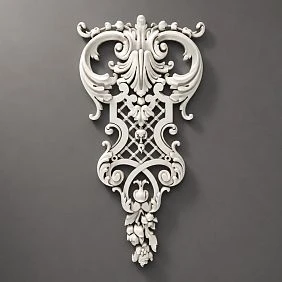
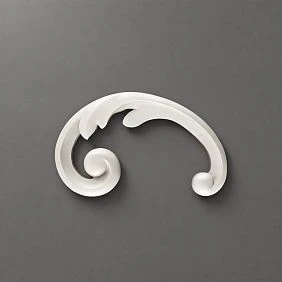
For more ornate interiors, the frame of moldings is enhanced withdecor for moldingsanddecorative polyurethane overlays: corner inserts in the corners of the frame, a rosette or cartouche above the center of the insert, a horizontal frieze between the frame and the cornice.
For a marble insert in a bedroom with neoclassical decor — a rosette above the center of the stone insert, corner elements in the corners of the frame, a horizontal profile-frieze above the frame. This is a full-fledged architectural system that works with marble as a guest of honor — frames it, emphasizes it, makes it the center of attention.
Scheme 6. Ready-made set of stucco decor with a stone insert
Ready-made molded decor kitsSTAVROS — if you want an architecturally expressive wall without independently calculating each element. The set contains profiles, corner inserts, and accent elements in a unified style — all you have to do is determine the location of the stone insert and place the system around it.
For a wall with a ready-made kit and a stone insert, the logic is as follows: first, the stone insert (porcelain stoneware, marble, decorative stone) is installed, then the ready-made molding kit is placed around it. The result is predictable and flawless in proportions.
For frames around a stone or marble insert, the following are suitableMoldings made of polyurethane. If a more expressive composition is needed, addDecor for MoldingandPU overlays.
Which moldings to choose for stone and porcelain stoneware
Choosing a profile to pair with a stone insert is no less important than choosing the stone itself. A wrong profile next to a strong texture — and the whole effect is lost.
By profile width
| Type of stone insert | Recommended molding width |
|---|---|
| Small insert (60×90 cm) | 20–28 mm |
| Medium insert (100×150 cm) | 28–38 mm |
| Large insert (150×250 cm) | 35–50 mm |
| Floor-to-ceiling insert | 40–60 mm |
| Lower dividing belt | 35–55 mm |
By Profile Type
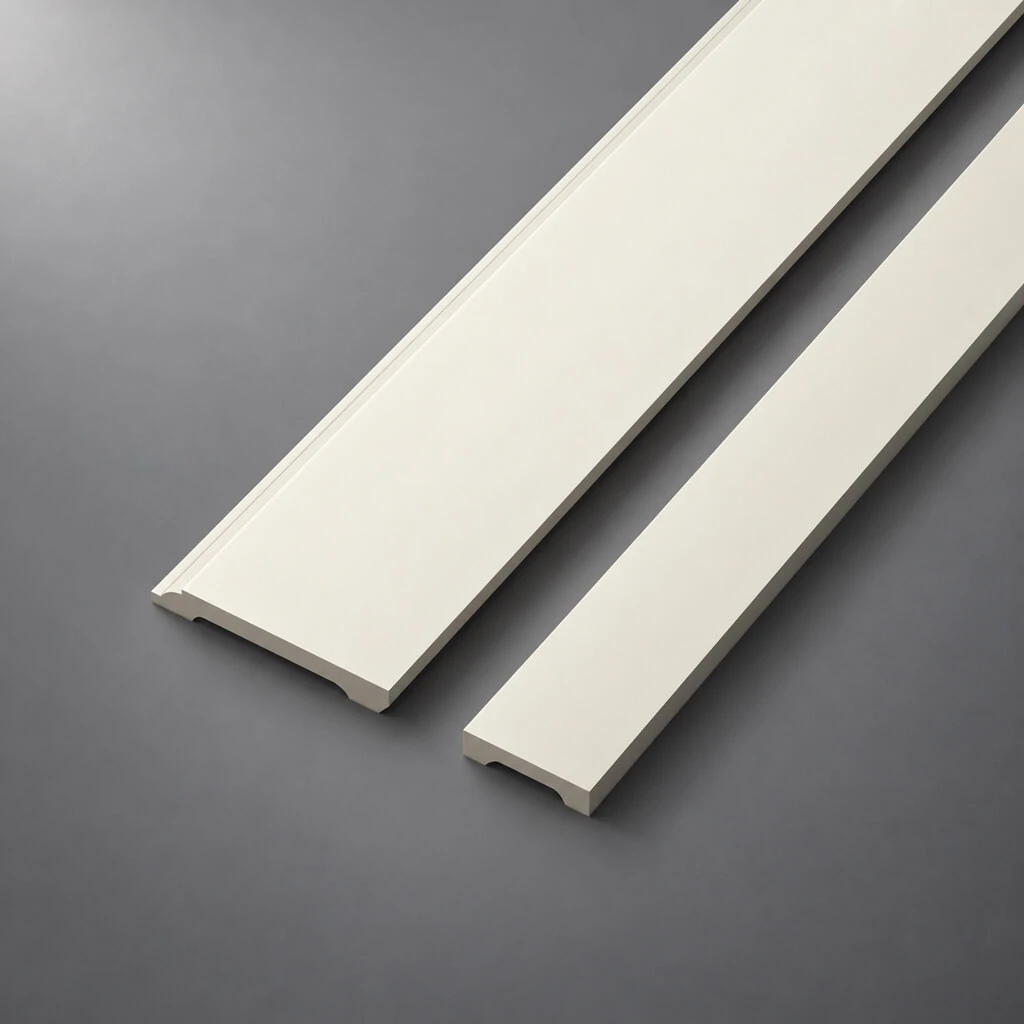
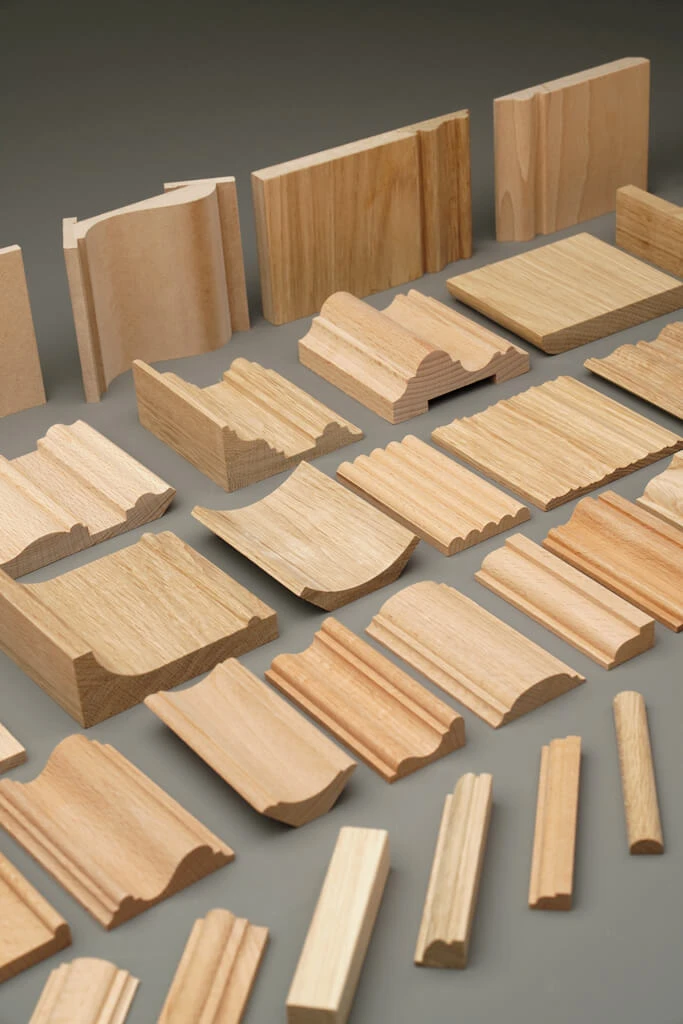
Smooth rectangular profile — for minimalism, Japandi, and modern interiors. Next to an active stone texture, a smooth molding does not compete — it provides a clear line without its own 'noise'.
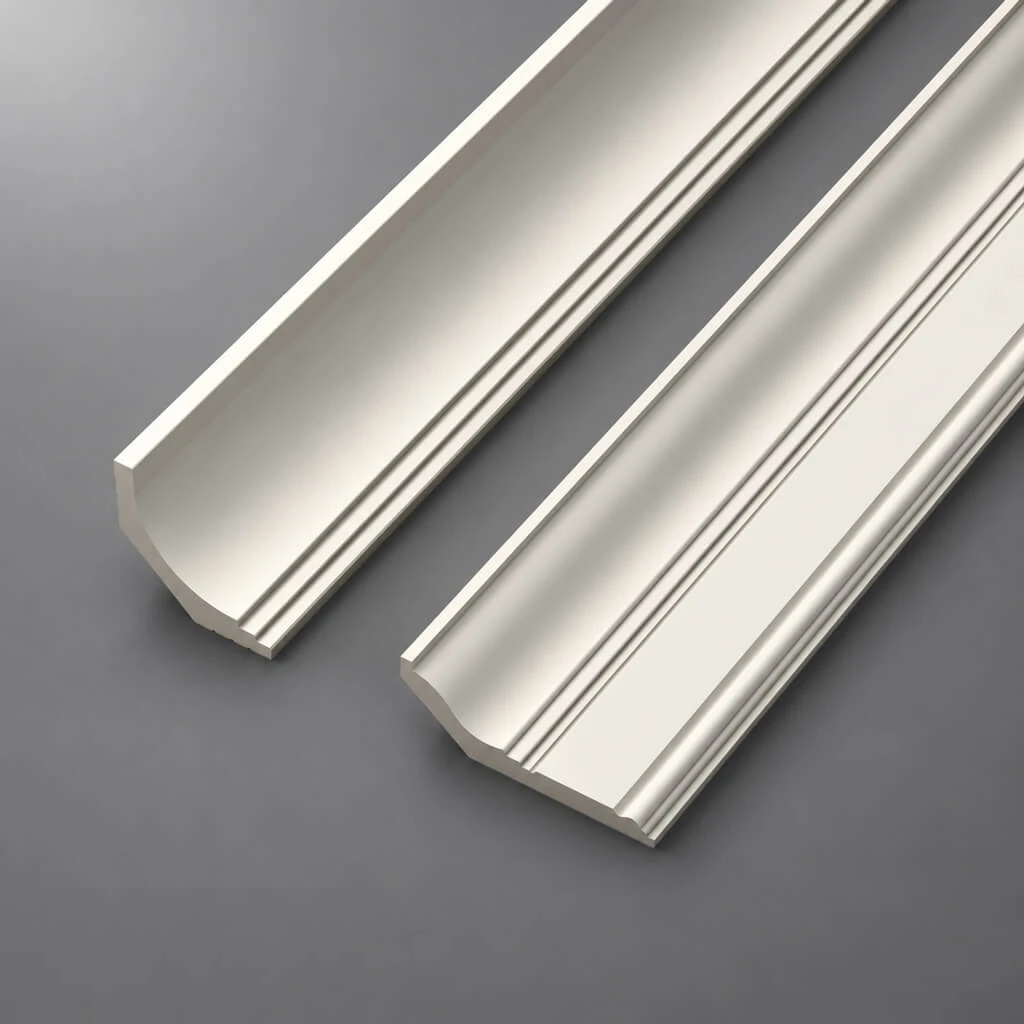
Profile with a soft rounding (ovolo) — for light neoclassicism and modern classic. Slightly richer than rectangular, but still calm. Works well next to marble with a soft vein pattern.
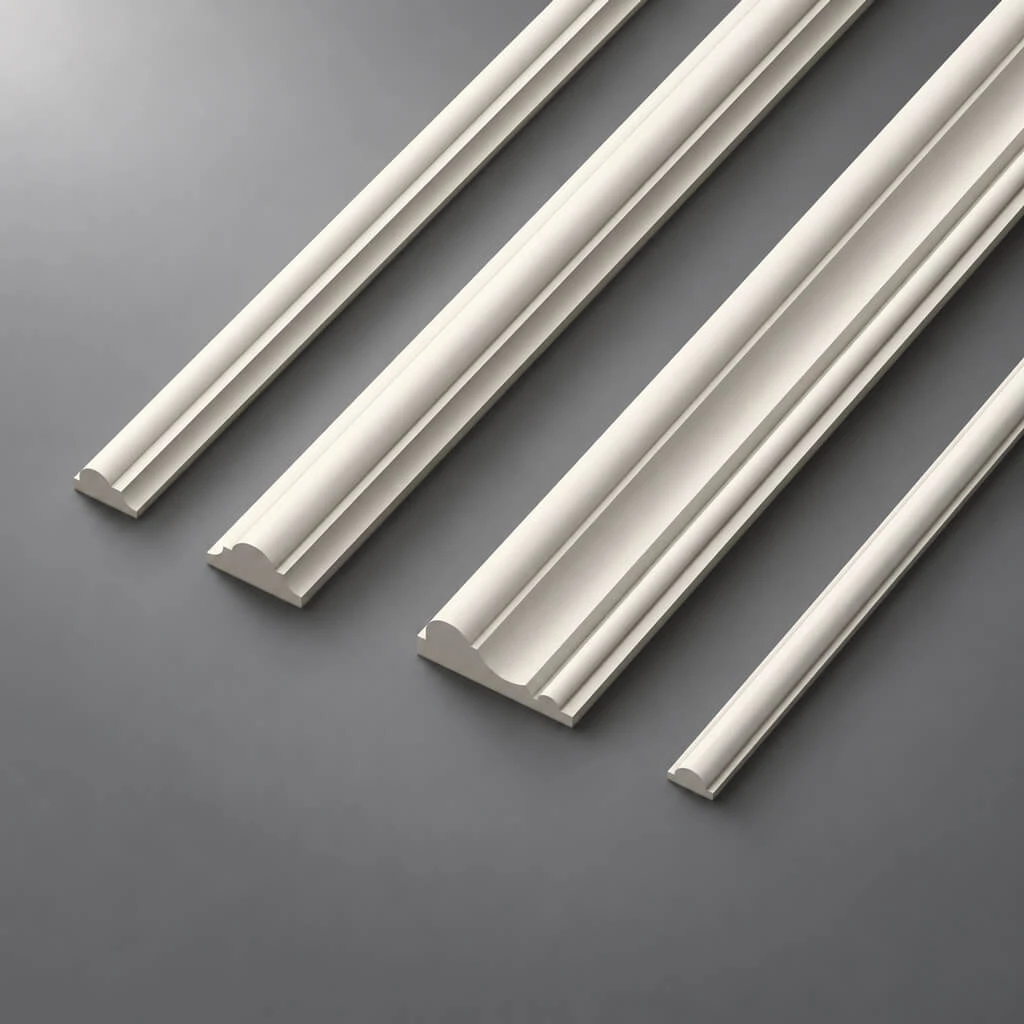
Stepped profile with multiple lines — for neoclassicism and Versailles Light. Creates an expressive frame that 'responds' to the richness of the marble texture.
Profile with a relief ornament — for classic interiors, halls, and representative spaces. Next to expensive marble — expressive and appropriate.
Thin polyurethane moldings for walls — if a delicate profile for a modern interior with stone is needed.
Moldings in the color of the wall next to stone
This works when the stone already 'speaks' loudly enough. Dark rich porcelain stoneware, rich marble with pronounced veins — next to such stone, a molding in the wall tone adds structure without competing with the tile texture. Result: the stone is the main element, the moldings are the architectural background.
Contrasting moldings next to stone
White moldings next to dark porcelain stoneware imitating slate or anthracite — this is graphic, bold, expressive. Dark moldings next to light marble — elegant and modern. Gold moldings next to white marble — classic Art Deco. Contrast is acceptable and beautiful — but requires a unified color system throughout the interior.
stucco decor in the color of the wall or contrasting— with an analysis of both approaches and recommendations for combinations.
Styles where the combination of stone and stucco decor works well
If you want a ready-made composition in neoclassical, modern classic, or the calm Japandi style, use the STAVROS collections —Neoclassical, Neoclassic Light, Japandi, Versailles Light. They already have elements selected for harmonious wall decor.
Modern classic
Marble with a soft pattern, calm medium-width moldings, symmetry, neutral wall shades — white, cream, warm gray.Moldings and marble in modern classic— the most organic combination for this style. Moldings in the tone of the wall or with a slight contrast, no lush ornaments, only clean lines.
Modern classic is a style where stone should be "integrated" into the interior, not "stuck" into it. Moldings make this integration professional.
Neoclassicism
Moldings and marble in neoclassical— a historically justified combination. In classical interiors of the 18th–19th centuries, marble inserts were always framed by architectural elements. Polyurethane stucco follows this tradition: frames with corner inserts, a horizontal frieze above the stone area, cornice, baseboard — all in a unified system.
Symmetry is mandatory. Marble in the center, moldings on the sides and around — strictly symmetrical, of the same width, with identical indentations.
Japandi
Wall decor with stone in Japandi style — the most non-trivial combination in this list. Japandi implies minimal decor and maximum attention to material and form. Therefore, the stone here is calm: matte porcelain stoneware imitating concrete or natural stone with minimal pattern. The moldings are the thinnest, matching the wall color, without corner inserts. Just a line.
Effect: a meditative wall that breathes and does not overwhelm. In Japandi, excess decor is a mistake, while one precise element is a virtue.
Art Deco
Contrast is the foundation of this style. Dark stone and gold moldings. White marble and black contour lines. Geometry, symmetry, expressiveness.Stucco and stone in the interior in Art Deco style is always a strong statement.
For Art Deco, expressive profiles with geometric cross-sections are chosen: stepped, rectangular with a shelf, profiles with several parallel lines. No classic "scrolls" — only clear geometry.
Versailles Light
Versailles Light stucco decor — for those who want elegance without heaviness. A marble or white stone insert in a frame made of an expressive profile with decor, corner inserts with ornamentation, overlays in the centers of the frames. On a long hallway wall with high ceilings, this creates a true impression of grand architectural finishing.
Limitation: Versailles Lite with stone is for large spaces. In a small apartment, this style will be excessive.
Minimalism
One stone slab and one thin molding line around the perimeter. Nothing else. This is exactly what minimalism is: remove everything unnecessary, leave only the essence. The stone speaks through texture, the molding through geometry. Neither requires support.Polyurethane moldings for modern interiors— with a range of minimalist profiles for minimalistic solutions.
How not to overload a wall
This is the main practical question. Two strong materials on one plane — the risk of overload is real. Here are the principles that eliminate it.
The rule of “one active — one calm.” If the stone is expressive — rich marble pattern, dark saturated color, large texture — the moldings should be calm: matching the wall color, thin or medium profile, without ornament. If the stone is calm — matte solid-color porcelain stoneware — the moldings can be slightly more expressive.
No more than two active textures on the wall. Stone + moldings + decorative plaster = overload. Stone + moldings + plain painted wall = balance.
Maintain symmetry. Asymmetrical placement of stone inserts and moldings is a complex design technique that requires a high level of skill. For most interiors, symmetry is more reliable and beautiful.
Leave air. The distance between the edge of the stone insert and the inner edge of the molding frame is 0 (flush) or 15–25 mm (with a small gap that also works as a pause). The distance between the outer edge of the molding frame and the nearest adjacent element is at least 20–30 cm.
Consider the entire wall, not just the stone insert. Baseboard, cornice, adjacent walls, furniture — all of this should be accounted for in the overall system.stucco decor for a long wall— with an analysis of a systematic approach to designing the entire wall as a whole.
No more than three colors. The stone has its own color, the moldings have theirs, the wall has its own. That totals a maximum of three shades on one plane. If you add lighting, overlays of a different color, wallpaper — you get a kaleidoscope.
What to buy for a wall with stone and stucco decor
Complete list of necessary STAVROS elements for implementing any of the described schemes:
-
Moldings made of polyurethane— linear profiles for frames around stone inserts, horizontal belts, vertical divisions.
-
Polyurethane wall decor— decorative elements and ready-made systems for accent walls with stone.
-
Decor for Molding— corner inserts and elements for frame corners, enhancing the classical system.
-
Polyurethane decorative appliques— rosettes, cartouches, ornamental accents for central points of the composition.
-
Ready-made molded decor kits— balanced systems with selected elements for a quick and professional result.
-
Polyurethane molding for interior— complete catalog of STAVROS products: moldings, cornices, baseboards, rosettes, decorative elements.
Collections by style:
-
Neoclassical— for marble and neoclassical interiors
-
Neoclassic Light— for porcelain stoneware and modern classic
-
Japandi — for a calm stone and minimalist interior
-
Versailles Light — for elegant interiors with marble in large spaces
Mistakes when combining stone and moldings
Molding too thin next to a large slab. A 15 mm profile next to a 120×280 cm slab — it simply won't be visible. The molding must be proportionate to the slab: for large formats — at least 30–35 mm.
Overload: complex stucco plus active marble. Rich marble pattern + expressive ornamental molding + overlays in every corner = chaos. One of the two materials should be "quieter."
No gaps left. A molding pressed tightly against the edge of the tile without any gap looks cramped and untidy. The recommended offset is 15–20 mm from the tile edge to the inner edge of the molding.
Stone insert too small. A 40×40 cm tile fragment on a large wall is not an accent — it's an accident. The stone insert should have weight proportionate to the wall: at least 60×90 cm, in most cases 90×120 cm or more.
Composition not tied to furniture. The stone insert is not aligned with the sofa axis, not aligned with the bed axis — but just "where it ended up." This reads as a mistake.
Moldings without baseboard and cornice. A wall with moldings and stone that is not "finished" with a baseboard and cornice in the style of the moldings looks incomplete. The system must be complete.
Molding color not thought through. White molding next to warm beige marble and a gray wall — three different shades of white that don't match. Before installation and painting — match the molding color relative to the wall and stone.
Random decorative elements. A rosette in one corner, another insert in the other corner, an overlay in the middle — no system. All elements must follow a single logic.
Frequently Asked Questions
Can polyurethane moldings be combined with porcelain stoneware?
Yes, and this is one of the most popular combinations. The moldings are mounted on the plastered part of the wall next to the porcelain stoneware — as a frame or as a rhythmic system around the stone area. The joint between the molding and the tile is carefully puttied before painting.installing polyurethane molding — with instructions on working with joints of various materials.
What should frame a marble insert on the wall?
The best option is a frame made ofmoldings around the marble: medium or wide profile in the color of the wall or with a soft contrast. For neoclassicism — with corner inserts anddecor for moldings. For modern classicism — a smooth profile without ornament, strict geometry.
Which moldings to choose for a wall with stone?
Depends on the size of the stone insert and the style. Small insert — profile 22–28 mm. Medium — 28–38 mm. Large — 38–50 mm. Style: for modern interior and japandi — smooth profile, for neoclassicism and modern classic — with soft relief or stepped section.
Are moldings suitable for a TV area with porcelain stoneware?
Yes, this is one of the most effective techniques for a TV area. Porcelain stoneware is the background behind the TV, moldings frame the area: symmetrical verticals on the sides, horizontal bands above and below the screen.Polyurethane TV zone decor — with complete design schemes.
What is better: a stone panel in a frame or a ready-made set of stucco decor?
These are not mutually exclusive options — they can be used together. A stone panel in a frame is a decorative insert that adds texture and status.Ready-made set of stucco decor — a system of moldings that organizes the entire wall. The best result is a combination of both.
How to combine moldings, stone, baseboard, and cornice?
Everything should belong to the same style family. If the moldings are a modern smooth profile 28 mm, the baseboard is 55–70 mm in a similar profile, the cornice is 50–70 mm. The stone is neutral in color, harmonious with the tone of the moldings and walls. All elements are from the catalogpolyurethane products from STAVROS, to ensure stylistic unity.
Can you paint moldings the same color as the wall next to stone?
Yes, and in some cases it's the best choice. If the stone is already decoratively rich — marble with veins, dark natural stone — moldings in the wall color create a neutral frame that highlights the stone without competing with it.stucco decor in the color of the wall or contrasting — with a detailed analysis of both approaches and color examples.