








































Article Contents:
- Why a wall with furniture needs to be designed separately
- Where wall decor with a console and chest of drawers is used
- Entryway and hall: the first meeting
- Living room: chest of drawers as a decorative element
- Bedroom: dressing table and chest of drawers opposite the bed
- Study: book area and decorative wall
- Basic schemes for designing a wall behind furniture
- Scheme 1. One large frame above a console or chest of drawers
- Scheme 2. Mirror in a molding frame above furniture
- Scheme 3. Two vertical frames on the sides of wide furniture
- Scheme 4. Central frame with decorative overlays
- Scheme 5. Panel system from baseboard to cornice
- Scheme 6. Ready-made set of stucco decor
- How to calculate a frame for specific furniture
- Frame width
- Frame height
- Bottom edge of the frame
- Profile width
- Color solutions for wall decor with furniture
- Moldings in wall color
- White moldings on a colored wall
- Contrasting moldings
- Moldings matching the furniture color
- Which elements to use for decorating the furniture area
- Polyurethane moldings
- Decor for moldings
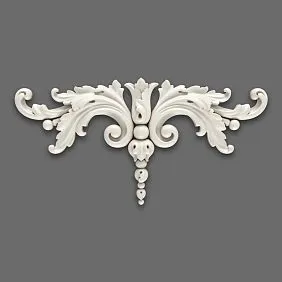
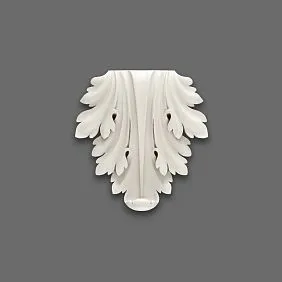
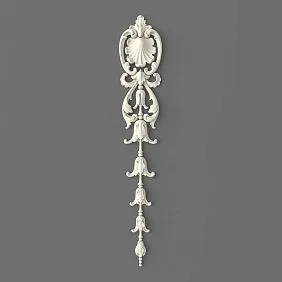
- PU overlays
- Baseboards and cornices
- Styles for the console and dresser area with stucco decor
- Neoclassicism
- Neoclassic Light
- Jatoba
- Modern classicism
- Versailles Light
- Installing decor behind furniture: the correct sequence
- Mistakes when decorating a wall with a console or dresser
- What to buy for decorating the furniture area
- Frequently Asked Questions
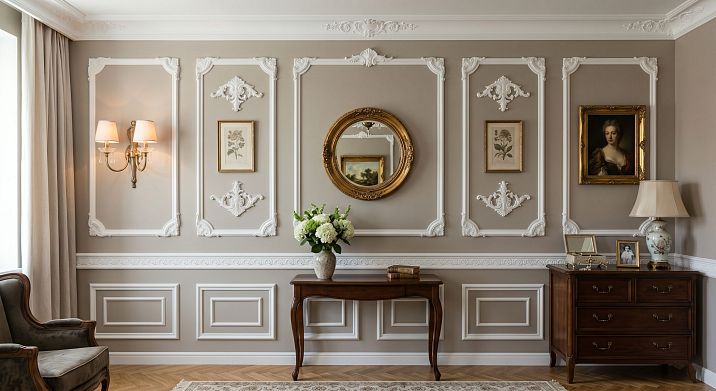
There is one detail that everyone notices — but no one can explain in words until they see the difference. Two interiors, two consoles of roughly the same class, similar mirrors above them. In the first — just furniture against the wall. In the second — a finished scene. A scene indeed: the wall behind the furniture is decorated, it works, it holds the entire ensemble. And this second interior looks more expensive — although less was spent on the console than in the first.
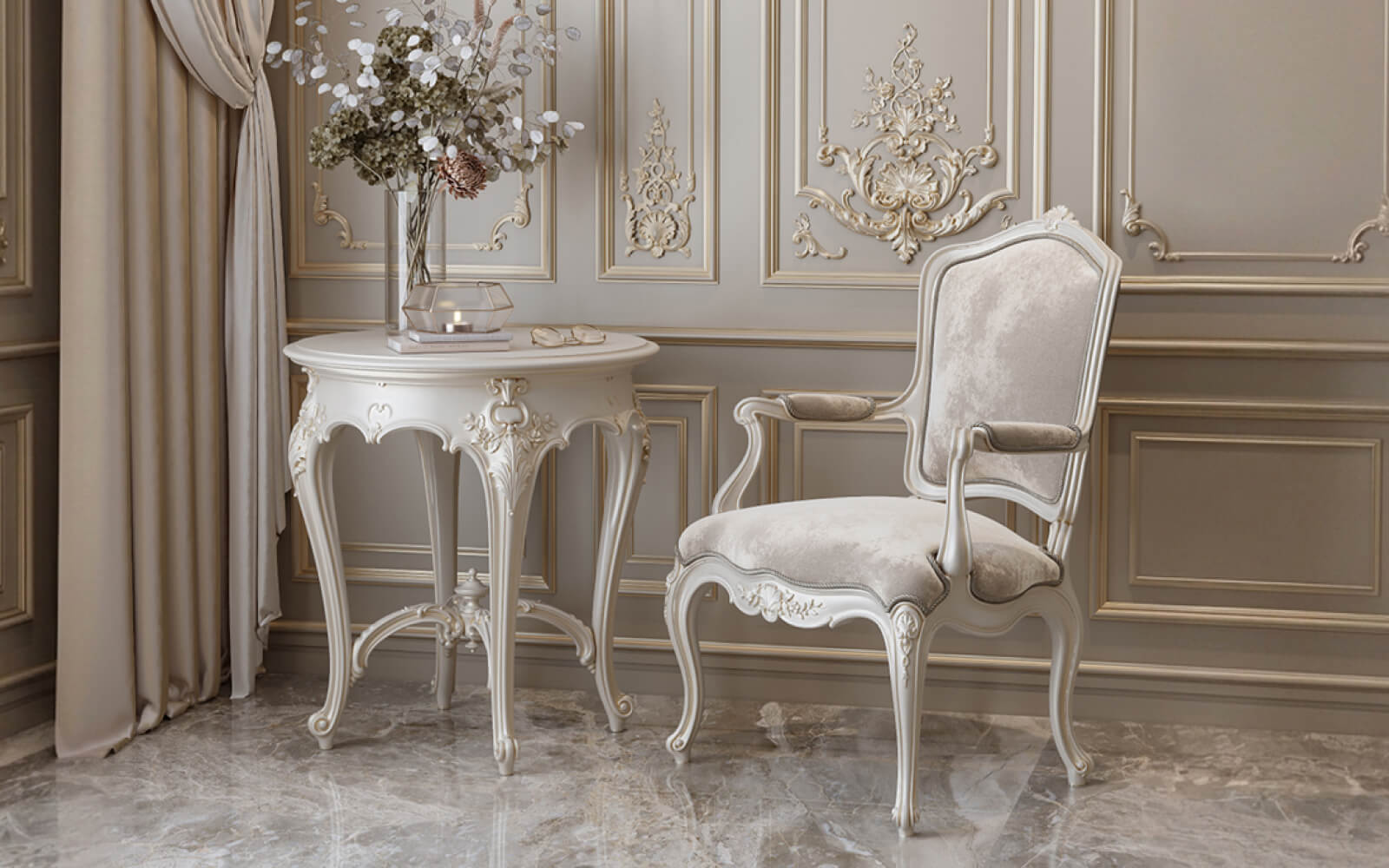
The secret is simple: the wall should be part of the composition, not just a background for the furniture.Stucco decor for a wall with a console — this is not a whim or an excess. It is a professional technique that turns a furniture area into an interior object. A frame of moldings above the console sets the scale, creates an axis, and connects the furniture with the mirror, sconce, and wall plane into a single system.
That is exactly what this discussion is about — thorough, practical, with specific diagrams and dimensions. For hallways and foyers, living rooms and bedrooms, studies and areas with a vanity table.
A console, chest of drawers, or vanity table looks more expensive when there is a decorated wall behind it.Polyurethane wall decorSTAVROS helps assemble a cohesive composition: a frame, panel, mirror area, or decorative accent above any type of furniture.


Why a wall with furniture needs to be decorated separately
The question sounds rhetorical — but the answer is important. Why is it not enough to simply place a beautiful console against a bare wall?
Because furniture without context is an object in space, not an interior solution. A console, even the most expensive one, remains a lonely object against an empty wall. There is no axis. No scale. No connection to the ceiling, floor, or what hangs above it. The gaze does not know where to go — and it passes by.
Moldings above the console solve exactly this problem. A frame made of polyurethane profile above the console does three things at once: sets a vertical axis to which a mirror or painting is attached; creates a space that visually 'belongs' to the furniture; and gives the entire area a sense of completeness — the feeling that it was intended from the very beginning.
Polyurethane elements are ideal here for a number of practical reasons. They are lightweight — they do not load the wall. They are mounted with glue without chasing. They can be painted with acrylic paint in any color — to match the wall, to match the furniture, or contrastingly. They do not deform, do not crack from dry air, and require no special care.Polyurethane molding for interior — this is the entire necessary arsenal: moldings, overlays, decorative elements, cornices, and baseboards.
And one more argument that is often underestimated:stucco decor behind furniture creates an illusion of depth and architecturality where there is physically no niche, panel, or additional finishing. A flat wall with a system of moldings is perceived as embossed — especially with side lighting, when the profiles cast shadows.




Where is wall decor with a console and a chest of drawers used?
Our factory also produces:





Hallway and entry hall: the first meeting
No other zone requires such a thoughtful approach to wall decor as the hallway. This is the place of the first impression — and the only chance to create it.Wall with a console in the hallway with molding design says: they thought about the details here.
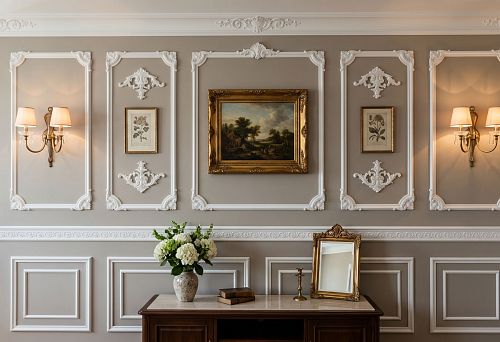
Classic scheme for the hallway: a narrow console against the wall, a mirror above it — and a frame of moldings around the mirror or a separate decorative frame on the wall above the console. Paired sconces on the sides are added to this frame — and the zone instantly acquires a hotel-level finish.
For a long corridor or spacious hall, a more large-scale solution works: a panel of moldings from the baseboard to the cornice behind the console — vertical lines, horizontal belts, frames. The furniture becomes inscribed into the architectural system, rather than simply placed against the wall.
wall decor with a polyurethane mirror — about designing mirror zones in the hallway and living room: how frames of moldings interact with the mirror, console, and lighting.
Get Consultation
Living room: chest of drawers as a decorative element
In the living room, a chest of drawers or low console most often stands against a side wall — not an accent wall. This makes the wall decor behind them especially important: without design, such an area remains unnoticed, "service-oriented."Moldings behind the dresser transform it into an independent accent.
Above a wide chest of drawers in the living room, a scheme with one large frame works well — inside which a painting, decorative panel, or simply a painted wall is placed. The frame sets a scale proportionate to the furniture and ties everything on the chest's surface into a single vertical axis.
Stucco decor for a wall with paintings and posters — about how moldings work in pair with wall art: frames, accents, architectural systems behind a painting or panel.
Bedroom: dressing table and chest of drawers opposite the bed
In the bedroom, the wall decor behind a chest of drawers or dressing table is not just about aesthetics. It's about the sense of space: when a person enters the bedroom and sees a designed area with furniture and decor opposite the bed, the room feels like a thoughtful, cohesive interior.
Moldings behind the vanity table — a special topic. The makeup area with a mirror, lighting, and decorative shelves deserves an architectural frame. A frame of moldings around the mirror and above the table turns the workspace into a vanity boudoir — with that special feeling of elegance and coziness that is hard to create with other means.
For a dresser opposite the bed: a frame or double frame on the wall above the furniture, slightly wider than the dresser. A painting or mirror inside the frame — centered. Moldings in the color of the wall or in a delicate contrast. The result is a symmetrical accent that balances the headboard area and makes the bedroom complete.
stucco decor in the color of the wall or contrasting — with a detailed breakdown of color solutions for bedroom walls with moldings and furniture.
Study: book area and decorative wall
In the studyWall decor with a console or a low cabinet — it's about status and concentration. A decorative wall behind the work furniture — dark tones, strict profiles, moldings in tone or with a gold accent — creates a space where you want to work.Wall decor in the study — with complete schemes for designing work areas with moldings and decorative elements.
Basic schemes for designing the wall behind furniture
Scheme 1. One large frame above a console or dresser
The basic, most universal scheme.Molding frame above the console — a rectangle whose width equals the furniture width plus 15–30 cm on each side. The frame height is from 70 to 130 cm, depending on the ceiling and furniture scale. The bottom line of the frame is 15–25 cm above the console or dresser top surface.
Inside the frame you can place:
-
a mirror (the most common option);
-
a painting or poster in its own frame;
-
a decorative panel;
-
just a painted wall — in the same or contrasting tone.
This solution works everywhere: hallway, living room, bedroom, foyer. It requires no complex calculations and gives a predictable result.Ready-made molding frames for the wall — about ready-made systems and proportions for various furniture formats.
Important principle: the frame should not be narrower than the furniture. This is the only rule whose violation is immediately perceived as a mistake. Even if the furniture is narrow, the frame should be slightly wider.
Scheme 2. Mirror in a molding frame above furniture
Essentially, it's an enhancement of Scheme 1. The mirror is not just hung above the console but placed inside a decorative molding frame. The molding does not frame the mirror itself (the mirror usually has its own frame) but creates a wider decorative contour around it.
This double framing — the mirror's frame plus the molding frame around it — creates the effect of an architectural niche, even though there is no niche. The wall is flat, but visually it seems as if the mirror is "recessed" into the wall.
Gap between the mirror frame and the inner edge of the molding: 8–20 cm. This "air" makes the system feel breathable, not cramped.wall decor with a polyurethane mirror— with specific recommendations for positioning the mirror within the molding system.
Scheme 3. Two vertical frames on the sides of wide furniture
For wide dressers 140–200 cm and large walls. Instead of one frame above the center, two vertical frames are placed symmetrically on either side of the furniture's central axis. In the center between the frames is a mirror, painting, or open wall space.
This scheme works well when there are two sconces or two decorative vases on the dresser: the frames create a vertical rhythm that matches the paired objects.symmetric polyurethane wall decor— about building symmetrical systems in various rooms.
Dimensions of vertical frames: width 35–55 cm, height from 90 to 150 cm. Distance between frames: 40–80 cm, depending on the width of the dresser and the presence of a central object.
Scheme 4. Central frame with decorative overlays
For neoclassical and modern classic styles. The basic frame made of moldings is complemented bydecor for moldings— corner inserts at the frame corners — anddecorative polyurethane overlaysin the center of the top line, in the center of the frame, or in its lower part.
This solution turns a simple rectangular frame into an elegant decorative object. Corner inserts add a sense of jewelry-like craftsmanship, while overlays serve as an accent element that draws the eye. For a console in a hall or a grand entryway with a high ceiling, this is an ideal option.
Principle of proportionality: the size of the overlays is proportional to the width of the molding profile. If the molding is 35 mm, the corner insert is 50–70 mm. If the molding is 50 mm, the insert is 80–110 mm. The overlay in the center of the top line of the frame should be approximately 2.5–3 times wider than the molding profile.
Scheme 5. Panel system from baseboard to cornice
The most architectural solution. The furniture area is designed not just with a frame above it, but with a full vertical panel — from the baseboard to the cornice. Several horizontal molding belts divide this vertical into zones: the lower zone (the lower molding belt at a height of 90–110 cm) where the furniture stands, and the upper zone — a decorative wall with frames.
The effect is striking: the furniture appears built into the wall, rather than just placed against it. This is a level of design usually associated with expensive renovations — although polyurethane moldings and stucco decor allow it to be achieved without complex construction work.
This scheme works especially powerfully in a hall with a ceiling height of 3 m or more: a vertical from floor to ceiling with several horizontal belts, frames in the upper zone, and a console in the lower zone — this is a true architectural gallery.
Scheme 6. Ready-made set of stucco decor
Ready-made molded decor kits — for those who don't want to calculate proportions, select profiles, or think about element compatibility on their own. The ready-made set contains all necessary parts in a unified style: profiles, corner inserts, decorative accents. You just choose a spot for the furniture — and build the system around it.
For a console area in a medium-sized hallway: a set with an 80×120 cm frame plus a horizontal belt. For a wide dresser in the living room: a set with two frames and a central accent. The result is predictable, proportional, and looks professional.
For a basic composition,Moldings made of polyurethane. If you want to make the console or dresser area more expressive — addDecor for MoldingorPU overlays.
How to calculate a frame for specific furniture
This is a practical section — for those who want to do everything right the first time.
Frame width
Main rule: the frame should not be narrower than the furniture. Minimum frame width = furniture width. Optimal — furniture width + 15–30 cm (7–15 cm on each side).
| Furniture type | Furniture width | Recommended frame width |
|---|---|---|
| Narrow console (60–90 cm) | 60–90 cm | 80–120 cm |
| Medium console (90–120 cm) | 90–120 cm | 110–150 cm |
| Wide dresser (120–160 cm) | 120–160 cm | 140–190 cm |
| Large dresser (160–200 cm) | 160–200 cm | 180–230 cm (or 2 frames) |
| Vanity table | 80–120 cm | 100–150 cm |
Frame height
Depends on ceiling height and placement of mirror or painting:
-
Ceiling 2.5–2.7 m: frame height 70–100 cm
-
Ceiling 2.7–3.0 m: frame height 90–120 cm
-
Ceiling from 3.0 m: frame height 110–150 cm or panel system
Bottom edge of frame
Distance from the furniture surface to the bottom edge of the frame: 15–30 cm. Less — the frame will "press" on the furniture. More — the connection between the furniture and the frame is lost, they begin to exist independently.
Profile width
-
Narrow console + low ceiling → profile 18–25 mm
-
Medium furniture + standard ceiling → profile 25–38 mm
-
Wide dresser + high ceiling → profile 35–50 mm
-
Grand hall + ceiling from 3 m → profile 45–60 mm
Thin polyurethane moldings for walls — if a delicate profile is needed for a modern minimalist interior or a vanity area.
Color solutions for wall decor with furniture
Moldings in the color of the wall
The most exquisite technique — moldings painted in the same tone as the wall. The frame is not immediately visible, it is guessed — thanks to the shadow from the relief. This is called "invisible architecture": the wall is formally monochrome, but it is not flat — it has depth, relief, and structure.
For a console in a modern interior, for a vanity table in the bedroom, for a dresser in the living room in Japandi or modern classic style — moldings in the wall tone give the most delicate and most expensive result. The furniture becomes the center of attention, and the decor creates an invisible architectural frame for it.
White moldings on a colored wall
Classic for hallway and bedroom. Dark blue wall — white moldings. Warm terracotta — white or cream moldings. Emerald — white or gold moldings. The contrast reads clearly, the moldings are expressive, the furniture area becomes a graphic accent.
Important: with white moldings on a colored wall, all furniture and decor in that area should be aligned with this color pair. A mismatch in the color of furniture, moldings, and accessories destroys the integrity.
Contrasting moldings
Dark moldings on a light wall — it's strict, graphic, modern. Works well in a study, in an art deco living room, in a hallway with dark furniture. Gold moldings on a dark wall — for a classic hall, neoclassical living room, formal area with a walnut or oak console.
Moldings matching furniture color
A non-standard but very precise technique. If the console is dark walnut — moldings in a similar dark tone. If the furniture is lacquered white — moldings are white. This creates a visual connection between the furniture and the wall, a sense of a unified material solution.
Which elements to use for decorating the furniture area
Polyurethane moldings
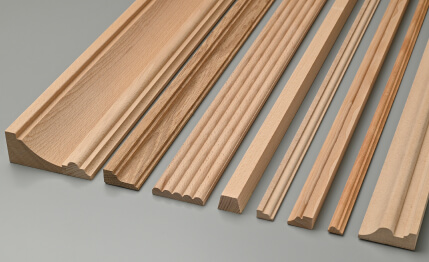
Moldings for a wall with furniture — the basis of any scheme. Trim profiles from which frames are assembled: four segments with a 45° miter cut or with corner inserts. Sold by linear meter, easily cut, glued without special tools.
When choosing a molding, it is important: the profile should be proportional to the size of the furniture and the ceiling height. A thin, elegant molding for a dressing table in the bedroom is appropriate. The same molding on a large wall with a wide chest in the hallway will be lost.
Decor for moldings
molding decorative elements— corner inserts, transitions, ornamental details. Corner inserts are the most popular element: they are mounted in the corners of the frame and turn a simple rectangle into a classic architectural frame. It is they that create the "jewelry" look that distinguishes an amateur solution from a professional one.
For a console in a neoclassical hallway — a frame with corner inserts and a decorative plate in the center of the top line. For a chest of drawers in a modern classic style bedroom — a frame with simple corner inserts, without additional accents.
PU overlays
PU overlays— rosettes, medallions, cartouches, plates with ornament. In the context of the furniture area, the following are used:
-
above the frame — as a crown completing the vertical axis;
-
below the frame — as a decorative "threshold" in front of the furniture surface;
-
in the center of the frame — if there is no mirror or painting inside;
-
on the horizontal belt above the furniture.
Overlays add elegance and neoclassical expressiveness to the vertical zone. For a hallway with a console in the Versailles Light style — a medallion above the frame and corner inserts in its corners. This is a complete architectural system.
Baseboards and cornices
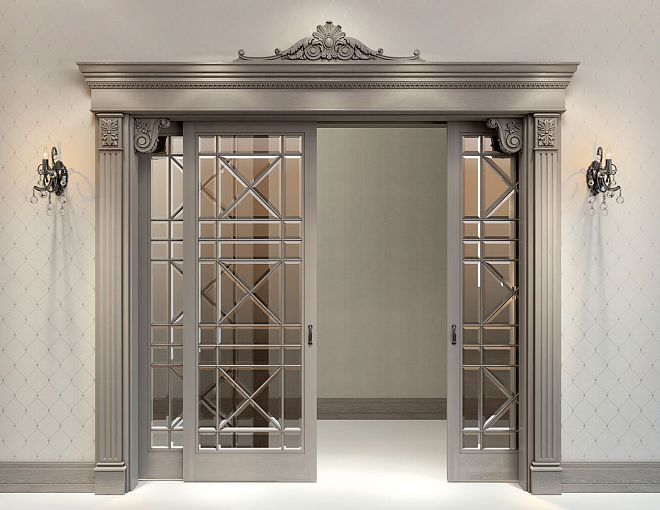
polyurethane products from STAVROSinclude cornices and baseboards that connect the wall system to the ceiling and floor. A wall with moldings behind a console, finished with a cornice on top and a baseboard on the bottom, is a complete architectural zone. Without a baseboard and cornice, the decorative wall looks unfinished.
This is especially important for a panel scheme (from baseboard to cornice): here the baseboard and cornice are an organic part of the system, not a separate element.
Styles for the console and dresser area with stucco decor
Neoclassicism
Moldings for a wall with a console in neoclassical style— historically the most organic combination. A console with a marble top, a mirror in a frame, paired sconces on each side, frames made of moldings with corner inserts — this is a classic formal scheme dating back to 18th-century interiors.
For neoclassicism, strict symmetry is important: the console in the center, the frame or system of frames strictly symmetrical, sconces at equal distances from the central axis, the mirror exactly aligned with the console axis. The molding profile — with a relief section or soft rounding, 35–50 mm. CollectionNeoclassical— a ready-made system for such solutions.
Neoclassic Light
Light wall decor with a dresser— for modern apartments that want a classic touch without heaviness. Light moldings 20–30 mm, simple corner inserts, no excess ornamentation. A mirror in its own frame above the console, one frame of moldings around it — and that's enough.
Neoclassic Light— the optimal choice for most modern residential interiors: it doesn't aim for formality but provides the needed classic decor touch.
Japandi
Wall decor with a console in Japandi style— the most delicate of all. The finest profile of 15–20 mm, matching the wall color. A single horizontal molding line or a minimalist frame outline. No corner inserts, no overlays.
A console made of natural wood, a mirror with a simple metal frame, one vase on the surface — and a thin molding on the wall creates geometry without decor. Meditative, precise, expensive. CollectionJapandi— with minimalist profiles for such a solution.
Modern classic
Moldings matching the wall color, a medium-scale frame, a mirror or painting in the center. Without complex ornaments, without opulence — only pure geometry of the frame. Furniture is light or in natural wood, accessories on the surface — in two or three restrained tones.
For modern classic — collectionNeoclassic Lightwith profiles of 25–40 mm or individual selection from the catalogof polyurethane moldings.
Versailles Light
Classic wall decor with a console— for grand interiors, for halls with high ceilings, for those who want elegance and architectural expressiveness. Large frames with corner inserts and decorative overlays, a horizontal frieze above the console, a cornice on top. The console is gilded, marble, or lacquered. The mirror is in a gold frame.
The STAVROS collectionVersailles Lightcontains all the necessary elements for implementing such a solution.
Installation of decor behind furniture: correct sequence
This is an important practical section that helps avoid costly mistakes.
Step 1. Determine the furniture position. Before starting decoration, precisely determine where the console or chest of drawers will stand. Its position sets the axis of symmetry for the entire molding system. Moving furniture after installing moldings means redoing the entire system.
Step 2. Account for electrical work. If wall sconces, switches, or outlets are planned in the furniture area, do this before installing moldings. Cables and junction boxes must be in place before installation.installing polyurethane molding — with instructions for working with electrical outlets when installing decorative systems.
Step 3. Level and prime the wall. Moldings are installed on a smooth, primed surface. If the wall is uneven, the molding will follow the unevenness, and joints will be open.
Step 4. Marking. Draw all lines of the future system on the wall: axes, frame dimensions, horizontal belt positions. A laser level is mandatory. Pencil markings are checked twice.
Step 5. Install moldings. First horizontal elements, then vertical ones. Corners are cut at 45° or use corner inserts. Use polyurethane or construction adhesive compatible with polyurethane.installation of polyurethane molding — with a complete practical guide.
Step 6. Fill joints and final painting. After installation, all joints between the molding and the wall are filled with acrylic putty, sanded, and painted together with the wall.
Step 7. Arrange furniture and final decor. Place furniture in position, hang a mirror or painting along the frame axis, add accessories on the console or chest of drawers surface. Final visual check.
Errors when decorating a wall with a console or dresser
Frame smaller than the furniture. This is the most common mistake. A frame that is narrower than the console or dresser "squeezes" the space and visually reduces the furniture. The minimum frame width is the width of the furniture.
Moldings intersect a mirror or light fixtures. A molding line passing through the mirror frame or the body of a sconce destroys the entire system. Moldings are installed before the position of all wall objects is determined — or conversely, objects are placed strictly considering the molding system.
Frame axis does not align with furniture axis. The frame is shifted left or right from the center of the console — and the entire ensemble looks unbalanced. The center of the frame always aligns with the center of the furniture.
Too many small elements. Five small frames above a narrow console is chaos, not decor. For small furniture — one frame or a simple system of two horizontal bands.
Outlets not accounted for. An outlet in the middle of a decorative zone, protruding from the wall between moldings, is the result of not planning the electrical work before installation. Solution: PU covers in a suitable location or moving the outlet before installing the decor.
Moldings not connected to the baseboard and cornice. The decorative system on the wall exists separately from the baseboard and cornice — different profiles, different widths, different styles. Everything should belong to the same style family.
Molding too thin for a large wall. A 15 mm profile on a 4×3 m wall with a wide dresser — it simply won't be visible. The molding should be proportionate to the space.
Mirror or painting placed asymmetrically inside the frame. The object inside the frame should be centered — both horizontally and vertically. Otherwise, the frame looks random.
What to buy for decorating the furniture area
Complete list of required STAVROS elements:
-
Moldings made of polyurethane — profiles for frames above the console, chest of drawers, vanity table, for horizontal belts and vertical panel systems.
-
Polyurethane wall decor — decorative elements and ready-made systems for full wall decoration behind furniture.
-
Decor for Molding — corner inserts and transition elements for reinforcing frame systems.
-
PU overlays — rosettes, cartouches, medallions for accent points in the console or chest area.
-
Ready-made molded decor kits — complete systems with selected elements for quick and accurate results.
-
Polyurethane molding for interior— full catalog: moldings, cornices, baseboards, decorative elements.
If you don't want to calculate frame sizes and select elements yourself, use ready-made STAVROS collections:Neoclassical, Neoclassic Light, JapandiorVersailles Light.
Frequently asked questions
How to decorate a wall with a console in the hallway?
Basic scheme: one frame of moldings above the console, slightly wider than the furniture. Inside the frame — a mirror. On the sides — sconces at the same height. Moldings in the color of the wall or with delicate contrast. For a neoclassical hallway — corner inserts in the corners of the frame. More details —Wall decor in the hallway and corridor.
What size frame should I choose above the dresser?
Frame width — dresser width + 15–30 cm (7–15 cm on each side). Frame height — 70–120 cm, depending on ceiling height. Bottom edge of the frame — 15–25 cm above the countertop surface.Ready-made molding frames for the wall — with proportion tables for various furniture formats.
Can I decorate the wall behind furniture without renovation?
Yes. Polyurethane moldings are mounted on an already painted or plastered wall — with glue, without chasing. The only condition is a flat surface. If electrical work (sconces) is planned, it must be done before installing the moldings. Otherwise, decor behind furniture can be implemented without a full renovation.
What comes first: furniture or moldings?
The furniture needs to be positioned before starting the molding installation — but physically it can be placed after. It's important to know where the console or dresser will stand to correctly mark the axis of symmetry and calculate the frame width.
How to combine moldings, console, mirror, and sconces in one area?
The logic is: mirror — along the console axis, molding frame — around or above the mirror, sconces — on both sides of the mirror at the same height. All elements are connected by one vertical axis.wall decor with a polyurethane mirror — with complete diagrams for such compositions.
Which moldings to choose for a bedroom with a dresser?
For the bedroom — delicate profiles 20–35 mm, matching the wall color or with a soft contrast. No lavish ornaments. If the bedroom style is Japandi or minimalism,thin moldings15–20 mm. If modern classic or light neoclassical — 25–35 mm with corner inserts.
Is a cornice needed if moldings are already behind the furniture?
Preferably. The cornice completes the wall system from above and connects it to the ceiling. A wall with moldings without a cornice looks like an unfinished system.STAVROS polyurethane moldingincludes cornices of all formats — from thin 50 mm to representative 120 mm.