

























Article Contents:
- Why a stair hall is a special challenge for a designer
- The main principle: emphasize height, not suppress it
- Wooden slats in a stair hall: areas of application
- High wall along the staircase
- Wall on the landing
- Pier between flights
- Accent wall opposite the stairs
- Second floor hall
- How stucco decor organizes a high wall
- Vertical frames on a high wall
- Horizontal belts
- Decorative inserts on piers
- Moldings in the upper zone near the ceiling
- How to combine wooden slats and moldings: working schemes
- Scheme 1: slats as a vertical accent, moldings on the adjacent plane
- Scheme 2: moldings around the wall, slats inside the central zone
- Scheme 3: slats in the lower part of the wall, moldings above
- Scheme 4: stucco decor in the wall color, slats in natural wood
- Scheme 5: slats in japandi, moldings — absent
- Ceiling cornice in the stair hall: how to choose and not make a mistake
- Cornice only in horizontal zones
- Thin profile instead of a massive cornice
- Cornice matching the color of the ceiling or wall
- Wooden cornice for classic and neoclassical styles
- Molding profile on the second floor landing
- Baseboard for the stair hall: choosing wisely
- Wooden baseboard for a country house
- MDF baseboard for painting
- Baseboard in wall color
- How the baseboard transitions from a horizontal section to a sloped one
- Moldings, corners, and bars for complex junctions
- Wooden corner
- Wooden bar as a load-bearing element
- Wooden frame
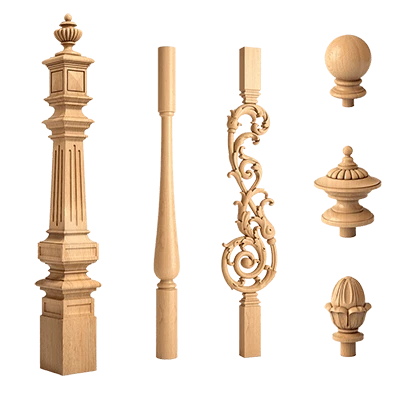
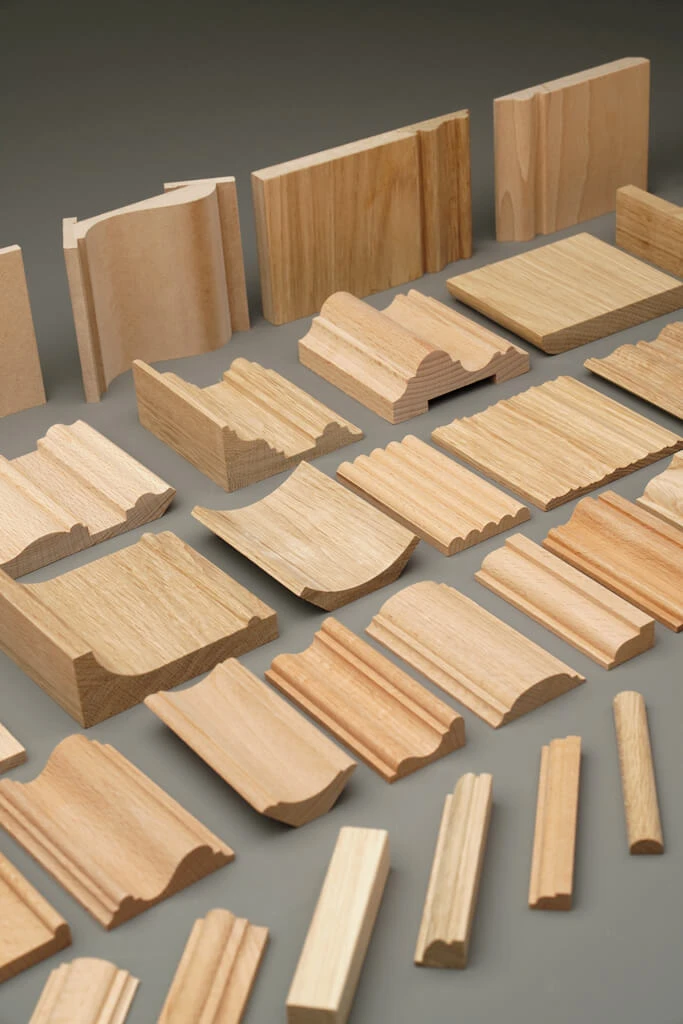
- Decorative wooden moldings
- Molding products for the stair hall: a comprehensive approach
- Stair hall design styles: from classic to Japandi
- Neoclassicism: architecture as the main character
- Modern interior: rhythm and purity
- Japandi: wood and air
- Classic: wood everywhere
- Commercial hall: rhythm, status, durability
- Working with height: how to scale decor
- How to properly scale wooden slats
- How to scale moldings and cornices
- Lighting and decor: how they work together
- Mistakes in designing a stair hall
- Installation nuances: what is important to know before starting work
- Base for slats
- Mounting at height
- Installation of polyurethane moldings
- Wood shrinkage
- Polyurethane next to wood: why it works
- FAQ: Answers to Popular Questions
- STAVROS: everything for the stair hall in one catalog
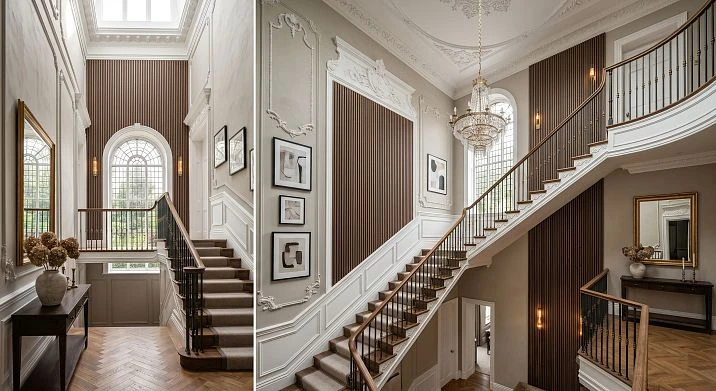
A stair hall is not just a transitional space. It is the first and last frame of your home. What a person sees when going up or down the stairs shapes the feeling of the entire interior. Here there are high walls, sloping lines, complex angles, the play of light and shadow at different levels. And here lies one of the most challenging tasks in design: how to arrange all of this so as not to overload, not to lose scale, and to create true architecture?
The answer lies in a thoughtful combination of wooden strips, stucco decor, moldings, cornices, baseboards, and linear trim. It is these tools, applied systematically, that transform a stair hall from a technical passage into an architectural accent of the entire building.
Why a stair hall is a special challenge for a designer
A straight room with straight walls is one thing. A stairwell is quite another. Here everything is more complex, larger in scale, and at the same time more vulnerable.
What makes a stair hall challenging from a decor perspective:
-
High wall along the stairs — it often reaches 5–7 meters. Ordinary decor at such a height gets lost and seems disproportionate.
-
Sloping line of the flight — the stairs go at an angle, and this angle "cuts" the wall diagonally. Horizontal decorative elements come into conflict with it.
-
Complex angles and transitions — on the second floor landing, the wall meets the ceiling at a non-standard angle; where the staircase leads to the first floor, there are junctions with the floor, threshold, and doorway.
-
Lighting changes with height — the upper zone of the wall is lit differently than the lower zone. This affects how the decor is perceived.
-
The wall is visible from several points simultaneously — from below, above, the side, and in motion. Static decor designed for a single angle does not work here.
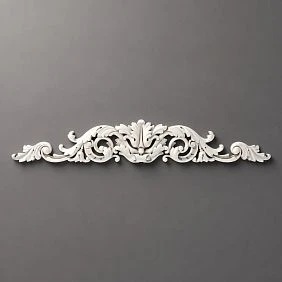
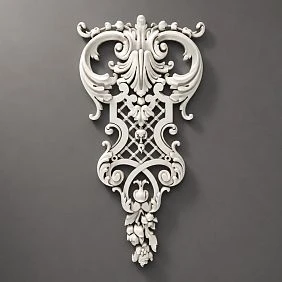
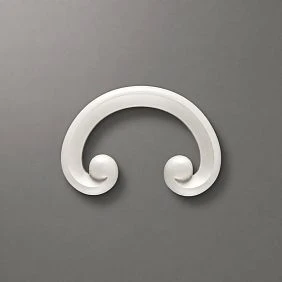
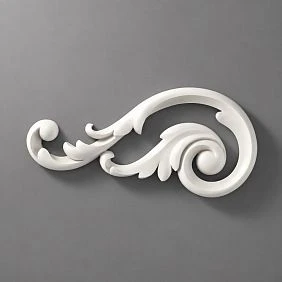
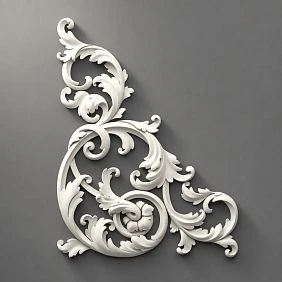
That is why a stair hall requires not a single element, but a system.Stucco decor for a staircaseby itself is only part of the answer. Wooden slats by themselves are also just part. But together, in combination with the right baseboard, cornice, and moldings, they create a complete architectural environment.
The main principle: emphasize the height, not suppress it
The most common mistake when decorating a stair hall is trying to "fill" a tall wall. The designer or homeowner starts loading it with decor from bottom to top, and the result is an overcrowded space with no air, rhythm, or scale.
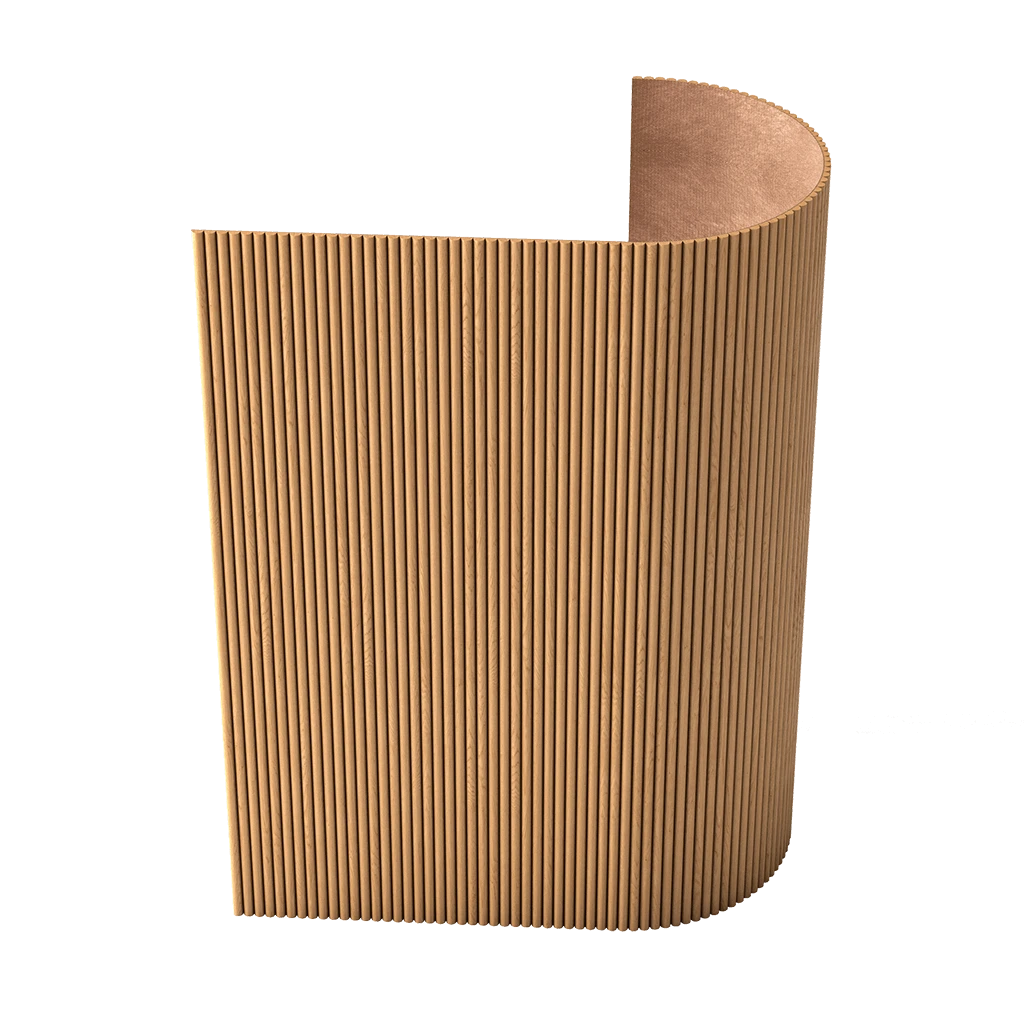
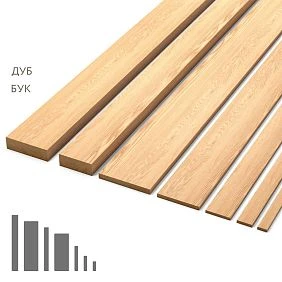
The correct strategy is the opposite: use decorative elements to create rhythm and structure while preserving enough empty space. Vertical linesDecorative wooden plankswork exactly this way — they draw the eye upward, emphasizing the height rather than fighting it.
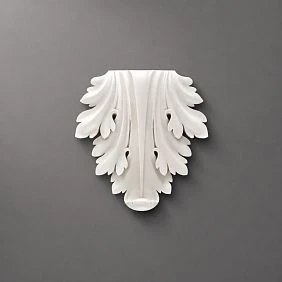
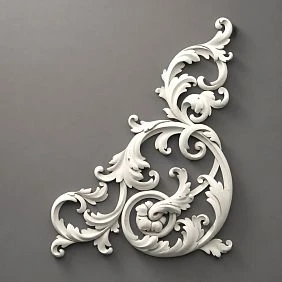
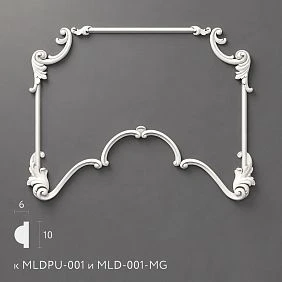
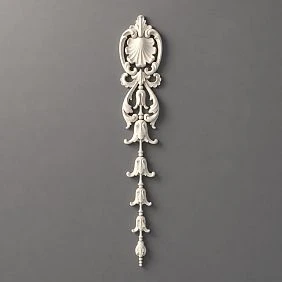
Our factory also produces:
Wooden slats in the stair hall: application areas
Before choosing a material, you need to understand the geometry. In the stair hall, there are several fundamentally different zones, each with its own rules.
Get Consultation
High wall along the stair flight
This is the main plane of the stair hall. It is visible immediately upon entry, accompanies movement along the stairs, and shapes the overall impression. It is here thatwooden planks on the wallthey have the maximum effect.
Vertical slats from floor to ceiling are a classic and foolproof technique. They create a rhythm that echoes the vertical rhythm of the stair balusters and turn a long sloping wall into a cohesive architectural plane. The slats do not need to run along the entire wall — it is enough to highlight the central zone or the lower third, leaving the wall above clean or adding moldings.
Wall on the stair landing
The landing is a 'pause' in movement. Here, a person stops, turns, looks around. The landing can become an accent: a small niche with wooden slats inside, illuminated by hidden light; a panel of slats with a molding frame around it; a decorative insert made ofof slatted panelsas a local accent on the wall.
Pier between flights
In a two-flight staircase, a narrow, tall plane called a pier is formed between the two flights. It is ideal for a vertical slat composition: slats from floor to ceiling, with a baseboard at the bottom and a molding frame around it. This is a small area, so it can be made as rich as possible without the risk of overloading.
Accent wall opposite the staircase
The wall you look at when going up or down is the focal point. Large architectural elements work well here: elongated frames made of of polyurethane moldings, slat panels, decorative niche. The scale should match the viewing distance: if the staircase is long, the details should be larger.
Second floor hall
If there is an open hall with a balustrade on the second floor, its walls are a continuation of the staircase space. Unity of materials here is crucial: Wooden plank on the walls of the second floor hall should be of the same species and tint as on the first floor.
How stucco decor organizes a tall wall
Moldings and stucco decor are not decoration on top of a wall. They are architectural markup. This is exactly how they should be used in a staircase hall: as a tool for structuring a large plane.
Vertical frames on a tall wall
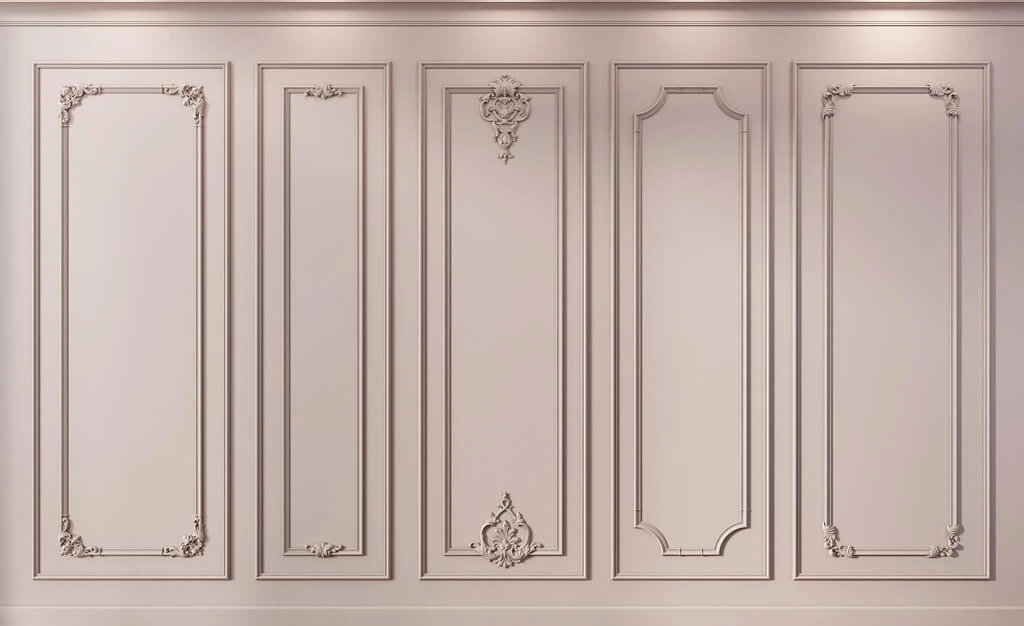
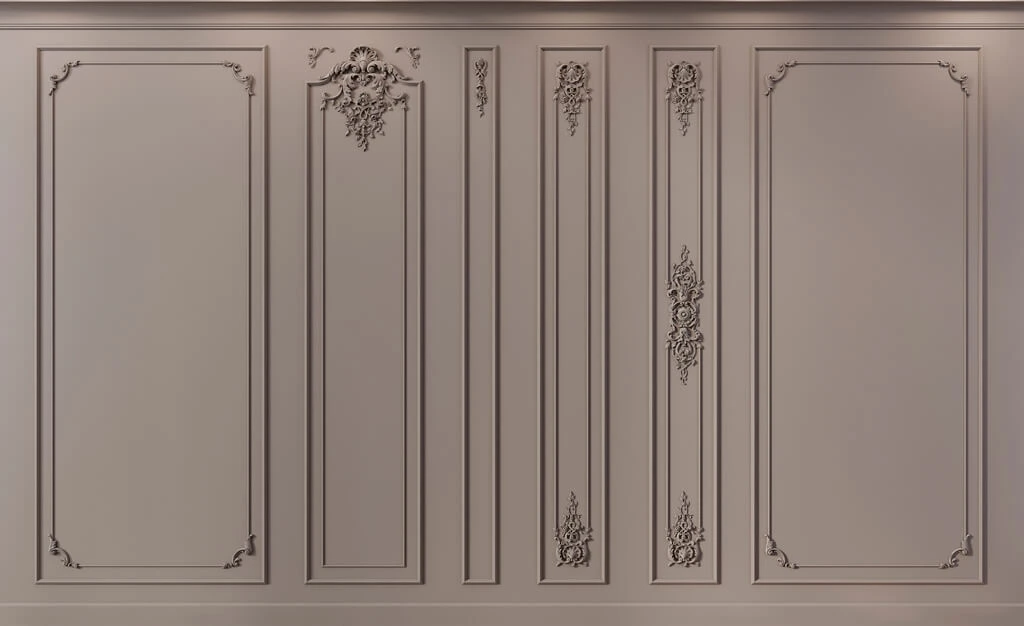
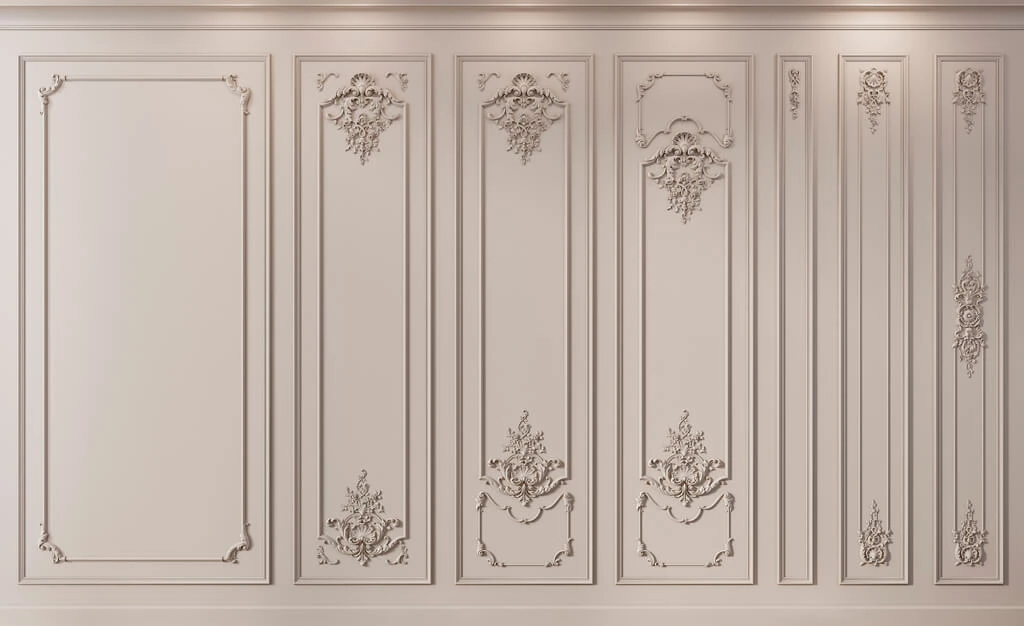
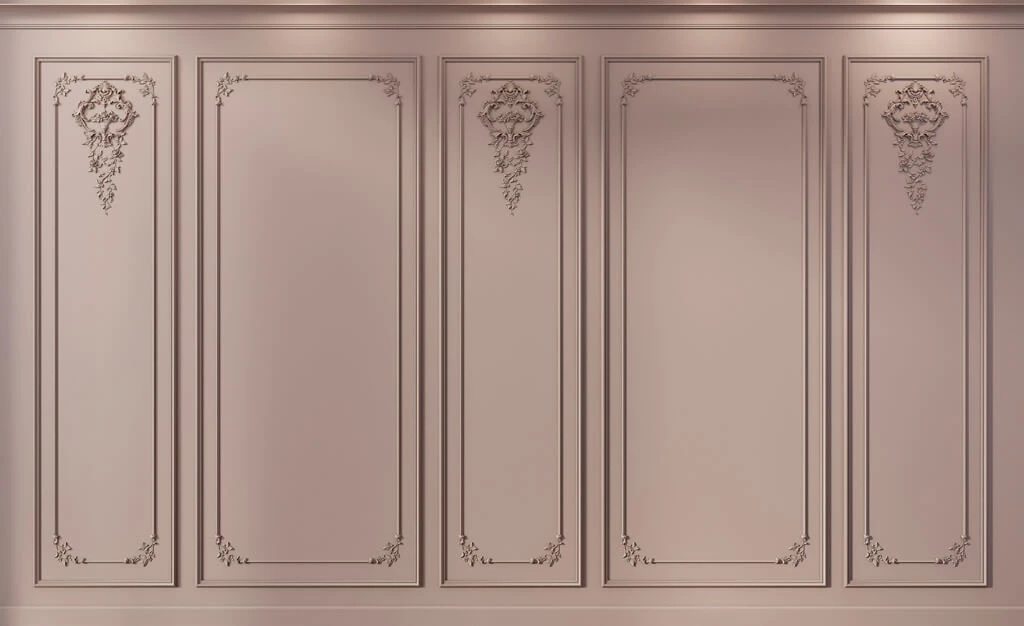
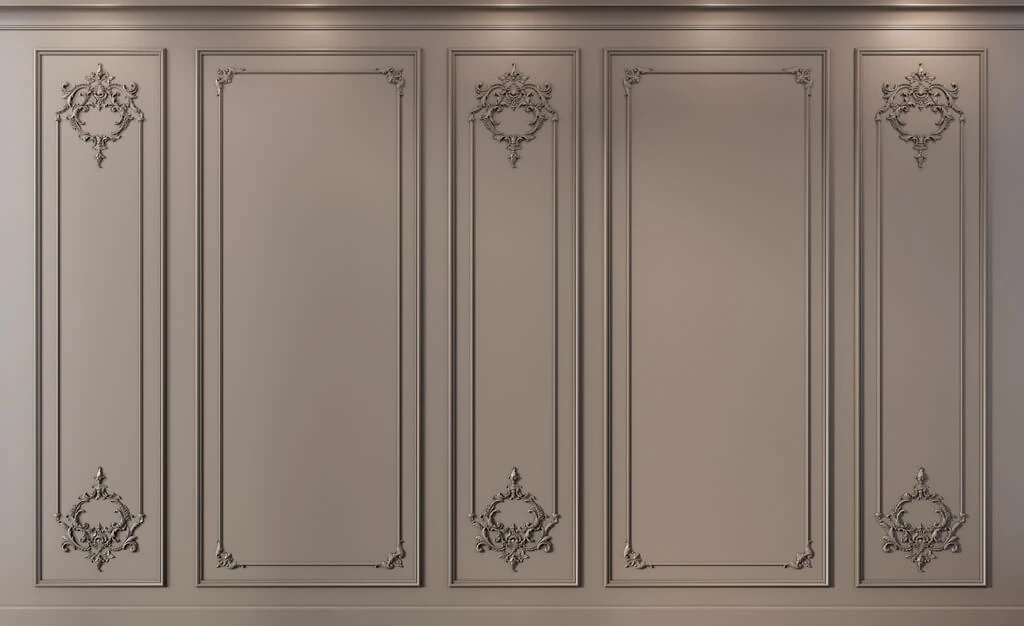
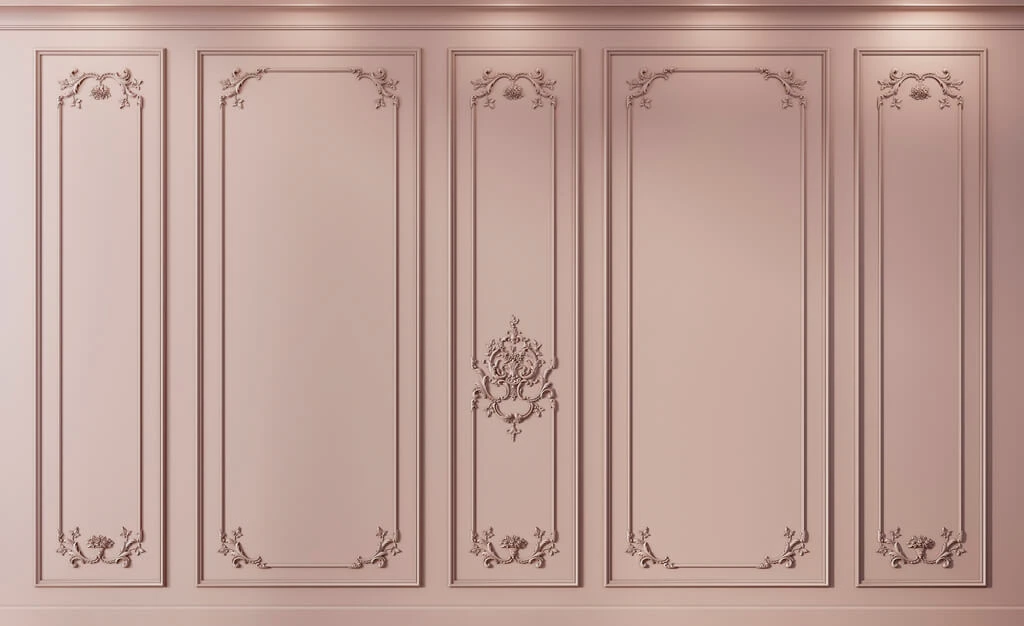
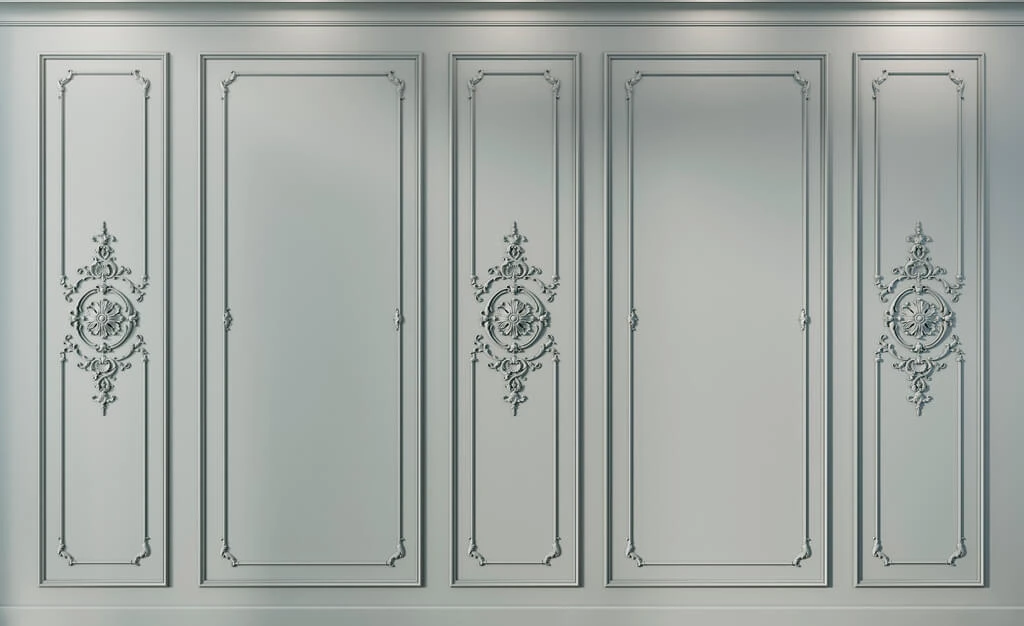
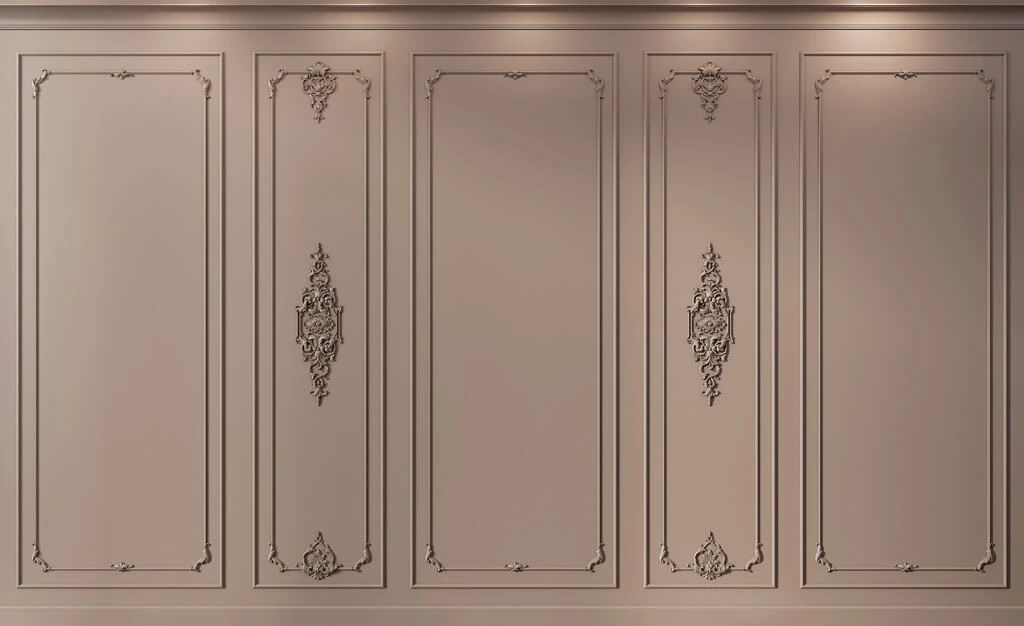
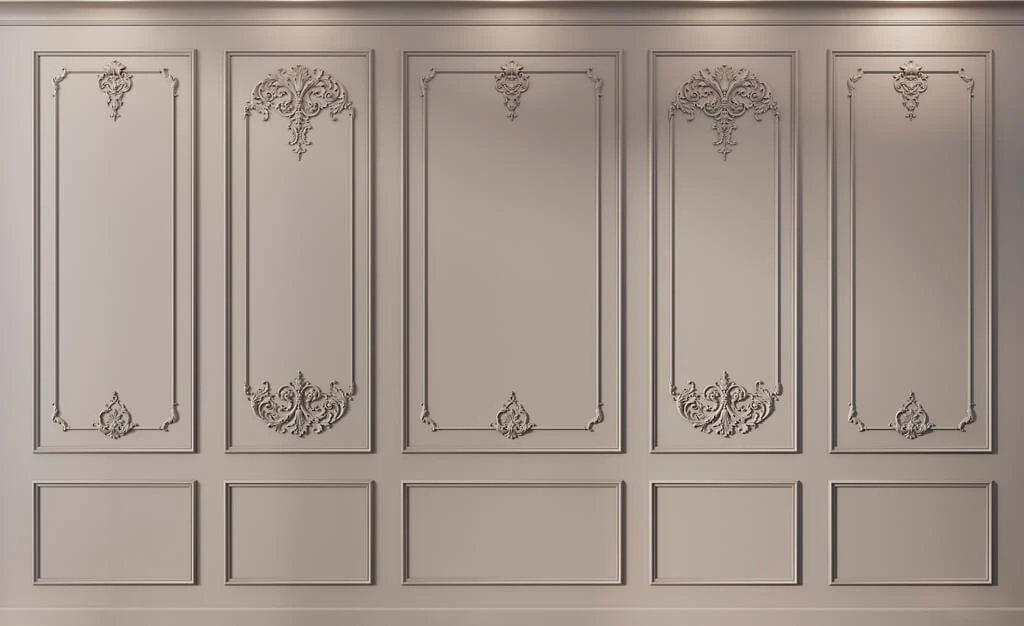
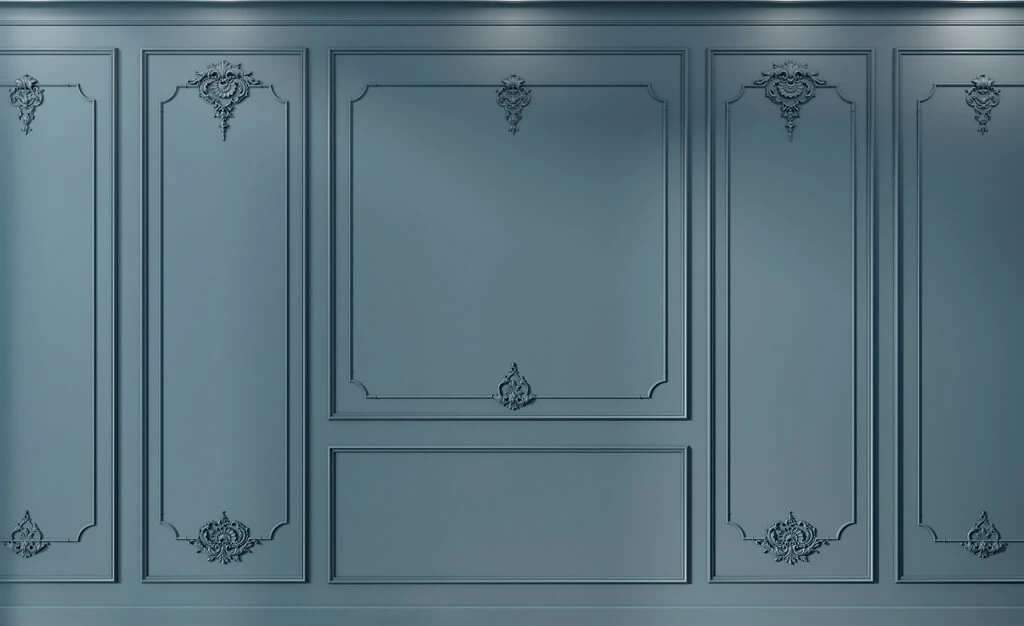
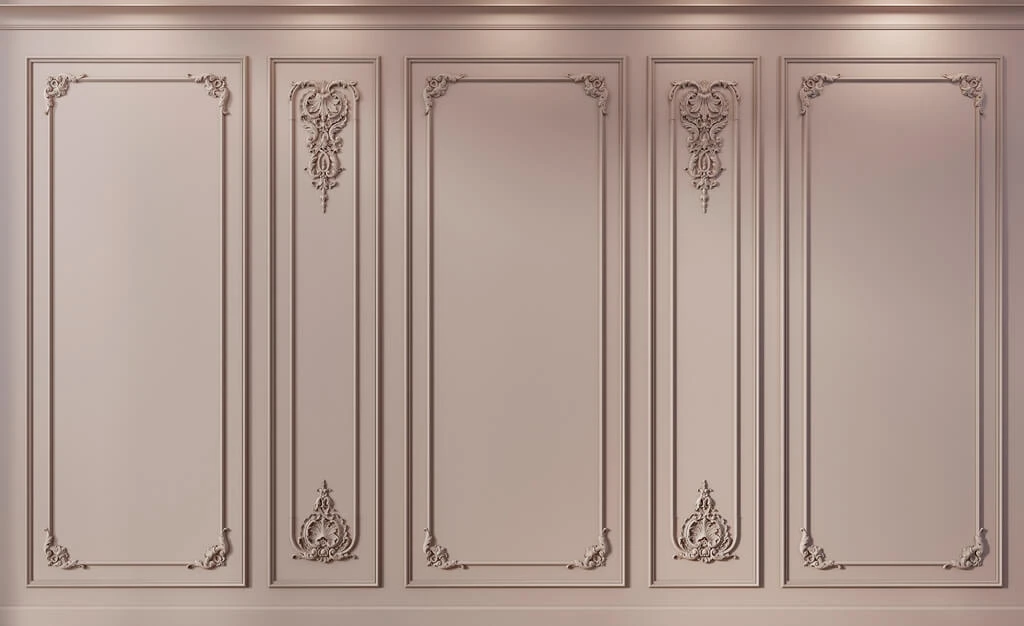
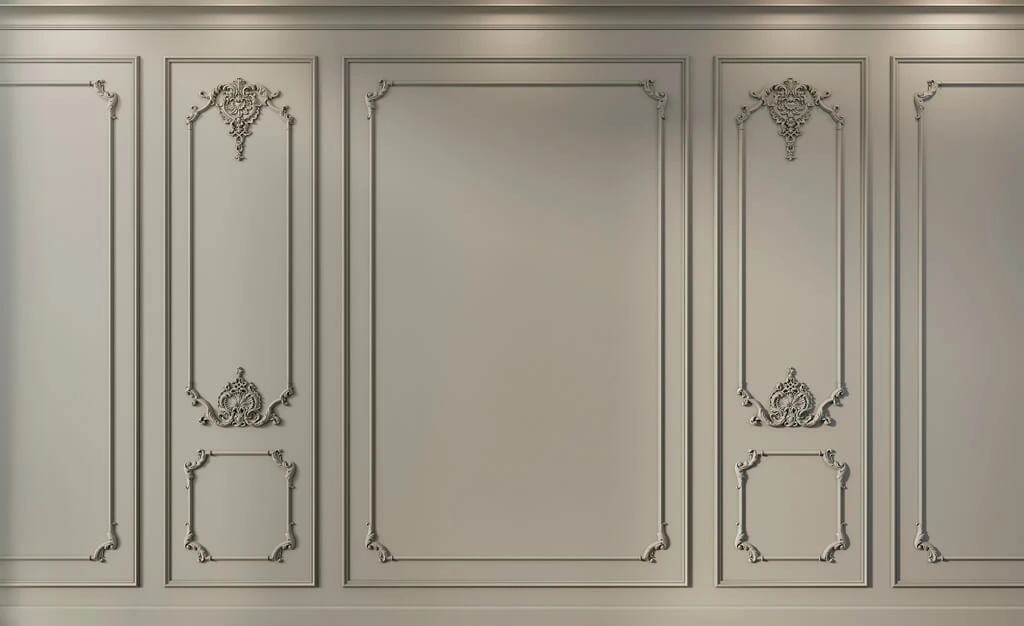
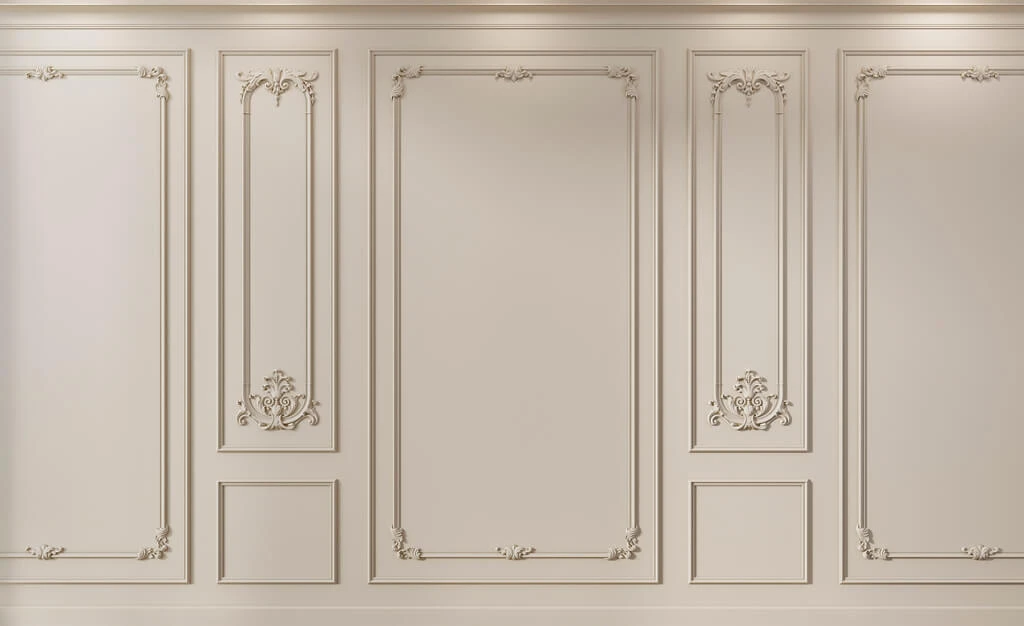
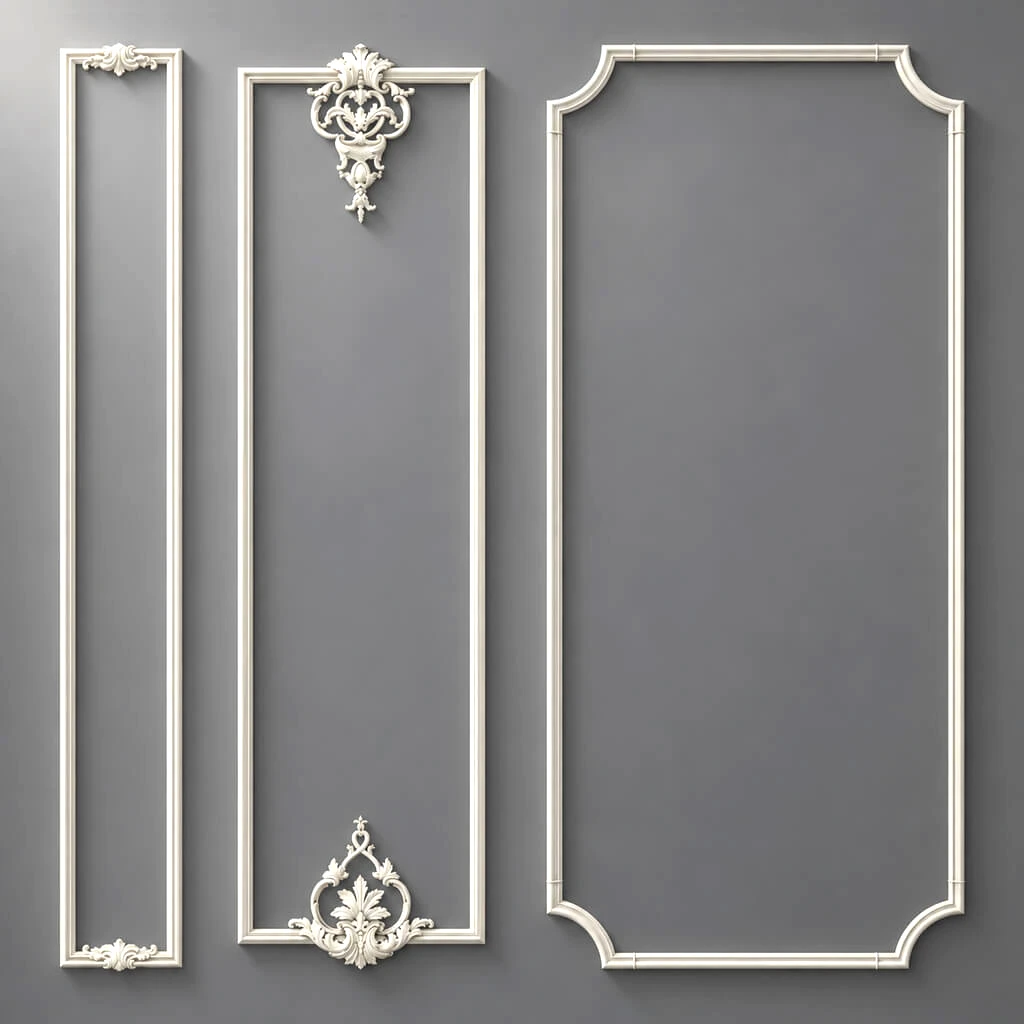
The long sloping wall along the staircase can be "drawn" with vertical molding frames. This is a classic boiserie technique — dividing the wall into rectangular panels using decorative overlays. On a tall wall, such panels can have different formats: elongated rectangles at the bottom and wider ones at the top.
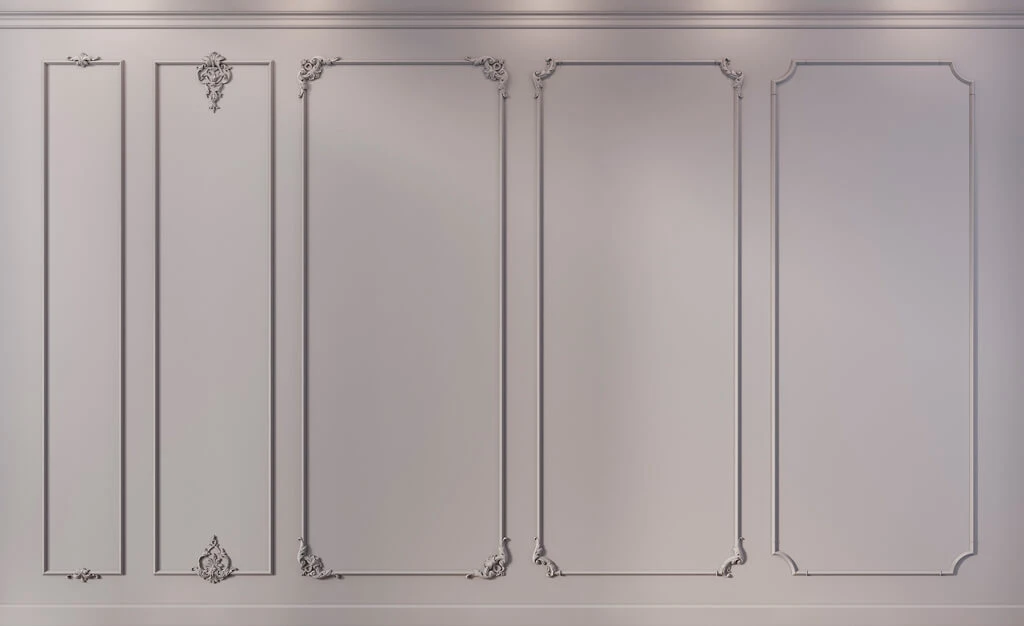
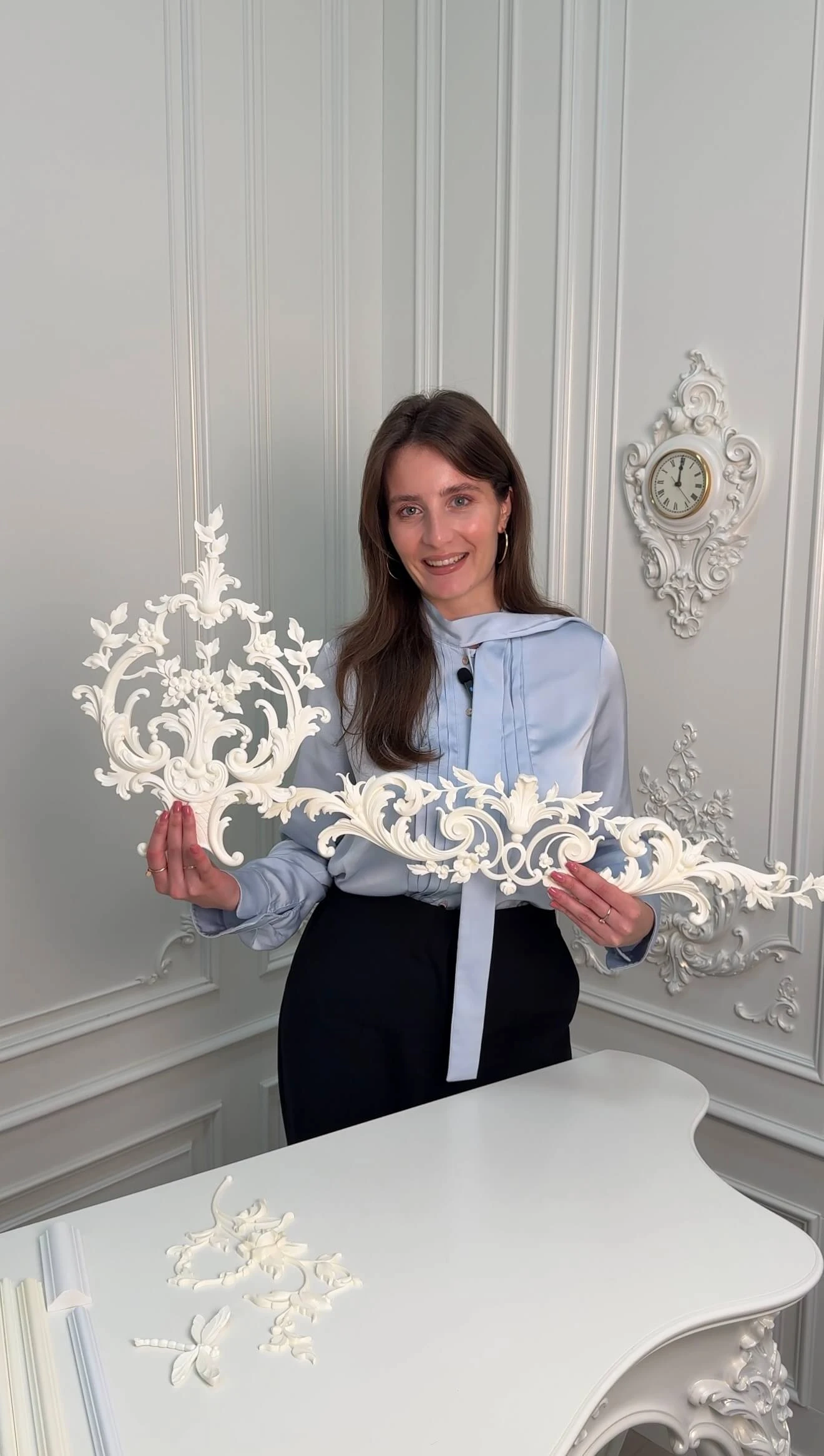
Polyurethane wall decor is ideal for this task. Polyurethane is weightless, does not require wall reinforcement, and can be cut at any angle — including the acute angle of a staircase flight. Moldings in the color of the wall provide a subtle relief without color noise: the architecture is there, but it does not shout.
Horizontal belts
In a stair hall, a horizontal line is always under tension — it competes with the sloping line of the flight. Using a horizontal molding belt along the entire wall is difficult: it will look awkward against the sloping staircase.
The solution is a horizontal molding only in areas not related to the slope: on the walls of the landing, above the opening, on the accent wall opposite. On the sloping wall itself, the horizontal line is better replaced with a vertical rhythm of slats or individual frames.
Decorative inserts on piers
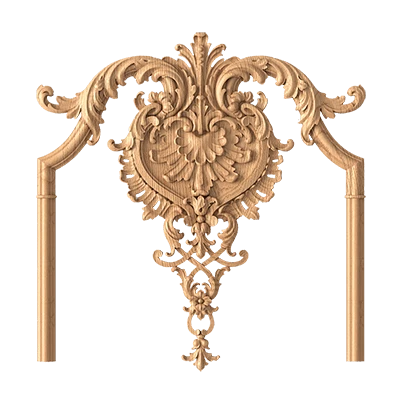
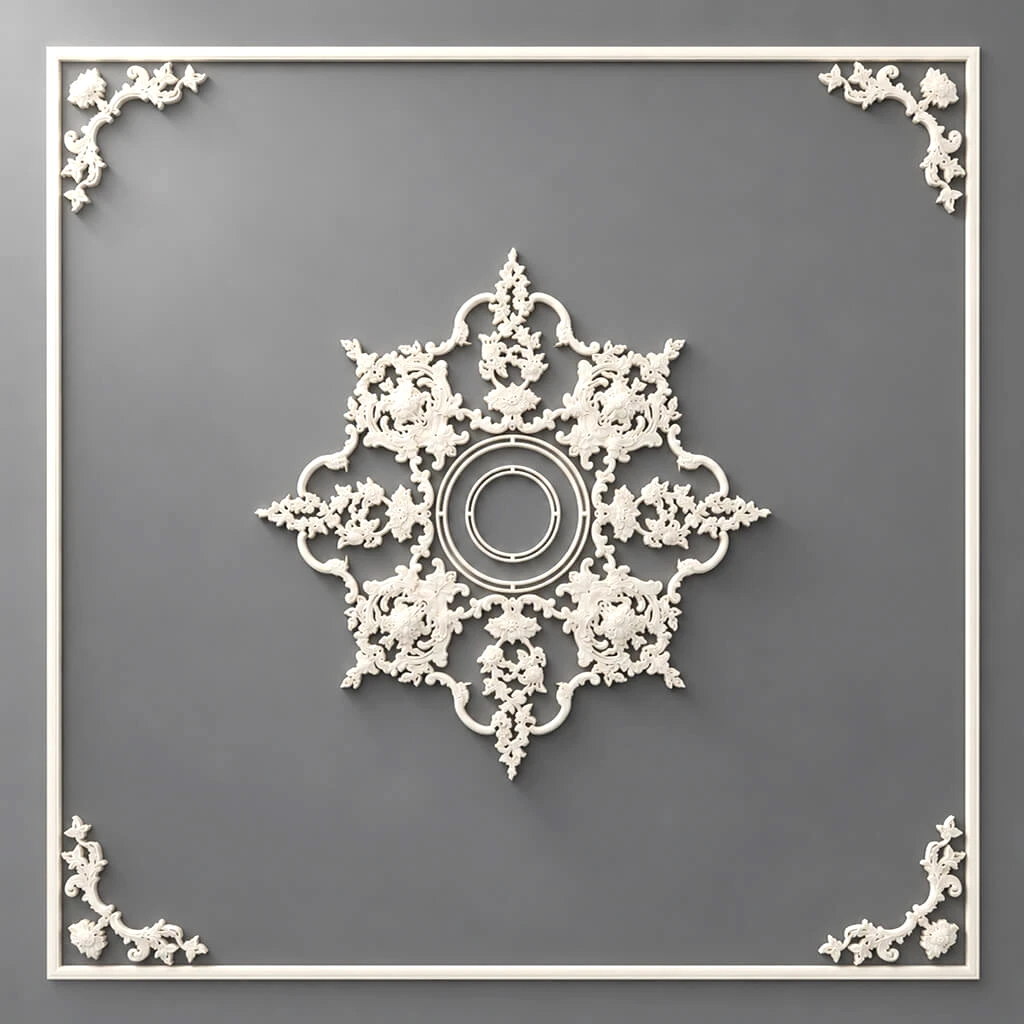
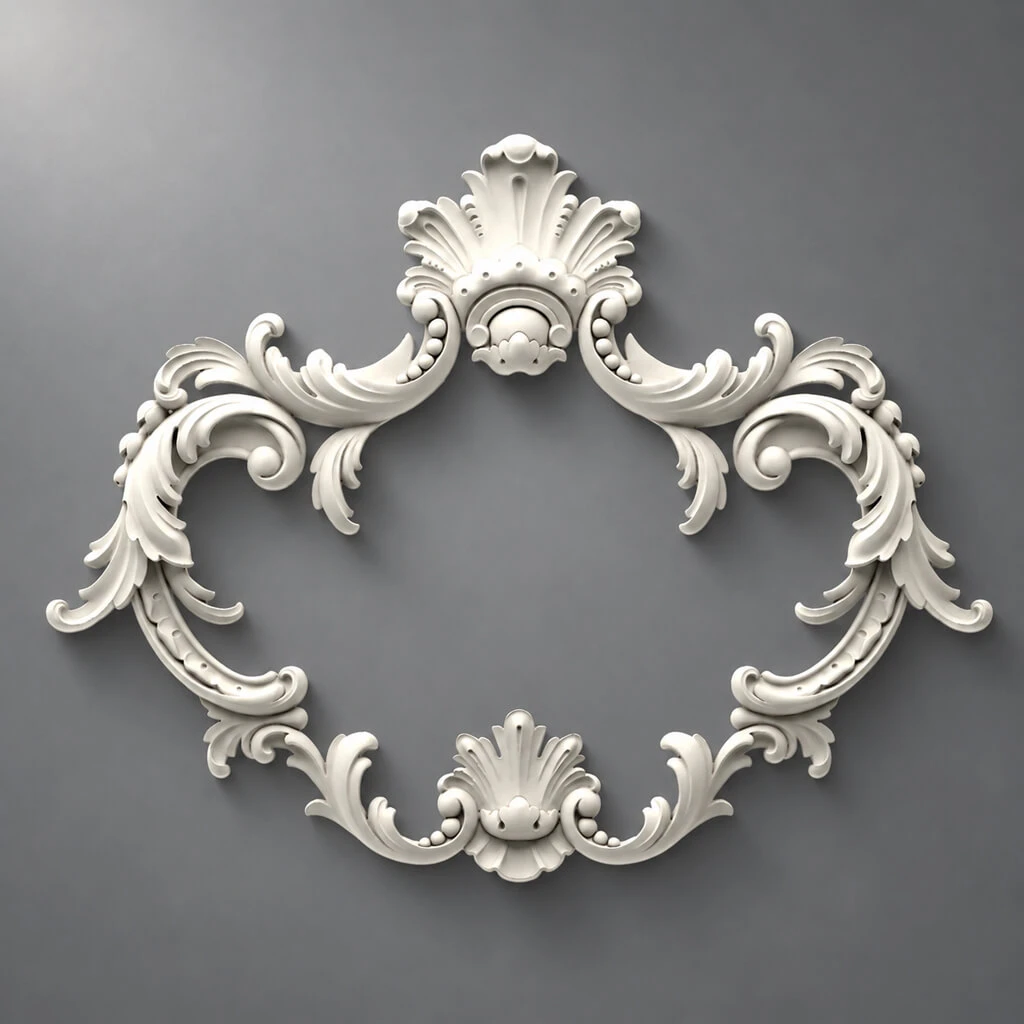
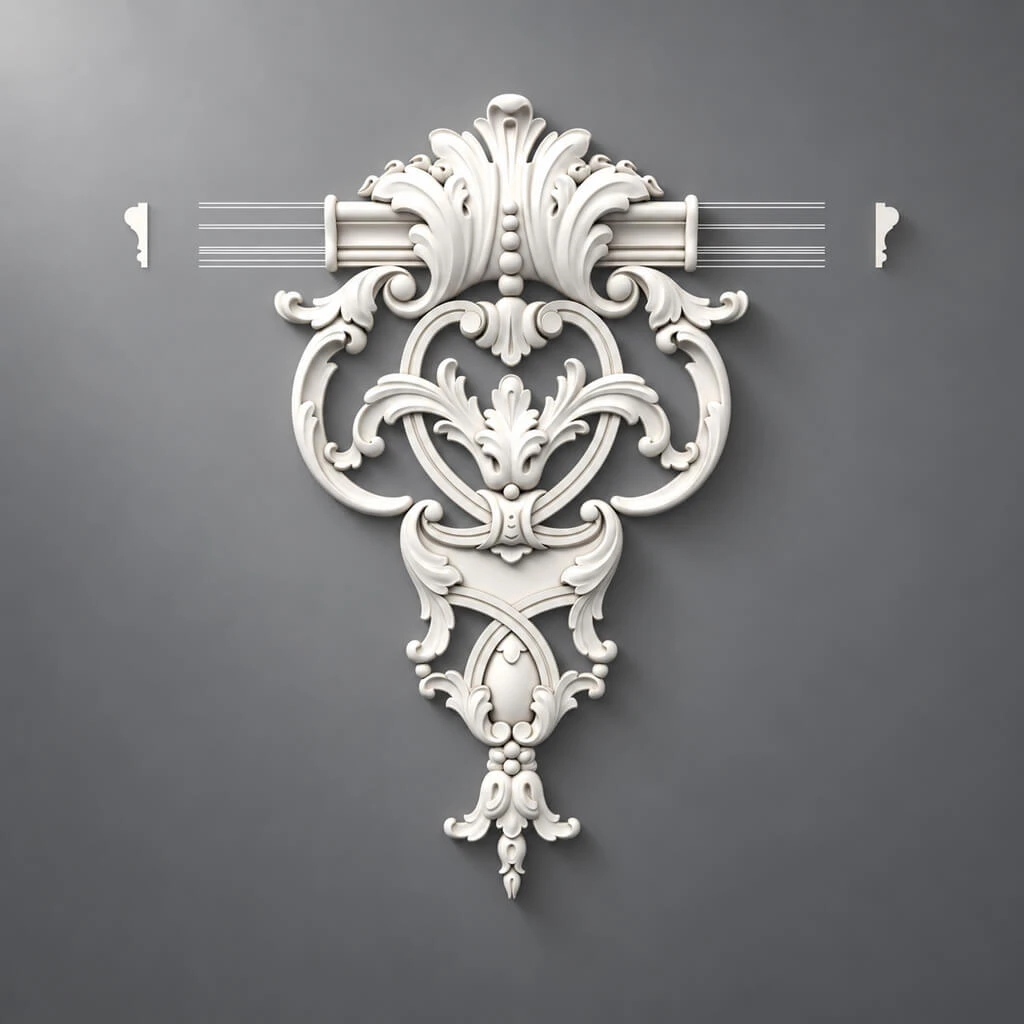
Small planes near doorways, corners, and niches are an excellent place for compact decorative elements. stucco decor for walls and ceiling in the form of small rosettes, applied profiles, decorative locks above openings — all this adds detailing without overloading.
Moldings in the upper zone near the ceiling
The transition from wall to ceiling in a stair hall is an area most often overlooked. And it is precisely here that a clear finishing profile is needed. polyurethane ceiling decorin the form of a wide cornice along the ceiling line makes a high wall "finished" — it gets a top frame.
How to combine wooden slats and moldings: working schemes
This is where true craftsmanship begins. Slats and moldings are two languages of decor. Wooden texture and geometric relief. Warmth and architecture. For them to work together, a scheme is needed.
Scheme 1: slats as a vertical accent, moldings on the adjacent plane
Wooden slats occupy the sloping wall along the flight. Molding frames are on the landing wall and on the accent wall opposite. Slats and moldings do not intersect, each element on its own plane. This is the safest and most effective scheme for those doing their first project with such decor.
Scheme 2: moldings around the wall, slats inside the central zone
On the high wall along the staircase, a large molding frame is created — around the perimeter of the entire plane or around the perimeter of the central zone. Inside this frame, verticalvertical wooden slatsare installed. The molding frame "holds" the slats, preventing them from looking chaotic. The effect is like a painting in a frame, only room-scale.
Scheme 3: slats in the lower part of the wall, moldings above
Horizontal division of the wall: the lower third or half — wooden slats orRafter panelsAbove are molding frames or a clean wall with a thin profile under the ceiling. This solution works well in interiors where the lower zone of the wall is subject to mechanical stress: wood is stronger than plaster and paint.
Scheme 4: stucco decor in the color of the wall, slats in natural wood
A minimalist and very modern version: all architectural markings are in the same color as the wall, without contrast. Molding frames, cornices, all stucco elements are white on a white wall or gray on a gray wall. Wooden slats are the only colored, warm, textured element. They become the soloist, everything else is the background.
Scheme 5: slats in Japandi style, moldings — absent
In Japandi style, decor is reduced to zero. But wood is a must.wooden slats for wall finishingin a thin section, with a large spacing, made of light oak or ash — the only decorative element. No moldings. Thinwooden baseboardto match the slats. Maximum air.
Ceiling cornice in a stair hall: how to choose and not make a mistake
The transition from wall to ceiling in a high stair space is a special challenge. A regular ceiling plinth installed around the entire perimeter does not work here: in the area of the stair flight, the ceiling changes height, the sloping line "breaks" the horizontal line of the cornice.
How is this solved?
Cornice only in horizontal areas
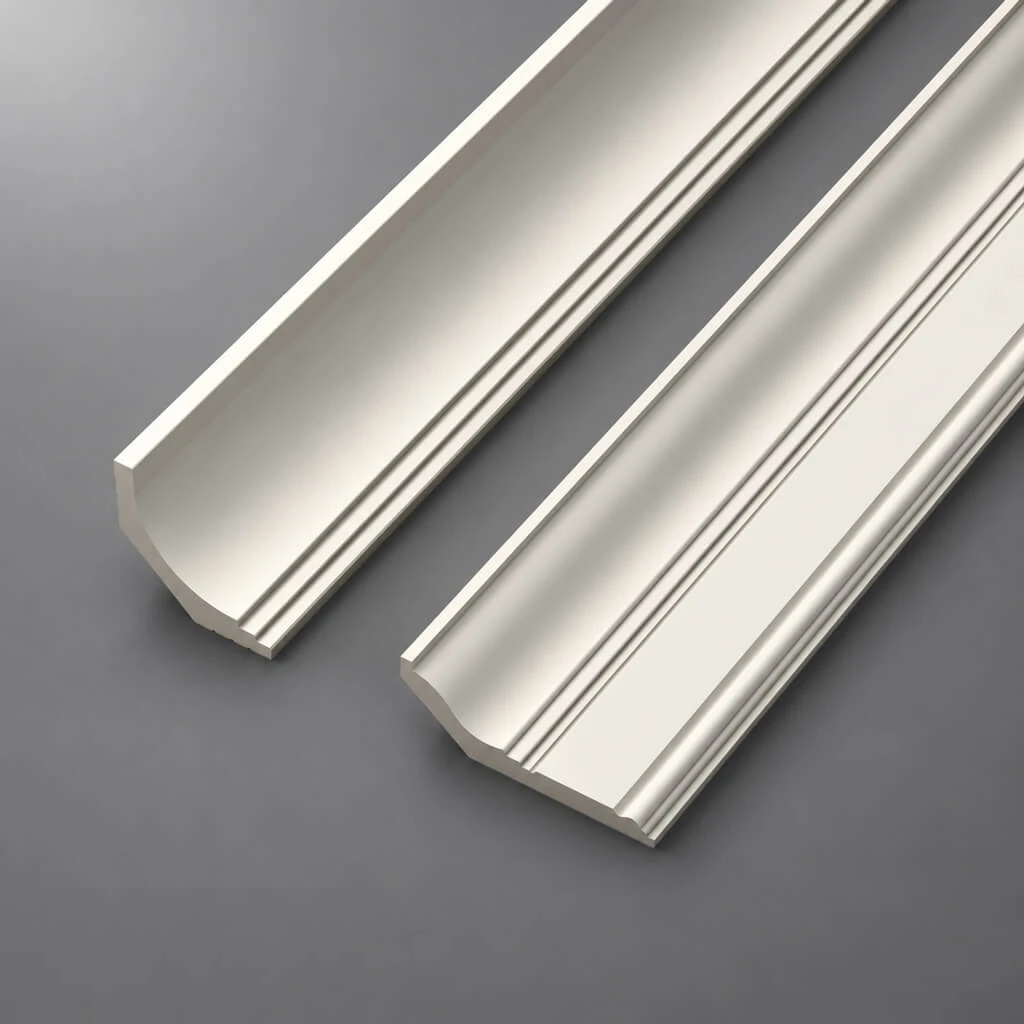
Wooden ceiling corniceis installed where the ceiling is horizontal: on the first floor landing, on the second floor landing, in transition areas. In the sloped flight area, the cornice is either not used at all or replaced with a thin molding profile that can be installed at an angle.
Thin profile instead of a massive cornice
On sloped surfaces, a minimalist profile works better. A thinpolyurethane ceiling decorin the form of a narrow fillet or a simple straight profile marks the transition line without adding heaviness. Polyurethane bends well when heated and allows working with smooth and angular transitions.
Cornice in the color of the ceiling or wall
If the space needs to be "lightened," the cornice is taken in the color of the ceiling — it becomes an extension of the white plane and optically raises the ceiling. If architectural line clarity is needed — in the color of the wall or a neutral light tone.
Wooden cornice for classic and neoclassical styles
For a country house in a classic or neoclassical stylewooden cornicewith a profile is a mandatory element. Solid oak or beech with clear edges of the cornice profile creates a sense of real architecture. Such a cornice is installed on horizontal sections, in landing areas.
Molding profile on the second floor landing
The ceiling above the second-floor landing is a separate zone with a horizontal plane. Here, you can use a more complex profile:Wooden beamswith a heel and a shelf, with a classic cavetto profile, with a geometric straight section — depending on the interior style.
Baseboard for the stair hall: choosing wisely
The baseboard in the stair hall is not a single detail. It is several different elements, each solving its own task. A horizontal baseboard along the landing wall. An inclined baseboard along the stair flight. A transition element at the junction of horizontal and inclined sections. It is a system — and it needs to be designed in advance.
Wooden baseboard for a country house
If the staircase is wooden, the doors are wooden, the slats on the wall are wooden — the baseboard should be made of the same species.Wooden baseboardmade of oak or beech, in the same tint as all wooden elements, creates a unified material system. The floor, staircase, walls — all "from the same dough."
For a country house, cottage, or townhouse with high ceilings, choose a wide wooden baseboard — from 80 mm and above. Suchwith a classic profile creates a sense of solidity, reliability.gives a sense of monumentality and matches the scale of a large space.
MDF baseboard for painting
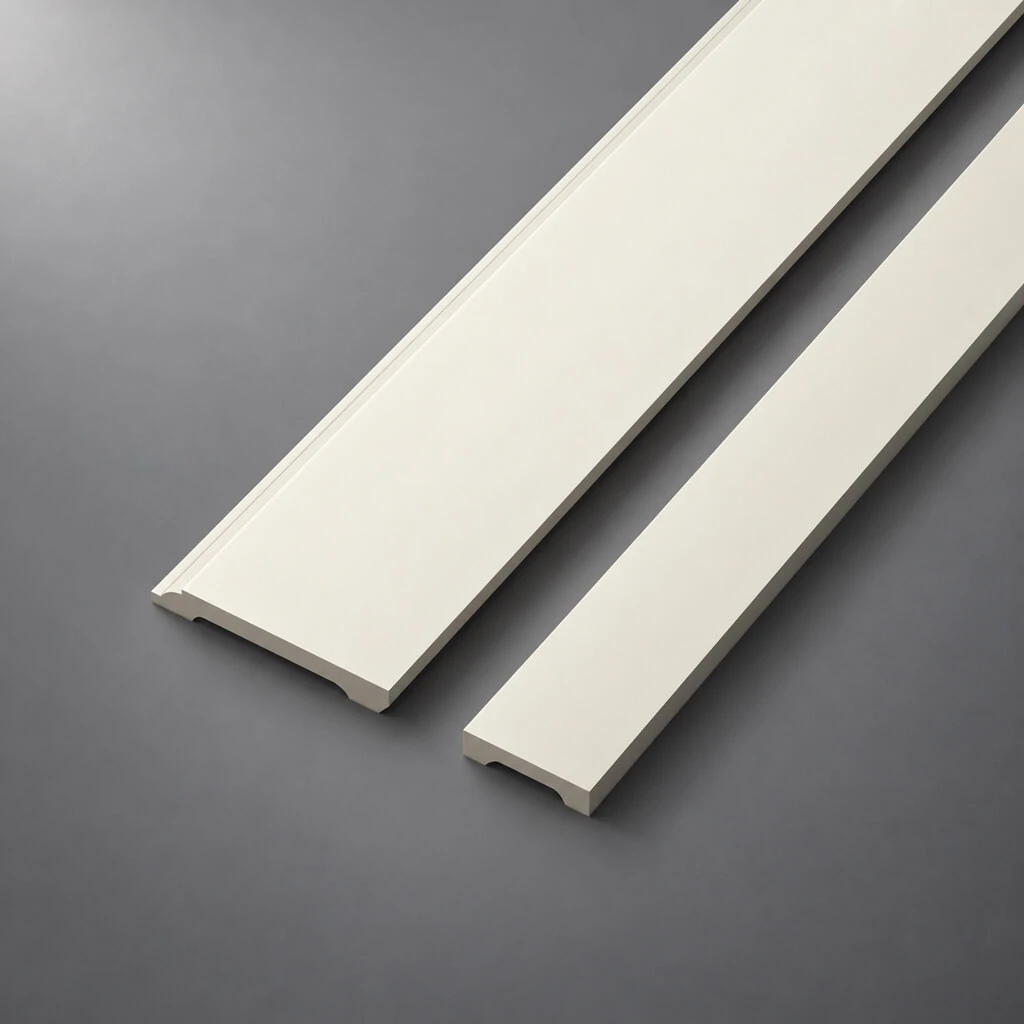
Where walls are painted and a perfectly even contour is needed, an indispensable— is a horizontal element that frames the room at the bottom of the walls where the wall meets the floor. Skirting boards perform several functions: they hide the technological gap between the wall and floor covering (necessary for thermal expansion), protect the lower part of the wall from mechanical damage, create visual completion, and may conceal wiring.Its surface is perfectly smooth, without knots or fibers — the paint applies evenly. It is lightweight, easy to process, and holds corner cuts well at the joints of horizontal and inclined sections.
White MDF Skirting Board — a universal choice for light modern interiors. It creates a clear bottom line of the wall, does not draw attention, and pairs well with both wooden slats and polyurethane decor above.
Baseboard in wall color
A technique that optically "removes" the bottom border of the wall and makes a tall space even more airy. The baseboard is painted the same color as the wall — and disappears. The eye glides from floor to ceiling without horizontal stops. Ideal for minimalist and Japandi interiors.
For this technique, buy MDF skirting board and painting it together with the walls is the most practical solution.
How the baseboard transitions from a horizontal section to an inclined one
This is a technically complex point that is important to plan in advance. At the junction of the horizontal baseboard (along the landing wall) and the inclined one (along the flight), a neat corner transition is needed. Options:
-
Cut to the angle of the flight — the baseboard is cut precisely to the angle of the staircase slope. Requires accurate measurement and careful work.
-
Decorative rosette — a small square or rectangular decorative element at the transition point. Looks nice and solves the joint issue without complex cutting.
-
Wooden angleas a transition element between slanted and horizontal baseboards.
Molding, corners, and bars for complex junctions
The staircase area is a realm of non-standard junctions. Sharp corners, slanted surfaces, joints of different materials, transitions between zones — all of this requires special solutions. And it is here thatwood trim itemsbecome indispensable.
Wooden corner
Wooden angle — a small detail with great significance. The ends of wooden slats on a staircase wall, corner transitions between planes, joints of finishes in hall corners — wherever a neat transition is needed, the corner solves the task quickly and beautifully. It is chosen to match the slats: material unity creates a sense of thoughtfulness.
Wooden bar as a load-bearing element
Wooden block is used where a rigid horizontal or vertical support for slats is needed. On a high wall of a staircase hall, slats are attached to vertical or horizontal guide bars. This ensures the correct offset from the wall — necessary both for aesthetics (shadow from the slats) and for practicality (ventilation).
The bar is also used as a horizontal crossbar in the upper part of the slatted finish: it binds the slats together and creates a clear top finishing line.
Wooden molding
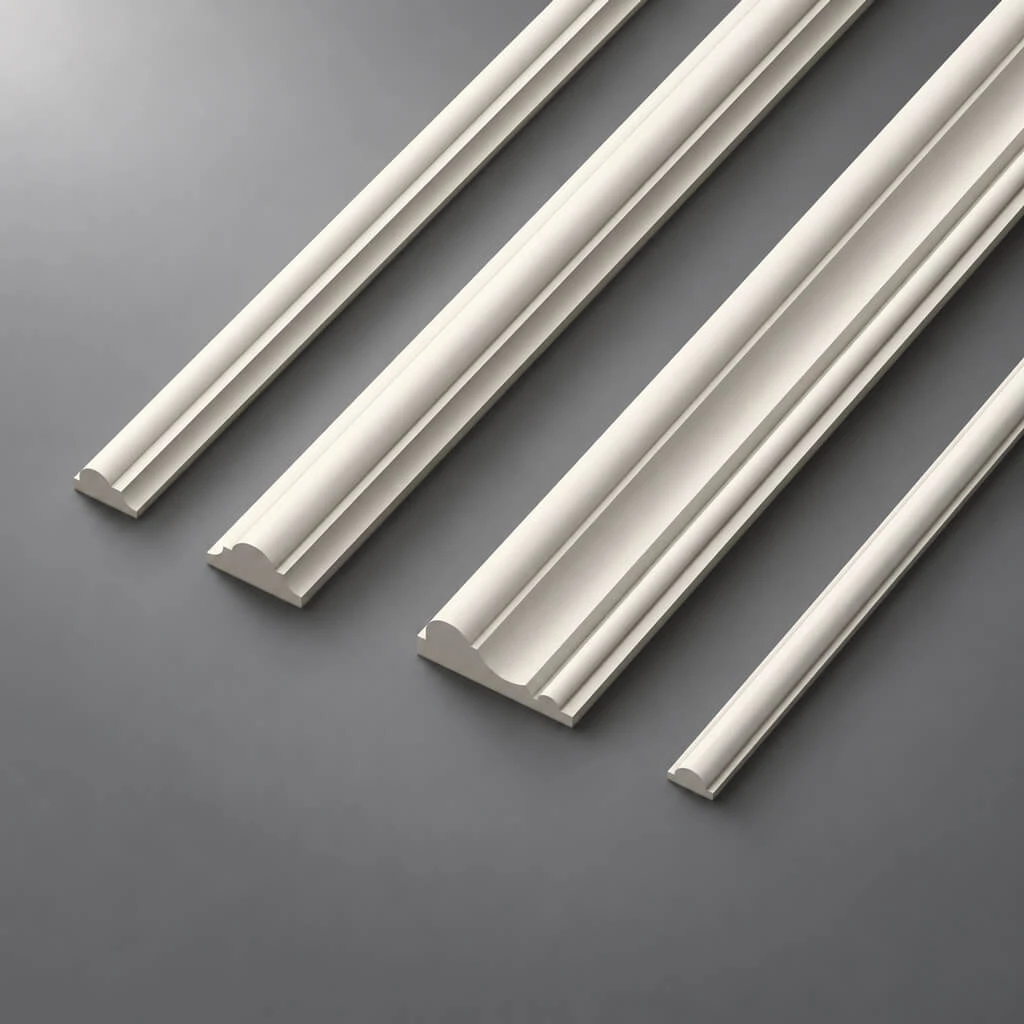
Wooden Picture Frame with a profile — a transition piece between zones. On a staircase wall, it works well as a horizontal divider: between the lower zone with slats and the upper zone with moldings, or as a framing element around a slatted section.
Decorative wooden moldings
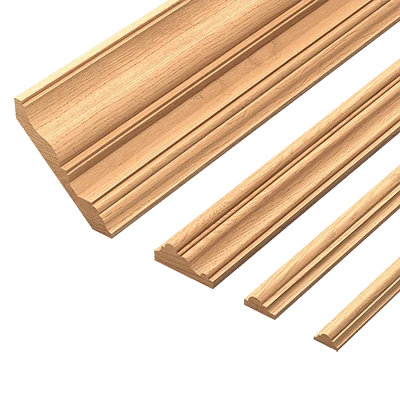
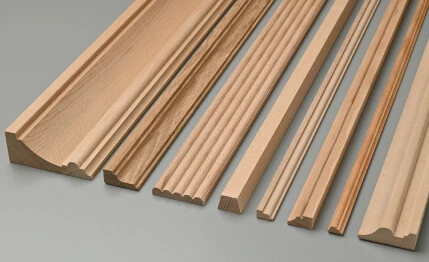
Decorative wooden moldingsmade of solid oak or beech are not just a profile for frames. In the stair hall, they are used as horizontal belts at the junction of zones, as architraves around openings, as decorative profiles on the side edges of slatted finishes. A wooden molding with a clear profile adds detailing and emphasizes the quality of execution.
Molding products for the stair hall: an integrated approach
A good stair hall project usesTrimming Itemsas a single system: slats, corners, bars, moldings, baseboards, cornices — all from the same wood species, the same tint, the same factory. This eliminates inconsistency and creates the feeling that the space was designed as a whole, rather than assembled from random elements.
Stair hall design styles: from classic to Japandi
The stair hall is decorated in a variety of styles. Let's break down how the combination of slats, stucco decor, and molding products works in each.
Neoclassicism: architecture as the main character
Neoclassicism in the stair hall features tall molding frames, a rich cornice, and a wide baseboard.Polyurethane wall decorin the form of boiserie — elongated rectangular panels — divides a tall wall into architectural sections.Wooden corniceswith a classic profile on the platforms. WideWooden baseboard— from 100 mm and above.
Wooden slats in neoclassicism — only as an addition: a narrow slatted section inside a molding frame, in a niche or behind a balustrade. The main characters here are architectural profiles.
Modern interior: rhythm and purity
A modern stair hall is vertical slats, minimal decor, clean lines.Wooden planks for decorationmade of thin profile, with equal spacing, from floor to ceiling. StraightMDF Skirting Board— white or in the color of the wall. Thin ceiling profile made of polyurethane instead of a massive cornice.
No ornate stucco. Maximum — a geometric frame made of thin molding on an accent wall.
Japandi: wood and air
The Japandi style is based on natural materials and the absence of excessive decor. Light oak or ash — the main material for slats, baseboard, and cornice.Wooden railsthin profile with wide spacing: the air between the slats is as important as the slats themselves. ThinWooden baseboardwithout a complex profile. No molding frames — only a clean wall and wood.
If a cornice — then minimal, without a profile, only as a transition. A thin polyurethane cove molding in the color of the ceiling. Nothing extra.
Classic: wood everywhere
In a classic country house, wooden elements occupy everything: the staircase is wooden, the floors are wooden,wooden cornicewith a profile, widewooden skirting board purchasecan be made of the same species as the steps. Decorative wooden moldings on the walls andstucco frames made of polyurethaneon the landing.
Wooden slats in classic design are an accent, not the main finish. They appear in niches, behind the balustrade, on the pier.
Commercial hall: rhythm, status, durability
In an office building, hotel, showroom, or restaurant, the stair hall must impress and serve for years.Rafter panelsmade of solid oak — maximum strength and stable geometry. The ends are covered withwooden corner piecesto protect against chipping. Molding frames on accent walls — add status.buy wooden cornicemade of beech — on horizontal platforms.
Working with height: how to scale decor
The main mistake in a stair hall is using standard decor on a non-standard scale. Moldings designed for a 2.7 m ceiling look toy-like on a 5 m high wall. Slats that look good in a hallway get lost at great heights.
How to properly scale wooden slats
For high walls from 3.5 m and above:
-
The thickness of the slat is from 25 mm and above. A thin slat at a great height gets lost and looks unreliable.
-
The spacing is medium, 10–15 cm. Too frequent spacing creates a "heavy" screen; too rare — the slats look forgotten on a huge wall.
-
Length — for a wall 4–5 m high, the slats are joined; the joints must be neat, with a proper 45° cut or hidden behind a decorative horizontal lintel.
How to scale moldings and cornices
For high ceilings in a stair hall:
-
The width of the molding profile is at least 40–60 mm. A thin 20 mm molding on a 5 m high wall reads like a thread.
-
The cornice has an overhang of at least 80 mm. At a great height, only a large profile creates the necessary architectural pause.
-
Frame panels made of moldings — sized from 60×120 cm to 80×150 cm. Small frames on a high wall look like patterned wallpaper, not architectural decor.
Lighting and decor: how they work together
You cannot design the decor of a stair hall without considering lighting. Shadows from the slats, the play of light on the relief of the moldings, reflections on the polished surface of the cornice — all of this is part of the final image.
VerticalWooden boards in interiorcreate expressive shadows with side lighting. If built-in lights or spotlights are installed along the stair wall, the shadow from each slat will create a rhythmic light-and-shadow play — this is one of the most beautiful effects in interior design.
Molding frames on the wall with top lighting give a soft relief: the frame is slightly lost, the surface appears flat but deep. With side lighting, the frame "emerges" — the shadow falls along the contour of the profile and creates a clear pattern.
A wooden cornice around the perimeter of the landing is an ideal place for hidden lighting. The tape behind the cornice illuminates the ceiling, creating soft diffused light and visually "raising" the ceiling.
Mistakes in designing a stair hall
Analyzing mistakes is one of the most useful sections of any article. Because it is from the mistakes of others that correct solutions are formed.
Too small decor on a high wall. Moldings 15–20 mm wide, frames 30×50 cm in size, a thin slat of 10 mm — all this on a wall 4–5 m high looks caricatured. The scale of the decor must match the scale of the space.
Massive cornice without considering height. A cornice with a projection of 120–150 mm looks great in a classic study with a 3.5 m ceiling. On a stair flight with a sloping ceiling, the same cornice creates a feeling of a collapsing plane.
Ignoring the sloping line of the flight. A horizontal molding belt on a sloping wall along the stairs is a classic mistake. The horizontal conflicts with the slope and makes the wall geometrically chaotic.
Too frequent slat spacing. Slats with a spacing of 3–4 cm on a high wall create a dark, impenetrable screen. The sense of height is lost, the space darkens.
Uncovered ends of slats. The side edges of slatted trim withoutwooden corner piecesor framing moldings look unfinished. This is especially noticeable in the stair hall, where walls are visible from several angles.
The baseboard is not provided or chosen randomly. The bottom line of the wall without the correct baseboard is an unfinished interior. For the stair hall, it is important to design the entire baseboard system in advance: horizontal section, sloped section, joints, and transitions.
Different shades of wood in one space. Light oak slats, dark walnut cornice, birch baseboard — these are three different interiors in one space. All wood in the stair hall should be coordinated in tone.
No connection between the staircase, walls, ceiling, and floor. This is the most systemic mistake. The stair hall is perceived as a single space — and all its elements should belong to one design language.
Installation nuances: what is important to know before starting work
Beforebuy wooden slats for the stair halland proceed with installation, several important technical issues need to be resolved.
Base for slats
On the stair wall, it is most often concrete, blocks, or brick. The slats are not attached directly to the wall, but to guide bars — horizontal or vertical. This creates the necessary gap for ventilation and allows hiding cables for lighting behind the slats.
Mounting at height
Installation at heights above 3 m requires scaffolding or a professional stepladder. Plan this in advance — working at height significantly increases installation time.
Installation of polyurethane moldings
How to properly install polyurethane moldings, cut corners, and hide joints is detailed in the articleinstalling polyurethane molding. And for a general understanding of working with stucco from this material, the article is usefulinstallation of polyurethane molding.
Wood shrinkage
Solid wood is alive: it expands with humidity and contracts with dryness. In a stair hall — especially in a country house with heating — this is important to consider. A small gap for shrinkage should be left between the slats and end corners. Fasten the slats through grooves, not through, so the wood can move.
Polyurethane next to wood: why it works
Polyurethane decor next to wooden slats is not a compromise. It is a sensible division of functions.
Polyurethane Items — cornices, moldings, frame profiles — are weightless, moisture-resistant, and not afraid of temperature and humidity fluctuations. They are ideal for ceiling cornices, sloped areas, and places with non-standard angles. Wood, on the other hand, is for surfaces that are touched by hands, seen up close, and create a tactile feeling of warmth and nature.
Moldings made of polyurethane are painted in any color — including to match wood, wall color, or ceiling color. In combination with wooden slats and natural wooden trim, they complement the system, covering areas where wood is technically difficult to apply.
FAQ: Answers to popular questions
Which wooden slats are best to choose for a high stair hall wall — oak or beech?
Both materials are good, but for a high wall near a staircase, oak is preferable: it is denser, more stable with humidity changes, and has a more expressive texture. Beech is slightly lighter and more neutral, good for light interiors in Japandi and Scandinavian aesthetics.
Can wooden slats be used on the sloping part of a staircase wall?
Yes, but only vertically. Vertical slats do not conflict with the slope of the flight — they are perpendicular to the floor and independent of the staircase angle. Horizontal slats on a sloping wall are not recommended.
What spacing of slats should be chosen for a high wall so it does not look heavy?
For a high wall from 3.5 m, the optimal spacing is 12–15 cm. Frequent spacing creates a dark mass, rare spacing makes the slats 'get lost'. With a spacing of 12–15 cm, lightness is maintained and the rhythm is well readable from the lower point.
Do wooden slats need to be treated before installation in a staircase hall?
Absolutely. The slats are coated with an antiseptic primer, then oil, varnish, or tinting compound. The ends are treated separately — they absorb the coating differently than the surface.
Which baseboard should be chosen for a sloping section along a staircase flight?
For the sloping section, the same baseboard is used as on horizontal sections — but installed at the angle of the flight. MDF baseboard for painting is more convenient in this case: it is easy to cut precisely and paint in the desired color.
How to combine moldings on a high wall with the sloping line of a staircase?
Molding frames are located only in horizontal zones: on landings, in the upper zone of the wall above the flight, on the accent wall opposite the stairs. On the sloping wall itself, moldings are not used or are replaced with vertical slats.
Wooden cornice or polyurethane — which to choose for a stair hall?
Wooden cornice — for horizontal landings, for classic and neoclassical interiors. Polyurethane cornice — for sloping transitions, for places with non-standard angles, for modern and minimalist spaces. In a complex stair hall, both materials are often used in different zones.
Can slatted panels and individual slats be combined in one space?
Yes, and it is very convenient.Rafter panelsare used where you need to quickly cover a large area with a guaranteed rhythm. Individual slats are used where non-standard length, special installation, or work with sloping surfaces is needed.
Is it necessary to match the color of the baseboard with the color of the stair steps?
Ideally, yes. If the steps are wooden, the baseboard is taken from the same species or the same tint. This creates visual continuity between the floor, stairs, and wall. If the steps are made of stone or tile, the baseboard is chosen to match the wall or in neutral white.
STAVROS: everything for the stair hall in one catalog
The stair hall is the most complex and most visible interior project in the house. That is why it is most important to work with proven materials from one manufacturer.
STAVROS is a Russian manufacturer of solid wood and polyurethane products. Full range for comprehensive staircase hall design: from slats to cornices, from baseboards to decorative moldings.
In the STAVROS catalog you will find:
-
Wooden planksmade of beech and oak — for wall finishing, vertical accents, and slatted sections;
-
wooden stripwith precise geometry — for high walls and complex structures;
-
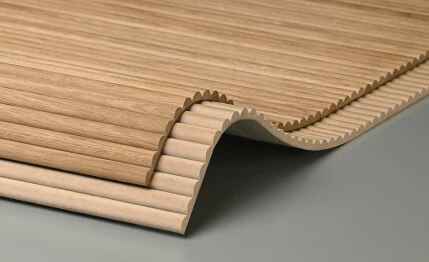
Rafter panelsrigid and flexible — for quick installation of large surfaces;
-
wooden corniceandWooden beamsof various profiles — for classic and modern interiors;
-
Decorative wooden moldings— for panel frames, transitions, and detailing;
-
Wooden baseboardandMDF Skirting Board— for horizontal and sloped sections;
-
Wooden angleandWooden block— for installation, fastening, and edge finishing;
-
wood trim items— complete set for complex junctions and transitions;
-
Polyurethane wall decorandceiling decor— for architectural marking of high surfaces;
-
Moldings made of polyurethane— for sloping areas and non-standard angles.
All materials are coordinated in tone, profile, and surface quality. You design the stair hall as a single system — STAVROS provides the entire necessary range under one roof.
The stair hall deserves to be thought through to the last slat, to the last centimeter of the baseboard. This is how a space is made truly