





























Article Contents:
- Why a wall with curtains requires a special approach
- What tasks does stucco decor solve near curtains
- Where such decor is especially needed: breakdown by room
- Living room with curtains: the main wall requires a system
- Bedroom with curtains: delicacy and rhythm
- Kitchen-living room: connecting zones through the window wall
- Study: strictness and verticality
- Country house: scale and height
- Which elements to use for a wall with curtains
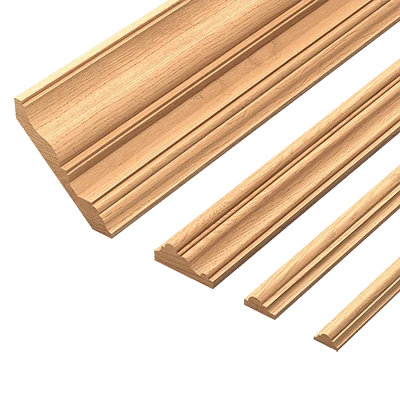
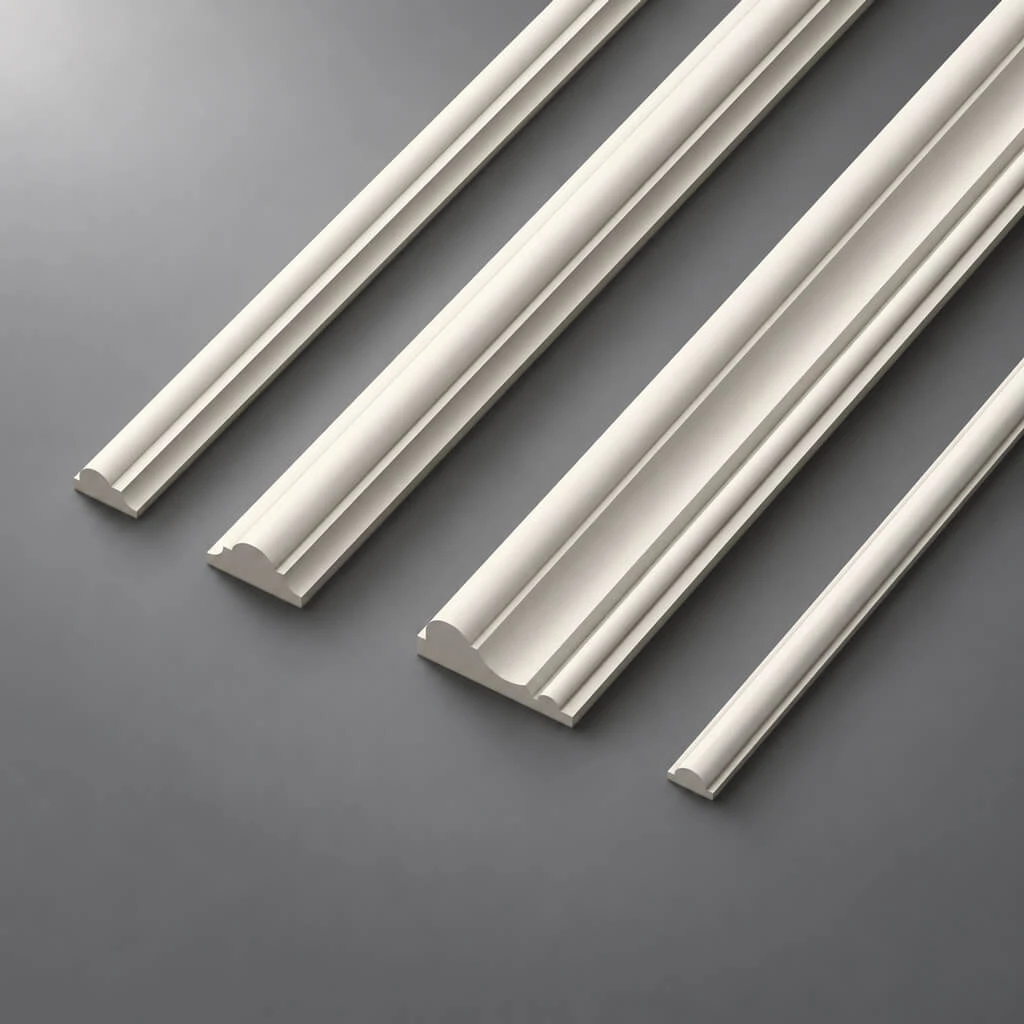
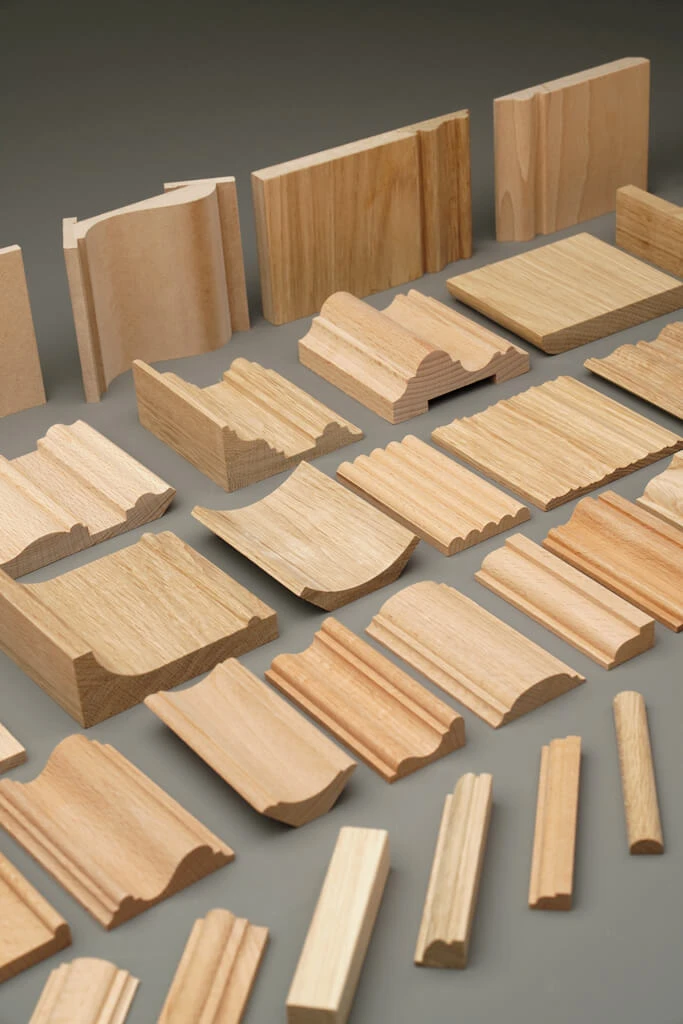
- Moldings: the foundation of the system
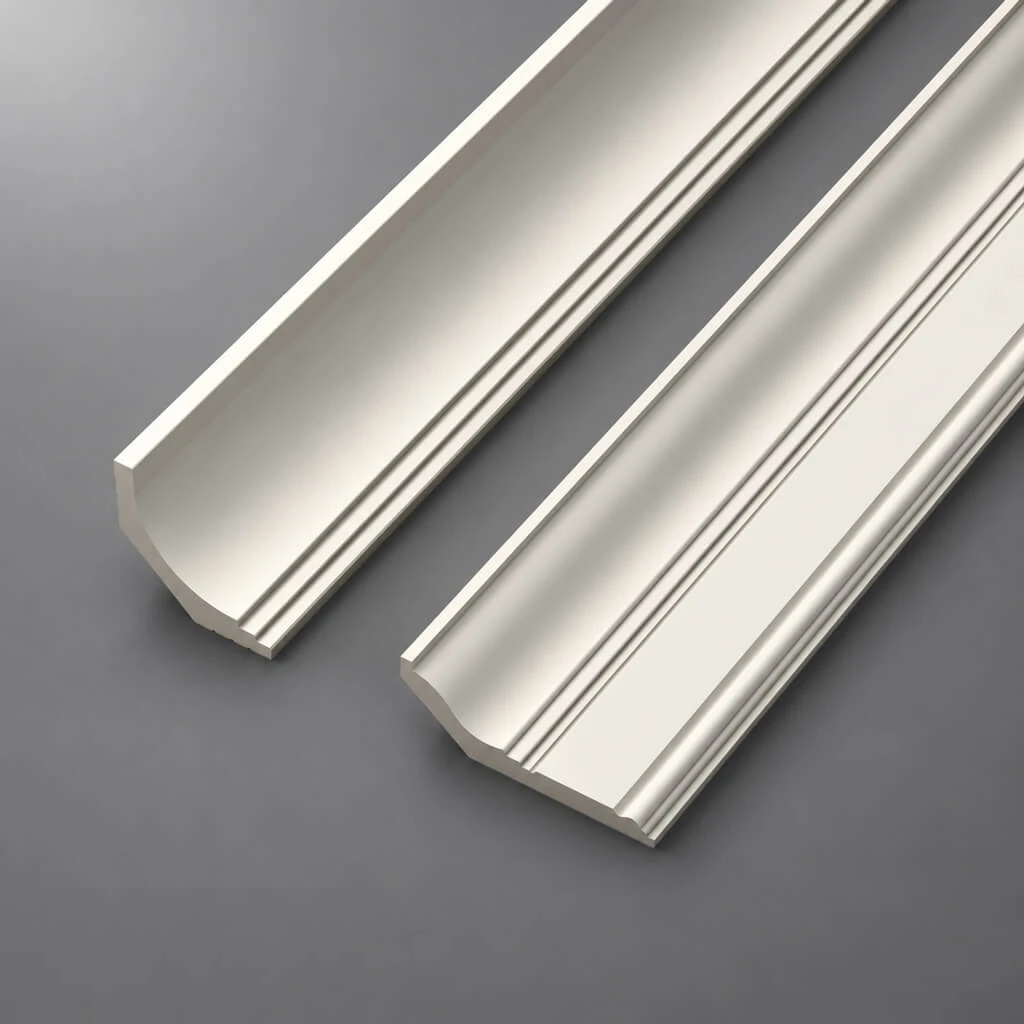
- Polyurethane cornices: the upper boundary of the system
- Corner Elements and Decor for Moldings
- Decorative appliqués
- Baseboards: the lower boundary of the system
- Six schemes for decorating a wall with curtains
- Scheme 1. Moldings on the piers on the sides of the curtains
- Scheme 2. Ceiling cornice made of polyurethane + wall frames
- Scheme 3. Hidden niche for curtains + stucco cornice frame
- Scheme 4. Vertical moldings next to the window
- Scheme 5. Frames around the entire window area
- Scheme 6. Minimalist decor in wall color: invisible system
- How to combine moldings and curtains: practical principles
- The "one dominates" rule
- The physical space rule
- The cornice rule: hidden or exposed
- The active ornament rule
- The windowsill rule
- The symmetry rule
- Designing a ceiling cornice in a system with stucco decor
- Cornice as a decorative accent
- Cornice as a transition to the curtain area
- Cornice matching the color of the ceiling or wall
- How to choose moldings for a wall with curtains
- for the bedroom
- living room
- For panoramic windows
- For neoclassical style
- For Japandi style
- For Country Houses
- How to calculate moldings for a wall with curtains
- Step 1. Determine visible wall areas
- Step 2. Calculate frames on the piers
- Step 3. Calculate the cornice
- Step 4. Add a margin
- Step 5. Account for the radiator and windowsill
- Example calculation
- Mistakes when decorating a wall with curtains
- What to buy for decorating a wall with curtains
- FAQ: Answers to Popular Questions
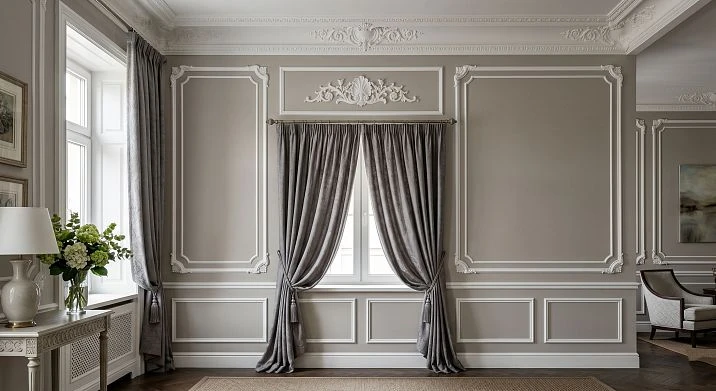
Curtains are expensive. Good textiles mean money, taste, and time spent on selection. But even the most luxurious drapes won't save an interior if the wall around them is bare. The wall sections on either side of the window remain empty. The ceiling cornice hangs by itself, unconnected to the wall, molding, or baseboard. The window area ends up being 'cut out' from the interior — like a foreign element that doesn't fit into the overall logic.
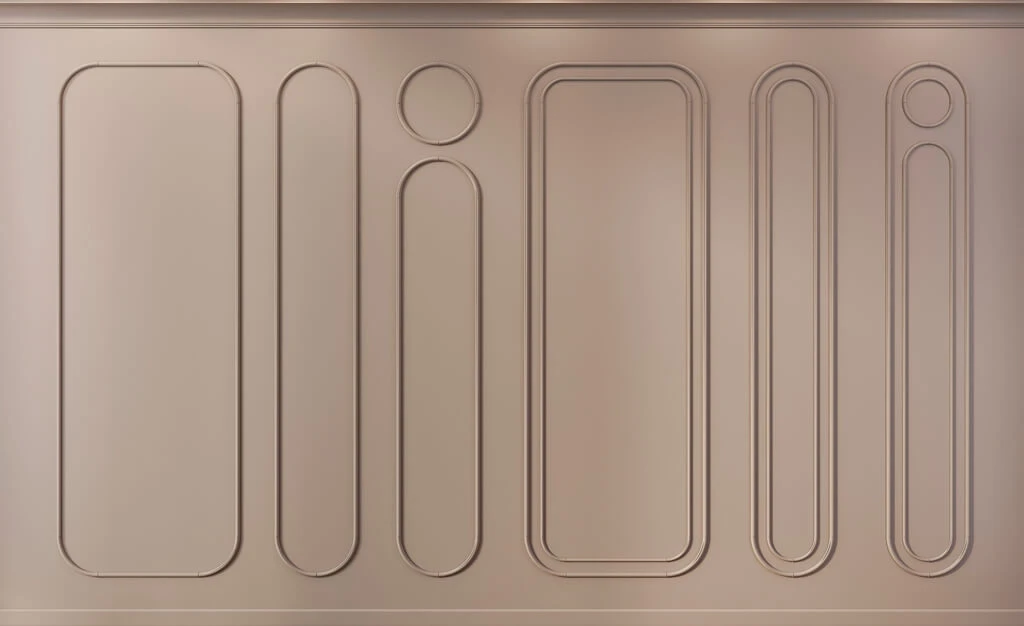
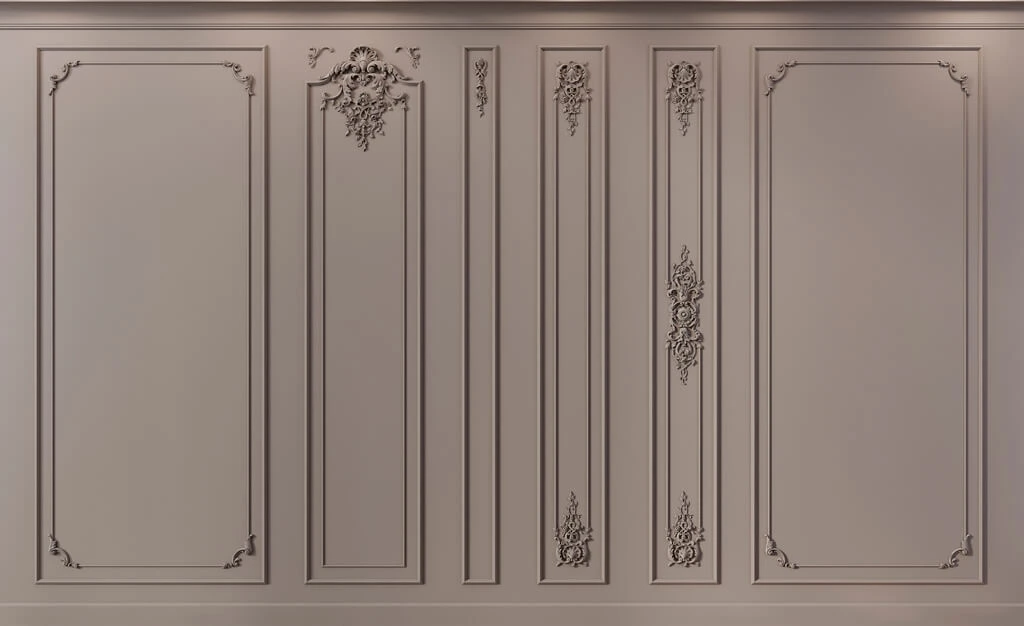
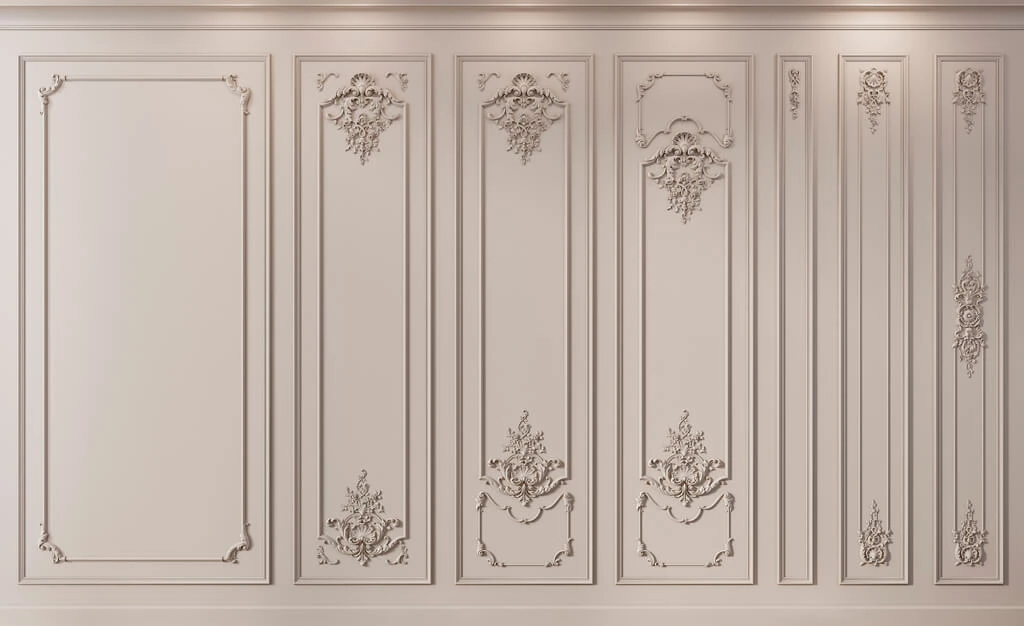
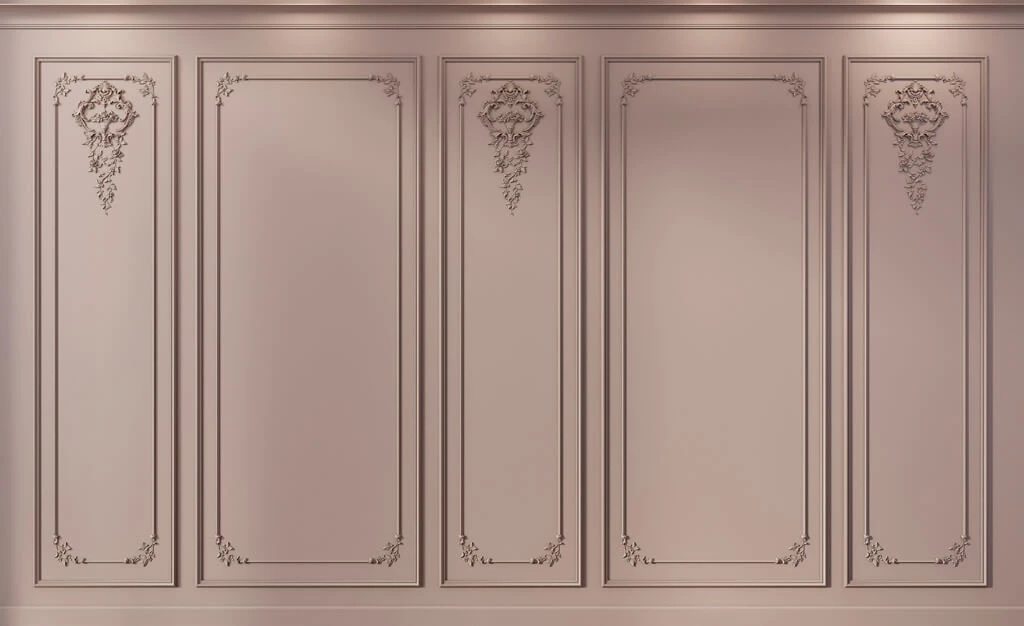
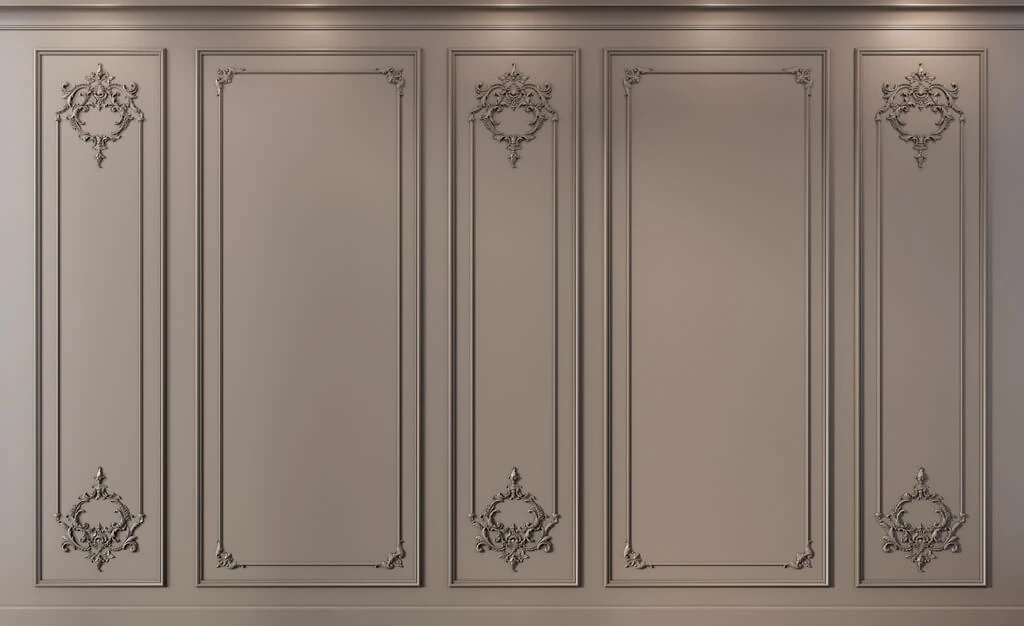
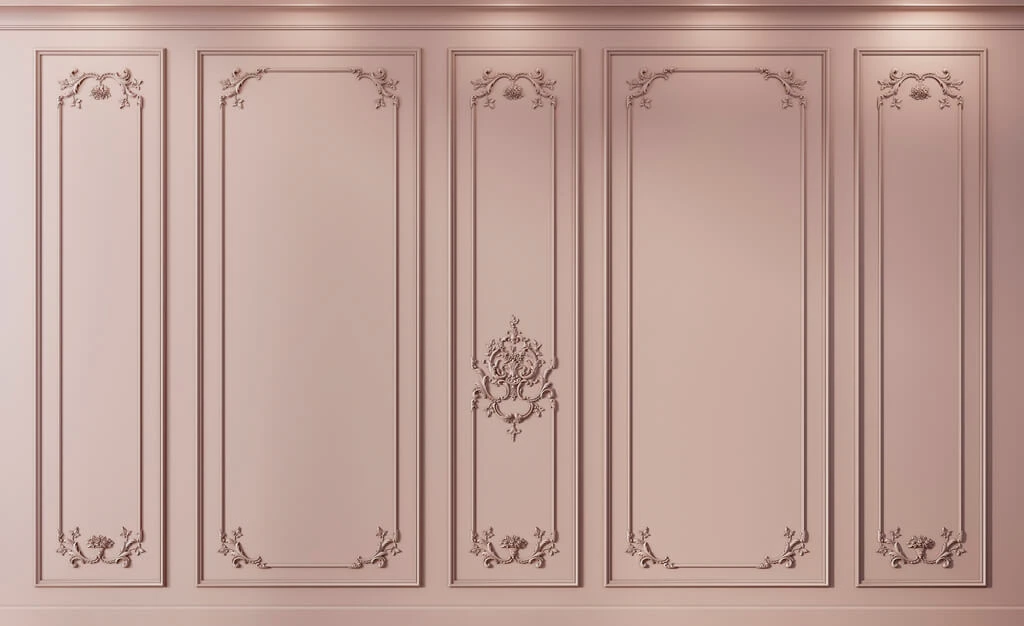
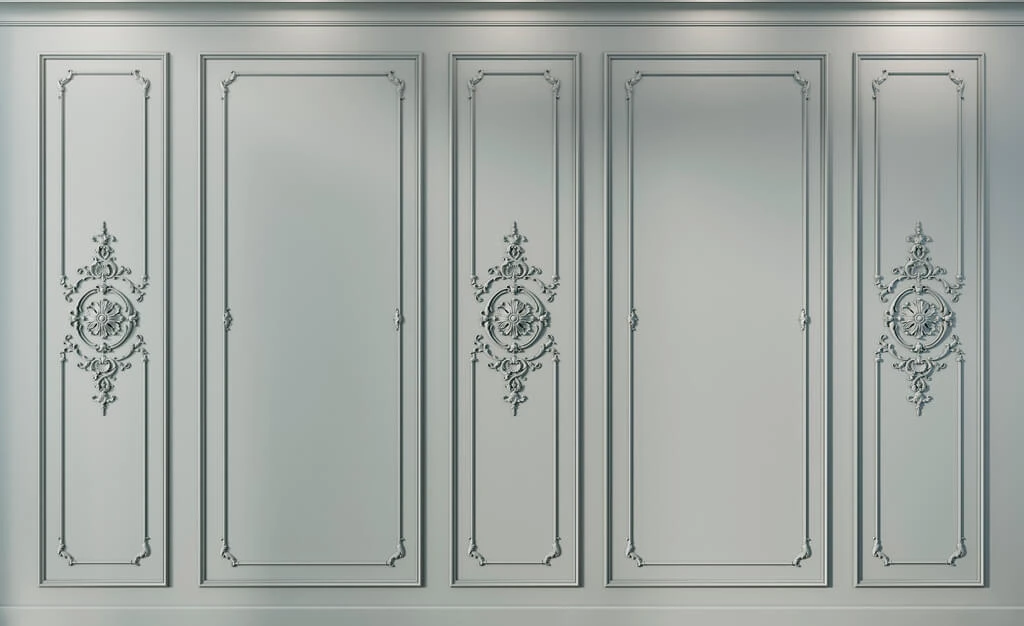
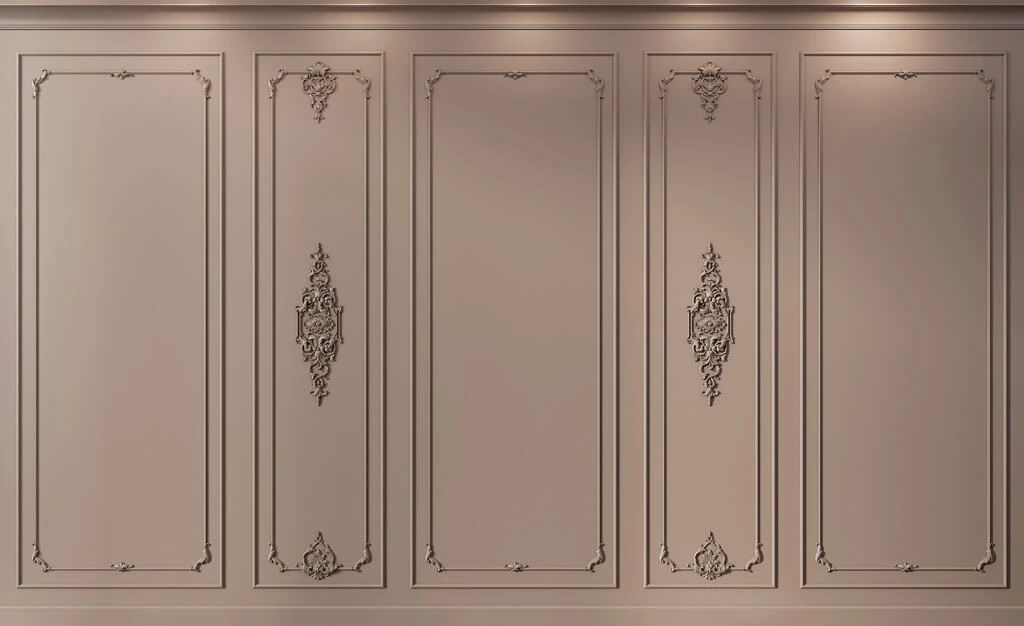
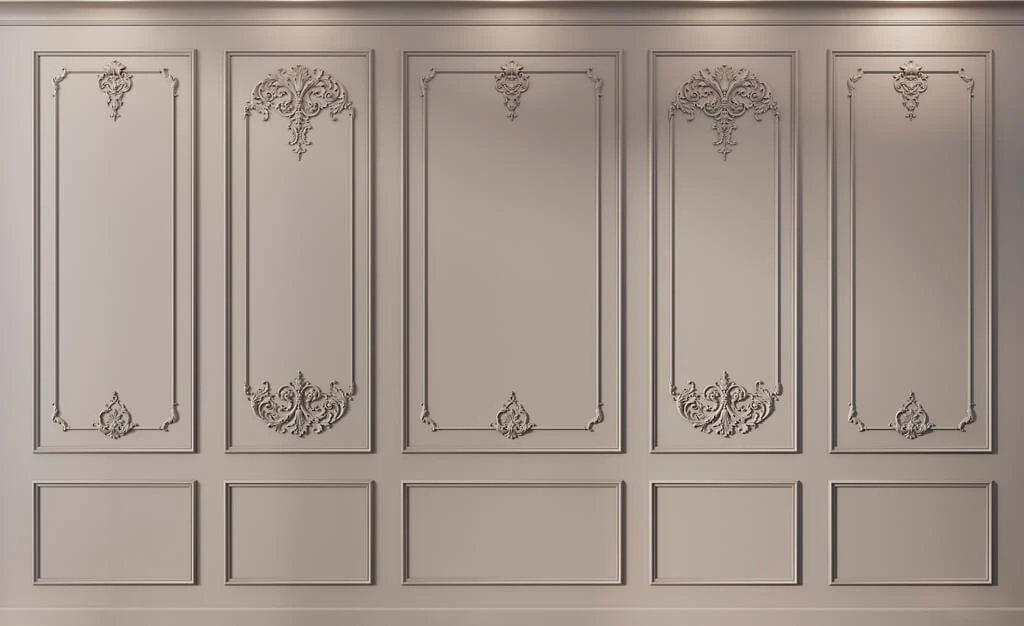
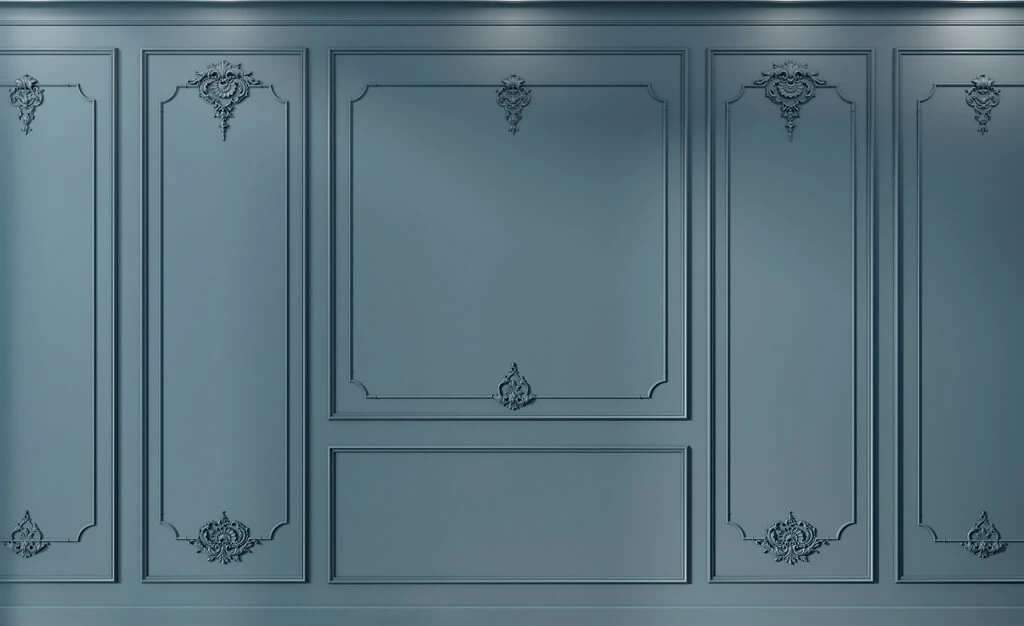
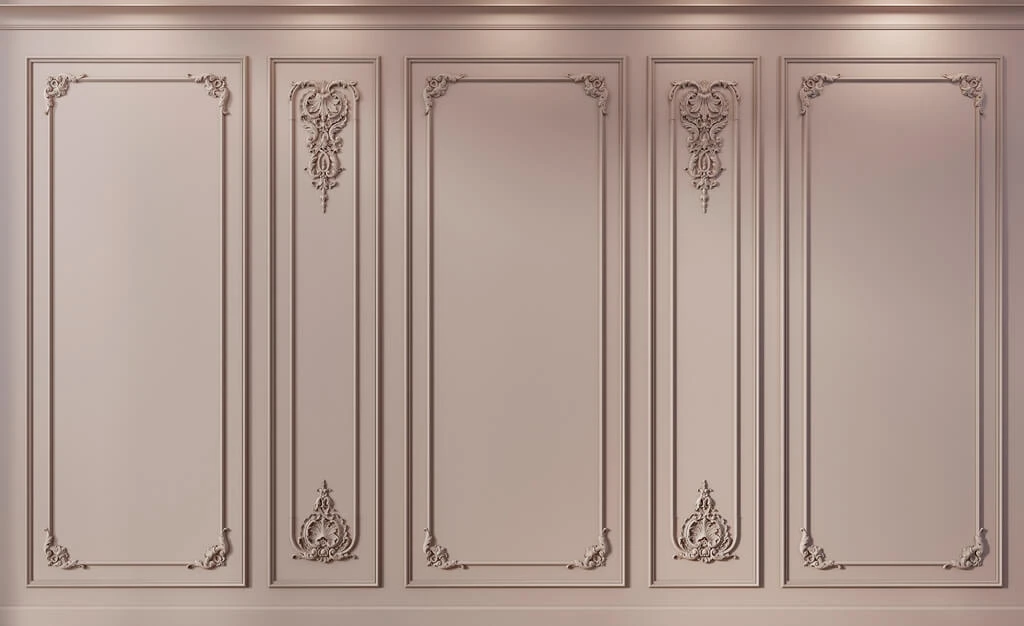
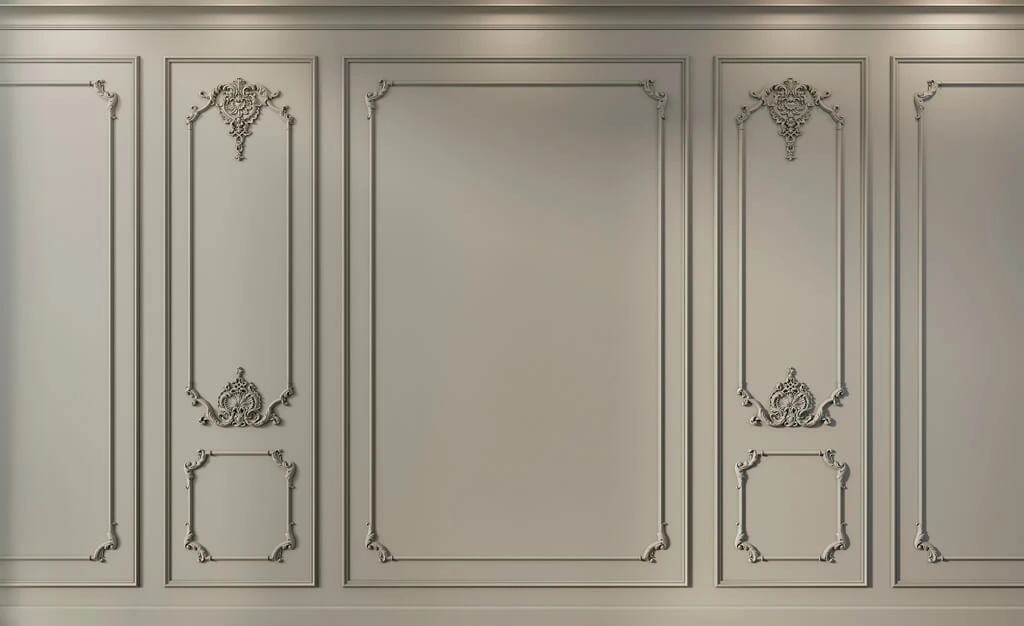
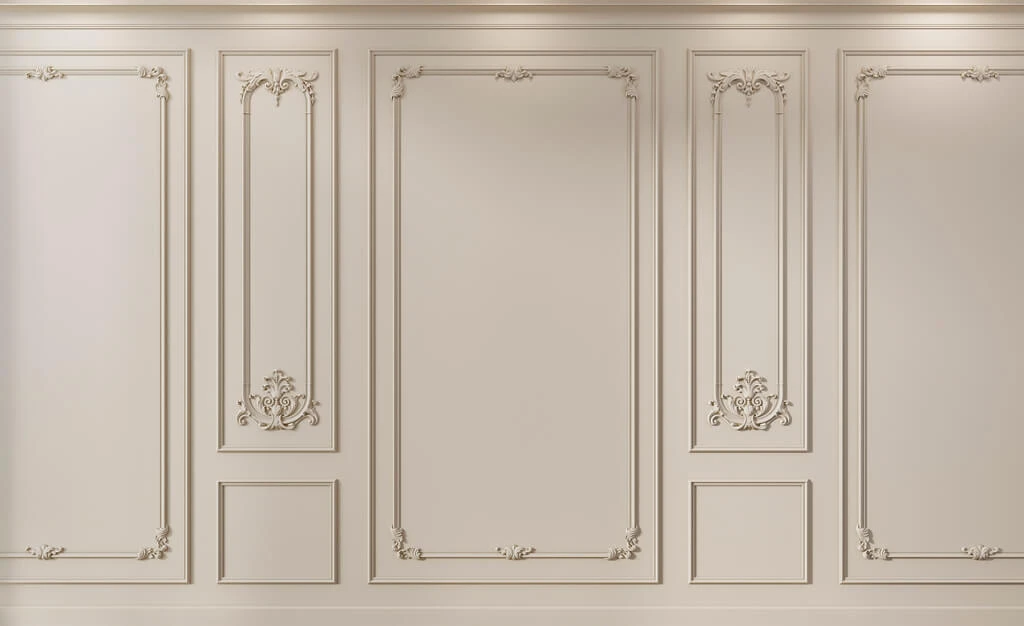
This is a common situation. And it is solved not by new curtains — it is solved by the architectural logic of the wall.Stucco decor for a wall with curtainsmade of polyurethane — it is a system that assembles the window area into a single, complete composition: cornice, moldings, frames on the wall sections, vertical lines, horizontal belts. All together — an architectural wall where curtains have become part of the interior, not something that 'hangs' on it.
Why a wall with curtains requires a special approach
A window is a complex object on a wall. It is not like a sofa or a console: it interrupts the wall plane, has slopes, a frame, a windowsill. Curtains add volume, movement, and textiles to this. The ceiling cornice is another horizontal element that needs to be integrated somewhere.
As a result, the window area consists of several competing elements: the window itself, slopes, cornice, curtain fabric, wall sections on the sides. Without decorative logic, all of this exists chaotically. With polyurethane moldings and cornices — it is a unified system where each element supports the other.
There is another nuance that is often overlooked. Curtains cover part of the wall — and reveal another. When the drapes are drawn, only the piers are visible. When they are pulled apart, the entire wall next to the window is revealed. This means the decor must work in both positions: with and without curtains.


What tasks does stucco decor solve next to curtains
Let's clearly name the functions without lyricism. What exactly doespolyurethane decor near the window do?
-
Completes the window area. Without moldings, a window with curtains looks like a "patch" on the wall. With moldings, it looks like an architectural object.
-
Connects curtains to the wall and ceiling. A polyurethane cornice creates a transition from the ceiling to the curtain zone. Moldings extend this logic downwards, to the baseboard.
-
Frames the piers. The side sections of the wall next to the window are visible surfaces that need to be addressed. Frames or vertical moldings make them part of the composition.
-
Adds symmetry. Identical molding elements to the left and right of the window create a symmetrical axis that holds the entire window area in balance.
-
Visually elongates the wall. Vertical moldings next to the window direct the gaze upward — this is especially important with low ceilings.
-
Makes the interior look more expensive. This is subjective but true: a wall with stucco decor is perceived differently than a simply painted surface.
-
Eliminates the need for paintings and decor. A well-designed wall with moldings is self-sufficient: it doesn't require additional objects to "liven it up."
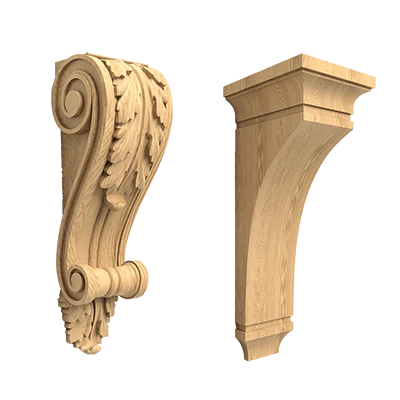
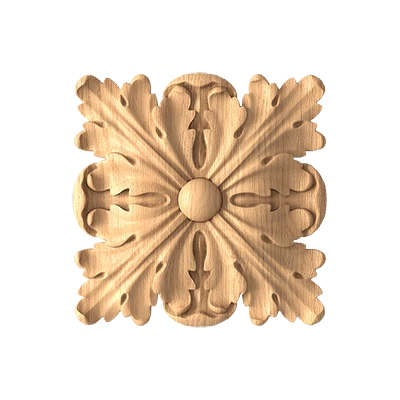
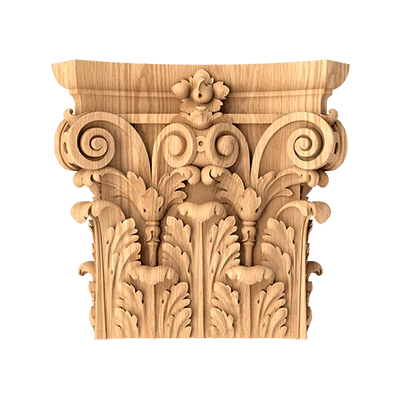
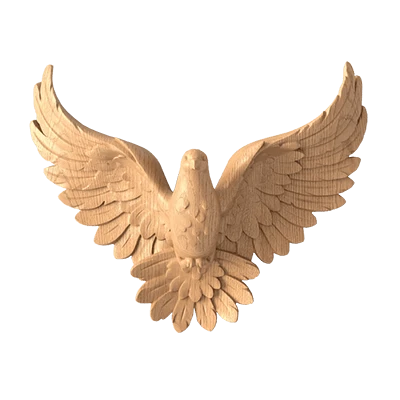
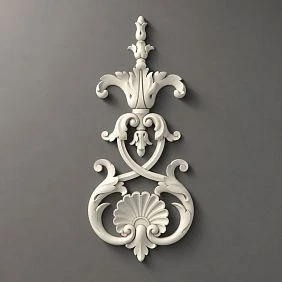
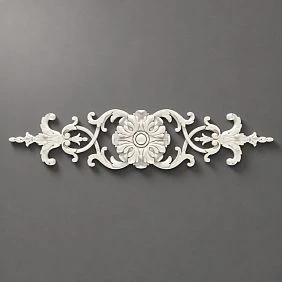
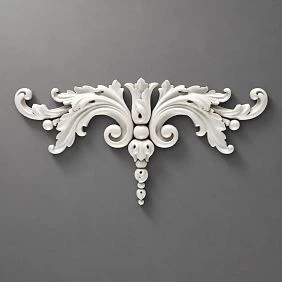
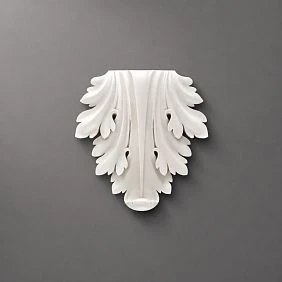
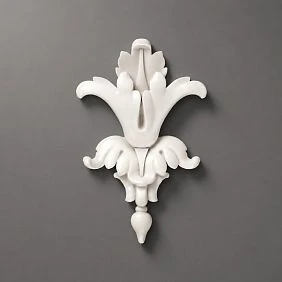
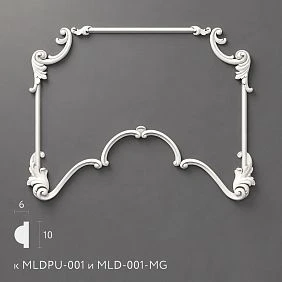
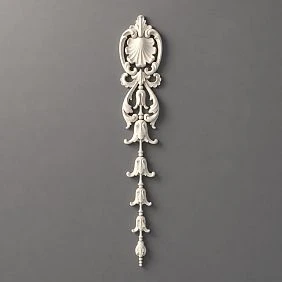
Our factory also produces:

Where such decor is especially needed: breakdown by room
Get Consultation
Living room with curtains: the main wall requires a system
A living room with a large window or two windows is a space where the window wall is often the main one. It is visible from the entrance, from the sofa, from the dining area. Any lack of thought here is immediately noticeable.
Molding for the living roomaround the window area solve several tasks at once: they frame the wall sections, create borders on the sides of the window, and connect the ceiling cornice with the wall system. For the living room, you can use more expressive profiles with relief — the space allows it.
stucco decor for a kitchen-living room— about working with open layouts, where one window wall unites several functional zones, and how moldings help structure this.
Bedroom with curtains: delicacy and rhythm
The bedroom requires a different approach. Here, the window area should be organized but not "screaming." Moldings in the color of the wall, a thin cornice, neat frames on the wall sections — that's all that is needed for the bedroom's completeness.
Stucco molding set for the bedroom— about selecting elements for the bedroom: profiles, indents, color, frames near the window area.
In the bedroom, it is especially important to consider that curtains are often thick and light-proof. When they are drawn, the wall with curtains looks like a closed panel. Moldings on the wall sections should harmonize with this "closed" picture, without creating visual clutter.
Kitchen-living room: connecting zones through a window wall
In an open-plan kitchen-living room, the window wall is often long — it stretches from the kitchen to the lounge area. Curtains may only cover part of this wall. The task of moldings is to create a unified rhythm across the entire surface, even where there is no window.
stucco decor for a kitchen-living room — details on systems for long walls with window zones in open layouts.
Study: strictness and verticality
A study with bookshelves, a large desk, and a window is a space with specific requirements. Frames on the piers, a strict cornice, vertical moldings on the sides of the window. Minimum ornament, maximum architectural clarity.
Country house: scale and height
A country house with high ceilings and large windows presents a different scale of challenge.Stucco decoration for a country house — about large window zones, panoramic glazing, and wall systems that match the scale of the space. Here you can use wide cornices, more expressive moldings, and full pilasters on the sides of the window.
Which elements to use for a wall with curtains
Moldings: the foundation of the system
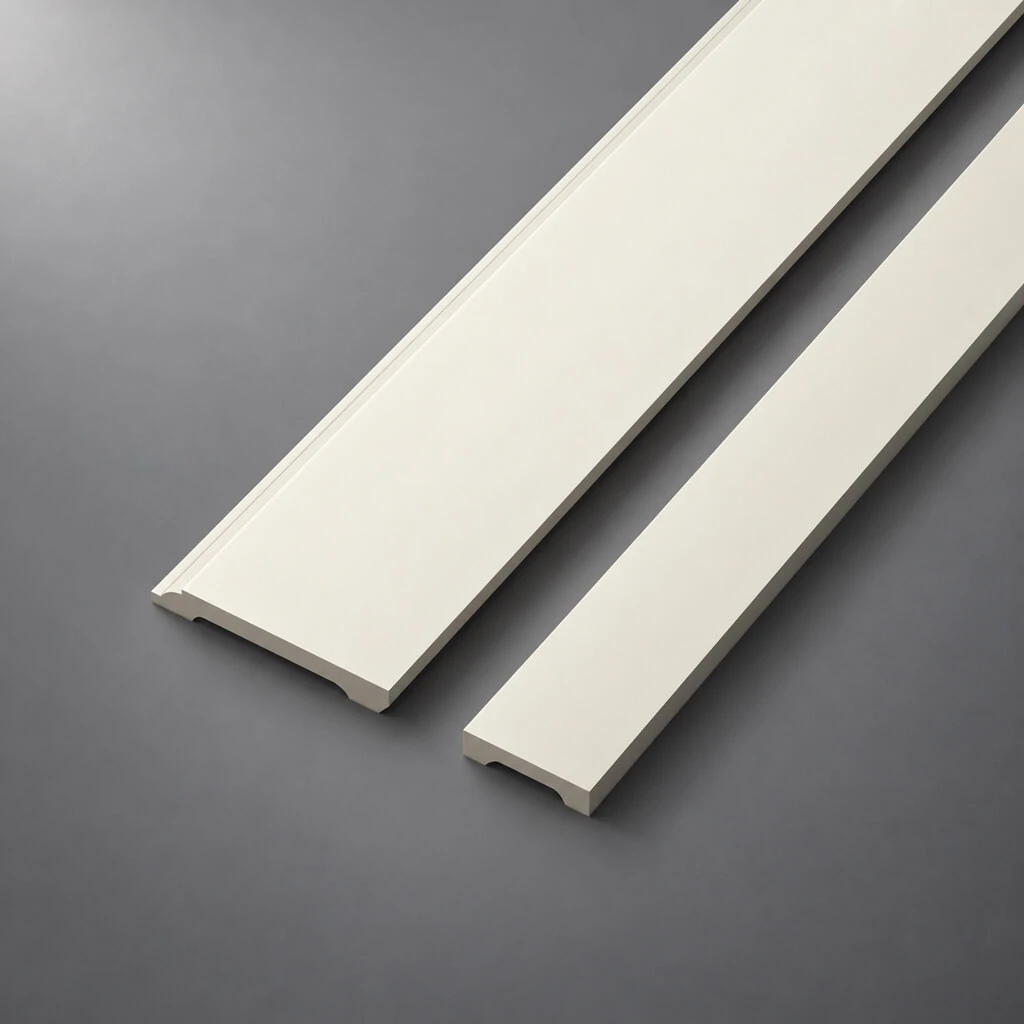
Polyurethane moldings for walls— это погонажный профиль, который создаёт рамки, горизонтальные пояса и вертикальные линии. Для стены со шторами молдинги работают в трёх режимах:
-
Рамки на простенках — замкнутые прямоугольные рамки на участках стены по бокам от шторной зоны
-
Горизонтальный пояс — молдинг, проходящий по всей стене на одной высоте и «связывающий» оконную зону с остальной плоскостью
-
Вертикальные линии — молдинги, идущие от плинтуса вверх по бокам от окна, создающие вертикальный ритм
Карнизы из полиуретана: верхняя граница системы
Polyurethane Crown Molding— это горизонтальные профили, которые крепятся в месте соединения стены и потолка. В оконной зоне карниз выполняет двойную функцию: декоративную (создаёт верхнюю границу всей системы) и практическую (может скрывать или обрамлять потолочный карниз для штор).
Важно понимать разницу: потолочный карниз для штор — это технический элемент, на который вешают ткань. Декоративный карниз из полиуретана — это архитектурный элемент, который оформляет стену. Они могут совмещаться или работать независимо друг от друга.
how to combine stucco decor with baseboards and cornices— о логике вертикальной системы «плинтус–молдинги–карниз» и правилах их совместного применения в оконных зонах.
Corner elements and molding decoration
Molding corner piecesиспользуются в рамках на простенках и создают декоративные акценты в точках соединения профилей. Для оконной зоны — это обязательный элемент системы: он завершает рамки и придаёт им стилистическую характеристику.
Угловой декор для молдингов из полиуретана— about how to choose and use corner elements for frames on different sections of the wall, including piers next to windows.
Decorative appliqués
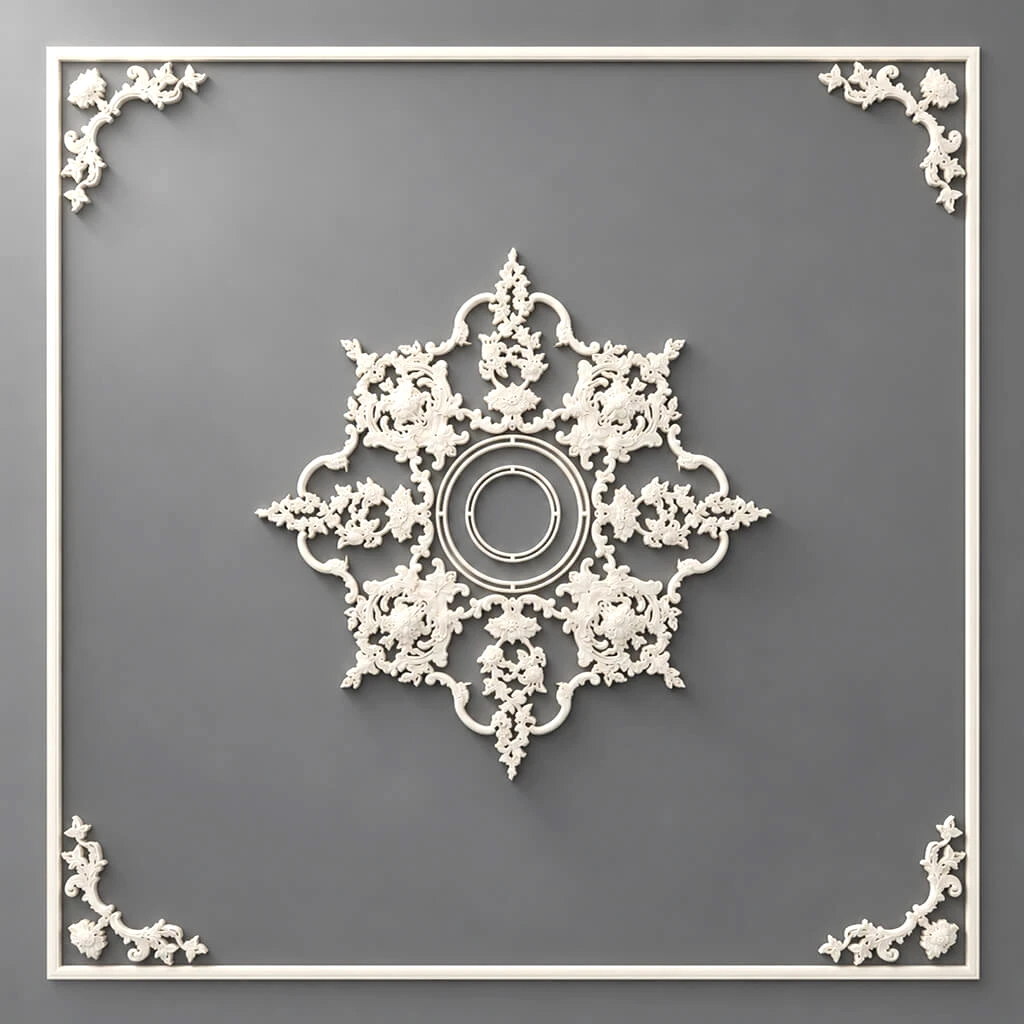
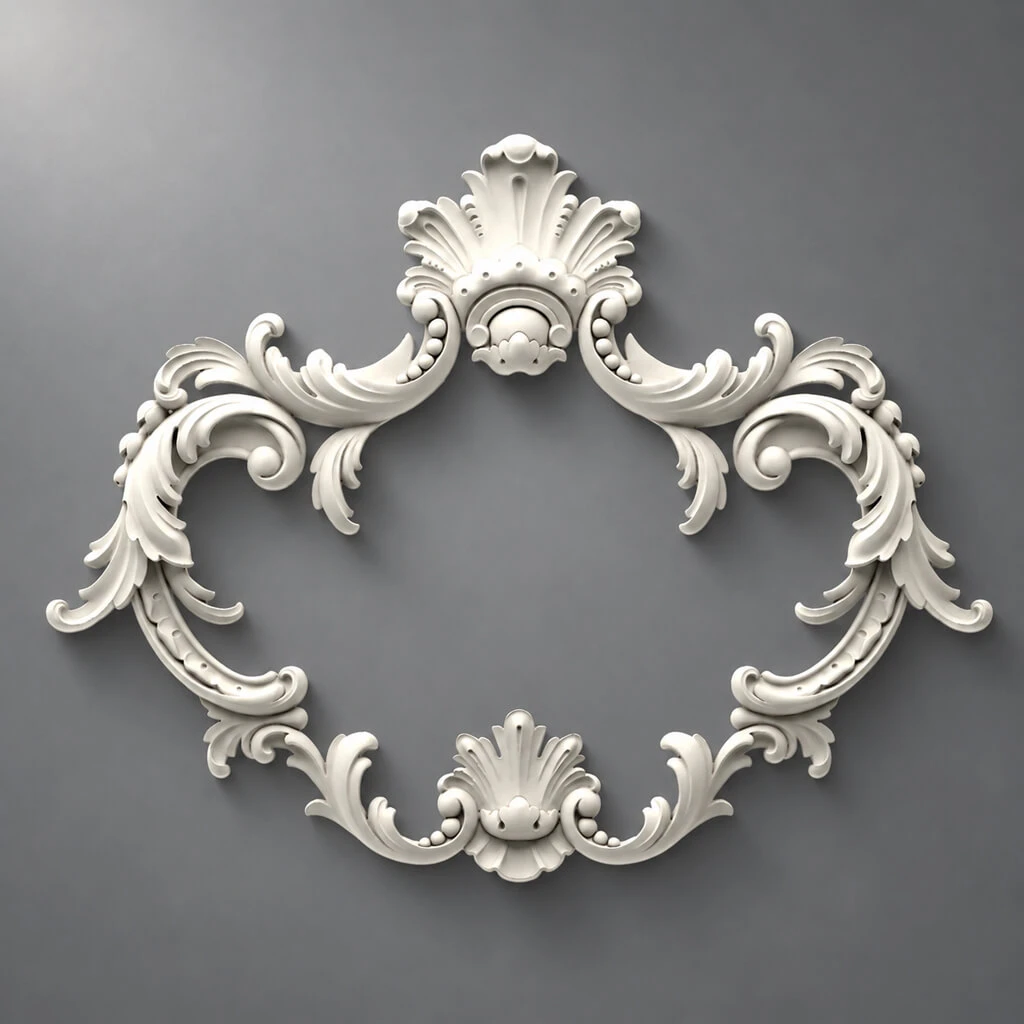
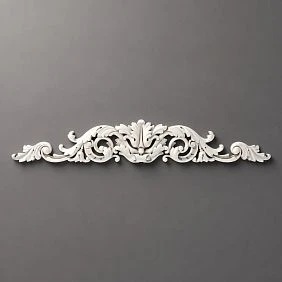
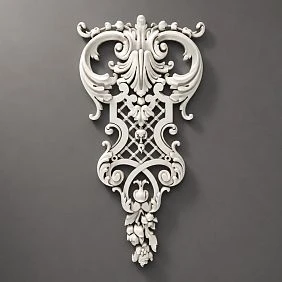
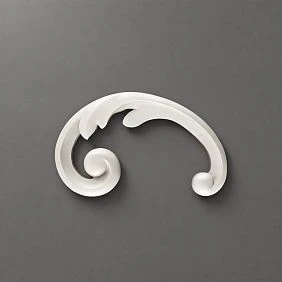
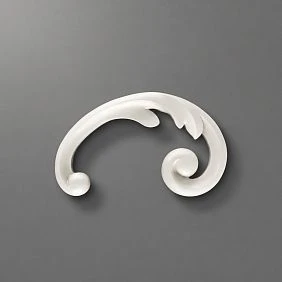
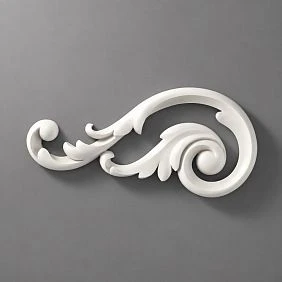
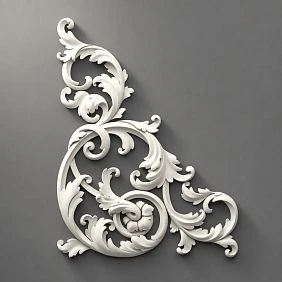
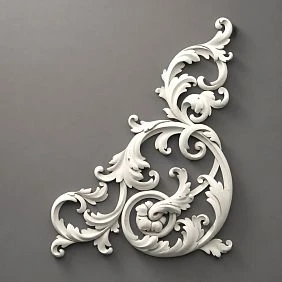
Polyurethane decorative appliquesare placed in the centers of frames or on horizontal belts. On a wall with curtains, overlays are used sparingly: it is better to place one accent overlay in the center of the pier than to overload each frame.
Baseboards: the lower boundary of the system
A polyurethane baseboard completes the wall system from below. In the window area, the baseboard runs under the windowsill (or at floor level), creating a lower horizontal line that connects all elements of the system into a single vertical logic.
All listed elements are included in the catalogpolyurethane products for interior STAVROS.
Six schemes for decorating a wall with curtains
Scheme 1. Moldings on the piers on the sides of the curtains
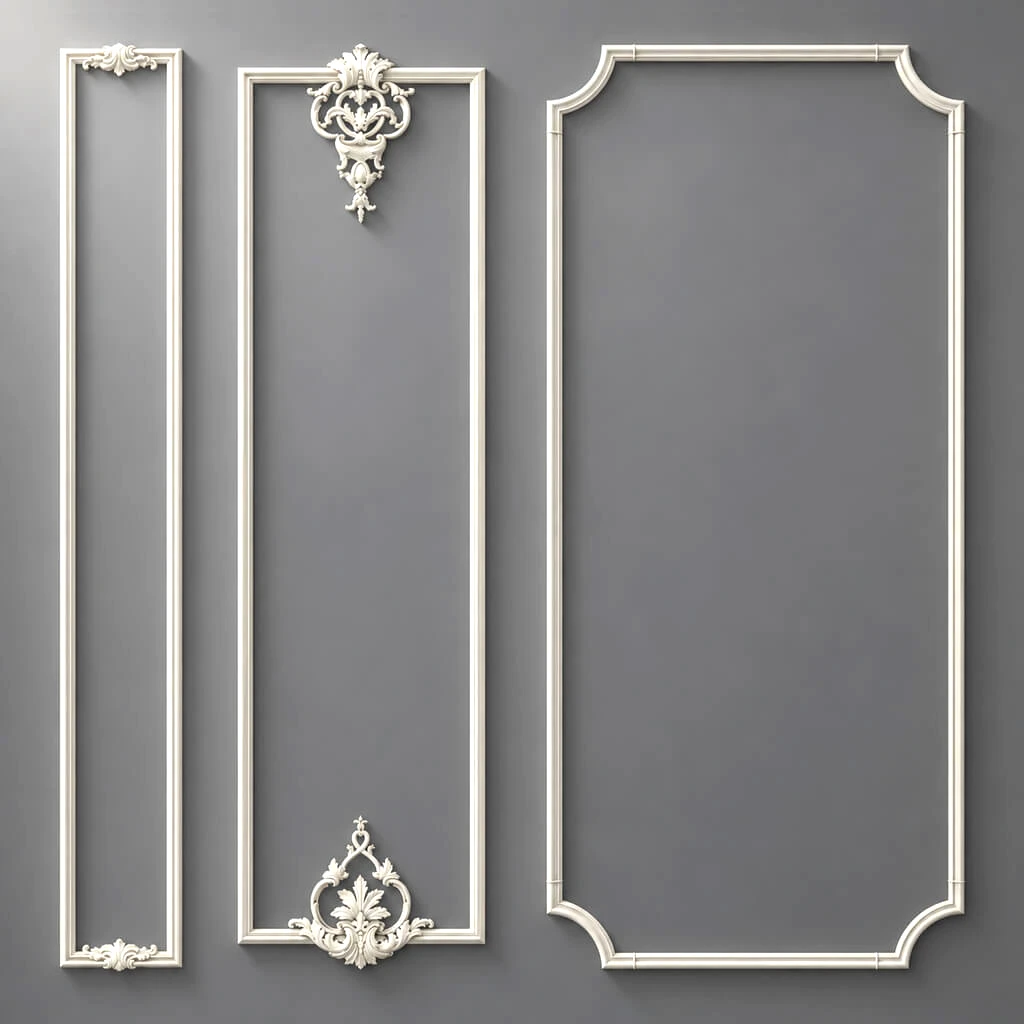
The most concise and practical scheme. Curtains occupy the central zone of the wall, the piers on the left and right are visible sections. On each pier, a frame of moldings is mounted: from the baseboard (or slightly above it) to the cornice (or to the horizontal belt).
This scheme works with any type of curtains — wide drapes, tulle curtains, roller blinds. The piers are always open, always decorated, and create symmetry around the window area.
Stucco Decor for the Wall Between Windows— about working with piers: width, height, number of frames, indents.
Calculation: frame width = pier width − indents on each side (15–20 cm). Frame height = wall height − indent from baseboard (15–20 cm) − indent from cornice (10–15 cm).
Scheme 2. Polyurethane ceiling cornice + wall frames
A combined scheme where a decorative polyurethane cornice creates the upper horizontal line of the entire wall system, and wall molding frames form the lower part.
Polyurethane ceiling cornicesIn this scheme, they run along the entire length of the wall — above the window area, above the piers, continuously. The wall frames on the piers are located lower and are connected to the cornice by a unified style.
An important nuance: if the curtain is hung on a ceiling curtain rod, the decorative polyurethane cornice is mounted below the ceiling rod. The distance between them: 3–8 cm. This creates a "step" that hides the mechanical part of the curtain system and leaves only the decorative cornice visible.
Scheme 3. Hidden niche for curtains + stucco frame cornice
One of the most elegant schemes. Curtains are hung in a hidden ceiling niche. The lower edge of this niche is decorated with a decorative polyurethane cornice — it creates a visual "frame" for the curtains. The wall under the niche is decorated with molding frames.
In this scheme, stucco decor near the windowworks as an architectural transition: niche — decorative cornice — wall with moldings. Curtains emerge from the "architectural portal," creating a sense of thoughtfulness and an expensive interior.
Application: living room, bedroom, study with high ceilings (from 2.8 m).
Scheme 4. Vertical moldings next to the window
This scheme abandons closed frames in favor of open vertical lines. On the sides of the window opening — to the right and left on the piers — vertical moldings are installed from the baseboard to the cornice. No horizontal frame crossbars — only clean verticals.
Vertical wall decor made of polyurethane — about the principles of vertical systems, when open lines are appropriate instead of closed frames.
What it is suitable for: tall narrow windows, panoramic glazing, piers less than 40–50 cm wide. The vertical line of the molding on a narrow pier does not overload the space and creates the desired rhythm.
Style: Japandi, modern classic, minimalism with classic notes.
Scheme 5. Frames around the entire window area
A more classic and architectural scheme. The molding frame frames not only the piers but also the upper part of the window area — creating a large "portal" inside which the window with curtains is located.
For this scheme, the upper molding of the frame must be located above the ceiling curtain rod — or the rod must be hidden. The side posts of the frame run along the edges of the piers from the baseboard upward. The upper horizontal is above the rod or in the area of a decorative polyurethane cornice.
Stucco decoration around the window — about the complete framing of the window area: how to calculate the portal system, where to place the moldings, and how to include the curtain rod in it.
Application: living room, hall, country house. Style: neoclassicism, Versailles Light, modern classic.
Scheme 6. Laconic decor in wall color: invisible system
The thinnest scheme. Moldings and cornice are painted in the exact wall tone. The relief is visible only in side light — a soft shadow that creates a sense of volume without contrast.
For a wall with curtains, this works especially well in the bedroom and in calm living rooms: there is decor, it structures the wall, but does not compete with the textiles.
stucco decor in the color of the wall or contrasting — about the principles of choosing a color scheme for stucco decor in window areas depending on the interior style and type of curtains.
How to combine moldings and curtains: practical principles
This is perhaps the most important section. Because moldings and curtains are two strong decorative elements that must negotiate with each other.
The "one dominates" rule
Either curtains are the main element, then moldings are calm, in wall color, laconic. Or moldings are the main architectural accent, then curtains are plain and without a complex pattern. When both elements are equally "loud" — a visual conflict arises.
The physical space rule
decorative wall moldings should not fall into the curtain movement zone. This is a technical requirement: fabric sliding along the molding frame will snag, wear out, and shift elements. Moldings should be either on the piers (outside the curtain path) or on wall sections that the curtains do not cover.
Minimum gap between the edge of the curtain in the closed position and the nearest molding: 5–10 cm.
Cornice rule: hidden or open
Before starting the design of the wall system, you need to decide: will the ceiling cornice for curtains be hidden (in a niche) or open? This changes the entire logic of the system.
-
Hidden cornice: a decorative polyurethane cornice is mounted at the bottom of the niche, becoming the visible lower boundary of the curtain space. Wall moldings start below.
-
Open cornice: a decorative polyurethane cornice is mounted above or next to the ceiling one, creating a single horizontal band. You need to consider how they visually combine.
Active pattern rule
If the curtains have an active pattern — large flowers, geometric print, floral ornament —polyurethane wall decorit should be as neutral as possible. Simple rectangular frames without decorative corner elements, a thin cornice, painted to match the wall. Two active patterns next to each other is always overload.
If the curtains are plain — you can afford more expressive moldings with relief, decorative corner inserts, central overlays in the frames.
Windowsill rule
The windowsill is a horizontal line that cannot be ignored. The lower horizontals of frames on the piers should ideally be aligned with the height of the windowsill: this creates an architectural connection between the molding system and the window area. A frame whose lower edge is at the same height as the windowsill appears as part of a single entity.
The rule of symmetry
symmetric polyurethane wall decor is not pedantry, it is a condition for the system to work. The left and right piers must be designed identically: identical frames, identical offsets, identical moldings. Asymmetry here is perceived as a mistake, not as a design technique.
Designing a ceiling cornice in a system with stucco decor
The ceiling cornice is a separate commercial product in the STAVROS catalog.Polyurethane Crown Molding are not only decorative elements for designing the upper part of the wall, but also functional solutions for curtain areas.
Cornice as a decorative accent
A decorative polyurethane cornice is installed at the junction of the wall and ceiling — along the entire length of the wall, including the window area. It creates a clear horizontal boundary that brings the entire wall together into a single object.
Cornice profiles from the STAVROS catalog are available in various cross-sections: from laconic delicate profiles (height 30–60 mm) to expressive classic cornices (80–120 mm and more). For the window area with curtains, the choice of profile depends on:
-
ceiling height (the higher it is, the more expressive the profile can be)
-
Interior style
-
presence and type of curtain rod
Cornice as a transition to the curtain zone
If curtains are hung on an open ceiling cornice, a decorative polyurethane cornice can be installed directly underneath it. The distance between them: 3–8 cm. The decorative cornice creates a visual "rim" above the curtain zone, hiding the technical part.
You can go further: use a polyurethane cornice as the top horizontal of a large "portal" that frames the entire curtain zone from above, and moldings on the piers as the side posts of this portal.
Cornice in the color of the ceiling or wall
An important choice: paint the cornice in the color of the ceiling (it "disappears" at the top) or in the color of the wall/decor (it becomes part of the wall system). For the window area, painting in the color of the wall or decor is more often used: the cornice then becomes an element of the wall system, not the ceiling system.
How to choose moldings for a wall with curtains
Profile selection is not a secondary task. The wrong scale of the molding destroys the entire system.
For the bedroom
Thin and medium profiles: width 10–22 mm. Relief height is minimal. Painting in the color of the wall or with slight contrast. No large ornament: the bedroom is a space of rest.
Optimal collections:Neoclassic Light— laconic profiles and decorative elements for a calm modern interior.
For the living room
Medium and wide profiles: width 22–40 mm. The relief is more expressive. Decorative corner elements within frames are acceptable. The cornice is wider, with a noticeable profile.
Optimal collections:Neoclassical— symmetrical systems, correct proportions, suitable for living rooms with classic or modern classic curtains.
For panoramic windows
With wide floor-to-ceiling glazing, moldings are placed on the sides of the window unit — only where there is a wall. Vertical lines, not closed frames. The cornice is delicate, not overloading the large light opening.
Stucco decoration around the window— about working with non-standard window situations: panoramic glazing, high windows, floor-to-ceiling windows.
For neoclassical style
Symmetry and order language. Cornice with a pronounced profile, molding frames on the piers, corner decorative inserts. Painting: white or cream elements on a rich background.
The STAVROS collectionVersailles Light— for formal living rooms, country houses, interiors with high ceilings and classic curtains with lambrequins.
For Japandi
Minimal decor. If moldings are needed — only the most laconic profiles, straight vertical lines, no ornament. Painting strictly in the color of the wall.
Wall decor in Japandi style — a collection for spaces where silence and rhythm without decorative excess are important.
For a country house
Wide profiles, expressive cornice, possibly pilasters on the sides of the window. The scale of elements should match the scale of the room.Stucco decoration for a country house — about choosing profiles for large spaces with high ceilings.
The STAVROS collectionBotanical Garden — for interiors with natural motifs in textiles and decor: botanical corner elements combine with botanical curtain prints.
How to calculate moldings for a wall with curtains
Step 1. Determine visible areas of the wall
Draw a wall diagram: window, curtains in open position, curtains in closed position. Mark which areas of the wall are visible in both positions, and which are visible only when the curtains are open.
Moldings on areas that are constantly visible (wall sections between windows) are mandatory. On areas visible only when curtains are open, optional.
Step 2. Calculate frames on wall sections between windows
For each wall section between windows:
-
Frame width = wall width − 2 × edge offset (15–20 cm)
-
Frame height = height from baseboard to cornice − bottom offset (15–20 cm) − top offset (10–15 cm)
-
Frame perimeter = 2 × (width + height)
-
Number of corner pieces = 4 per frame
Step 3. Calculate the cornice
Cornice length = length of the entire wall (including the window area). The cornice runs continuously — it is a single horizontal line.
Step 4. Add a margin
Add 10–15% to the total molding length for trimming and margin. Add 2–4 extra corner pieces to the calculated quantity.
Step 5. Account for the radiator and windowsill
If there is a radiator under the window, the frames on the walls should not go below the radiator. The bottom horizontal of the frame is at the level of the windowsill or above the radiator (5–8 cm).
how to calculate moldings and stucco decor for a wall— full calculation algorithm for walls with windows, doors, and engineering elements.
Example calculation
Wall 4 m wide. Window in the center — 1.6 m. Piers on the left and right — 1.2 m each. Wall height — 2.6 m. Baseboard — 10 cm. Cornice — 8 cm.
Frames on the piers (2 pcs.):
-
Frame width: 1.2 − (2 × 0.18) = 0.84 m
-
Frame height: 2.6 − 0.1 − 0.08 − 0.18 − 0.12 = 2.12 m
-
Perimeter of one frame: 2 × (0.84 + 2.12) = 5.92 m
-
Total for two frames: 5.92 × 2 = 11.84 m of molding
-
Corner pieces: 4 × 2 = 8 pieces
Cornice:
-
Length: 4 m + 10% allowance = 4.4 m
Total: ~13–14 m of molding, 8 corner elements, 4.4 m of cornice.
Mistakes when decorating a wall with curtains
Honest review — because mistakes happen here even to experienced craftsmen and designers.
Moldings fall into the curtain movement zone. The most costly mistake: after installation, it turns out that the curtains catch on the frames. Always check how the fabric moves before installing the moldings.
The cornice is not connected to the wall decor. A ceiling cornice for curtains of one style, a decorative polyurethane cornice of another, moldings on the piers of a third. The system falls apart into unrelated elements.
Too much relief next to active textiles. Curtains with a large print + expressive moldings with ornament = visual conflict. Choose: either active curtains or expressive decor.
Frames are partially covered by drapes. A frame that is half-covered by curtains looks like an unfinished object. Place frames only in areas free from curtains.
Forgot about the radiator under the window. A molding glued above the radiator is a problem for radiator maintenance and an unsightly solution. The lower line of decor should be above the radiator.
The depth of the curtain niche is not taken into account. If the niche is deep, the decorative polyurethane cornice should be installed taking this depth into account, otherwise it will be 'sunk' into the ceiling.
Moldings conflict with the slopes. The slopes of the window opening are part of the window area. A molding located close to the slope can create an ambiguous joint. A clear indentation is needed: 5–10 cm from the slope to the nearest molding.
No connection with the baseboard and cornice. The frames "hang" in space without contact with the lower and upper boundaries of the wall. The system must be vertically closed: baseboard → moldings → cornice.
The profile chosen for the bedroom is too large. A wide classic molding with relief in a 14 m² bedroom overwhelms and overloads the space. The scale of the decor should match the scale of the room.
What to buy for decorating a wall with curtains
Complete list for creating the system:
-
Polyurethane moldings for walls — main profile for frames on piers
-
Polyurethane ceiling cornices — decorative cornice for the upper boundary of the system
-
Decor for polyurethane moldings — corner inserts for frames on piers
-
Polyurethane decorative appliques — central accent elements for frames
-
Polyurethane wall molding — additional ornamental elements
-
polyurethane wall decor— ready-made systems and kits for walls
By styles — choose a collection for the task:
-
Neoclassical — classic symmetrical systems for living rooms
-
Neoclassic Light — laconic decor for bedrooms and modern apartments
-
Versailles Light — expressive systems for formal living rooms and country houses
-
Japandi — minimalist solutions for calm modern interiors
-
Botanical Garden — for interiors with natural motifs in textiles and decor
installing polyurethane molding — complete installation instructions for systems on walls with windows.
installation of polyurethane molding — practical guide for working with cornices and large decorative elements.
FAQ: Answers to popular questions
Can moldings and curtains be combined on one wall?
Yes, this works if two conditions are met: the moldings should not fall into the curtain movement zone (indent at least 5–10 cm), and one of the elements should be "quiet".decorative wall moldings — in the color of the wall — a universal solution for any curtains.
Which moldings to choose for a wall with curtains?
It depends on the room: for a bedroom — thin profiles 10–22 mm, for a living room — 22–40 mm. If the curtains are active, the decor should be calm. If the curtains are plain, you can use more expressive moldings with corner elements.
Can a polyurethane cornice be used to decorate the curtain area?
Yes.Polyurethane Crown Moldingcreate the upper decorative border of the wall system. They can be installed below the ceiling cornice for curtains, creating a single horizontal band.
How to decorate a niche for curtains with stucco decor?
The lower edge of the niche is decorated with a decorative polyurethane cornice. The side walls of the niche are molding frames or vertical lines. The wall below the niche is frames on the piers in the same style.
How not to overload a wall with curtains?
The 'one dominates' rule: either expressive curtains + delicate decor, or active stucco decor + calm plain curtains. Plus —decor in the color of the wallinstead of contrasting.
Do I need to specifically account for a radiator under the window?
Yes, absolutely. The bottom horizontal of the frames on the piers should be at the level of the windowsill or 5–8 cm above the radiator. A molding above the radiator is both inconvenient and unattractive.
How to design a wall with two windows and curtains?
On the pier between the windows — a frame or vertical molding. On the piers at the edges of the wall — frames following the same scheme. The curtain rod should be continuous across the entire wall.Stucco Decor for the Wall Between Windows — details about systems for multi-window walls.