









































































Article Contents:
- What is boiserie: history, essence, modern meaning
- Why polyurethane moldings for boiserie are better than wooden panels
- Where to use boiserie: rooms and scenarios
- Boiserie in the living room: an architectural wall as the main element
- Boiserie in the bedroom: quiet luxury of the headboard
- Boiserie in the hallway and corridor: rhythm in the first impression
- Boiserie in the study: strictness and intellect of the wall
- Boiserie in a country house: scale and classic
- Five types of boiserie from moldings: from the lower belt to the French layout
- Lower boiserie: wall belt from the baseboard
- Tall panels: boiserie covering the full wall height
- French layout: elegance and precision
- Boiserie with decorative corners
- Boiserie with central overlays
- What elements are needed for boiserie: complete system composition
- How to choose moldings for boiserie: scale, style, proportions
- By room scale
- By type of boiserie
- By interior style
- Boiserie and interior style: how to avoid mistakes
- Neoclassicism
- French style
- Modern classicism
- Versailles Light
- Jatoba
- Wainscoting with wallpaper, paint, and decorative plaster
- Wainscoting fully in wall color
- Wainscoting + wallpaper inside frames
- Wainscoting + decorative plaster
- Wainscoting + painted lower zone
- How to calculate wainscoting for a wall: algorithm and example
- Calculation algorithm
- Example of calculating lower wainscoting
- Example of calculating tall wainscoting
- How to choose wainscoting height: three approaches
- Mistakes in designing boiserie: an honest analysis
- What to buy for a boiserie-style wall: a complete list
- FAQ: Answers to the Most Important Questions
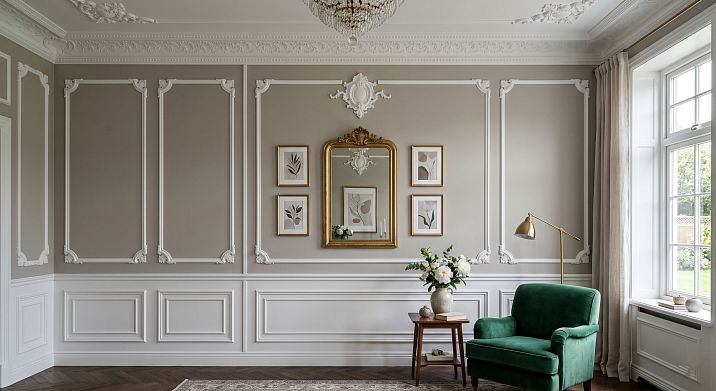
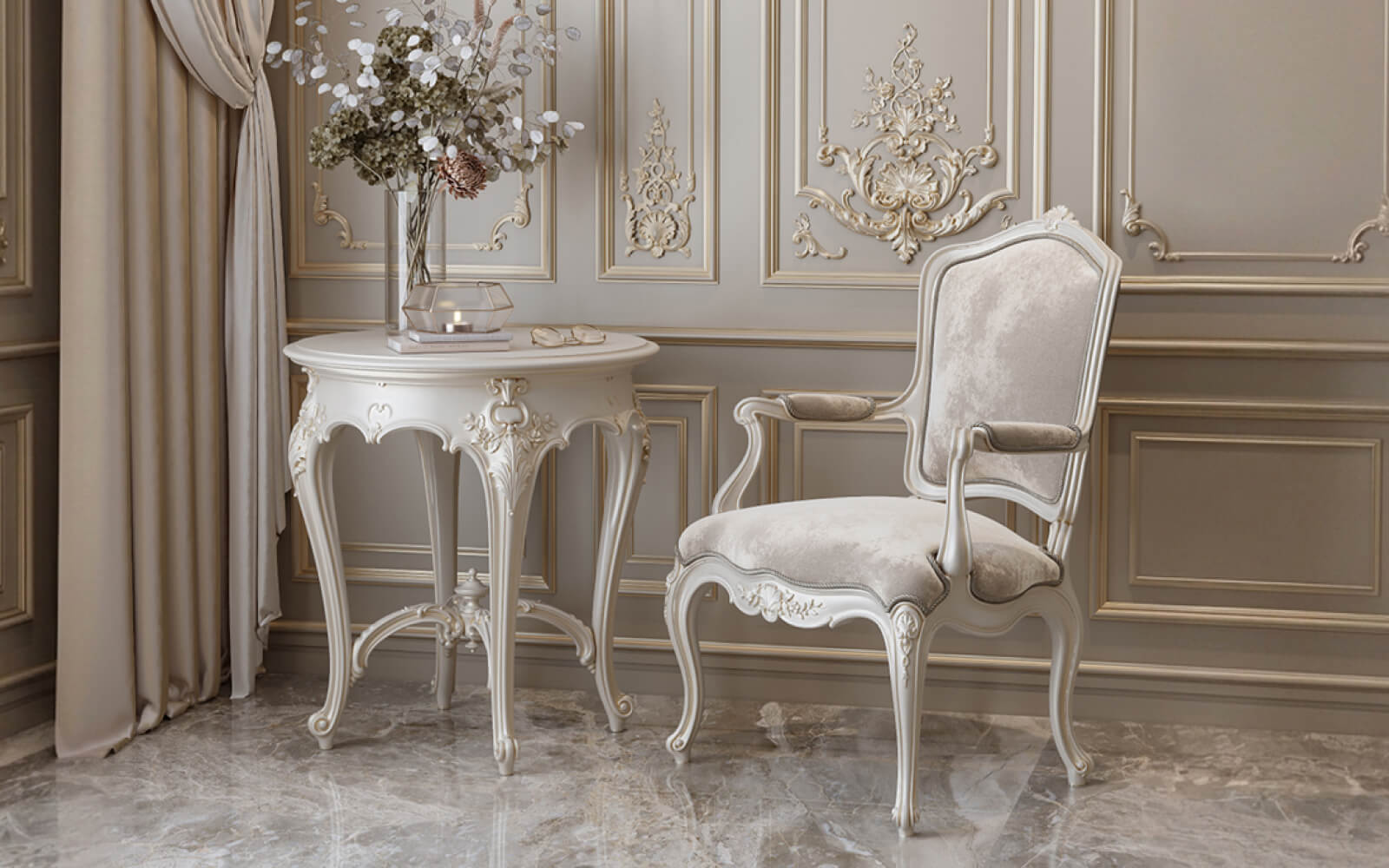
The word is French, the history is long — from Versailles halls to Parisian apartments. But the essence is simple: a wall divided by decorative frames, moldings, horizontal bands, and vertical divisions transforms from a flat surface into an architectural object. Boiserie is a way to make a wall intelligent, proportional, and lively.
Todaypolyurethane boiserieis not an imitation of antiquity or an expensive wooden paneling. It is a modern, lightweight, practical system assembled from moldings, corner elements, overlays, and baseboards. It is mounted on any wall, painted in any color, and achieves that very effect — an architectural interior where walls work.

What is boiserie: history, essence, modern meaning
Boiserie (from French bois, 'wood') is a decorative wooden wall paneling that appeared in France in the 17th century and flourished during the era of Louis XIV and Louis XV. The halls of Versailles, the interiors of the Palais-Royal, Parisian mansions — everywhere status needed to be displayed, walls were covered with panel layouts featuring relief, carving, gilding, and painting.
In modern interiors, this principle has been radically rethought. No wooden paneling covering the entire wall. No heavy structures. The boiserie effect is created differently: on a painted or plastered wall,Moldings for boiseriemade of polyurethane are mounted, forming frames, bands, verticals, and horizontals. The entire system is painted in a single color — and the wall acquires the desired character.
What can be assembled from polyurethane moldings in the boiserie style:
-
lower wall belt from the baseboard to 80–120 cm;
-
rectangular vertical panels spanning the full height of the wall;
-
symmetrical horizontal sections;
-
French layout with thin moldings and elegant proportions;
-
decorative inserts with ornamental overlays;
-
combined systems with cornice, baseboard, and corner decor.
The main idea has not changed in three centuries: the wall must have a proportional rhythm. Boiserie is the language with which the wall speaks to the space.




Why polyurethane moldings for boiserie are better than wooden panels
This question arises for everyone who first encounters the topic. Wooden panels are the "real thing," polyurethane is an "imitation." Is that so?
In practice, the difference is not in the material, but in the result. And here polyurethane wins by several criteria that are important specifically for a wall system:
Weight. Wood cladding is a structural load on the walls. Polyurethane moldings weigh several times less and are attached with liquid nails or assembly glue. No dowels, no lathing.
Fitting to size.decorative wall moldingsThis is a linear material that is cut to the specific dimensions of the wall. There is no standard "panel" size: you set the width and height of the sections yourself for your specific wall.
Painting. Polyurethane moldings accept any water-based or alkyd-based paints perfectly. You can paint them to match the wall color, highlight them with a contrasting tone, or use decorative techniques — aging, glazing, patina.
Cost.Boiserie wall panelsmade of polyurethane are significantly cheaper than wood cladding with a comparable visual result. This is not a compromise — it is a reasonable choice.
Durability. Polyurethane does not dry out, does not deform with changes in humidity, and does not require periodic treatment with oils or varnishes.
Compatibility with the system. A STAVROS customer can choose moldings, baseboards, cornices,Decor for polyurethane moldingsand decorative overlays within a single catalog — all elements were designed as a system.
All this makeswall panels boiseriepolyurethane the first choice for modern interiors, where both aesthetics and common sense matter.
Our factory also produces:




Where to use boiserie: rooms and scenarios
Get Consultation
Boiserie in the living room: an architectural wall as the main element
The living room is the space that first welcomes guests and lingers in memory last. The wall behind the sofa, the wall with a fireplace, the wall along the dining area — any of these scenarios benefits from panel layout.
In the living roompolyurethane boiserieworks at the full height of the wall. Tall vertical frames, symmetrical sections, corner decorative elements — this is a complete architectural system that turns the living room into a 'hall' in the best sense: a space with character and proportions.
stucco decor for a long wallis about building rhythmic systems on extended wall surfaces in the living room.
Boiserie in the bedroom: quiet luxury of the headboard
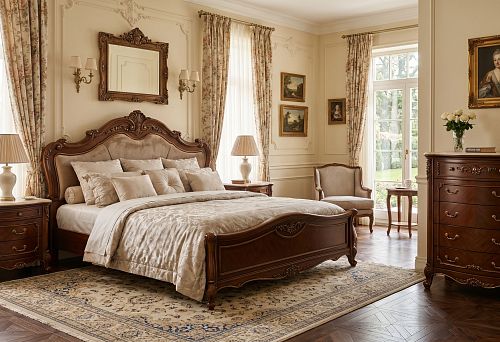
A bedroom with boiserie is not about showcasing decor. It's about the right atmosphere. The panel layout at the headboard creates a focal zone that all furniture gravitates toward. A frame around the bed, a quiet relief in the wall color, neat moldings — and the room becomes a bedroom with intent, not just a room with a bed.
Stucco molding set for the bedroom— about wall decor systems for sleeping spaces: height, profile, color, accents.
For the bedroom, boiserie is often placed lower or mid-height — from the baseboard to the mattress level or slightly above. The upper part of the wall remains clean. This creates visual calm and does not overload the bedroom.
Boiserie in the hallway and corridor: rhythm at first impression
The hallway is the first thing a person sees when entering a home. And the last thing they see when leaving. This space shapes the impression of the entire interior.
Lower boiserie in the hallway — a lower wall belt of moldings 80–100 cm high — is both a decorative and practical element: it protects the lower part of the wall from mechanical damage and simultaneously creates an architectural character.
stucco decor for a long wall— about building rhythmic layouts in corridors.
In a long corridor, boiserie creates rhythm: repeating sections of equal width, identical corner elements, a single horizontal belt at the top. A monotonous corridor turns into a gallery with architectural logic.
Boiserie in the study: rigor and intellect of the wall
The study is a room where concentration and dignity are important. Panel layout is appropriate here like nowhere else: it creates a strict, slightly solemn backdrop for the workspace.
For the study, mid-height or full-height boiserie is best, without excessive ornamentation. Symmetrical sections, corner elements without floral decor, painting in a dark or rich tone.Wall decor in neoclassicism — a collection that is perfect for a study room scenario.
Boiserie in a country house: scale and classics
A country house with high ceilings means different proportions and a different logic for boiserie. Here you can afford wide moldings, expressive cornices, and large decorative corner inserts.
Stucco decoration for a country house — about systems for high walls, halls, stair areas, and dining rooms in country interiors.
In a country house, boiserie is appropriate in all rooms: living room, dining room, hall, stair area, bedroom, study. A unified stylistic language, a unified molding system — and the house gains interior integrity.
Five types of boiserie from moldings: from the lower belt to French paneling
Lower boiserie: a wall belt from the baseboard
The most practical and common option. The lower part of the wall — from the baseboard to a height of 80–120 cm — is decorated withmoldings for the lower part of the wall, which form rectangular frames within this belt.
At the top, the belt is closed with a horizontal molding — it becomes the "belt" of the boiserie, a clear dividing line between the lower decorated zone and the upper clean or wallpaper zone. This line determines the proportion of the entire wall.
Height of the lower boiserie:
-
hallway, corridor: 80–90 cm (comfortable height for protection from damage)
-
dining room, study: 90–110 cm (corresponds to the height of chairs and sideboards)
-
living room: 100–120 cm (level of the sofa armrest)
High panels: boiserie covering the entire height of the wall
When the frames go from the baseboard to the cornice — this is a full-fledged architectural system. Such boiserie creates a powerful effect, turning an ordinary wall into a "hall."
For high boiserie, the proportions of the sections are important: the width of the frame should be less than its height. Square and horizontal frames disrupt the feeling of the wall being "stretched" upward, which is what creates the effect of high panels. Optimal ratio: width to height = 1:1.6–1:2.
symmetric polyurethane wall decor — about proportions and rhythm in systems with high panels.
French layout: elegance and precision
The French boiserie style is about thin moldings, strict symmetry, and conciseness. No heavy profiles, no large corner elements. A thin molding of 10–15 mm, painted in the exact wall tone, creates a relief that is visible in side light but does not catch the eye.
French panels are most often made at medium or full height. Their distinctive feature is an elegant proportion and the absence of "decorative noise." This is boiserie for those who understand that true luxury is silence.
stucco decor in the color of the wall or contrasting — about choosing a color scheme for French paneling and other types of boiserie.
Boiserie with decorative corners
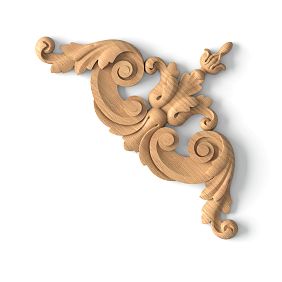
This option is closer to classic and neoclassical styles. Acorner element for boiserie: a square decorative accent with an ornament that gives the frame completeness and stylistic character.
Угловой декор для молдингов из полиуретана — a complete breakdown of corner elements: types, selection, calculation, compatibility with moldings in the boiserie system.
For a classic or neoclassical living room, this option is basic. Corner elements with geometric or floral ornament create a sense of handcraft and "modeling" that is valued in classic interiors.
Boiserie with central overlays
The most decorative option. In addition to corner elements, a decorative overlay is installed in the center of each frame — on the upper horizontal or on the central axis: a medallion, cartouche, or ornamental insert.
Polyurethane decorative appliquesin the boiserie system, this is the final layer of decor that transitions the layout from the category of "geometry" to the category of "stucco."
For the collection Versailles Lightthis option is especially organic: expressive frames, accent corner elements, and central overlays create an atmosphere of a formal interior.
What elements are needed for boiserie: complete system composition
Boiserie is never assembled from a single molding. It is a system where each element performs its function. Let's list the composition from the lower to the upper boundary:
Baseboard — the lower base of the system. All frames start from the baseboard or slightly above it.Polyurethane baseboards and cornicesin the STAVROS catalog are presented in profiles compatible with layout moldings.
Moldings — the main layout profile. They form rectangular frames, horizontal belts, and vertical posts.
Horizontal belt — a molding covering the upper boundary of the lower boiserie. It can be wider and more expressive than the main frame moldings.
Corner elements —Decor for polyurethane moldings, installed at the junction points of moldings in the corners of frames.
Center overlays — decorative elements in the centers of frames.
Cornice — the upper boundary of the system. For high boiserie, the cornice becomes the final horizontal accent.
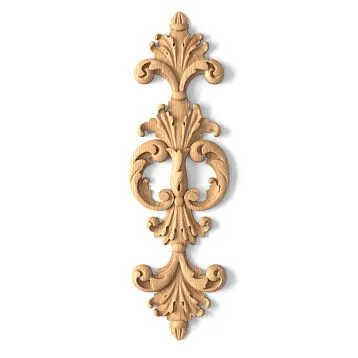
Decorative overlays —Polyurethane wall moldingfor additional accents.
All these elements are presented in the catalogpolyurethane products for interior STAVROS as a unified system.
How to choose moldings for boiserie: scale, style, proportions
Choosing a molding is not just about "like / dislike". It's about proportions. A molding of the wrong scale destroys the system, even if it is beautiful in itself.
By room scale
Small rooms (up to 18–20 m²): thin profiles 8–15 mm. A wide molding in a small room feels oppressive and visually reduces the space.
Medium rooms (20–35 m²): profiles 15–25 mm. This is a universal range that works in most residential interiors.
Large rooms, halls, country houses: profiles 25–40 mm and above. Here, the scale of the decor should match the scale of the space — a thin molding on a high wall looks helpless.
By type of boiserie
Lower belt: the molding should match the baseboard. If the baseboard is high and expressive — the frame molding can be slightly more modest. If the baseboard is low — the molding can be made accent.
High panels: vertical proportion is important. The molding should not "eat up" the frame area — it should frame, not dominate.
French layout: thin profile 8–12 mm, strict and concise. No complex sections.
By interior style
Here it is important to make the right choice, because the molding carries a stylistic signal:
-
Classic: profile with a classic section — oval, heel, scotia. Relief is acceptable.
-
Neoclassical: slightly simpler, calmer.Wall decor Neoclassic Light — ready-made system.
-
Modern classic: geometry without ornament. Straight or slightly profiled moldings.
-
Japandi: maximum minimalism.Wall decor in Japandi style— thin profiles without relief.
Boiserie and interior style: how not to make a mistake
Neoclassicism
Neoclassicism today is the most popular style for boiserie. Symmetrical layout, moldings with a soft classic profile, corner elements with calm ornamentation, painting in white or cream on a warm background.
It is for neoclassicism that the collection in the STAVROS catalog was createdNeoclassical: all elements — moldings, corner inserts, overlays, cornices — are designed as a single system with balanced proportions.
French style
Thin moldings, light walls, correct proportions. Emphasis on geometry, not ornament. Classic French panels are made to a height of 2/3 or the full height of the wall. Color — white, ivory, gray-white.
Ready-made molding frames for the wall— about assembling systems in the French style: section placement, indents, proportions.
Modern classic
Boiserie without unnecessary decor. Clean frames, no corner ornaments — or very laconic corner elements. The main thing is proportion and rhythm. Painting in the color of the wall or with minimal contrast.
Stucco decor and decorative plaster on the wall— about combining boiserie with textured finishes in modern interiors.
Versailles Light
This is closer to a classic French formal interior. Wider moldings, expressive corner elements, central overlays within frames, a cornice with a developed profile.
The STAVROS collectionVersailles Light— for living rooms, dining rooms, halls with high ceilings, and for country houses where boiserie should speak in full voice.
Japandi
Here, boiserie is not classic, but a modern interpretation of panel layout. Narrow vertical moldings, panels of varying widths, minimal horizontal elements. No ornamentation. Painting strictly in the tone of the wall. The effect is tactile, almost sculptural.
Wall decor in Japandi style— laconic solutions for modern interiors with a Japanese rhythm.
Boiserie with wallpaper, paint, and decorative plaster
One of the most interesting questions: what is inside the boiserie frames? There are several answers, and each creates a fundamentally different character for the interior.
Boiserie completely in the color of the wall
The moldings and wall surface are painted in one color. The relief is visible only due to shadows from the molding profile. The effect: subtle, intelligent, 'expensive without shouting'.
This is the most versatile option. It works in any style — from neoclassicism to Japandi.stucco decor in the color of the wall or contrasting— a detailed breakdown of when to choose this option.
Boiserie + wallpaper inside frames
Lower boiserie: moldings create frames, and inside each frame — wallpaper with a pattern or texture. The upper part of the wall is plain paint.
This is one of the traditional French techniques. It allows using expensive accent wallpaper in small quantities. The moldings become a "frame" for the wallpaper pattern.
Stucco decor and wallpaper on the wall— about combining moldings with different types of wallpaper in a boiserie system.
Boiserie + decorative plaster
Inside the frames — decorative plaster with texture (travertine, chalk, Venetian). Moldings around the perimeter — matching or contrasting. This technique creates a rich surface with a material feel.
Stucco decor and decorative plaster on the wall— about the technique of combining polyurethane moldings with textured coatings.
Boiserie + painted lower zone
The lower boiserie is painted in a rich color (deep blue, olive, mocha, anthracite), the upper zone in a light or neutral one. The molding horizontal belt becomes a clear dividing line.
This option works very well in a dining room, study, or hallway. It creates energy and character without overload.
How to calculate boiserie on a wall: algorithm and example
The most common mistake: first buy moldings "by eye", then start calculating the layout. The correct sequence is the opposite.
Calculation algorithm
1. Measure the wall. Width and height. Account for doors, windows, niches, radiators, sockets, switches.
2. Determine the type of boiserie. Lower belt, tall panels, French layout. The height of the frames depends on this.
3. Set the height of the belt or frames. For lower boiserie: 80–120 cm. For tall panels: from the baseboard (+ 5–8 cm) to the cornice (− 10–15 cm).
4. Calculate the number of sections. The width of each section should be the same. Take the wall width, subtract edge offsets (15–20 cm), divide the remaining distance by the width of one section + gaps between sections (3–5 cm).
5. Calculate the perimeter of each frame. Perimeter = 2 × (width + height).
6. Multiply by the number of frames. This is the molding footage for the frames.
7. Add the horizontal band. For the lower boiserie: wall width × 1.1 (including allowance).
8. Count the corner pieces. 4 corner pieces × number of frames.
9. Add allowance. 10–15% to the total molding footage.
10. Calculate the baseboard and cornice separately.
how to calculate moldings and stucco decor for a wall — complete algorithm with examples for different wall types and rooms.
Example calculation of lower boiserie
Wall: 5 m wide, 2.7 m high. One door 0.9 m wide.
Boiserie type: lower band 90 cm high.
Indentations from edges: 20 cm on each side.
Free zone width: 5 − 0.9 (door) − 0.4 (indents) = 3.7 m.
Width of one section: 0.6 m (frame) + 0.05 m (gap) = 0.65 m.
Number of sections: 3.7 / 0.65 ≈ 5.7 → we take 5 sections with recalculation of gaps.
Size of one frame: 0.62 m × 0.72 m (taking into account indents inside the belt).
Perimeter of one frame: 2 × (0.62 + 0.72) = 2.68 m.
Total length of frames: 2.68 × 5 = 13.4 m.
Horizontal belt: 5 m × 1.1 = 5.5 m.
Corner elements: 4 × 5 = 20 pieces.
Total molding: 13.4 + 5.5 = 18.9 m + 10% reserve = ~21 m.
Example of calculating high boiserie
Wall: 4 m wide, 2.8 m high.
Boiserie type: high panels from baseboard (10 cm) to cornice (8 cm) − gaps.
Frame height: 2.8 − 0.1 − 0.08 − 0.15 − 0.12 = 2.35 m.
Number of sections: 3 (section width ≈ 1.1 m with 0.15 m gaps at edges and 0.05 m between).
Perimeter of one frame: 2 × (1.1 + 2.35) = 6.9 m.
Total frame length: 6.9 × 3 = 20.7 m + 10% allowance = ~23 m.
Corner pieces: 4 × 3 = 12 pieces.
Cornice: 4 m + allowance = 4.5 m.
How to choose boiserie height: three approaches
Boiserie height is not an arbitrary decision. It should be related to furniture, doors, windows, and architectural elements of the room.
Low boiserie (up to 1/3 of wall height): for hallways, corridors, kitchen-dining rooms. Height 80–100 cm. This is a 'protective zone' of the wall with a decorative function.
Medium boiserie (up to 1/2 of wall height): for living rooms and bedrooms. Height 110–140 cm. Corresponds to the height of a sofa back, windowsill, and console. Creates a clear horizontal line dividing the wall into an active lower zone and a calm upper zone.
High boiserie (up to 2/3 of wall and above): for halls, country houses, living rooms with high ceilings. Height 160–210 cm and more. With ceiling heights of 3 m and above, boiserie can go up to the cornice — and then it becomes a full-fledged architectural system.
An important principle: if there are doors in the room, the horizontal line of the upper belt of boiserie should either coincide with the height of the door frame or be clearly lower (at least 15–20 cm). Boiserie that 'cuts' the door casing in the middle looks like a mistake.
how to combine stucco decor with baseboards and cornices — about the rules for coordinating horizontal belts of boiserie with architectural elements of the room.
Mistakes in boiserie design: an honest analysis
Boiserie is a system that either works entirely or doesn't work at all. One mistake in proportions or in the choice of elements — and the effect is lost. Let's name typical mistakes without softening.
Too small panels on a large wall. Many small frames on a long wall look fussy and fragmented. A large wall requires large sections.
Too large molding in a small room. A wide, expressive profile in a small bedroom overwhelms the space. The scale of the decor should match the scale of the room.
Different section widths without intent. All sections should be the same width — or different widths, but according to a clear logic (e.g., the central section is wider than the side ones). Random differences are perceived as a mistake.
No connection with the baseboard. Boiserie frames "hang" in the air, not connected to the baseboard. There should be either a single baseboard from which the frames start, or a starting horizontal molding above the baseboard.
Molding conflicts with door casings. Boiserie and door casings should be in the same style. If the casings are modern and the boiserie has a classic profile, conflict is inevitable.
Forgot about sockets and switches. A socket in the center of a frame or on the molding line is a problem. The layout should be designed considering the location of all electrical points.
Panels are not coordinated with furniture. Boiserie frames should either align with the furniture along the axis (sofa centered — central frame on the same axis), or be a clearly independent system.
Too many corner decorative elements. Corner elements in each frame are normal. Corner elements + central overlays + additional inserts on simple moldings is overload. In decor, the "enough" rule always applies.
No single rhythm across the wall. Boiserie is built on rhythm. If sections are arranged without a single logic, the system falls apart.
Moldings purchased, layout not thought out. The most costly mistake: buying linear moldings "by eye" and then finding out they either don't fit on the wall or create ugly proportions. Always layout first, then purchase.
What to buy for a boiserie-style wall: a complete list
Final commercial summary — what exactly is needed for the system:
-
Polyurethane moldings for walls — main layout profile
-
Polyurethane baseboards and cornices— lower and upper boundaries of the system
-
Decor for polyurethane moldings— corner elements for frames
-
Polyurethane decorative appliques— central accents and ornamental details
-
Polyurethane wall molding— additional elements of the system
-
Polyurethane wall decor— ready-made systems and collection solutions
By collections:
-
Neoclassical— symmetrical systems for classic and neoclassical living rooms
-
Neoclassic Light— concise solutions for bedrooms and modern apartments
-
Versailles Light— expressive systems for formal interiors
-
Botanical Garden— for interiors with natural motifs
-
Japandi— minimalist solutions for modern spaces
Installation:
-
installing polyurethane molding— complete installation guide for the boiserie system
-
installation of polyurethane molding— about working with cornices, baseboards, and large decorative elements
polyurethane decorative wall panels— about related wall decor systems that complement the boiserie theme
polyurethane wall moldings— about the range of profiles and rules for selecting them
FAQ: answers to the most important questions
What is polyurethane boiserie?
It is a decorative panel layout on the wall, created from polyurethane moldings, corner elements, overlays, and baseboards. The effect is an architectural wall with frames, bands, and rhythm, as in classic French interiors.polyurethane wall decorSTAVROS allows you to assemble such a system for any wall size.
Can boiserie be made without wooden panels?
Yes. Polyurethane moldings create the same visual effect with less weight, lower cost, and simpler installation. No lathing, no complex structures — just moldings on glue.
What height should boiserie be?
For the hallway — 80–100 cm (lower protective belt). For the living room — 110–140 cm or the full height of the wall. For the bedroom — up to the headboard level or higher. The height should correspond to the furniture and doorways.
Which moldings to choose for boiserie?
For small rooms — 8–15 mm. For medium ones — 15–25 mm. For large living rooms and country houses — 25–40 mm and more. For French layout — the thinnest profiles. For classic and neoclassical — with relief and corner elements.
Can boiserie be painted the same color as the wall?
Yes, and this is one of the best options. Moldings in the same color as the wall create a subtle relief effect without visual overload. It works especially well in the bedroom and in modern interiors.
How many corner elements are needed for the system?
4 corner elements for each frame. If there are 5 panels on the wall — 20 corner elements are needed plus a small reserve.Decor for polyurethane moldingsin the STAVROS catalog — with filtering by compatibility with specific moldings.
How to connect boiserie with door trims?
Boiserie and trims should be in the same style register. The horizontal belt of boiserie — at the same level as the top of the door frame or clearly lower.how to combine stucco decor with baseboards and cornices— about coordinating all horizontal elements in the interior.
Where to buy polyurethane boiserie?
The STAVROS catalog contains all necessary elements:Moldings for boiserie, corner elements, overlays, baseboards, cornices andpolyurethane wall decor in collections for different styles. Delivery across all of Russia.