










































































Article Contents:
- Why a wall with a radiator or air conditioner is more difficult to design
- What technical zones can be designed with moldings
- Wall with a radiator under the window
- Wall with an air conditioner
- Niche next to pipes
- Technical box
- Wall with a ventilation grille
- Wall with sockets, switches, and sconces
- What to choose for such a wall
- Moldings for frames and verticals
- Decorative appliqués
- Decor for moldings
- Ready-made sets
- How to design a wall with a radiator
- Don't cover the radiator with molding
- Use moldings on the sides and above the radiator
- Design the wall sections around the window
- Make one large frame above the radiator
- Paint the moldings the same color as the wall
- How to design a wall with an air conditioner
- Don't place the frame flush against the unit
- Leave technical gaps
- Use vertical lines on the sides
- Do not place large overlays near the block
- Shift the emphasis to the adjacent part of the wall
- How not to ruin a technical wall with decor
- Do not block access for maintenance
- Do not glue decor on removable panels
- Do not cross pipes and grilles with moldings
- Do not create overly complex symmetry where there is equipment
- Do not forget about sockets, switches, and sconce outlets
- Which styles are suitable for a technical wall
- Neoclassical Light
- Jatoba
- Neoclassicism
- Modern minimalism
- Art Deco
- Practical Scenarios
- What to buy for a wall with a radiator or air conditioner
- Frequently asked questions
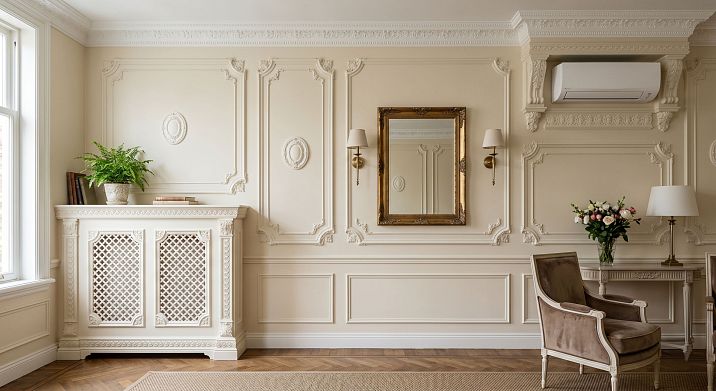
There are walls that cannot be made "clean" in the full sense of the word. They already have something on them: a radiator under the windowsill, an air conditioner unit under the ceiling, a ventilation grille in the corner, pipes along the riser, a couple of sockets in the wrong place, a sconce on the wall that is "not the one." The renovation is done, the paint is beautiful — but the wall doesn't look finished because technical elements disrupt its integrity.
It is herestucco decor for a wall with a radiatorand other technical elements becomes not just decoration, but an architectural solution. Moldings, skillfully placed around the radiator, on the sides of the air conditioner, on the piers between technical zones — do not hide the equipment (that's impossible and unnecessary), but integrate it into the interior logic of the wall. They turn a "wall with a radiator" into a "designed wall that has a radiator on it." The difference is fundamental.


Why a wall with a radiator or air conditioner is harder to decorate
Let's honestly answer the question many ask themselves: why can't you just glue moldings the same way as on any other wall? The answer lies in the limitations created by the equipment.
The radiator doesn't just take up part of the wall — it emits heat. Polyurethane moldings tolerate the working temperatures of radiator heat well (50–70°C on the device's surface), but the adhesive bond should not experience constant thermal exposure up close. Therefore, moldings are placed not directly over the radiator, but next to it — on the piers, above the device level, in an area that does not heat up.Decorating a wall with a radiatoris working with the zones around the device, not over it.
The air conditioner is a different story. It physically occupies part of the wall: the unit is attached to the surface, with tubes, wires, and drainage coming out of it. A frame of moldings close to the unit creates several problems: first, it blocks access to the filters for cleaning (which needs to be done every 2–4 weeks); second, when the unit is removed for maintenance or replacement, the decor gets damaged; third, a visually "squeezed" unit in a frame looks like a design mistake, not a solution.
Ventilation grilles, pipes, ducts — another class of constraints. They require access for cleaning and maintenance. Moldings crossing a grille or pipes — both unsightly and functionally illiterate.
Decorating a wall with technical elements — this is the discipline of a detour. Not "over", but "next to". Not "hide", but "include in the system". Understanding this principle is the key to a result that looks professional, not like an attempt to mask what cannot be masked. Full selectionpolyurethane products for any tasks — in the STAVROS catalog.




Which technical areas can be decorated with moldings
Our factory also produces:





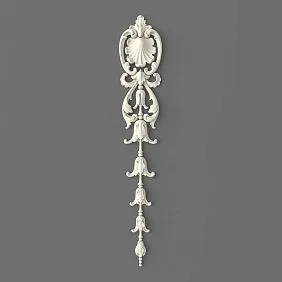
Wall with a radiator under the window
This is the most common situation in domestic apartments and houses. A window. Under it — a radiator. On the sides — piers. Above the radiator — a windowsill or its extension. A classic window wall that almost always looks modest, even after high-quality renovation.
The decorative potential of this area lies in the piers. Narrow vertical sections of the wall on both sides of the window — an ideal place for vertical moldings or narrow frames. They create a "framing" of the window opening and simultaneously shift the gaze from the radiator to the architectural system of the wall.Stucco decoration around the window — a topic with its own rules and principles applicable specifically to window-radiator walls.
What works: vertical moldings from the windowsill to the ceiling on the piers on both sides of the window. A horizontal profile at the level of the upper edge of the window opening, connecting the side moldings. This creates a U-shaped frame around the window that visually "absorbs" the radiator below — it becomes part of the architecture, not a technical obstacle.
Что не работает: рамка, нижняя горизонталь которой проходит прямо над радиатором. Зазор между молдингом и радиатором должен быть не менее 10–15 см — для нормальной конвекции тепла и во избежание теплового воздействия на клей.
Get Consultation
Стена с кондиционером
Молдинги для стены с кондиционером решают задачу иначе, чем в случае с радиатором. Кондиционер, как правило, расположен высоко — на уровне 15–25 см от потолка. Это значит, что основная декоративная зона стены — ниже блока — остаётся свободной и может быть оформлена полноценно.
Принцип «рама без верхней перекладины» работает здесь идеально. Три стороны рамки — левая, нижняя, правая — создают ощущение обрамлённой зоны. Верхний молдинг в рамке отсутствует, потому что вверху — кондиционер. Визуально это не воспринимается как «незаконченность»: горизонталь потолочного карниза или просто потолок закрывает верхнюю часть. Результат — декорированная стена, блок которой выглядит как встроенный технический элемент, а не как случайный прямоугольник на пустой поверхности.
Другой сценарий: вертикальные молдинги по бокам от кондиционера — от пола до потолка, с отступом 30–50 см от блока. Они создают «коридор» вокруг кондиционера, акцентируя вертикальный ритм стены. Сам блок оказывается внутри этого ритма — не выпадает из системы, а встроен в неё.
Простенок рядом с трубами
Трубы на стене — ситуация, которая чаще всего возникает в домах старого фонда, в прихожих, ванных комнатах, на кухнях. Декор стены с трубами — это, как правило, задача оформления пространства вокруг, а не на самих трубах.
Молдинги для стены с трубами размещают на свободных участках стены рядом с трубами — на простенке напротив или сбоку. Задача — создать декоративную систему, которая визуально «загружает» стену в целом, делая трубы менее заметными на её фоне. Когда стена структурирована — отдельные технические элементы на ней воспринимаются спокойнее.
stucco decor for niches, ledges, and piers— practical analysis of working in spaces with non-standard constraints.
Technical box
A technical box — a box made of drywall or MDF that covers pipes, wires, or a riser — is already an architectural element of the wall. It has flat surfaces, and moldings can be easily mounted on them. Thin profiles along the edge of the box work particularly well — they emphasize its shape, turning a technical element into a decorative pilaster or protrusion.
A molding along the perimeter of the visible edge of the box, duplicated on the adjacent wall in the same rhythm, is a technique that makes the box part of the interior, rather than a "necessary evil."stucco decor behind furniture— about working with decor in conditions where part of the wall is occupied by volumetric elements.
Wall with a ventilation grille
A ventilation grille is a small but noticeable technical element. Especially if it is located on a wall that you want to decorate. Moldings around the grille — not a frame "tightly," but an architectural framing with an indentation. A molding along the perimeter, set back 15–20 cm from the edge of the grille, creates a decorative panel inside which the grille becomes an accent central element. This transforms it from a "technical defect" into a "decorative detail."
Moldings around ventilation— an important nuance: the molding should not block the airflow of the grille. The indentation from the edge is not decorative, but functional. Also: the grille must remain removable for cleaning, so the molding is mounted strictly on the wall, not partially on the grille.
Wall with sockets, switches, and sconces
Sockets, switches, sconce outlets — elements that "live" on the wall and require access. The decorative system around them is built on the principle of "bypass": moldings are positioned so that the frame does not pass directly through the socket.
A specific technique: the frame is designed taking into account the socket's location. If the socket ends up inside the frame — that's fine: a socket inside the frame area looks like a built-in element. If the socket is on the frame's border — the molding is shifted 8–12 cm to the side so that the socket "exits" the frame. A molding cut in half by a socket is unacceptable.
A sconce on the wall is a separate task. The ideal option: the sconce is placed inside the molding frame, along the axis of symmetry. If the sconce is already installed off-center — the moldings adapt to the existing location: the frame is built with the sconce as the central element of one of its sides.
Stucco wall decor with backlighting — about the rules for combining decorative profiles and lighting sources.
What to choose for such a wall
Moldings for frames and verticals
Moldings for a wall with a radiator and other technical elements — a basic and most versatile tool. Linear profiles provide maximum flexibility: you choose the frame width, its proportions, and location considering specific wall constraints.
For technical walls, it is recommended to choose profiles in the mid-range — 25–40 mm. A profile that is too thin (15–18 mm) will get lost next to bulky equipment. A profile that is too wide (50–70 mm) will create excessive decorative "weight" competing with technical elements. The optimum is 28–38 mm.
| Wall type | Profile width | Color | Style |
|---|---|---|---|
| Radiator under the window | 28–35 mm | Matching the wall | Neoclassical Light / Modern |
| Air conditioner on the wall | 25–35 mm | Matching | Any |
| Pipes and box | 22–30 mm | Matching | Minimalism |
| Ventilation grille | 28–38 mm | Matching or light contrast | Any |
| Wall with sconce and sockets | 30–40 mm | According to the concept | Neoclassical / modern |
Decorative appliqués
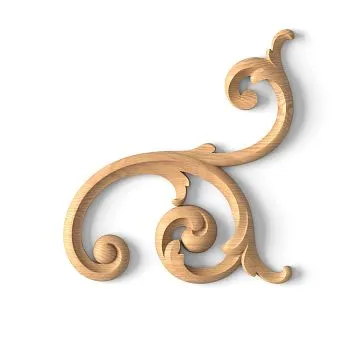
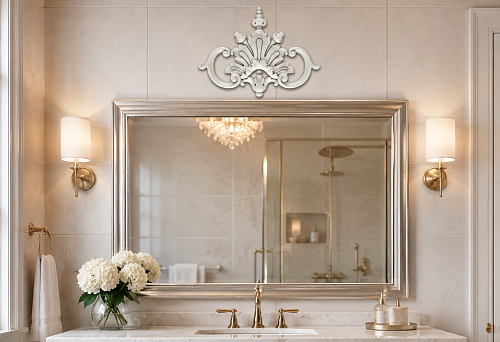
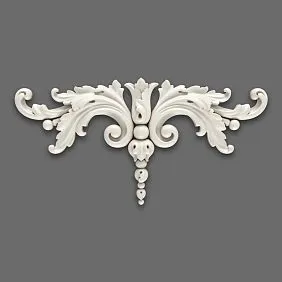
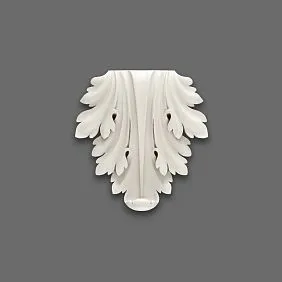
Decorative overlays for the technical wall— spot elements for free areas. If the radiator occupies the lower zone of the wall and the air conditioner the upper zone, the middle zone (approximately 90 to 210 cm from the floor) can be decorated with an overlay in the center. This creates an accent in the "neutral" part of the wall, shifting attention from technical zones to the decorative center.
Important limitation: overlays are not placed on removable panels, inspection hatch covers, above radiator grilles, or near pipeline valves. Any element requiring periodic access must remain free of decoration.Buy decorative overlays for the technical wall— the STAVROS catalog offers a wide range of sizes from 8 to 60+ cm.
Decor for moldings
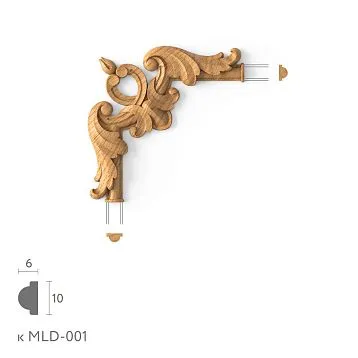
Decor for moldings on a technical wall— corner inserts for frame systems. They are used where the frame is completely closed — that is, on wall sections not occupied by equipment. For incomplete frames (without a top crossbar, as in the case of an air conditioner), corner inserts are not needed — the open ends of the profiles simply complete the molding without a connection.
For a wall with a ventilation grille framed by a frame, corner inserts are appropriate and clarify the details.
Ready-made kits
A ready-made kit on a technical wall is applicable when the equipment is not located in the center of the main decorative area. For example, an air conditioner is in the far corner of the room, and the main wall is adjacent and free. Or a radiator is on the window of one wall, and the accent wall is opposite, without restrictions. In this case, a ready-made kit for the accent wall is an excellent choice, removing the design question.Ready-made molding frames for the wall — with a breakdown of formats.
How to design a wall with a radiator
Do not cover the radiator with stucco molding
This is rule number one, and it is absolute. The radiator must remain completely open: it releases heat by convection, and any obstacle reduces its efficiency. Moldings hanging over the radiator or located close to the sides are also undesirable: constant heating of the adhesive joint reduces its lifespan.
Practical rule: the distance from the nearest molding to the radiator is at least 15 cm horizontally and 10–12 cm vertically above the appliance.
Use moldings on the sides and above the radiator
The piers on both sides of the window with a radiator below are the most effective place formoldings near the radiator in the living room. Two vertical profiles from the windowsill to the ceiling (or from floor to ceiling if the windowsill doesn't interfere) create an architectural rhythm that "absorbs" the battery into the overall wall system.
A horizontal molding 30–40 cm above the radiator (i.e., approximately 110–130 cm from the floor, depending on the height of the appliance) is another technique. It visually "separates" the radiator zone from the decorative wall zone, creating structure.
Decorate the piers around the window
Stucco decoration around the window — a comprehensive topic, and for a window with a radiator it is particularly relevant. A U-shaped frame around the window (without the bottom crossbar, which would be above the radiator) is a working technique. Left vertical, horizontal above the window, right vertical. There is no bottom molding: its role is played by the windowsill.
Result: the window is framed, the piers are decorated, the radiator under the windowsill remains open and functional.Stucco decor for painted walls — about working with painted surfaces, which is typical for walls with radiators.
Make one large frame above the radiator
If the piers on the sides of the window are narrow (less than 40 cm) and do not allow placing vertical moldings, you can go another way: one large frame on the wall above the radiator level. Its bottom horizontal is 15–20 cm above the appliance. The top is below the ceiling cornice or at the ceiling.
Such a frame "occupies" the decorative zone of the wall, leaving the radiator in the "technical" lower field. The gaze is directed to the frame, not the battery.symmetric polyurethane wall decor — on the principles of building balanced systems.
Paint the moldings the color of the wall
On a wall with a radiator, moldings in the color of the wall work especially effectively. They create architectural relief without adding new "spots" to an already saturated space. The radiator is already there. The windowsill is already there. The window is already there. Moldings in the color of the wall add structure without increasing visual "noise."stucco decor in the color of the wall or contrasting — with an analysis of both approaches.
How to design a wall with an air conditioner
Do not place the frame flush against the unit
The distance from the edge of the air conditioner unit to the nearest molding is at least 20–25 cm. This is necessary for several reasons: the air conditioner filters need to be removed for cleaning (usually from the front or bottom), the unit may be removed for maintenance, and condensate drains from the unit (in case of drainage malfunction, this is moisture that should not get on the adhesive joint of the molding).
Decorating a wall with an air conditioner — this is the area below the unit and to its sides, not the area directly around it.
Leave technical gaps
In addition to the gap from the unit itself, it is important to consider the routing of tubes and cables. They typically run along the wall — vertically or at an angle. Moldings should not cross the tubes. If the tubes are embedded in a chase, moldings are installed as usual. If the tubes run on the wall surface in a conduit, position the moldings so that the conduit is outside the frame or between two vertical profiles.
Use vertical lines on the sides
Vertical wall decor made of polyurethane — one of the most effective techniques for a wall with an air conditioner. Two vertical moldings on each side of the unit, from floor to ceiling, with a 30–40 cm offset from the edges of the unit — this creates a rhythm that 'frames' the air conditioner without touching it. The unit ends up between two verticals — like a built-in technical element in an architectural niche.
This technique works in any style: minimalist (thin profiles matching the wall color), neoclassical (profiles with relief, white or pastel), art deco (geometric profile, slight contrast).
Do not place large decorative elements near the unit
A decorative element with a diameter of 30–40 cm next to an air conditioner unit is a mistake for two reasons. First, they visually 'compete': two voluminous elements on one surface create tension. Second, the element next to the unit will be removed during the first service maintenance of the air conditioner. Decorative elements on the wall with the air conditioner should only be placed in areas that the service engineer does not access.
Shift the focus to the adjacent part of the wall
If the air conditioner is located in the center of the main wall — this is a difficult situation. The best solution: make the adjacent wall the accent, not this one. Decoration on the wall with the air conditioner should be minimal (verticals on the sides matching the wall color), and all decorative 'weight' is transferred to the free wall. This redistribution of attention is a professional technique that works in both living rooms and commercial spaces.
How not to ruin a technical wall with decor
Do not block access to service
This is a key rule, and it applies to all types of technical elements. Before installing moldings, answer the questions: what on this wall requires periodic maintenance? How often? By whom — the owner or a service engineer? How difficult is it to remove the molding if necessary?
Radiator — annual flushing, possible replacement. Air conditioner — monthly filter cleaning, annual maintenance. Ventilation grille — periodic cleaning. Inspection hatch — as needed. For everything that requires access, a "quiet zone" without decor should remain around it.
Do not glue decor on removable panels
A molding glued to the cover of an inspection hatch, a decorative radiator screen, or a removable air conditioner panel is decor that will be torn off at the first need. Moreover, it will be torn off along with pieces of paint or finish coating. Mount moldings only on non-removable load-bearing surfaces.
Do not cross pipes and grilles with moldings
A molding running directly through a pipe or ventilation grille is a gross mistake. It signals that the decor was made without understanding the space: simply "glued to size," without accounting for obstacles. Competent decor is always built around obstacles — pipes remain free, grilles remain accessible.
Do not create overly complex symmetry where there is equipment
Precise symmetry is a powerful decorative tool, but on technical walls it is often impossible: the radiator is not centered, the air conditioner is offset, sockets are placed without decorative logic. If symmetry "doesn't work out" due to equipment — do not try to force it. An asymmetrical system of moldings that takes into account real constraints looks more professional than "symmetry" that had to be broken out of common sense.
symmetric polyurethane wall decor — an analysis of when symmetry works and when it's better to choose a different approach.
Don't forget about sockets, switches, and outputs for sconces
Special attention should be paid to sockets that will end up inside the frame zone. They need to be accounted for in advance: either the frame is designed so that the socket is outside its boundaries, or the socket is inside the frame as part of the decorative system. The third option — a molding cut by a socket — is unacceptable. Planning the decor on paper with scaled measurements of all elements is a mandatory step before purchasing materials.how to calculate moldings and stucco decor for a wall — with practical planning methods.
Which styles are suitable for a technical wall
Neoclassicism Light
Light neoclassicism for a wall with a radiator — the most versatile choice. Thin or medium profiles 25–35 mm, matching the wall color or with a soft contrast. No heavy ornaments. Delicate frames around window openings, verticals on the sides of the air conditioner. Result: the wall looks well-thought-out, the equipment does not stand out, the architectural system reads as organic.
Light neoclassicism is also good because it does not create strict symmetry requirements: its 'lightness' allows adapting the system to the real constraints of the wall.
Japandi
Decorating a wall with an air conditioner in Japandi style — for minimalist spaces with natural shades. Molding strictly in the wall color. Only vertical lines. No ornamentation, no overlays. An air conditioner on a neutral wall with barely noticeable verticals on the sides — this is not a 'technical element', but part of a calm surface rhythm.
Japandi requires discipline: if you have chosen this style — do not add a 'little overlay' or 'one more frame' to it. Less is more.
Neoclassicism
Technical wall with moldings in neoclassical style — for living rooms, bedrooms, and studies where neoclassicism is the main style. White or pastel moldings, a symmetrical system of frames (where symmetry is possible), corner inserts with ornamentation. Equipment — outside the system or between decorative elements.
Full neoclassicism requires more free surface. If the wall is more than 40% occupied by equipment — consider Neoclassicism Light or another style.
Modern minimalism
For painted walls with technical elements, modern minimalism means strict vertical or horizontal moldings 20–28 mm in the color of the wall. A profile with a clean rectangular or semicircular cross-section. No details. Only the line.
This style is the most forgiving of all: it allows adaptation to any equipment layout because its basic principle is the rhythm of lines, not precise symmetry.polyurethane wall moldings — with analysis of profile cross-sections and styles.
Art Deco
Art Deco on a technical wall is a bold choice that requires a favorable equipment layout. If the air conditioner or radiator is on the side of the wall — the central area is free for an expressive geometric Art Deco system. Contrasting profiles, symmetry, decorative overlays with geometric ornamentation — all this creates a striking accent wall. Technical elements remain on the periphery of the decorative system.
Stucco wall decor in Art Deco style — about techniques and profiles for geometric aesthetics.
Practical scenarios
Scenario 1: Living room, wall with a window in the center and a radiator below. Wall width 3.5 m, window width 1.4 m, side walls 0.9 m each. Solution: U-shaped frame around the window (left vertical, horizontal above the window, right vertical), profile 32 mm, in the color of the wall. On each side wall — a vertical molding in the middle from the windowsill to the ceiling, creating a richer rhythm. Radiator — fully open, no lower horizontal.
Scenario 2: Bedroom, air conditioner in the center of a 3 m wide wall. The unit is located at a height of 240 cm (ceiling 270 cm), shifted 30 cm to the right from the center. Solution: two vertical moldings — from floor to ceiling, with a 40 cm indent from the edges of the unit. One molding on the left, one on the right. Below the unit — a horizontal molding at a height of 210 cm, connecting the upper parts of the verticals. The area below the horizontal is free for frames with a mirror or a bed headboard.
Scenario 3: Kitchen-living room, ventilation grille on the wall 30 × 30 cm at a height of 50 cm from the ceiling. Next to the grille is a kitchen backsplash, next to which decor is inappropriate. The free part of the wall is on the right, 1.5 × 2.5 m. Solution: moldings are placed exclusively on the free part of the wall. A frame system of two to three frames in Light neoclassicism. The ventilation grille is outside the decorative zone, in its place.
What to buy for a wall with a radiator or air conditioner
Full list for technical walls:
-
Buy stucco decor for a wall with a radiator — wall decor for painting for designing piers and areas around technical elements.
-
Buy moldings for a wall with a radiator — linear profiles for frames, verticals and horizontal belts.
-
Молдинги для стены с кондиционером — strict profiles for vertical systems next to the unit.
-
Decorative overlays for the technical wall — for accents on free areas.
-
Decor for moldings on a technical wall — corner inserts for finished frames.
-
The STAVROS collection"Neoclassic Light" — for most technical walls with moderate equipment.
-
The STAVROS collection«Neoclassic» — for spacious walls with clear symmetry.
-
The STAVROS collection"Japandi"— for minimalist spaces.
-
The STAVROS collection"Versailles Light" — for classic interiors with free walls.
-
Full catalogpolyurethane products — for a systematic choice.
-
installing polyurethane molding — with instructions for working on complex surfaces.
Frequently Asked Questions
Can I decorate a wall with a radiator using moldings?
Yes. Moldings are placed on the piers next to the window, above the radiator, around the window opening. The minimum distance from the molding to the radiator is 15 cm horizontally, 10 cm vertically. Stucco decor is not mounted directly above the heating appliance.
Can I glue moldings near an air conditioner?
Yes, maintaining a gap of 20–25 cm from the edge of the unit. Do not place moldings where they will interfere with cleaning filters or removing the unit. The optimal option is vertical profiles on the sides of the unit, a frame system in the area below the air conditioner.
Which moldings to choose for a wall with a radiator?
Profiles 25–35 mm, matching the wall color. For neoclassicism — with a soft relief. For minimalism and Japandi — with a clean rectangular or semicircular cross-section.polyurethane wall moldings— full breakdown of options.
How to design a wall under a window with a radiator?
Vertical moldings on the piers from the windowsill to the ceiling. A horizontal line above the window, connecting them into a U-shaped system. There is no lower horizontal line — its role is played by the windowsill. The radiator remains fully exposed.Stucco decoration around the window — diagrams and examples.
Can a radiator be covered with stucco decor?
No. A covered radiator loses heat output, and the adhesive joint suffers from constant heating. Place decor next to the unit, not over it.
How to incorporate a ventilation grille on the wall?
A frame of moldings with a 15–20 cm offset from the edge of the grille creates a decorative panel, inside which the grille becomes an accent center. Moldings are mounted only on the fixed wall, not on the grille itself.
What to buy for decorating a technical wall?
Basic set: linear moldings 25–35 mm + corner inserts for frames.Buy stucco decor for a wall with an air conditioner— STAVROS catalog with ready-made solutions for any technical walls.