
























Article Contents:
- Why a long wall looks problematic
- What stucco decor brings to a long wall
- Rhythm and structure
- Eliminating the emptiness effect
- Architectural value
- Zoning without partitions
- Enhancing the visual value of the interior
- Where long wall decor is especially needed
- Long wall in the living room
- Long wall in the hallway
- Long wall in the bedroom
- Long wall in the kitchen-living room
- Long wall in the hall and stairwell
- Basic schemes for decorating a long wall
- Scheme 1. Series of identical frames
- Scheme 2. Central large frame and narrow side frames
- Scheme 3. Vertical division of the wall with moldings
- Scheme 4. Decorative panels from moldings
- Scheme 5. Combination of moldings and decorative elements
- Scheme 6. Ready-made set of stucco decor for a long wall
- How to calculate rhythm on a long wall
- Step 1. Determine the main center of the wall
- Step 2. Account for all furniture and equipment
- Step 3. Determine the number of frames
- Step 4. Maintain equal spacing
- Step 5. Leave 'air' between decor and furniture
- Which moldings to choose for a long wall
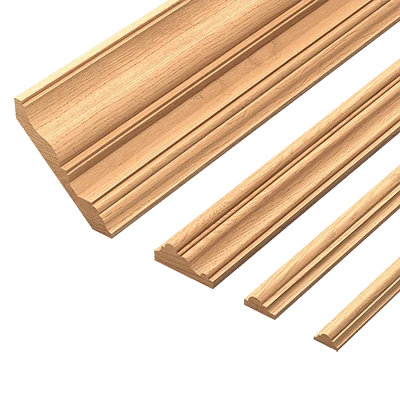
- Thin moldings (15–28 mm)
- Medium moldings (28–45 mm)
- Wide profiles (45 mm and more)
- Moldings in wall color
- Contrasting moldings on a long wall
- What to add to moldings for a long wall
- Decor for moldings
- PU overlays
- Cornices and Baseboards
- Styles for decorating a long wall with moldings
- Neoclassicism
- Neoclassic Light
- Jatoba
- Versailles Light
- Modern classicism
- Mistakes when decorating a long wall
- What to buy for decorating a long wall
- Frequently asked questions
A long wall is a paradox of interior design. It would seem that more space means more possibilities. But in practice, it is the elongated wall that most often causes confusion: it is empty, it "pulls" the space, it turns a living room into a corridor, and a corridor into an endless tunnel. One sofa won't cover it. One painting will get lost on it. Several random objects will create chaos, not order.
The solution is not furniture and not renovation. The solution is rhythm. And it is created by stucco decor for a long wall: moldings, frames, decorative panels, and ready-made kits made of polyurethane that divide a large plane into logical, proportionate, beautiful parts.
This article is a detailed practical analysis: why an elongated wall requires a special approach, which design schemes work, how to calculate rhythm, which moldings to choose, and what mistakes to avoid. No fluff, with specific solutions.
A long wall doesn't have to be covered with furniture or heavy panels.Polyurethane wall decor— moldings, frames, decorative elements, and ready-made STAVROS kits help break up a large surface into neat, proportionate zones without renovation or extra costs.
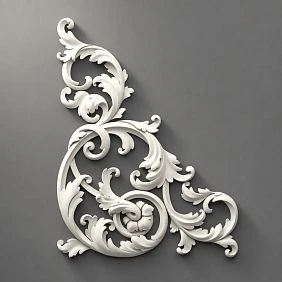
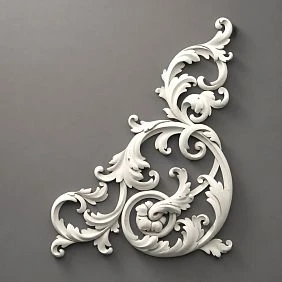
Why a long wall looks problematic
Before looking for a solution, it's worth understanding the nature of the problem. A long wall is uncomfortable not because it's large, but because it lacks rhythm.
The human eye is accustomed to perceiving space through repeating elements: windows, doors, columns, pilasters. These elements create rhythm—an even alternation of accents and pauses that makes the space readable and proportionate. When a wall 5–7 meters long lacks such rhythm, the eye glides across it without stopping, finding no anchor point. This is the feeling people describe with words like "empty," "boring," "ugly."
Add to this typical situations: a sofa stands in the middle of the wall, taking up 2.5 m out of 6 m, with emptiness on either side. Or a cabinet covers part of the wall, leaving the rest exposed. Or a corridor 1.2 m wide and 8 m long, where the wall is the only visual object but carries no information.
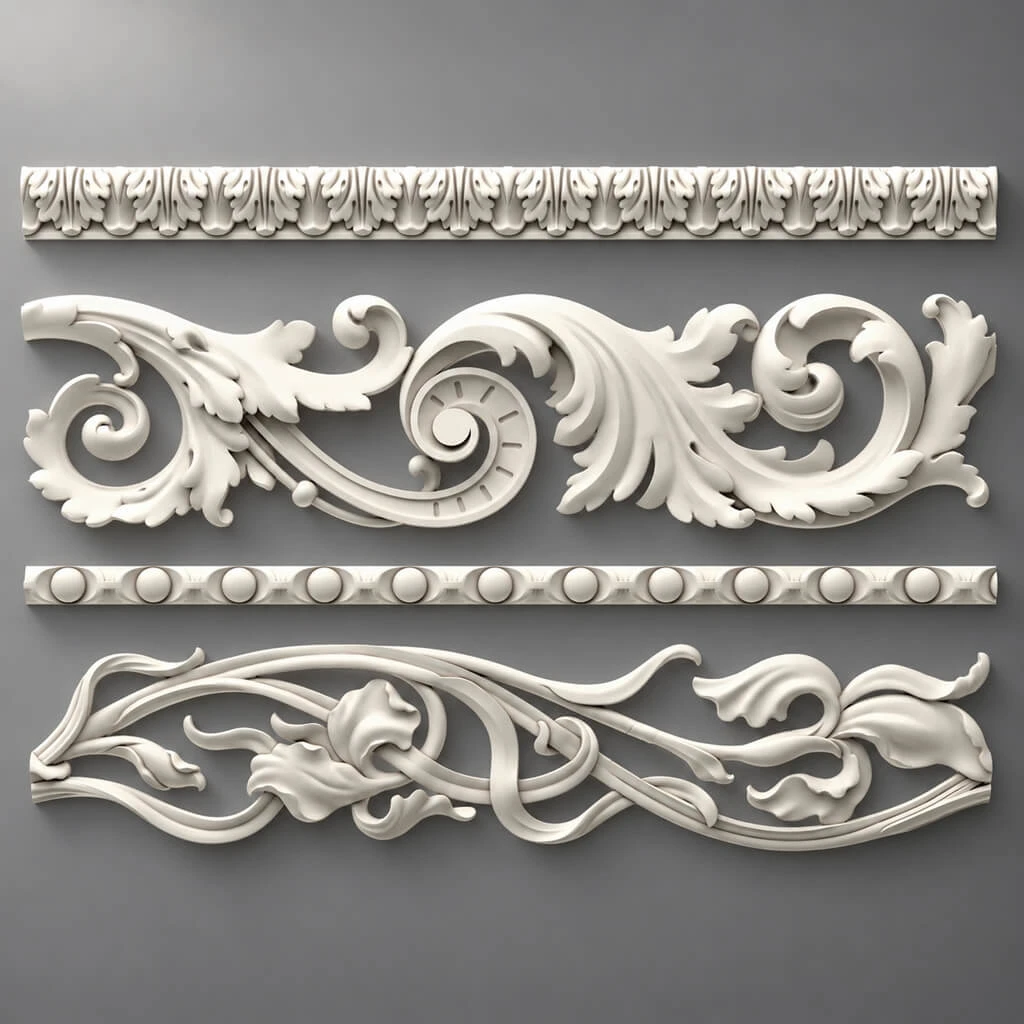
Decorating a long wall with moldingssolves this problem fundamentally differently than any other method. Moldings don't cover the wall—they organize it. They create modules, set rhythm, divide the monolithic surface into understandable parts.

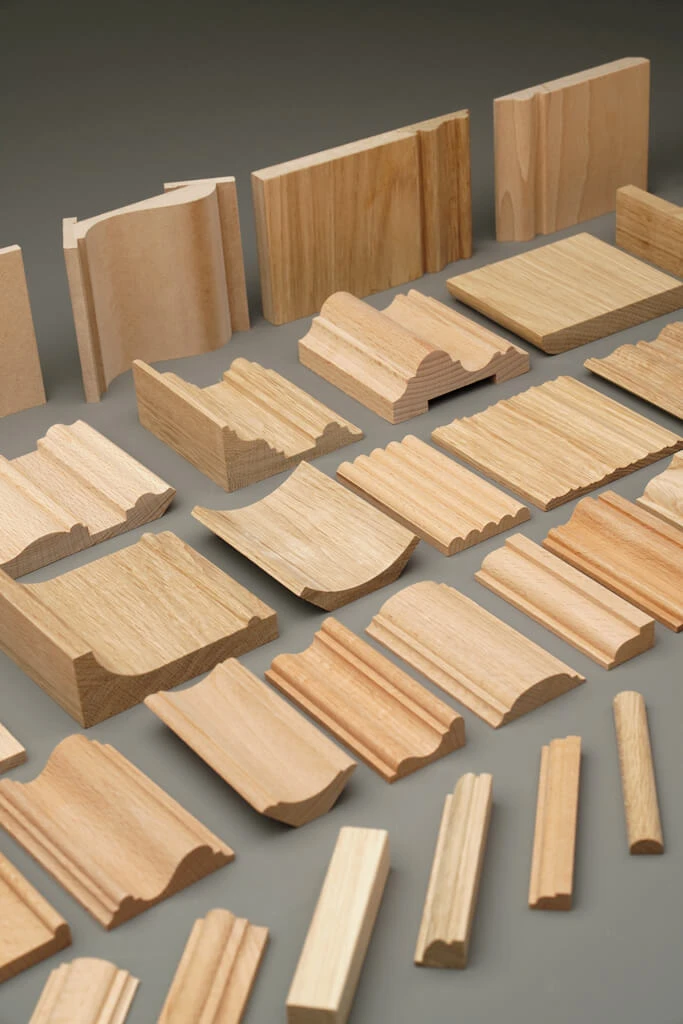
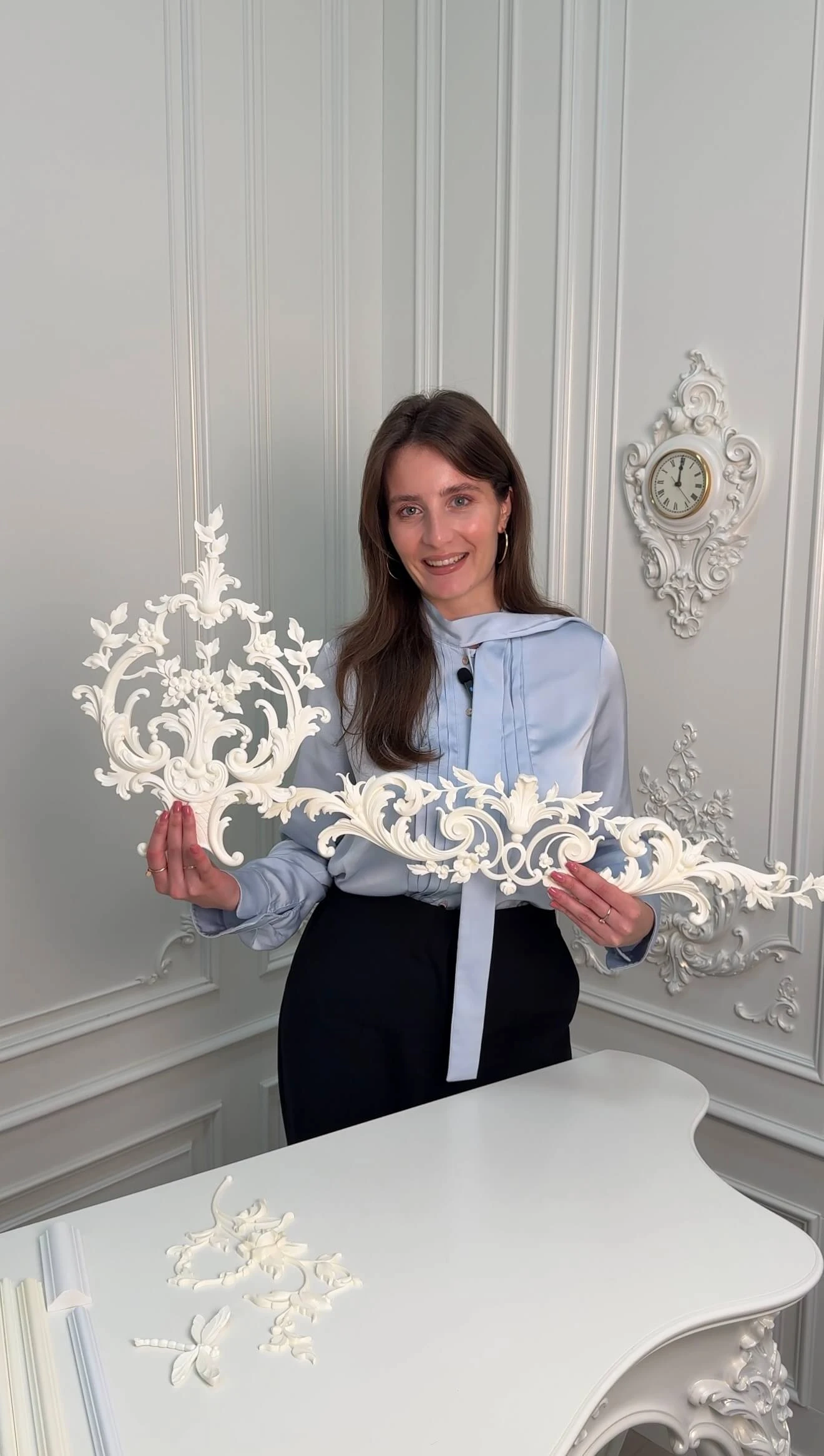
What stucco decoration gives on a long wall
Our factory also produces:
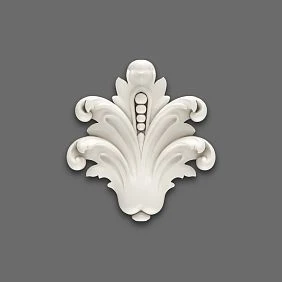
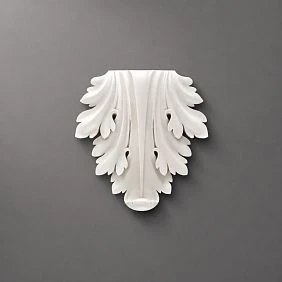
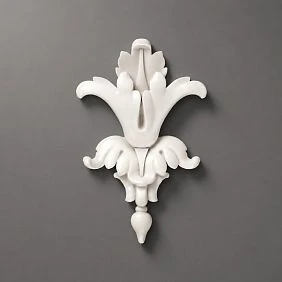
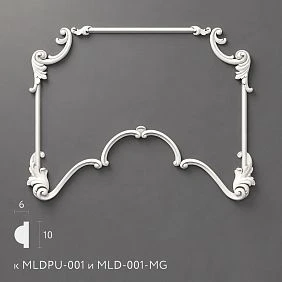
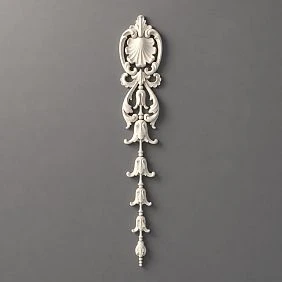
Rhythm and structure
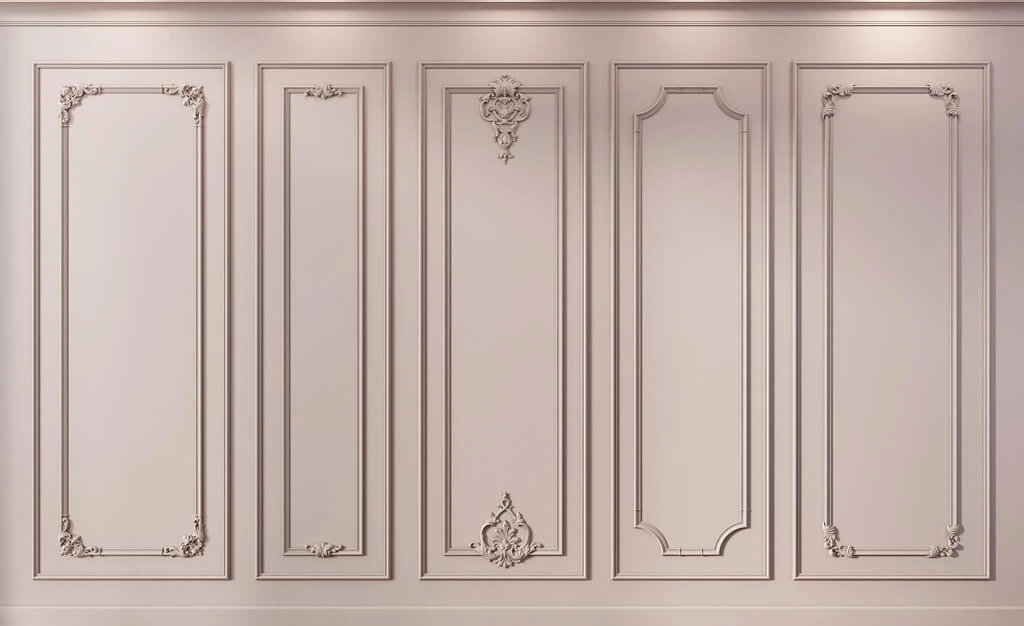
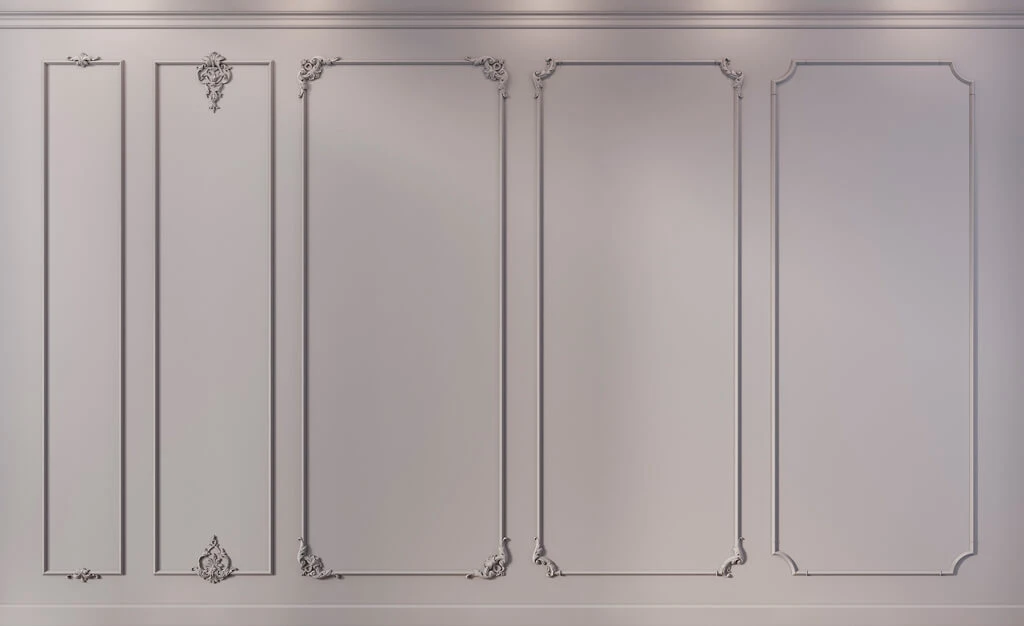
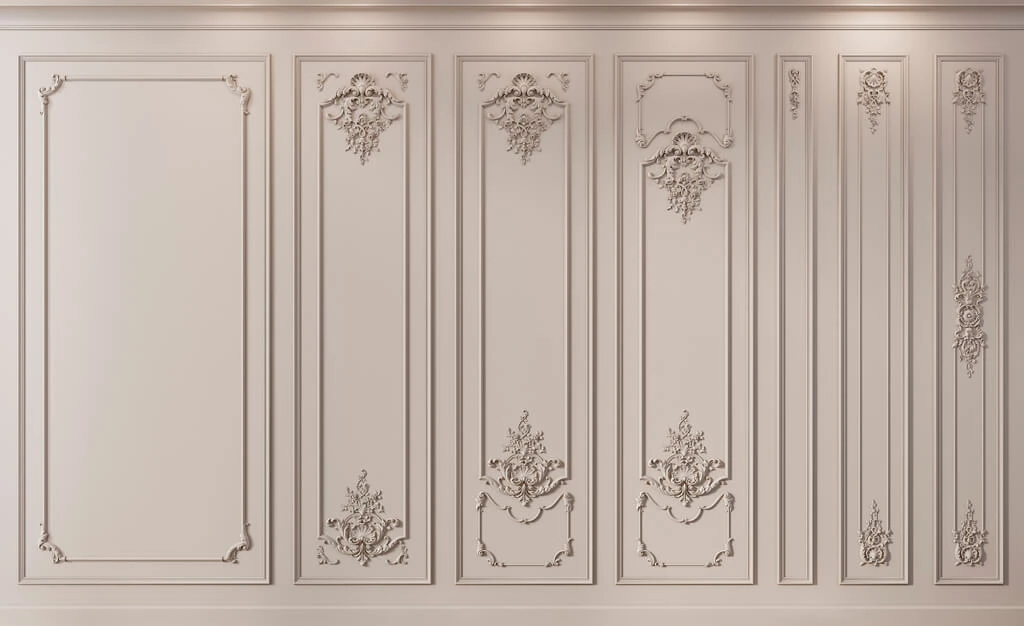
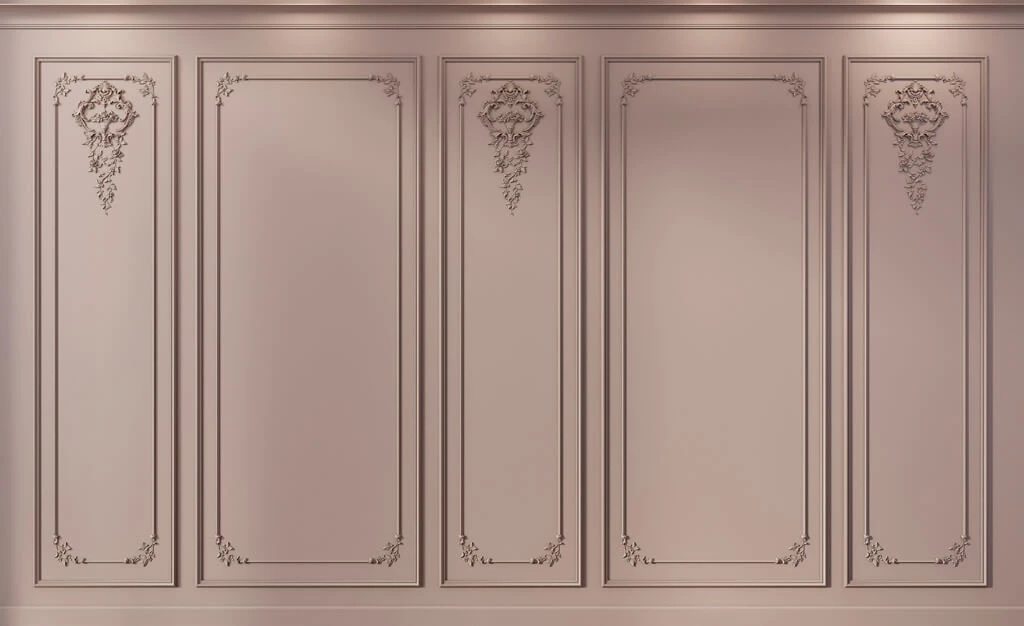
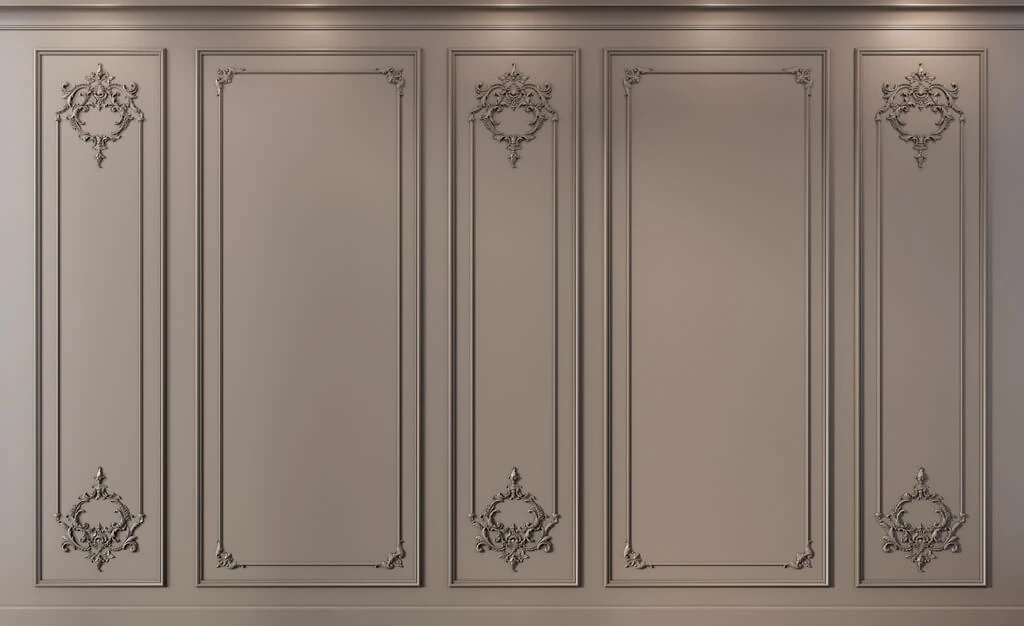
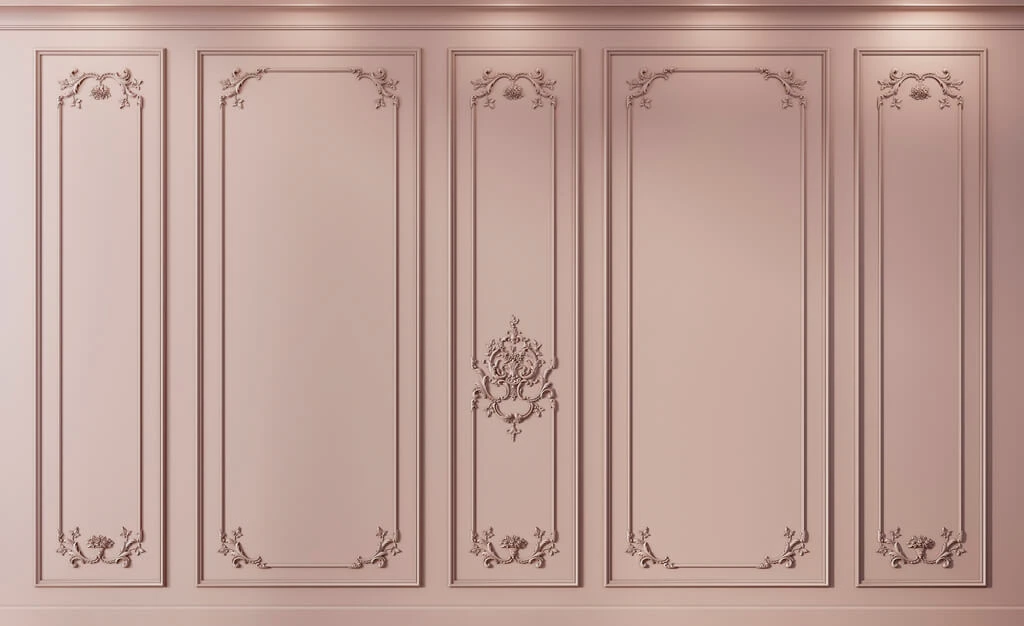
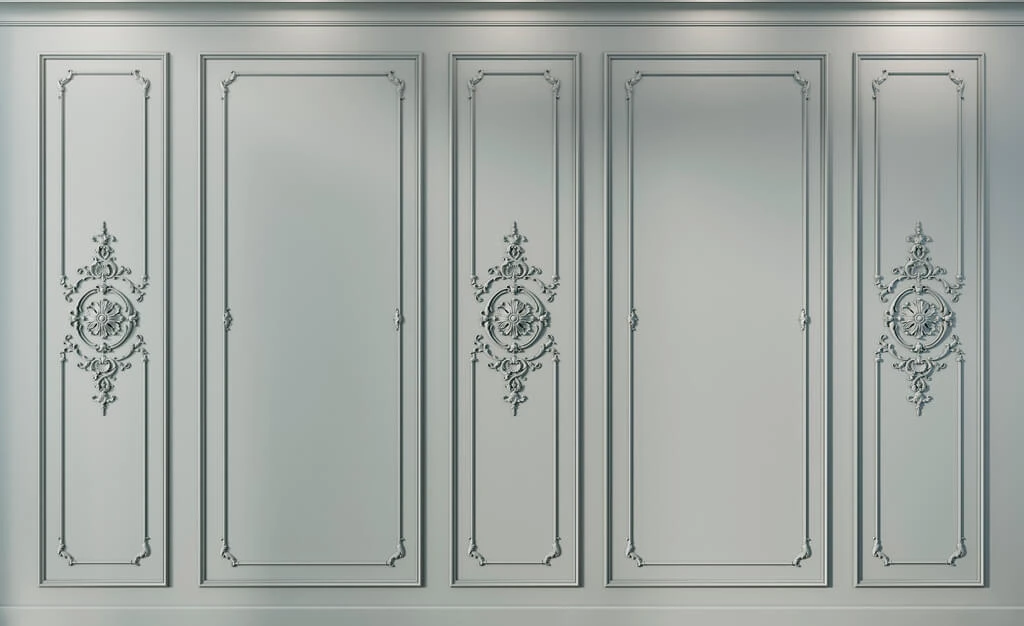
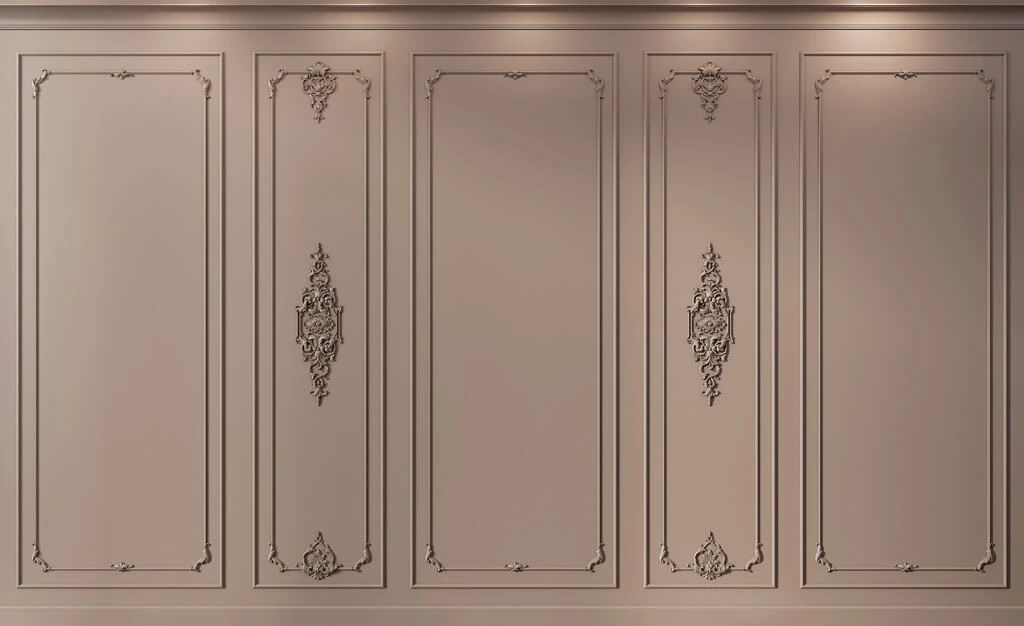
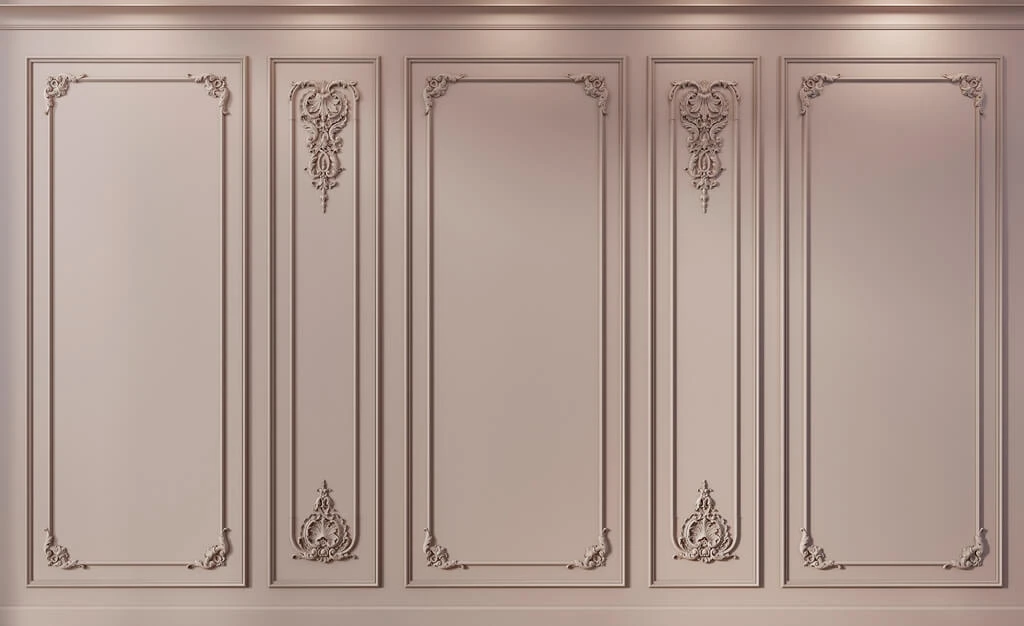
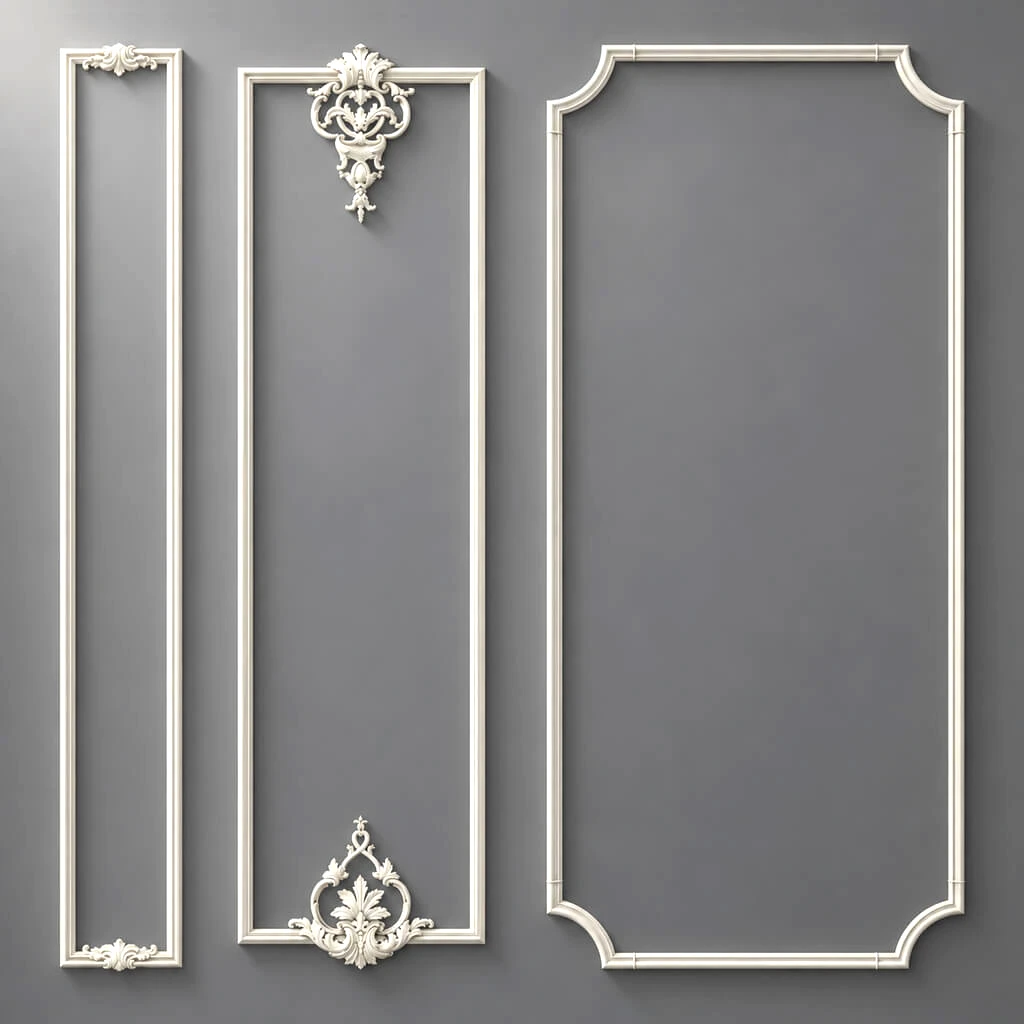
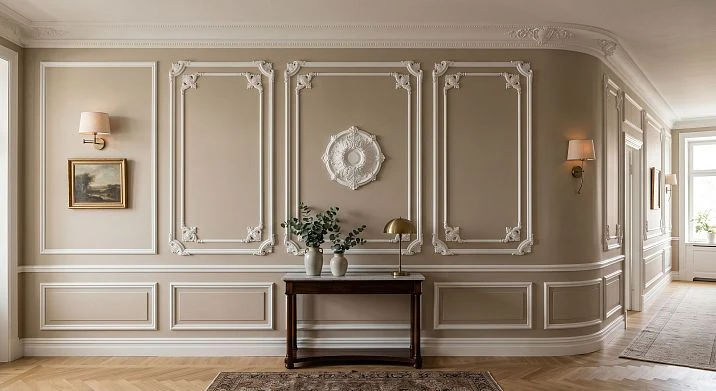
A series of identical frames made ofpolyurethane moldings for a long wall— this is an architectural rhythm that the eye reads instantly. Three frames with identical indentations turn a monotonous plane into an ordered system. No furniture, no paintings, no wallpaper are needed — only properly arranged moldings.
Get Consultation
Eliminating the effect of emptiness
A wall with a frame system of moldings never looks empty — even if there is not a single object on it. The relief of the profile, clear lines, the play of light and shadow — that is enough.Decorating a large wall with polyurethanefills it not physically, but visually.
Architectural value
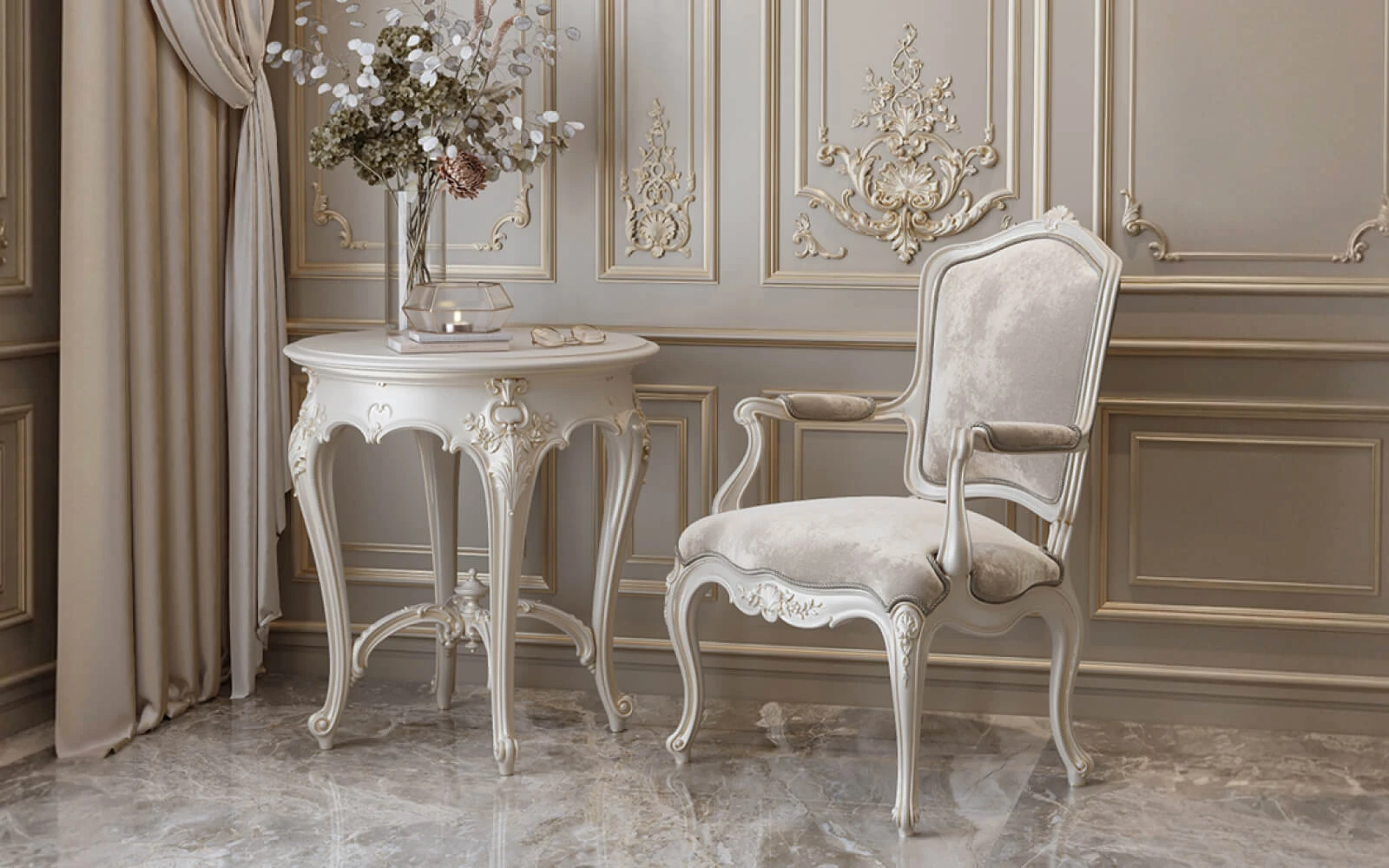
Polyurethane stucco decor is not just decoration. It is an imitation of real architectural finishes: boiserie, wood panels, classic frame systems. A wall with moldings looks like it was designed by a professional architect, not like a wall with something hung on it.
Zoning without partitions
A long wall is an excellent opportunity fordecorative division of the wall with moldingsThe lounge area is framed with one molding, the dining area with another, and the console and mirror area with a third. The space remains open and airy, without physical barriers. Learn more about the principles of this approach in the article on zoning an interior with stucco decor.
Enhancing the visual value of an interior
This sounds almost like marketing, but it's true: a wall with a well-thought-out molding system looks more expensive. Not because moldings are expensive—polyurethane is affordable. But because you can sense thought, order, and professionalism behind them. This is what a home buyer or guest perceives as an 'expensive renovation.'
Where long wall decor is especially needed
Long wall in the living room
The most common case. The wall behind the sofa in an open-plan layout or a large living room can reach 5–8 m.Decorating a long wall in the living room with moldingsis primarily a frame system tied to the sofa, TV area, or console. The wall gains structure, and the interior gets a finished look.
Important: in a living room, a long wall often includes several functional zones—lounge area, TV area, console and mirror area, book area. Moldings help make each of them visually separate while uniting them with a single style.
polyurethane wall decor behind the sofa— with specific schemes for attaching frames to the sofa.
Long wall in the hallway
The hallway is a space where the long wall is the main and only visual object. And it is often empty, monotonous, and oppressive.Wall decor in the entryway and hallway made of polyurethane— about how to turn a tunnel into an architecturally expressive space.
Moldings in the hallway solve three tasks at once: they remove the tunnel feeling, create a rhythm of movement along the wall, and make the space visually wider due to horizontal lines. Narrowvertical frames on the long wall— especially effective technique for a hallway with a ceiling height of 2.7 m or more: the vertical emphasizes the height, reduces the feeling of length.
Long wall in the bedroom
In the bedroom, the long wall is usually the wall with the bed plus the zones on its sides. Moldings help create a unified panel system that combines the headboard, bedside areas, and possible workspace into one architectural ensemble.symmetric polyurethane wall decor— with examples for bedroom walls with a bed in the center.
Long wall in the kitchen-living room
Here the task is to divide zones on one plane: kitchen, dining area, sofa area.Decor of a long wall in the kitchen-living roomrequires understanding where one functional zone ends and another begins. Moldings make these boundaries visible — unobtrusively but clearly.
It is important to consider: moldings are usually not placed on the kitchen part of the wall — this is an area with humidity, grease, and functional objects (cabinets, range hood). Decor begins where the work area ends.
Wall decor in the dining area— about the principles of decorating the wall behind the dining table in a kitchen-living room.
Long wall in the hall and stairwell
A spacious hall in a private house or apartment with a large entryway is an ideal platform for expressiveDecorating an elongated wall with moldings. Here you can use more elegant profiles, add Polyurethane decorative appliques, rosettes, corner elements. The hall is the "face" of the house, and the long wall in it should be impeccably designed.
Basic schemes for decorating a long wall
Scheme 1. A series of identical frames
The most logical, most proven, and most universal approach. Three to five identical frames made of moldings for a long wall with equal gaps between them. Same frame width, same indents from floor and ceiling, same gaps between frames.
Why does this work? Because repetition is the basis of rhythm. A wall with three identical frames is perceived as designed, not randomly assembled. At the same time, the scheme is absolutely flexible: frames can be narrow vertical (for high ceilings), wide horizontal (for low ceilings), or square (a universal option).
Recommended proportions for a row of frames:
-
Frame width: 55–70% of the distance between frame axes
-
Frame height: 55–75% of the wall height
-
Distance from baseboard: 20–35 cm
-
Distance from cornice: 15–25 cm
-
Distance between frames: equal to the distance from the wall edge (±5 cm)
Ready-made molding frames for the wall — with proportion tables for different wall lengths.
Scheme 2. Central large frame and narrow side frames
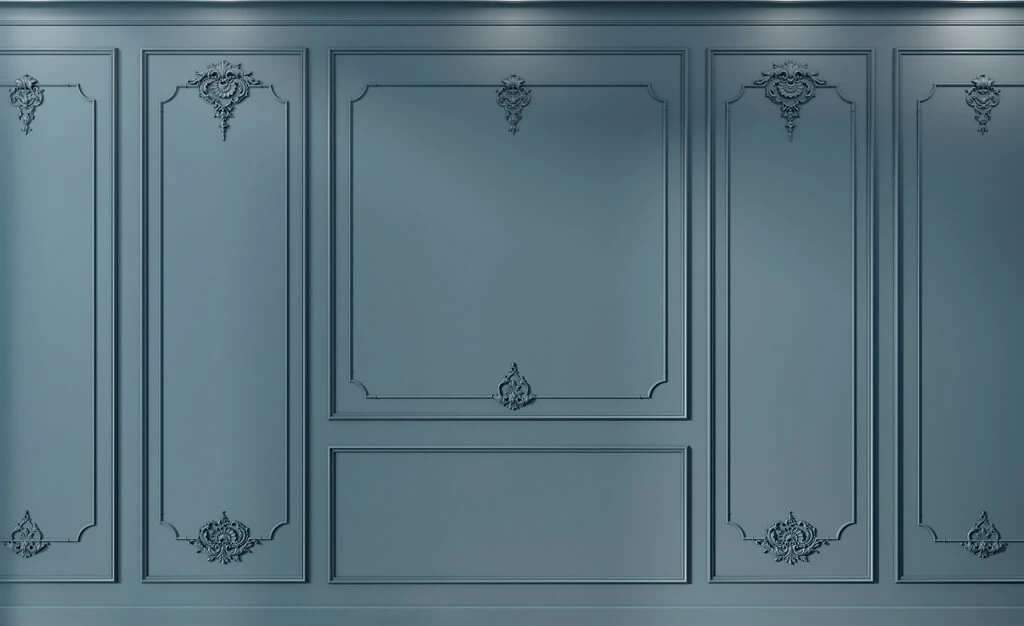
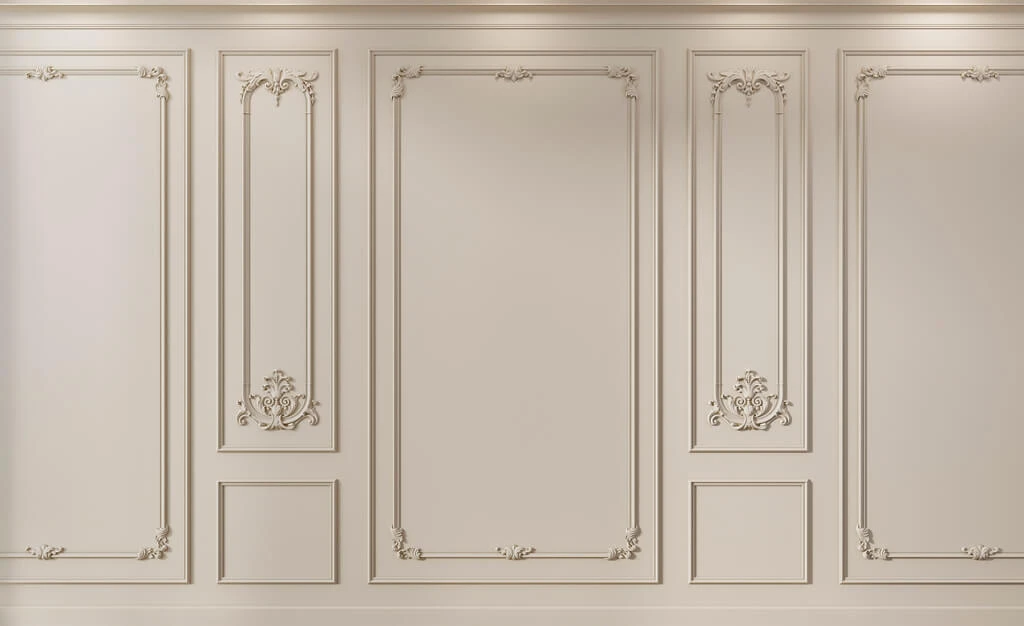
This scheme works when there is a main object on a long wall: a sofa, a mirror above a console, a fireplace, a TV panel, or a dining table. The central frame encompasses this object — it is wider, sometimes taller. On the sides, there are two narrow frames that flank the center and maintain rhythm along the entire length of the wall.
Result: hierarchy. The eye first sees the center, then the side frames. The wall is organized, with a main accent and secondary elements.
This scheme works especially well with decor for moldings: corner inserts on the central frame, simple corners on the side ones. This creates a visual accent without excess.
Scheme 3. Vertical division of the wall with moldings
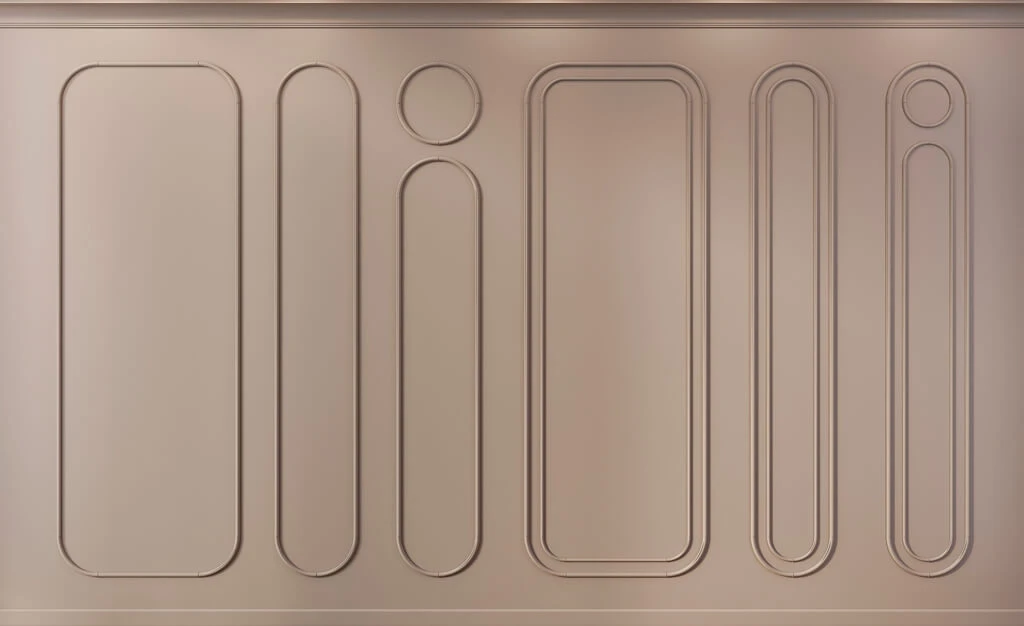
Vertical lines from moldings on a long wall — from baseboard to cornice. Not frames, but verticals. They divide the wall into vertical panels and simultaneously visually stretch the ceiling upward. For rooms with a ceiling height of 2.6–2.8 m, this is one of the best techniques.
Vertical wall decor made of polyurethane — with a detailed breakdown of schemes and proportions for vertical division.
Width between verticals: 50–90 cm depending on the wall length. Too frequent verticals create a cage — this is overload. Too sparse ones do not provide rhythm.
Scheme 4. Decorative panels from moldings
Moldings form closed rectangular zones — "panels" — which visually imitate expensive wall finishes: wooden panels, leather inserts, fabric rectangles. At the same time, physically on the wall there is only profile and paint.
polyurethane decorative wall panels — about the technique of creating a panel effect using moldings and color. Inside the frame, you can use a different shade — slightly darker or lighter than the main wall color. This enhances the effect of depth and expensive material.
Scheme 5. Combination of moldings and decorative elements
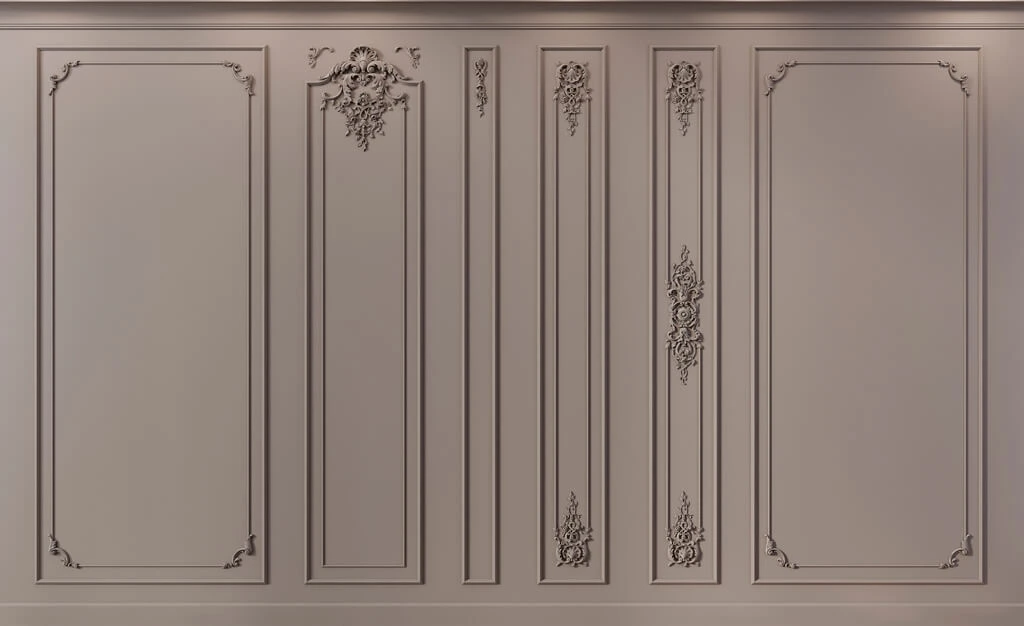
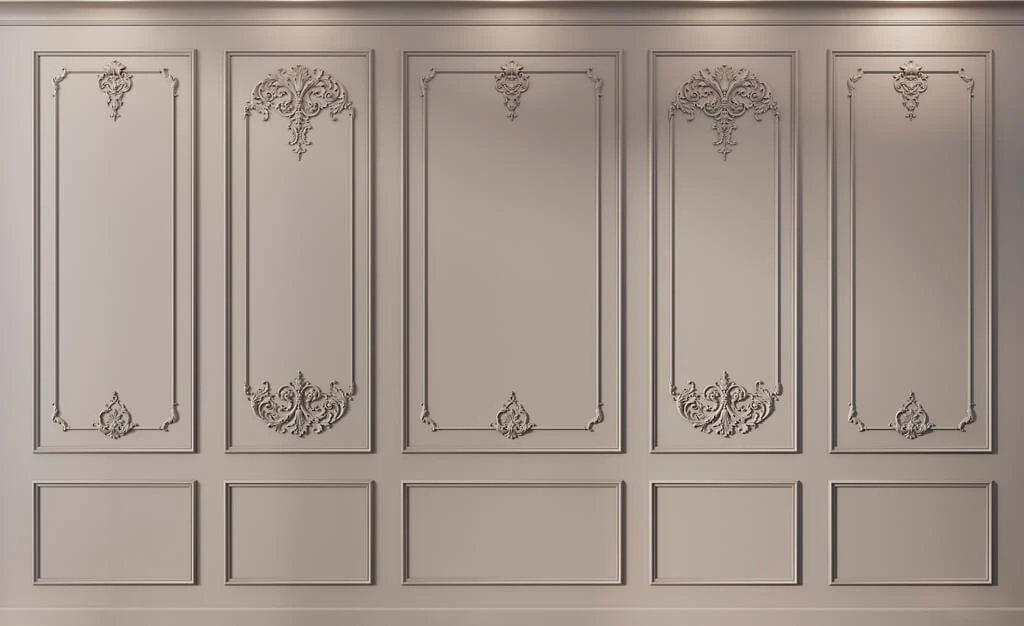
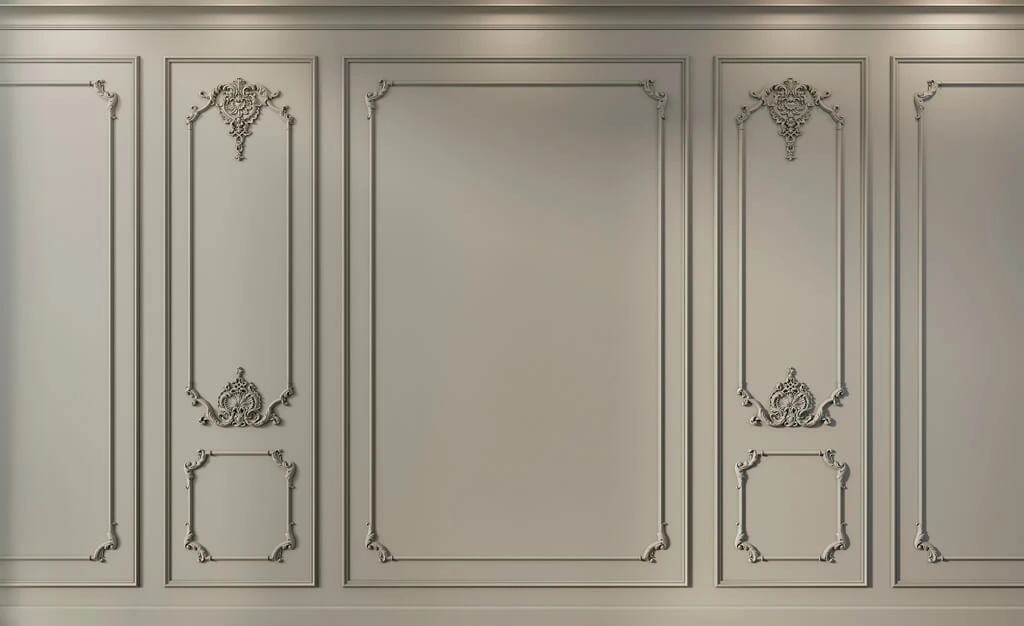
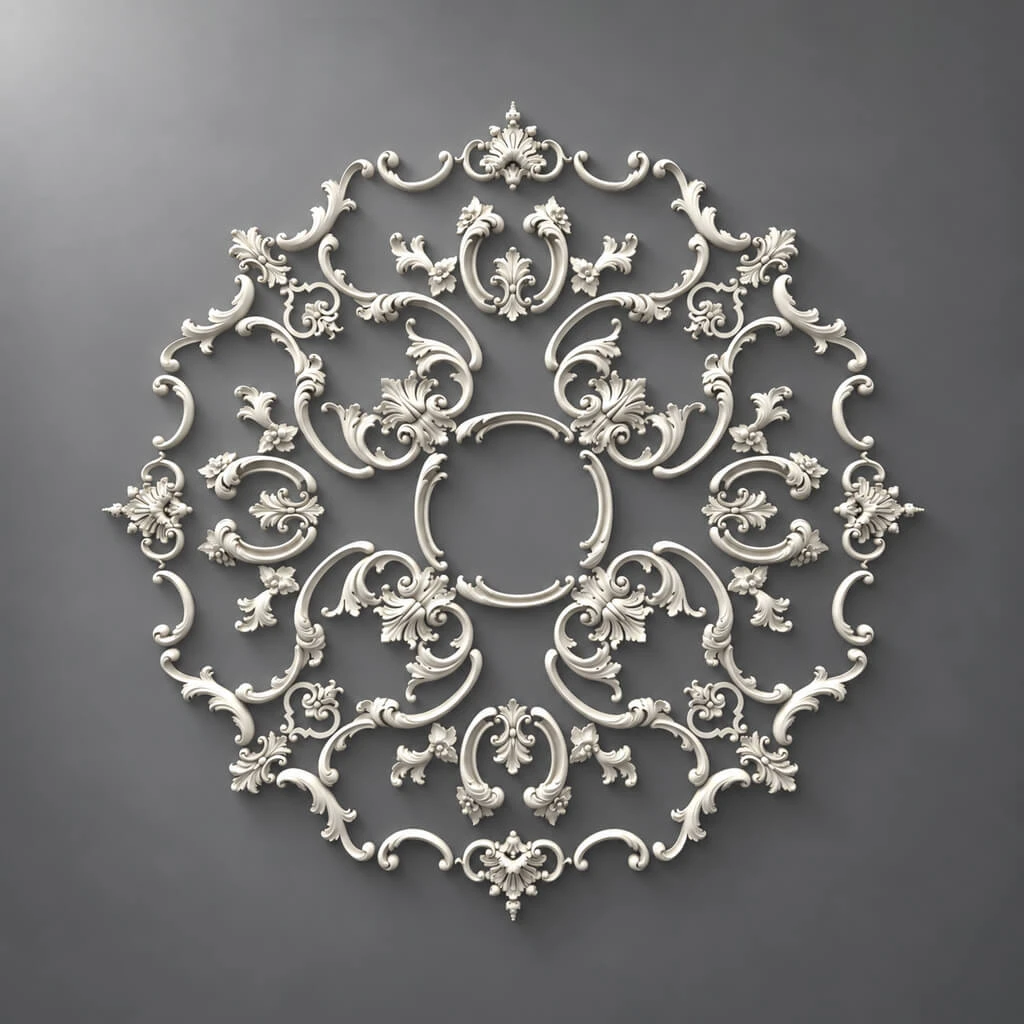
For more ornate interiors — neoclassicism, Versailles Light, representative halls — the frame system of moldings is complemented bydecorative polyurethane overlays: rosettes in the centers of frames, corner inserts, cartouches above the central frame, horizontal friezes between frames and the cornice.
This is a true architectural wall finish. In terms of visual effect, it is almost indistinguishable from classic plaster or wood finishes, but incomparably easier to install and maintain.installation of polyurethane molding — with a complete guide to installing complex compositions.
Scheme 6. Ready-made set of stucco decor for a long wall
If calculating proportions and selecting elements yourself is not your thing, the optimal solution isReady-made molded decor kits. The set already includes all necessary elements: profiles of the required width, corner inserts, central accents — all in a unified style.
The advantage of a ready-made set for a long wall is especially obvious: no need to calculate how many profile pieces are needed, how to join corners, or whether additional decorative elements are required. The system is already balanced.
For rhythm on a long wall, most often used arePolyurethane moldings. If you want to make the composition more expressive, addDecor for MoldingandPU overlays.
How to calculate rhythm on a long wall
This is the most practically important section. Without proper calculation, even expensive moldings will yield mediocre results. With proper calculation, even an inexpensive profile will transform the wall.
Step 1. Determine the main center of the wall
The center is the point relative to which all other elements are symmetrically arranged. For a wall with a sofa, it's the axis of the sofa. For a wall with a TV, it's the axis of the screen. For a wall with a mirror, it's the axis of the mirror. For an empty wall, it's the geometric center.
All decoration is built from the center. If you start from the edge, you will inevitably get an asymmetrical result that looks random.
Step 2. Consider all furniture and equipment
Draw on the wall diagram (at least on paper):
-
all furniture items along this wall and their height;
-
sockets, switches, air conditioner, heating radiator;
-
doors and windows, if they face this wall;
-
baseboard (its height) and cornice (if any).
Moldings should go around all these elements, not cross them. Special caution with sockets: the frame cannot be designed so that the molding passes through the switch.how to calculate moldings and stucco decor for a wall — with a step-by-step calculation algorithm considering all constraints.
Step 3. Determine the number of frames
For a long wall of 4–5 m, 2–3 frames are optimal. For a wall of 5–7 m, 3–4 frames. For a wall of 7–9 m, 4–5 frames. Too many small frames on a long wall creates a 'grid' effect rather than an architectural rhythm.
| Wall length | Recommended number of frames |
|---|---|
| 3–4 m | 1–2 frames |
| 4–5 m | 2–3 frames |
| 5–7 m | 3–4 frames |
| 7–9 m | 4–5 frames |
| More than 9 m | 5–6 frames, possibly zonal division |
Step 4. Maintain equal indents
This rule is absolute. The indent from the left edge of the wall to the first frame must equal the indent from the last frame to the right edge. The gaps between frames must be identical. The indents from the baseboard and from the cornice must be in a specified ratio.
A deviation of even 2–3 cm to one side is perceived by the eye as "something is wrong" — even if the person cannot articulate what exactly.
Step 5. Leave "air" between decor and furniture
The bottom edge of the frame must be at least 15–20 cm above the top edge of the furniture. If the sofa back is 90 cm high, the bottom edge of the frame should start no lower than 105–110 cm. Otherwise, the furniture will visually "cut into" the frame — this is visually uncomfortable.
Which moldings to choose for a long wall
Choosing a profile is a key decision that determines the entire character of the design. And there is no single correct answer — it depends on specific parameters.
Thin moldings (15–28 mm)
Thin moldings for an elongated wall — for a modern interior with a ceiling up to 2.8 m, for Japandi, minimalism, light neoclassical. They create a light geometric rhythm without claiming decorative heaviness.
Important: on a very long wall (from 6 m), a thin profile of 15–18 mm may get lost — it will look like a scratch rather than an architectural element. The minimum for a long wall in a living room is 22–25 mm.Thin moldings for walls — with a detailed analysis of profile selection.
Medium moldings (28–45 mm)
The most versatile range for long walls. A profile of 30–40 mm is readable from a distance, creates a distinct relief, and does not overload the wall. Suitable for living rooms, bedrooms, hallways, and kitchen-living rooms with a ceiling height of 2.7–3.2 m.
Wide profiles (45 mm and more)
For classic and neoclassical styles in full voice, Versailles Light, representative halls, and spacious living rooms with a ceiling height of 3 m or more. A wide profile provides expressiveness and architectural significance. But on a 6 m wall with a 2.6 m ceiling, it will look heavy and inappropriate.
Moldings in the color of the wall
The most delicate technique: the profile is painted exactly to match the main wall color. The relief of the molding is visible in side light but does not create a contrasting division. The wall looks monochrome yet structured — as if made from a single material with relief.
stucco decor in the color of the wall or contrasting — with an analysis of both approaches and recommendations for color combinations.
Contrasting moldings on a long wall
White moldings on a dark wall, dark on a light one — this is a strong decorative technique. On a long wall, contrasting moldings work especially expressively: they turn the wall into a true architectural object. But they require flawless installation — every gap, every uneven corner will be noticeable with a contrasting color.
What to add to moldings for a long wall
Decor for moldings
Decor for Molding— corner inserts and decorative "locks" at the corners of frames — turn simple geometry into a full-fledged classical system. For neoclassical and modern classic, this is almost a mandatory element: without it, frames look unfinished.
Choosing corner inserts: for thin profiles — small square inserts 30–45 mm. For medium ones — 50–70 mm. For wide ones — 70–90 mm. A mismatch in scale between the insert and the profile looks unprofessional.
PU overlays
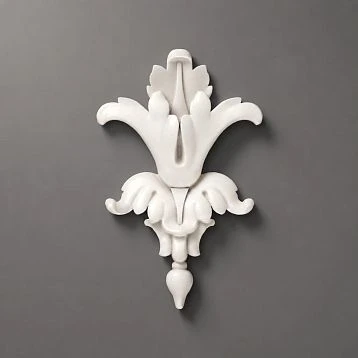
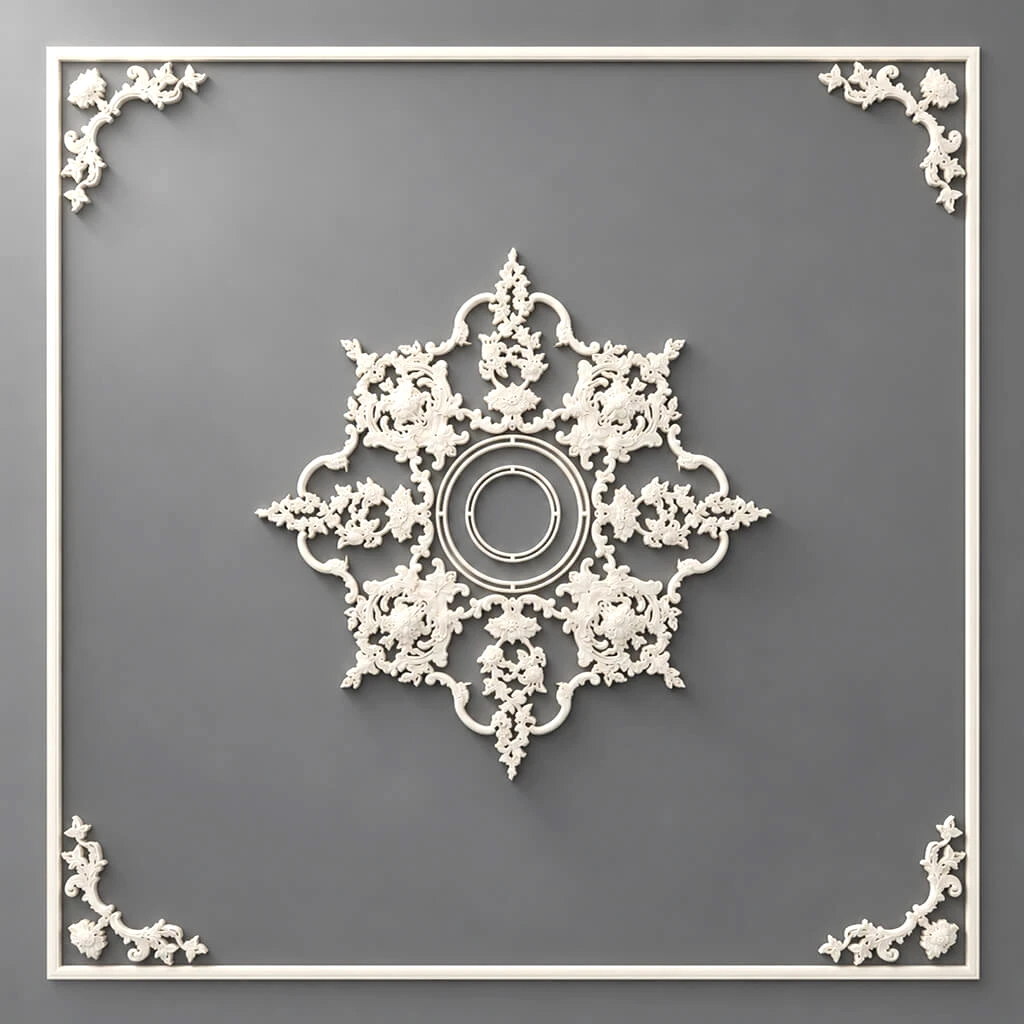
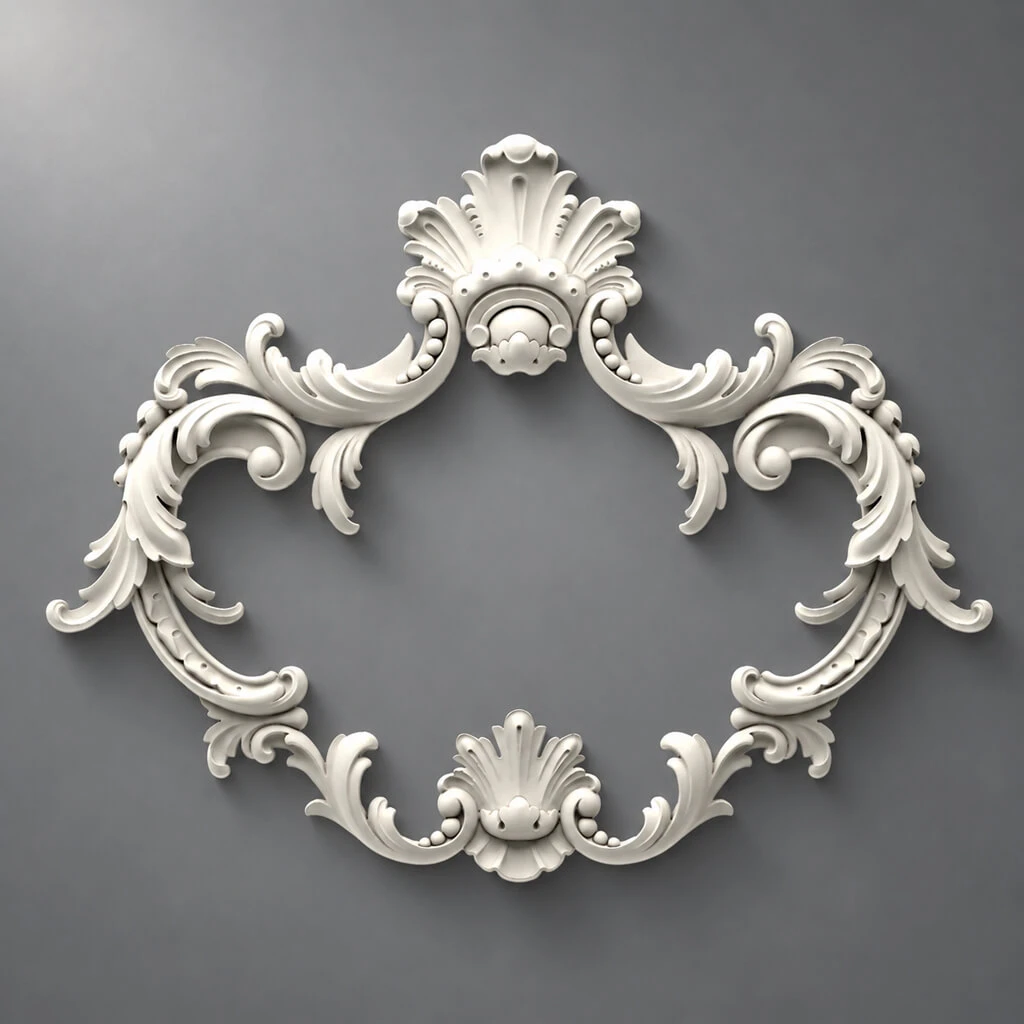
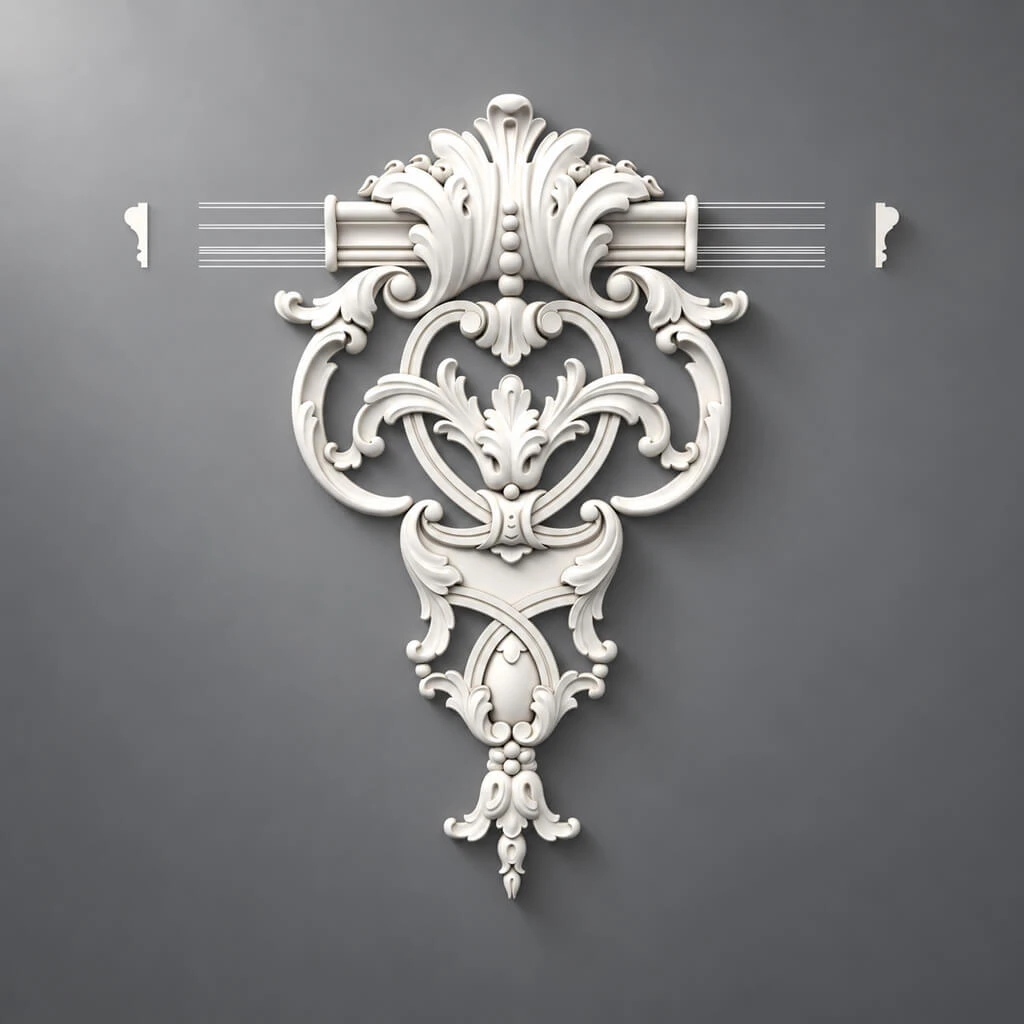
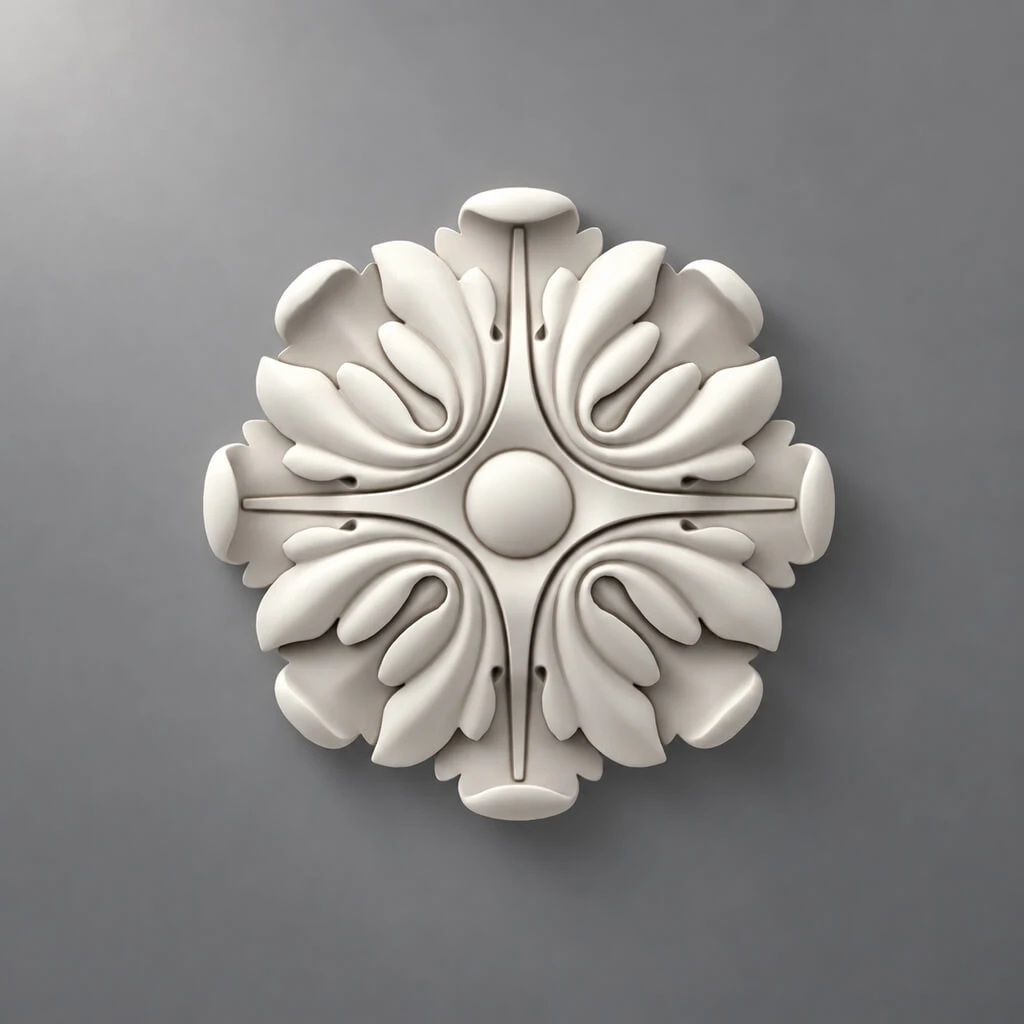
Polyurethane decorative appliques— volumetric elements for central points of the composition: rosettes in the centers of frames, cartouches above the main frame, ornamental accents at key points of a long wall. They transform a frame system from flat geometry into volumetric architectural trim.
For a long wall: one or two overlays are enough — in the center of the main frame or in the center of the entire composition. Overloading every frame with overlays is a mistake.
Cornices and Baseboards
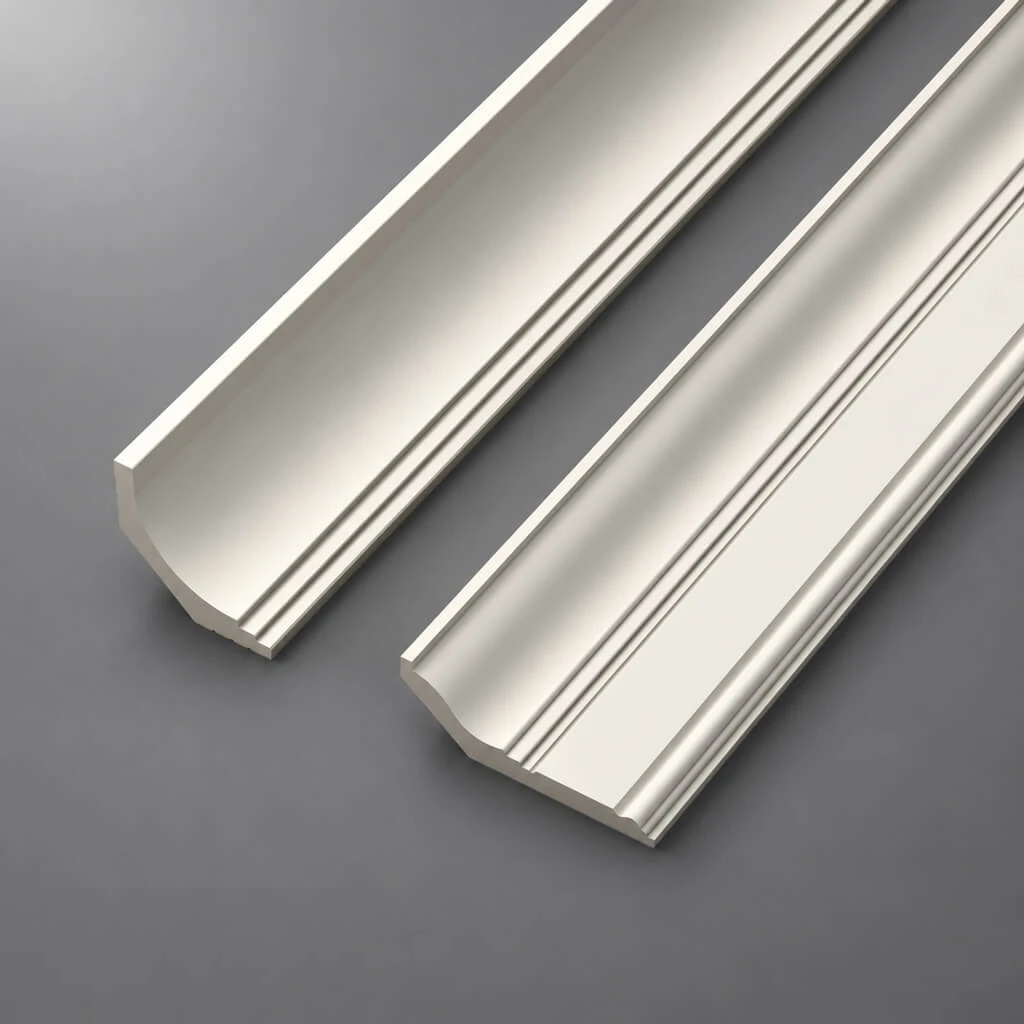
Polyurethane molding for interior— these are not only moldings, but also cornices, baseboards, and corner elements. A long wall with moldings that is not connected to the ceiling via a cornice and to the floor via a baseboard is an incomplete system. The cornice and baseboard in the style of the moldings close the vertical axis and make the wall part of a unified interior solution.
Styles for decorating a long wall with moldings
For long walls, it is convenient to useready-made collections: they already incorporate the logic of combining moldings, decorative elements, and the overall style —Neoclassical, Neoclassic Light, Japandi, Versailles Light.
Neoclassicism
Neoclassical Stucco Decor — symmetry, frames with corner inserts, medium or wide profile. For a long wall in neoclassical style — an even or odd number of frames with a central accent, white or cream color of moldings on neutral walls.
Neoclassical on a long wall is the triumph of order. No randomness: every element in its place, every proportion is calibrated. The result is an interior that looks like it was created by a professional decorator.
Neoclassic Light
Light Wall Decor Neoclassic Lite — a more modern interpretation. Thin or medium profile, moldings in the color of the wall or with minimal contrast, frames without ornament or with simple corner inserts. Suitable for modern apartments where you want architecturality without classical heaviness.
This is the most sought-after format for long walls in modern city apartments: it is concise, versatile, and unmistakably elegant.
Japandi
Decor of a long wall in Japandi style — minimal profile in the color of the wall, vertical division, or one or two frames of strict geometry. No corner inserts, no overlays. A long wall in Japandi is a space where 'more' means 'less': minimum decor, maximum attention to proportions and materials.
Color palette: warm neutrals — linen, clay, gray-beige, warm white. Moldings strictly in tone, without the slightest contrast.
Versailles Light
Versailles Light stucco decor— for those who want elegance and grandeur without exaggerated classicism. A more expressive profile, corner inserts with details, possible overlays in the centers of frames, a horizontal frieze. On a long hallway wall or a large living room with a ceiling from 3 m, this creates a true effect of expensive architectural finishing.
Important: Versailles Light on a long wall in a small room with a low ceiling is a mistake. This style needs space.
Modern classic
Moldings in the color of the wall or with a soft contrast, large calm frames, minimal ornament. For a long wall in modern classicism — three frames: the central one slightly wider, the side ones narrower. Baseboard and cornice in the style of moldings. Everything in the same color scheme.
How to decorate an empty wall with polyurethane— with examples for different styles and wall formats.
Mistakes when decorating a long wall
Each of these mistakes is a real story. And each of them can be avoided if you know in advance.
One small frame on a large wall. A 60×80 cm frame in the middle of a 5 m long wall is not decor, it's a random element. On a large surface, you need either large frames or a system of several frames. A single small frame on a long wall looks like a mistake, not a solution.
Too many small elements. Seven small frames in a row on a 6 m long wall is a grid, not a rhythm. Too frequently placed small frames turn the wall into a cage. The optimal number — see the table above.
Frames are not tied to furniture. Three frames are symmetrical — but the sofa is not centered, it's shifted to the side. Or the frames are placed 40 cm above the sofa, and there's a gap between the backrest and the bottom edge of the frame, which looks awkward. Molding should always be designed in conjunction with furniture.
No consistent rhythm. One frame is 80 cm, next to it — 110 cm, next to it — 65 cm. Different gaps, different heights. This isn't an "artistic approach" — it's visual chaos. A long wall requires strict rhythm.
Molding too thin for a large wall. A 15 mm profile on a 6 m wall with a 3 m ceiling is like drawing a line with a pencil on a 3×2 m canvas. For a large wall, you need a profile that reads from 3–4 meters away: at least 22–25 mm, and for large spaces — 30–40 mm.
Moldings are not connected to the baseboard and cornice. An elegant thin frame profile on the wall — and next to it a massive Soviet-style plaster cornice and a 100 mm baseboard with a heavy classical profile. These are three different styles in one space. Everything should belong to one system.
Outlets and switches not accounted for. Molding runs directly through a switch. Or a frame is designed in an area where an outlet is at a height of 80 cm. These mistakes cannot be fixed without rework — only prevented at the design stage.
Lush stucco in a narrow long hallway. A 60 mm profile with ornament, 90 mm corner inserts, overlays — and all this in a hallway 1.1 m wide. The decor literally presses down on a person. In narrow spaces — only thin profiles, only laconic lines.
Decor just for the sake of decor without a center. Four frames without reference to any object — neither to furniture, nor to a mirror, nor to axes. It looks like "just because." A decorative system should have a semantic center.
What to buy for decorating a long wall
Complete list of necessary elements:
-
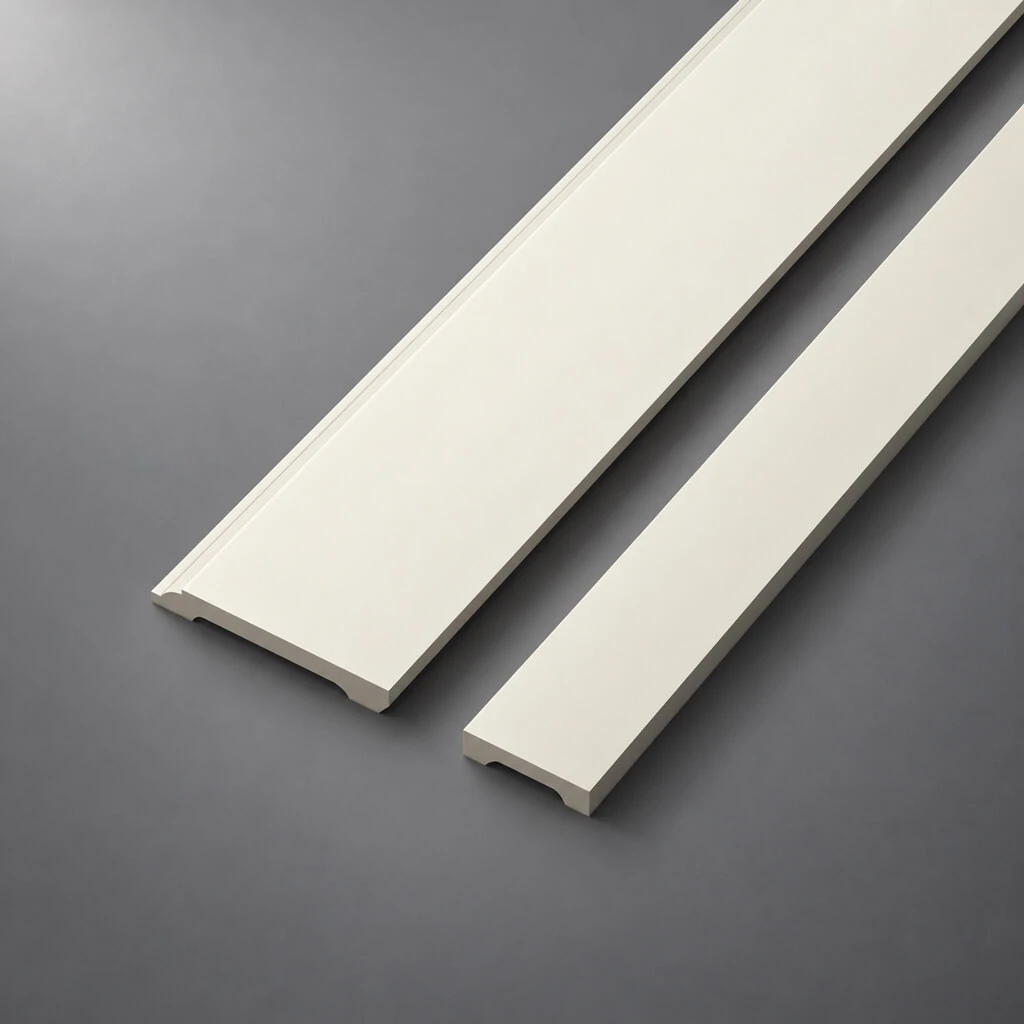
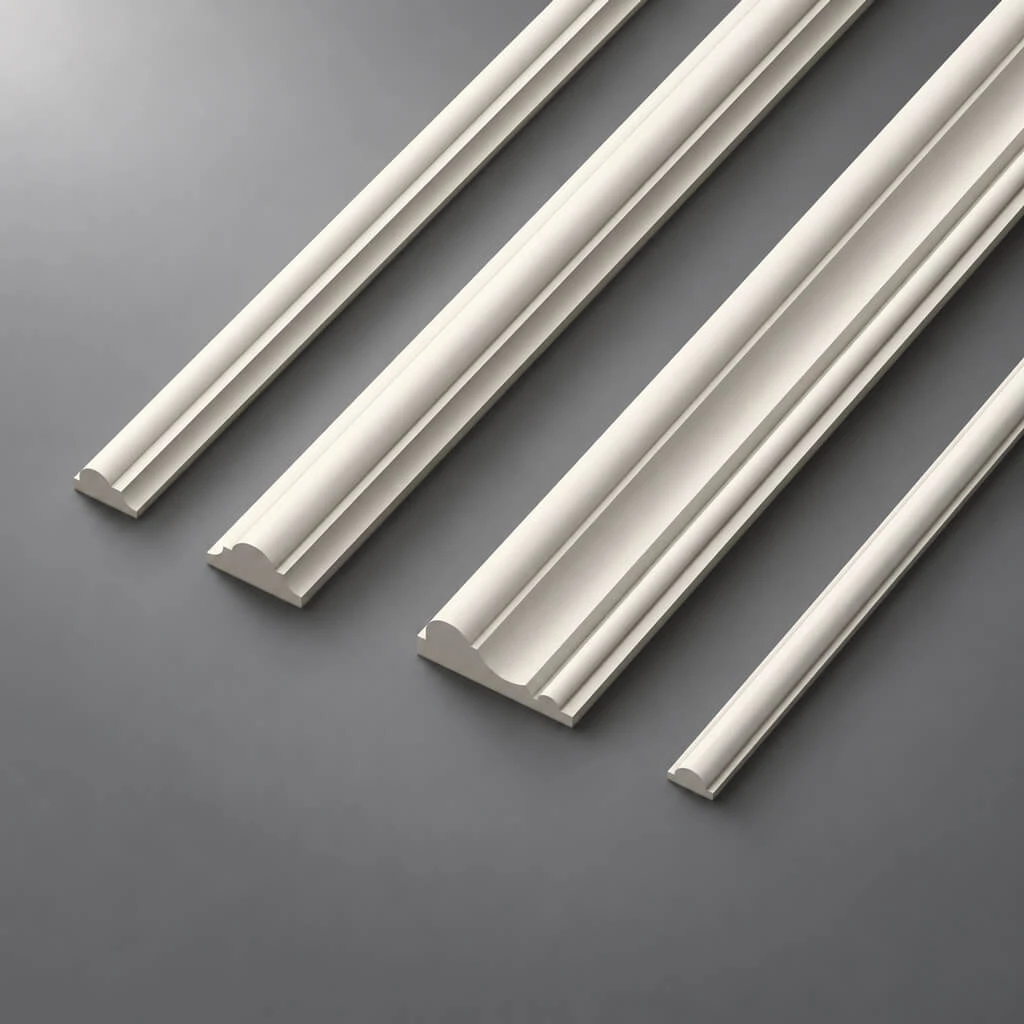
Moldings made of polyurethane — linear profiles for frames, vertical divisions, horizontal bands. Select profile width depending on wall size and interior style.
-
Polyurethane wall decor — panels, decorative elements, accents for accent zones of a long wall.
-
Decor for Molding — corner inserts and elements for frame corners, “locks” in classical and neoclassical systems.
-
Polyurethane decorative appliques — rosettes, cartouches, ornamental accents for frame centers and main composition points.
-
Ready-made molded decor kits — balanced systems with pre-selected elements for a quick and reliable result.
-
polyurethane products from STAVROS — full catalog: moldings, cornices, baseboards, rosettes, stucco, and all related elements.
Collections by style:
-
Neoclassical — classical symmetry, frames with corner elements, white and cream.
-
Neoclassic Light — modern laconic neoclassicism for a city apartment.
-
Japandi — minimalist lines, moldings in wall color, Japanese restraint.
-
Versailles Light — elegant classic with expressive profile for large spaces.
Frequently Asked Questions
How to decorate a long blank wall with moldings?
Start by identifying the main focal point of the wall — the axis of the sofa, mirror, or geometric center. Then symmetrically place two to three molding frames from the center with equal spacing. The profile should be no thinner than 22–25 mm for a standard living room. Use moldings in the same tone as the wall or with a soft contrast.How to decorate an empty wall with polyurethane — a step-by-step algorithm.
How many frames to make on a long wall?
Guideline: for a wall of 4–5 m — two to three frames, for a wall of 5–7 m — three to four, for a wall of 7–9 m — four to five. It is important to maintain equal gaps and match the number of frames to the scale of the wall.how to calculate moldings and stucco decor for a wall — with calculation formulas.
Which moldings to choose for an elongated wall?
It depends on the wall size and style. For a wall up to 5 m and a modern interior — profile 22–28 mm. For a wall of 5–7 m — 28–35 mm. For a large wall in classic or Versailles Light style — 40–50 mm. A profile that is too thin on a large wall will get lost — this is mistake number one.
Can a long corridor be decorated with stucco decor?
Yes, and this is one of the best options for a corridor. Thin moldings create a horizontal rhythm that visually widens the corridor. Vertical lines from a narrow profile break up the length and eliminate the tunnel effect.Wall decor in the entryway and hallway made of polyurethane— with solutions for corridors of different widths and lengths.
How to divide a long wall into zones without partitions?
Moldings are the perfect tool for this. Each zone — sofa, dining, work, console area — gets its own frame or system of frames. The space remains open. More details in the articlezoning an interior with stucco decor.
Are thin moldings suitable for a large wall?
It depends on the specific parameters. A 15–18 mm profile on a 6 m wall is too thin — it won't be readable. But a 22–25 mm profile on a 5 m wall with a 2.7 m ceiling is quite appropriate, especially in a modern or Japandi interior. The main rule: the profile should be readable from a distance of 3–4 meters.
What is better: moldings or a ready-made decor set?
Individualmoldings for a long wall— for non-standard sizes and individual schemes. A ready-made set is for quick results without calculations. If you are working with wall stucco decor for the first time and the wall dimensions are close to standard — a ready-made set is more reliable. If you have an unusual length or several zones with different requirements — choose linear moldings and calculate individually.
How to combine moldings on a long wall with baseboard and cornice?
All three elements should belong to the same style family. For a thin modern molding 22–28 mm — baseboard 50–70 mm in a modern profile, cornice 40–60 mm. For a medium profile 30–40 mm — baseboard 70–100 mm, cornice 55–80 mm. For a wide classic profile 45–55 mm — baseboard 80–120 mm, expressive cornice 80–100 mm. All elements are made ofpolyurethane products from STAVROSfrom one collection.