








































Article Contents:
- Why built-in furniture should not 'hang' in space
- The principle of integration: furniture as part of the shell
- What is a furniture portal and how it works
- Where a furniture portal with moldings and slats works
- Built-in wardrobe in the hallway
- Built-in wardrobe in the bedroom
- Kitchen up to the ceiling
- Furniture niche in the living room
- Home Library
- Portal around TV zone
- Cabinets in the study
- Wardrobe area
- MDF cornice vs wooden cornice: what's the difference and what to choose
- MDF cornice: precision, smoothness, versatility
- Wooden cornice: character, texture, durability
- Comparison table: when to choose what
- Wooden slats next to built-in furniture
- On the sides of the cabinet
- As a vertical accent next to the kitchen
- On the wall between the furniture and the door
- In the niche
- As a continuation of the facade rhythm
- Important rule: slats should not conflict with the facades
- Stucco decor and moldings around the built-in wardrobe
- Moldings as a frame around the wardrobe
- Moldings around the furniture niche
- Moldings on the adjacent wall
- Molding at the transition from furniture to ceiling
- Polyurethane decor in wall color: a subtle and powerful technique
- Baseboard at built-in furniture: how to avoid the main mistake
- Problem: baseboard breaks off at the wardrobe
- Wooden baseboard: when wood is everywhere
- MDF baseboard: clean contour for painting
- Baseboard-casing at the junction of wardrobe and wall
- Moldings, corners and strips: precision in every joint
- Wooden corner
- Wooden bar as a load-bearing element
- Wooden baguette: transition line
- Molding products for furniture portal: complete system
- Ready-made design schemes for built-in furniture
- Scheme 1: Kitchen to the ceiling — MDF and moldings
- Scheme 2: Built-in wardrobe in the hallway — slats and baseboard
- Scheme 3: Walk-in closet — wood throughout
- Scheme 4: Study with cabinets — classic and wood
- Scheme 5: Neoclassicism — portal with stucco
- Scheme 6: Modern interior — minimalism and precision
- How to choose tone and material: consistency is not an option, but a law
- Rule of one material
- Rule of two materials
- Choosing the profile of the cornice and baseboard
- Technical details: what to consider in advance
- Gap between cabinet and ceiling
- Non-parallel ceiling
- Attaching slats to the wall next to furniture
- Installation of polyurethane moldings
- Mistakes in built-in furniture design: others' experience
- FAQ: answers to real questions
- Choose a system, not a set of parts — choose STAVROS

There is a moment in renovation when the cabinet is already in place, the kitchen is assembled, the niche is ready — and still something is off. The furniture is there, but the interior is not. The cabinet is beautiful, but stands on its own. The kitchen is functional, but looks like a set against the wallpaper, not part of the architecture. It is at this moment that most people realize: built-in furniture needs framing. It needs context — moldings, cornices, trims, slats, baseboards.
This article is about how, using furniture molding, wooden strips, MDF cornices, baseboards, and polyurethane decorative molding to turn a cabinet, kitchen, or furniture zone into an architectural part of the interior. Without remodeling the furniture. Without changing the facades. Simply — by properly designing everything around it.


Why built-in furniture should not "hang" in space
A question that sounds strange until you see the difference firsthand: why does a wardrobe need framing if it's already built-in? The answer is both simple and non-obvious.
A built-in wardrobe occupies a niche or a wall from floor to ceiling. But there is always a gap between its top shelf and the ceiling — millimeters or centimeters, but it's there. Between the side panel of the wardrobe and the wall — a joint. Between the bottom edge of the body and the floor — a transition that the baseboard must cover. Each of these joints, without a well-thought-out solution, looks like an incompleteness.
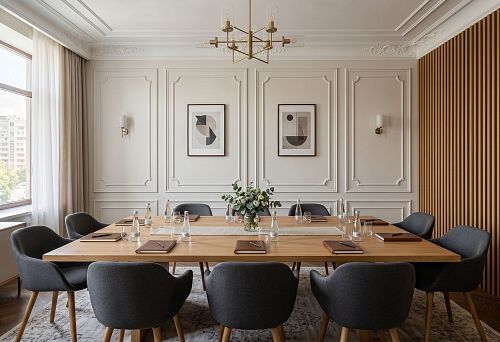
A furniture portal is a framing system that hides all these joints and simultaneously creates an architectural frame around the wardrobe, kitchen, or niche. The portal can include side moldings, a topMDF furniture cornice, Wooden planks on the sides, a baseboard at the bottom, andSculptural wall decoration on adjacent planes.
The result is that the wardrobe ceases to be a "piece of furniture." It becomes a built-in architectural element. The difference in perception is fundamental.




Integration principle: furniture as part of the shell
In professional design, there is the concept of "furniture as an extension of architecture." A built-in wardrobe, finished with a cornice flush with the ceiling, with moldings on the sides and a baseboard continuing the overall bottom line — such a wardrobe is perceived as a niche, as an architectural volume, as part of the building itself.
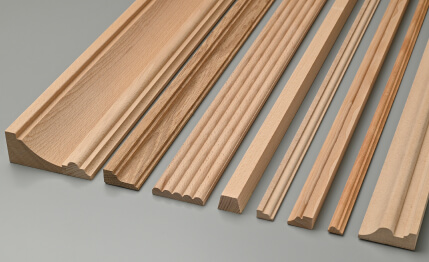
This effect is achieved throughwood trim itemsand MDF: they cover transitions and joints, creating unified horizontal and vertical lines that connect furniture to walls, ceiling, and floor.
Our factory also produces:



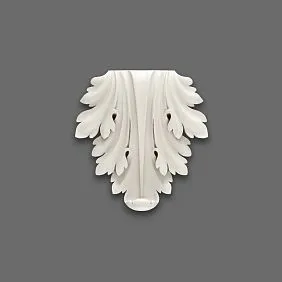


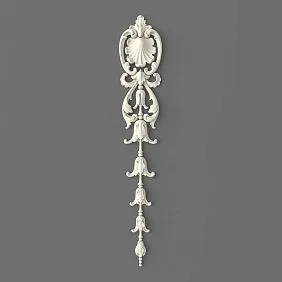
What is a furniture portal and how it is constructed
A furniture portal is not just a fancy word. It is a structural and decorative solution that can be designed for any interior and any budget.
A portal around a built-in wardrobe or kitchen consists of several elements, each solving its own task:
Upper cornice. It covers the gap between the top of the cabinet and the ceiling. For a kitchen, this is aupper MDF cornice for kitchen— smooth, flat, paintable to match the color of the facades or ceiling. For a classic interior —wooden cornice for furniturewith a profile. The cornice is the first thing that catches the eye when looking at the furniture area.
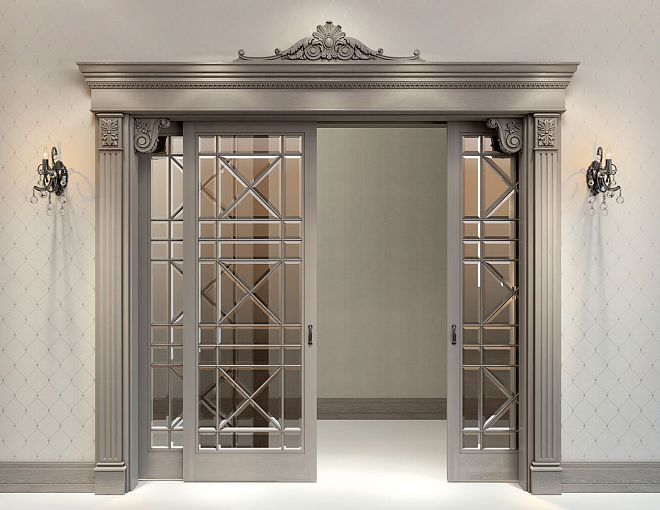
Side moldings. They decorate the vertical transitions between the cabinet side and the wall. Without them, the joint always looks unfinished.Decorative wooden moldingsorMoldings made of polyurethanecover this transition and create a vertical architectural line along the edges of the portal.
Lower baseboard. Continues the general lower line of the room from the wall through the cabinet base.MDF Skirting BoardorWooden baseboard — depending on the furniture material and interior style.
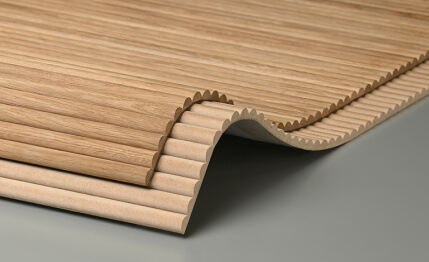
Wooden slats on the sides. A vertical accent next to the cabinet that adds texture and rhythm. The slats on the sides of the portal work like architectural pilasters — they frame the furniture area without overlapping it.
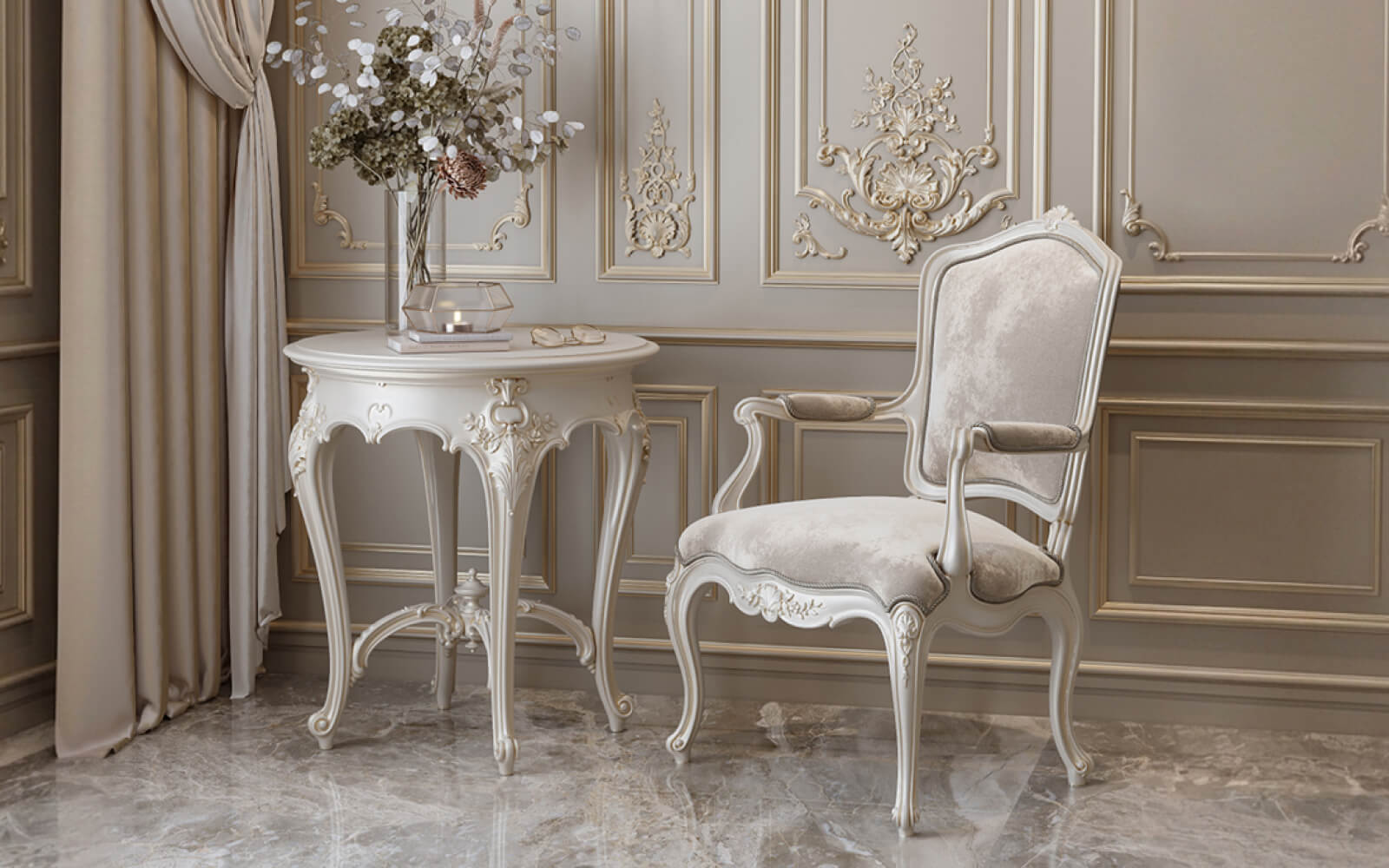
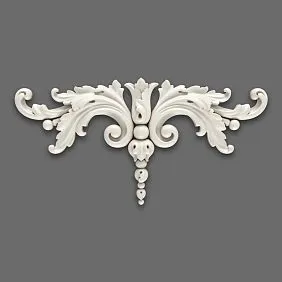
Stucco decor on adjacent walls. Molding frames, a ceiling cornice around the perimeter of the area,Polyurethane wall decor on the side walls — all this creates a context in which the portal is perceived as an organic element of the architecture.
Get Consultation
Where a furniture portal with moldings and slats works
Application scenarios are broader than they seem at first glance. This is not only for kitchens and cabinets.
Built-in cabinet in the hallway
The hallway is the first impression of the home. A built-in cabinet here occupies part or the entire wall. If it is designed as a portal — withwooden planks slats on the sides, a cornice at the top, and a baseboard at the bottom — the hallway acquires a finished, thoughtful look. A guest enters and sees not a "cabinet against the wall," but an architectural niche.
Built-in wardrobe in the bedroom
In the bedroom, the wardrobe occupies an end or side wall. The furniture portal here creates a "headboard" or "end" accent. Moldings on the sides,Wooden furniture corniceon top, slats orstucco decor for walls and ceiling on adjacent planes.
Kitchen up to the ceiling
A kitchen up to the ceiling is a tricky case. The upper cabinets go almost to the ceiling plane, and the gap between them needs to be closed.MDF kitchen corniceis a classic solution: it is mounted along the top edge of the wall cabinets and closes the gap, creating a horizontal finishing line. On adjacent walls — moldings orpolyurethane ceiling decoraround the perimeter.
Furniture niche in the living room
A niche with shelves, an open shelving unit, or built-in cabinets is one of the most popular elements of a modern living room. The furniture portal around the niche turns it into an architectural volume: molding frames around the perimeter, slats inside the niche or on the sides, a ceiling cornice above the niche.
Home Library
Floor-to-ceiling library shelving creates a strong architectural accent. Wooden moldings — horizontal lintels,Wooden corner pieceson the ends, a cornice at the top, a wideWooden baseboardat the bottom — turns the shelving into a library portal.
Portal Around the TV Zone
An area with a TV, panel, or niche for media furniture. Wooden slats on the panel behind the TV, molding frames on the sides, a cornice at the top — this is a full-fledged furniture portal in the living room.
Cabinets in the Study
A study with built-in bookcases or filing cabinets is a place where architectural rigor is especially important.Buy wooden crownof the required profile, a wide wooden baseboard, molding frames on the walls — classics of a study interior.
Dressing Room Area
In the dressing room, built-in systems occupy all four walls. Here, the furniture molding solves a practical task: to close all joints between sections, to design the upper transition to the ceiling, and to create a neat bottom line.Rafter panelson one of the walls, they add texture and make the dressing room not just a functional space, but also a beautiful one.
MDF cornice and wooden cornice: what is the difference and what to choose
The cornice for built-in furniture is one of the most commercially important elements in this system. And one of the most underestimated. Let's figure it out.
MDF cornice: precision, smoothness, versatility
MDF Crownis a profile made of MDF (medium-density fiberboard), manufactured by milling. The surface is perfectly smooth, without fibers or knots. This means: the paint lays evenly, the profile can be painted in any color, including RAL, in the color of the facades or in the color of the ceiling.
MDF cabinet corniceis mounted along the top edge of the cabinet or kitchen cabinets, covering the gap. It is lightweight, cuts precisely, and holds glue and screws well. The joints are treated with putty for painting — the final result, with proper installation, looks like a monolithic piece.
For a kitchen up to the ceilingupper MDF cornice for kitchenis a standard solution. It is sold in lengths from 2.4 to 3 m, easily joined, and does not require special tools.
Wooden cornice: character, texture, durability
wooden corniceMade of solid oak or beech — for those who value natural material. The living texture of wood creates a feeling unattainable by any MDF. A solid wood cornice can be tinted, coated with oil, varnish, or paint — but it is in the "wood-like" version that it reveals itself to the fullest.
Wooden beamsSTAVROS — profiles with clear geometry, straight edges, no warping. For a classic interior, country house, study, or library, a wooden cornice is indispensable.
Comparison table: when to choose what
| Cornice type | Better to choose if... |
|---|---|
| MDF cornice | Furniture is painted, perfect smoothness for painting is needed |
| MDF cornice for painting | Kitchen up to the ceiling, need to match the color of the facades |
| Wooden cornice | Furniture made of natural wood, classic, country house |
| Wooden cornice with profile | Study, library, neoclassical, cottage |
Wooden slats next to built-in furniture
Wooden slats are not just for walls and partitions. They work great next to built-in furniture, creating a textured architectural accent.
On the sides of the cabinet
Verticalwooden planks on the wallon both sides of the cabinet work as pilasters. They visually "hold" the cabinet on both sides, creating the feeling that the furniture is built into an architectural portal. The slats are attached to the wall, not to the cabinet — this is important: if necessary, the furniture can be removed without damaging the decor.
For this technique, choose slats of the same tone as the cabinet. Or contrasting ones — if you want to highlight the framing. The second option works in modern interiors: dark furniture + light slats, or vice versa.
As a vertical accent next to the kitchen
On the wall section between the kitchen set and the door or windowWooden planks for decorationcreate a rhythmic vertical background. This is especially appropriate if the kitchen fronts are smooth, without pattern. The slats add texture and warmth without overpowering the set's minimalism.
On the wall section between furniture and the door
Where the cabinet ends and the doorway begins, a small strip of wall often remains. Without decor, it's just empty space. Withwooden slats for wall finishing— an accent vertical that creates a smooth transition from furniture to the opening.
In a niche
If a cabinet or shelving unit is built into a niche, the back wall of the niche is an excellent place for a slat accent.Wooden plankon the back wall of the niche creates depth and texture. It looks especially beautiful with lighting: the shadow from each slat forms a rhythmic light-and-shadow pattern.
As a continuation of the facade rhythm
If kitchen facades have a vertical milled pattern, wooden slats on the adjacent wall pick up and continue this rhythm. Furniture and wall 'talk' — the interior becomes unified.
Important rule: slats should not compete with facades
If the facades are active — with pattern, texture, bright color — the slats nearby should be calmer. Neutral tone, medium spacing, moderate thickness. Active slats next to active facades create visual conflict that is tiring.
A good rule: one of the two elements (furniture or moldings) is the accent, the other is the background.
Stucco decor and moldings around a built-in wardrobe
Molding is not just decoration. In the context of a furniture portal, it is an architectural frame that transforms a wardrobe from a piece of furniture into an element of space.
Moldings as a frame around a wardrobe
The simplest and most effective technique:Decorative wooden moldingsare mounted around the perimeter of the wardrobe — on top, on the sides, and, if necessary, on the bottom. They form a visible frame that separates the wardrobe from the surrounding walls and creates a sense of a complete architectural form.
For light interiors, moldings are taken in the color of the wall — the frame is there, but without color contrast. For classic interiors, with a profile painted in a darker tone.
Moldings around a furniture niche
If a wardrobe or shelving unit is in a niche, moldings are mounted around the perimeter of the niche opening — like an architectural architrave.Moldings made of polyurethaneare ideal for this task: zero weight, moisture resistance, any color for painting, flexibility when working with rounded or non-standard niches.
Moldings on the adjacent wall
If the wardrobe occupies one wall, adjacent walls with molding frames create an architectural context for it.Polyurethane wall decorin the form of elongated rectangular panels — boiserie — makes the entire space of the zone cohesive: the cabinet against the backdrop of the decorated walls looks like part of a unified design.
Molding at the transition from furniture to ceiling
Where the upper cornice of the wardrobe meets the ceiling, a thin molding profile on the ceiling creates a clear horizontal line.polyurethane ceiling decoralong the perimeter of the zone — above the niche, above the furniture wall — completes the portal from above.
Polyurethane decor in the color of the wall: a subtle and powerful technique
If the stucco decor is painted the same color as the wall, it works as relief, as shadow, as architectural structure. The eye does not fixate on the 'decor' but feels the volume and sophistication of the space. This is one of the most expensive-feeling techniques — at minimal cost.
Polyurethane ItemsSTAVROS are easily painted in any color, including the same shade as the wall. This makes them an ideal tool for subtle architectural marking of space.
Baseboard at built-in furniture: how to avoid the main mistake
Baseboard along built-in furniture is technically complex but extremely important. This is where mistakes are most often made, and they become immediately noticeable.
Problem: baseboard ends at the wardrobe
It often happens like this: the baseboard runs along the wall and suddenly ends at the side of the wardrobe. This creates a noticeable gap in the lower line of the room. It looks unfinished — and that's exactly what it is.
Solution: the baseboard should either go under the wardrobe (if the design allows) or neatly adjoin the furniture side panel via a Wooden angleor a special connecting profile. The second option is that the baseboard runs continuously around the entire perimeter of the room, and the wardrobe is installed on top of it with a ventilation gap.
All of this needs to be planned before furniture installation — not after.
Wooden baseboard: when wood is everywhere
If the furniture is made of natural wood, the floors are wooden or parquet, the wall slats are wooden — Wooden baseboardmade from the same species creates a unified material system. All the wood in the interior belongs to one 'vocabulary'. The baseboard is the connecting link between the floor and the furniture.
For a country house, study, or classic interior, choose a wide with a classic profile creates a sense of solidity, reliability.— from 80 mm and above. It creates a monumental bottom line that matches the scale of the furniture wall.
MDF baseboard: clean contour for painting
For painted interiors— is a horizontal element that frames the room at the bottom of the walls where the wall meets the floor. Skirting boards perform several functions: they hide the technological gap between the wall and floor covering (necessary for thermal expansion), protect the lower part of the wall from mechanical damage, create visual completion, and may conceal wiring.— the optimal choice. The perfectly smooth surface provides uniform color. It can be easily painted to match the wall, the furniture, or a contrasting color — as intended.
White MDF Skirting Board— a universal solution for light modern apartments: neutral, clear, does not draw attention, and pairs well with both dark and light furniture.
Baseboard-casing at the junction of the cabinet and wall
Where the side of the cabinet meets the wall, a baseboard-casing is sometimes used — a narrow profile that covers the vertical joint. This is the same principle as a door casing: a neat frame hides the seam and creates a clear vertical line.
Moldings, corners, and strips: precision at every joint
Built-in furniture involves many joints. The joint with the ceiling. The joint with the floor. The joint with the side walls. Joints between sections. Corner joints. And each requires its own solution.
Wooden corner
Wooden angle— an indispensable element where a corner joint needs to be covered. Between the side of the cabinet and the wall, at the transition from slatted finish to a smooth wall, in the corner of a built-in niche — everywhere, a corner provides a neat result without complex cuts or special tools.
For a furniture portalbuy wooden corner pieces of the same wood species as the main millwork — a basic rule. Material unity creates a sense of thoughtfulness.
Wooden bar as a load-bearing element
Wooden block is used where a horizontal or vertical guide is needed for installing slats, cornices, or moldings. For example, the top cornice of a cabinet is attached to a guide bar that is mounted flush with the top edge of the furniture. This ensures a straight horizontal line regardless of ceiling unevenness.
The bar is also used as a hidden guide inside a slatted section: the slats are attached to the bar, and the bar is attached to the wall. This method is more reliable than directly attaching the slat to the wall and allows easy removal of the decor when needed.
Wooden baguette: transition line
Wooden Picture Frame with a profile is used as a horizontal zone divider. In a furniture portal — as a line between the lower part (cabinet, baseboard) and the upper part (cornice, ceiling). Or as a decorative horizontal belt in the middle of a tall cabinet.
Millwork products for a furniture portal: complete system
Professional installation of a furniture portal useswood trim items as a unified system. All profiles — from the same wood species, same tint. Baseboard, cornice, corner pieces, bars, moldings, slats — everything is coordinated.
This is the main competitive advantage of this approach: the space looks designed, not assembled from random pieces.
Ready-made built-in furniture design schemes
Theory is good, but practice is more convincing. Here are six proven schemes that work in real interiors.
Scheme 1: Kitchen to the ceiling — MDF and moldings
-
Top:MDF kitchen cornicein the color of the facades or ceiling
-
Sides:Moldings made of polyurethanein the color of the walls
-
Bottom:MDF Skirting Boardfor painting, matching the lower cabinets
-
Adjacent walls:Polyurethane wall decor— thin molding frames in the wall color
Result: the kitchen becomes part of the space, not standing out as a separate 'set'.
Scheme 2: Built-in wardrobe in the hallway — slats and baseboard
-
Sides:Wooden plankswith the same tinting as the wardrobe
-
Top: thinwooden corniceor MDF cornice for painting
-
Bottom:White MDF Skirting Boardalong the entire perimeter of the hallway, including the junction with the wardrobe
-
Adjacent walls: clean, without decor — the slats and wardrobe are active enough
Result: a hallway with architectural character, warm and finished.
Scheme 3: Walk-in closet — wood throughout
-
System:Rafter panels on one or two walls
-
Crown molding:wooden cornice around the perimeter
-
Skirting board:Wooden baseboardaround the entire perimeter
-
Corners:Wooden corner pieces at the ends of slatted panels
Result: the dressing room transforms from a functional space into a thoughtfully designed intimate area.
Scheme 4: Office with cabinets — classic and wood
-
Crown molding:Buy wooden crown with a heel profile and shelves
-
Baseboard: widewith a classic profile creates a sense of solidity, reliability. from 80–100 mm
-
Moldings:Decorative wooden moldings on the side walls — framed panels
-
Reiki: verticalwooden planks on the wallinside molding frames on one wall
Result: an office interior with true architectural rigor.
Scheme 5: Neoclassicism — portal with stucco molding
-
Crown molding:wooden cornicewith a classic profile +polyurethane ceiling decoralong the perimeter above the area
-
Sides:Moldings made of polyurethaneas vertical pilasters on both sides of the portal
-
Baseboard: wide whiteMDF Skirting Boardfor painting
-
Walls:Polyurethane wall decor— elongated boiserie frames
Result: a neoclassical furniture portal where the wardrobe is perceived as interior architecture.
Scheme 6: Modern interior — minimalism and precision
-
Cornice: straightMDF Crownwithout profile, in the color of the ceiling — as inconspicuous as possible
-
Slats:Decorative wooden stripthin section on the wall next to the wardrobe
-
Baseboard: straightMDF Skirting Board60–70 mm, matching the walls
-
Moldings: absent or minimal geometric profile
Result: a clean modern portal with a tactile accent from wooden slats.
How to choose tone and material: consistency is not an option, but a law
Any furniture portal works only when all its elements are coordinated. A random mix of tints, profiles, and materials is the worst enemy of a finished interior.
Rule of one material
The most reliable approach: all wooden elements — slats, cornice, plinth, corners, bars — from the same species. Oak to oak, beech to beech. One manufacturer, one tinting base — then even in the third year the finish won't "crawl" in tone due to fading of different varnishes.
Rule of two materials
If there are two materials in the interior — for example, dark wood and white MDF — they should be clearly distributed by zones. Dark slats and dark wooden plinth. White MDF cornice and white moldings. Mixing them within one portal means creating chaos.
Choosing the profile of the cornice and plinth
The profile should match the interior style. Straight rectangular profile — for modern and minimalist. Ogee, cove, shelf — for classic and neoclassical. Complex multi-step profile — only in large rooms with high ceilings.
Technical details: what is important to consider in advance
Gap between cabinet and ceiling
Standard gap — from 5 to 50 mm. If the gap is up to 10 mm — a sealing profile can be used. If from 10 to 50 mm — a cornice is needed. If more than 50 mm — a cornice plus an additional shelf or plug. All this needs to be measured before ordering materials.
Non-parallelism of the ceiling
In real apartments, the ceiling is rarely perfectly parallel to the floor. The cornice is mounted level — it adjoins the ceiling via a flexible sealant or is puttied and painted.MDF cornice for paintingin this case, it is more convenient than wood: the MDF surface is easily puttied and painted, hiding uneven joints.
Attaching slats to the wall next to furniture
The slats are attached to the wall, not to the cabinet. This is fundamental: the cabinet must be removable or replaceable without dismantling the decor. Guide bars — to the wall, slats — to the bars.Wooden blockfor guides, a cross-section of 20×40 or 25×50 mm is chosen — rigid enough for vertical mounting.
Installation of polyurethane moldings
Polyurethane moldings are mounted with special glue. It is important to properly treat corners and joints so they are invisible. Detailed installation instructions are in the article.installing polyurethane molding.
Mistakes in designing built-in furniture: someone else's experience
Mistakes found in real projects — not theoretical constructions, but real-life stories. Study them carefully.
Gap between the cabinet and ceiling without a cornice. The most common mistake. The cabinet is installed, the 3–4 cm gap remains. It looks unfinished. Solution — always plan for a cornice at the furniture ordering stage.
A baseboard that breaks off at the cabinet side. The lower line of the room should be continuous. If the baseboard ends at the cabinet, it is an installation error that is difficult to fix after furniture installation.
Random profiles of different shapes. A cornice with a round profile, a baseboard with a straight one, moldings with an oval one — three different geometric languages in one portal. The result is chaos instead of style.
Different shades of wood. Slats made of bleached oak, a cornice made of dark walnut, a baseboard made of natural beech. These are three different interiors in one space.
Slats too close to active facades. If kitchen facades have a pronounced texture or pattern, slats placed right next to them create visual overload. There needs to be space between them — at least a wall section 15–20 cm wide.
Uncovered ends of trim. The ends of the cornice, baseboard, slats — all of this needs to be covered.Wooden angleor plugs made of the same material.
Forgotten door casing at the doorway. If the doorway next to the furniture is not finished with a casing matching the trim, the boundary between the furniture and the door looks sloppy.
Too massive cornice for a low ceiling. A cornice with a 100 mm overhang with a 2.5 m ceiling creates pressure. The scale of the profile should match the height of the room.
FAQ: answers to questions people actually ask
Can I use an MDF cornice for a cabinet if the furniture is wooden?
Yes, if the cornice is painted to match the furniture. The MDF surface provides perfect smoothness for painting. The main thing is to correctly match the paint shade to the wood tint. Or use wooden corniceof the same breed — this is always a more organic solution.
Is a cornice needed if the cabinet is flush with the ceiling?
If the gap is less than 5 mm — you can get by with a sealant. If more than 5 mm — a cornice is mandatory. Even a perfectly fitted cabinet without a cornice looks 'unsecured'.
Can you combine wooden slats and white polyurethane moldings in one portal?
Yes, this is one of the best contrasts. Warm wood and white stucco — a classic European combination. The main thing is that the molding profile is simple enough, without complex baroque curls next to geometric slats.
How to make the cornice of a kitchen cabinet look like part of the ceiling?
Paint the cornice the color of the ceiling. Then it will visually merge with the ceiling plane, and the kitchen will look built into the architecture of the room, rather than placed in it.
Which baseboard to choose if the kitchen is white and the floors are dark wood?
WhiteMDF Skirting Board — it will match the kitchen and create a neutral transition to the floor. A dark wooden baseboard would accentuate the floor, but would conflict with the white kitchen.
Is it necessary to coordinate the profile of the baseboard and the cornice?
Ideally, yes. One profile principle for both: either both straight or both with a curved profile. This creates internal harmony of the portal.
How to design a built-in wardrobe in the bedroom so it doesn't look bulky?
Cornice in the color of the ceiling — the cabinet visually 'goes' upward. Baseboard in the color of the walls — the lower boundary dissolves.Wooden plankson the sides in a neutral light tone — create lightness of framing without massiveness.
How to properly close the ends of wooden slats next to furniture?
Wooden angleof the same species — a classic and neat solution. Or a molding profile covering the side edge of the slatted section.
Choose a system, not a set of parts — choose STAVROS
Built-in furniture as part of interior architecture is not about expensive renovation. It's about thoughtfulness. About the cornice being flush with the ceiling chosen in advance, not bought 'whatever was available'. About the baseboard not breaking off at the side of the wardrobe. About the slats next to the kitchen being in tone, not random.
All this is possible when the millwork — slats, cornices, baseboards, moldings, corners, bars — is chosen systematically and in one place.
STAVROS is a Russian manufacturer of solid wood and polyurethane products. They produce here, not resell. This means stable quality from batch to batch, a wide range of profiles, and unified tinting bases for the entire catalog.
In the STAVROS range for designing built-in furniture and furniture portals:
-
MDF Crownfor kitchens, cabinets and niches — ideal for painting
-
wooden corniceandWooden beamsof different profiles — for classics, studies and country houses
-
Wooden planksfrom beech and oak — for vertical accents next to furniture
-
Rafter panels— for quick and precise installation
-
Decorative wooden moldings— for frame panels and transitions
-
Moldings made of polyurethane— for non-standard corners, niches and lightweight profiles
-
Polyurethane wall decorandfor ceilings— for architectural context around furniture
-
Wooden baseboardandMDF Skirting Board— for a continuous bottom line of the interior
-
Wooden angleandWooden block— for neat joints and secure fastening
-
wood trim items— a complete set for any furniture portal
A furniture portal is not a luxury. It is the proper finishing touch to what you have already done. Add the system, and the interior becomes architecture.